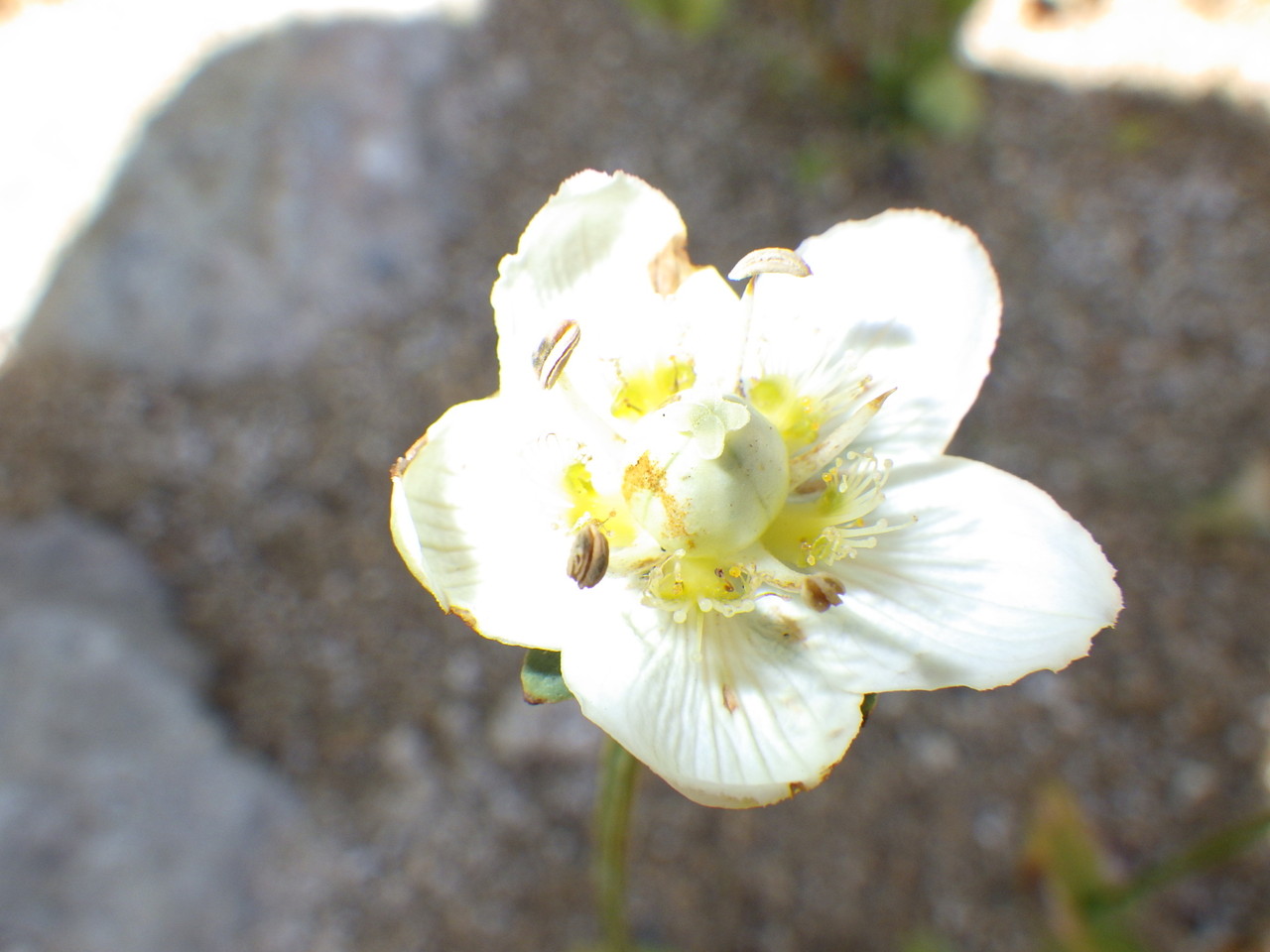
Parnassia palustris, Parnassia japonica, and Parnassia japonica are all perennial herbs belonging to the genus Parnassia in the family Celastraceae. Their names are similar, and their leaves and flowers are also similar in appearance, which can make identification difficult. These three species can be distinguished mainly by the number of lobes in the staminodes of the flower. Staminodes are a special structure found in the genus Parnassia. The flowers are white, have five petals, and grow singly at the tip of the stem. The fruit is a capsule. This article will explain the classification and morphology of Parnassia palustris, Parnassia japonica, and Parnassia japonica.
What are Parnassia palustris, Parnassia japonica, and Parnassia japonica?
Parnassia palustris var. palustris, also known as Umebachisou (Plum Blossom Grass), is a perennial herb distributed in Hokkaido, Honshu, Shikoku, and Kyushu in Japan; as well as Taiwan, Northeast Asia, Sakhalin, and the Kuril Islands, growing in sunny, damp areas in mountainous regions (Ohashi et al., 2016). var. multiseta is a synonym (former scientific name).
Parnassia palustris var. tenuis, also known as small plum blossom grass, is a perennial herb that grows in alpine regions and is distributed in Hokkaido and northern Honshu in Japan; Siberia, Central Asia, the Caucasus, the Middle East, Europe, and North America (RBG Kew, 2023).
Parnassia alpicola, also known as Himeumebachisou (dwarf plum blossom grass), is a perennial plant distributed in Honshu, Japan (northeast to central Japan), growing in damp grasslands and former snowfields in high mountains.
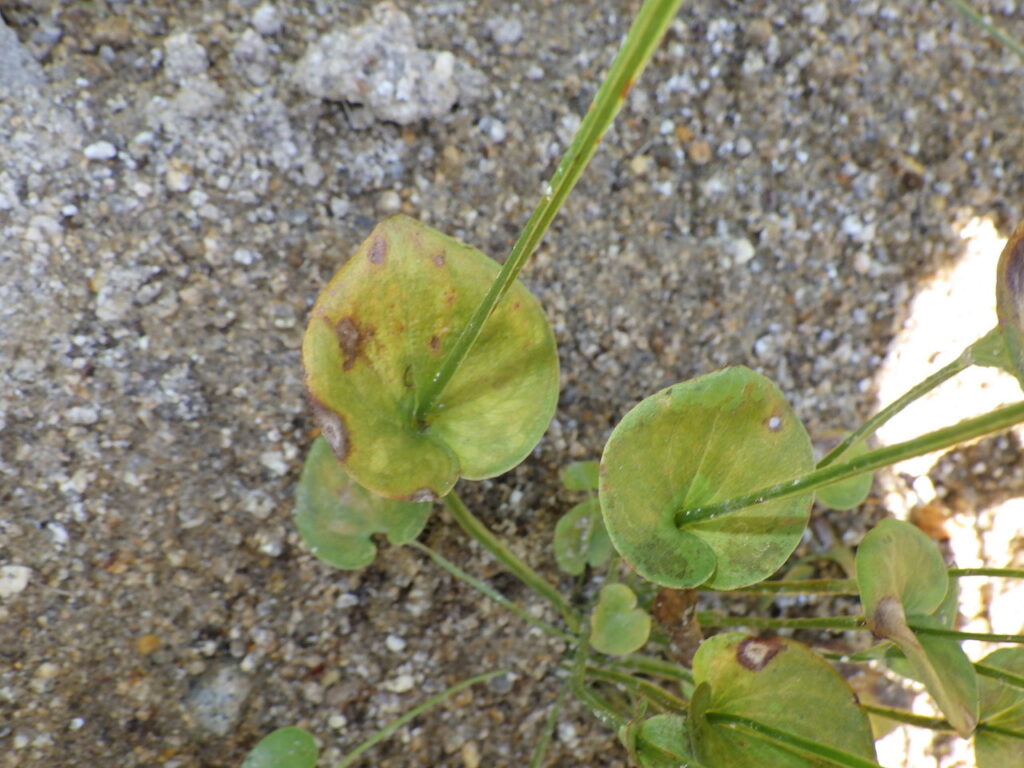
Both are perennial herbs belonging to the genus Parnassia in the family Celastraceae. Their names are similar, and morphologically they share many similarities, such as heart-shaped basal leaves with entire margins and long petioles, and solitary flowers at the tip of the stem with five white, entire petals. This can sometimes make identification difficult.
What are the differences between Parnassia palustris, Parnassia japonica, and Parnassia japonica?
These three types can be distinguished primarily by the number of lobes in the staminodes of the flower.
Staminodes are thread-like structures found on the petals, separate from the stamens. They typically consist of five structures, each with a thread-like lobe at the tip, and sometimes have small, yellow, round glands (glands).
First, the three types can be broadly classified based on the difference between Parnassia palustris and Parnassia japonica, which have seven or more lobes in their staminodes and a yellow gland (round granule) at the tip, and Parnassia japonica, which has fewer lobes in its staminodes, ranging from three to five (rarely six to eight), and lacks a yellow gland at the tip.
Koumebachisou is a high-altitude variety of Umebachisou, so they are very similar.
Regarding Parnassia palustris and Parnassia japonica, the difference lies in the number of lobes in the staminode stamen and the yellow glands attached to their tips: Parnassia palustris has 12 to 22 lobes, while Parnassia japonica has 7 to 11.
With the above information, you can easily distinguish them if they have flowers.
Incidentally, there was once a classification called Ezo-umebachisou, but it is now considered a synonym (former scientific name) of Umebachisou and is not specifically distinguished from it.
Furthermore, regarding Parnassia palustris and Parnassia japonica, there is a view abroad that Parnassia japonica is a synonym of Parnassia palustris and that there is no special distinction between them (RBG Kew, 2023).
Parnassia palustris var. yakusimensis is a dwarf variety of Parnassia palustris distributed on Yakushima Island. It is delicate overall and has small flowers. The leaves are ovate to broadly ovate, about 1 cm long and wide (Parnassia palustris has leaves about 1.5-4 cm long and wide).
Parnassia palustris var. izuinsularis is distributed in the Izu Islands and is known as "Kozushima Parnassia".

What is the structure of a flower?
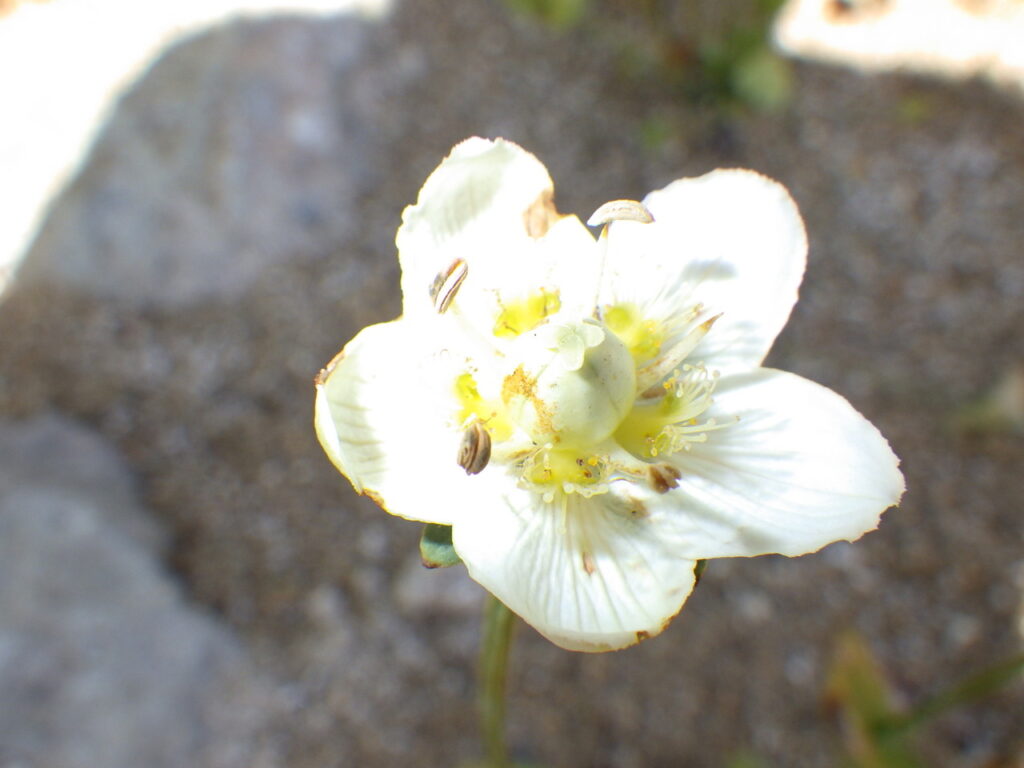
Parnassia palustris flowers from August to October. The flowers are white, 2-2.5 cm in diameter, and bear a single upward-facing flower at the top of the stem. They have five petals that are broadly ovate to elliptical with prominent green parallel veins. There are five staminodes, each with 12-22 lobes at the tip and a yellow gland at the end.
Koumebachisou (Parnassia palustris) blooms from July to September. It closely resembles Umebachisou (Parnassia palustris), but is smaller overall, with flowers about 1 cm in diameter. Its staminodes are divided into 7 to 11 lobes.
Parnassia palustris flowers from August to September. Each flower is white, 8-10 mm in diameter, and borne singly at the tip of the flower stalk. The petals are five in number, broadly ovate with a blunt tip, 4-6 mm long, with a distinct claw at the base, and open flat when in bloom. The calyx tube is short, and the calyx lobes are five in number, lanceolate-ovate with a blunt tip, about 2.5 mm long. There are 10 stamens, about 3 mm long, with circular anthers that are grayish-brown before dehiscence. The staminodes are 3-5 (rarely 6-8) lobed, and the tips of the lobes lack glands.
What is the structure of the fruit?
The fruit is a capsule, which is common to all species in the Parnassia genus.
The capsules of Parnassia palustris are 1-1.2 cm long.
The capsule of Parnassia palustris is 5-6 mm long. The seeds are numerous, oval-shaped, and about 1 mm long.
References
Ohashi, Hiroyoshi; Kadota, Yuichi; Murata, Hitoshi; Yonekura, Koji; and Kihara, Hiroshi. 2016. Wild Plants of Japan (Revised New Edition, Vol. 3 Rosaceae to Meliaceae). Heibonsha, Tokyo. 604pp. ISBN: 9784582535334
RBG Kew. 2023. The International Plant Names Index and World Checklist of Vascular Plants. Plants of the World Online. http://www.ipni.org and https://powo.science.kew.org/

