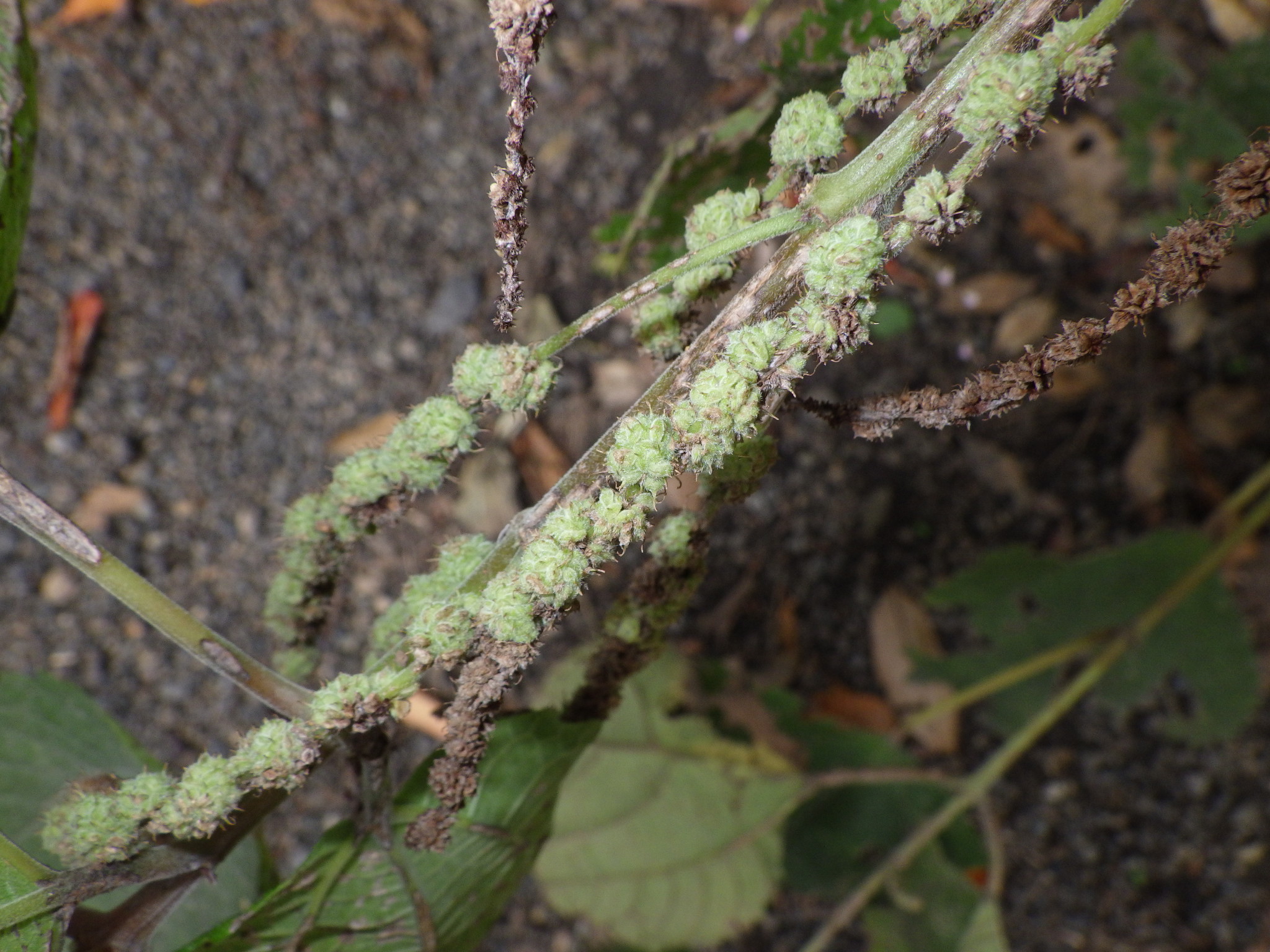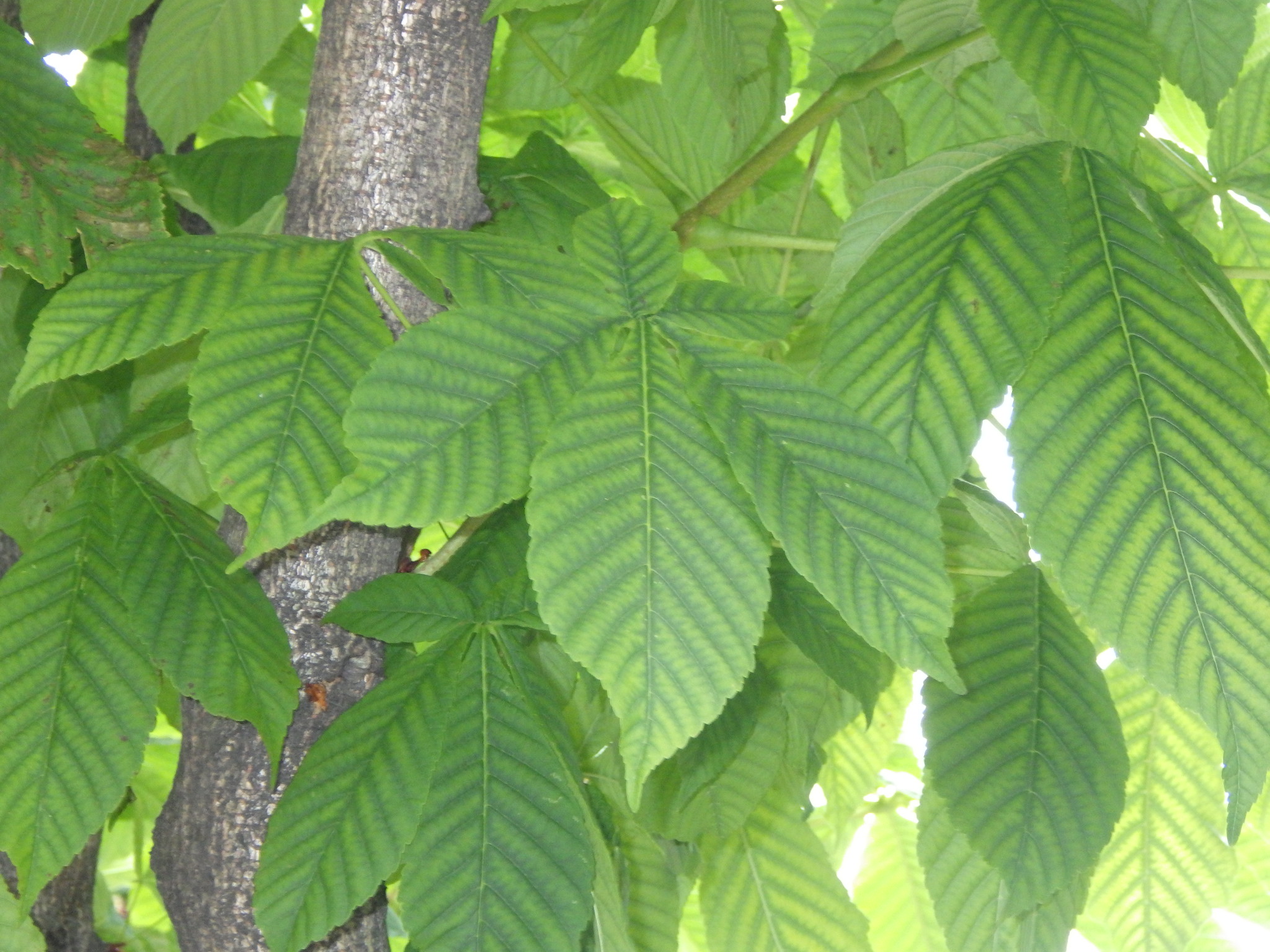
Japanese horse chestnut (Aesculus hippocastanum), European horse chestnut (Aesculus turbinata), red-flowered horse chestnut (Aesculus turbinata var. japonica), and red-flowered American horse chestnut (Aesculus turbinata var. japonica) all belong to the genus Aesculus in the family Sapindaceae. They are characterized by their large, palmate compound leaves and can be seen cultivated in parks, as street trees, and as garden trees in Japan. Originally, the native Japanese horse chestnut was closely associated with the Japanese people, but it has gradually become confused with closely related species imported from Europe and America. Distinguishing between the four species can be difficult, but if possible, you can accurately distinguish them by recording all of their leaves, flowers, and fruits. This article will explain the classification and morphology of the genus Aesculus.
- What are horse chestnut trees, European horse chestnut trees, red-flowered American horse chestnut trees, and red-flowered horse chestnut trees?
- What are the differences between the Japanese horse chestnut (Aesculus hippocastanum), European horse chestnut (Aesculus turbinata), red-flowered American horse chestnut (Aesculus erythrosora), and red-flowered horse chestnut (Aesculus sappanum)?
- What are the differences between horse chestnut, red-flowered horse chestnut, and red-flowered horse chestnut?
- References
What are horse chestnut trees, European horse chestnut trees, red-flowered American horse chestnut trees, and red-flowered horse chestnut trees?
The horse chestnut tree (Aesculus turbinata) is a deciduous tree that grows in mountainous areas and is distributed throughout Hokkaido, Honshu, Shikoku, and Kyushu in Japan. It is cultivated as an ornamental plant in China and Korea.
The European horse chestnut (Aesculus hippocastanum), also known as marronnier or horse chestnut, is a deciduous tree native to parts of Europe (Albania, Bulgaria, Greece, Yugoslavia), Turkey, and Turkmenistan (RBG Kew, 2024). It is cultivated worldwide for landscaping purposes as a park tree, street tree, and garden tree.
The red-flowered American horse chestnut (Aesculus pavia) is a deciduous tree native to the southeastern United States. In Japan, it is occasionally cultivated for landscaping purposes as a park tree, street tree, or garden tree.
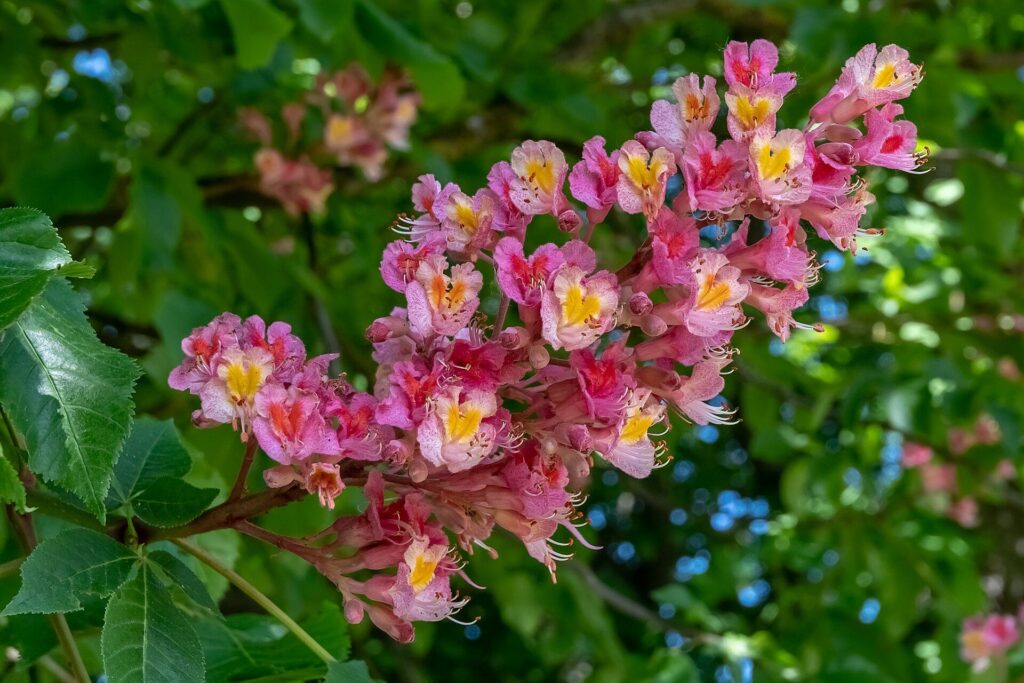
Aesculus x carnea, also known as red-flowered horse chestnut, is a horticultural hybrid of the European horse chestnut and the American horse chestnut. In Japan, it is commonly cultivated for landscaping purposes as a park tree, street tree, and garden tree.
All of these species belong to the genus Aesculus in the family Sapindaceae, and you will likely see them cultivated in Japan as park trees, street trees, and garden trees.
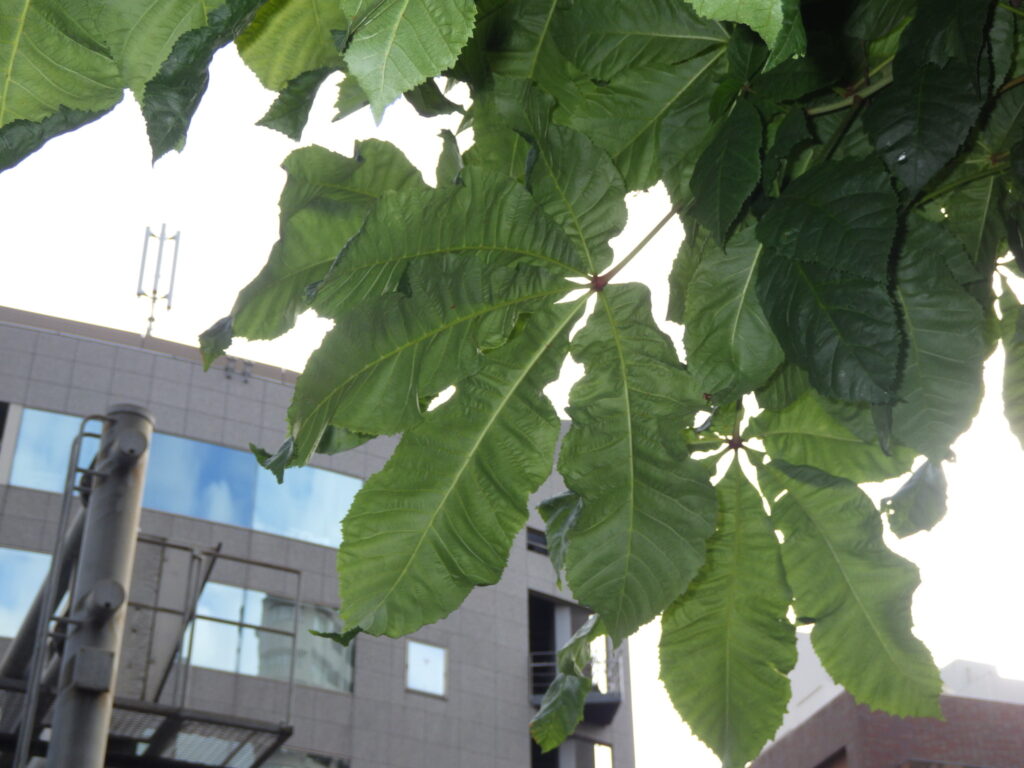
Morphologically, it is large and has very distinctive leaves that are divided into five or seven leaflets, known as "pentapinate palmate compound leaves" or "septapinate palmate compound leaves." This makes it stand out even from a distance.
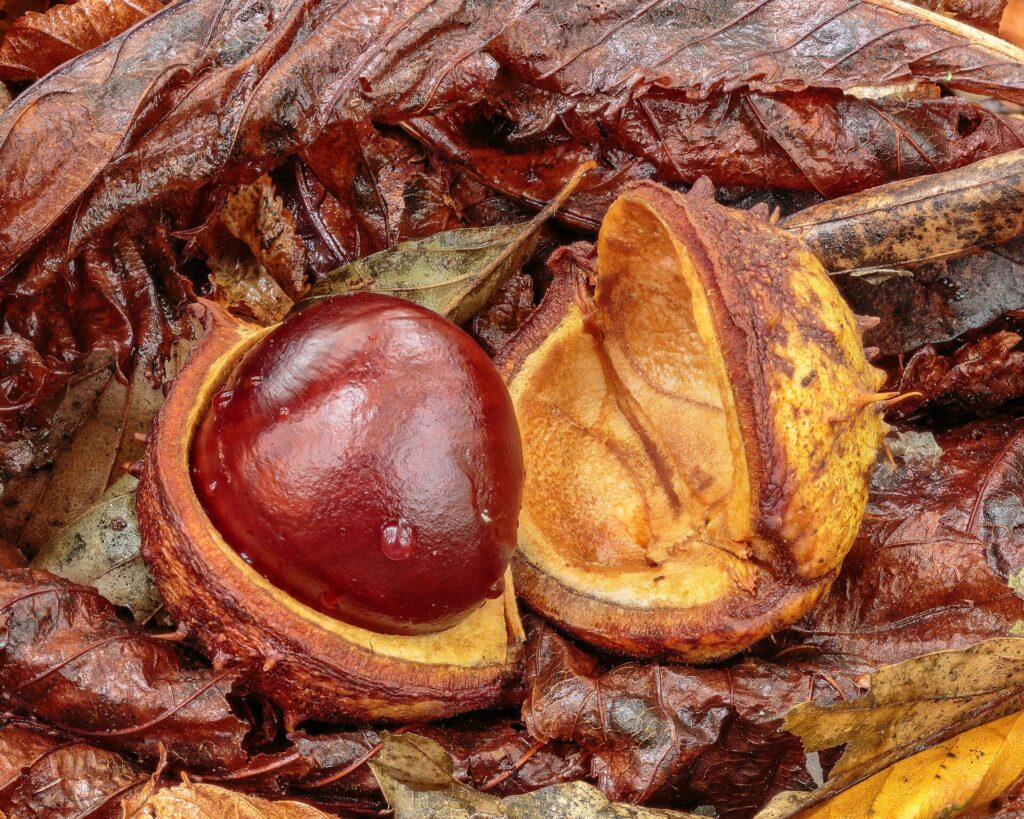
Horse chestnut trees, in particular, have had a deep connection with the Japanese people since ancient times. Seeds from the fruit, called "tochi no mi," have been unearthed from Jomon period ruins, and it is well known, even mentioned in textbooks, that the Jomon people ate them along with acorns. Horse chestnuts, after being blanched to remove bitterness, were steamed with glutinous rice and pounded to make "tochi mochi," which was then eaten. However, because they contain a lot of tannins and saponins, and the blanching process is difficult, they were not eaten regularly and seem to have played a major role as a famine food.
In nature, horse chestnut nuts are known to have a selective effect on seed dispersers due to their hard seed coat and the bitterness of the tannins and saponins they contain. They are known to be eaten and dispersed by animals such as field mice, Japanese squirrels, and Asiatic black bears (Isaji and Sugita, 1997; Yamashina, 2017).
Although this tree has a deep connection with the Japanese people, many closely related species from Europe and America have been planted in recent years, and many people may be confusing them. It seems that many people mistakenly believe that the only difference is the color of the flowers.
Furthermore, it seems that the Japanese horse chestnut tree, which is native to Japan, is sometimes confused with the European horse chestnut tree, also known as "maronie," especially overseas. This is largely because both have white flowers and are very similar in shape.
What are the differences between the Japanese horse chestnut (Aesculus hippocastanum), European horse chestnut (Aesculus turbinata), red-flowered American horse chestnut (Aesculus erythrosora), and red-flowered horse chestnut (Aesculus sappanum)?
First, we will broadly classify the horse chestnut tree into the common horse chestnut, the European horse chestnut, the red-flowered American horse chestnut, and the red-flowered horse chestnut (Wu et al., 2007; Kanagawa Prefecture Flora Survey Association, 2018).
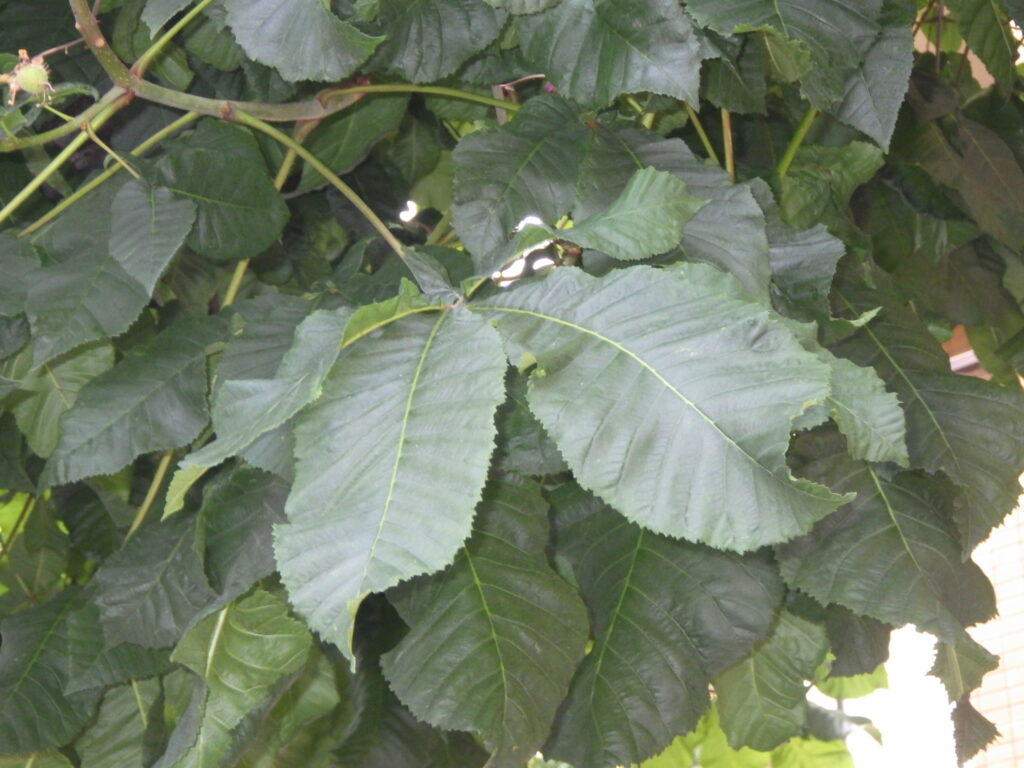
While the leaves of the Japanese horse chestnut (Aesculus hippocastanum) have blunt serrations, those of the European horse chestnut (Aesculus turbinata), red-flowered American horse chestnut (Aesculus erythrosora), and red-flowered horse chestnut (Aesculus sappanum) include sharp serrations.
In other words, while the serrations on the leaves of the horse chestnut tree give a rounded impression, those of other trees have sharp serrations that give a rougher impression.
In addition, the horse chestnut tree has white flowers, and the fruit peel does not have spine-like projections.
Looking only at the leaves, this species is most likely to be confused with the red horse chestnut (Aesculus hippocastanum) among the three species. However, the red horse chestnut has smaller leaflets, more prominent petioles, and the petioles tend to be red.
Looking only at the flowers, it is most likely to be confused with the European horse chestnut among the three species, but the European horse chestnut has double-serrated leaves and spine-like projections on the pericarp of its fruit.
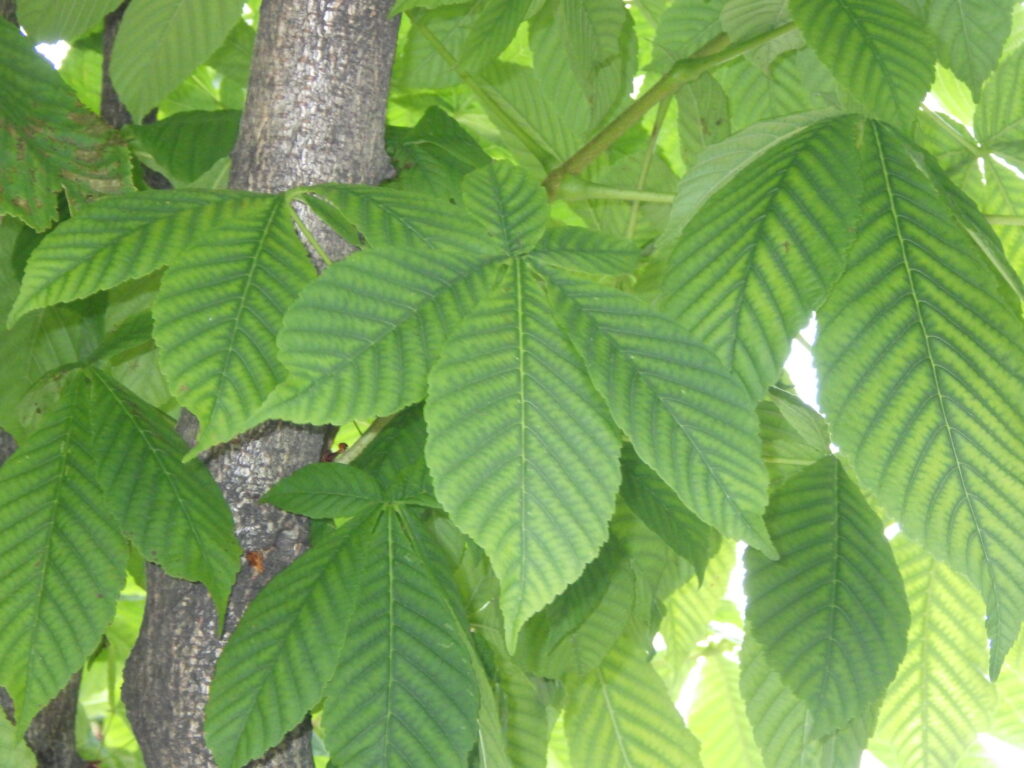
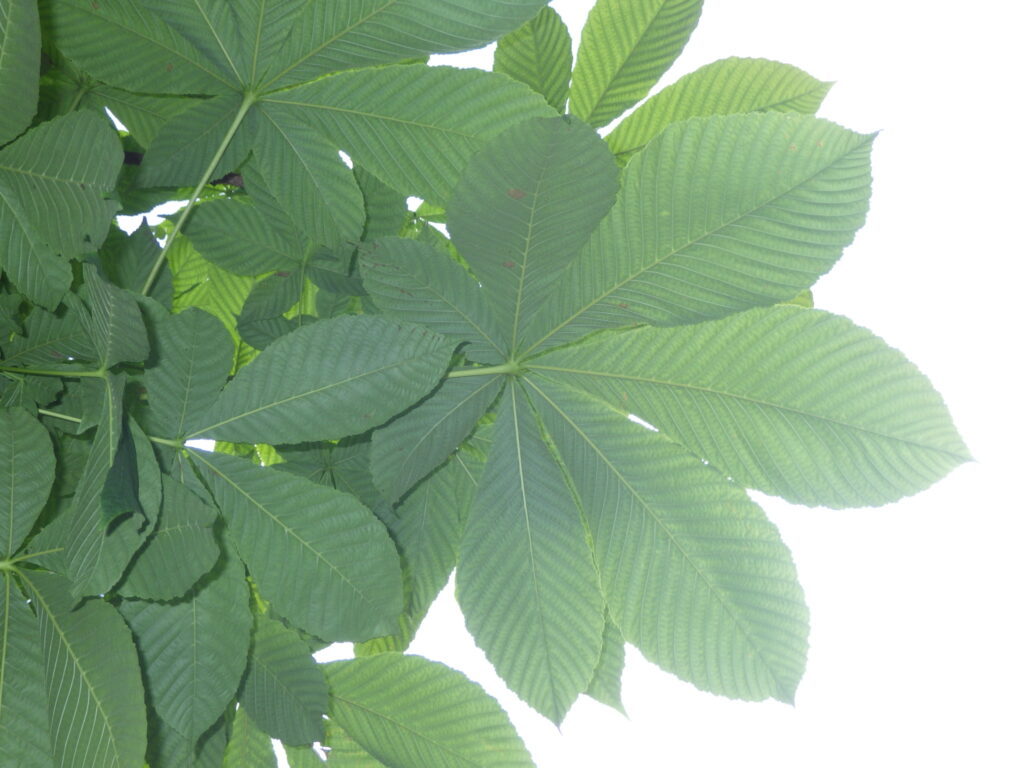
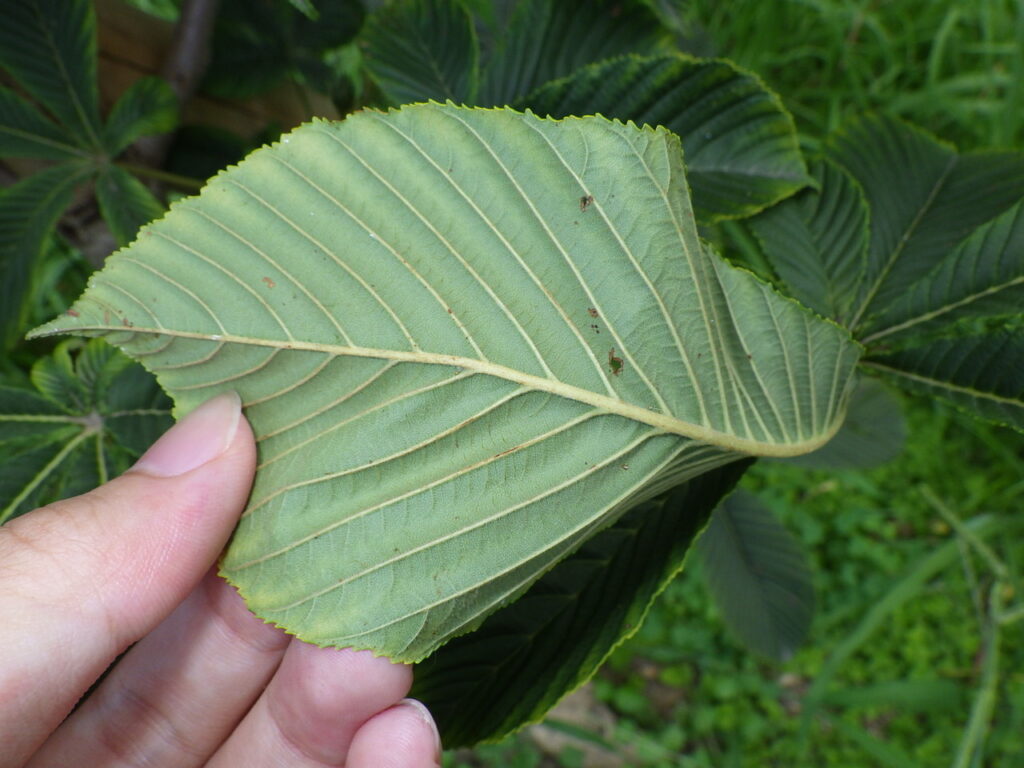
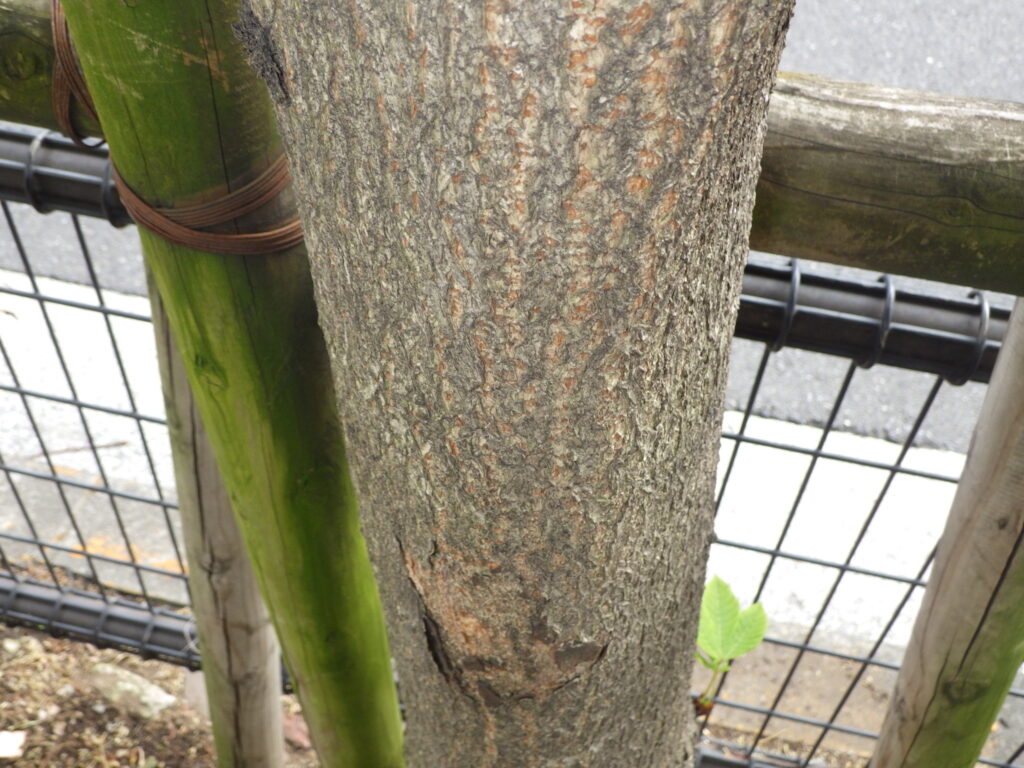


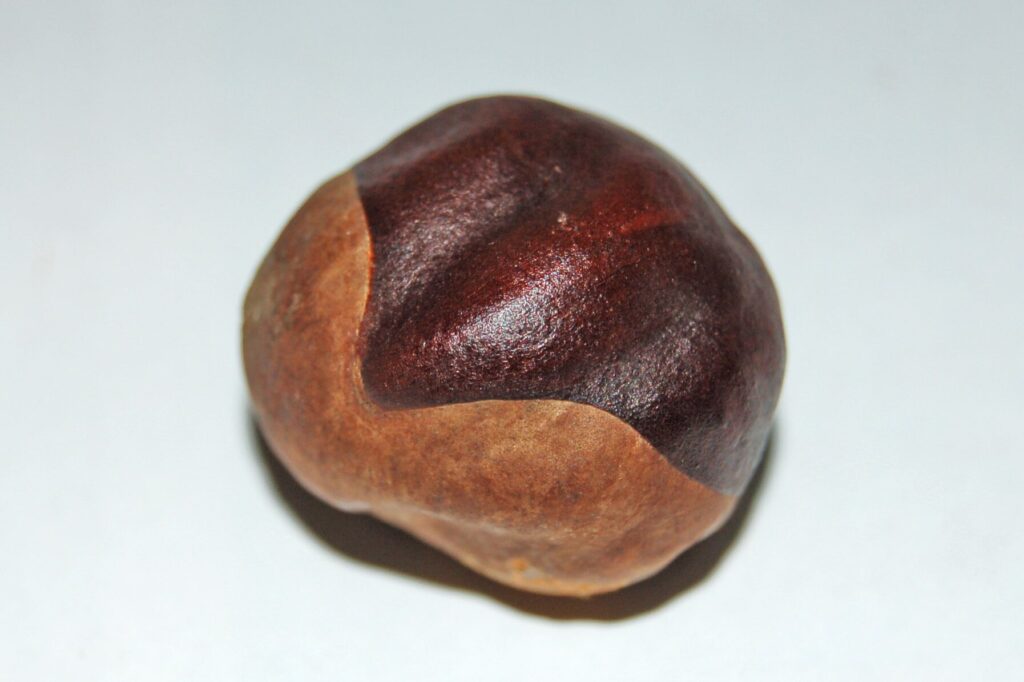
What are the differences between horse chestnut, red-flowered horse chestnut, and red-flowered horse chestnut?
The problem lies in distinguishing between the European horse chestnut, the red-flowered American horse chestnut, and the red-flowered horse chestnut, as the red-flowered horse chestnut is a hybrid, making differentiation difficult.
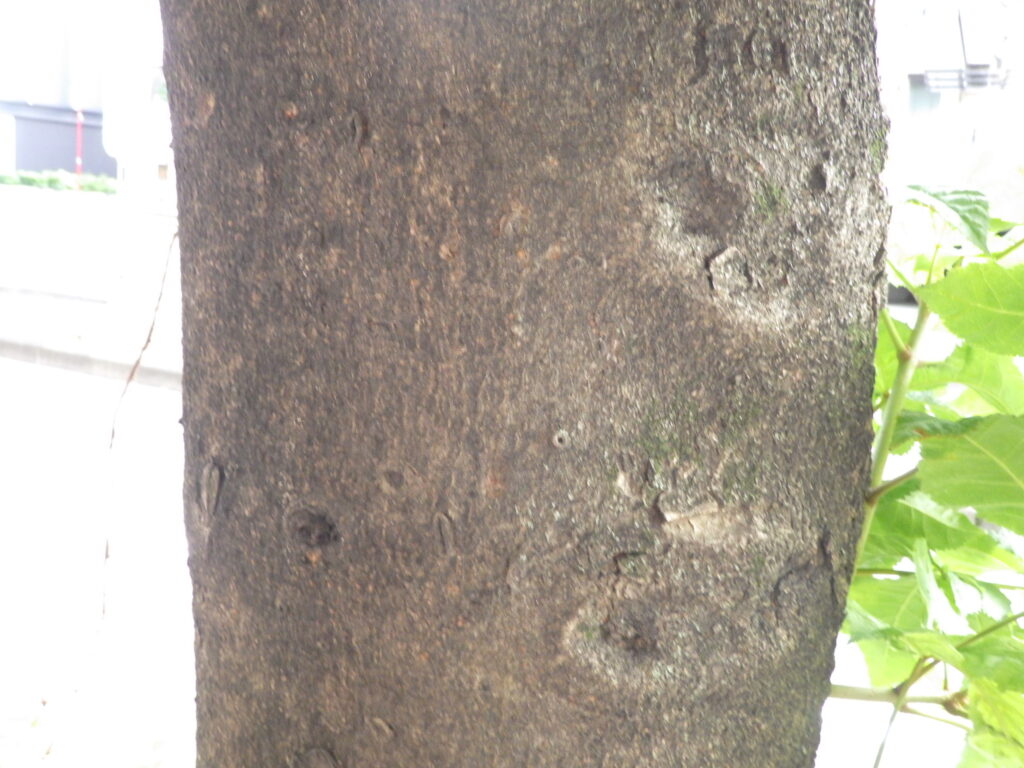
To distinguish between them, it's best to observe the leaves, flowers, and fruits comprehensively.
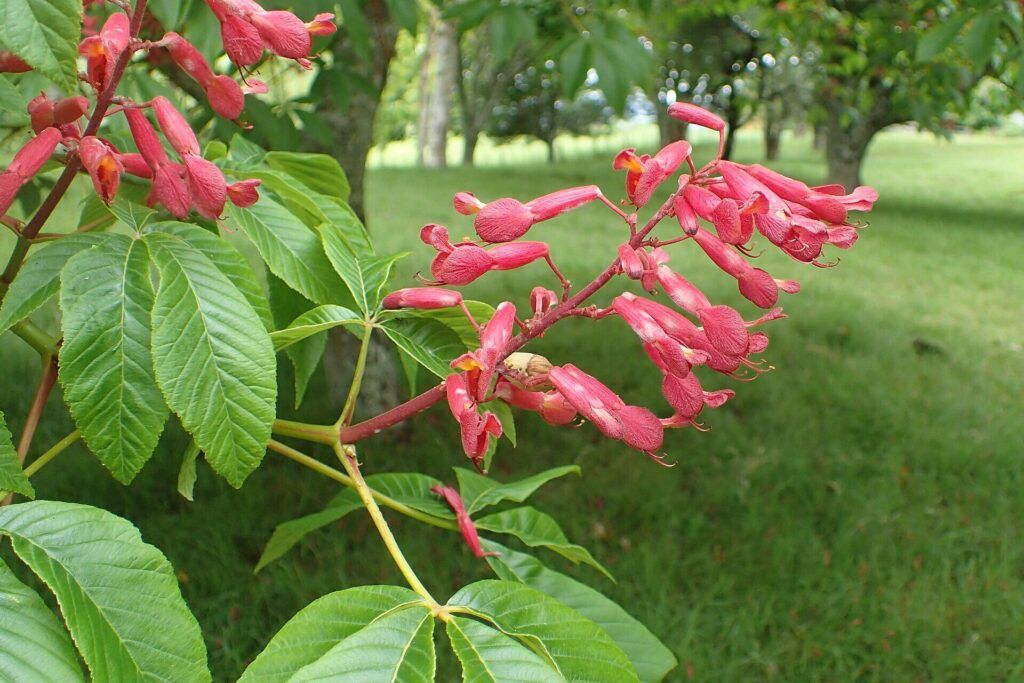
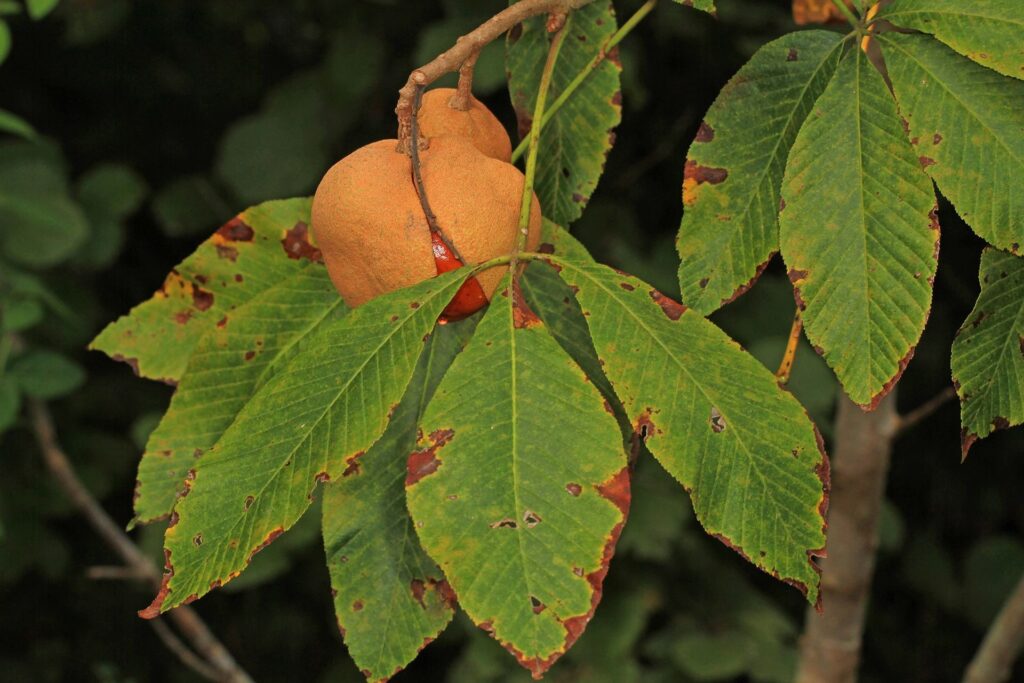
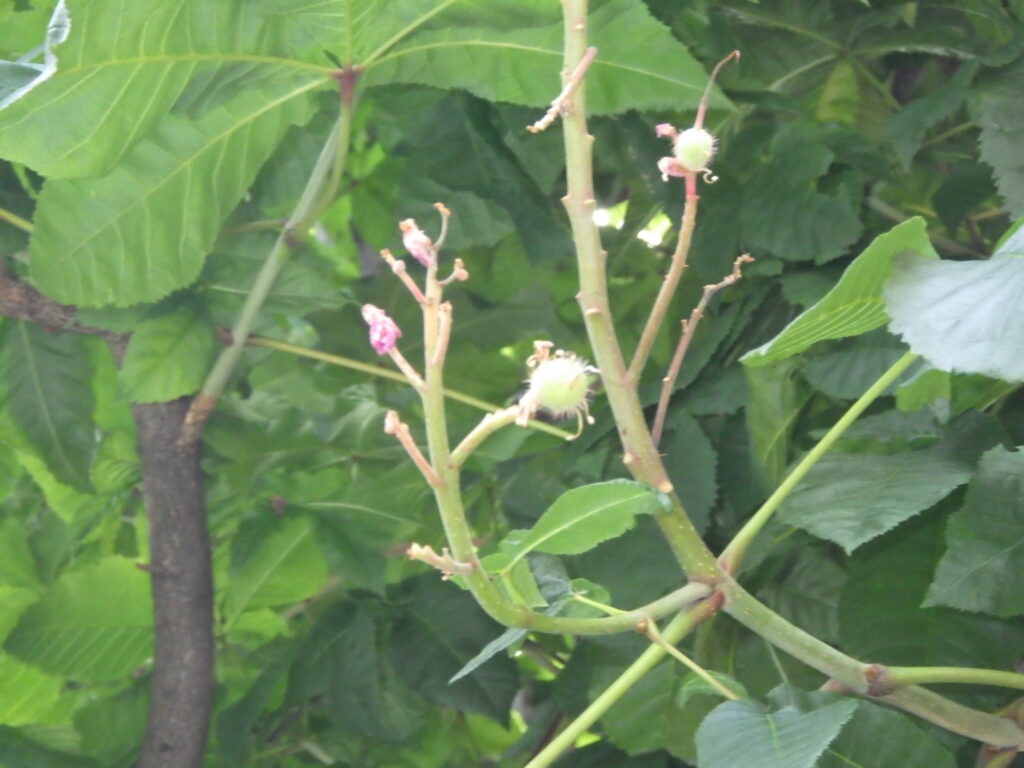
Specifically, the differences are as follows: European horse chestnut has double-serrated leaves, white flowers, and spine-like projections on the pericarp of its fruit; red horse chestnut has single-serrated leaves, red flowers, and no spine-like projections on the pericarp of its fruit; and red horse chestnut has double-serrated leaves, dark pink flowers, and spine-like projections on the pericarp of its fruit.
"Single serration" refers to a typical serration, while "double serration" refers to a more complex serration where there are serrations within other serrations.
Also, please note that the term "fruit" used here refers not to the "horse chestnut" itself (which is actually the seed), but to the pericarp that encloses the horse chestnut.
Furthermore, there are differences in flower shape: the European horse chestnut has open flowers, the red-flowered American horse chestnut has tubular flowers, and the red-flowered horse chestnut is a hybrid with an intermediate shape.
According to field guides, the above should allow for differentiation, but I have also seen red horse chestnut trees with less developed double serrations. Therefore, it is important to record the flowers and fruits. Depending on the time of year, differentiation may be difficult.





References
Isaji, Hisamichi & Sugita, Hisashi. 1997. Transport of horse chestnut seeds after gravity fall by small animals. Journal of the Ecological Society of Japan 47(2): 121-129. https://doi.org/10.18960/seitai.47.2_121
Kanagawa Prefecture Flora Survey Association. 2018. Kanagawa Prefecture Flora 2018 (Electronic Edition). Kanagawa Prefecture Flora Survey Association, Odawara. 1803pp. ISBN: 9784991053726
RBG Kew. 2024. The International Plant Names Index and World Checklist of Vascular Plants. Plants of the World Online. http://www.ipni.org and https://powo.science.kew.org/
Wu, ZY, Raven, PH, & Hong, DY (Eds.). 2007. Flora of China (Vol. 12 Hippocastanaceae through Theaceae). Science Press, Beijing, and Missouri Botanical Garden Press, St. Louis. ISBN: 9781930723641
Yamashina, Chisato. 2017. Predation of horse chestnuts by wild animals in the Kuchiki region. Abstracts of the Association of Japanese Geographers 2017: S1204. https://doi.org/10.14866/ajg.2017s.0_100012