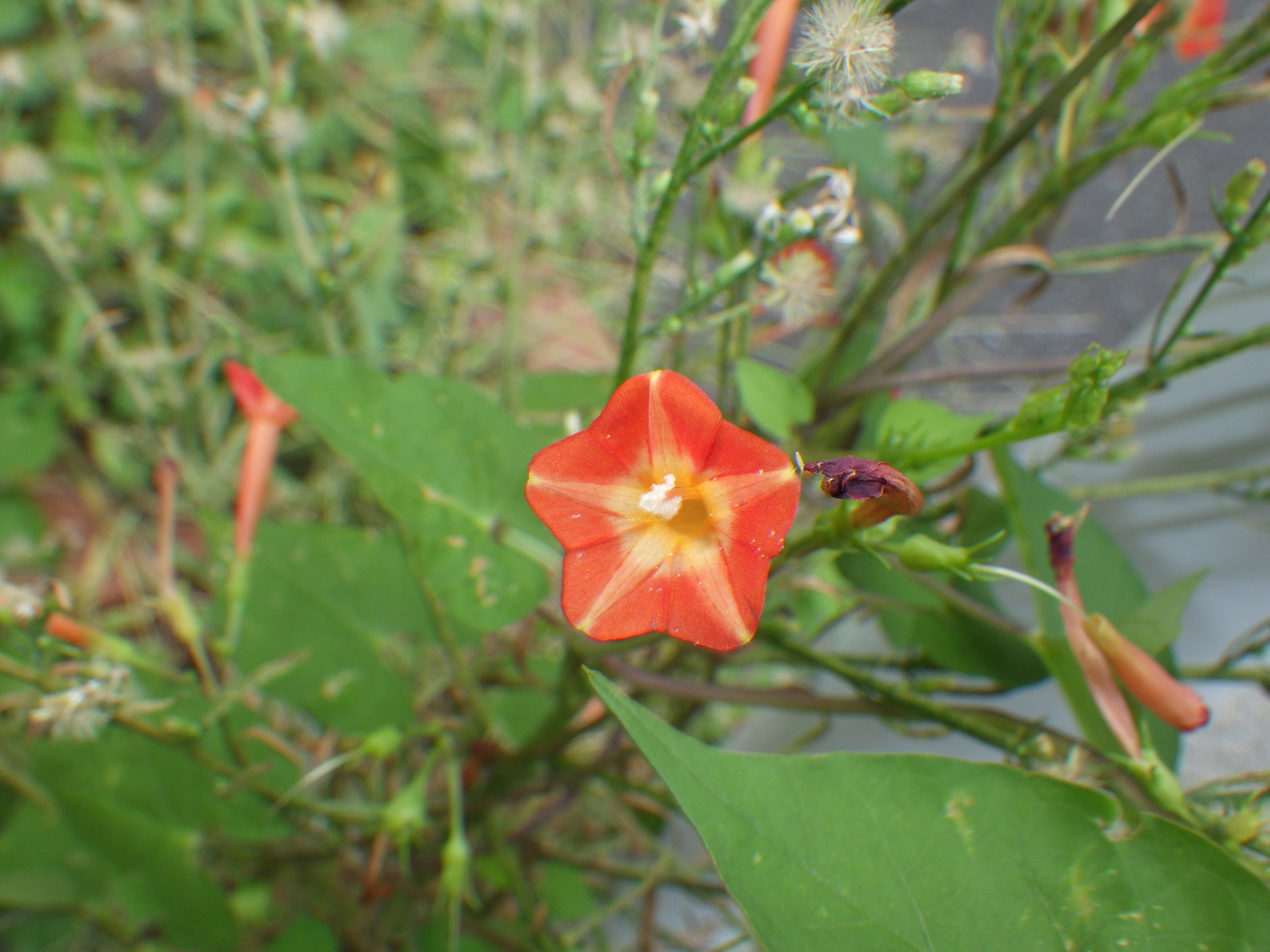
Ipomoea quamoclit, Ipomoea quamoclit, Ipomoea quamoclit, and Ipomoea quamoclit all belong to the Ipomoea genus of the Convolvulaceae family. These are climbing annuals native to tropical America, and in Japan, they have become naturalized after being cultivated as ornamental plants. While distinguishing them is relatively easy, it may be difficult if you are unfamiliar with all four species. To understand the differences between these four species, it is essential to examine the leaves. Therefore, be sure to record the leaves. The flowers are funnel-shaped, fused petals, similar to morning glories, as is typical of the Convolvulaceae family. The fruit is a capsule, common to all species in the Ipomoea genus. This article will explain the classification and morphology of Ipomoea quamoclit, Ipomoea quamoclit, Ipomoea quamoclit, and Ipomoea quamoclit.
- What are Ipomoea quamoclit, Ipomoea quamoclit, Ipomoea quamoclit, and Ipomoea quamoclit?
- What are the differences between Ipomoea quamoclit, Ipomoea quamoclit, Ipomoea quamoclit, and Ipomoea quamoclit?
- Are there any other similar types?
- What is the structure of a flower?
- What is the structure of the fruit?
- References
What are Ipomoea quamoclit, Ipomoea quamoclit, Ipomoea quamoclit, and Ipomoea quamoclit?
Ipomoea quamoclit, also known as morning glory, is a climbing annual plant native to tropical America. In Japan, it has been cultivated for ornamental purposes for a long time, and wild specimens can also be found (Kanagawa Prefecture Flora Survey Association, 2018). Compared to Ipomoea quamoclit, it is much less commonly seen in the wild, and records of escaped cultivation are rare.
Ipomoea x multifida, also known as "Momijirukou" (Japanese maple vine), is a horticultural plant obtained by crossing Ipomoea quamoclit and Ipomoea quamoclit, and like Ipomoea quamoclit, it is widely cultivated as an ornamental plant.
Ipomoea coccinea, also known as round-leaved crimson quince, is a climbing annual plant native to tropical America. Records indicate it was introduced to Japan during the Edo period. It is a naturalized plant, particularly common in warmer regions, and is also known as a tonic weed in fields.
Ipomoea hederifolia, also known as ivy-leaved red vine, is an annual climbing plant native to tropical America. It has naturalized in tropical to warm temperate regions worldwide, and the first recorded instance in Japan was in 1998 when it was collected in Koike Higashihara, Kanagawa Prefecture.
All of these plants belong to the Ipomoea genus of the Convolvulaceae family. They are climbing annuals native to tropical America and are cultivated in Japan for ornamental purposes, sometimes escaping cultivation and becoming naturalized. They all share the characteristic of having small corollas, less than 2 cm in diameter, and a bright red color, which is often why they are popular as ornamental plants. They also share the common Ipomoea genus features of having a single style and a spherical, unbranched stigma.
While the distinction is relatively easy, it might be difficult if you don't recognize all four types.
In particular, *Rumex rotundifolia* is often sold as "Ipomoea quamoclit" in horticulture, so it's highly likely that the two are being confused.
Furthermore, since Ilex crenata is very similar to Ilex rotunda, it is highly likely that they are being confused.
What are the differences between Ipomoea quamoclit, Ipomoea quamoclit, Ipomoea quamoclit, and Ipomoea quamoclit?
To understand the differences between these four species, it's essential to examine their leaves.
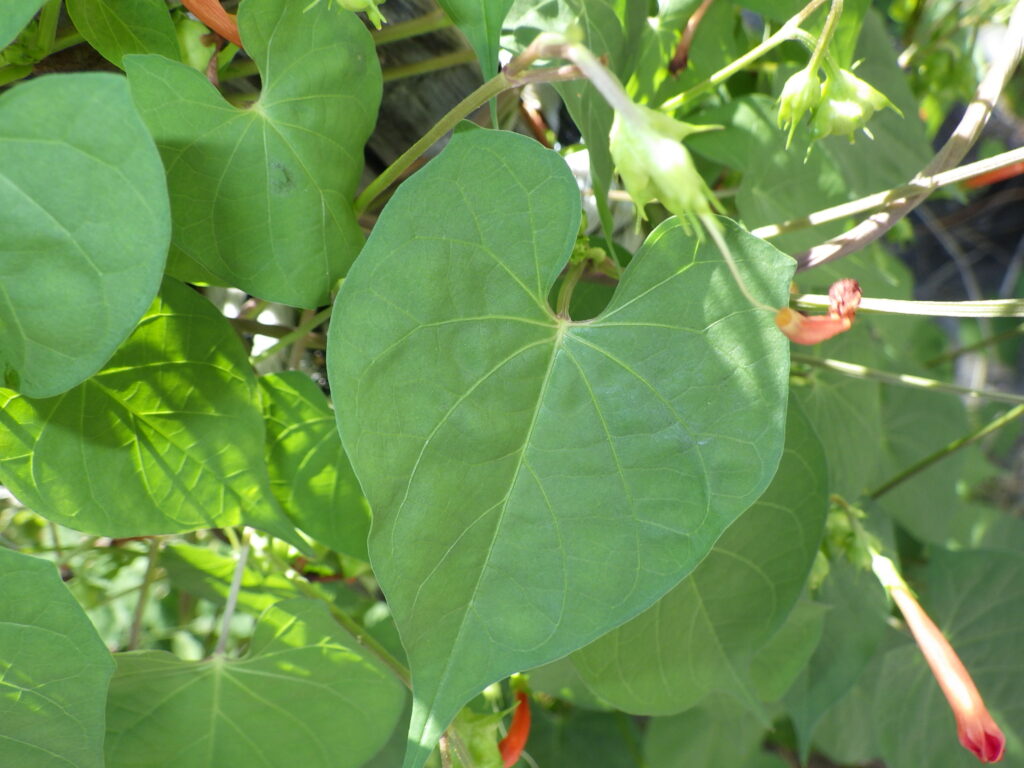
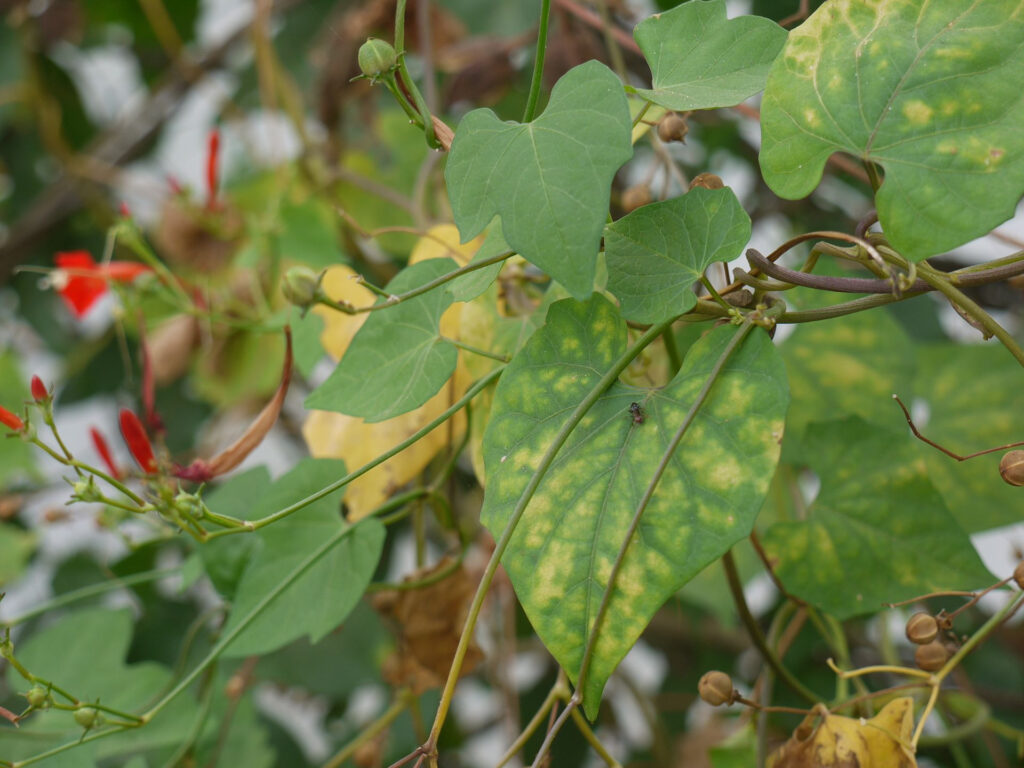
First, they can be broadly classified based on the difference that Ipomoea quamoclit and Ipomoea quamoclit have deeply lobed leaves, while Ipomoea quamoclit and Ipomoea quamoclit have entire or shallowly three-lobed leaves.
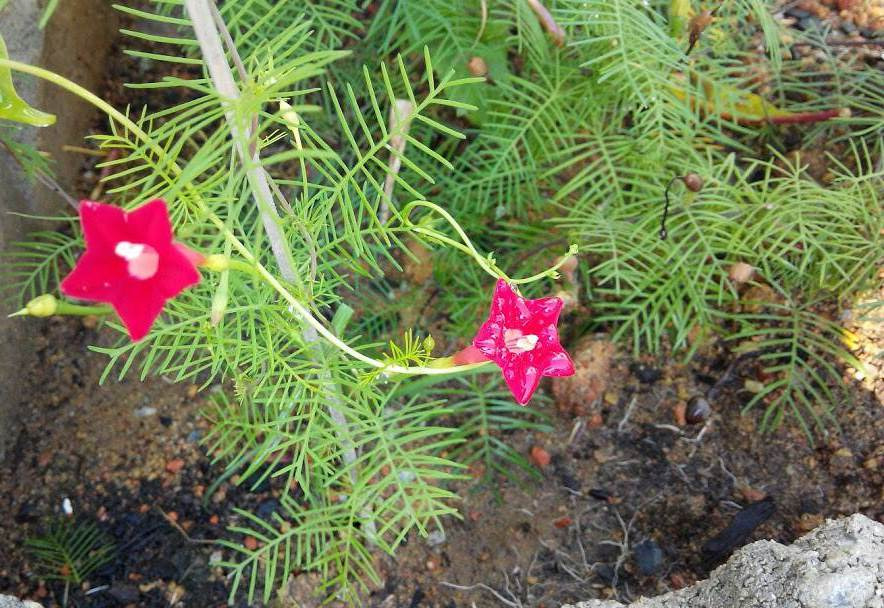
Because the leaves of Ipomoea quamoclit and Ipomoea quamoclit have very fine incisions, if you carefully examine the leaves, you are unlikely to mistake them for the other two species.
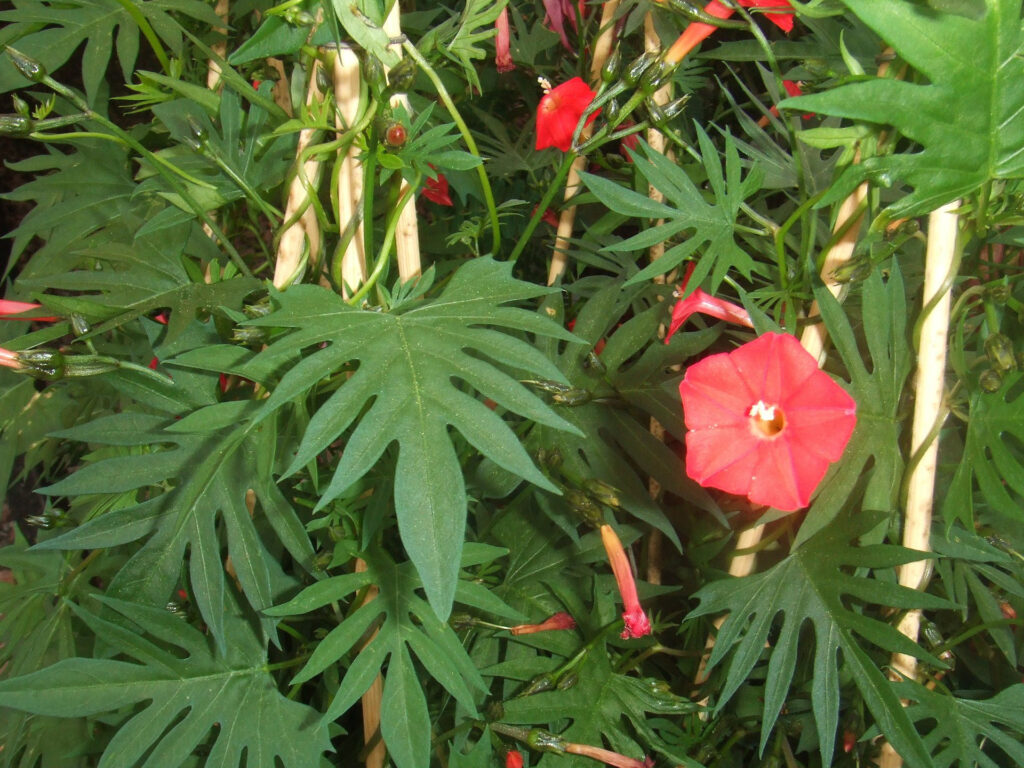
One difference between Ipomoea quamoclit and Ipomoea quamoclit is that Ipomoea quamoclit has pinnately lobed leaves, while Ipomoea quamoclit has palmately lobed leaves.
In other words, in Ipomoea quamoclit, the leaves grow outwards from a narrow central leaf, resembling a feather, while in Ipomoea quamoclit, the leaves grow outwards radially from the petiole, resembling the palm of a hand. You should be able to see the difference if you observe carefully.
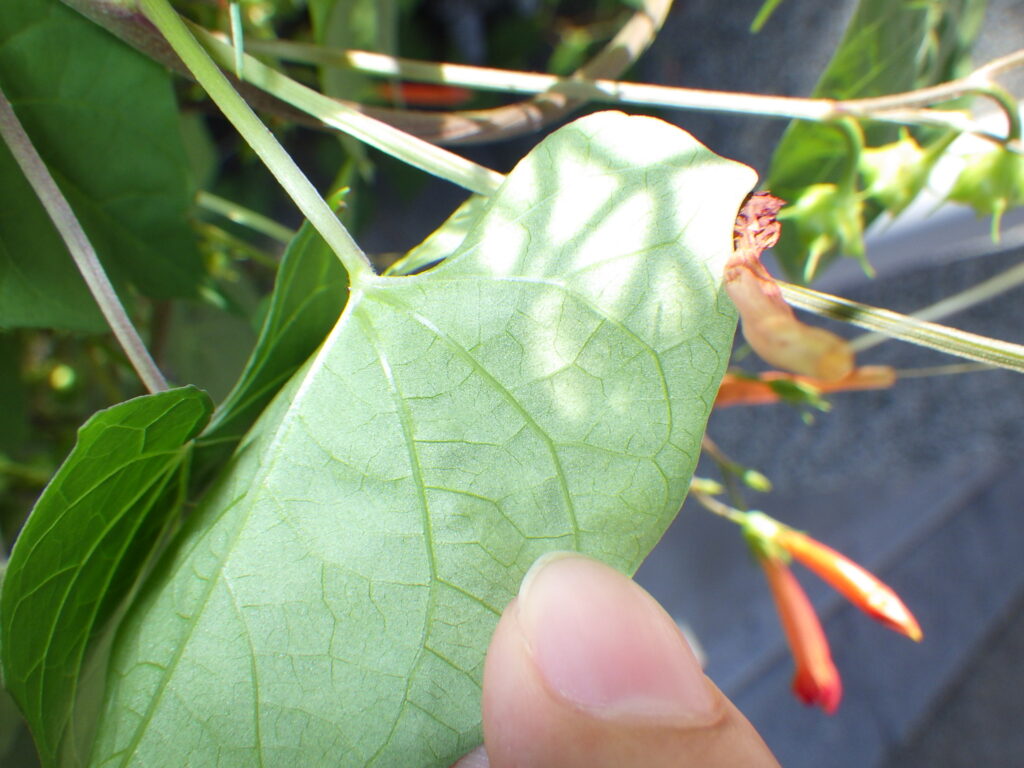
The difference between Ipomoea quamoclit and Ipomoea purpurea is that in Ipomoea quamoclit, all the leaves are entire or have a pair of corners on either side, and the seeds are black with scattered very short hairs, while in Ipomoea purpurea, the lower leaves of the stem are entire, but the upper leaves are shallowly three-lobed, and the seeds are mottled with dark brown and brown and densely covered with silvery-white downy hairs.
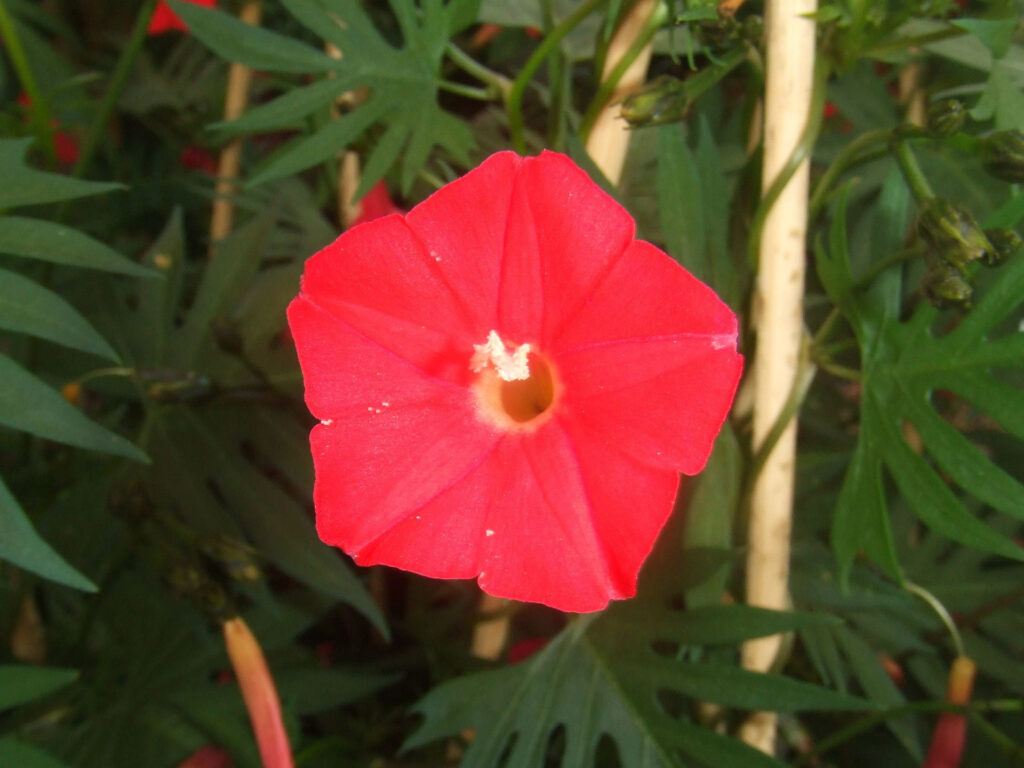
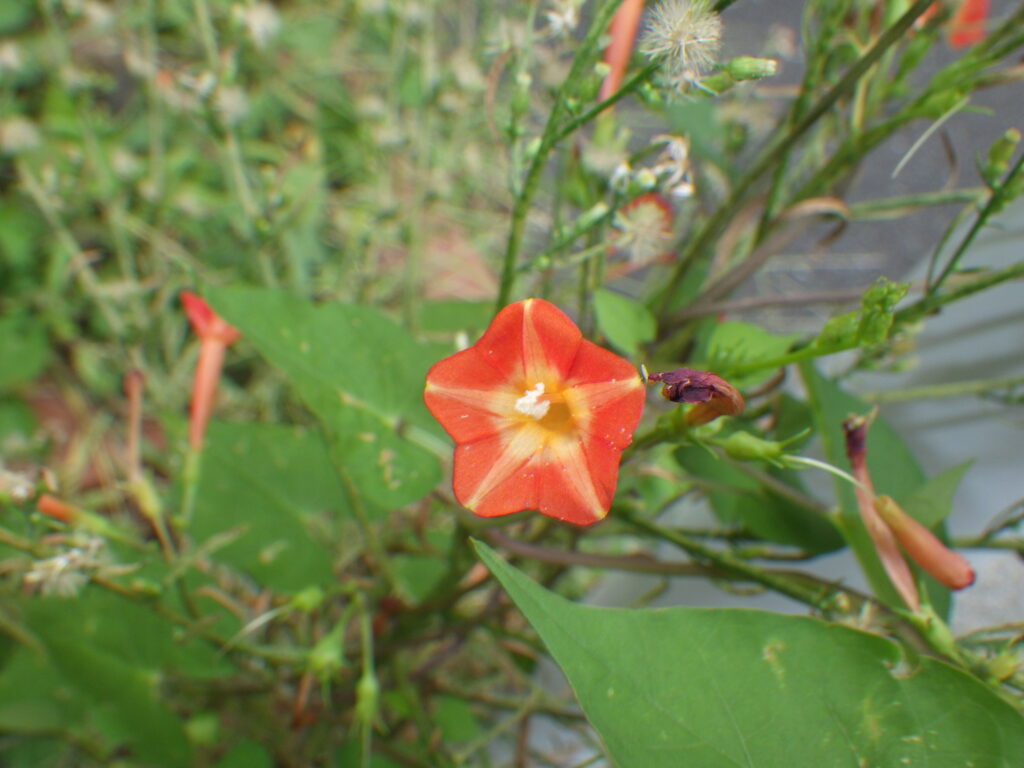
These two species are a little difficult to distinguish, but it's especially important to carefully record the upper part of the leaves. There are also differences in the flowers. In Ipomoea quamoclit, the center of the outer part of the corolla and the inside of the tube are yellow, while in Ipomoea quamoclit, the inside of the tube is yellow, but the center of the outer part of the corolla is red. So, be sure to check when the flowers are in bloom.

Are there any other similar types?
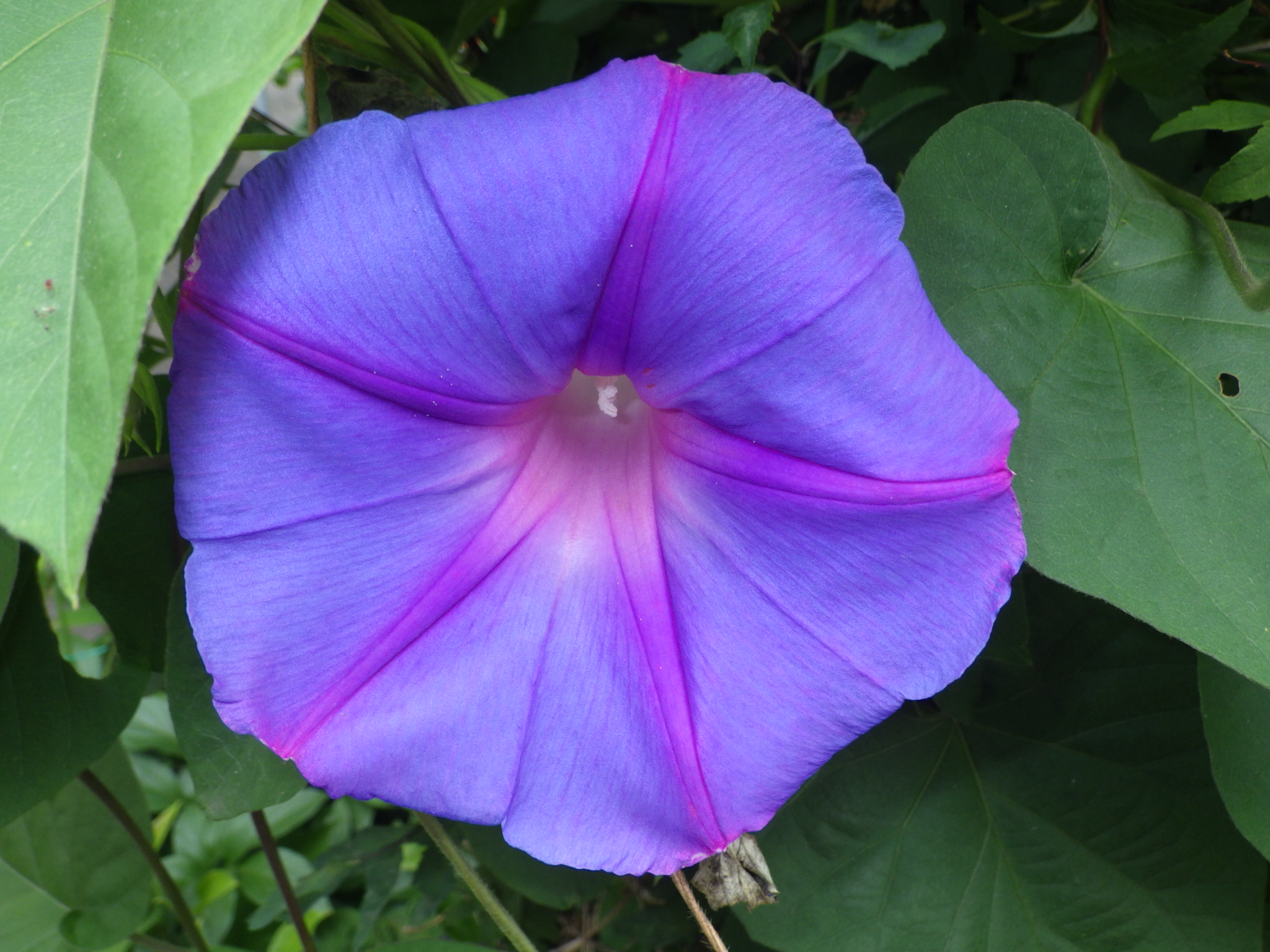
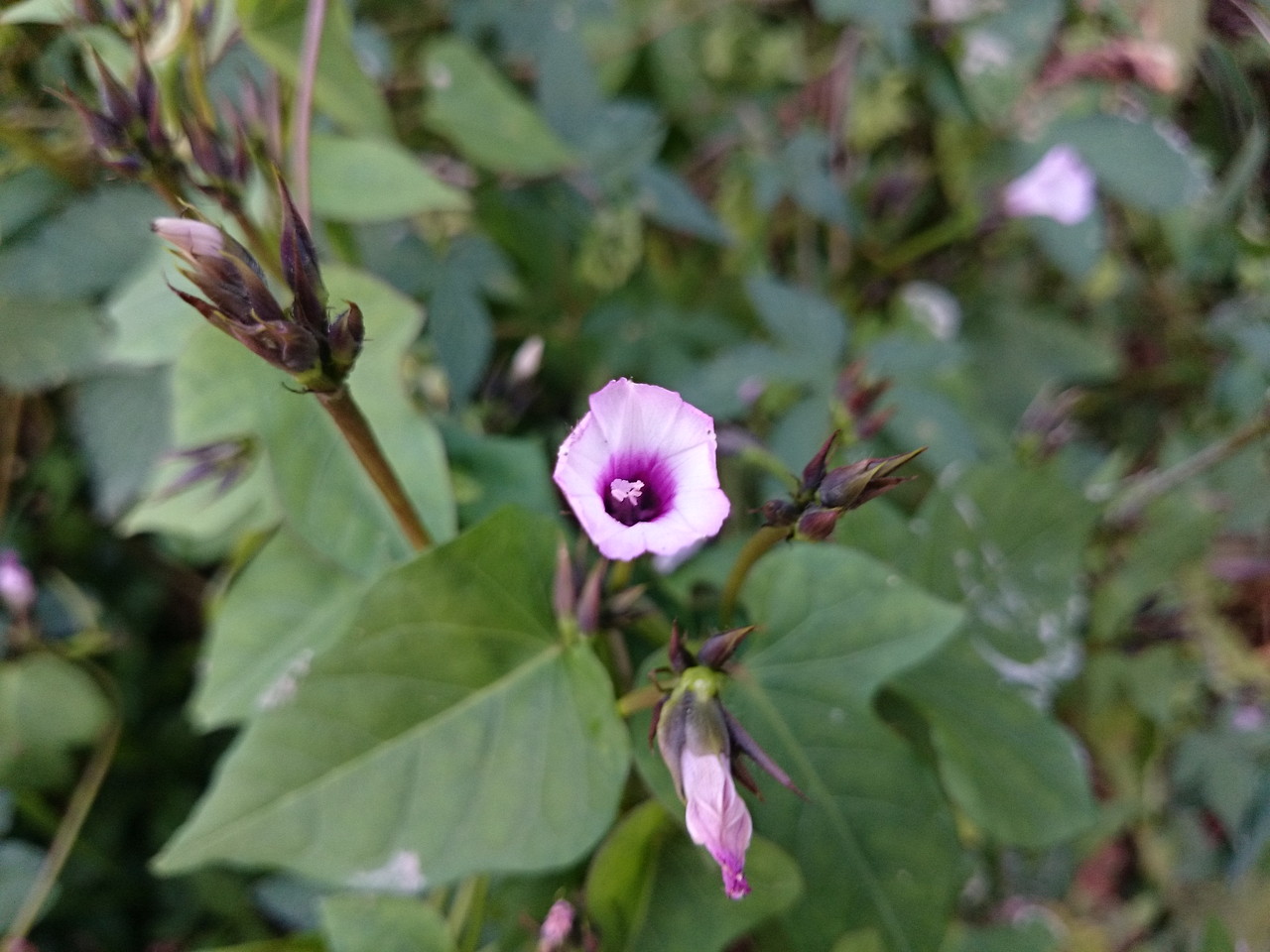
The sweet potato genus includes many species, but no species with bright red corollas are known.
For information on other species in the Ipomoea genus, please see our separate article.
What is the structure of a flower?
The flowers, typical of the Ipomoea genus in the Convolvulaceae family, are funnel-shaped, fused-petal flowers similar to morning glories. The most distinctive feature of all four species is their red color.
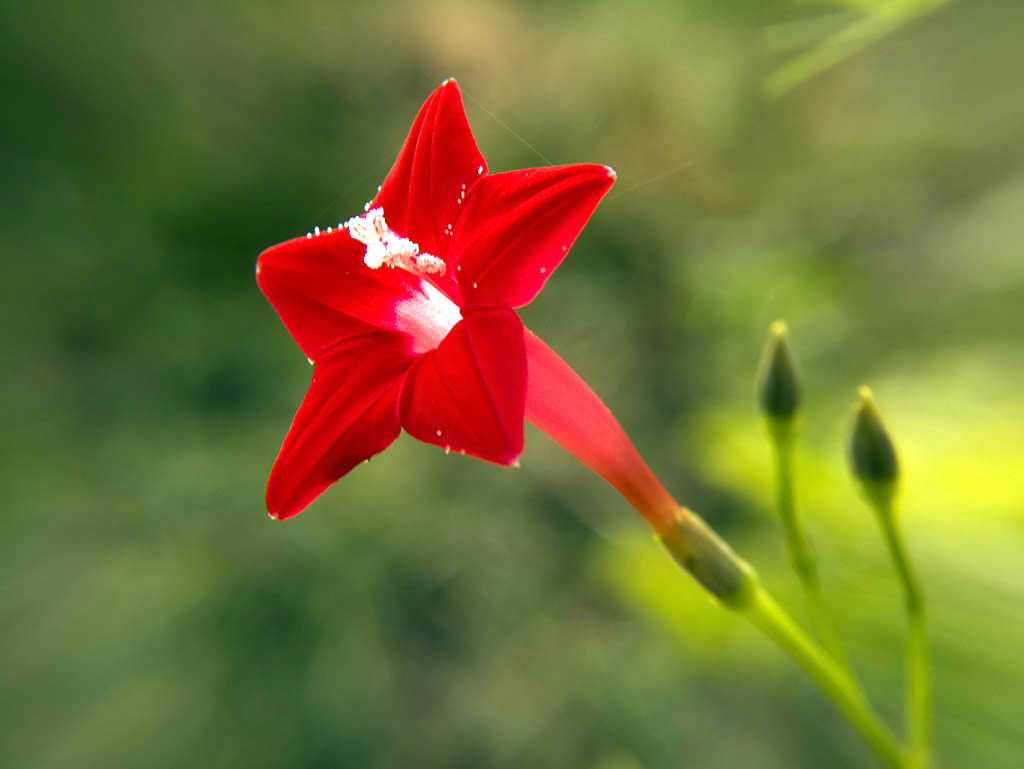
Ipomoea quamoclit blooms from August to October. The flowers grow in clusters of one or two in the leaf axils, and are funnel-shaped with a long tube about 2 cm in diameter and 3-4 cm long, with long pedicels. The flowers are usually deep red in color. When viewed from above, the corolla appears star-shaped.
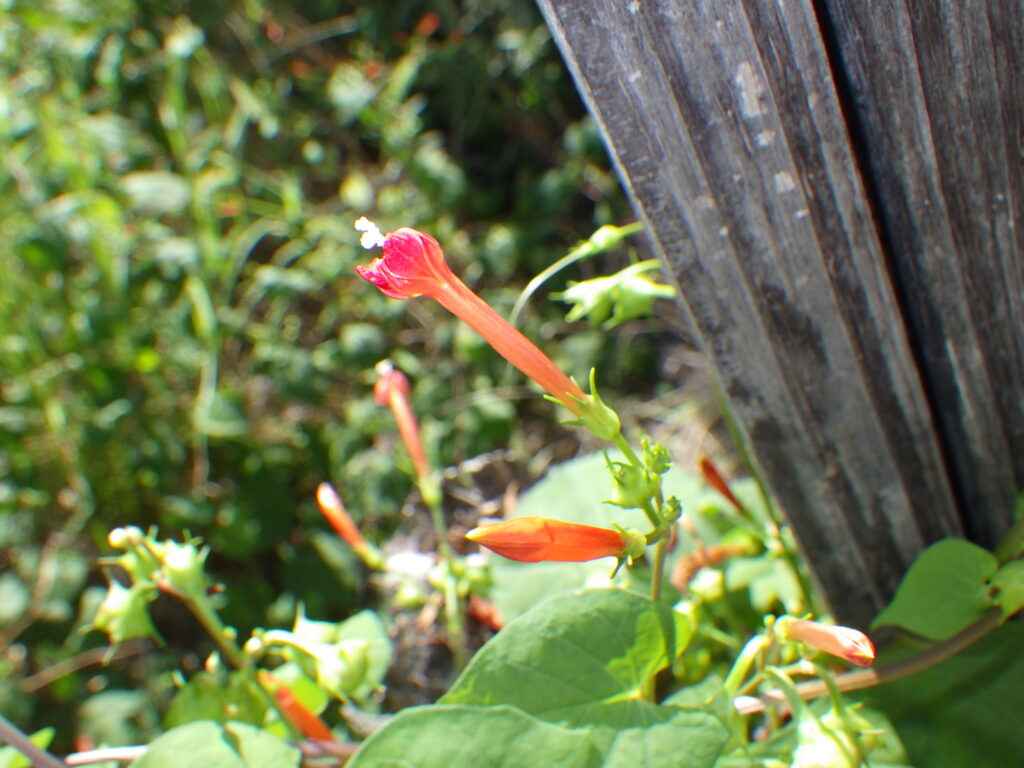
Ipomoea quamoclit blooms from August to October. Each cymose inflorescence bears 2 to 8 flowers. The pedicels are 5 to 15 mm long, erect, and the flowers face upwards. The corolla is vermilion red, with a long, funnel-shaped (trumpet-shaped) tube about 3.5 cm long, and a pentagonal tip about 2 cm in diameter. Both the stamens and pistil protrude from the corolla. The calyx is 5-lobed and slender, pointed at the tip, and 3 to 3.5 mm long.
The flowering period of Ivy 'Harukou' in Japan is unknown. The flowers form either a cluster of several flowers or a solitary terminal inflorescence. The sepals are oblong to elliptic, 1.5–3 mm long, with obtuse to pointed tips, and have fleshy awns at the subterminal ends, 1.6–6 mm long, on the outside, and are glossy. The corolla is red to reddish-yellow, 2.5–4.5 cm long.
What is the structure of the fruit?
The fruit, common to all plants in the Ipomoea genus, is a capsule. A capsule consists of multiple carpels, and the pericarp is usually dry. It splits open to release the seeds.
The capsule of the morning glory plant is oval-shaped, about 8 mm long, and contains four seeds. The seeds are about 5 mm long.
The capsule of *Ipomoea quamoclit* is 6-8 mm wide, contains 4 seeds, and the fruit stalk curves downward. The seeds are 3-4 mm long, black to dark brown, and covered with fine hairs. The fruit is oval, about 8 mm long, and contains 4 seeds. The seeds are about 5 mm long.
The capsules of *Ilex crenata* are subglobose, 6-8 mm long. The seeds are dark brown or black and spherical.
References
Kanagawa Prefecture Flora Survey Association. 2018. Kanagawa Prefecture Flora 2018 (Electronic Edition). Kanagawa Prefecture Flora Survey Association, Odawara. 1803pp. ISBN: 9784991053726

