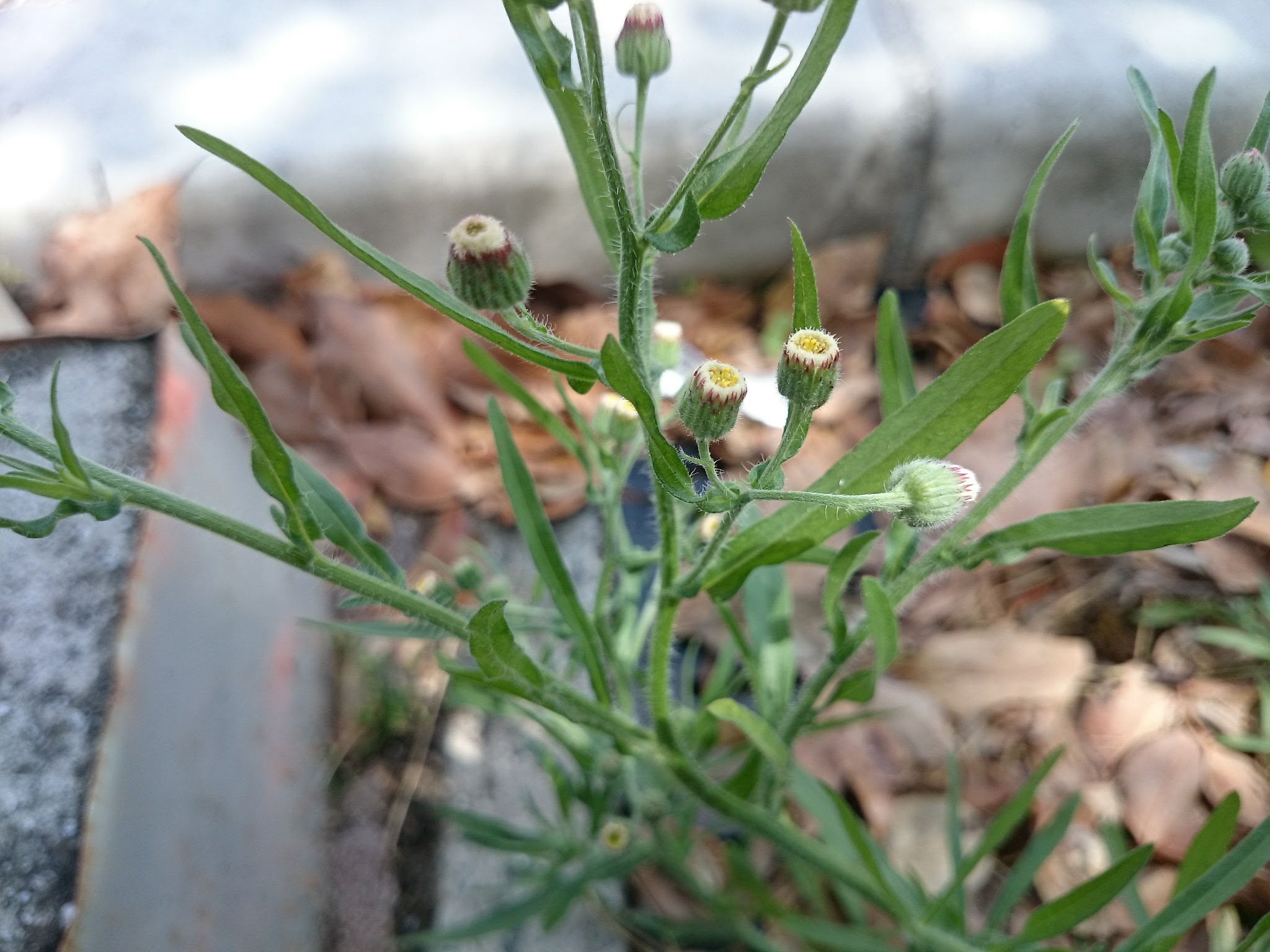
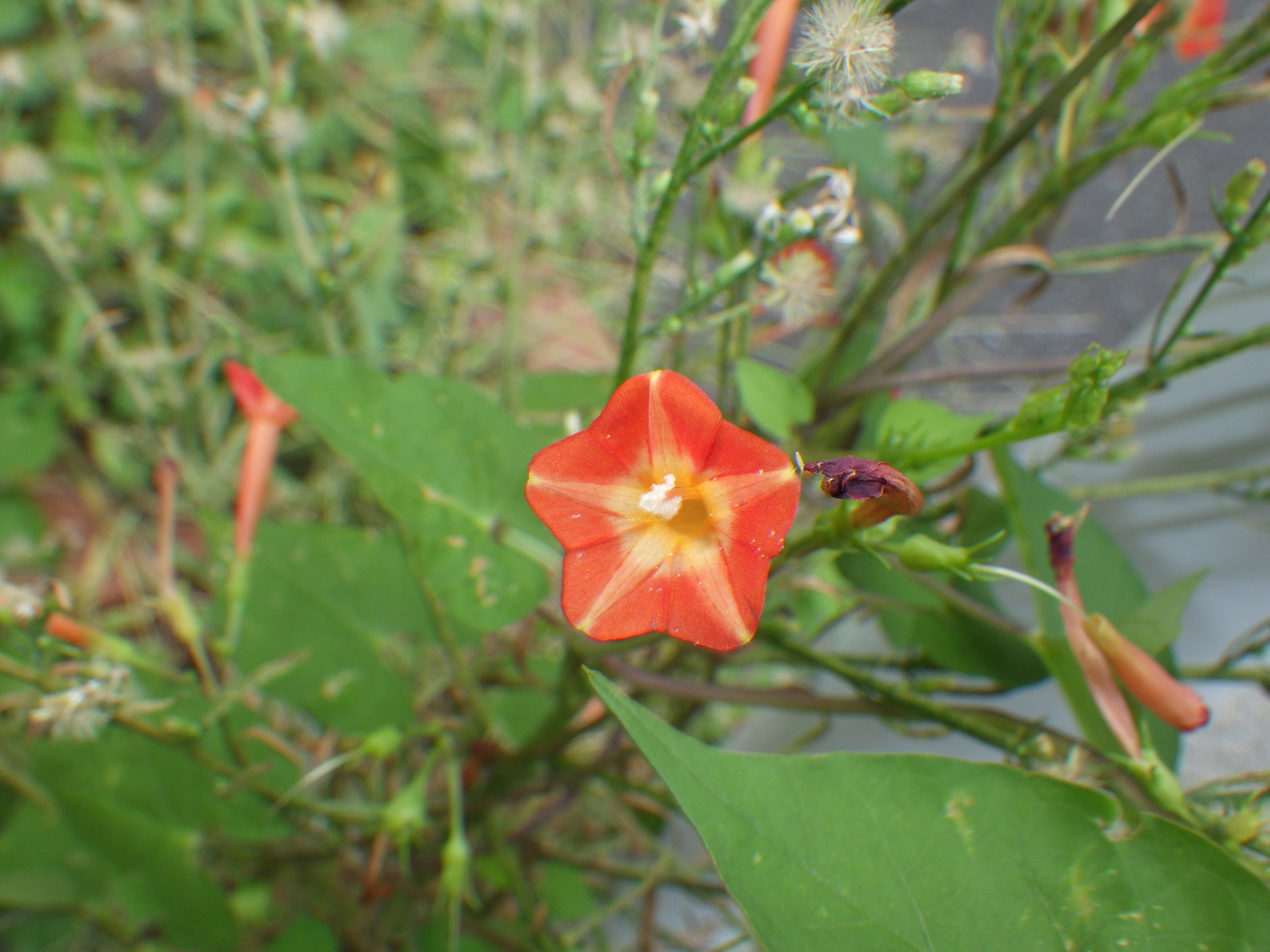
Lantana (Lantana japonica) and Lantana camtschatica both belong to the genus Lantana in the family Verbenaceae, and are evergreen shrubs characterized above all by their colorful and showy flowers. In Japan, both are frequently planted and can also be found growing wild. Therefore, it may be difficult to distinguish between them. However, there are differences in the leaves, flowers, and branches, and if you pay attention, it is easy to tell them apart. Lippia nodiflora is also a similar species, but it is a herbaceous plant used as a ground cover, and the only similarity is the shape of its flowers. The flowers are labiate and have very conspicuous colors that change color over time. The fruit is a compound fruit of berries. This article will explain the classification and morphology of the genus Lantana.
What is Lantana camara?
Lantana camara subsp. aculeata, commonly known as Lantana, is an evergreen shrub distributed from Central America to northern South America, growing in open wastelands and near the coast (RBG Kew, 2023). Originally cultivated as an ornamental plant, it has naturalized in tropical and subtropical regions worldwide and is listed among the world's 100 worst invasive alien species. In Japan, it is frequently seen as a garden plant or potted plant, but it can also become naturalized.
Lantana montevidensis, also known as small-leaved lantana, is an evergreen shrub native to central South America (RBG Kew, 2023). It is cultivated as an ornamental plant in various countries, including Japan, and occasionally naturalizes. In Japan, it is cultivated somewhat rarely as a garden tree, in pots, or in parks.
Both belong to the genus Verbenaceae, and their most distinctive feature is their colorful and showy flowers. In Japan, both are frequently planted and can also be found growing wild. Therefore, it can sometimes be difficult to distinguish between them.
What is the difference between Lantana and Lantana camtschatica?
There are also clear differences between Lantana and Lantana camtschatica (Hayashi, 2019).
First, regarding the inflorescence, in Lantana it is quite large and conspicuous, measuring 3-5 cm in diameter, while in Lantana camara var. japonica it is small, about 3 cm in diameter, as its name suggests.
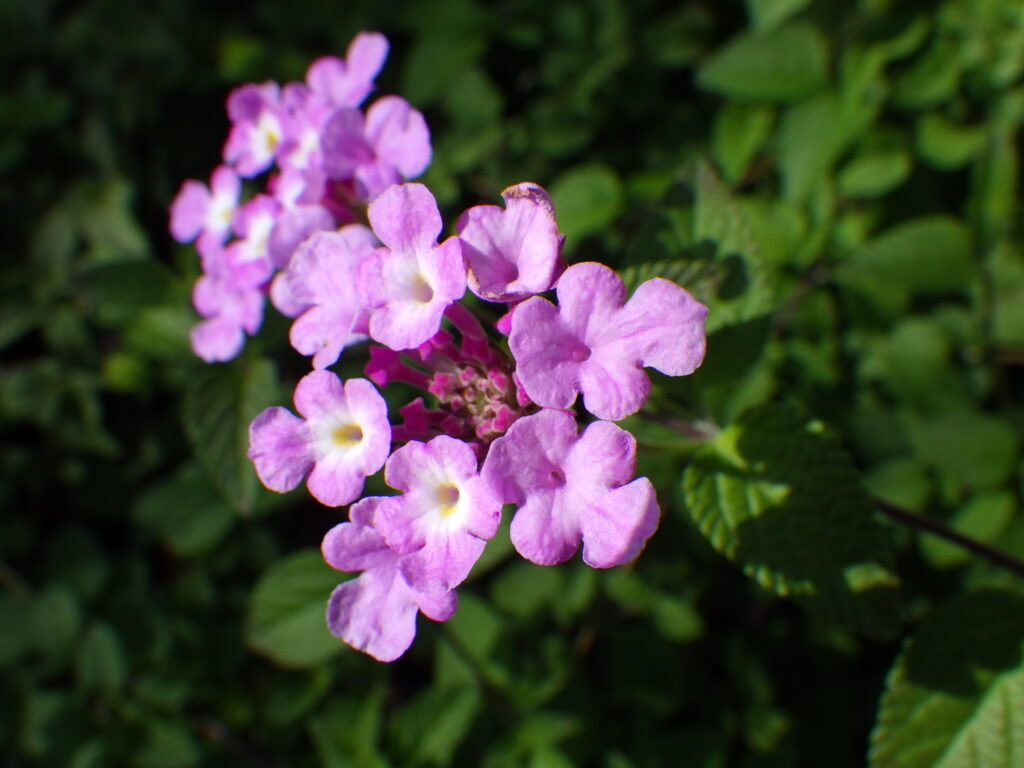
Regarding flower color, Lantana changes from yellow or orange to red as the days go by, while Lantana camara changes from pink to purple as the days go by. However, this is a characteristic of the original species.
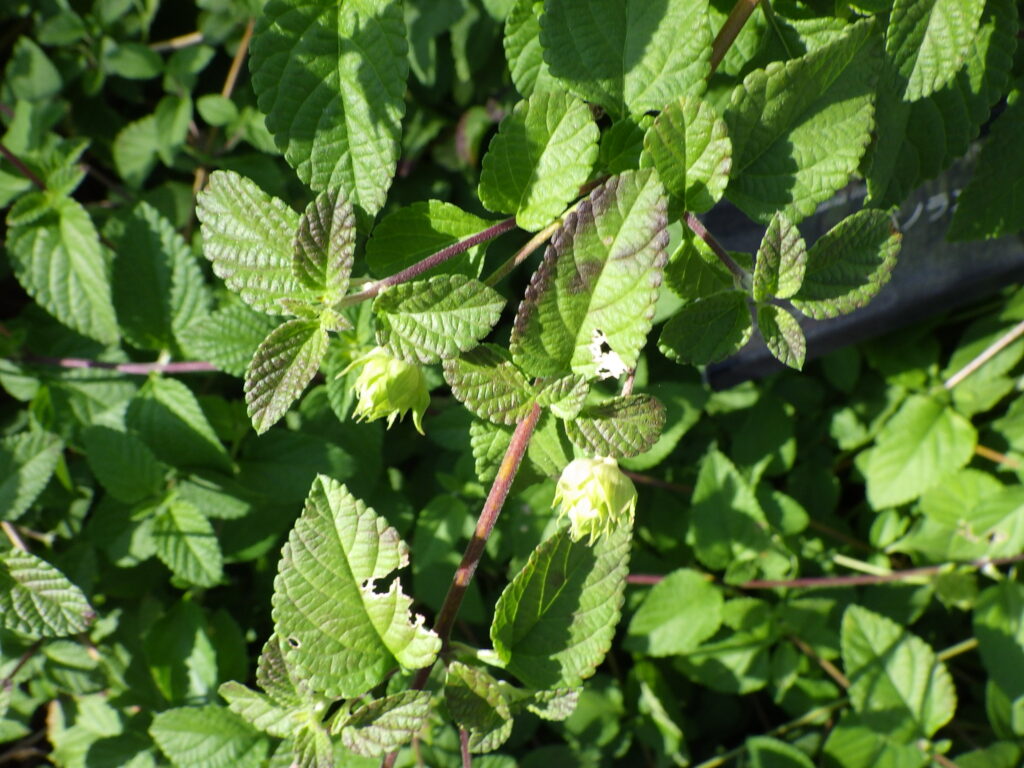
Regarding the leaves, Lantana has long leaf blades (5-12 cm) and petioles (1-2.5 cm), while Lantana camara has shorter leaf blades (2-4 cm) and petioles (0.3-1 cm).
Furthermore, regarding the branches, Lantana has ridges and a square cross-section, while Lantana camtschaticum lacks ridges and has a round cross-section.
In terms of growth habit, Lantana grows upright, while Lantana camtschaticum tends to creep along the ground.
Listing these should be enough to avoid making a mistake.
Incidentally, there is a subspecies of lantana called Lantana camara subsp. thornless, which has fewer spines.
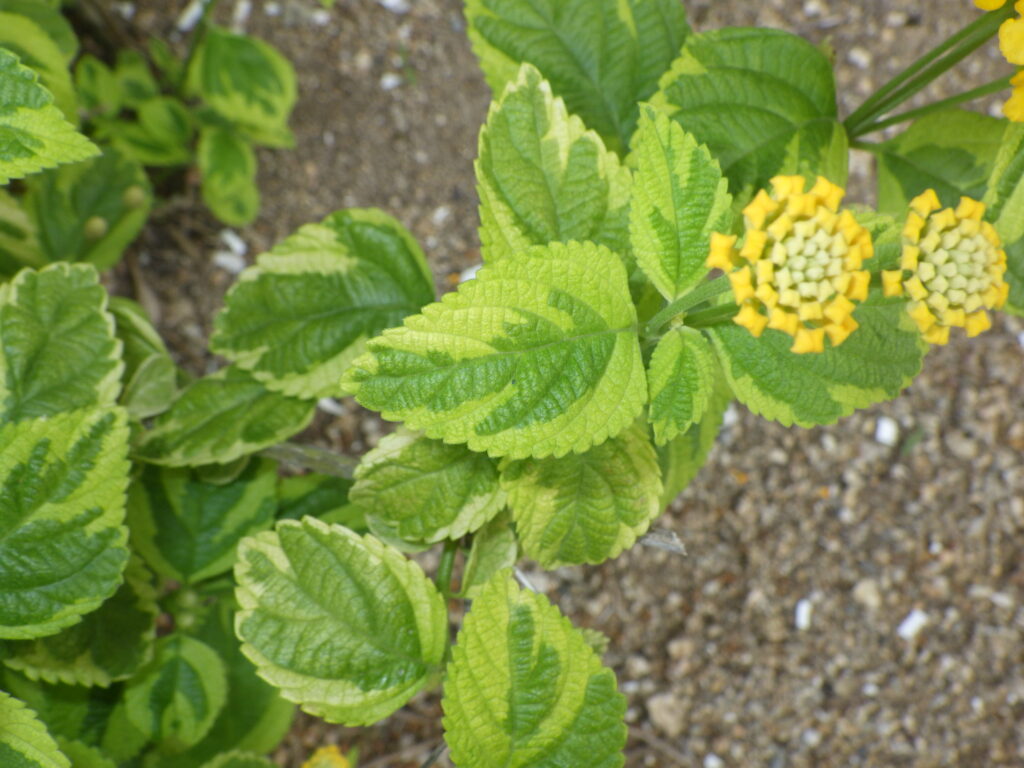
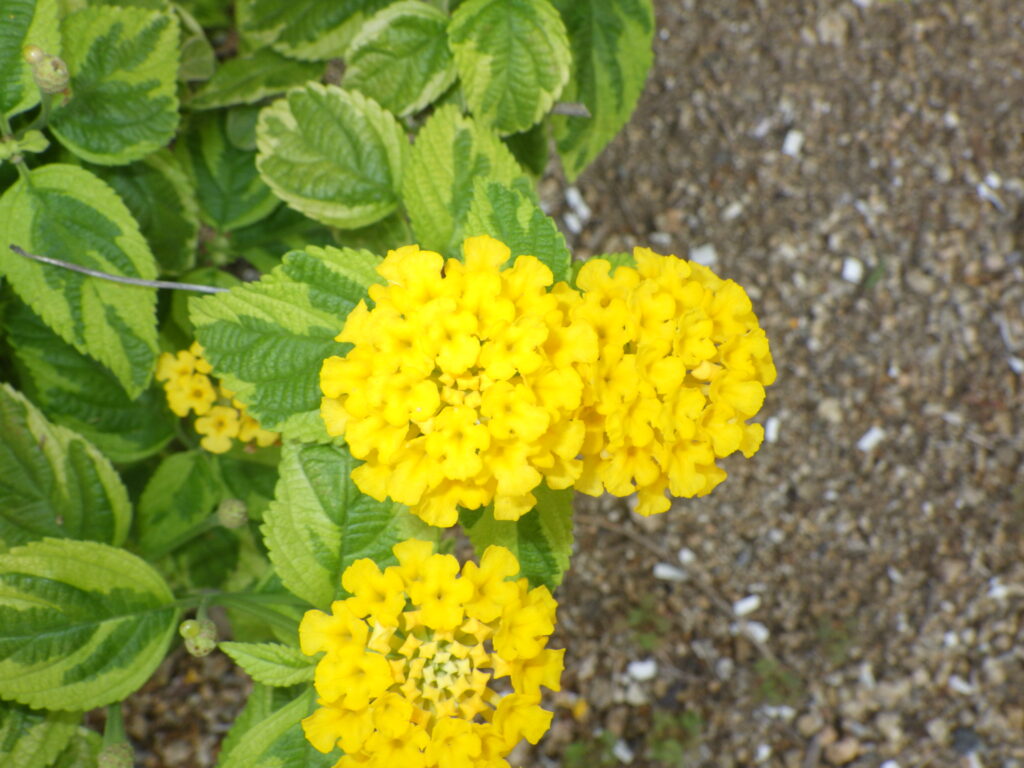
A hybrid called Lantana x hybrida, also known as yellow lantana (lemon lantana), is known to have flowers that are exclusively yellow. It can be difficult to distinguish from other varieties, but if the corolla remains uniformly yellow over time, it is likely to be this species.
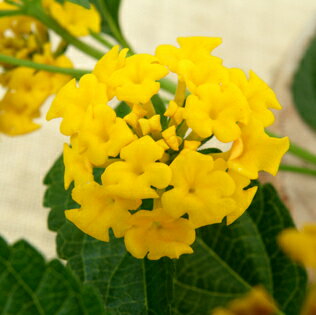
What is the difference between Lantana and Phyla nodiflora?
Another species that resembles lantana might be Lippia.
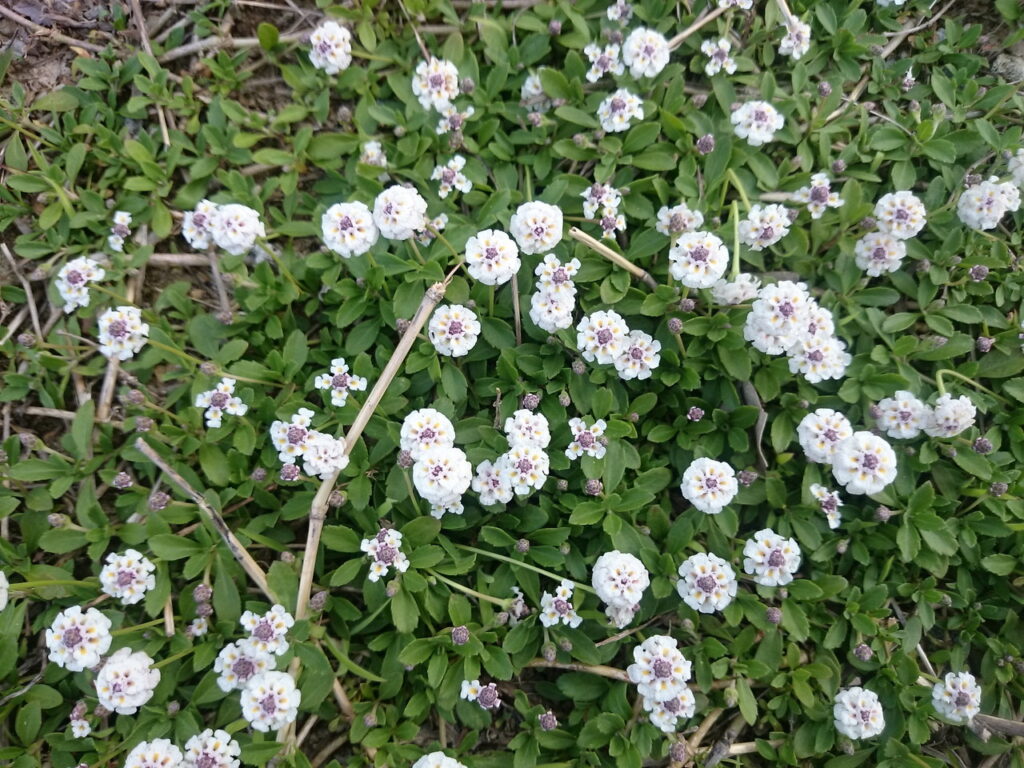
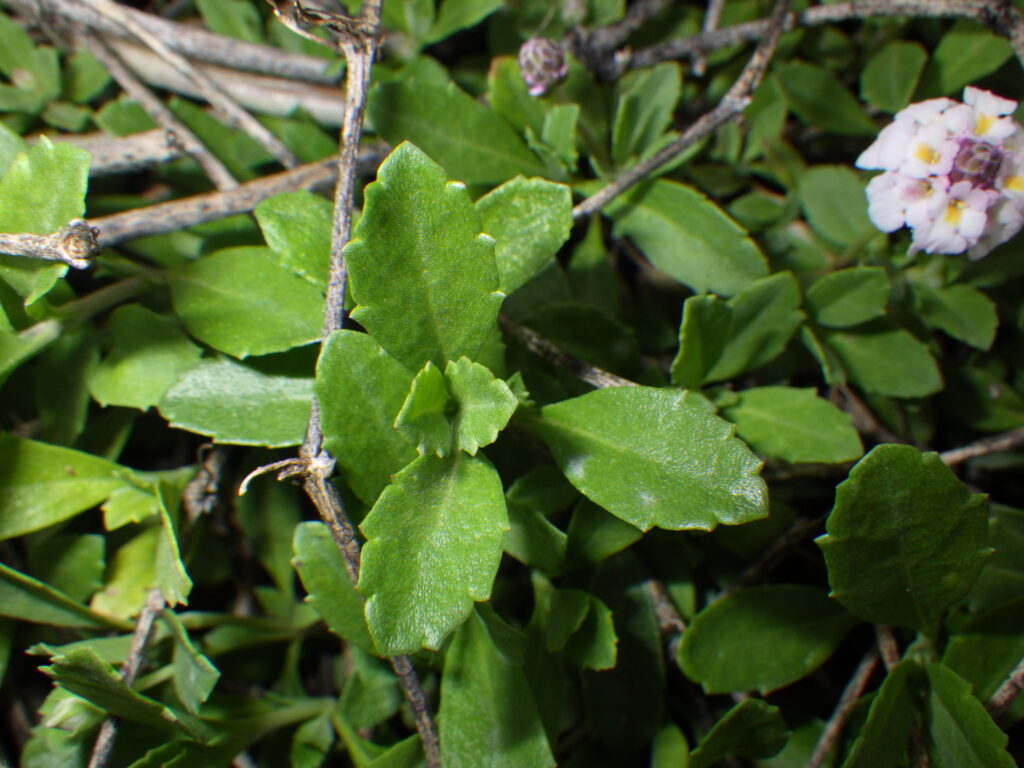
Phyla nodiflora var. minor is a creeping perennial herb native to Peru. Phyla canescens is a synonym (former scientific name) (O'Leary & Múlgura, 2012). In Japan, it is planted as a ground cover.
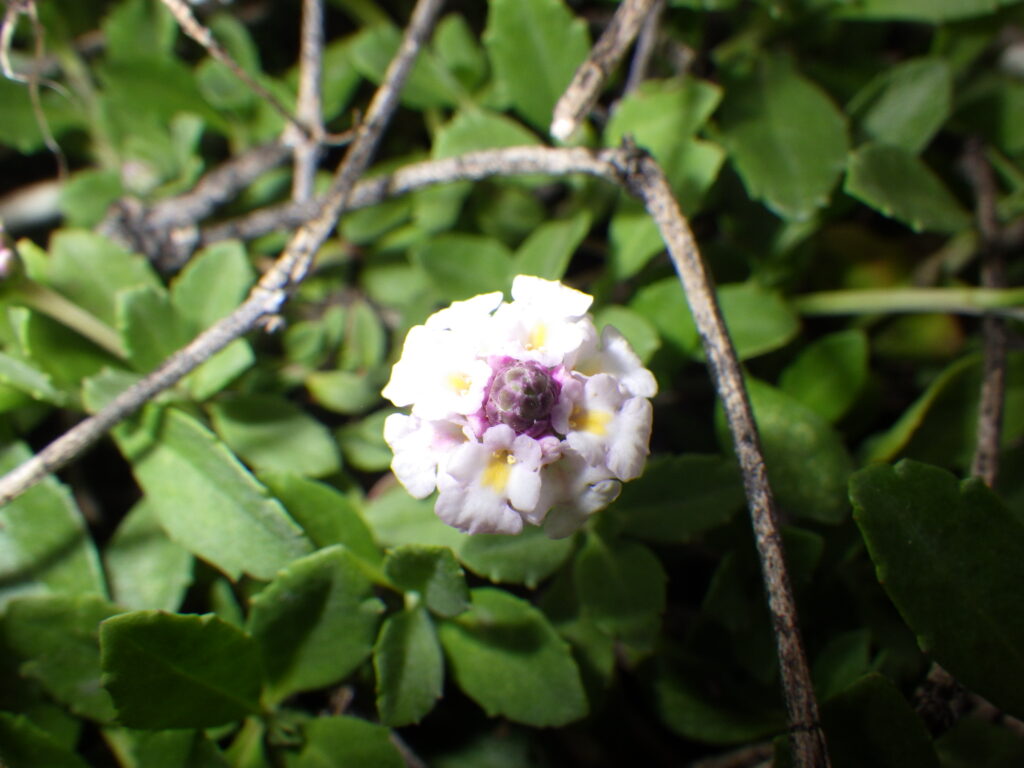
They belong to the same Verbenaceae family, and their flowers are also similar, being both labiate. They also share the characteristics of an oval-shaped inflorescence and an indistinct flower axis.
However, there are clear differences between lantana and creeping thyme, and they can be easily distinguished (Kanagawa Prefecture Flora Survey Association, 2018).
The specific difference is that lantana is a shrub with upright stems, while creeping thyme is a herbaceous plant with long, trailing stems.
Therefore, while lantana has hard stems and is clearly a "woody" plant, creeping thyme has soft stems and never stands upright. That's why it's used as a ground cover.
Furthermore, while the inflorescences of Lantana grow horizontally and are quite large and conspicuous, reaching 3-5 cm in diameter, those of Lippia nodiflora grow vertically and are small, less than 1 cm in length.
What is the structure of a flower?
The flowers, common to the *Seven Transformations* genus, are lip-shaped and have very conspicuous colors, and many change color over time.
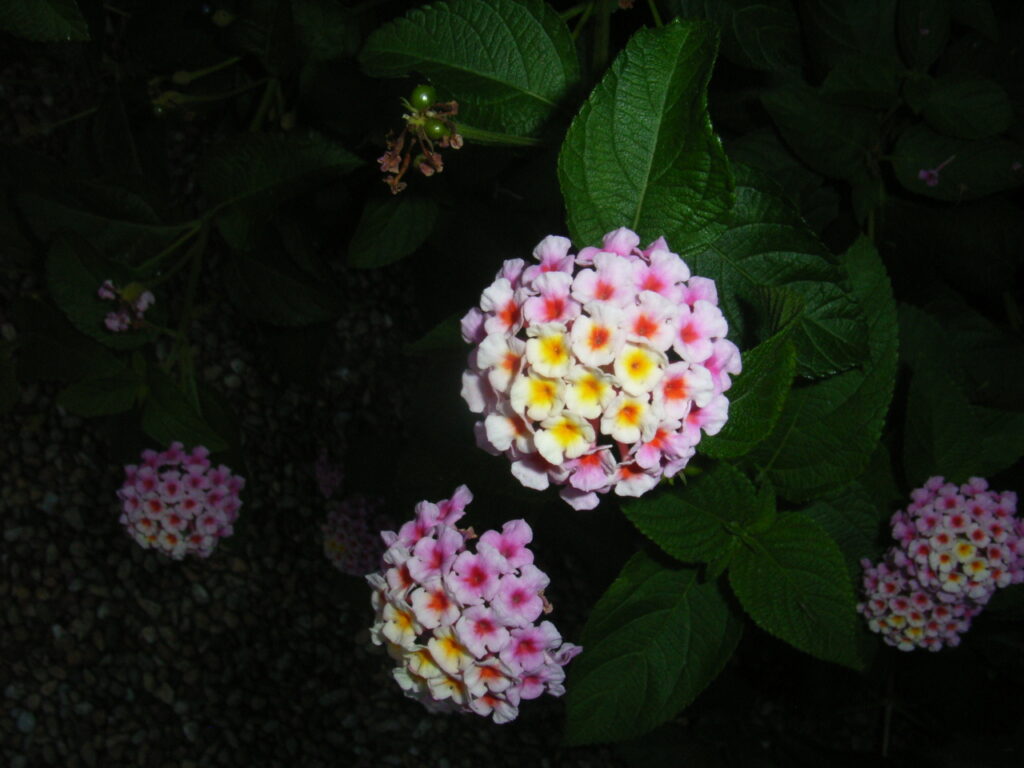
Lantana flowers from June to November. The flowers are numerous lip-shaped blossoms clustered in an umbel, making the inflorescence appear as a single flower. The inflorescence is about 3 cm in diameter, and the flowers bloom sequentially from the edges, changing color from yellow or orange to red as the days go by. Other colors are available in horticultural varieties. Each flower has a green bract at its base. The upper lip is small, the lower lip is three-lobed, the central lobe and the upper lip are almost identical in shape, and the corolla tube is about 1 cm long. Both the stamens and pistil are located inside the corolla tube.
Lantana camara blooms from May to October. The flowers are densely arranged in small, 1-4 cm wide cymose inflorescences (bundles). The peduncle is 2-8 cm long. The flowers at the edges of the inflorescence open first, followed by the flowers inside. The flowers are tubular, 8-12 mm long and 4-8 mm wide. They are initially pink with a white or yellow throat, and as they age, the color changes slightly, usually becoming entirely purple. Other colors are available in horticultural varieties.
What is the structure of the fruit?
The fruits of the genus *Seven-colored berries* are all berries. A berry is a fruit in which at least part of the pericarp is fleshy or juicy.
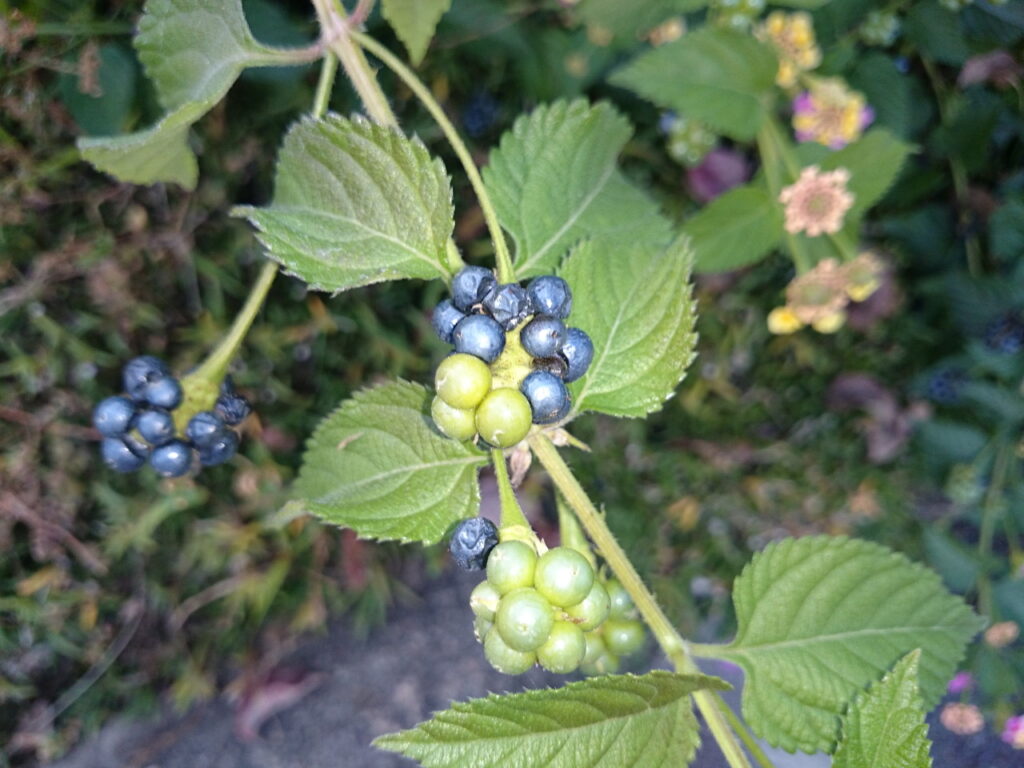
Lantana berries are aggregate fruits. Each berry contains a single seed, and they are initially green, turning black when ripe.
The berries of Lantana camara are aggregate fruits. Each berry contains a single seed, measuring 6-8 mm in diameter. They are initially green, turning reddish-purple to purple when ripe. The seeds are pale in color, stony, and about 4 mm long.
References
Hayashi, Masayuki. 2019. Tree Leaves: Expanded and Revised Edition - Identifying 1300 Species Through Real-Life Scans. Yama-kei Publishers, Tokyo. 824pp. ISBN: 9784635070447
Kanagawa Prefecture Flora Survey Association. 2018. Kanagawa Prefecture Flora 2018 (Electronic Edition). Kanagawa Prefecture Flora Survey Association, Odawara. 1803pp. ISBN: 9784991053726
O'Leary, N., & Múlgura, ME 2012. A Taxonomic Revision of the Genus Phyla (Verbenaceae). Annals of the Missouri Botanical Garden 98(4): 578-596. https://doi.org/10.3417/2009120
RBG Kew. 2023. The International Plant Names Index and World Checklist of Vascular Plants. Plants of the World Online. http://www.ipni.org and https://powo.science.kew.org/