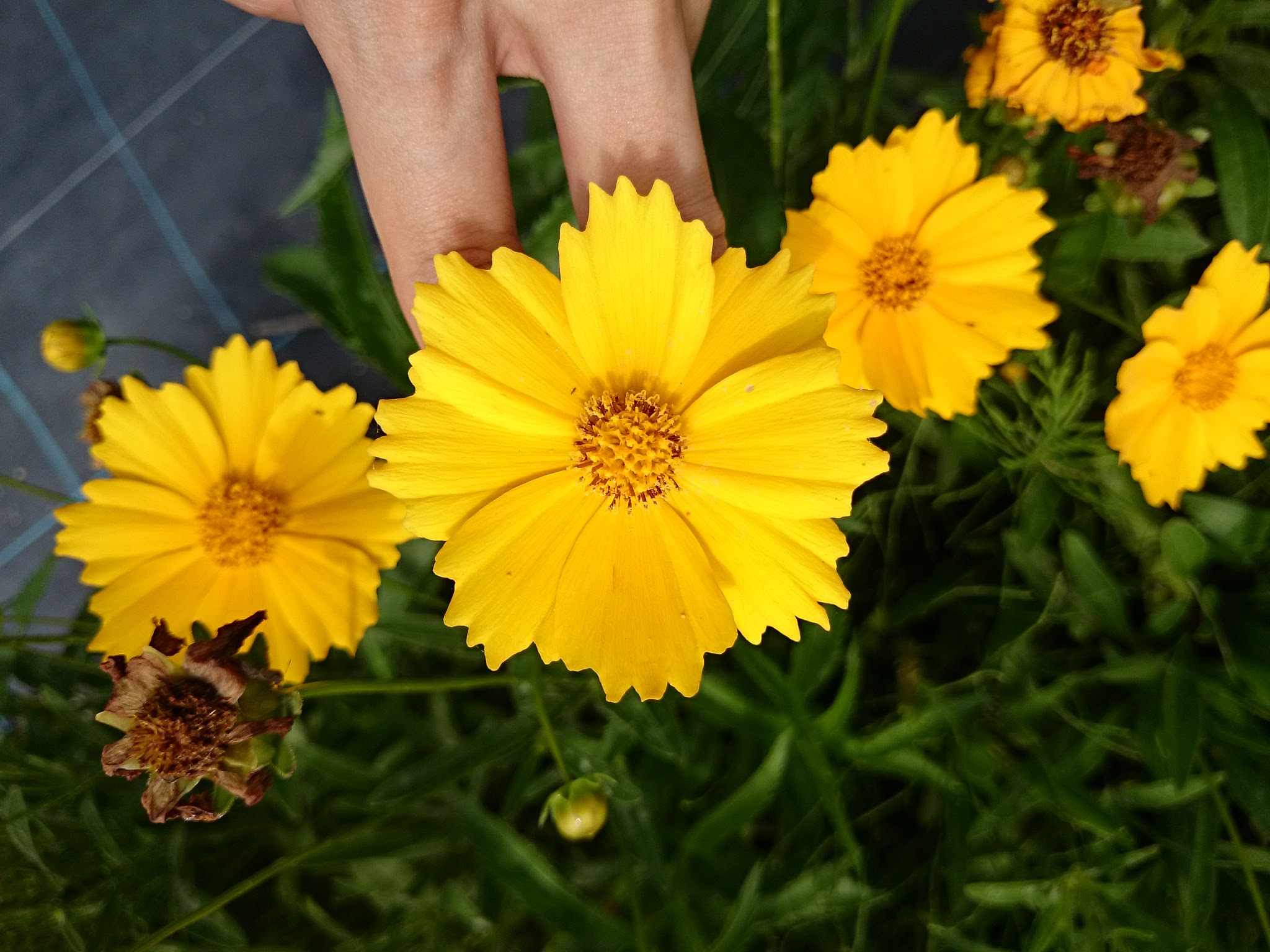
Cosmos, yellow cosmos, and chocolate cosmos all belong to the Cosmos genus of the Asteraceae family. Although they are introduced species in Japan, they have become representative autumn landscape plants, as evidenced by their alternative name, "autumn cherry blossom," and are widely cultivated. The large, beautiful ray florets and the long beaks of the achenes are major characteristics of the Cosmos genus. The three species are generally distinguished by flower color, but this alone is not sufficient for accurate differentiation. Careful observation of leaf shape is important for distinguishing them. They can also be easily distinguished from marigolds by their leaf shape. This article will explain the classification of the Cosmos genus.
What are cosmos, yellow cosmos, and chocolate cosmos?
Cosmos bipinnatus, also known as large spring chrysanthemum, large Persian chrysanthemum, or autumn cherry blossom, is native to Mexico and is cultivated as an ornamental plant. It is an annual plant that escapes cultivation and becomes naturalized in dry areas such as riverbanks (Kanagawa Prefecture Flora Survey Association, 2018; RBG Kew, 2023).
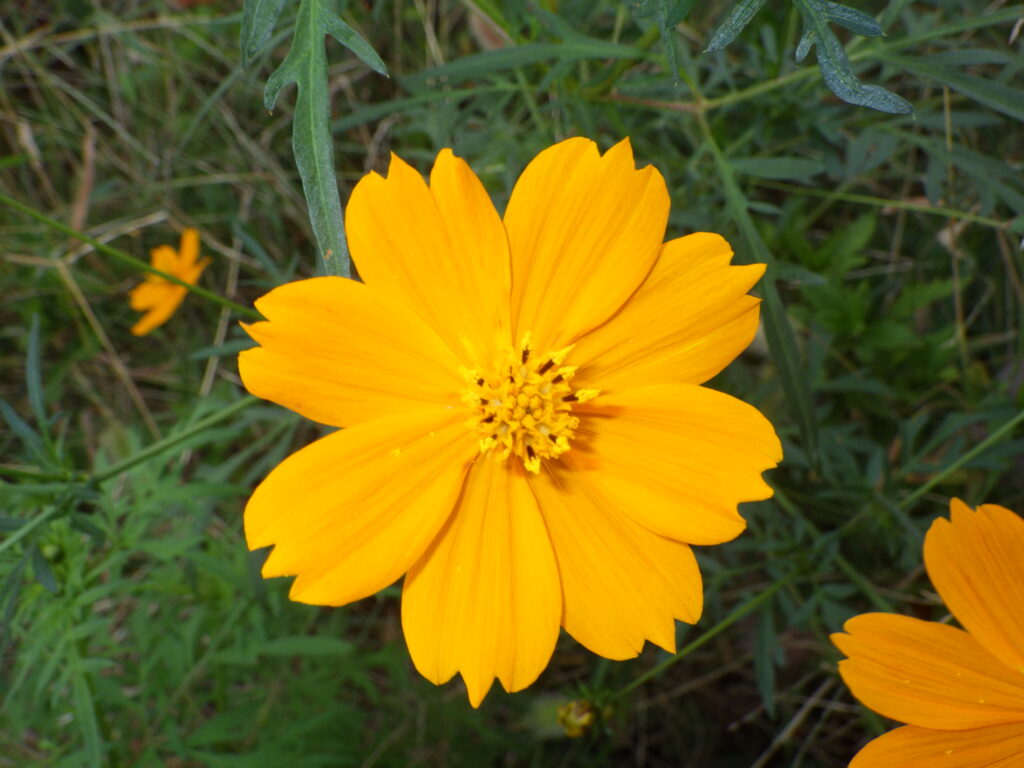
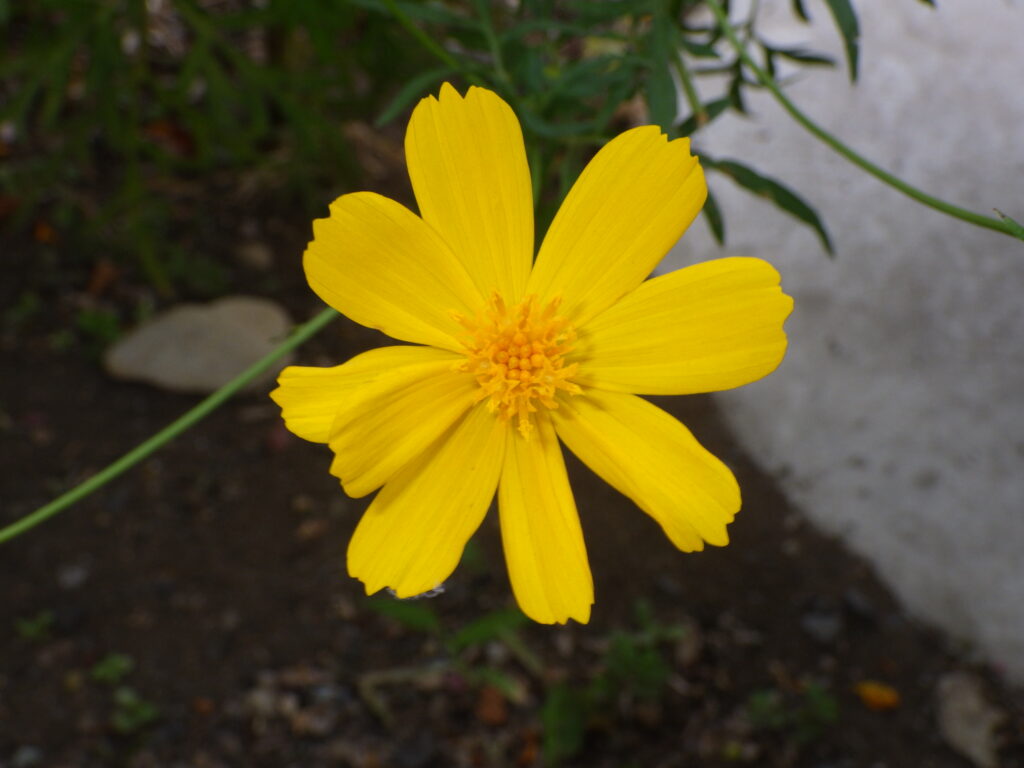
Yellow cosmos (Cosmos sulphureus) is native to Central and South America and is an annual plant that is cultivated in horticulture for ornamental purposes and occasionally escapes cultivation.
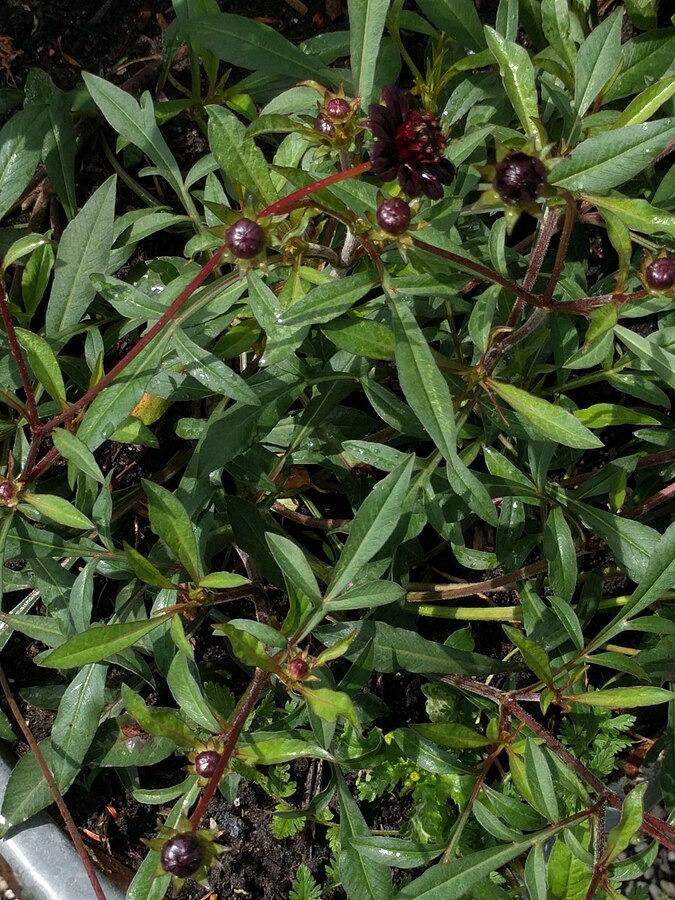
Red cosmos (Cosmos atrosanguineus), commonly known as chocolate cosmos, is native to northern Mexico and is an annual plant rarely cultivated in Japan for ornamental purposes.
Both belong to the Cosmos genus of the Asteraceae family and are introduced species in Japan. However, as evidenced by their alternative name, "Akizakura" (autumn cherry blossom), they have become representative autumn landscape plants and are widely cultivated.
As is typical of the Asteraceae family, what appears to be a "flower" at first glance is actually a "flower head," which is a cluster of flowers (inflorescence). It consists of "tubular florets" in the center and "ray florets" surrounding them, and the corolla of the ray florets is what creates its beauty.
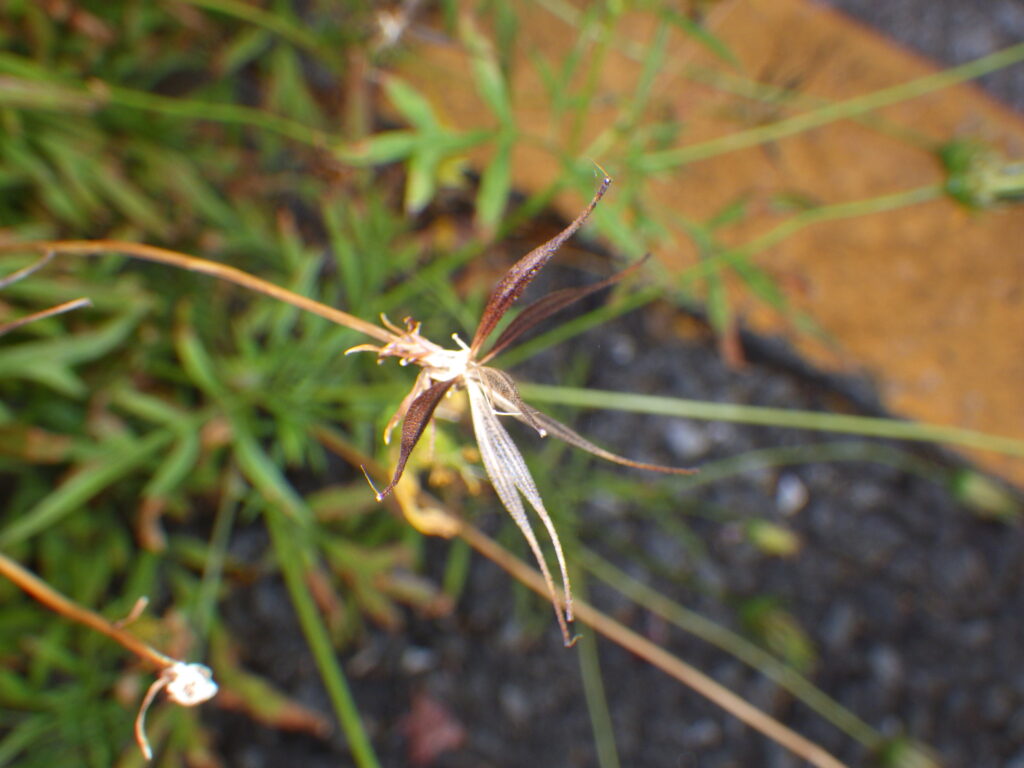
The genus Cosmos is distinguished from other members of the Asteraceae family by its opposite leaves, disc-shaped receptacle with scales, 1-2 rows of herbaceous to membranous bracts, and long beaks on its achenes. In yellow cosmos, the long beaks on the achenes function as "burrs" to attach to animals.
However, you might sometimes get confused about the differences between members of the Cosmos genus. In particular, there are many websites on the internet that point out the differences in the flowers, but cosmos flowers can occasionally turn yellow, so it can be difficult to distinguish them definitively based on flower color alone.
What are the differences between cosmos, yellow cosmos, and chocolate cosmos?
As a fundamental point, and as many websites have noted, it's important to remember that, as the name suggests, there are generally differences in the color of the flowers, or more precisely, the color of the corolla of the ray florets (Kanagawa Prefecture Flora Survey Association, 2018).
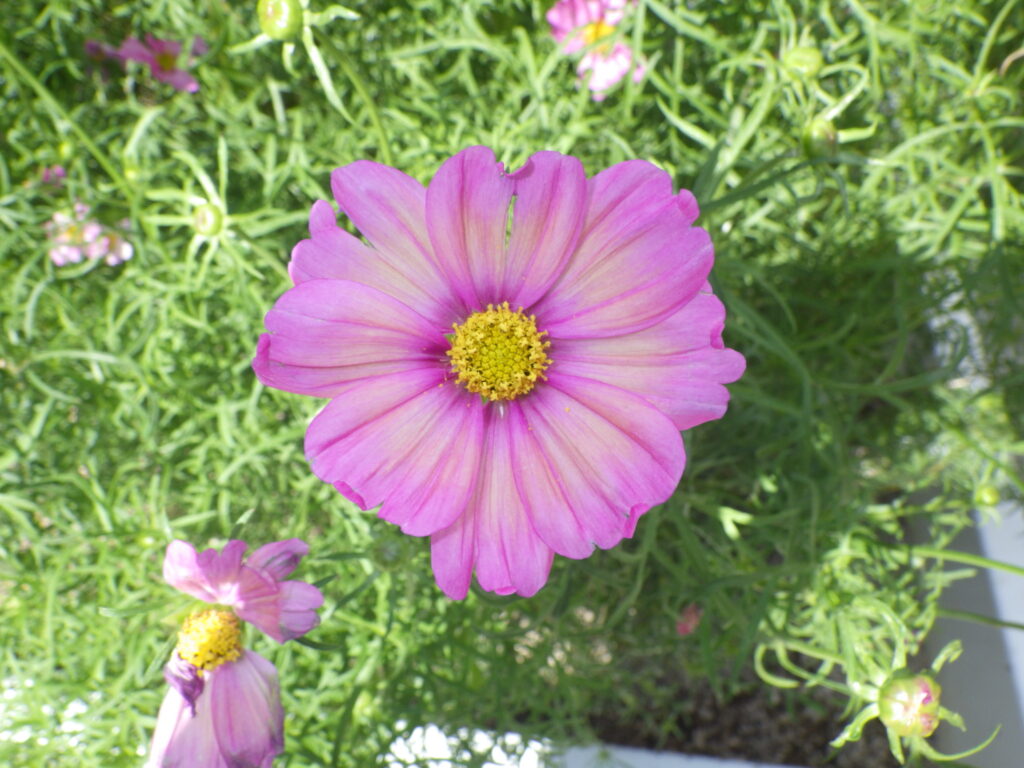
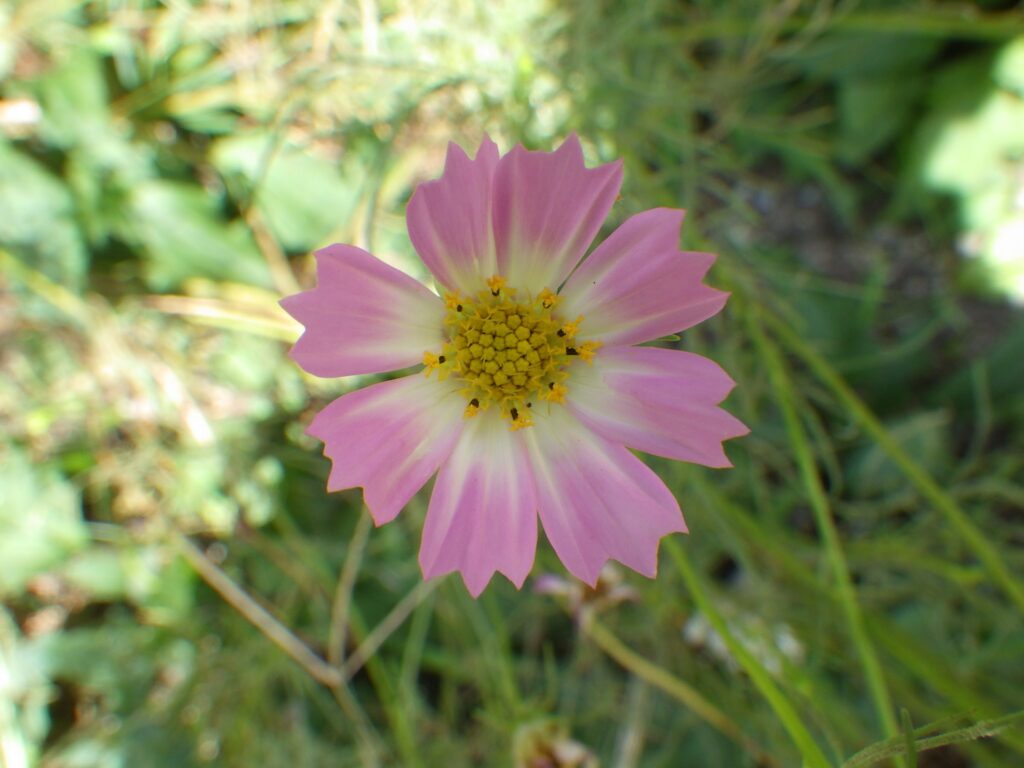
Specifically, the differences lie in the colors of the flowers: cosmos flowers are white, pink, and reddish-purple; yellow cosmos flowers are a deep yellow; and chocolate cosmos flowers are a dark red, almost chocolate-like color.
However, as mentioned above, in the case of cosmos, perhaps because it has been cultivated as a garden plant for a long time, there is considerable variation in color, so this is not necessarily a decisive factor. Among cosmos, there is a known garden variety called 'Picotee', whose petals are composed of pink and white, and among yellow cosmos, there are also garden varieties such as 'Sunrise' with pale yellow petals.
In such cases, the shape of the leaves is the deciding factor. The shape of the leaves is preserved quite strongly, so even if a variety is selectively bred to change only the flower color, the shape will not easily change.
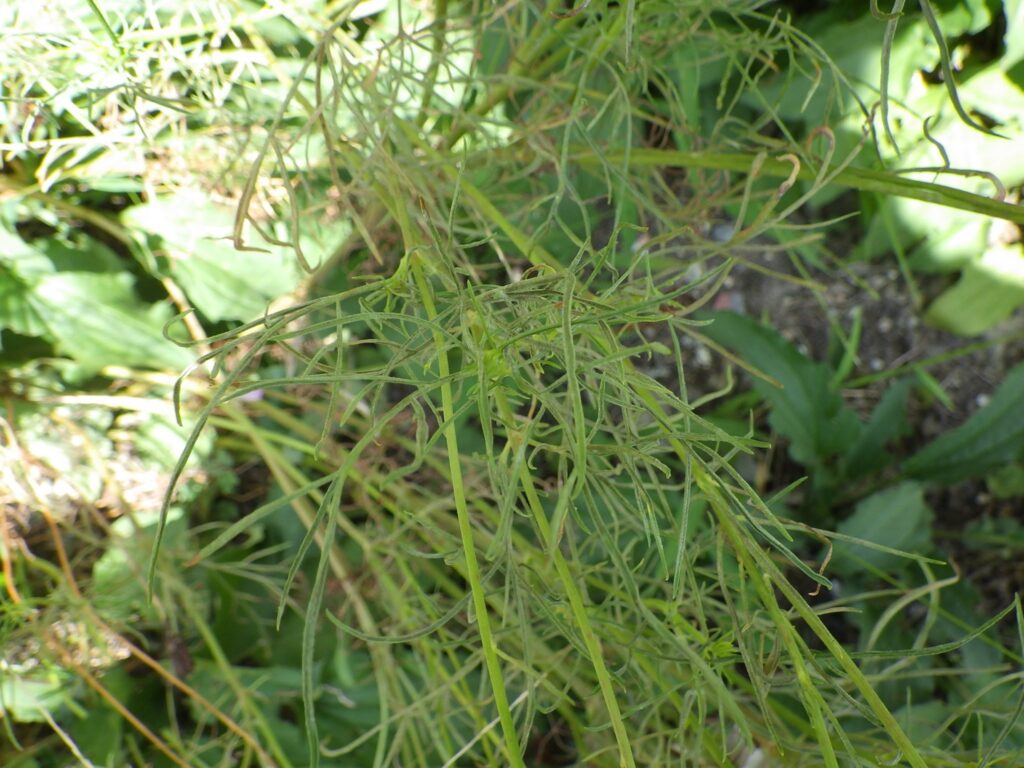
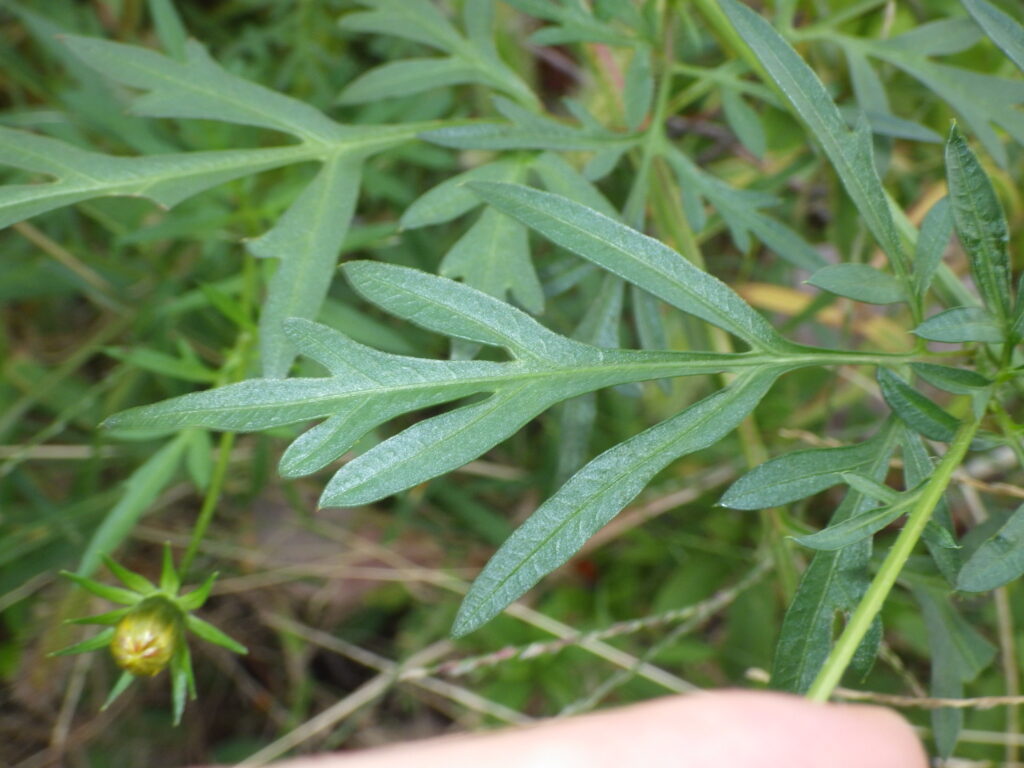
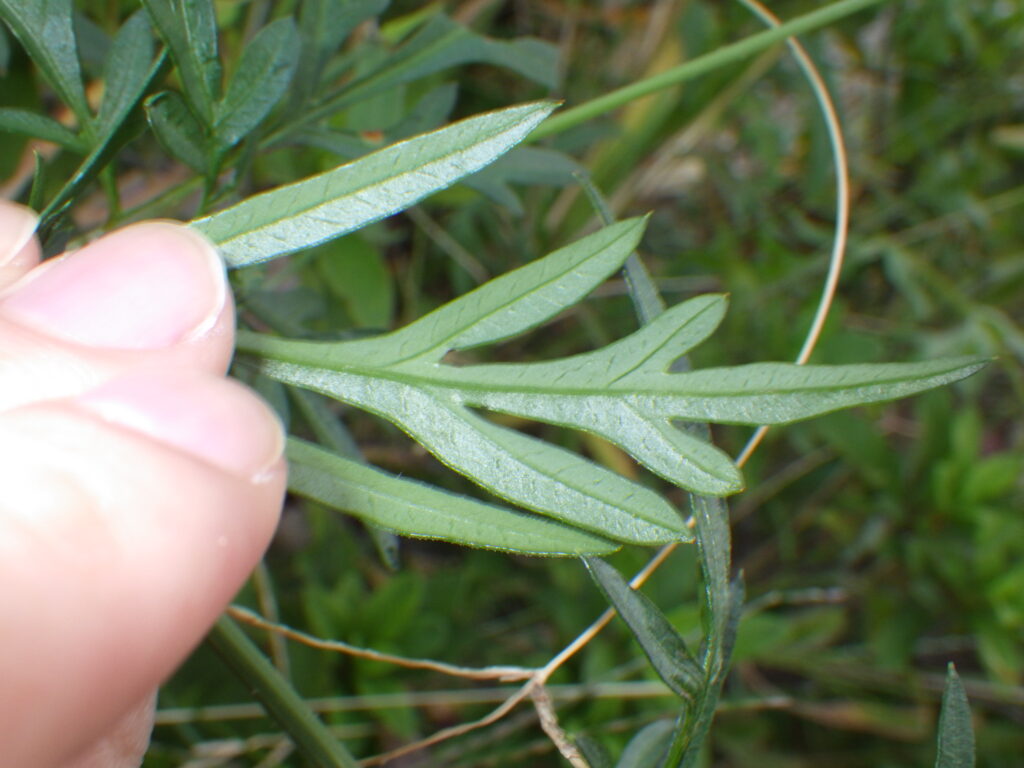
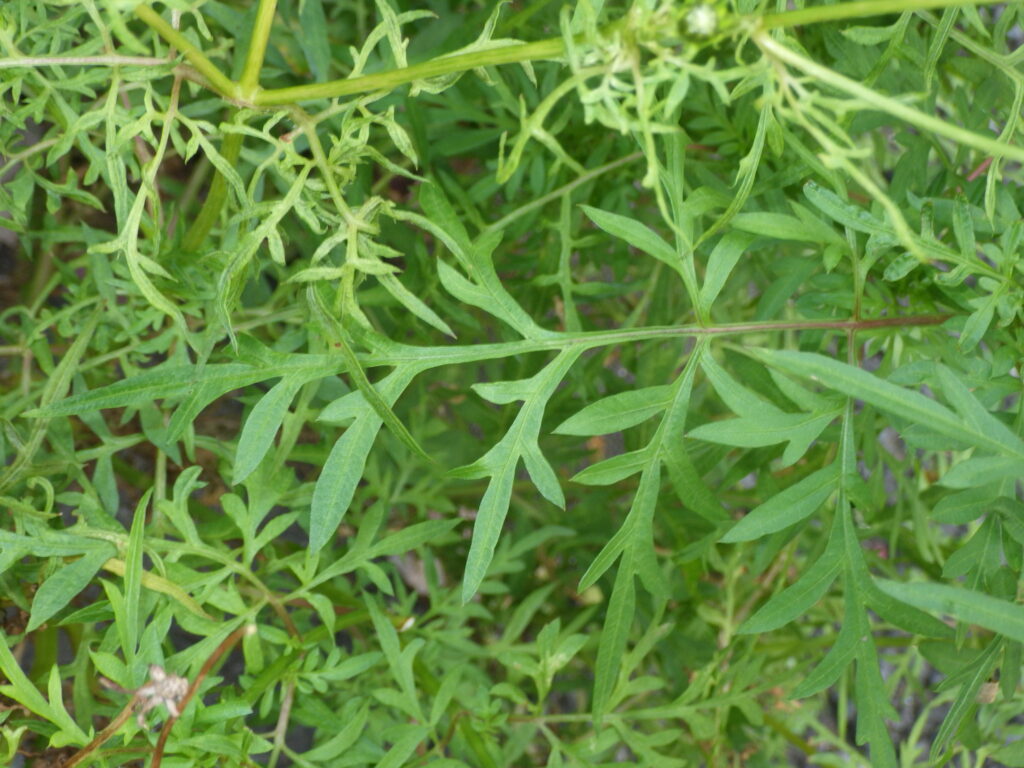
First, while cosmos leaves have fine, thread-like incisions, yellow cosmos and chocolate cosmos also have incisions, but they are not thread-like.
In short, the leaves of the cosmos flower appear thread-like at first glance. This is immediately obvious.
Furthermore, while both yellow cosmos and chocolate cosmos have pinnately compound leaves, yellow cosmos leaves divide two to three times, whereas chocolate cosmos leaves divide only once.
This is also a slightly technical point, but in yellow cosmos, the leaves that have already separated divide further, whereas in chocolate cosmos, this is not the case. Therefore, in terms of appearance, chocolate cosmos has a larger surface area for its leaflets, and the leaf margins will appear rounder. It might be easier to just look at them yourself.



What is the difference between yellow cosmos and marigolds?
The difference between yellow cosmos and marigolds is also a frequently searched topic on the internet.
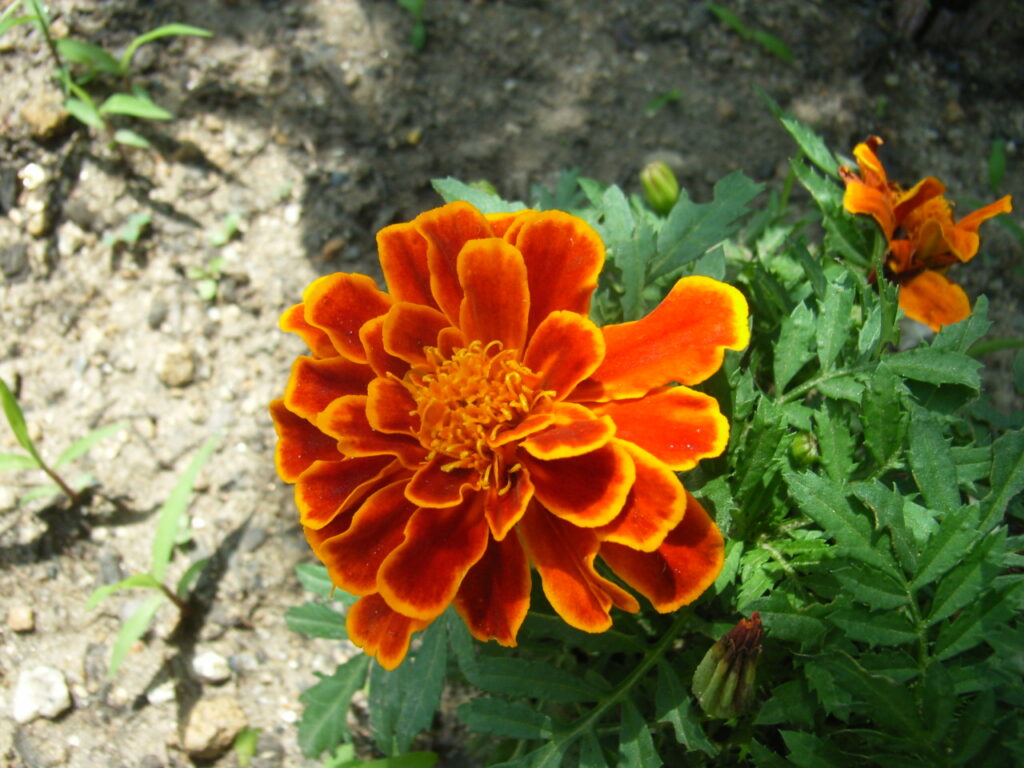
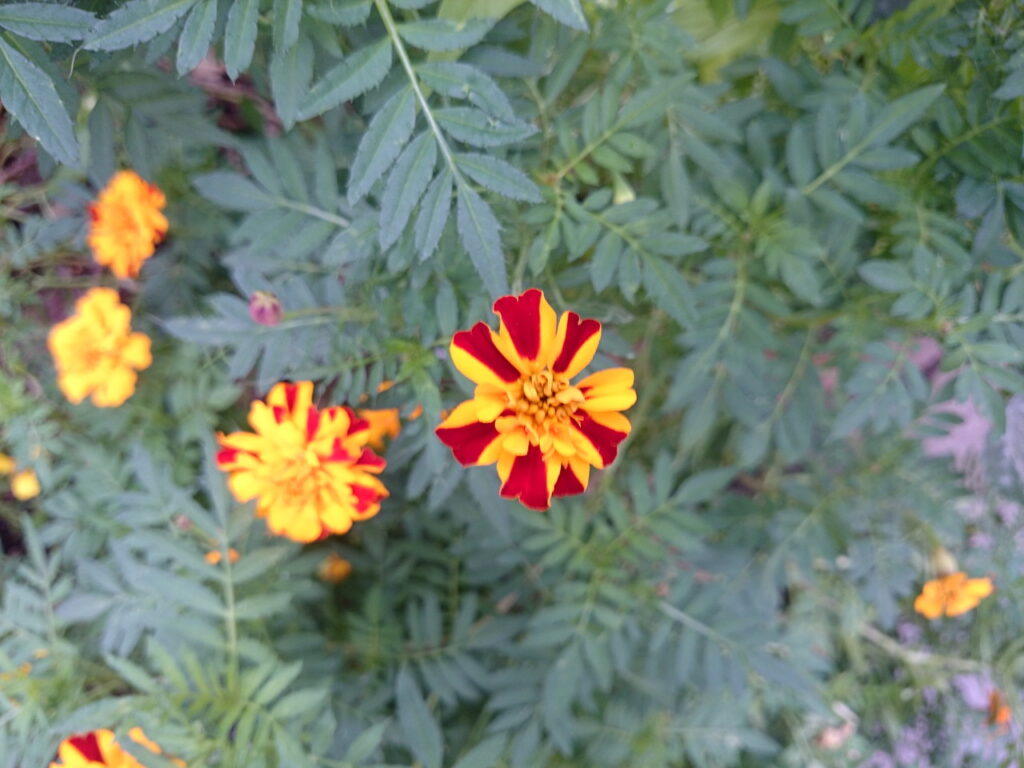
Indeed, marigolds (Tagetes patula) belong to the same Asteraceae family, have odd-pinnately compound leaves, and sometimes have the same flower color, so they may not be entirely dissimilar.
However, marigold leaves are once-pinnately compound with clearly defined serrations, and cultivated varieties generally have double flowers. Even if they are not double-flowered, the tips of the ray florets (the most prominent petal-like parts) are rounded, not forked like those of the small cosmos.
You can also see the difference if you carefully observe the leaves. Marigolds are not as tall as cosmos.
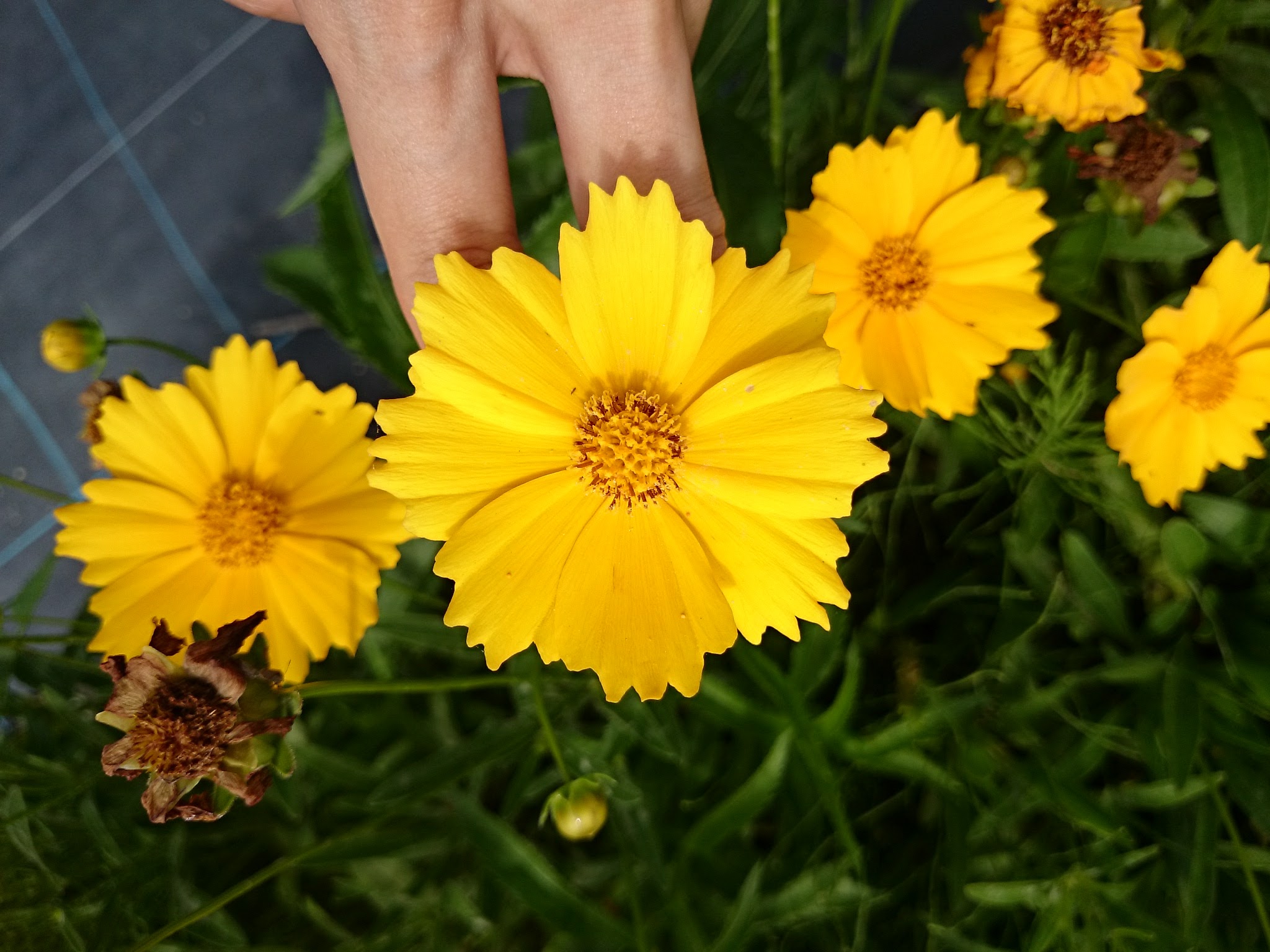
For more information on the differences between yellow cosmos and large-flowered coreopsis, please see our other article.
References
Kanagawa Prefecture Flora Survey Association. 2018. Kanagawa Prefecture Flora 2018 (Electronic Edition). Kanagawa Prefecture Flora Survey Association, Odawara. 1803pp. ISBN: 9784991053726
RBG Kew. 2023. The International Plant Names Index and World Checklist of Vascular Plants. Plants of the World Online. http://www.ipni.org and https://powo.science.kew.org/