Verbena bonariensis, Verbena bonariensis, Verbena bonariensis, and Verbena bonariensis all belong to the genus Verbena in the family Verbenaceae, and are a group within the genus Verbena that have undivided leaves. These four species have a generally stiff texture, ridged stems, and form dense inflorescences, and are frequently seen on roadsides in urban areas, but for many years even scholars did not fully understand how to distinguish between them. Currently, the distinguishing features are becoming much clearer, and it is understood that it is important to carefully observe various morphological features, such as whether the leaves clasp the stem, and the length of the flower tube and inflorescence. The flowers, like many species in the genus Verbena, are tubular and pink in color, and are arranged in spike inflorescences. However, various studies have shown that butterflies tend to visit the species with long flower tubes (Verbena bonariensis), while honeybees tend to visit the species with short flower tubes (Verbena bonariensis), suggesting that habitat segregation may be occurring. The fruit is a schizocarp, with four schizocarps produced from a single flower, and it is thought that they are dispersed by gravity, but there is no detailed research on this. This article will explain the classification, morphology, pollination ecology, and seed dispersal of Verbena bonariensis, Verbena bonariensis, Verbena bonariensis, and Verbena serrata.
- What are Verbena bonariensis, Verbena bonariensis, Verbena bonariensis, and Verbena verniciflua?
- What are the differences between Verbena bonariensis, Verbena bonariensis, Verbena bonariensis, and Verbena serrata?
- What is the structure of a flower?
- How is pollination done?
- What is the structure of the fruit?
- What are the seed dispersal methods?
- References
What are Verbena bonariensis, Verbena bonariensis, Verbena bonariensis, and Verbena verniciflua?
Verbena bonariensis, also known as willow flower hat, is native to South America (Argentina, Uruguay, and Chile). In Japan, it became naturalized in the Tokai region after World War II, and is now a perennial plant that can be found nationwide along roadsides in urban areas (Shimizu et al., 2001).
Verbena incompta, also known as the clasped-leaved barren flower hat, is native to South America. In Japan, it has been known to become naturalized since it was collected in Osaka in 1933, and is now a perennial herb that grows throughout the country in sunny bare ground, gravelly areas, and grasslands (Uemura et al., 2015).
Verbena brasiliensis, also known as wildflower, is native to South America. In Japan, it was first discovered in Fukuoka and Kanagawa prefectures around 1967, and now forms large colonies along roadsides, in wastelands, and on riverbanks in urban areas west of the Kanto region.
Verbena litoralis, also known as dwarf verbena, is native to North America, naturalized in Okinawa after World War II, and is now a perennial plant found along riverbanks and roadsides in central and western Honshu.
All of these species belong to the genus Verbenaceae, and unlike Verbenaria radiata and Verbenaria gracilis, they belong to a group with undivided leaves. They have a generally firm texture, ridged stems, and petioles that are absent or short, and their neatly opposite arrangement on the stem is unique and striking. The shape of the flowers is also quite similar, with long corolla tubes forming dense inflorescences.
Since all of these species often grow on roadsides in urban areas, it would be difficult to distinguish between these four species based solely on their habitat. In the past, even taxonomists have confused them.
What are the differences between Verbena bonariensis, Verbena bonariensis, Verbena bonariensis, and Verbena serrata?
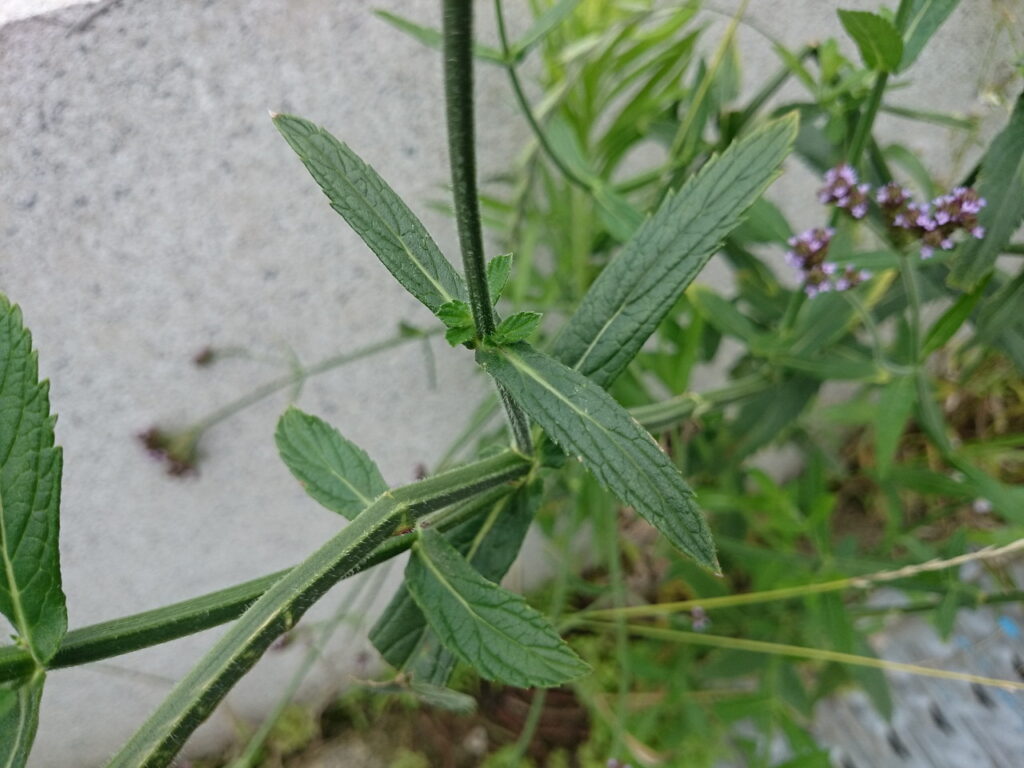
Distinguishing between these four species is difficult without close observation and can be quite confusing. However, let's start by checking the base of the leaves attached to the stem (Kanagawa Prefecture Flora Survey Association, 2018).
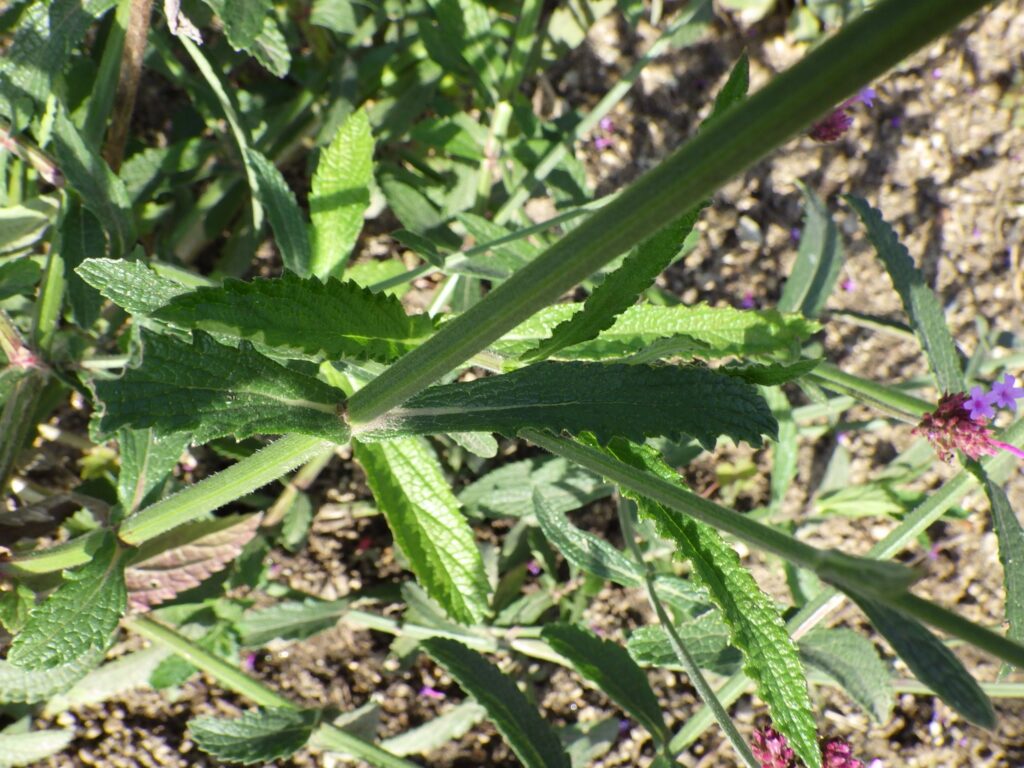
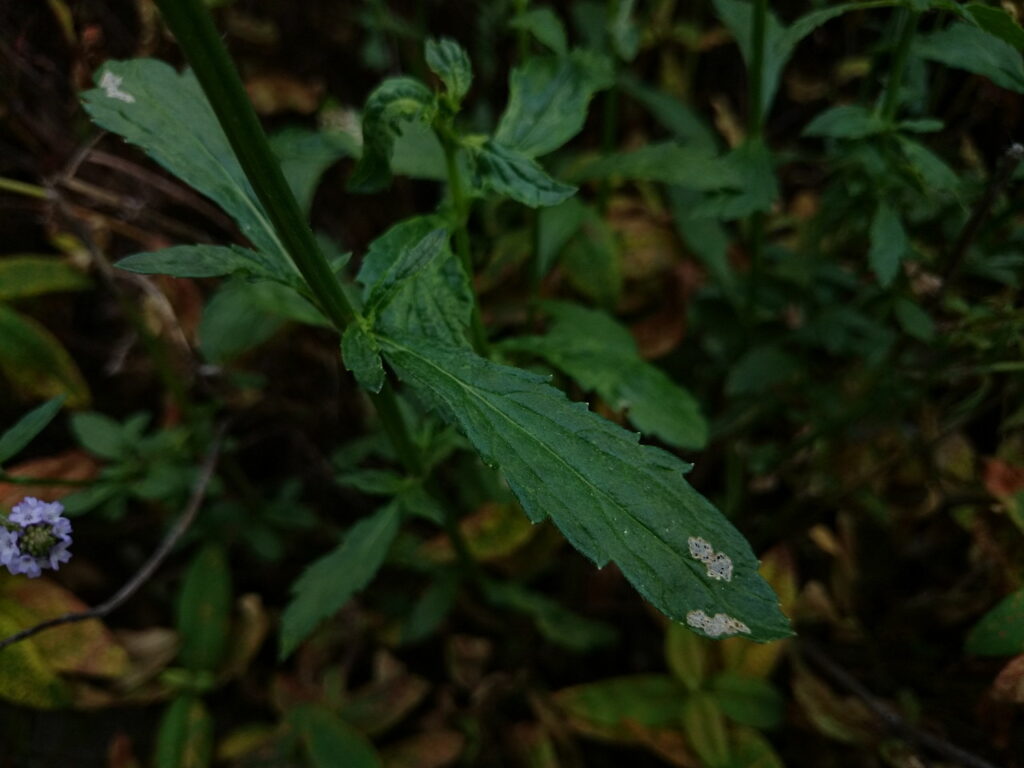
In Verbena bonariensis and Verbena bonariensis, the base of the leaf clasps the stem to some extent, whereas in Verbena bonariensis and Verbena serrata, the base of the leaf is wedge-shaped and does not clasp the stem. The clasping is quite small, so careful observation is necessary.
Also, although it's a minor difference, in Verbena bonariensis and Verbena bonariensis, the hairs on the inflorescence axis spread outwards, while in Verbena bonariensis and Verbena japonica, the hairs on the inflorescence axis are obliquely ascending.
Regarding Verbena bonariensis and Verbena bonariensis, Verbena bonariensis has a hollow stem with pith pores, leaves with nearly parallel margins, inflorescences 5-15 mm long, bluntly pointed calyx teeth, a long corolla tube, and flowers that protrude high from the inflorescence. In contrast, Verbena bonariensis has a solid stem with no pith pores, leaves that tend to be widest in the middle, inflorescences that can reach 50 mm in length, sharply pointed calyx teeth, a short corolla tube, and flowers that protrude only slightly from the inflorescence.
There are many elements to consider, making it difficult to decide which to look at, but the length of the corolla tube is the most obvious and easiest to understand.
Regarding Verbena bonariensis and Verbena gracilis, the differences are that Verbena bonariensis has inflorescences that are 5 mm or wider, densely packed, and with slender, pointed calyx lobes, while Verbena gracilis has inflorescences that are 3 mm or less wide, with sparsely arranged flowers at the bottom, and triangular calyx lobes.
These two species have historically been confused in field guides, making them quite difficult to distinguish; the most accurate way to tell them apart is to examine the calyx lobes.
However, although there is variation in Verbena bonariensis, its flower spikes can grow to a length of 50 mm or more, and the stems and pedicels may have many stiff hairs, which does not occur in Verbena bonariensis. Therefore, if you see these characteristics, you can be certain that it is Verbena bonariensis.
What is the structure of a flower?
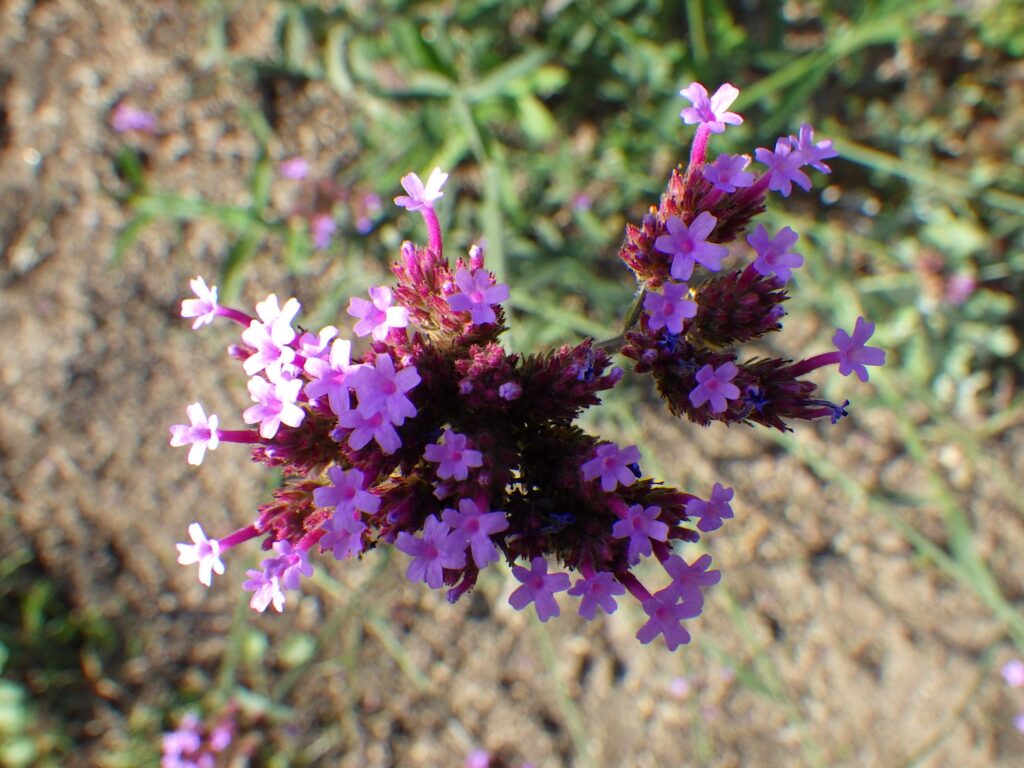
Most species in the Verbena genus bear tubular, pinkish flowers in spike-like inflorescences.
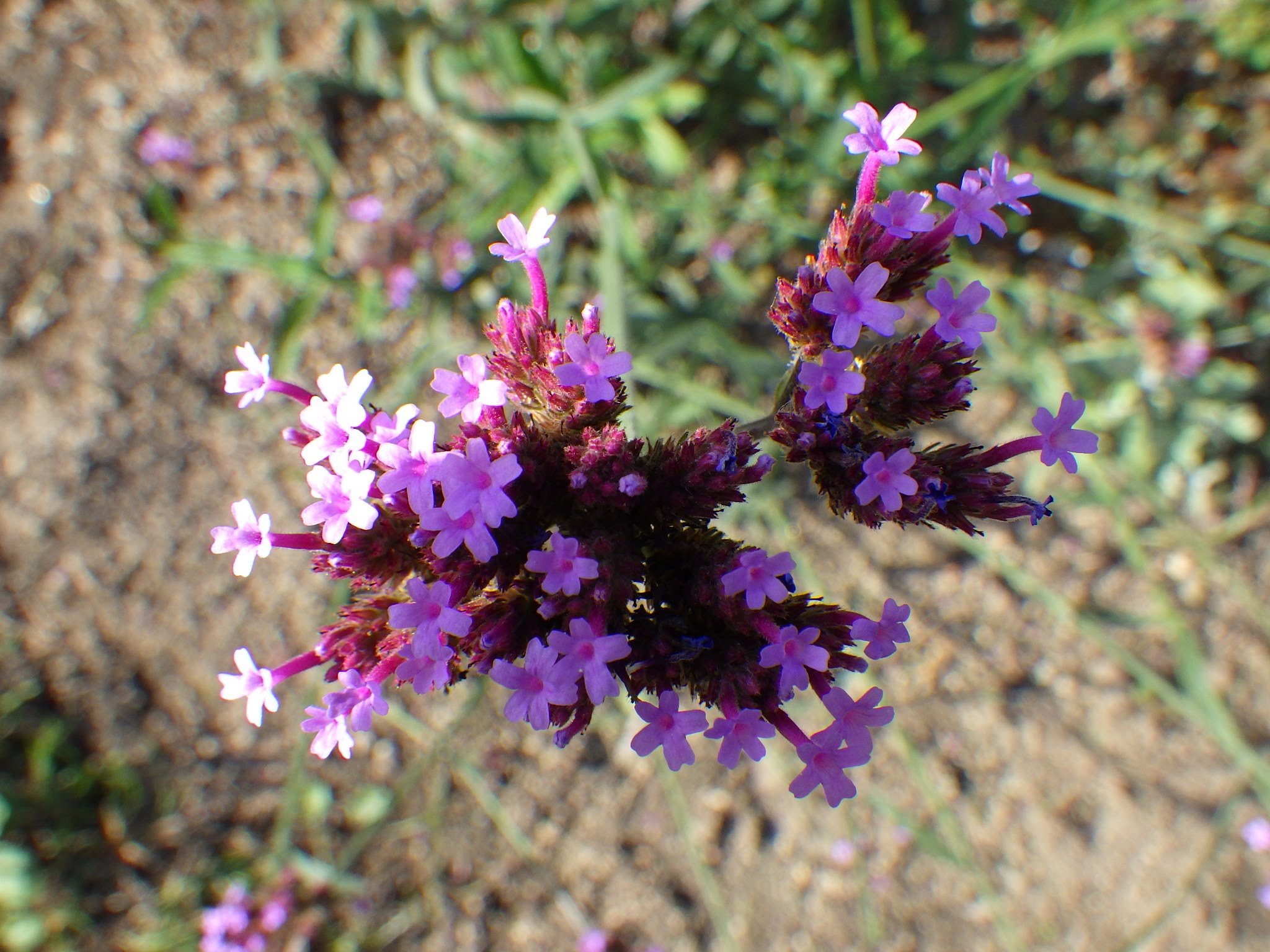
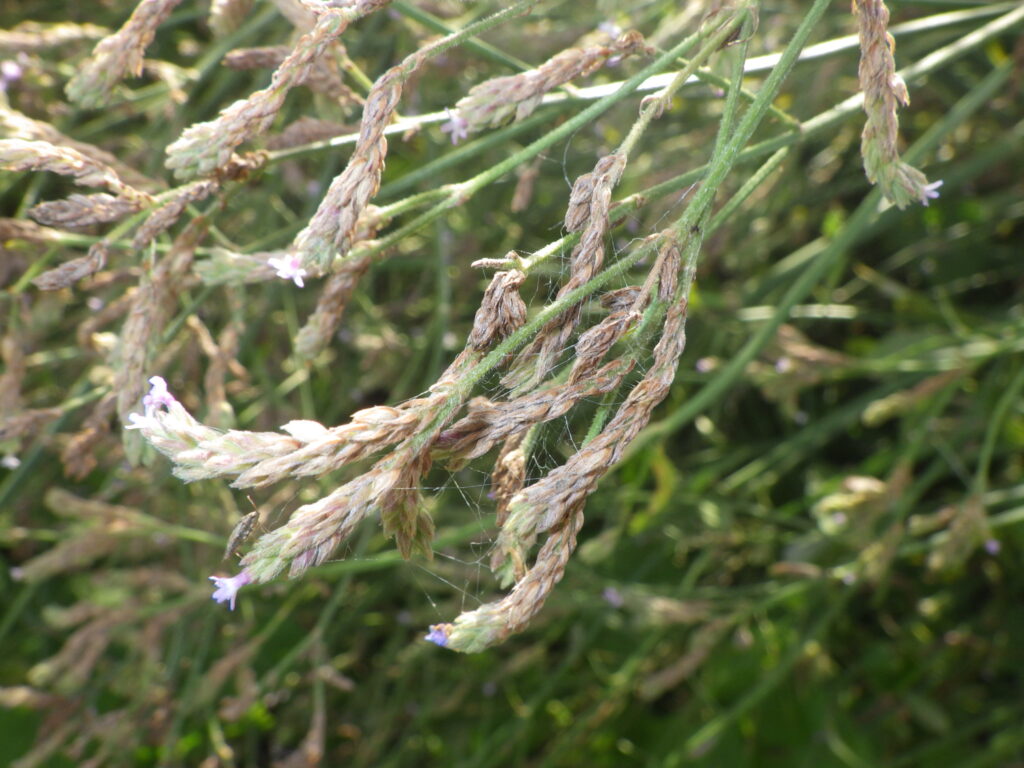
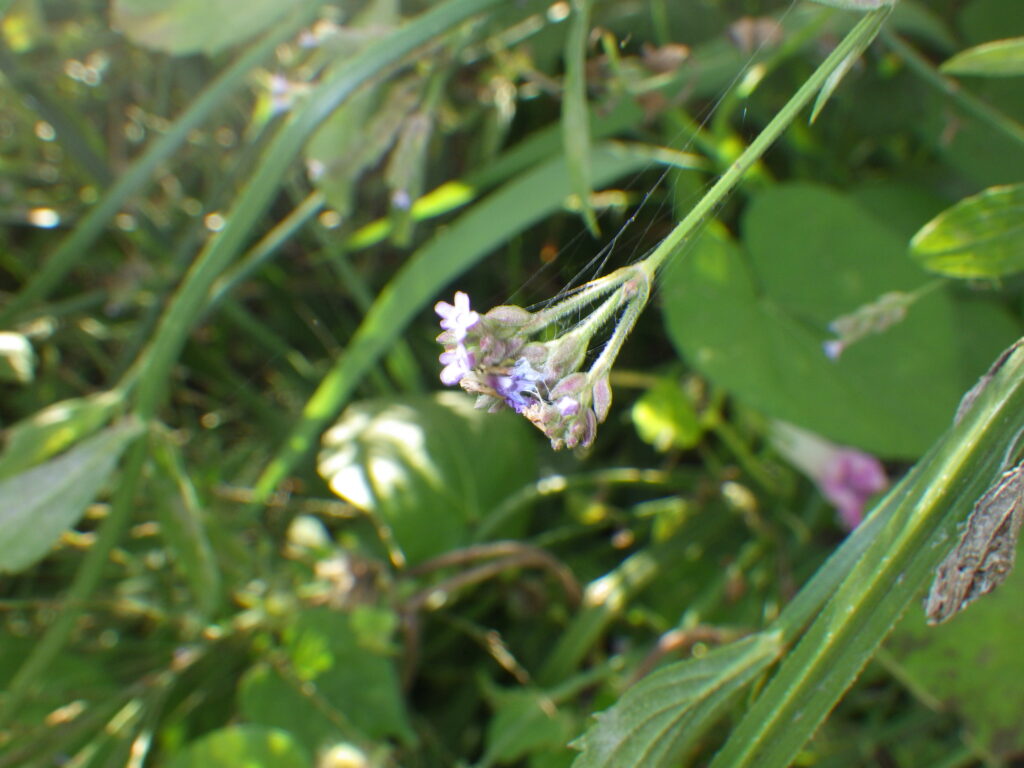
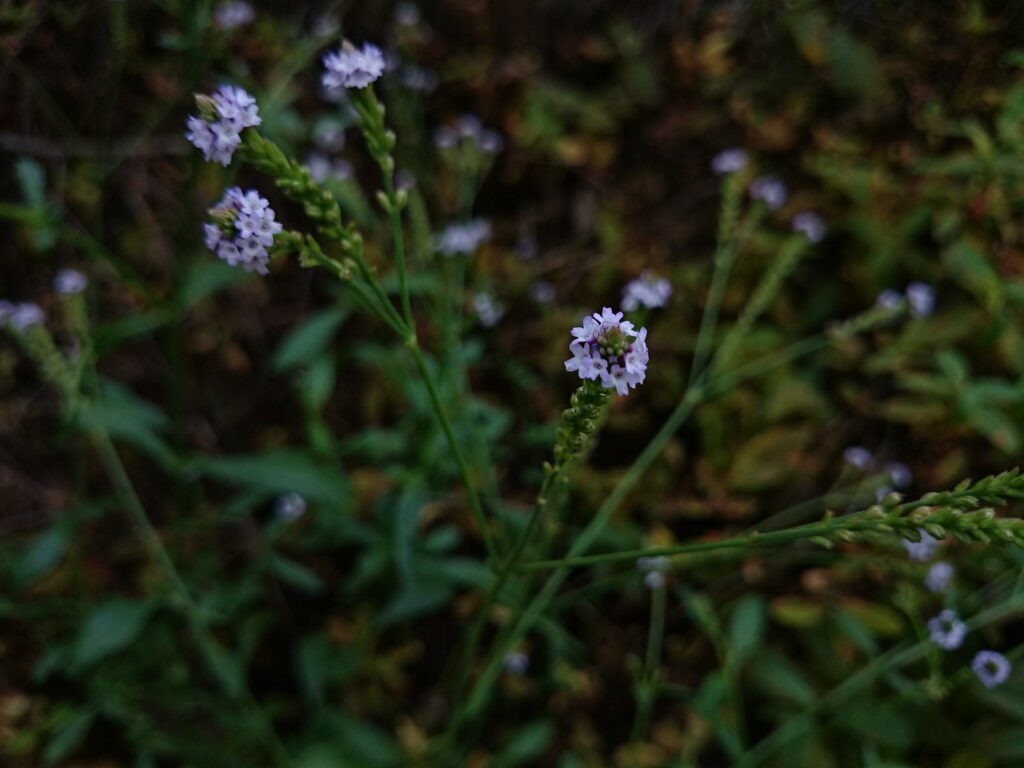
Verbena bonariensis flowers from June to August. It produces inflorescences at the top of its stems, bearing dense clusters of tubular, purple flowers, about 1 cm long, with five lobes at the tip. The flower spikes elongate as the flowers bloom. The corolla tube is long, causing the flowers to protrude high from the spike.
Verbena bonariensis flowers from June to September. The spike inflorescence is cylindrical, 2-5 cm long, and the corolla is pale purple, twice as long as the calyx tube. The corolla does not protrude far from the spike inflorescence.
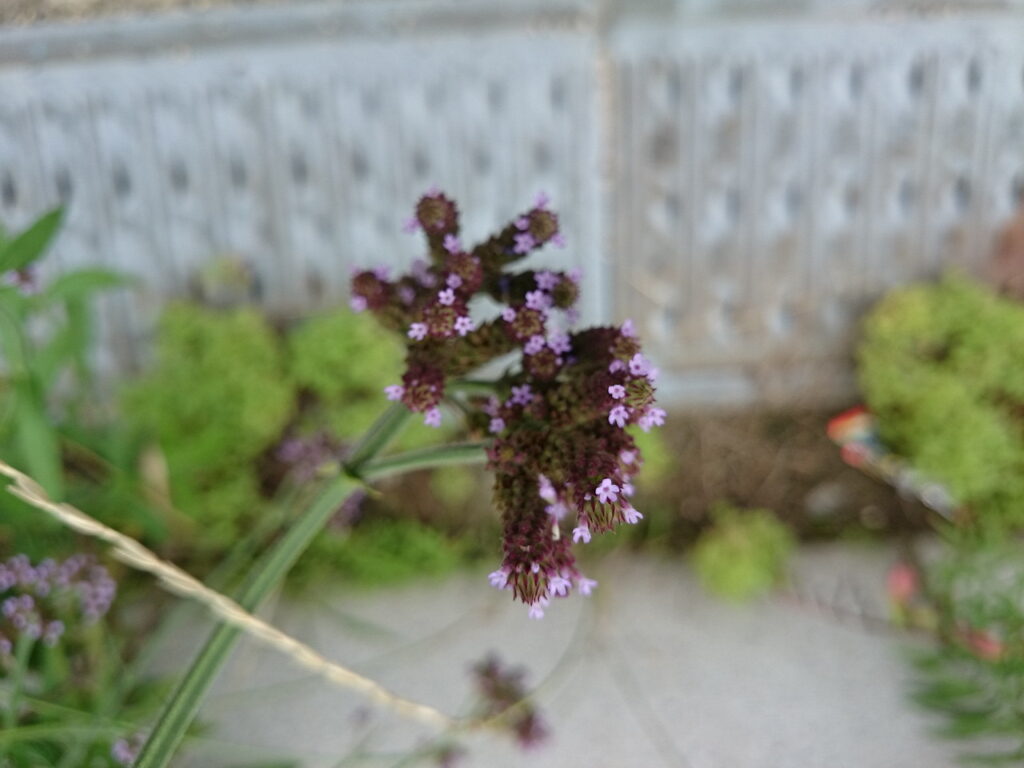
Verbena bonariensis flowers from June to August. The stem branches profusely at the top, bearing numerous spike-like inflorescences 2-3 cm long. The inflorescences are more than 5 mm wide and densely packed, with a corolla 3 mm in diameter, pale bluish-purple, and 5-lobed. The corolla tube is shorter compared to Verbena bonariensis. The calyx lobes are slender and pointed at the tip.
Verbena japonica flowers from May to October. The stem branches profusely at the top, bearing numerous spike-like inflorescences about 3 cm long. The inflorescence is less than 3 mm wide, with the lower flowers sparsely arranged. The flowers are pale blue, tubular, 5-lobed, about 3 mm in diameter. The calyx lobes are triangular.
How is pollination done?
Given its conspicuous pink color and long, tubular corolla, it's clear that this flower is insect-pollinated, and it's likely that insects with relatively long mouthparts that can reach the nectar inside the corolla are the ones that visit it.
According to a British study, lepidoptera and syrphidae are recorded as visiting Verbena bonariensis (Rollings & Goulson, 2019), and in an American study, hesperiidae, syrphidae, and honeybees are the top three groups excluding hemiptera (Palmersheim et al., 2022). These are followed by Pieridae and small bees.
According to Japanese research, the population of Verbena bonariensis consists of approximately 66% European honeybees, about 301 TP3T of the family Halictidae, and the remainder being predatory wasps (Arifin & Okamoto, 2022).
I could not find any research on pollinating insects of Verbena bonariensis and Verbena japonica.
In summary, the results are largely as expected, but there appear to be considerable differences in the types of pollinating insects that visit Verbena bonariensis and Verbena bonariensis.
This is likely because the corolla of Verbena bonariensis is noticeably longer than that of other species. It seems natural that butterflies with proboscises suited to longer corollas would visit them. This could be considered a form of niche partitioning, which is an interesting fact.
However, it's a little strange that there are so many hoverflies on the willow verna. Hoverflies are known to be insects with short mouthparts. I couldn't find any mention of this, but perhaps they can eat the pollen.
Furthermore, the fact that the European honeybee, an introduced species common in urban areas, actively contributes to the pollination of Verbena bonariensis and Verbena bonariensis partially explains why these four species can frequently reproduce even in urban areas.
What is the structure of the fruit?
The fruits of the Verbena genus are all schizocarps, splitting into four segments, usually oblong in shape, with one seed in each segment.
The fruit of Verbena bonariensis is divided into four segments. Each segment is 1-1.5 mm long.
The fruit of Verbena bonariensis is divided into four segments. Each segment is about 1.3 (1-1.5) mm long, and when dry, irregular white granules (papillates) appear on the ventral surface.
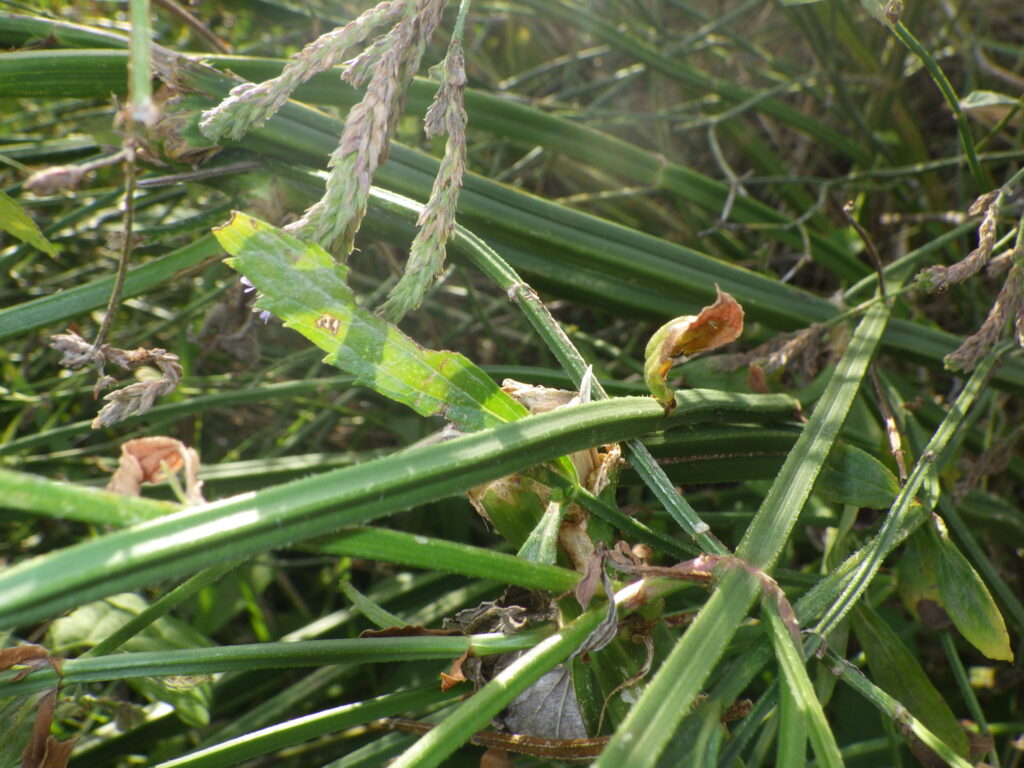
During the fruiting season, the flower spikes of Verbena bonariensis elongate into a cylindrical shape, reaching a length of 1-5 cm. The fruit consists of four segments. Each segment is approximately 1.3 (1-1.5) mm long, and when dry, irregular white granules (papillate projections) appear on the ventral surface.
The fruit of Verbena japonica is a schizocarp with four segments. The pericarp is fused to the back of the seeds, and as the four seeds mature, the pericarp splits longitudinally, making it appear as if the four seeds are directly inside the persistent, barrel-shaped calyx tube.
What are the seed dispersal methods?
Seed dispersal appears to be largely unstudied, but given that Verbena stricta is considered to have no special seed dispersal method (Wenninger et al., 2016), it is highly likely that these four species also rely solely on gravity dispersal. No structures that would allow them to receive special winds have been found, but wind dispersal may also occur in urban areas with fewer barriers.
Some literature suggests that *Verbena bonariensis* has elaosomes (Fryirs & Carthey, 2022), but the details are unclear. It's possible that the papillary projections are being referred to as elaosomes, but it's unknown whether these projections have such a function.
References
Arifin, M., & Okamoto, T. 2022. Floral scent and pollination of the invasive plant Coreopsis lanceolata in Japan. Journal of Pollination Ecology 32: 108-127. https://doi.org/10.26786/1920-7603(2023)740
Fryirs, K., & Carthey, A. 2022. How long do seeds float? The potential role of hydrochory in passive revegetation management. River Research and Applications 38(6): 1139-1153. https://doi.org/10.1002/rra.3989
Kanagawa Prefecture Flora Survey Association. 2018. Kanagawa Prefecture Flora 2018 (Electronic Edition). Kanagawa Prefecture Flora Survey Association, Odawara. 1803pp. ISBN: 9784991053726
Palmersheim, MC, Schürch, R., O'Rourke, ME, Slezak, J., & Couvillon, MJ 2022. If You Grow It, They Will Come: Ornamental Plants Impact the Abundance and Diversity of Pollinators and Other Flower-Visiting Insects in Gardens. Horticulturae 8(11): 1068. https://doi.org/10.3390/horticulturae8111068
Rollings, R., & Goulson, D. 2019. Quantifying the attractiveness of garden flowers for pollinators. Journal of Insect Conservation 23(5-6): 803-817. https://doi.org/10.1007/s10841-019-00177-3
Shimizu, K., Morita, H., & Hirota, S. 2001. Illustrated Guide to Naturalized Plants of Japan: 600 Species of Plant Invaders (Revised). National Rural Education Association, Tokyo. 553pp. ISBN: 9784881370858
Uemura, Shuji; Katsuyama, Teruo; Shimizu, Norihiro; Mizuta, Mitsuo; Morita, Hirohiko; Hirota, Shinichi; and Ikehara, Naoki. 2015. Illustrated Guide to Naturalized Plants of Japan: 500 Species of Plant Invaders (Revised and Expanded Edition, Vol. 2). National Rural Education Association, Tokyo. 595pp. ISBN: 9784881371855
Wenninger, A., Kim, TN, Spiesman, BJ, & Gratton, C. 2016. Contrasting foraging patterns: Testing resource-concentration and dilution effects with pollinators and seed predators. Insects 7(2): 23. https://doi.org/10.3390/insects7020023