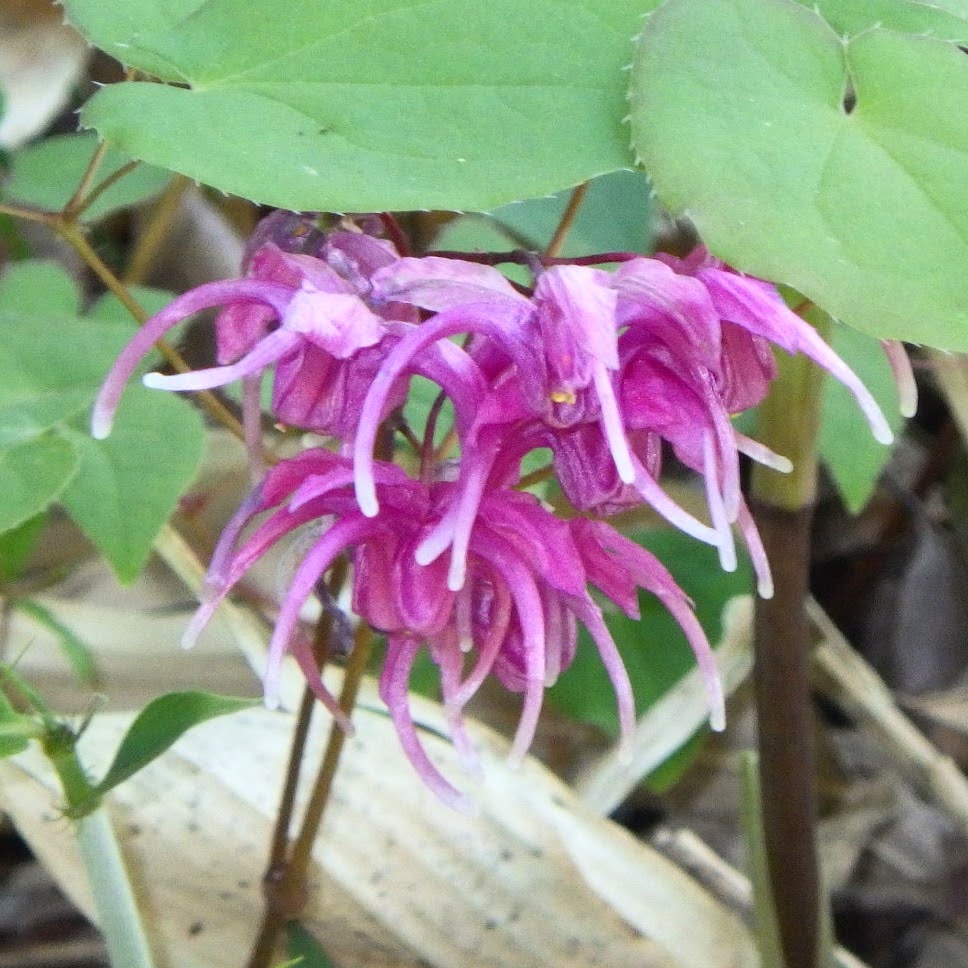
Both Epimedium grandiflorum and Epimedium sempervirens are wild species famous for their anchor-shaped flowers, and are also known as cultivated varieties due to their unique flower shapes. Focusing solely on flower shape, the differences are subtle, making them difficult to distinguish. While they are unlikely to coexist in nature, confusion can occur in botanical gardens and horticulture. However, distinguishing between Epimedium grandiflorum and Epimedium sempervirens is not difficult with practice. They can be clearly differentiated by examining the glossiness and base of the leaflets. Other Japanese Epimedium species can be broadly classified into three types based on the length of the spur (the anchor-like part of the flower): long spur, short spur, and no spur at all. These differences in spur length are thought to serve to separate pollinating insects from closely related species, a theory that has been studied and proven in the field. However, some bees have been observed visiting all types, a curious phenomenon that could overturn this hypothesis. Epimedium species are also known for their diversity in flower color, but current research suggests this has little impact on the species' coloration. The fruit is a follicle, and the seeds inside are dispersed by ants. This article will explain the classification, pollination ecology, and seed dispersal of the Epimedium genus.
- Two species with anchor-like flowers, known both as wild and cultivated varieties.
- What are the differences between Epimedium grandiflorum and Epimedium sempervirens?
- What is a simple way to distinguish between different species of Epimedium in Japan?
- Why do Epimedium flowers have different shapes depending on the species?
- There are three types of Epimedium flowers, and each attracts different insects!?
- Was the supposedly clever isolation of different Epimedium species incomplete?
- Do differences in flower color in the Epimedium genus affect pollinating insects?
- The fruit is a follicle, and the seeds are dispersed by ants.
- References
- Source
Two species with anchor-like flowers, known both as wild and cultivated varieties.
Epimedium grandiflorum var. thunbergianum, also known as "Ikarisou" (anchor grass), is a perennial herb distributed in Hokkaido (Oshima Peninsula) and Honshu (mostly on the Pacific side), growing in plains and low mountainous areas (Oshima, 2002; Shufu to Seikatsu Sha, 2007).
Epimedium sempervirens, also known as evergreen sprout, is a perennial herb distributed in the temperate to warm temperate zones along the Sea of Japan coast of Honshu (from the Hokuriku region to the San'in region), growing in the undergrowth of forests in mountainous areas with heavy snowfall.
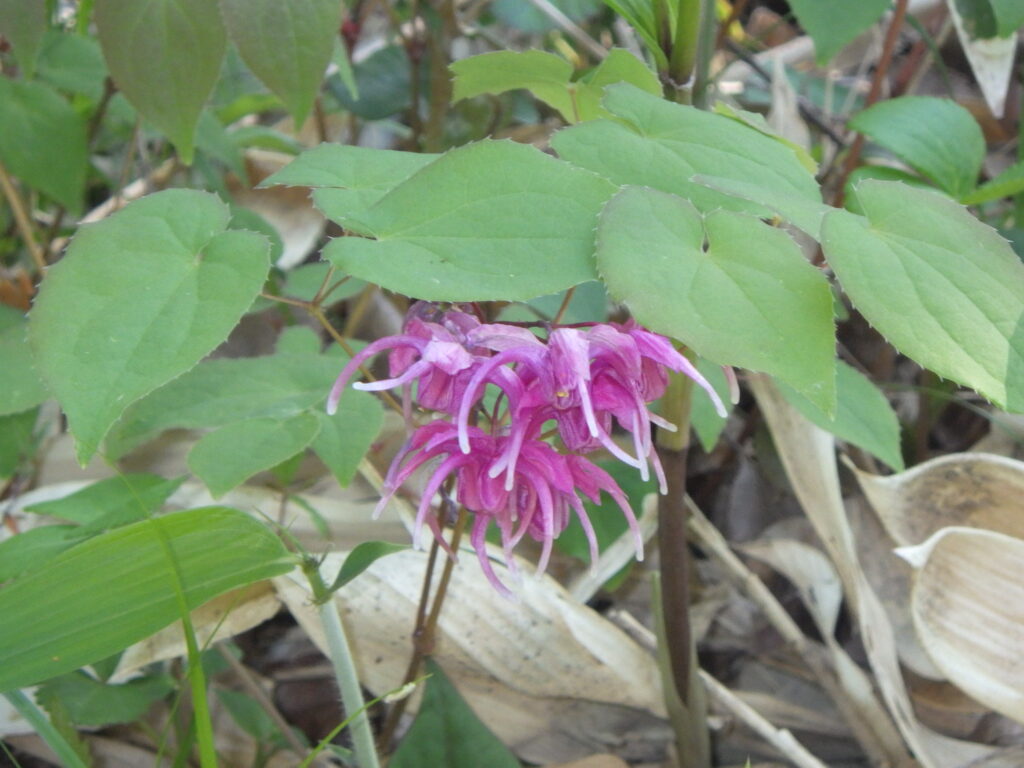
Both belong to the Epimedium genus of the Berberidaceae family and are famous for their anchor-shaped flowers. Because the flower shapes are so similar, they are difficult to distinguish. While they are unlikely to coexist in nature, they may be confused in botanical gardens and horticulture.
What are the differences between Epimedium grandiflorum and Epimedium sempervirens?
However, the difference between Epimedium grandiflorum and Epimedium sempervirens isn't that difficult once you get used to it.
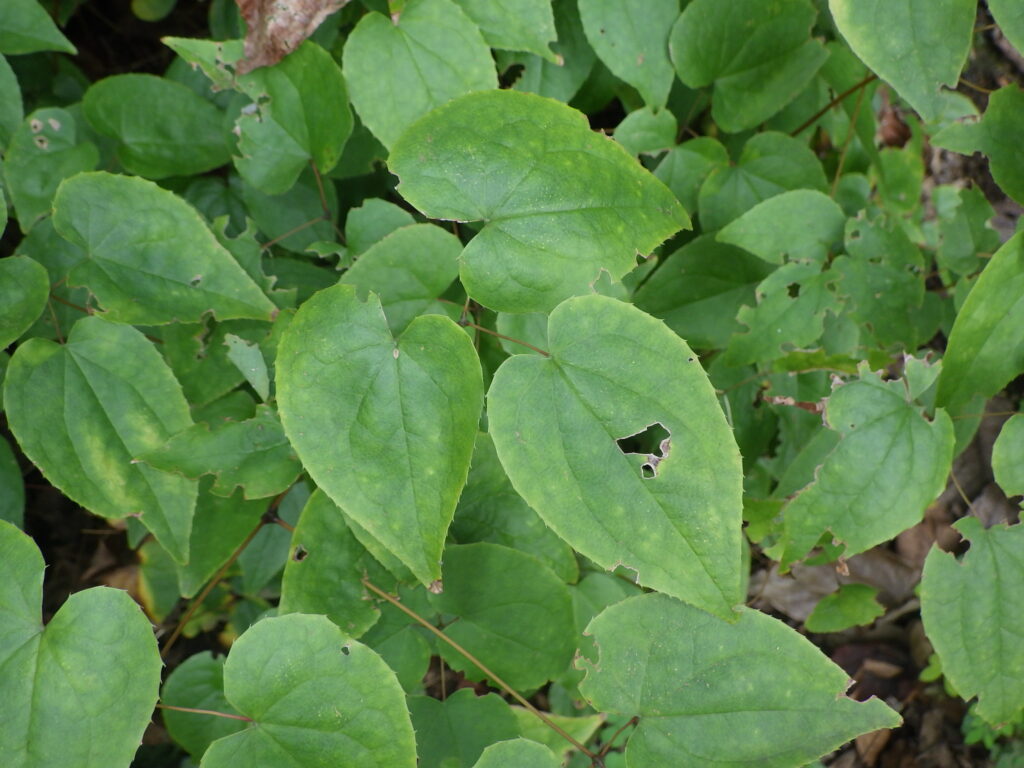
First, let's look at the leaves. The leaves are bipinnately compound, meaning that, broadly speaking, what was originally a single leaf has divided into what are called "leaflets."
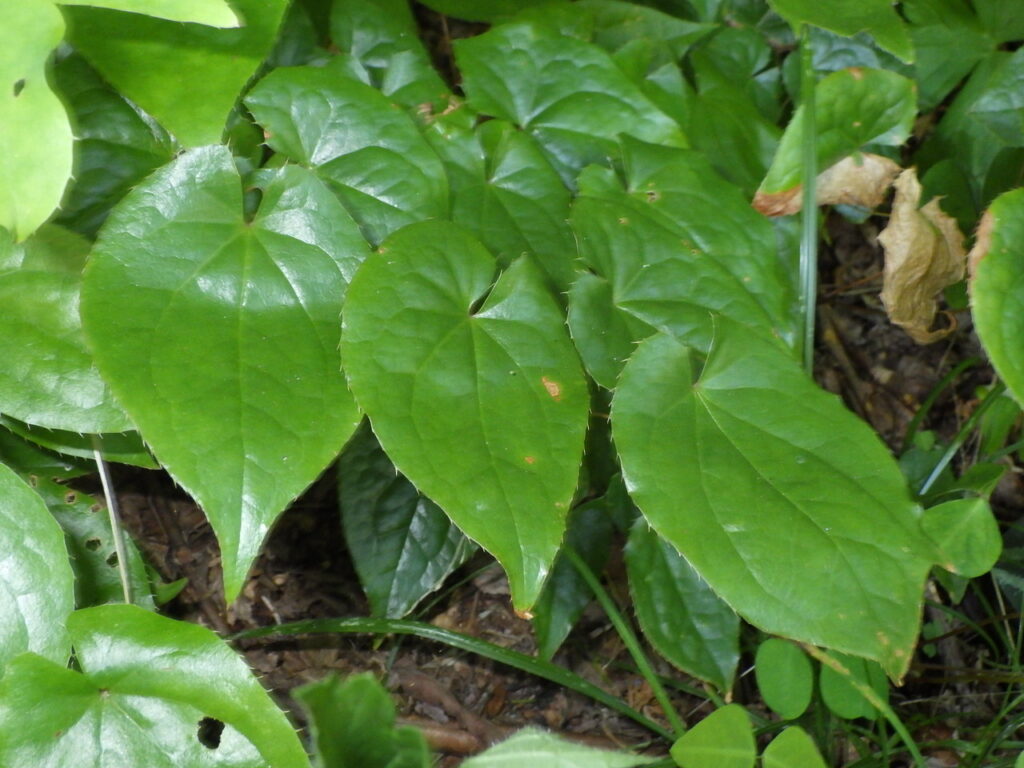
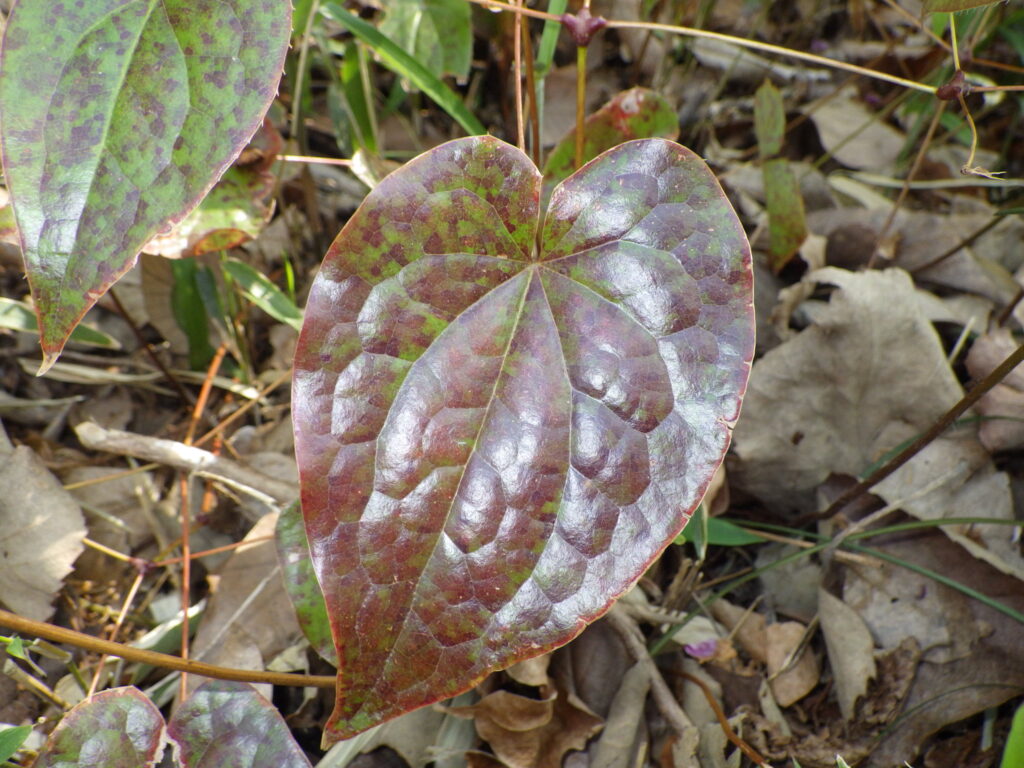
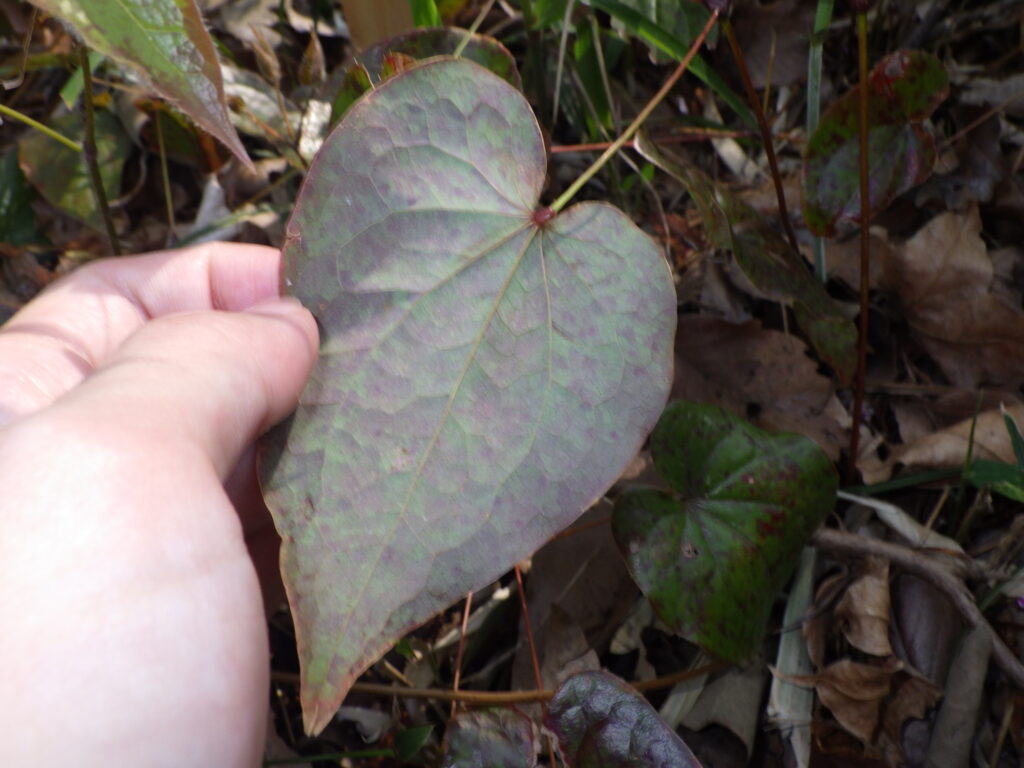
In Epimedium grandiflorum, the leaves are not evergreen and the base of the leaflets is shallowly heart-shaped, whereas in Epimedium grandiflorum, the leaves are evergreen and the base of the leaflets is deeply heart-shaped.
The term "evergreen" might be a bit confusing, but it refers to the ability to survive the winter with its leaves intact. Evergreen plants often evolve to have leaves that are harder and glossier in order to survive the winter.
Even comparing Epimedium grandiflorum and Epimedium sempervirens, Epimedium sempervirens is clearly glossier and has a firmer texture than Epimedium grandiflorum. Please compare them in the photos. This is thought to be because Epimedium sempervirens has adapted to the environment of the snowy regions on the Sea of Japan side.
Also, "heart-shaped base" can be rephrased as referring to a heart shape. A deep heart shape means that the Epimedium grandiflorum has a shape closer to a heart than the Epimedium grandiflorum.
Regarding the flower color, it is generally stated that Epimedium grandiflorum is pale reddish-purple, while Epimedium grandiflorum is white.
However, the only variety of Epimedium with pale reddish-purple flowers is called f. violaceum ; there is also a variety called white Epimedium f. humile with white flowers.
Furthermore, the white-flowered Epimedium grandiflorum is only found in the Noto Peninsula and is known as var. sempervirens. There is also a variety called Epimedium grandiflorum var. hypoglaucum, which has reddish-purple flowers and is distributed from southern Fukui Prefecture westward.
Considering this, it would be best not to rely on color for identification.
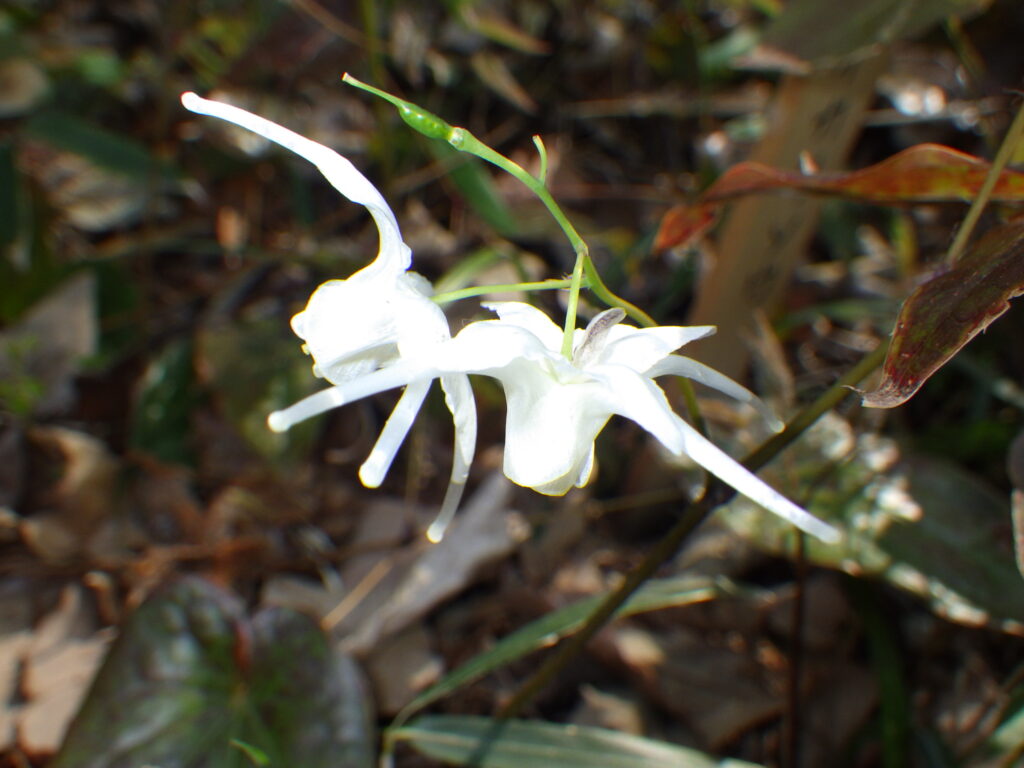
What is a simple way to distinguish between different species of Epimedium in Japan?
These two species can be distinguished in this way, but there are many other species of the Epimedium genus that are distributed in isolation in Japan. I will omit the precise classification method, but I will briefly describe their characteristics.
Epimedium species generally bloom in spring, from April to May. As the name suggests, the petals have a spur-like projection that hangs down and extends at the end; this is actually a developed part of the four petals, botanically known as a "spur." The calyx consists of eight petal-like parts, with the four inner ones being larger and the four outer ones being deciduous.
Japanese Epimedium species can be divided into three types: those with a long spur, those with a short spur, and those without a spur at all.
In addition to the previously mentioned Epimedium grandiflorum and Epimedium sempervirens, the types with long spurs include Epimedium grandiflorum var. grandiflorum (white flowers, distributed in the Kinki region of Honshu and limestone areas of Shikoku), Epimedium grandiflorum var. higoense (white flowers, distributed in Kumamoto Prefecture, Kyushu), and Epimedium koreanum (pale yellow flowers, distributed in the Oshima Peninsula of Hokkaido, mainly the Sea of Japan side of Honshu, the northern part of the Korean Peninsula, and the Ussuri region of Japan).
Types with short spurs include * Epimedium trifoliatobinatum* subsp. *trifoliatobinatum * (distributed in the serpentine areas of Shikoku) and * Epimedium trifoliatobinatum * subsp. *maritimum* (distributed near the coast and islands of eastern Kyushu, evergreen).
Types that completely lack spurs include * Epimedium diphyllum subsp. diphyllum* (white flowers, distributed in the Chugoku region of Honshu, Shikoku, and Kyushu) and *Epimedium diphyllum subsp. kitamuranum* (distributed in the Yoshino River basin of Shikoku).
There is also Epimedium x setosum, which exhibits great morphological variation in flower color, presence or absence of spurs, etc. (distributed in limestone areas of the Chugoku region of Honshu, a hybrid of Epimedium grandiflorum and Epimedium sempervirens).

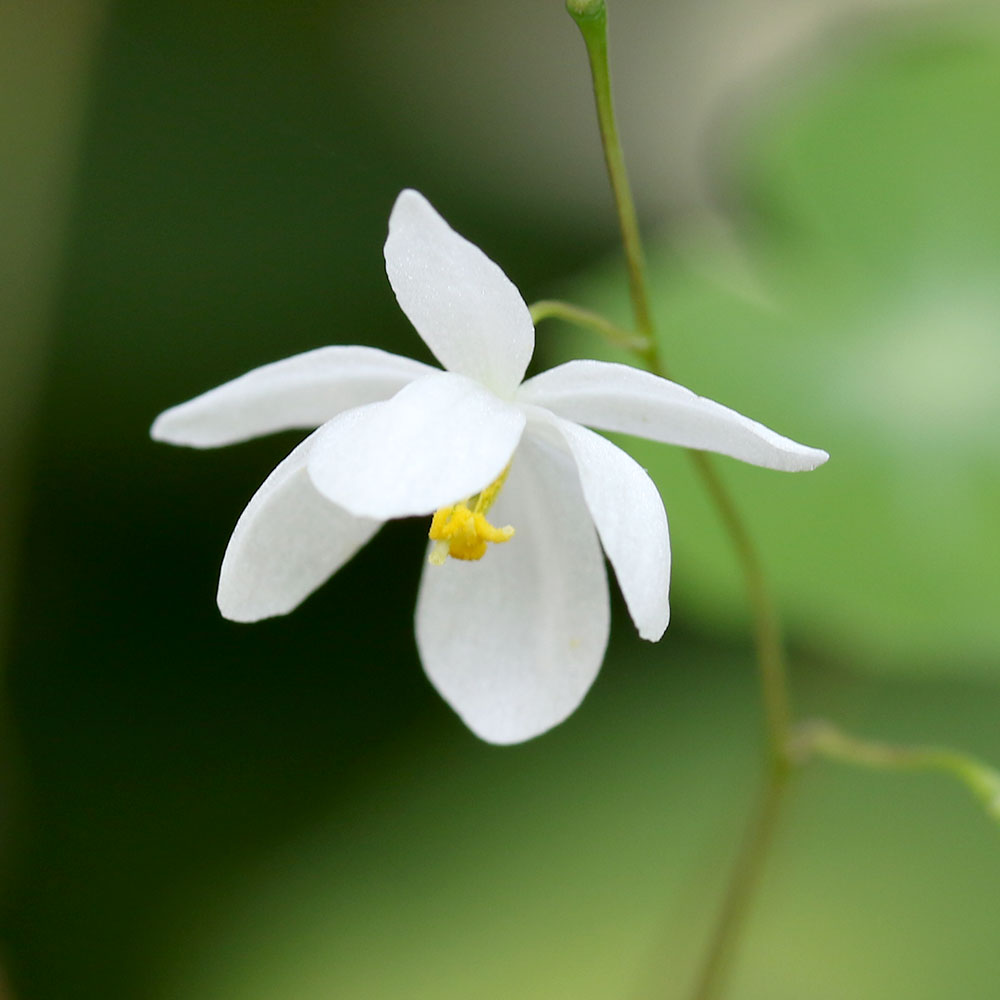
Why do Epimedium flowers have different shapes depending on the species?
As you can see, there are three types of flowers in the Epimedium genus, depending on the length of their spurs. Why do they differ in shape in this way?
The most likely explanation is that each species uses different pollinating insects for pollination.
There is nectar at the end of the spur, but by creating a long spur, it is possible to limit the insects that come to drink the nectar to species with long tongues that match the length of the spur. Conversely, by eliminating the spur, the reward of nectar is removed, and insects that prefer pollen, such as bees, can be attracted.
This will prevent competition for pollinating insects even when different species of the same Epimedium genus coexist, and it will also prevent hybridization, thus avoiding the risk of producing sterile seeds or seeds that cannot reproduce.
There are three types of Epimedium flowers, and each attracts different insects!?
To investigate whether this is true, Japanese researchers have patiently conducted field surveys of insects that visit three types of Epimedium flowers throughout Japan, though not all of them (Suzuki, 1983; Suzuki, 1984; Suzuki, 1990).
As a result, we discovered that the three types exhibited different tendencies.
First, the types with long spurs were mainly visited by the bumblebee *Bombus diversus diversus*, which efficiently pollinated them. *Bombus diversus* is well known for its long tongue. *Bombus nipponensis* was also present, but in very small numbers.
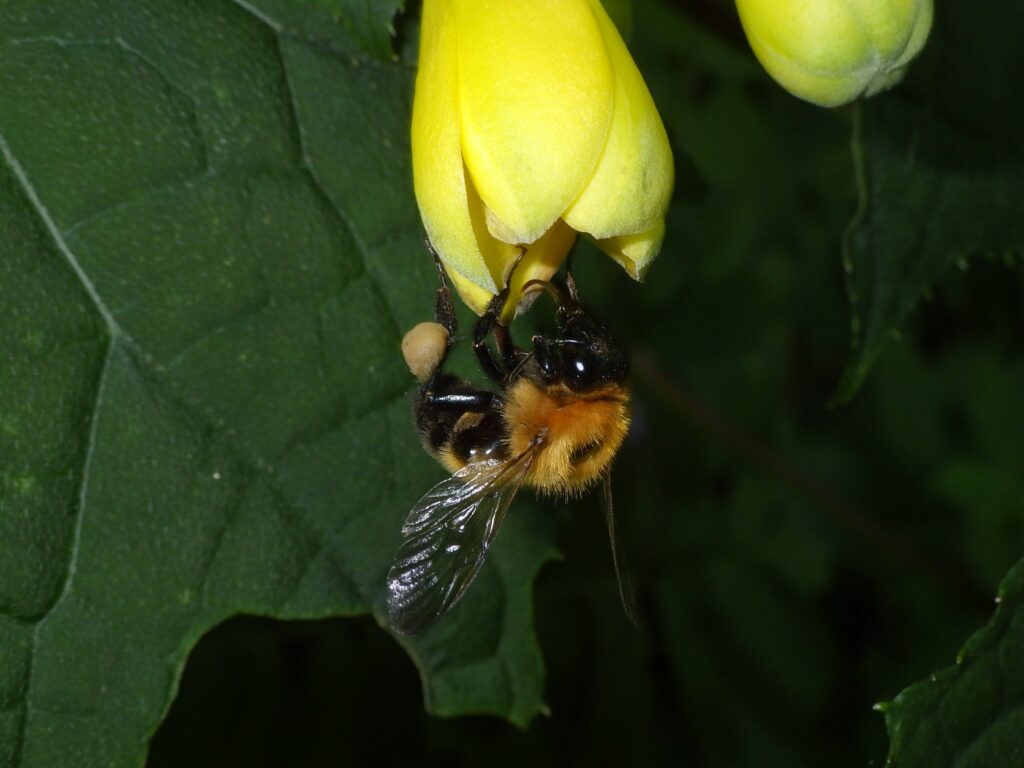
To drink the nectar at the end of the long spur, the bee must extend its tongue through the opening in the center where the stamens are located. Moreover, since the opening is on the underside, it has to hang upside down. Only certain bumblebee species with long tongues, such as the tiger bumblebee, are able to do this. Furthermore, from an ecological perspective, it is known that bumblebees actively collect nectar in the spring as a source of nutrition for the queen bee to build her nest.
Furthermore, the types with short spurs were primarily visited and efficiently pollinated by Eucera nipponensis. Some bumblebee species with long tongues, such as Bombus scoparius, did not visit them at all. Eucera nipponensis has a relatively long tongue, but it is shorter than that of Bombus scoparius.
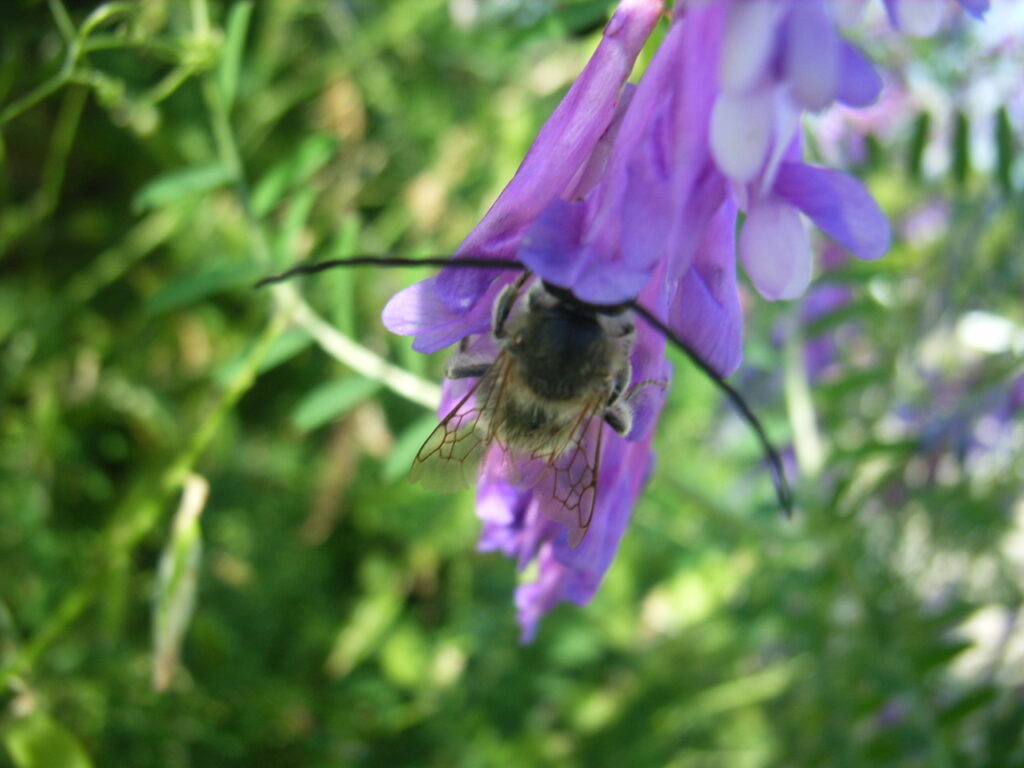
To suck nectar from the tip of a short spur, a tongue as long as that of a bumblebee (like the Japanese bumblebee) is actually inefficient; a tongue length similar to that of a Japanese long-horned bee (like the Japanese long-horned bee) seems to be just right.
Finally, in the type of flower that lacked a spur at all, pollinating bees took priority in visiting and efficiently pollinating the flowers. While some Japanese long-horned bees (Nippon-higenaga-hanabachi) were also present, they were very few in number.
The complete absence of a spur means that the only reward for insects is pollen, making the flower attractive only to bees that collect pollen.
As the results clearly show across the three types, it might appear at first glance that they are able to coexist and avoid the risk of hybridization.
Was the supposedly clever isolation of different Epimedium species incomplete?
However, the complexity and fascination of nature lie in the fact that it doesn't always allow us to understand it so easily.
Surprisingly, the pollen-collecting bees that appeared at the end weren't just those with no spurs at all; those with long spurs and those with short spurs also visited the area.
This defeats the purpose of trying to avoid habitat segregation and hybridization. Why is this happening?
Currently, this mystery remains unsolved. It is known as one of the mysteries known as the "double structure."
However, one possibility is that the foraging range of the bees that collect pollen is not very wide. If the bees that collect pollen do not travel far, the probability of them carrying pollen to other Epimedium species is likely low. This point has not yet been verified, but the researchers who conducted this study believe this is a likely possibility.
Do differences in flower color in the Epimedium genus affect pollinating insects?
One notable characteristic of the Epimedium genus is its great variation in color. Generally, they range from pale reddish-purple to white, with yellow being the most common.
Do these color variations affect the types of insects that visit the flowers?
Similarly, according to the research results mentioned earlier, it is believed that color is not affected.
This is suggested by observations of estimated hybrid populations of Epimedium grandiflorum and Epimedium sempervirens.
In this group, there are no pure reddish-purple flowers; instead, various intermediate color variations ranging from reddish-purple to pale yellow (to green) are observed. However, it has been observed that the same bumblebee queen visits flowers of all different colors without distinction.
Other observations have also reported that bumblebees visit flowers regardless of their color, reinforcing the idea that bumblebees do not perceive red, and that red flowers contain the same pigments as yellow flowers, does not influence their behavior.
However, if the difference in color did not affect pollinating insects, then polymorphism in the color of bumblebee-pollinated flowers should be observed more frequently in nature. Nevertheless, considering species such as toad lilies and balsams, this does not seem to be the case (although the color does indeed change between species).
Considering this, I personally would like to think that the diversity of Epimedium flower colors is due to some kind of adaptation resulting from competition with other insect faunas in the region or with the flower colors of other plants, but the detailed reasons remain unclear. I look forward to future research.
The fruit is a follicle, and the seeds are dispersed by ants.
The fruit is a follicle resembling a bean pod, containing 5 to 8 seeds. The seeds have elaiosomes that are attractive to ants, and are dispersed by ants (Suzuki, 1990).
References
Oshima, Toshiaki. 2002. Wildflowers and Alpine Plants Selected by Flower Color. Seibido Publishing, Tokyo. 463pp. ISBN: 9784415019062
Suzuki, Kazuo. 1983. Pollination patterns of the genus Epimedium. *Journal of Species Biology* 7: 72-81. ISSN: 0913-5561, https://dl.ndl.go.jp/info:ndljp/pid/10467757
Suzuki, K. 1984. Pollination system and its significance on isolation and hybridization in Japanese Epimedium (Berberidaceae). The Botanical Magazine 97(3): 381-396. ISSN: 0006-808X, https://doi.org/10.1007/BF02488670
Suzuki, Kazuo. 1990. Japanese Epimedium: Origin and Speciation. Yasaka Shobo, Tokyo. 187pp. ISBN: 9784896948035
Shufu to Seikatsu Sha. 2007. A Guide to Wildflowers Found in the Fields and Mountains. Shufu to Seikatsu Sha, Tokyo. 143pp. ISBN: 9784391134254
Source
This article is a significantly expanded version of a piece originally published in the following book.