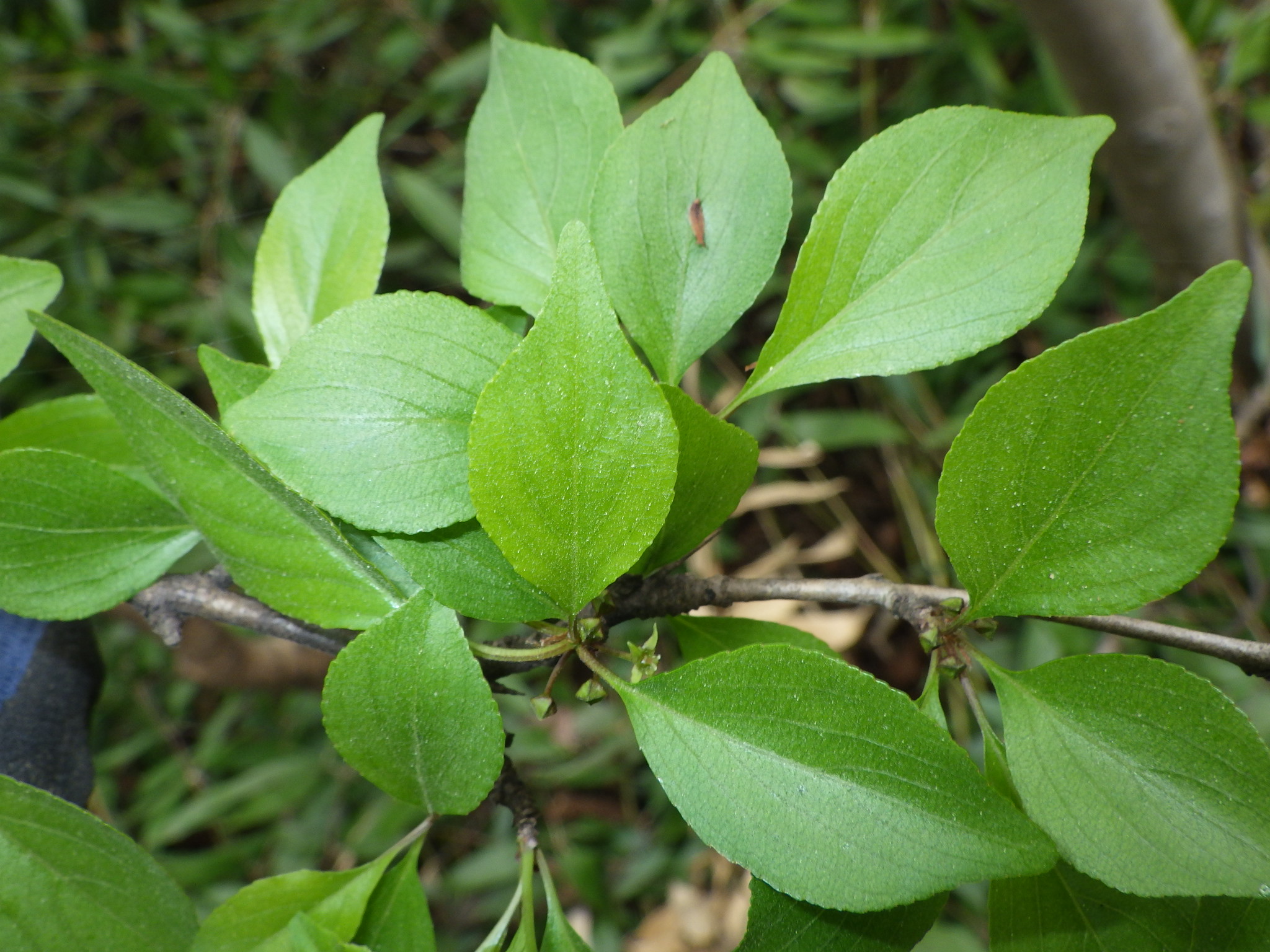
Rhamnus japonica is a deciduous shrub that grows relatively rarely in Japan, but it is often compared to other similar species such as Rosa chinensis and Rhamnus japonica. Rhamnus japonica shares a similar name, and morphologically, both species have drupe fruits and flowers and fruits that grow in clusters in the leaf axils, which may lead to confusion for those unfamiliar with them. Furthermore, both Rhamnus chinensis and Rhamnus japonica belong to the Rhamnus genus of the Rhamnaceae family and are taxonomically similar, sharing many common features. However, there is a taxonomic gap between them, and Rhamnus chinensis can be distinguished by carefully observing its leaves. This article will explain the classification and morphology of Rhamnus japonica, Rosa chinensis, and Rhamnus japonica.
- What are Rhamnus japonica, Ilex serrata, and Ilex serrata?
- What is the difference between black buckthorn and Japanese buckthorn?
- What is the difference between Rhamnus japonica and Rhamnus japonica?
- What are the varieties and cultivars of Rhamnus japonica (black buckthorn)?
- What is the structure of a flower?
- What is the structure of the fruit?
- References
What are Rhamnus japonica, Ilex serrata, and Ilex serrata?
Rhamnus japonica var. decipiens, also known as black buckthorn, is a deciduous shrub distributed in the cool temperate zones of Hokkaido, Honshu, Shikoku, and Kyushu in Japan, and is somewhat rarely found growing in forests and rocky areas from mountainous to hilly regions (Kanagawa Prefecture Flora Survey Association, 2018).
Rhamnus davurica var. nipponica, also known as black rose, is a deciduous shrub distributed in Honshu, Japan (central and northern regions), and rarely grows on slopes and near water in lowlands and mountainous areas.
Ilex serrata, also known as Japanese holly, is a deciduous shrub distributed in Honshu, Shikoku, and Kyushu in Japan, as well as in China, growing in wetlands or damp deciduous broad-leaved forests (Mogi et al., 2000).
The names of the black buckthorn and the Japanese buckthorn are similar, and people who have never seen them may confuse them. One theory is that the Japanese name "kuro-umemodoki" (black buckthorn) comes from the fact that its fruit and branching pattern resemble those of the Japanese buckthorn, and that its fruit is black. Both are deciduous shrubs, dioecious, have drupe fruits, and their flowers and fruits grow in clusters in the leaf axils (or appear to grow in clusters).
Both Rhamnus japonica and Rhamnus japonica belong to the Rhamnus genus of the Rhamnus family, and their leaves, flowers, and fruits are very similar. The ovary has 2 to 4 chambers, and the fruit is spherical with 2 to 4 seeds.
Furthermore, these two species within the genus Rhamna are very similar, sharing the characteristic of having only 3 to 5 pairs of lateral veins on their leaves, and sometimes having thorns at the tips of their branches. Therefore, they are easily confused.
What is the difference between black buckthorn and Japanese buckthorn?
However, first of all, Rhamnus japonica and Ilex serrata belong to completely different groups.
There is a significant difference between Rhamnus japonica and Ilex crenata: Rhamnus japonica belongs to the genus Rhamnus in the family Rhamnaceae, while Ilex serrata belongs to the genus Ilex in the family Aquifoliaceae. Therefore, it is likely that there are also significant differences in their morphology.
There are too many specific differences to list, but if we only consider the leaves, in Rhamnus japonica, the leaf blade is small, the underside of the leaf is glossy, and the lateral veins of the leaf are curved so much that they run parallel to the main vein. In contrast, in Ilex serrata, the leaf blade is large, the underside of the leaf is not glossy, and the lateral veins of the leaf grow almost perpendicular to the main vein and curve as they extend.
The flowers are completely different. In black buckthorn, the flowers are yellowish-green with four petals that extend to the tip in a tail-like manner, while in Japanese holly, the flowers are pale purple with four to five petals that have rounded tips.
Perhaps the name was derived from the image of the plant bearing fruit in the past, but upon closer observation, you'll realize they belong to completely different groups.
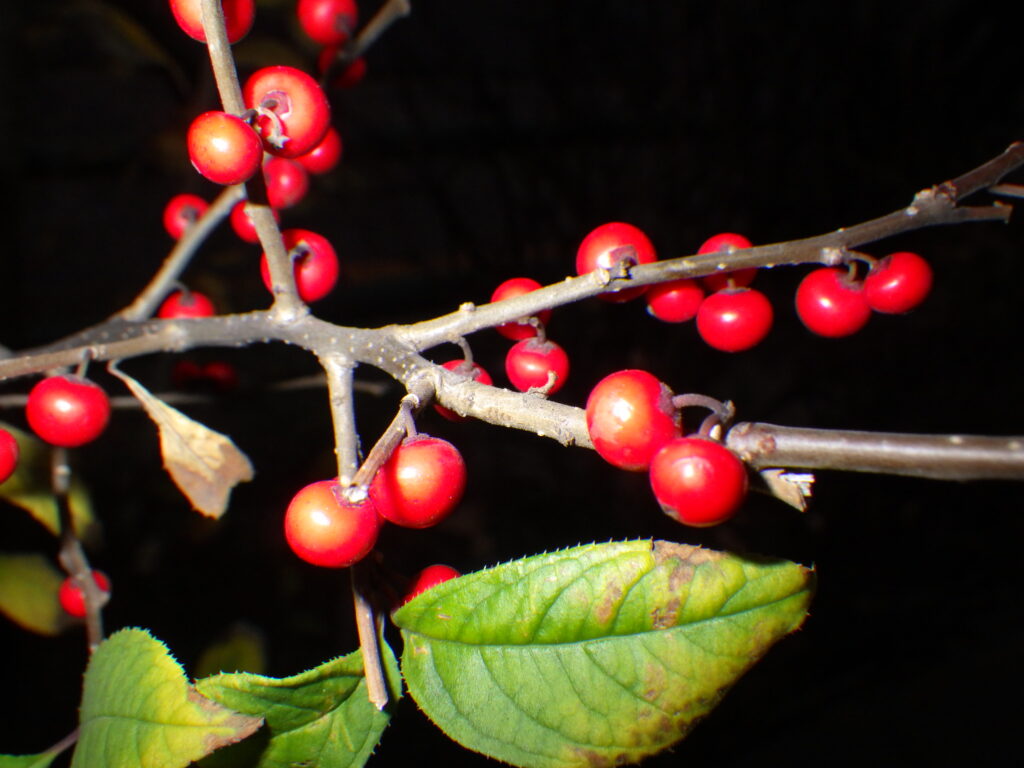
Of course, the fruit of the black buckthorn is usually black when ripe, but the fruit of the Japanese holly is red when ripe.
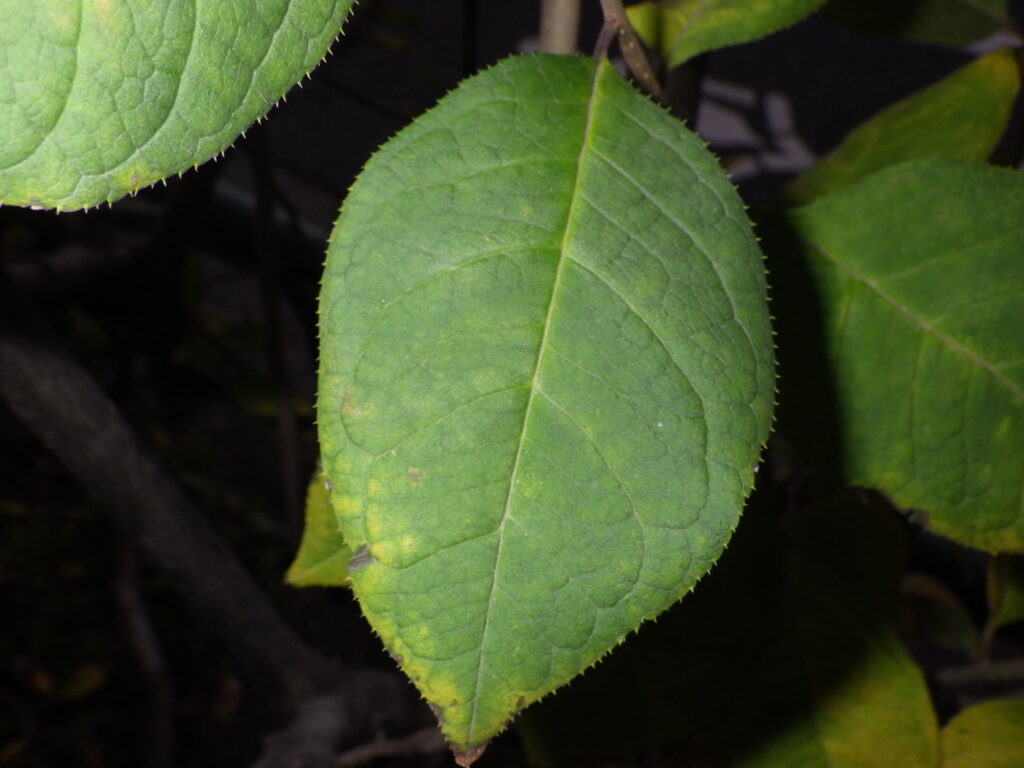
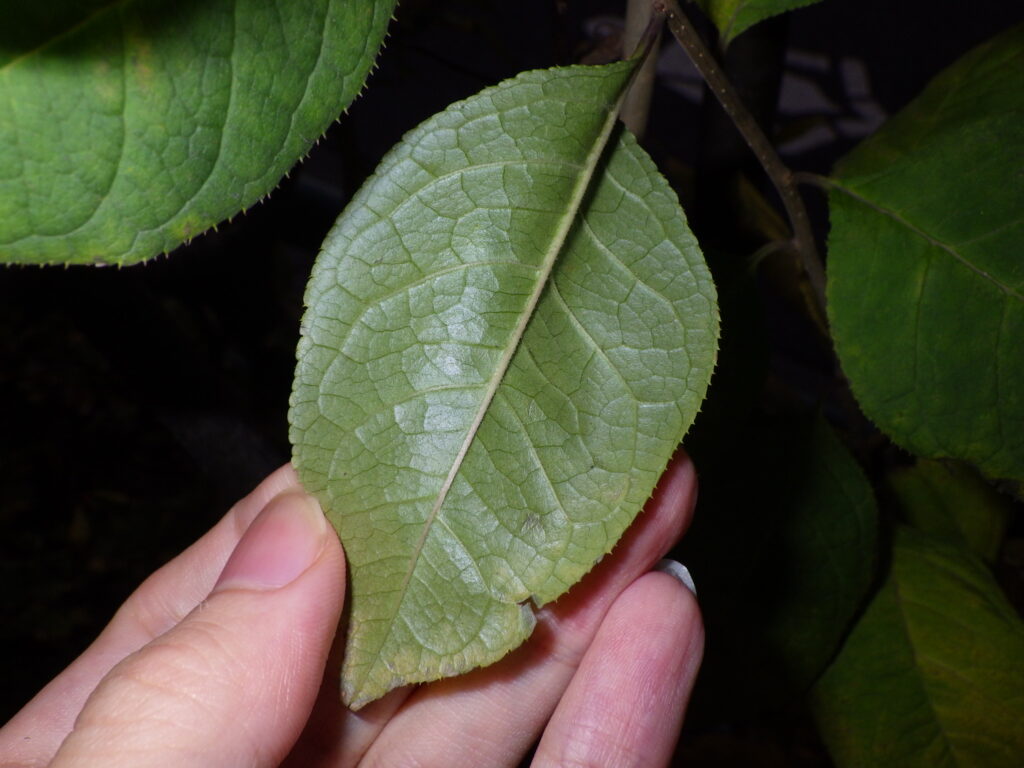
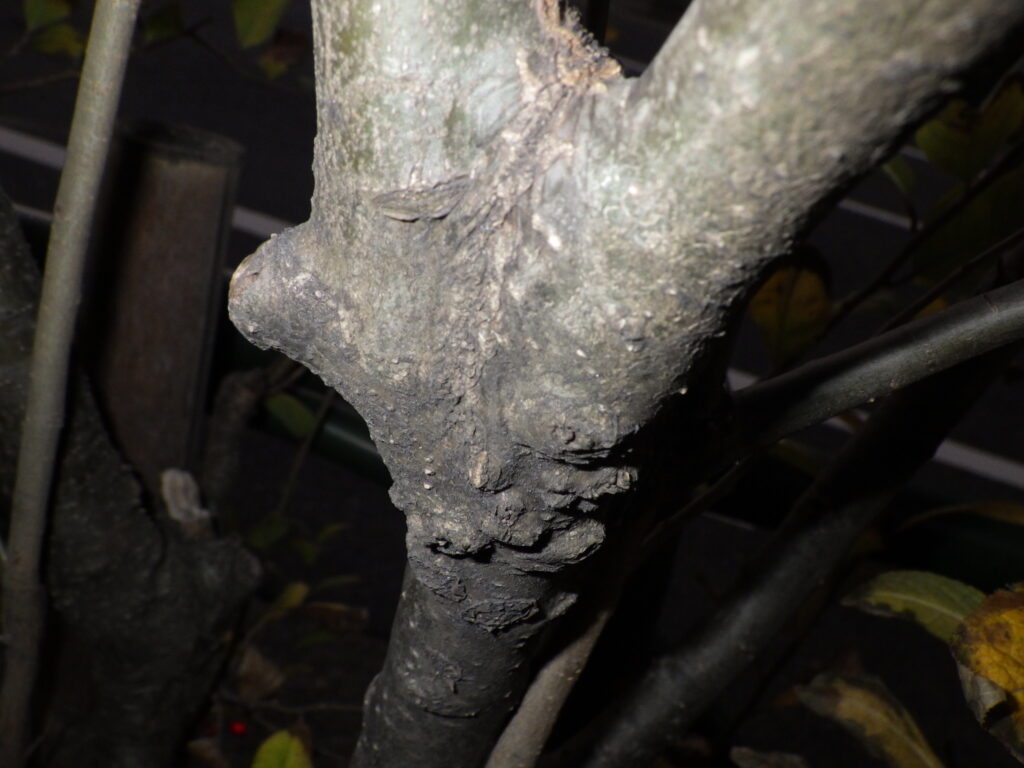
What is the difference between Rhamnus japonica and Rhamnus japonica?
Rhamnus japonica and Rhamnus japonica are very similar in appearance because they belong to the exact same classification.
However, they can be distinguished by the shape of their leaves (Kanagawa Prefecture Flora Survey Association, 2018; Hayashi, 2019).
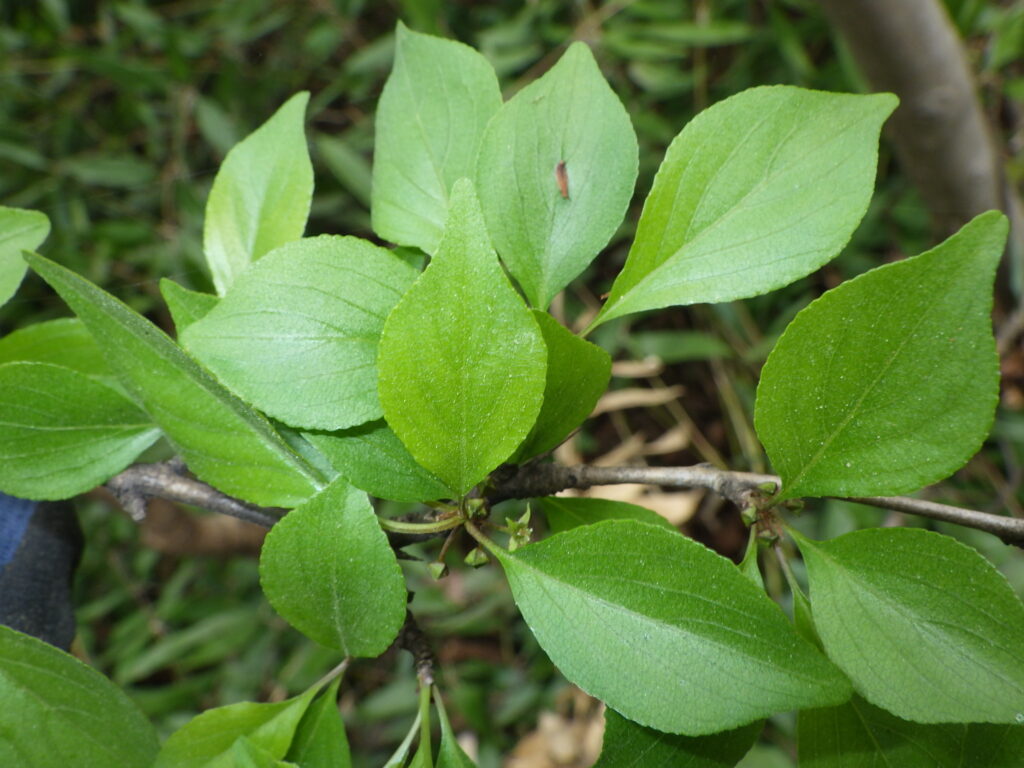
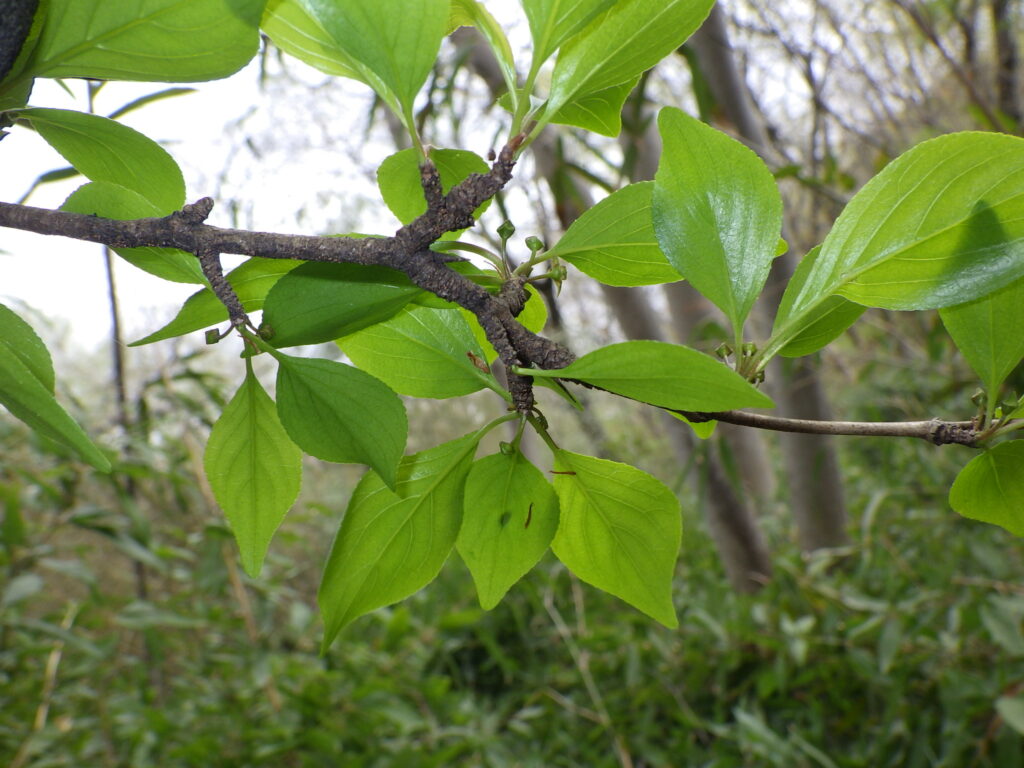
Specifically, the difference lies in the fact that Rhamnus japonica has small, obovate leaves with a wedge-shaped base and well-developed short branches, while Rosa chinensis has large, oval to oblong leaves.
While some Rhamnus japonica species have larger leaves, the key difference with Rhamnus japonica is the presence of long, oval-shaped leaves.

What are the varieties and cultivars of Rhamnus japonica (black buckthorn)?
Many varieties have been identified for both Rhamnus japonica and Rhamnus japonica.
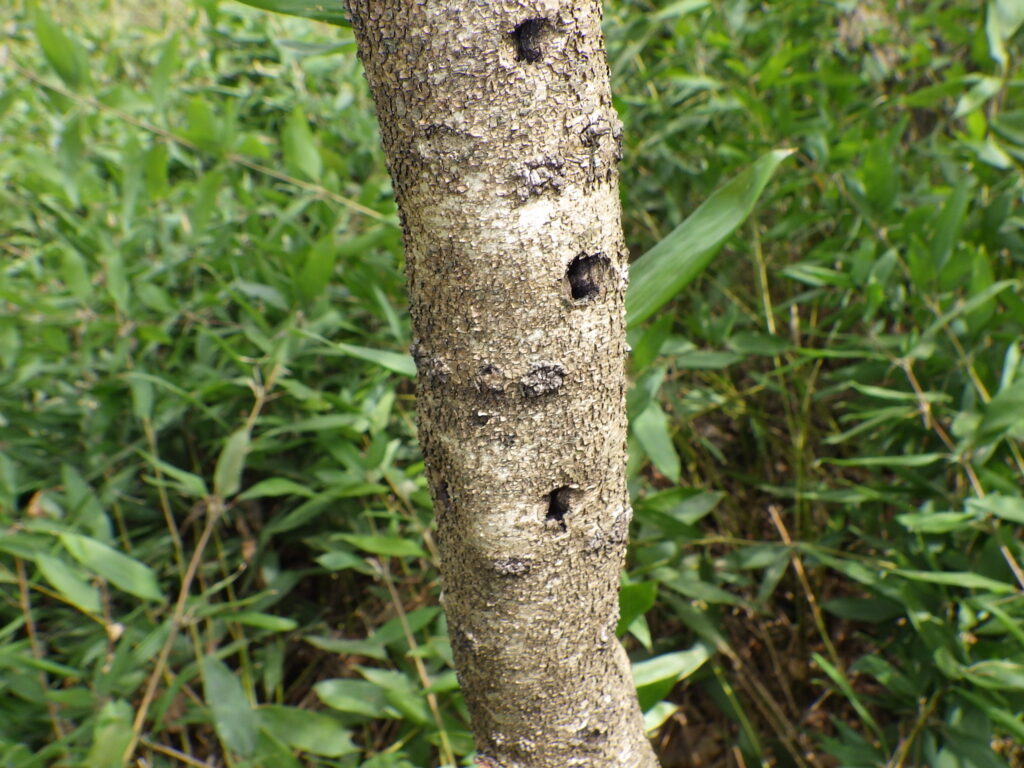
Rhamnus japonica (in the narrow sense) var. decipiens is a variety with leaves 3-6 cm long.
Ezo-no-kuromedoki var. japonica is distributed in Hokkaido and the Sea of Japan side of Honshu, and is a large variety with leaves 5-12 cm long.
Rhamnus japonica var. microphylla is distributed in western Japan and grows in limestone and serpentine areas. It is a small variety with leaves 1-3 cm long.
Rhamnus japonica var. decipiens f. senanensis is a variety characterized by fine hairs covering the entire underside of its leaves.
Blue-green buckthorn var. decipiens f. chlorocarpa is a variety with blue-green fruits (Honda, 1933).
Rosa davurica var. davurica is distributed in Korea, northern China, and Dahurya.
Rose of the Black-tailed Rose var. nipponica f. pubescens is a variety that has hairs all over its underside.
What is the structure of a flower?
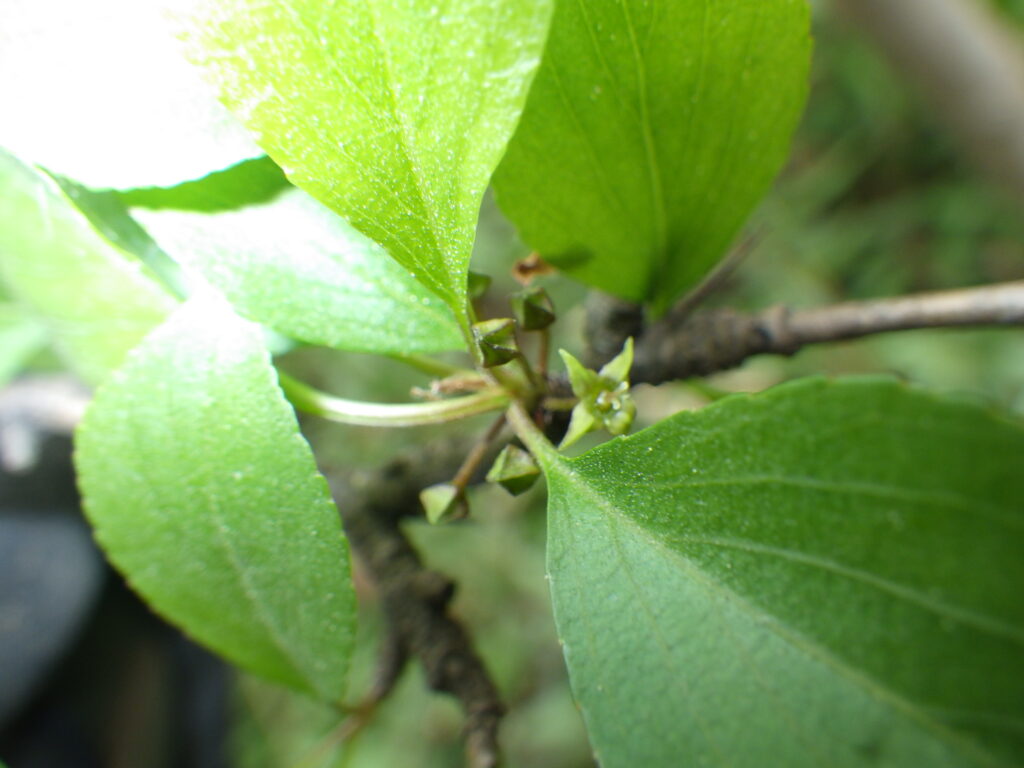
Rhamnus japonica blooms from April to May. It is dioecious (having separate male and female plants). The flowers grow in clusters in the leaf axils, are yellowish-green, and have tetramerous flowers.
Black roses bloom from May to June. They are dioecious (having separate male and female plants). The flowers are clustered in the leaf axils and short branches near the base of young branches, and are tetramerous, yellowish-green, and 4-5 mm in diameter. Male flowers are numerous, while female flowers are few. The pedicels are 7-10 mm long. The calyx lobes are narrowly triangular with pointed tips, and the calyx tube is bell-shaped. The style of the female flower is long and protruding, bifurcated at the tip, and the branches curve downwards.
Ilex serrata flowers in June. It is dioecious (having separate male and female plants). Pale purple flowers bloom in the leaf axils of the current year's branches. The inflorescence axis is extremely short, so the flowers appear to be clustered together. Male inflorescences have 5 to 20 flowers, while female inflorescences have 2 to 4 flowers. The flowers are 3 to 4 mm in diameter. The petals are 4 to 5 in number, oval-shaped, and about 4 mm long. There are 4 to 5 sepals. Male flowers have 4 to 5 stamens and a vestigial pistil. Female flowers have vestigial stamens. The ovary is spherical and the style is very short.
What is the structure of the fruit?
The fruits of the Rhamnaceae genus are all drupe. A drupe is a fruit in which the endocarp surrounding the seed hardens to form a pit, and the mesocarp surrounding the pit is usually fleshy.
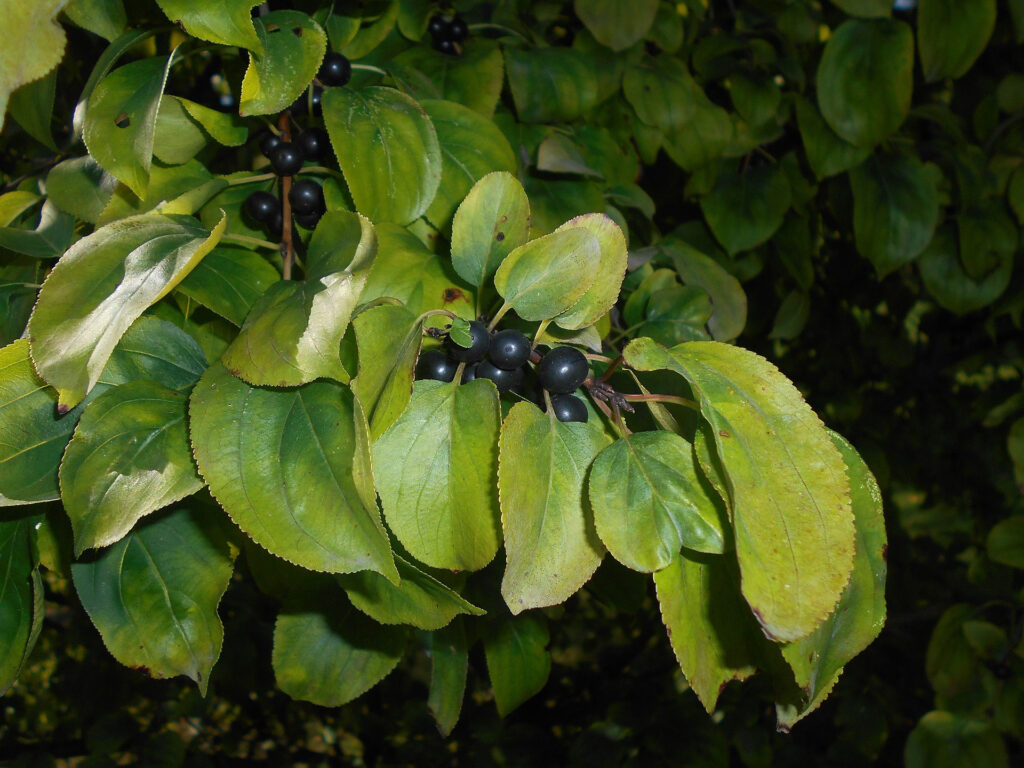
The fruit of the buckthorn is a drupe. It ripens to black and contains two seeds.
The fruit of the black rose is a drupe. It is obovate-spherical, 6-8 mm in diameter, and ripens to black.
The fruit of the Japanese holly (Ilex serrata) is a drupe. It is spherical, about 5 mm in diameter, ripens to red in September and October, and remains on the tree even after the leaves have fallen. Inside are 4 to 5 seeds. The seeds are triangular-elliptical in shape, about 2 mm long, and have a smooth surface.
References
Hayashi, Masayuki. 2019. Tree Leaves: Expanded and Revised Edition - Identifying 1300 Species Through Real-Life Scans. Yama-kei Publishers, Tokyo. 824pp. ISBN: 9784635070447
Honda, M. 1933. Nuntia ad Floram Japoniae XX. The Botanical Magazine 47(556): 296-299. https://doi.org/10.15281/jplantres1887.47.296
Kanagawa Prefecture Flora Survey Association. 2018. Kanagawa Prefecture Flora 2018 (Electronic Edition). Kanagawa Prefecture Flora Survey Association, Odawara. 1803pp. ISBN: 9784991053726
Mogi, T., Ota, K., Katsuyama, T., Takahashi, H., Shirokawa, S., Yoshiyama, K., Ishii, E., Sakio, H., and Nakagawa, S. 2000. Flowers Blooming on Trees: Polypetalous Flowers (Vol. 2, 2nd edition). Yama-kei Publishers, Tokyo. 719pp. ISBN: 9784635070041

