Poinsettias, Euphorbia hederacea, and Euphorbia leucocephala all belong to the Euphorbia genus of the Euphorbiaceae family. While they are widely cultivated for ornamental purposes, they can also become naturalized. Their most distinctive feature is the presence of bright red or white, petal-like "bracts," but this characteristic is common to all three species, which can sometimes lead to confusion. The three species can generally be distinguished by the extent and color of their colored bracts, and the shape of their leaves can also be a helpful indicator. The idea that "poinsettias are poisonous" is circulating on the internet, particularly on the Japanese Wikipedia, but this is a clear hoax, and no toxicity has been confirmed to date. This article will explain the classification, morphology, and toxicity of the Euphorbia genus, which has colored bracts.
What are poinsettias, Euphorbia helioscopia, and false poinsettias?
Euphorbia pulcherrima, also known as poinsettia or Christmas flower, is native to Central America and cultivated as an ornamental plant worldwide, including Japan. It is an evergreen shrub that has escaped cultivation and become naturalized in subtropical to tropical regions (RBG Kew, 2024). In Japan, it is cultivated only for ornamental purposes.
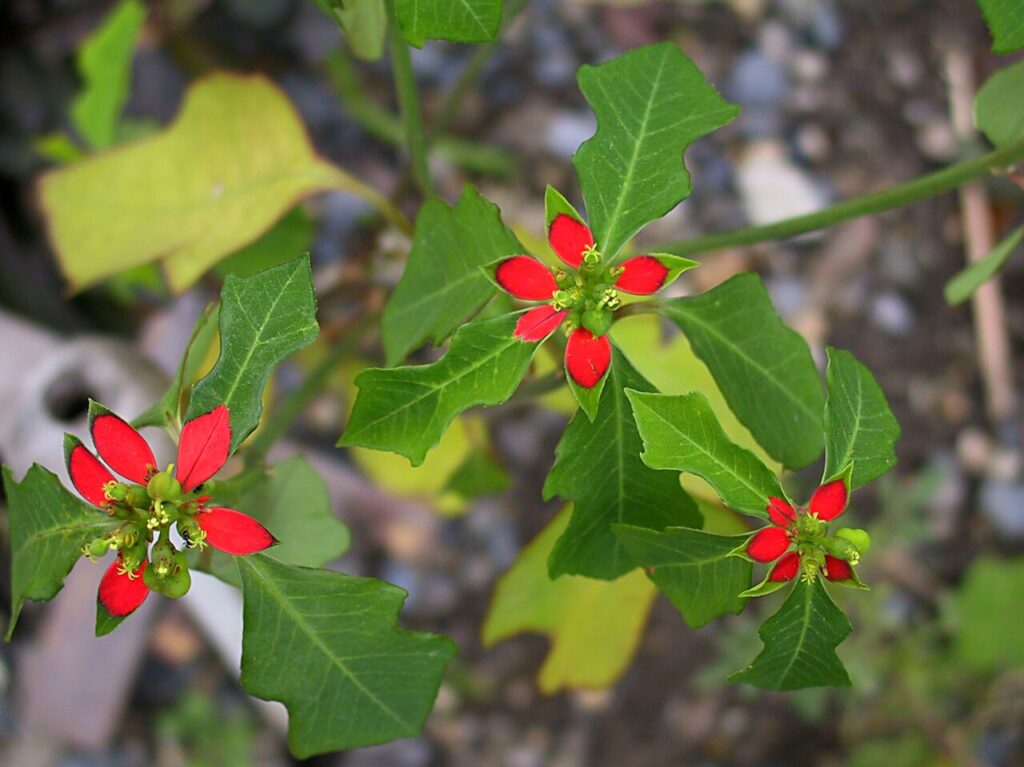
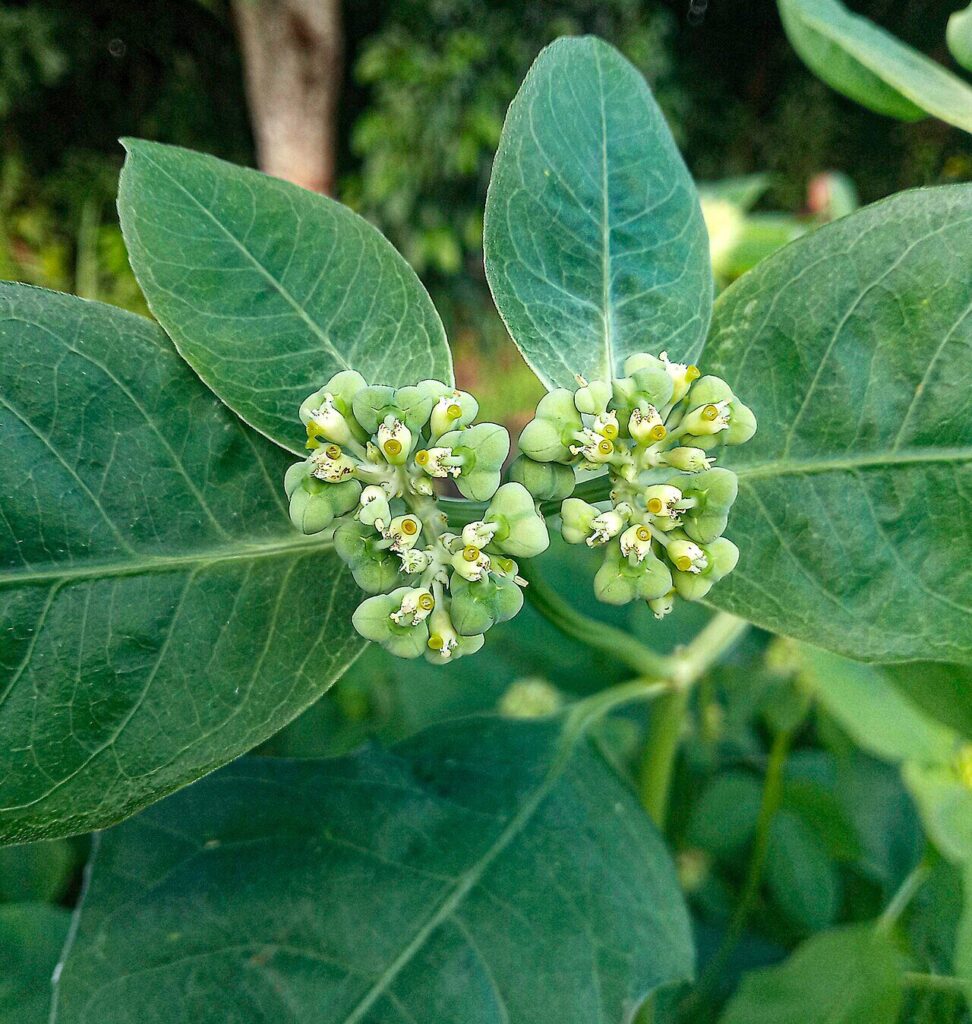
Euphorbia cyathophora, also known as "Scarlet Grass," is native to the Americas (United States to Argentina) and is cultivated as an ornamental plant worldwide, including in Japan. It is an annual plant that has escaped cultivation and become naturalized in subtropical to tropical regions. In Japan, it is widely naturalized in cultivated fields and open fields of the Amami Islands, Daito Islands, Ryukyu Islands, and Ogasawara Islands.
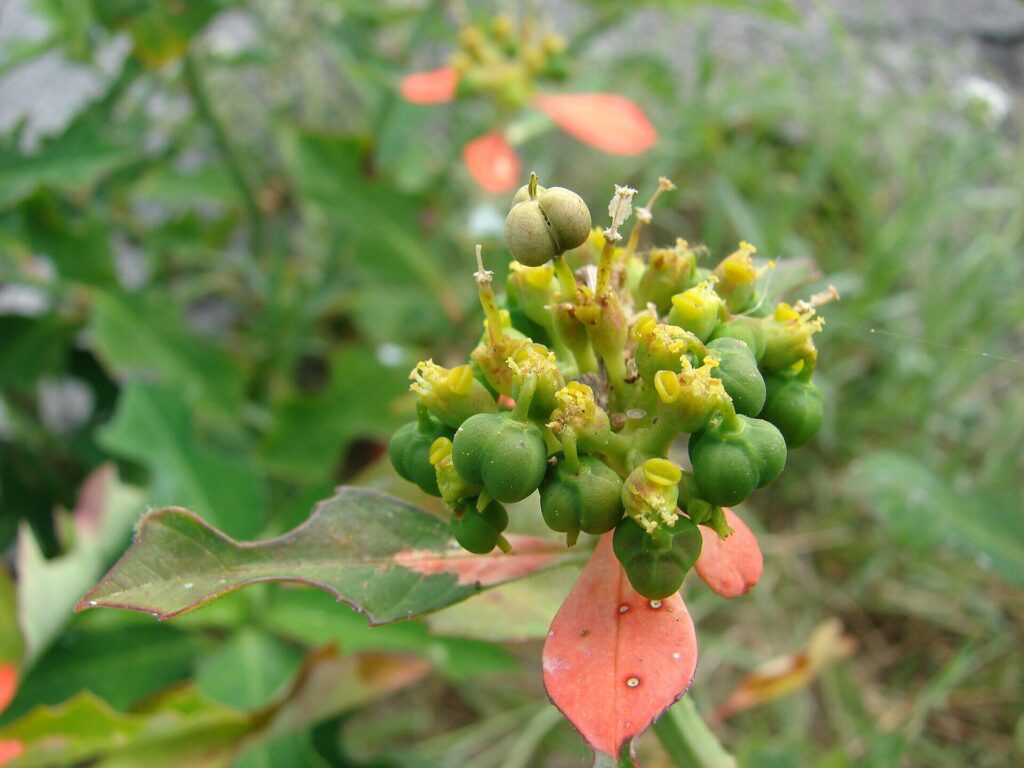
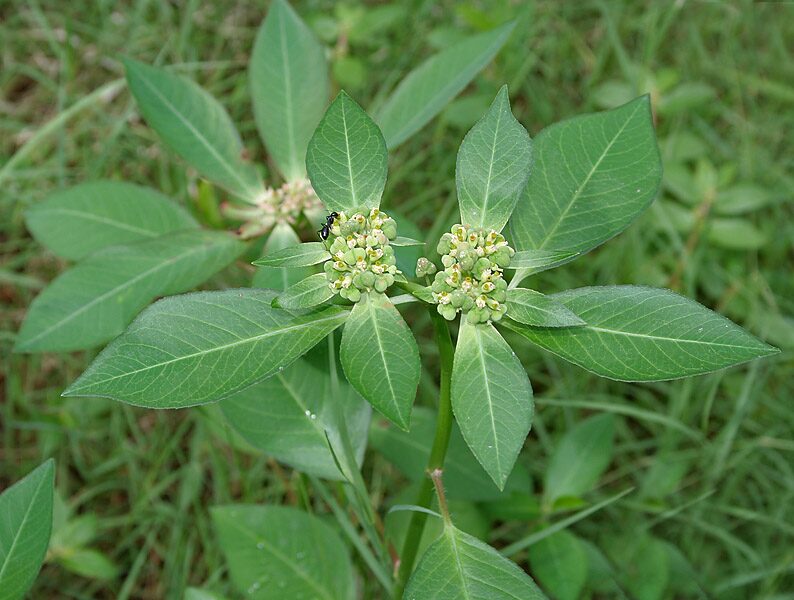
Euphorbia heterophylla, also known as false scarlet grass, is native to Central and South America (Venezuela to Argentina). It is cultivated as an ornamental plant worldwide, including in Japan, and has escaped cultivation and become naturalized in subtropical to tropical regions. In Japan, it has become naturalized in Okinawa.
All of these plants belong to the Euphorbia genus of the Euphorbiaceae family, and while they are widely cultivated for ornamental purposes, they can also become naturalized. In Japan, they are sometimes called "Christmas flowers" because some of them turn a vibrant red or white around November to December, and they are very popular as potted plants.
The most striking feature is the bright red or white, conspicuous parts, but this is often misunderstood as petals. These are not petals, but rather "bracts" or "bract leaves," which are originally leaves that have undergone a special transformation. Flowers do not have petals or sepals.
Other characteristics include large, oval-shaped leaves measuring over 2 cm in width, and the presence of only one or two glands in the cyathium inflorescence.
What are the differences between poinsettia, dwarf poinsettia, and false poinsettia?
The three species are relatively easy to distinguish (Wu et al., 2008; Kanagawa Prefecture Flora Survey Association, 2018).
First, they can be broadly classified into poinsettias and Epipactis thunbergii/Epipactis humilis.
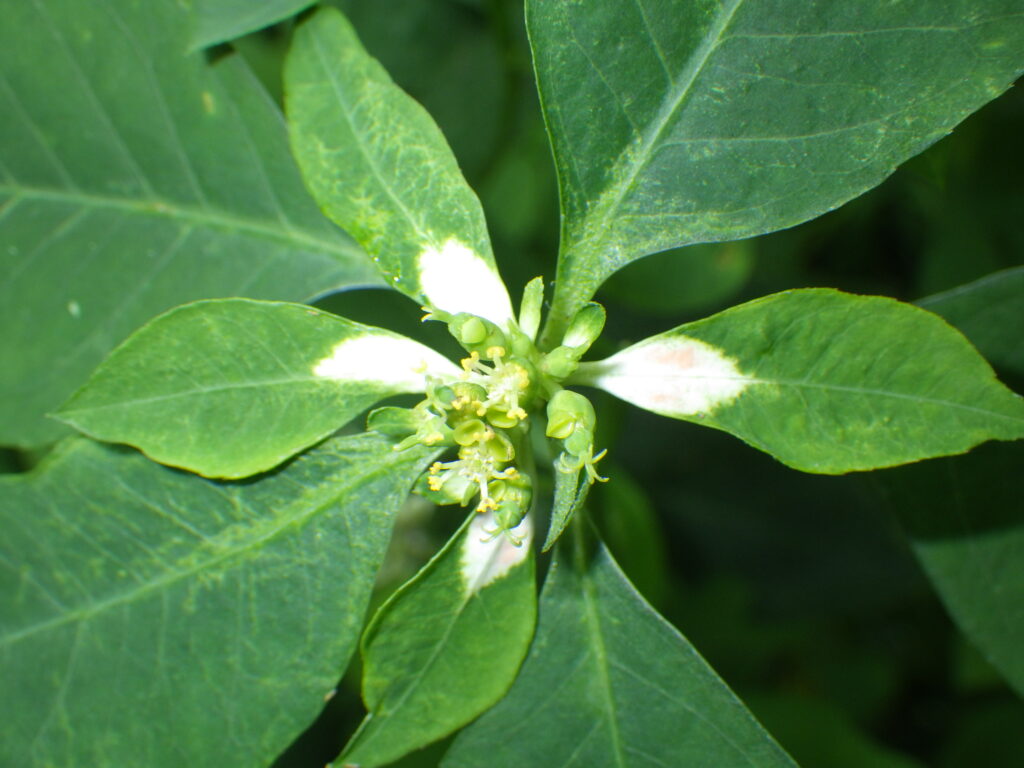
As mentioned above, all three species have leaves called bracts that turn color around the flower during the flowering season. However, in poinsettias, the entire bract is uniformly bright red (white or yellow in some horticultural varieties), whereas in Euphorbia pulcherrima and Euphorbia pulcherrima, only the base of the bract is partially colored red or white.
Also, as its standard Japanese name, "Shojoboku," suggests, poinsettias are woody plants, while Epipactis thunbergii and Epipactis thunbergii are basically herbaceous plants, only partially woody even as they grow.
These two points make it easy to distinguish between them.
Regarding *Eriobotrya japonica* and *Eriobotrya japonica* var. *also known as *Eriobotrya japonica*, the main difference is that *Eriobotrya japonica* has a cornice in the middle of its leaves, and the base of its bracts becomes spotted red during the flowering season, while *Eriobotrya japonica* var. *also known as *Eriobotrya japonica* lacks a cornice in the middle of its leaves, and its bracts do not turn red during the flowering season, although the base of the bracts is somewhat whitish.
However, although it is rarely mentioned in botanical guides for some reason, it seems that the bracts of *Epipactis thunbergii* can also turn white depending on the season. However, even in that case, you should be able to distinguish it from the leaves by the spotted coloring (clearly separated colors) and the overall condition of the leaves.
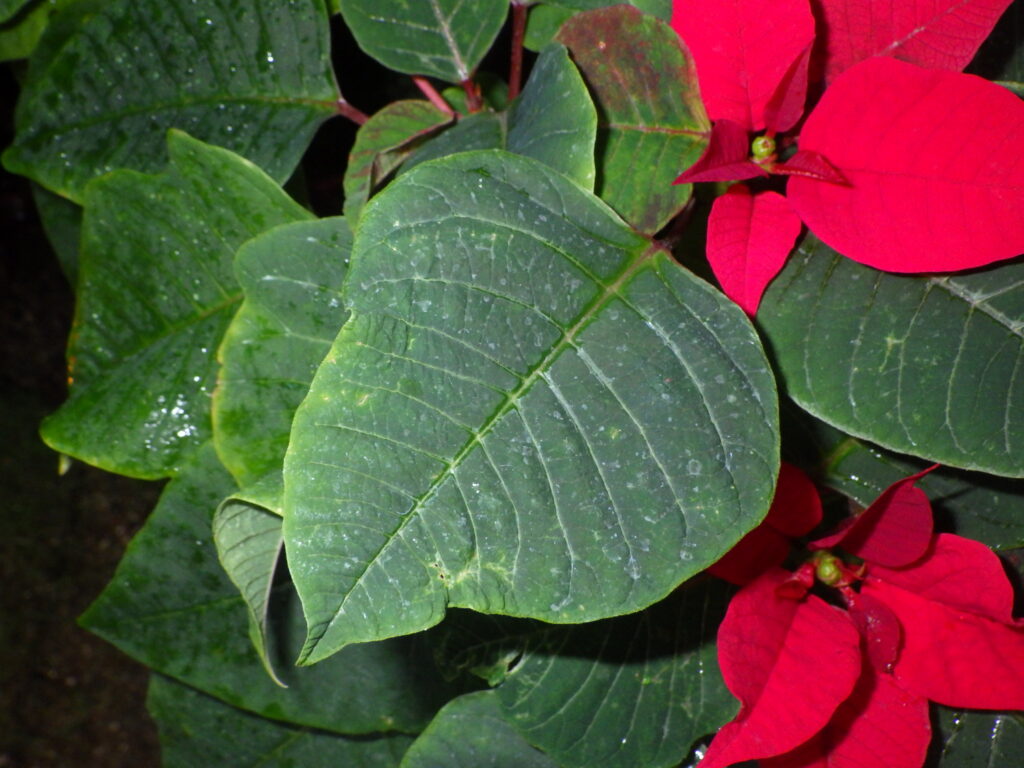
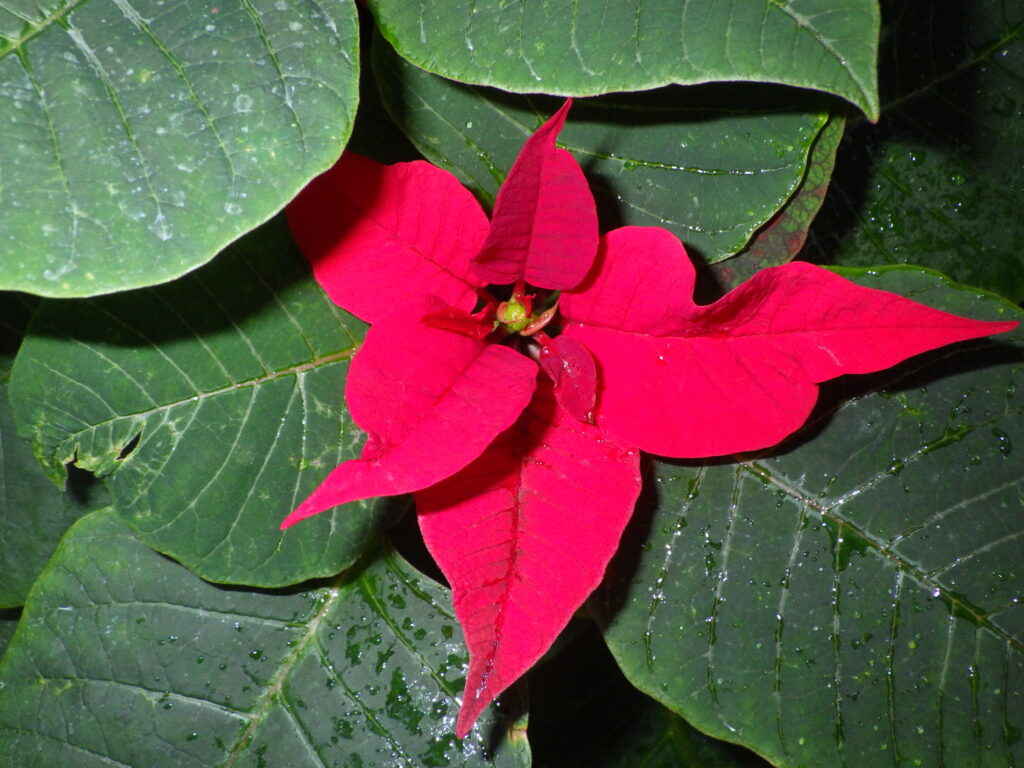
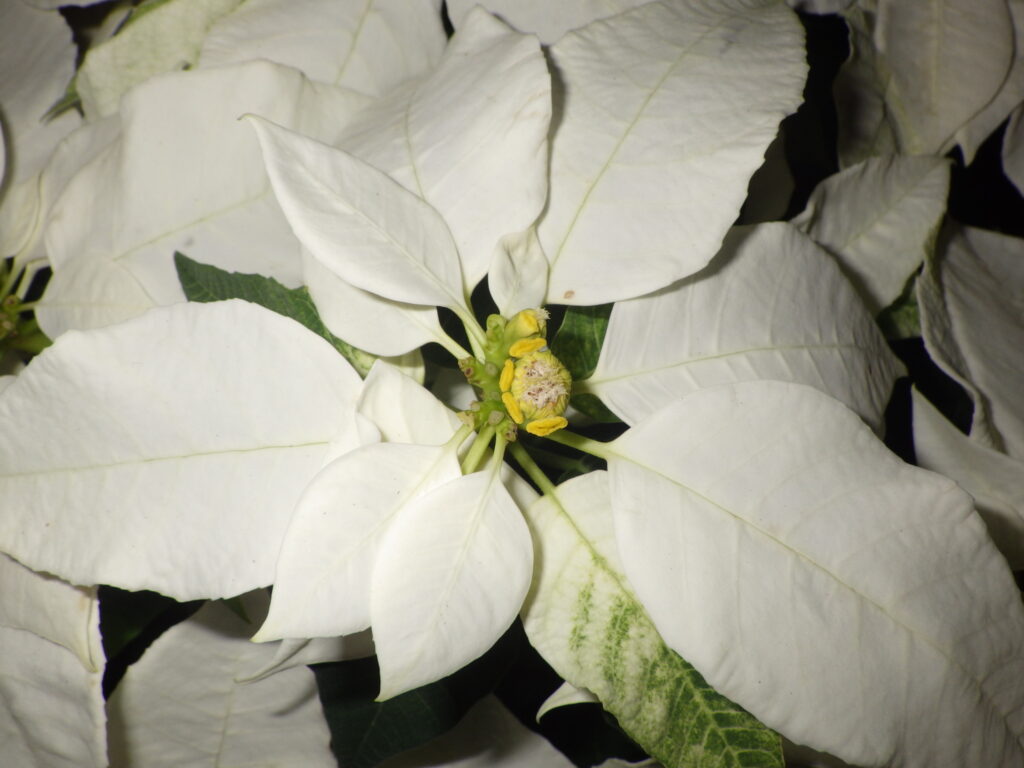
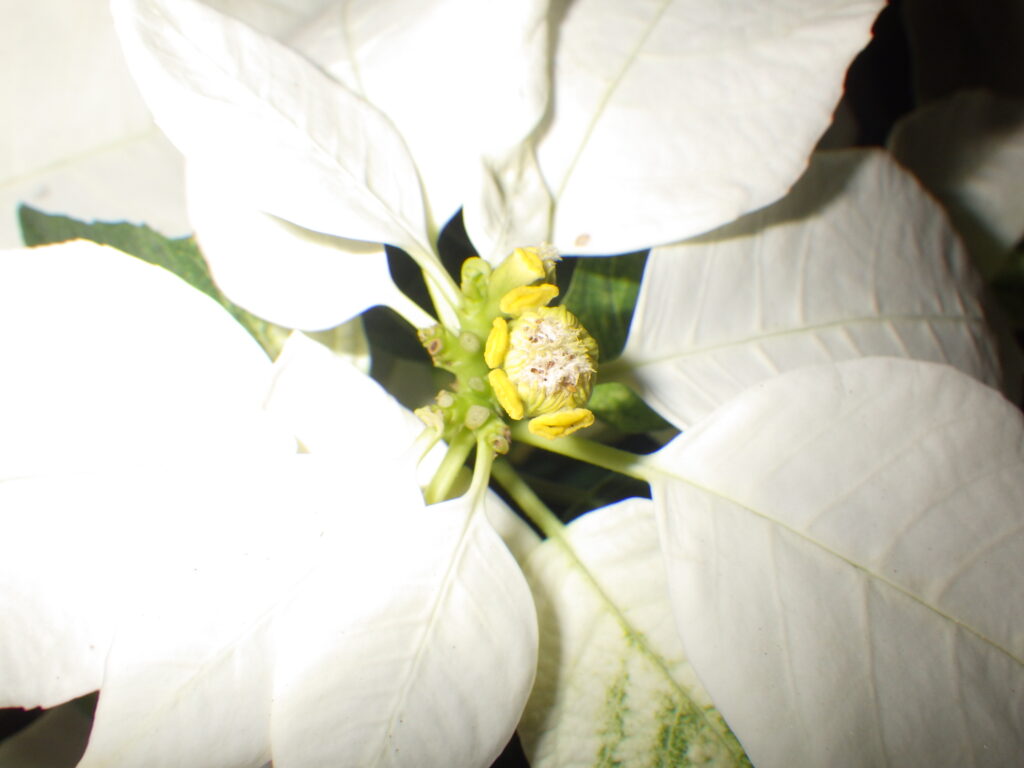
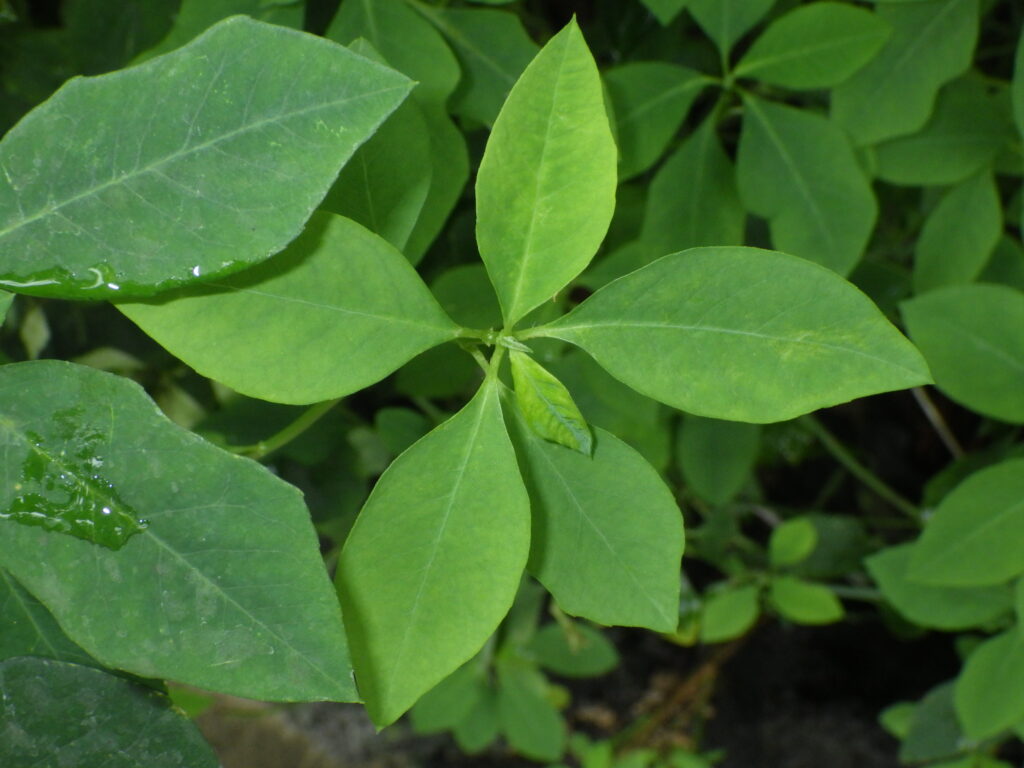
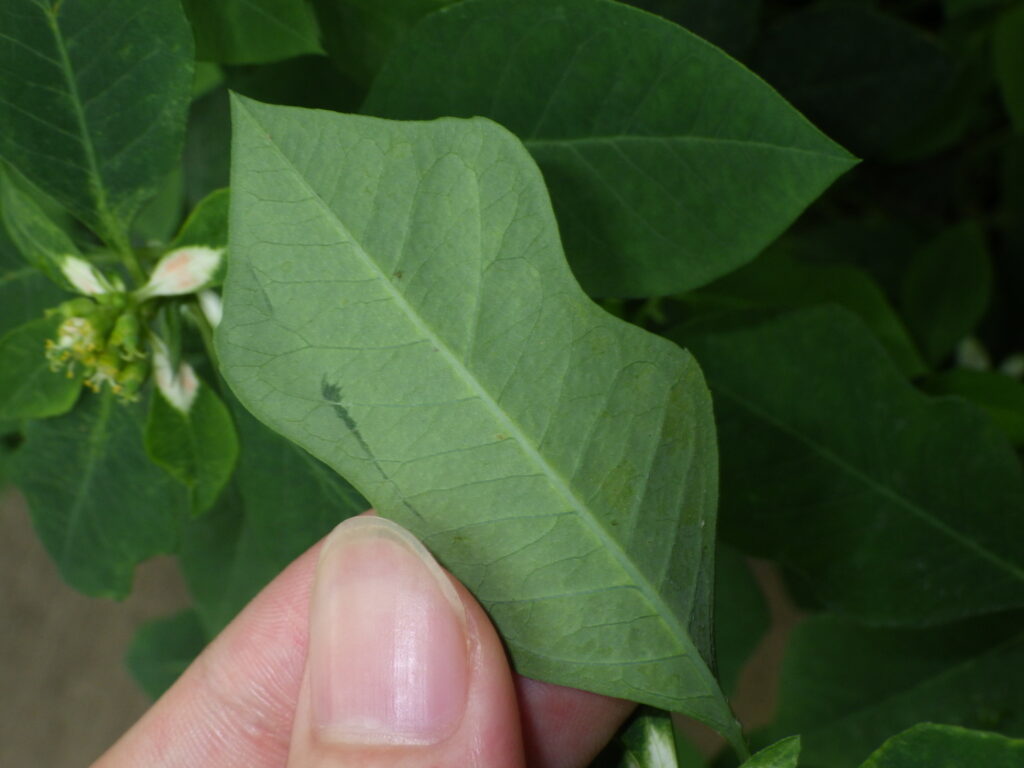
Beware of the misinformation on Wikipedia that says "poinsettias are poisonous."
The Japanese Wikipedia entry states that "the entire plant contains the toxic compound phorbol esters, which cause dermatitis and blisters. It is not a lethal poison, but there was a reported case in Hawaii in 1919 where a child died after eating a poinsettia." Since the plant releases a milky sap when damaged, it might be thought to be poisonous to humans as well.
However, the English Wikipedia and academic papers state the exact opposite, and it is generally known to be non-toxic (Krenzelok, 1996; Evens & Stellpflug, 2012).
The story began with an urban legend in 1919 about a two-year-old child who died after eating poinsettia leaves, and in 1944, this story was included in a book called "Poisonous Plants of Hawaii."
The author later admitted that this story was hearsay and that poinsettias have never been proven to be poisonous, but the plant continued to be thought to be deadly, with the U.S. Food and Drug Administration issuing a newsletter in 1970 that erroneously stated that "one poinsettia leaf could kill a child," and in 1980 poinsettias were banned in a nursing home in a county in North Carolina.
However, when the American Poison Control Center investigated 22,793 cases of poinsettia exposure, they found that 92.4% did not produce toxicity, and 3.4% only caused mild symptoms.
In a study where rats were orally administered 25 g/kg of poinsettia, no evidence of symptoms was observed during the 14-day observation period, and no toxicity was detected in subsequent autopsies.
From these factors, it can be said that these substances are often harmless to most people.
However, it has been pointed out, though rare, that because it belongs to the same family as Hevea brasiliensis, the raw material for natural rubber latex, and shares two common allergen proteins, there is a possibility that the immune system may malfunction and cause a cross-reaction.
Therefore, it is recommended that people with an allergic reaction to rubber, or those with atopic dermatitis or other systemic atopic conditions, avoid using it.
Furthermore, I would like to add that the long-term effects of continuous consumption are unknown, and since lotions have mostly evolved to protect against some kind of external threat, I would not recommend intentionally consuming them.
References
Evens, Z. N., & Stellpflug, S. J. 2012. Holiday plants with toxic misconceptions. Western Journal of Emergency Medicine 13(6): 538-542. https://doi.org/10.5811%2Fwestjem.2012.8.12572
Kanagawa Prefecture Flora Survey Association. 2018. Kanagawa Prefecture Flora 2018 (Electronic Edition). Kanagawa Prefecture Flora Survey Association, Odawara. 1803pp. ISBN: 9784991053726
Krenzelok, EP, Jacobsen, TD, & Aronis, JM 1996. Poinsettia exposures have good outcomes… just as we thought. The American Journal of Emergency Medicine 14(7): 671-674. https://doi.org/10.1016/S0735-6757(96)90086-8
RBG Kew. 2024. The International Plant Names Index and World Checklist of Vascular Plants. Plants of the World Online. http://www.ipni.org and https://powo.science.kew.org/
Wu, ZY, Raven, PH, & Hong, DY (Eds.). 2008. Flora of China (Vol. 11 Oxalidaceae through Aceraceae). Science Press, Beijing, and Missouri Botanical Garden Press, St. Louis. ISBN: 9781930723733