Both Angelica dahurica and Angelica pubescens belong to the Angelica genus of the Apiaceae family. They are medium to large perennial herbs with thick stems and broad leaves, and are similar in that their leaflets are large and rounded. However, upon closer observation, there are differences in their leaves, flowers, and fruits. However, since there are many species in the Angelica genus, careful distinction is necessary. The sheath at the base of the inflorescence is an important distinguishing feature. Angelica dahurica has the unusual characteristic of having purple flowers, and research suggests that this may be related to the fact that yellow jackets are attracted to its flowers. This article will explain the classification, morphology, and ecology of the Angelica genus.
What are Nodake and Shishiudo?
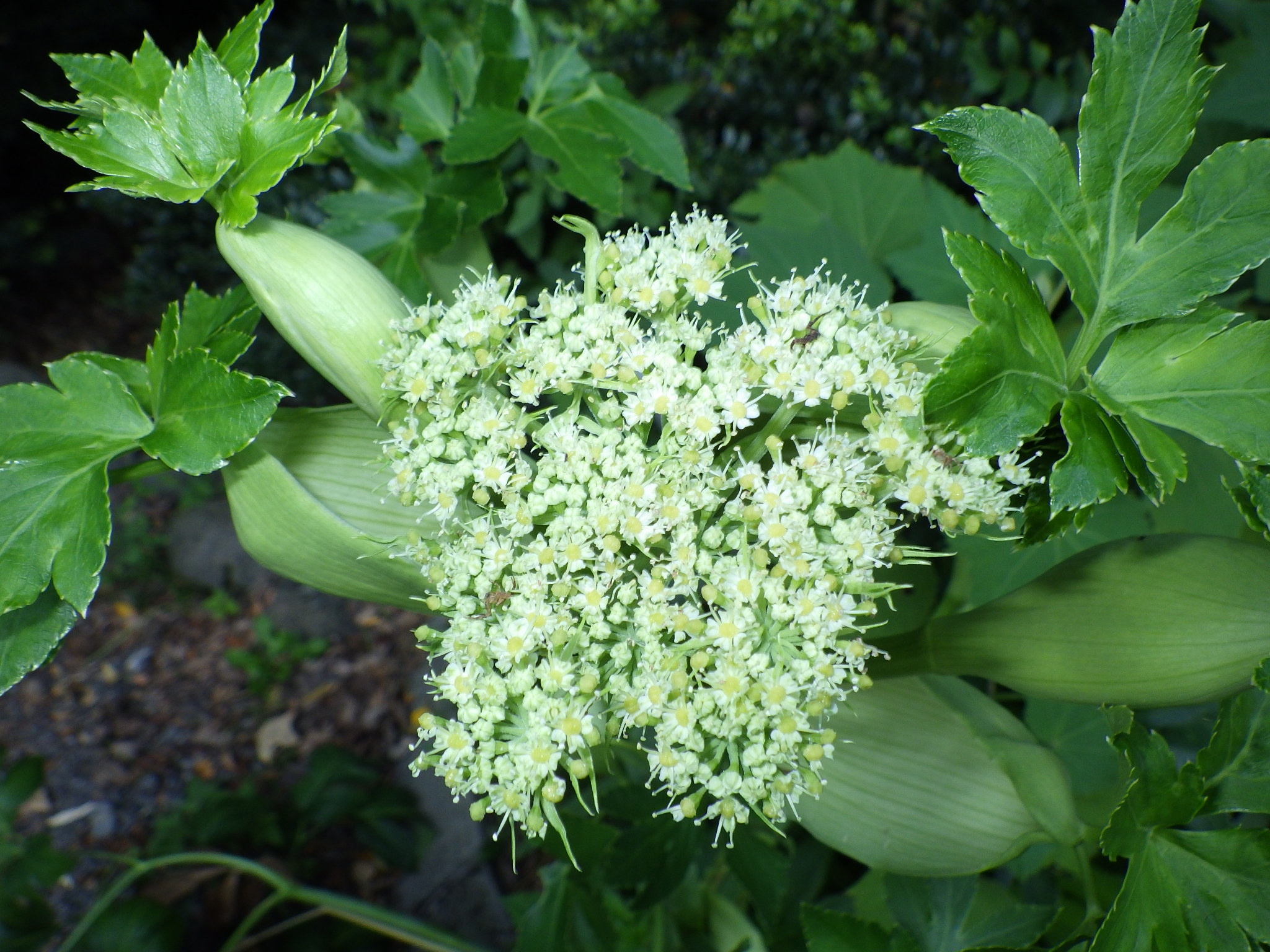
Angelica decursiva, also known as wild bamboo, is distributed in Honshu (west of the Kanto region), Shikoku, and Kyushu in Japan; as well as in Korea, China, and Eastern Siberia. It is a perennial herb that grows in woodlands and forest edges, excluding alluvial plains (Kanagawa Prefecture Flora Survey Association, 2018). Its Japanese name comes from the fact that it grows in the wild and the sheaths at the base of its leaves and inflorescences resemble the skin of young bamboo shoots (takenoko).
Angelica pubescens var. pubescens, also known as wild angelica, is a perennial herb distributed throughout Honshu, Shikoku, and Kyushu in Japan, growing in forest edges and grasslands throughout the region except for alluvial plains.
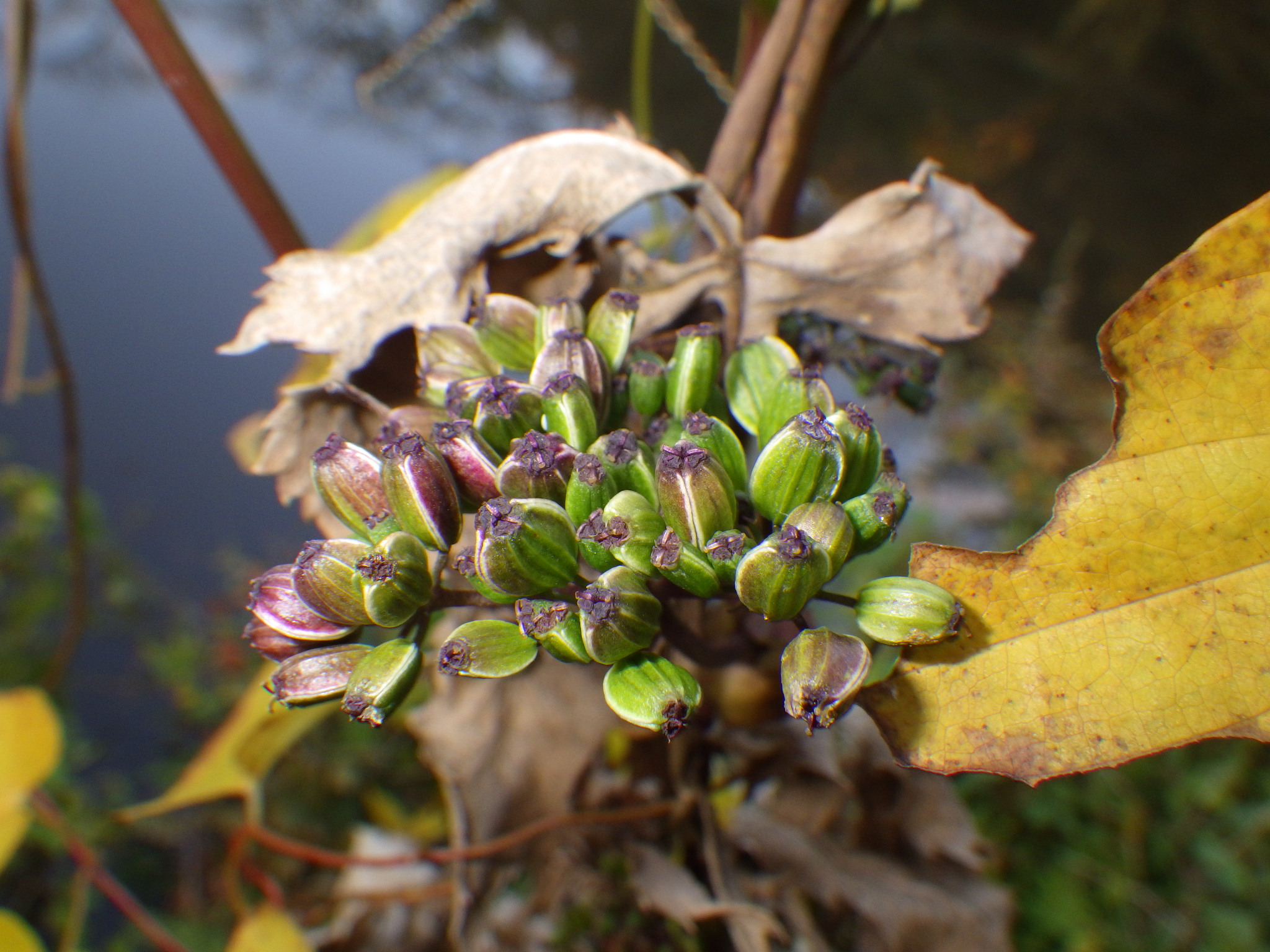
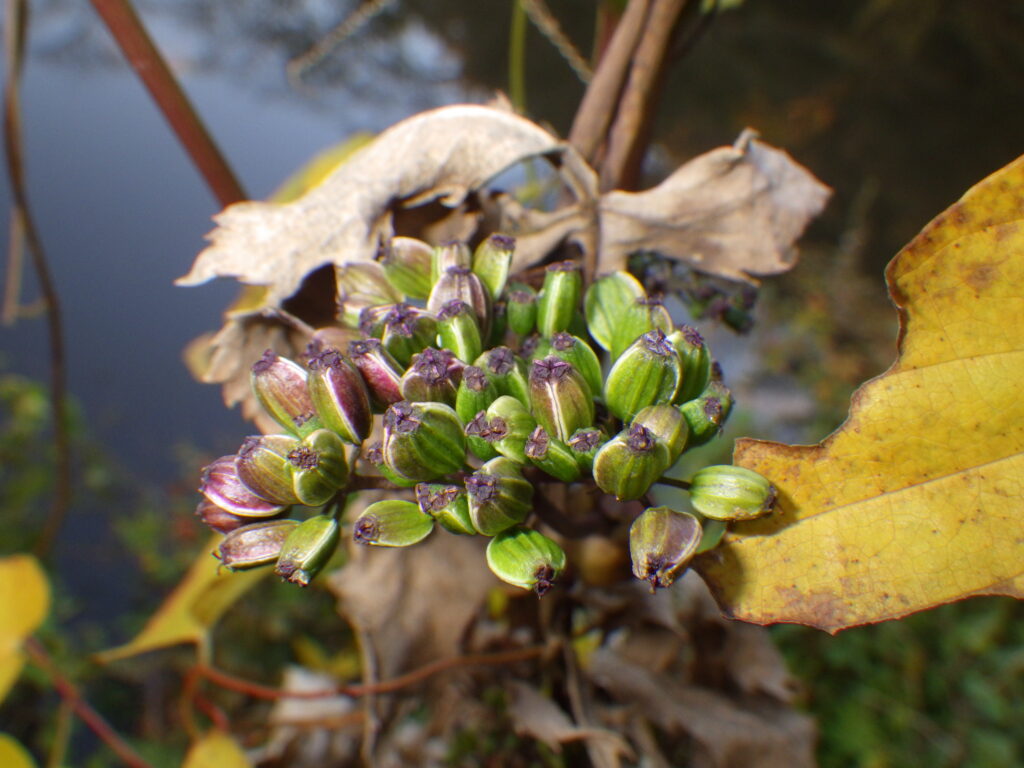
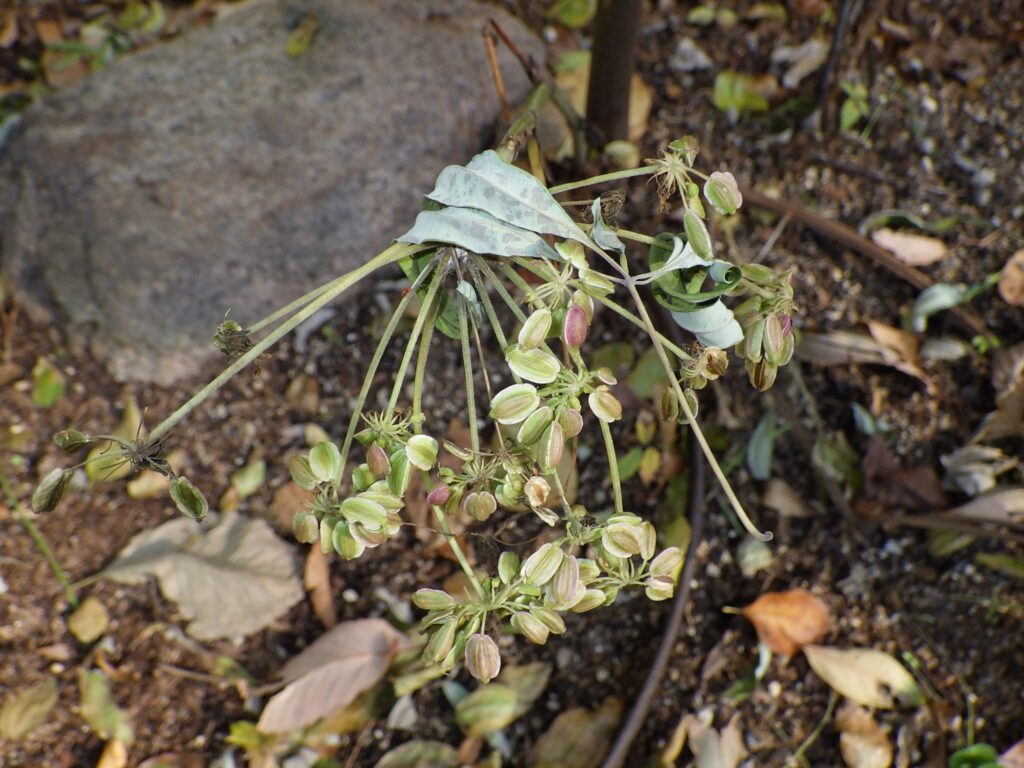
Both are medium to large perennial herbs belonging to the genus Angelica in the family Apiaceae, characterized by thick stems and broad leaves. The leaf, flower, and fruit structures, typical of the Apiaceae family, are all very similar. The fruits, in particular, are similar, both being flattened, hairless, and possessing somewhat broad, membranous wings.
Furthermore, you might notice similarities within the Angelica genus, such as the swollen, pouch-like base of the petiole and the large, rounded leaflets (the parts of a single leaf that have separated).
What is the difference between Nodake and Shishiudo?
Since there are many known species in the genus Angelica, distinguishing between only two species may not always be sufficient. However, when limited to just two species, the following differences can be observed (Kanagawa Prefecture Flora Survey Association, 2018).
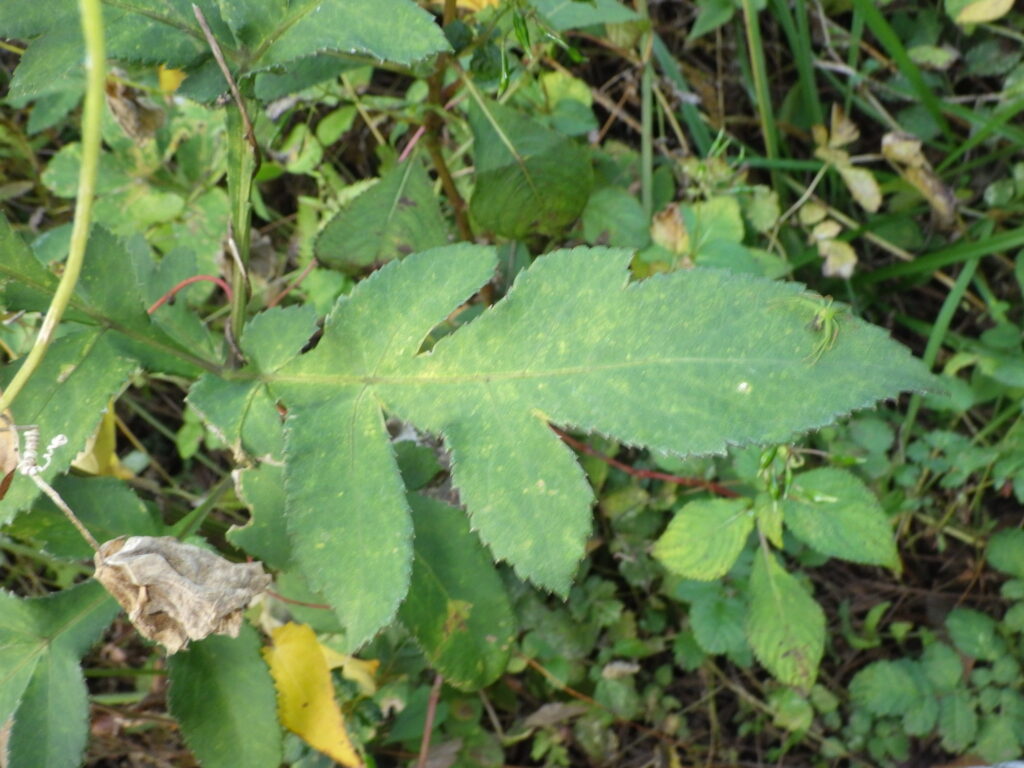
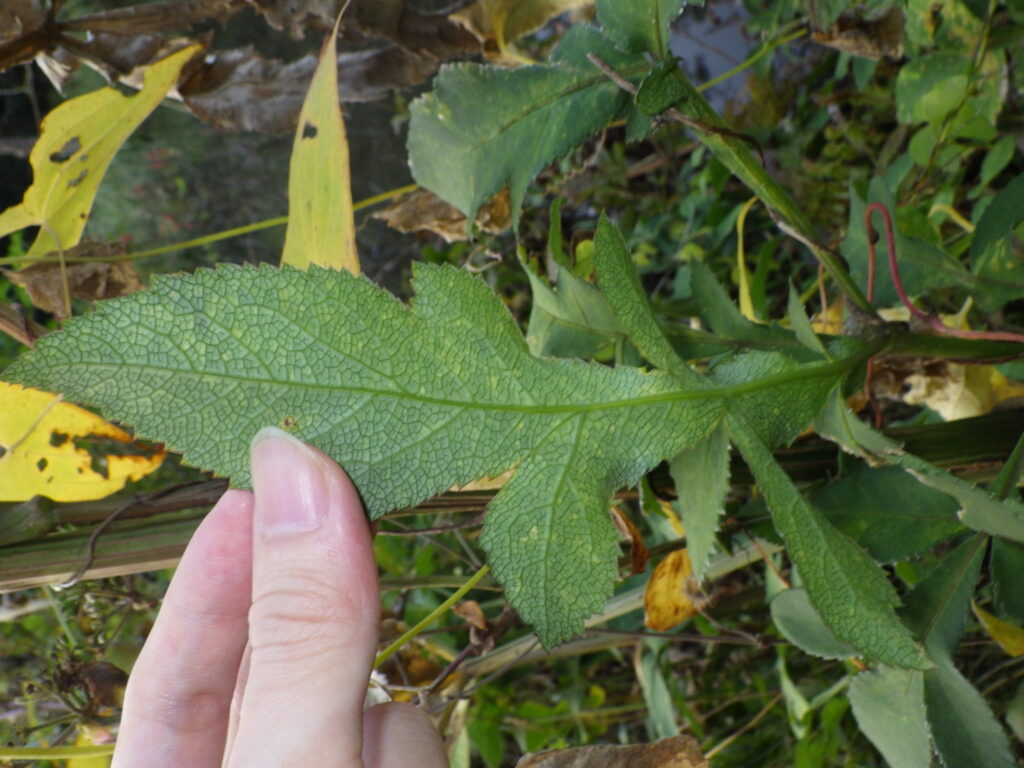
Regarding the leaves, in Angelica dahurica, the underside of the leaf blade is hairless, and the base of the leaflets is wing-like, lacking petioles. In contrast, in Angelica pubescens, the veins on the underside of the leaf blade are covered with many curled fine hairs, and the base of the leaflets is wing-like, with some lacking petioles and others not wing-like but with petioles.
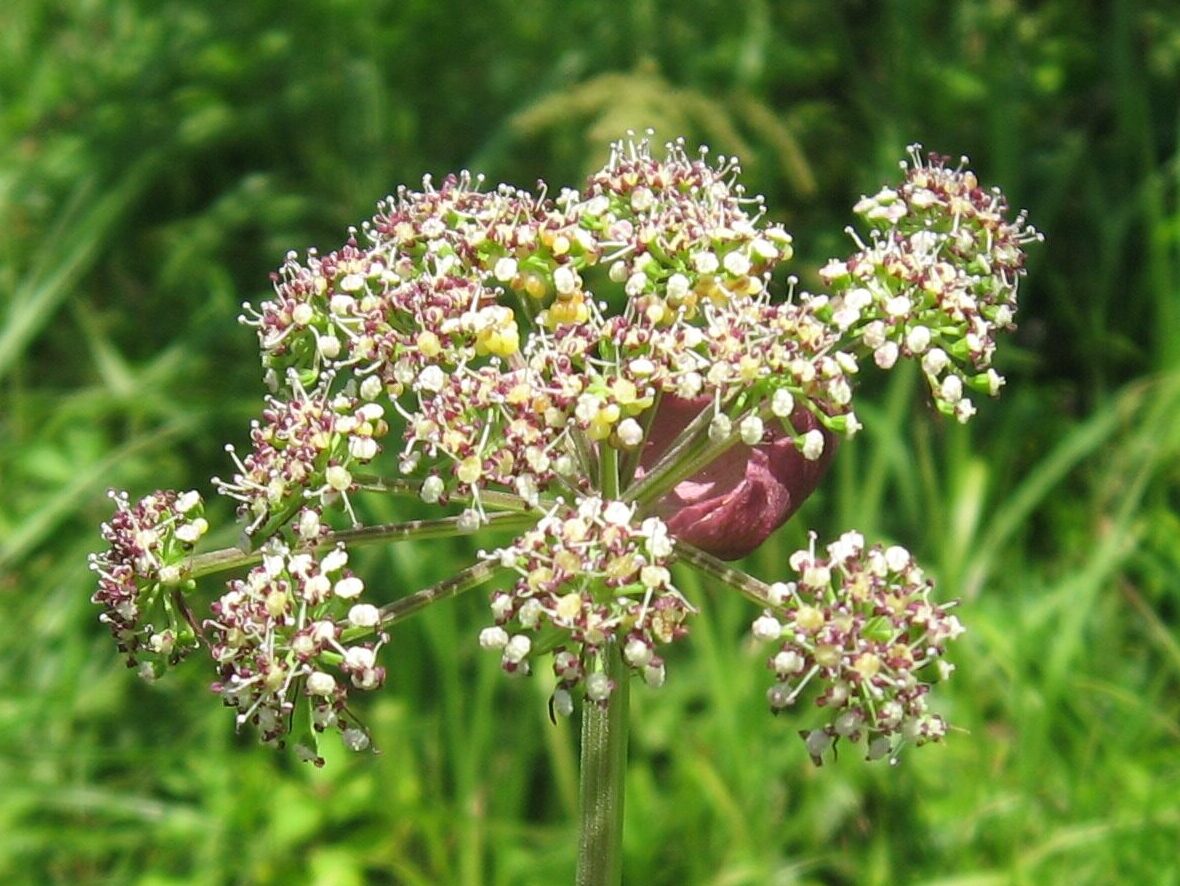
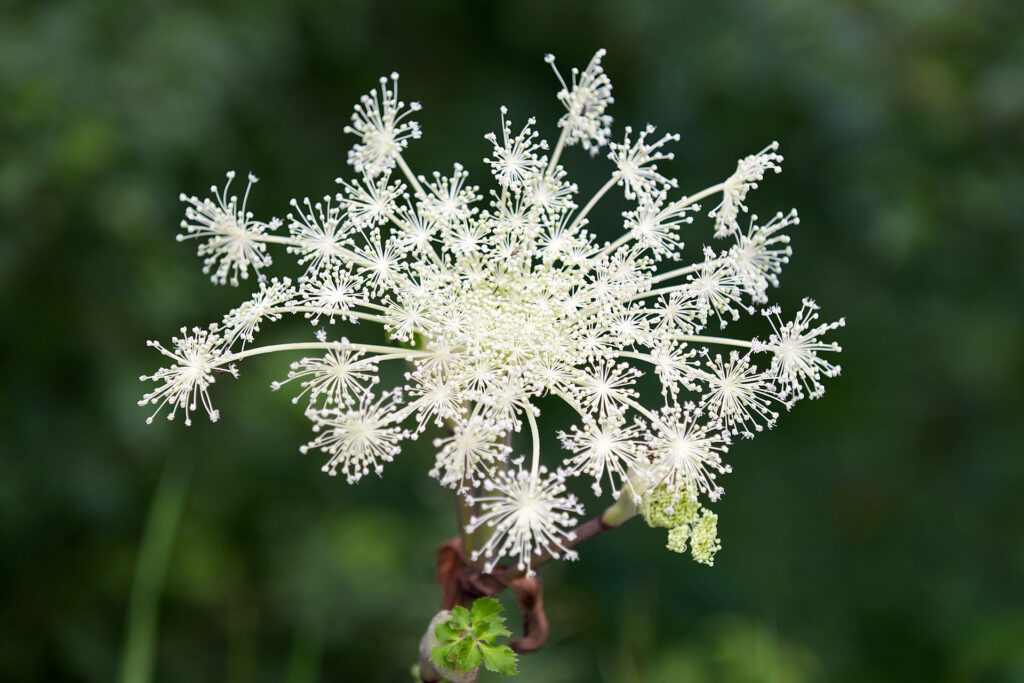
Regarding the flowers, in *Angelica acutiloba*, the petals are usually dark purple (although in the variety *Angelica acutiloba f. albiflora*, they are white) and have bracts, while in *Angelica pubescens*, the petals are white and there are no bracts.
The term "involucral bracts" may be unfamiliar, but it refers to the thin, leaf-like green structures that grow at the base of the pedicel (the slender part connecting the flower to the plant body), and is found in some species of the Apiaceae family. In Angelica dahurica, you can see thin, green, leaf-like structures mixed in with the flowers.
Regarding the fruit, both are flattened and hairless, with somewhat broad, membranous wings. However, in Angelica dahurica, the wings are only on the sides of the main body that encloses the seeds, whereas in Angelica pubescens, the wings are not only on the sides of the main body but also on the side where the pedicels are located.
Another important point is that *Angelica acutiloba* has a sheath (botanically speaking, a green, sac-like petiole with a reduced leaf blade) at the base of the inflorescence, while other *Angelica* species, including *Angelica pubescens*, either lack this sheath or have withered it. If you can confirm this point, it can be considered a decisive difference.
Are there any other similar species?
As mentioned above, there are many known species in the genus Angelica, so it may be necessary to consult a field guide to make precise distinctions.
Angelica japonica resembles Angelica dahurica, but the base of its leaflets is not wing-shaped, and its flowers are white.
Angelica hakonensis also resembles Angelica dahurica, but its leaves are 2-3 times pinnately compound, the leaflets have coarsely double-serrated margins, and its flowers are pale green (in Angelica dahurica, the leaves are 1-2 times pinnately compound, and the leaflets have low, simple-serrated margins).
For information on how to distinguish between other species in the Angelica genus, please see our other article.
How is pollination done?
The flowering period of Angelica dahurica is from September to November. The compound umbels are dense, there are no sepals, and the petals are dark purple, rarely white (in the case of Angelica dahurica var. alba) (Hayashi et al., 2013).
This flower is particularly distinctive for its purple petals, but do insects visit and pollinate it?
Recent studies that have actually examined pollinating insects alongside *Leucothoe gracilis* have yielded interesting findings (Mochizuki, 2024).
This study confirmed that 14 species of insects visit Angelica dahurica, but 62% were yellow hornets (Vespa simillima). Similarly, yellow hornets were the majority of visitors to Rock Carrot (Leucanthemum boreale). Furthermore, it was confirmed that pollen adheres to the bodies of the yellow hornets, confirming their contribution to pollination.
However, these yellow jacket wasps have not only been observed feeding on nectar, but also hunting other pollinating insects. Therefore, this symbiotic relationship may differ from typical symbiotic relationships between insects and nectar-producing insects.
This is an interesting case because it is rare to find hunting wasps like the yellow jacket playing a major role in flower pollination.
Some theories suggest that the dark purple color of the petals of Angelica dahurica and the green color of the petals of Rock Carrot are adaptations to attract wasps. Differences in flower color between different genus Angelica and between different species of Angelica may also be influenced by these differences in pollinating insects, and further research may reveal more details.
References
Hayashi, Yasaka, Kadota, Yuichi, and Hirano, Takahisa. 2013. Yamakei Handy Illustrated Guide 1: Wildflowers (Revised and Expanded New Edition). Yama-kei Publishers, Tokyo. 664pp. ISBN: 9784635070195
Kanagawa Prefecture Flora Survey Association. 2018. Kanagawa Prefecture Flora 2018 (Electronic Edition). Kanagawa Prefecture Flora Survey Association, Odawara. 1803pp. ISBN: 9784991053726
Mochizuki, K. 2024. Hunt and pollinate: Hornet pollination of the putative generalist genus Angelica. Ecology e4311. https://doi.org/10.1002/ecy.4311