Styrax japonica, Pink Chime, and Styrax obassia all belong to the Styrax genus of the Styracaceae family and are familiar plants often found in gardens. Morphologically, a characteristic feature is that the flower stalks grow downwards towards the ground, and the flowers bloom facing downwards. However, some people may not know how to distinguish between them. Pink Chime is a horticultural variety of Styrax japonica, and the only difference is that the flowers are pink. Styrax japonica and Styrax obassia are completely different species and can be distinguished by the shape of their leaves and how their flowers are arranged. In addition, plants such as Chishanoki, Deutzia, Symplocos chinensis, and Stewartia pseudocamellia are often searched along with Styrax japonica, but Chishanoki is simply a name confusion, and Deutzia, Symplocos chinensis, and Stewartia pseudocamellia only have slightly similar flower colors and are not easily mistaken for each other if you look closely. This article will explain the classification of the Styrax genus.
- What are Styrax japonica, Pink Chime, and Styrax obassia?
- What are the differences between Styrax japonica, Pink Chime, and Styrax obassia?
- What is the difference between Styrax japonica and Styrax japonica?
- What are the differences between Styrax japonica, Deutzia crenata, Symplocos chinensis, and Stewartia pseudocamellia?
- References
What are Styrax japonica, Pink Chime, and Styrax obassia?
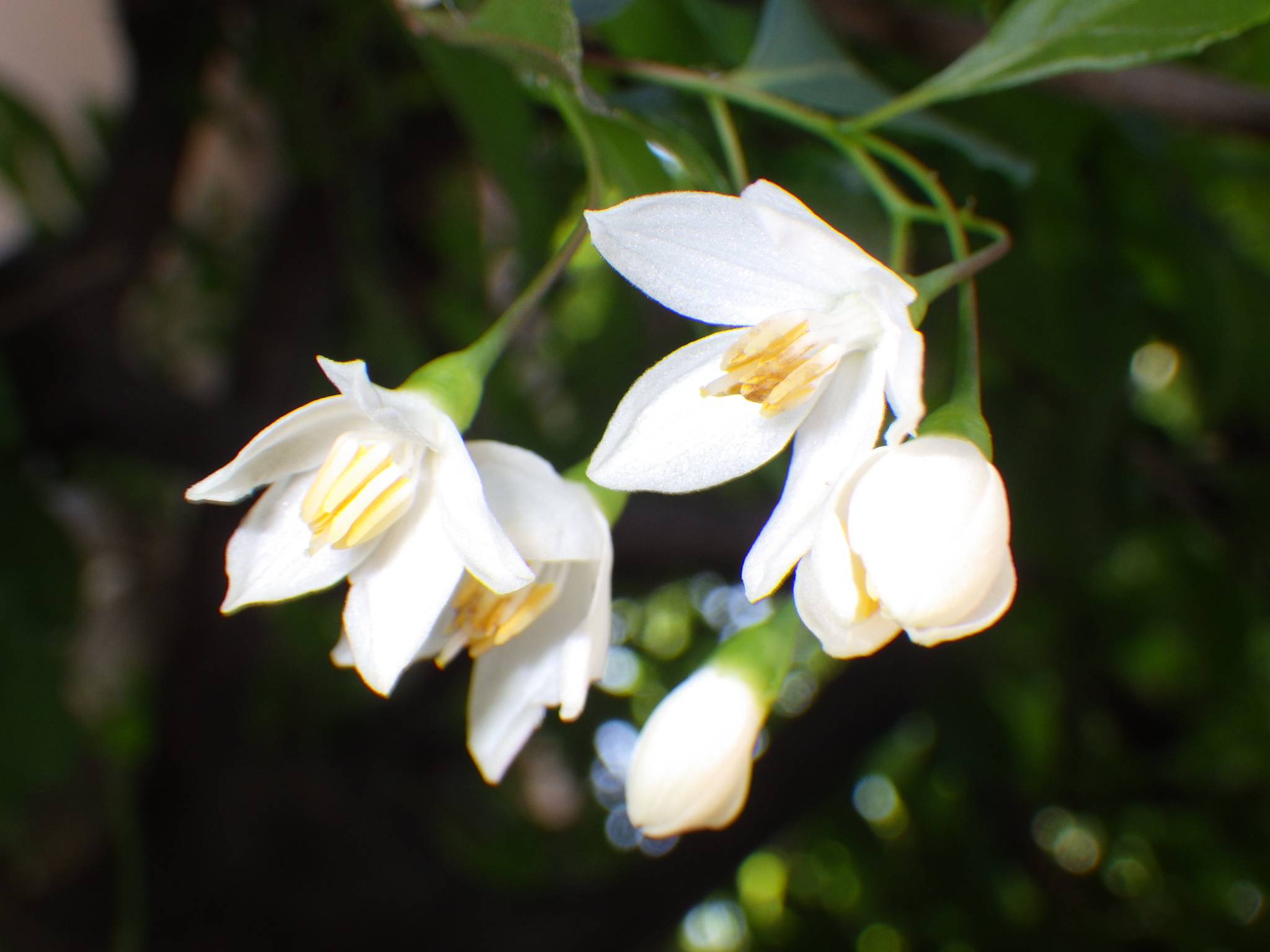
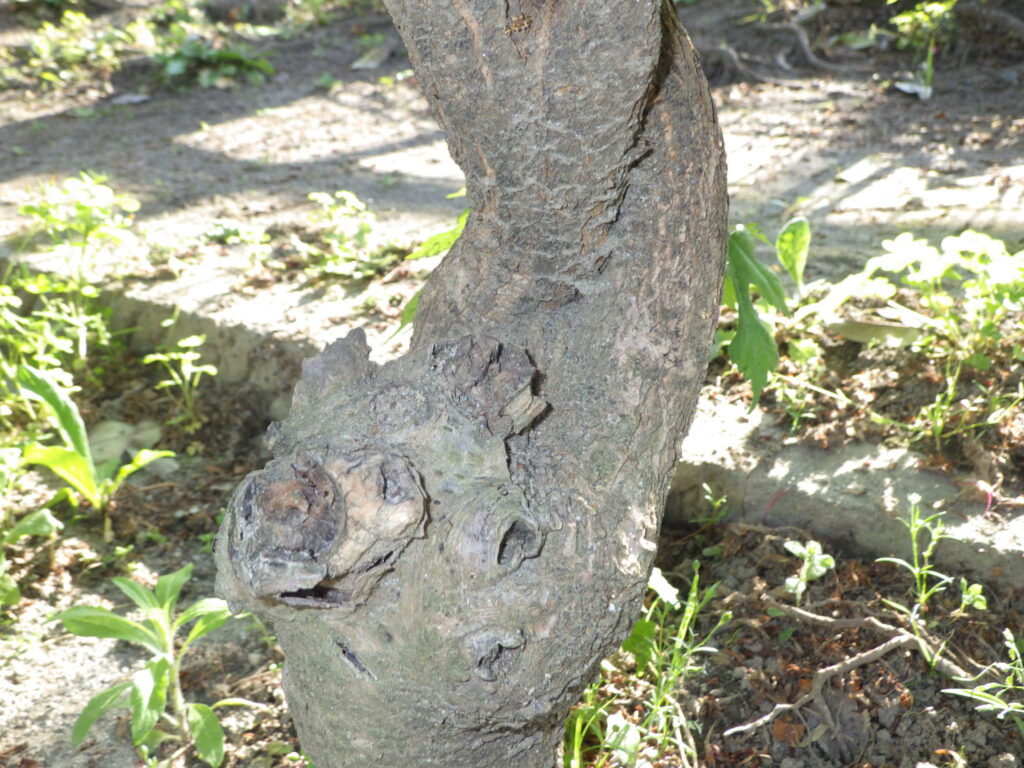
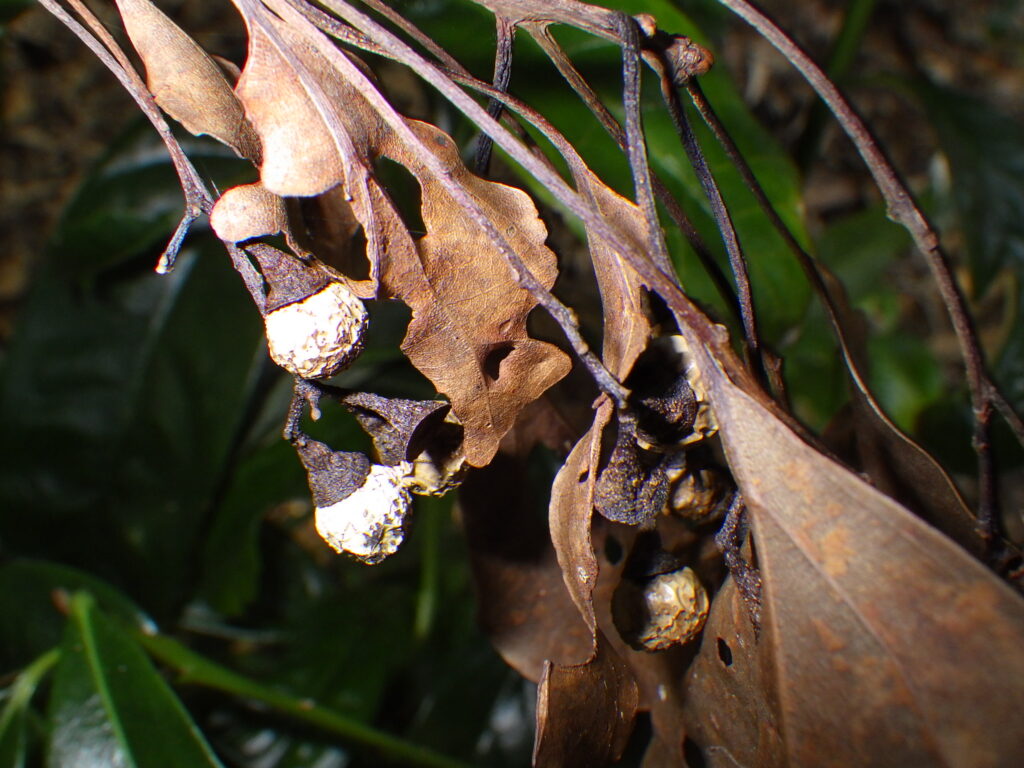
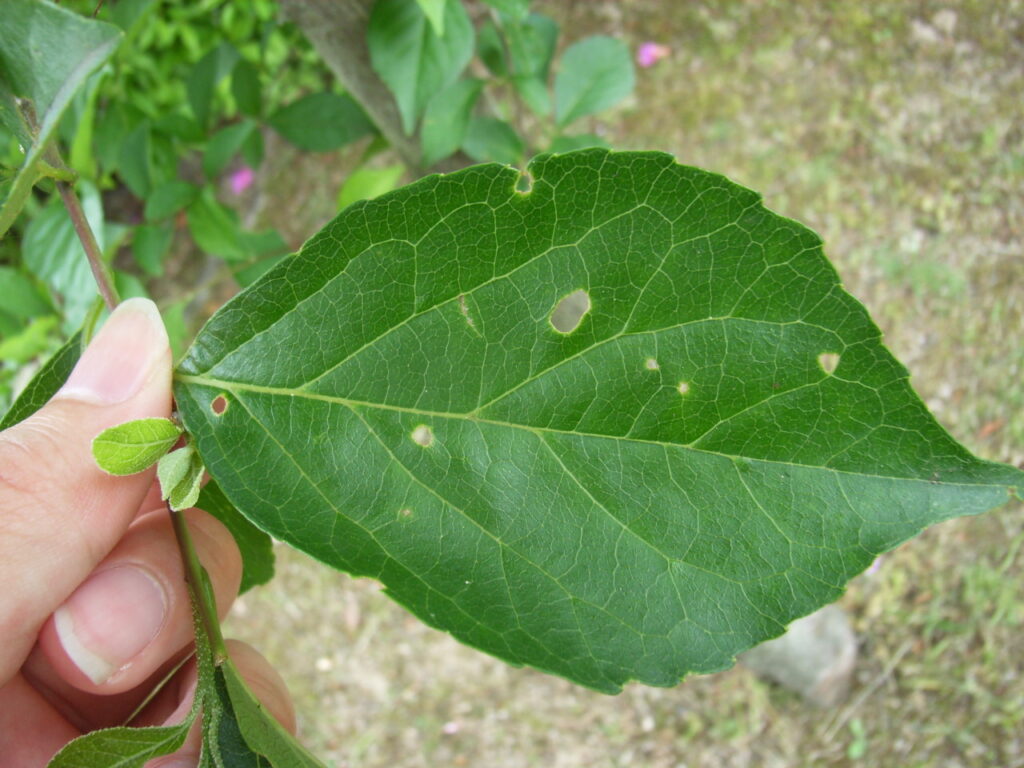
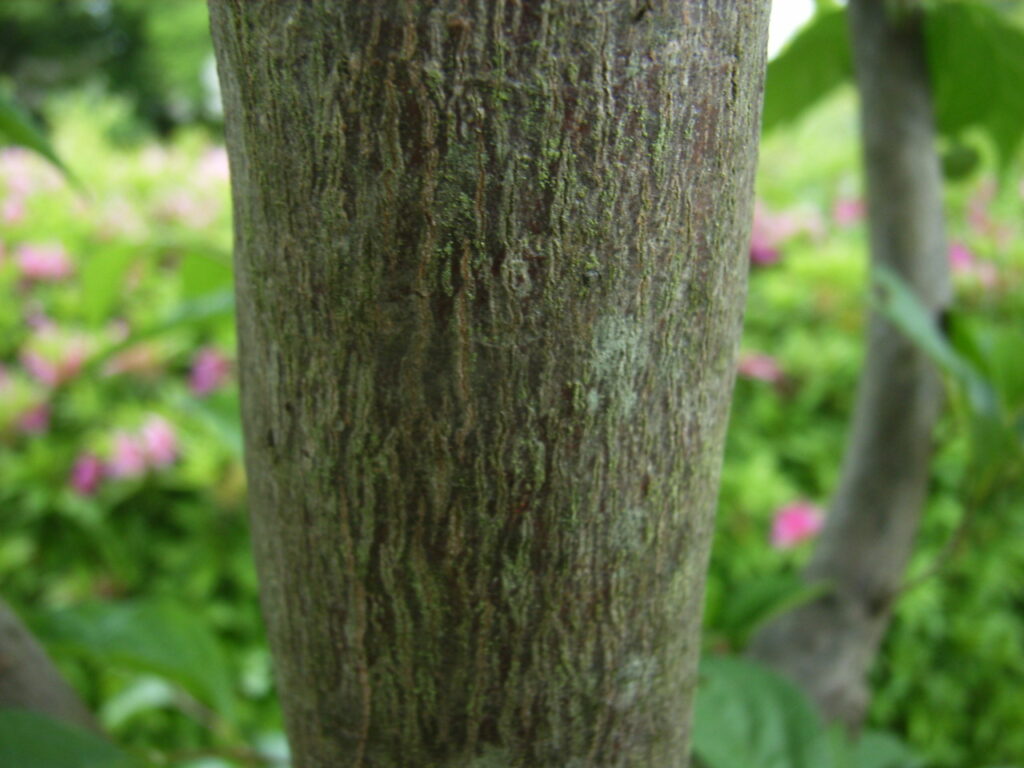
Styrax japonicus, also known as the Japanese snowbell tree (Egonoki or wild jasmine), is also called Rokurogi, Chishanoki, or Yamachis. It is a deciduous small tree distributed in Hokkaido (eastern), Honshu, Shikoku, Kyushu, the Ryukyu Islands, Korea, and China, growing in mixed forests at the foot of mountains, in mountain valleys, and along streams (Kanagawa Prefecture Flora Survey Association, 2018). Although its scientific name is written as Styrax japonica in various media such as the Japanese Wikipedia, according to Ylist, this is an old scientific name (synonym). Styrax japonicus is used worldwide (RBG Kew, 2023).
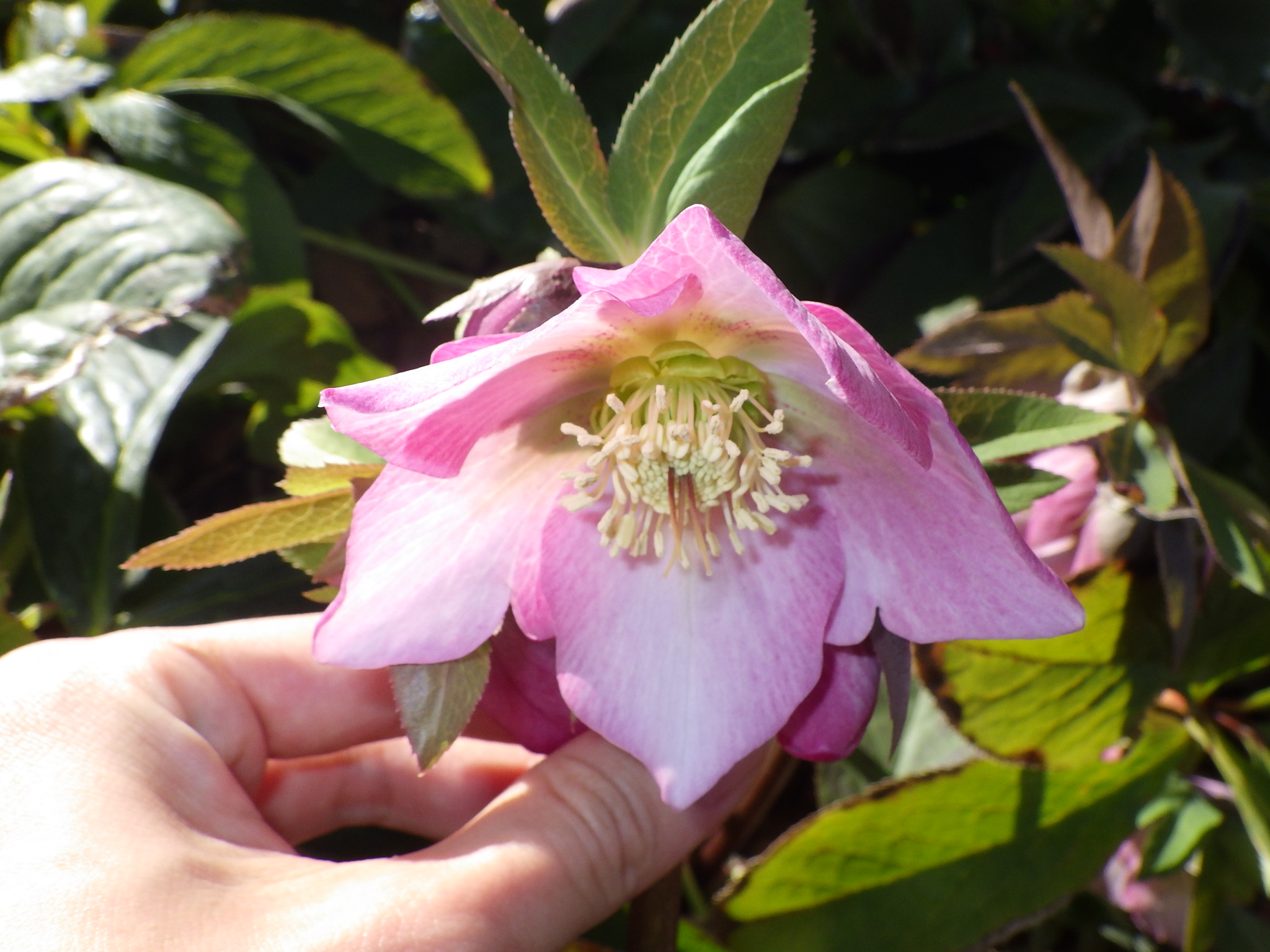
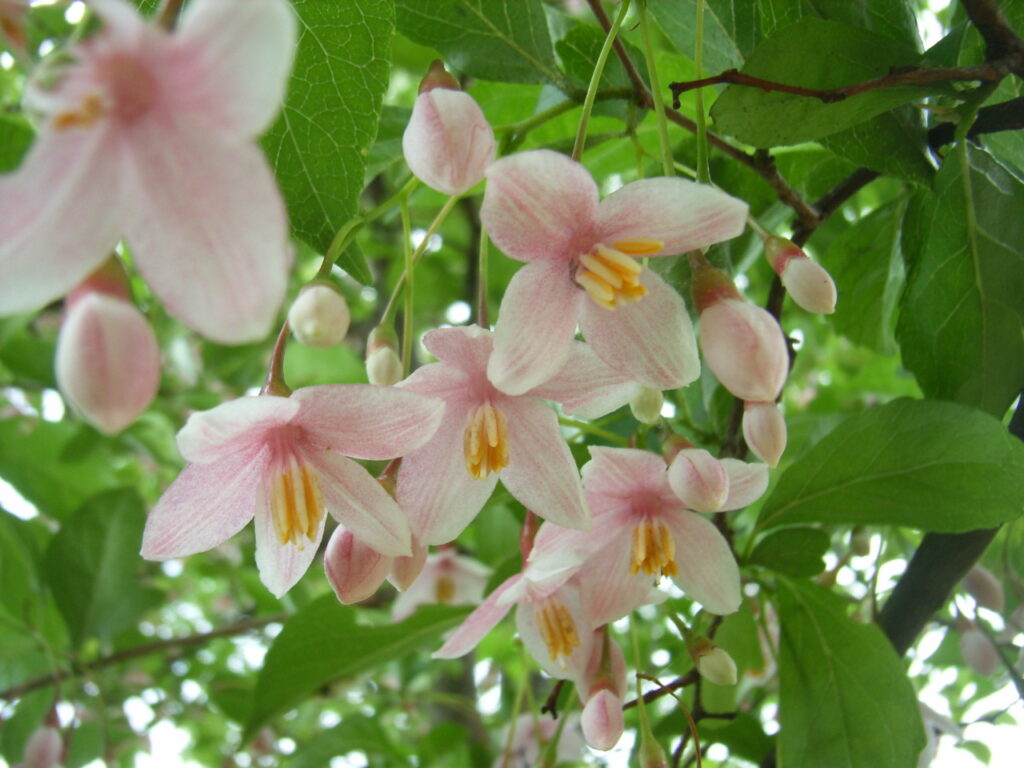
Styrax japonicus 'Pink Chimes', also known as Pink Chimes, Red-flowered Styrax, or Beni-ego, is a cultivated variety of Styrax japonicus grown in Japan and does not grow wild.
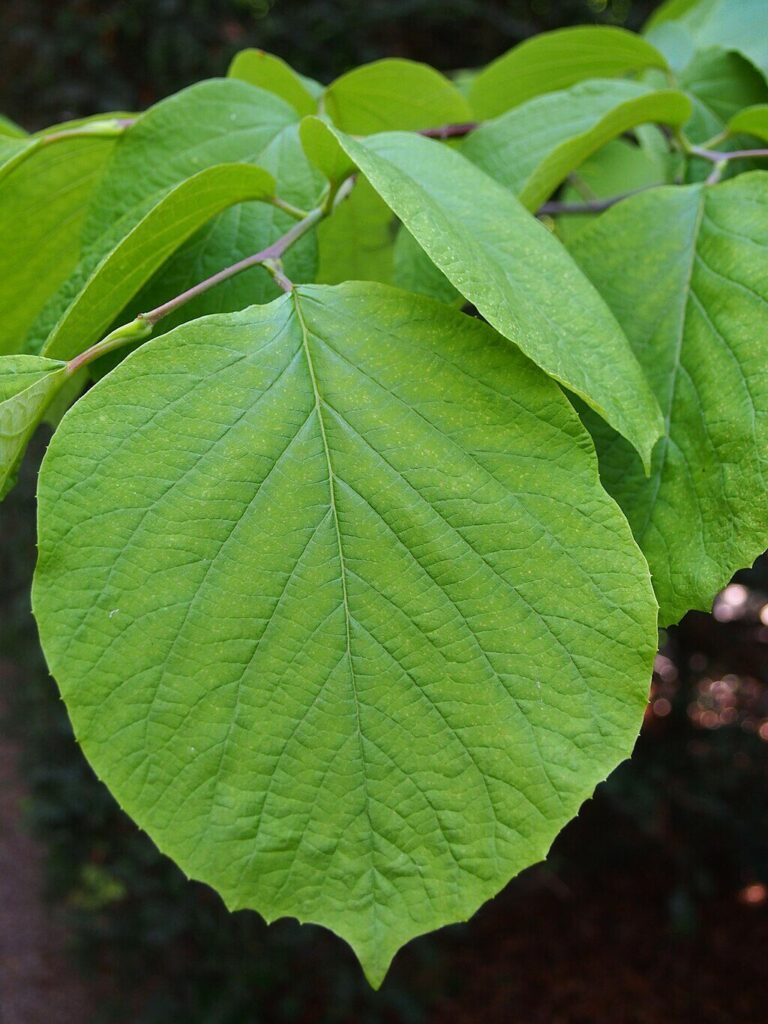
Styrax obassia, also known as white cloud tree, is also called large-leaved lettuce. It is distributed in Hokkaido, Honshu, Shikoku, Kyushu, Korea, and China, and is a deciduous small tree or tree that grows in hills and mountainous areas.
All of these plants belong to the genus Styrax in the family Styracaceae, and are familiar plants that are often cultivated in gardens and other horticultural purposes.
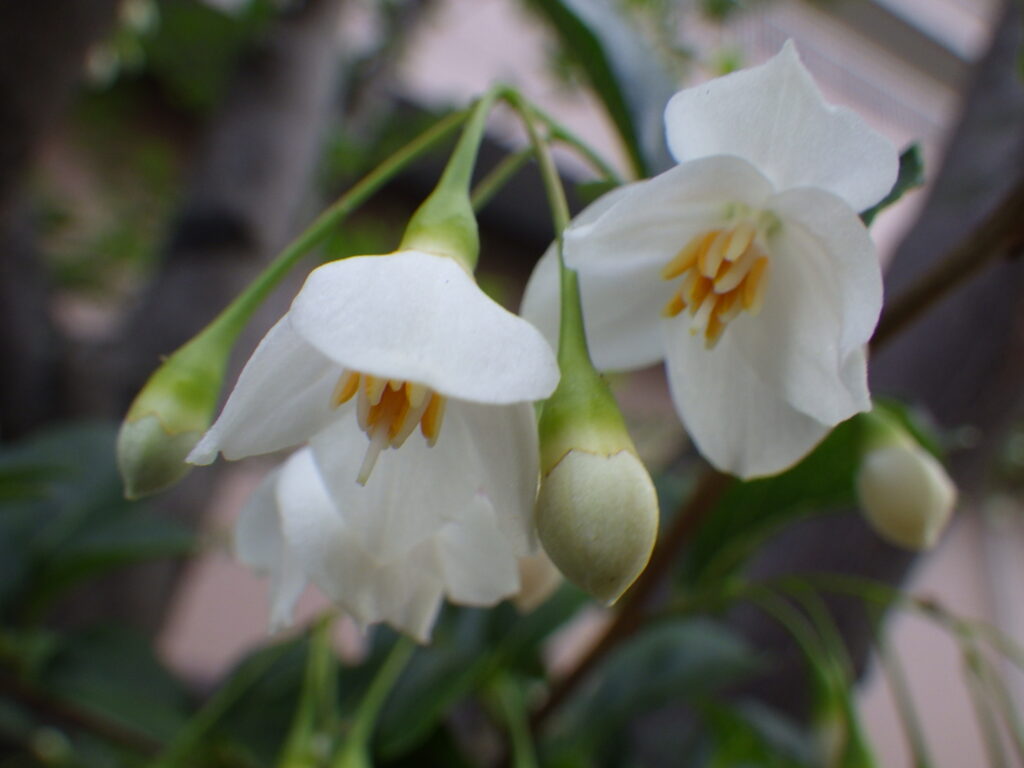
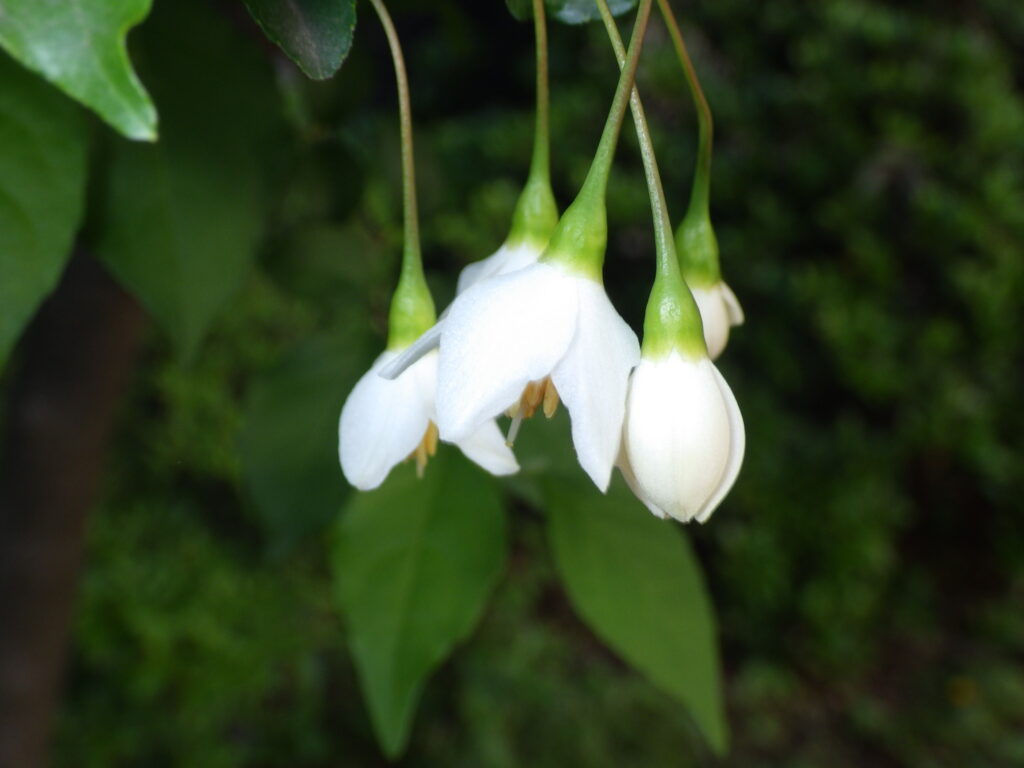
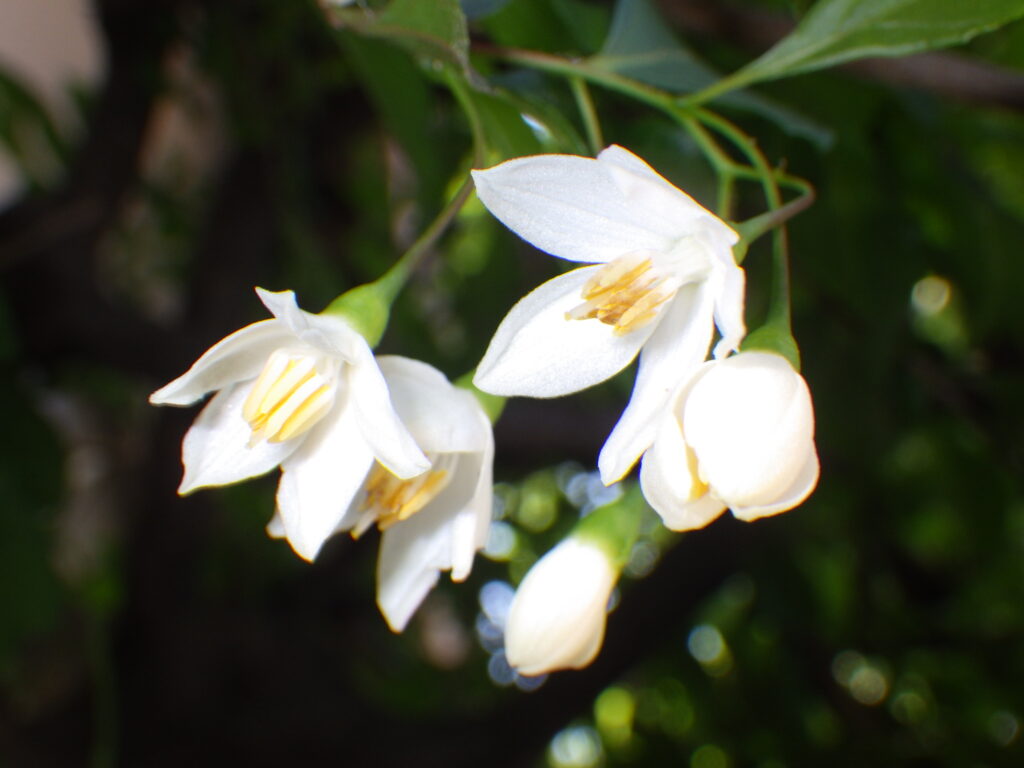
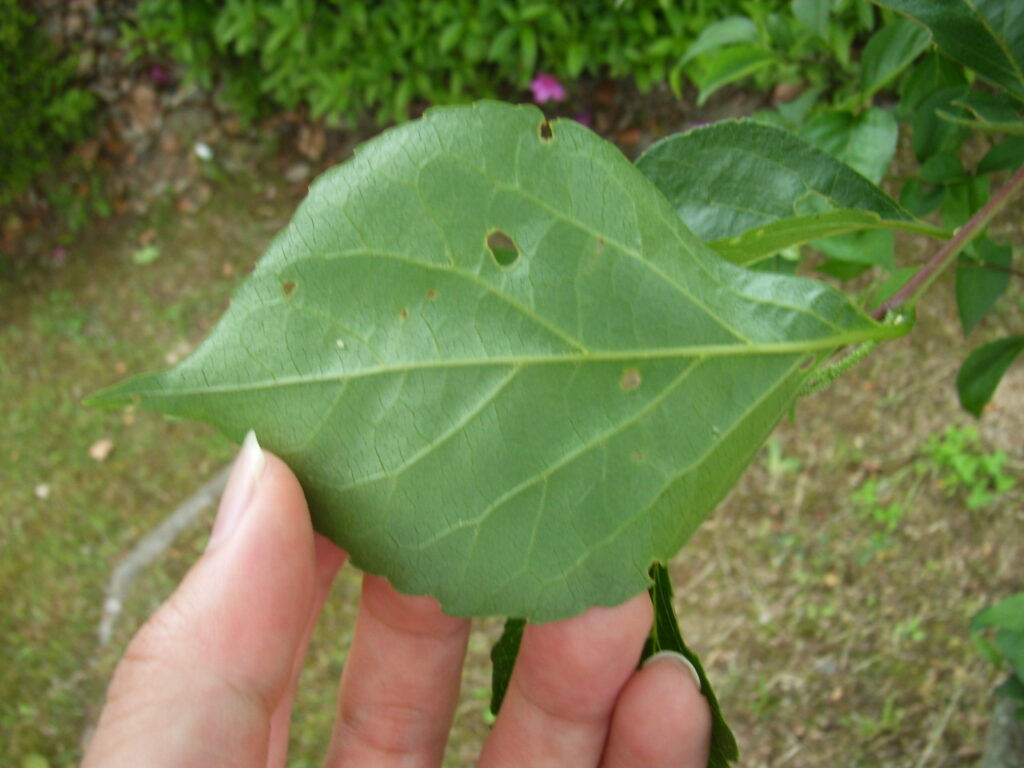
Morphologically, the main common features are that the flower stalks extend downwards towards the ground, the white flowers usually bloom facing downwards, and the corolla lobes are arranged in a tile-like pattern. Another common feature is the presence of stellate hairs on the underside of the leaves.
However, some people may not know how to distinguish between them.
What are the differences between Styrax japonica, Pink Chime, and Styrax obassia?
First and foremost, Pink Chime is simply a cultivated variety of Styrax japonica, so there are no fundamental structural differences between Styrax japonica and Pink Chime. However, it is significantly different from another species, Styrax obassia.
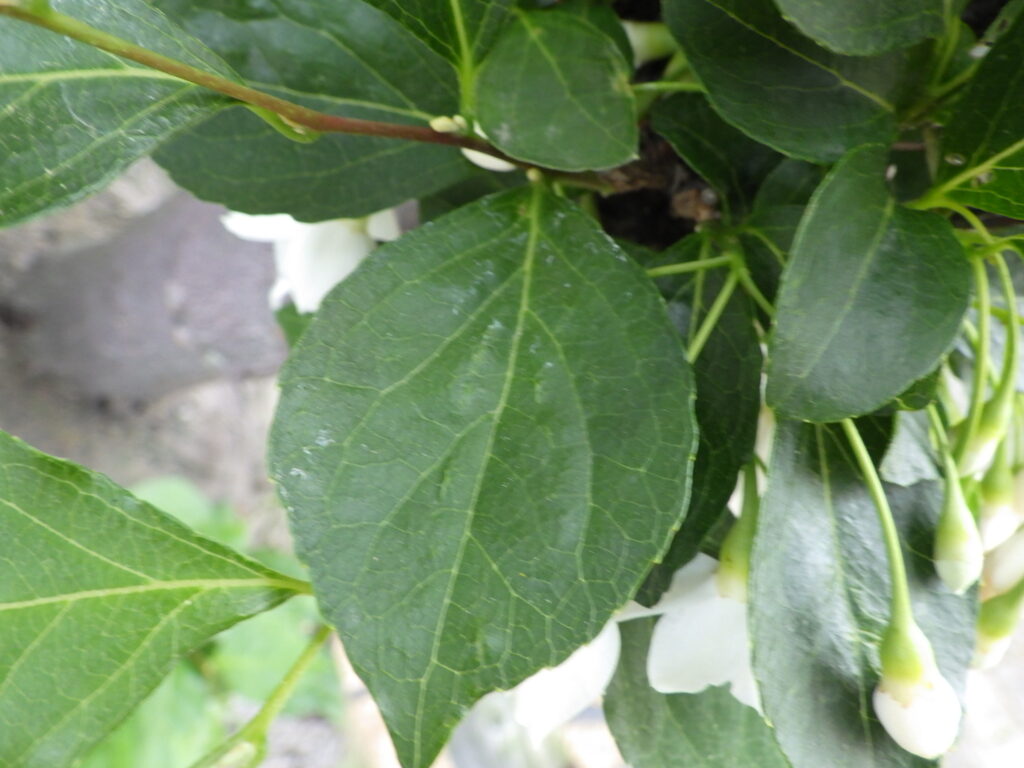
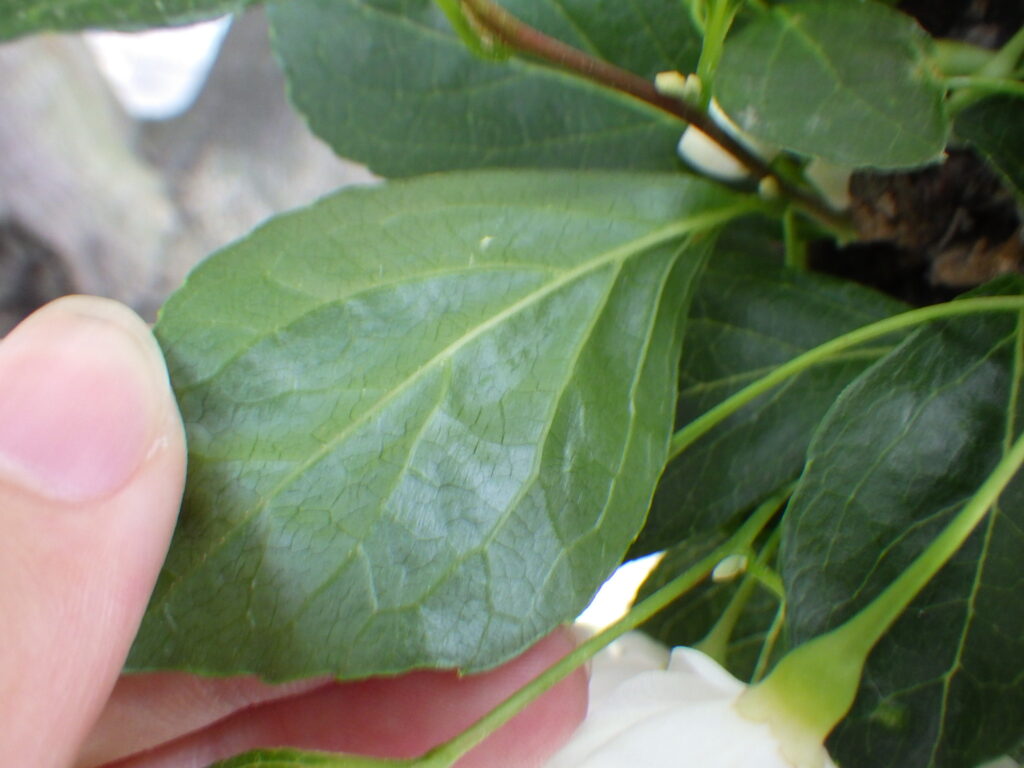
Specifically, the differences are that in Styrax japonica and Pink Chime, the leaves are somewhat rhombic-ovate (rarely lanceolate) and small, and the flowers are only 1 to 4 at the end of long pedicels, while in Styrax obassia, the leaves are round and large, often with fangs at the tip, and the flowers are numerous with short pedicels forming a raceme.
A peduncle (or stem) is the thin part that connects the flower to the plant body.
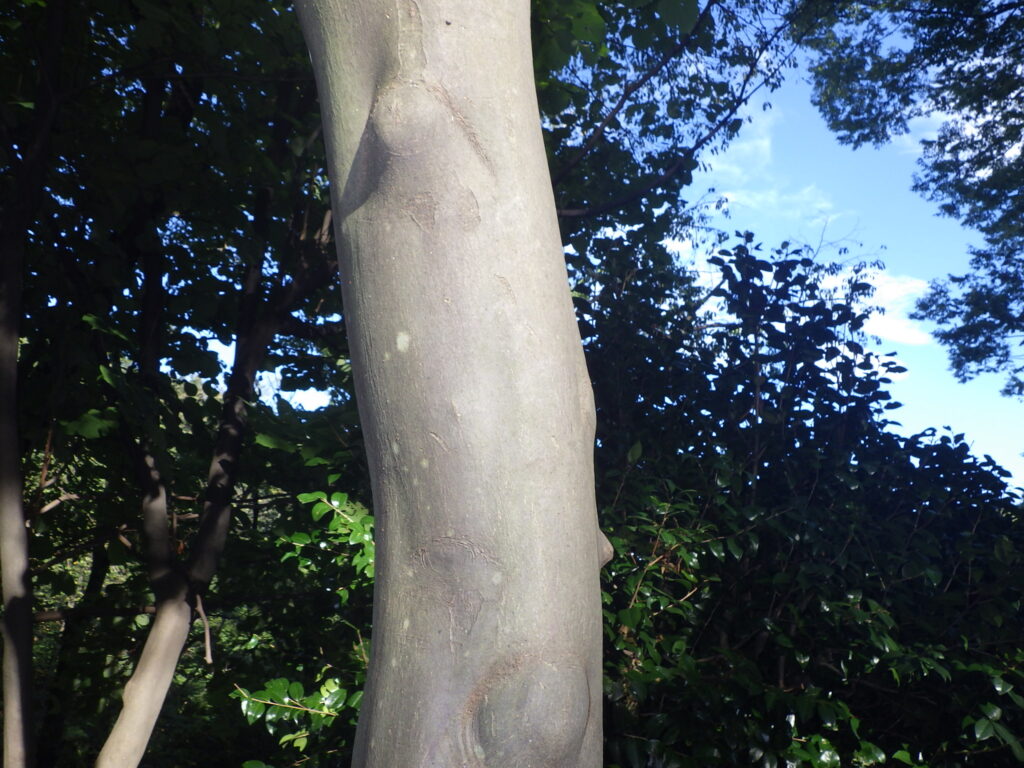
Another difference between wild Styrax japonica and Styrax obassia is that Styrax japonica grows from lowlands to mountainous areas, while Styrax obassia usually grows in mountainous areas.
The difference between Styrax japonica and Pink Chime is slight: Styrax japonica has white flowers, while Pink Chime has pink flowers. Pink Chime does not grow wild.
In addition, there is another species called Styrax shiraiana, which is distributed in the Kanto region (including Tochigi Prefecture), Shikoku, and Kyushu, and is very similar to Styrax obassia. However, its leaves are smaller, around 7 cm in diameter compared to Styrax obassia's 15 cm, and usually have large serrations, so they are not perfectly round (Hayashi, 2019). Furthermore, it has fewer stellate hairs on the underside of the leaves, the inflorescence is shorter, the flowers are smaller, and the tree height is somewhat lower, around 3 to 7 m.
There is also a variety of Styrax japonicus f. pendulus, which has drooping branches and leaves. It is sometimes used in bonsai.
The variety Styrax japonicus var. kotoensis, also known as red-headed styrax, is distributed in Kyushu (south of the Tokara Islands) to Okinawa in Japan, as well as in Taiwan and the Philippines. It was previously thought to be distinguishable from Styrax japonica by its slightly larger flowers and fruits, less prominent leaf serrations, and much earlier flowering period (autumn to spring). However, recent research has concluded that it is indistinguishable from Styrax japonica and treats them as the same species (Ohashi et al., 2017).


What is the difference between Styrax japonica and Styrax japonica?
The difference between Styrax japonica and Lettuce (Styrax japonica) is also a frequently searched topic.
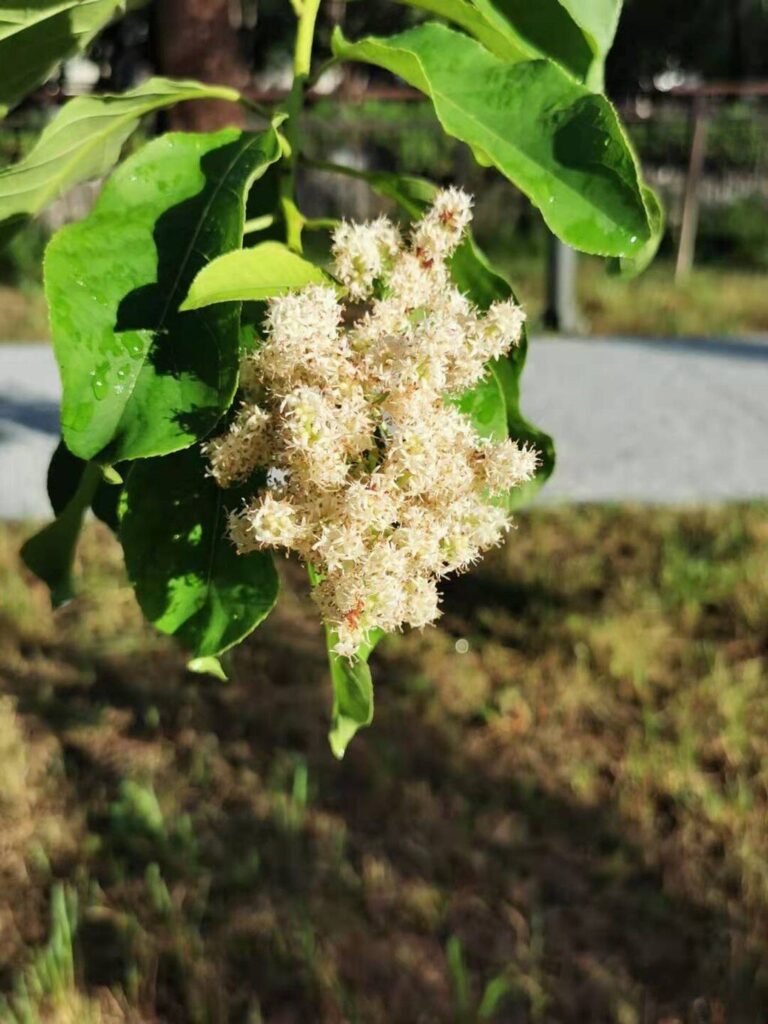
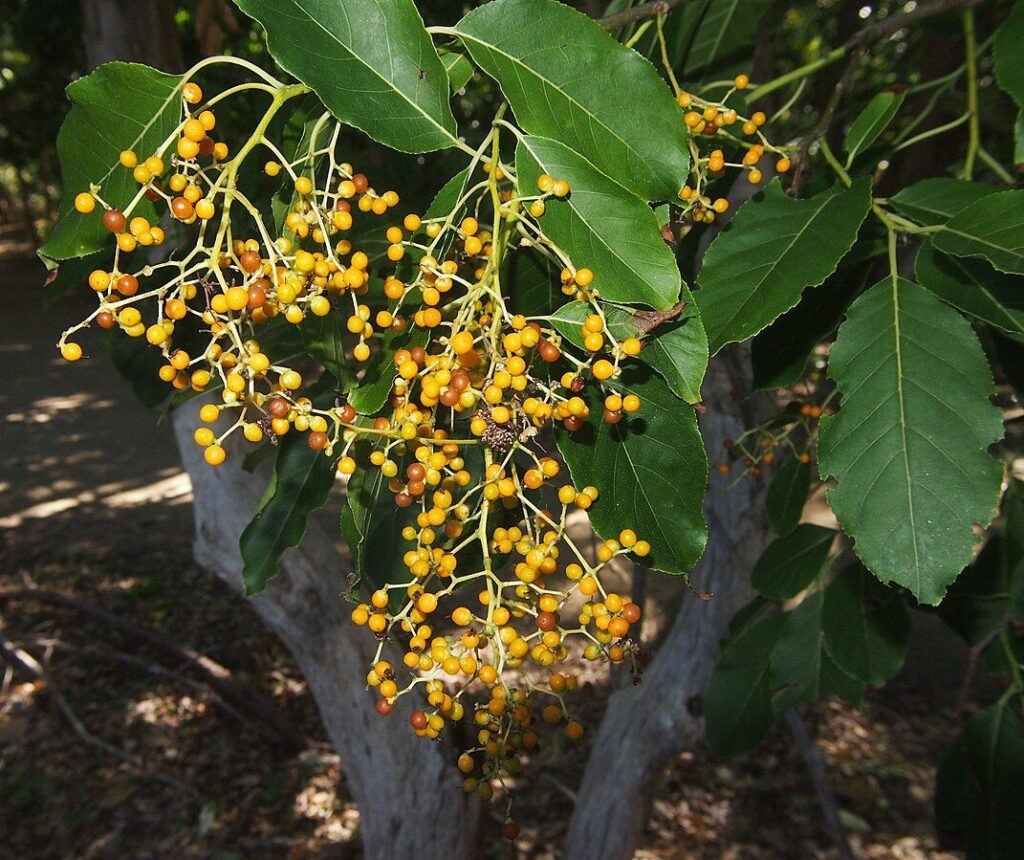
The name "Chishanoki" (meaning "lettuce tree") has two confusing meanings.
First, let's look at another name for the Styrax japonica tree. In this case, we can say that "Styrax japonica = Chishanoki." In the Kabuki play "Kyara Sendai Hagi," a plant called Chishanoki appears, and this plant is actually Styrax japonica.
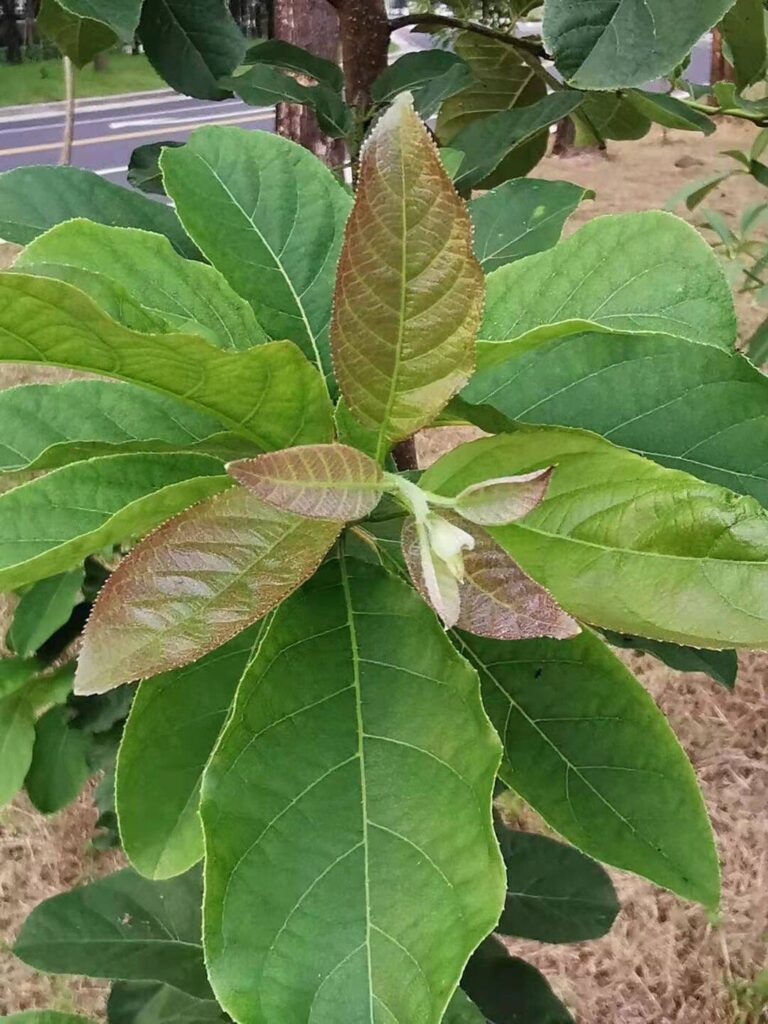
However, secondly, from a biological and taxonomic perspective, "chishanoki" usually refers to a plant belonging to the Boraginaceae family. This plant is also known as "kakinokidamashi" and its scientific name is Ehretia acuminata var. obovata.
As can be seen from its classification, this Styrax japonica is a completely different species from Styrax japonica, and they have almost no common features. If anything, the only similarity is that both have white flowers, but Styrax japonica clearly has smaller flowers, more flowers per inflorescence, and a larger corolla.
Furthermore, while the leaves of the Japanese snowbell tree (Styrax japonica) have serrated edges, those of the Japanese laurel (Chisha kiusiana) have entire margins without serrations.
This raises the question of why the Styrax japonica and the Chishanoki tree share the same name, but to put it simply, it seems to be a coincidence.
The alternative name for Styrax japonica, Chishanoki, is derived from the Japanese dialect name "Chinai" in the Chugoku region. Chinai is said to mean Chinari (meaning "milk-bearing"), referring to the appearance of the tree bearing abundant fruit, and it is believed that Chinari was corrupted into Chishanoki (Fukatsu and Kobayashi, 1993).
On the other hand, the name of the Boraginaceae tree, *Lactuca sativa*, is said to derive from the fact that the taste of its young leaves is similar to that of lettuce (*Lactuca sativa *).
Based on the above, let's make sure not to confuse them.
What are the differences between Styrax japonica, Deutzia crenata, Symplocos chinensis, and Stewartia pseudocamellia?
It seems that people often search for the differences between Styrax japonica, Deutzia crenata, Symplocos chinensis, and Stewartia pseudocamellia along with Styrax japonica. This is probably because their white flowers look somewhat similar.
However, if you look closely, you'll quickly notice the difference.
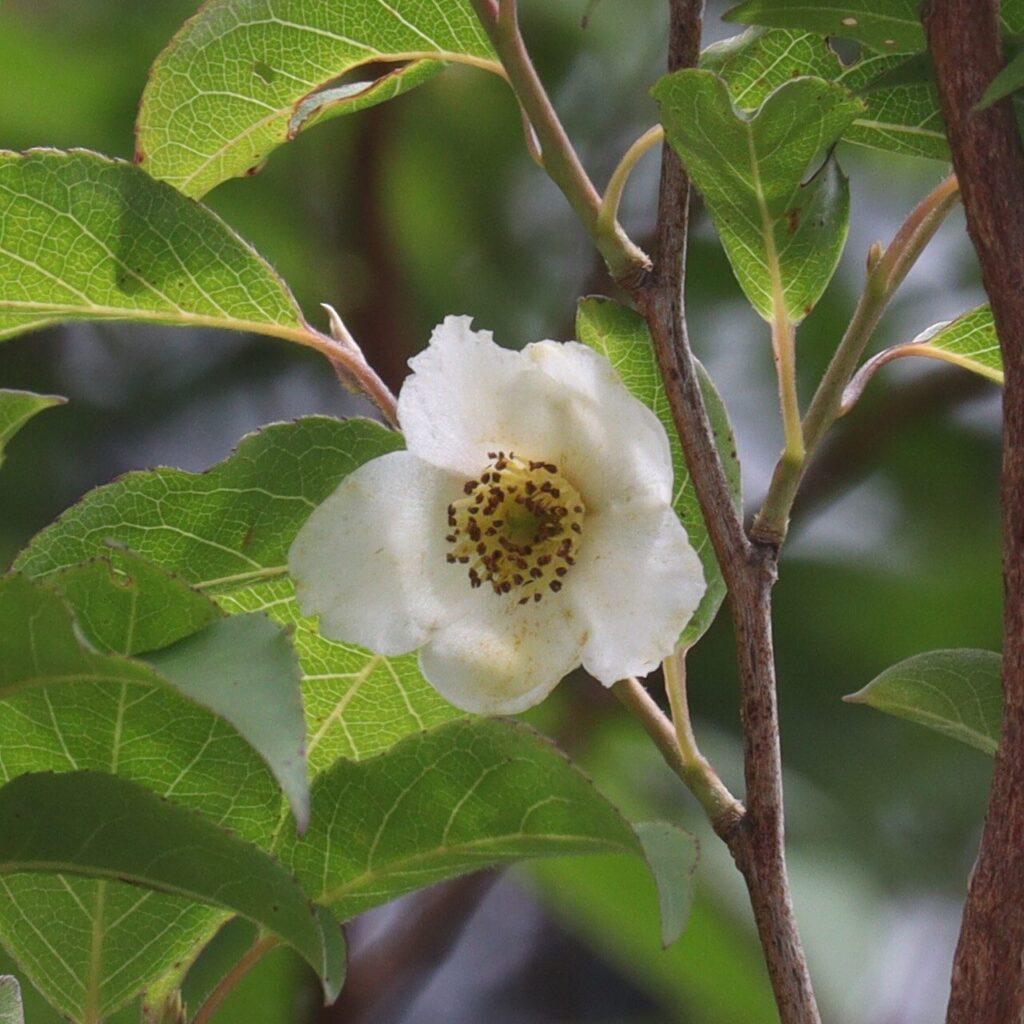
Stewartia monadelpha, also known as Japanese stewartia, belongs to the Camellia family. Its most distinctive feature is that its stamens are significantly more numerous and larger than those of other species, and the filaments fuse together in the middle to form a tube. This feature is not seen in the other four species.
Furthermore, Symplocos myrtacea belongs to the Symplocaceae family, and its stamens are longer than those of other species, protruding significantly from the petals (or corolla lobes). This is also not seen in the other four species.
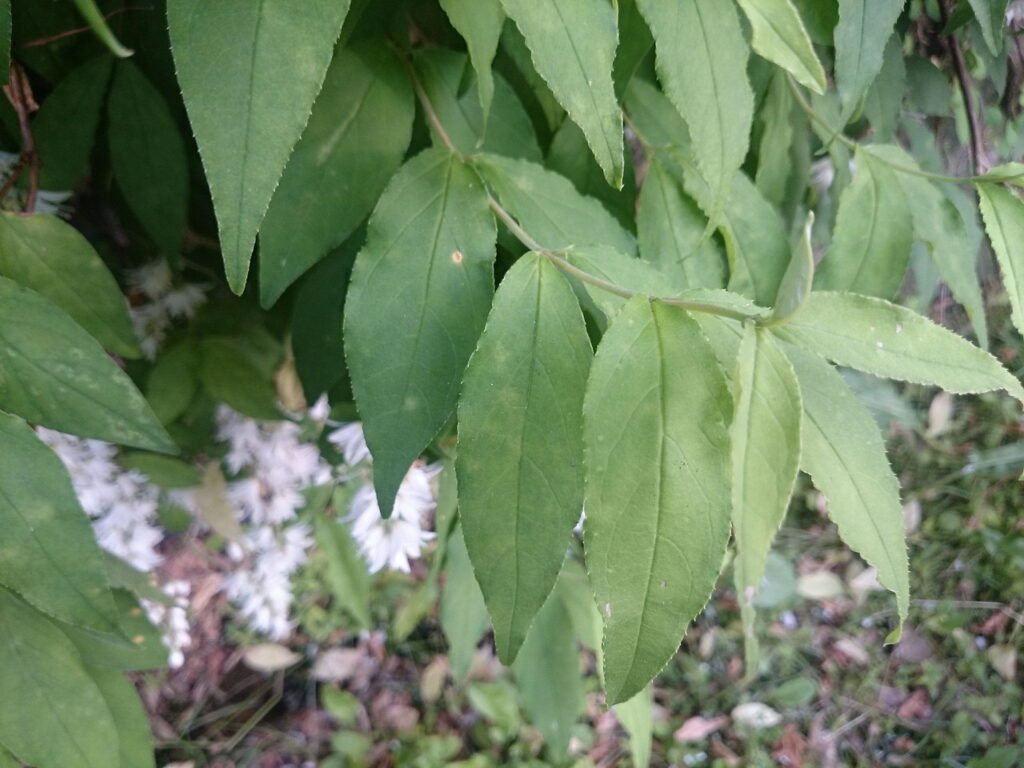
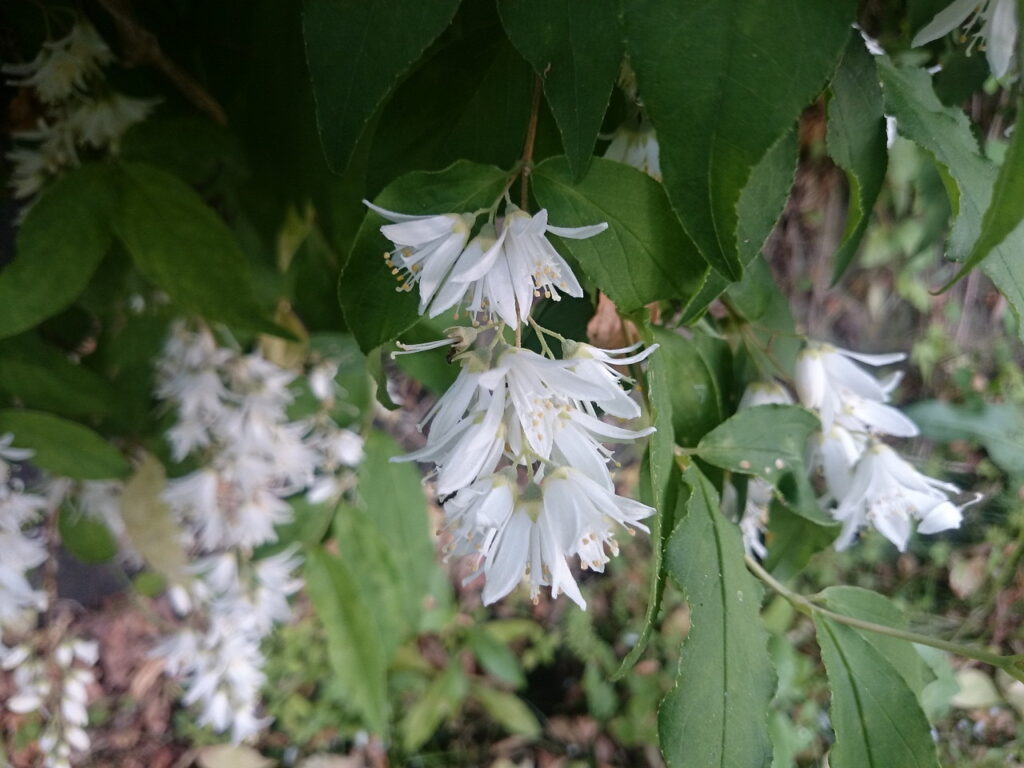
Deutzia crenata belongs to the Hydrangeaceae family, and among them it may be said to be the most similar to Styrax japonica. However, unlike Styrax japonica, its petals do not open straight down, but rather open to the side or diagonally downwards, and it can be distinguished by the dense hairs on its calyx.
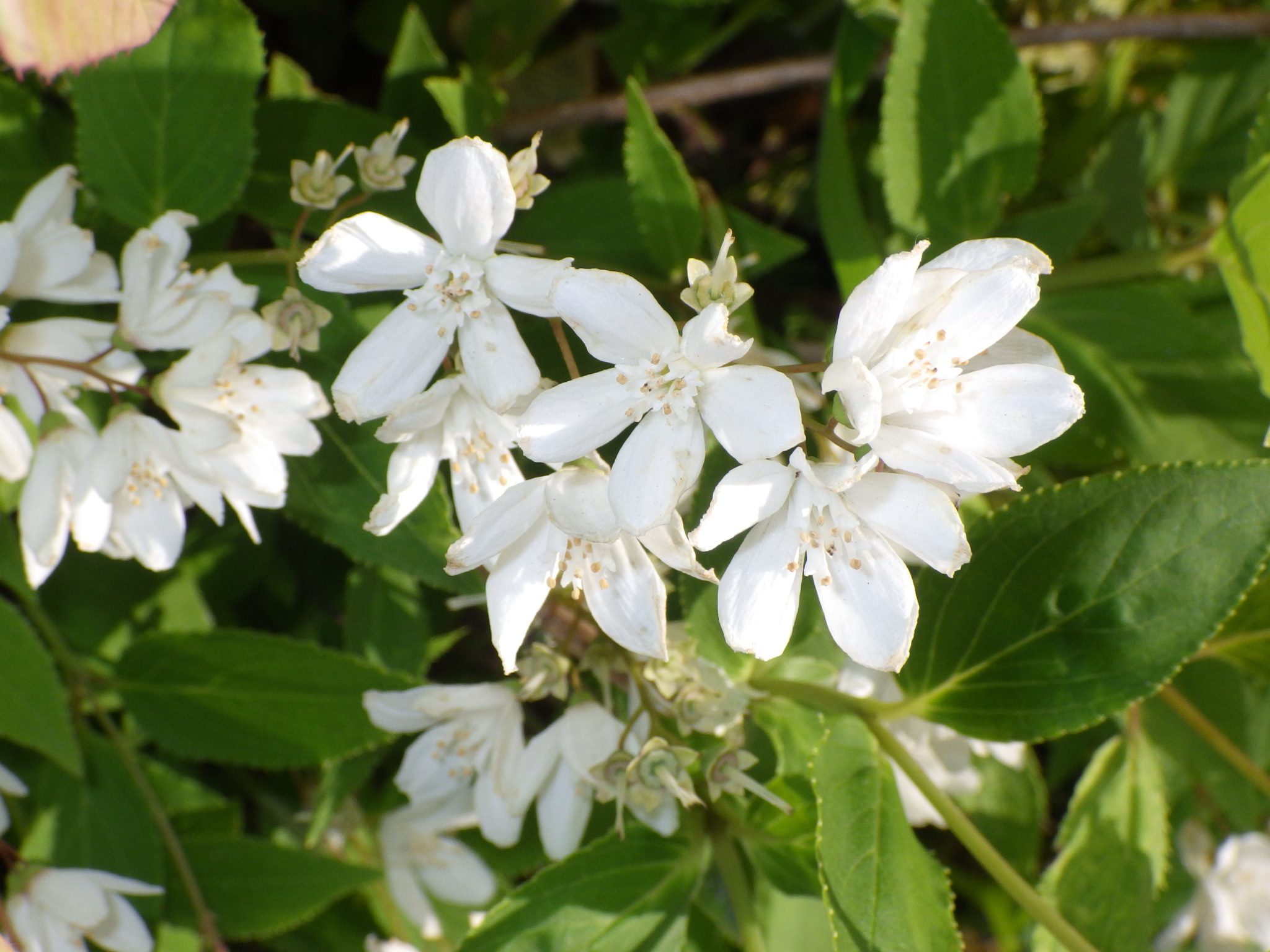
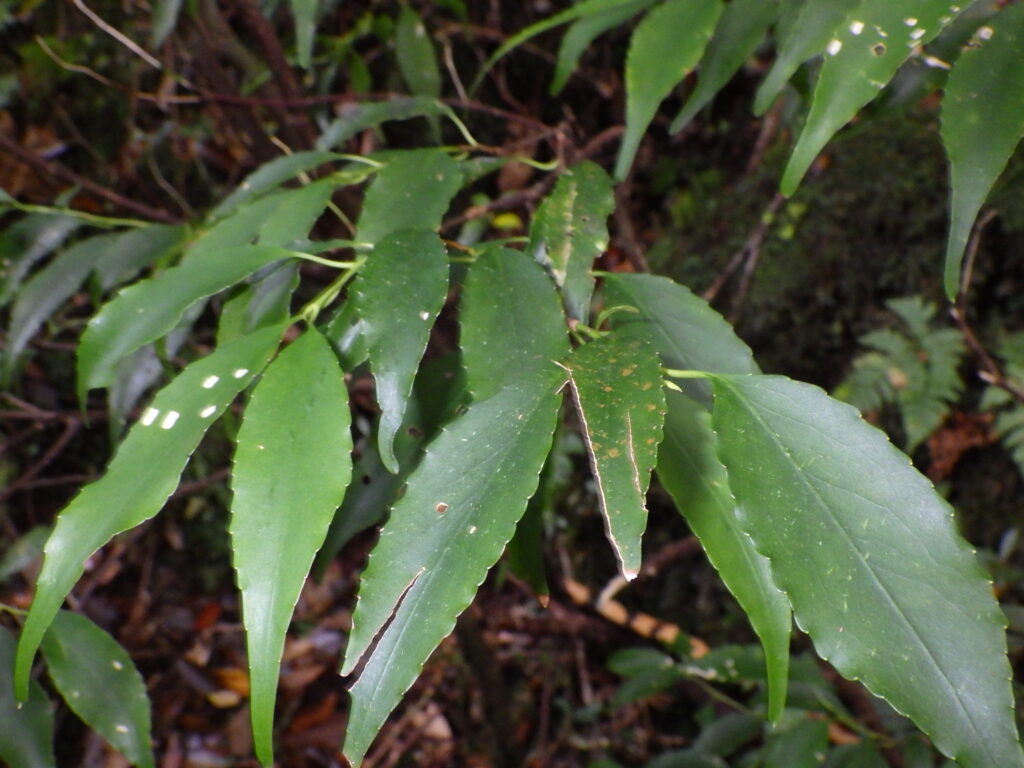
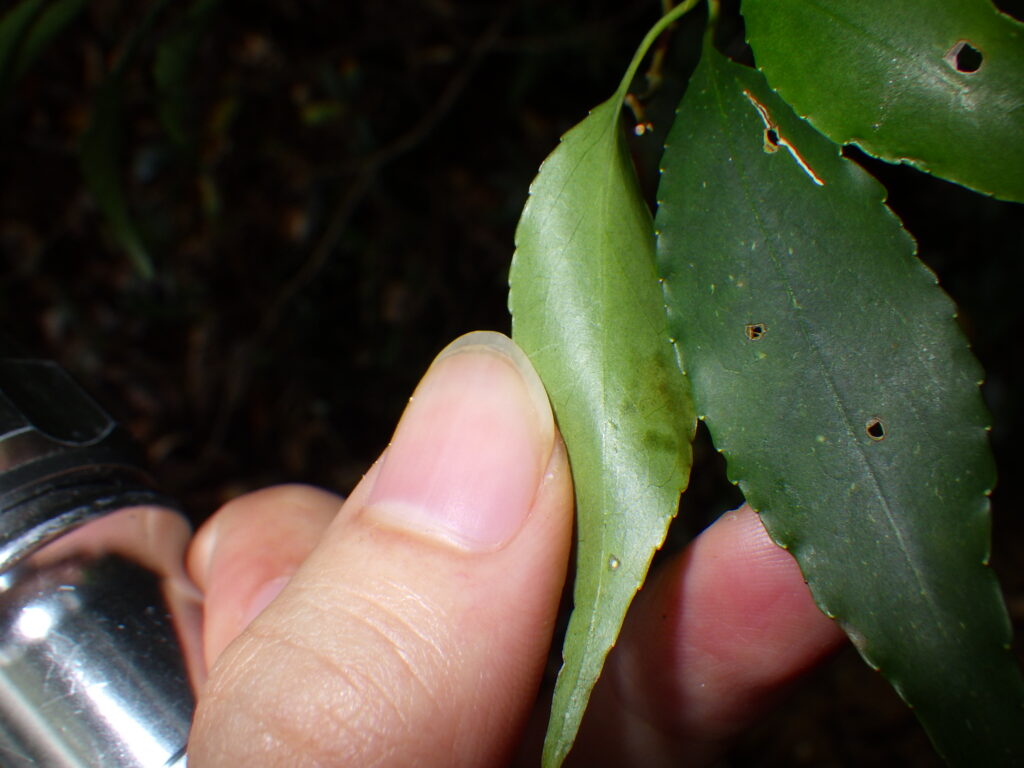
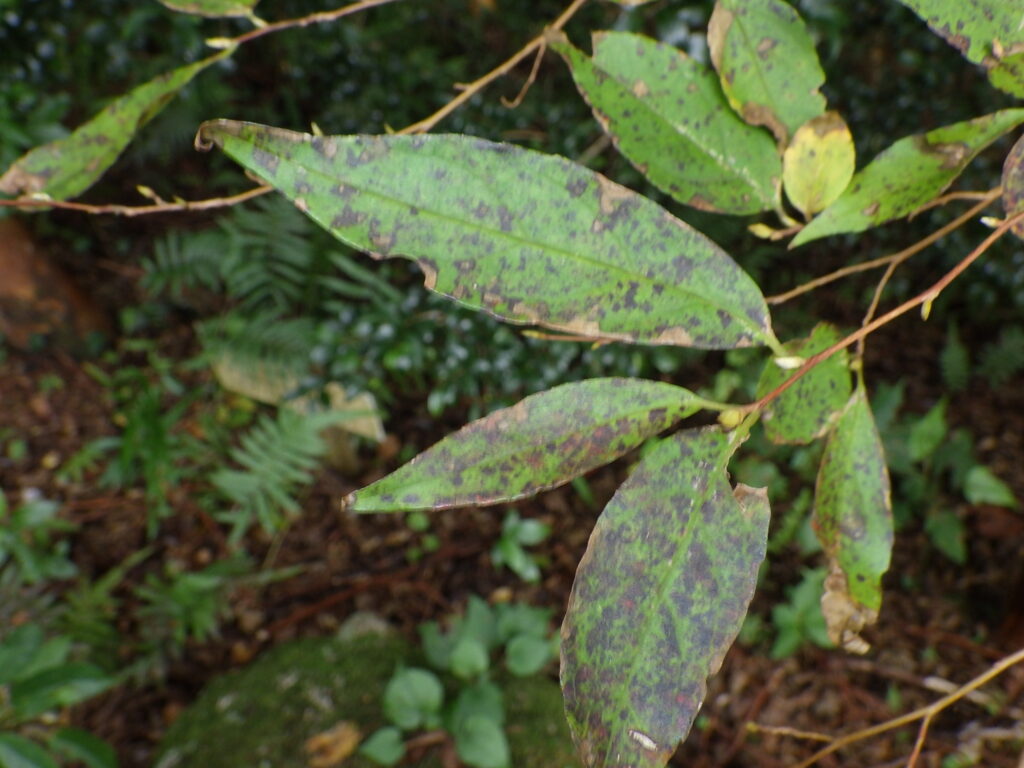
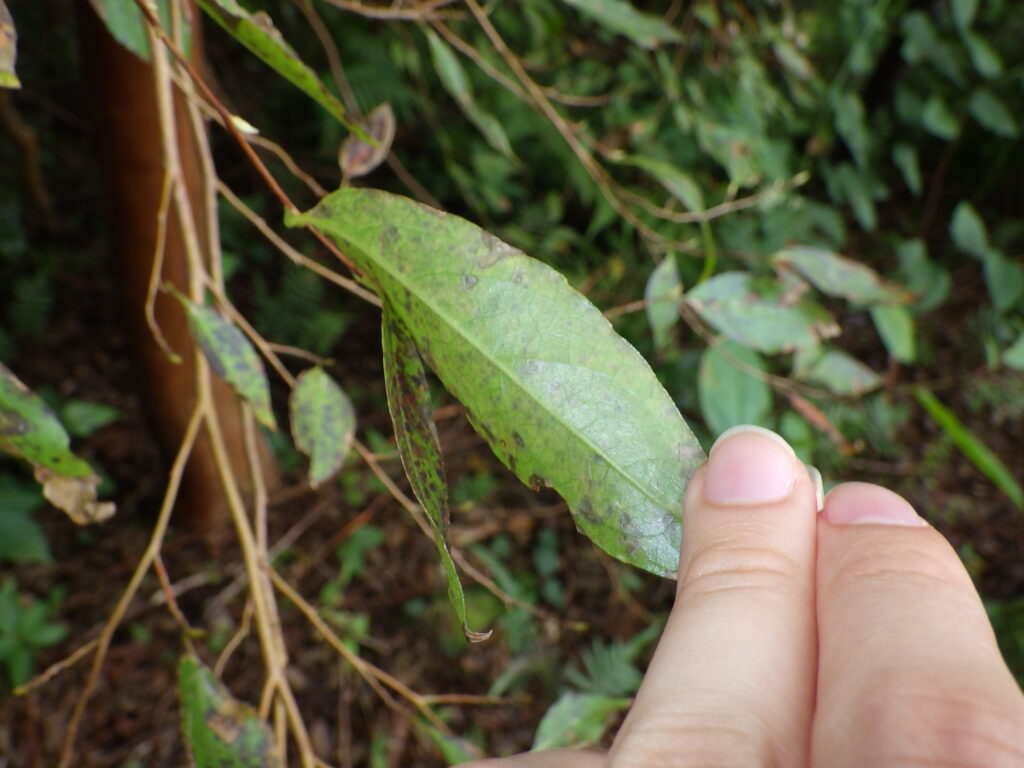
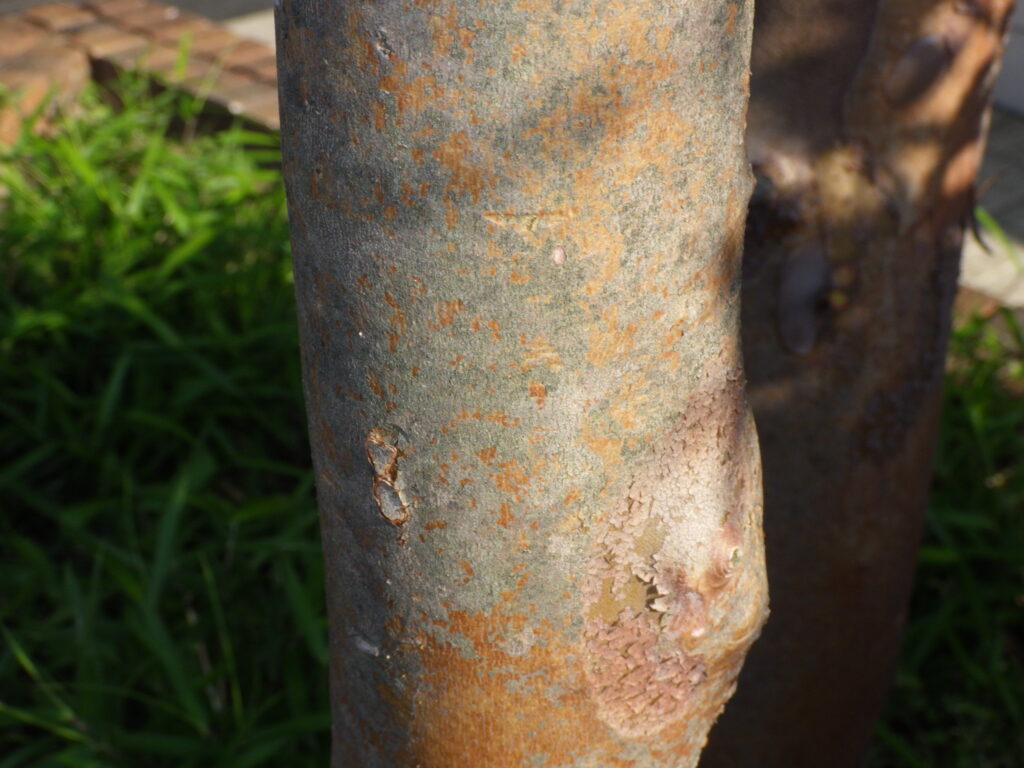
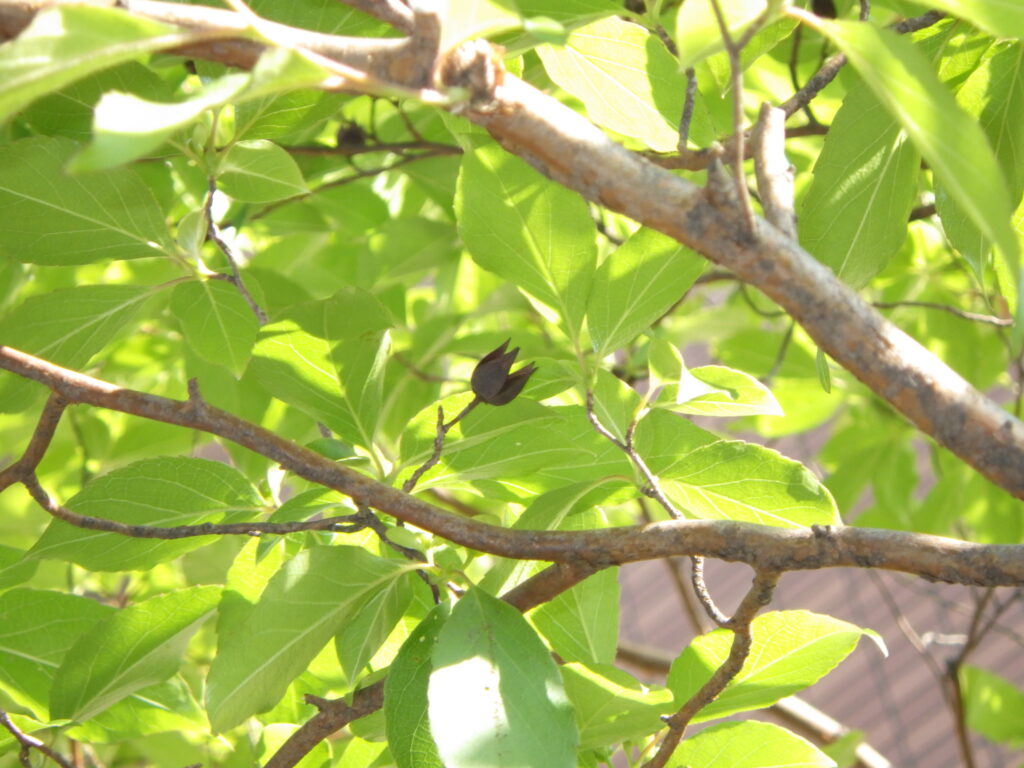
There are other differences in leaf shape as well, but we will omit the detailed differences here. Please refer to the photos.

References
Hayashi, Masayuki. 2019. Tree Leaves: Expanded and Revised Edition - Identifying 1300 Species Through Real-Life Scans. Yama-kei Publishers, Tokyo. 824pp. ISBN: 9784635070447
Kanagawa Prefecture Flora Survey Association. 2018. Kanagawa Prefecture Flora 2018 (Electronic Edition). Kanagawa Prefecture Flora Survey Association, Odawara. 1803pp. ISBN: 9784991053726
Ohashi, Hiroyoshi; Kadota, Yuichi; Murata, Hitoshi; Yonekura, Koji; and Kihara, Hiroshi. 2017. Wild Plants of Japan (Revised New Edition, Vol. 4 Malvaceae to Apocynaceae). Heibonsha, Tokyo. 608pp. ISBN: 9784582535341
RBG Kew. 2023. The International Plant Names Index and World Checklist of Vascular Plants. Plants of the World Online. http://www.ipni.org and https://powo.science.kew.org/
Fukatsu, Tadashi & Kobayashi, Yoshio. 1993. The Origin of Tree Names. Tokyo Shoseki, Tokyo. 290pp. ISBN: 9784487722310