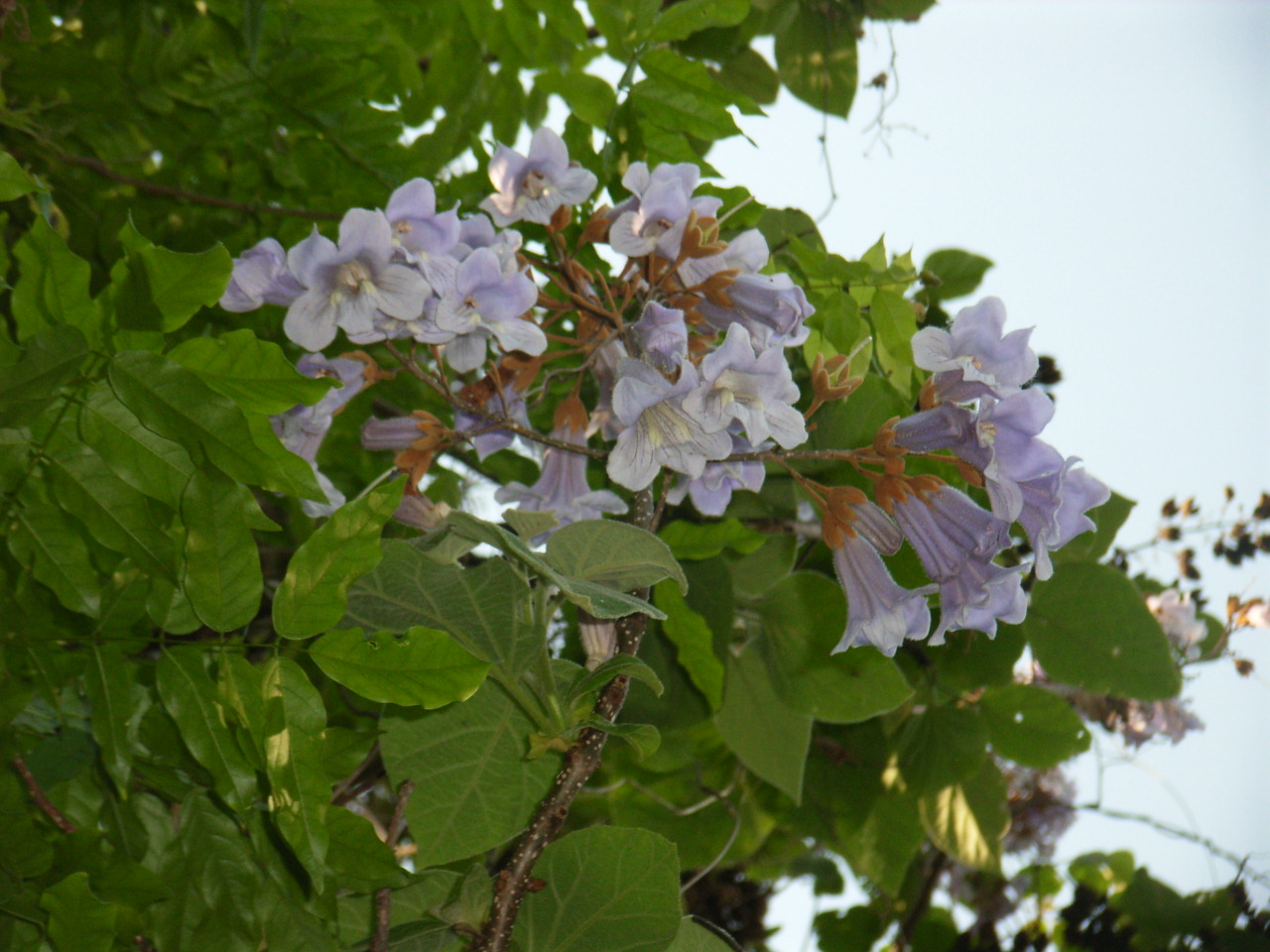
Paulownia (Paulownia) and Jacaranda (Jacaranda jacaranda) are both deciduous trees with "paulownia" in their name, and they are quite similar in that they both produce purple, tubular, bell-shaped flowers, and their flowering seasons are close together. Paulownia has traditionally been considered a sacred tree by the Japanese, and its flowers and wood have been highly valued. Jacaranda jacaranda also has beautiful flowers, but it does not have such a historical connection, so it is worth knowing the differences between them. Paulownia and Jacaranda jacaranda are completely different in terms of taxonomy, and the shapes of their leaves and fruits are entirely different. Their flowers are also similar, but if you observe them carefully, you will be able to see the difference in the shape of the corolla. This article will explain the classification and morphology of Paulownia and Jacaranda jacaranda.
What is Kiri Jacaranda (or Kiri-modoki)?
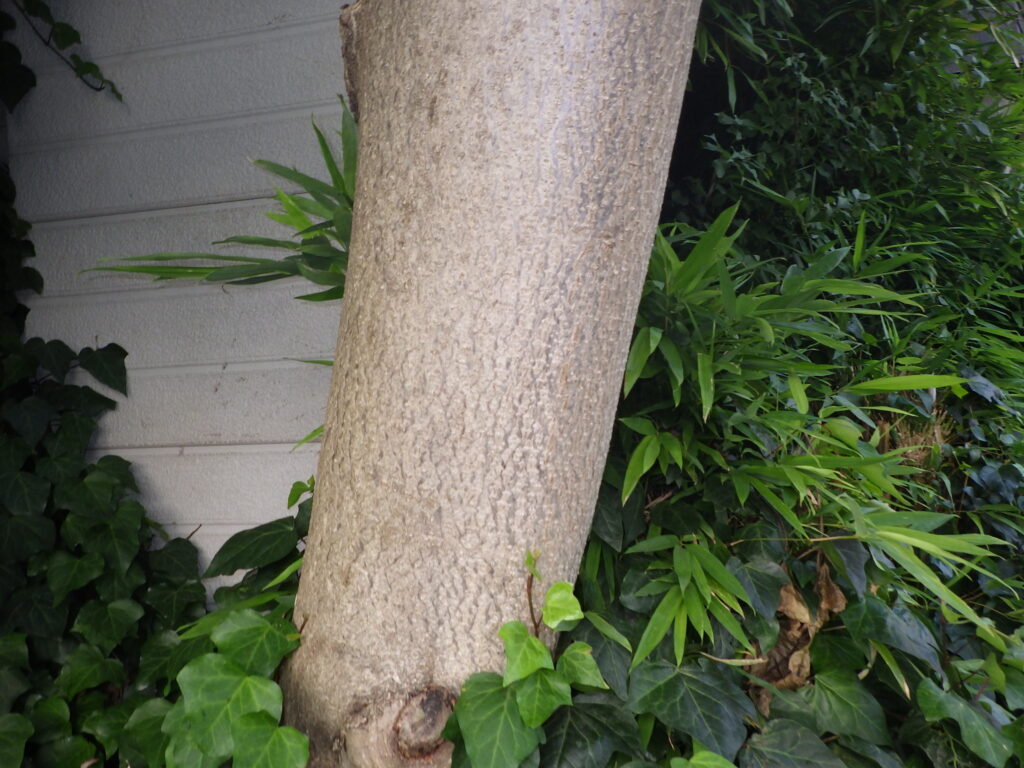
Paulownia tomentosa, also known as the paulownia tree, is a deciduous tree native to eastern China and Korea, cultivated as an ornamental plant in temperate regions worldwide, including Japan. It has naturalized in some countries, and there is a theory that it was once native to Japan, but it is thought to have been introduced from China long ago and then naturalized. White-flowered paulownia f. virginea has white corollas.
In Japan, the paulownia tree has traditionally been considered a sacred tree. As exemplified by "paulownia boxes" and "paulownia chests," the wood is known for its lightweight, moisture-resistant, and insulating properties, making it a popular material for high-end furniture (paulownia wood). In addition, the paulownia crest, such as the "five-seven paulownia crest" and the "five-three paulownia crest," is famous and has been used as the emblem of the Imperial family, the Ashikaga family, the Toyotomi family, and prime ministers.
Jacaranda mimosifolia, also known as the false paulownia tree, is a deciduous tree native to South America (Argentina, Bolivia, and Paraguay). It is cultivated worldwide for ornamental purposes and has naturalized in some countries.
Both are deciduous trees with the name "kiri" (paulownia) in their name, and they are quite similar in that they both produce purple, tubular, bell-shaped flowers. In terms of flowering period, they are also quite similar in Japan, with kiri blooming in May and kirimodoki blooming from May to June.
Therefore, it may be difficult to distinguish between them. It's important to know the difference between the Japanese paulownia tree, which has been cultivated in Japan for a long time, and the false paulownia tree, which has been cultivated in recent years.
What is the difference between Paulownia and Jacaranda (false Paulownia)?
Paulownia and false paulownia are completely different species (Mogi et al., 2003; Nasir, 1979).
Taxonomically, the paulownia tree belongs to the genus Paulownia in the family Paulownia, while the false paulownia belongs to the genus Paulownia in the family Bignoniaceae.
Therefore, it can be predicted that there will be significant differences in form.
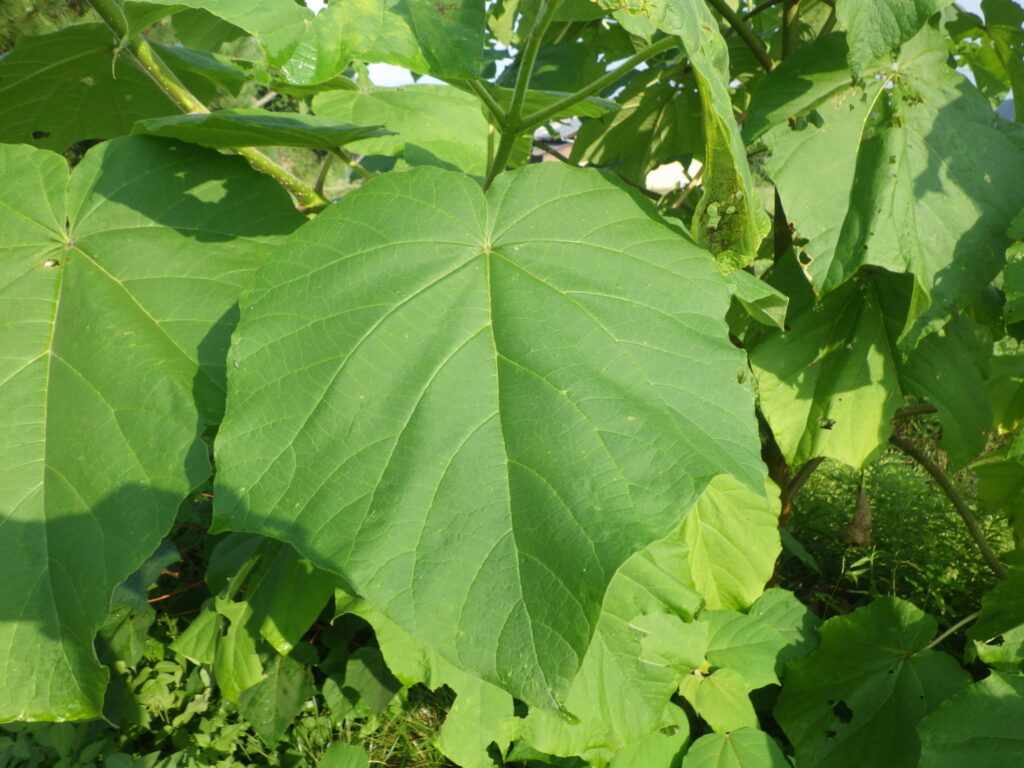
The most obvious difference is the shape of the leaves.
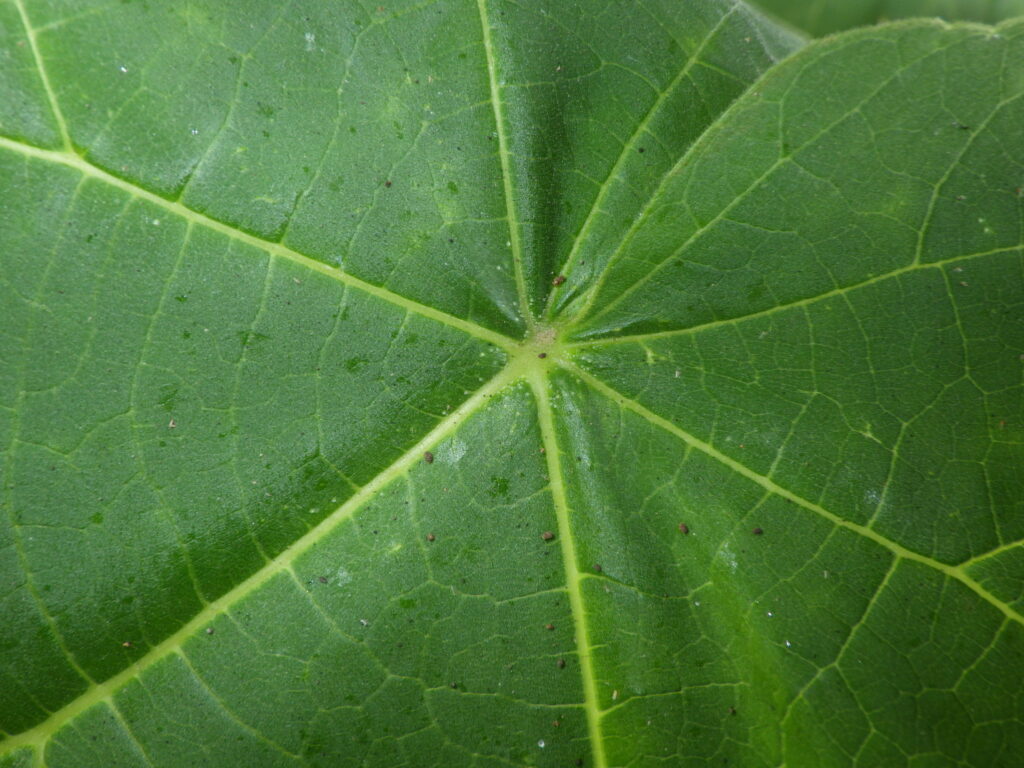
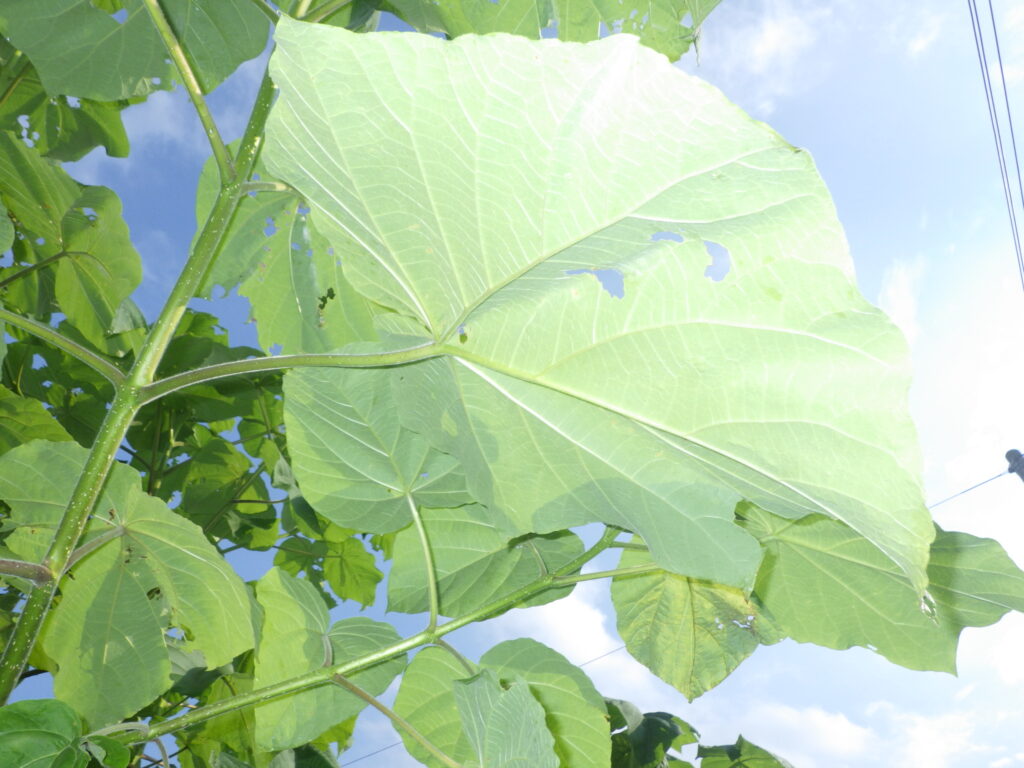
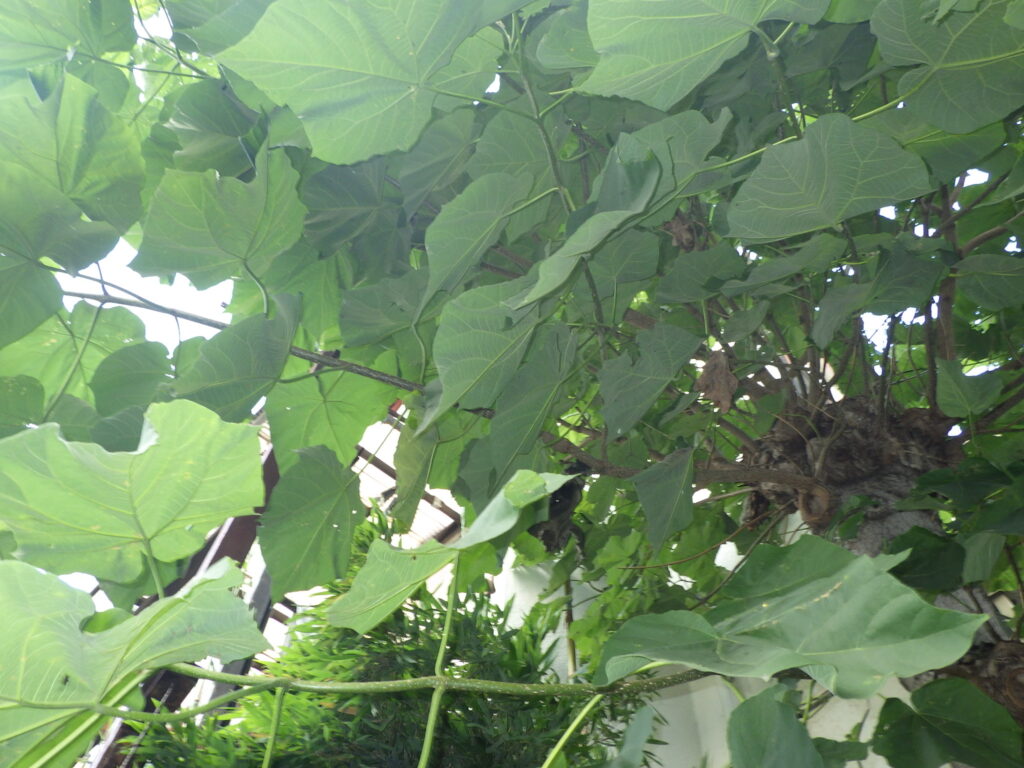
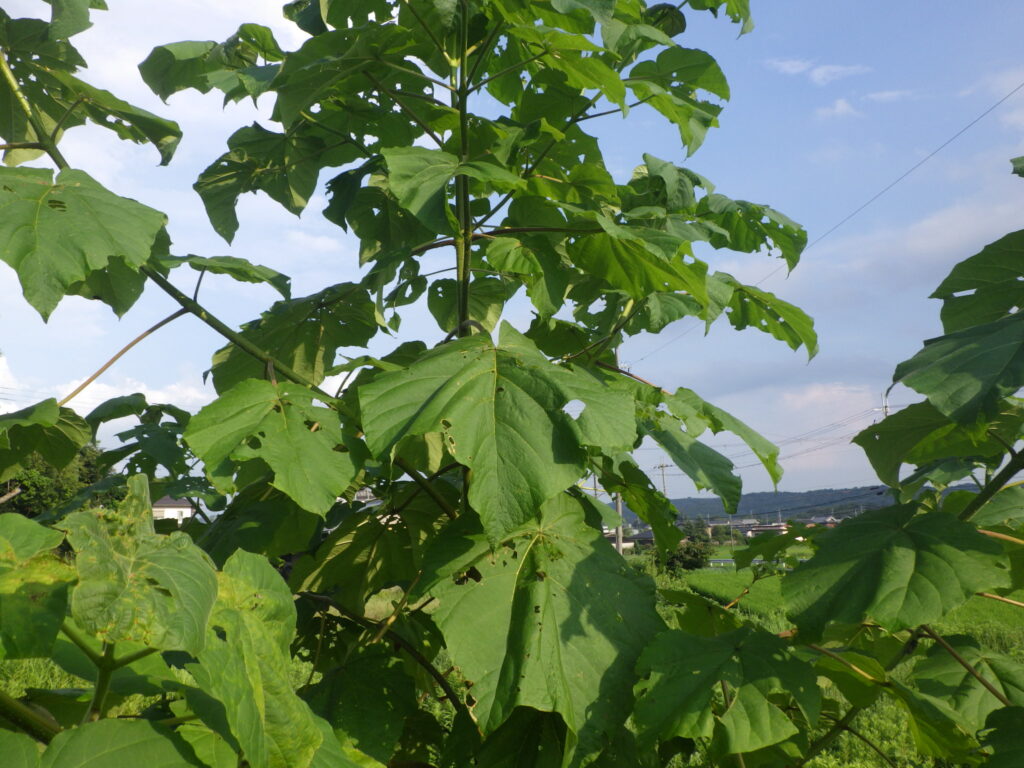
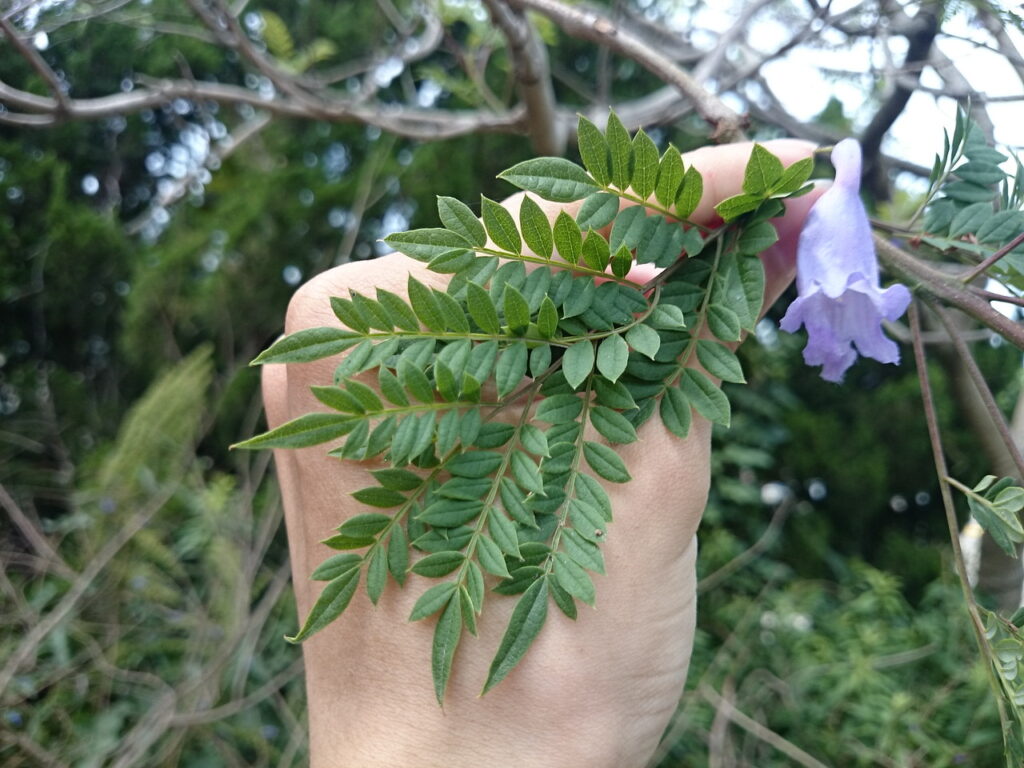
The difference between Paulownia and false Paulownia is that Paulownia has simple leaves with shallow 3-5 lobes that form a triangular or pentagonal shape, while false Paulownia has compound leaves that resemble ferns, being (1-) bipinnately compound.
This is an obvious difference, so be sure to check it. Furthermore, the base of the paulownia leaf blade (the base of the petiole) has a type of extrafloral nectary called a "bowl-shaped organ" (a part that produces nectar to attract ants). This is a good distinguishing feature from other species besides the false paulownia, so it is recommended to check for it (Kobayashi et al., 2008).
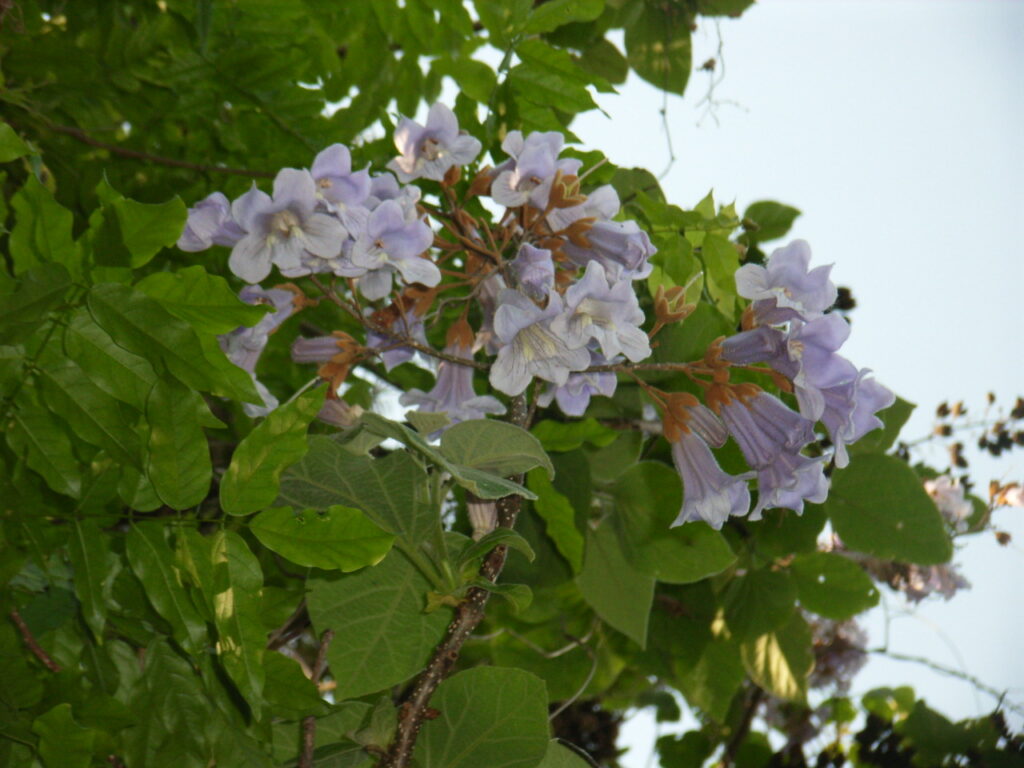
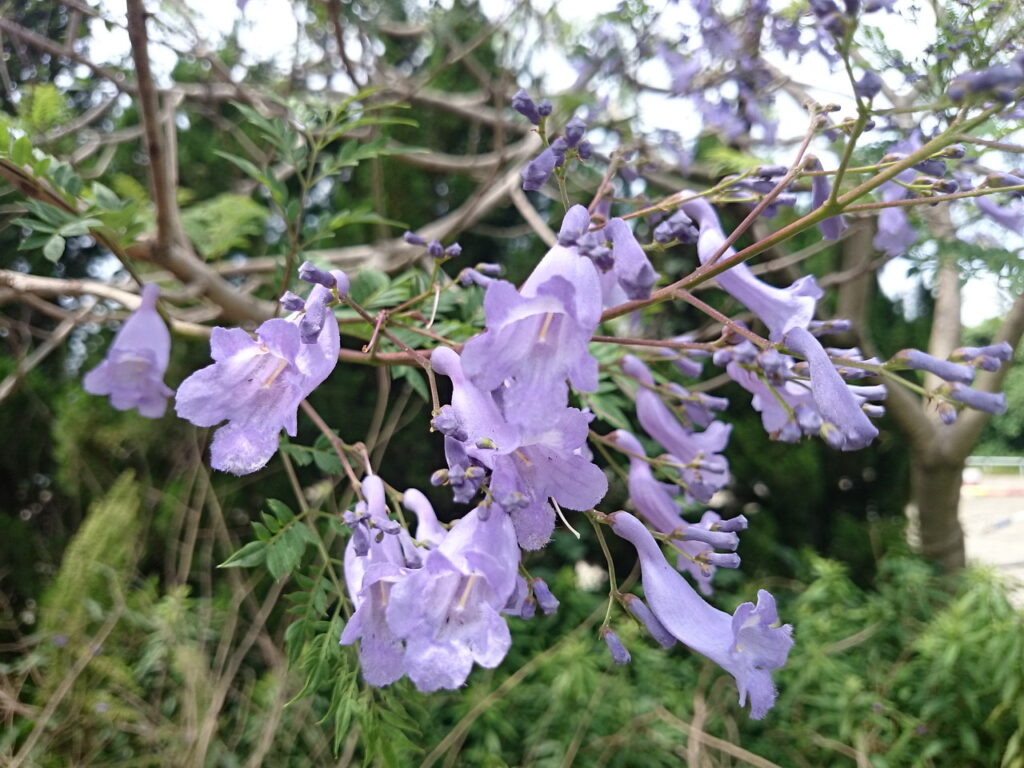
The flowers look quite similar, but if you look closely, you can see the differences.
In the paulownia tree, the corolla tube is straight and of consistent thickness throughout, whereas in the false paulownia, the base of the corolla tube is tapered, resulting in a shape that is somewhat closer to an S-shape.
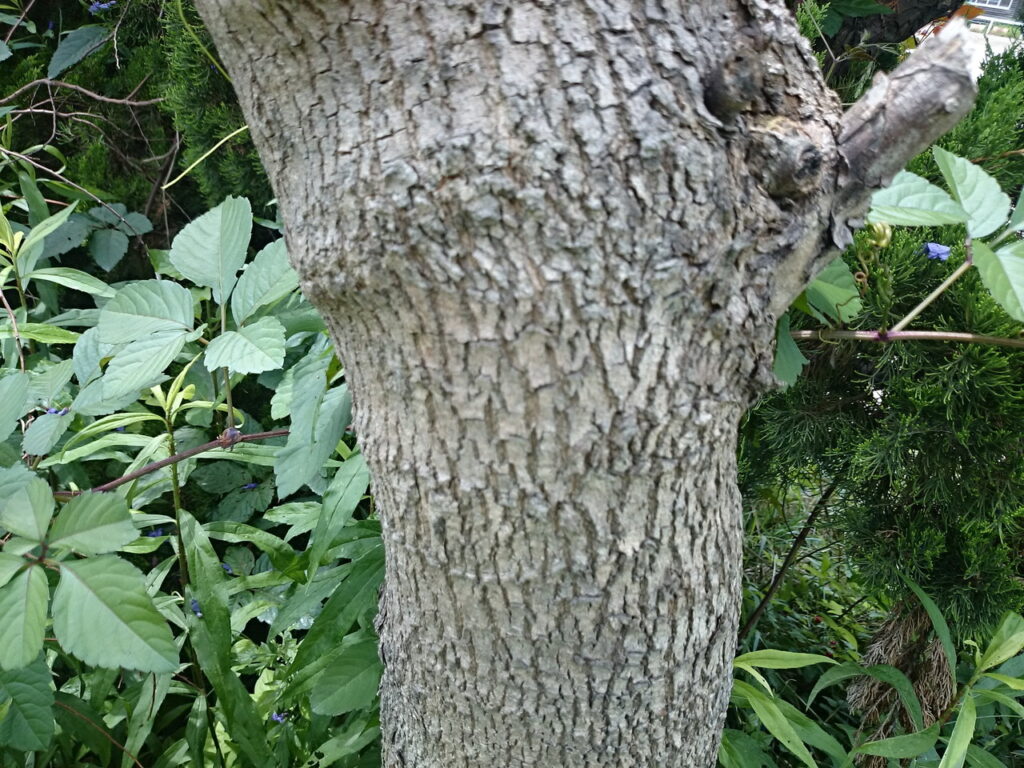
It's a bit detailed, but please take a good look at the photos.
Furthermore, although the fruit can only be observed for a limited period, its shape is also completely different.
Both are capsules, but while the paulownia has an oval-shaped capsule, the false paulownia has a flattened, oval to elliptical-shaped capsule.
Are there any other similar species?
Seven species of the genus Paulownia are known in East Asia, but other species are not commonly cultivated in Japan. However, there is also the view that "the cultivated species include several lineages with different origins in various parts of China and Taiwan, but their taxonomic understanding is insufficient" (Kanagawa Prefecture Flora Survey Association, 2018), so it is possible that other species may be mixed in.
For information on how to distinguish between seven species, including Paulownia kawakamii, Paulownia fortunei, and Paulownia x taiwanensis, please refer to Wu & Raven (1998).
The genus *Cirrhosa* includes about 50 species, but other species are not usually cultivated.
References
Kanagawa Prefecture Flora Survey Association. 2018. Kanagawa Prefecture Flora 2018 (Electronic Edition). Kanagawa Prefecture Flora Survey Association, Odawara. 1803pp. ISBN: 9784991053726
Kobayashi, S., Asai, T., Fujimoto, Y., & Kohshima, S. 2008. Anti-herbivore structures of Paulownia tomentosa: morphology, distribution, chemical constituents and changes during shoot and leaf development. Annals of Botany 101(7): 1035-1047. https://doi.org/10.1093/aob/mcn033
Mogi, T., Takahashi, H., Katsuyama, T., & Ishii, E. 2003. Flowers Blooming on Trees: Sympetalous Flowers, Monocotyledons, Gymnosperms. Yama-kei Publishers, Tokyo. 719pp. ISBN: 9784635070058
Nasir, YJ 1979. Flora of West Pakistan (Vol. 131). Stewart Herbarium, Islamabad. http://www.efloras.org/florataxon.aspx?flora_id=5&taxon_id=10102
Wu, ZY & Raven, PH 1998. Flora of China (Vol. 18 Scrophulariaceae through Gesneriaceae). Science Press, Beijing, and Missouri Botanical Garden Press, St. Louis. 450pp. ISBN: 9780915279555