
Photinia serrulata, Photinia glabra, and Photinia glabra (Red Robin) are all members of the Photinia genus in the Rosaceae family. They are native to Japan and are also commonly cultivated as privacy screens in gardens, making them very familiar trees. Their most distinctive feature is their red young leaves. However, many people may not be able to distinguish between these three species. In particular, many people mistakenly believe that Photinia serrulata and Photinia glabra are the same thing. These three species can be distinguished mainly by checking the size of their leaves and the shape of the serrations. This article will explain the classification and morphology of the Photinia genus.
What are Photinia glabra, Photinia serrulata, and Red Robin?
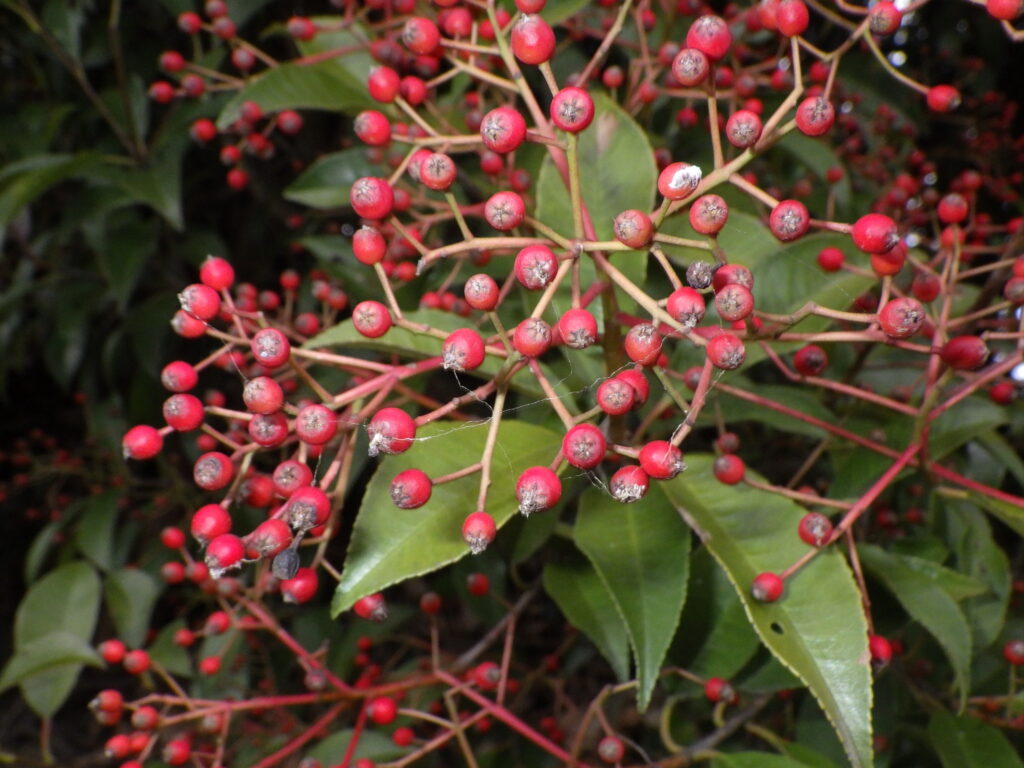
Photinia glabra, also known as Japanese photinia, is distributed in Honshu (west of the Tokai region), Shikoku, and Kyushu in Japan; southern China; and Southeast Asia. It is an evergreen small tree to shrub that grows in dry forests and ridges in hilly and mountainous areas. It is cultivated as an ornamental plant in horticulture.
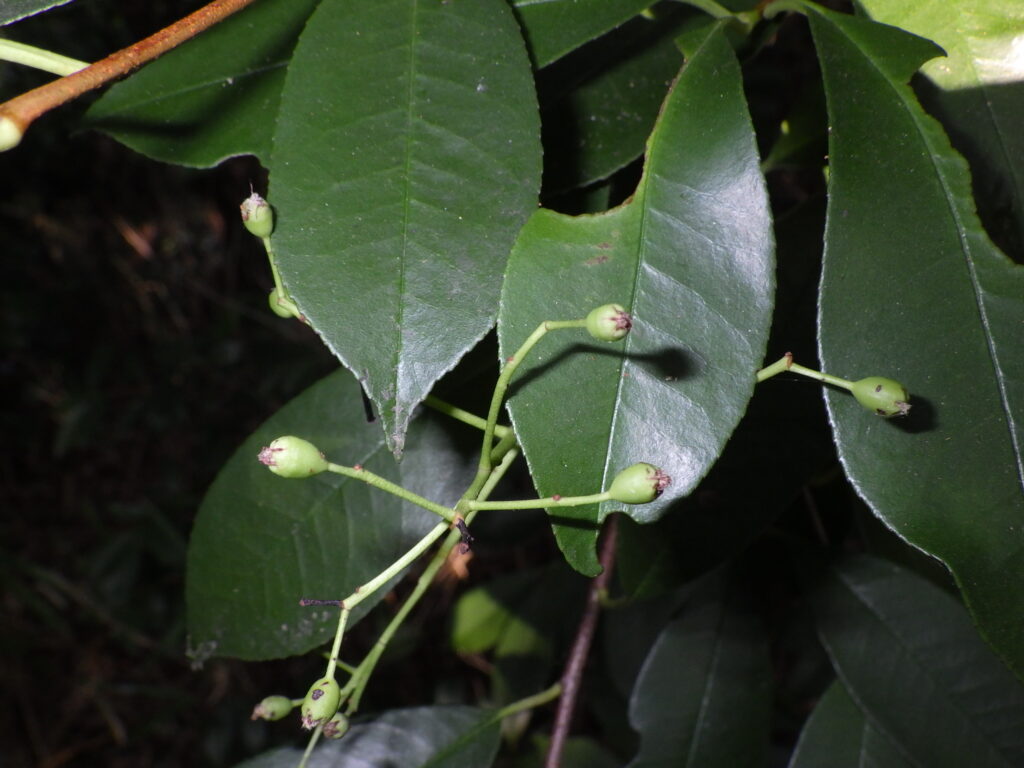
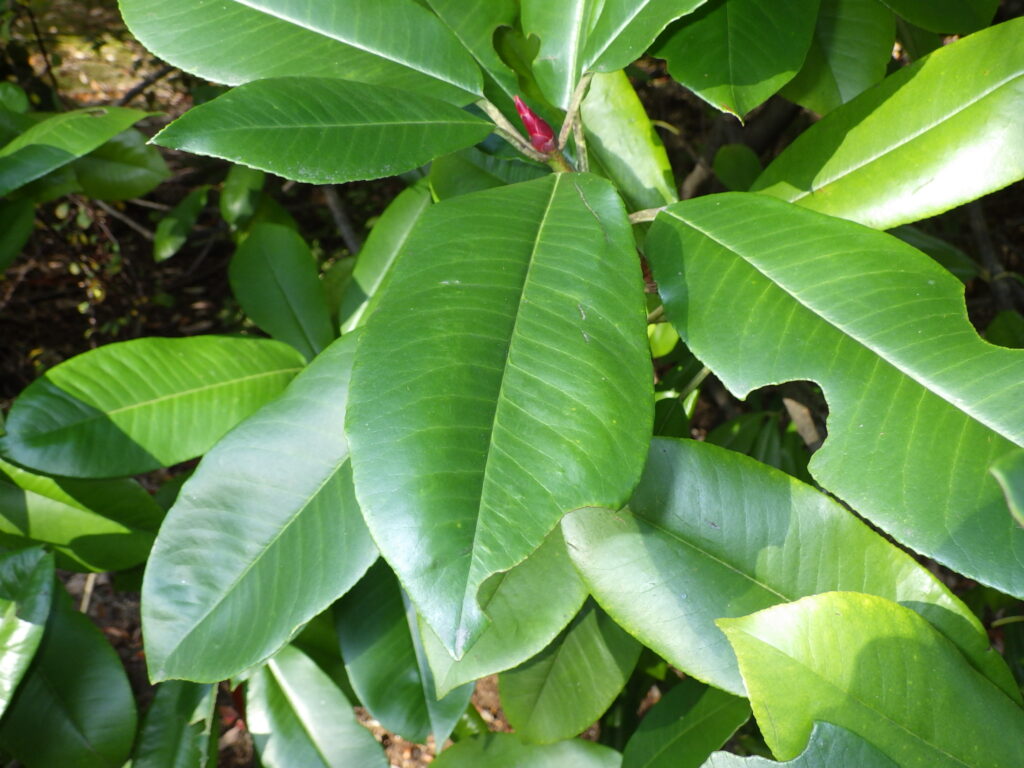
Photinia serratifolia, also known as the large-leaved photinia, is a small tree that grows in coastal forests and is distributed in Ehime Prefecture and the Amami Islands in Japan, as well as in southeastern China.
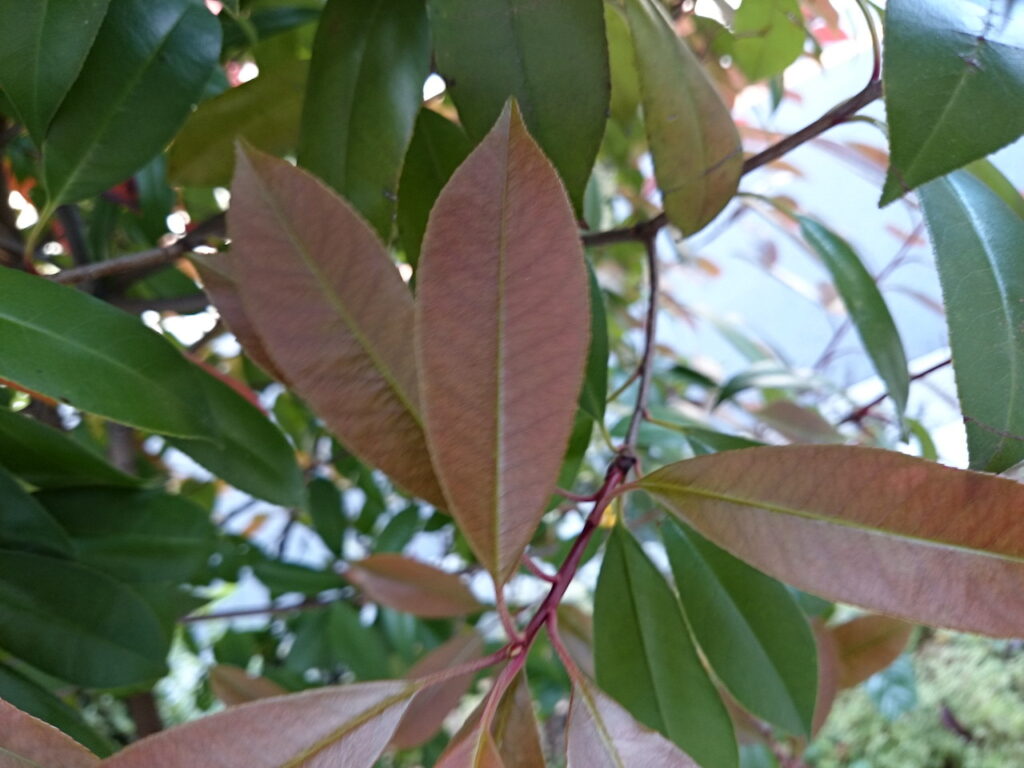
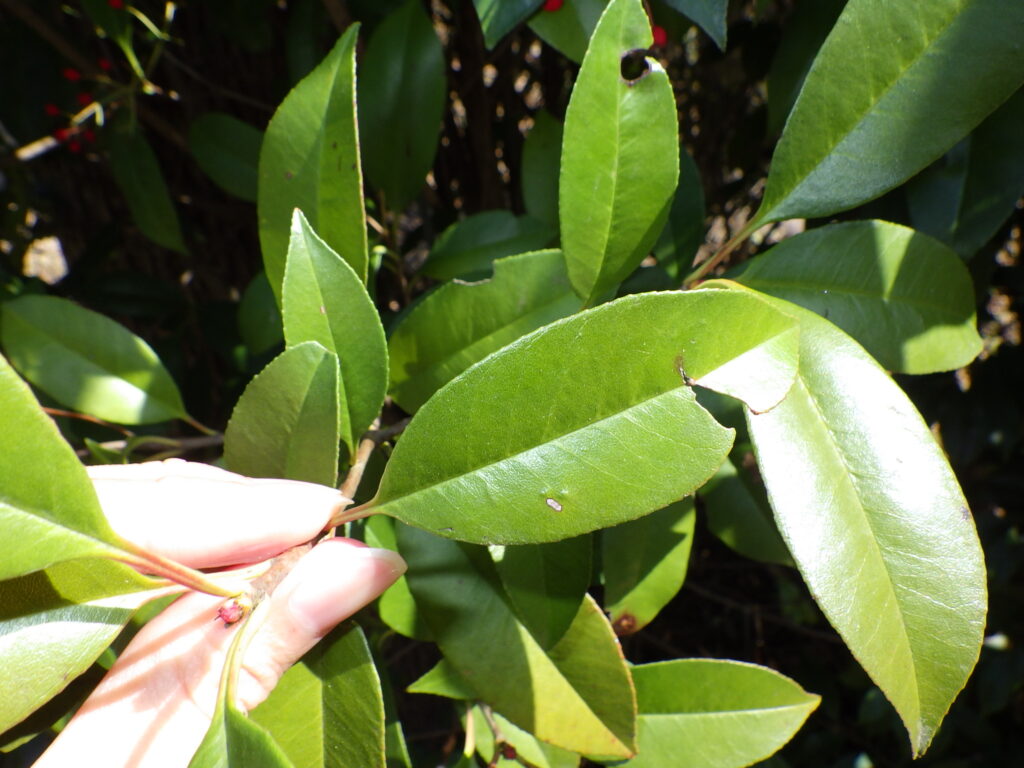
Photinia x fraseri 'Red Robin' is a horticultural hybrid of Photinia serrulata and Photinia glabra. Some argue that the name "Red Robin" doesn't strictly refer to a hybrid, but rather to a variety of Photinia serrulata with particularly red young leaves.
Both belong to the genus Photinia in the rose family, and are very familiar trees that are native to Japan and are frequently cultivated as privacy screens in gardens. I think a major reason for their popularity is that their young leaves turn red, resembling autumn foliage.
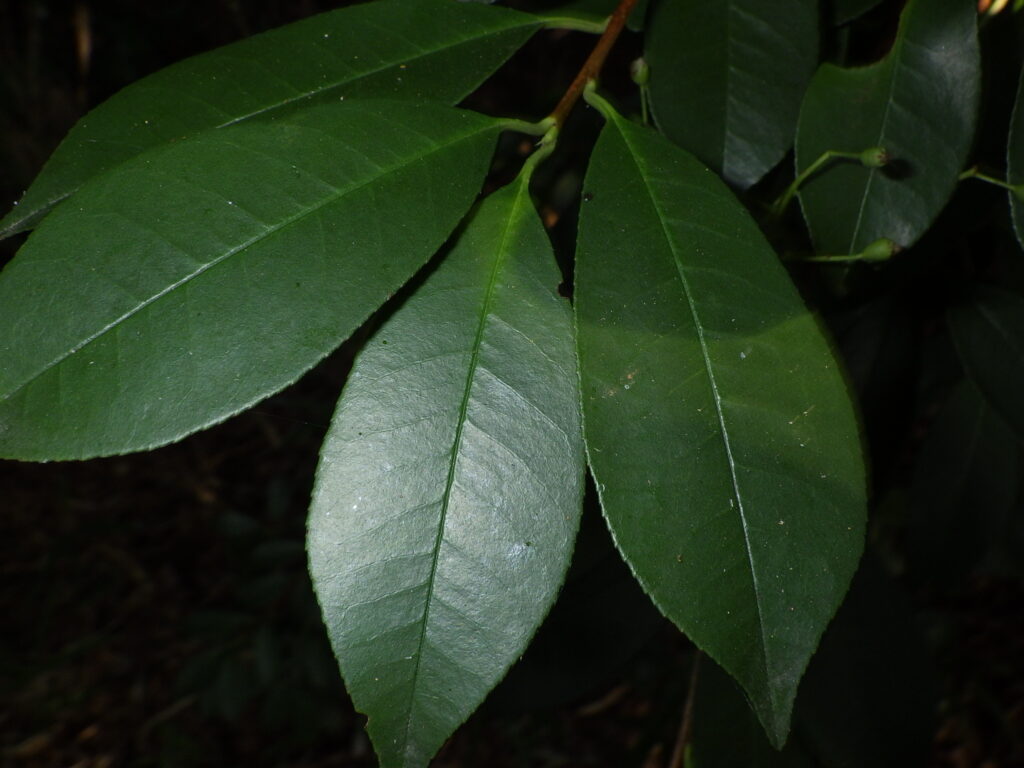
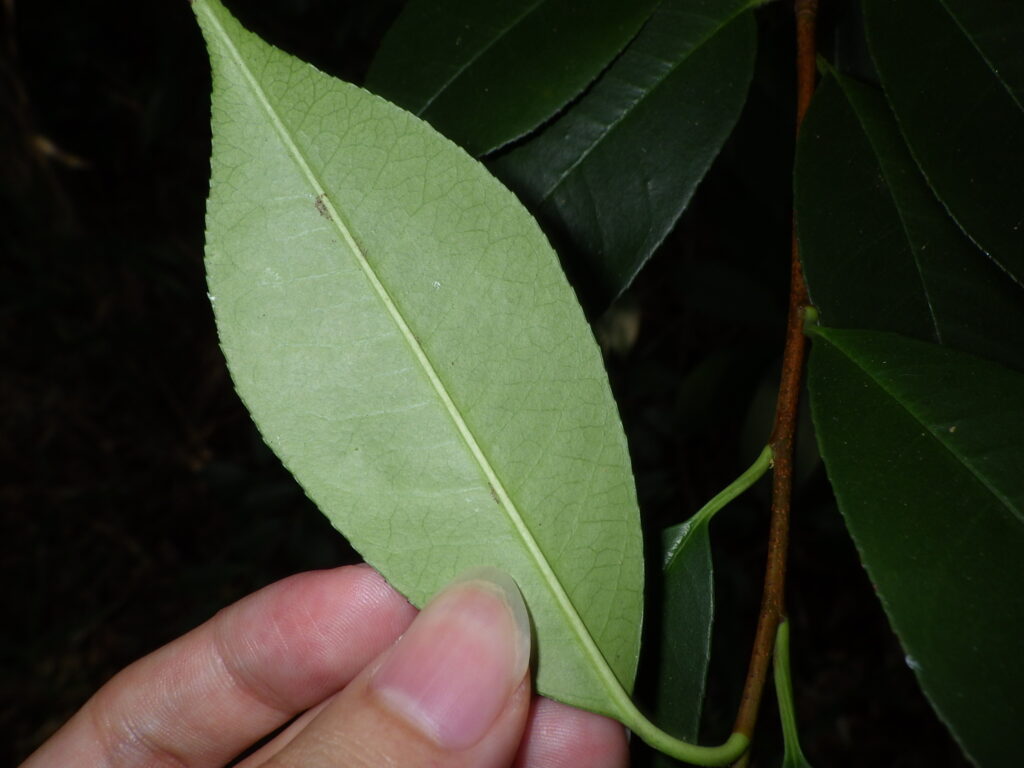
Morphologically, the leaves have very fine serrations, and the veins are small and rarely protrude in a three-dimensional direction, giving them a flat appearance.
However, all three species share this characteristic, so some people may not know how to distinguish between them.
What are the differences between Photinia serrulata, Photinia glabra, and Photinia glabra?
Of these three species, the difference between Photinia glabra and Photinia serrulata is clear (Hayashi, 2019).
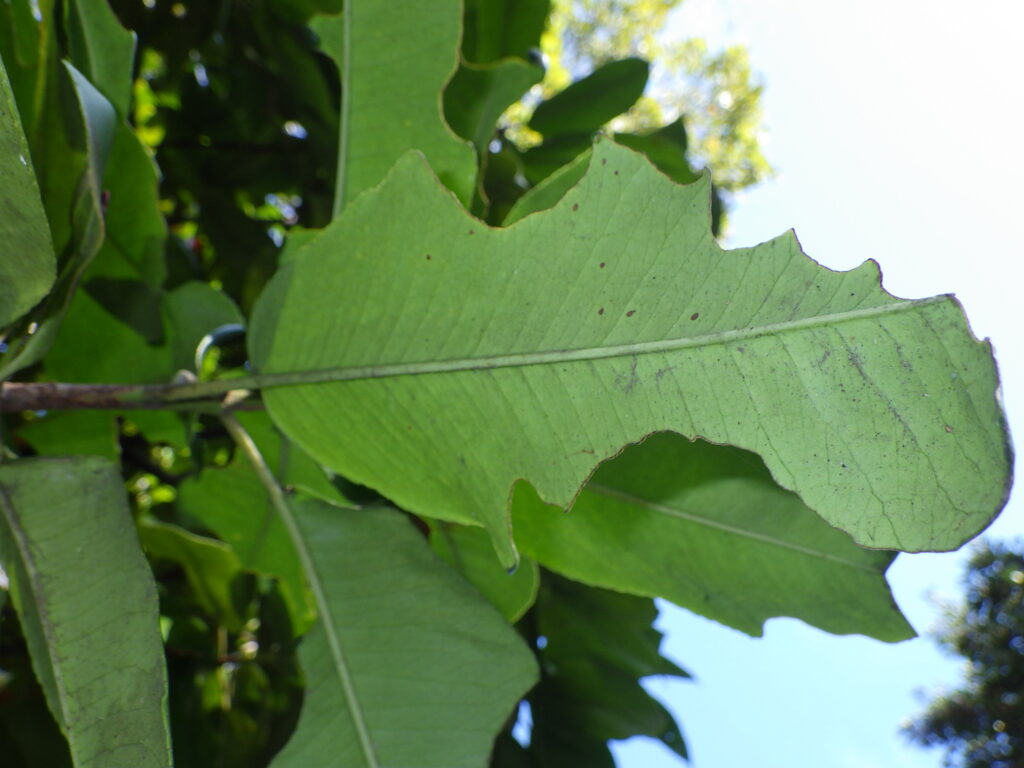
First, as the Japanese names suggest, the main difference between Photinia glabra and Photinia serrulata is that Photinia glabra has a leaf blade length of 6-12 cm and a petiole length of 1-2 cm, while Photinia serrulata has a leaf blade length of 10-20 cm and a petiole length of 1.5-4 cm.
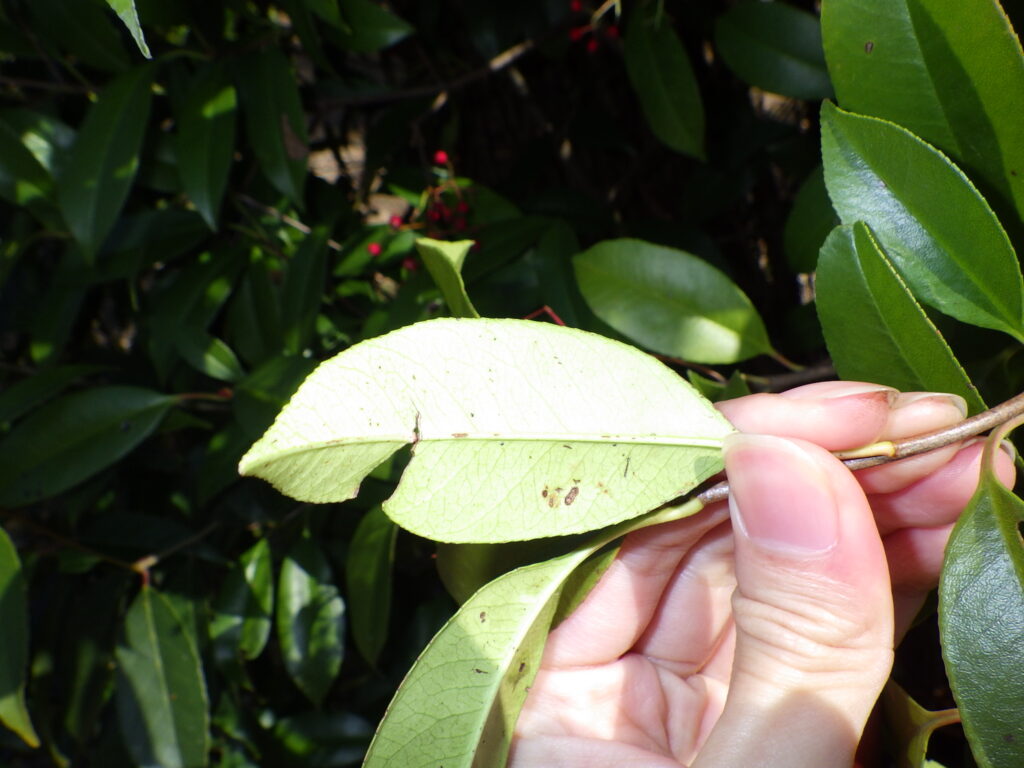
A further crucial difference is that in Photinia glabra, the fine serrations on the leaf blade extend to the petiole, whereas in Photinia serrulata, the petiole lacks these serrations. This is a very clear difference.
The problem lies with the Red Robin. Because it is a hybrid of Photinia serrulata and Photinia glabra, it is difficult to distinguish and is often confused with Photinia serrulata.
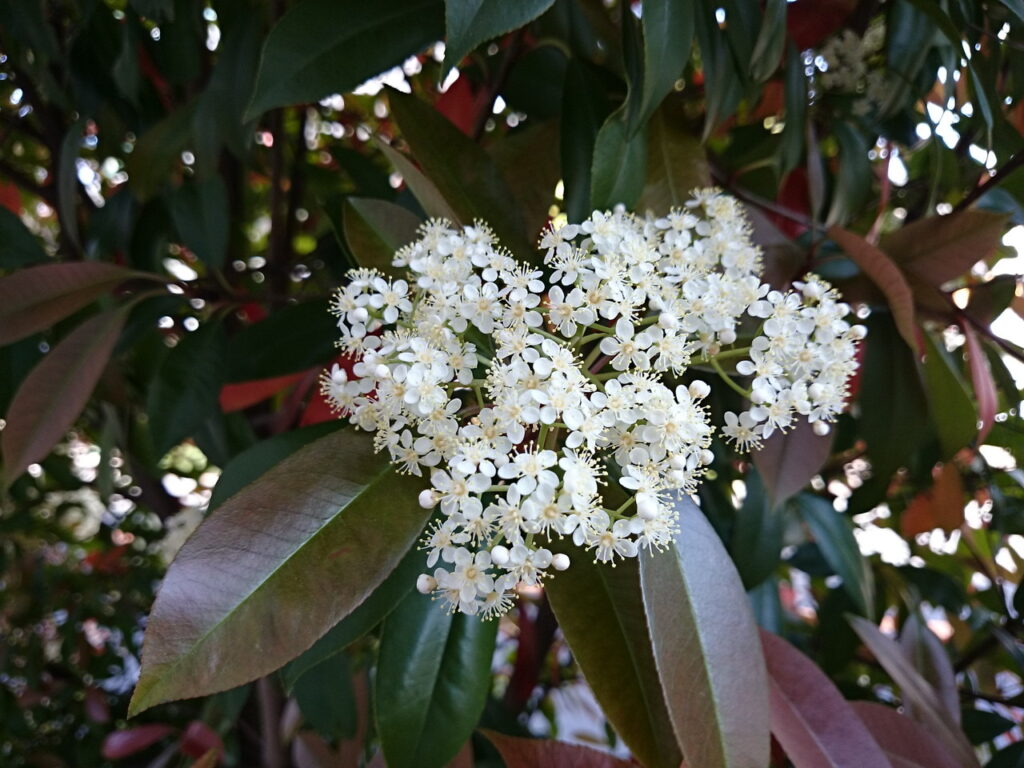
First, as the name suggests, its young leaves turn particularly bright red, which distinguishes it from Photinia glabra and Photinia serrulata. While these two species also turn red, it's usually not as intense as Red Robin.
However, since the leaves turn green as they mature, it can sometimes be difficult to distinguish them.
Another point is that Red Robin has some characteristics of Photinia glabra, so unlike Photinia glabra, its petioles do not have serrations.
Therefore, if the leaves are small but the petioles lack serrations, it is highly likely to be a Red Robin. Keep in mind that Red Robin is a cultivated hybrid, so wild individuals are not usually found.
References
Hayashi, Masayuki. 2019. Tree Leaves: Expanded and Revised Edition - Identifying 1300 Species Through Real-Life Scans. Yama-kei Publishers, Tokyo. 824pp. ISBN: 9784635070447

