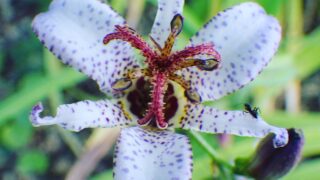
Liliaceae

Sponsored Link
plant

What are the differences between Lilium longiflorum, Lilium longiflorum, and Lilium formosanum? We'll explain how to distinguish between similar species! What are the structures of their flowers and fruits?

Lilium longiflorum, Lilium longiflorum, and Lilium formosanum are all members of the Liliaceae family, genus Lilium, and are three species that could be called "The Lily" due to their relatively simple appearance and pure white flowers. However, these three species are extremely often confused. This is understandable, as researchers and research institutions handle them differently...
Seed Plant Encyclopedia

[Seed Plant Encyclopedia #086] What are the species of the Amaryllidaceae family? Photo list

The Amaryllidaceae family typically consists of perennial herbs with bulbs and basal leaves. The flowers are bisexual and radially or bilaterally symmetrical. They are borne in terminal umbels or singly on the flower stalk, with an involucre at the base of the inflorescence. They have three outer perianth segments and three inner perianth segments, and some also have a corona...
Seed Plant Encyclopedia

[Seed Plant Encyclopedia #073] What are the species of the Liliaceae family? Photo list

Liliaceae are perennial herbs. They have bulbs or rhizomes. Leaves are alternate, opposite, or whorled, sometimes clustered at the base of the stem. Flowers are solitary at the stem tip or leaf axils, or borne in diverse racemes or umbels. They bear bisexual flowers. The perianth segments are separate, with outer and inner perianth segments...
plant

What are the differences between *Tricyrtis macropoda*, *Tricyrtis hirsuta*, *Tricyrtis macropoda*, and *Tricyrtis taiwanensis*? We explain how to distinguish between similar species! The fountain-like flowers have evolved to perfectly fit only the bumblebee!?

Tricyrtis macropoda, Tricyrtis japonica, Tricyrtis macropoda var. japonica, and Tricyrtis taiwanensis are popular species that grow in Japanese forests and are also widely cultivated for ornamental purposes. However, because there are few differences in their leaves and their flowers are similar, misidentification is frequent even when using Google Image Search. These differences...
Sponsored Link