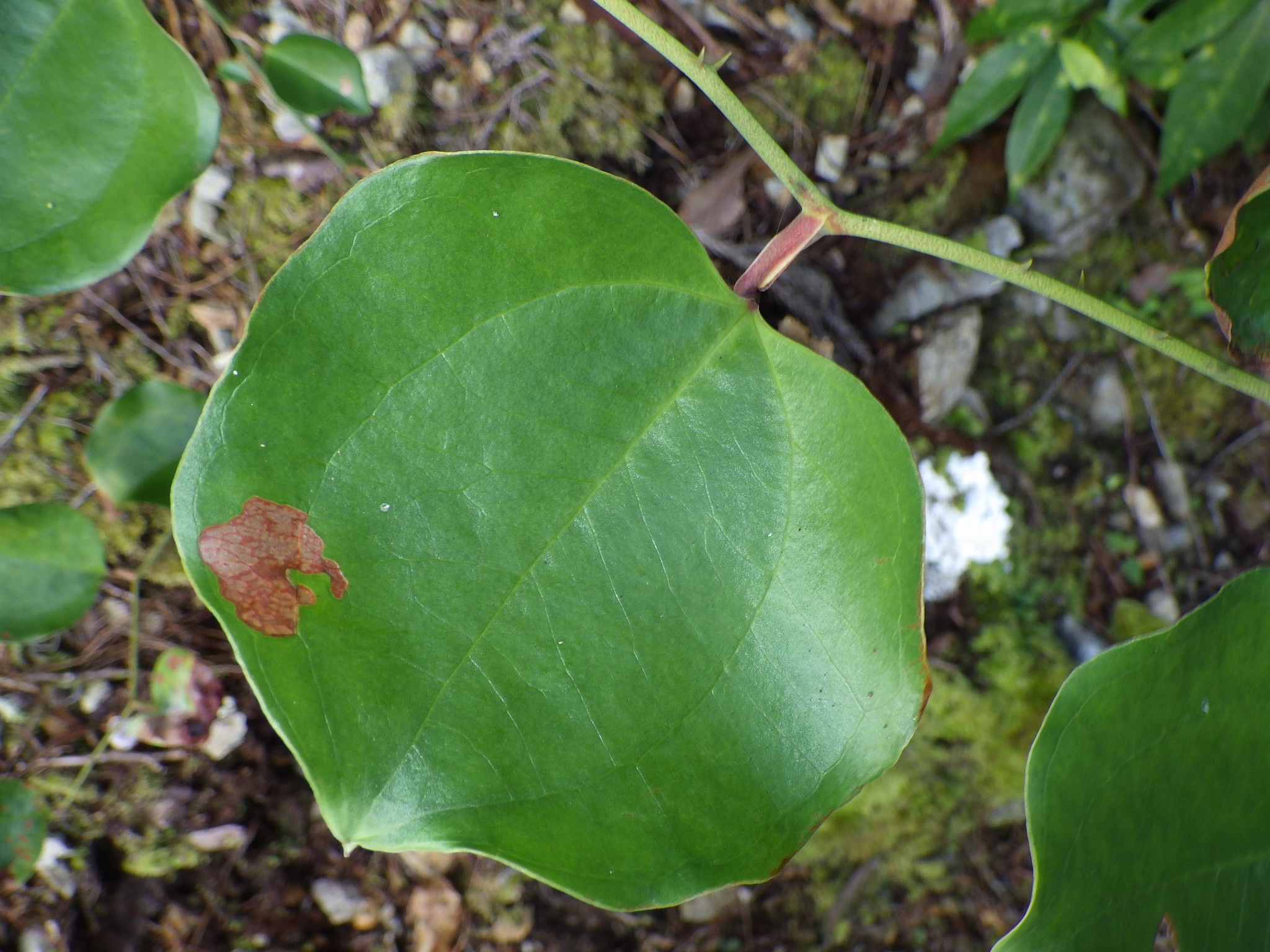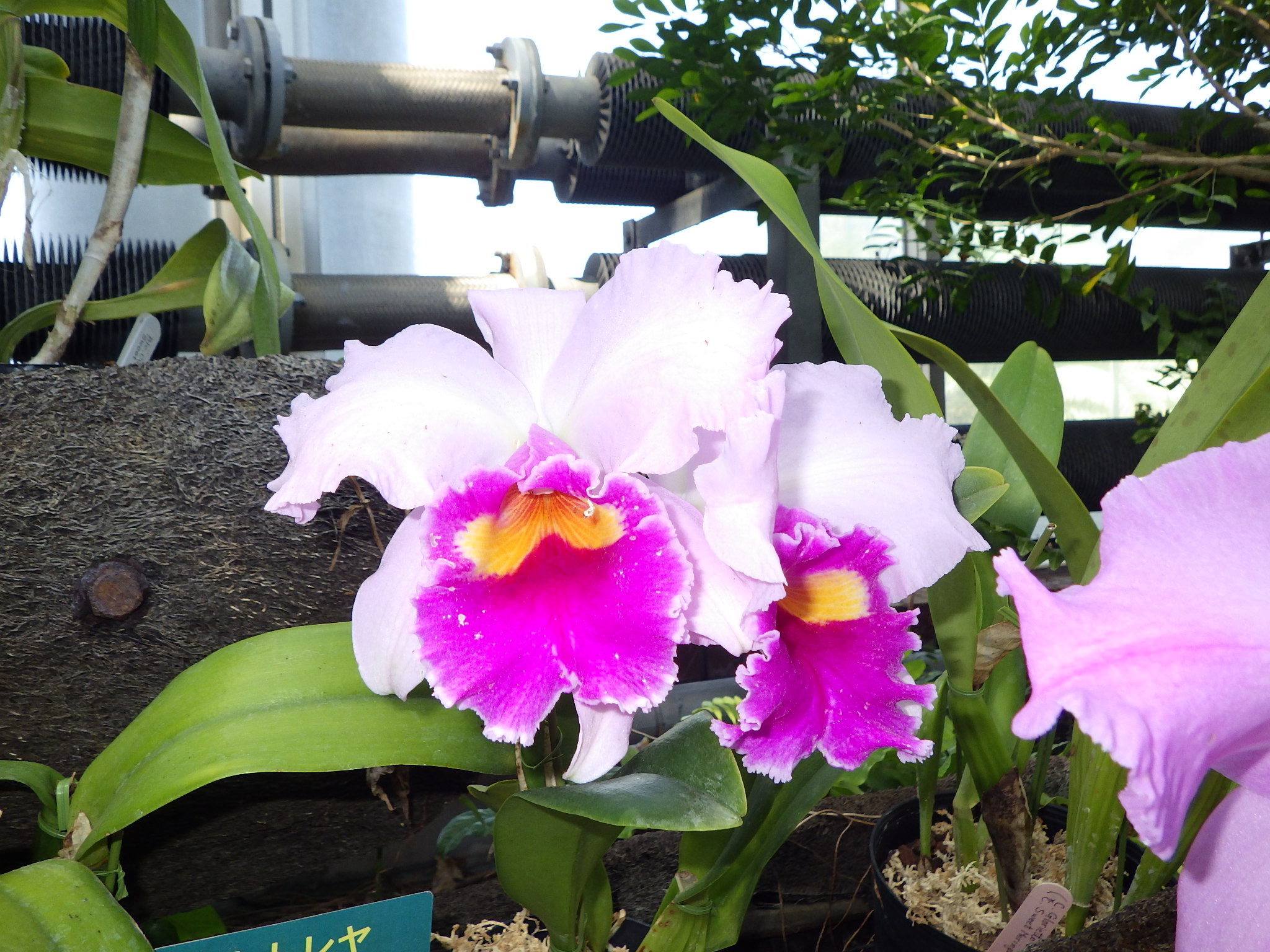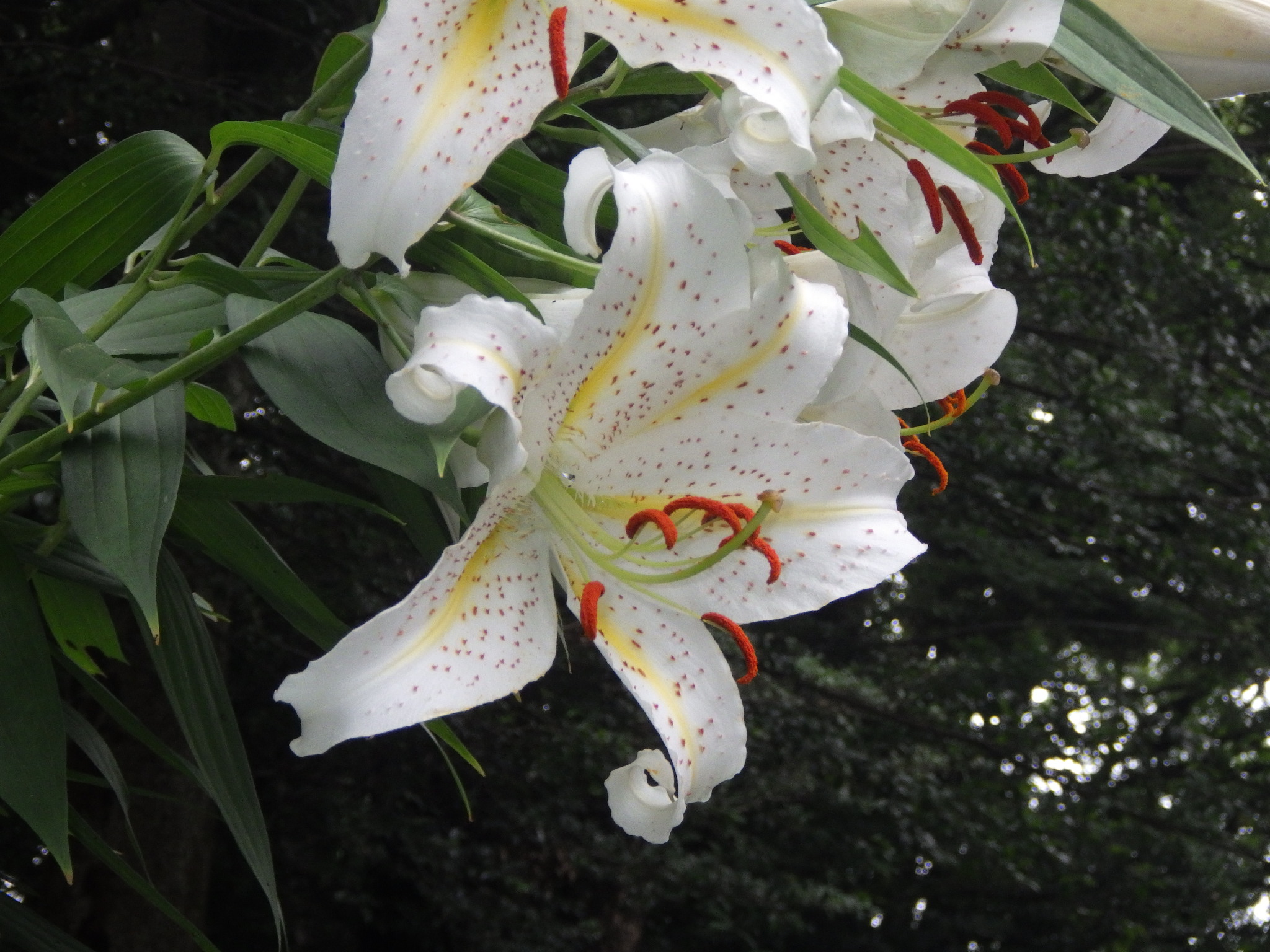
Liliaceae are perennial herbs. They have bulbs or rhizomes. Leaves are alternate, opposite, or whorled, and sometimes clustered at the base of the stem. Flowers are solitary at the stem apex or leaf axils, or borne in diverse racemes or umbels. They bear bisexual flowers. The perianth segments are free, with three outer and three inner perianth segments, some identical and some heteromorphic. The ovary is superior. Some species produce berries, while others produce capsules. There are 16 genera and approximately 650 species worldwide, mostly found in the temperate regions of the Northern Hemisphere. There are 10 genera and 46 species in Japan. Before the APG classification, it was a large family containing many genera, but it was dismantled because these were not groups of closely related plants, but rather groups that had gathered together primitive characteristics of monocots.
This article provides a comprehensive, illustrated guide to plants belonging to the lily family.
The basic information is based on Tsukamoto (1994) and the Kanagawa Prefectural Flora Survey Association (2018). Photographs are replaced as better ones become available. While the identifications are made by the author, please note that they may be changed without notice if misidentifications are found.
- No.0326 Fritillaria thunbergii (Amigasayuri)
- No. 0330 Black Flea (Fritillaria camschatcensis)
- No.0333 Lilium lancifolium
- No. 0337 Lilium maculatum
- No.0338 Lilium concolor var. partheneion
- No. 0340 Sasayuri (Lilium japonicum)
- No. 0341 Lilium speciosum (Tiger Lily)
- No. 0342 White Lily (Lilium speciosum f. kratzeri)
- No.0343 Lilium auratum
- No.0345.1 Lilium x formolongo
- No.0346.a Casablanca Lilium 'Casa Blanca'‘
- No.0350 Tulipa gesneriana
- No.0350.a Tulipa saxatilis
- No. 0353 Erythronium japonicum
- No. 0355 Tricyrtis macropoda
- No. 0357 Cuckoo (Tricyrtis hirta)
- No. 0358 Tricyrtis flava
- No.0358.a Tricyrtis 'Amanogawa'‘
- No.0360.a Tricyrtis formosana (Taiwanese Toad Lily)
- No. 0361 Tricyrtis macranthopsis
- References
No.0326 Fritillaria thunbergii (Amigasayuri)
This perennial plant (Shirataka, 2019) grows to a height of 30-80 cm. The leaves are about 10 cm long, arranged in whorls of 3-5, linear-lanceolate and sessile, with the upper leaves curving at the tip in a hook shape. Several flowers bloom downwards at the top of the stem, with six pale yellowish-green perianth segments, forming a bell-shaped flower about 3 cm in diameter, with a blackish-purple reticulate pattern on the inside. The stem and leaves wither in the summer. The Japanese name likens the shape of the flower to the "deep woven hat" worn by mendicant monks or the "woven hat" worn by princesses and pilgrims. The underground bulb consists of two shell-shaped scales facing each other, and the way the scales split open to reveal the bulb is likened to a mother holding her child, hence the name "Baimo" (shell mother). Also, because the two scales resemble chestnuts, it was formerly called "Haha-kuri" (mother chestnut). It is cultivated for ornamental purposes. The bulbs, after being peeled, washed with water, and having the outer corky layer discarded, are dried in the sun or coated with lime and then dried. These bulbs are called Fritillaria baicalensis and are used in traditional Chinese medicine prescriptions for purposes such as cough suppression, expectoration, and pus drainage.
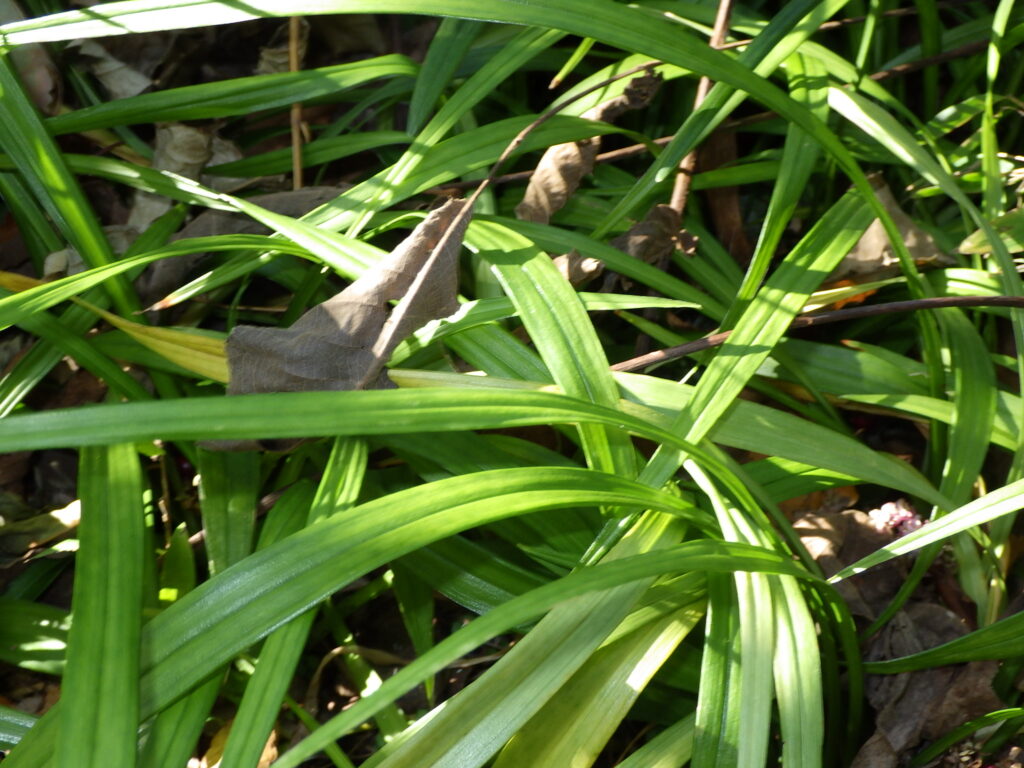
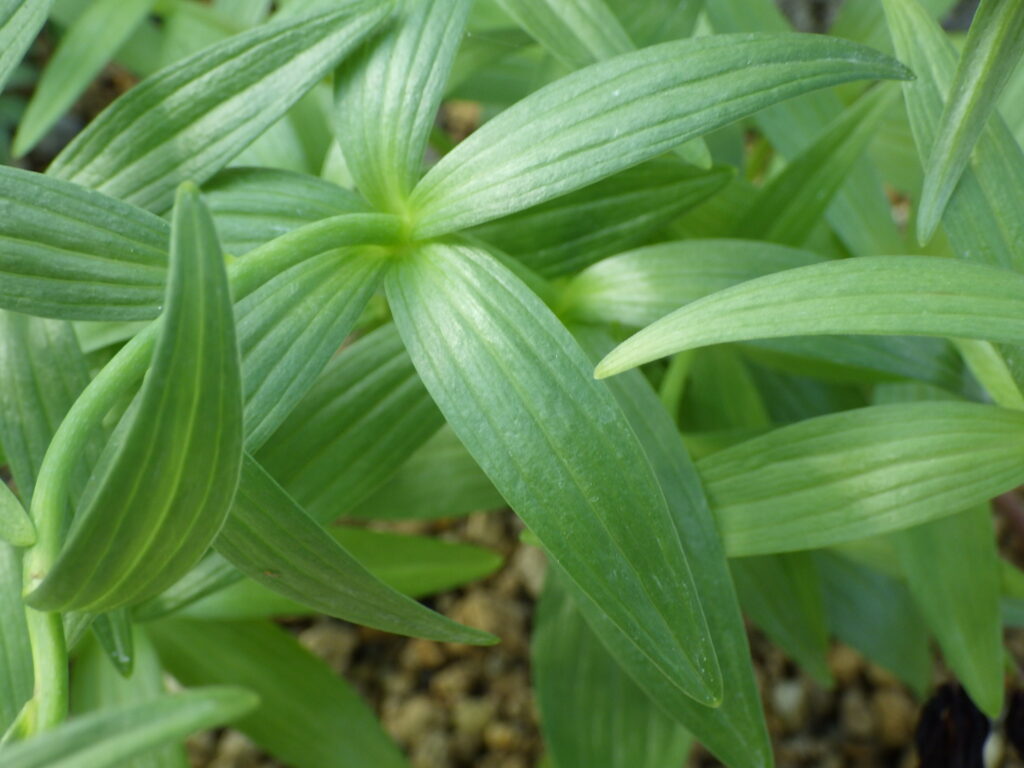
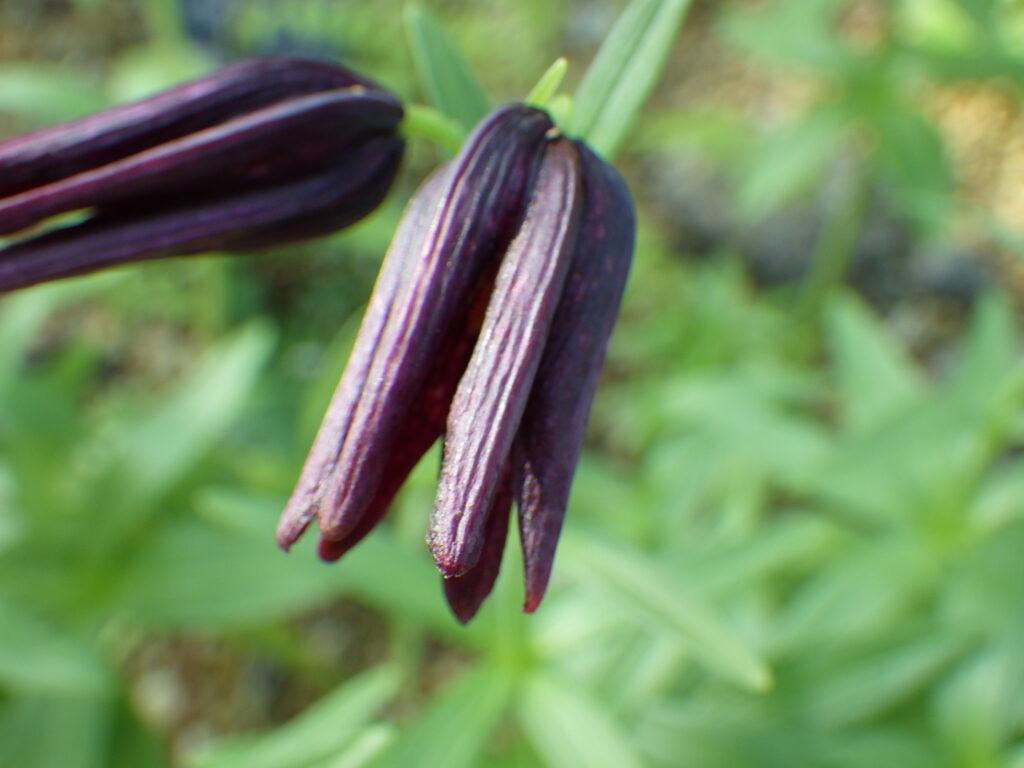
No. 0330 Black Flea (Fritillaria camschatcensis)
This is a perennial herb. The underground bulb consists of numerous scales. The stem is erect, reaching a height of 10-50 cm, with leaves arranged in whorls of 3-5 in several tiers. The leaves are lanceolate to oblong-lanceolate, 3-10 cm long, thick in texture, glossy on the surface, and lack a petiole at the base. It flowers from June to August. The flowers are bell-shaped, with one to several flowers borne at the tip of the stem, facing diagonally downwards. There are six perianth segments, elliptical, 25-30 mm long, dark purplish-brown or blackish-purple, with a reticulated pattern and glands at the base of the inner surface. There are six stamens, half the length of the perianth segments. The style is three-lobed from the base. The flowers have a foul odor to the human sense. It is distributed in central and northern Japan, Hokkaido, the Kuril Islands, Sakhalin Oblast, Kamchatka Peninsula, Ussuri region of the Russian Federation, and northwestern North America. It grows in grasslands in alpine zones.
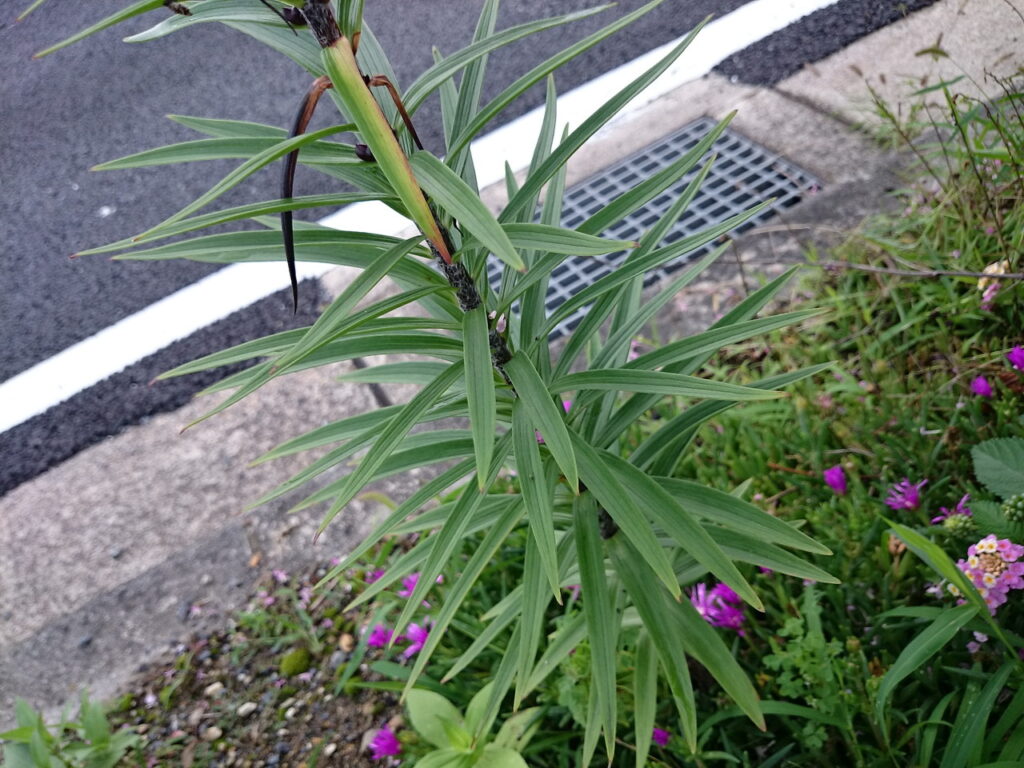
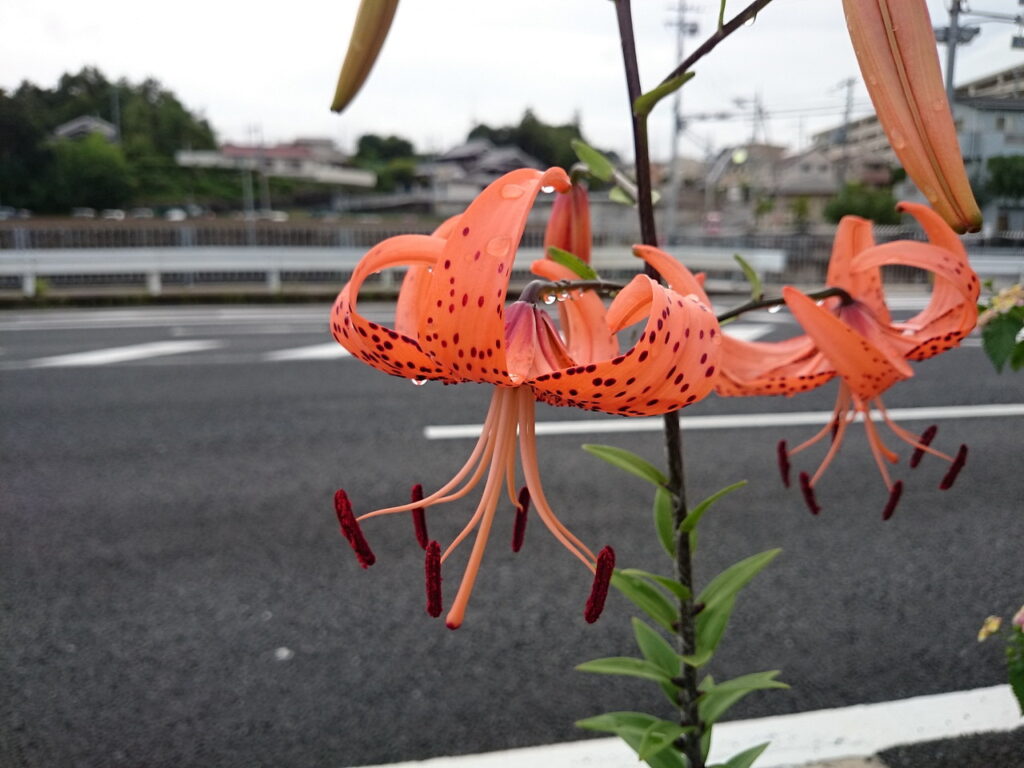
No.0333 Lilium lancifolium
The tiger lily is a perennial herb, growing to a height of 1-2 meters. Its leaves are lanceolate, numerous, arranged spirally on the stem, 1.5-2 cm wide and 5-18 cm long, with bulbils in the leaf axils. It flowers from July to August, with reddish-orange flowers and dark spots. This species is triploid, so it does not produce seeds and reproduces entirely through bulbils. It is a horticultural plant native to China. It is cultivated in gardens and often escapes into roadsides and vacant lots, growing in clusters.
No. 0337 Lilium maculatum
Also known as Iwatoyuri, it is a perennial herb, growing to a height of 20-80 cm. The leaves are lanceolate or linear-lanceolate, 4-10 cm long and 1-2 cm wide, with a strong sheen. The flowers bloom in June and July, opening upwards with orange-red blossoms and gaps between the perianth segments. It is distributed in Honshu (north of the Chubu region) and grows on coastal rocks. While the broader definition of Lilium maculatum is distributed in Korea, China, and eastern Siberia, those found north of Hokkaido and on the continent are called Ezo-sukashiyuri var. dauricum and have many downy hairs on the flower stalks. Those with double flowers are called Yaeno-sukashiyuri f. plenum.
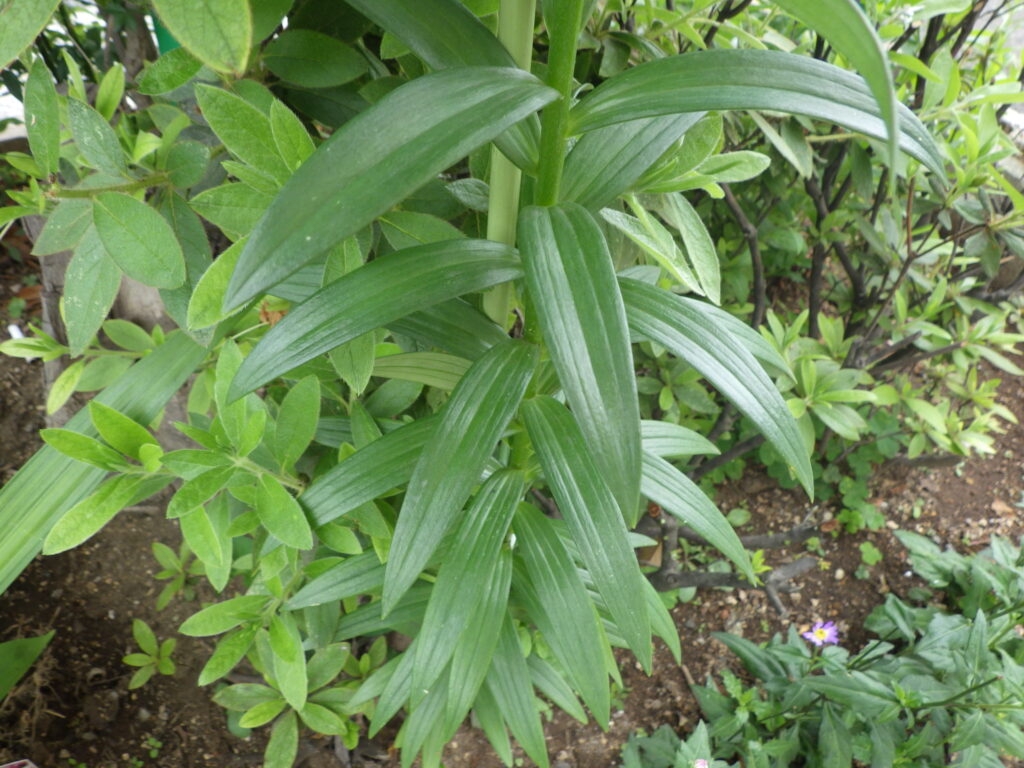
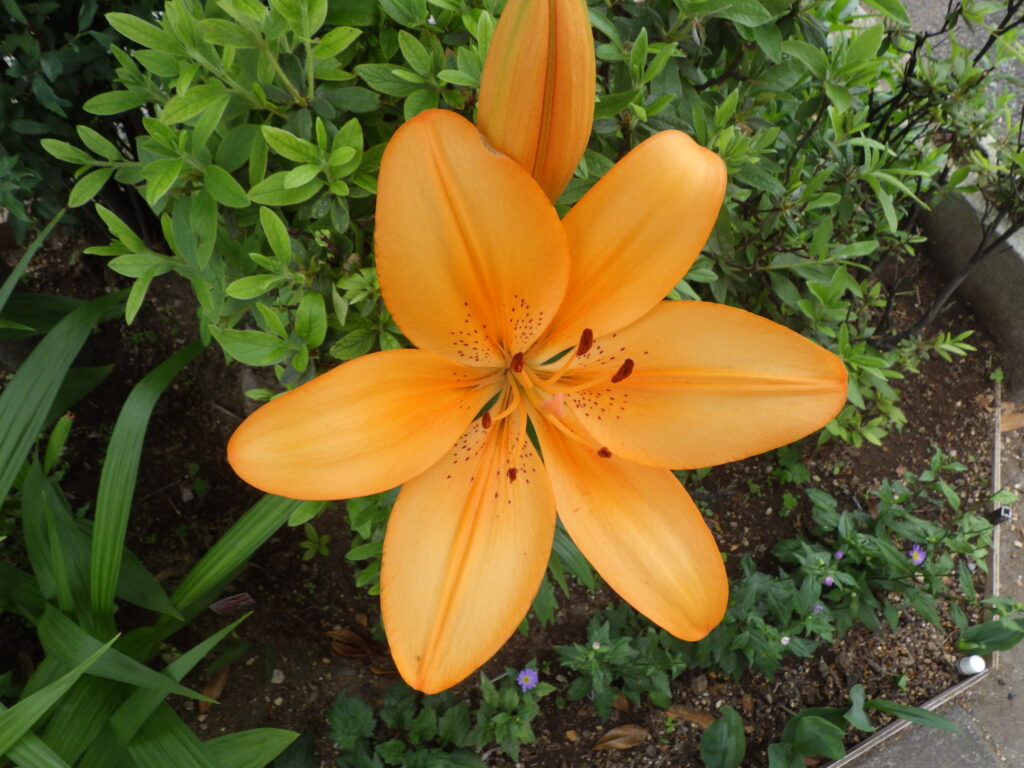
No.0338 Lilium concolor var. partheneion
This is a perennial herb. The bulb is small, white, and spherical. The stem grows to a height of 30-50 cm. The leaves are alternate, linear-lanceolate, about 5 cm long, and attached obliquely upwards. In summer, 2-3 flowers, 6-8 cm in diameter, bloom upwards at the tip of the stem. The perianth segments are vermilion with dark spots, spreading out in a star shape, and the tips curve outwards. It is distributed in Honshu (south of the southern Tohoku region), Shikoku, Kyushu, the Korean Peninsula, mainland China, and the Amur Islands. It grows in mountain grasslands and sparse forests. It is one of the continental relict plants (so-called Manchurian-Korean element plants), and is thought to have spread from the Korean Peninsula to northern Kyushu, the Chugoku region, and Shikoku during the last glacial period.
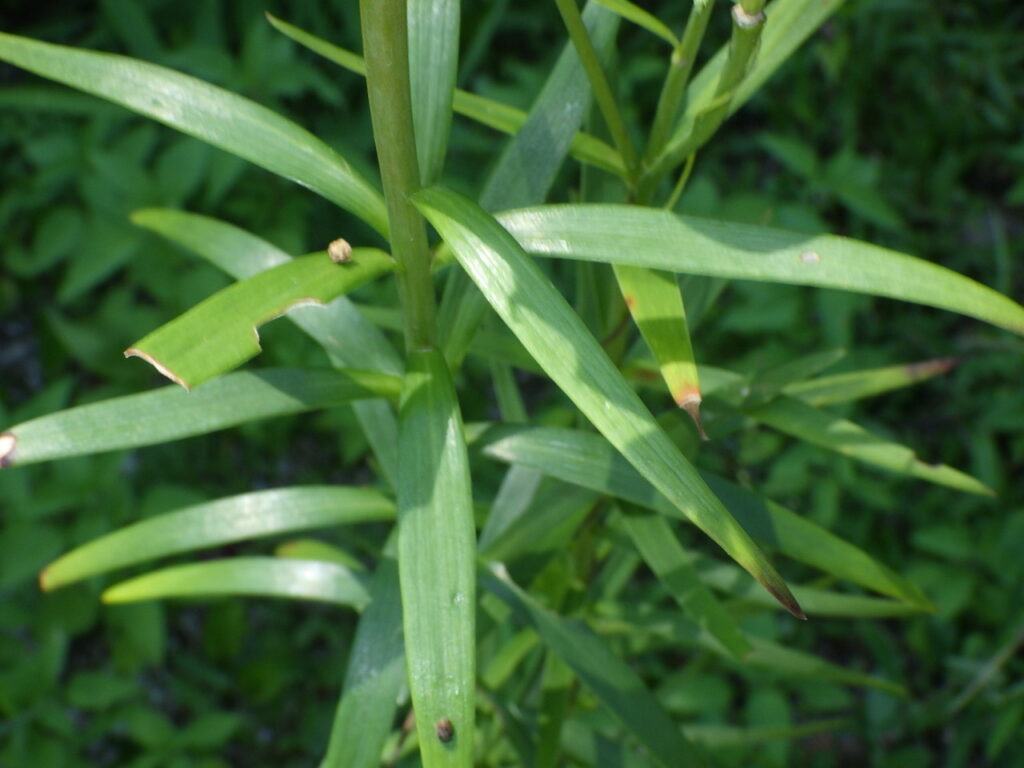
No. 0340 Sasayuri (Lilium japonicum)
This is a perennial herb. The bulb is broadly ovate, 2-4 cm in diameter, and the stem produces its own root between the bulb and the underground part of the stem. The above-ground part is 50-100 cm tall and glabrous. The leaves are lanceolate, sometimes slightly sickle-shaped, with an acute apex, 8-23 cm long, and the petioles are 4-10 mm long, glabrous on both sides, with a semicircular projection on the margin. It flowers from June to July. The flowers are 1-5 in number, blooming sideways, and are funnel-bell-shaped. The perianth segments are 10-15 cm long, the outer segments are lanceolate, and the inner segments are oblong, both narrowing at both ends, and the inner midrib is hairy. The fruit is obovate, 3.5-4.5 cm long. It grows wild in bamboo grass fields in mountainous areas from Shizuoka and Niigata prefectures westward to Kyushu.
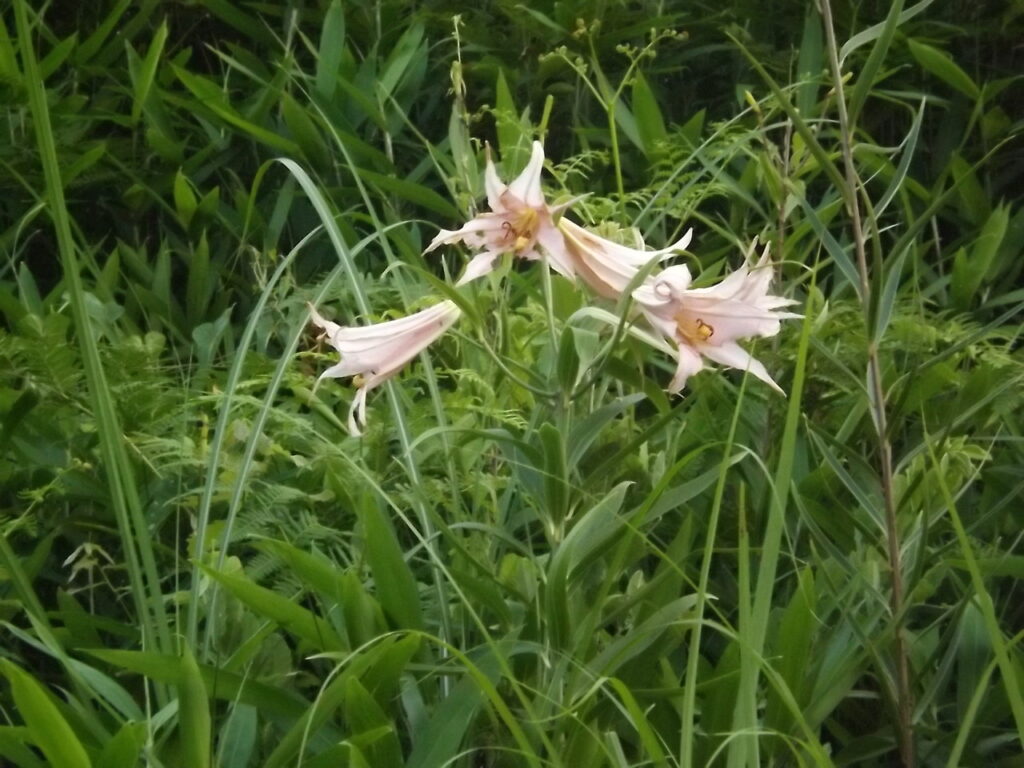
No. 0341 Lilium speciosum (Tiger Lily)
This is a perennial herb. Its Japanese name comes from the fact that its petals have a dappled pattern of spots. It grows to a height of 100-150 cm. Underground, it has a spherical, fleshy bulb 7-10 cm in diameter, which is yellowish-white or reddish-purple. The leaves are alternate, simple, ovate-lanceolate, 10-18 cm long, and entire. The upper surface of the leaves is glossy. The leaves have short petioles. It flowers from July to September. It produces racemes to panicles at the top of the stem, with several to 20 flowers blooming obliquely downwards. The perianth segments are strongly recurved, 8-10 cm long, pale reddish-white, and have dark red spots on the inner surface. The pollen is reddish-brown. The flowers are fragrant. The fruit is an oblong capsule 3-4 cm long. During the Edo period, Philipp Franz von Siebold brought the bulbs of the Lilium speciosum from Japan, making it the first Japanese lily to be known in Europe. In the Meiji era, boiled and dried bulbs were exported to China as an ingredient for confectionery. In the Taisho era, the bulbs were exported to the United States and used in floral arrangements for Christmas and Easter. After World War II, demand for ornamental lilies increased overseas, and during the period of rapid economic growth, breeding efforts were made to produce high-quality lilies. However, overseas demand declined after the 1970s. It grows wild in Kyushu (mainly from the Satsuma Peninsula to the coast of Nagasaki Prefecture), Shikoku (mountainous areas of Ehime and Tokushima Prefectures), northern Taiwan, and Jiangxi Province in China. It can be found on cliffs in mountainous areas. It has also been cultivated for ornamental purposes since ancient times. It is listed as Vulnerable (VU) by the Ministry of the Environment.
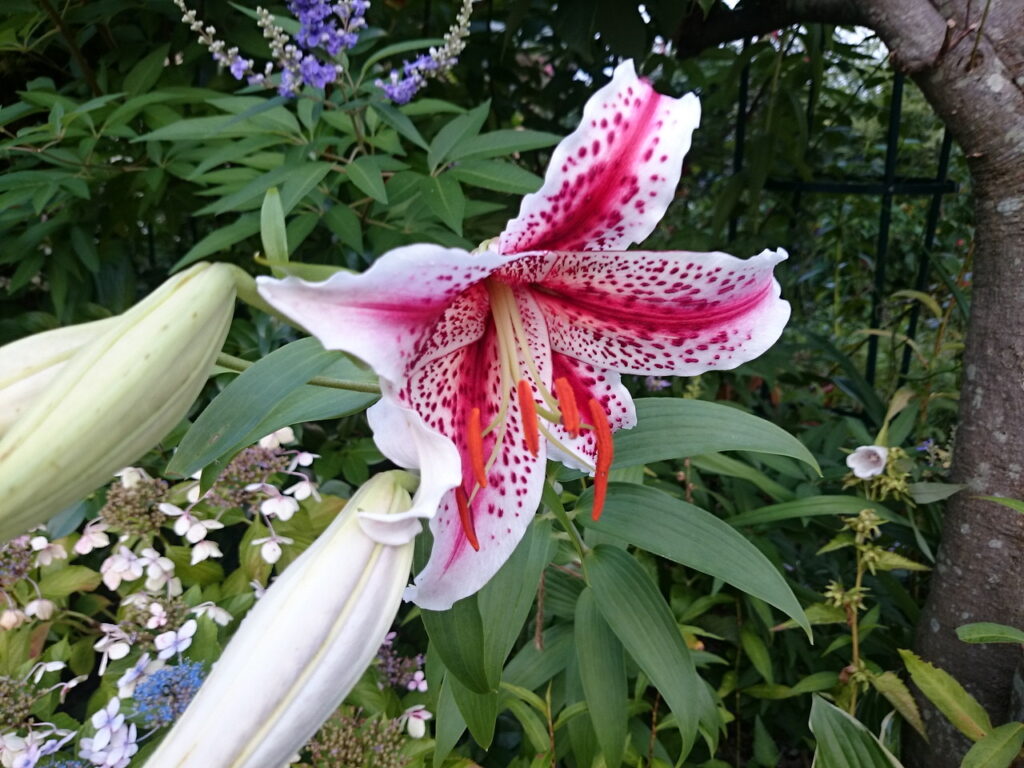
No. 0342 White Lily (Lilium speciosum f. kratzeri)
Also known as white lily, this variety of lily has pure white petals without red spots. It rarely grows wild in Kyushu, but is commonly cultivated in homes and other places.
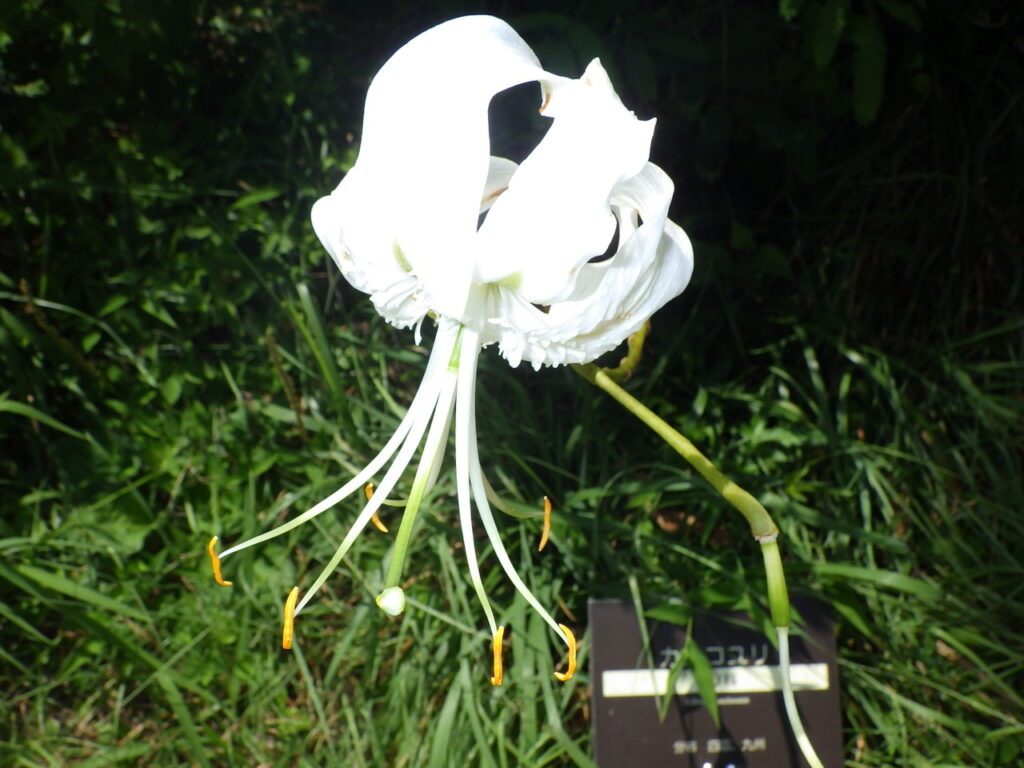
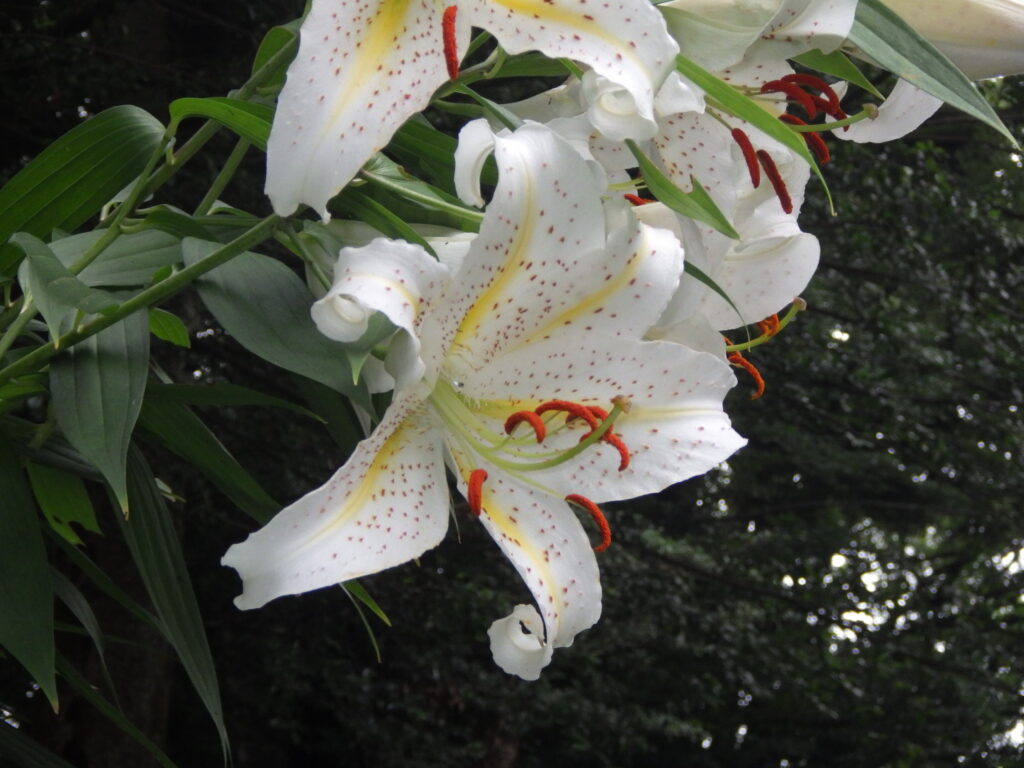
No.0343 Lilium auratum
This is a perennial herb, growing to a height of 1-1.5m. Its leaves are 1.5-3.5cm wide and 10-15cm long, with three prominent veins. The flowers bloom from mid-June to August and have a strong fragrance. The corolla is funnel-shaped, and the perianth segments are white with reddish-brown spots, curving significantly backward. Large plants can produce over a dozen flowers, while fasciated individuals can produce over 100, and these are often seen in cultivated varieties. It is a plant endemic to Japan, distributed throughout Honshu (east of the Kinki region). It grows in grasslands and forest edges from coastal areas to mountainous regions, and is often left uncut during grass cutting. It is also planted in parks and along roadsides in various locations. The Izu Islands variety, *Lilium platyphyllum *, is generally larger, with few or no reddish-brown spots on the perianth.
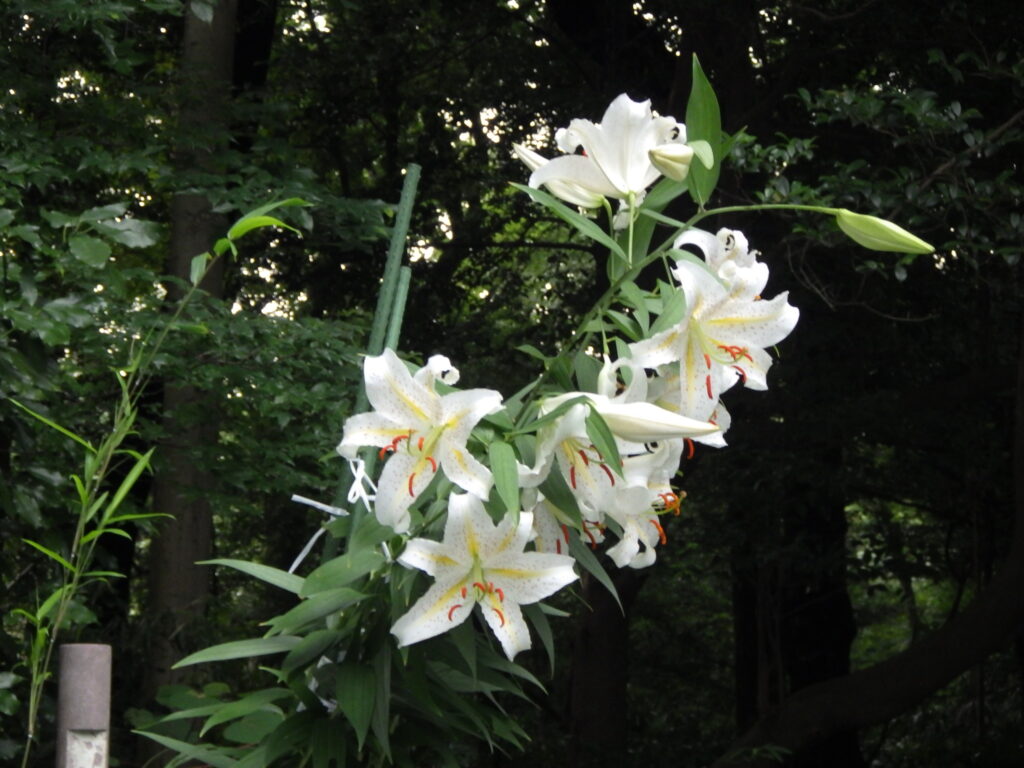
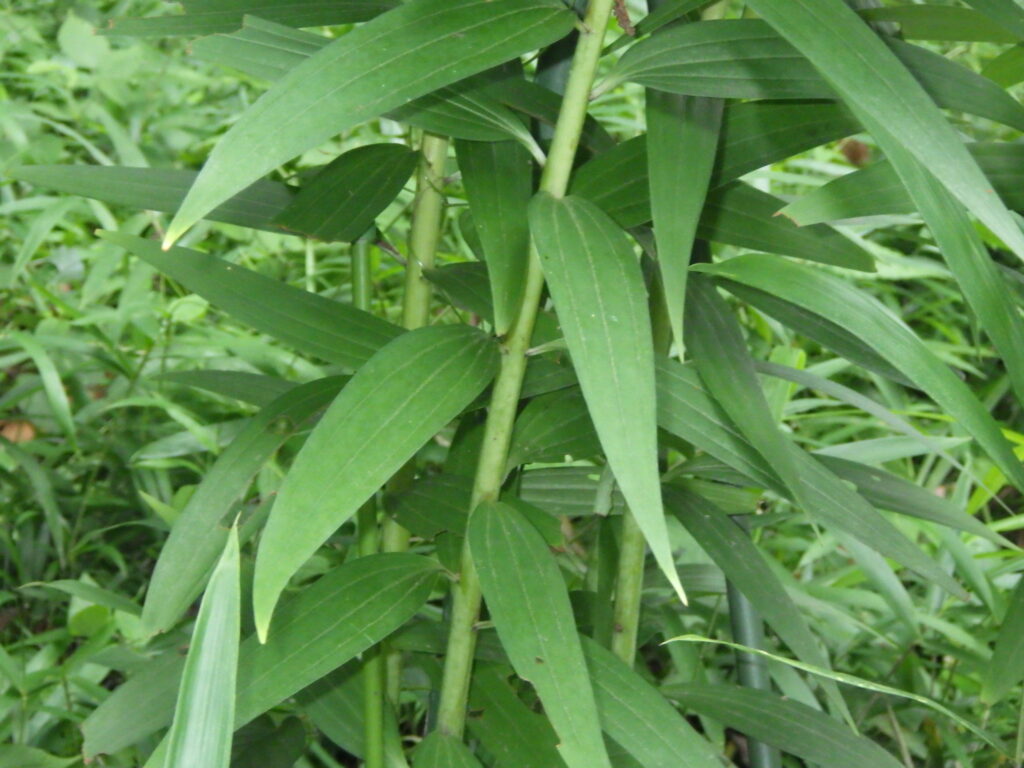
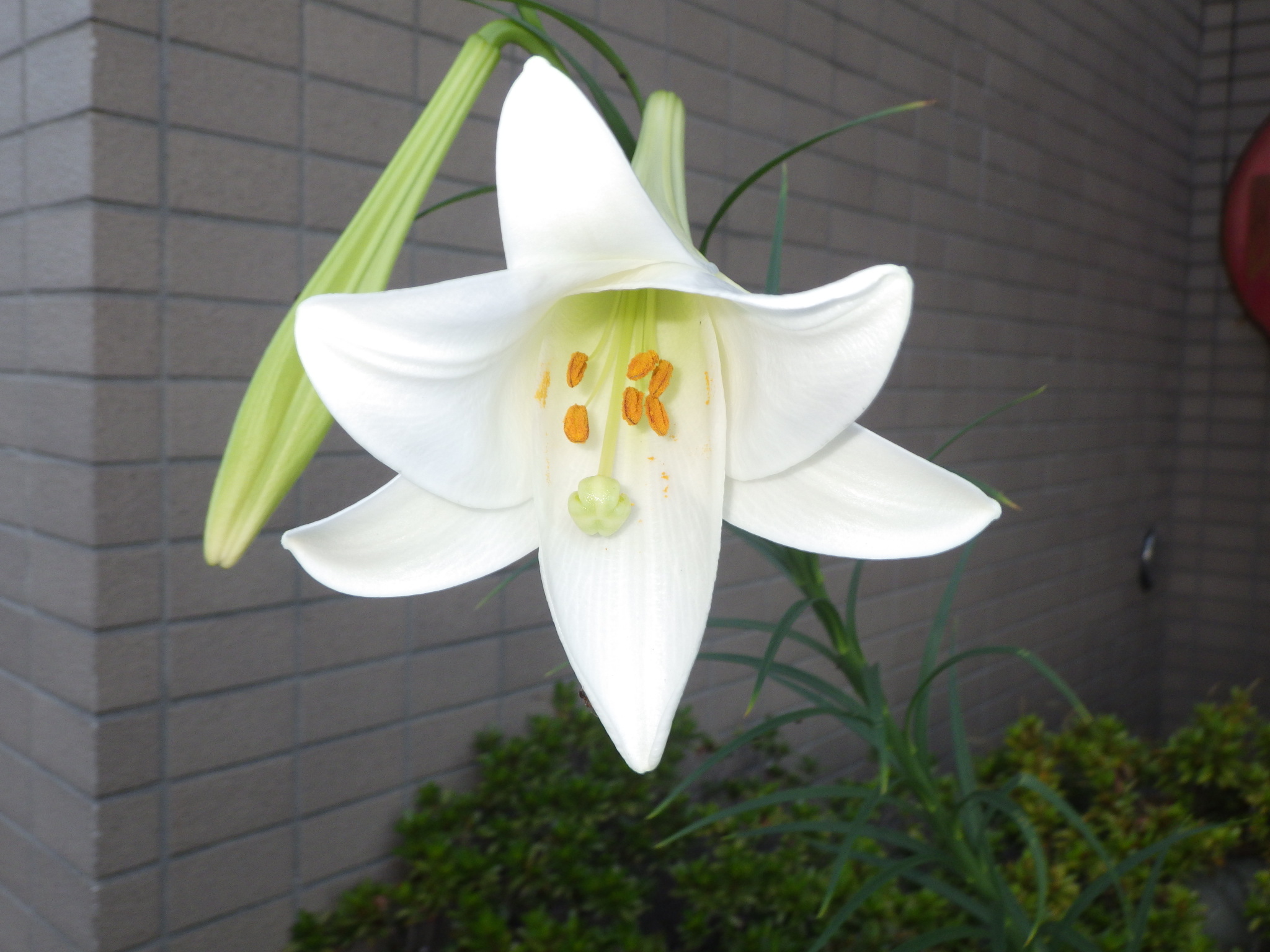
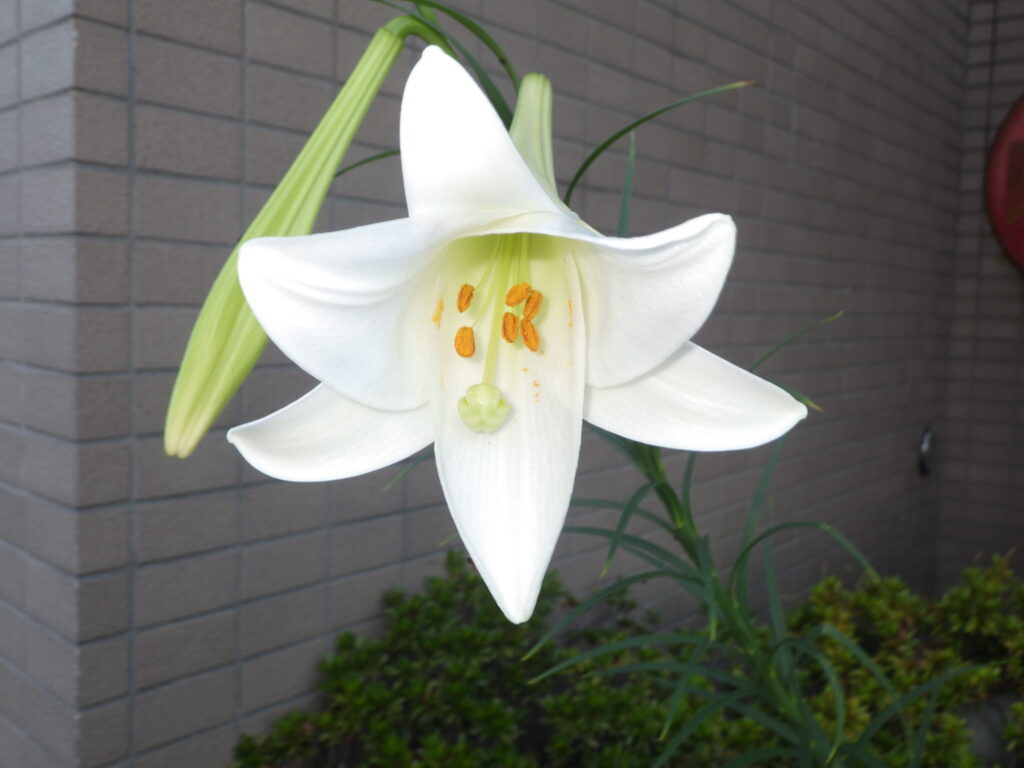
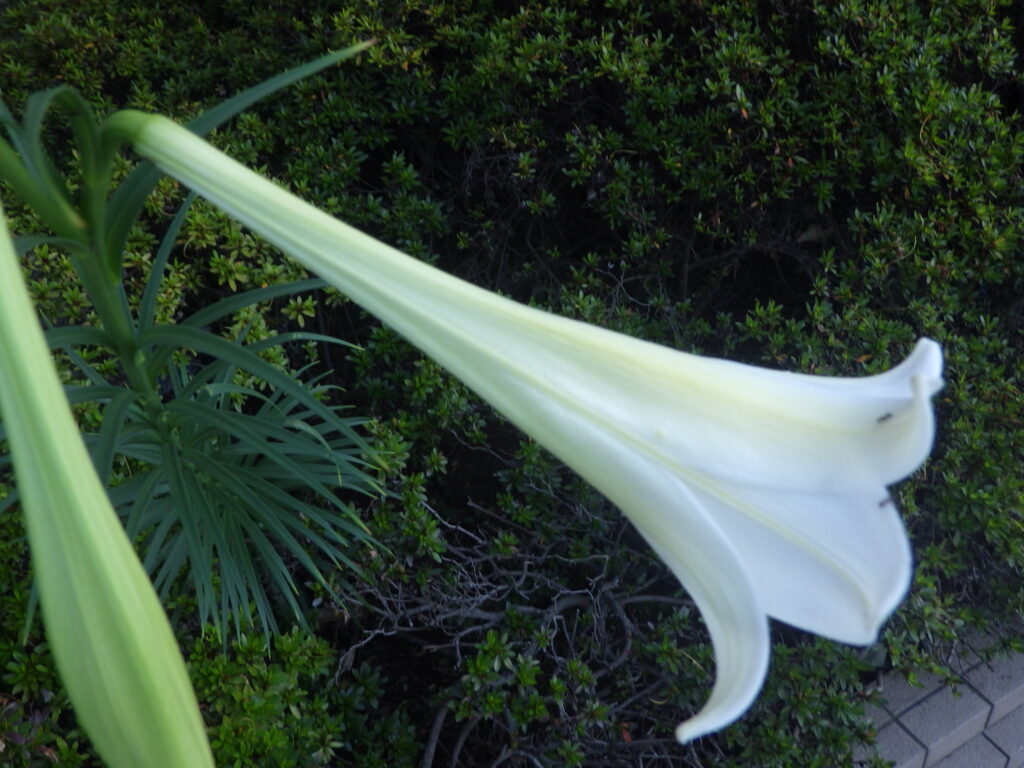
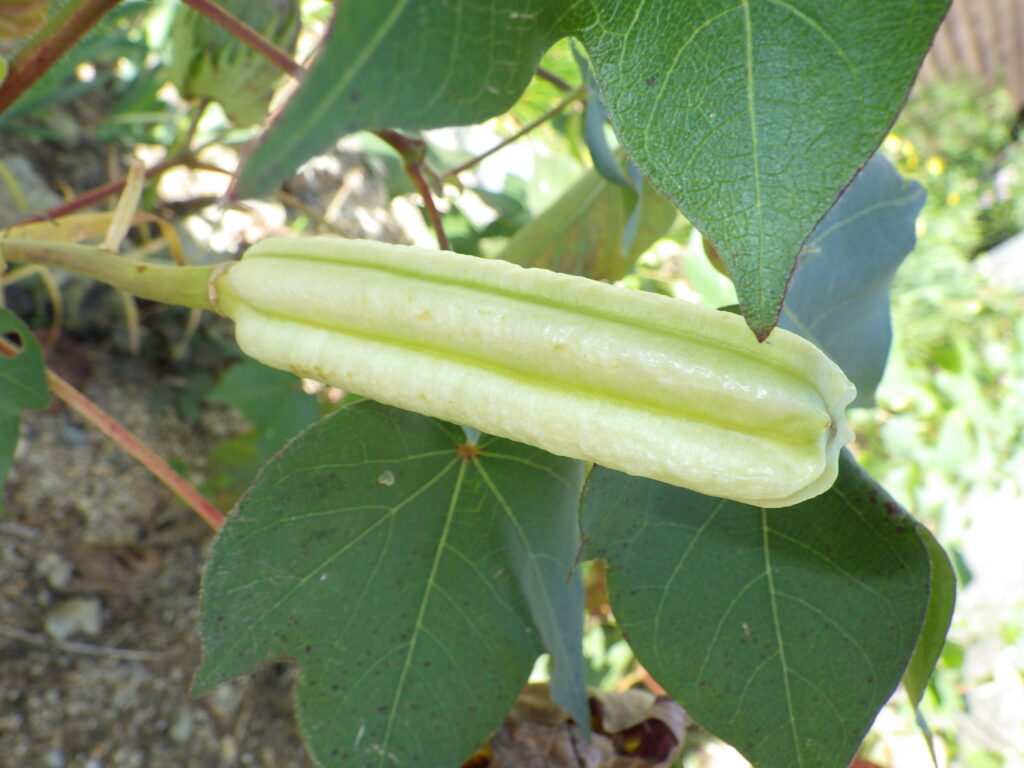
No.0345.1 Lilium x formolongo
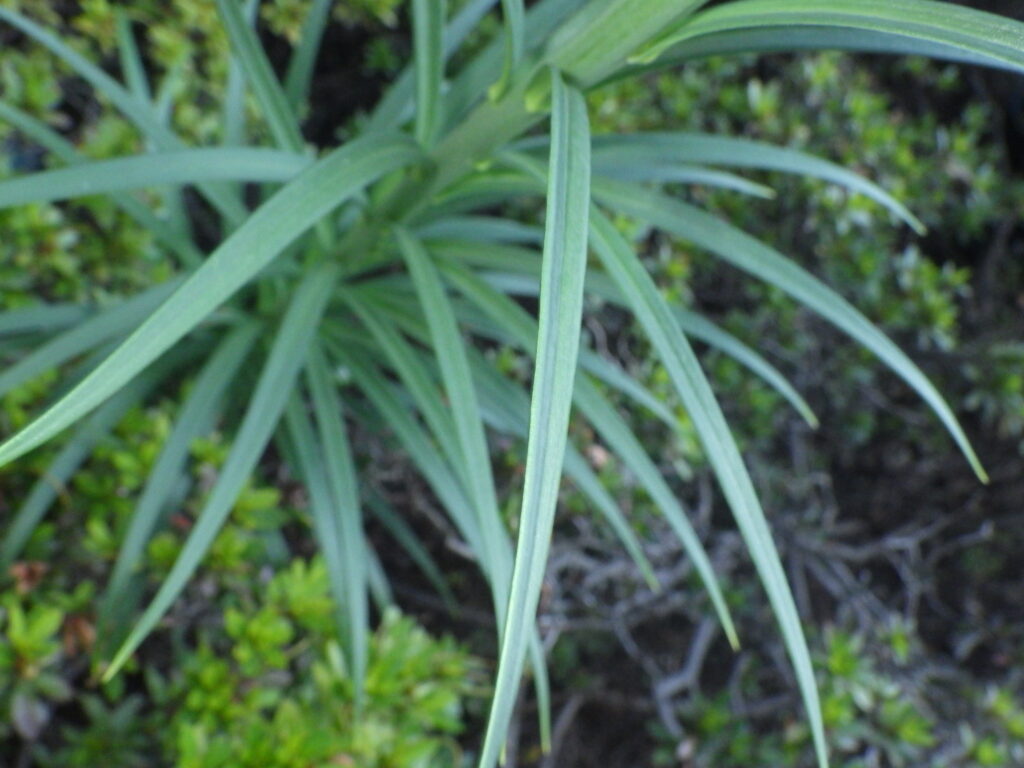
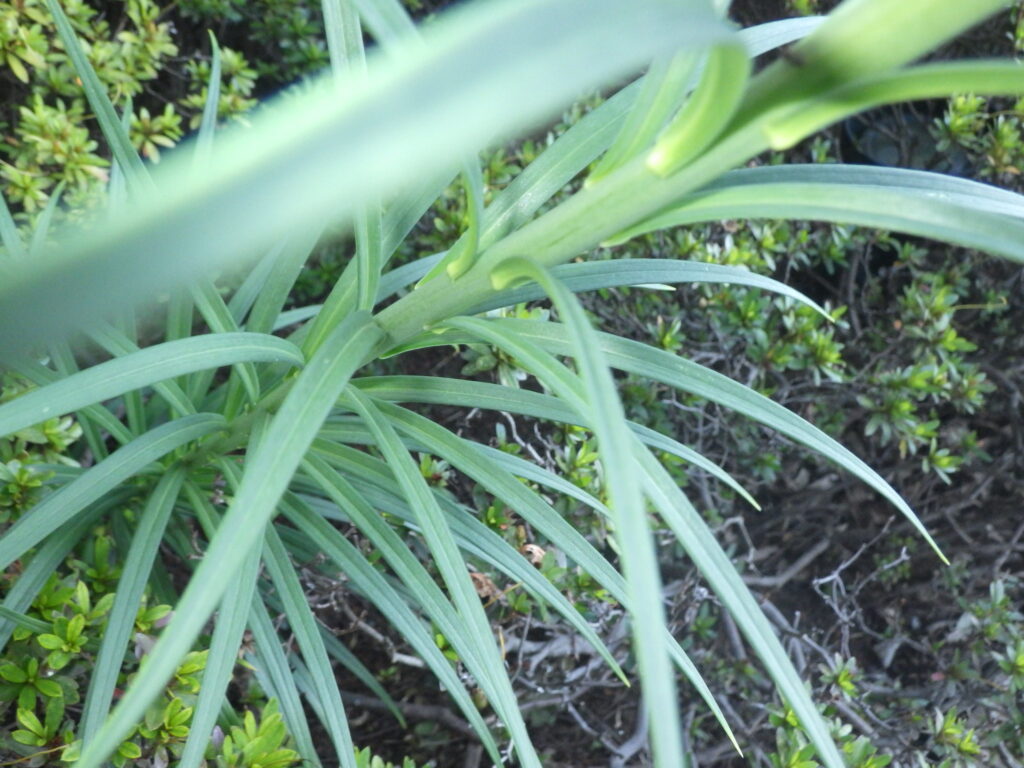
This is a perennial herb, growing to a height of 30-150 cm. The leaves are densely packed and narrow, 3-7 mm wide. The flowers bloom in August and September, with 1-5 flowers opening sideways. The corolla is tubular-funnel shaped, tinged with purple on the outside and pure white on the inside. It grows on docks, highway embankments, railway lines, and riverbanks. Originally planted, it escaped cultivation and readily reproduces by seed. It was created by Mr. Susumu Nishimura of Nagano Prefecture through hybridization of Lilium formosanum and Lilium longiflorum. Not only first-generation hybrids, but also various back-hybrid strains have been created and escaped cultivation. The original Lilium formosanum is native to Taiwan and has purple stripes on the midrib of the outer perianth segments, while Lilium longiflorum is native to the Southwest Islands and does not have purple stripes on the midrib of the outer perianth segments. White lilies that frequently escape from cultivation sometimes have purple stripes and sometimes do not, and there are various theories as to whether this distinguishes them from Lilium formosanum and Lilium longiflorum (Higuchi, 2016). Some even consider all individuals to be Lilium formosanum rather than Lilium longiflorum (Koba, 2006). Here, we follow Koba (2006) and the Kanagawa Prefectural Flora Survey Association (2018). It is believed that self-pollination occurs quite frequently because there are few pollinating insects and the anthers and stigmas are located in the same area (Koba, 2006). The following individuals do not exhibit this behavior.
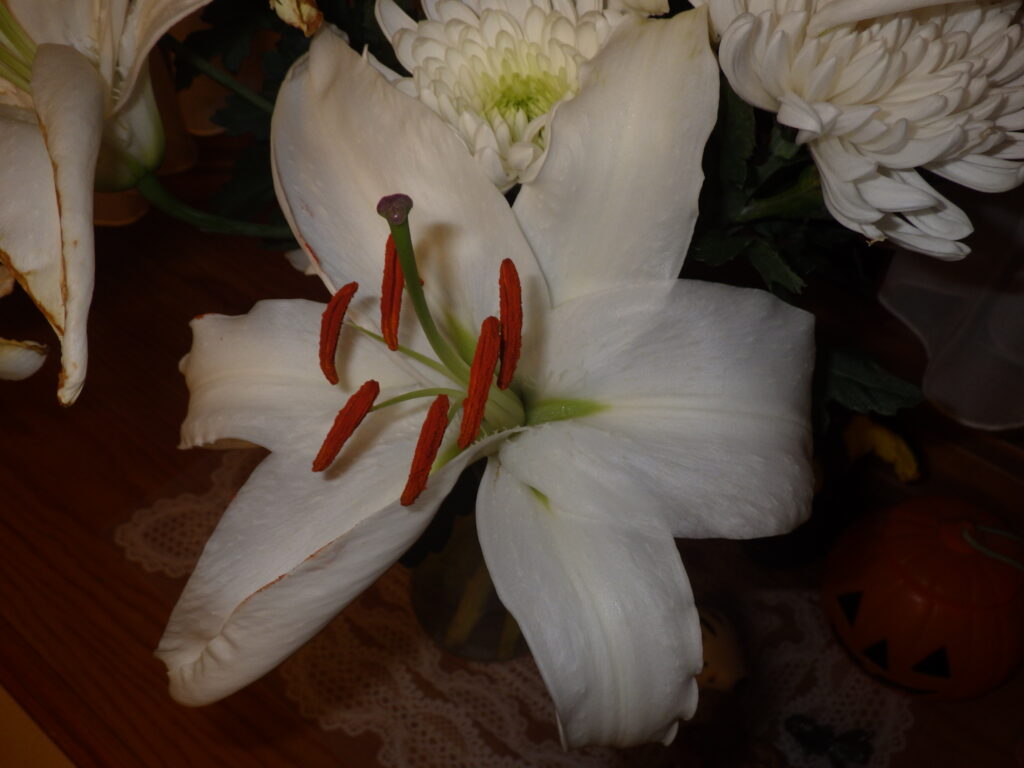
No.0346.a Casablanca Lilium 'Casa Blanca'‘
This is a perennial plant and a cultivated variety of hybrid. Hybrids are believed to be a group of hybrids between Lilium speciosum and Lilium auratum, and the flowers are large, white, pink, or deep red, of the Lilium auratum to Lilium speciosum type, highly fragrant, tall, and very showy. Casablanca is thought to be a cultivated variety created from the aforementioned hybrids. It is also called the queen of lilies and is a very popular variety. The flowering period is said to be from July to August.
No.0350 Tulipa gesneriana
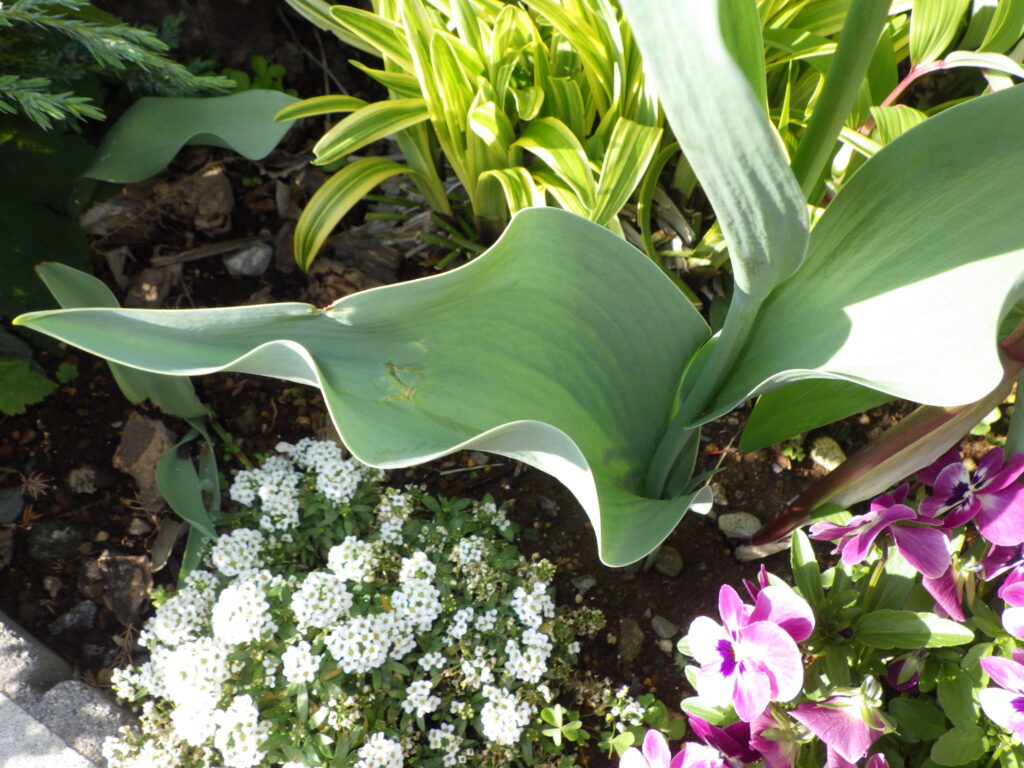
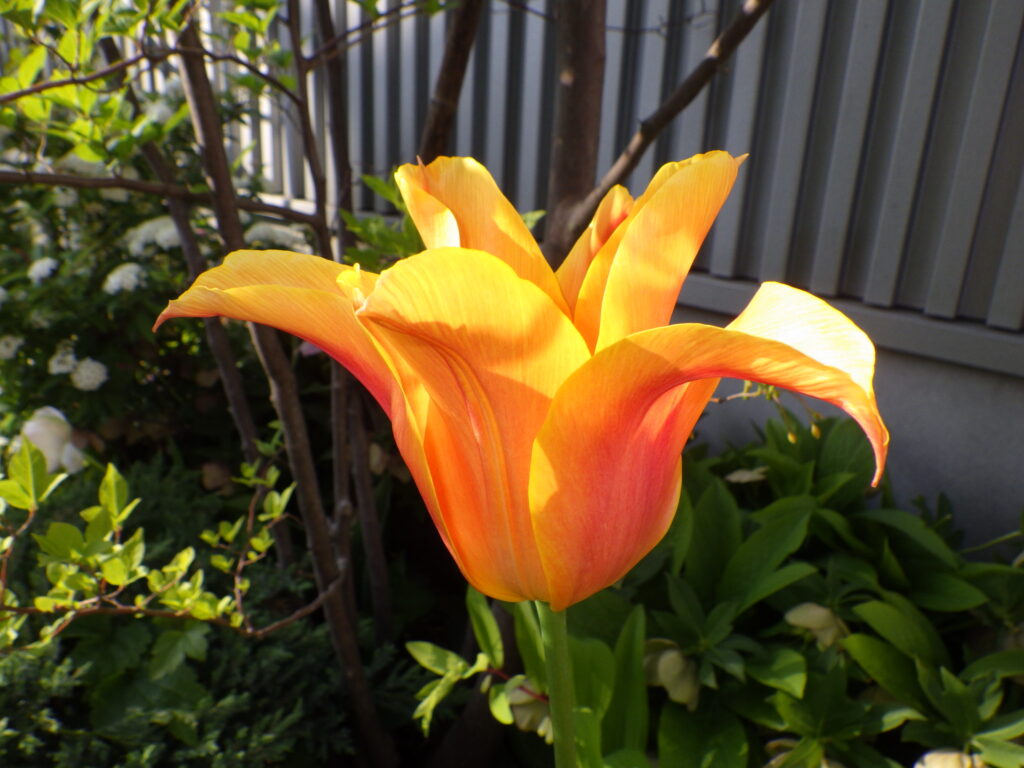
The so-called tulip. In Japanese, it is written as 鬱金香. Other names include ukonkou and peony lily. It is a perennial plant. Its origin and wild species are unclear, and it is believed that from the time it was introduced from the Ottoman Empire (present-day Turkey), it was a hybrid of several wild species. According to 'Ylist', this scientific name may no longer be used. Tulips were introduced to Europe from the Ottoman Empire in the 16th century. In Arab countries, they had been cultivated before that, and tulip flower patterns are depicted in old works of art. When tulips were introduced to Europe, in 1593, Mr. Clusius, a botanist at Leiden University in the Dutch Republic, worked to popularize them by having local farmers cultivate them, and the Netherlands remains a major producer of tulips today. Later, tulips spread to England and France, where they became extremely popular among the upper class, leading to the "Tulip Mania" from 1634 to 1637. This is known as the first recorded speculative bubble (or bubble economy). In the 19th century, Darwinian and Cottage varieties were developed, and production increased in the Dutch coastal areas. Tulips gradually became a popular flower, and garden planting and forced cultivation began. After World War II, in addition to traditional tulips, wild species native to the Middle East were crossbred, resulting in a continuous stream of new varieties. Tulip bulbs were first imported to Japan between 1861 and 1864, and cultivation is said to have begun around the time of the Russo-Japanese War.
No.0350.a Tulipa saxatilis
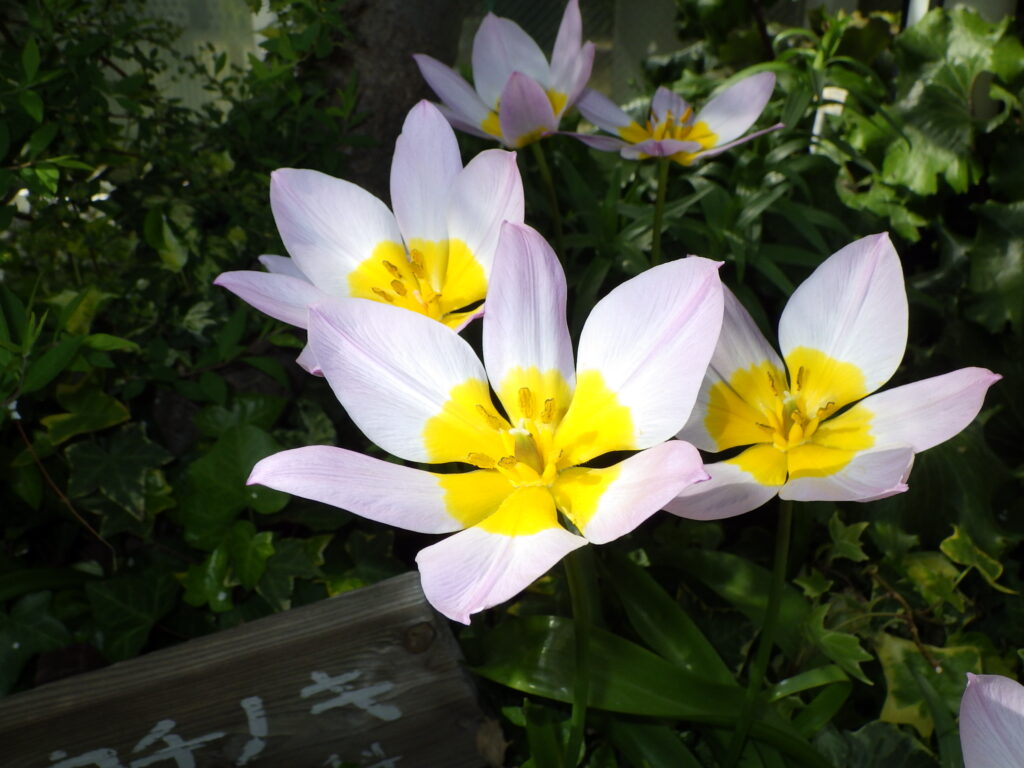
The Japanese name is a provisional name given by the author. It is a species of wild tulip. It is a perennial plant that grows to a height of about 30 cm. The leaves are soft and linear, emerging from the base of the stem and often curving midway. The leaves are glossy. In April or May, it produces 2-3 funnel-shaped flowers, each about 5 cm long and with 6 petals, at the end of the flower stalk. The flowers are pale bluish-purple with a yellow base. It grows wild in sunny grasslands at an altitude of about 900 m or lower on the island of Crete.
No. 0353 Erythronium japonicum
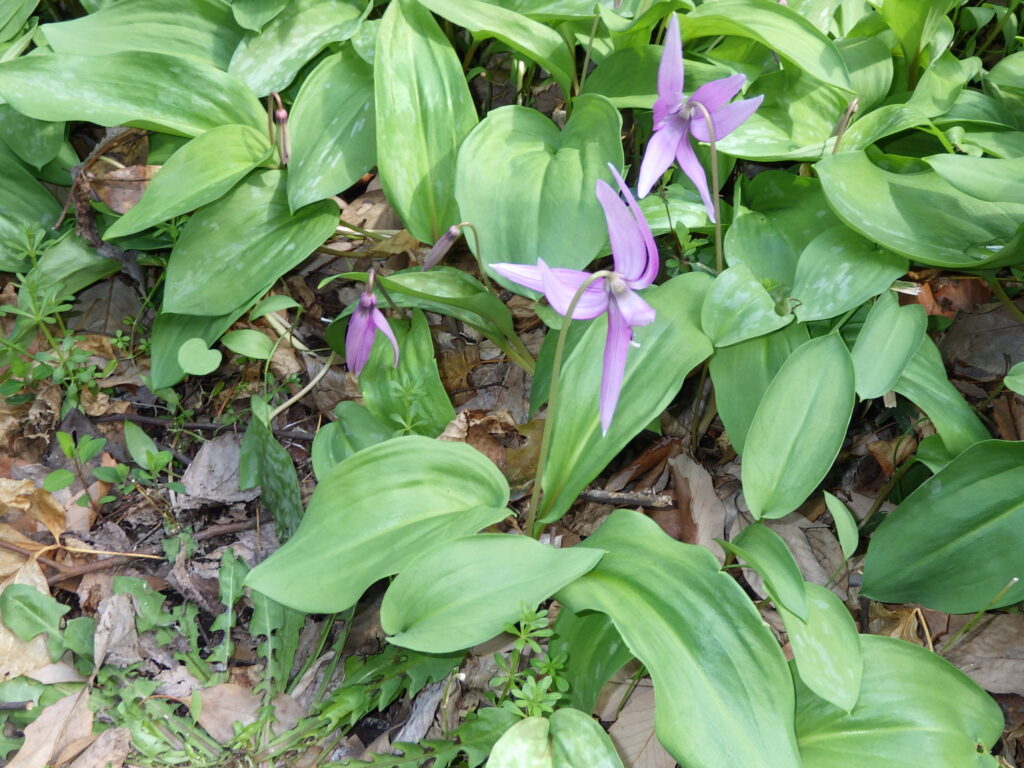
This perennial herb grows to a height of 20-30 cm. Its leaves are close to the ground, oblong in shape, powdery white-green, and have purplish-brown spots on the upper surface. From late March to mid-April, a single pale purple to pink flower blooms at the tip of the flower stalk, facing downwards. The base of the perianth segments has a W-shaped pattern. It is distributed in Hokkaido (southern Kuril Islands), Honshu, Shikoku, Korea, China, and Sakhalin, growing in clusters within forests. It is a member of the "spring ephemeral" group, blooming in early spring. In summer, its leaves wither, and it spends most of the time dormant as a bulb in the soil until the following spring. Bumblebees such as the yellow-breasted bumblebee, the common bumblebee, the long-horned bee, the yellow-spotted bee, the small bee, and the Gifu butterfly visit its flowers, but some populations self-pollinate. The seeds have a pale yellow substance called an elaiosome that is attractive to ants, and the plant expands its habitat when ants pick them up and carry them to their nests (Kono, 2004; Morii and Hasegawa, 2022). The potato starch used in cooking originally referred to starch extracted from the bulbs of the dogtooth violet, but because the amount that can be refined is very small, starch extracted from potatoes or sweet potatoes is used as a substitute in modern times.
No. 0355 Tricyrtis macropoda
This perennial herb grows to a height of 40-80 cm. It flowers from July to September. The inflorescence axis has spreading hairs, and the lower part of the stem has sparse, stiff, downward-pointing hairs just below the leaves. The perianth segments are 1.5-2 cm long, and the white flowers with pale reddish-purple spots open at the top of the stem, although some individuals often lack the spots. It is distributed in Hokkaido (southwestern part), Honshu, Shikoku, Kyushu, Korea, and China, growing in woodlands, forest edges, and grasslands. Bumblebees are the main visitors to the flowers (Takahashi, 1994).
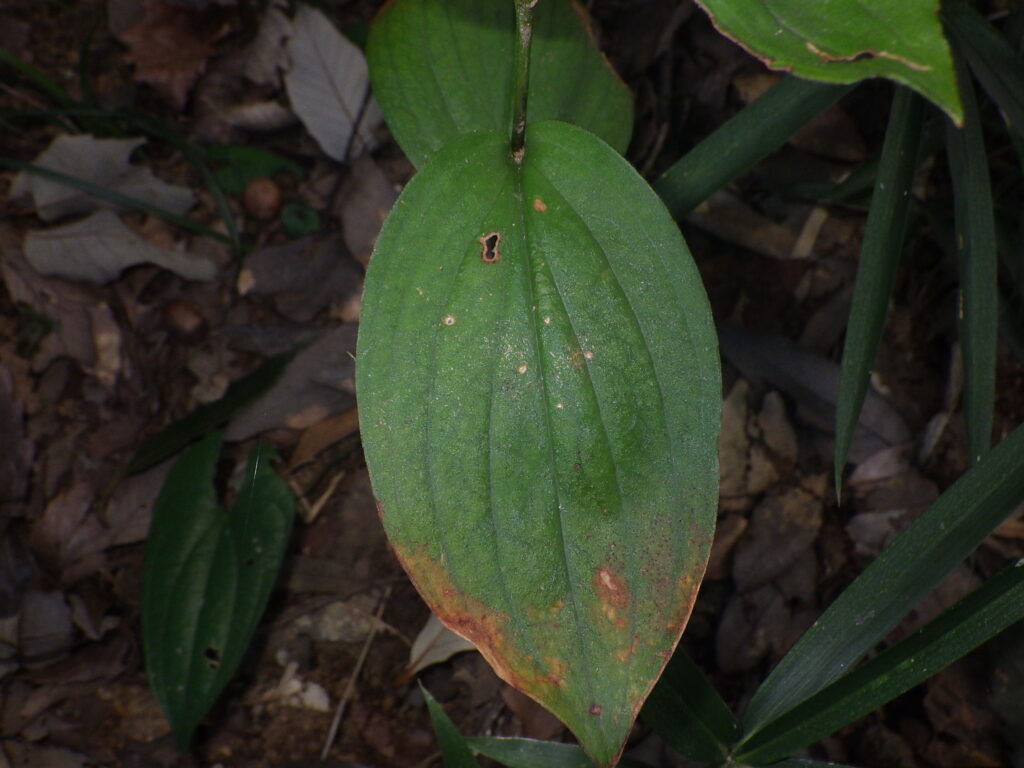
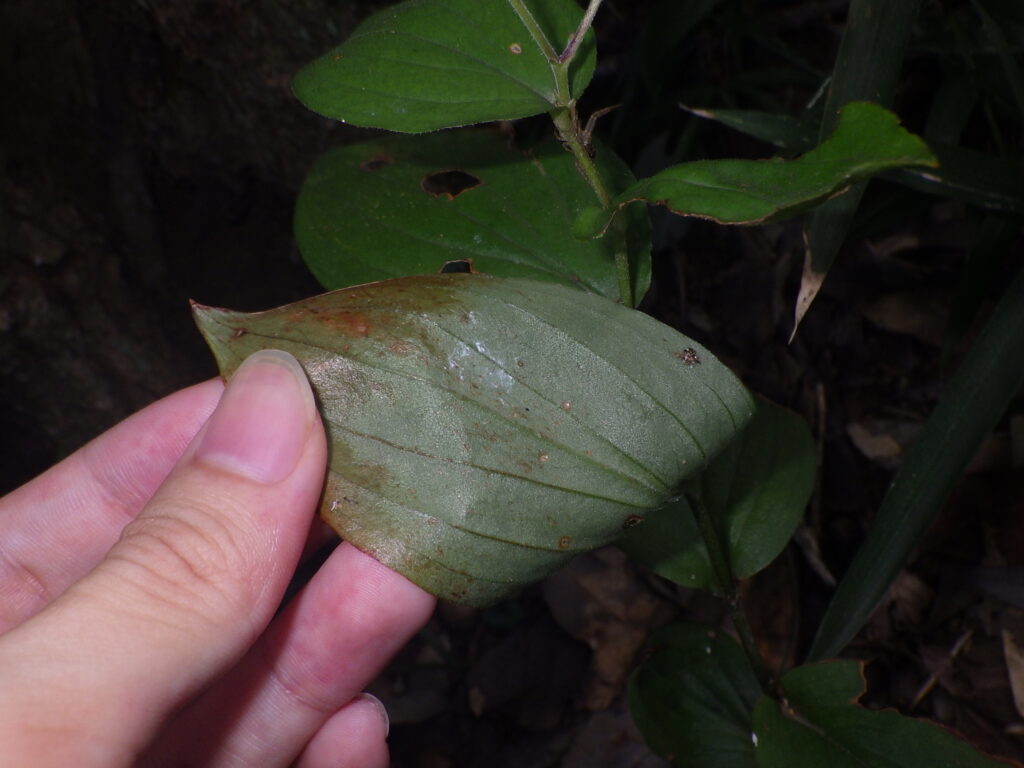
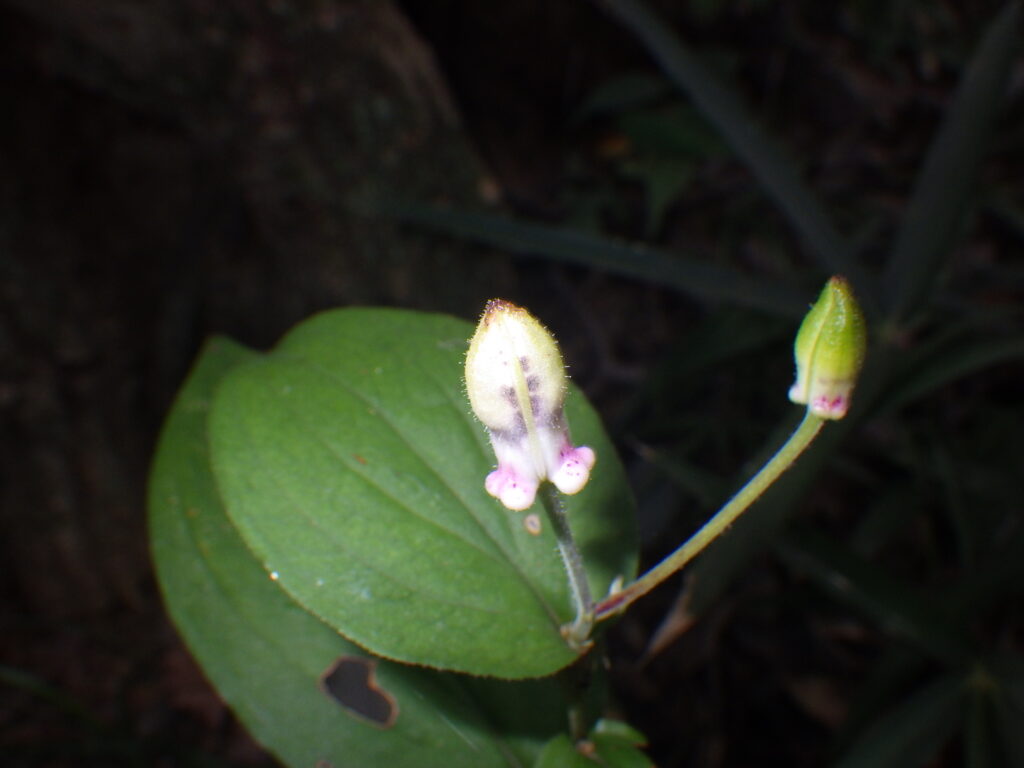
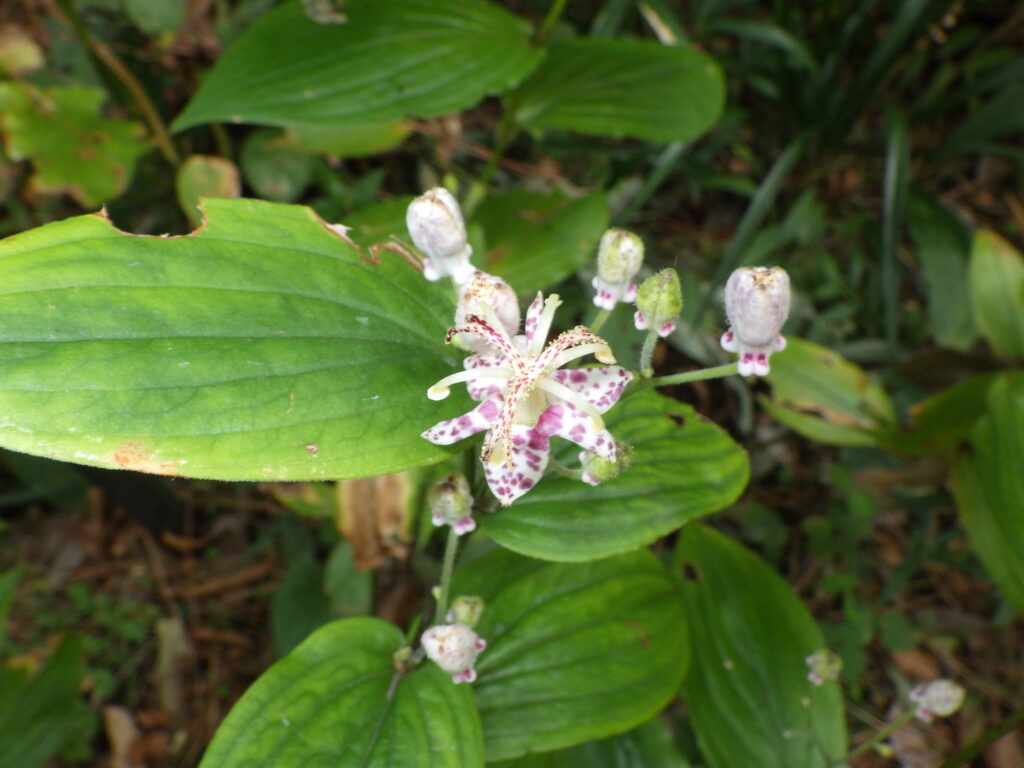
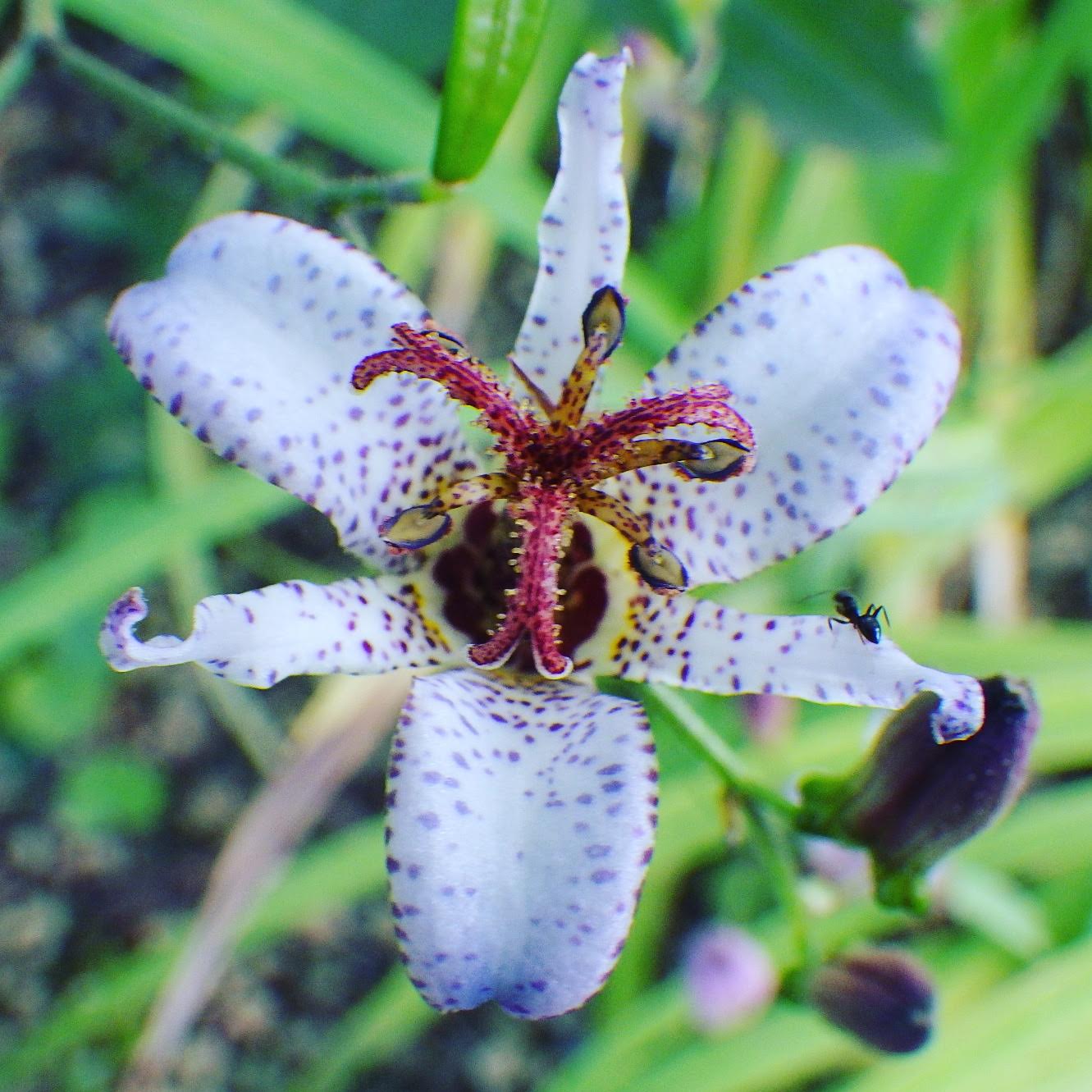
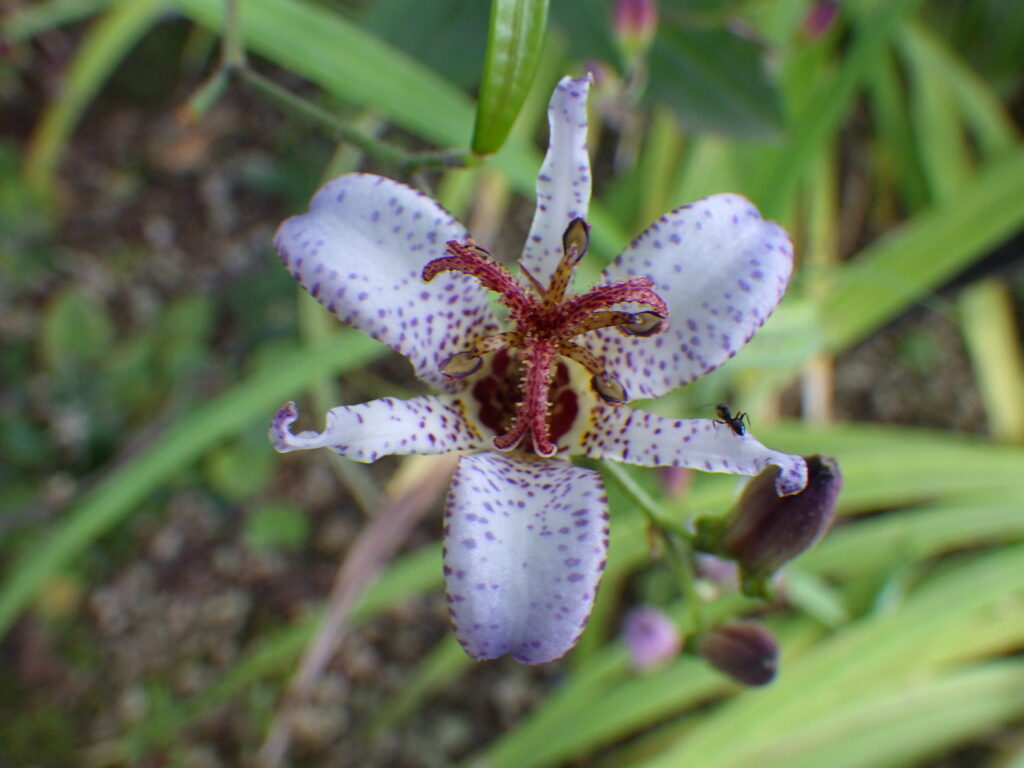
No. 0357 Cuckoo (Tricyrtis hirta)
This perennial herb grows to a height of 40-90 cm, with drooping stems on cliffs and upright stems on flat ground. The stem is covered in many hairs. In September and October, it produces pale reddish-purple flowers with dark purple spots, borne in clusters of 1-3 in the leaf axils, blooming sequentially from the tip of the main stem down to the base. It is distributed in Honshu, Shikoku, and Kyushu, growing on riverbanks, damp cliffs, grasslands, and under sparse woodlands.
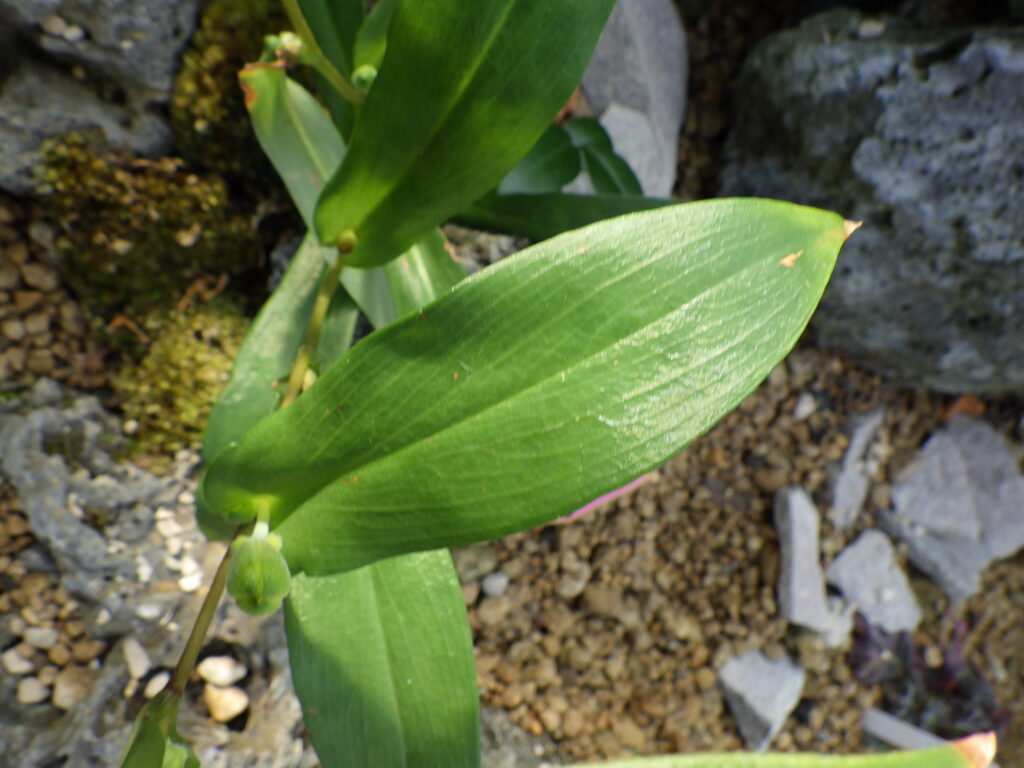
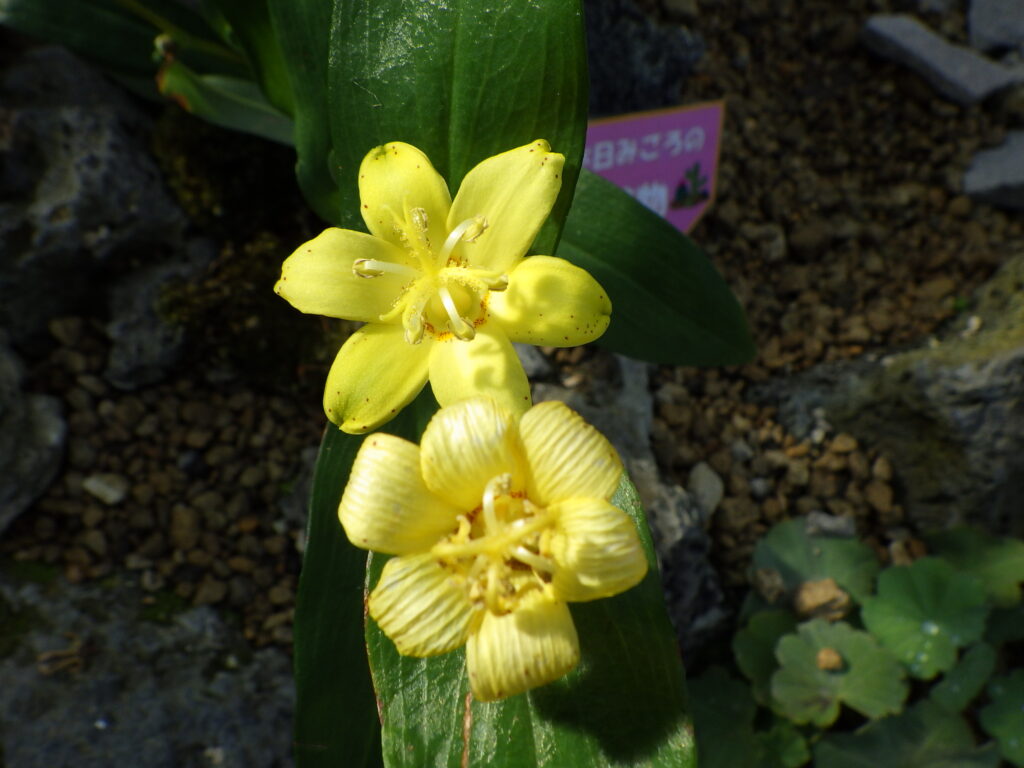
No. 0358 Tricyrtis flava
This is a perennial herb, growing to a height of 20-50 cm. The stems are dark purple with scattered stiff hairs. The leaves are alternate, oblong to oblong-lanceolate, 8-20 cm long. The tips are pointed, and the base gradually tapers, but they do not clasp the stem very much. The leaves are usually unmarked, but sometimes they are. Flowering occurs from September to November. Long flower stalks emerge from the leaf axils, bearing 1-2 flowers at the end. The perianth segments are ovate-oblong, yellow, and about 3 cm long. The flower stalks are densely covered with brown hairs and are 2-6 cm long. This species is endemic to Japan and distributed in Kyushu (Miyazaki Prefecture). It inhabits forest edges and bright undergrowth in mountainous areas. It is listed as Vulnerable (VU) on the Ministry of the Environment's Red List. Bumblebees such as *Bombus spp.* and *Bombus* species are the main visitors to its flowers (Takahashi, 1987).
No.0358.a Tricyrtis 'Amanogawa'‘
This is a horticultural hybrid of Tricyrtis macropoda var. japonica and Tricyrtis hirsuta. Its stems droop, and it produces white to cream-colored flowers. The speckled pattern on the petals resembles the Milky Way.
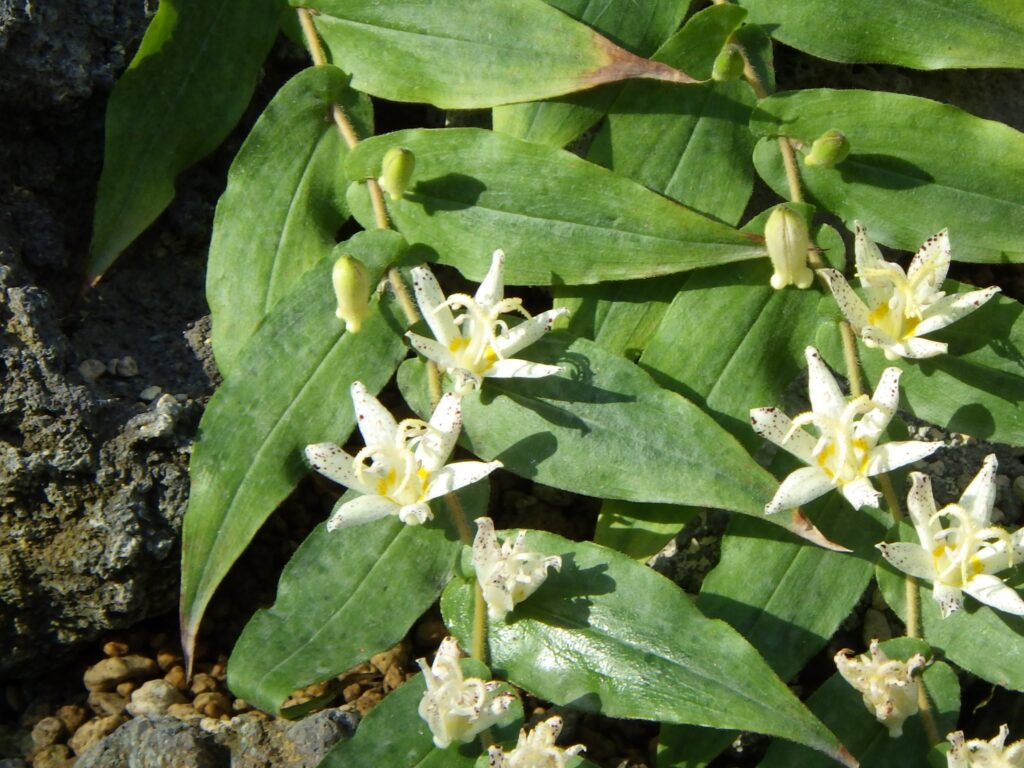
No.0360.a Tricyrtis formosana (Taiwanese Toad Lily)
This is a perennial herb. The perianth segments are about 3 cm long, pink with reddish-purple spots, and spread obliquely. The stem has sparse, spreading hairs. It is a naturalized plant native to Iriomote Island (Okinawa Prefecture) and Taiwan. It is cultivated for ornamental purposes, but often escapes into roadsides and parks. As a naturalized plant, it reproduces vigorously via rhizomes and is expanding its distribution.
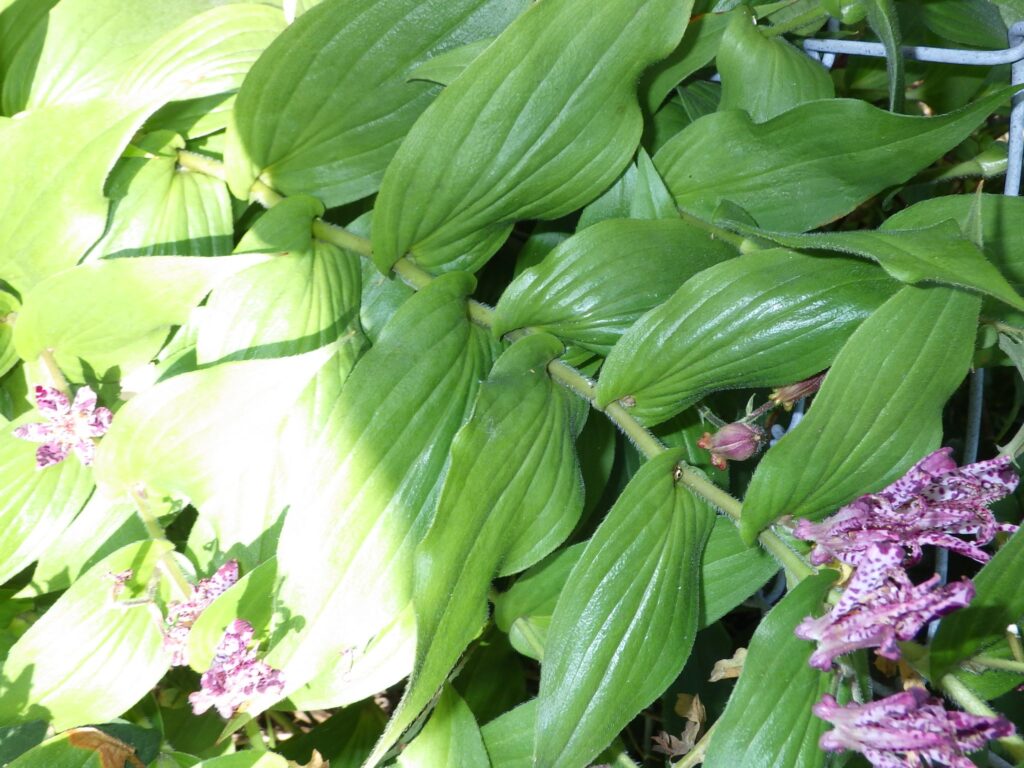
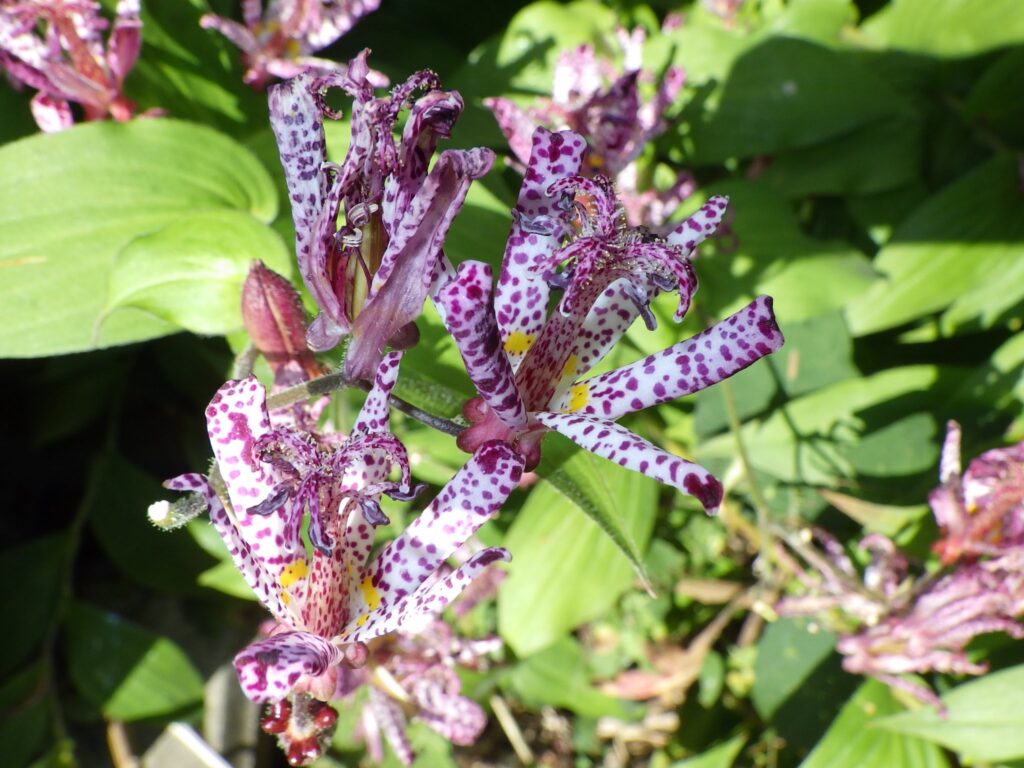
No. 0361 Tricyrtis macranthopsis
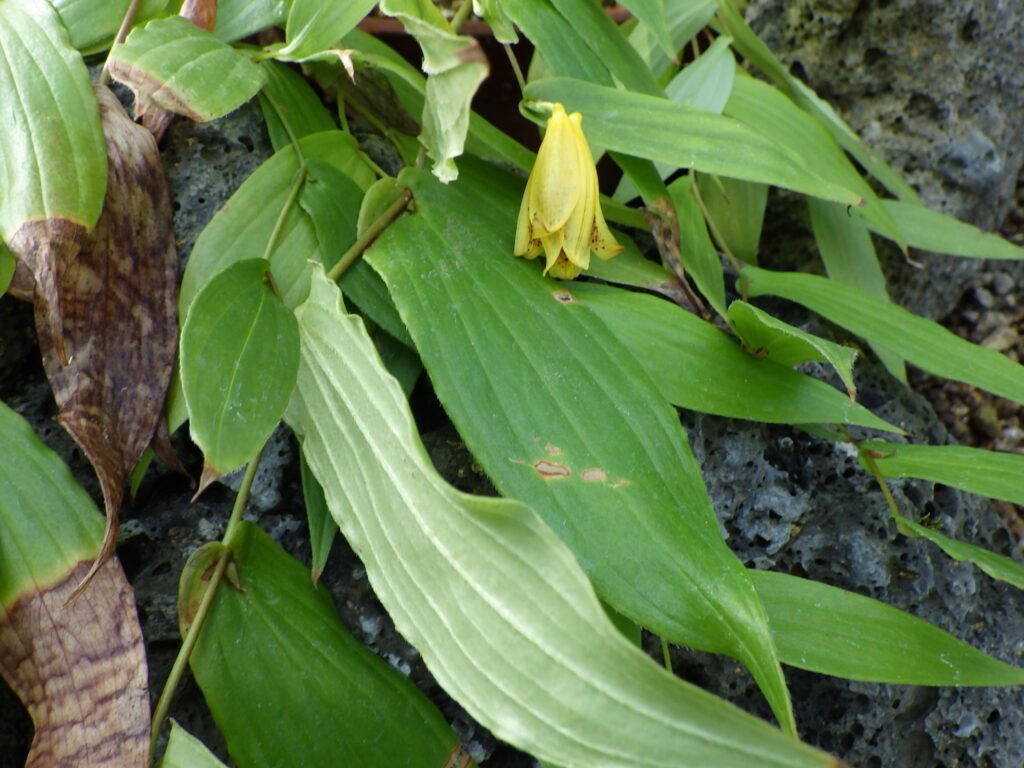
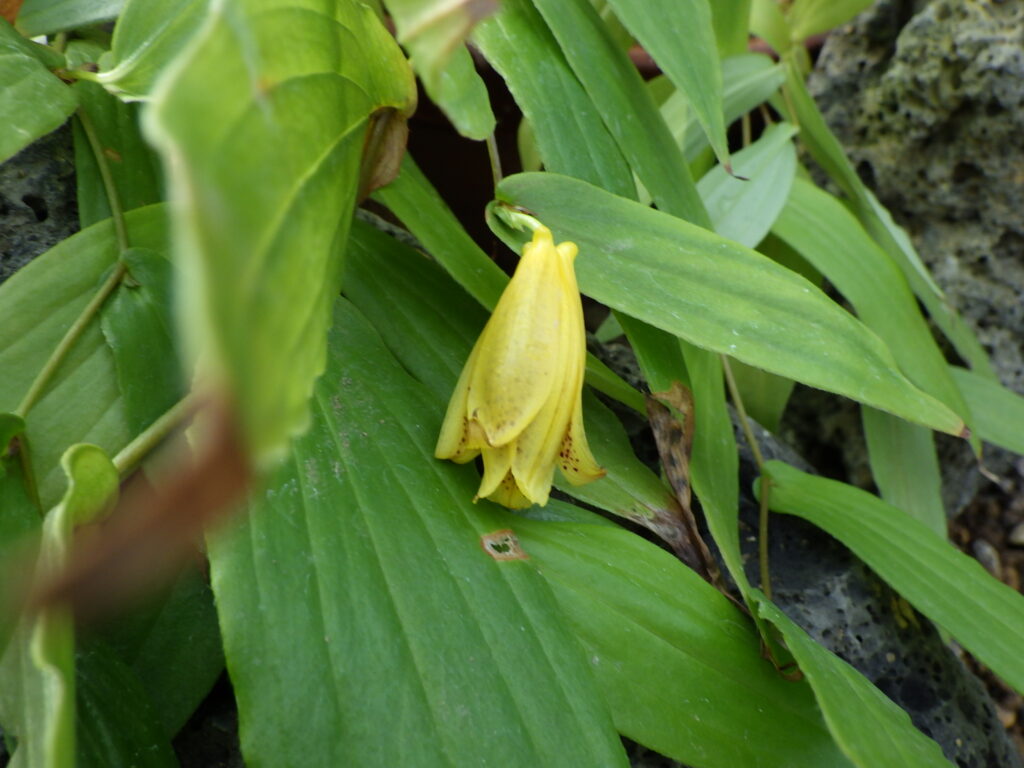
This is a perennial herb. Numerous strong roots emerge from the base of the stem. The stem droops and grows to a length of 40-80 cm, with many nodes and short internodes, and sparsely covered with hairs at the top. The stem does not branch. The leaves are arranged alternately in two rows on either side of the stem, lanceolate with elongated, pointed tips, 12-18 cm long, and have coarse hairs on the veins on the underside of the leaves. The base of the leaves is ear-shaped on both sides, which causes the leaf base to deeply clasp the stem. This is a characteristic feature of this species and distinguishes it from Tricyrtis macropoda, which will be described later; in this species, the upper ear does not clasp the stem. The flowers bloom from August to October. The flowers emerge singly from the leaf axils. Sometimes one or two flowers may grow from the tip of the stem. The flowers have stalks shorter than the flower itself, which are bent midway, and have several lanceolate bracts at the base. The flowers bloom obliquely downwards due to their weight, are bell-shaped, and open halfway. The perianth segments are about 40 mm long, yellow with purplish-brown spots on the inside. The outer perianth segments are slightly narrower than the inner ones, with a spur of about 4-5 mm at the base and a small, horn-like projection at the tip. The capsule is 22-25 mm long and linear-oblong, and the seeds are broadly ovate and 1 mm long. It is endemic to Japan and distributed in the southern part of the Kii Peninsula. It grows on damp cliffs in the mountains. It has long been considered to have high ornamental value. It is listed as Vulnerable (VU) on the Ministry of the Environment's Red List. Bumblebees are the main visitors to the flowers (Takahashi, 1993).
References
Higuchi, Yukio. 2016. A Cultural History of Flowers at Keisen University (11): Lilium longiflorum as a Naturalized Plant. Bulletin of the Institute for Horticultural Culture, Keisen University. Horticultural Culture 12: 67-72. http://id.nii.ac.jp/1294/00000979/
Kanagawa Prefecture Flora Survey Association. 2018. Kanagawa Prefecture Flora 2018 (Electronic Edition). Kanagawa Prefecture Flora Survey Association, Odawara. 1803pp. ISBN: 9784991053726
Kiba, Hidehisa. 2006. Naturalized plants of the Lilium longiflorum species. Flora Kanagawa 61: 760-762. http://flora-kanagawa2.sakura.ne.jp/fk/fk61.pdf
Kono, Shoichi. 2004. Illustrated Guide to Plant Life History: Spring Plants No. 1. Hokkaido University Press. ISBN: 9784832913714
Morii, Hideki & Hasegawa, Masahiro. 2022. Confirmation of self-compatibility and fruit formation by auto-self-pollination in a population of Erythronium japonicum on Mt. Oshio. Bulletin of the Osaka Museum of Natural History 76: 15-22. https://doi.org/10.20643/00001607
Shirataki, Yoshiaki. 2019. Wildflowers of the Mountains and Fields: Edible and Medicinal Properties of Common Wild Plants - Fritillaria thunbergii Miq. (= F. verticillata Willd. ver. thunbergii (Miq.) Baker) (Liliaceae). New Food Industry 61(3): 244-246.
Takahashi, H. 1987. A comparative floral and pollination biology of Tricyrtis flava maxim., T. nana Yatabe and T. ohsumiensis Masamune (Liliaceae). The Botanical Magazine 100(2): 185-203. https://doi.org/10.1007/BF02488323
Takahashi, H. 1993. Floral biology of Tricyrtis macranthopsis Masamune and T. ishiiana (Kitagawa et T. Koyama) Ohwi et Okuyama var. surugensis Yamazaki (Liliaceae). Acta Phytotaxonomica et Geobotanica 44(2): 141-150. https://doi.org/10.18942/bunruichiri.KJ00001079004
Takahashi, H. 1994. Floral biology of Tricyrtis macropoda Miq.(Liliaceae). Acta Phytotaxonomica et Geobotanica 45(1): 33-40. https://doi.org/10.18942/bunruichiri.KJ00001079028
Tsukamoto, Yotaro. 1994. Encyclopedia of Horticultural Plants, Compact Edition. Shogakukan, Tokyo. 3710pp. ISBN: 9784093051118