The Smilacaceae family, also known as the Smilax family, consists of perennial herbs or semi-shrubs, mostly climbing plants. They usually have short rhizomes. The leaves are alternate, and the petioles have tendrils. The inflorescence is usually umbel-shaped. The perianth segments are usually free, with three of each being identical in shape and texture to the outer and inner perianth segments. The ovary is superior. They produce berries. There are over 370 species in 4 genera worldwide, and they are common in the tropical and subtropical regions of the Northern Hemisphere. There are 9 species in 2 genera in Japan. This article will introduce plants of the Smilacaceae family in an illustrated guide style.
The basic information is based on the Kanagawa Prefecture Flora Survey Association (2018). Photos are replaced as better ones become available. While the identification is done by the author, please note that misidentifications may be corrected without notice.
No. 0318 Smilax china var. china
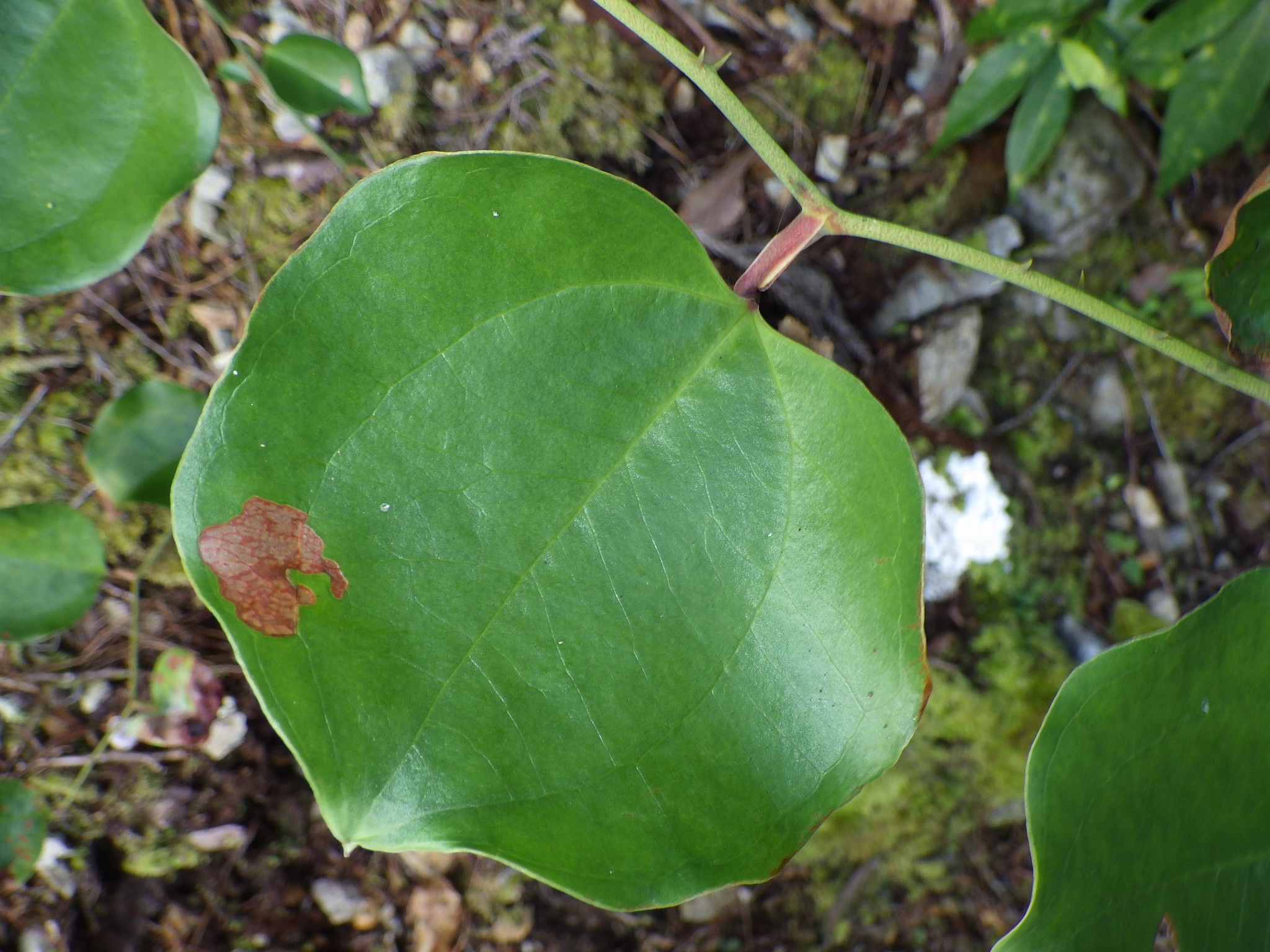
This is a deciduous, climbing shrub. Its stems are hard, growing in a zigzag pattern, and sparsely covered with thorns. The leaf blades are ovate. It flowers in March and April, as the leaves unfold, producing small yellowish-green flowers in spherical inflorescences. The fruit is spherical, 8-10 mm in diameter, and ripens to a red color. It is distributed in Hokkaido, Honshu, Shikoku, Kyushu, Korea, China, and Indochina. It grows in forest edges and within forests from coastal areas to mountainous regions.
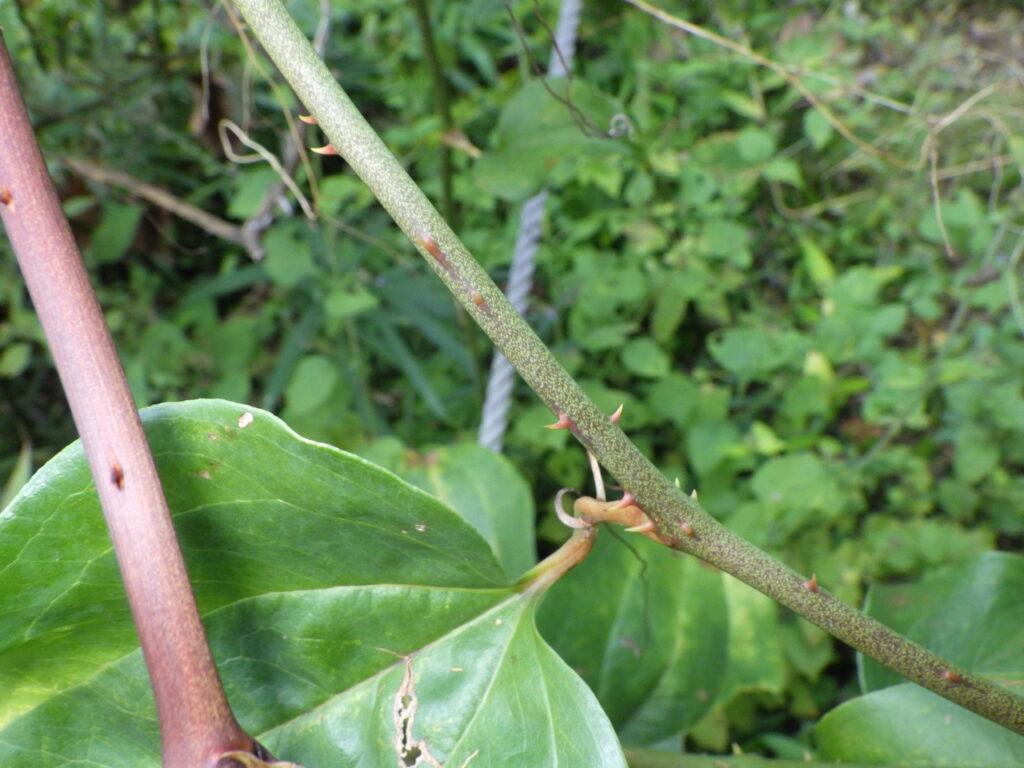
No.0318.1 Smilax china var. yanagitai (Thornless Smilax)
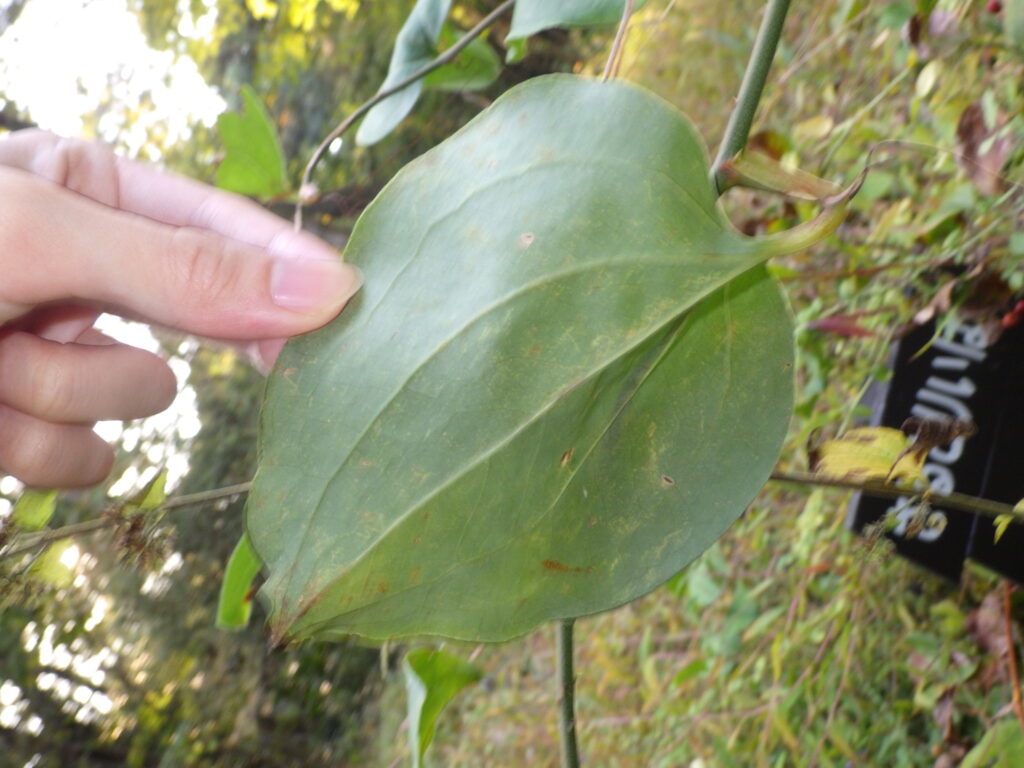
A variety of Smilax china with almost no thorns on its stems. Also known as Tokiwa Smilax. In addition to being thornless, its fruits are somewhat large, and its leaves are large and broad, ovate to kidney-shaped, 6-12 cm in diameter. The ends of the leaf blades are rounded or notched, and the leaves fall off around February of the following year. It is distributed in Honshu (west of the Kanto region), Shikoku, Kyushu, the Ogasawara Islands, Taiwan, and Indochina.
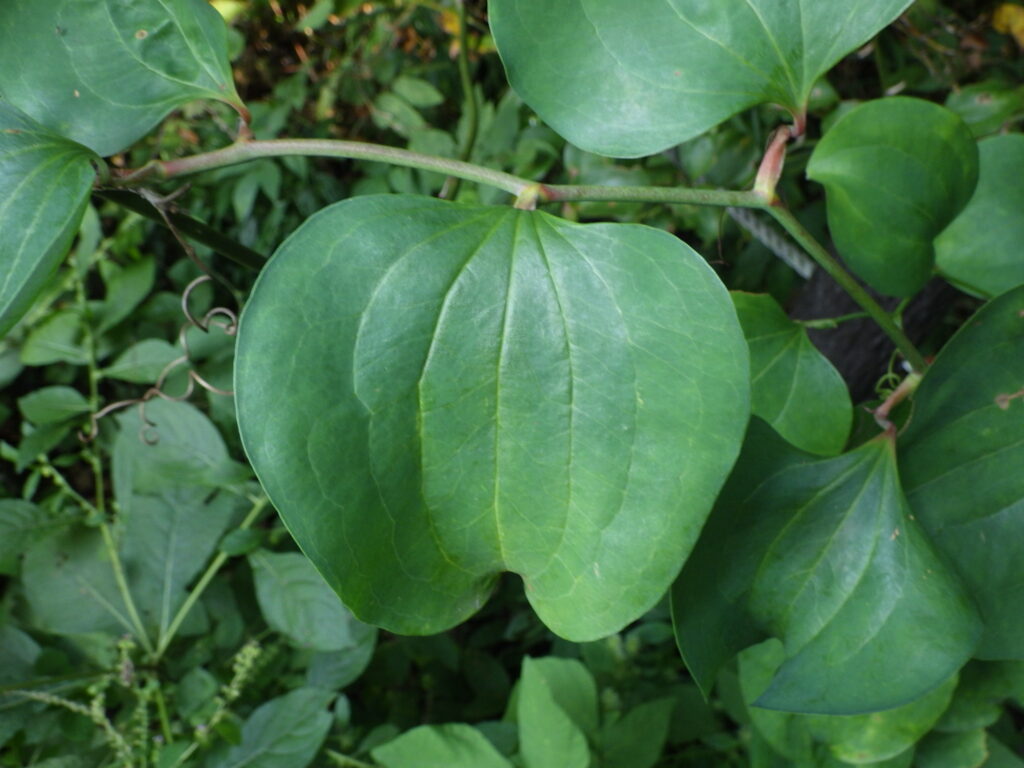
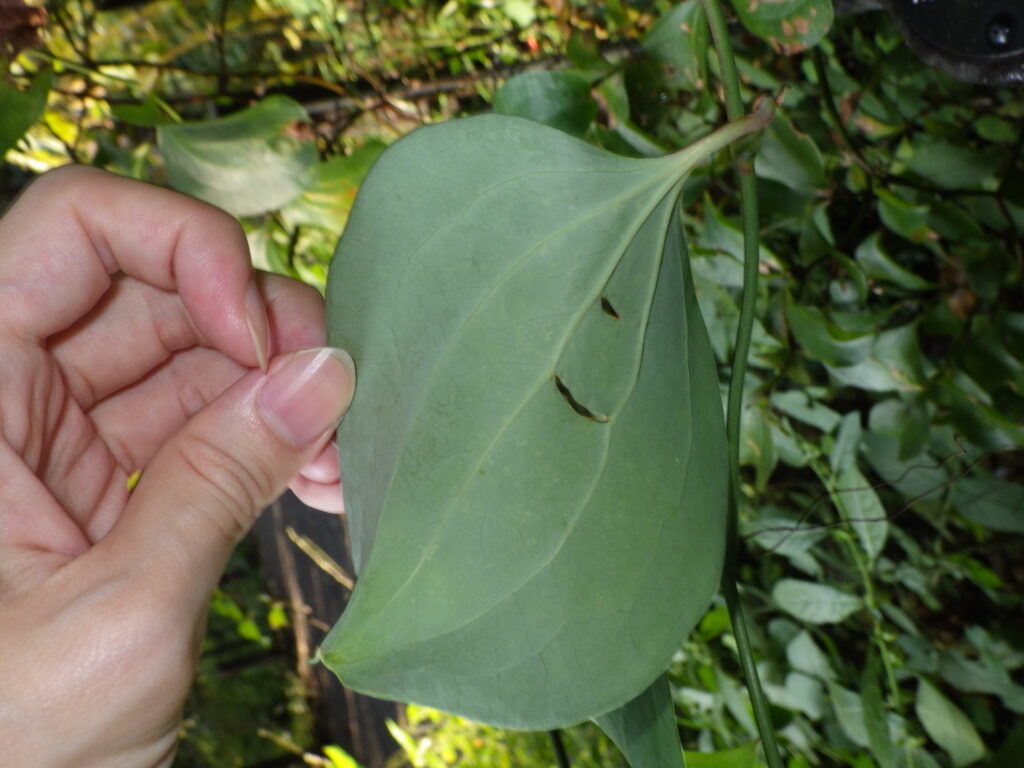
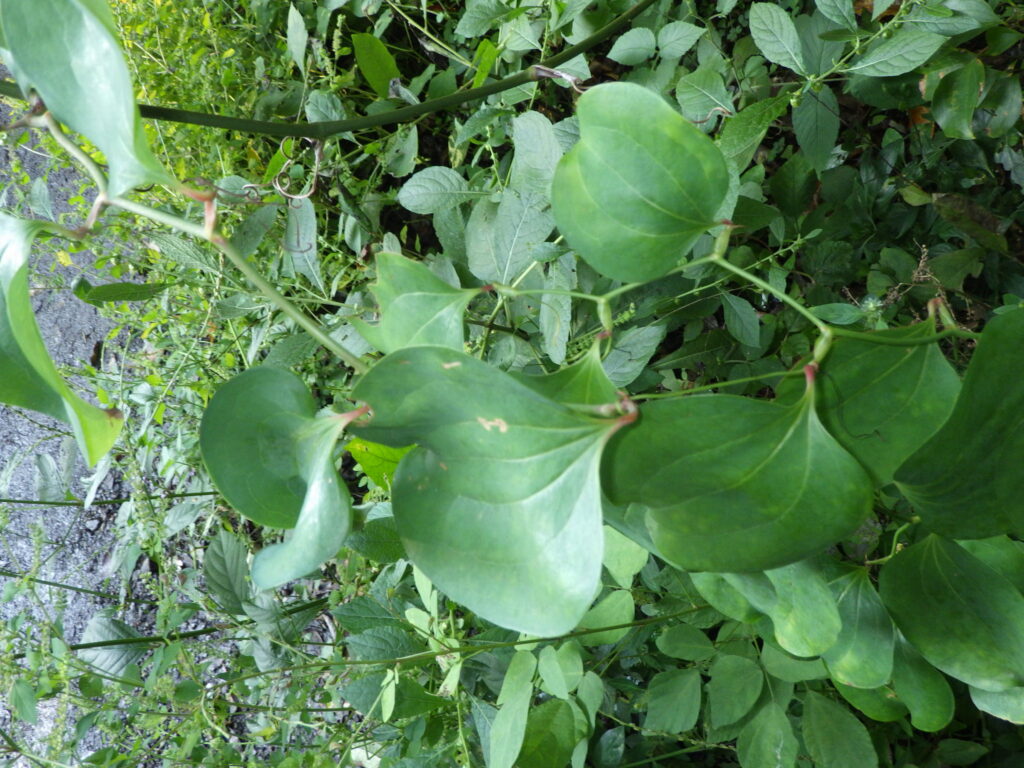
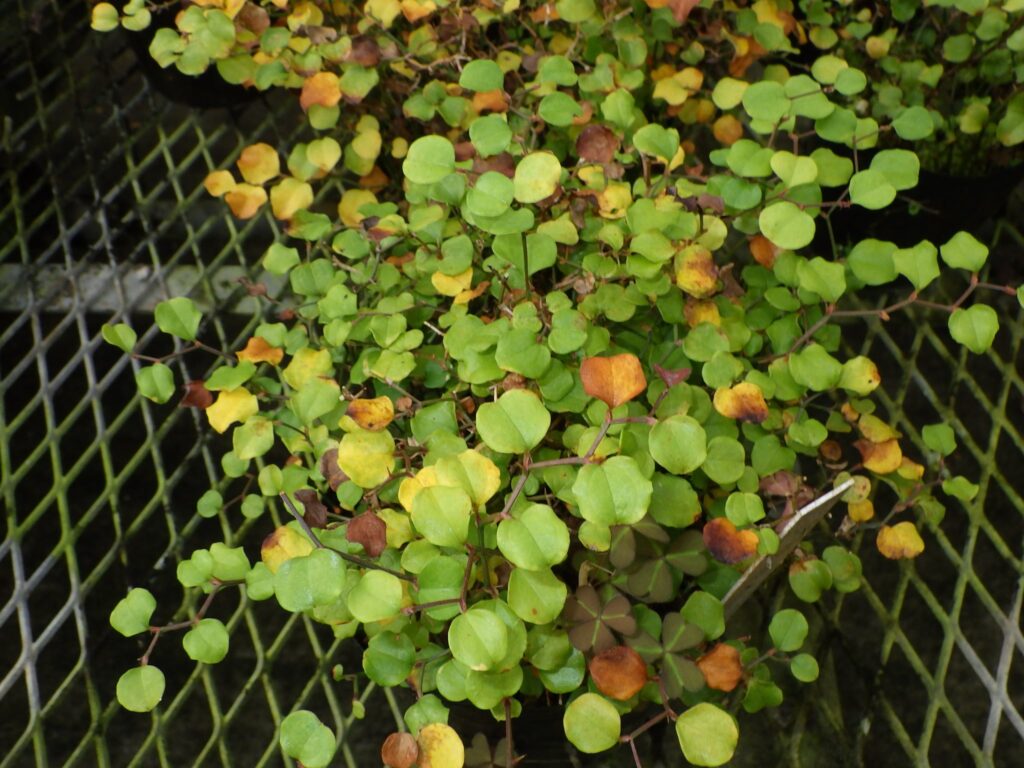
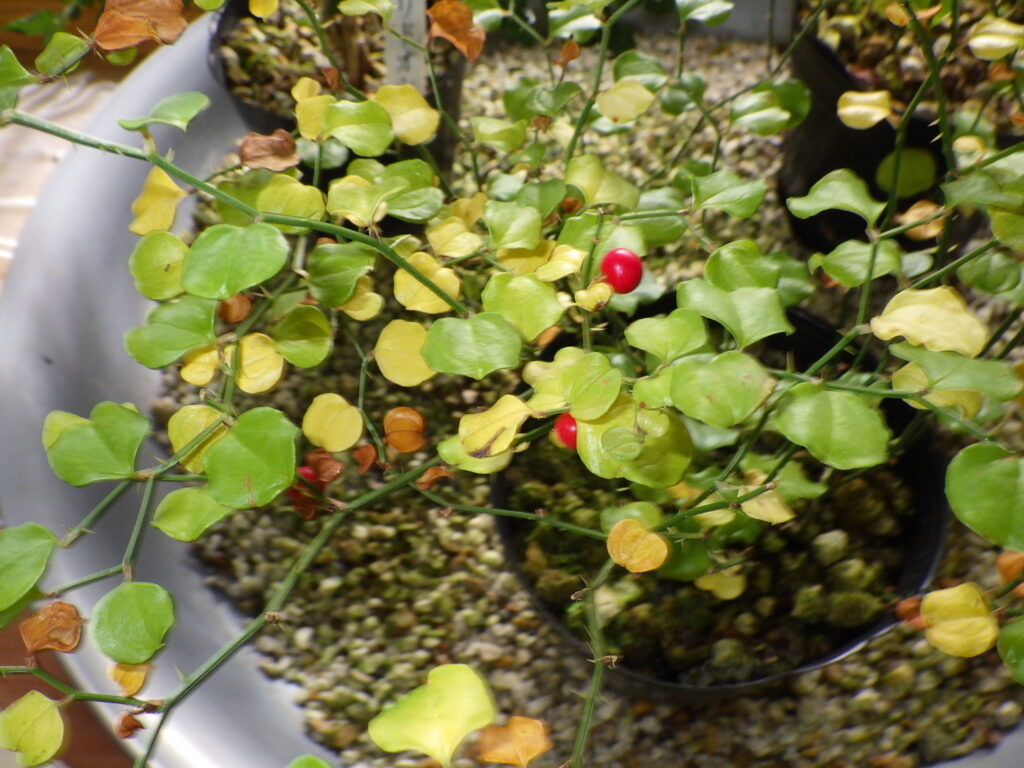
No.0320 Smilax biflora
This is a climbing deciduous shrub, reaching a height of 20-35 cm. The stems are highly branched, somewhat vine-like, and covered in thorns. The leaves are alternate, oval-shaped, and 5-15 mm long. The margins are wavy, and tendrils are absent or very short. The flowers are borne in umbels of 1-3, yellowish-green, and about 3 mm in diameter. Flowering occurs from April to May. The flower stalks are short. The fruit (berry) is spherical, 4-5 mm in diameter, and ripens to red. It is endemic to Kyushu (Yakushima) and inhabits the edges of mountain forests.
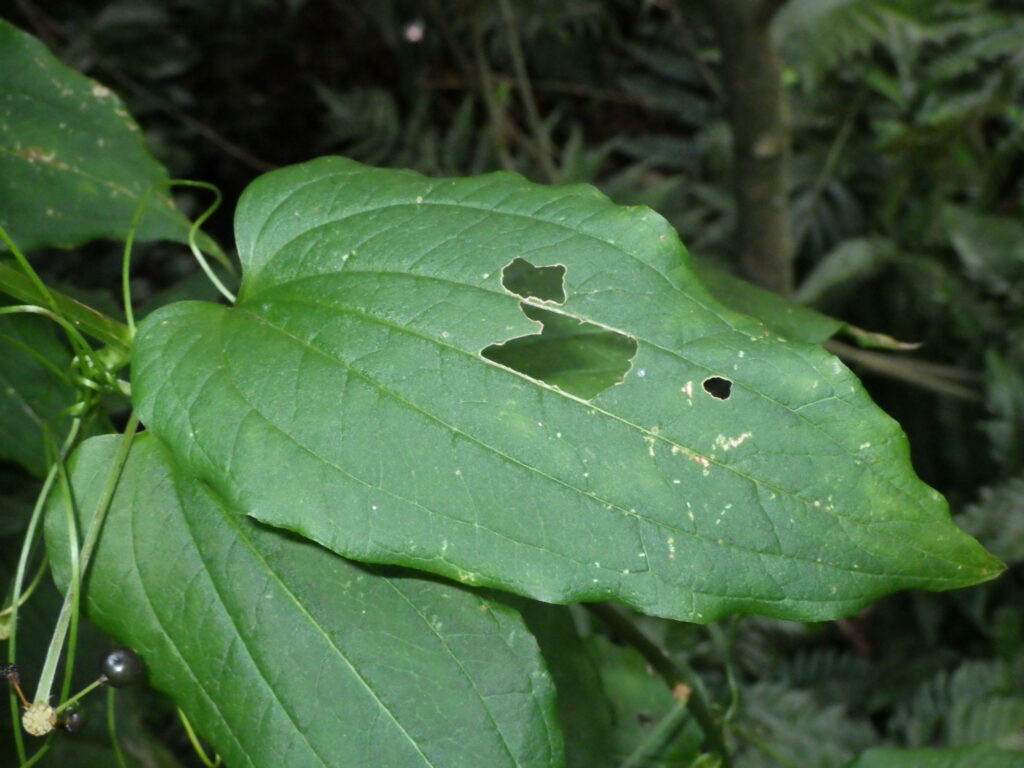
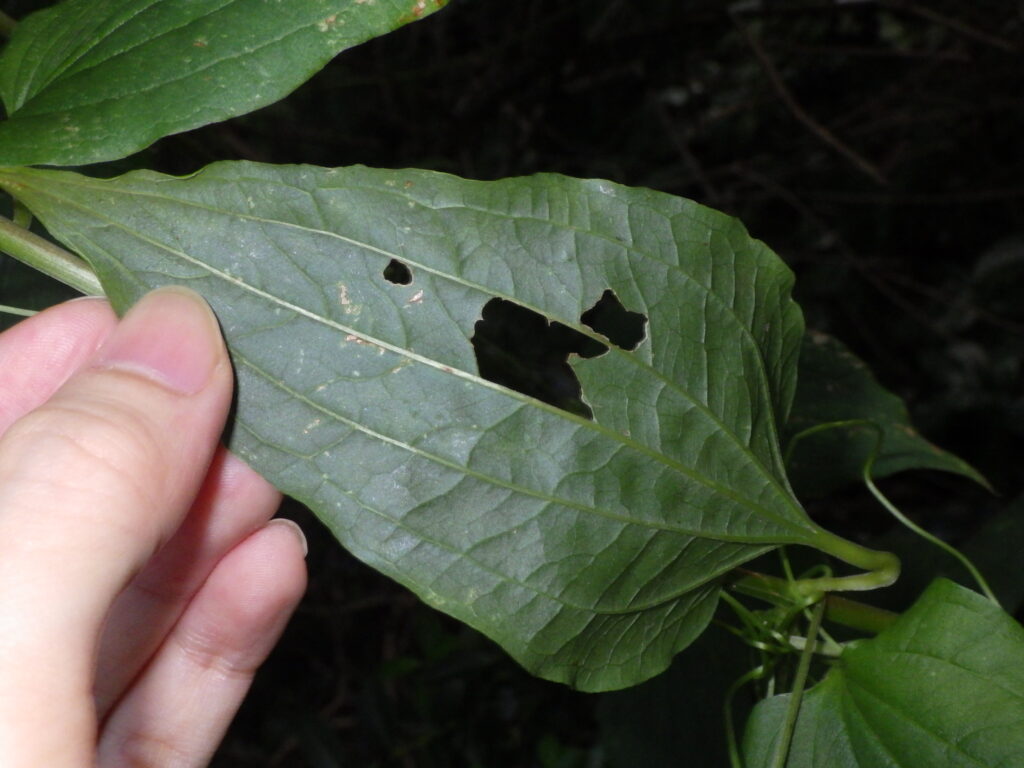
No.0323 Shiode Smilax riparia
A climbing herbaceous plant. The stems and leaves are herbaceous and soft, the leaf blades are ovate-oblong with a heart-shaped base, and the flowers bloom in June and July, appearing pale green. The fruit ripens to black. It is distributed in Hokkaido, Honshu, Shikoku, Kyushu; Korea, China, and Ussuri. It is commonly found throughout the prefecture, growing at forest edges and within forests. The young shoots are edible. A variant with a rough underside to the leaf blade is called *Zaratsukishiode f. maximowiczii *, and it grows alongside the basic species.
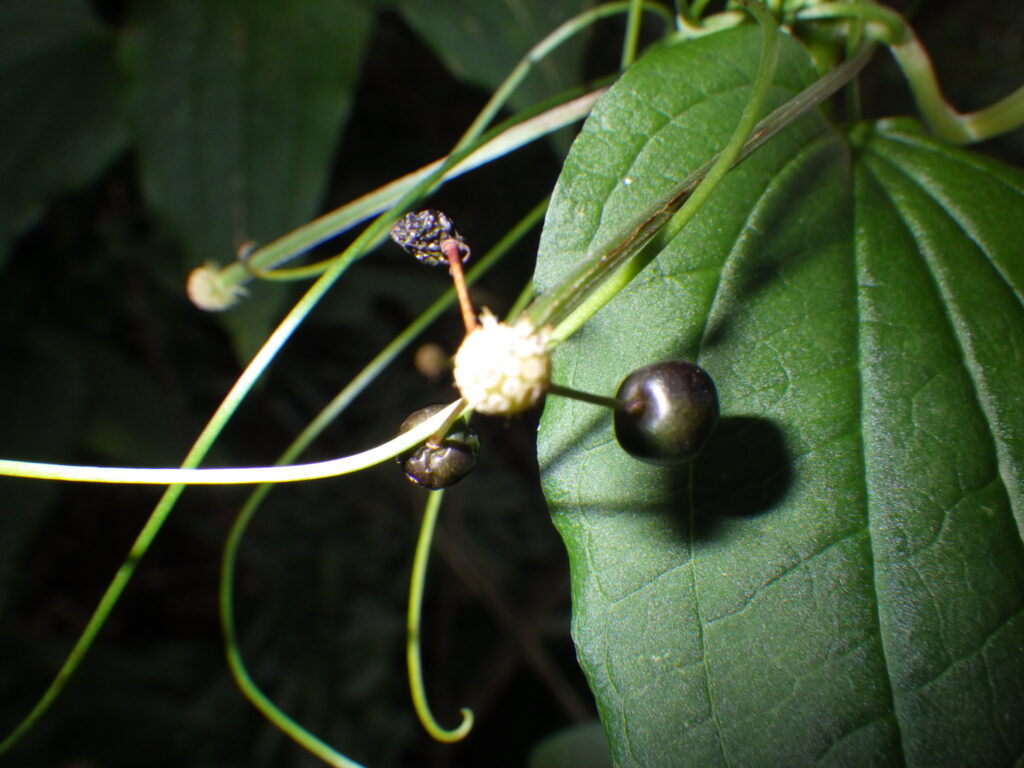
No.0324.a Smilax bracteata (Japanese smilax)
This is a climbing semi-shrub that can grow up to 10 meters tall. The stems are thick and branched, smooth, and sparsely covered with thorns or no thorns. The leaves are alternate, with ovate to oblong blades, 5-10 cm long and 3-13 cm wide. The tips are sharply pointed, thick, and somewhat glossy. It flowers from December to February. The plant is dioecious, producing inflorescence branches 5-8 cm long from the leaf axils, bearing numerous flowers in umbels, sometimes branching to produce 2-3 inflorescences. The flowers are yellow-orange to yellowish. The perianth segments of the male flowers are linear-oblong, about 5 mm long, and reflexed significantly when in bloom. The perianth segments of the female flowers are ovate-oblong, small, about 2.5 mm long. The fruit (berry) is oval, 5-7 mm long, and ripens to black. It is distributed from southern Kyushu to Okinawa; Taiwan, Indochina, the Philippines, and Micronesia, inhabiting forest edges in mountainous areas.
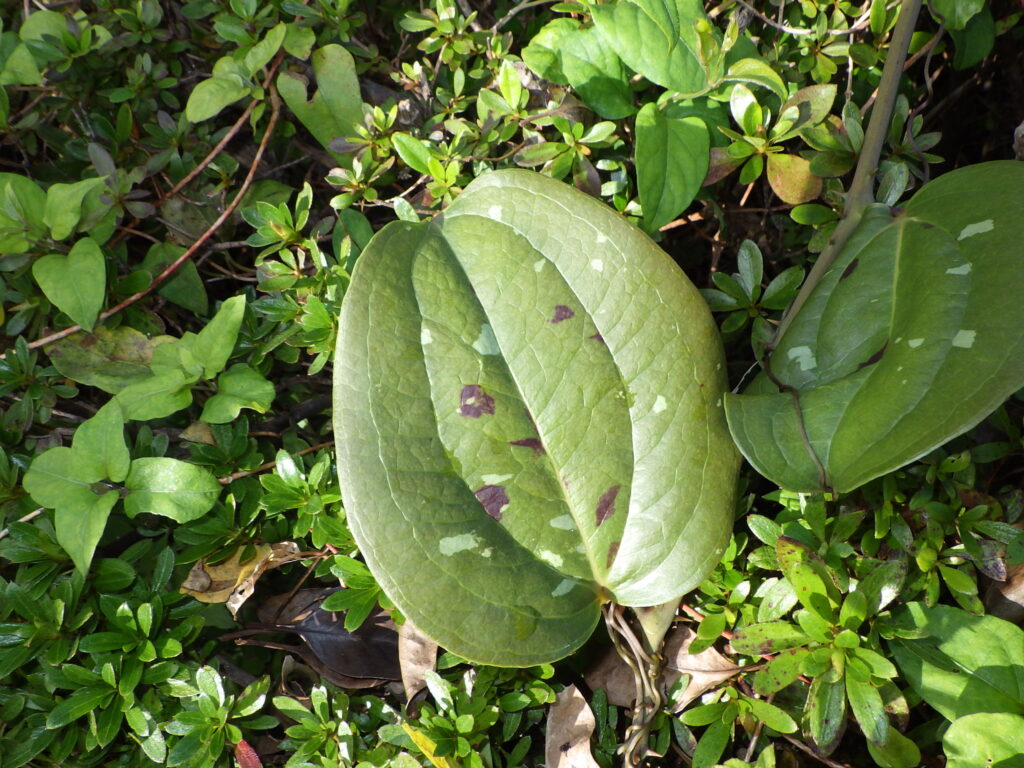
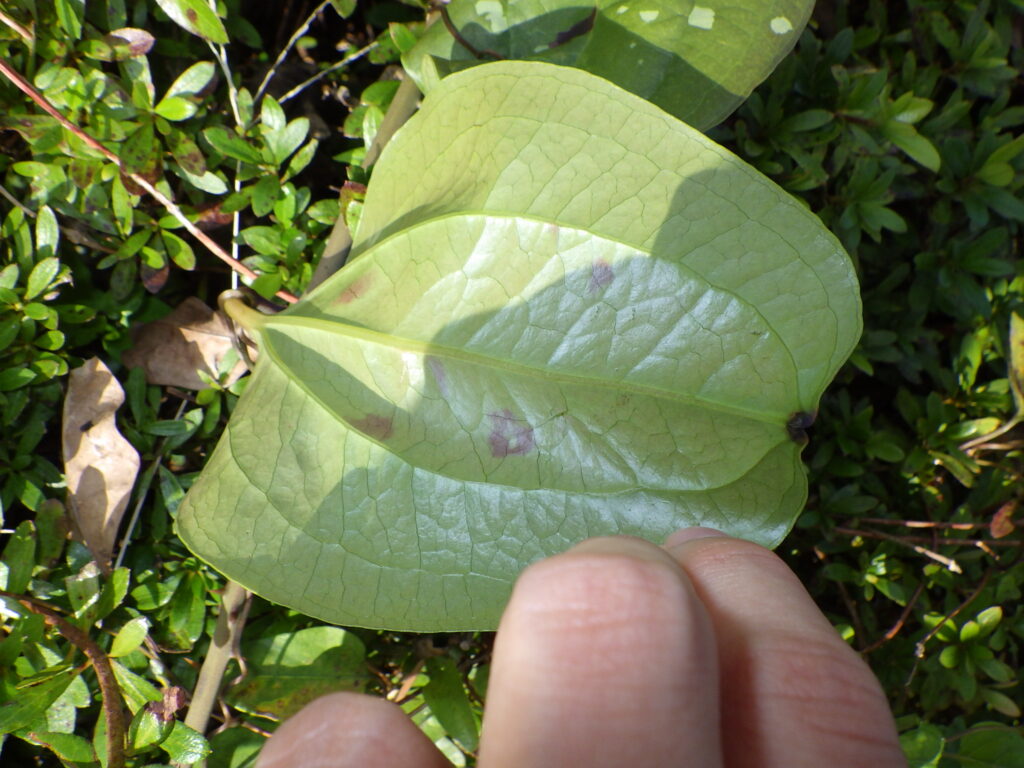
Key to the Smilax family
In the vicinity of Kanagawa Prefecture, you can distinguish between locations using the following search methods.
- It is a herbaceous plant; its stems die back in winter. The stems have no thorns.
- The stems are long and creeping, and the underside of the leaves is pale green and glossy. The flowers bloom in June and July, and the anthers are oblong, about 1 mm long. → Smilax china
- The stems are erect during the flowering season, and the underside of the leaves is greenish-white and dull. The flowers bloom in May and June, and the anthers are linear, 1.5 mm long. → Smilax china
- A semi-shrubby vine; its stems do not die back in winter. The stems may or may not have thorns.
- The stems are covered in prominent thorns. The leaf blades are hard and thin. The fruit ripens to a dark blue-black color. → Japanese mountain laurel
- The stems have sparse thorns or none at all. The leaf blades are leathery. The fruit ripens to a red color.
- The stems have sparse thorns. The leaf blades are ovate to oblong. → Smilax china
- The stems are almost thornless. The leaf blades are circular to kidney-shaped. → Thornless Smilax
Satsuma smilax resembles Smilax china, but differs in that it produces cymose inflorescences.
Furthermore, *Capraea japonica* clearly has smaller leaves than other species.
References
Kanagawa Prefecture Flora Survey Association. 2018. Kanagawa Prefecture Flora 2018 (Electronic Edition). Kanagawa Prefecture Flora Survey Association, Odawara. 1803pp. ISBN: 9784991053726