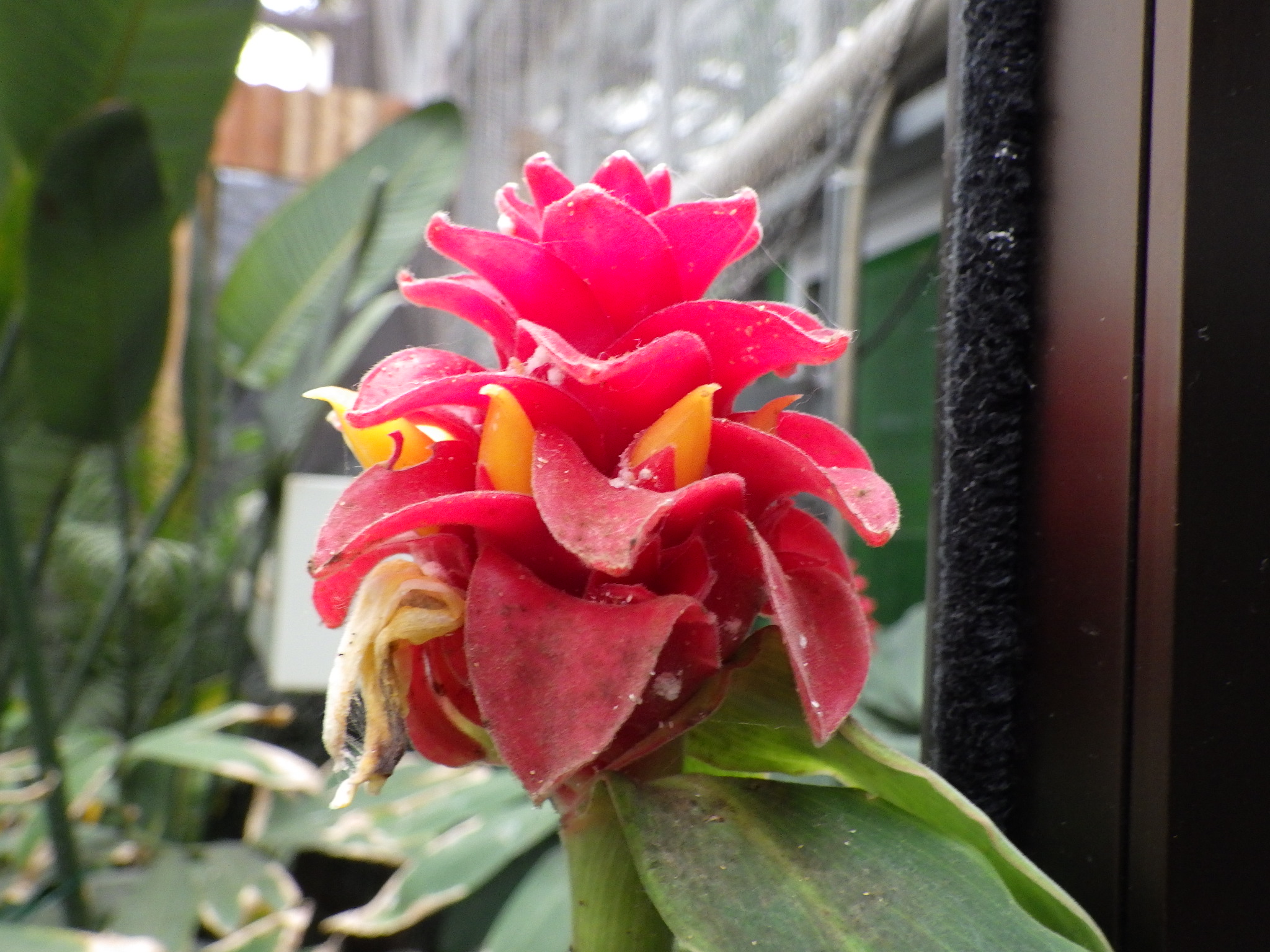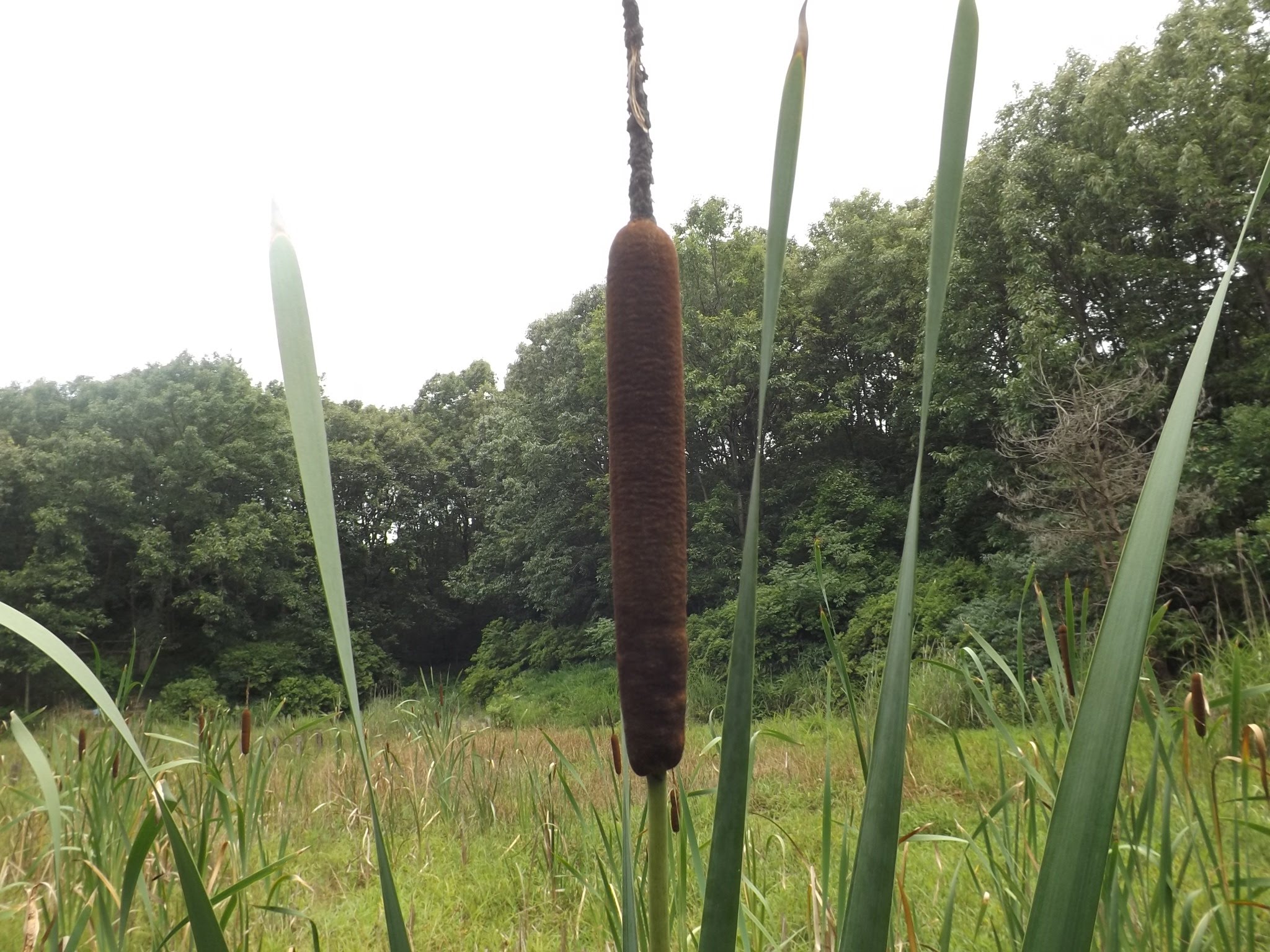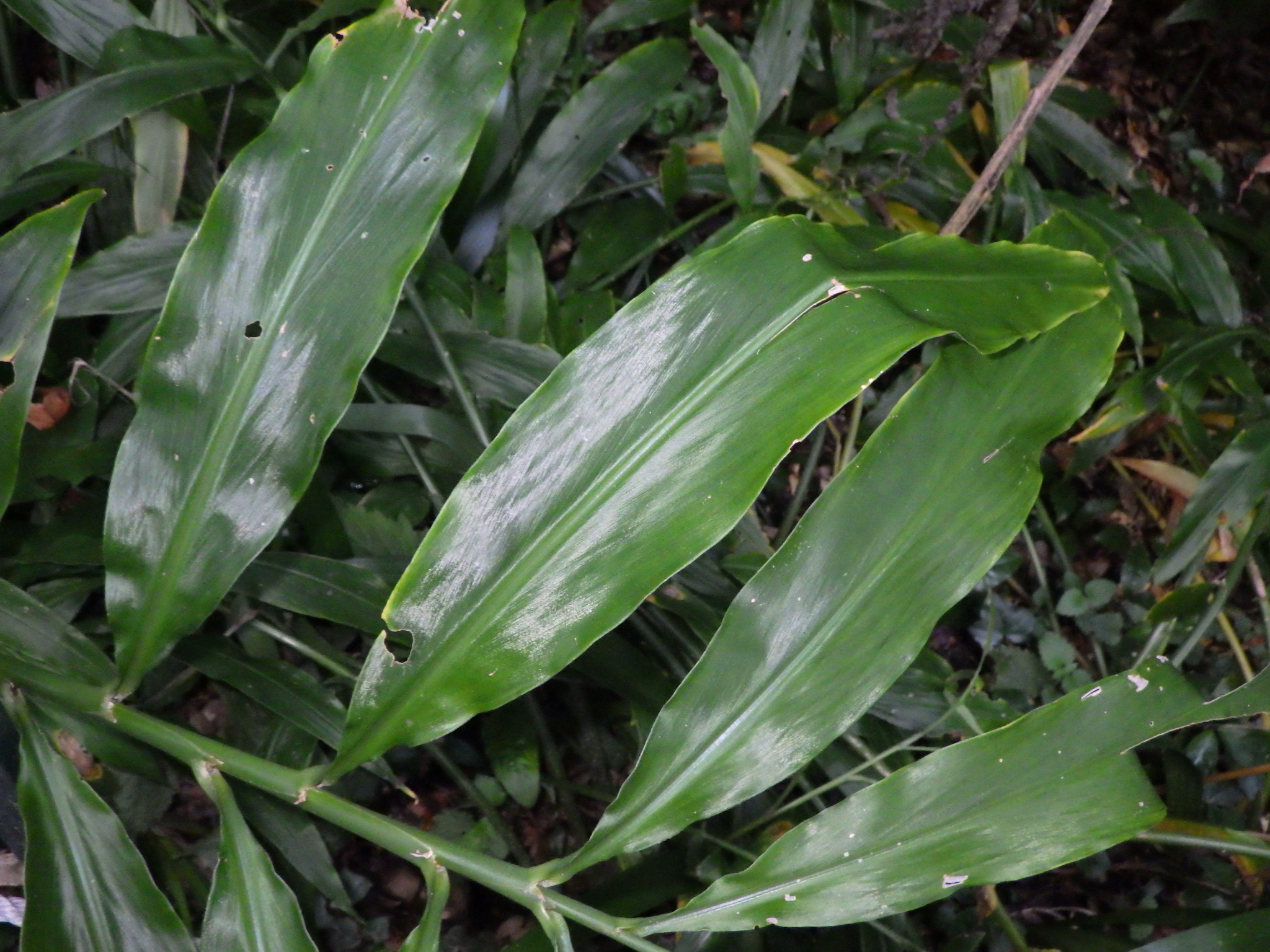
The family Zingiberaceae (ginger family) consists of perennial herbs. They have thickened rhizomes, and the stems are enclosed in leaf sheaths. The leaf blades are linear to oblong, with a ligule between the leaf blade and the leaf sheath. The inflorescences are racemes or spikes with bracts. The flowers are bisexual and bilaterally symmetrical. The outer perianth is tubular, and the inner perianth is 3-lobed with a tubular base. There is only one complete stamen; the others are reduced to the labellum and its appendages. The pistil has an inferior ovary. The fruit is a capsule or berry. There are approximately 50 genera and 1,200 species in tropical and subtropical regions, with two genera, Zingiberum and Alpinia, found in Japan. Cultivated varieties such as ginger, Alpinia zerumbet, and turmeric occasionally escape cultivation and are collected.
This article provides a comprehensive, illustrated guide to plants belonging to the ginger family.
The basic information is based on the Kanagawa Prefecture Flora Survey Association (2018). Photos are replaced as better ones become available. While the identification is done by the author, please note that misidentifications may be corrected without notice.
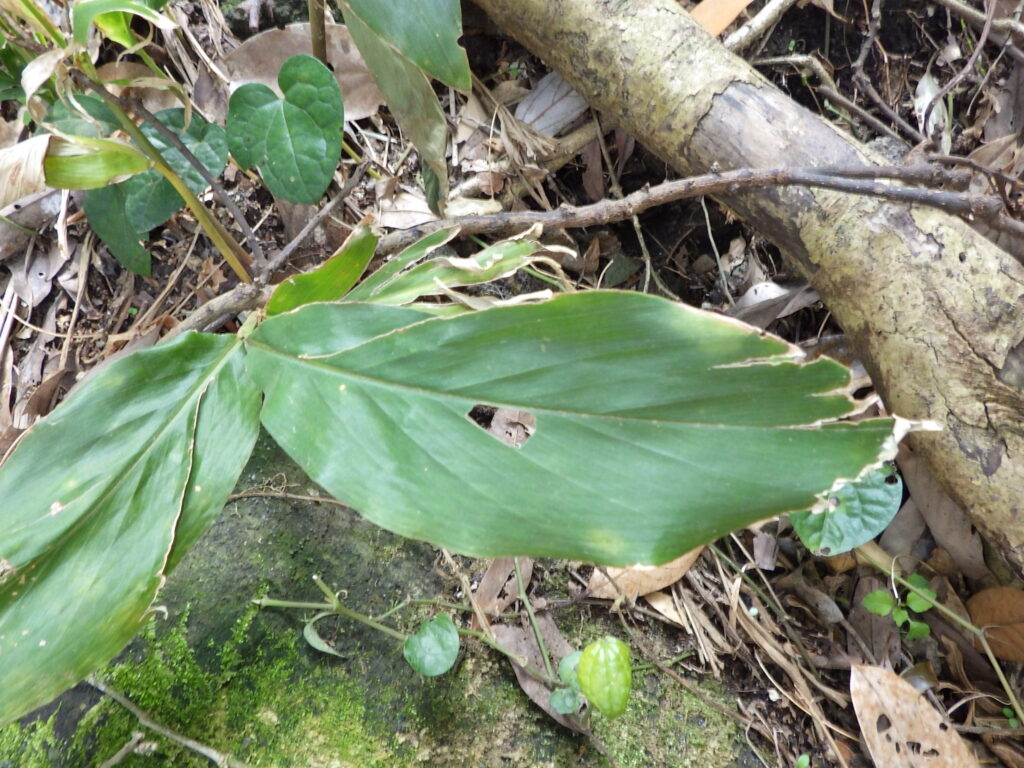
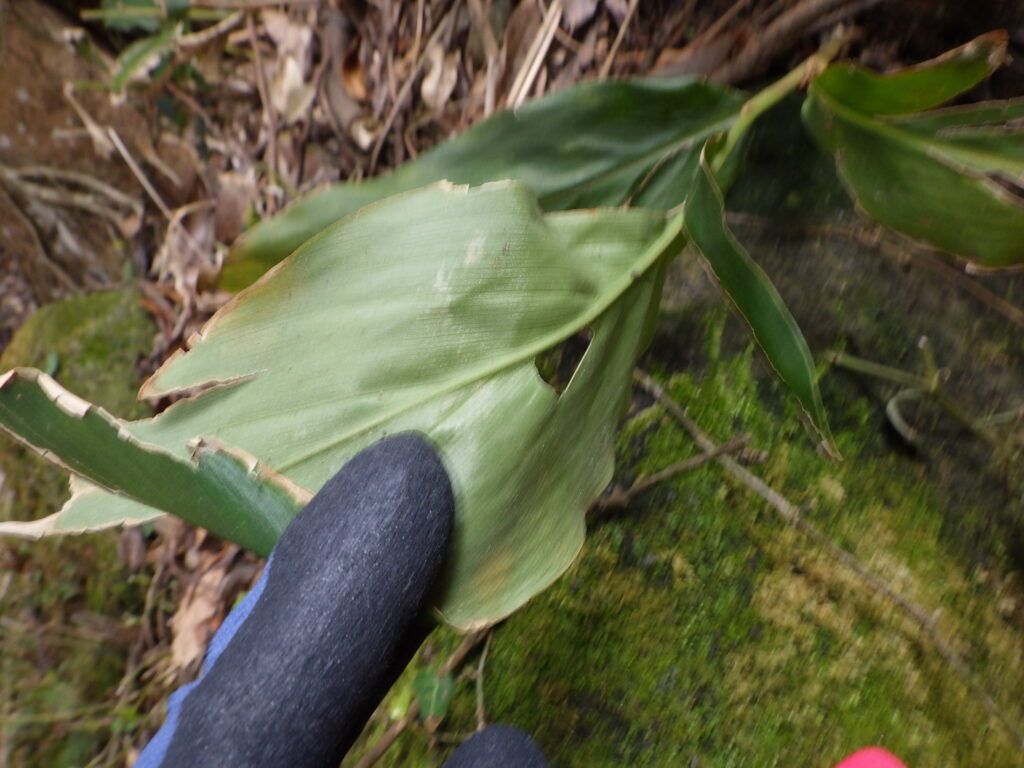
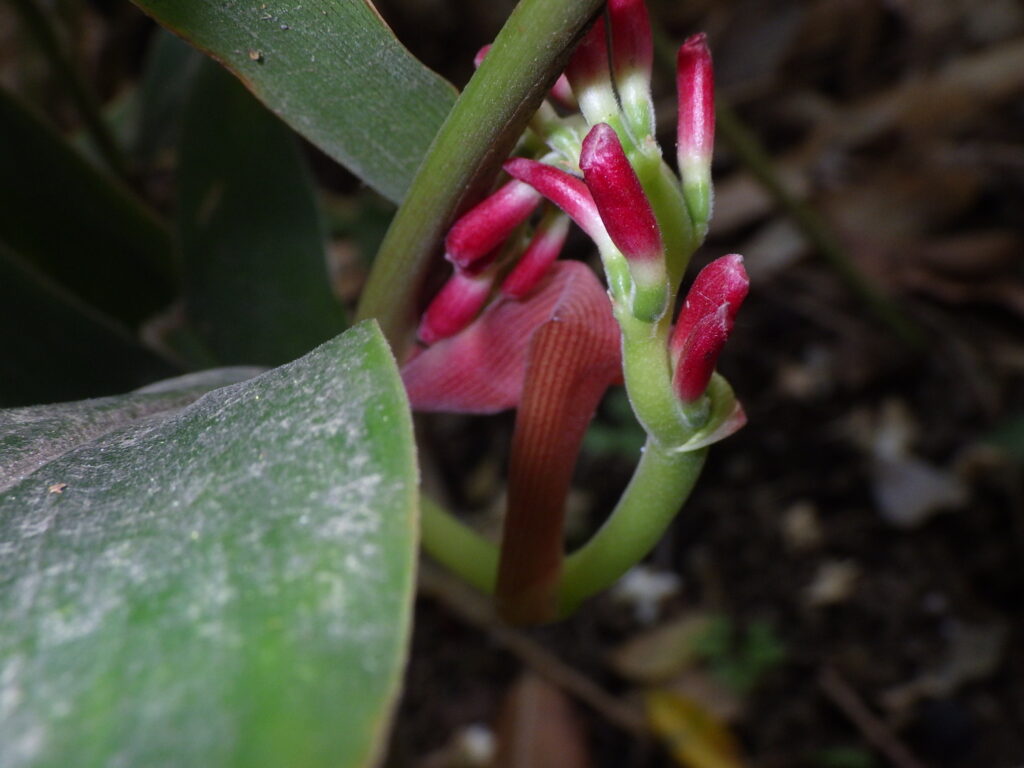
No.0645 Hanamyoga (Alpinia japonica)
This is a perennial herb. Its pseudostem grows to a height of 40-60 cm. The leaves are evergreen, broadly lanceolate, 15-40 cm long and 5-8 cm wide. It flowers in May and June. The inflorescence is spike-like, and the bracts fall off early. The flowers are white, with a white labellum that has red stripes and is 10 mm long. The fruit ripens to red and is broadly oval, 12-18 mm in diameter. It is distributed in Honshu (west of the Kanto region), Shikoku, Kyushu, China (central to southern), and Taiwan, growing on the forest floor of evergreen broad-leaved trees.
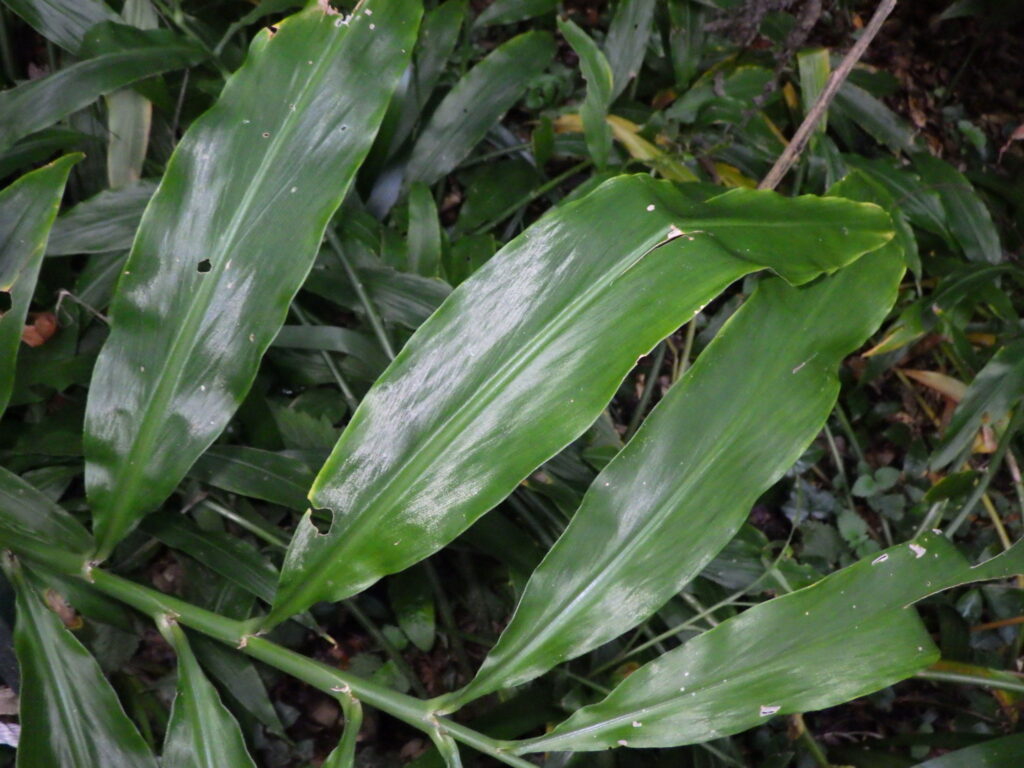
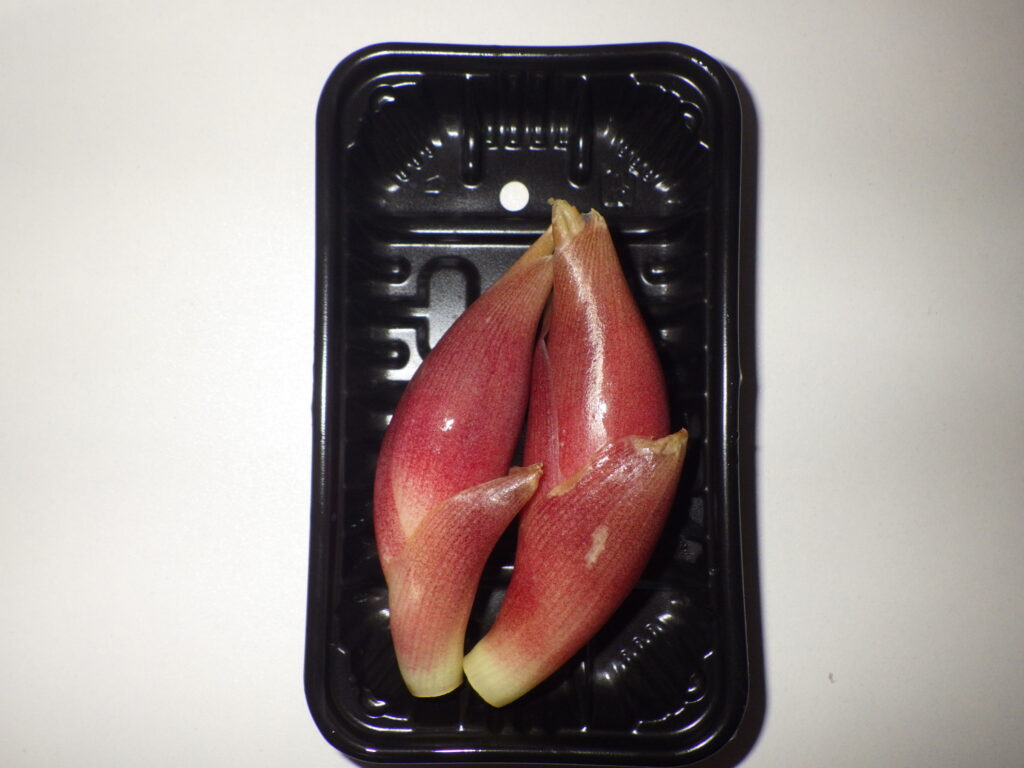
No.0650 Myoga (Japanese ginger)
This is a perennial herb. There are several theories about the origin of its Japanese name, including the theory that when it was introduced from the continent along with ginger, the one with the stronger fragrance was called "senoka" (older brother's fragrance) and the one with the weaker fragrance was called "menoka" (younger sister's fragrance), which later evolved into shoga and myoga. The rhizome creeps horizontally and has scale leaves. The pseudostem is annual, growing obliquely upright, reaching a height of 40-100 cm. The leaf blade is lanceolate to narrowly oblong, 20-30 cm long and 3-6 cm wide, with an acute apex and a short petiole at the base. The leaf sheaths are long and overlap each other to form the pseudostem. The ligule is 1 cm long in the lower leaves, fused at the base, with ovate-lanceolate lobes, while in the upper leaves, the fused part is almost absent, and the lobes are ovate or broadly ovate. It flowers from August to October. Pale yellow flowers bloom in oblong inflorescences 5-7 cm long, covered with scale leaves, at the tip of the rhizome. The bracts are narrowly ovate with an acute apex, and the inner ones are lanceolate and soft. The flowers emerge one after another from between the bracts, open, and wilt within a day. The calyx is tubular with one notch, about 2.5 cm long, and the corolla is elongated and three-lobed, with lanceolate lobes, the upper one being larger. The labellum is three-lobed, with small lateral lobes and a large, tongue-shaped central lobe. There is one stamen, with a long, elongated tip that curls inward and encloses the style. It grows in the shade of trees from Honshu to Kyushu and is also cultivated. It is mostly found near human settlements, and is thought to have been introduced from China and then naturalized (Illustrated Flora of Japan). The time when myoga, which was cultivated in China, was introduced to Japan is unknown, but it is suggested that it existed in Japan in the 3rd century based on a description in the Records of Wei, and it definitely existed in the Nara period based on documents from the Shosoin Treasury (Yoshida, 2020). The flower spikes that emerge from the ground (flower ginger) and the young shoots (ginger bamboo) that are softened and developed under low light and colored pale pink are used as condiments and aromatic vegetables. In China, where myoga was cultivated, it was used as a vegetable at one time, but today it is mainly used as a traditional Chinese medicine, and the areas where it is eaten are limited. Also, in the Korean Peninsula, it is cultivated only to a small extent on Jeju Island, and its existence is hardly known, making Japan the only country that actively uses myoga as a food ingredient. It is used as a condiment for noodles and cold tofu, and as an ingredient in tempura, vinegared dishes, miso soup, and pickles. There are also regional dishes called myoga bochi and myoga manju.
No.0651.a Hanashoga (Zingiber zerumbet)
This is a perennial herb, growing to a height of 60-120 cm. It has an underground rhizome. The leaves are simple, arranged alternately in two rows, 15-35 cm long and 5-8 cm wide, oblong to lanceolate in shape, and hairy on the underside. The base of the leaves wraps around the stem in a sheath-like manner, forming a pseudostem. The flower stalk grows separately from the pseudostem, bearing an oblong inflorescence 3-10 cm long at its tip. The inflorescence is densely covered with bracts that are initially green and later turn red, from which flowers bloom successively. The flowers are conspicuous, with a single staminode that develops into a petal-like structure. The corolla is white or pale yellow, and the labellum-like staminode is white. The fruit is an oblong capsule. Native to Southeast Asia and possibly India, it is cultivated as a home garden plant in India, Sri Lanka, China, and throughout Southeast Asia, and has become naturalized in North America and Australia (Datiles & Acevedo-Rodríguez, 2014). The shape of the rhizome is almost indistinguishable from that of regular edible ginger, but as its name "bitter ginger" suggests, it is extremely bitter, and the essential oil components of ginger lily are completely different from those of edible ginger (Harashima et al., 2012). However, it is occasionally used in regional Asian cuisine. Among indigenous peoples, it is commonly used as a shampoo and conditioner. The main component of ginger lily essential oil is called zerumbone, which accounts for 80-90% of the essential oil. Zerumbone has been found to have inhibitory effects on the EB virus, which is related to cancer, as well as anti-inflammatory effects and induction effects on biological defense and detoxification enzymes.
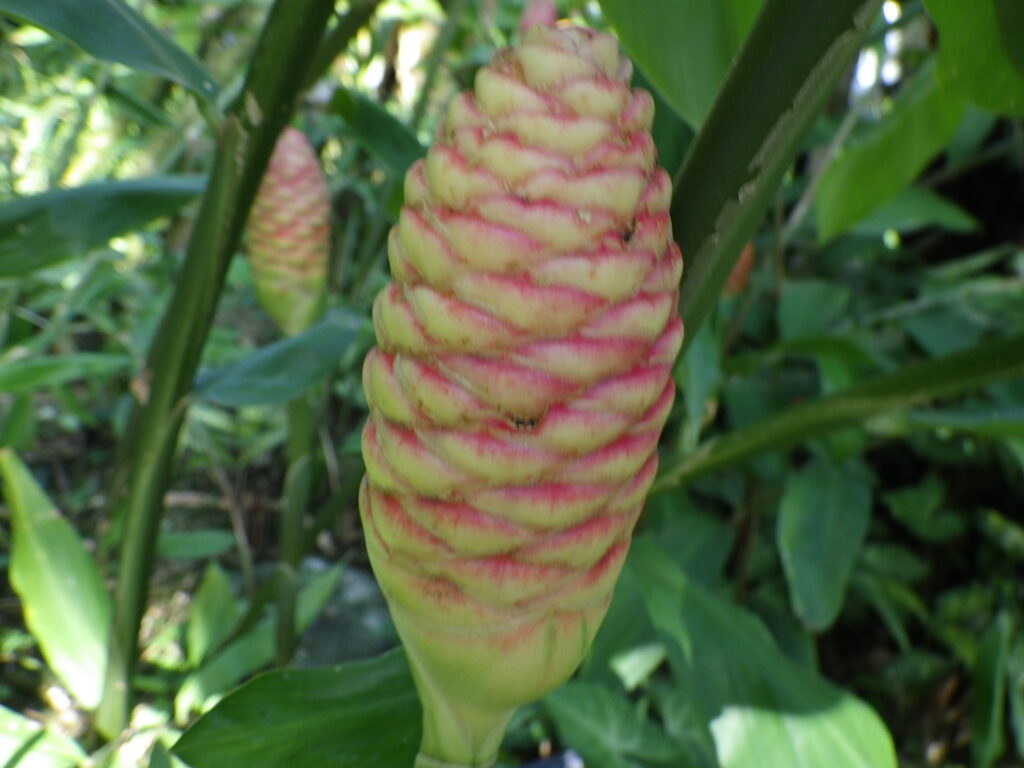
No.0653 Turmeric (Curcuma longa)
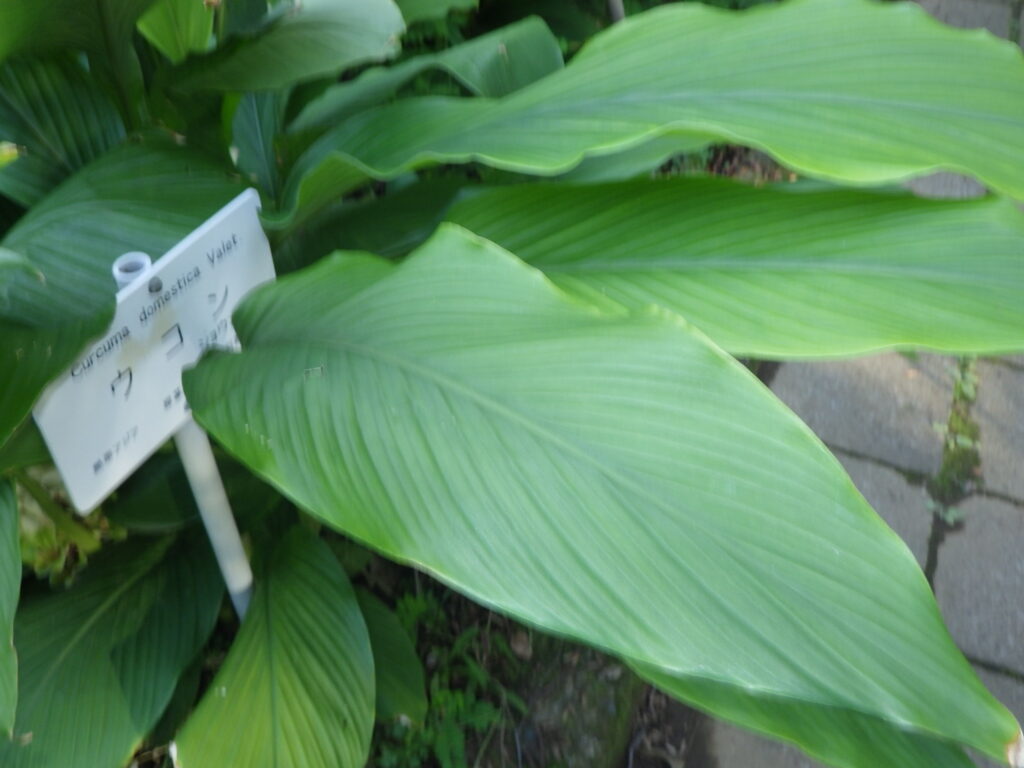
A perennial herb. Also known as turmeric. It grows to a height of about 1m. The rhizome is numerous, branched, orange to bright yellow, cylindrical, fragrant, and has a tuber at the tip. The petiole is 20-45cm long. The leaf blade is green, oblong to elliptic, 30-45 (up to 90)cm long and 15-18cm wide, glabrous, tapering at the base and short, acute at the apex. It flowers from July to October. The inflorescence is terminal on a pseudostem. The peduncle is 12-20cm long, the spike is cylindrical, 12-18cm long and 4-9cm wide, and the fertile bracts are pale green, ovate to oblong, 3-5cm long, and obtuse at the apex. The apical coma brac is spreading, white and green, sometimes tinged with reddish-purple, with an acute apex. The calyx is white, 0.8–1.2 cm long, minutely pubescent, and has three unequal teeth at the apex. The corolla is pale yellow, the tube is less than 3 cm long, the lobes are triangular, 1–1.5 cm long, the central lobe is larger, and the apex is minutely protruding. The staminodes on both sides are shorter than the labellum. The labellum is yellow, with a yellow band in the center, obovate, and 1.2–2 cm long. The anthers have a spur at the base. The ovary is sparsely hairy (Flora of China). It is believed to be native to India and was discovered in Pharmana between 2600 and 2200 BC. For centuries thereafter, it has been used in Asia and has been treated as an important plant in Ayurveda (traditional medicine originating in India and Sri Lanka), Siddha medicine, traditional Chinese medicine, Unani, and the animistic rituals of the Austronesian people. Its swollen, dark yellow rhizome was initially used as a dye and later in folk medicine. It spread from India to Southeast Asia along with Hinduism and Buddhism, where the yellow dye was used for monks and the color of their robes. The main component of the yellow color is curcumin. It has been found in the tomb of a merchant in Megiddo, Israel, dating back to the 2nd millennium BC, and is described as a dye plant in Assyrian cuneiform medical texts preserved in the Library of Ashurbanipal in Nineveh, dating back to the 7th century BC, suggesting that it was used widely from ancient times. Meanwhile, turmeric was found in Tahiti, Hawaii, and Easter Island before European contact, and there is linguistic and circumstantial evidence that Austronesian people spread and used turmeric in Oceania and Madagascar. Polynesian and Micronesian peoples, in particular, did not have contact with India, but they widely used turmeric as both food and dye. Therefore, it is possible that an independent domestication event occurred. In medieval Europe, turmeric was called "Indian saffron." In fact, it is now used in various dishes to color food as a substitute for bankoka (saffron), with curry, turmeric rice, and paella being prime examples. In Japan, it is also used to adjust the color of pickled radish (takuan). The taste of turmeric itself seems to impart a simple, mustard-like aroma and a pungent, slightly bitter flavor to food. While some drinks are marketed as improving liver function, and may even alleviate digestive disorders, there is currently no medical evidence that they improve hangovers. In fact, reports of them causing liver damage are more prominent (Japan Medical Association, 2008), so their use for this purpose is not very reliable at the moment.
References
Datiles, MJ, & Acevedo-Rodríguez, P. 2014. Zingiber zerumbet (shampoo ginger). CABI Compendium. https://doi.org/10.1079/cabicompendium.57539
Harashima, Hiroshi; Kitayama, Takashi; and Ito, Michiho. 2012. A Vocabulary of Pharmacognosy and Herbal Medicines: Learning from Etymology (Revised 2nd Edition). NTS, 366pp. ISBN: 9784860433987
Kanagawa Prefecture Flora Survey Association. 2018. Kanagawa Prefecture Flora 2018 (Electronic Edition). Kanagawa Prefecture Flora Survey Association, Odawara. 1803pp. ISBN: 9784991053726
Japan Medical Association. 2008. A Collection of Cases of Health Damage Caused by So-called Health Foods and Supplements. Dobun Shoin, Tokyo. 183pp. ISBN: 9784810331561
Yoshida, Munehiro. 2020. Myoga (Japanese ginger). Journal of Dietary Research 41(1): 1-10. ISSN: 0288-0806, https://ku-food-lab.com/wp/wp-content/uploads/2020/11/7600dc2e047b2aaee2a717a838c03d25.pdf