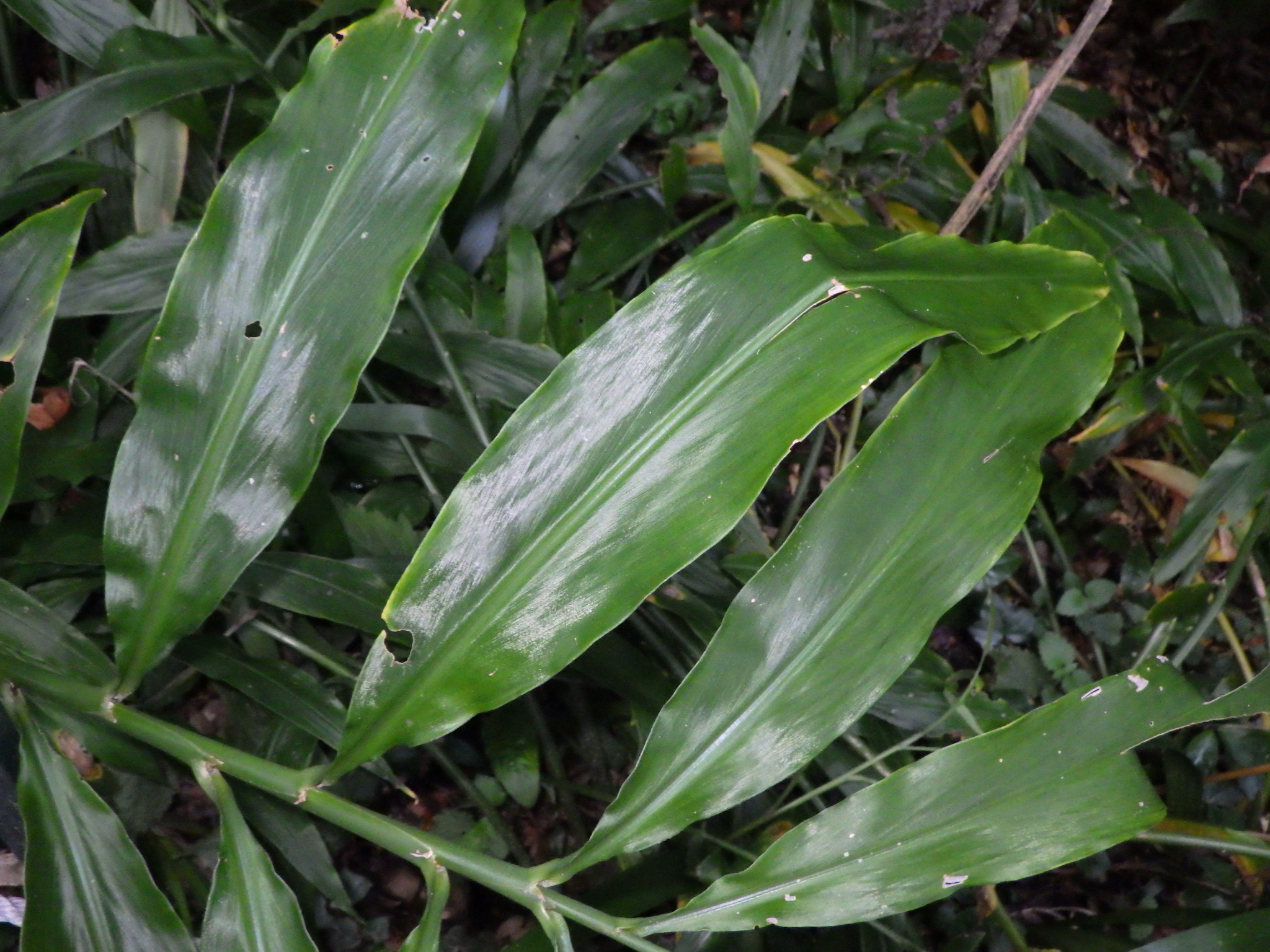
The family Costaceae is a pantropical monocotyledonous plant. The leaves are arranged spirally, and the leaves at the base of the stem are usually wingless. The base of the leaves has a closed leaf sheath, and there is a projection called a ligule at the top of the leaf sheath. What distinguishes it from other Zingiberales species is that it has five fused stamens instead of two or three, and it does not contain aromatic oil. The fusion of five stamens instead of two or three is thought to serve the function of attracting pollinators. The flowers are single in the genus Monocostus. In other genera, the flowers are borne in broad inflorescences ranging from slender to almost capitulum-like. The flowers are enclosed in large bracts. The fruit is a capsule. The rhizome is fleshy and has a tuberous root. Approximately 143 species are known, including 1 in the genus Monocostus, 2 in Dimerocostus, 16 in Tapeinochilos, 2 in Paracostus, about 8 in Chamaecostus, about 5 in Hellenia, and about 80 in Costus. They are native to the tropical regions of Asia, Africa, Central America, and South America. Several species are cultivated.
This article provides a comprehensive, field guide-style introduction to plants belonging to the Iridaceae family.
The photos are replaced as soon as better ones are taken. Also, while the identification is done by the author, please note that if there are any misidentifications, they may be changed without notice.
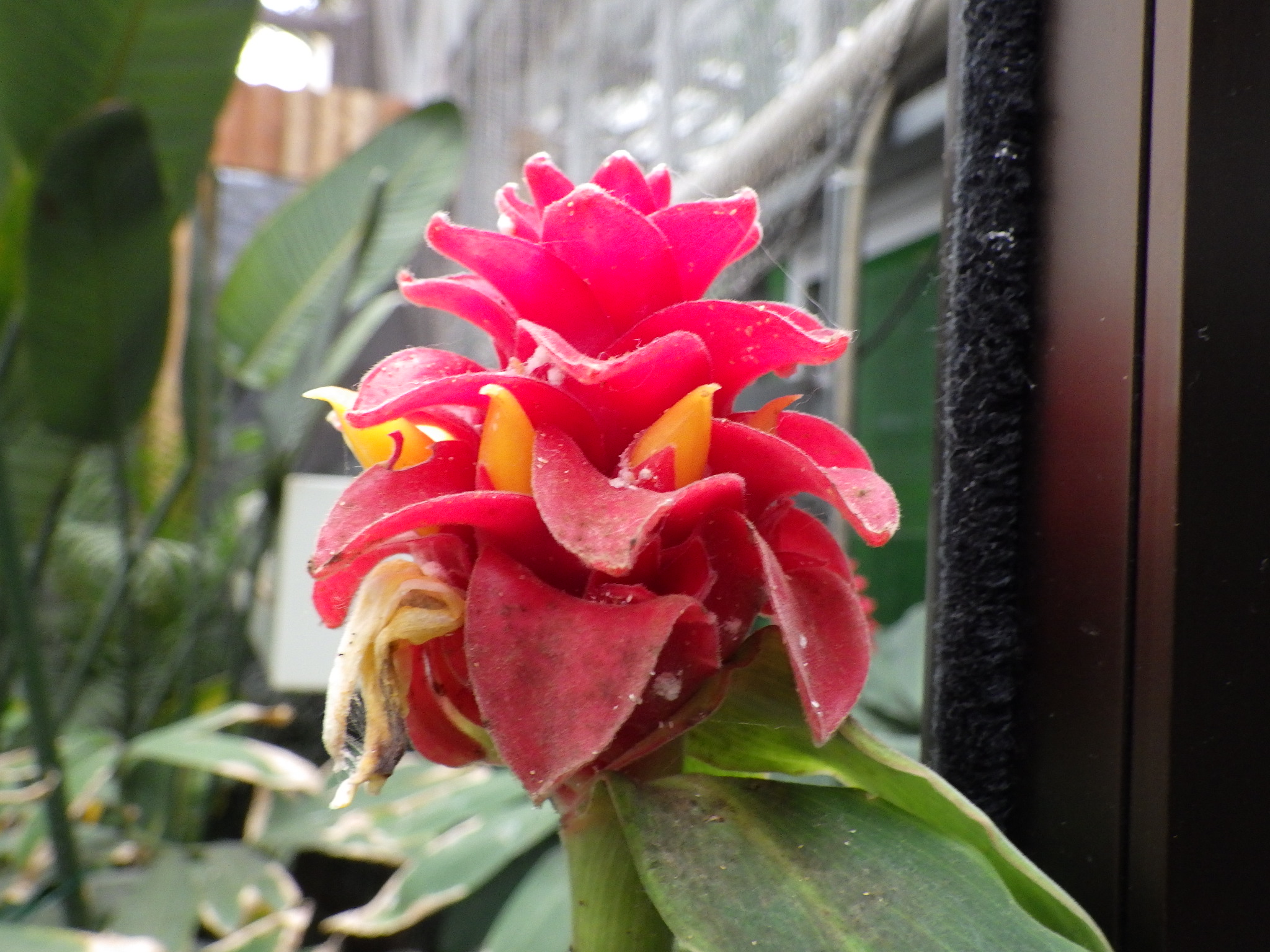
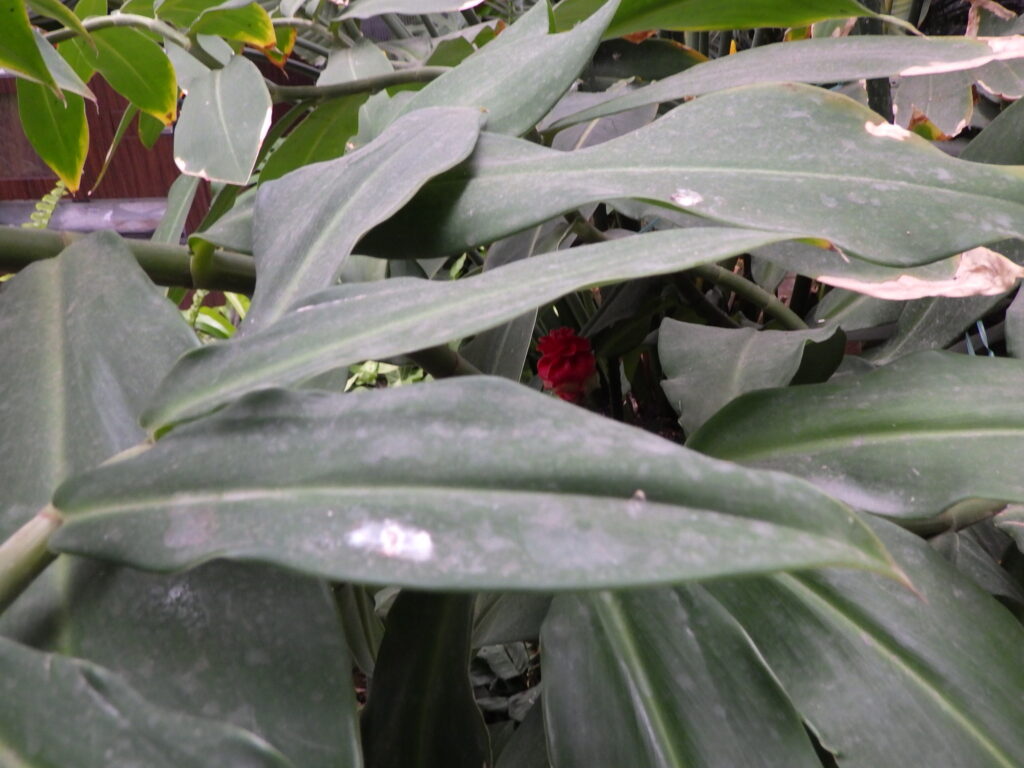
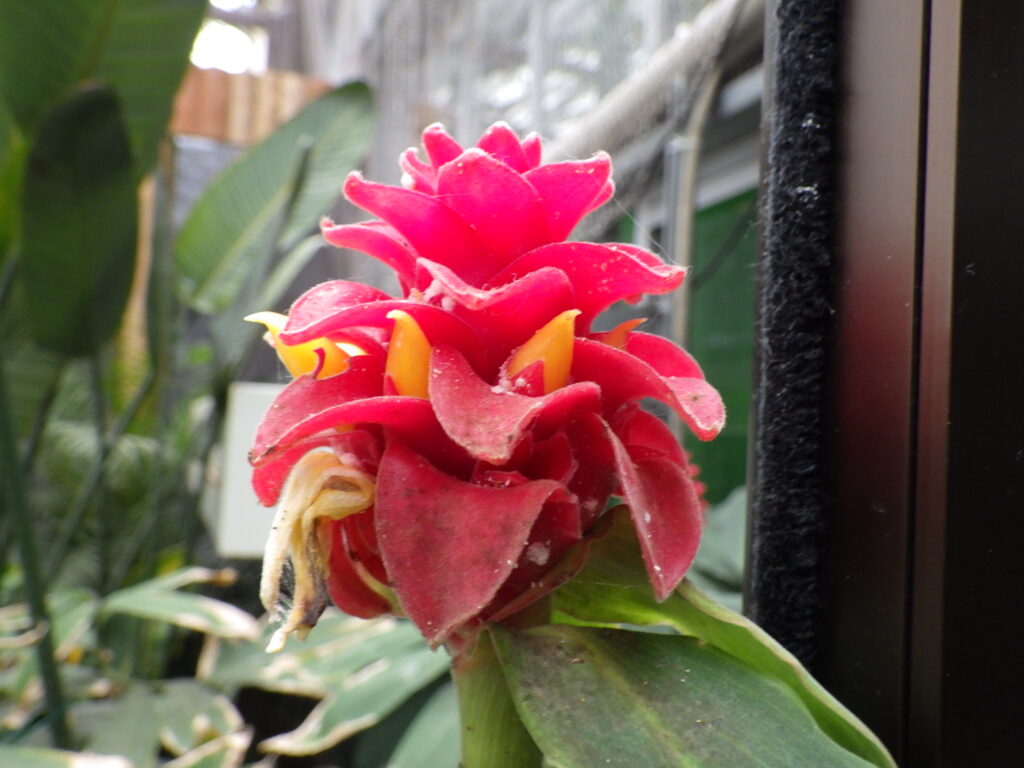
No.0644.b Spiral Ginger Costus comosus var. bakeri
Spiral ginger is commonly known by the scientific name Costus barbatus, but this is incorrect; the listed scientific name is correct (Skinner, 2016). Currently, it is not correctly described in many countries, including Japan and the United States, except for Australia. True Costus barbatus is endemic to the Central Valley region of Costa Rica and is not cultivated. Differences include longer petioles and flowers covered in soft hairs. Skinner spent many years searching for Costus barbatus, finally discovering it growing in 2011 in a streambed in a forest area east of San Jose, Costa Rica. It has only been seen in one other location and is listed as an endangered species on the Red List. It is a rhizome-like perennial herb with slender, reed-like stems up to 2 meters tall. The leaves, up to 40 cm long and 10 cm wide, are arranged spirally on the stem, with a strong glossy green at the top and a darker, almost black, base. The inflorescence is a conical spike 20–30 cm long, with bright red, waxy bracts containing showy yellow tubular flowers 4 cm long. The fruit is a spherical berry, 4 cm long and 2.5 cm wide, containing black seeds. It reproduces by fission and seed. It is native to the moist forests of Central America, from southern Mexico to Ecuador. It is frequently cultivated as an ornamental plant in tropical and subtropical regions. Some species of the genus Costus have evolved from bee-pollinated to hummingbird-pollinated, resulting in altered flower morphology (Kay & Grossenbacher, 2022). This species is pollinated by hummingbirds.
References
Kay, KM, & Grossenbacher, DL 2022. Evolutionary convergence on hummingbird pollination in Neotropical Costus provides insight into the causes of pollinator shifts. New Phytologist 236(4): 1572-1583. https://doi.org/10.1111/nph.18464
Skinner, D. 2016. Ornamental costus. Ornamental Horticulture 22: 307-317. ISSN: 2447-536X, https://doi.org/10.14295/oh.v22i3.984