Alnus japonica, Alnus sieboldiana, and Alnus sieboldiana are all species of Alnus genus in the Betulaceae family and are endemic to Japan. They have symbiotic relationships with both ectomycorrhizal fungi and nitrogen-fixing actinomycetes that can utilize atmospheric nitrogen, making them well-suited to living in poor soil. In addition to growing naturally, they are also used for greening and other purposes. They can be distinguished from other Alnus species by the fact that the lateral veins of their leaves are almost straight and parallel, and their fruits have broad wings. However, these three species share common characteristics within the Alnus genus, which can make identification difficult. Nevertheless, they can be distinguished by observing their distribution and various morphological features. In particular, the shape of the leaves is remarkably different and provides a reliable clue for identification. The inflorescences develop before or during leaf unfolding and are pollinated by wind. The fruits are contained in the fruit cluster, and when ripe, they expose winged nuts that are dispersed by wind to expand their habitat. This article will explain the classification, pollination ecology, and seed dispersal of Alnus japonica, Alnus sieboldiana, and Alnus sieboldiana.
- What are Japanese alder, dwarf Japanese alder, and large-leaved Japanese alder?
- What are the differences between Alnus japonica and Alnus species?
- What are the differences between Alnus japonica, Alnus sieboldiana, and Alnus sieboldiana?
- What is the structure of a flower?
- What is the method of powder delivery?
- What is the structure of the fruit?
- What about seed dispersal?
- References
What are Japanese alder, dwarf Japanese alder, and large-leaved Japanese alder?
Alnus firma is a deciduous small tree that grows in mountainous areas of Honshu (Fukushima Prefecture to the Pacific side of the Kii Peninsula), Shikoku, and Kyushu in Japan (Mogi et al., 2000; Kanagawa Prefecture Flora Survey Association, 2018).
Alnus pendula, also known as dwarf alder, is a deciduous small tree distributed in Hokkaido, Honshu (Japan Sea side), and Shikoku in Japan. It grows in hilly to mountainous areas and is common in barren land and landslide areas in snowy regions.
Alnus sieboldiana, also known as Japanese alder, is distributed in Honshu (the Pacific coast from southern Fukushima Prefecture to the Kii Peninsula) and Hachijojima Island in Japan. It grows in mountainous to hilly areas near the coast, thrives even in poor soil, and invades landslide areas. Its distribution area has been expanding in recent years due to the sowing of seeds for erosion control and greening purposes.
Its Japanese name, written in kanji as "Yasha Gobaishi," is said to derive from the fact that the ripe, bumpy fruit clusters resemble "Yasha," a demon god from Indian mythology, and that the fruit clusters, which contain a lot of tannins, were used as a substitute for gallnuts (fushi) used in teeth blackening.
All of these species belong to the genus Alnus in the family Betulaceae and are endemic to Japan. Both species have symbiotic relationships with both ectomycorrhizal fungi and nitrogen-fixing actinomycetes that can utilize atmospheric nitrogen, making them well-suited to living in poor soil (Ishikawa and Nara, 2022). Due to these characteristics, they are sometimes planted for greening purposes.
These three species share many morphological characteristics, such as nearly straight and parallel lateral veins on the leaves and broad wings on the fruit, which can make identification difficult.
What are the differences between Alnus japonica and Alnus species?
Before distinguishing between the three species mentioned above, it's important to note that the same genus, Alnus, also includes species such as Alnus japonica, Alnus hirsuta var. hirsuta, and Alnus matsumurae (Kanagawa Prefecture Flora Survey Association, 2018). While we will refer to these collectively as Alnus species here, how can we distinguish between Alnus species and Alnus species?
The most representative difference, as mentioned above, is that in Alnus species, the lateral veins of the leaves are almost straight and parallel, and the fruit has broad wings, whereas in Alnus species, the lateral veins of the leaves are slightly curved or branched towards the tip, and the wings of the fruit are narrow.
It's particularly important to remember that Alnus species have parallel lateral veins with few branches. However, this characteristic is actually quite common in the Betulaceae family.
In addition, while Alnus species have sessile winter buds and solitary male inflorescences without stalks, Alnus species have winter buds with short stalks and terminal male inflorescences with short stalks. However, they are highly seasonal and may not be seen very often.
What are the differences between Alnus japonica, Alnus sieboldiana, and Alnus sieboldiana?
The three species, Alnus japonica, Alnus sieboldiana, and Alnus sieboldiana, can be distinguished by observing their distribution and various morphological features (Kanagawa Prefecture Flora Survey Association, 2018).
First, regarding their natural distribution, both Alnus japonica and Alnus sieboldiana are found on the Pacific side of Honshu (from Fukushima Prefecture to the Kii Peninsula), while Alnus japonica is found on the Sea of Japan side of Honshu. Therefore, considering only their natural distribution, they can usually be distinguished to some extent at the observation site.
However, since both types are used for erosion control and greening, they can sometimes escape and end up mixed together. Therefore, it would be dangerous to judge solely on this basis in areas with low naturalness.
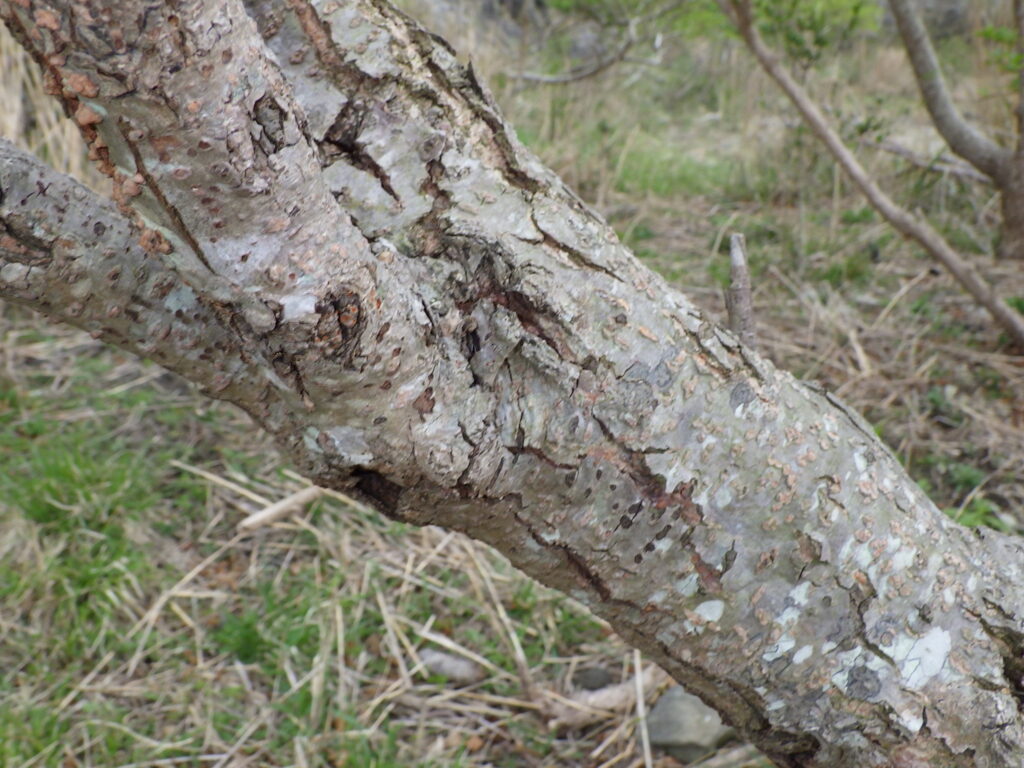
Morphologically, Alnus japonica has thick, hairless one-year-old branches, leaves with sharp, double serrations, and a single fruit cluster, while Alnus japonica and Alnus serrata have slender, initially hairy one-year-old branches, leaves with low, double serrations, and fruit clusters that typically contain 2 to 6 fruits.
Regarding Alnus japonica and Alnus sieboldii, the main difference is that Alnus japonica typically has two fruit clusters that grow directly on the tree, while Alnus sieboldii has three to six fruit clusters that hang downwards.
However, these are also seasonal characteristics, so it is ultimately more practical to observe the differences in the leaves (Kanagawa Prefecture Flora Survey Association, 2018; Hayashi, 2019).
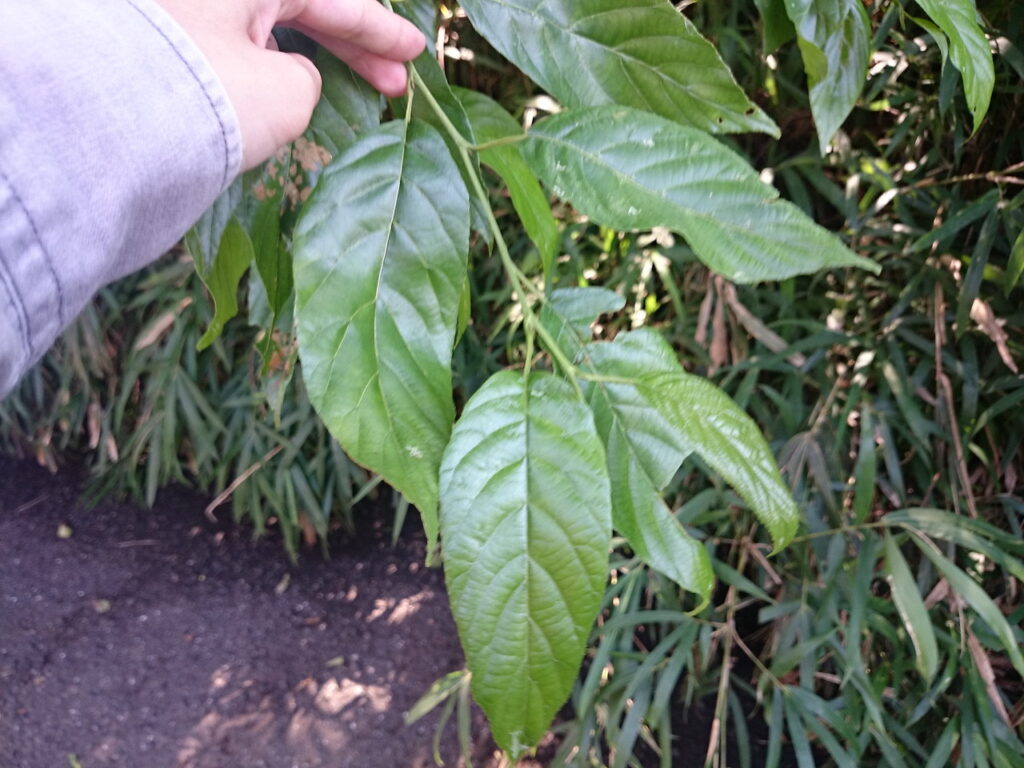
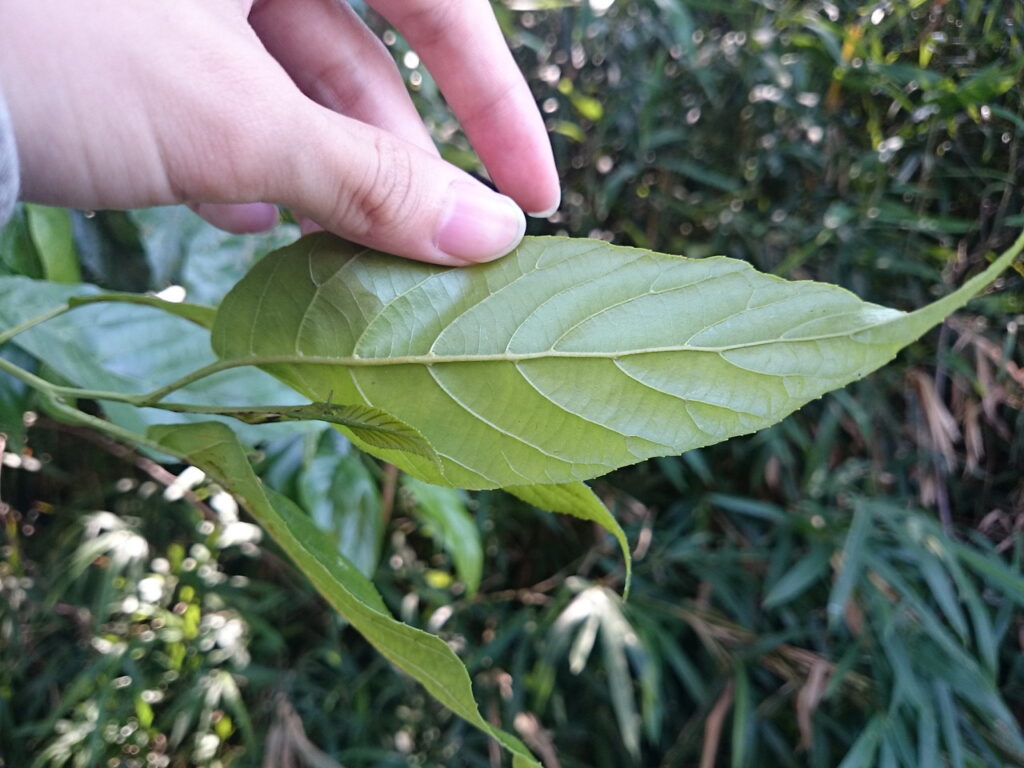
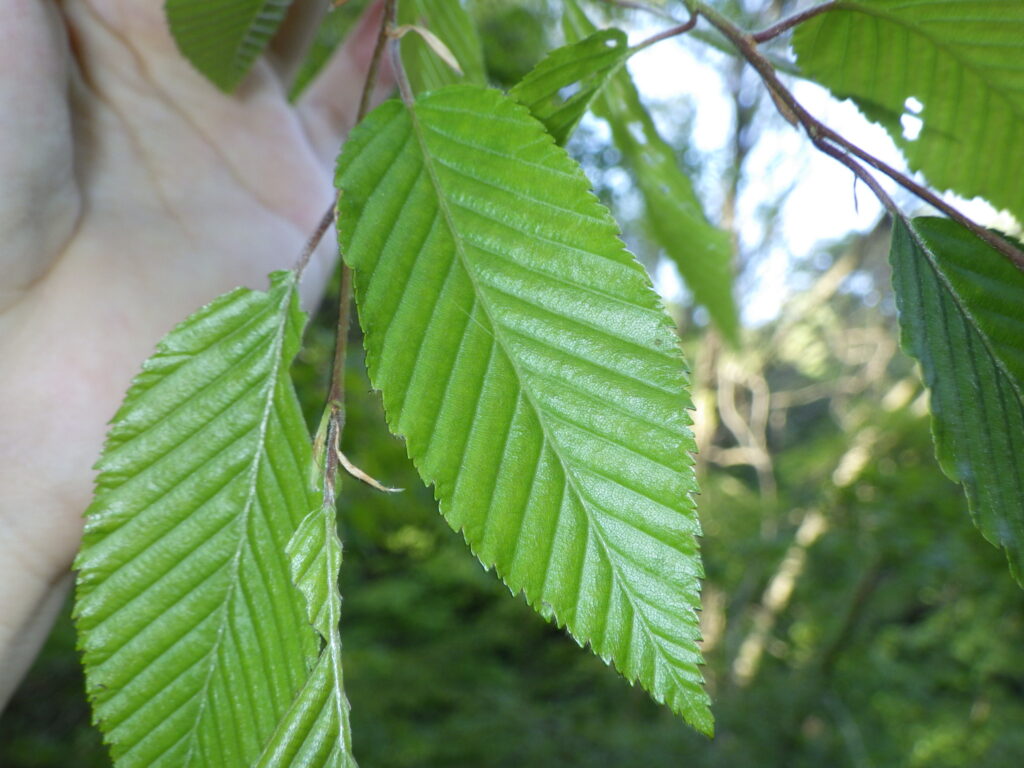
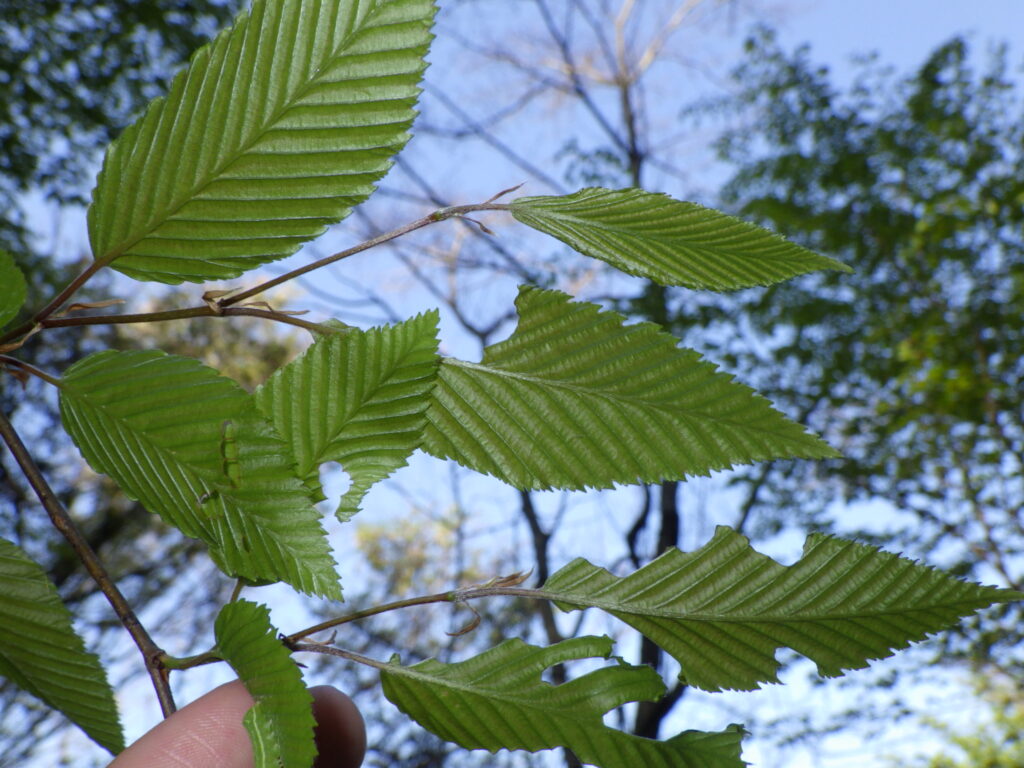
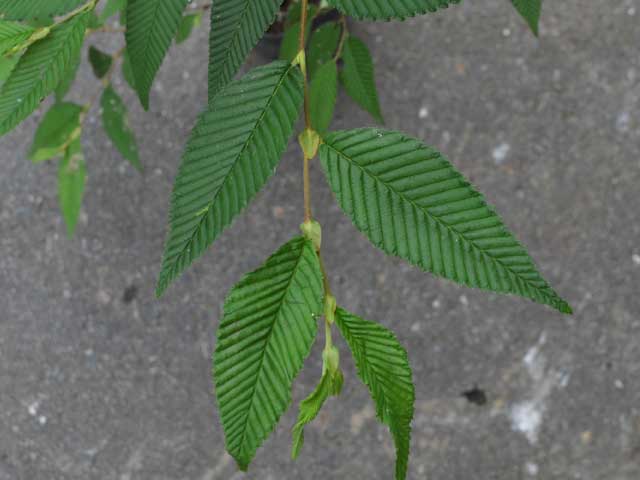
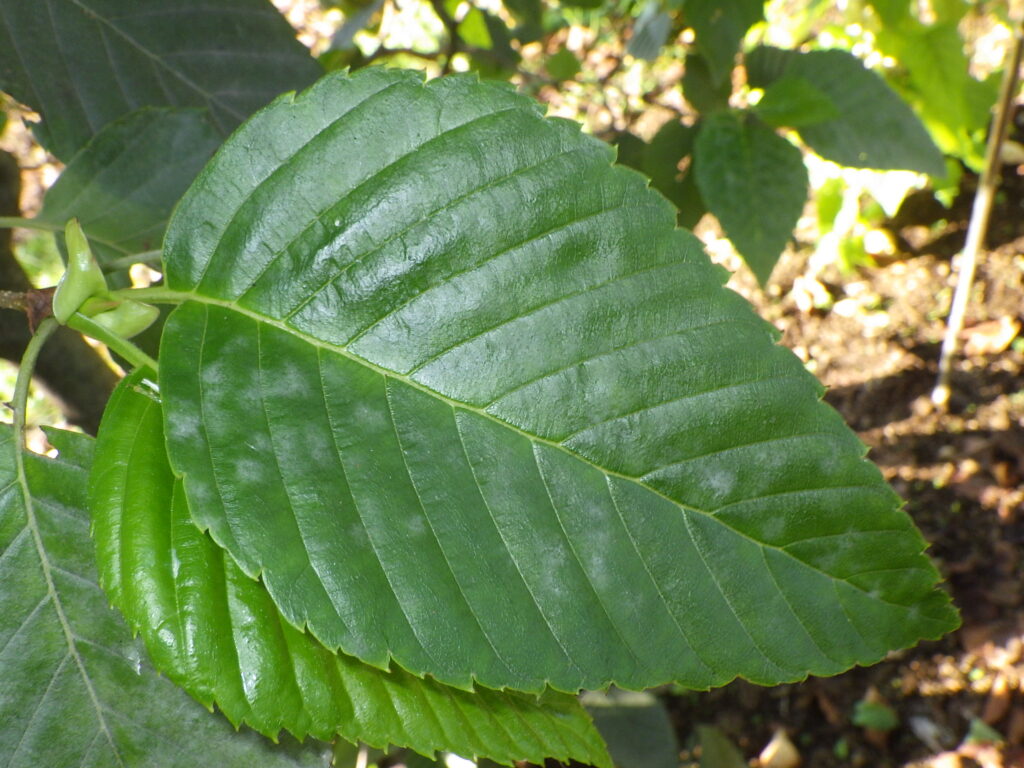
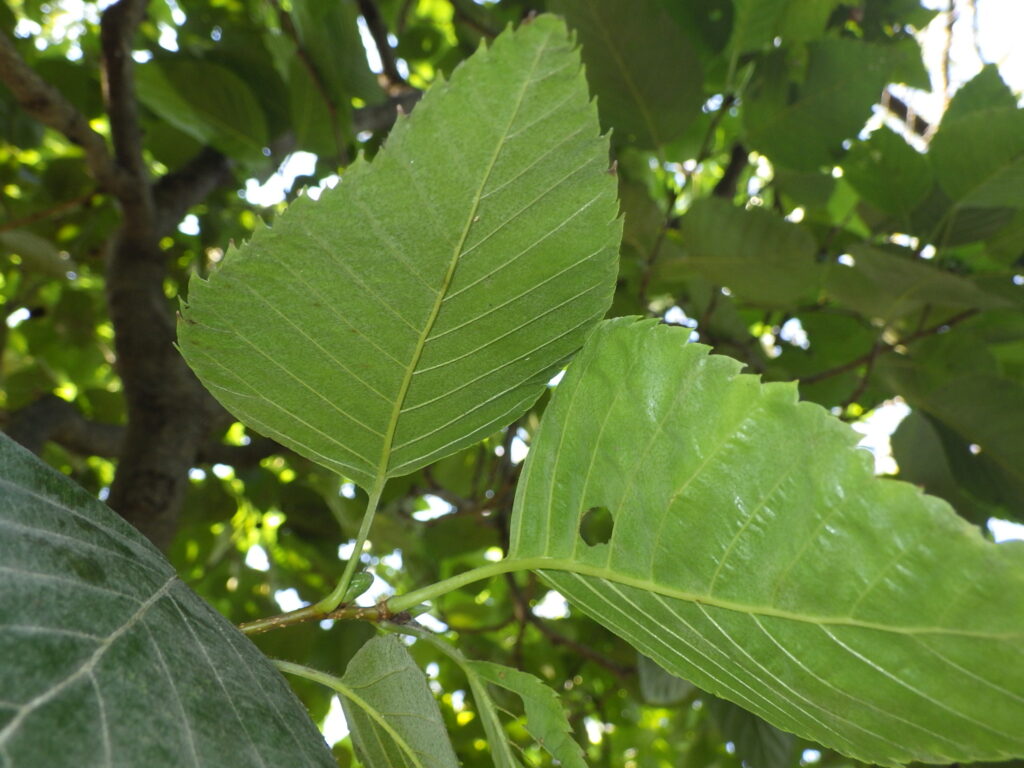
Regarding the leaves, in Alnus japonica, they are narrowly ovate with 13-17 pairs of lateral veins and a rounded base, while in Alnus japonica, they are broadly lanceolate with 20-26 pairs of lateral veins and a wedge-shaped base, and triangular-ovate with 11-15 pairs of lateral veins and a rounded base.
This feature is a clear difference, so be sure to check it carefully.

What is the structure of a flower?
Alder species are all monoecious (having both male and female flowers on the same plant) (Mogi et al., 2000).
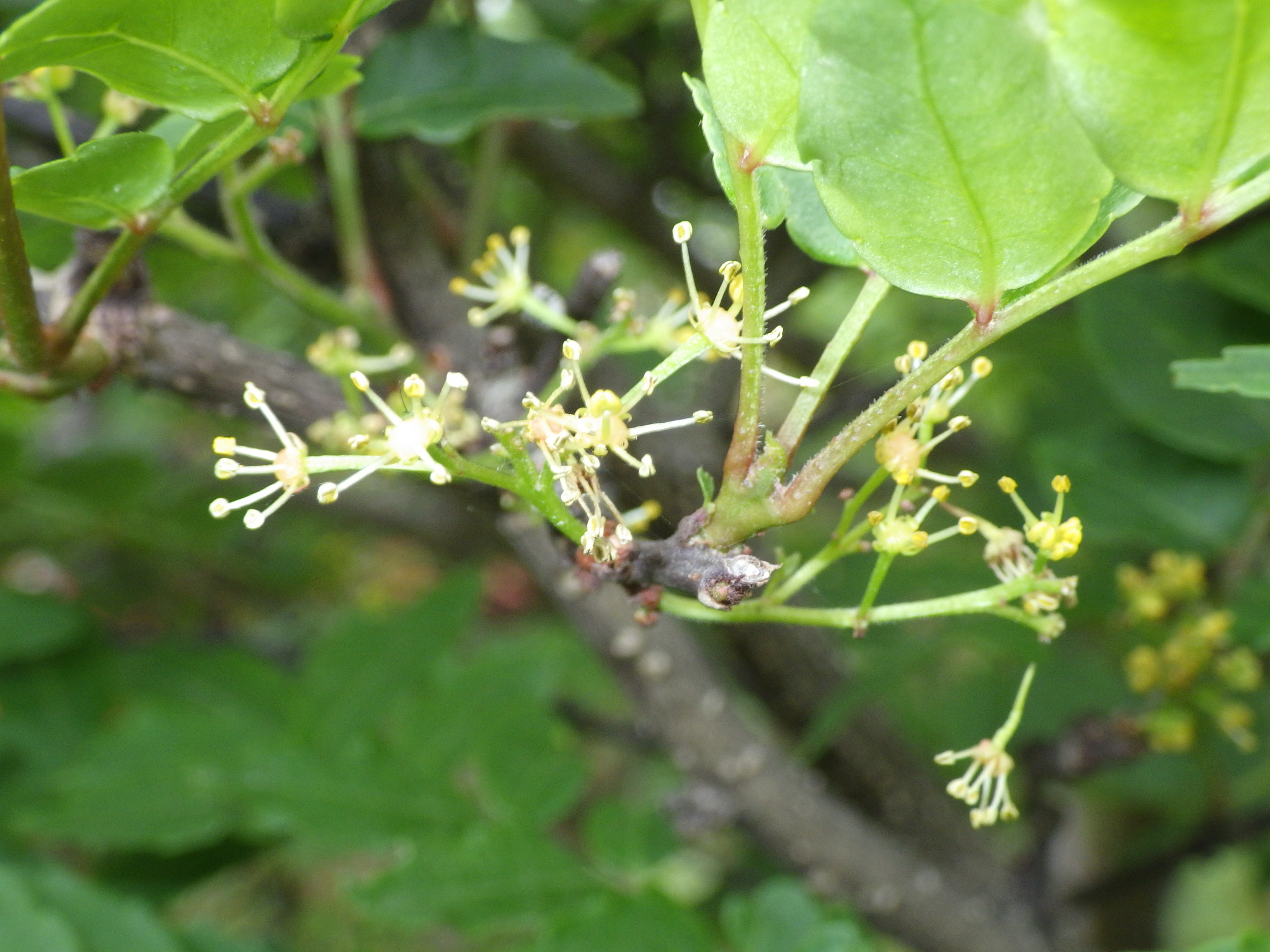
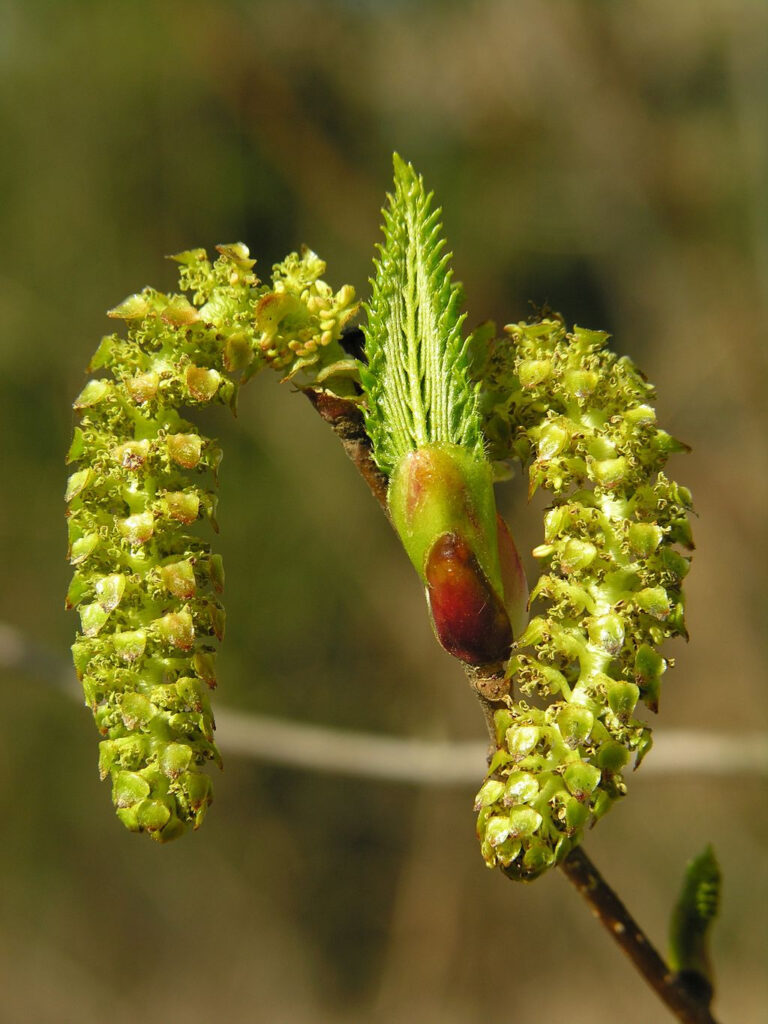
Alnus japonica flowers from March to April, blooming before the leaves unfold. At the tips of the branches, there are somewhat thick male inflorescences, 4-6 cm long, that curve downwards in an arching shape, with one or two female inflorescences growing upright inside them.
Alnus japonica flowers from March to May, blooming simultaneously with the unfolding of its leaves. The male inflorescences are sessile, 4-6 cm long, and hang in clusters of 1-3 at the tips of branches. The female inflorescences are located below the male inflorescences and are arranged in clusters of 3-6. The female inflorescences have stalks.
Alnus japonica flowers from March to April, blooming almost simultaneously with the unfolding of its leaves. The male inflorescences are sessile, 4-5 cm long, somewhat thick and curved in an arc, hanging singly from the leaf axils of the previous year's leaves. The female inflorescences have stalks 1-2 cm long and are located above the male inflorescences.
Although there are subtle differences in the timing of leaf development, the basic structure is the same.
What is the method of powder delivery?
It is known that all members of the Betulaceae family, including these three species, are wind-pollinated (Yoshino, 2000; Tsumura and Iwata, 2003).
Both species display long, drooping inflorescences. Pollen released from the male inflorescences is carried by the wind and lands on the female inflorescences of other plants, resulting in pollination. This characteristic can sometimes cause hay fever. However, 70% of hay fever cases in Japan are caused by cedar trees (Okubo, 2014).
It is thought that the female inflorescence is positioned above the male inflorescence to prevent self-pollination. Furthermore, it is believed that the formation of inflorescences before unfolding or immediately after leaf development is to reduce the wind carrying pollen or to prevent pollen from adhering to the leaves (Tanaka, 2001).
What is the structure of the fruit?
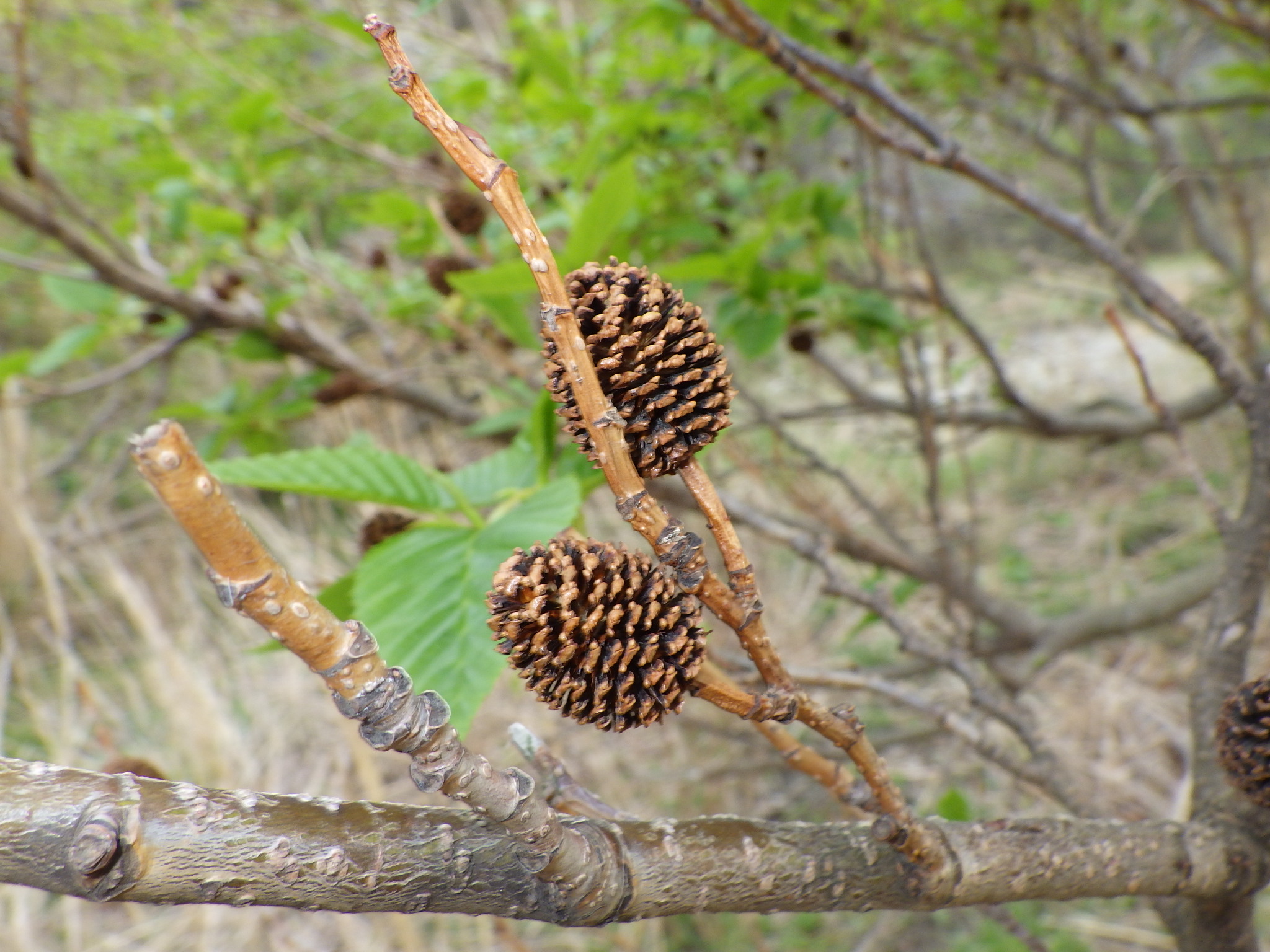
The fruits of the Alnus genus are all nuts, and some are samaras. A nut consists of multiple carpels, with a woody pericarp enclosing a single seed. A samara, regardless of the fruit's structure, refers to any fruit that develops wings. In the case of Alnus, the pericarp flattens and spreads out to form the "wings." The size of the wings varies slightly depending on the species.
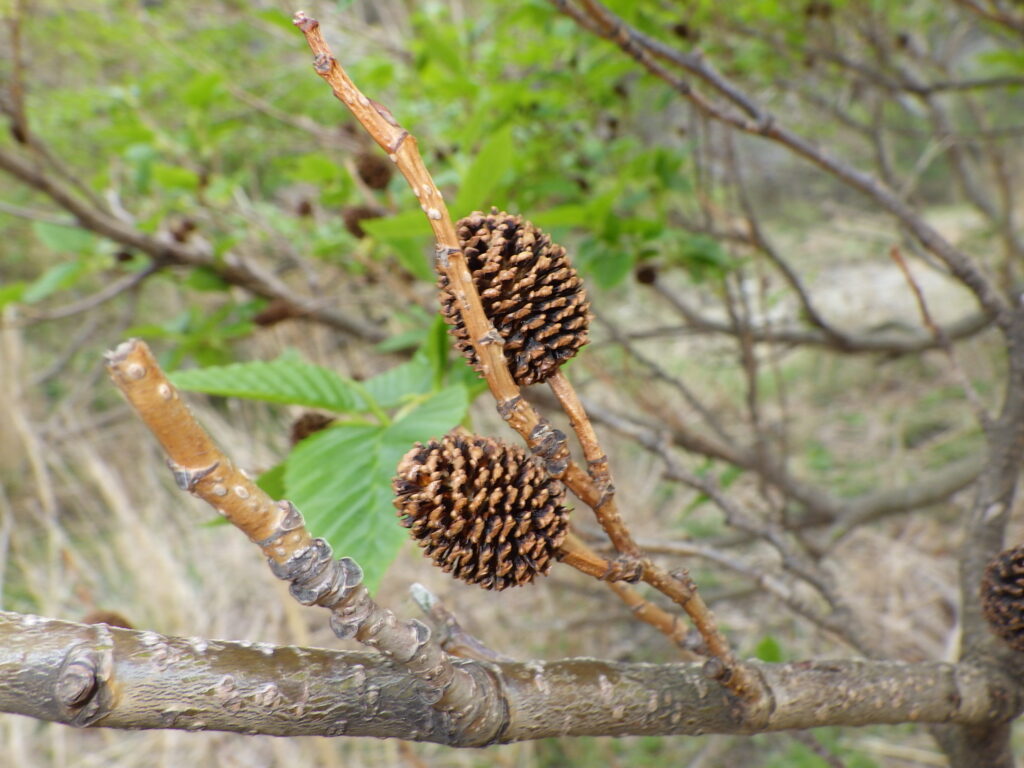
Alder trees have an oval-shaped structure called a "fruit cluster," which is densely packed with fruit scales and nuts. When ripe, the fruit scales crumble apart, leaving the fruit stalk intact, exposing the nuts which are then dispersed by the wind.
The fruit clusters of Alnus japonica are ovate-broadly oval, 1.5–2 cm long. The fruit clusters remain even after flowering, turning blackish-brown to dark brown, and some still have nuts between the fruit scales. The fruit scales are fan-shaped, 5.5–6.5 mm long and about 5 mm wide, and are blackish-brown. The nuts are elliptical, 3.5–4 mm long, with wings about 1 mm wide, roughly the same width as the fruit.
The fruit spikes of Alnus japonica are oval-shaped, 1.5–2 cm long, and hang downwards. They mature in October and November. The fruit scales are fan-shaped, 4–4.5 mm long, and dark brown. The nuts are oblong, 2–3 mm long, with a retained style at the top and wings on both sides. The width of the wings is almost the same as the fruit itself.
The fruit spikes of Alnus japonica are broadly oval, 2-2.5 cm long, and mature in October-November. The fruit scales are fan-shaped, about 8 mm long, and dark brown. The nuts are narrowly oblong, 4-5 mm long, with a retained style at the top and wings on both sides that are slightly narrower than the fruit itself. The wings are asymmetrical.
What about seed dispersal?
As can be expected from the shape of the fruit, it is known that all members of the Alnus genus disperse their seeds by wind along with the fruit (Tsumura and Iwata, 2003).
Alnus species are among the first to spread even in barren or eroded land. This is likely due in large part to their symbiosis with nitrogen-fixing bacteria, as well as their reliance on wind for pollination and seed dispersal, allowing them to actively expand their habitat without relying on insects.
References
Hayashi, Masayuki. 2019. Tree Leaves: Expanded and Revised Edition - Identifying 1300 Species Through Real-Life Scans. Yama-kei Publishers, Tokyo. 824pp. ISBN: 9784635070447
Ishikawa, Yo & Nara, Kazuhide. 2022. Symbiotic microbial communities of Alnus japonica in volcanic succession zones. Japanese Forest Society Conference Presentation Database 133: 637. https://doi.org/10.11519/jfsc.133.0_637
Kanagawa Prefecture Flora Survey Association. 2018. Kanagawa Prefecture Flora 2018 (Electronic Edition). Kanagawa Prefecture Flora Survey Association, Odawara. 1803pp. ISBN: 9784991053726
Mogi, T., Ishii, H., Sakio, H., Katsuyama, T., Ota, K., Takahashi, H., Shirokawa, S., and Nakagawa, S. 2000. Flowers Blooming on Trees: Polypetalous Flowers (Vol. 1, Revised 3rd Edition). Yama-kei Publishers, Tokyo. 719pp. ISBN: 9784635070034
Okubo, Kimihiro. 2014. Hay fever: its causative substances and mechanisms. Modern Media 60(12): 1-5. ISSN: 0026-8054, https://www.eiken.co.jp/uploads/modern_media/literature/MM1412_01.pdf
Tsumura, Yoshihiko & Iwata, Hiroka. 2003. Greening that considers genetic variability. Journal of the Japanese Society of Landscape Architecture 28(4): 470-475. https://doi.org/10.7211/jjsrt.28.470
Tanaka, Hajime. 2001. Flowers and Insects: A Collection of Discoveries of Mysterious Deception. Kodansha, Tokyo. 262pp. ISBN: 9784062691437
Yoshino, Yutaka. 2000. Differences in the effect of gibberellin (GA 3) treatment timing on inhibiting flower bud differentiation in three species of alder (Alnus). Journal of the Japanese Forestry Society 82(4): 388-392. https://doi.org/10.11519/jjfs1953.82.4_388