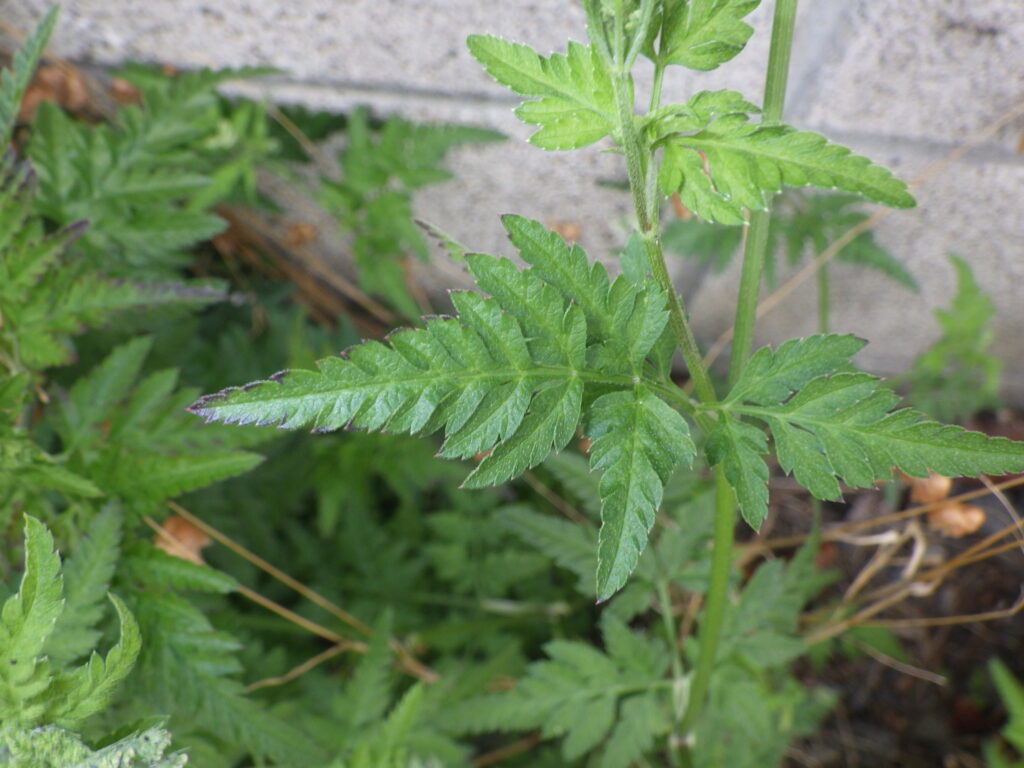
Both Torilis japonica and Torilis japonica are biennial herbs belonging to the genus Torilis in the family Apiaceae, and are extremely common in Japan, growing in grasslands, thickets, and roadsides. These two species grow in similar environments, their flowers and fruits are very similar, and both have leaves that are 2-3 times pinnately compound. Therefore, it is often difficult to distinguish between them. However, there are considerable differences when examined closely. The easiest difference for me to spot is the number of pedicels attached to the inflorescence axis and the number of pedicels attached to the pedicels. Investigating the color of the bristles on the ovary and the flowering period can also be important clues. Like many species in the Apiaceae family, they form compound umbels, and the flowers are white and have a relatively simple structure. Based on the structure of the flowers, it seems that there would be a wide variety of visiting insects, but data shows that bees tend to be the most frequent visitors. The fruit, like many species in the Apiaceae family, is a dichocarp, with a unique structure in which one immature fruit splits into two schizocarps that hang from the left and right. The fruit segments are covered with numerous hook-shaped bristles, and as the Japanese name suggests, they disperse by attaching to human clothing or animal furs like lice. However, recent research suggests they can also be carried by ocean currents. This article will explain the classification, morphology, pollination ecology, and seed dispersal of the genus *Torilis*.
What are the Japanese bush louse and the large bush louse?
Torilis japonica, also known as bush louse, is distributed in Hokkaido, Honshu, Shikoku, Kyushu, and the Ryukyu Islands in Japan; and in temperate to tropical regions of Asia, Europe, and North America. It is a biennial herb that grows in grasslands, thickets, and roadsides (Kanagawa Prefecture Flora Survey Association, 2018). The North American population is an invasive species (DiTommaso et al., 2014).
Torilis scabra, also known as the male bush louse, is distributed in Honshu, Shikoku, Kyushu, and the Ryukyu Islands of Japan; as well as in Korea, China, and Taiwan. It is a biennial herb that grows in grasslands, thickets, and roadsides.
Both are biennial plants belonging to the genus Torilis in the family Apiaceae, and in Japan, they grow in almost the same environments.
The most distinctive feature of these two species is that their fruits are "burrs." The Japanese name "Yabujirashi" (藪虱) comes from the fact that they grow in bushes, and their fruits have hook-shaped, curved bristles that make them difficult to remove once they stick to clothing, likening them to the human louse, an insect that clings to the skin. While other Apiaceae species also have hairy fruits, only the genus Torilis in Japan has such dense, rough-surfaced hairs.
However, the two species are very similar, and you may have trouble distinguishing them. Their flowers are almost identical, and both have leaves that are 2-3 times pinnately compound.
What is the difference between *Limbucus japonica* and *Limbucus ventricosus*?
There are many differences between these two types, but because their structures are complex, it's difficult to describe them in a single sentence. That's why I used to get confused about them too. But now I can clearly see the differences.
What I find easiest to understand is the difference between the number of "pedicels" attached to the pedicels of an umbel and the number of "pedicels" attached to the inflorescence axis (Hayashi et al., 2013; Kanagawa Prefectural Flora Survey Association, 2018).
A pedicel is a short stalk that supports a flower, while a pedicel is the stalk that supports the entire cluster of pedicels. The inflorescence axis is the stalk that supports the entire pedicel. Looking at it from the other side, it branches out from the inflorescence axis → pedicel → pedicel, ultimately resulting in a single flower. In an umbel, pedicels of equal length radiate from the inflorescence axis.
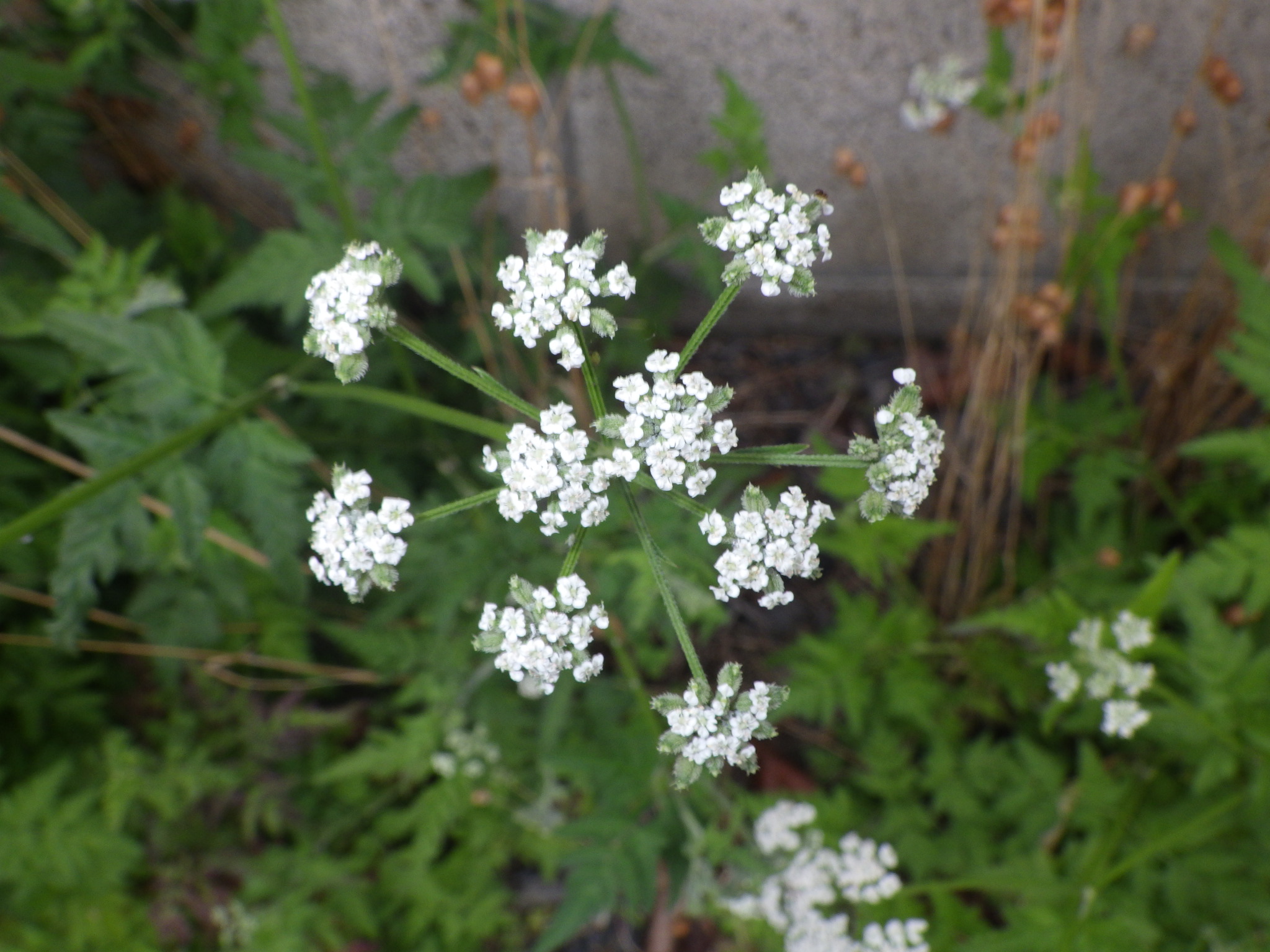
In *Torilis japonica*, the number of pedicels attached to a single flower stalk is large, ranging from 4 to 10 or more, and the pedicels are short, whereas in *Torilis japonica*, the number is small, ranging from 2 to 5, and the pedicels are long.
Furthermore, there is a difference in the number of pedicels per inflorescence axis: 5 to 9 or more in *Torilis japonica*, compared to 2 to 5 in *Torilis japonica*.
It's difficult to describe in words, but I think it's immediately obvious when you see a photograph. Roughly speaking, when viewed from a distance, you'll get the impression that the flowers of *Torilis japonica* are quite densely packed, while those of *Torilis japonica* are quite sparsely packed.
There are many other differences as well.
While the petals of *Torilis japonica* often have a reddish tint, the hairs on the ovary are usually not reddish. However, in *Torilis japonica*, both the petals and ovary are often a deeper purplish-red. This can be a significant distinguishing feature, but it doesn't necessarily mean that *Torilis japonica* always has this coloration.
In *Torilis japonica*, the petioles of the leaflets are short, but in *Torilis japonica*, the petioles of the leaflets are long.
In *Torilis japonica*, the involucre has 4 to 6 bracts and the flowering period is from June to mid-August, while in *Torilis japonica*, the involucre has 0 to 2 bracts and the flowering period is from late April to May. In some regions, the flowering periods may overlap.
In *Torilis japonica*, the fruit is oval-shaped, 4-5 mm long, and the bristles grow irregularly. In *Torilis japonica*, the fruit is oblong-oval-shaped, 6-8 mm long, and the bristles grow in rows.
In addition, the Japanese genus *Torilis* also includes * Torilis leptophylla*, which grows to a height of less than 40 cm, and the climbing species *Torilis nodosa*, but these are rare introduced species and are unlikely to be seen.
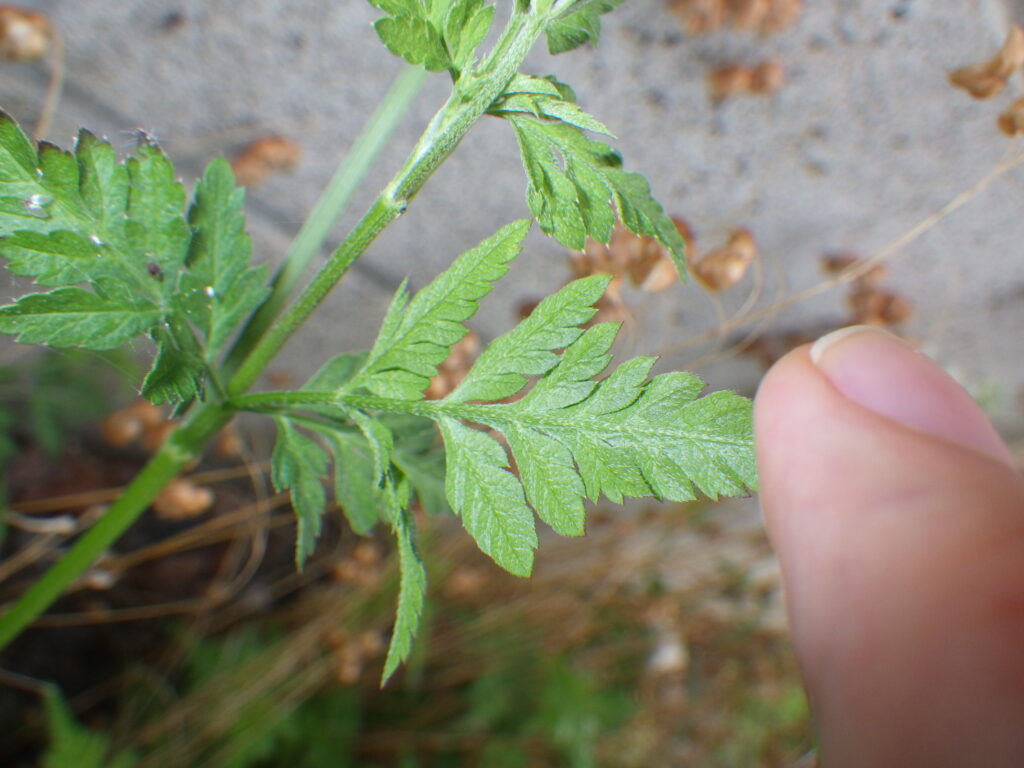
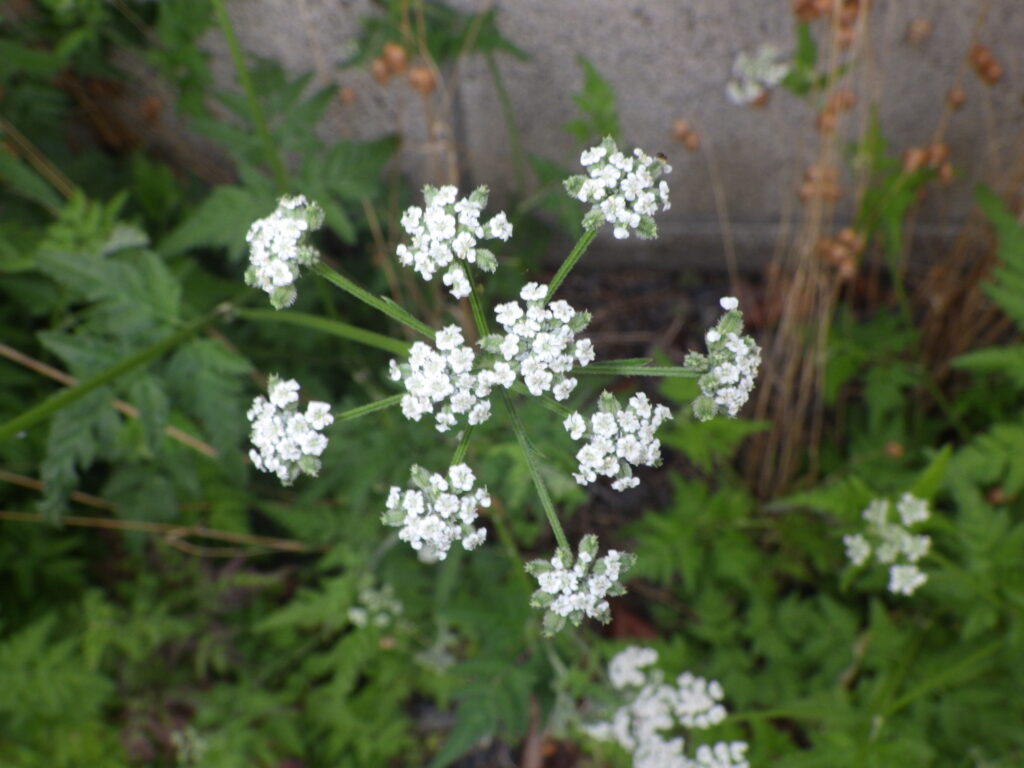
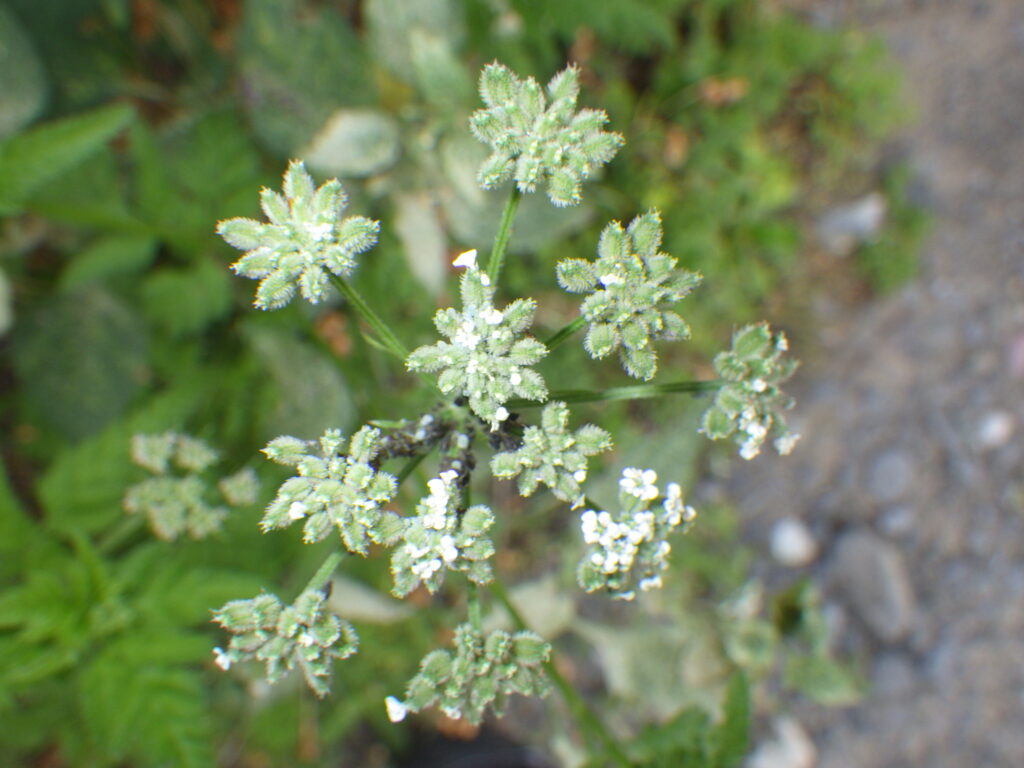
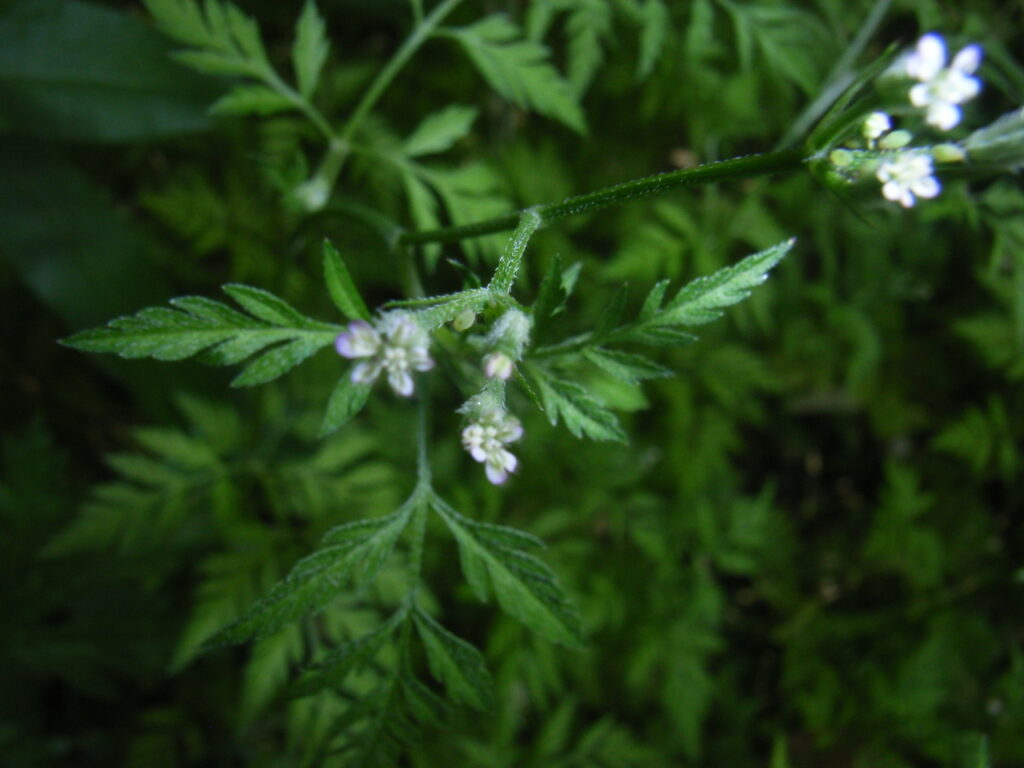
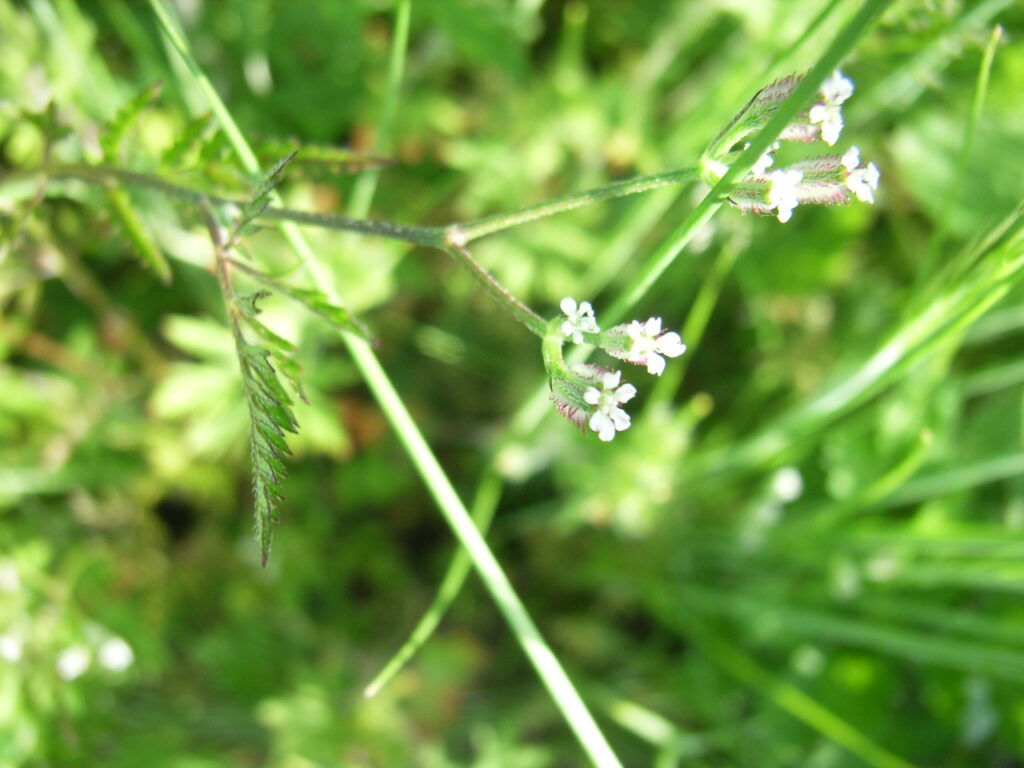
What is the structure of a flower?
Like many plants in the Apiaceae family, the genus Torilis has compound umbels. Therefore, you will notice that the flowers are arranged in a regular, radial pattern. At this stage, you can already see dense bristles on the ovary of the flower.
Torilis japonica flowers from June to mid-August. It produces small compound umbels at the tips of its branches, bearing small white flowers. Each inflorescence axis has 2 to 5 pedicels, and each pedicel has 4 to 10 or more pedicels. The flowers have 5 petals, the outer ones of the inflorescence being larger. The edges of the petals are tinged with purple. The involucral bracts are 4 to 6 in number and are elongated.
Torilis japonica flowers from late April to May. It produces small compound umbels at the tips of its branches, bearing small white flowers. Each inflorescence axis has 5 to 9 pedicels, and each pedicel has 2 to 5 pedicels. The petals are all nearly homologous, hairy on the back, and the petals and ovary are often tinged with dark purplish-red. There are 0 to 2 bracts in the involucre.
How is pollination done?
According to a study conducted in Nara Prefecture, approximately 60% of the insects that visit the flowers of the Japanese bush louse (Torilis japonica) are bees, and about 20% are wasps (Yokoi et al., 2008). The remaining visitors are small amounts of other Hymenoptera, hoverflies, and flies.
Furthermore, studies that have examined specific species have confirmed that bees such as Lasioglossum occidens (medium-sized, short tongue) and Ceratina iwatai (small, short tongue) visit the area (Negoro, 1999).
Therefore, it seems highly likely that small to medium-sized bees and wasps with short proboscises are contributing to pollination. The flower structure is simple, so it's easy to predict that insects with short mouths will visit it, but this is an interesting contrast to the Bupleurum genus, which has yellow flowers and belongs to the same Apiaceae family, and is therefore preferred by flies.
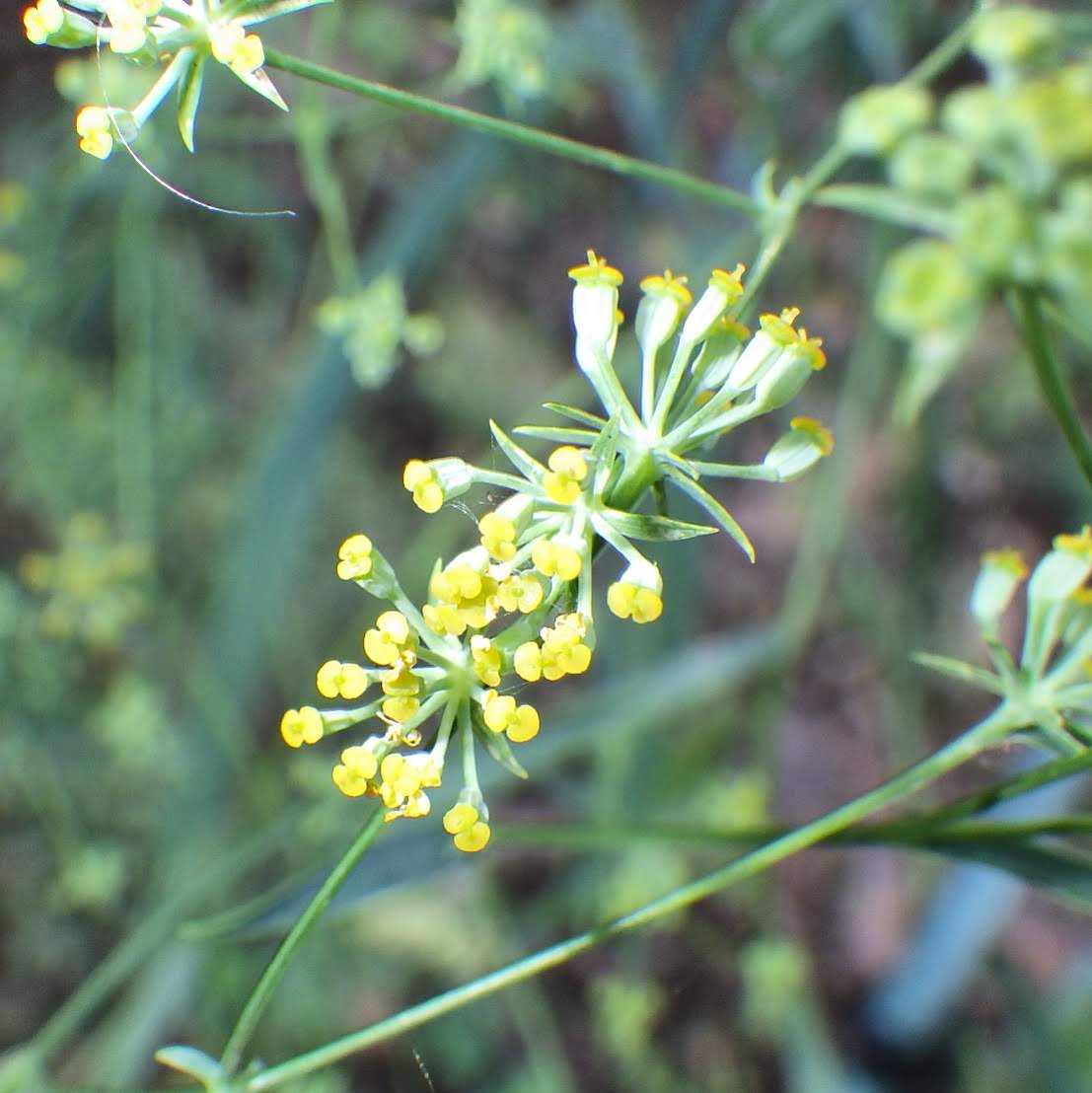
I could not find any research on the insects that visit the flowers of *Torilis japonica*. The flower structure is almost the same as that of *Torilis japonica*, so there are probably not many differences, but since the flowering periods are different, the species that visit the flowers may be different.
What is the structure of the fruit?
The genus Torilis is a common species of dichocarp found in the Apiaceae family (Shimizu, 2001). Dichocarps are a type of dry fruit that is both cleistogamous (indehiscent) and schizocarp, with two schizocarps hanging from the apex of the fruit stalk.
This might be a little confusing, but to put it another way, a fruit that develops from a single flower splits into two when it ripens. Also, when it ripens, its color changes from green to brown.
The double syconium of *Torilis japonica* is oval-shaped, 4-5 mm long, and densely covered with uniformly distributed bristles that curve hook-shaped from the base to the tip. The main ridge is very thin and almost smooth.
The double cusps of *Torilis japonica* are oblong, 6-8 mm long, with short, appressed white hairs similar in texture to the pedicel on the main ridge, and long, almost straight, hook-shaped bristles on the secondary ridge. The bristles appear to grow more regularly and straightly than those of *Torilis japonica*.
What are the seed dispersal methods?
As mentioned above, the hook-shaped bristles growing on the fruits of *Torilis japonica* and *Torilis japonica* are clearly for attaching to animal hair, and are therefore considered to be "burrs" that "disperse by attaching to animals" (Nakanishi, 1989; DiTommaso et al., 2014).
The fruit segments hanging from the top of the fruit stalk are also clearly adapted to easily come into contact with vertebrates passing by the bush lice.
In particular, individuals growing in grasslands, bushes, and roadsides with heavy human traffic can be assumed to reproduce almost entirely by attaching themselves to people's clothing.
However, it is still unclear and not well understood what kind of animals naturally dispersed the seeds in the wild.
Furthermore, recent research is revealing that, in addition to animal-attached dispersal, coastal populations also utilize "water current dispersal" (Nakanishi, 2020).
Air accumulates between the bristles and in the recessed areas where the fruit segments separate, creating buoyancy. However, the air gradually disappears, and it seems it cannot float indefinitely, so it's not entirely adapted to water spraying, but it's an interesting fact that demonstrates nature's flexibility.
References
DiTommaso, A., Darbyshire, SJ, Marschner, CA, & Averill, KM 2014. Japanese Hedgeparsley (Torilis japonica) — A New Invasive Species in the United States?. Invasive Plant Science and Management 7: 553-560. https://doi.org/10.1614/IPSM-D-14-00028.1
Hayashi, Yasaka, Kadota, Yuichi, and Hirano, Takahisa. 2013. Yamakei Handy Illustrated Guide 1: Wildflowers (Revised and Expanded New Edition). Yama-kei Publishers, Tokyo. 664pp. ISBN: 9784635070195
Kanagawa Prefecture Flora Survey Association. 2018. Kanagawa Prefecture Flora 2018 (Electronic Edition). Kanagawa Prefecture Flora Survey Association, Odawara. 1803pp. ISBN: 9784991053726
Nakanishi, Hiroki. 1989. Morphology and attachment of animal-attached dispersal bodies. Phytogeography and Taxonomy 37(1): 57-63. http://doi.org/10.24517/00055987
Nakanishi, Hiroki. 2020. Growth status and ocean current dispersal of three inland plant species growing on the coast. Journal of the Japan Society for Driftwood 18: 7-12. https://doi.org/10.57279/driftological.18.0_7
Negoro, Takashi. 1999. Flower-visiting behavior of bees at Kanazawa Castle Ruins (former Kanazawa University campus). Research Report of Toyama City Science and Culture Center 22: 55-79. ISSN: 0387-9089, http://repo.tsm.toyama.toyama.jp/?action=pages_view_main&active_action=repository_view_main_item_detail&item_id=731&item_no=1&page_id=13&block_id=82
Shimizu, Takemi. 2001. Illustrated Dictionary of Botanical Terms. Yasaka Shobo, Tokyo. xii, 323pp. ISBN: 9784896944792
Yokoi, Tomoyuki; Habe, Akifumi; Katori, Ikuo; and Sakuraya, Yasuyuki. 2008. Diversity of pollinating insect communities at Kinki University Nara Campus. Kinki University Faculty of Agriculture Bulletin 41: 77-94. ISSN: 0453-8889, http://id.nii.ac.jp/1391/00005214/