Rosaceae

Sponsored Link
plant

What are the differences between Rhaphiolepis indica, Rhaphiolepis umbellata, and Ternstroemia gymnanthera? An explanation of how to distinguish between similar species.

Rhaphiolepis indica, Rhaphiolepis umbellata, and Rhaphiolepis ternata all belong to the genus Rhaphiolepis in the family Rosaceae. While they naturally grow on coastlines, they are frequently seen planted in urban areas. However, the classification of the genus Rhaphiolepis is complex even at the species level, and there are many other species besides the three mentioned above...
plant

What are the differences between Japanese kerria and white kerria? How do they differ from butterbur and Hypericum patulum? This article explains how to distinguish between similar species.

Both Japanese kerria (Yamabuki) and white kerria (Shiroyamabuki) belong to the Rosaceae family, Rosioideae subfamily. They grow wild and are also cultivated for ornamental purposes, making them trees that signal the arrival of spring. However, some people mistakenly believe that white kerria is simply "Japanese kerria with white petals"...
plant

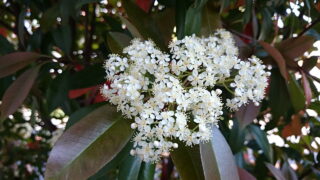
What are the differences between Photinia serrulata, Photinia glabra, and Photinia glabra (Red Robin)? An explanation of how to distinguish between similar species.

Photinia serrulata, Photinia glabra, and Photinia glabra (Red Robin) are all members of the Photinia genus in the Rosaceae family. They are native to Japan and are also commonly cultivated as privacy screens in gardens, making them very familiar trees. Their most distinctive feature is their red young leaves. However, distinguishing between these three species can be difficult...
plant

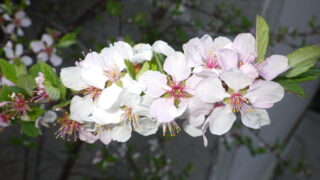
What are the differences between Japanese apricot (Prunus tomentosa), Japanese garden apricot (Prunus serrulata), and Japanese garden cherry (Prunus serrulata)? How do they differ from Japanese apricot (Prunus mume) and Japanese cherry (Prunus serrulata)? This article explains how to distinguish between similar species.

Japanese apricot (Prunus tomentosa), Japanese garden apricot (Prunus serrulata), and Japanese cherry (Prunus serrulata var. japonica) all belong to the genus Prunus in the family Rosaceae. Despite being shrubs, they are popular in horticulture because they produce beautiful flowers in spring, similar to plums and cherries. They are also known to be edible. However, their appearance is quite similar, leading to confusion...
plant

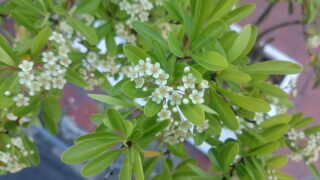
What are the differences between Pyracantha coccinea, Pyracantha japonica, and Pyracantha sulphurea? We explain how to distinguish between similar species! Is it a myth that Pyracantha causes sudden death in waxwings?

Pyracantha coccinea, Pyracantha japonica, and Pyracantha serrulata all belong to the genus Pyracantha in the Rosaceae family. They are characterized by their bright red berries that appear in winter and are frequently cultivated for ornamental purposes. In horticulture, however, this group is collectively referred to as "Pyracantha" or "Pyracantha" based on its genus name...
plant

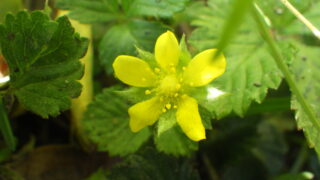
What are the differences between wild strawberries, Japanese wild strawberries, and large wild strawberries? We explain how to distinguish between similar species! It's surprisingly difficult to tell them apart!

Strawberry (Potentilla indica), Japanese wild strawberry (Potentilla fragarioides), and common wild strawberry (Potentilla indica) all belong to the genus Potentilla in the Rosaceae family. They are known as representative spring weeds in Japan, characterized by their creeping stems that spread along the ground. Occasionally, they are referred to as "wild strawberries" along with other members of the Rubus genus...
plant

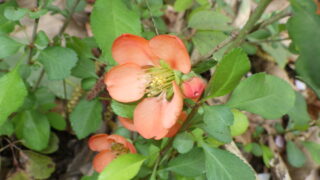
What are the differences between Japanese quince (Chaenomeles speciosa) and Japanese quince (Chaenomeles japonica)? How do they differ from Japanese apricot (Prunus mume) and Japanese camellia (Camellia japonica)? This article explains how to distinguish between similar species.

Both the Japanese flowering quince (Chaenomeles speciosa) and the common flowering quince (Chaenomeles japonica) belong to the Chaenomeles genus of the Rosaceae family. They are deciduous shrubs characterized by the simultaneous unfolding of leaves and vibrant flowering. Perhaps for this reason, the Japanese flowering quince, in particular, is quite popular in horticulture and is frequently seen planted. Furthermore, its fruit is edible. However, the Japanese flowering quince...
plant

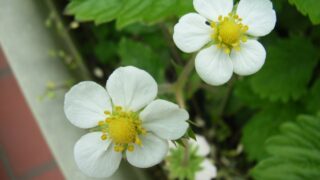
What are the differences between strawberries (Strawberries) and wild strawberries (Potentilla fragarioides)? What are the differences between them and mock strawberries? We'll explain how to distinguish between similar species.

Both strawberries and wild strawberries (Potentilla fragarioides) belong to the genus Fragarioides in the Rosaceae family. These perennial plants are very popular because their aggregate fruit receptacles turn red and swell, making them edible. They are widely cultivated in Japan, and the wild strawberry, in particular, is commercially available in winter in addition to its natural fruiting season of June and July...
plant

What are the differences between Dutch strawberries, wild strawberries, raspberries, and mock strawberries? This article explains how to distinguish between similar species.

Strawberry (Strawberry), Rubus parvifolius (Japanese raspberry), Rubus buergeri (wild strawberry), Raspberry (Japanese raspberry), and Strawberry (Indian strawberry) all belong to the Rosaceae family and are generally recognized as relatives of the "strawberry" with their small, red, berry-like fruits. However, among these, Strawberry and Raspberry...
plant

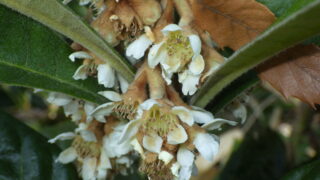
What's the difference between loquat (Biwa) and wild fig (Inubiwa)? How do they differ from apricots, persimmons, and mangoes? We'll explain how to distinguish between similar species! Insects and small birds visit loquat blossoms that bloom in winter!?

The loquat (Ficus microcarpa) is an evergreen tree native to China, cultivated worldwide for its edible fruit. In Japan, it is frequently cultivated not only for food but also for ornamental purposes. A similar-sounding species, the deciduous shrub known as *Ficus erecta*, is often confused with the loquat due to its oval-shaped, fruit-like structure...
Sponsored Link