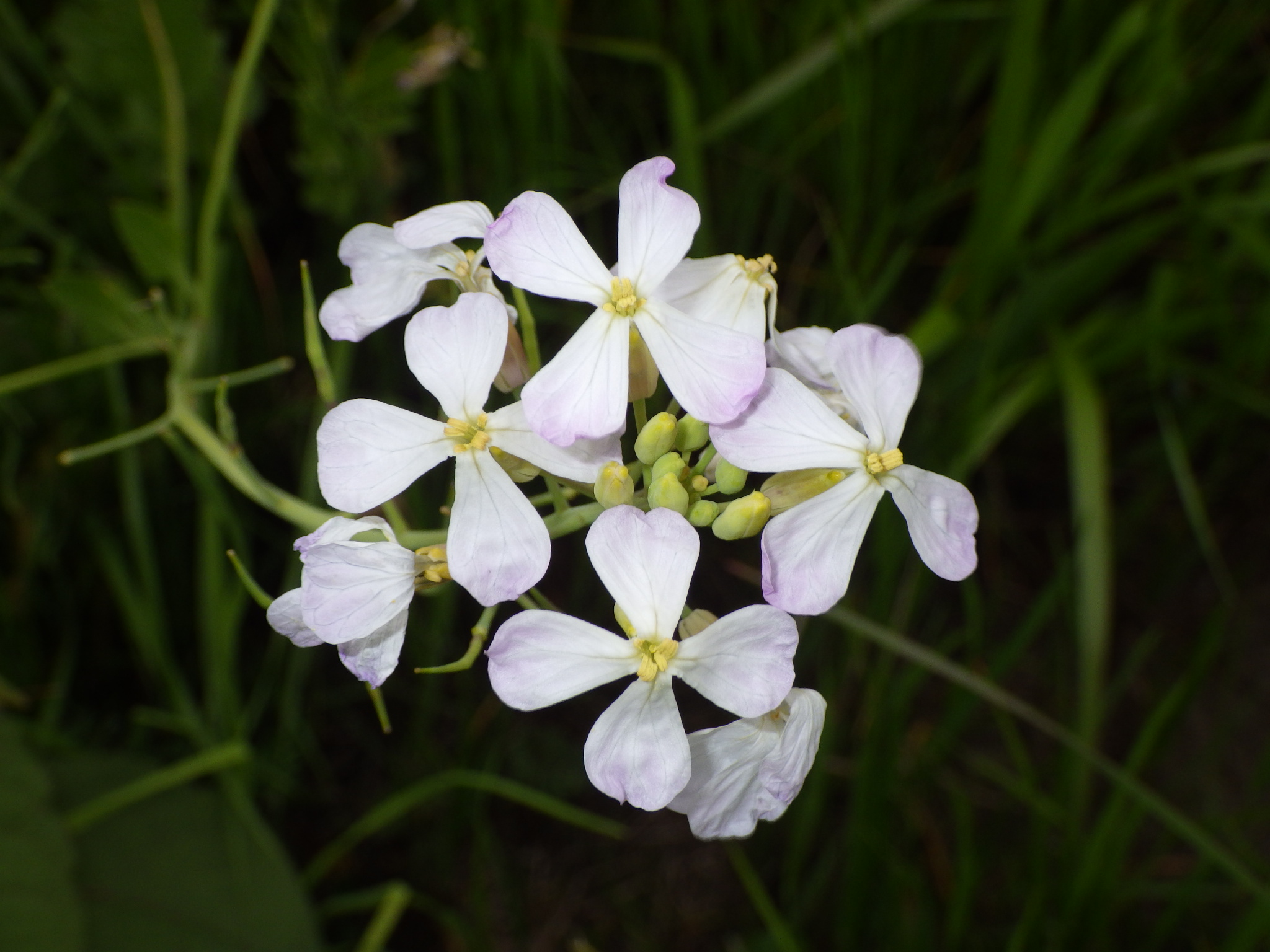
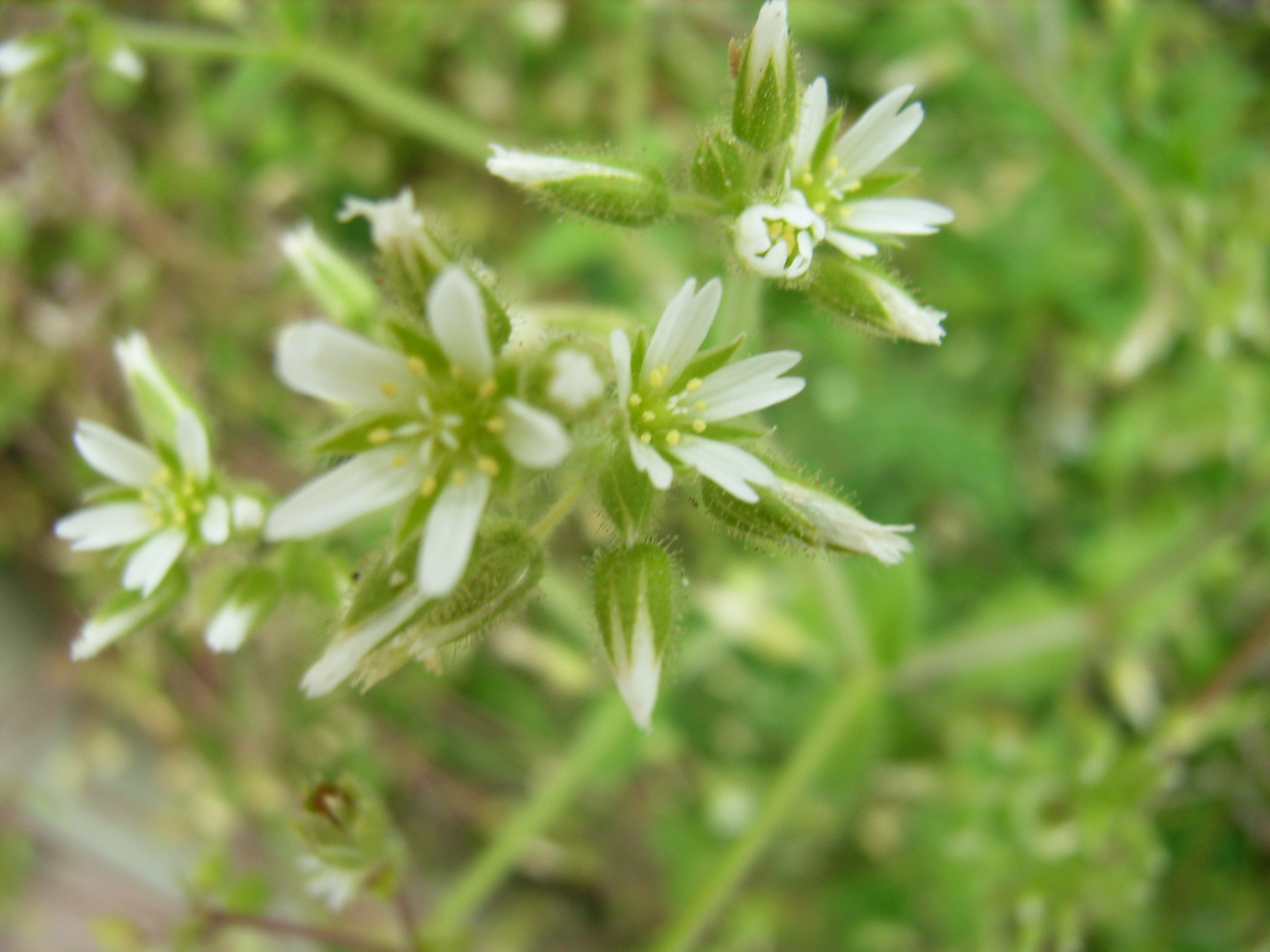
Prunus tomentosa, Prunus serrulata, and Prunus serrulata are all members of the Prunus genus in the Rosaceae family. Although they are shrubs, they are popular in gardening because they produce beautiful flowers in spring, similar to plums and cherries. They are also known to be edible. However, they look quite similar, and some people may confuse them. The easiest way to distinguish these three species is to observe their leaves. Often, only young leaves are present when the trees are in bloom, but this is not a problem. Furthermore, there are differences in the flowers and fruits. Some people may think that the only difference between them and plums and cherries is their size, but there are clear differences in the leaves and fruits. This article will explain the classification and morphology of Prunus tomentosa, Prunus serrulata, and Prunus serrulata.
- What are the differences between Japanese cherry plum, Japanese garden plum, and Japanese cherry blossom?
- What are the differences between Japanese cherry plum, Japanese garden plum, and Japanese cherry blossom?
- What are the differences between plums (ume) and cherry blossoms (sakura)?
- Are there any other similar species?
- References
What are the differences between Japanese cherry plum, Japanese garden plum, and Japanese cherry blossom?
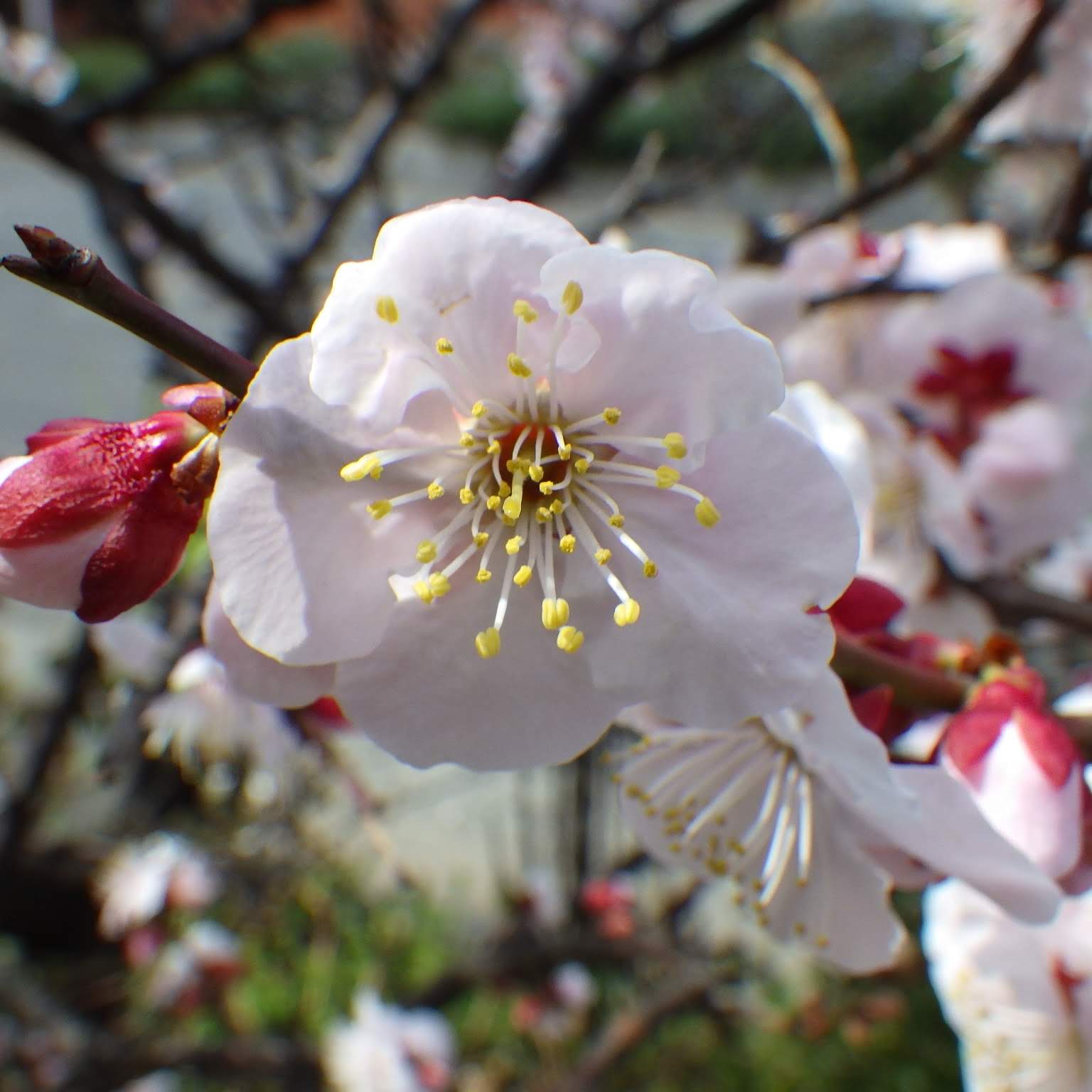
Prunus tomentosa, also known as the Nanking cherry, is a deciduous shrub distributed in China, Tibet, and Russia (Sakhalin), growing in forests, forest edges, woodlands, and pastures on mountain slopes (Wu et al., 2003; RBG Kew, 2024). It is cultivated as an ornamental plant all over the world, including Japan.
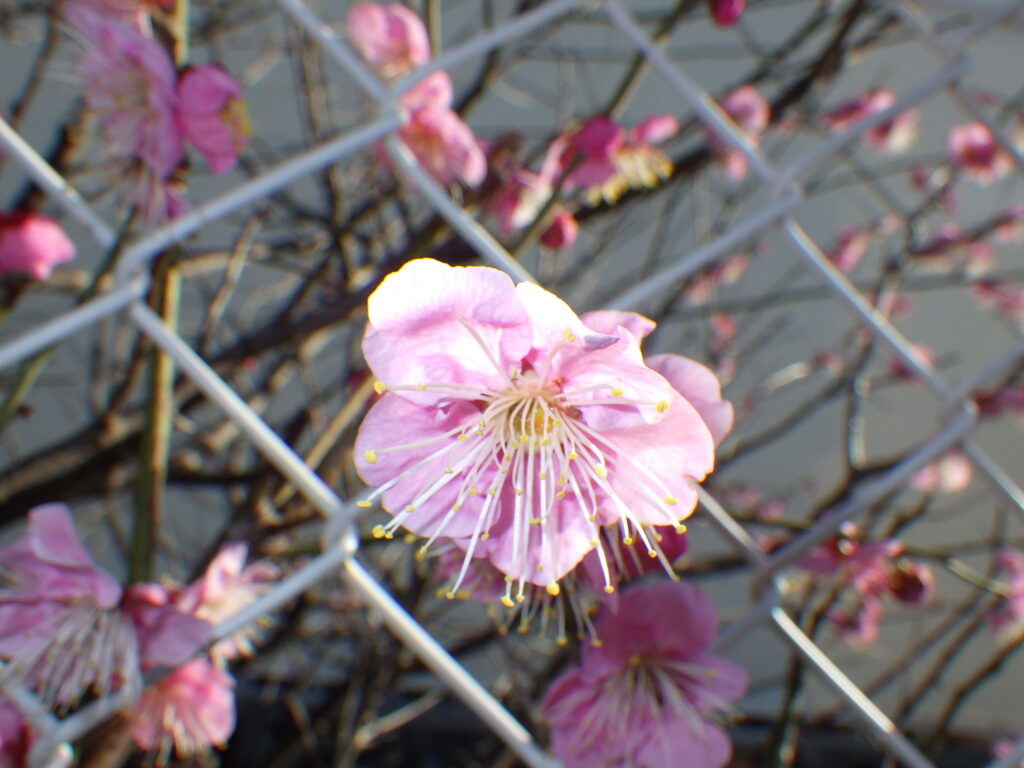
Japanese apricot (Prunus japonica), also known as garden apricot, is a deciduous shrub distributed in eastern China and Korea. In Japan, it is cultivated for ornamental purposes.
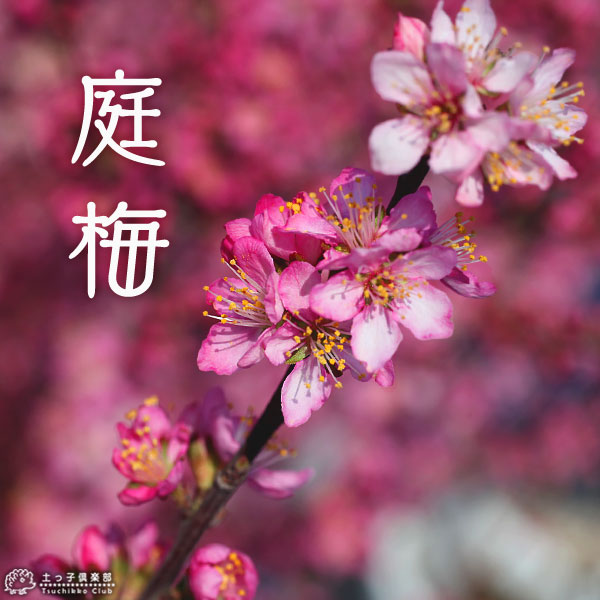
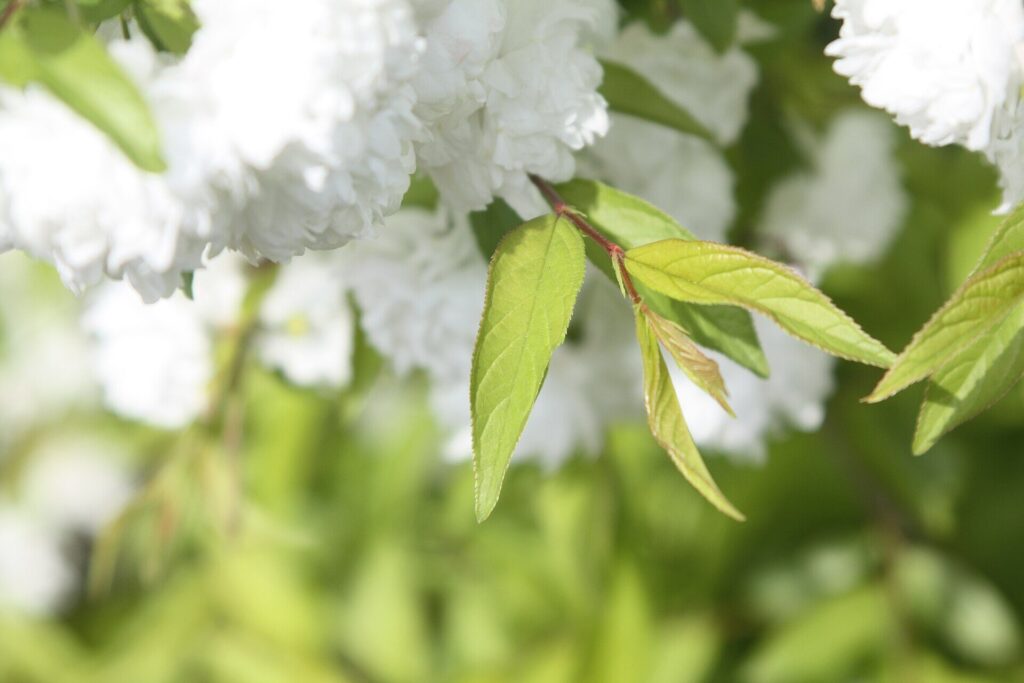
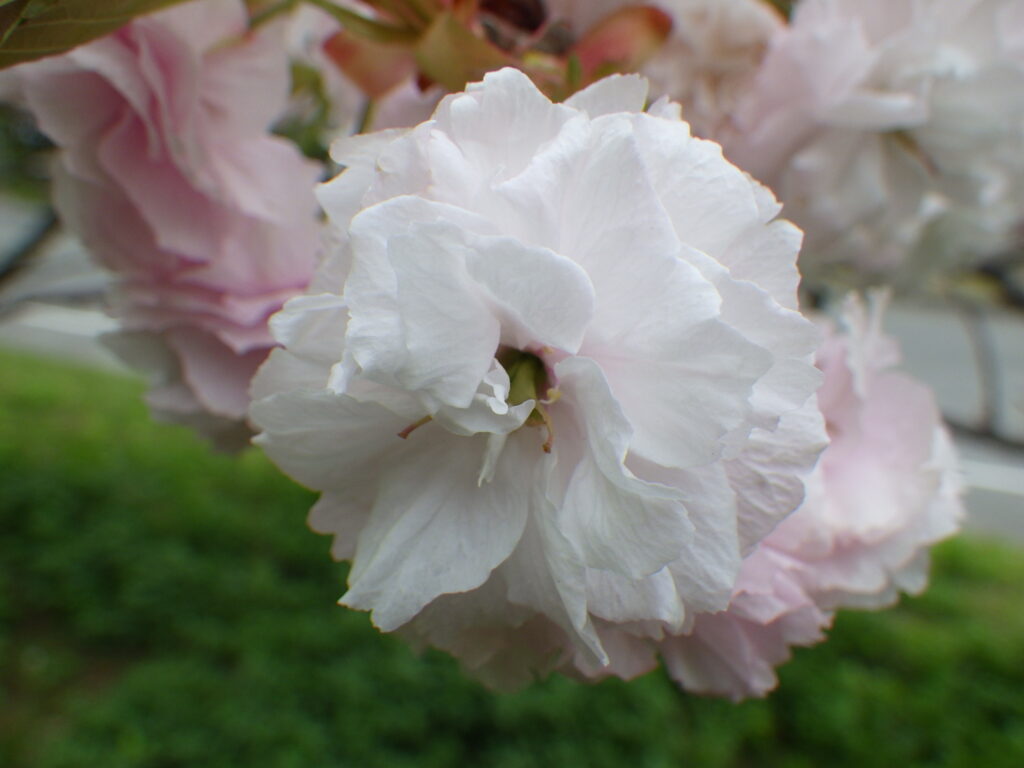
Prunus glandulosa 'Albi-plena', also known as Japanese cherry blossom (Niwazakura), is a deciduous shrub distributed in eastern China and Korea, growing on mountain slopes, valley sides, and in thickets. In Japan, double-flowered varieties are cultivated for ornamental purposes.
All of these are deciduous shrubs belonging to the genus Prunus in the family Rosaceae, and were formerly classified under the genus Microcerasus. Like plums and cherries, they bloom all at once with white to pink flowers from March to May, and because they remain shrubs compared to other species in the Prunus genus, they are popular as garden trees in horticulture.
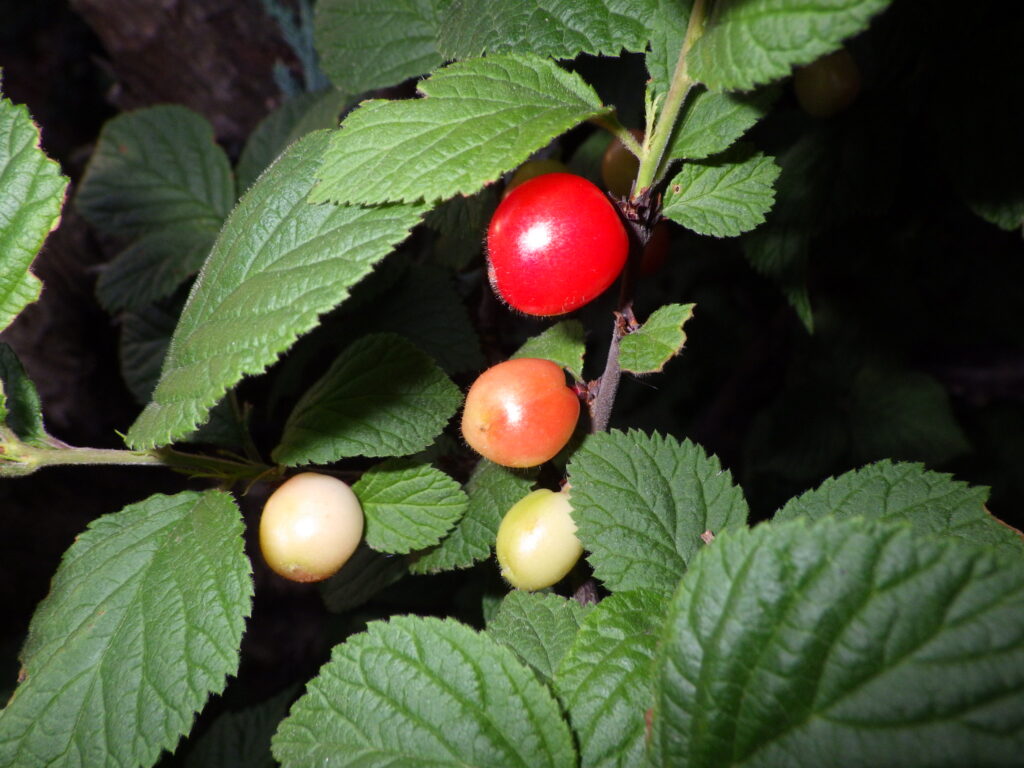
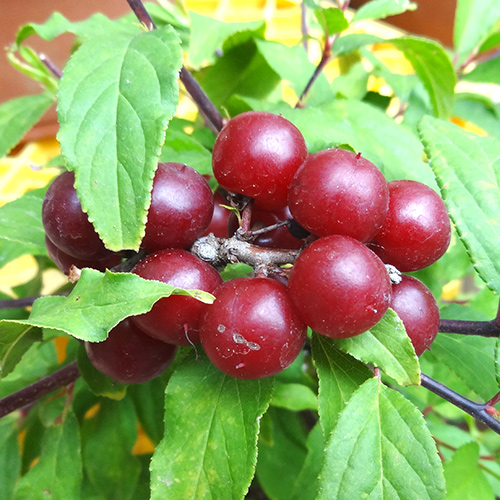
Furthermore, the fruit is a bright red drupe, which is not only visually appealing, but the mesocarp is made up of flesh that is rich in water and sugar, and is edible, which may also be a reason for its popularity. It is said to have a refreshing tartness and a subtle sweetness, but it is not as easy to eat as cherries, which are fruits of the Prunus genus.
However, these three types look quite similar, so many people might confuse them.
What are the differences between Japanese cherry plum, Japanese garden plum, and Japanese cherry blossom?
When distinguishing between the three species, checking the leaves is the most reliable method (Hayashi, 2019).
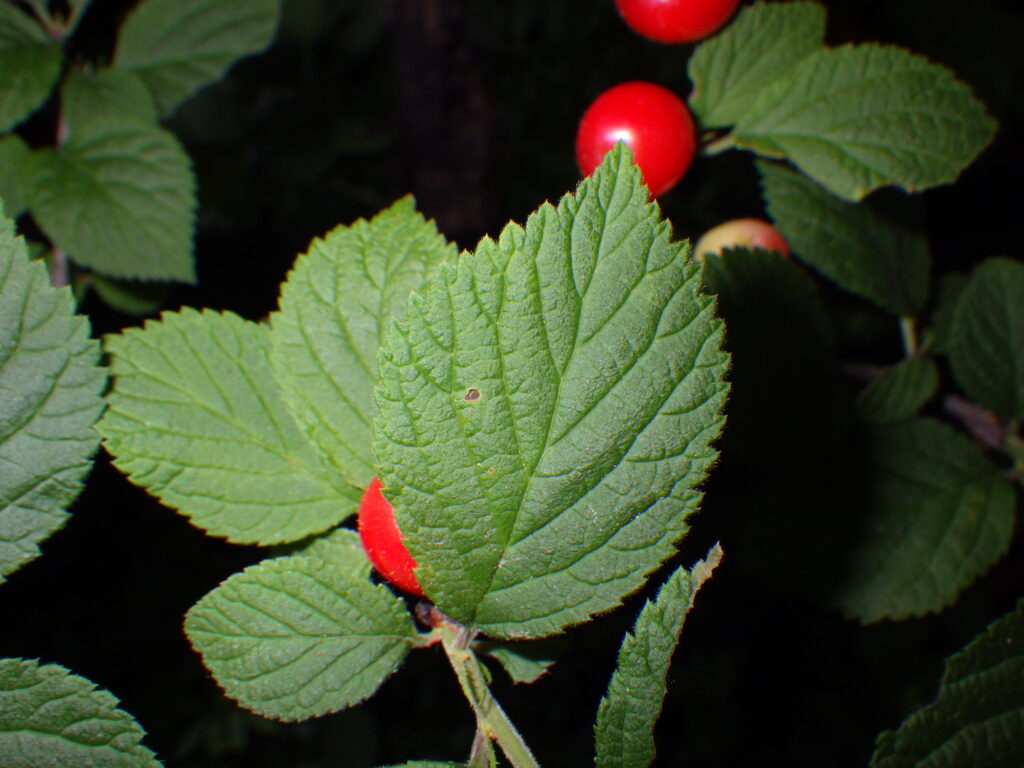
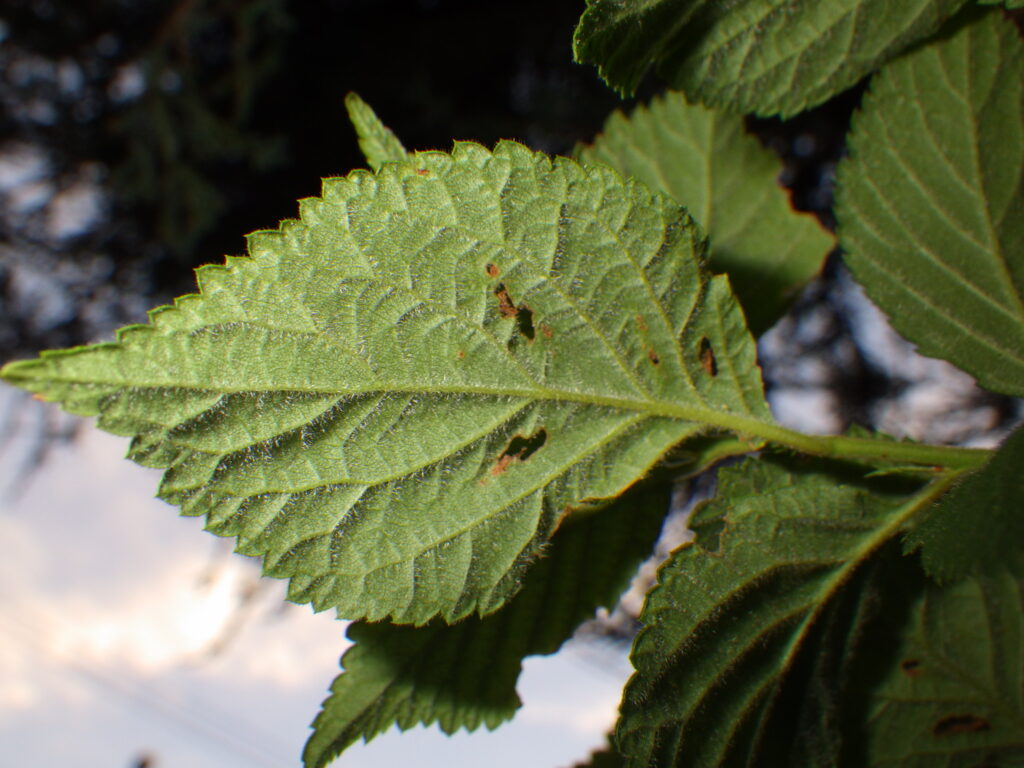
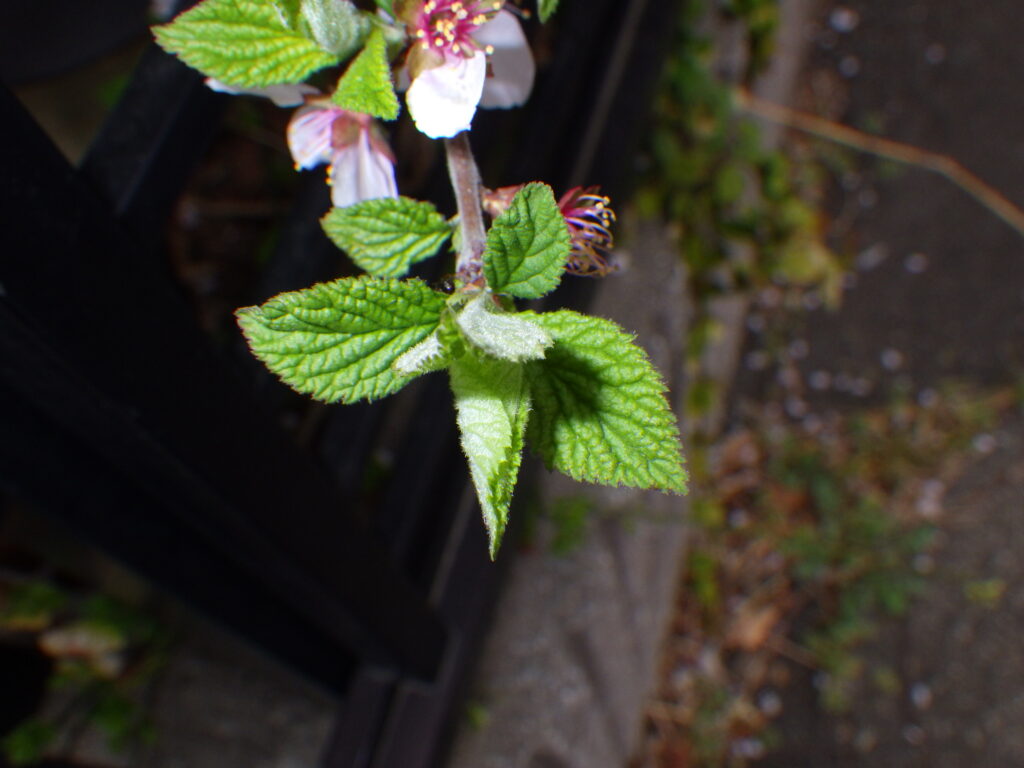
While the leaves of the Japanese apricot (Prunus tomentosa) are hairy and wrinkled, the leaves of the Japanese garden apricot (Prunus serrulata) and Japanese garden cherry (Prunus serrulata var. japonica) are hairless and have fewer wrinkles.
Regarding Japanese apricot (Prunus serrulata) and Japanese cherry (Prunus serrulata), the difference is that Japanese apricot has a rounded leaf base and pointed serrations, while Japanese cherry has a triangular leaf base and blunt serrations.
During the flowering season, which is the time to pay the most attention to all three species, the leaves of the Japanese cherry (Prunus tomentosa) and Japanese quince (Prunus serrulata) are still in the process of unfolding, and only young leaves remain. However, even in this stage, you can distinguish them by observing the wrinkles on the leaves, as mentioned above. The Japanese quince has mature leaves at the same time as the flowers.
In some cases, they can be distinguished by their flowers or fruits alone.
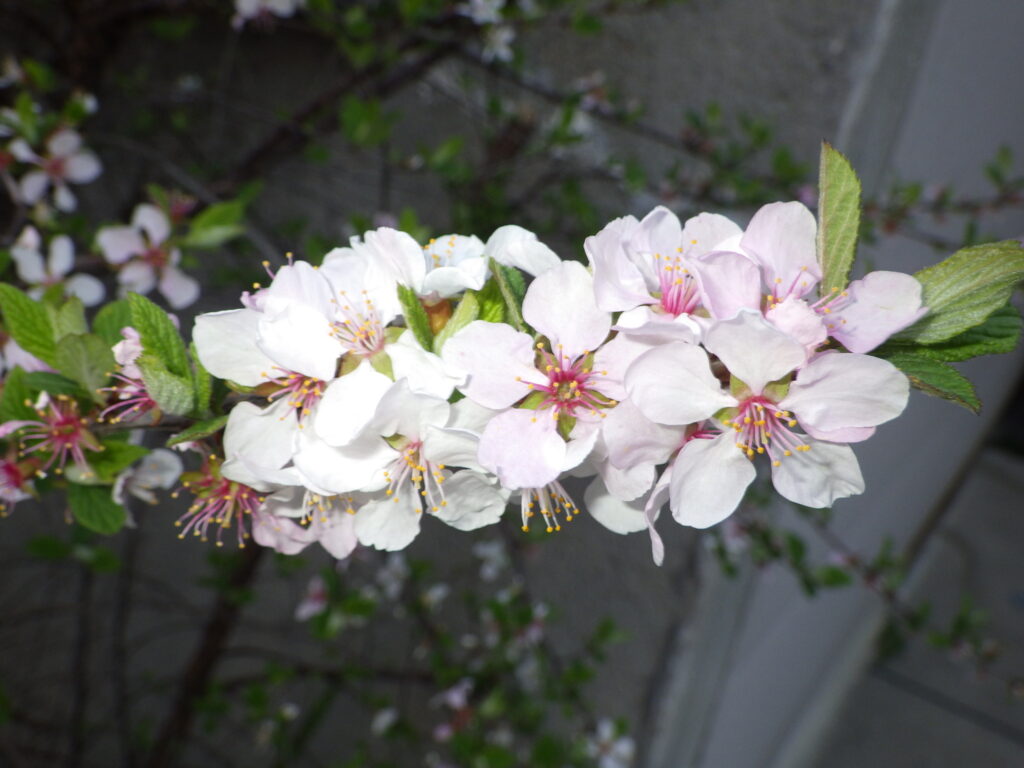
Regarding the flowers, the Japanese cherry plum (Prunus tomentosa) and the Japanese garden plum (Prunus serrulata) have single-petaled flowers, while the Japanese garden cherry (Prunus serrulata) has double-petaled flowers, except in rare cases where it is found in Japan.
Furthermore, while the flowers of the Japanese apricot (Prunus tomentosa) are white to light pink, those of the Japanese apricot (Prunus serrulata) are usually pink, and rarely white.
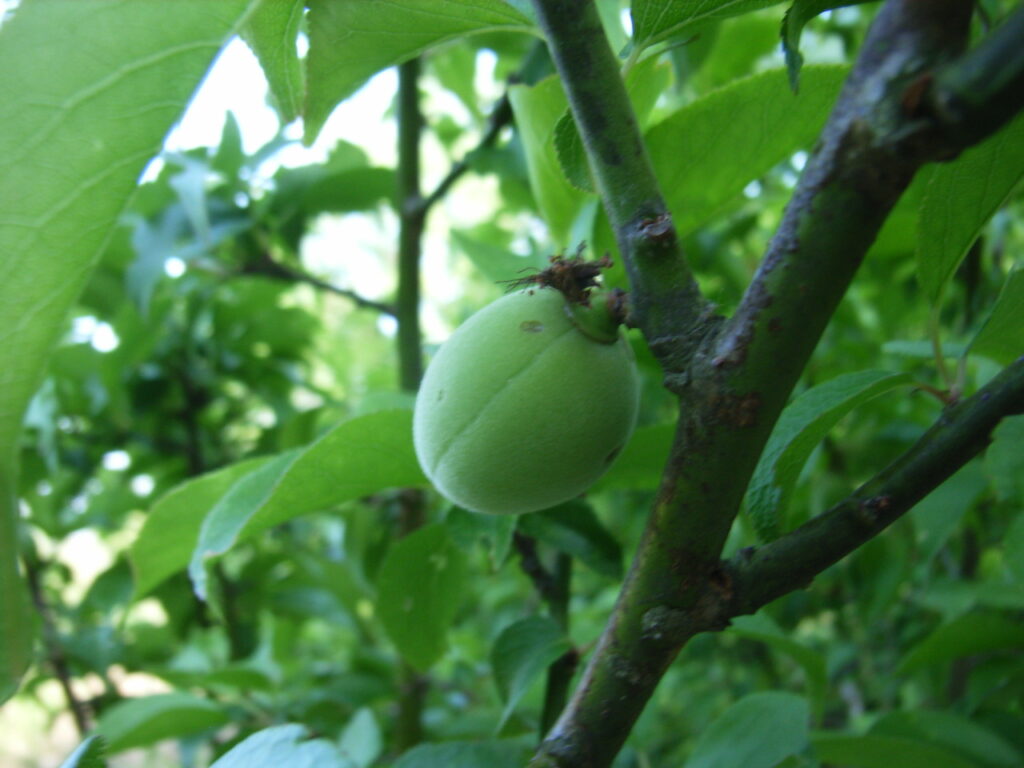
Regarding the fruit, the fruit of the Japanese cherry (Prunus tomentosa) is hairy, the fruit of the Japanese garden cherry (Prunus serrulata) is hairless, and the flower of the Japanese garden cherry (Prunus serrulata) is double-flowered, so pollination is not possible and it usually does not bear fruit.
The above should allow you to distinguish them.

What are the differences between plums (ume) and cherry blossoms (sakura)?
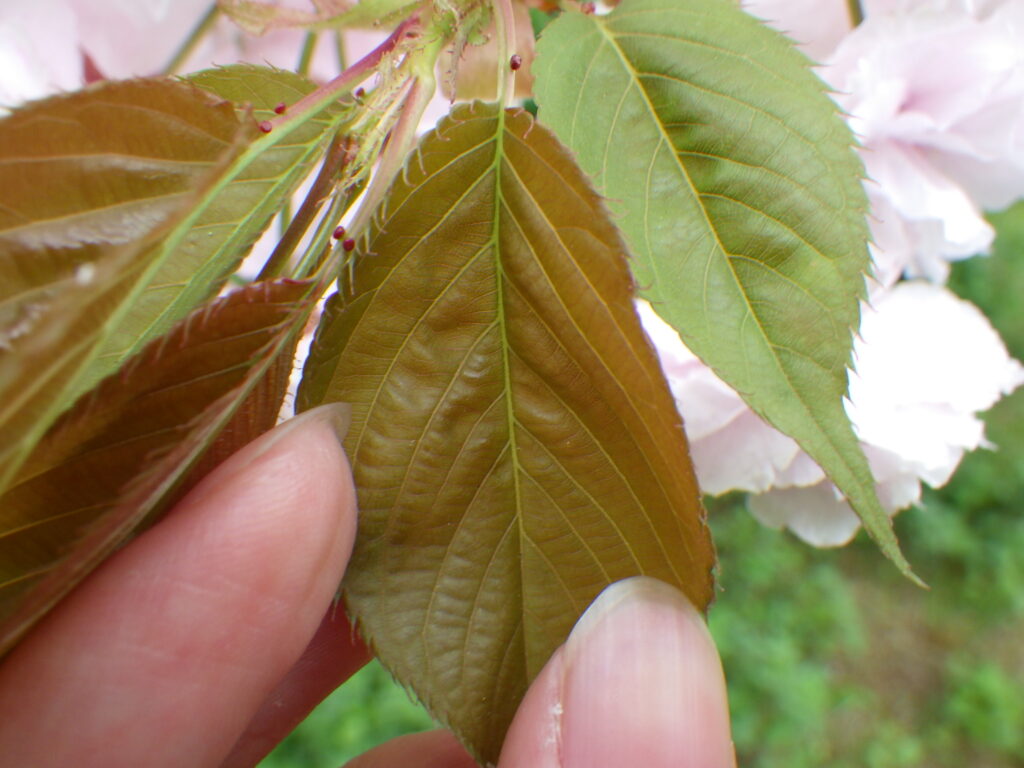
Some people might wonder about the difference between this plant and plums or cherry blossoms, given that their names include "ume" (plum) and "sakura" (cherry blossom). While there isn't a specific species called "sakura," here we can think of it as belonging to the Cerasus subgenus, which includes species like Somei-yoshino (Prunus x yedoensis 'Somei-yoshino') and Satozakura (Prunus serrulata).
Indeed, it's quite difficult to distinguish them just by looking at the flowers.
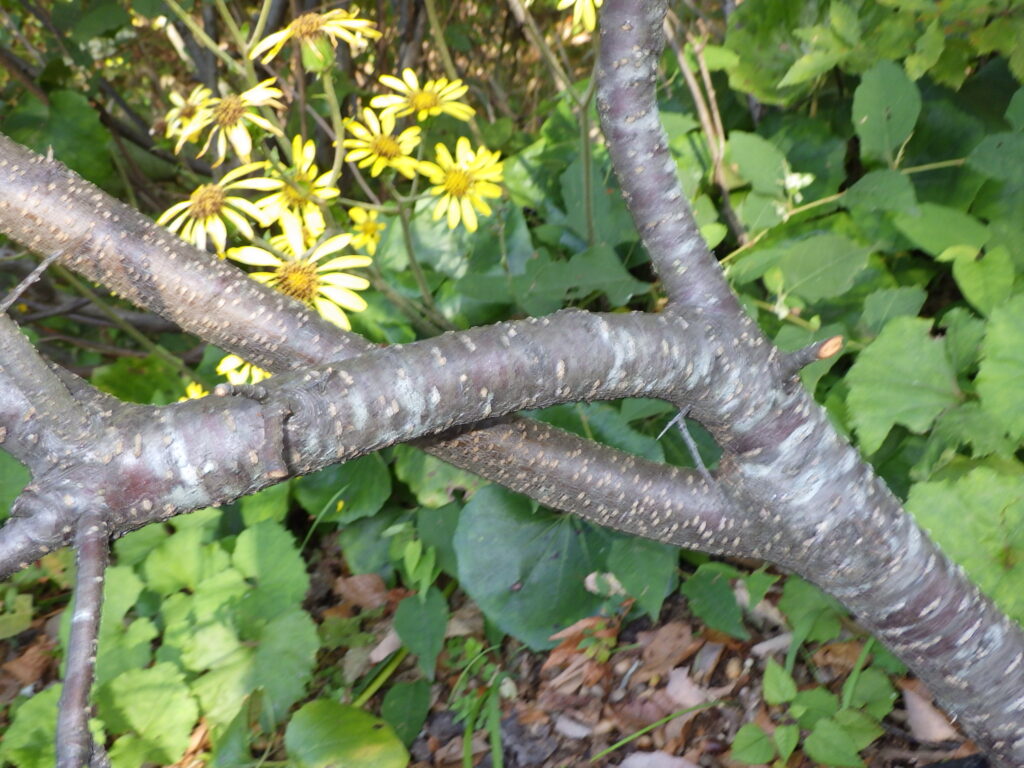
As mentioned above, while plums and cherries grow into tall trees, the main difference between Japanese apricots, Japanese quince, and Japanese cherry trees is that they remain shrubs. However, this difference may be difficult to discern when the trees are young.
However, there are many other differences. Regarding the leaves, the petioles of the Japanese apricot, Japanese quince, and Japanese cherry are very short, at a maximum of only 6mm, while the petioles of the Japanese apricot and cherry are long, typically more than 1cm.
Furthermore, while the petioles of the Japanese apricot (Prunus tomentosa), Japanese quince (Prunus serrulata), and Japanese cherry (Prunus serrulata) are devoid of anything, the petioles of the Japanese apricot (Prunus serrulata) and cherry (Prunus serrulata) have extrafloral nectaries (small bumps that secrete nectar and attract ants). However, the extrafloral nectaries of the Japanese apricot are very small and difficult to see.
The fruit of cherry blossoms, Japanese apricots, Japanese quince, and Japanese cherry blossoms turns red when ripe and has no particular indentation, but the fruit of the Japanese plum remains green even when ripe and has a vertical indentation.
Furthermore, while the fruits of the Japanese cherry (Prunus tomentosa), Japanese apricot (Prunus serrulata), and Japanese cherry (Prunus serrulata) are usually solitary and have short fruit stalks, the fruits of the Japanese cherry (Prunus serrulata) are clustered in pairs or more, as you can imagine from a cherry, and have considerably longer fruit stalks. However, the Somei Yoshino cherry is a hybrid and therefore does not bear fruit.
I think you can understand that these are completely different types just by looking at them.

Are there any other similar species?
For information on other species in the Prunus genus, please see the separate article.
References
Hayashi, Masayuki. 2019. Tree Leaves: Expanded and Revised Edition - Identifying 1300 Species Through Real-Life Scans. Yama-kei Publishers, Tokyo. 824pp. ISBN: 9784635070447
RBG Kew. 2024. The International Plant Names Index and World Checklist of Vascular Plants. Plants of the World Online. http://www.ipni.org and https://powo.science.kew.org/
Wu, ZY, Raven, PH, & Hong, DY (Eds.). 2003. Flora of China (Vol. 9 Pittosporaceae through Connaraceae). Science Press, Beijing, and Missouri Botanical Garden Press, St. Louis. ISBN: 9781930723146