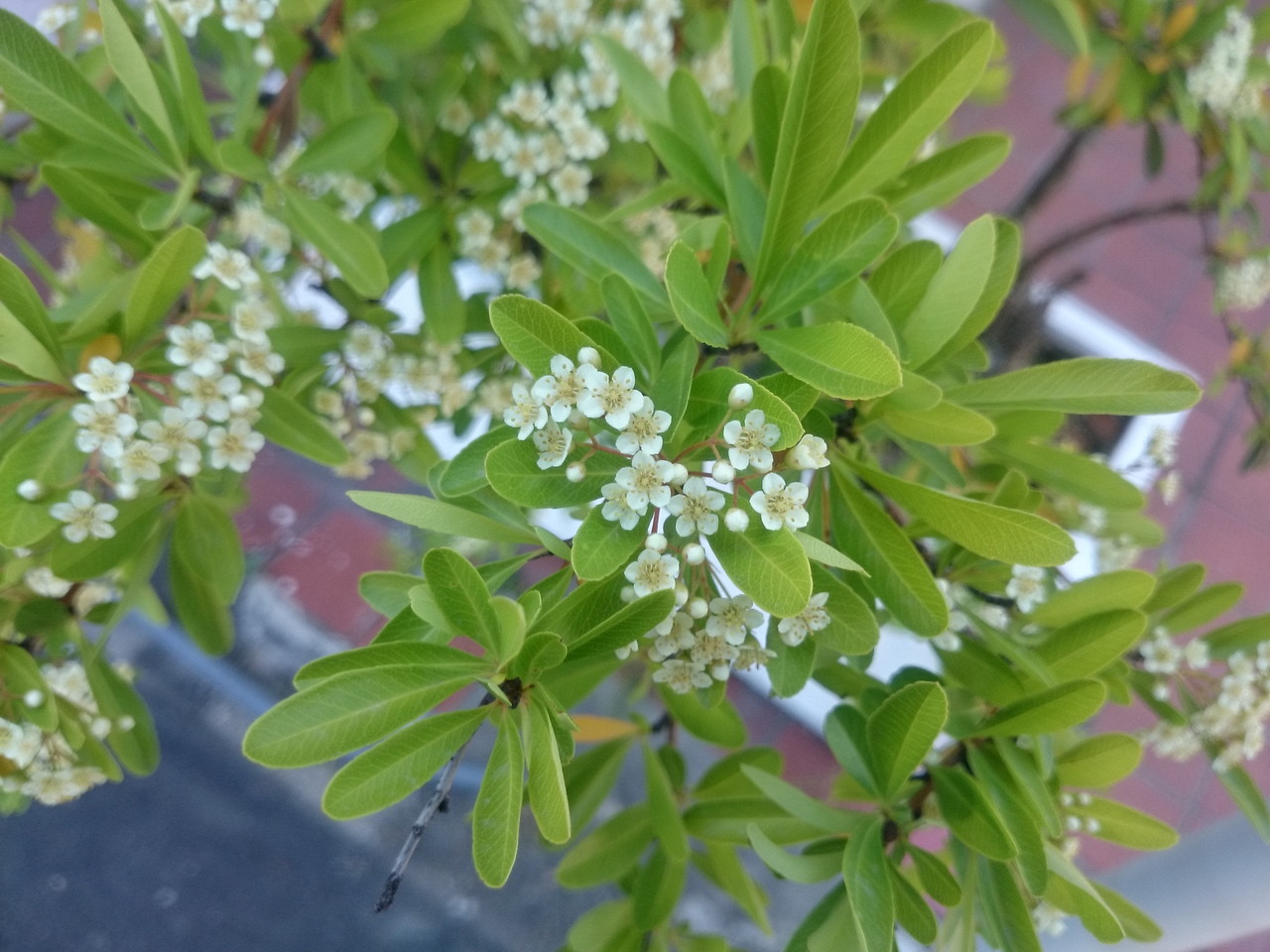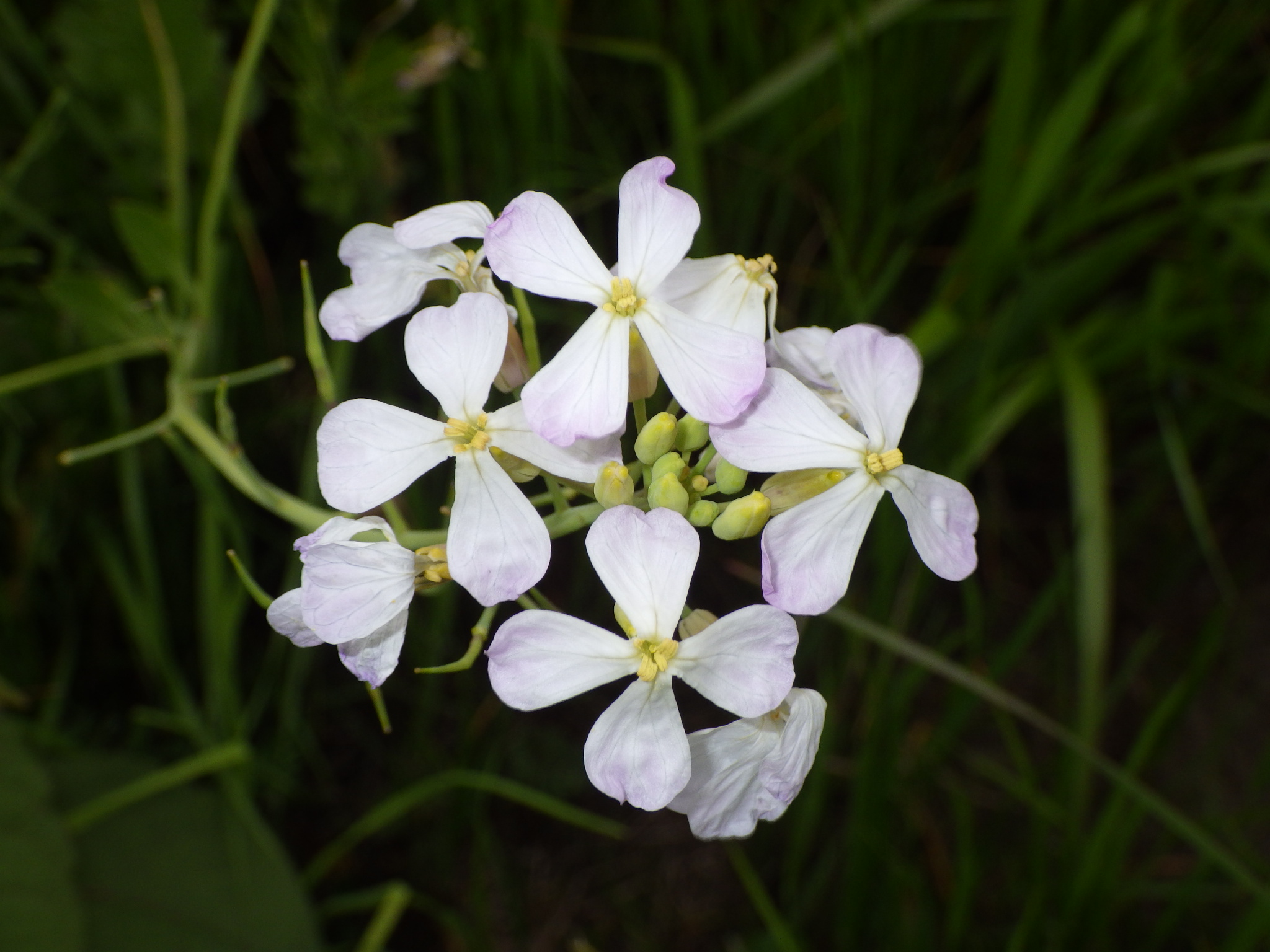
Sea radish, flower radish (Raphanus sativus), and Chinese radish (Raphanus kobus) are all members of the Brassicaceae family, and their names sometimes include "radish." They are herbaceous plants that are cultivated for either ornamental or edible purposes and have also become naturalized. They are similar in that they bear purple cross-shaped flowers, and they have many Japanese names, with Chinese radish sometimes being called "flower radish," making them a rather confusing group. However, they can be distinguished relatively easily by observing the fruit if present, or by observing the leaves and stems even if they do not have fruit. This article will explain the classification and morphology of sea radish, flower radish, and Chinese radish.
What are sea radish, flower radish (flower radish), and large-flowered radish (large-flowered radish)?
The beach radish , Raphanus sativus var. hortensis f. raphanistroides, is distributed throughout Japan and is a biennial plant that grows on coastlines and riverbanks (Kanagawa Prefecture Flora Survey Association, 2018). There are several theories about its origin; one is that cultivated radish, Raphanus sativus var. hortensis, escaped (ran away) and became naturalized. However, in recent years, the theory that wild populations that were distributed across the Eurasian continent in an earlier period (after the Yayoi period) arrived in Japan along with grains and became a population that has fully adapted to the wild environment is gaining traction (Fujita, 2004; Ban et al., 2009). Unlike the radish, the root is not commonly used except in the San'in region, and the immature stems, leaves, and flower spikes are sometimes eaten (Ban et al., 2009).
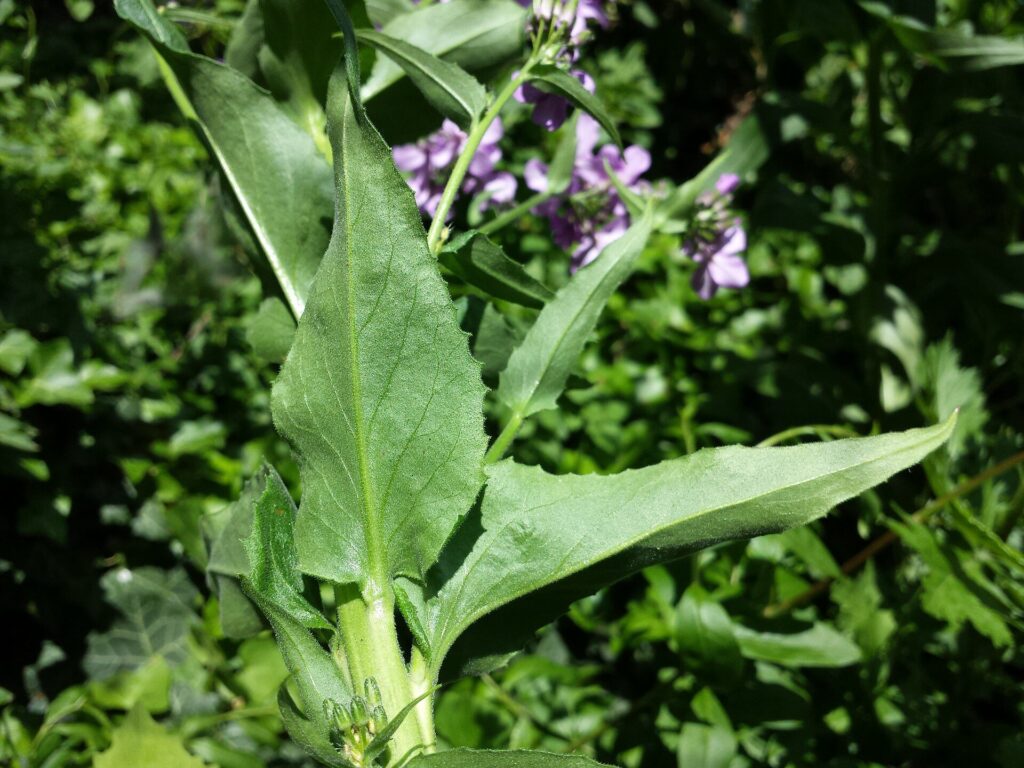
Hesperis matronalis, also known as flower radish, Western flower radish, or sweet rocket, is a biennial plant (though it cannot survive winter in Japan, so it is considered an annual) distributed along the Mediterranean coast of Europe, the Caucasus, and Turkey. It is cultivated worldwide, including in Japan, for ornamental purposes and for its edible leaves (herb), and has escaped cultivation in disturbed areas. In Japan, it has escaped cultivation in various locations, and has become naturalized, especially in Hokkaido.
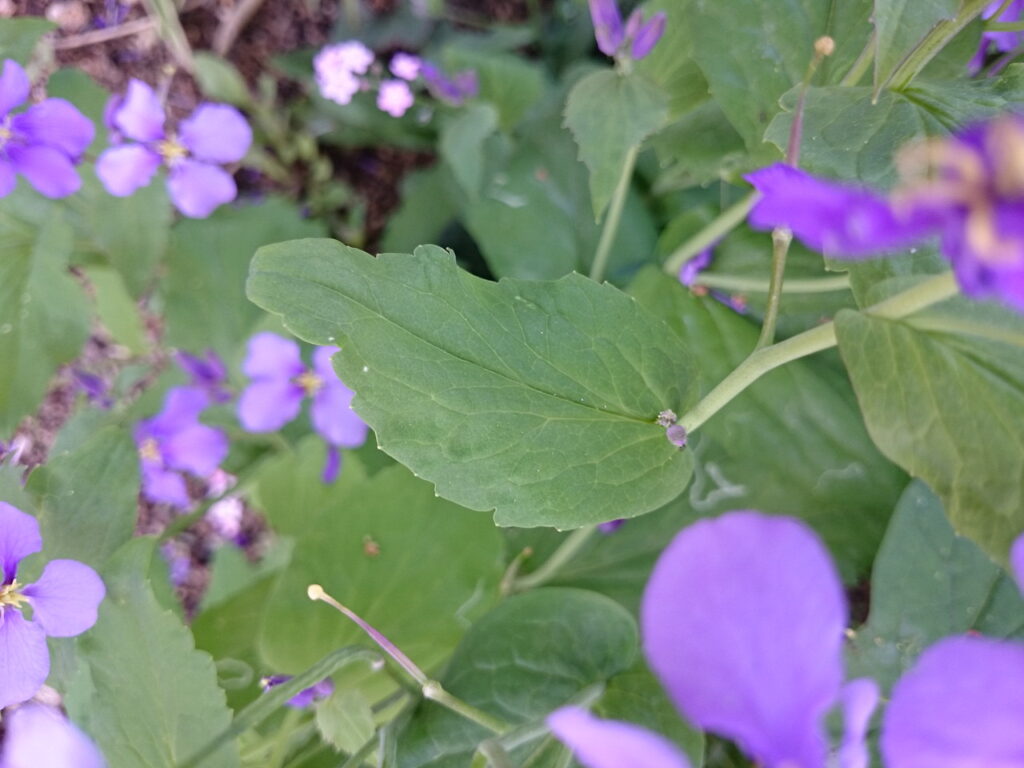
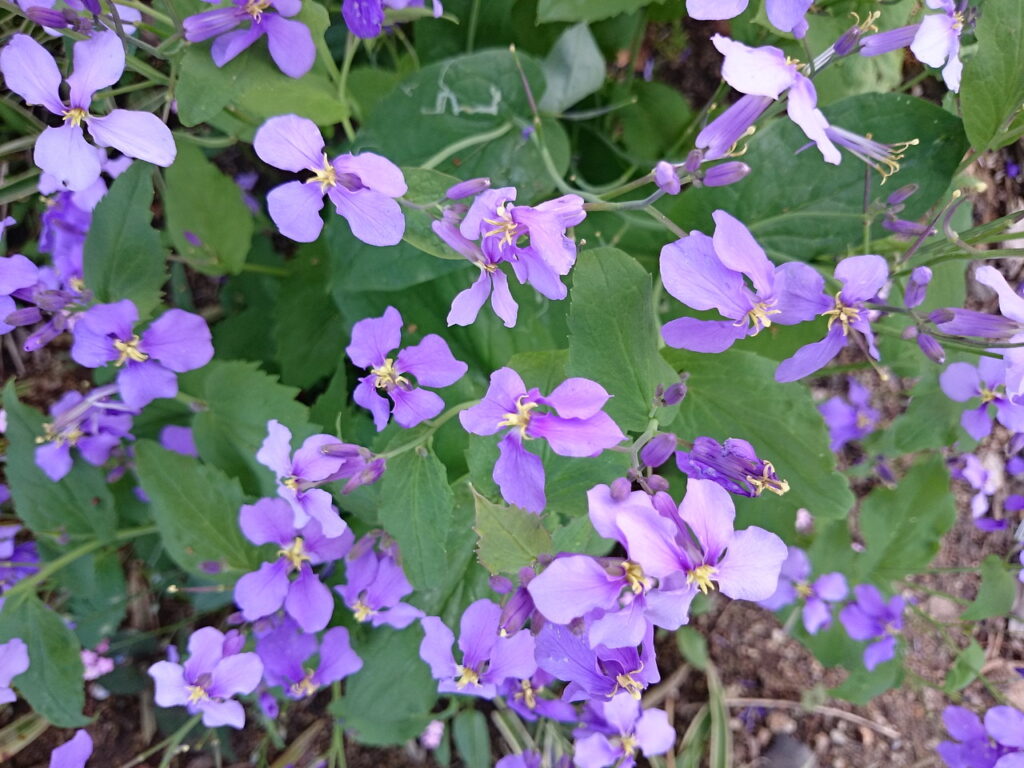
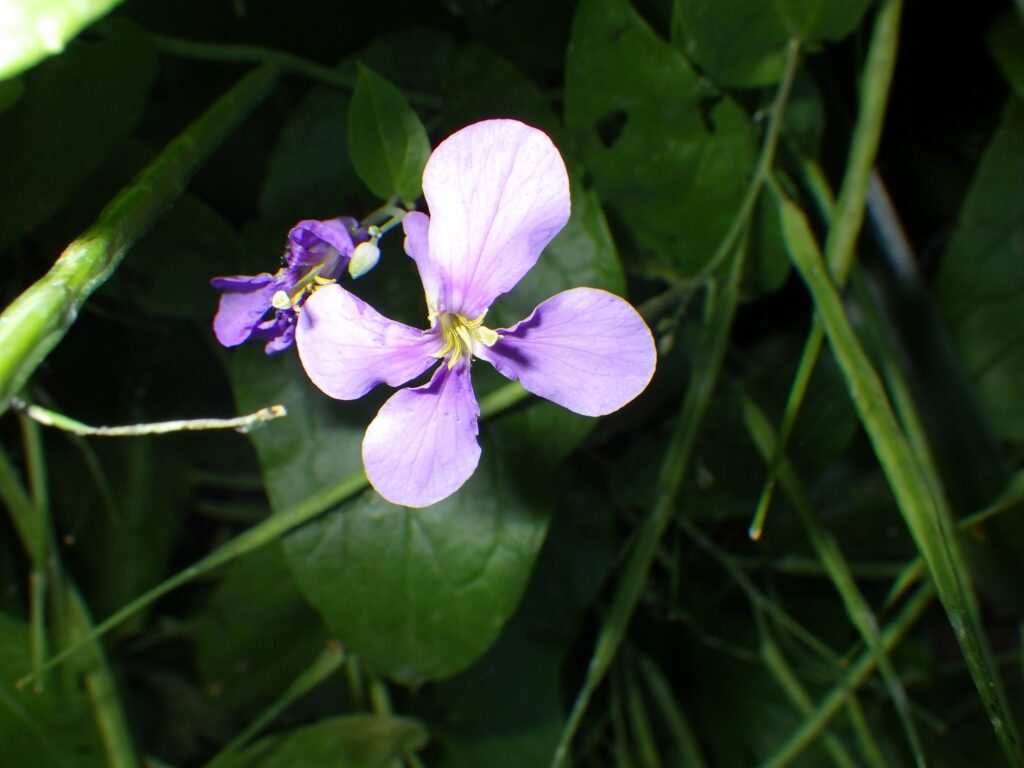
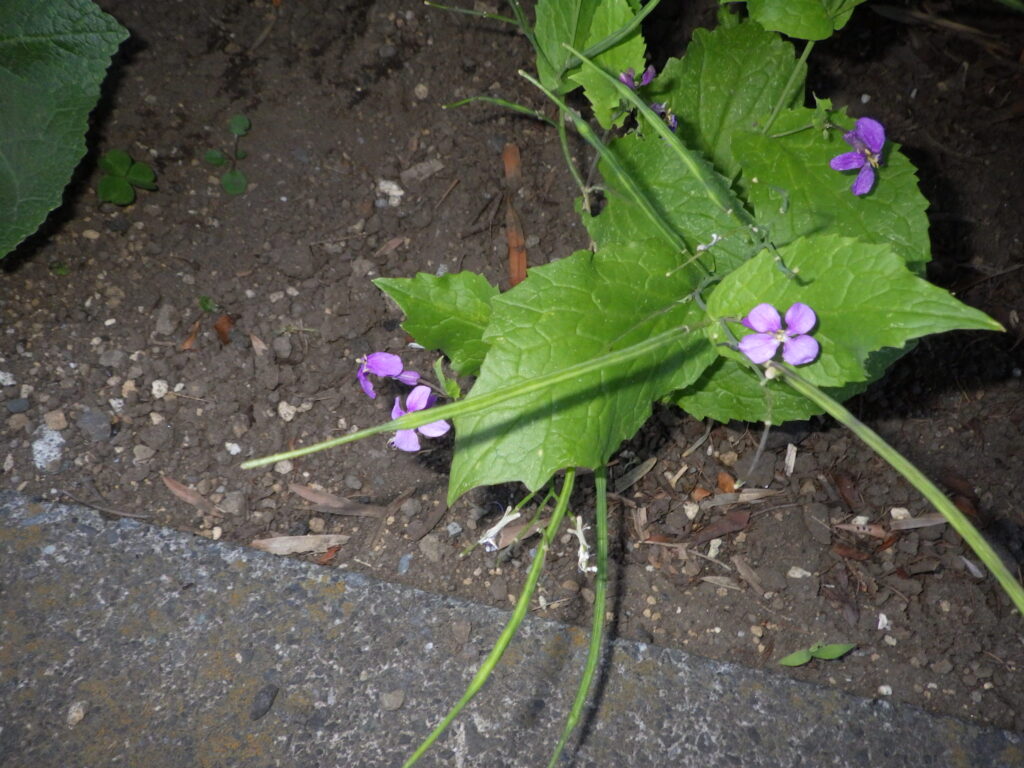
Orychophragmus violaceus, also known as rhododendron, large purple radish, broad-leaved radish, or purple flowering radish, is an annual to biennial plant native to China that was introduced to Japan during the Edo period and has since become widely cultivated and naturalized (Kanagawa Prefecture Flora Survey Association, 2018). While primarily used for ornamental purposes, its young leaves and flower buds are edible, and it is cultivated as a vegetable in China. Oil can also be extracted from its seeds, similar to rapeseed, and it was cultivated for this purpose after World War II. The name "Zhuge Cai" (諸葛菜) is interesting, and is said to originate from a legend that Zhuge Liang, the military strategist of the Shu Han kingdom during the Three Kingdoms period of China, sowed the seeds of this flower first when he set up camp.
All of these belong to the Brassicaceae family, and their names sometimes include "radish." They are herbaceous plants that are cultivated for either ornamental or edible purposes, and have also become naturalized in the wild.
Not only are the flowers of the Brassicaceae family arranged in a cross shape with four petals in pairs, a characteristic feature of the family, but the flowers are also purple in color, and the leaves are soft and have serrated edges, making them very similar in morphology.
Furthermore, the term "hanadaikon" can refer to either Hesperis matronalis or Orychophragmus violaceus, which can be quite confusing.
Therefore, you may often find yourself unsure of what to do.
Since "Hanadaikon" is ambiguous, we will use the terms Hamadaikon, Hanasuzushiro, and Shokatsusai consistently in the following explanation, following the most reliable list of correspondences between scientific and Japanese names , 'Ylist'.
What are the differences between sea radish, flower radish, and Chinese cabbage?
From the perspective of their uses, sea radish is only found as a wild species on coastlines and riverbanks, whereas wild radishes and Chinese cabbage, which are cultivated for ornamental or edible purposes, have become naturalized.
Therefore, the situations in which they meet will likely differ.
Let's also consider the morphological differences.
As a fundamental point, these three species belong to completely different genera, as can be seen from their scientific names. Therefore, there are significant differences in their body structures.
The biggest difference is evident in the fruit. All three species belong to the Brassicaceae family, so their fruits are siliques, which are divided into two pericarps called "valves" (developed carpels) and seeds, with multiple seeds contained within each valve.
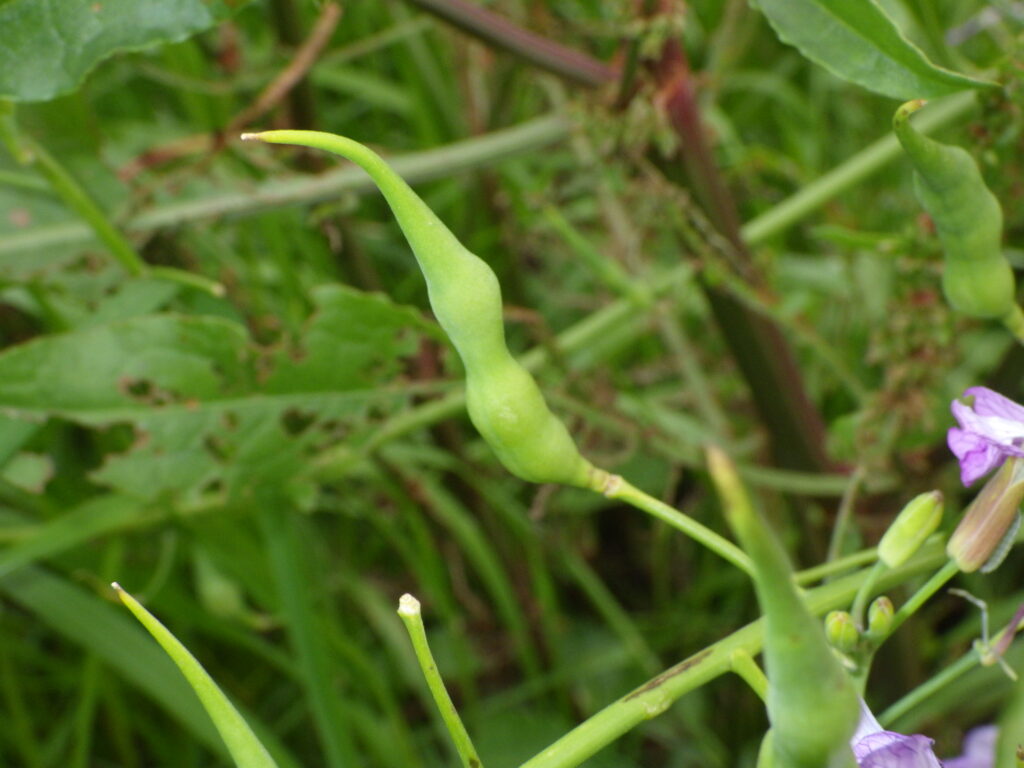
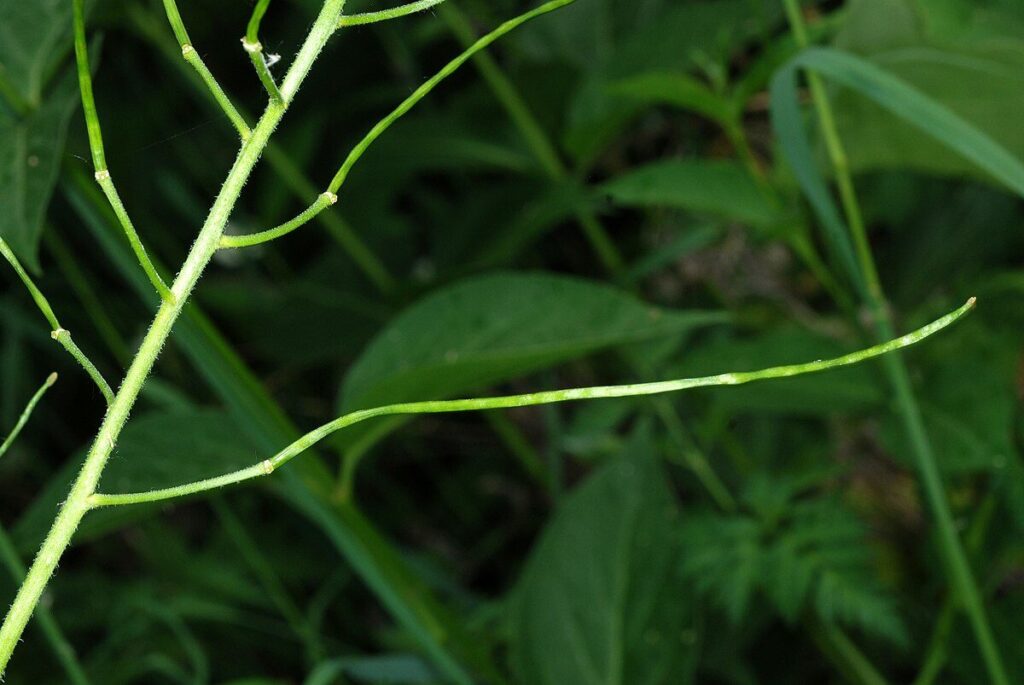
In wild radish, the siliques are distinctly thick, do not split open when ripe, and contain large seeds, usually fewer than four. In contrast, in Japanese radish and Chinese cabbage, the siliques are distinctly thin and linear, split open when ripe, and contain numerous seeds.
Wild radish (Raphanus sativus) spreads its habitat through "water current dispersal," where its siliques float on water and are carried away by the current (Han et al., 2015). This is why it grows on riverbanks and coastlines. On the other hand, Japanese radish (Raphanus sativus) and Chinese cabbage (Raphanus scoparius) disperse through "automatic dispersal," where their siliques split open.
Regarding *Hypochaeris radicata* and *Chinese cabbage*, the difference is that *Hypochaeris radicata* has four thick ridges (pointed corners) on its silique, while *Chinese cabbage* has no ridges and is rounded.
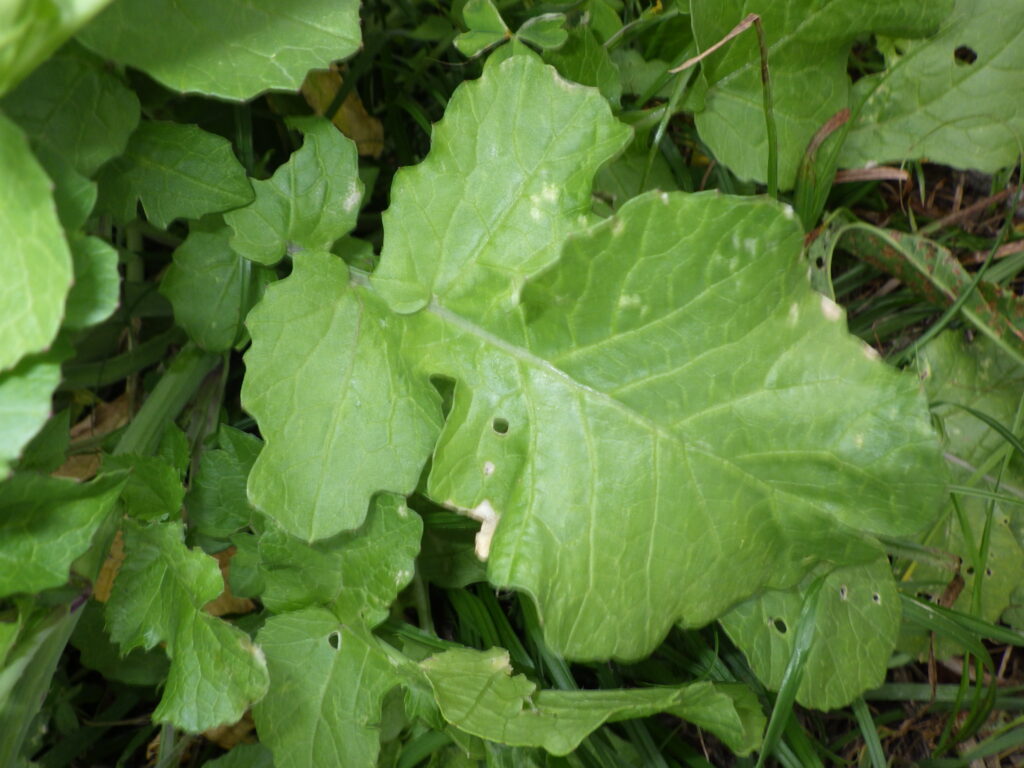
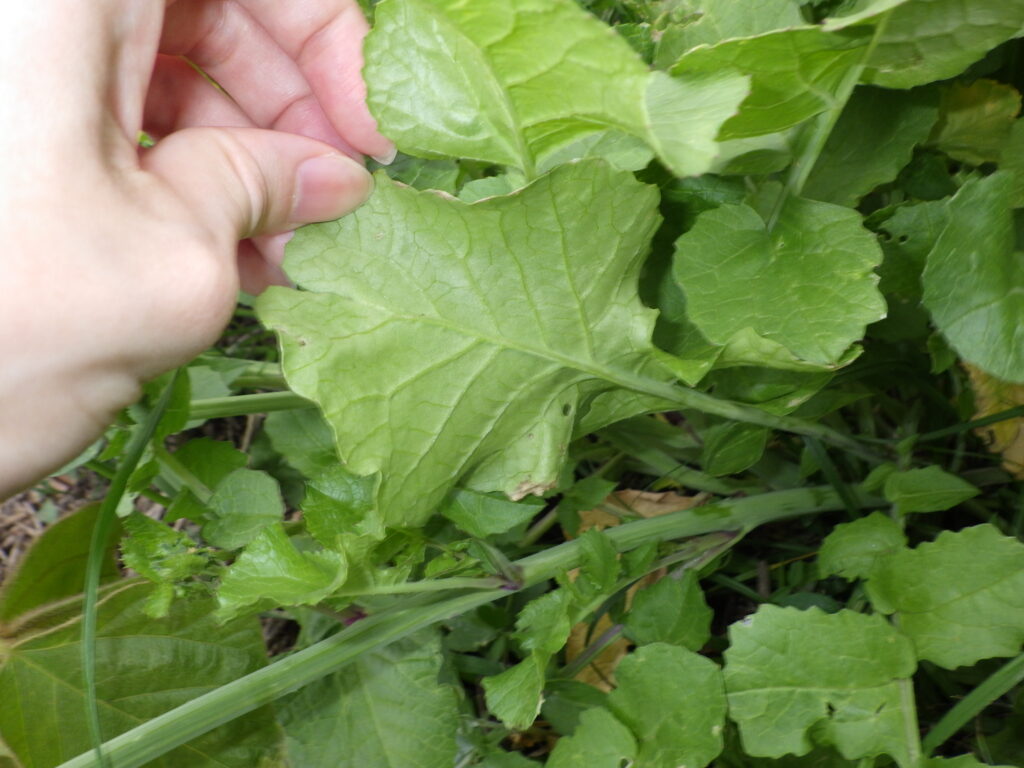
However, you might occasionally find individuals like the three species during periods when there are no fruits. In those cases, the only option is to examine the leaves and stems.
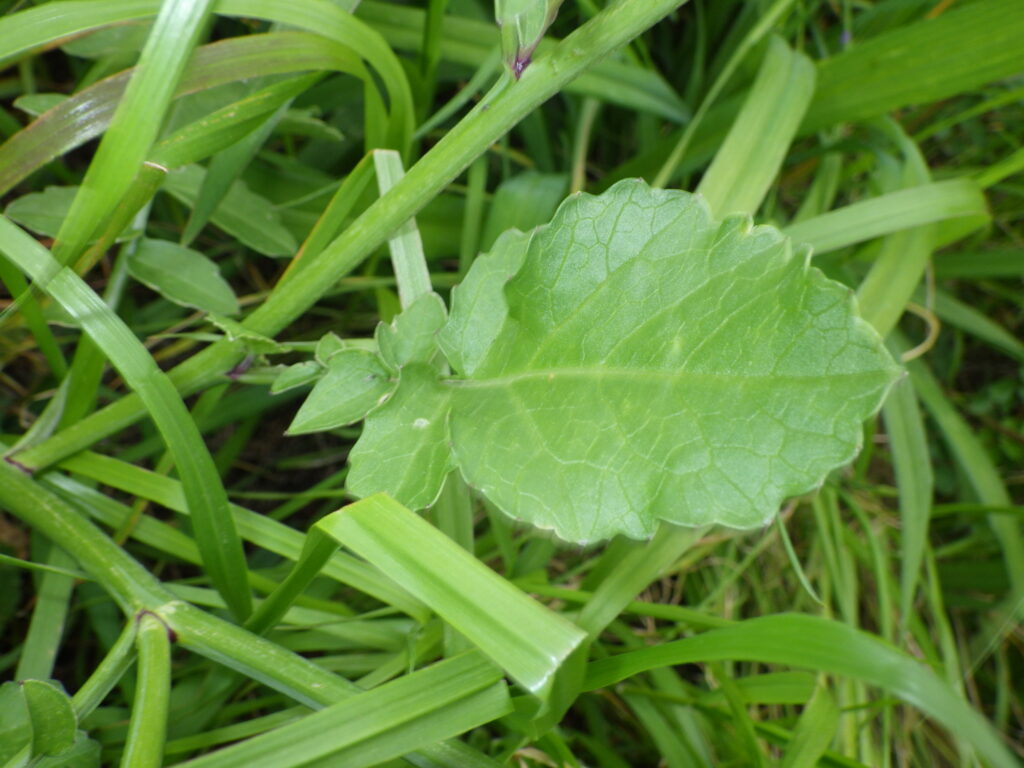
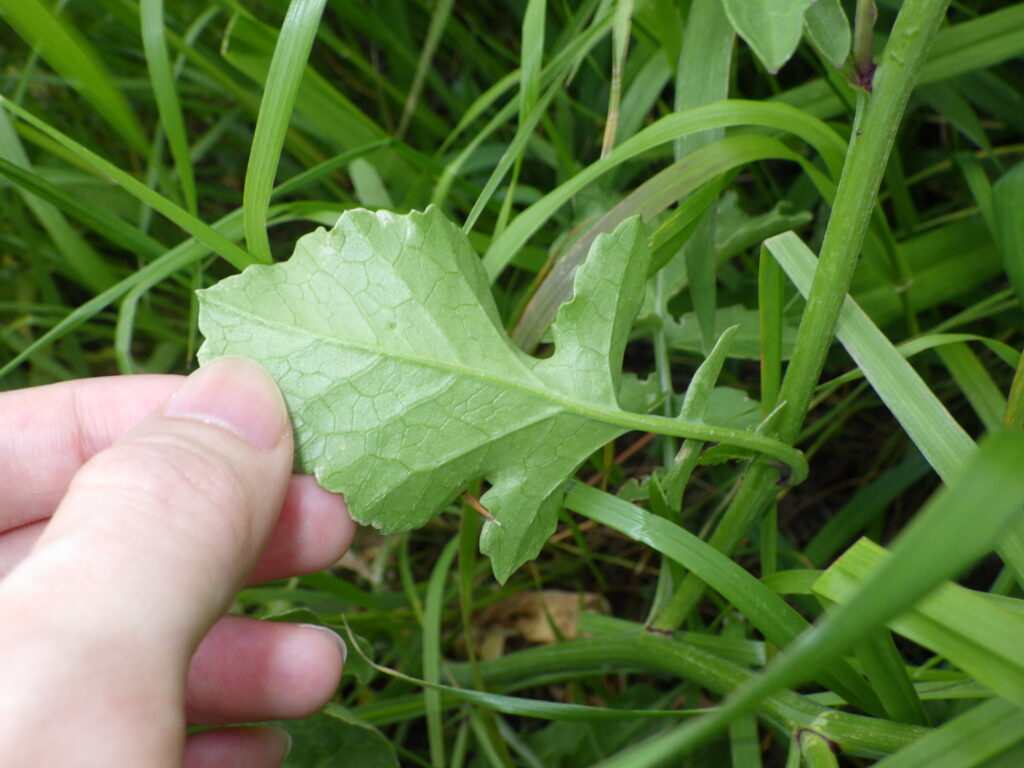
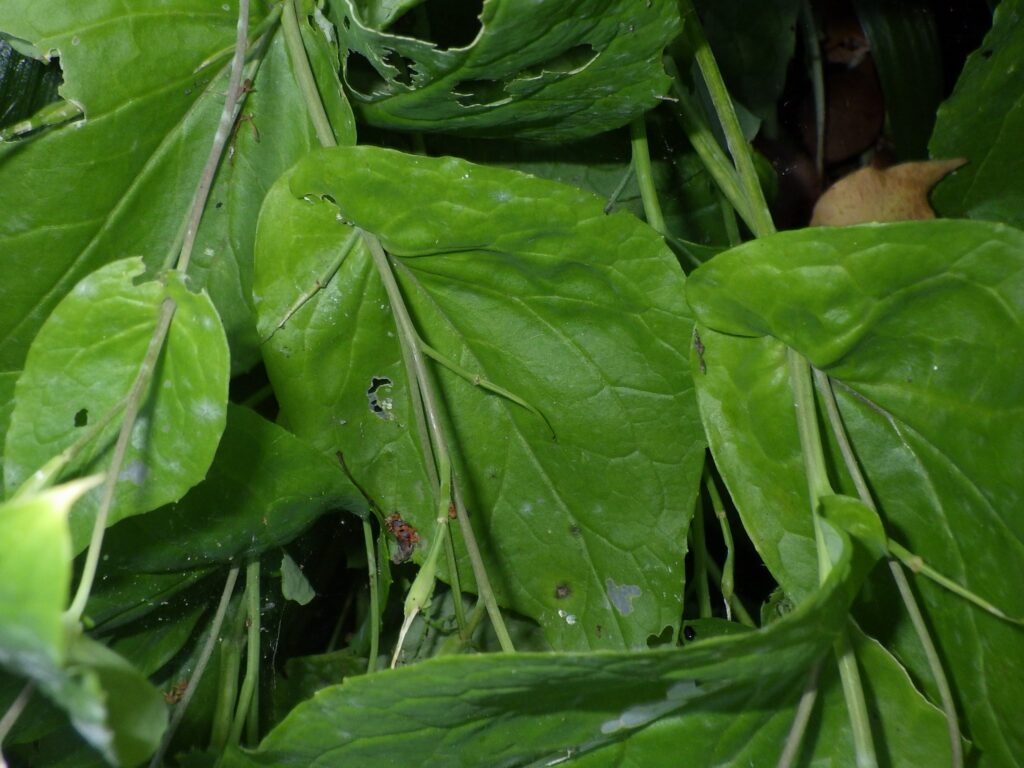
In the Brassicaceae family, the basal leaves (leaves that grow from the root) and stem leaves (leaves that grow from the stem) often have different shapes. Regarding the stem leaves, in wild radish, the leaf tips are rounded, while in Japanese radish and Chinese cabbage, the leaf tips are pointed like a tail.
Furthermore, the stems and leaves of *Hanasuzushiro* are hairy, while those of *Shokatsusai* are hairless.
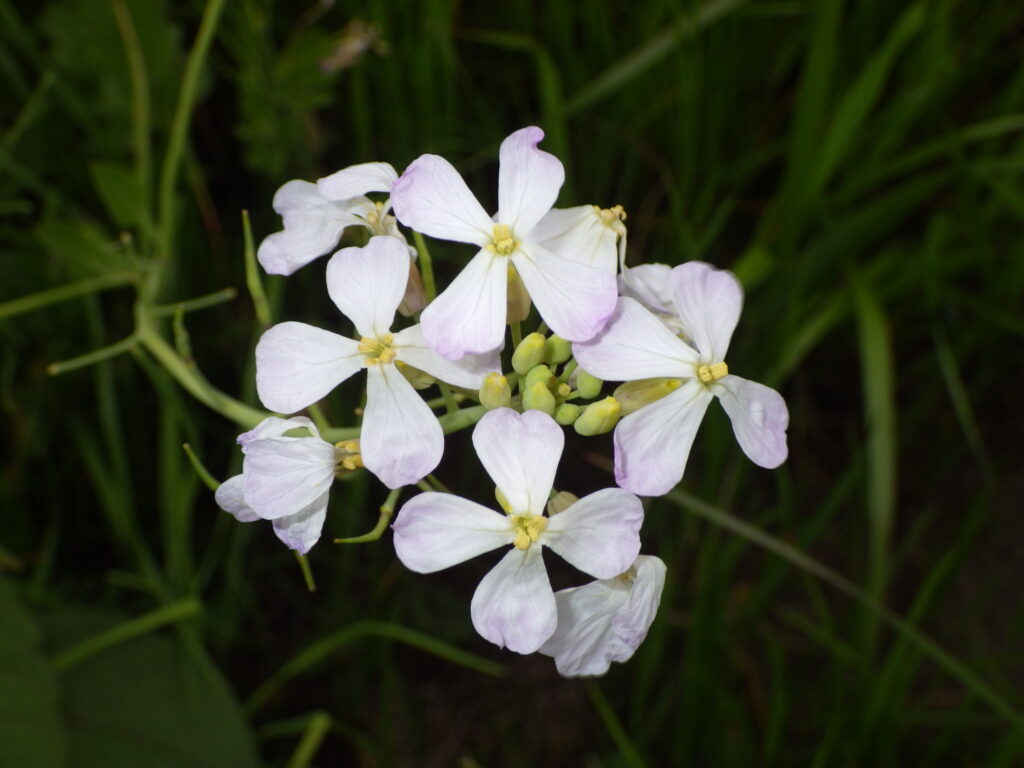
The flower colors vary; in sea radish, the tips of the petals are partially purple; in daisy-like flowers, they are uniformly purple or white; and in Chinese radish, they are mostly pale purple with a white base. However, there is considerable individual variation, so this should only be used as a general guide.



References
Takuya Ban, Nobuo Kobayashi, Hiroshi Motoya, Masayuki Kadowaki, and Shingo Matsumoto. 2009. On the cultivation and utilization of wild radish. Japanese Journal of Horticultural Science 8(4): 413-417. https://doi.org/10.2503/hrj.8.413
Fujita, Satoshi. 2004. Cultural History of Keisen Vegetables (1) Radish. Bulletin of the Institute for Horticultural Culture, Keisen Women's University. Horticultural Culture 1: 54-60. ISSN: 1882-5044, https://keisen.repo.nii.ac.jp/records/733
Han, Q., Higashi, H., Mitsui, Y., & Setoguchi, H. 2015. Distinct phylogeographic structures of wild radish (Raphanus sativus L. var. raphanistroides Makino) in Japan. PloS One 10(8): e0135132. https://doi.org/10.1371/journal.pone.0135132
Kanagawa Prefecture Flora Survey Association. 2018. Kanagawa Prefecture Flora 2018 (Electronic Edition). Kanagawa Prefecture Flora Survey Association, Odawara. 1803pp. ISBN: 9784991053726