トラノオスズカケは西日本を中心に分布し、環境省では指定はないものの、各都道府県で、絶滅危惧種として指定されている多年草です。個体数がとても少ないことが絶滅危惧種として指定されている理由ですが、なぜ個体数が少ないかはよく分かっていないようです。トラノオスズカケは西日本が分布の中心ですが、なぜか東京都の自然教育園での分布が確認されています。自然教育園では長年絶滅したと思われていましたが、2007年に再発見されました。自然教育園に分布してるのは、本草学に詳しい平賀源内が持ち込んだためという説もありますが、可能性はあるものの、残念ながら直接の証拠はありません。トラノオスズカケの花序は短い穂状花序でこのことが名前の由来となっています。どのように受粉しているのかについては分かりませんが、ホソヒラタアブのようなハナアブが関係しているかもしれません。果実は蒴果で、種子は光発芽の性質が強く、強い休眠性を持つことが確認されています。 This article will explain the distribution, history, pollination ecology, and seed dispersal of the tiger's-legged plane tree (Platanthera japonica).
- A rare species found in localized areas.
- Why did they become endangered species?
- Why is there a Veronica serrata in the Tokyo Metropolitan Institute for Nature Education?
- What is the structure of the flower? How is it pollinated?
- What is the structure of the fruit? How are the seeds dispersed?
- References
A rare species found in localized areas.
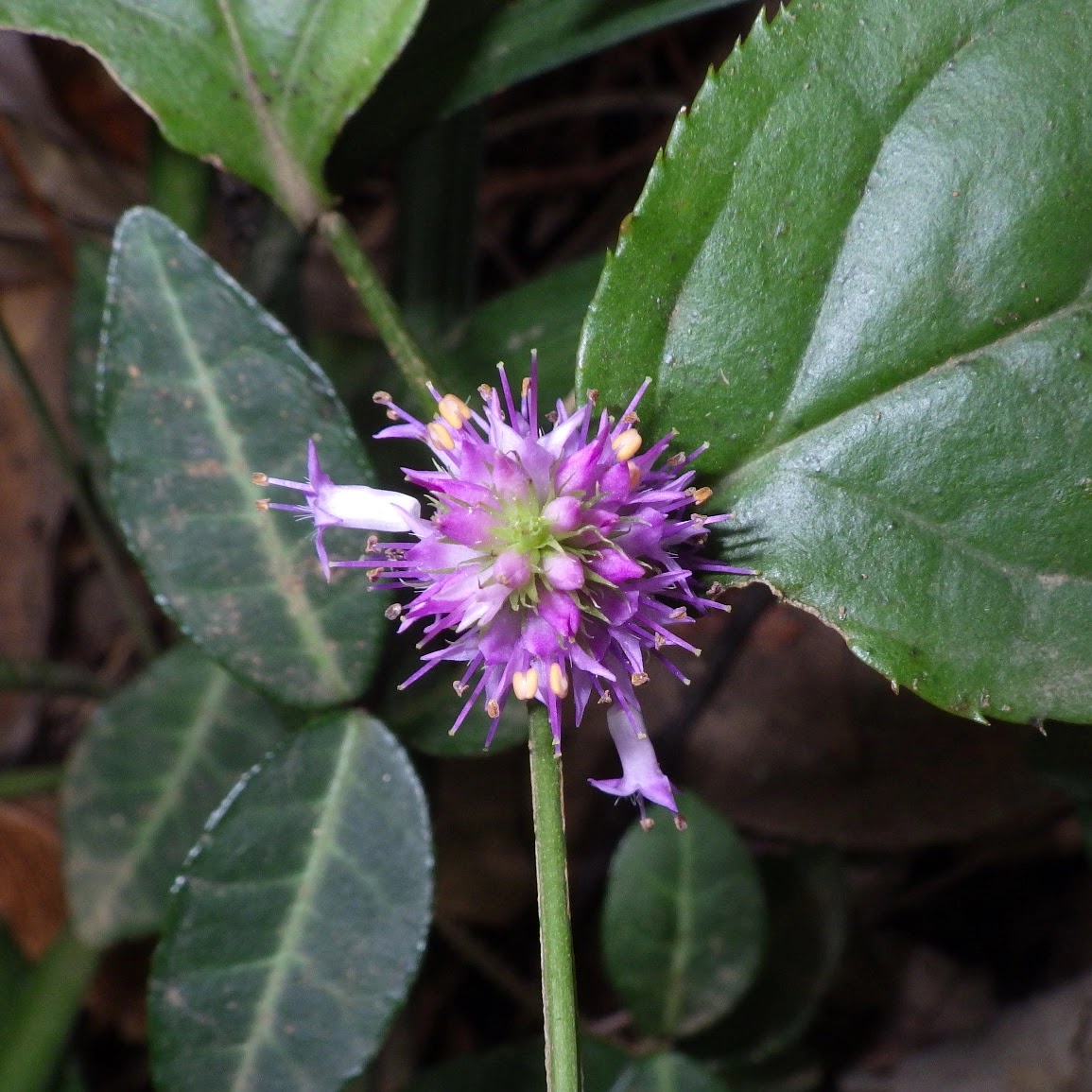
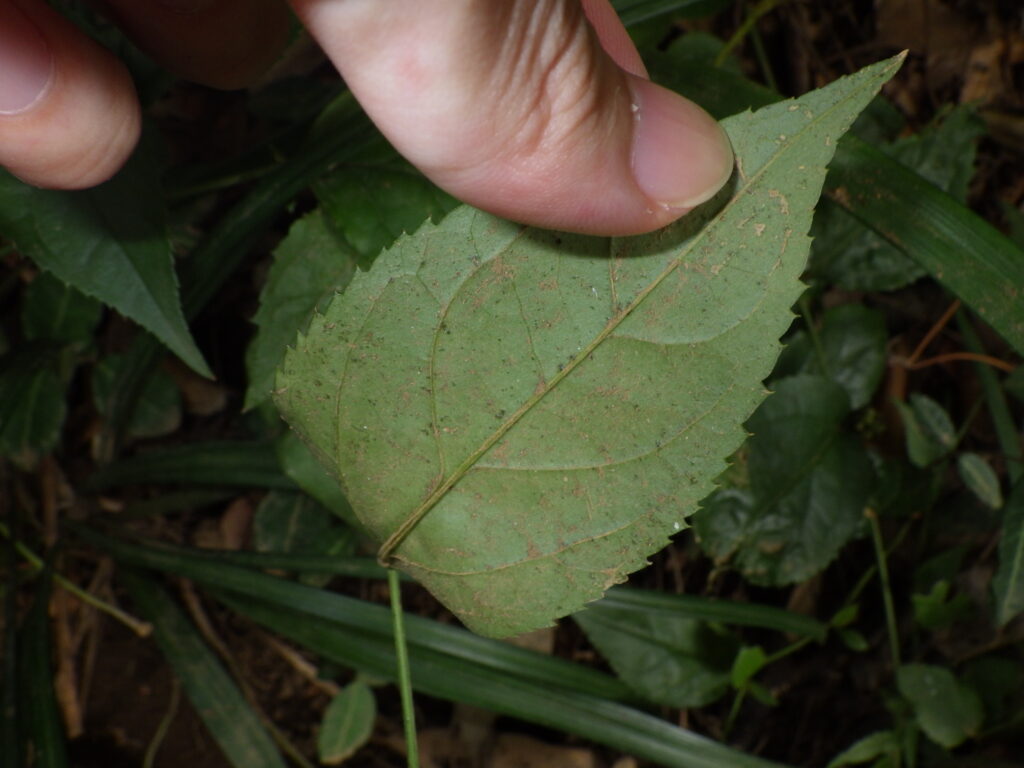
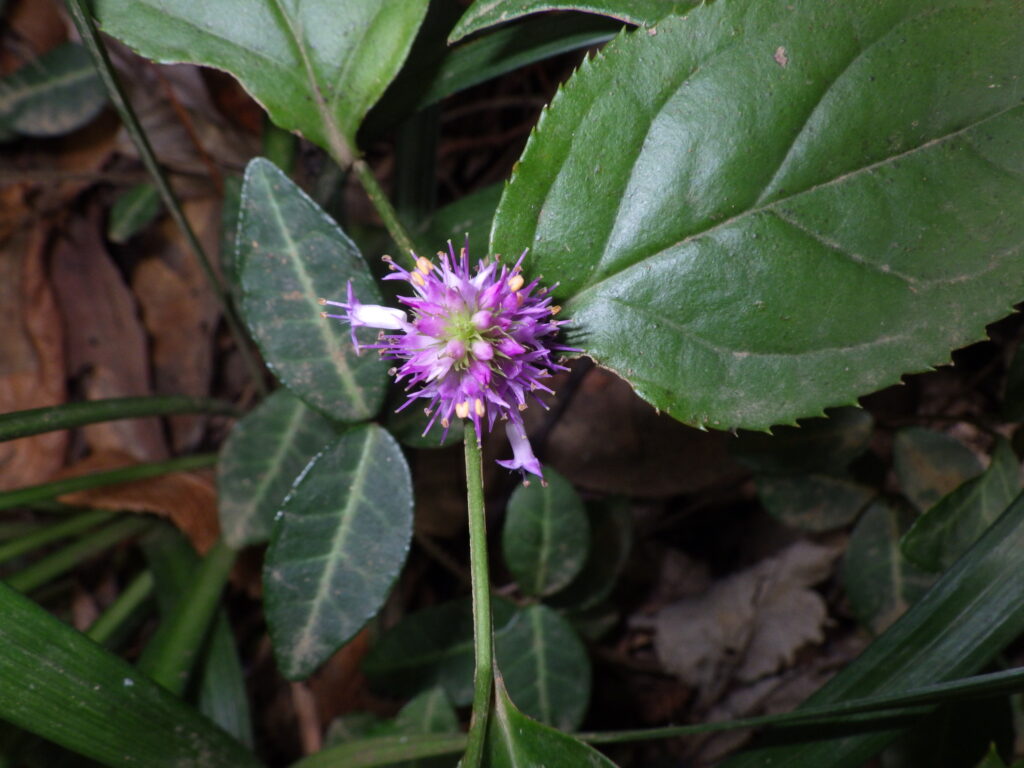
Veronicastrum axillare, also known as Tiger's Tail Bellflower, is a warm-climate perennial herb belonging to the Plantaginaceae family, distributed only in the lowlands of the Tokai, southern Shikoku, and Kyushu regions, and inhabiting forests (Satake et al., 1999). In recent years, it has also been discovered in Tottori Prefecture (Nagamatsu et al., 2016). Its distribution has also been confirmed in the National Garden for Nature Education in Tokyo, where it was only found between 1915 and 1948, but was rediscovered in 2007 after a 59-year absence (Hagiwara, 2014). The following photos were also taken in the National Garden for Nature Education.
The Japanese name comes from its resemblance to Veronicastrum villosulum, an endangered species in Tokushima Prefecture, and the likening of its inflorescence to a tiger's tail. The name Suzukake is said to originate from the fact that its small, clustered spike-like inflorescence resembles the "suzukake," a part of the attire worn by yamabushi (mountain ascetics who practice Shugendo in the mountains).
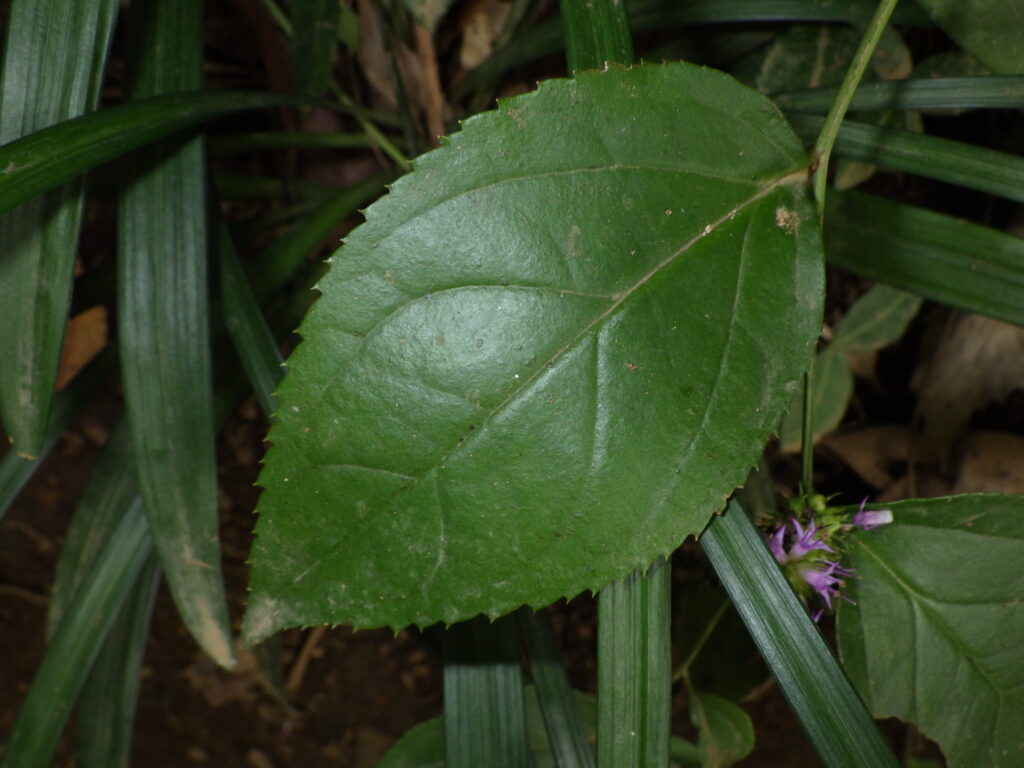
The leaves are alternate, hairless, glossy, 5-10 cm long, and have triangular serrations. A distinctive feature is that it produces vine-like stems that touch the ground and develop adventitious roots.
Why did they become endangered species?
It is extremely rare and listed in the Red Data Book of each prefecture. In most cases, its habitat is kept secret for conservation reasons.
As of 2021, although it is not listed in the Ministry of the Environment's Red Data Book, it is classified as Vulnerable (VU) in Shizuoka Prefecture, Extinct in Okayama Prefecture, Critically Endangered (CR) in Ehime Prefecture, Near Threatened (NT) in Kochi Prefecture, Critically Endangered (CR) in Fukuoka Prefecture, and Near Threatened in Kagoshima Prefecture (Wildlife Research Association/Envision Environmental Conservation Office, 2021).
In all cases, the reason for the designation is a small population size, but the exact cause of this small population size is not well understood. However, it is possible that the population size was already small to begin with, and that it has been affected by human development.
Why is there a Veronica serrata in the Tokyo Metropolitan Institute for Nature Education?
At the National Museum of Nature and Science's Natural Education Garden in Shirokanedai 5-chome, Minato-ku, Tokyo, *Platanthera japonica* was first recorded in 1915 and reconfirmed in 1932 by the renowned botanist, Tomitaro Makino.
However, after being discovered in 1948 by plant sociologist Tokio Suzuki, it was thought that the plant had disappeared from the National Garden for Nature Education.
Although it had not been seen for many years, it was rediscovered in 2007 by Shinsuke Hagiwara of the same nature education park, after a 59-year absence.
The reason why *Platanthera hologlottis* has been absent for such a long period is thought to be because its habitat became covered by *Pleioblastus chino*, and the recent mass die-off of *Cornus controversa* due to the yellow-legged tussock moth has restored sunlight, allowing the plants to germinate.
By the way, *Platanthera japonica* is usually distributed mainly in western Japan. However, as mentioned above, it has been found in an isolated location in the Tokyo Metropolitan Natural Education Park. Why is this?
In fact, the records in Tokyo suggest that the plants were planted, and one theory suggests that they were brought in during the Edo period, with Hiraga Gennai being involved.
The theory that Hiraga Gennai was involved was proposed by the renowned botanist Makino Tomitaro, who suggested that when the National Institute for Nature Education was the secondary residence of the Takamatsu Domain, Hiraga Gennai, who was born in the Takamatsu Domain of Sanuki Province and was well-versed in herbal medicine, brought the plants from Sanuki (present-day Kagawa Prefecture).
Unfortunately, there is no direct evidence to support this. However, records exist that the Sanuki Takamatsu Domain transported medicinal herbs from various locations within the domain to present-day Takamatsu City in order to create a medicinal herb garden, and it has been revealed that Hiraga Gennai was involved in this transport. Therefore, although it is not confirmed, it can be said that it is a possibility.
What is the structure of the flower? How is it pollinated?
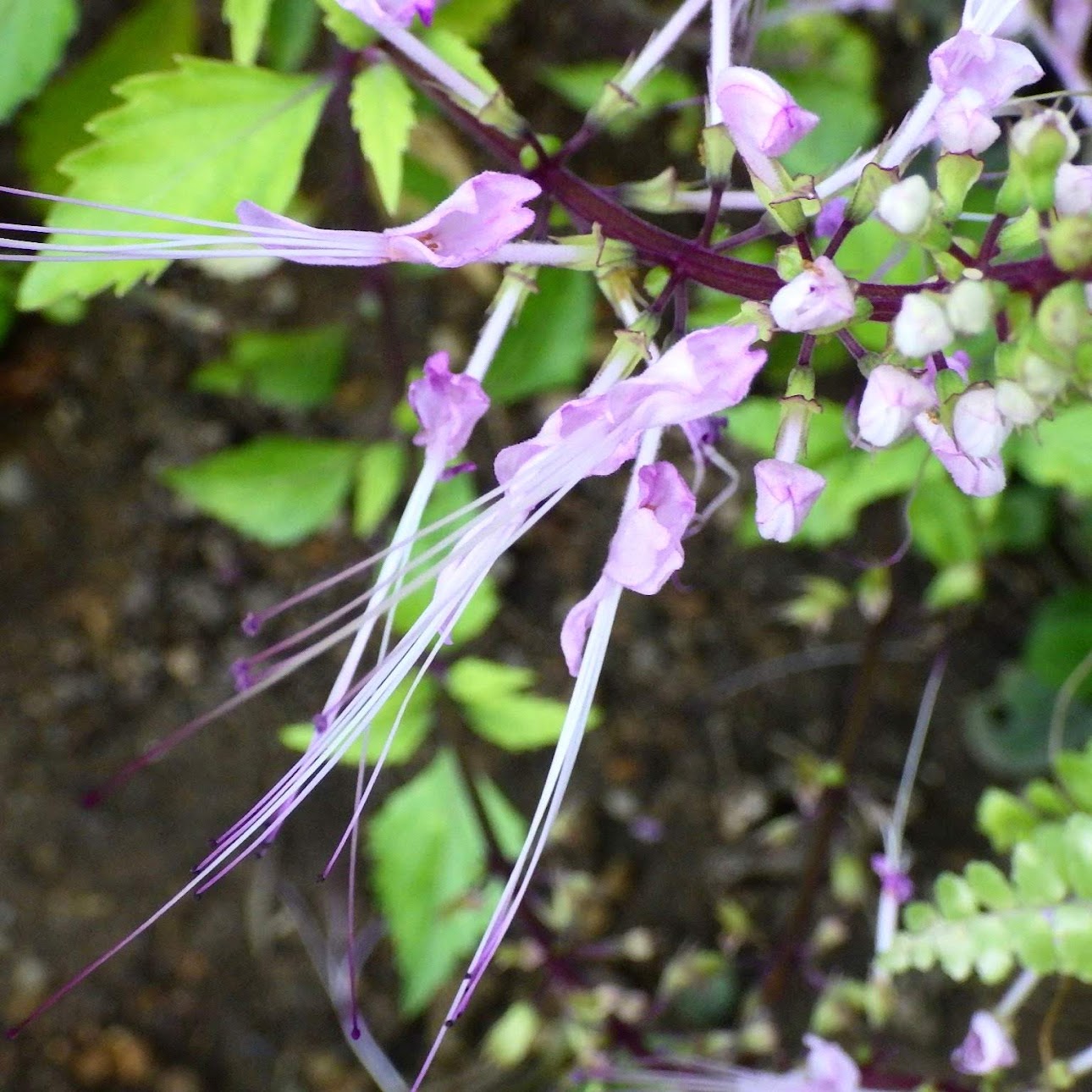
From August to November (Hagiwara, 2013), dense clusters of reddish-purple flowers bloom in short spike-like inflorescences in the leaf axils. The corolla is reddish-purple to purple, and two long stamens protrude from the flower.

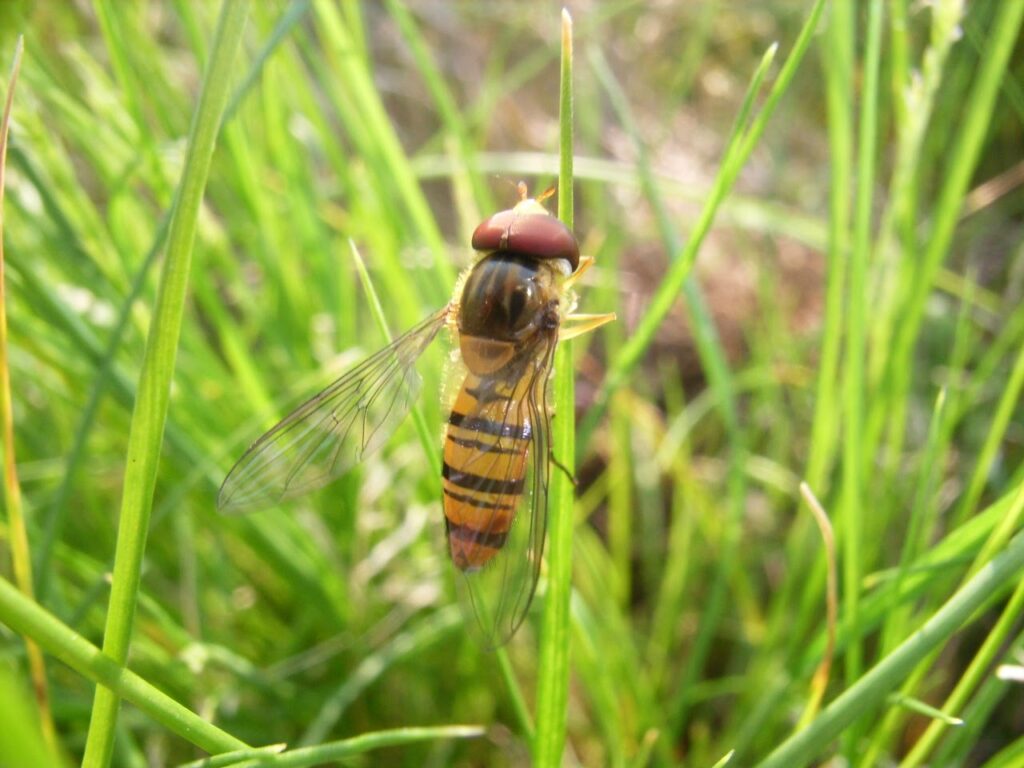
Unfortunately, there is still a lack of research on this plant, and very little is known about the types of insects that visit it for pollination. However, the official website of the Botanical Garden states that "the hoverfly Episyrphus balteatus has been observed visiting the flowers several times" (Botanical Garden, 2009).
A related species is Veronicastrum japonicum, which has a similar flower structure, but the flowers are arranged in long inflorescences, making it look completely different. Various types of insects, including beetles, bees, hoverflies, and butterflies, have been confirmed to visit Veronicastrum japonicum (Tanaka, 1970; Tanaka and Hirano, 2000), but the inflorescence of Veronicastrum sibiricum is short, and it is thought that insects cannot easily spread through it, so it is possible that it does not attract as many types of insects as Veronicastrum japonicum. Alternatively, it may be able to complete pollination with a smaller number of insects.
As it is a rare species, there is still much we don't know about it, but I look forward to future research.
What is the structure of the fruit? How are the seeds dispersed?
The fruit is a flattened, oval-shaped capsule. The seeds are minute, measuring 0.5–0.7 mm in length, 0.5–0.6 mm in width, and about 0.4 mm in thickness, and are somewhat flattened, nearly circular, irregular ellipsoids (Hagiwara, 2013). The number of seeds is large, with records of 298–3,726 seeds being produced in experiments.
Although the ecology of the fruits and seeds is not yet fully understood, seed germination experiments have revealed that they exhibit strong photogermination properties and a strong dormant state.
Therefore, even in nature, it is thought to produce a large number of tiny seeds, and due to its strong dormancy, it remains in the soil as buried seeds, continuing to survive as seeds for a long period of time. The optimal relative light intensity for germination is said to be around 20%, and it will germinate if it is given moderate direct sunlight. This is likely what led to its survival in the nature education garden (Hagiwara, 2014).
References
Hagiwara, Shinsuke. 2013. Reproduction of *Platanthera japonica* in Kitakyushu Science and Research City. Report of the National Institute for Nature Education 44: 83-93. ISSN: 0385-759X, https://www.kahaku.go.jp/research/publication/meguro/download/44/ns-r-44_1-9.pdf
Hagiwara, Shinsuke. 2014. The rediscovery of *Platanthera japonica* in the Natural Education Garden attached to the National Museum of Nature and Science and the article in the 1915 issue of the "Oriental Arts and Culture Magazine". Report of the Natural Education Garden 45: 47-53. ISSN: 0385-759X, https://www.kahaku.go.jp/research/publication/meguro/download/45/ns-r-45_1-6.pdf
Nagamatsu, D., Sakata, N., & Yadagai, S. 2016. Rediscovery of *Ophioglossum sieboldii* in the Tottori Sand Dunes and new confirmation of *Platanthera japonica* and *Platanthera longifolia* in Tottori Prefecture. San'in Natural History Research 12: 22-25. ISSN: 1349-2535, https://repository.lib.tottori-u.ac.jp/records/7462
Tanaka, Hajime. 1970. Pollination of Veronicastrum sibiricum and insects. Collection and Rearing 32: 194-196. ISSN: 0036-3286
Tanaka, Hajime & Hirano, Takahisa. 2000. The Face of Flowers: Wisdom for Bearing Fruit. Yama-kei Publishers, Tokyo. 191pp. ISBN: 9784635063043
Satake, Yoshisuke. 1999. Wild Plants of Japan (New Edition, Herbaceous Plants 3, Sympetalous Plants). Heibonsha, Tokyo. 259pp. ISBN: 9784582535037
Natural Botanical Garden. July 23, 2009. Best viewing information. Affiliated Natural Education Garden website. http://www.ins.kahaku.go.jp/season/index.php?id=0001249525715772
Wildlife Research Association / Envision Environmental Conservation Office. January 5, 2021. Japan Red Data Search System. http://jpnrdb.com/index.html