Both Paederia scandens and Paederia japonica are climbing herbs belonging to the genus Paederia in the family Rubiaceae. They are well-known for emitting a strong foul odor when their leaves are crushed, but the overall shape of the leaves of the two species is similar, and the flowers are exactly the same. Due to confusion in classification, they may be confused, but they can be distinguished by checking the gloss and hairs of the leaves. Paederia japonica is a variety of Paederia scandens, and many other varieties and cultivars are known. The foul odor comes from methanethiol, which acts as an allelopathy to protect the plant. The flowers are tubular florets with a striking contrast between white and reddish-purple in the center, and almost all bees visit these small tubes, with small bees, mainly from the family Apidae, being particularly important. The fruit is a drupe, a spherical fruit that turns yellowish-brown when ripe, and is a favorite food of birds, although the specific types of birds that eat it are largely unknown. This article will explain the classification, toxicity, pollination ecology, and seed dispersal of the genus Paederia.
- What are Paederia scandens and Paederia scandens?
- What is the difference between Paederia scandens and Paederia japonica?
- What are the varieties and cultivars of Paederia scandens?
- What are the components that cause the foul odor of the Japanese honeysuckle (Paederia scandens)?
- What is the shape of the flower?
- How is pollination done?
- What is the structure of the fruit?
- What are the seed dispersal methods?
- References
What are Paederia scandens and Paederia scandens?
Paederia foetida, also known as "hot vine" or "early maiden vine," is a climbing perennial herb widely distributed in Hokkaido, Honshu, Shikoku, Kyushu, and the Ryukyu Islands in Japan, as well as Southeast Asia, growing in forest edges and thickets (Kanagawa Prefecture Flora Survey Association, 2018). It is also commonly seen in urban areas. It has naturalized in the southern United States and Hawaii, becoming a problem as an invasive species (Liu et al., 2006).
Paederia scandens var. maritima, also known as Hamasaotomekazura, is a perennial vine that grows along the coast and is distributed throughout Honshu, Shikoku, Kyushu, and Amami in Japan.
The Japanese name comes from the fact that crushing the leaves and other parts of the plant releases a strong, foul odor, and it is said that the name originally meant "fart vine," which later evolved from "hekusa" (fart odor).
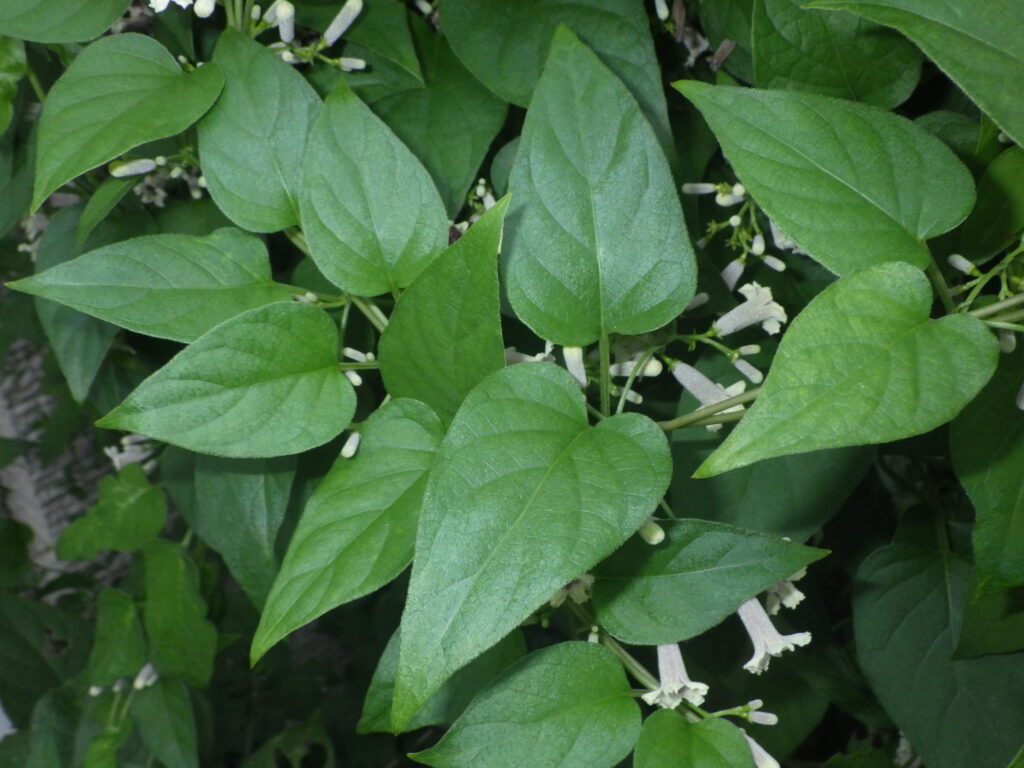
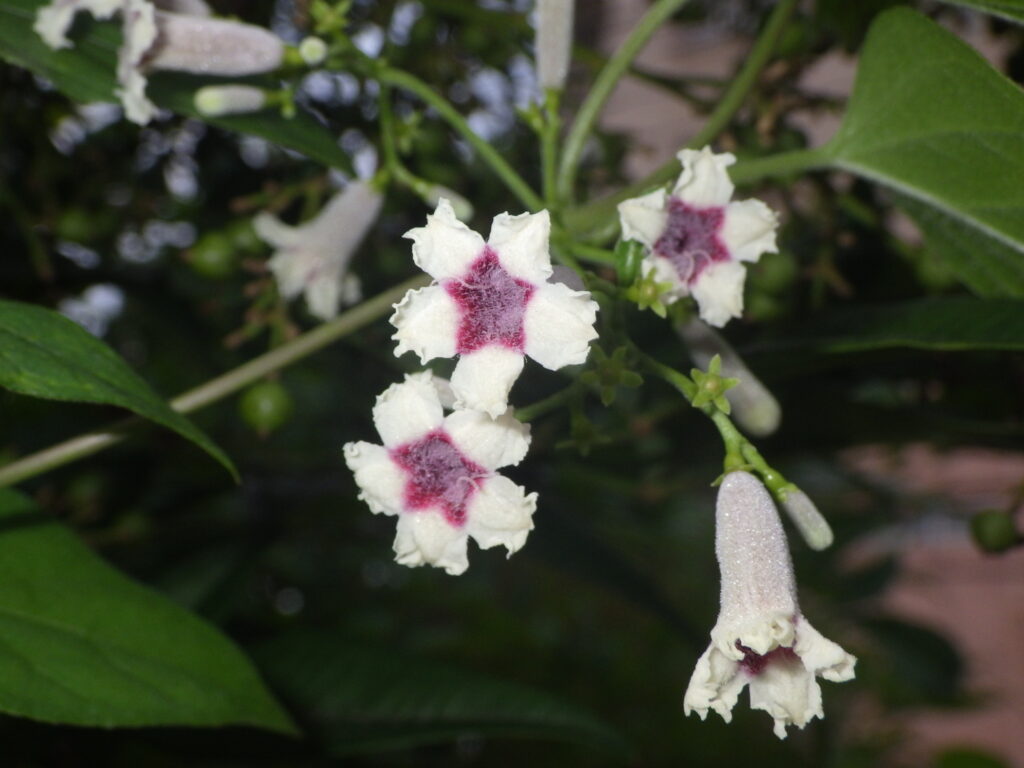
Both are climbing herbs belonging to the genus Paederia in the family Rubiaceae. However, some may become woody. They are remarkably similar in that their leaves are entire and narrowly ovate to broadly ovate, and their flowers are bell-shaped with shallowly five-lobed tips and a hairy, purple center. Combined with the confusion in their classification, they may sometimes be mistaken for each other.
What is the difference between Paederia scandens and Paederia japonica?
Hamasaotomekazura is considered to be a coastal variety of Hekusokazura. Therefore, there are only slight differences between Hekusokazura and Hamasaotomekazura. Saotomekazura is another name for Hekusokazura.
The reason why the scientific names differ is that researchers have been slow to make scientific name changes (different classifications).
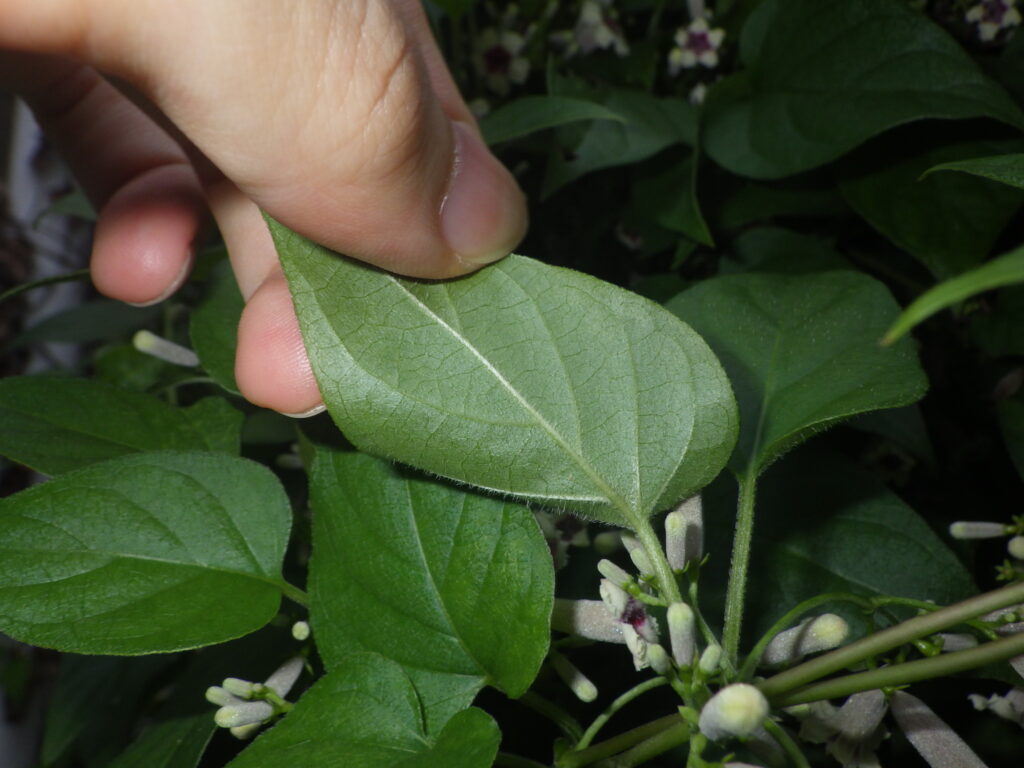
The only difference between Paederia scandens and Paederia scandens is in their leaves.
The difference between Paederia scandens and Paederia japonica is that Paederia scandens has thin, somewhat hairy, and dull leaves, while Paederia japonica has thick, hairless, and glossy leaves.
These forms are typical adaptations for reflecting sunlight on sunny coastlines.
No differences have been observed in the morphology of other flowers or plants.
What are the varieties and cultivars of Paederia scandens?
Many other varieties and cultivars of Paederia scandens are known.
P. scandens var. mairei f. microphylla (also known as narrow-leaved pygmy flower) has narrow leaves with a rounded base, but the leaf width varies continuously and cannot be clearly distinguished.
P. scandens f. velutina has leaves that are oblong-ovate with a heart-shaped base and are covered in many hairs, although some have intermediate characteristics.
P. scandens var. longituba has long-ovate leaves with a heart-shaped base and a flower tube that is more than three times its width, but this is actually just a variation in species. There are also other types of P. scandens, such as the slender-leaved type and the velvety-leaved type, making it difficult to distinguish them clearly.
P. scandens f. rubescens is characterized by its striking reddish-purple color on both the outer and inner surfaces, even while still in bud (Asai, 1988).
Paederia scandens f. microphylla is distributed in only two locations: Miyajima and Kinkasan (Gifu City, Gifu Prefecture). Its leaves are smaller than those of the basic species Paederia scandens. Although its scientific name overlaps with Paederia scandens, it appears to be a different species.
The author has not yet confirmed the description of Paederia scandens var. villosa. It is distributed south of Okinawa and in Taiwan (Genkei, 1955).
P. scandens var. maritima f. rubrae-stellaris is a variety of P. scandens var. maritima in which the five-lobed part of the corolla is reddish-purple, giving it a star-like appearance.
The scientific names of the above varieties and cultivars are also in a state of disparate classification, similar to *Hymenophyllum spp.*, and although they all belong to the same species, the correct scientific names have not yet been adopted.
What are the components that cause the foul odor of the Japanese honeysuckle (Paederia scandens)?
What components contribute to the foul odor that gave the plant its Japanese name?
The distinctive malodorous component is methanethiol (methyl mercaptan), which is known to be produced when pederoside, a substance found in Paederia scandens, is broken down by enzymes (Fujii, 2019).
This foul-smelling component is thought to be an allelopathic mechanism that protects the plant from pests that would otherwise damage it. In fact, you rarely see the leaves of the Japanese honeysuckle (Paederia scandens) riddled with holes.
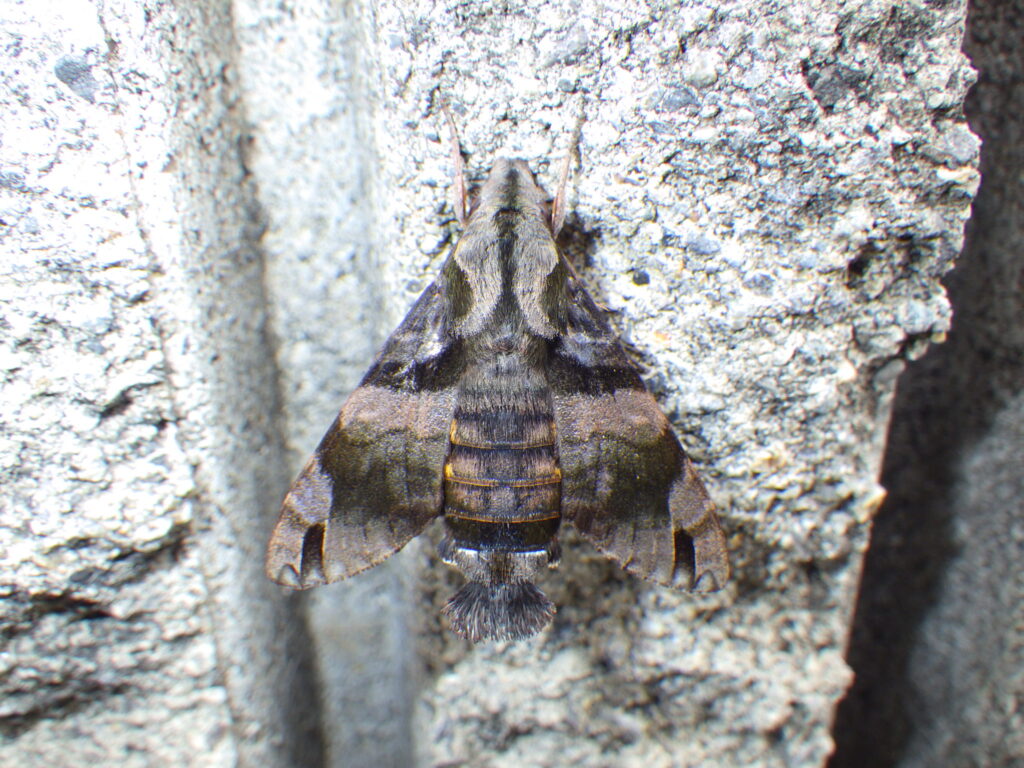
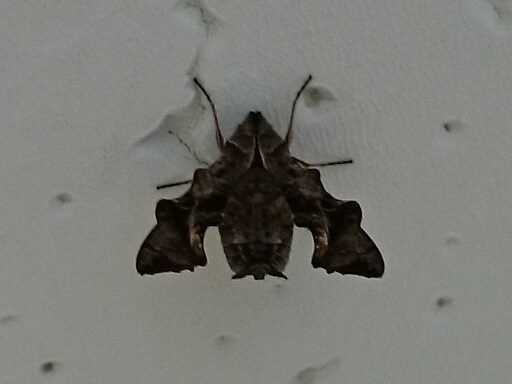
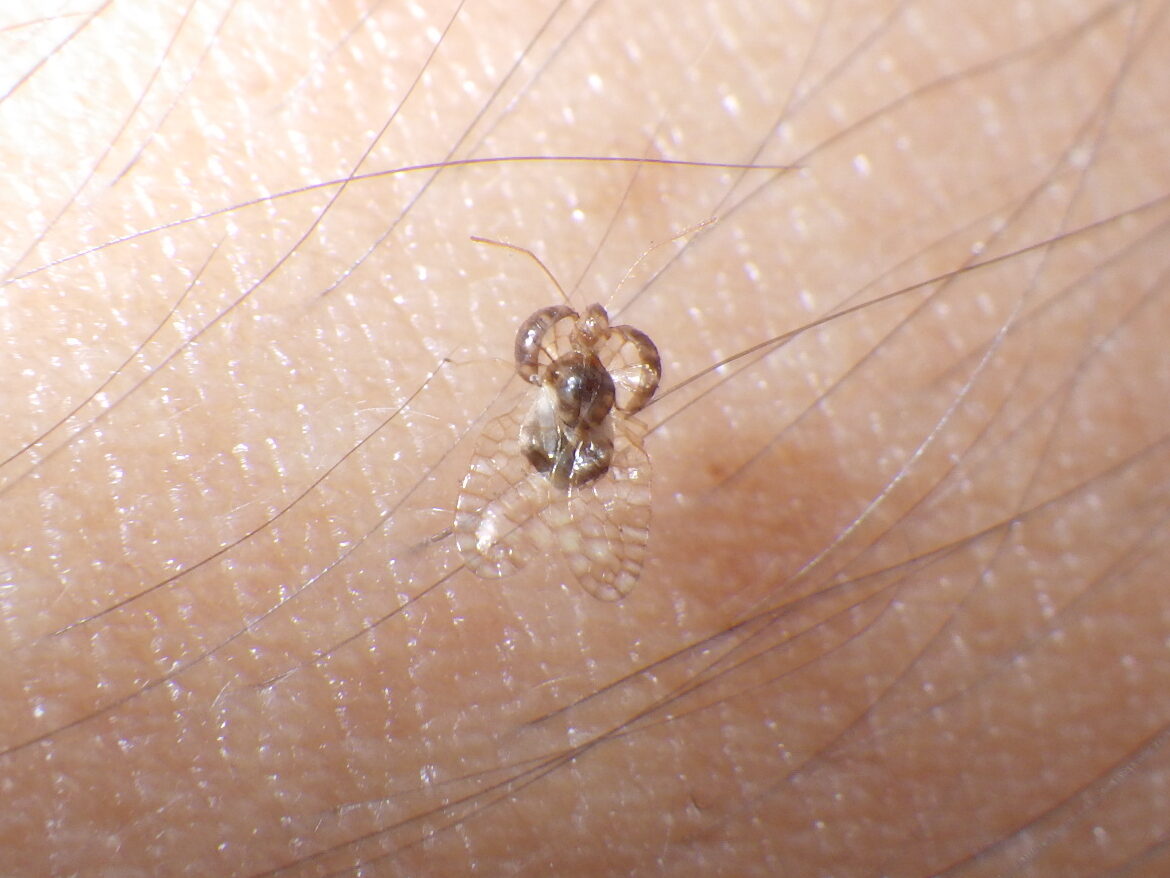
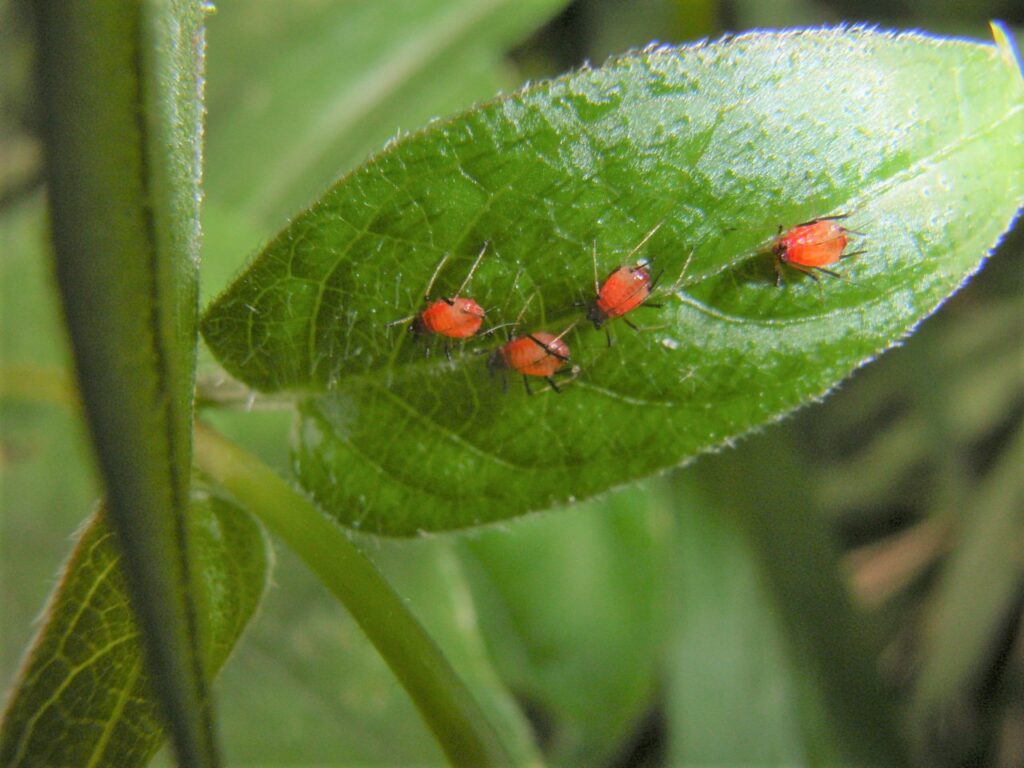
However, the larvae of the hummingbird hawk-moth and the small hummingbird hawk-moth, as well as the recently naturalized Japanese species *Paederia scandens* and *Paederia scandens long-horned aphid*, parasitize this plant and *Paederia scandens*. It seems to have some kind of defense mechanism. The mottled white appearance of the leaves is often due to parasitism by *Paederia scandens*.
What is the shape of the flower?
The flowering period of Paederia scandens is from August to September (Hayashi et al., 2013). Short cymose inflorescences emerge from the leaf axils, bearing sparse grayish-white flowers. The corolla is bell-shaped, about 1 cm long, with five shallow lobes at the tip that spread flat. The throat and inside are reddish-purple. The inside is quite hairy.
However, as mentioned above, there are also known to be varieties with different lengths of flower tubes and different areas of reddish-purple coloration.
How is pollination done?
Because Paederia scandens is self-incompatible, it cannot self-pollinate, and cross-pollination by insects is essential (Liu et al., 2006).
What kinds of insects visit these striking reddish-purple, tubular flowers?
A study conducted in Nara Prefecture revealed a remarkable result: 100% of the bees were bees (Yokoi et al., 2008).
Many plant flowers appear to depend on a specific group of insects for pollination, but it is becoming clear that they also receive pollination from other groups of insects as a secondary factor. However, this is not the case with Paederia scandens, which is extremely dependent on bees. It has been confirmed that bees receive both nectar and pollen as rewards from Paederia scandens.
In Japanese studies that have examined specific species, examples of visits by * Hylaeus transversalis *, * Halictus aerarius*, * Lasioglossum japonicum*, and *Lasioglossum taeniolellum* have been found (Negoro, 1999). All of these bees are characterized by their small size and short tongues.
Other studies have also shown instances of visits by Amegilla quadrifasciata and Bombus diversus diversus (Matsumura, 2007), and by Xylocopa appendiculata circumvolans (Ichikawa et al., 2011). These are relatively large bees. However, it is highly likely that these visits are "nectar robbing," where the bees simply bore holes and sucked the nectar without contributing to pollination.
A study conducted in the United States, where Paederia scandens is an invasive species, also found that approximately 97% of the flowers are visited by bees, with the exception of about 3% by lepidopterans (Liu et al., 2006). While the composition varies considerably depending on the location, it appears that, similar to Japan, the majority of visitors are from the family Halicidae. However, a difference from Japan may be that European honeybees are also numerous, accounting for as much as 90% in urban areas.
Considering these results together, the shape of the flower may be best adapted to small bees, mainly those of the family Carangidae. Indeed, the size of the flower tube seems just right for small bees to enter. Since the stamens and pistils of the Japanese honeysuckle are short, it would be more beneficial for the honeysuckle if small bees with short proboscises could directly enter the flower rather than bees that use their long proboscises to collect nectar from a distance, as this would facilitate pollination.
The reddish-purple color of the corolla is thought to attract bees. The function of the hairs inside the corolla is unknown, but they may serve as a cushion or foothold for the bees.
However, as mentioned above, several varieties and cultivars with different flower sizes have been identified. This fact suggests that different populations may rely on different types of bees for pollination. Further research on this point may reveal some interesting findings.
What is the structure of the fruit?
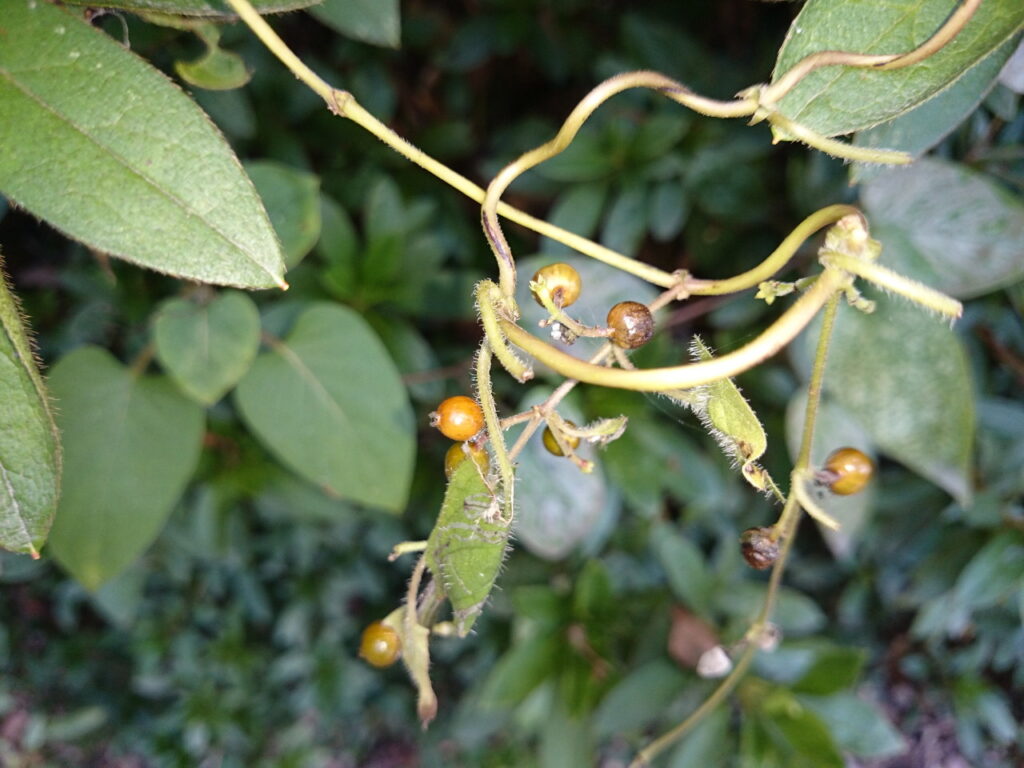
All plants in the genus Paederia have drupe fruits. A drupe is a fruit in which the endocarp surrounding the seed hardens to form a "stone," and the mesocarp surrounding the stone is usually fleshy (pulp). It's easy to understand if you imagine a plum or apricot.
The drupe of the Japanese honeysuckle is spherical, about 5 mm in diameter. When ripe, it turns yellowish-brown. Inside, there are two kernels, each containing one seed.
What are the seed dispersal methods?
As its succulent nature and yellowish-brown color when ripe suggest, it is clearly appealing to animals, and various studies have confirmed that it is dispersed by birds (Karasawa, 1978; Takatsuki, 2021; 2023). However, since most studies have examined droppings, it is not clear which specific birds prefer it. There is only one instance where it was eaten by Japanese white-eyes in an experiment (Hirao et al., 2021).
Although the leaves of the Japanese honeysuckle wither in winter, the stems remain on other plants or fences, and the fruits remain throughout the winter. It is presumed that birds that visit the trees forage for the fruits at this time (Takatsuki, 2023).
Paederia scandens seeds do not germinate at all if the pulp is still attached, and seeds found in bird droppings have a higher germination rate than seeds with the pulp removed (Karasawa, 1982). This suggests that, in addition to the removal of the pulp by birds, some effect related to digestion, or damage to the seeds when they are pecked by birds' beaks, promotes germination. This indicates that Paederia scandens cannot survive without birds.
On the other hand, there is one known instance of a mammal, the raccoon dog, using it (Takatsuki, 2018). The fruits of the Japanese honeysuckle are very small and seem inefficient for foraging, but it is possible that mammals may occasionally use them.
References
Asai, Yasuhiro. 1988. A new variety of Akebono-yaitobana. Journal of Japanese Plant Research 63(2): 54-54. https://doi.org/10.51033/jjapbot.63_2_8125
Fujii, Yoshiharu. 2019. The strangely named plant, *Paederia scandens*, is it really that smelly? Kagaku Dojin, Kyoto. 244pp. ISBN:
9784759819892
Genkei, M. 1955. Enumeratio Tracheophytarum Ryukyu Insularum (VII). The science reports of the Kanazawa University 4(4): 45-134. https://doi.org/10.24517/00011478
Hayashi, Yasaka, Kadota, Yuichi, and Hirano, Takahisa. 2013. Yamakei Handy Illustrated Guide 1: Wildflowers (Revised and Expanded New Edition). Yama-kei Publishers, Tokyo. 664pp. ISBN: 9784635070195
Hirao, Tamon; Hirata, Reiko; and Ito, Satoshi. 2021. Effect of seed size on seed retention time within the body of a Japanese white-eye. Japanese Forest Society Conference Presentation Database 132: 449. https://doi.org/10.11519/jfsc.132.0_449
Ichikawa, S., Kurahashi, T., & Ikuru, S. 2011. Possibility of a novel pollination mode by flower-visiting bees and yellow-breasted bumblebees collected in Kagawa Prefecture. Bulletin of the Faculty of Agriculture, Kagawa University 63(116): 43-59. ISSN: 0368-5128, http://id.nii.ac.jp/1731/00003553/
Ikeda, Kenichi. 2020. Unrecorded species of true bugs (Hemiptera) in Nara Prefecture. Niche Life 8: 13-18. ISSN: 2188-0972, https://media.niche-life.com/series/008/Niche008_05.pdf
Kanagawa Prefecture Flora Survey Association. 2018. Kanagawa Prefecture Flora 2018 (Electronic Edition). Kanagawa Prefecture Flora Survey Association, Odawara. 1803pp. ISBN: 9784991053726
Karasawa, Koichi. 1978. A study on the diet and seed dispersal of fruit-eating birds in urban areas. Birds 27(1): 1-20. https://doi.org/10.3838/jjo1915.27.1
Karasawa, Koichi. 1982. Germination rates of seeds of Privet japonica and Paederia scandens found in bird droppings. Birds 31(2-3): 75-76. https://doi.org/10.3838/jjo1915.31.75
Liu, H., Pemberton, R. W., & Stiling, P. 2006. Native and introduced pollinators promote a self-incompatible invasive woody vine (Paederia foetida L) in Florida. The Journal of the Torrey Botanical Society 133(2): 304-311. https://doi.org/10.3159/1095-5674(2006)133[304:NAIPPA]2.0.CO;2
Matsumura, Yu. 2007. Ecology of bees—Focusing on a bee survey at Senbonmatsu Ranch—. Nasunogahara Museum Bulletin 3(1): 1-18. https://doi.org/10.34372/nasunogahara.3.1_1
Negoro, Takashi. 1999. Flower-visiting behavior of bees at Kanazawa Castle Ruins (former Kanazawa University campus). Research Report of Toyama City Science and Culture Center 22: 55-79. ISSN: 0387-9089, http://repo.tsm.toyama.toyama.jp/?action=pages_view_main&active_action=repository_view_main_item_detail&item_id=731&item_no=1&page_id=13&block_id=82
Takatsuki, Shigeki. 2018. Characteristics of fruits used by raccoons—a review. Mammalian Science 58(2): 237-246. ISSN: 0385-437X, https://doi.org/10.11238/mammalianscience.58.237
Takatsuki, Seiki. 2021. Seed dispersal by birds to persimmon trees on the Azabu University campus. Azabu University Journal 32: 1-9. ISSN: 1346-5880, http://id.nii.ac.jp/1112/00005374/
Takatsuki, Seiki. 2023. Fruiting patterns of isolated urban trees and seed dispersal by birds: An attempt at seed recovery using pavement. Conservation Ecology Research 28(1): 165-176. https://doi.org/10.18960/hozen.2130
Yokoi, Tomoyuki; Habe, Akifumi; Katori, Ikuo; and Sakuraya, Yasuyuki. 2008. Diversity of pollinating insect communities at Kinki University Nara Campus. Kinki University Faculty of Agriculture Bulletin 41: 77-94. ISSN: 0453-8889, http://id.nii.ac.jp/1391/00005214/