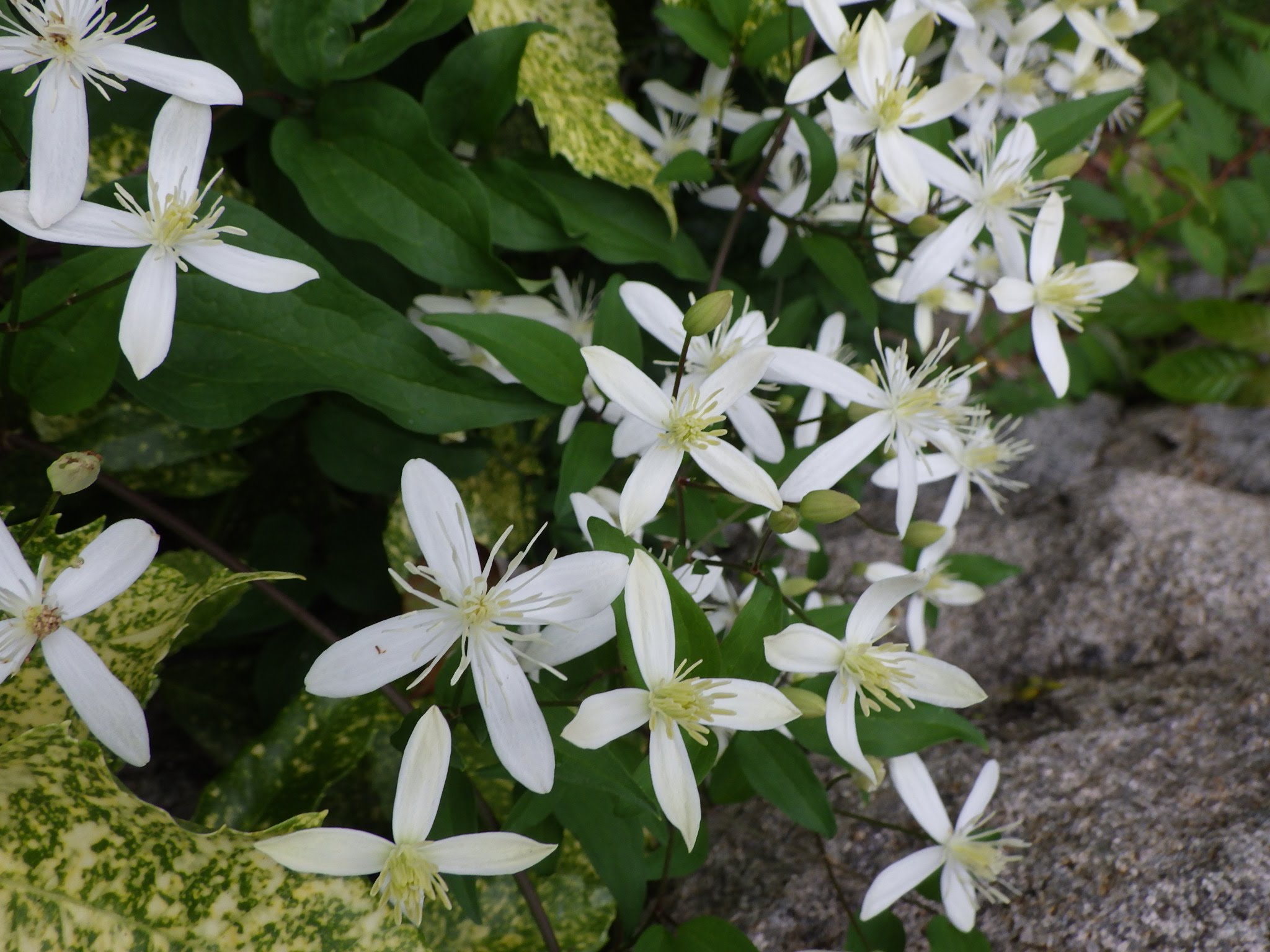
Clematis terniflora, Clematis patens, and Clematis japonica all belong to the genus Clematis in the Ranunculaceae family and are climbing semi-shrubs found in Japanese forests. They share many similarities, such as compound leaves, flowers with white sepals instead of petals, and feathery fruits, which can make them difficult to distinguish. However, they can generally be distinguished by focusing on the shape of their leaves. While there are differences in the structure of the flowers and fruits between Clematis terniflora and Clematis patens and Clematis japonica, no differences are known between Clematis patens and Clematis japonica. This article will explain the classification of Clematis terniflora, Clematis patens, and Clematis japonica.
What are Clematis terniflora, Clematis patens, and Clematis japonica?
Clematis terniflora, also known as "clematis grass," is an evergreen climbing subshrub commonly found in bright forest edges and grassland edges in Japan (Hokkaido, Honshu, Shikoku, Kyushu, Ryukyu Islands, and Ogasawara Islands), as well as in Korea and China (Kanagawa Prefecture Flora Survey Association, 2018).
Clematis apiifolia var. apiifolia, also known as peony vine, is a deciduous, climbing semi-shrub that grows at the edges of forests and is distributed in Honshu, Shikoku, and Kyushu in Japan, as well as in Korea and China.
Clematis apiifolia var. biternata, also known as small peony vine, is a deciduous, climbing semi-shrub distributed in Honshu, Japan (from the Kanto region to the Chubu region), growing in sunny mountainous areas.
Both belong to the genus Clematis in the Ranunculaceae family and are climbing semi-shrubs found in Japanese forests.
The main similarities include the fact that the leaves on the above-ground stem are opposite or whorled and compound; the flowers lack petals and consist only of white sepals; and the fruit is an achene with a style that elongates after flowering and becomes feathery. There are many similarities, so it may be difficult to distinguish between them.
What are the differences between Clematis terniflora, Clematis patens, and Clematis japonica?
However, these plants have distinct differences in leaf shape. All of them have trifoliate to odd-pinnately compound leaves.
First, a key difference is that Clematis terniflora has leaves without serrations (entire margins), while Clematis patens and Clematis japonica have leaves with serrations.
However, clematis can sometimes have serrated edges, especially in its young leaves. This is something to be aware of.
There are also differences in the flowers; in Clematis terniflora, the stamens are shorter than the sepals and the buds are pointed, while in Clematis terniflora and Clematis japonica, the stamens are the same length as the sepals and the buds are rounded.
There are also differences in the fruit; Clematis terniflora has a flattened, oval shape with few hairs, while Clematis patens and Clematis japonica have a spindle-shaped fruit densely covered with short hairs.
Clematis terniflora and Clematis terniflora are completely different species, hence the many differences. However, Clematis terniflora and Clematis terniflora are botanically the same species, differing only at the variety level, so the morphological differences are less pronounced.
The biggest difference between Clematis terniflora and Clematis japonica is also the shape of their leaves. Clematis terniflora has once-trifoliate compound leaves, while Clematis japonica has twice-trifoliate compound leaves.
The terminology may seem confusing, but to put it simply, in Clematis terniflora, only one trifoliate compound leaf (a compound leaf consisting of three leaflets) grows from a single petiole, whereas in Clematis japonica, three trifoliate compound leaves grow from a single petiole. Since compound leaves are originally formed from the division of a single leaf, they are called bifoliate compound leaves because they have been divided twice.
This should allow you to distinguish between the three types.
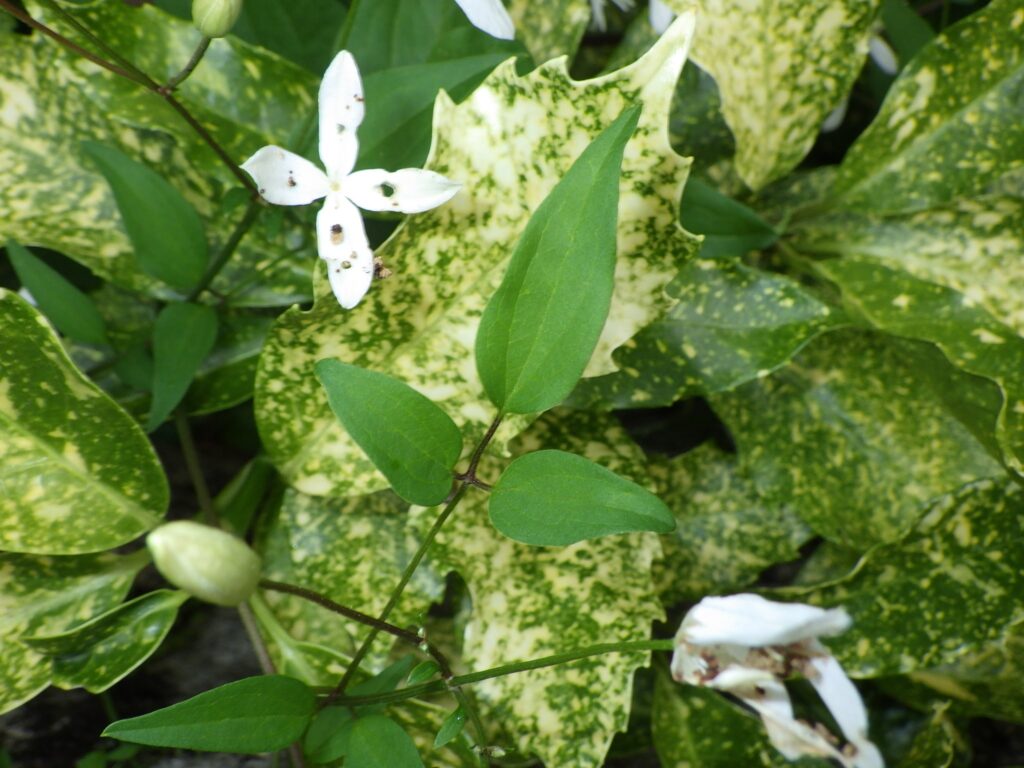
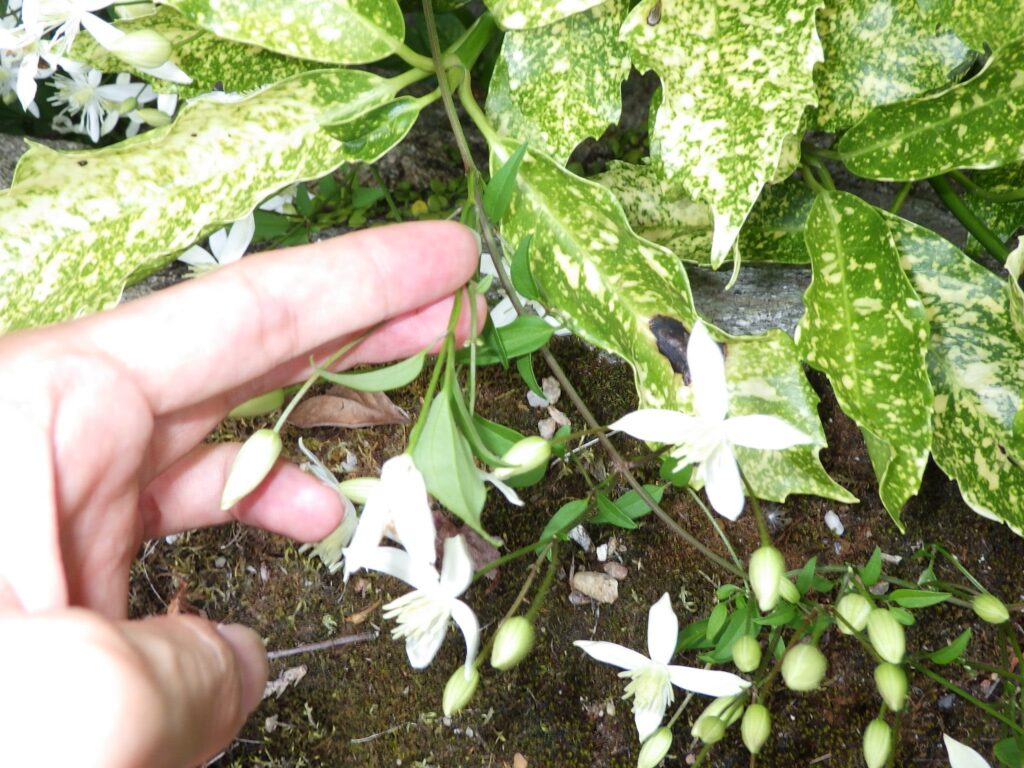
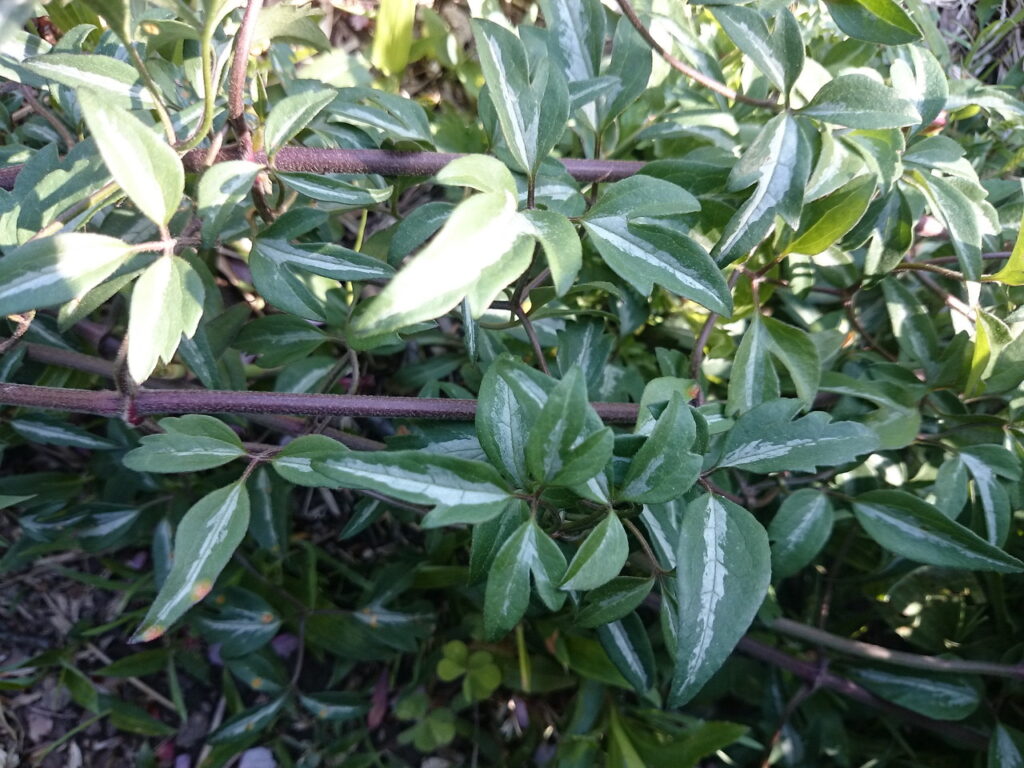
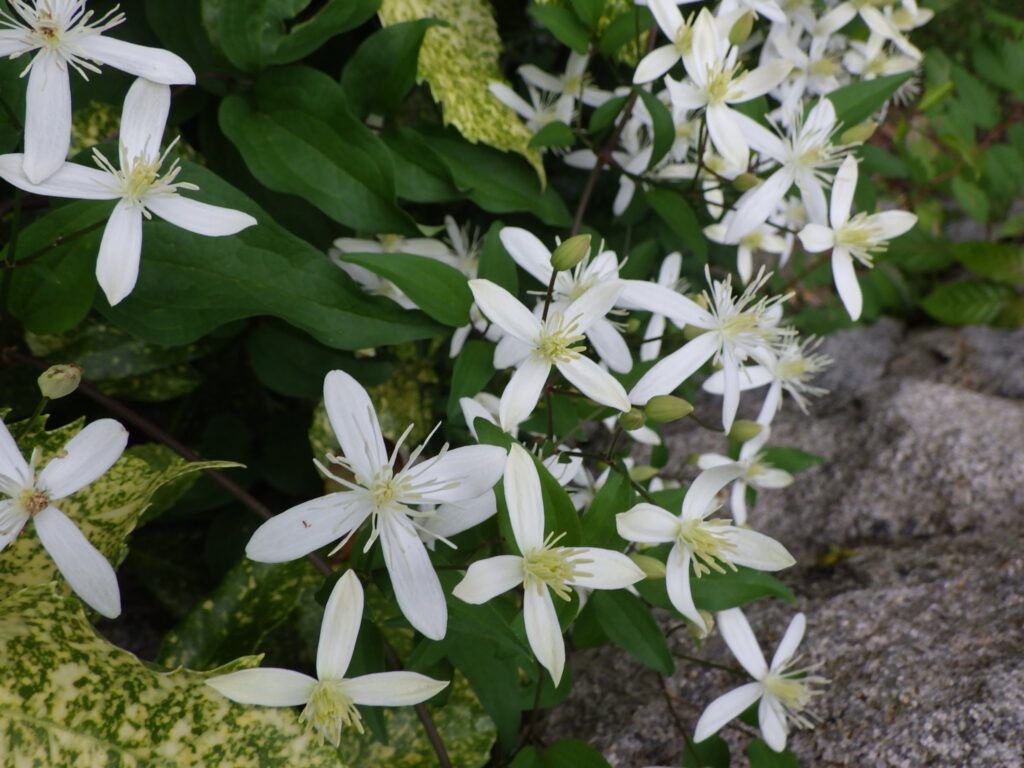
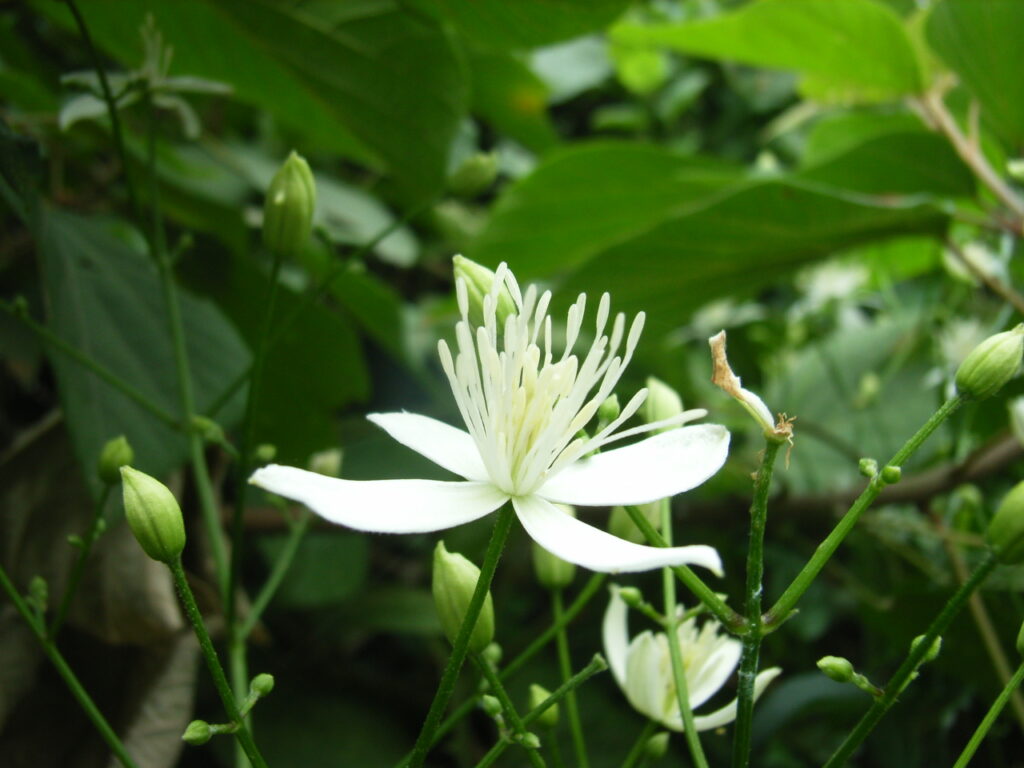
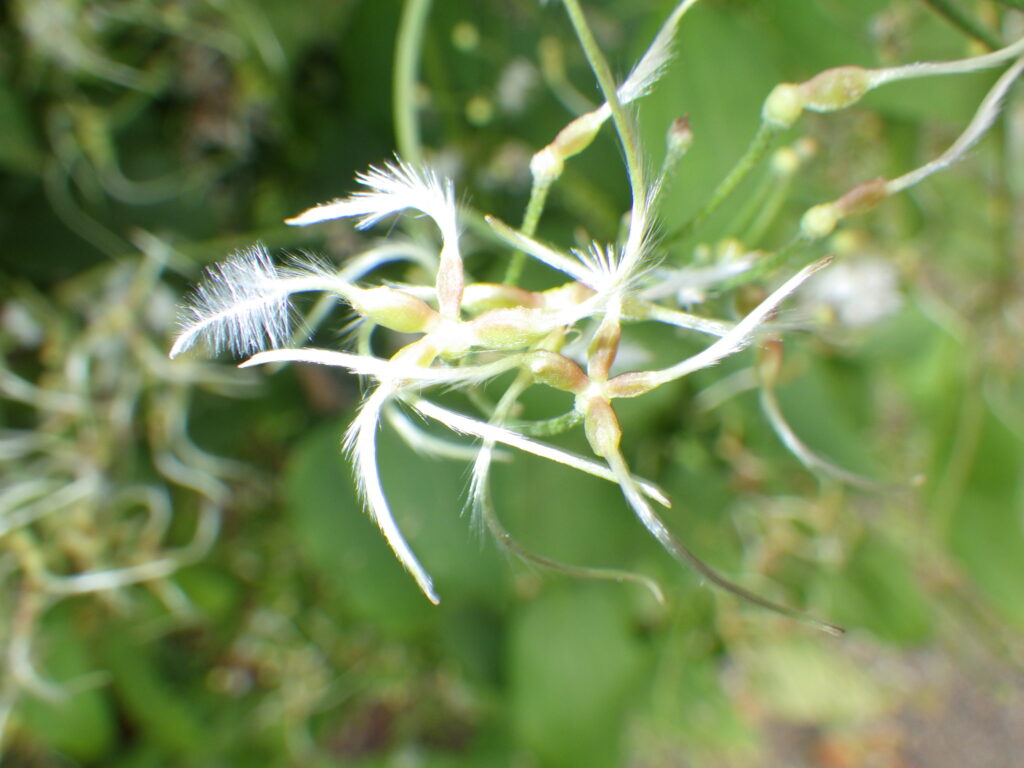
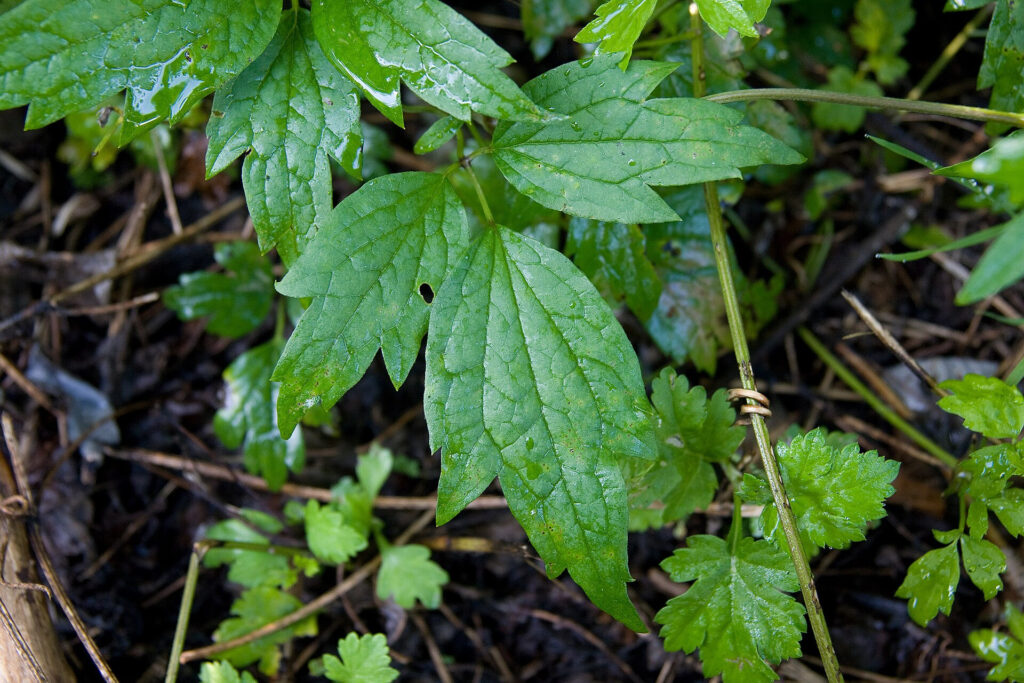
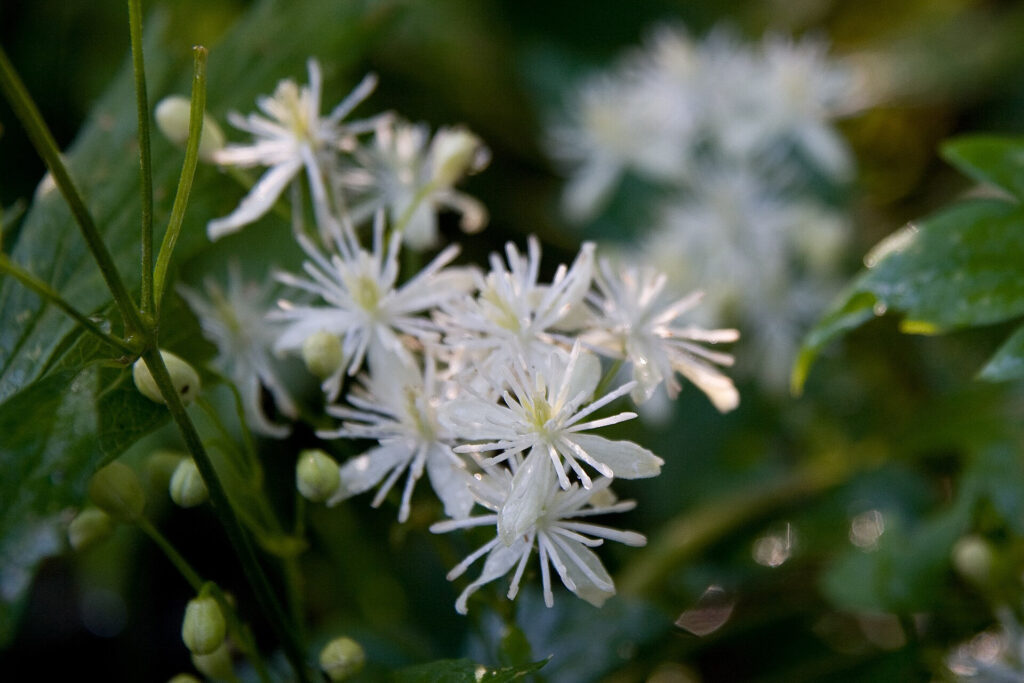
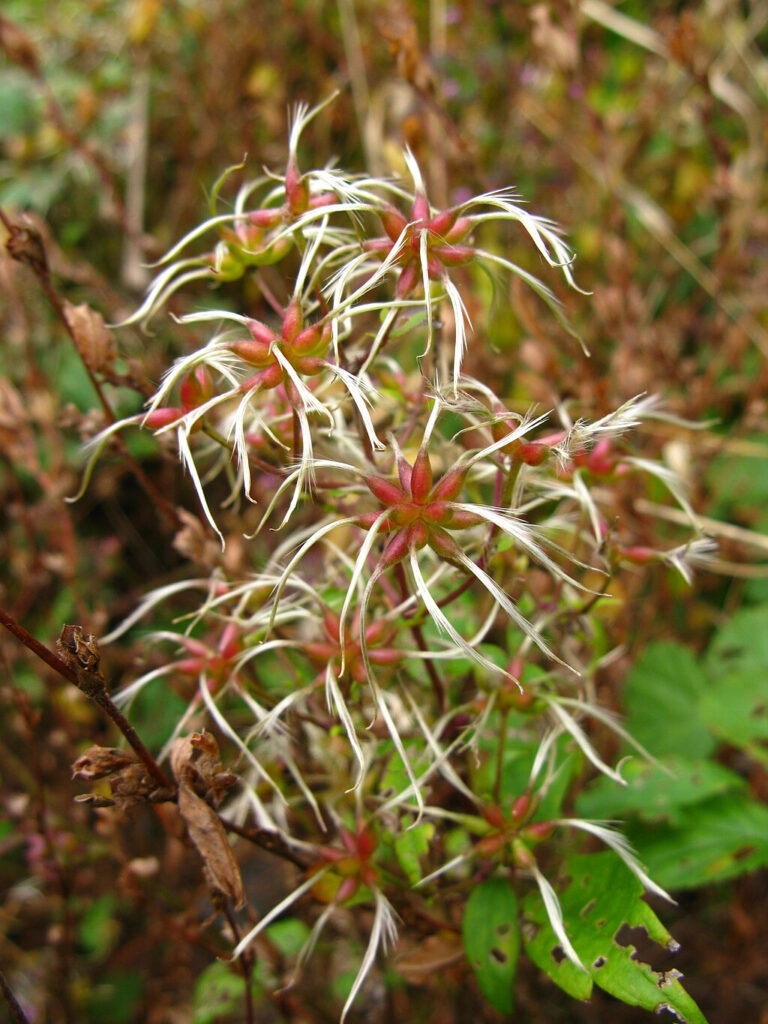
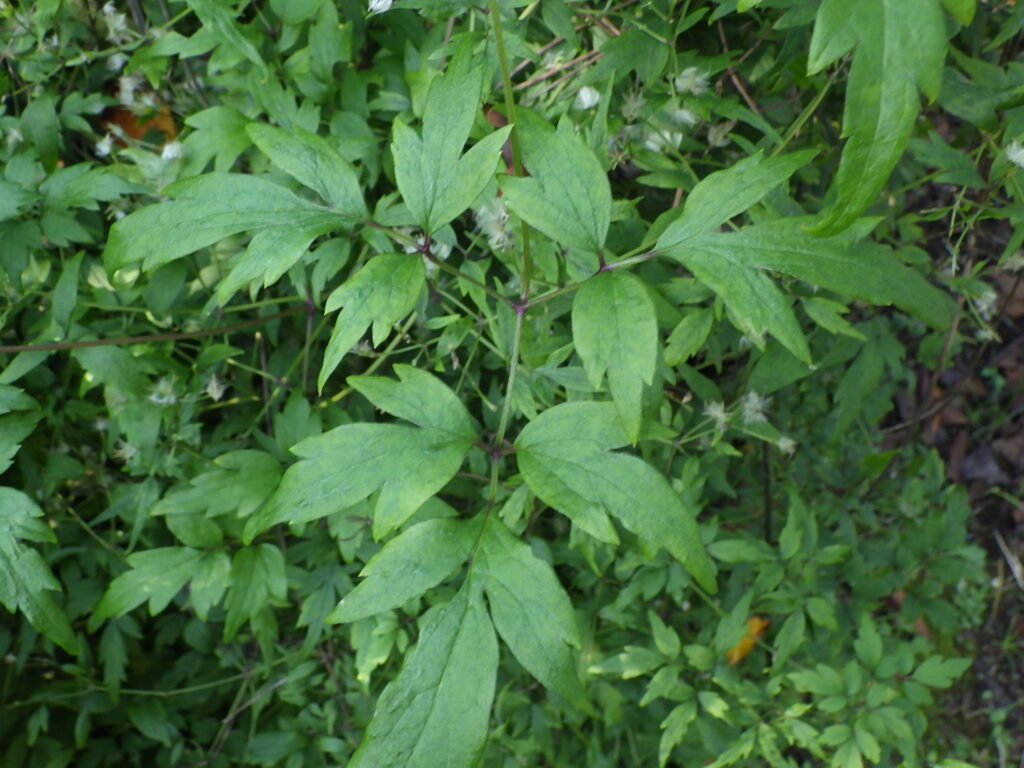
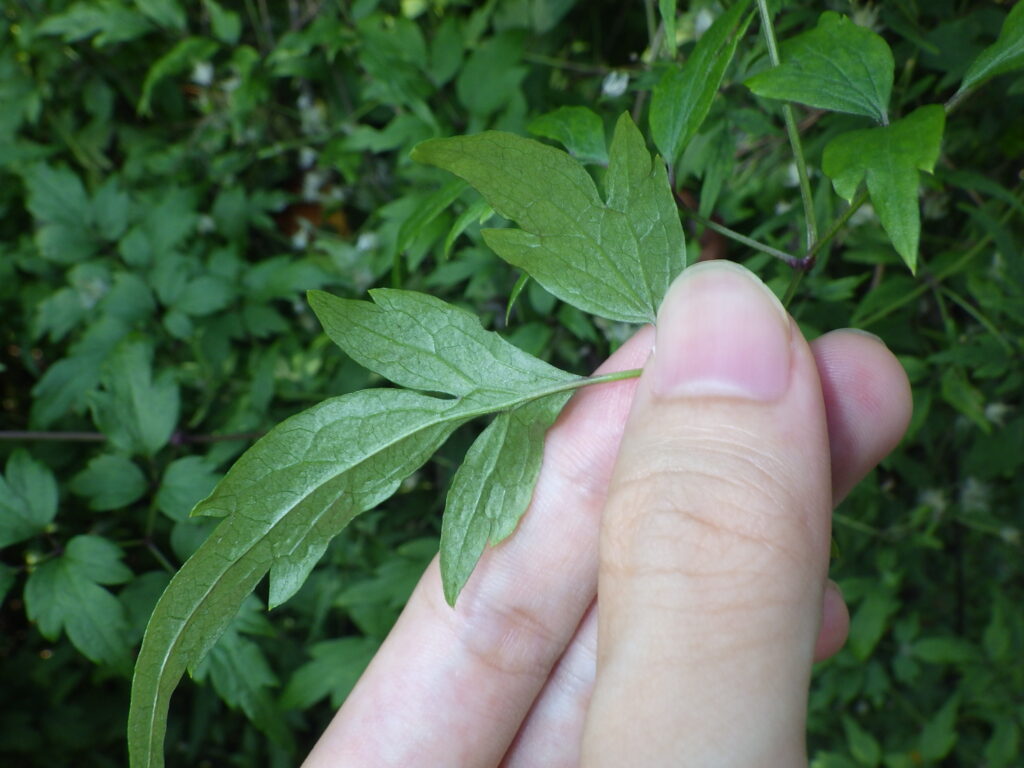
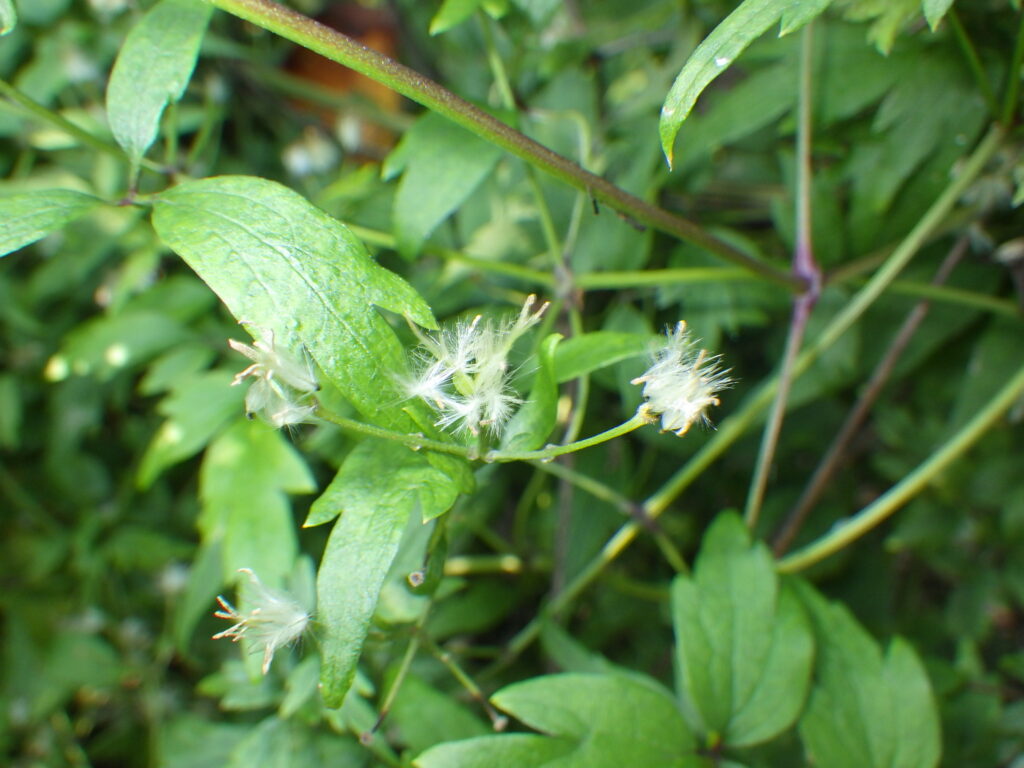
What other similar types are there?
The genus Clematis is quite large, and I cannot introduce all of them here, but I will introduce a few.
A similar species to Clematis terniflora is Clematis fujisanensis, but it grows at high altitudes, and unlike Clematis terniflora, its body turns black when dry. The differences may be quite subtle.
A relative of Clematis pierotii, which resembles Clematis terniflora and Clematis japonica, has flowers in clusters of 1 to 3 in the leaf axils, with sepals that are 1.5 cm or longer and sharply pointed at the tip (in the other two species, the flowers are numerous and arranged in a panicle, with sepals less than 1 cm long and blunt-tipped).
In addition, in horticulture, varieties such as clematis (a general term for species of the Clematis genus found overseas), clematis, and kazaguruma are cultivated, but their colorful flowers make it unlikely to mistake them for each other.
References
Kanagawa Prefecture Flora Survey Association. 2018. Kanagawa Prefecture Flora 2018 (Electronic Edition). Kanagawa Prefecture Flora Survey Association, Odawara. 1803pp. ISBN: 9784991053726