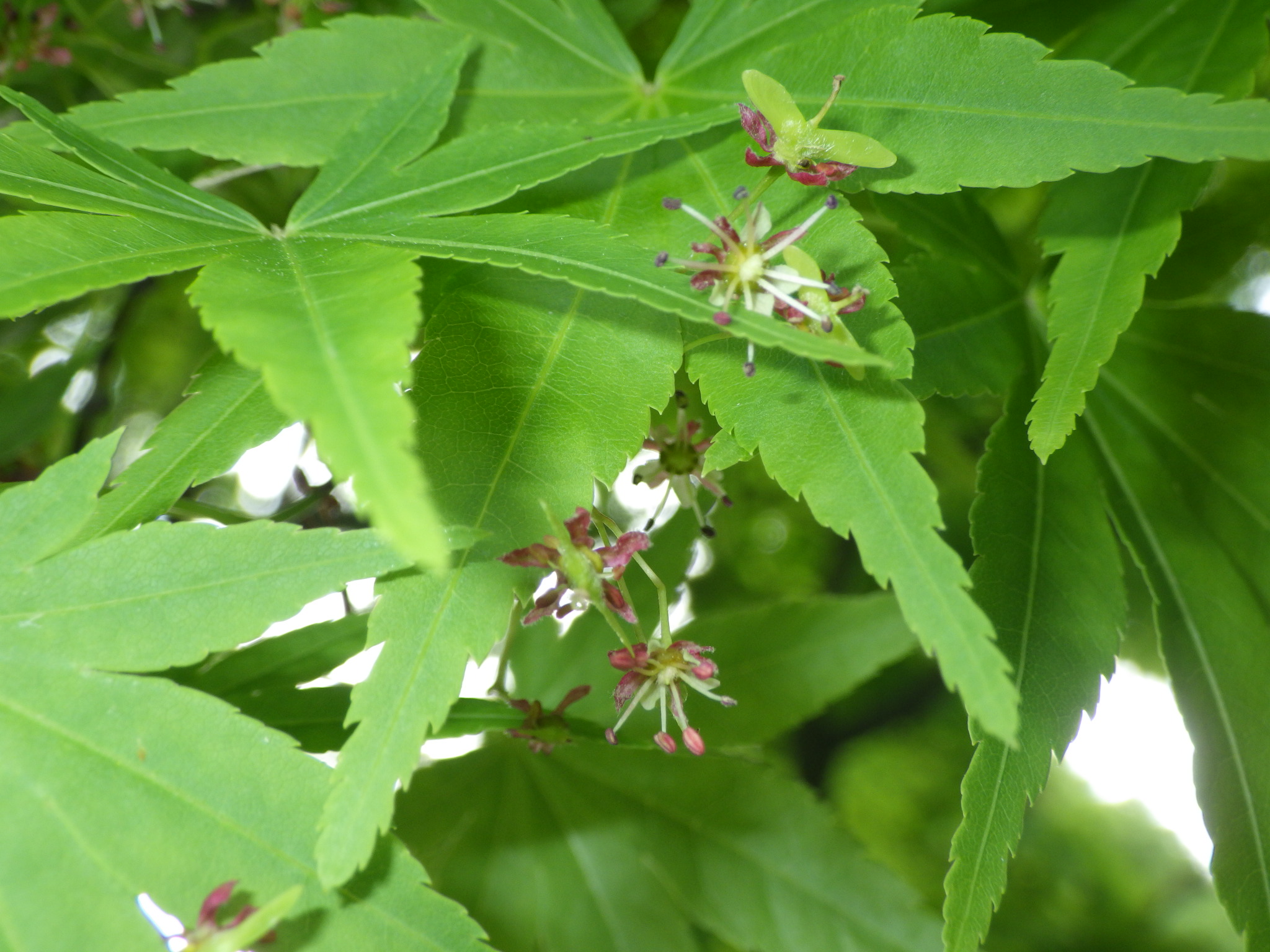
Japanese maple (Acer palmatum), large-leaved maple (Acer amoenum), mountain maple (Acer palmatum), fan maple (Acer japonicum), and small fan maple (Acer serrata) all belong to the Acer genus of the Sapindaceae family. They change color and shed their leaves in late autumn, making them representative deciduous trees of the Japanese autumn landscape. Major similarities include having samaras (winged fruits) with a pair of "wings" and palmate leaves. Therefore, although they are familiar, some people may not know the differences between them. However, you can distinguish them by carefully examining the shape of the leaves. This is also true for their autumn foliage. In addition, the angle between the wings of the samaras differs depending on the species, which can be a major distinguishing feature. This article will explain the classification of Japanese maple (Acer palmatum), large-leaved maple (Acer palmatum), mountain maple (Acer japonicum), fan maple (Acer japonicum), and small fan maple (Acer serrata).
- What are Japanese maple, large-leaved maple, mountain maple, fan maple, and small fan maple?
- What is the difference between Momiji (Japanese maple) and Kaede (Japanese maple)?
- What are the differences between Japanese maple (Acer palmatum), large-leaved maple (Acer palmatum), mountain maple (Acer japonicum), and Japanese fan maple (Acer japonicum), and small fan maple (Acer japonicum)?
- What are the differences between Japanese maple (Iroha-momiji), large-leaved maple (Oomomiji), and mountain maple (Yama-momiji)?
- What are the differences between Japanese maple (Acer palmatum) and Japanese maple (Acer palmatum var. japonica)?
- References
What are Japanese maple, large-leaved maple, mountain maple, fan maple, and small fan maple?
Acer palmatum var. palmatum, also known as Iroha-momiji (Japanese maple), is a deciduous tree found mainly along the Pacific coast of Honshu (west of Fukushima and Fukui prefectures), Shikoku, and Kyushu in Japan; as well as in Korea and eastern China. It grows in deciduous broad-leaved forests from hilly areas to mountainous regions (Kanagawa Prefecture Flora Survey Association, 2018). In Japan, it is commonly cultivated for ornamental purposes (Hayashi, 2019).
Acer amoenum var. amoenum, also known as the large-leaved maple (Acer amoenum var. amoenum), is a deciduous tree distributed in Hokkaido, Honshu (excluding the Sea of Japan side from the Tohoku region to the Hokuriku region), Shikoku, and Kyushu in Japan, as well as in Korea. It mainly grows in deciduous broadleaf forests in the lower beech zone of mountainous areas. It is cultivated for ornamental purposes.
Japanese maple (Acer amoenum var. matsumurae) is a deciduous tree distributed mainly along the Sea of Japan coast in Hokkaido and Honshu, Japan. It is cultivated for ornamental purposes.
Acer japonicum, also known as the Japanese fan maple (Acer japonicum), is a deciduous tree distributed in Hokkaido and Honshu, Japan, growing in mountainous deciduous broadleaf forests. It is sometimes cultivated for ornamental purposes.
Acer sieboldianum, also known as the small-leaved fan maple, is a deciduous tree distributed in Honshu, Shikoku, and Kyushu in Japan, growing in mountainous deciduous broadleaf forests. It is occasionally cultivated for ornamental purposes.
All of these trees belong to the Acer genus of the Sapindaceae family, and their leaves turn red and fall in late autumn (October to November), making them representative deciduous trees of the Japanese autumn landscape.
Morphologically, a major common feature of the maple genus is that its fruit is a samara, possessing a pair of "wings." This is an adaptation that allows it to rotate like a propeller when falling, moving it away from the mother tree.
Furthermore, while not all of them, many species in the Acer genus have numerous palmate incisions and fine serrations, and this applies to the five species listed here.
Therefore, many people may not be able to distinguish between them. Since they are common plants, it would be good to be able to distinguish them accurately.
In particular, there are many instances on the internet where people mistakenly identify the Japanese maple (Acer palmatum var. japonica) as the Japanese maple (Acer palmatum var. japonicum).
What is the difference between Momiji (Japanese maple) and Kaede (Japanese maple)?
First of all, is there any difference between "momiji" and "kaede"?
In conclusion, both belong to the Acer genus, and there is no scientific definition of "maple" versus "Japanese maple."
However, generally speaking, "momiji" refers to maple trees with deeply lobed leaves (moderately to deeply lobed), while "kaede" refers to maple trees with shallowly lobed leaves (shallowly lobed).
Many of the Japanese names for individual species also follow this rule.
This becomes clear when you consider its etymology. The word "kaede" (maple) originates from "kaerude" (frog's hand), so it makes sense that it refers to something with shallow notches, like a frog's webbed foot.
On the other hand, the word "momiji" (maple) originates from the verb "momitsu" (which means "to turn yellow or red"), which means that plants and trees turn yellow or red in autumn.
However, scientifically speaking, the only Japanese names given to maple trees in Japan are Iroha maple, Oomomiji maple, and Yamamomiji (and their varieties); all others are simply called Kaede maple. In practice, "Momiji" is a name used to refer to these three species.
What are the differences between Japanese maple (Acer palmatum), large-leaved maple (Acer palmatum), mountain maple (Acer japonicum), and Japanese fan maple (Acer japonicum), and small fan maple (Acer japonicum)?
The genus Acer is very large, with approximately 130 species known worldwide and 28 species known in Japan. It is impossible to list the distinguishing features of all species here, but let's consider the differences between five well-known species.
First, the five species can be broadly divided into two groups: Acer palmatum, Acer amoenum, and Acer palmatum, and Acer japonicum and Acer palmatum var. japonica.
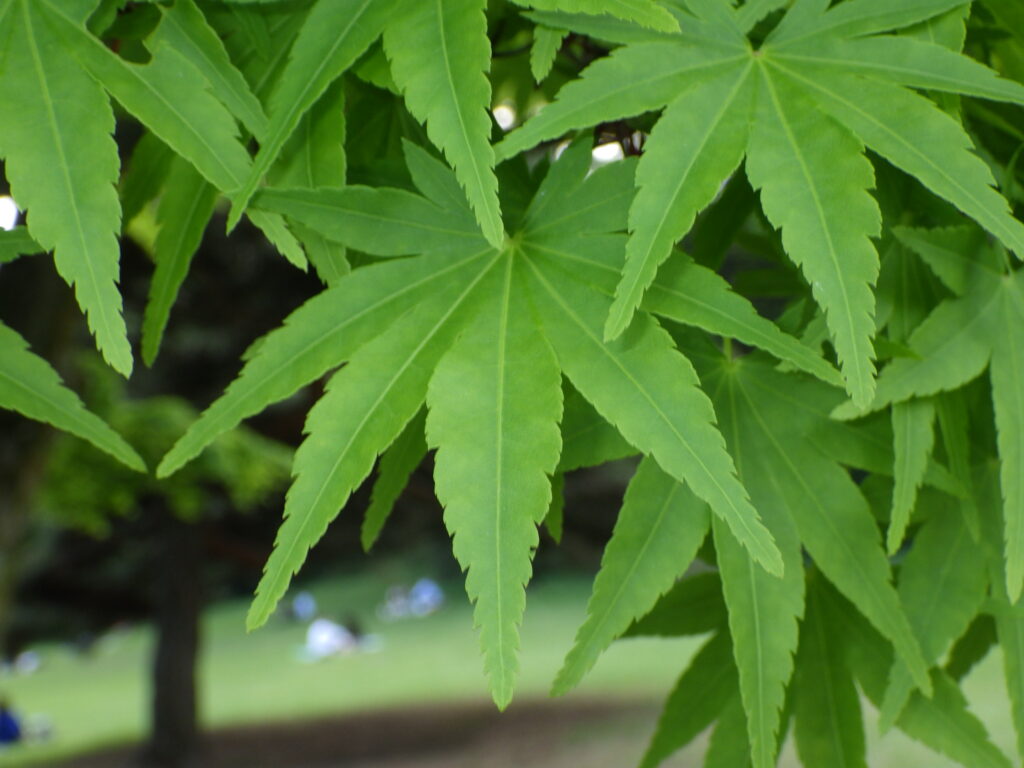
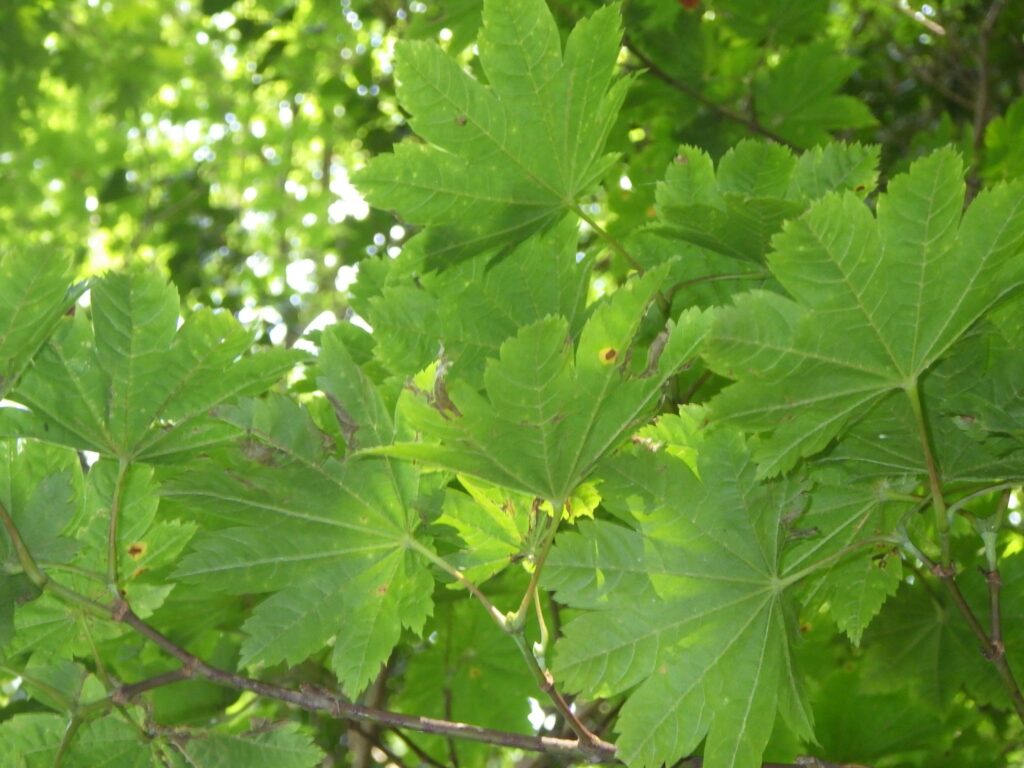
One of the distinguishing features is the difference in the depth of the leaf lobes, as mentioned above. However, while the leaves of Acer palmatum, Acer amoenum, and Acer palmatum are 5 to 7 lobes, those of Acer japonicum and Acer palmatum are 7 to 13 lobes.
Furthermore, the leaf tips of Acer palmatum, Acer amoenum, and Acer palmatum extend into a tail-like shape, but this is not the case for Acer japonicum and Acer palmatum.
Therefore, by examining these three points, you should be able to easily determine which group you belong to.
What are the differences between Japanese maple (Iroha-momiji), large-leaved maple (Oomomiji), and mountain maple (Yama-momiji)?
Japanese maple (Iroha-momiji), large-leaved maple (Oomomiji), and mountain maple (Yama-momiji) can be divided into Japanese maple (Iroha-momiji) and large-leaved maple (Oomomiji) and mountain maple (Yama-momiji).
First and foremost, the leaves of the Japanese maple (Iroha-momiji) have coarse, double-serrated edges, while those of the large-leaved maple (Oomomiji) and mountain maple (Yama-momiji) have fine, single-serrated edges.
The term "double serration" might be difficult to understand, but it refers to a condition where there are serrations of varying sizes, with smaller serrations on the edges of the larger serrations, creating a double layer.
In terms of appearance, the large-leaved maple and mountain maple have more closely spaced serrations on their leaf margins, giving the impression of a finer, more jagged appearance.
Furthermore, regarding the fruit (separated samara), in Japanese maple (Acer palmatum), the distance between the wings is 145-160°, the wings are short, and the pericarp is thin, while in large-leaved maple (Acer palmatum) and mountain maple (Acer palmatum), the distance between the wings is 120-130°, the wings are long, and the pericarp is thick.
Furthermore, as the names suggest, the leaf blades of the Japanese maple (Iroha-momiji) are 4-7 cm long, while those of the large-leaved maple (Oomomiji) and mountain maple (Yama-momiji) are considerably larger at 6-12 cm. However, there is variation, so this should only be used as a general guideline.
In the wild, mountain maple (Acer palmatum) is generally found at higher altitudes than Japanese maple (Acer palmatum).
It should be noted that some cultivated plants are hybrid varieties, so there may be individuals that are not clearly distinguishable from each other.
Next are the large-leaved maple and the mountain maple. Since the large-leaved maple and the mountain maple are varieties of each other, they have roughly the same shape.
The main difference is that the large-leaved maple (Acer palmatum) has fine serrations and shallow cuts, while the mountain maple (Acer palmatum) has coarse serrations and deep cuts.
Furthermore, as mentioned above, it is important to note that Japanese maple (Acer palmatum) tends to be distributed on the Pacific side, while mountain maple (Acer palmatum) tends to be distributed on the Sea of Japan side.
However, it's important to note that there are intermediate individuals that are indistinguishable from both the large-leaved maple and the mountain maple.
In addition, there are many varieties within each of these types, but we will omit them here.
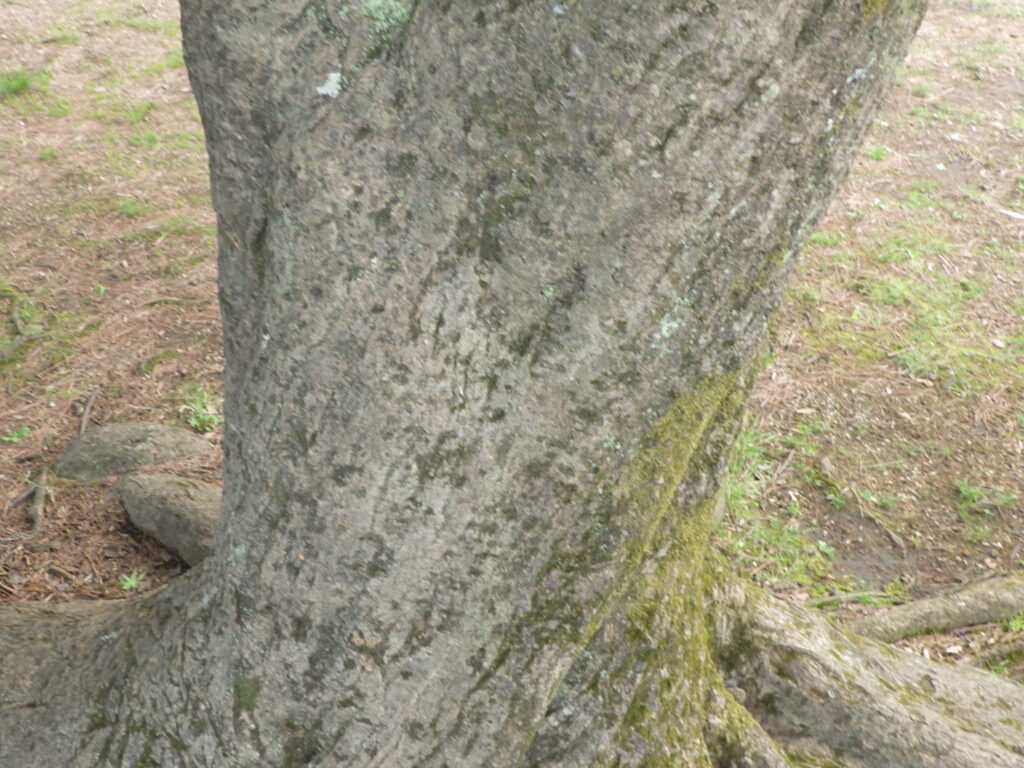
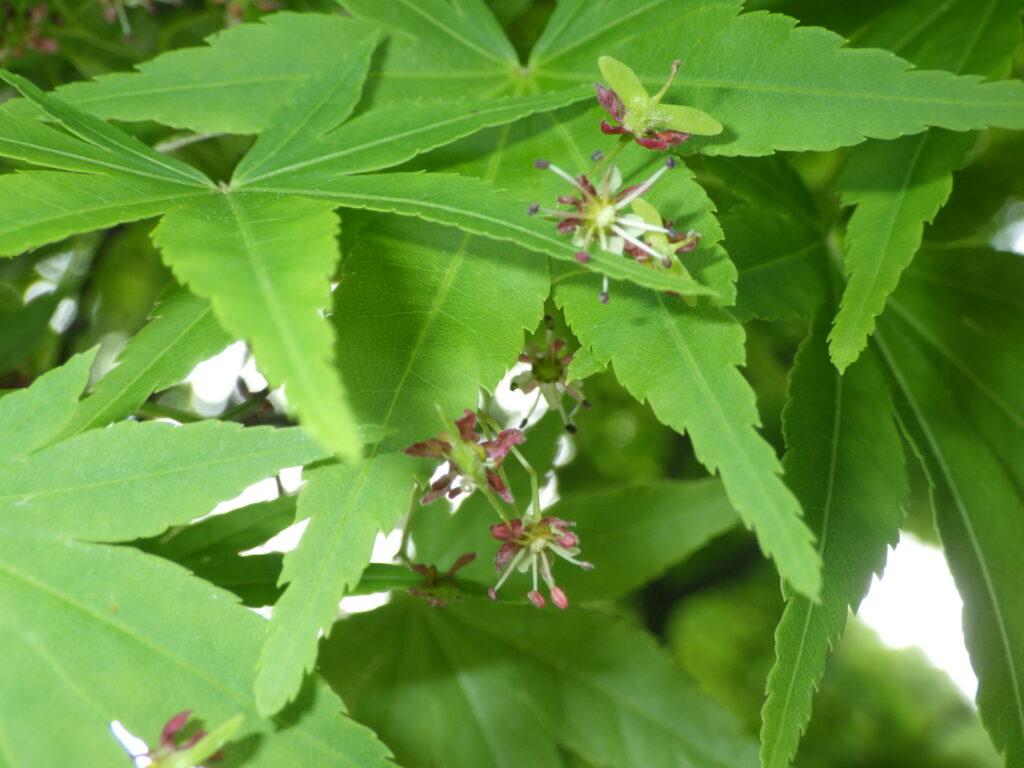
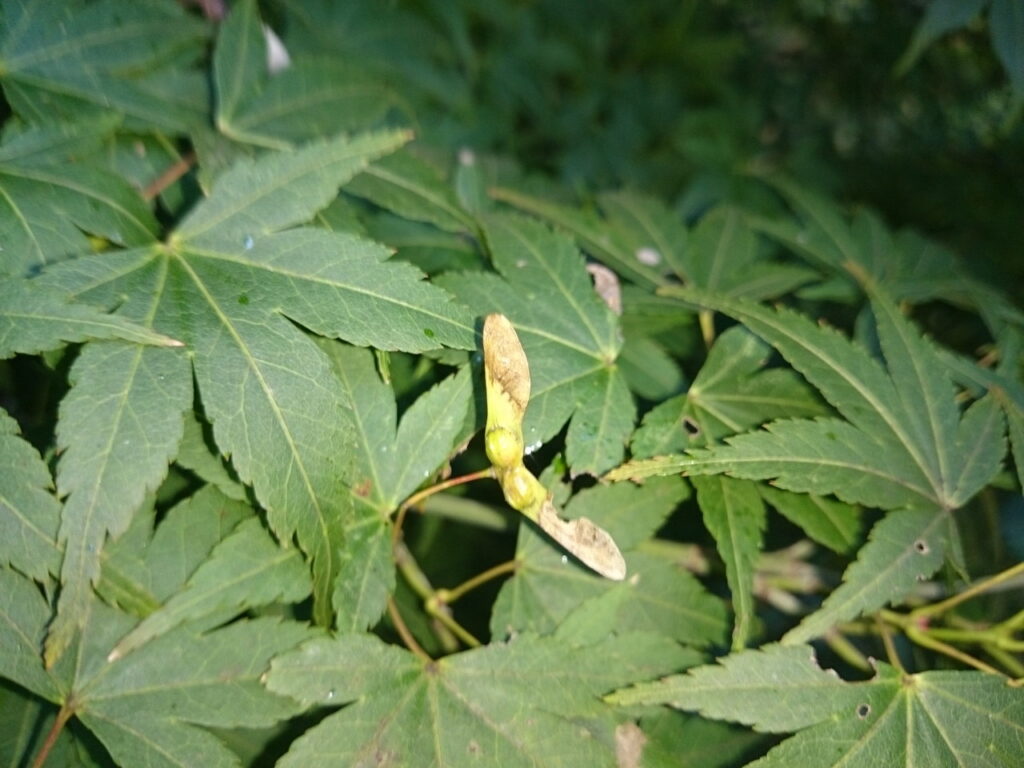
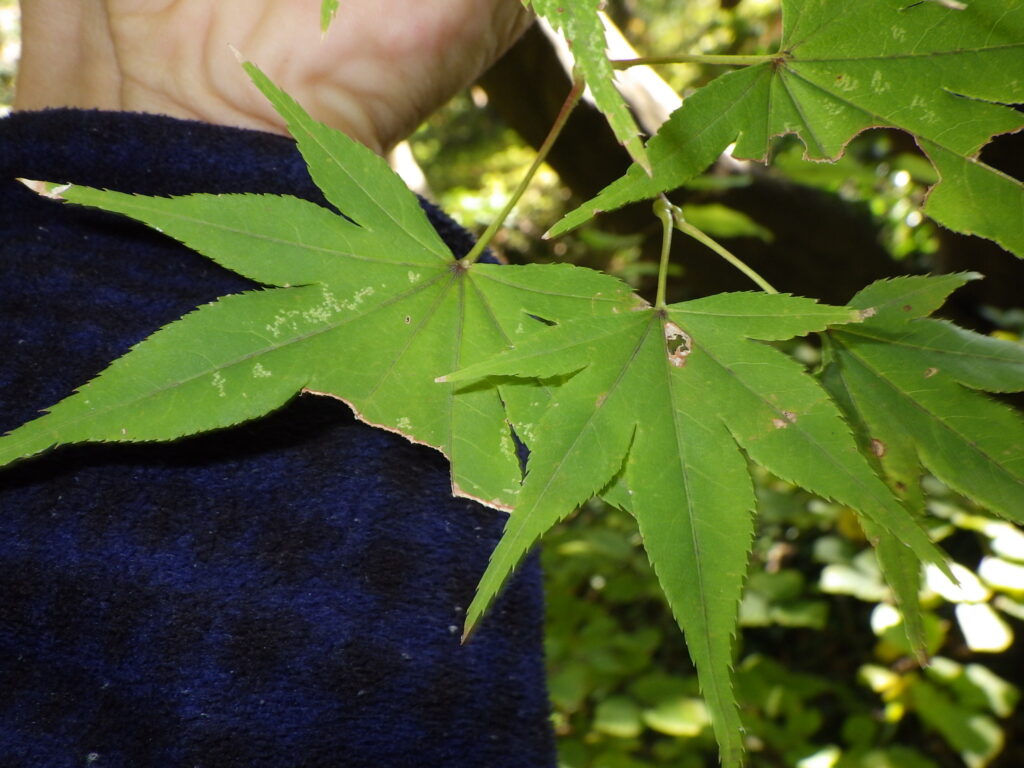
What are the differences between Japanese maple (Acer palmatum) and Japanese maple (Acer palmatum var. japonica)?
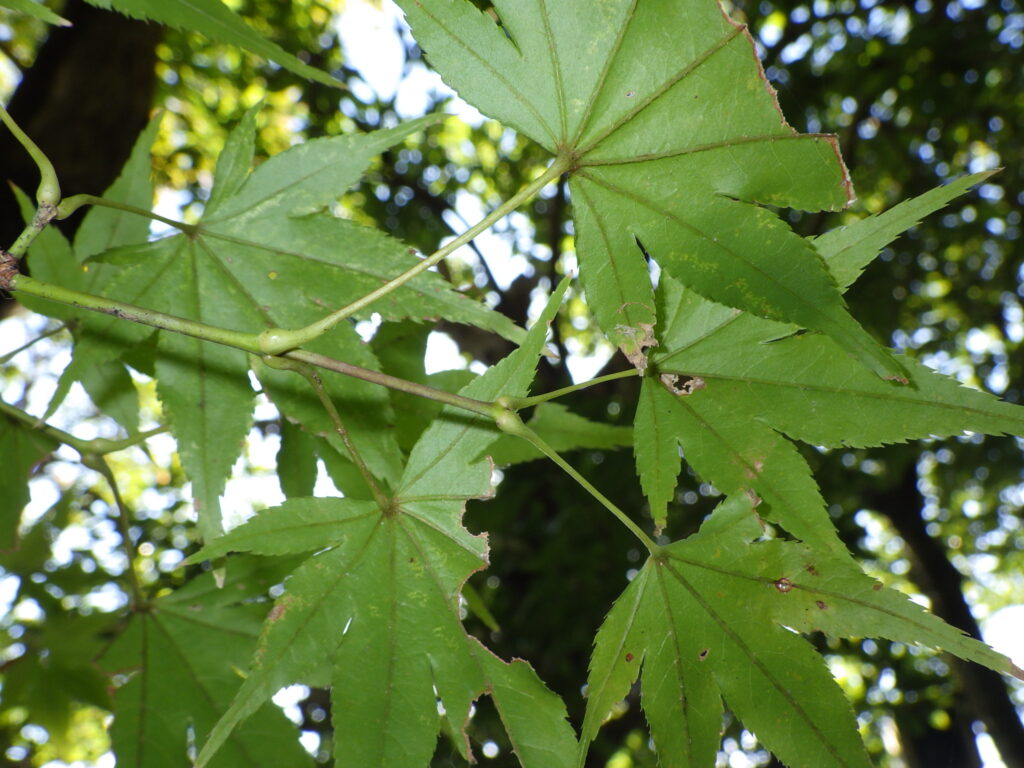
Finally, let's consider the differences between Japanese maple (Acer palmatum) and Japanese maple (Acer sieboldianum).
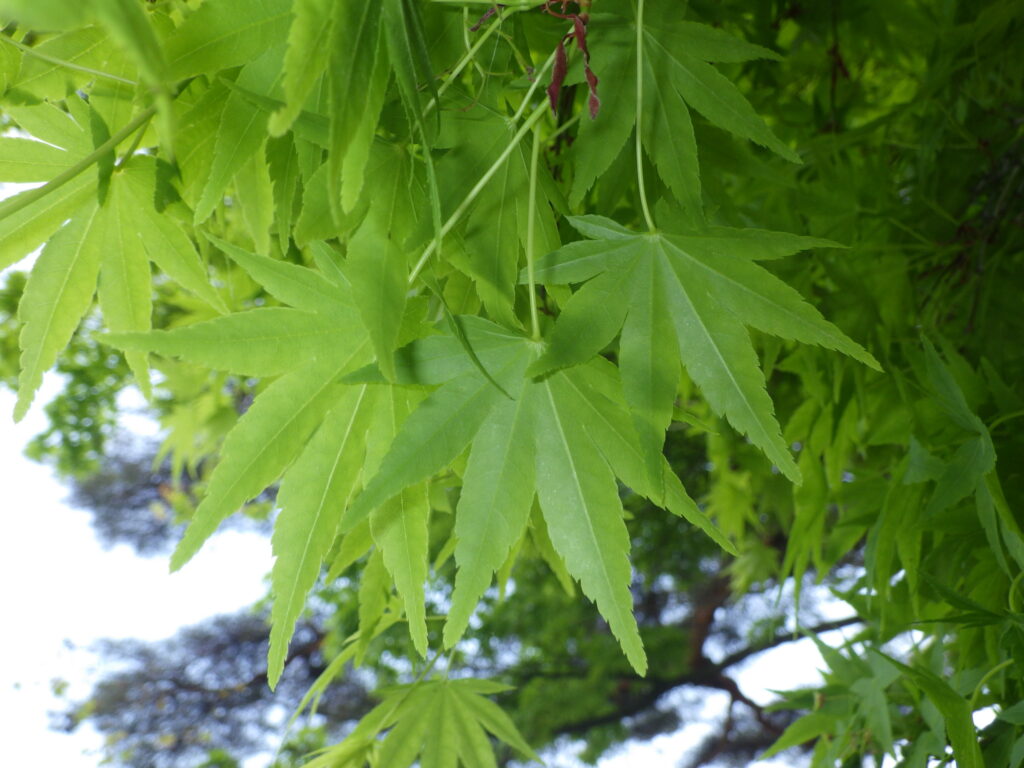
As the names suggest, the main difference is that the leaves of the Japanese maple (Acer palmatum) are large, measuring 6-13 cm in length and 7-18 cm in width, while those of the smaller Japanese maple (Acer palmatum) are large, measuring 5-7 cm in length and 6-9 cm in width.
Furthermore, there is another difference: in Japanese maple (Acer palmatum), the petiole is less than half the length of the leaf blade, whereas in Japanese maple (Acer palmatum var. japonica), the petiole is longer than half the length of the leaf blade. This is a very important point. Some leaves of Japanese maple have extremely short petioles.
Regarding the fruit, there is also a difference in that in Japanese maple (Acer palmatum), the space between the wings opens at an obtuse angle of 70-95°, while in Japanese maple (Acer palmatum var. japonica), the space between the wings opens at 170-180°, almost horizontally.
Checking these three points should allow you to distinguish them for sure. When you examine the leaf stalks of individuals found by searching for "Acer palmatum" on the internet, it seems that quite a few Acer palmatum species are mixed in.
While the individual lobes tend to be thicker in Japanese maple (Acer palmatum), the variation in Acer sieboldianum is so large that it is difficult to distinguish them based on this alone.
References
Hayashi, Masayuki. 2019. Tree Leaves: Expanded and Revised Edition - Identifying 1300 Species Through Real-Life Scans. Yama-kei Publishers, Tokyo. 824pp. ISBN: 9784635070447
Kanagawa Prefecture Flora Survey Association. 2018. Kanagawa Prefecture Flora 2018 (Electronic Edition). Kanagawa Prefecture Flora Survey Association, Odawara. 1803pp. ISBN: 9784991053726