Daffodils are a very popular ornamental plant in Japan, blooming in winter. However, a little research reveals that they are sometimes referred to as "Nihon-zuisen" (Japanese daffodil) and sometimes simply as "suisen" (daffodil). Is there a difference between Nihon-zuisen and suisen? Nihon-zuisen refers to a specific species native to China, but when simply referred to as suisen, it could be another name for Nihon-zuisen, or it could be a general term for various other species. Let's understand this difference properly. Nihon-zuisen is native to the Mediterranean coast, and after being cultivated and improved in China, it was introduced to Japan, so it is not native to Japan. Therefore, surprisingly, historical records only mention it from the Muromachi period onward, and it seems that its popularity came later. It is poisonous and can cause food poisoning if mistaken for chives or wild onions, but daffodils can be distinguished by their odorless leaves, shallow depression in the center, and the presence of a bulb. But why do Nihon-zuisen bloom in winter? Research in Israel, where the wild species *Daffodil serrata* exists, has shown instances of winter blooming to attract hummingbird hawk-moths that overwinter there. Therefore, it is highly likely that winter blooming is a remnant of its time living along the Mediterranean coast. This article will explain the classification, history, toxicity, and pollination ecology of *Daffodil serrata*.
- What is the difference between Japanese daffodils and regular daffodils?
- What is the history of the Japanese daffodil? Its popularity in Japan only began after the Muromachi period, which is surprisingly late.
- Is it poisonous and a frequent subject of food poisoning news? How can you distinguish it from chives?
- Such a beautiful and eye-catching flower, yet it was useless to the plant itself?
- There's some interesting research going on about the original species of daffodil! Could it even explain why they bloom in winter?
- Are flowers really useless?
- References
What is the difference between Japanese daffodils and regular daffodils?
A little research reveals that daffodils are sometimes called "Nihon-suisen" (Japanese daffodil) and sometimes simply "suisen" (daffodil). Are there any biological differences between these two?
Narcissus tazzetta ver. chinensis refers to a variety of Narcissus tazzetta, a member of the Amaryllidaceae family, that has begun to propagate vegetatively in China. The cluster daffodil (Narcissus tazzetta) is native to the Mediterranean coast of southern Europe.
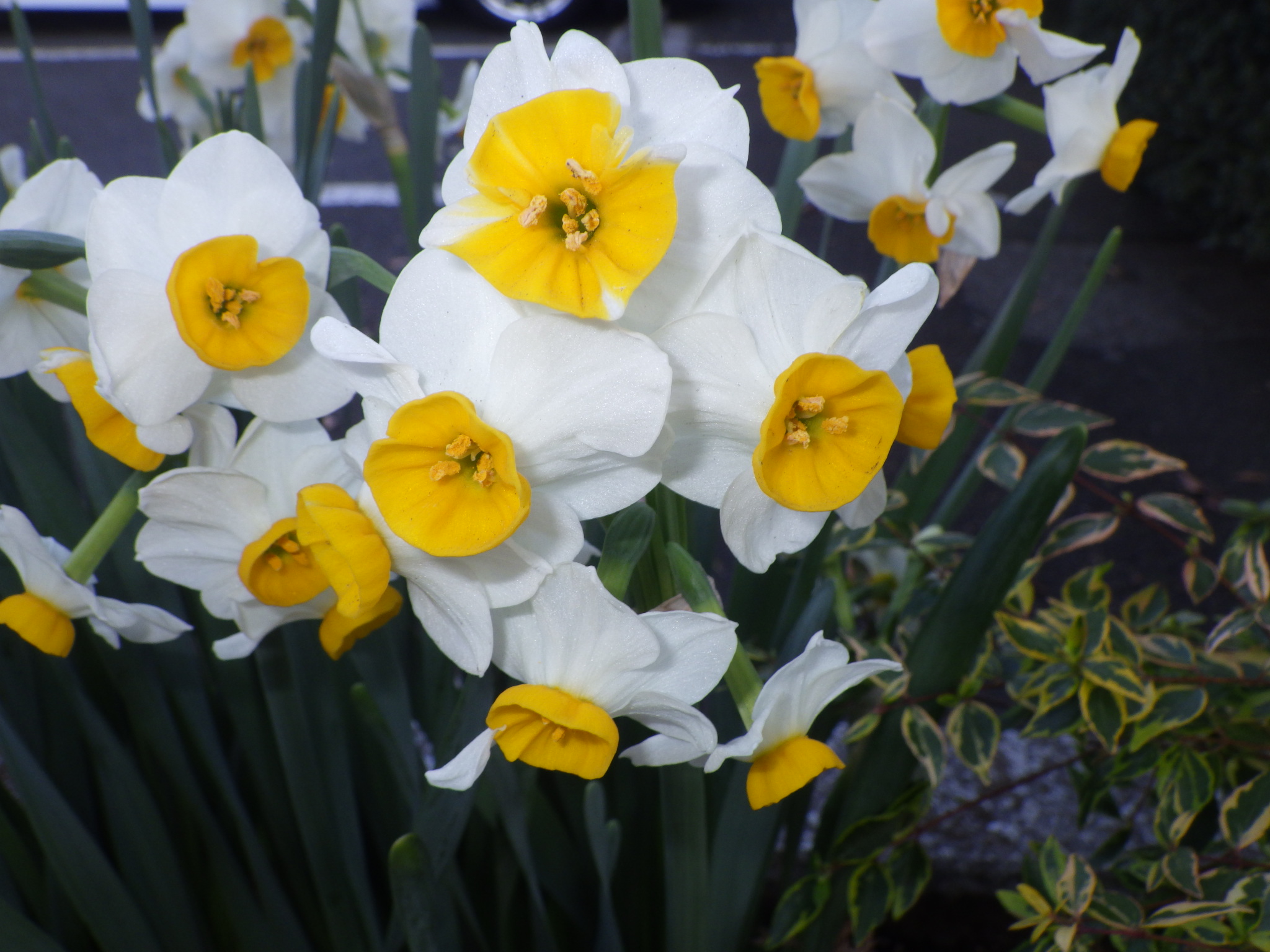
Both the cluster daffodil and the Japanese daffodil have short, yellow coronas (the cup-shaped part of the flower), and white sepals and petals. While the Japanese daffodil has 4 to 8 flowers on a single stem, the cluster daffodil has a slightly larger number of flowers, 5 to 15, blooming in clusters.
The Japanese narcissus originated from the cluster narcissus, which traveled from the Mediterranean to China (before the Sui and Tang dynasties) via the Silk Road and was then selectively bred. In Japan, although the exact time is unknown, it is believed to have arrived or drifted ashore in ancient times (Fukui Prefecture Tourism and Sales Department, Cultural Promotion Division, 2019). It has been cultivated for ornamental purposes since ancient times, and is now found growing wild along the coasts from Kanto westward to Kyushu (Hayashi et al., 2013).
In short, the Japanese daffodil is native to China! It's a very confusing name. It's probably a name given at a time when it had become naturalized and its exact origin was unknown, but let's make sure we understand it correctly now.
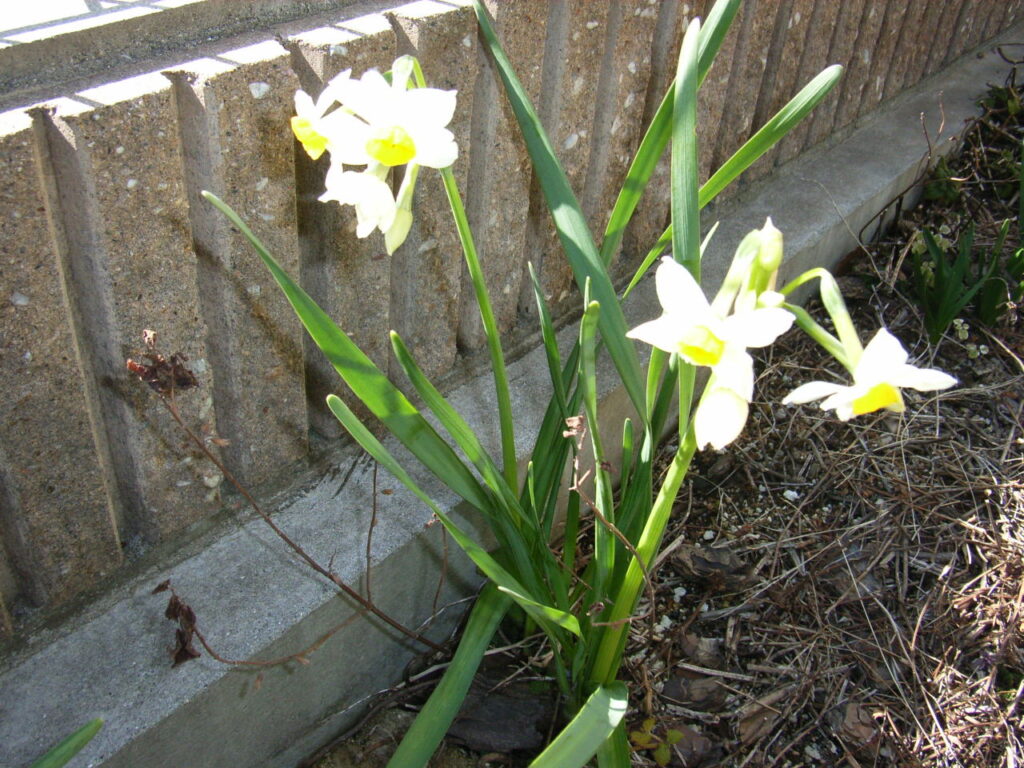
On the other hand, the term "narcissus" does not refer to a single biological species. In this case, two meanings are possible.
First, it can refer to another name for the Japanese daffodil. Sometimes the Japanese daffodil is simply called "daffodil."
The second meaning may refer to the entire genus *Narcissus*. In some cases, the term "narcissus" may include species other than *Narcissus japonica*.
Other notable species include Narcissus pseudonarcissus, a trumpet daffodil with a prominently protruding corona and yellow petals in its wild form, and Narcissus cyclamineus 'Tete a tete' (miniature daffodil), which is small in both its overall appearance and flowers, and also has yellow petals, making it particularly well-known in Japan.
Narcissus poeticus (red-corolla narcissus), Narcissus bulbocodium (petticoat narcissus with skirt-like petals), Narcissus jonquilla (large yellow-petaled narcissus), and Narcissus verna (a hybrid of Narcissus verna and Narcissus trumpet narcissus with large, trumpet-like petals and a short corona). Narcissus x odorus is also known.
In addition, there are varieties whose original species are unknown.
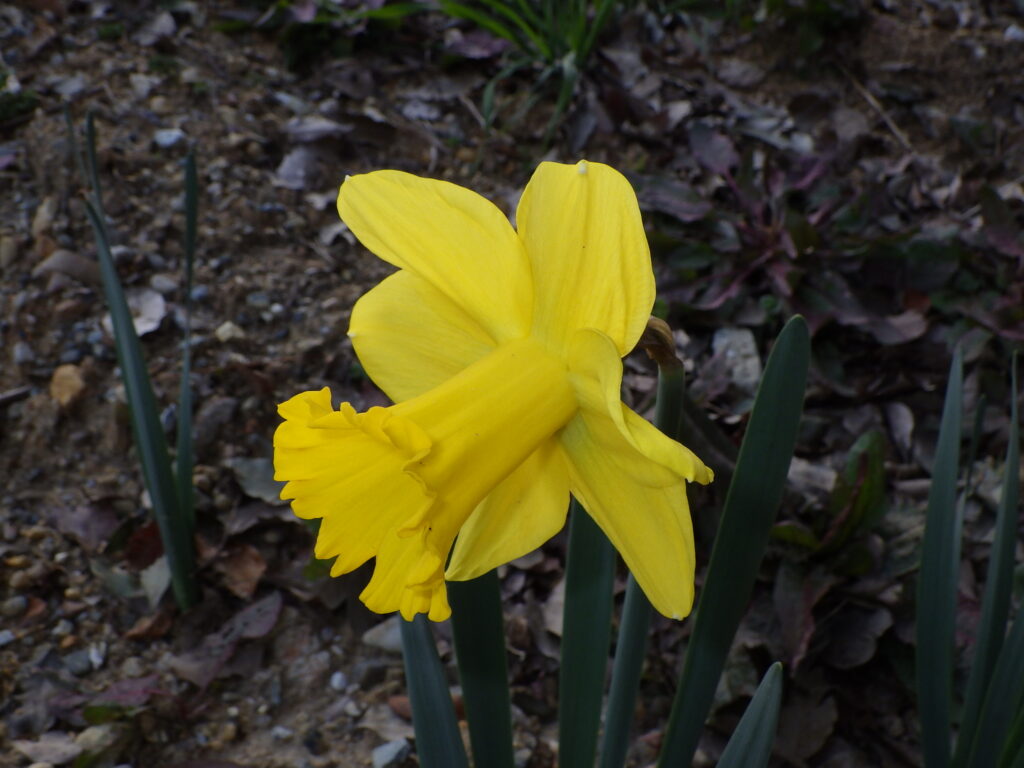
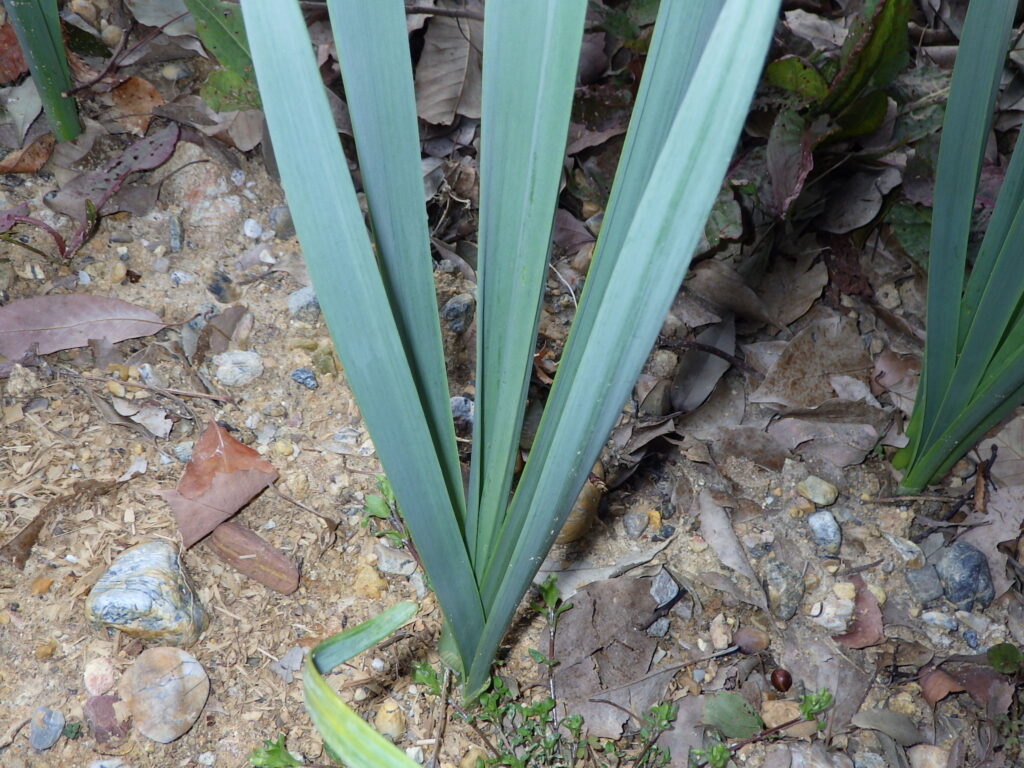
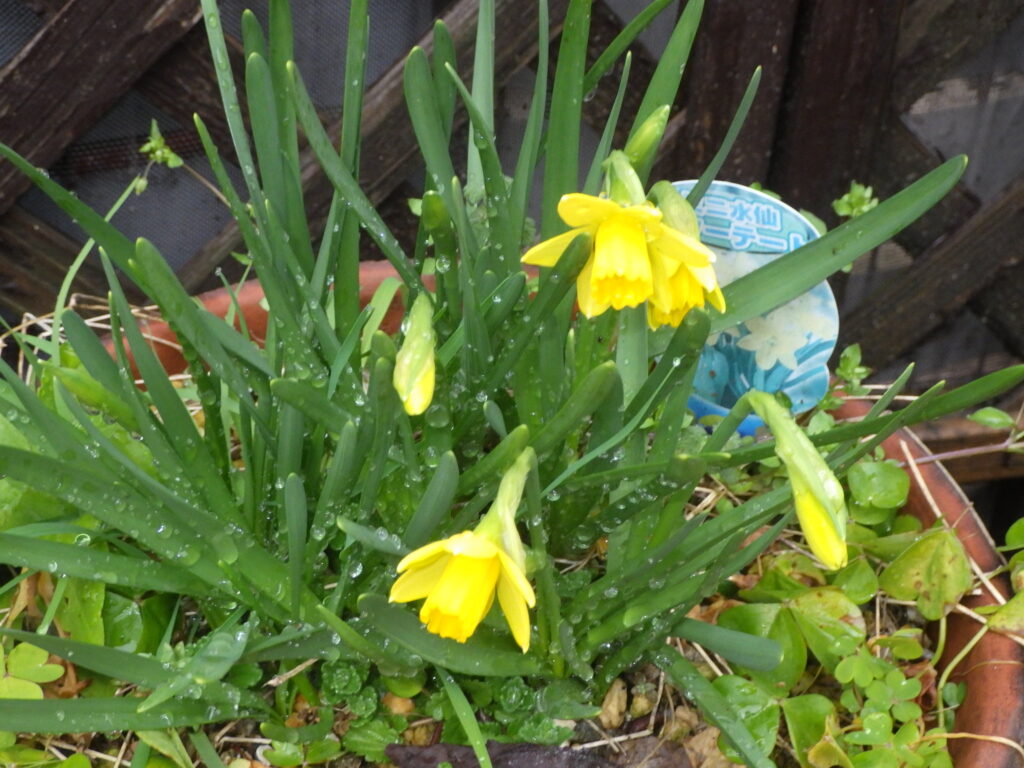
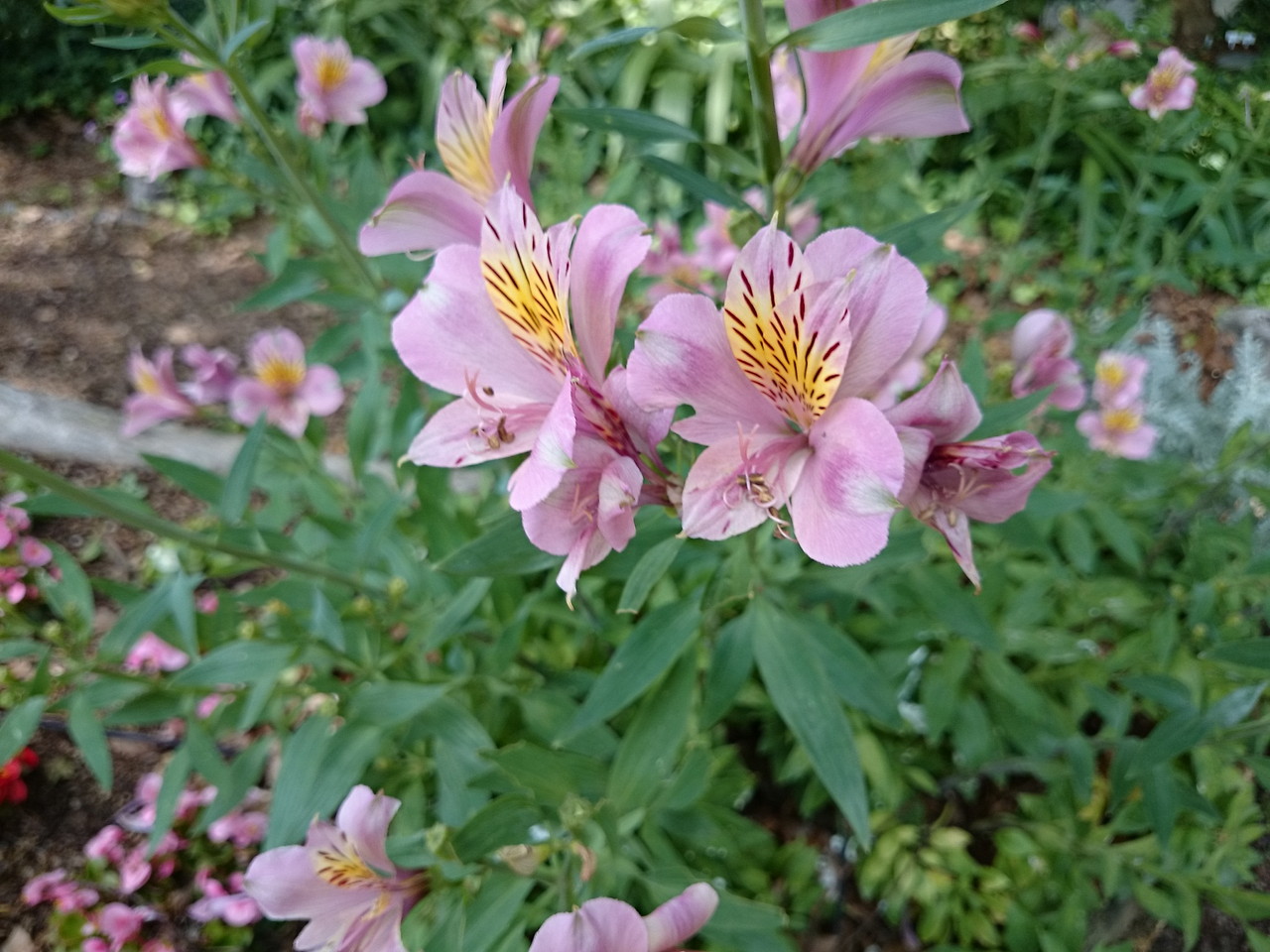
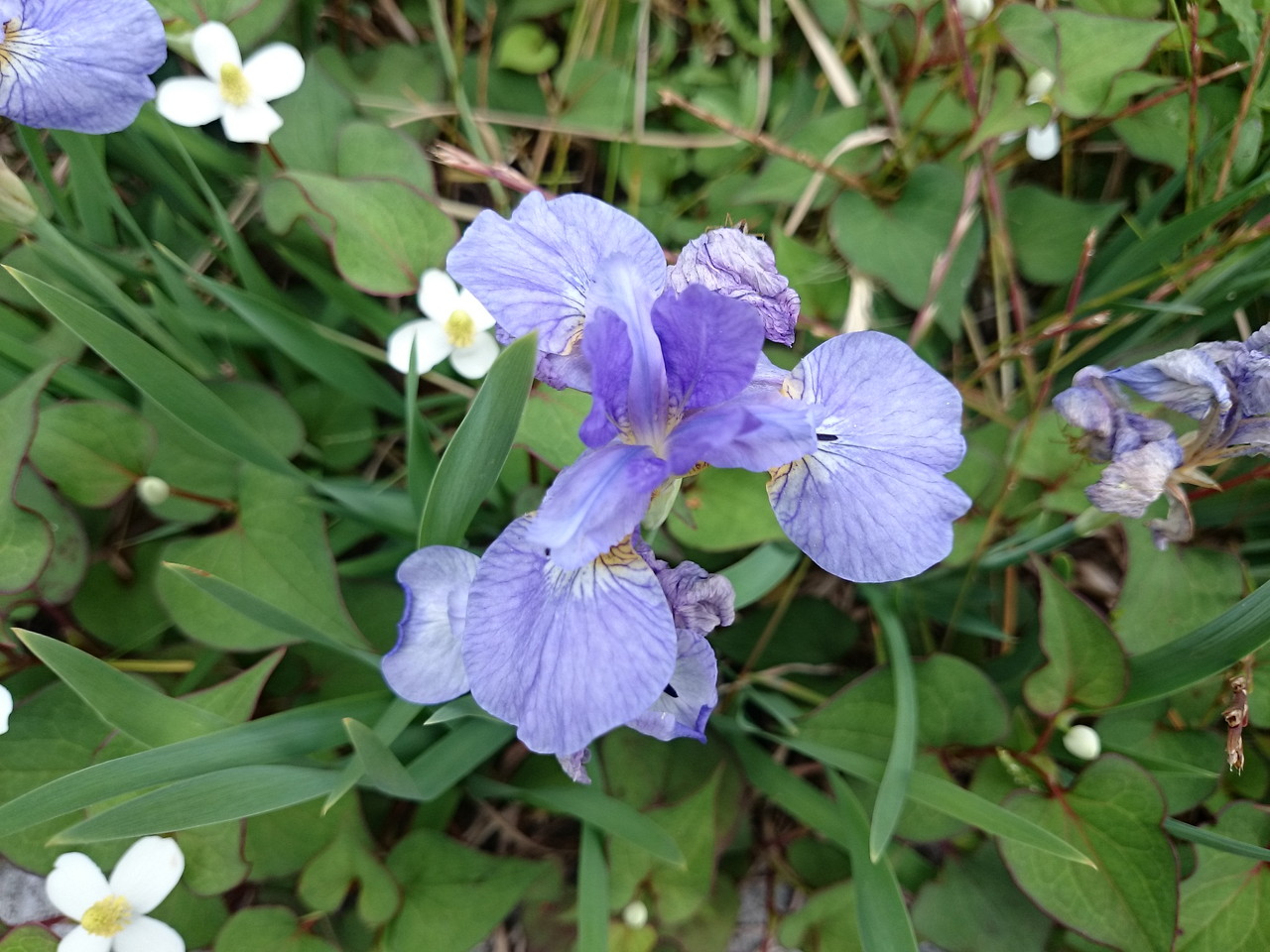
Furthermore, although they belong to completely different groups, the following also bear the name "narcissus": Cyrtanthus mackenii subsp. mackenii (Amaryllidaceae, Cyrtanthus genus), Alstroemeria pulchella (Alstroemeria, Alstroemeriaceae), Freesia x hybrida (Freesia, Iridaceae), and Hyacinthoides hispanica (Scilla, Asparagaceae). Their flower shapes are not similar at all, so be careful not to confuse them.
What is the history of the Japanese daffodil? Its popularity in Japan only began after the Muromachi period, which is surprisingly late.
Although its Japanese name includes "Japan," as mentioned above, the Japanese daffodil is native to China. When did it become known in Japan?
Although the exact period is unclear, the records of narcissus in Japan are surprisingly recent, with its first appearance believed to be in the "Shogakushu," a Japanese dictionary compiled during the Muromachi period.
On the other hand, it appears to have been depicted in paintings during the Heian period. From the Muromachi period onward, it was used as a tea ceremony flower and cut flower, and in the Edo period, detailed descriptions of its cultivation methods were found. It has been used as a cut flower and horticultural plant ever since. There seems to have been a slight delay between its introduction to Japan and its subsequent rise in popularity.
Is it poisonous and a frequent subject of food poisoning news? How can you distinguish it from chives?
Although daffodils are now very popular as ornamental plants, they belong to the Amaryllidaceae family and contain the common Amaryllidaceae alkaloids (lycorine, galantamine, and tazetine). Lycorine is heat-resistant, so even after heating, it can cause symptoms of food poisoning such as vomiting, diarrhea, sweating, headache, and coma.
Because its leaves resemble those of chives and wild onions, and its bulb resembles that of an onion, food poisoning due to mistaken consumption occurs occasionally and is often reported in the news. Chives and wild onions often grow as wild plants, so extreme caution is necessary. As of a 2014 paper, cases have been reported every year since 2002, with up to six cases reported in a single year (Toda et al., 2014).
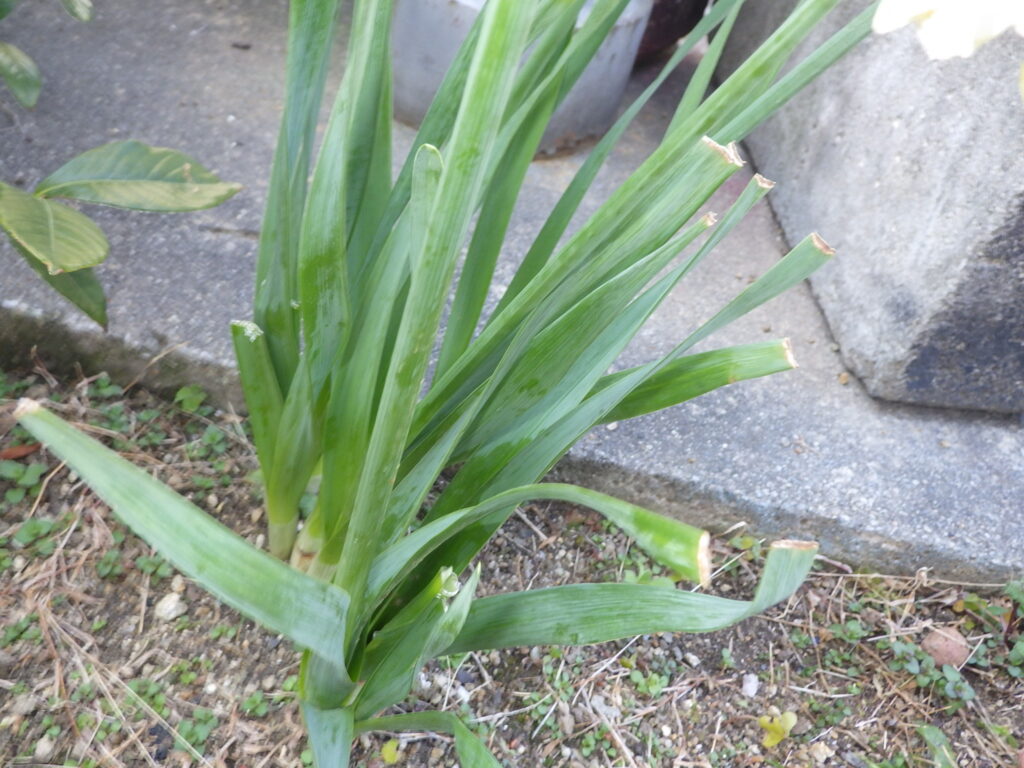
The Nagano City Public Health Center states that daffodils and chives can be distinguished by the following: (1) Daffodil leaves have no odor, but chives have a distinctive strong smell; (2) Daffodil leaves have a shallow depression in the center, while chives are flat and somewhat thick; and (3) Daffodils have bulbs, but chives do not.
Such a beautiful and eye-catching flower, yet it was useless to the plant itself?
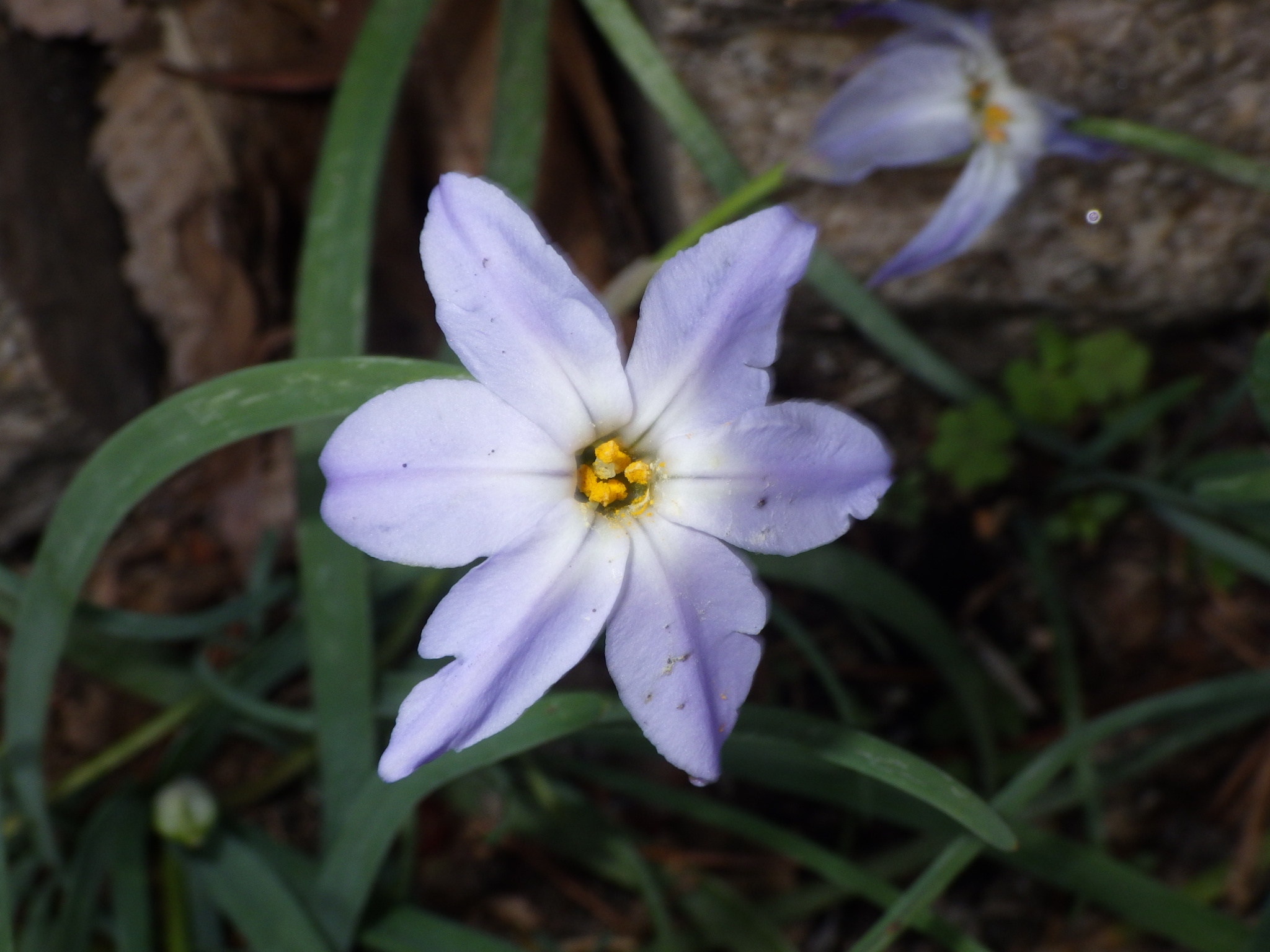
The Japanese daffodil blooms from December to April (Hayashi et al., 2013), and its flowers are creamy white (Fukui Prefecture Tourism and Sales Department, Cultural Promotion Division, 2019). It consists of three outer perianth segments (sepals) and three inner perianth segments (petals), which are joined at the base. Furthermore, a structure unique to daffodils is a yellow, cup-shaped part, which is called the corona. The stamens and pistil are housed inside this.
While they are usually single-flowered, double-flowered varieties are also known, and these are called Yaezuisen Narcissus tazetta 'Plenus'.
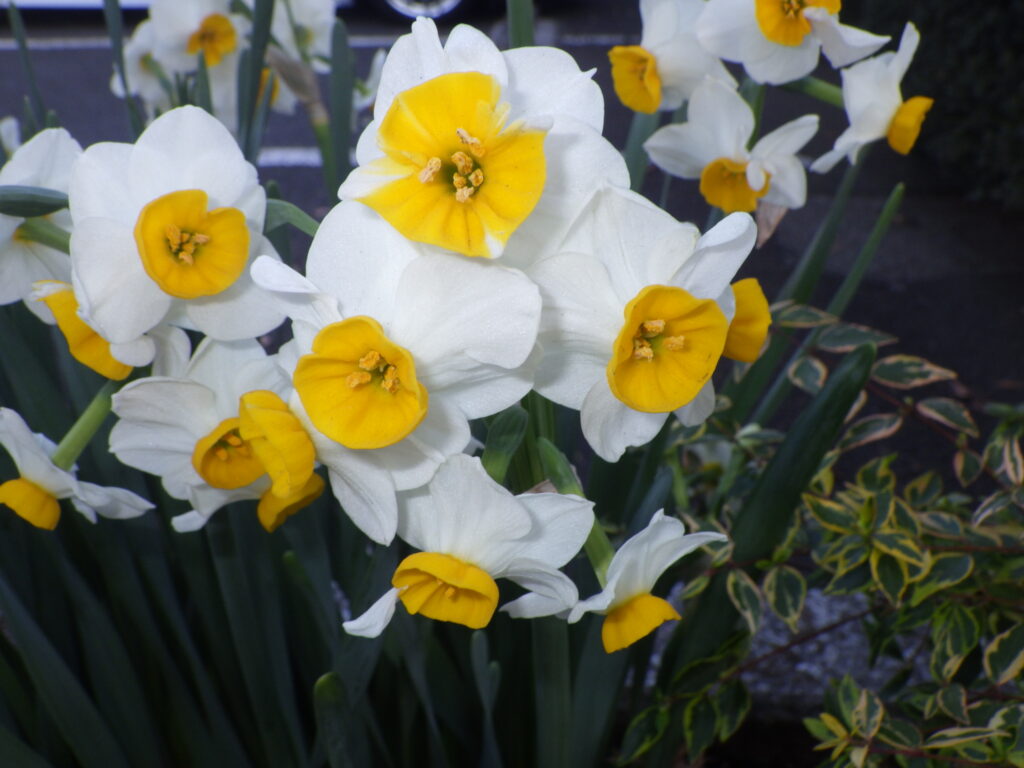
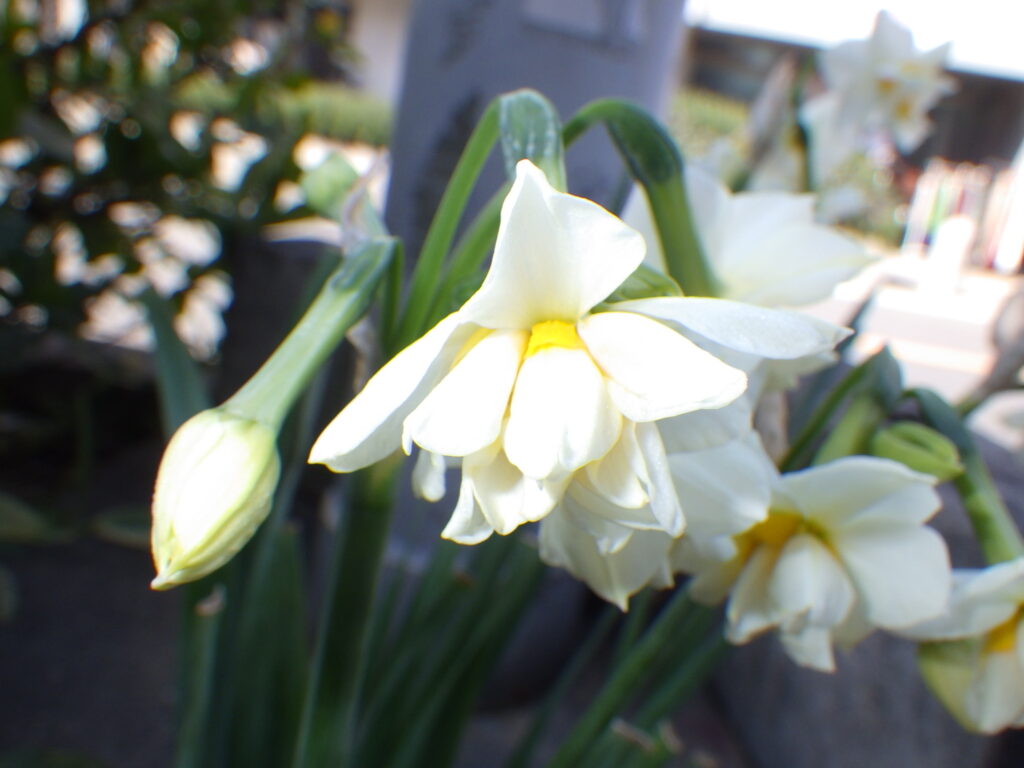
They are very conspicuous, and considering the flower's primary role of pollination, one might assume they attract many insects to produce seeds. However, unfortunately, the Japanese population only reproduces through bulb division.
This is a bit complicated, but the chromosomes are triploid. In triploid organisms, there are three sets of chromosomes. When creating cells that produce offspring, the two sets of chromosomes that normally exist should be divided into one set each, but this doesn't happen in triploid organisms, so they cannot reproduce through seeds.
In other words, flowers are entirely for human enjoyment and serve no purpose whatsoever in terms of producing seeds.
Of course, since it has been spread all over the world by humans for the purpose of ornamental purposes, it can be said that the Japanese daffodil is a species that has been very successful in reproducing without producing seeds.
There's some interesting research going on about the original species of daffodil! Could it even explain why they bloom in winter?
However, there is a great mystery surrounding the Japanese daffodil. Why does it bloom in winter? Of course, it could be the result of selective breeding, but we know that this is not the case.
This is because the wild species of the Japanese daffodil, the cluster daffodil, which properly reproduces through pollination and seed propagation, sometimes blooms in winter.
In Israel, an interesting study has been conducted on the relationship between the flowering period and habitat of the daffodil (Arroyo & Dafni, 1995).
There are two populations of the daffodil species: one that grows in wetlands and another that grows on hillsides.
This study revealed that the insects that visit the flowers of the daffodil (Narcissus spp.) that contribute to pollination differ depending on the habitat. In wetlands, hawk moths were the main pollinators, while in hilly areas, solitary bees and hoverflies were the primary visitors.
Consequently, we also found that the shape of the flowers in the wetland population and the hillside population were slightly different.
In wetland populations, flowers with shorter pistils were more common. The hummingbird hawk-moth has a very long proboscis specialized for sucking nectar, so it often inserts its body deep into flowers to obtain nectar. Therefore, it is thought that flowers with shorter pistils have become more common so that the hummingbird hawk-moth can pollinate them from deep inside the flower.
On the other hand, the populations in the hills had more flowers with longer pistils. Solitary bees and hoverflies have short mouths and are specialized in feeding on pollen from the surface of flowers, so they do not insert their bodies deep into the flower to collect pollen, remaining on the surface. Therefore, it is thought that the hill populations had more flowers with longer pistils to prevent these insects from stealing the pollen without touching the pistil.
Furthermore, it was discovered that the flowering period differs depending on the activity period of the insects that visit the flowers.
In wetland populations, the flowers bloomed in January and February. This is thought to be an adaptation to the overwintering hummingbird hawk-moth.
In hilly areas, the flowers bloom in October and November. This is thought to be an adaptation to solitary bees and hoverflies that are active in the autumn.
Thus, the daffodil (Narcissus sibiricus) changed the shape of its flowers and its flowering period to suit its habitat.
It is thought that the Japanese daffodil began blooming in winter in Japan when it was first cultivated and its behavior was stabilized. However, it is possible that its original behavior was an adaptation to winter insects such as hummingbird hawk-moths, which were found in its native habitat, such as Israel.
Japanese daffodils are known as one of the few flowers that brighten up winter, but when you consider the circumstances surrounding their origins, don't you feel a sense of the long history and causal connection between the Mediterranean and Japan?
Are flowers really useless?
As mentioned above, Japanese daffodils do not require insects. Moreover, since they bloom in the middle of winter, it seems as though there are no insects at all that would come to them.
However, there are many instances on the internet showing the hoverfly Episyrphus balteatus visiting, and I have also confirmed this myself. Among hoverflies, there are known species, like Episyrphus balteatus, that are active even in the middle of winter.
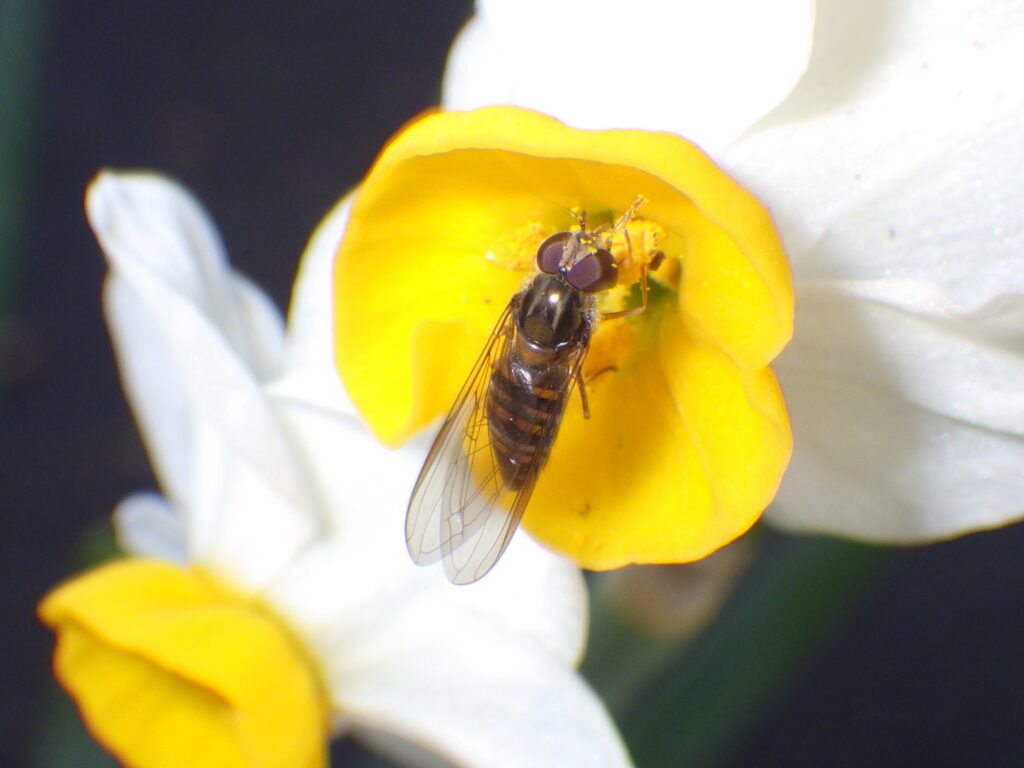
There are currently no reports of any individuals other than the triploid species that reproduce by seed being present in Japan, but considering the instances of them becoming wild on coastlines, it's a bit puzzling whether they can reproduce to that extent solely through parthenogenesis. My personal opinion is that since insects are also seen in this area, I'm interested in the possibility that insects might be involved.
References
Arroyo, J., & Dafni, A. 1995. Variations in habitat, season, flower traits and pollinators in dimorphic Narcissus tazetta L.(Amaryllidaceae) in Israel. New Phytologist 129(1): 135-145. ISSN: 0028-646X, https://doi.org/10.1111/j.1469-8137.1995.tb03017.x
Fukui Prefectural Government, Tourism and Sales Department, Cultural Promotion Division. 2019. Daffodil Fields of the Echizen Coast: Cultural Landscape Preservation Survey Report. Fukui Prefectural Government, Tourism and Sales Department, Cultural Promotion Division, Fukui. 258pp. https://www.pref.fukui.lg.jp/doc/bunshin/cultural-landscupes_d/fil/honpen.pdf
Hayashi, Yasaka, Kadota, Yuichi, and Hirano, Takahisa. 2013. Yamakei Handy Illustrated Guide 1: Wildflowers (Revised and Expanded New Edition). Yama-kei Publishers, Tokyo. 664pp. ISBN: 9784635070195
Toda, M., Unoyama, C., & Kasuga, F. 2014. Trends in food poisoning cases caused by higher plants in Japan over the past 50 years. Journal of Food Hygiene 55(1): 55-63. https://doi.org/10.3358/shokueishi.55.55