Veronica persica, Veronica polifolia, Veronica undulata, and Veronica polifolia are four blue wild species found in fields and roadsides around the world. In Japan, they are representative early spring flowers, and may be among the first plants whose names you learn when you become interested in weeds. However, since all of them have blue to purple flowers and their leaves look similar at first glance, you may have trouble distinguishing them. However, you can distinguish them by carefully observing the way the stems stand and the shape of the leaves, flowers, and fruits. Although Veronica persica can now be seen all over Japan, it was actually first confirmed in Japan in the early Meiji era. Before that, another species called Veronica polifolia was found all over Japan. Now, Veronica polifolia has disappeared from roadsides and is found almost only in rocky areas and stone walls. There have been various theories as to why this is the case, but recent research strongly suggests that it is a result of Veronica persica displacing Veronica polifolia. There are various factors that could cause Veronica polifolia to be driven out, but a well-known biological phenomenon called "reproductive interference" may also be involved. While there are differences in the length of the flower stalks and the size of the flowers of the Veronica genus, this may be due to differences in their reproductive methods. Species with long flower stalks undergo cross-pollination, while those with short stalks do not. Species with long flower stalks are frequently visited by small bees and flies, which are commonly seen in early spring. The fruit is a capsule, and the seeds of some species have elaiosomes and are dispersed by ants. This article will explain the classification, history, evolution, pollination ecology, and seed dispersal of Veronica species.
- Four blue wild species found in fields and roadsides around the world
- What are the differences between Veronica persica, Veronica polifolia, Veronica undulata, and Veronica polifolia?
- Is it true that "Veronica polita was driven out by Veronica persica"?
- So, Veronica persica doesn't actually prefer rocky areas or stone walls?
- Why were the Veronica polifolia plants wiped out?
- What is the flowering period and flower shape of Veronica species?
- Are there differences in how flowers reproduce depending on their size and shape?
- What is the structure of the fruit?
- Some species of seeds are dispersed by ants, while others are not!?
- The speedwell plant has evolved to prevent its seeds from falling off cliffs!?
- References
Four blue wild species found in fields and roadsides around the world
Veronica persica, also known as "large dog's scrotum," is considered to be native to Europe in Japanese literature (Kanagawa Prefecture Flora Survey Association, 2018), but in Chinese literature, it is considered to be native to Southwest Asia (Wu & Raven, 1998). It has spread as a naturalized species throughout the world, and in Japan, it was first confirmed in the early Meiji era and had spread throughout the country by 1919 (Tsuruuchi, 1994). It is a biennial plant that grows in vacant lots and along roadsides (Kanagawa Prefecture Flora Survey Association, 2018).
Veronica arvensis, also known as "standing dog's scrotum," is described in Japanese literature as being native to Europe (Hayashi et al., 2013) or to Eurasia and Africa (Kanagawa Prefectural Flora Survey Association, 2018). Chinese literature describes it as being native to Southern Europe and Southwest Asia (Wu & Raven, 1998). It has expanded its distribution as a naturalized species worldwide, and in Japan, it was noticed around the middle of the Meiji era. Currently, it is distributed throughout the country (Hayashi et al., 2013) and is an annual plant that grows in vacant lots and along roadsides (Kanagawa Prefectural Flora Survey Association, 2018).
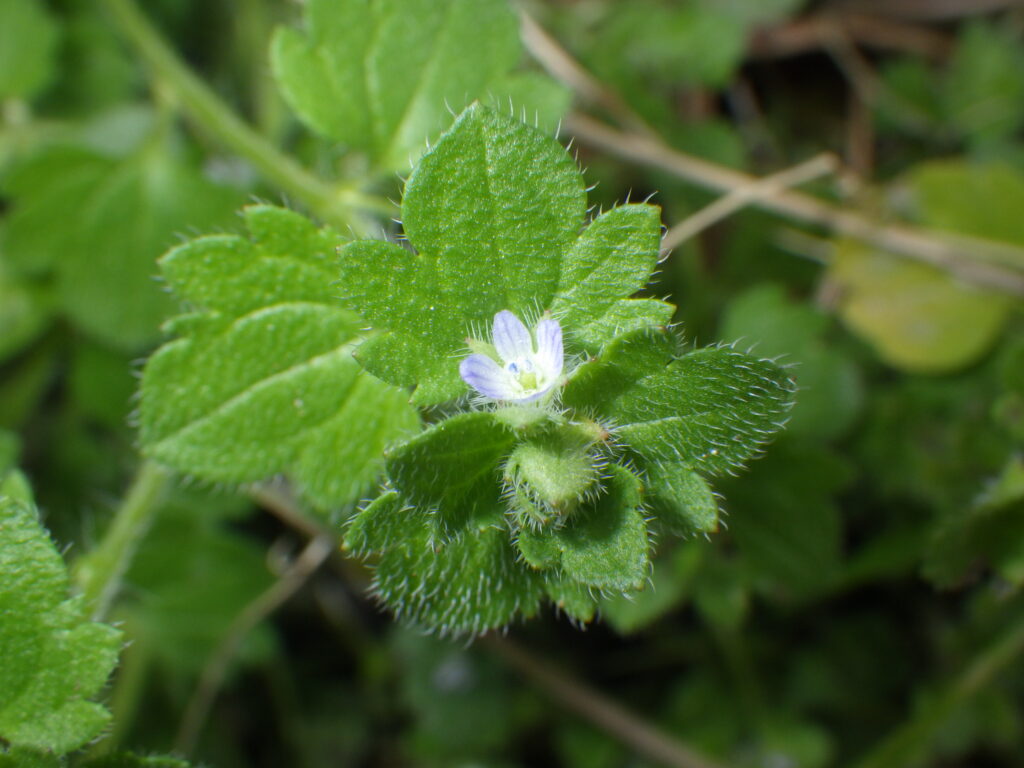
Veronica hederifolia is native to Europe and Africa (Kanagawa Prefectural Flora Survey Association, 2018) and grows in fields and roadsides. In Japan, it was first discovered in Nagasaki in 1862 during the Edo period by a British person (Tsuruuchi, 1994), and is now distributed throughout the country, growing in fields and roadsides as an annual plant (Kanagawa Prefectural Flora Survey Association, 2018).
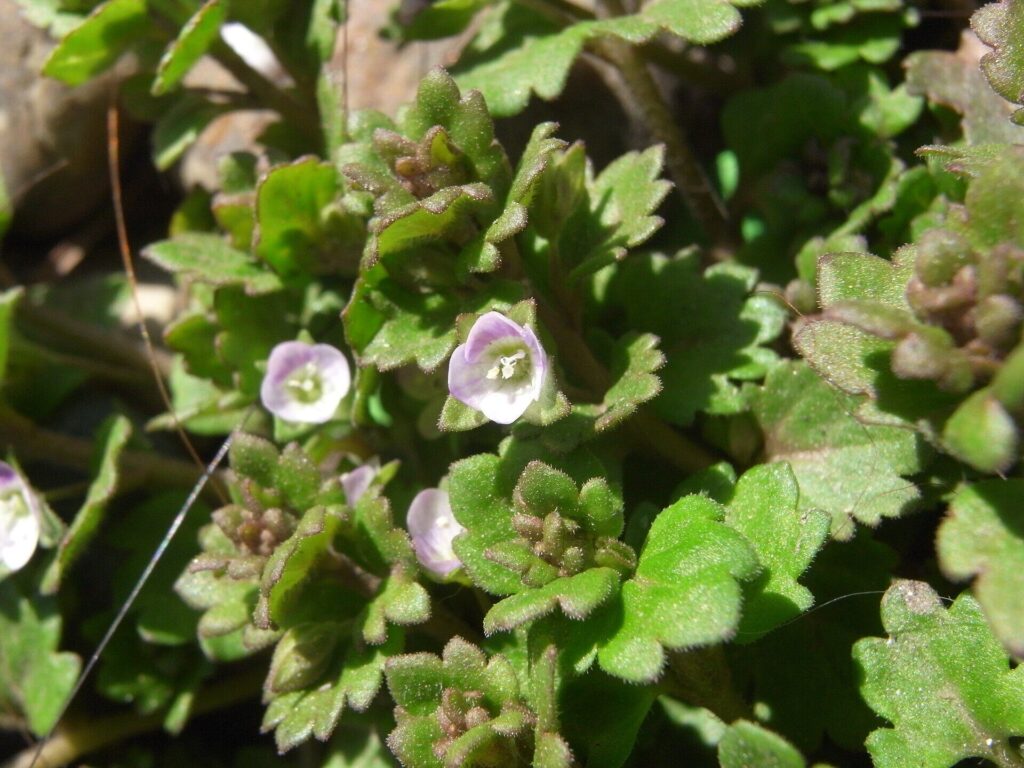
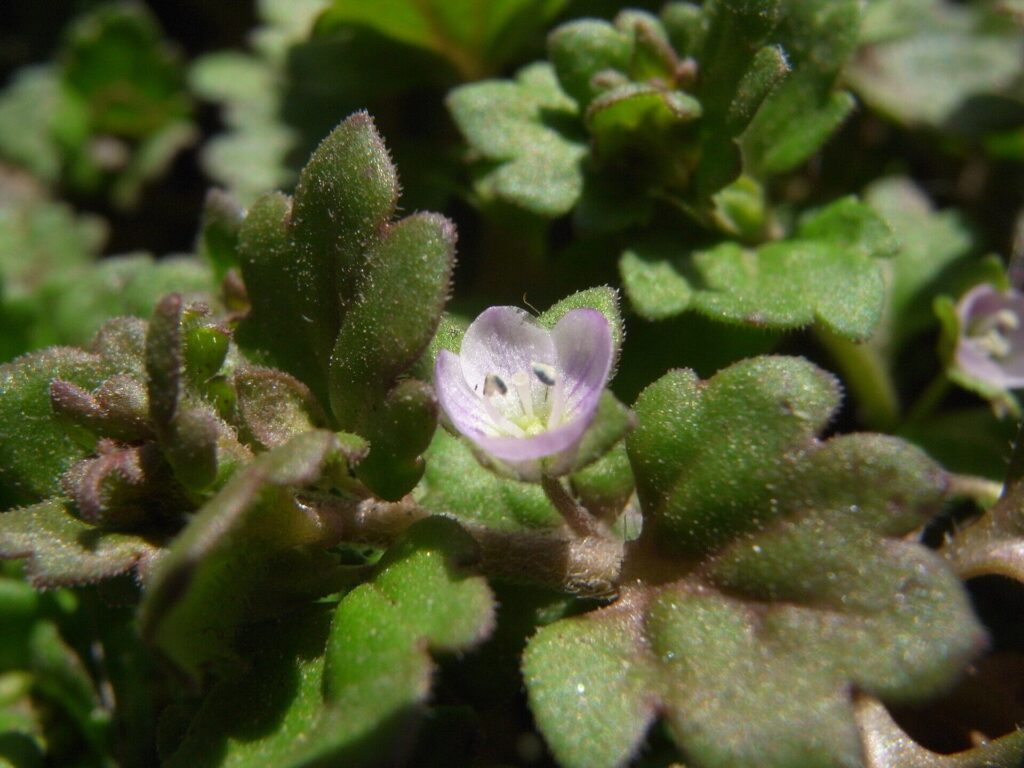
Veronica polita subsp. lilacina, also known as dog's scrotum, is native to Southwest Asia (Wu & Raven, 1998). It likely naturalized in ancient times and grew along roadsides and in grasslands in Hokkaido, Honshu, Shikoku, Kyushu, Amami, and Okinawa prefectures (Kyoto Prefecture, 2015; Kanagawa Prefecture Flora Survey Association, 2018). However, it is thought to have been overwhelmed by Veronica persica, which was introduced later, and is now mainly found in coastal areas as a biennial plant (Kanagawa Prefecture Flora Survey Association, 2018). It is designated as Vulnerable (VU) by the Ministry of the Environment.
All of these species belong to the genus Veronica in the family Plantaginaceae and are commonly found (or were found) in fields and along roadsides. In particular, Veronica persica might be one of the first plants whose name you learn when you become interested in weeds.
There are various theories about their place of origin, but they are generally the same. The flowers are blue to purple, and the leaves look similar at first glance, so you might have trouble distinguishing them.
What are the differences between Veronica persica, Veronica polifolia, Veronica undulata, and Veronica polifolia?
We need to compare several characteristics of these four types.
First, in Veronica polita, the upper bracts gradually become smaller and differ in shape from the opposite lower leaves, whereas in Veronica persica, Veronica flavescens, and Veronica polita, the bracts are the same shape as the leaves.
However, this is a distinction based on plant taxonomy, and confirming this point may be difficult for beginners.
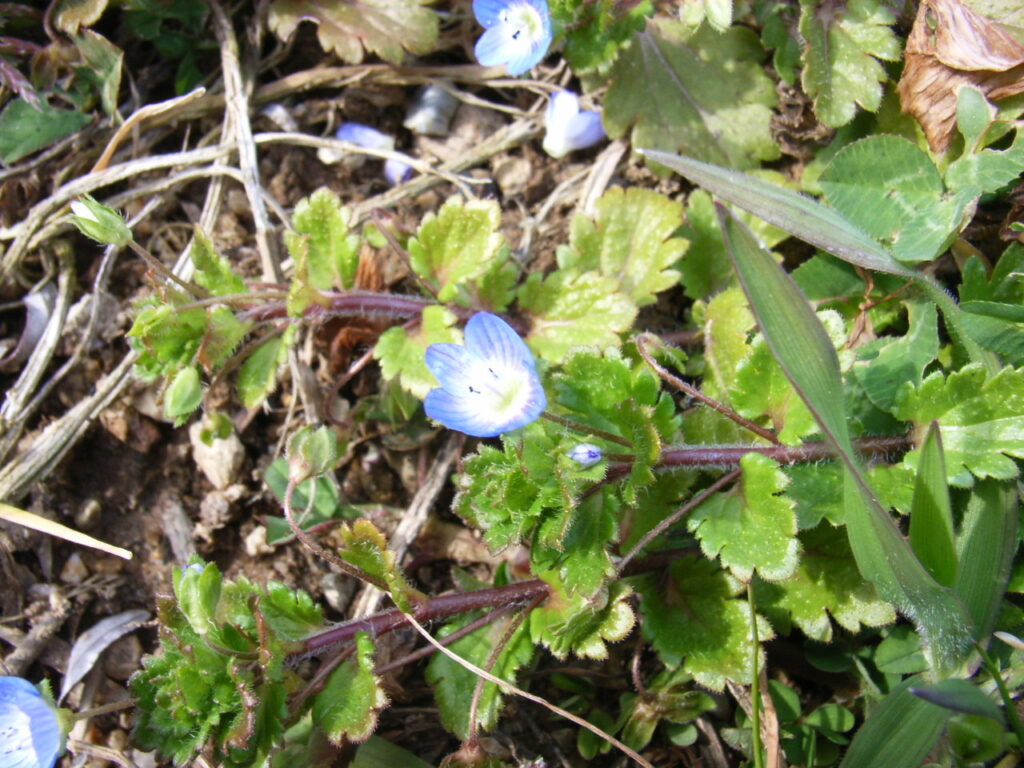
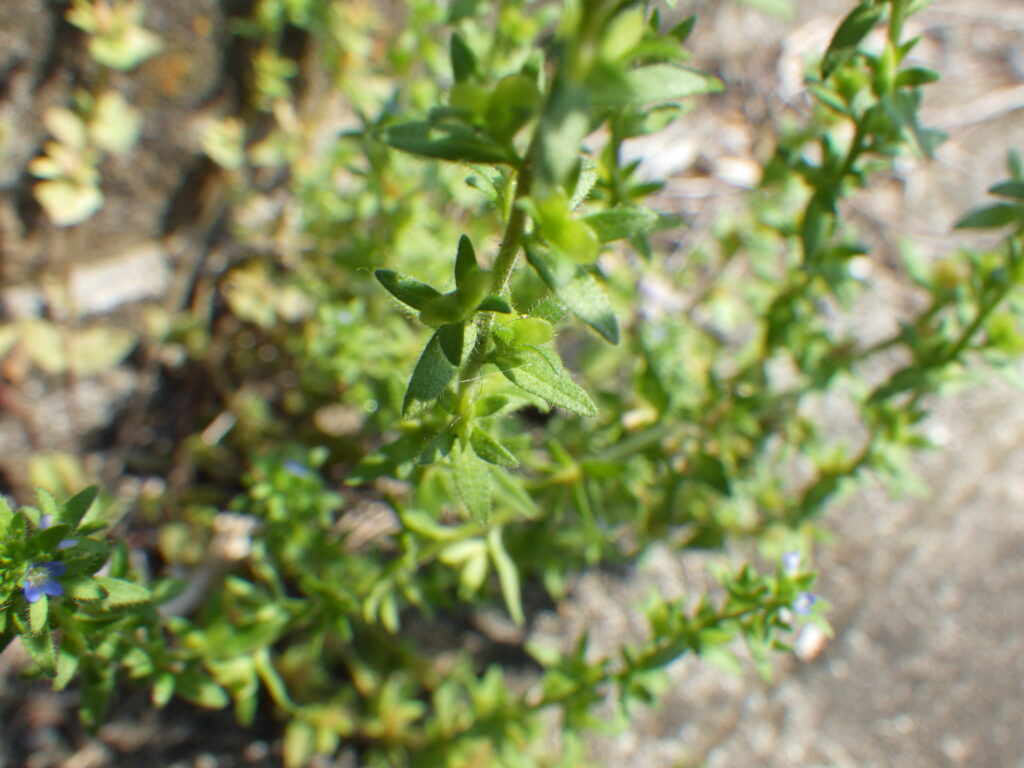
Another difference is that, as its name suggests, the stem of Veronica persica clearly stands vertically to the ground, its leaves are broadly ovate with entire margins or slightly large serrations, and it has almost no flower stalks, whereas the other three species creep along the ground, their leaves have prominent serrations, and they have flower stalks.
Regarding the remaining three species, the differences are that in Veronica persica and Veronica polifolia, the leaves are papery and dull, with 2 to 5 pairs of coarse serrations, and the fruit, if bi-spherical, has long white hairs on the outer surface, while in Veronica serrata, the leaves are somewhat fleshy and glossy, with 1 to 2 pairs of large serrations, and the fruit is bi-spherical with no long white hairs on the outer surface.
Regarding the remaining species, Veronica persica and Veronica polita, Veronica persica has 3 to 5 pairs of serrations on its leaves, its flowers are azure, and the ends of its fruit are slightly pointed, while Veronica polita has 2 to 3 pairs of serrations on its leaves, its flowers are pale pink, and the ends of its fruit are rounded.
In addition to the above, it may be helpful to note that *Veronica polifolia* spread from Nagasaki, resulting in its dense growth in western Kyushu, and that, as mentioned above, *Veronica polifolia* now mainly grows on stone walls in coastal areas.
In recent years, Veronica cymbalaria, which resembles Veronica flavescens, has been found in Tokyo and Kanagawa prefectures, but it can be distinguished by having more serrations (often 5 on each side) and white flowers.
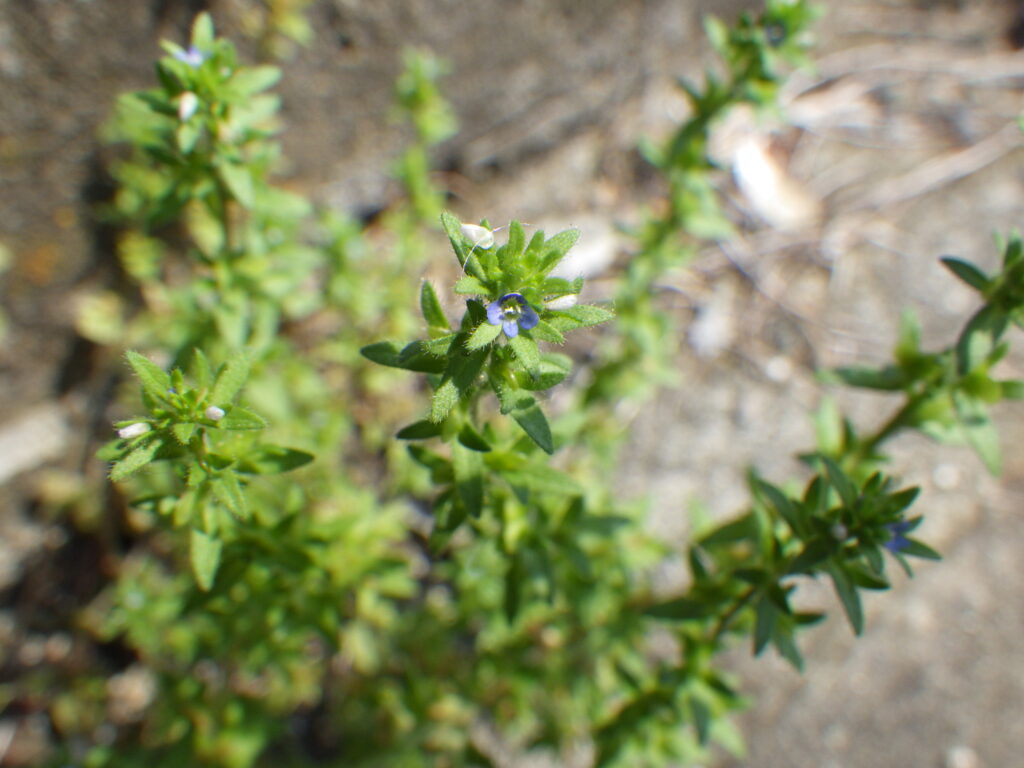
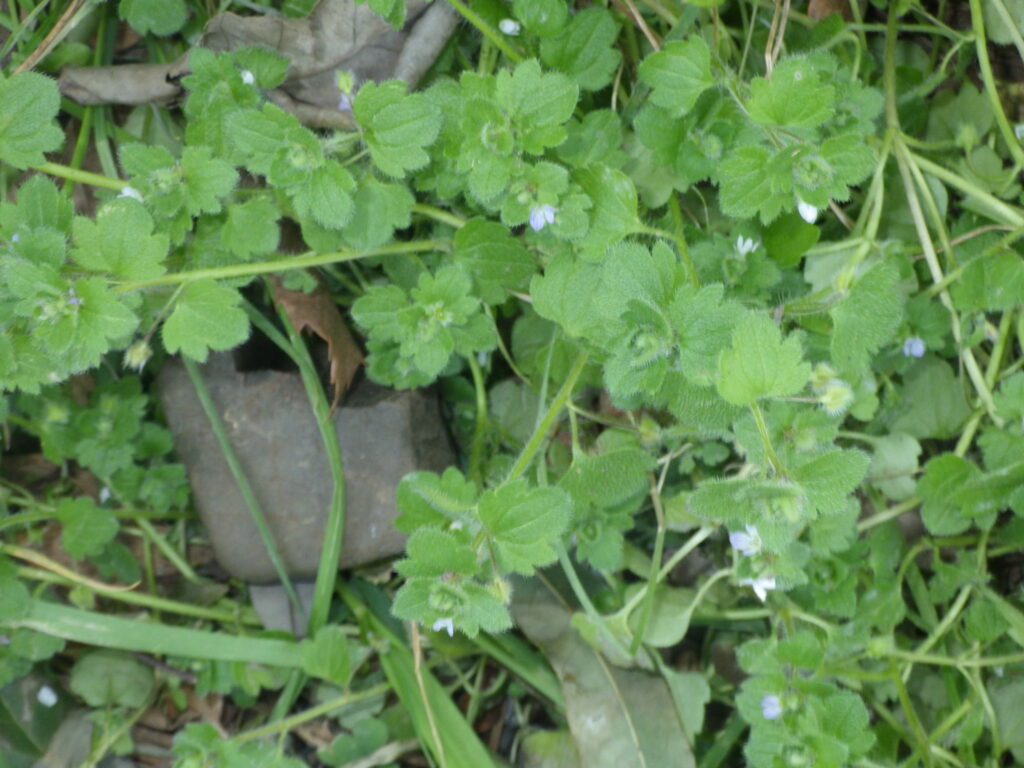
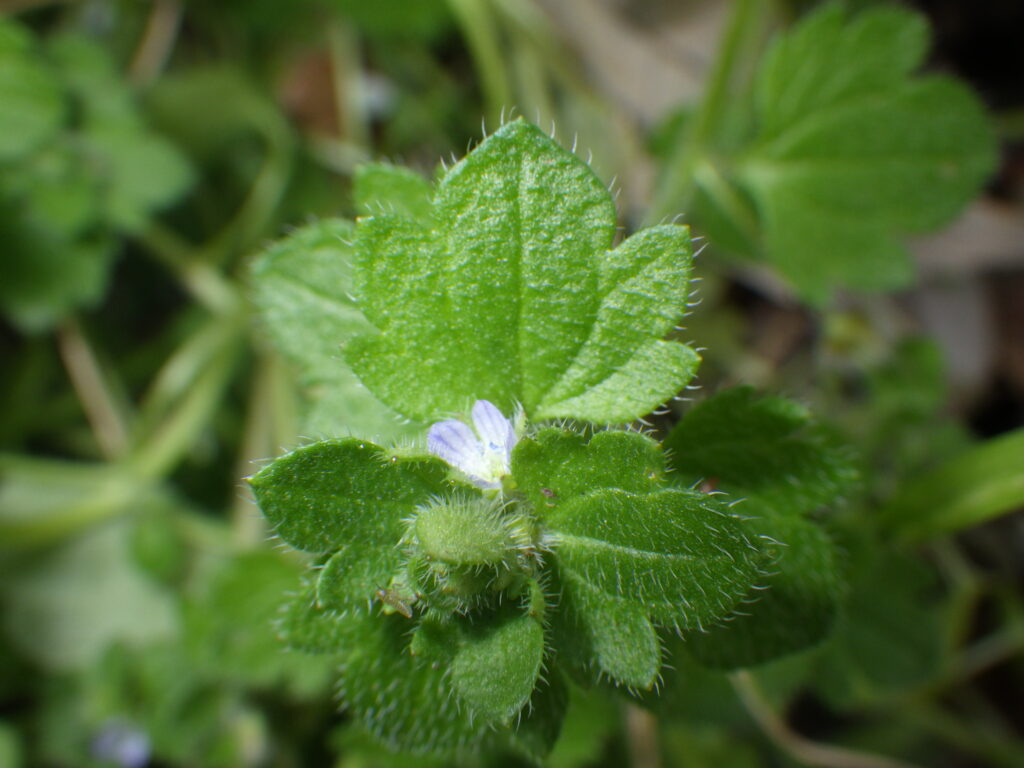
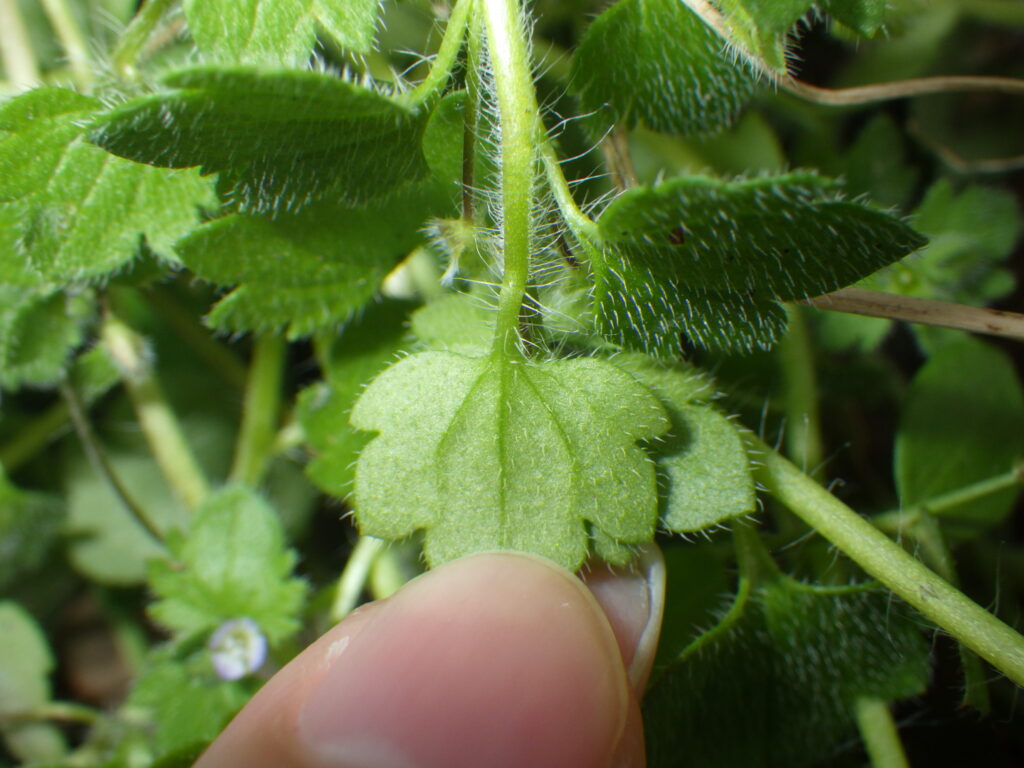
Is it true that "Veronica polita was driven out by Veronica persica"?
Although Veronica persica is now a common species in Japan, as mentioned above, it was first confirmed in the early Meiji period, and it is believed that it did not exist before then. It may have arrived with the Meiji Restoration and the subsequent boom in trade. It is said that in the past, Veronica polifolia grew along roadsides instead of Veronica persica.
Because of this, it is sometimes said that "Veronica polita was driven out by Veronica persica." Is this really true?
In fact, there was disagreement among researchers on this matter (Takakura et al., 2011; Kanagawa Prefecture Plant Survey Association, 2018).
In the 1988 botanical illustration by the renowned botanist Tomitaro Makino, Veronica polita is described as "growing in fields and along roadsides." A similar description can be found in a botanical guide compiled by Kanagawa Prefecture.
However, their habitat is now limited to rocky areas and stone walls along the coast and inland.
This could be interpreted as the Japanese speedwell being driven out by the large speedwell, or it could be interpreted as the Japanese speedwell originally inhabiting rocky areas and stone walls, and its growth in fields and roadsides being a minority occurrence, suggesting that there was a natural habitat separation between the two species.
To clarify this, we would like to examine records prior to Makino's records, but when researchers investigated the specimens held at the Osaka Museum of Natural History, they found that there were almost no specimens from before World War II, and most of the specimens that were from shortly after the war were already almost entirely of Ishigaki origin.
In other words, there was no evidence anywhere to determine which side was right. This could easily become a cold case.
So, Veronica persica doesn't actually prefer rocky areas or stone walls?
However, in an attempt to uncover the truth through alternative means, researchers similar to those who investigated the museum also investigated the habitat of Veronica persica on numerous remote islands in the Seto Inland Sea, which have little human traffic and are less affected by the naturalization of Veronica persica.
As a result, it became clear that the further the island is from the mainland, the fewer Veronica persica plants there are, and the more Veronica polifolia plants become dominant along roadsides and in cultivated fields.
Furthermore, on the island where Veronica polita inhabits roadsides and cultivated fields, rocky areas and stone wall environments also exist. From this, it was inferred that Veronica polita did not originally prefer rocky areas or stone wall environments.
This research suggests that Veronica persica was indeed driven out by Veronica polifolia and relegated to rocky areas and stone wall environments.
Why were the Veronica polifolia plants wiped out?
It is said that Veronica persica has driven out Veronica polita, but there is no evidence that Veronica persica attacks Veronica polita through allelopathy or any other means, nor is there any evidence that Veronica persica is particularly more prolific than Veronica polita.
Why did this asymmetrical situation occur?
Of course, the reasons mentioned above may be involved, but another hypothesis, or one that may have accelerated the situation, is that an asymmetrical phenomenon called "reproductive interference" occurred.
Reproductive interference is a phenomenon in which the reproductive capacity of closely related species is reduced when they crossbreed. In this context, it refers to the inability to produce seeds (sterility) when the pistil of one species receives pollen from another species.
Experiments that confirmed this showed that when Veronica persica received pollen from Veronica polifolia, it reduced its seed production, but Veronica polifolia was not affected by Veronica persica (Takakura, 2013).
This difference in response when receiving pollen from different species may be one of the factors contributing to the asymmetrical distribution.
However, there seems to be a considerable time lag between 1919, when Veronica persica spread throughout Japan, and 1945, when Veronica polifolia appears to have begun to decline. It can be said that the reason for this time lag is still unknown.
What is the flowering period and flower shape of Veronica species?
Veronica persica blooms from March to May. It produces sapphire-blue flowers on pedicels 1-2 cm long from the leaf axils at the top of the stem. The flowers are 0.8-1 cm in diameter and only open when exposed to sunlight. The corolla is four-lobed, with the upper lobe being slightly larger and darker in color. It has two stamens.
Veronica polita blooms from March to May. It bears a single small blue flower in the upper leaf axil. The flower is 4 mm in diameter. It has almost no pedicel and blooms almost embedded in the bracts and calyx. The calyx has glandular hairs and short hairs.
The flowering period for *Furasaba-sou* is from April to May. From the upper leaf axils, flower stalks about the same length as the leaves emerge, bearing a single pale bluish-purple flower 3-4 mm in diameter.
Veronica polifolia blooms from February to April. It bears a single flower, about 0.5 cm in diameter, on a pedicel in the leaf axil at the top of the stem. The corolla is 4-lobed and pale reddish-purple. The calyx is also 4-lobed.
They all share the common characteristic of being blue flowers that bloom in early spring.
Are there differences in how flowers reproduce depending on their size and shape?
Do differences in flower size and shape lead to differences in how they reproduce?
Combining the results of several studies, it has been found that Veronica persica and Veronica arvensis perform both self-pollination and cross-pollination, while Veronica polifolia performs only self-pollination (Tsuruuchi, 1994; Tanaka and Hirano, 2000). It is unclear about Veronica polifolia, but it is likely that it performs at least cross-pollination.
This is also reflected in the shape of the flower.
While the flower stalks of Veronica persica, Veronica undulata, and Veronica polifolia are elongated, albeit to varying lengths, Veronica arvensis has almost no flower stalks.
Veronica persica, Veronica polifolia, and Veronica polifolia all have long flower stalks, and the flowers are supported by these long stalks. This allows insects that come to the flower to cling on to avoid being shaken off, and they pull the two stamens that grow there towards their own bodies (Tanaka and Hirano, 2000). In addition, the anthers (the part of the stamen that produces pollen) are T-shaped, which also allows them to stick tightly to the insect's body, like a vacuum cleaner or a Swiffer.
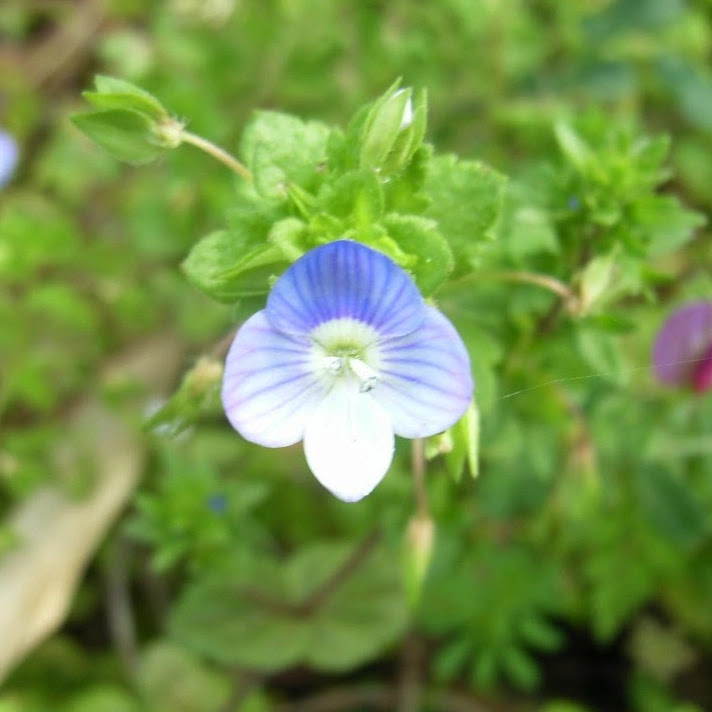
The insects that visit Veronica persica and Veronica undulata have been studied in detail, and in Japanese studies, the majority of visitors were small bees and flies, including hoverflies (Tsuruchi, 1994). Although not directly mentioned in this study, generally speaking, the only pollinating insects that can be active even at early spring temperatures are small bees and flies that are resistant to cold. It can be said that the small size of the flowers is perfectly adapted to small insects. However, there is currently no clear difference in the insects that visit Veronica persica, which has particularly large flowers, and Veronica undulata, which has small flowers.
As evening approaches, the stamens curve inward, bringing the anthers and stigmas into contact, allowing for self-pollination (Tanaka, 1976).
On the other hand, Veronica persica has almost no flower stalks, and its diameter is about 4 mm, making it less conspicuous than Veronica polifolia (Tanaka, 1976). It blooms late, around 10 am, and closes around 3 pm. A small amount of nectar is secreted, but no insects visit it, and self-pollination occurs immediately after blooming as the anthers of the stamens and the stigma of the pistil touch inside. It can be said that it is self-pollinating without the use of insects.
These differences may have some impact on breeding in the wild, but the details are not yet known.
However, Veronica persica has flowers that are particularly well adapted to insects in early spring, and its ability to self-pollinate gives it the flexibility to adapt to various environments, which is likely one of the reasons why it has spread so widely across the Eurasian continent.
What is the structure of the fruit?
The fruit is a capsule. The name "Inunofuguri" (dog's scrotum) comes from the fact that this capsule resembles a dog's scrotum.
In Veronica persica, the capsule is flat, about 4 mm long and 6-7 mm wide, with long hairs only along the edges. Inside are boat-shaped seeds.
In Veronica polita, the capsule is flat, about 3 mm long and 4 mm wide, with glandular hairs along the edge. Inside are flattened, oval-shaped seeds.
In *Furasaba-sou*, the capsule is nearly spherical, 2.5-3 mm long, with a slightly indented tip. It contains 1-3 seeds and is deeply boat-shaped.
In Veronica polita, the capsule is somewhat flattened, round, and has white hairs on its surface, mixed with glandular hairs. The seeds are about 1.5 mm long.
Some species of seeds are dispersed by ants, while others are not!?
Are there any differences in the ecology of these fruits as well?
According to research conducted at Kyoto University, both Veronica persica and Veronica polita have elaiosomes attached to their seeds, which serve as food for ants. When the seeds mature, they split open, exposing the seeds, which then fall to the ground and are dispersed by ants (Miura et al., 2003).
Specifically, in the case of Veronica polita, the ants *Pheidole megacephala*, *Lasius nigricans*, and *Lasius niger* were responsible for transporting the seeds. The behavior of *Veronica persica* has not been clarified.
On the other hand, Veronica polita does not have elaiosomes, and although not explicitly stated in the paper, it is likely that it is dispersed by gravity or wind.
While it's unclear how these differences in seed dispersal affect reproduction in the wild, the fact that Pheidole megacephala, Lasius niger, and Lasius niger are all species found in fields and urban areas, and considering seed dispersal in addition to flowers, it becomes clear why they are found in such locations.
The speedwell plant has evolved to prevent its seeds from falling off cliffs!?
More detailed information is available regarding seed dispersal in Veronica polita (Takakura et al., 2011).
As mentioned above, Veronica persica was driven out by Veronica longifolia and forced to live in rocky areas and on stone walls.
However, evolution also occurred in order to adapt to the environment.
Normally, when the seeds of Veronica persica mature, they split open wide, exposing the seeds, which then fall to the ground. However, in environments such as rocky areas or stone walls, the seeds fall all the way down and cannot return to their habitat.
Therefore, Veronica polita, which grows in rocky areas and stone walls, has adapted its fruit so that after the seeds are exposed, they split open upwards, leaving only the seeds exposed within the fruit.
This method allows ants to carry the seeds directly from the fruit and freely disperse them within rocky areas and stone walls.
This indicates that Veronica polita is not simply being pushed to rocky areas and stone walls, but is undergoing a high level of adaptation.
References
Hayashi, Yasaka, Kadota, Yuichi, and Hirano, Takahisa. 2013. Yamakei Handy Illustrated Guide 1: Wildflowers (Revised and Expanded New Edition). Yama-kei Publishers, Tokyo. 664pp. ISBN: 9784635070195
Miura, Reiichi, Noriko Doi, and Masahiro Yoshino. 2003. Distribution of Veronica polita around Kyoto University and seed dispersal by ants. Weed Research 48(3): 140-142. https://doi.org/10.3719/weed.48.140
Takakura, Koichi. 2011. Polymorphism in Veronica polita: Adaptation to stone wall environments and relationship with seed dispersers. Bulletin of the Kanto Branch of the Ecological Society of Japan 59: 19-25. ISSN: 0289-2421, https://esj.ne.jp/kanto/bulletin/no.59.pdf#page=20
Takakura, K. 2013. Two-way but asymmetrical reproductive interference between an invasive Veronica species and a native congener. American Journal of Plant Sciences 4(3): 535-542. https://doi.org/10.4236/ajps.2013.43069
Kanagawa Prefecture Flora Survey Association. 2018. Kanagawa Prefecture Flora 2018 (Electronic Edition). Kanagawa Prefecture Flora Survey Association, Odawara. 1803pp. ISBN: 9784991053726
Tsurunai, Takayuki. 1994. Reproductive ecology of Veronica persica and Veronica polifolia. Weed Research 39(2): 85-90. ISSN: 0372-798X, https://doi.org/10.3719/weed.39.85
Tanaka, Hajime. 1976. Observation of insect-pollinated and wind-pollinated flowers. New Science Co., Ltd., Tokyo. 109pp. ISBN: 9784821600236
Tanaka, Hajime & Hirano, Takahisa. 2000. The Face of Flowers: Wisdom for Bearing Fruit. Yama-kei Publishers, Tokyo. 191pp. ISBN: 9784635063043
Wu, ZY & Raven, PH (Eds.). 1998. Flora of China (Vol. 18 Scrophulariaceae through Gesneriaceae). Science Press, Beijing, and Missouri Botanical Garden Press, St. Louis. 450pp. ISBN: 9780915279555