Plantain, broadleaf plantain, and budded plantain all belong to the Plantaginaceae family and the Plantaginaceae genus, and are perennial herbs that grow very commonly along roadsides. They prefer compacted ground and are known as a type of "footprint plant." These are often confused, but they can be distinguished relatively easily by paying attention to the shape of their leaves and inflorescences. In addition, the shapes of their flowers differ greatly due to differences in their pollination methods. Psyllium is a member of the Plantaginaceae genus and is used as a health food, but it has a completely different appearance in that it has stems and leaves. Some research has also been done on how it becomes stronger when trampled. This article will explain the classification, morphology, and ecology of the Plantaginaceae genus.
- What are Plantago major, Plantago lanceolata, and Plantago buddingana?
- What are the differences between Plantago major, Plantago lanceolata, and Plantago serrata?
- What are the differences in the flowers and pollination methods of plantain, broadleaf plantain, and bud plantain? They all have different methods!?
- What is the difference between plantain and cyllium?
- What is the mechanism by which plantain becomes resistant to being "stomped on"?
- References
What are Plantago major, Plantago lanceolata, and Plantago buddingana?
Plantago asiatica var. asiatica, also known as plantain, is a perennial herb distributed in Hokkaido, Honshu, Shikoku, Kyushu, and the Ryukyu Islands in Japan; as well as in East Asia, Eastern Siberia, Indochina, and Malaysia, growing in sunny locations such as roadsides, wastelands, and lawns (Kanagawa Prefecture Flora Survey Association, 2018). Plantago asiatica var. densiuscula is a synonym (former scientific name).
Plantago lanceolata, also known as broad-leaved plantain, is native to Europe and has naturalized widely throughout the world, including Japan. It is a common perennial plant found on riverbanks, embankments, and wastelands.
Plantago virginica, also known as budded plantain, is native to North America and has naturalized in Japan, China, Taiwan, and Korea. It is a fairly common perennial plant found along roadsides. In Japan, there is a record of it being collected in Aichi Prefecture in the 1910s.
Both belong to the Plantaginaceae family, genus Plantago, and are perennial plants that grow very commonly along roadsides.
However, it doesn't grow just anywhere; it prefers ground compacted by animal, especially human, foot traffic, and is known as a type of "footprint plant." This is perhaps the most distinctive feature of this species.
Morphologically, they share several characteristics: radially symmetrical flowers, fruits that always split laterally (capsules), underdeveloped stems, and only basal leaves.
However, many people may not be able to distinguish between the three types.
What are the differences between Plantago major, Plantago lanceolata, and Plantago serrata?
Distinguishing between the three species, Plantago major, Plantago lanceolata, and Plantago asiatica, is relatively easy (Kanagawa Prefecture Flora Survey Association, 2018).
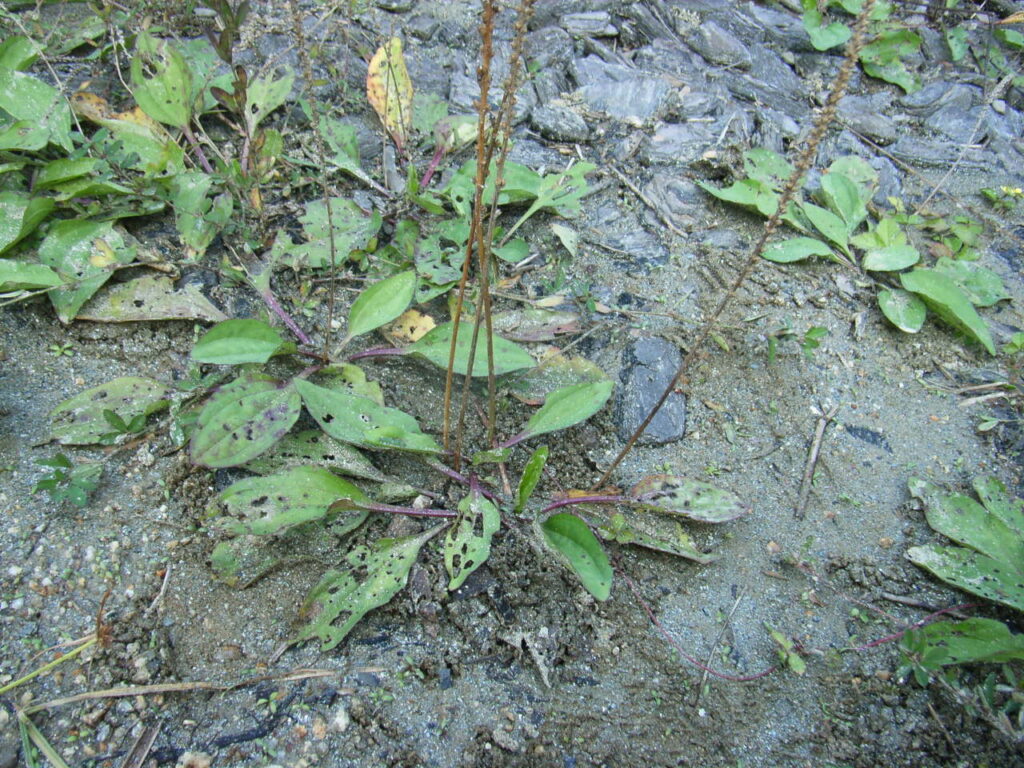
First, in plantain, the base of the leaf blade narrows abruptly, becoming wedge-shaped to truncate to rounded, with a clear boundary between the leaf blade and petiole. In contrast, in broadleaf plantain and budded plantain, the base of the leaf blade gradually narrows, becoming narrow and long, with a less distinct boundary between the leaf blade and petiole.
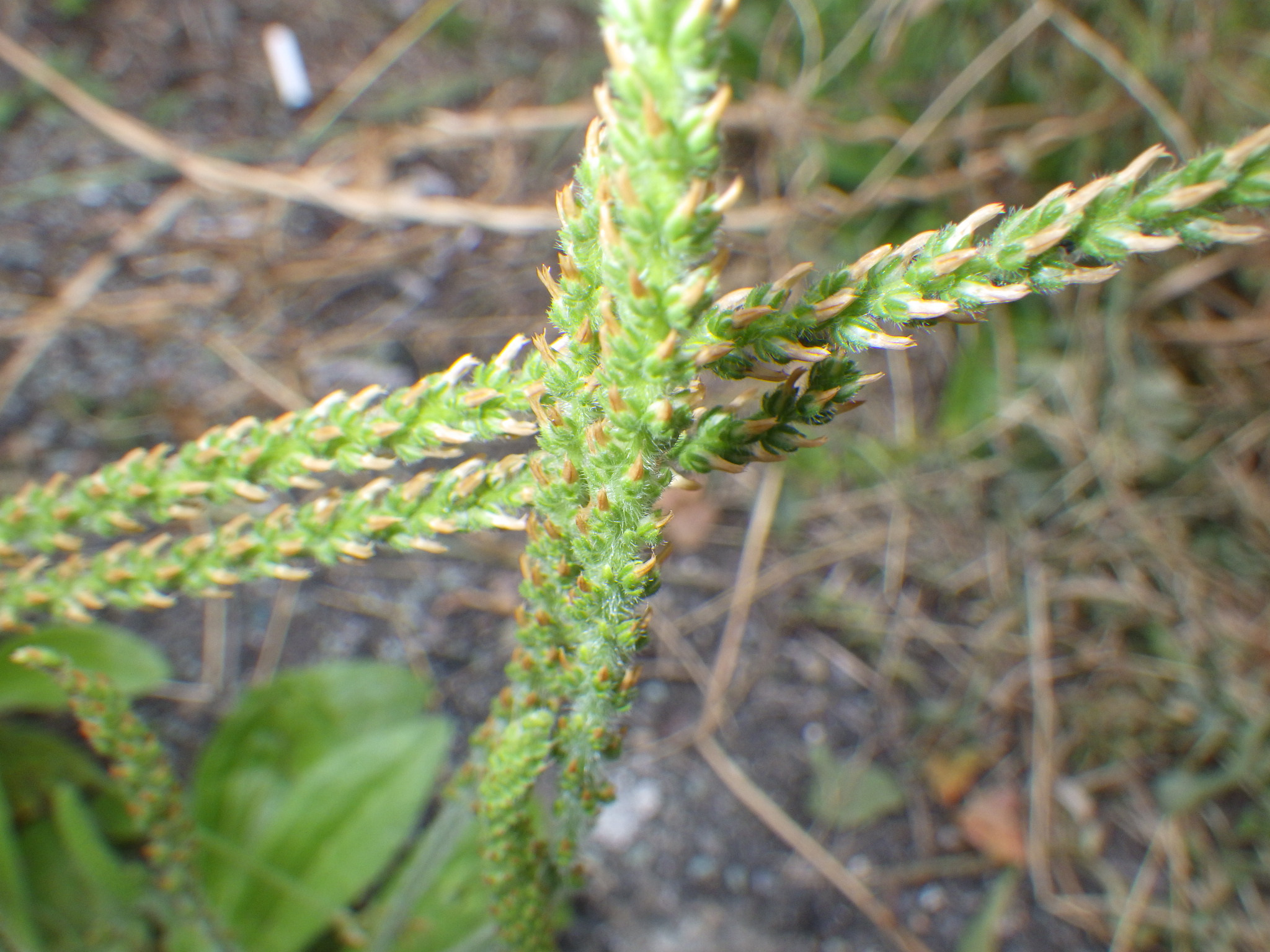
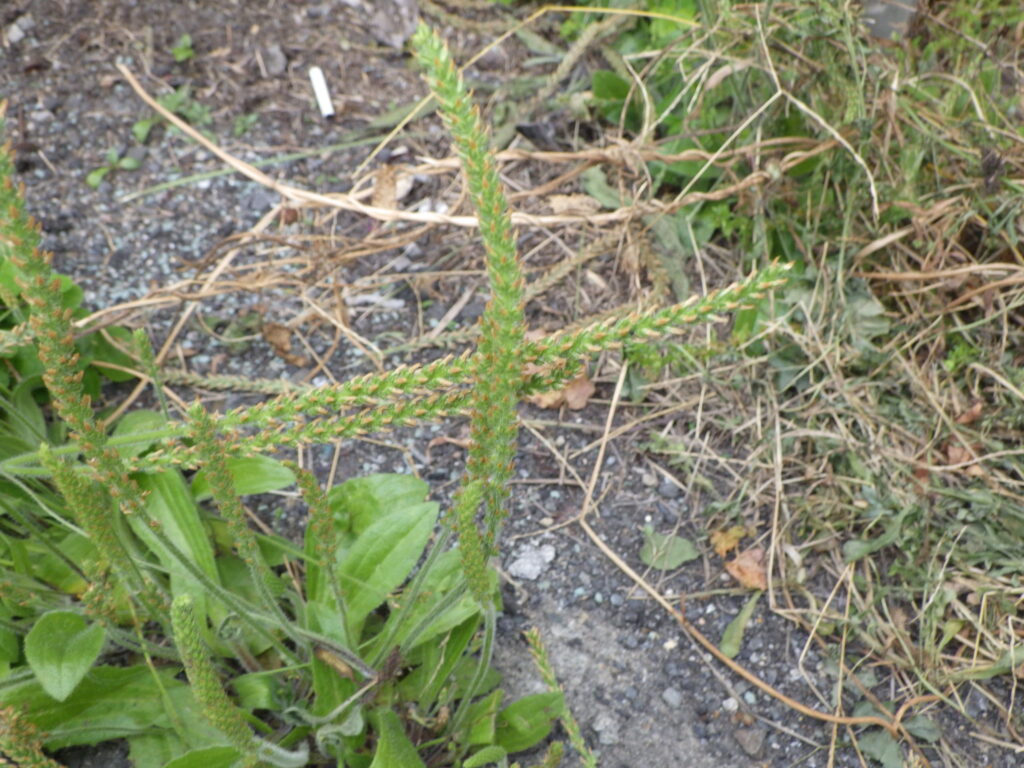
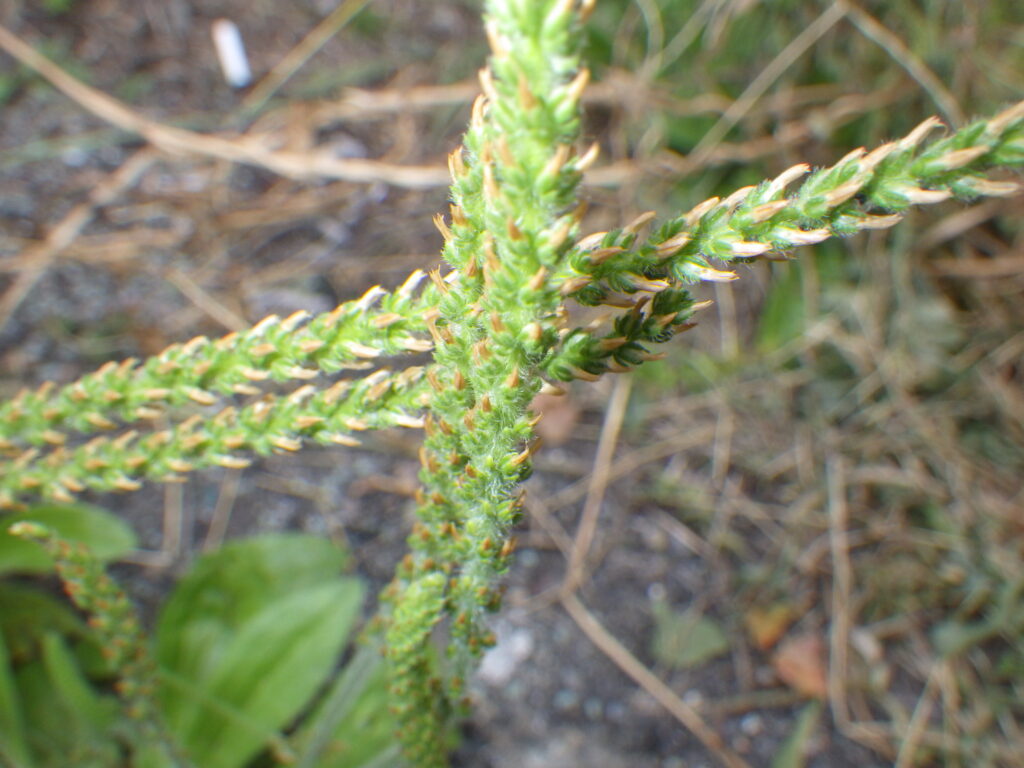
Regarding Plantago lanceolata and Plantago asiatica, the difference is that Plantago lanceolata has a very dense inflorescence that is a thick cylindrical shape about 1 cm wide with flowers, while Plantago asiatica has a somewhat sparser inflorescence that is a slender spike up to 6 mm wide with flowers.
Morphologically, this should be sufficient for distinguishing them. There are 11 other species of the Plantago genus known in Japan, but the three species mentioned above are overwhelmingly dominant on the mainland, so we will omit them here.
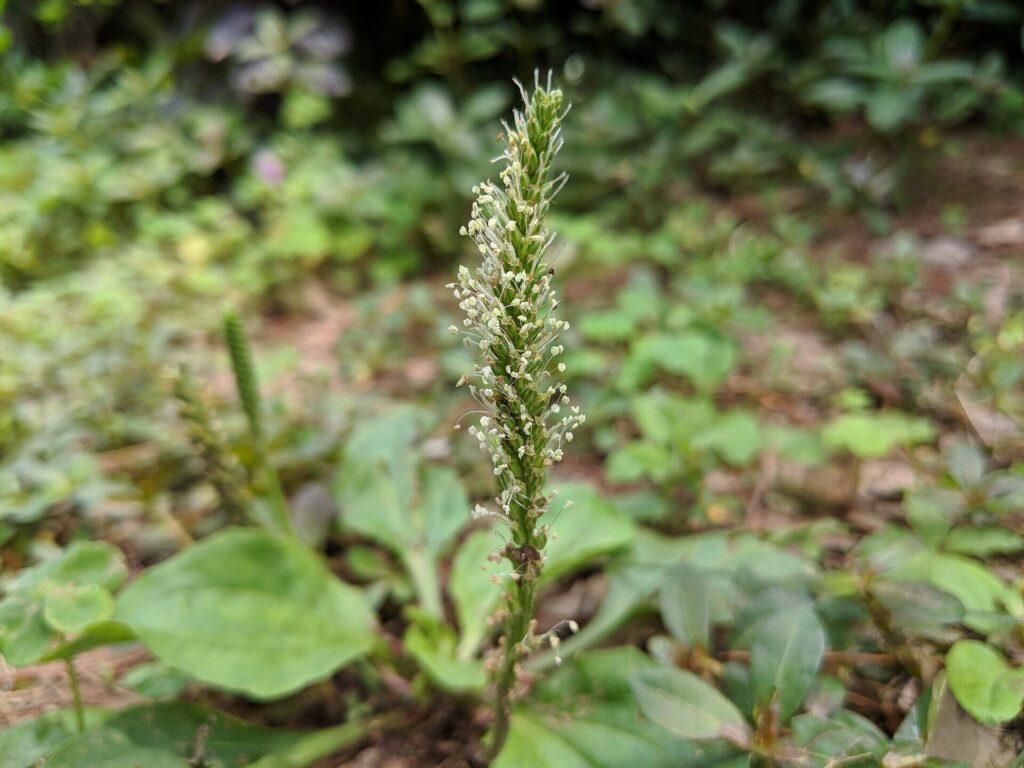
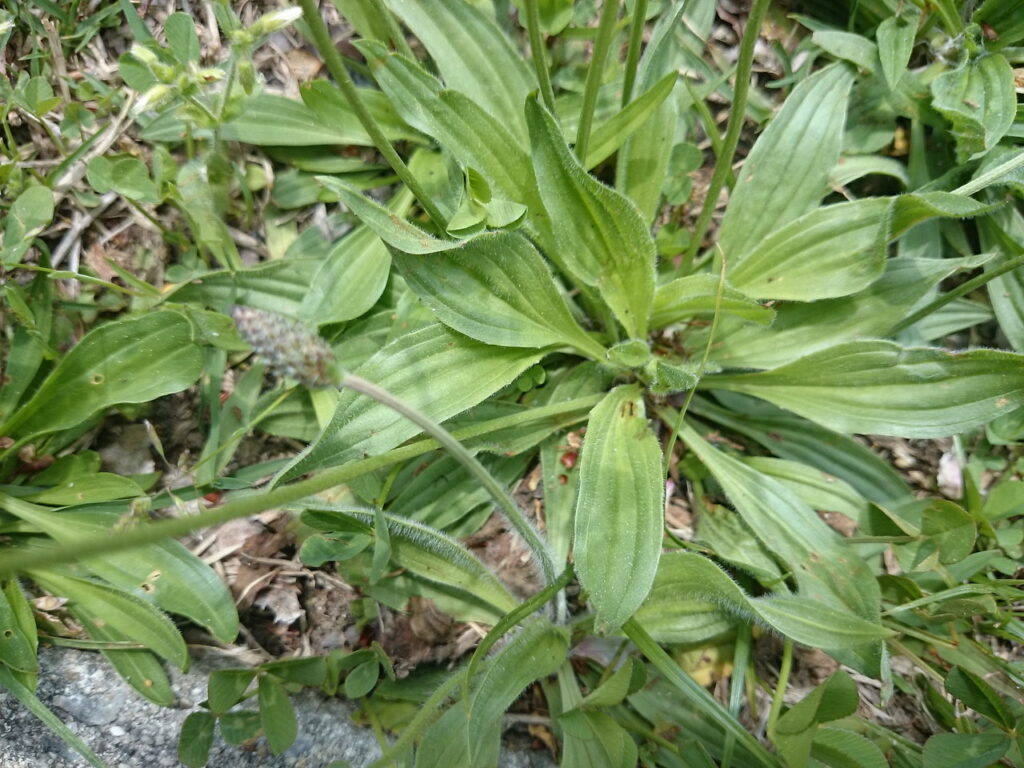
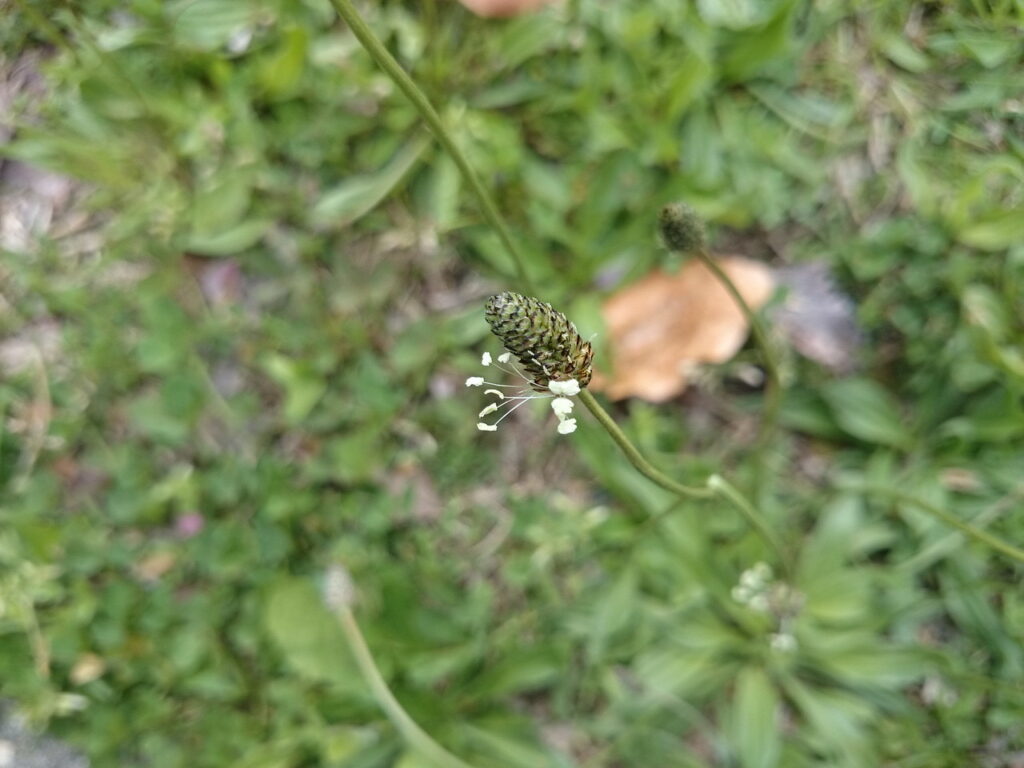
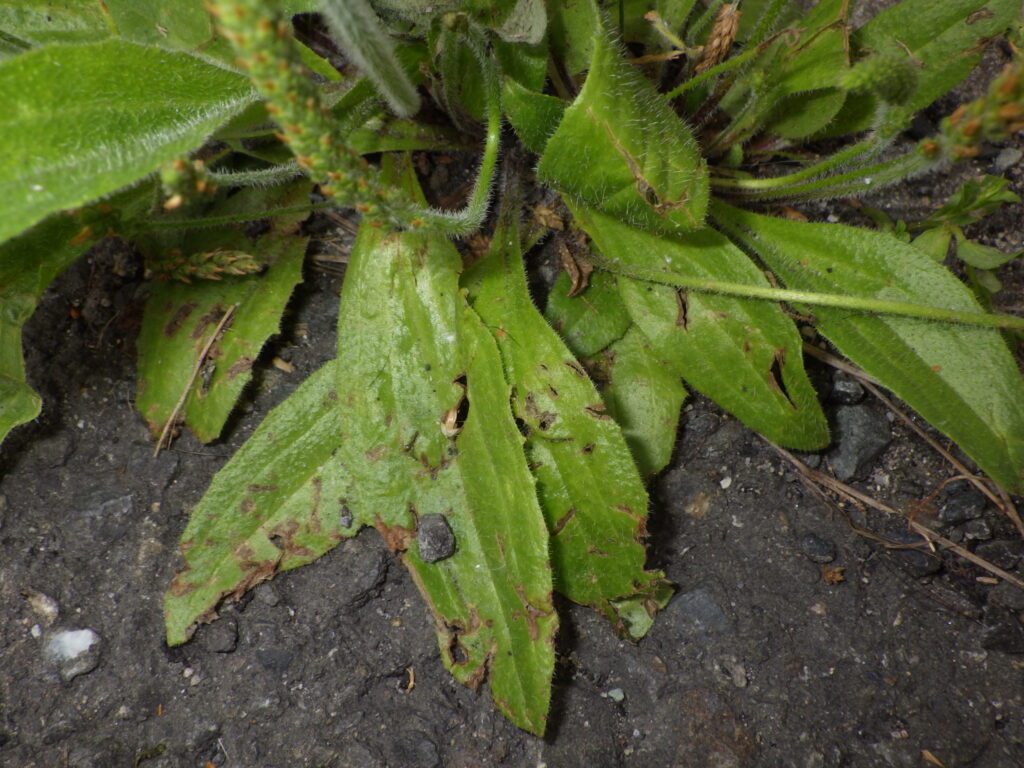
What are the differences in the flowers and pollination methods of plantain, broadleaf plantain, and bud plantain? They all have different methods!?
The differences between Plantago major, Plantago lanceolata, and Plantago asiatica are not limited to these characteristics; there are also significant differences in their ecology (Hayashi et al., 2013; Primack, 1978; Abrahamczyk et al., 2020).
Plantain flowers are enclosed in four sepals and one bract, and they bloom from the bottom to the top of the inflorescence. They are protandrous, with the stigma emerging first from between the sepals for fertilization, after which the four stamens extend. This is a characteristic of wind-pollinated flowers that prevent self-pollination and rely on cross-pollination.
The flowers of the broadleaf plantain are whitish, and the filaments of the stamens are up to 10 mm long, protruding outside the flower. This is to attract insects with pollen, and it is a characteristic of insect-pollinated flowers that relies on cross-pollination.
The flowers of Plantago major have a corolla 2.5-3 mm long, pale yellowish-brown, and deeply 4-lobed. They are cleistogamous flowers, meaning the lobes do not open, and the stamens are inside the corolla and not exposed outside the flower. This is characteristic of flowers that self-pollinate and do not rely on cross-pollination. However, there are exceptions, with slightly less than 10% of plants producing open flowers that do not bear fruit (Kanagawa Prefecture Flora Survey Association, 2018).
Interestingly, their pollination methods differ significantly. This indicates that these three seemingly similar species have completely different ecological characteristics.
Therefore, it seems likely that the likelihood of survival differs depending on whether the environment is full of insects, open and windy, or has few insects or wind.
What is the difference between plantain and cyllium?
The difference between plantain and psyllium is also a frequently searched topic. This is likely because psyllium husk, which is made from the seed coat of psyllium, is popular as a supplement for constipation and weight loss (Nakagawa et al., 1999; Kimura, 2021). Psyllium husk is rich in dietary fiber and swells significantly when it absorbs water, and is also included in laxatives. There are also reviews stating that it can be added to food to make it more palatable.
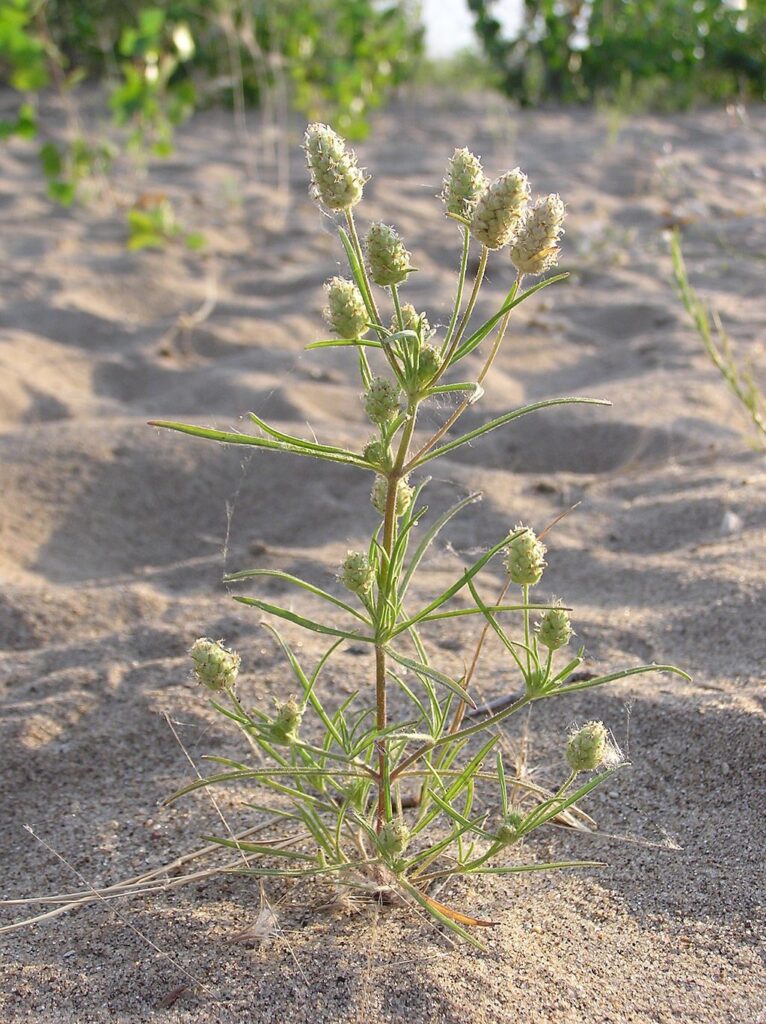
The standard Japanese name for psyllium is Plantago indica, also known as narrow-leaved plantain (or branched plantain). It is sometimes called Plantago psyllium, but this is a synonym (old scientific name). The name psyllium comes from this old scientific name. In Japan, it is sometimes called Plantago arearia, but this is a synonym overseas.
Psyllium is distributed in western Eurasia and northern Africa, but it does not grow naturally in Japan.
The crucial morphological difference between the three species mentioned above, including plantain, and psyllium is that the three species lack stem leaves (leaves growing from the stem), while psyllium does.
While plantain is sometimes used as a herbal medicine, it is not known to have the same effects as psyllium husk.
What is the mechanism by which plantain becomes resistant to being "stomped on"?
It is relatively well known that plantain species are resistant to being trampled. The three species introduced here—plantain, broadleaf plantain, and budded plantain—are all known to be resistant to being trampled and are considered "trodden plants" (Mariko et al., 2014).
A study comparing the reproduction of plantain in compacted land and tilled land showed that plantain preferred compacted land and could not reproduce sufficiently in tilled land (Matsushima et al., 2006).
This fact indicates that adaptation to compacted land is occurring at the expense of adaptation to tilled land (a trade-off).
This is beneficial for humans as well, because even though it doesn't grow in fields, it helps to solidify the soil and create green spaces (Matsushima et al., 2008), and native plantain species are attracting attention as greening plants (Hishinuma et al., 2016).
The way they stubbornly survive being trampled is inspiring and inspiring, but what mechanism allows them to acquire this resistance to being stepped on?
One study showed that being stepped on experimentally alters plant morphologies advantageous for survival and reproduction, such as an increase in the number of flower stalks and leaves, a decrease in flower stalk length, and an increase in petiole thickness, and that ethylene production occurs immediately after being stepped on (Haruhara et al., 2000). Ethylene is a type of plant hormone that is known to promote plant growth, aging, and maturation.
In other words, it seems that after being stepped on, the cells secrete ethylene as a "compensatory mechanism," which promotes cell division.
However, for this effect to work, the roots must reach deep enough and soil moisture must be retained near the surface (Matsushima et al., 2006), so it is probably not a universal method that will allow plants to survive anywhere.
References
Abrahamczyk, S., Dannenberg, LS, & Weigend, M. 2020. Pollination modes and divergent flower traits in three species of Plantago subgenus Plantago (Plantaginaceae). Flora 267: 151601. https://doi.org/10.1016/j.flora.2020.151601
Haruhara, Yukari; Tsukakoshi, Satoru; Murata, Yoshihiro; Sakurai, Naoto; Nakamura, Koji; Noma, Yutaka; and Takahashi, Eikichi. 2000. Morphological changes and ethylene production in plantain due to trampling. Weed Research 45(Supplement): 184-185. https://doi.org/10.3719/weed.45.Supplement_184
Hayashi, Yasaka, Kadota, Yuichi, and Hirano, Takahisa. 2013. Yamakei Handy Illustrated Guide 1: Wildflowers (Revised and Expanded New Edition). Yama-kei Publishers, Tokyo. 664pp. ISBN: 9784635070195
Hishinuma, S., Kojima, H., Kotani, K., & Shimada, M. 2016. Trample resistance experiment of native species greening mats using Plantago asiatica L.. Journal of the Japanese Society of Landscape Architecture 42(1): 191-194. https://doi.org/10.7211/jjsrt.42.191
Kanagawa Prefecture Flora Survey Association. 2018. Kanagawa Prefecture Flora 2018 (Electronic Edition). Kanagawa Prefecture Flora Survey Association, Odawara. 1803pp. ISBN: 9784991053726
Kimura, Masanori. 2021. Learning about herbs beneficial for gut health: The footpath plant "Plantain". Medical Herb 55. https://www.medicalherb.or.jp/archives/182131
Mariko, Noriko; Nishinari, Noriko; and Mariko, Shigeru. 2014. Population distribution of native and introduced plantain species under different land-use types with trampling disturbance and shading stress. Hosei University Tama Research Reports 29: 9-16. https://doi.org/10.15002/00010288
Matsushima, Kenichi; Tamai, Fujio; and Fukuyama, Masataka. 2006. Can plantain grow in tilled soil?. Abstracts of the Japan Society of Crop Science Conference 222: 256. https://doi.org/10.14829/jcsproc.222.0.256.0
Matsushima, Kenichi; Tamai, Fujio; and Fukuyama, Masataka. 2008. Differences in seed germination and dormancy of Plantain growing on rice paddy levees and in footpaths. Weed Research 54(1): 17-20. https://doi.org/10.3719/weed.54.17
Nakagawa, Yasue; Harashima, Emiko; Mori, Takayoshi; Sato, Manabu; and Tsuji, Keisuke. 1999. Effects of psyllium powder beverage intake on stool in adult women. Journal of the Japanese Society for Food Science and Technology 46(11): 704-709. https://doi.org/10.3136/nskkk.46.704
Primack, RB 1978. Evolutionary Aspects of Wind Pollination in the Genus Plantago (Plantaginaceae). New Phytologist 81(2): 449-458. https://doi.org/10.1111/j.1469-8137.1978.tb02650.x