Akebia, Akebia trifoliata, Akebia quinata, and Stauntonia hexaphylla all belong to the Akebia family. They are climbing plants with palmately compound leaves, and a key characteristic is that male and female flowers bloom separately. Akebia and Akebia trifoliata are particularly famous for the edible white, gelatinous pulp inside their fruits. While they are associated with nostalgic rural flavors from childhood memories, few people may be able to distinguish between them. They can basically be distinguished by the shape of their leaves, and differences also appear in the shape of their flowers and the degree to which their fruits dehisce. Cross-pollination by insects is essential for their flowers, and it is known that the size difference between male and female flowers is a strategic feature. Seed dispersal is also interesting, as they rely on a variety of animals, including mammals, birds, and ants. This article will explain the classification, morphology, and ecology of the Akebia family.
- What are Akebia, Mitsuba Akebia, Goyou Akebia, and Mube?
- What are the differences between Akebia, Mitsuba Akebia, Goyou Akebia, and Mube?
- What are the differences in how Akebia, Mitsuba Akebia, Goyou Akebia, and Mube are used?
- How did pollination work? Was it to deceive insects with large female flowers?!
- How did they disperse their seeds? They used all sorts of methods: mammals, birds, ants, you name it!?
- References
What are Akebia, Mitsuba Akebia, Goyou Akebia, and Mube?
Akebia quinata, also known as Akebia quinata, is a deciduous climbing woody plant commonly found in the forest edges of hills and mountains, distributed across Honshu, Shikoku, and Kyushu in Japan; the Korean Peninsula; and China. Its Japanese name is said to derive from the fact that its fruit splits open.
Akebia trifoliata subsp. trifoliata, also known as three-leaved akebia, is a deciduous climbing woody plant commonly found in Hokkaido, Honshu, Shikoku, and Kyushu in Japan, as well as in China, growing at the edges of forests in hilly and mountainous areas.
Akebia x pentaphylla, also known as five-leaved akebia, is a natural hybrid of Akebia quinata and Akebia trifoliata, and is a deciduous climbing woody plant that is rarely found in areas where Akebia quinata and Akebia trifoliata grow together.
Stauntonia hexaphylla, also known as Tokiwaakebi, is a deciduous climbing woody plant distributed in Honshu (south of the Kanto region), Shikoku, Kyushu, and the Ryukyu Islands in Japan; the Korean Peninsula; and China. It grows in forest edges and is often planted as a hedge in parks and private homes. Makino suggests that the origin of the Japanese name comes from the fact that its fruit was offered to the imperial court, hence the name Ohonihe (大供) became Ohomube (苞苴), and then Mube (Kato and Nakamura, 1971). However, the basis for this argument is unclear.
All of these plants belong to the Akebia family, are climbing plants, have palmately compound leaves, and are monoecious, but a key characteristic is that their flowers are unisexual, meaning that male flowers grow separately.
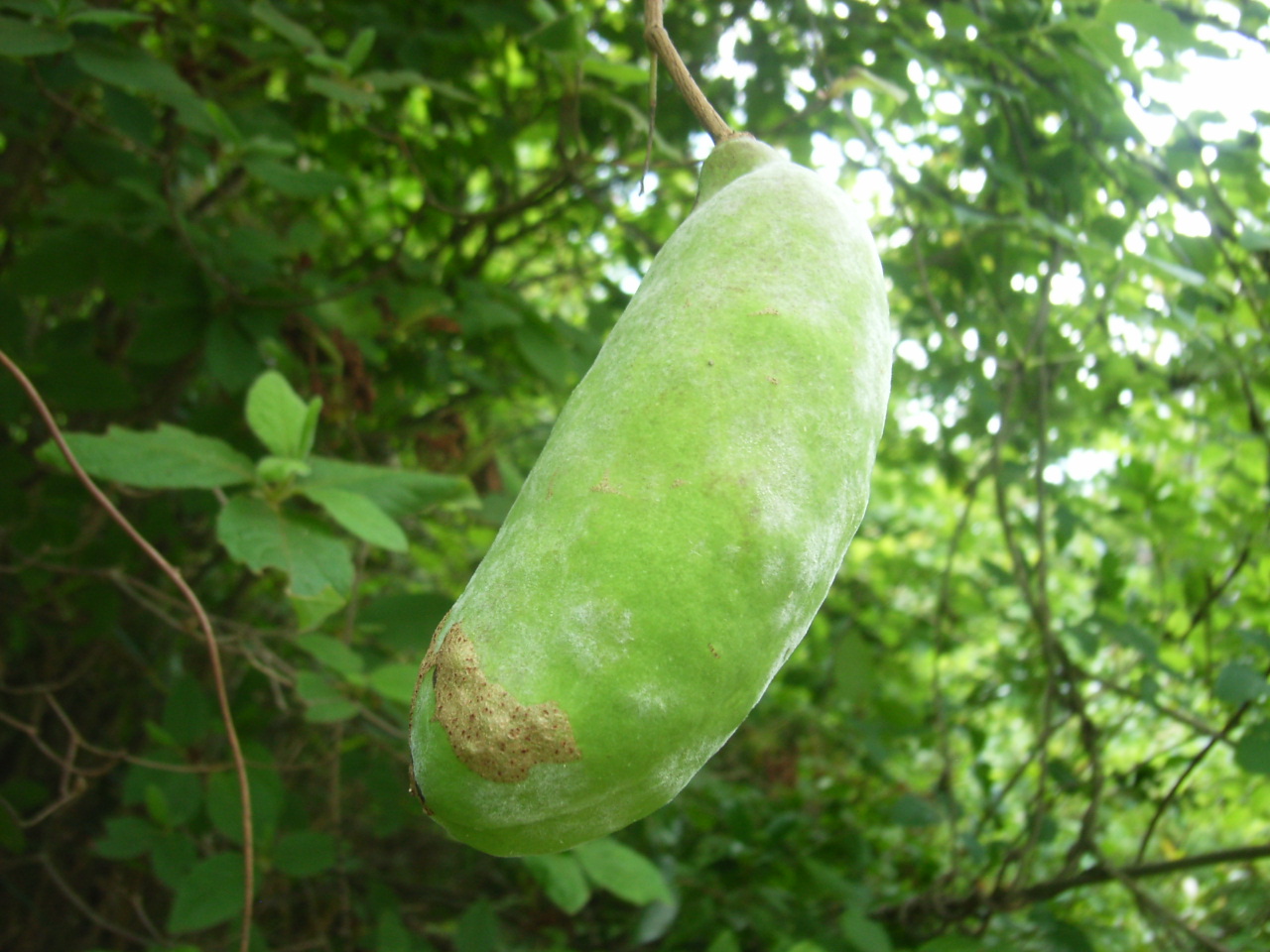
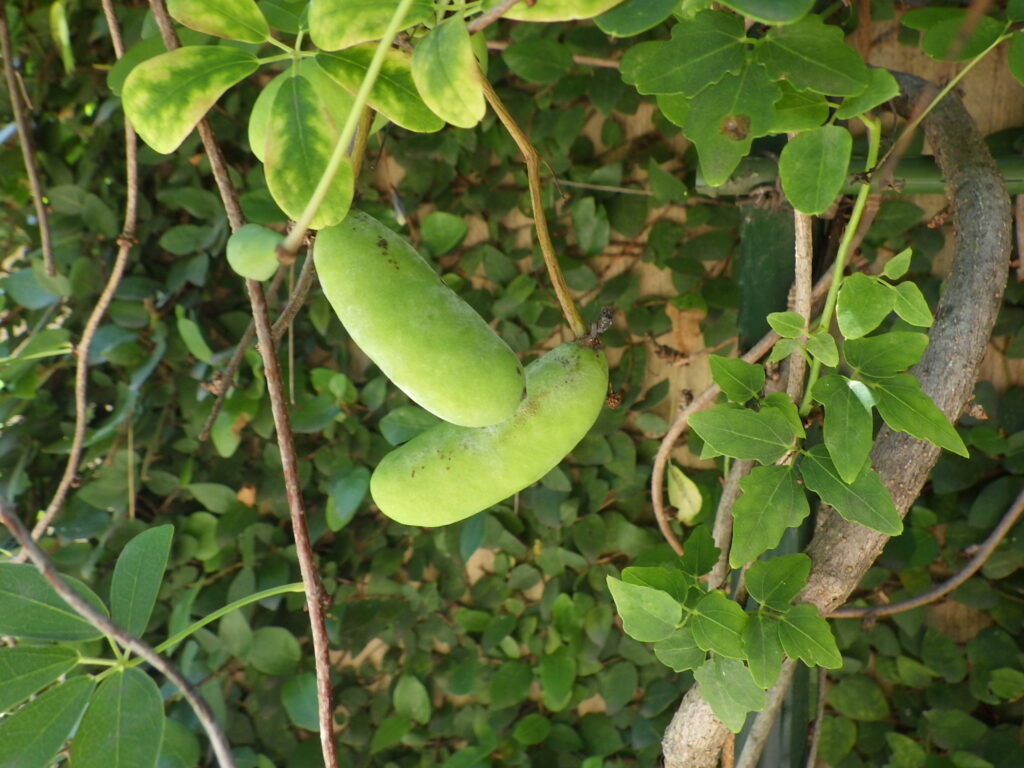
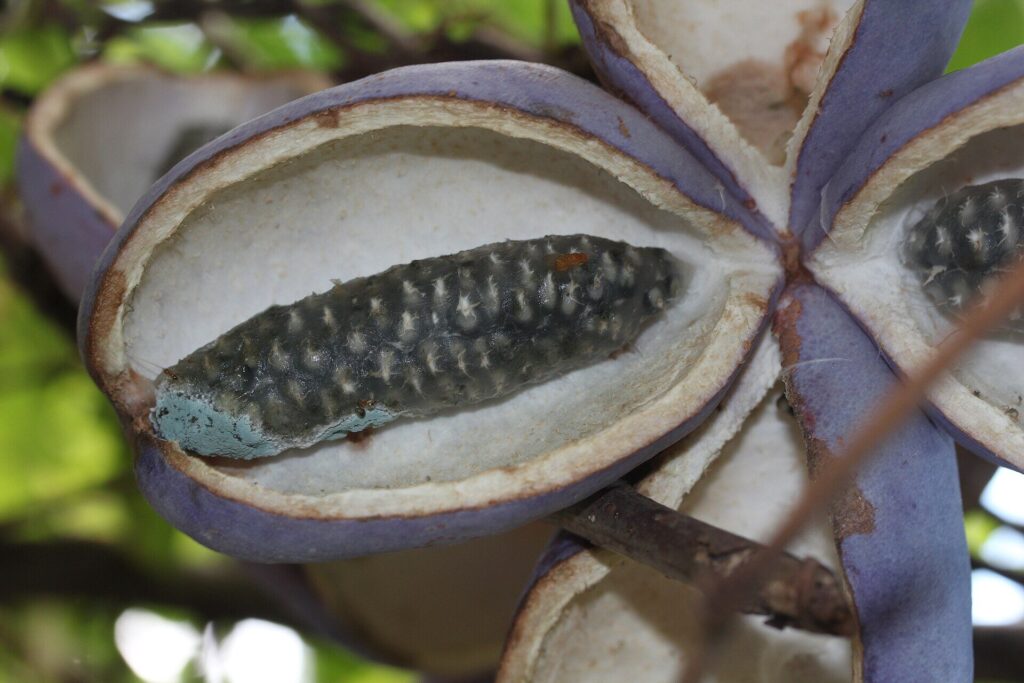
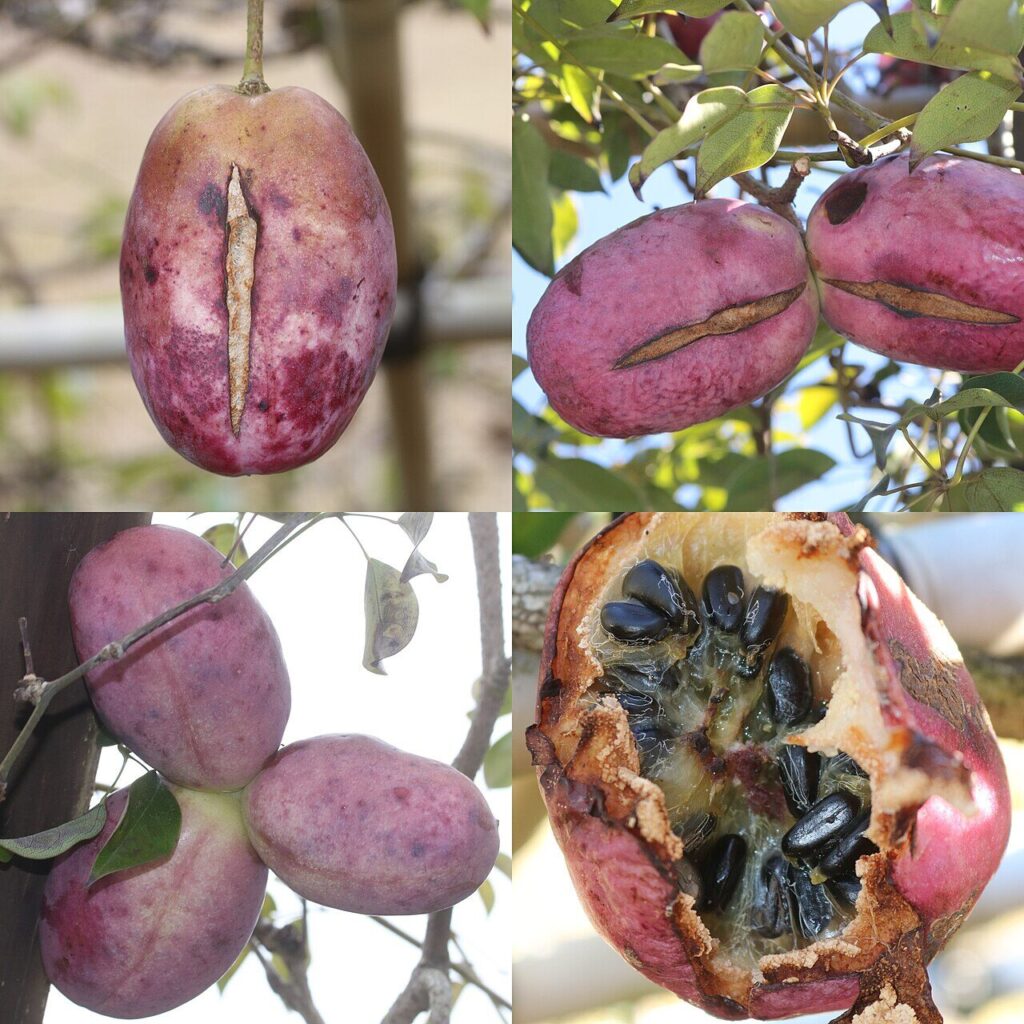
Of the four species, three, excluding Stauntonia hexaphylla, belong to the genus Akebia. Their most distinctive feature is that when ripe, their fruit splits open, exposing a liquid, fleshy interior.
This fruit is unique, and its name varies depending on the source. Although it is a "follicle (a fruit consisting of one carpel that dehisces along the internal or external suture)" (Shimizu, 2001), it is sometimes called a "berry" because its interior is a liquid that animals can eat (Mogi et al., 2000). Since 3 to 5 fruits can sometimes be clustered together, in this case it is called an "aggregate fruit," and is sometimes referred to as an "aggregate follicle" or "aggregate berry."
In Japan, there has been a long-standing tradition of eating this fruit, and it is associated with people's memories of the taste of the countryside from their childhood. There are also cultivated varieties of Akebia trifoliata, which are sometimes sold commercially.
However, several closely related species are known, and all of them are edible, so perhaps few people can correctly distinguish between them.
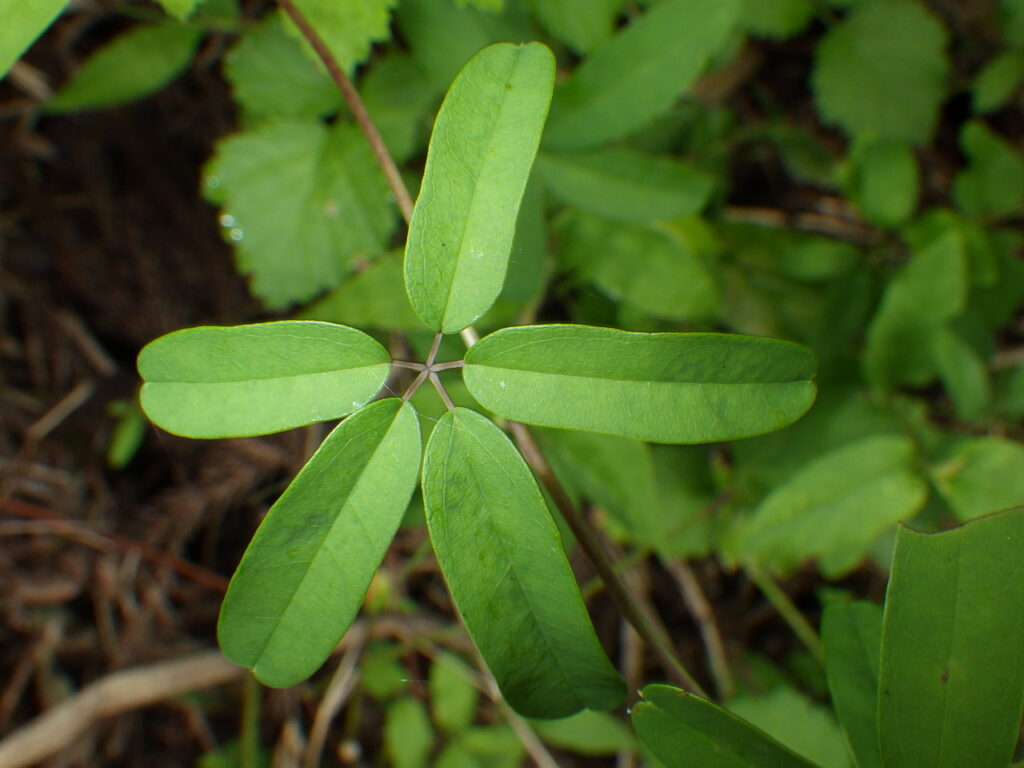
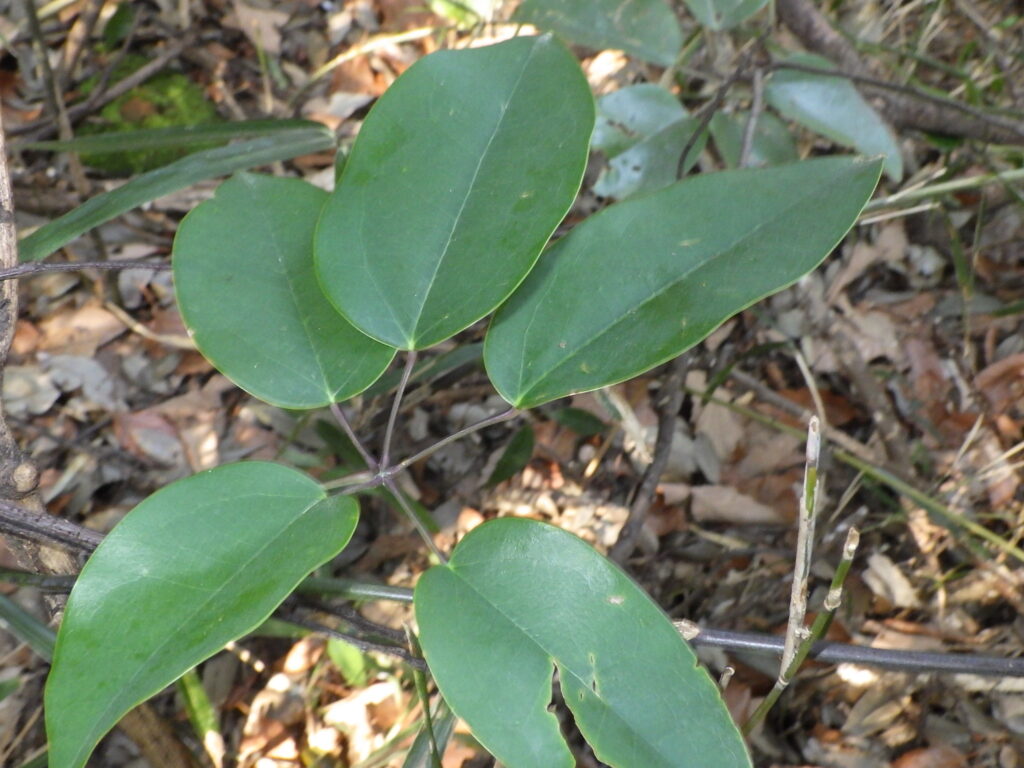
In particular, Akebia trifoliata has compound leaves with five leaflets, but Akebia quinata also has five leaflets, which can be confusing. Some companies even sell Akebia quinata as "Akebia trifoliata with five leaflets."
What are the differences between Akebia, Mitsuba Akebia, Goyou Akebia, and Mube?
As a fundamental point, Akebia quinata, Akebia trifoliata, and Akebia quinata belong to the Akebia genus, while Stauntonia hexaphylla belongs to the Stauntonia genus (Kanagawa Prefecture Flora Survey Association, 2018).
Therefore, there is a significant difference in form.
In Akebia, Akebia trifoliata, and Akebia quinata, the leaves are deciduous, the sepals are three cup-shaped, the stamens are six and free, and the fruit dehisces, whereas in Stauntonia hexaphylla, it is evergreen, the sepals are six in number (three outer ones are lanceolate and three inner ones are linear), the stamens are six and fused, and the fruit does not dehisce.
While there are many factors to consider, the biggest difference is whether the plant is deciduous or evergreen. In other words, Akebia, Akebia trifoliata, and Akebia quinata lose their leaves in winter, resulting in soft, thin, light green leaves, while Stauntonia hexaphylla retains its leaves even in winter, giving it sturdy, hard, dark green leaves. This can be observed by examining the leaves.
Another easily noticeable difference, even just looking at the leaves, is that in Stauntonia hexaphylla, the veins are prominent on both the upper and lower surfaces of the leaves, and the number of leaflets can range from three in young trees to five to seven in mature trees. These features are entirely unique to Stauntonia hexaphylla and are not found in the Akebia genus.
It's easy to mistakenly think that Akebia plants have multiple leaves, but these are palmate compound leaves, meaning that what was originally a single leaf has divided into 3 to 7 leaflets. These divided parts that look like a single leaf are called "leaflets."
Another point to note is that while botanical guides state that the fruit of Stauntonia hexaphylla does not split open, actual photographs show that it does split open slightly, though not as much as in the Akebia genus.
Of the remaining three species, Akebia trifoliata is a hybrid of Akebia quinata and Akebia quinata, and therefore exhibits intermediate characteristics (Kanagawa Prefecture Flora Survey Association, 2018; Yoshizawa and Arase, 2024; Hayashi, 2025).
Focusing on the number of leaflets, Akebia and Akebia trifoliata usually have five leaflets, while Akebia quinata has only three. This difference is reflected in its Japanese name.
However, since Akebia quinata can occasionally have 3 to 4 leaflets, you need to check for multiple leaflets.
If we focus on the serrations of the leaflets, we can see that while Akebia trifoliata and Akebia quinata usually have serrations, Akebia quinata does not.
However, this is also Akebia quinata, and some of the current year's branches in the upper layers lack serrations, so it is necessary to check multiple leaves.
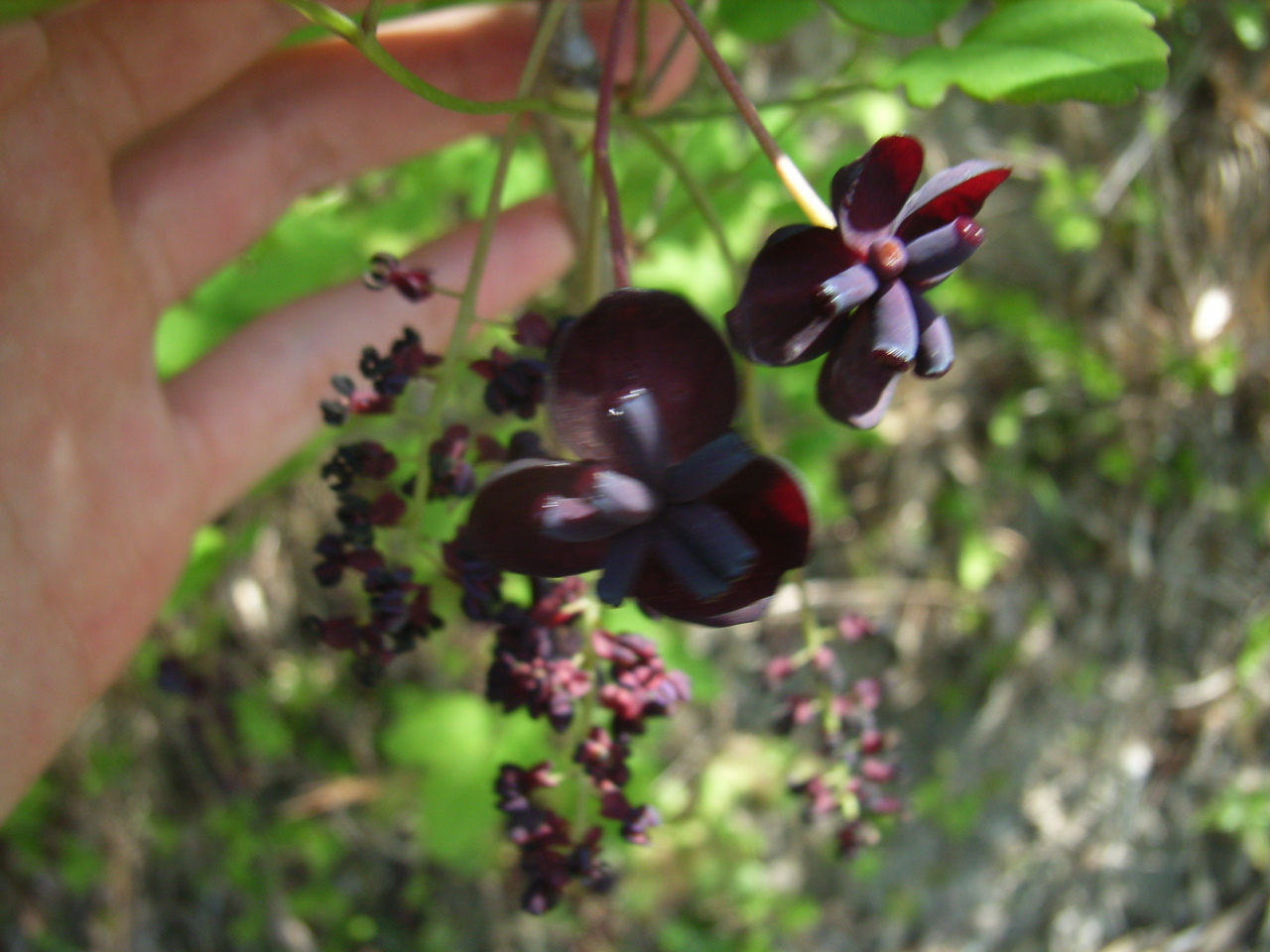
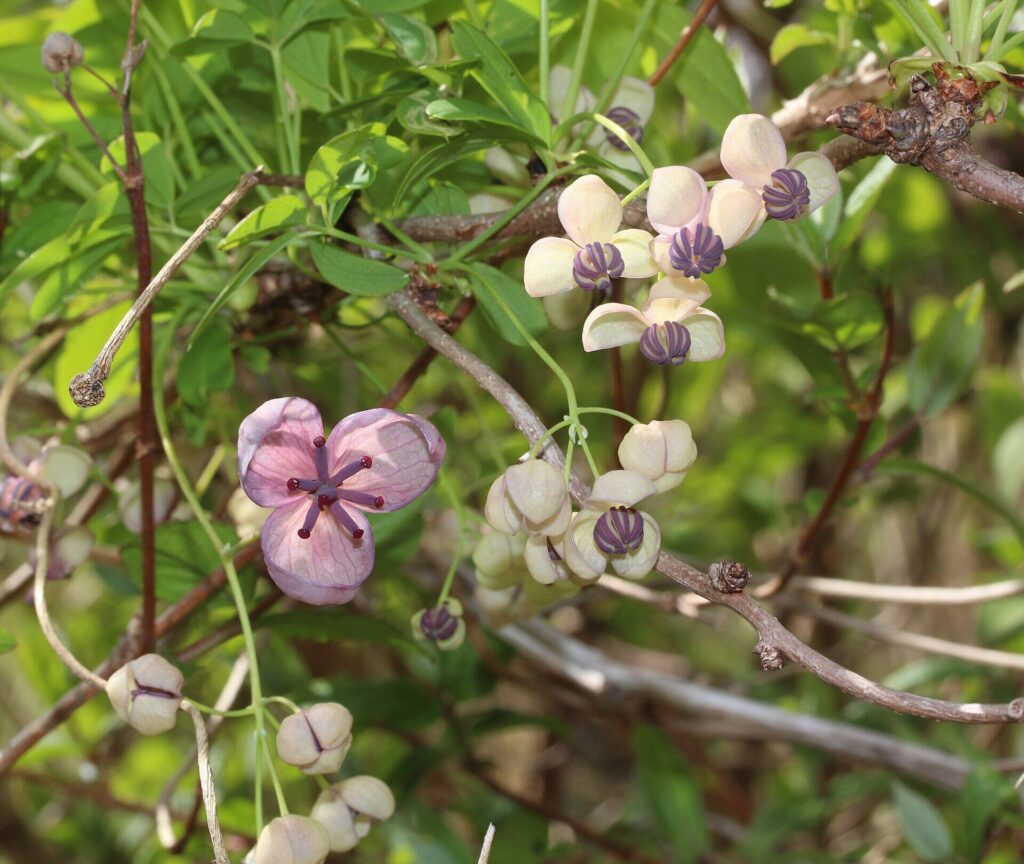
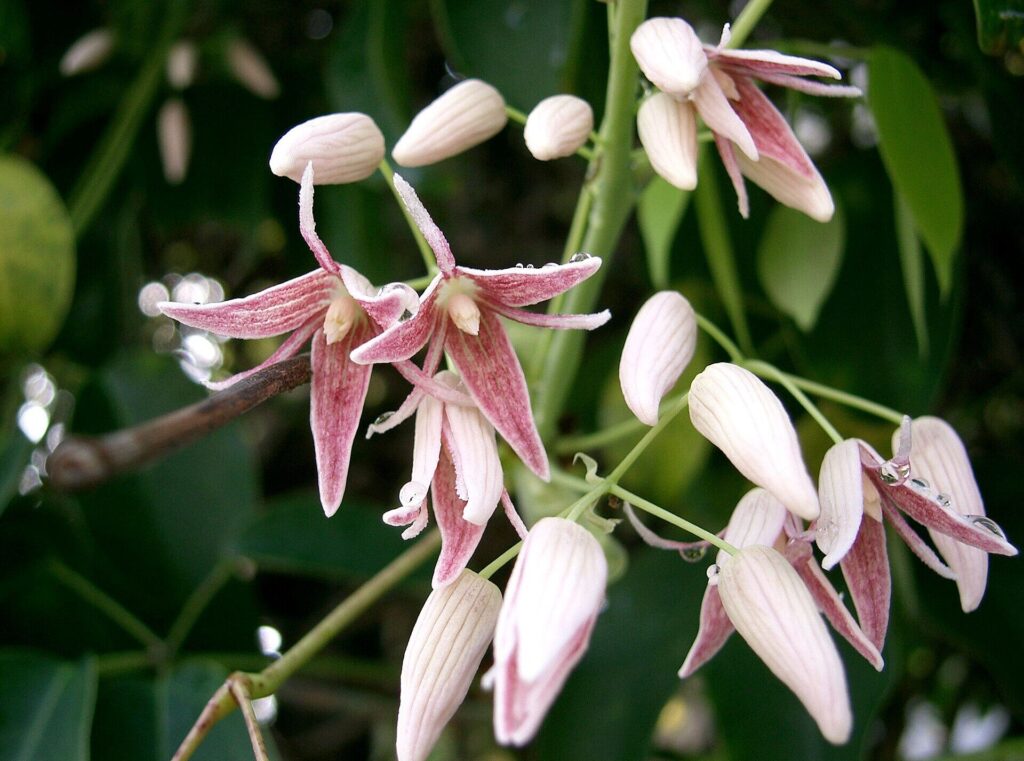
Focusing on the flowers, in Akebia quinata, the male flowers are sparsely arranged and the sepals are pale purple, while the female flowers have long stalks and protrude from the male inflorescence. In contrast, in Akebia trifoliata and Akebia quinata, the male flowers are densely arranged and the sepals are dark reddish-purple, while the female flowers have somewhat shorter stalks and do not protrude from the male inflorescence.
Based on the above, I believe you can definitely distinguish between the four types.
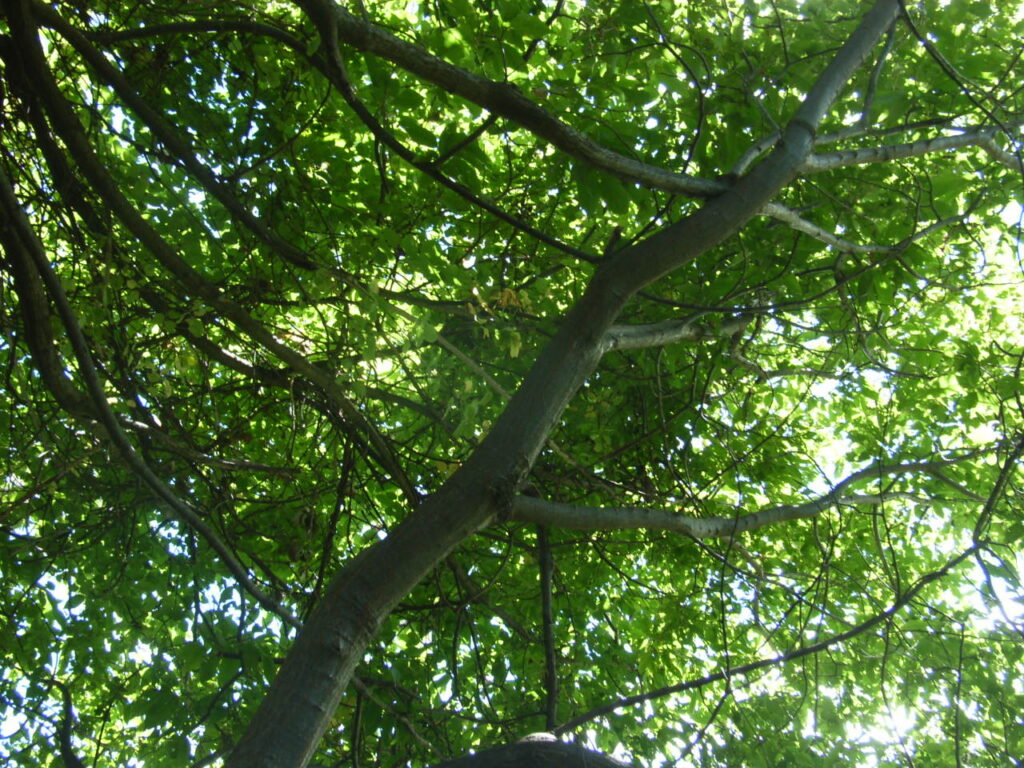
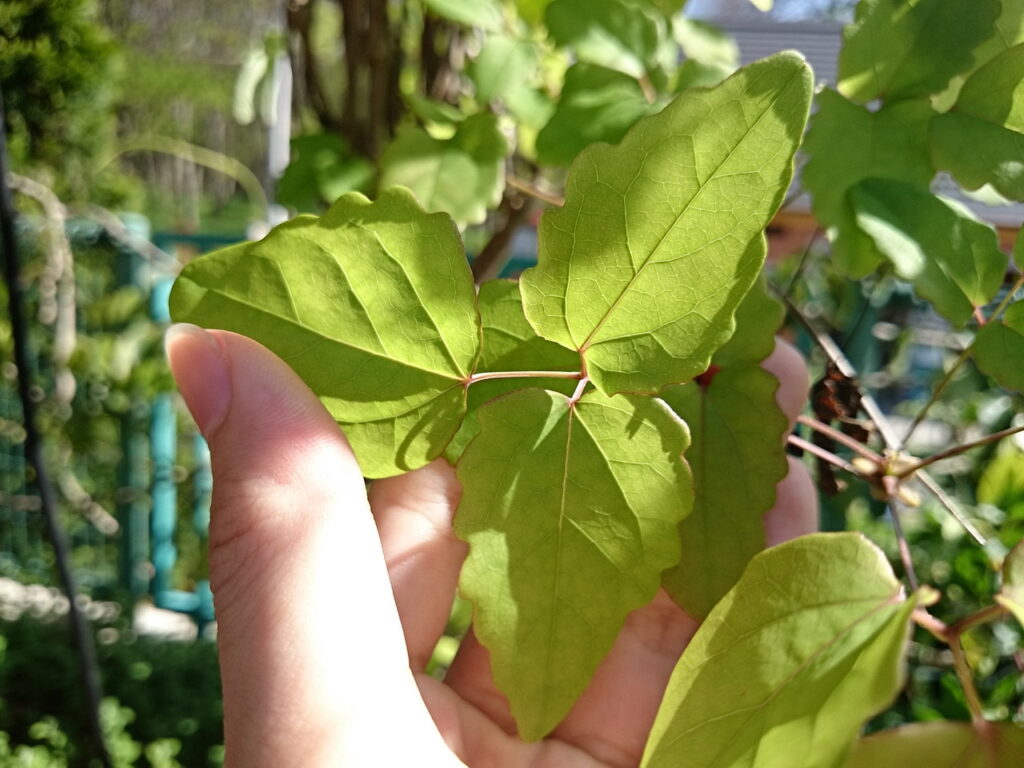
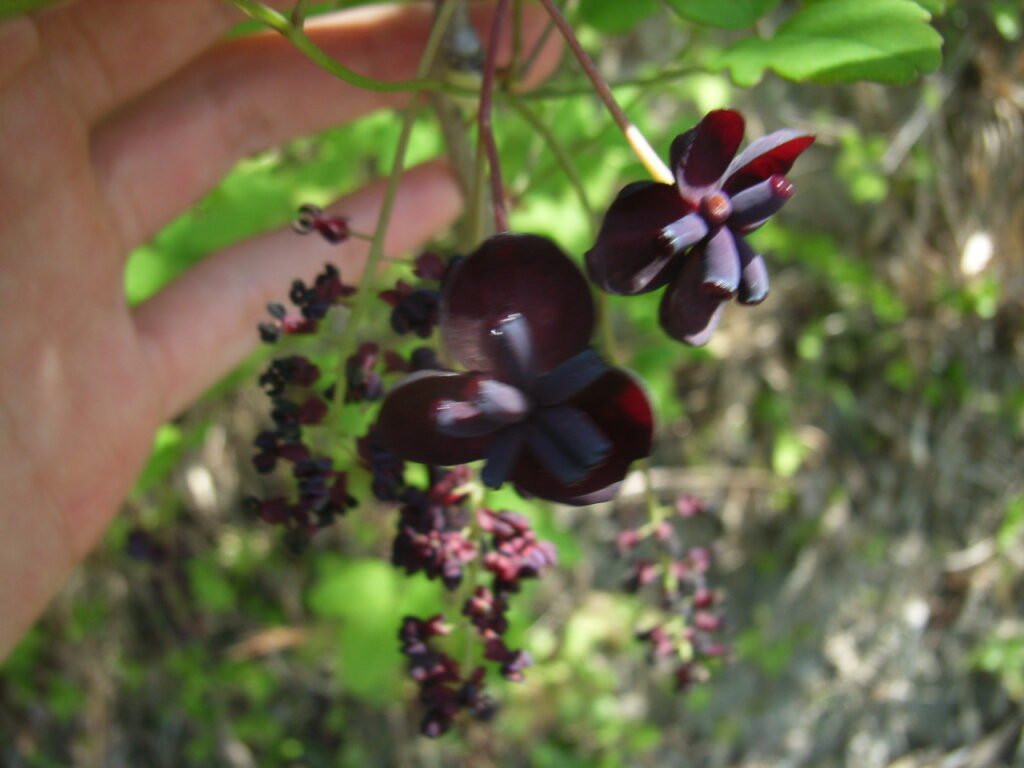
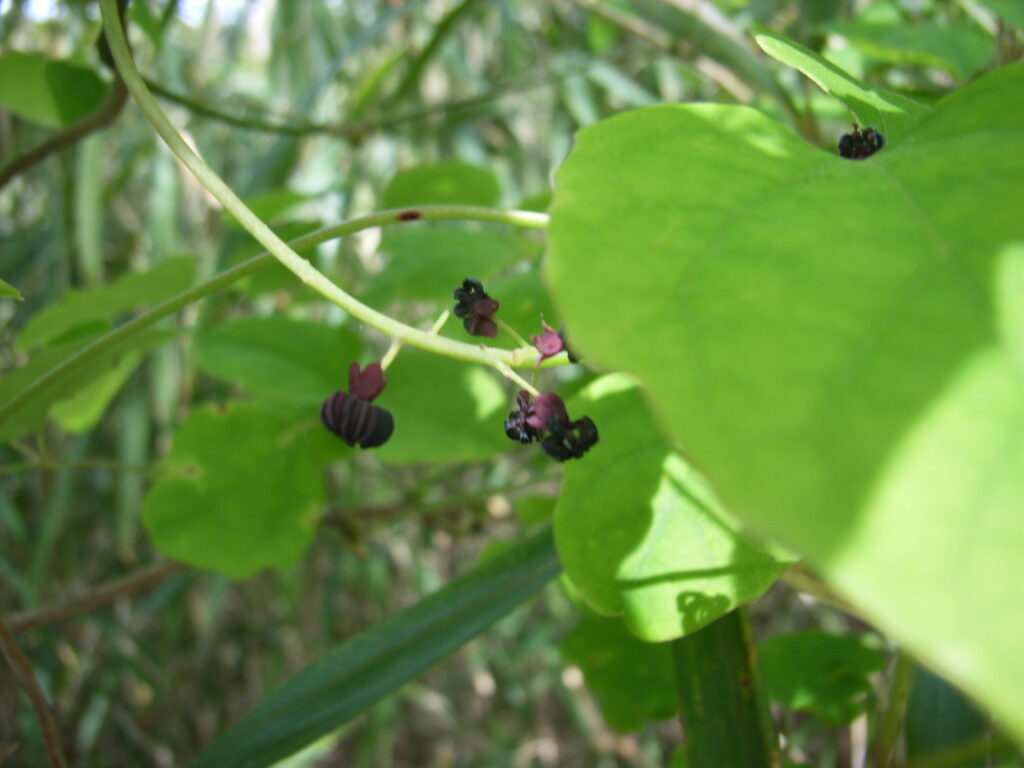
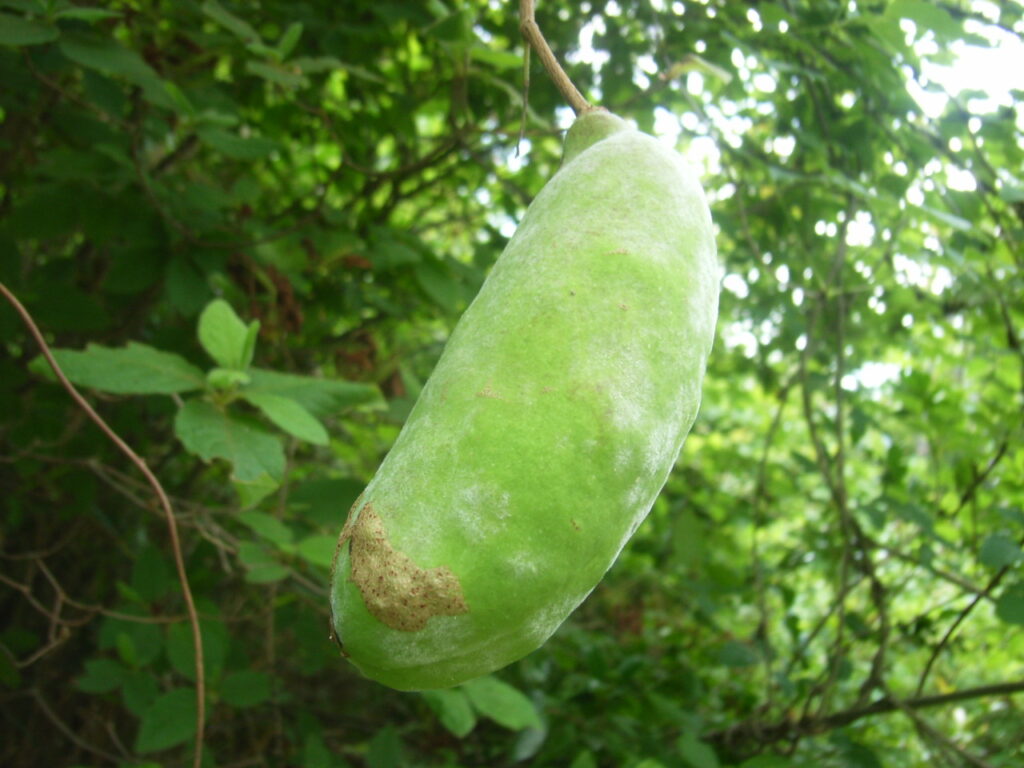
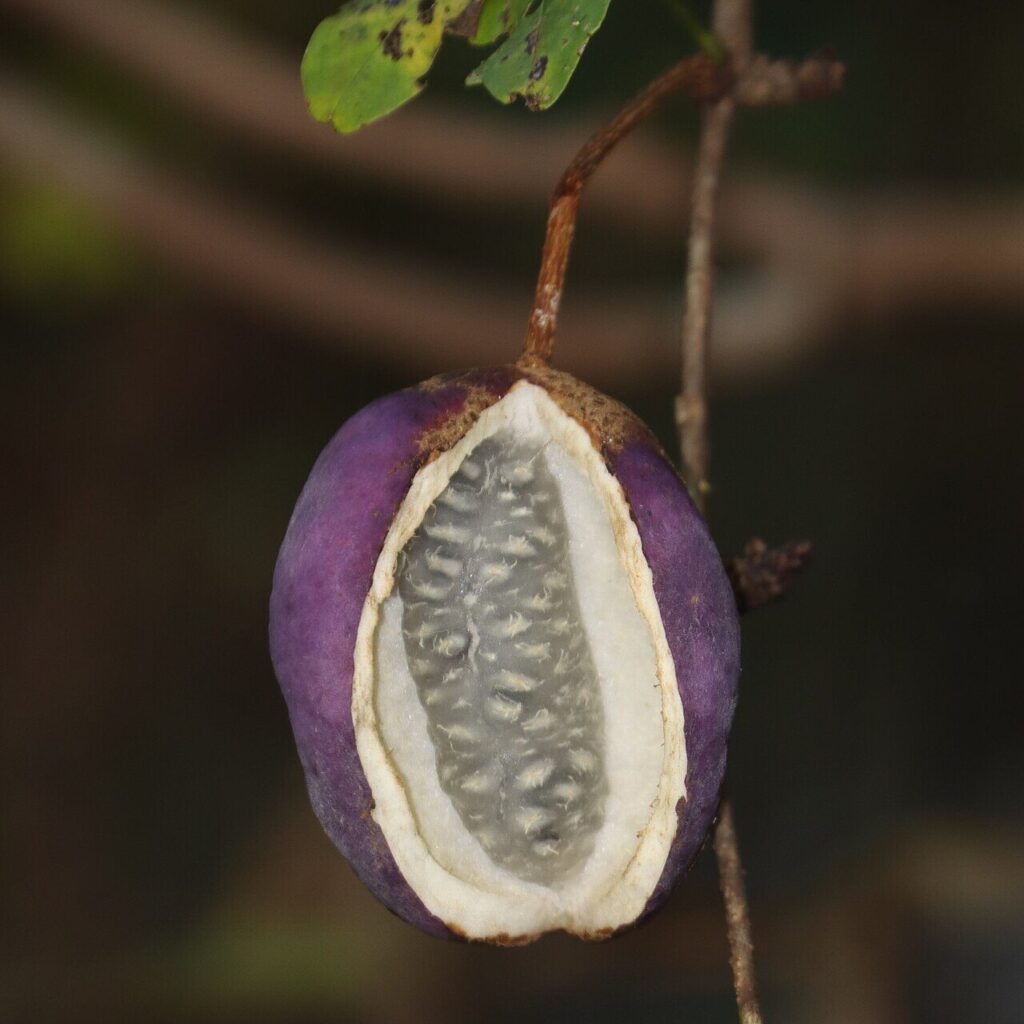
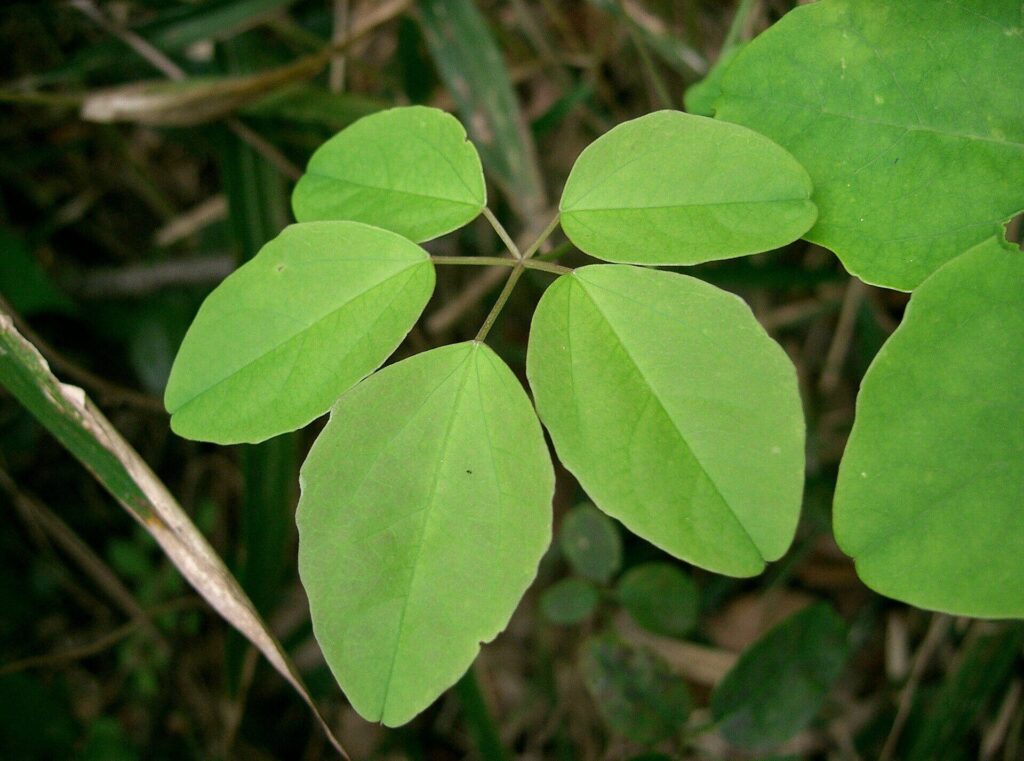
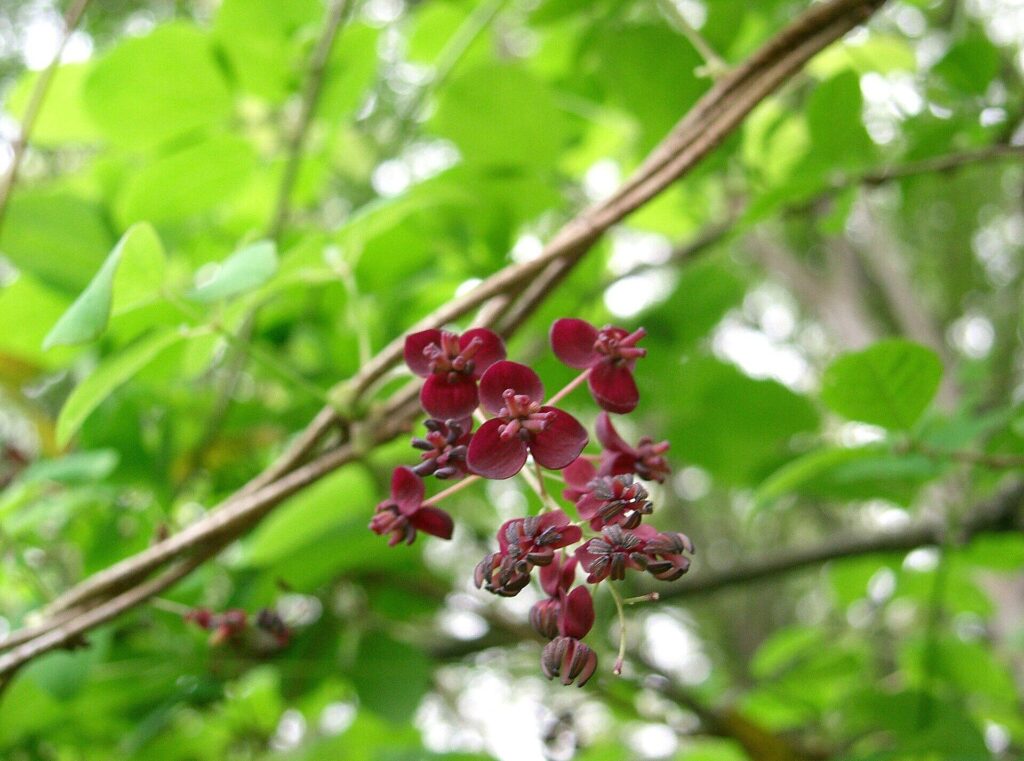
What are the differences in how Akebia, Mitsuba Akebia, Goyou Akebia, and Mube are used?
The main use of Akebia and Mitsuba Akebia is, of course, for their sweet fruit. The fruit ripens in the autumn (around September to October).
In addition to consuming the wild fruit, there are also cultivated varieties of Akebia trifoliata for fruit production (Matsumoto et al, 2022; Yoshizawa & Arase, 2024).
The fruit consists of a pericarp and a white pulp (placenta) that encloses the black seeds, and this pulp is edible (Fruit Tree Horticulture Laboratory, Faculty of Agriculture, Yamagata University, 2020).
The typical way to eat it is to pick the fruit, eat the white gelatinous substance (placenta) as is, taste the flesh, and then spit out the seeds inside.
In rural areas, it has long been a popular snack for children playing in the mountains, and it is sometimes described as a "rare fruit that evokes nostalgia," adding color to fond childhood memories (Yoshizawa & Arase, 2024).
The fruit is sweet and juicy, and rich in nutrients such as sugars, proteins, amino acids, vitamins, and minerals (Huang et al., 2022).
Grapes are highly regarded nutritionally, containing a high amount of various vitamins such as beta-carotene, vitamin B, and vitamin C (108-930 mg/100 g), which is higher than apples, grapes, and bananas. They are also rich in minerals such as potassium (3.2-4.9 mg/g), magnesium (1.00-1.51 mg/g), and calcium (0.47-0.49 mg/g), as well as amino acids, including all eight essential amino acids.
The peel became a topic of discussion when YouTuber Hikakin, not knowing how to eat it, discarded the flesh and ate the peel raw, describing it as bitter and unpleasant (J-CAST News Entertainment Team, 2025). However, it is not edible raw.
However, the peel can also be eaten after being boiled or stir-fried, and dishes such as "stir-fried akebi peel with miso" are known (Fruit Tree Horticulture Laboratory, Faculty of Agriculture, Yamagata University, 2020).
The young shoots can be used in dishes such as blanched greens, salads, soups, and stir-fries (Takahashi, 2003). In the Tohoku region, the young shoots of Akebia trifoliata are called "kinome" (tree buds) because they contain less bitterness than Akebia quinata, and were used in "kinome-meshi" (tree bud rice).
In addition to being cultivated for ornamental purposes in horticulture (Huang et al., 2022), the outer bark of the thick vine stems is removed and sun-dried, and this is called "Mokutsu," which has been used as a herbal medicine effective against nephritis, urethritis, and cystitis due to its diuretic, anti-inflammatory, analgesic, cardiac stimulant, antibacterial, and antioxidant properties (Maciąg et al., 2021).
Akebia quinata does not produce fruit, so it is not used for food.
While the fruit of the Stauntonia hexaphylla is edible, it is small and does not split open completely, making it difficult to eat, and therefore it is rarely found in the market.
However, Makino suggests that the origin of the Japanese name is that the fruit was offered to the imperial court, and that this was called "Ōhonihe" (大供), which became "Ōmube" (苞苴), and then "Mube" (Kato and Nakamura, 1971). There is also a theory that when Emperor Tenji was presented with it, he replied, "Mube naru kana" (meaning "That is indeed true"). The veracity of these claims is quite questionable, but it seems certain that Mube was used in ancient times (Wano, 2015).
How did pollination work? Was it to deceive insects with large female flowers?!
The shape of the flowers differs greatly between the Akebia and Stauntonia genera (Kanagawa Prefecture Flora Survey Association, 2018).
In the Akebia genus, the flowering period is in spring, from April to May. Male flowers are numerous and borne at the tip of the inflorescence, with short filaments that curve inward in an arching shape, forming a spherical cluster. Female flowers are larger than male flowers, borne in small numbers at the base of the inflorescence, and have 3 to 9 oblong carpels that spread outwards. What appear to be three petals are actually modified sepals.
It has a strong scent and is sometimes called "the flower with the fragrance of chocolate" in Europe and America.
What kinds of insects visit this flower? Akebia species are self-compatible and cannot produce fruit without pollen from other individuals.
Studies on Akebia have shown that the main pollinating insects are small, solitary wasps (non-caste wasps) such as Lasioglossum sp., hoverflies Epistrophe balteata (Syrphidae), and Japanese honeybees Apis cerana japonica (Apidae) (Kawagoe & Suzuki, 2002).
While there is insufficient research on Akebia trifoliata, some believe it may be similar to Akebia quinata (Matsumoto et al, 2022). However, there are morphological differences, such as the male flowers of Akebia trifoliata being darker in color, so it has not been verified whether they are truly the same.
While the Japanese akebia (Akebia quinata) produces flowers, it does not produce fruit, so it cannot reproduce.
By the way, there's a curious difference between the male and female flowers of the Akebia genus. The female flowers are noticeably larger and more conspicuous than the male flowers. Why is this?
This is thought to be "intersexual mimicry," where female flowers mimic male flowers (Kawagoe & Suzuki, 2002; 2003). In other words, since female flowers have no stamens, they naturally have no pollen and offer no reward to pollinators, but they grow larger than male flowers to appear more attractive to pollinators in order to deceive insects into thinking "there's food here!"
Furthermore, especially in solitary bees, they will visit the more attractive-looking female flowers before moving on to the male flowers. This prevents self-pollination within the same individual by preventing pollen from the male flowers from touching the stigma of the female flowers, thus promoting cross-pollination.
As mentioned above, Akebia is self-incompatible, so this cross-pollination is thought to be for the purpose of avoiding reproductive interference (by its own pollen), rather than suppressing inbreeding (preventing inbreeding depression) (Kawagoe & Suzuki, 2005).
Surprisingly, however, hoverflies can distinguish between male and female flowers and only visit the male flowers, resulting in a situation where they steal nectar.
On the other hand, Stauntonia hexaphylla flowers in spring, from April to May, producing short racemes from the leaf axils. These inflorescences have 6 sepals and bear 3 to 7 pale yellow flowers that face downwards and have a single reddish-purple stripe on the inside (Mogi et al., 2000). There are no significant differences between male and female flowers except for the stamens and pistils.
Despite having the exact same flowering period, the reason why the male and female Stauntonia hexaphylla are identical in appearance remains unknown, unfortunately due to insufficient research on pollinating insects.
The facts above confirm that wild insects (mainly bees) produce delicious akebi fruit, both wild and cultivated. This kind of benefit is called an "ecosystem service," so if you want to eat delicious akebi, please take an interest not only in the akebi itself, but also in the natural environment that supports these insects.
How did they disperse their seeds? They used all sorts of methods: mammals, birds, ants, you name it!?
As mentioned above, the fruits of the Akebia family ripen in the autumn and are "follicles" that split open or crack, but are also called "berries" because the inside is a liquid that animals can eat.
The thick rind changes from green to red to purple as it ripens, and when it splits open, the inside is exposed, revealing black seeds encased in a white, gelatinous placenta.
Fruits that are clearly large and would be considered tasty for humans are likely to be dispersed by animal means, particularly by mammals.
In fact, the fruit of Akebia has been used by martens and raccoons (Takatsuki, 2017; 2018), and there are records of the fruit of Akebia trifoliata being used by martens, raccoons, and Japanese macaques (Takatsuki, 2017; Kumagai and Saito, 2022; Otani, 2005).
The fruits of the Stauntonia hexaphylla are also used by martens and raccoons (Takatsuki, 2017; 2019).
The slimy seed coat is thought to be adapted to slip through the teeth of animals (Okamoto, 1999).
However, there are also records of an increase in seedlings of Akebia quinata and Akebia trifoliata within goldenrod communities (Karasawa, 1978). This suggests that birds may be contributing to seed dispersal of Akebia quinata and Akebia trifoliata.
Generally, red fruits are only visible to birds and monkeys with well-developed color vision, so considering this point, it is plausible that seeds are dispersed by both mammals and birds.
Furthermore, the seeds of Akebia and Akebia trifoliata have elaiosomes. This indicates that these are parts that ants eat, and that after being eaten by animals, the seeds are excreted in their feces and then dispersed again by ants, thus contributing to ant dispersal (Nakanishi, 1988).
In the field, there have been observations of brown ants gathering around the seeds (Kusui & Kusui, 1999). In experiments where seeds were placed directly near ant nests, black garden ants and brown ants carried them away (Fujii et al., 2012).
However, unlike Akebia quinata and Akebia trifoliata, Stauntonia hexaphylla does not have elaiosomes (Kusui & Kusui, 1999).
References
Huang, P., Zang, F., Li, C., Lin, F., Zang, D., Li, B., & Zheng, Y. (2022). The Akebia genus as a novel forest crop: A review of its genetic resources, nutritional components, biosynthesis, and biological studies. Frontiers in Plant Science, 13, 936571. https://doi.org/10.3389/fpls.2022.936571
Fujii, Mari; Kosaka, Ayumi; and Masui, Keiji. (2012). Plants that rely on ants to disperse their seeds. Kyosei no Hiroba, 7, 63-68. ISSN: 1881-2147, https://www.hitohaku.jp/publication/book/kyousei7_063.pdf
J-Cast News Editorial Department, Entertainment Team. (February 6, 2025). Hikakin, who caused a controversy 8 and a half years ago, immediately apologizes... and looks back on it with laughter: "Why did I have to apologize...?" He reveals his true feelings. J-Cast News. https://www.j-cast.com/2025/02/06501301.html
Karasawa, Koichi. (1978). A study on the diet and seed dispersal of fruit-eating birds in urban areas. Birds, 27 (1), 1-20. https://doi.org/10.3838/jjo1915.27.1
Kanagawa Prefecture Flora Survey Association. (2018). Kanagawa Prefecture Flora 2018 Electronic Edition. Kanagawa Prefecture Flora Survey Association. ISBN: 9784991053726
Kato, Kaname & Nakamura, Tsuneo. (1971). Yama-kei Color Guide: Flowering Trees 1. Yama-kei Publishers.
Kawagoe, T., & Suzuki, N. (2002). Floral sexual dimorphism and flower choice by pollinators in a nectarless monoecious vine Akebia quinata (Lardizabalaceae). Ecological Research, 17 (3), 295-303. https://doi.org/10.1046/j.1440-1703.2002.00489.x
Kawagoe, T., & Suzuki, N. (2003). Flower-size dimorphism avoids geitonogamous pollination in a nectarless monoecious plant Akebia quinata. International Journal of Plant Sciences, 164 (6), 893-897. https://doi.org/10.1086/378659
Kawagoe, T., & Suzuki, N. (2005). Self-pollen on a stigma interferes with outcrossed seed production in a self-incompatible monoecious plant, Akebia quinata (Lardizabalaceae). Functional Ecology, 19 (1), 49-54. https://doi.org/10.1111/j.0269-8463.2005.00950.x
Hayashi, Masayuki. (2025). Tree Leaves, 3rd Edition: Identifying 1390 Species Through Real-Life Scans. Yama-kei Publishers. ISBN: 9784635070447
Kumagai, Minami and Saito, Masayuki. (2022). Seasonal changes in the diet of raccoons in temperate forests of the Shonai region of Yamagata Prefecture. Journal of the Tohoku Forest Science Society, 27 (1), 1-10. https://doi.org/10.18982/tjfs.27.1_1
Kusui, Haruo & Kusui, Yoko. (1999). Tree seeds of temperate forests carried by martens. In Keisuke Ueda (Ed.), Seed Dispersal: The Evolution of Mutual Aid Vol. 2: Forests Created by Animals (pp. 37-50). Tsukiji Shokan. ISBN: 9784806711933
Nakanishi, Hiroki. (1988). Ant-dispersed plants distributed in the warm temperate zone of Japan. Journal of the Ecological Society of Japan, 38 (2), 169-176. https://doi.org/10.18960/seitai.38.2_169
Maciąg, D., Dobrowolska, E., Sharafan, M., Ekiert, H., Tomczyk, M., & Szopa, A. (2021). Akebia quinata and Akebia trifoliata: a review of phytochemical composition, ethnopharmacological approaches and biological studies. Journal of Ethnopharmacology, 280, 114486. https://doi.org/10.1016/j.jep.2021.114486
Matsumoto, D., Shimizu, S., Shimazaki, A., Ito, K., & Taira, S. (2022). Effects of self-pollen contamination in artificial pollination on fruit set of 'Fuji Murasaki' Akebia trifoliata. The Horticulture Journal, 91 (4), 431-436. https://doi.org/10.2503/hortj.UTD-385
Mogi, Toru; Ota, Kazuo; Katsuyama, Teruo; Takahashi, Hideo; Shirokawa, Shiro; Yoshiyama, Hiroshi; Ishii, Hidemi; Sakio, Hitoshi; and Nakagawa, Shigetoshi. (2000). Flowers Blooming on Trees: Polypetalous Flowers (Vol. 2, 2nd edition). Yama-kei Publishers. 719pp. ISBN: 9784635070041
Okamoto, Motoharu. (1999). The mutually beneficial relationship between birds and succulents. In Keisuke Ueda (Ed.), Seed Dispersal: The Evolution of Mutual Aid Vol. 1: Seeds Carried by Birds (pp. 27-39). Tsukiji Shokan. ISBN: 9784806711926
Otani, T. (2005). Characteristics of medium-sized mammals as seed dispersers of berries—mainly using Japanese macaques as an example. Nagoya University Journal of Forest Science, 24, 7-43. https://doi.org/10.18999/nagufs.24.7
Shimizu, Takemi. (2001). Illustrated Dictionary of Botanical Terms. Yasaka Shobo. ISBN: 9784896944792
Takahashi, Hideo. (2003). Wild Edible Plants of Japan. Gakken Plus. ISBN: 9784054018815
Takatsuki, Shigeki. (2017). Characteristics of fruits used by martens—a review. Mammalian Science, 57 (2), 337-347. https://doi.org/10.11238/mammalianscience.57.337
Takatsuki, Shigeki. (2018). Characteristics of fruits used by raccoons—a review. Mammalian Science, 58 (2), 237-246. https://doi.org/10.11238/mammalianscience.58.237
Wano, Yasuhiro. (2015, November 16). The "Akebia" Fruit of Immortality: People from all over Japan constantly seek this legendary fruit that has been offered to the Imperial Family since ancient times... Sankei News. https://www.sankei.com/article/20151116-R4UEWT34HRNKDMX4RQHNCLPSM4/
Yamagata University, Faculty of Agriculture, Department of Fruit Tree Horticulture. (2020). The Story of Yamagata's Akebi. Sugihado Printing. ISBN: 9784991178504, https://ssl.samidare.jp/~lavo/zaisakuken/box/akebi.pdf
Yoshizawa, Yuri & Arase, Teruo. (2024). Taxonomic study of three Akebia species based on morphological variation of leaves. Shinshu University Faculty of Agriculture AFC Reports, 22, 45-54. ISSN: 2433-8877, http://hdl.handle.net/10091/0002002080