Cultural anthropology and ethnology

Sponsored Link
plant

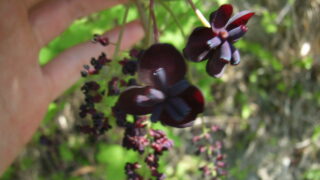
What are the differences between Akebia, Akebia trifoliata, Akebia quinata, and Stauntonia hexaphylla? We explain how to distinguish between similar species! Are the large female flowers a way to deceive insects? Who eats the fruit in the wild?

Akebia, Akebia trifoliata, Akebia quinata, and Stauntonia hexaphylla all belong to the Akebia family. They are climbing plants with palmately compound leaves, and a key characteristic is that male and female flowers bloom separately. Akebia and Akebia trifoliata, in particular, are famous for the edible white, gelatinous pulp inside their opened fruits. For many, it's a taste of the countryside from their childhood...
plant

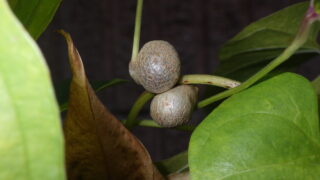
What are the differences between Japanese yam (Dioscorea japonica), Chinese yam (Dioscorea japonica), Japanese yam (Dioscorea tokoro), and bitter yam (Dioscorea japonica)? We explain how to distinguish between similar species! Why do they produce bulbils? Their reproductive strategies were diverse!

Japanese yam (Dioscorea japonica), Chinese yam (Dioscorea longa), Japanese yam (Dioscorea tokoro), and bitter yam (Dioscorea japonica) all belong to the genus Dioscorea in the family Dioscoreaceae. They produce edible tubers and bulbils, and are very common climbing perennial plants often seen in urban areas. The genus Dioscorea, also known as yam, is a group that includes a vast number of species...
plant

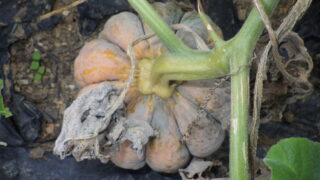
What are the differences between European pumpkins, Japanese pumpkins, and pepo pumpkins? European pumpkins are eaten in Japan, and Japanese pumpkins are eaten in the West! Were the fruits eaten by extinct animals!?

European pumpkins, Japanese pumpkins, and pepo pumpkins are all annual vining plants belonging to the Cucurbitaceae family, Cucurbita genus. Originally from the Americas, they are very popular in Japan, playing an important role in both everyday meals and Halloween celebrations. However, the three species are often confused, and their differences...
animal

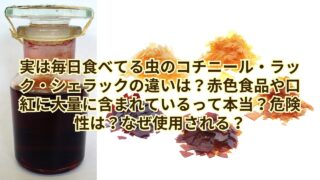
What are the differences between cochineal, lac, and shellac, insects we actually eat every day? Is it true that they are found in large quantities in red foods and lipstick? Are they dangerous? Why are they used?

In Japan, except in some regions, eating insects is extremely rare, and it's safe to say that it's almost unheard of among younger generations, especially in urban areas. While some advocate for insect consumption as a way to prepare for food shortages, cries of "Absolutely not!" are heard, mainly on social media. Even though I work with insects, I still...
plant

Is it a myth that spices were used during the Age of Discovery to mask the smell of rotten meat? What was the real reason? Is it also a myth that they were used to improve preservation?

I originally have a science background, but I enjoy reading world history content. I came across something interesting in that context. It was the idea that spices (spices excluding stems, leaves, and flowers) don't have much antibacterial properties, and that "spices were used to mask the smell of rotten meat"...
animal

リズム感と拍子(2拍子・4拍子・3拍子)の起源とは?進化生物学的・歴史的な由来を解説!

音楽を聴いたり、歌を歌ったり、ダンスが趣味になると、自然とリズム感や拍子といったものに関心を持つようになっていきます。しかしその起源は?と考えると答えられない部分が多いと思います。あまりにも自然にリズムにノッてしまうことが多いので疑問にも思...
plant

シキミと八角(スターアニス・トウシキミ)の違いは?似た種類の見分け方を解説!シキミは墓を守りハッカクは命を守る!?

シキミとハッカク(八角・スターアニス・トウシキミ)はいずれもマツブサ科シキミ属に含まれ、常緑で光沢のある葉を持ち、最大の特徴は果実が袋果で、放射状に8個並んだ集合果である点が共通しています。どちらの国内外で非常に重要な植物として扱われていま...
plant

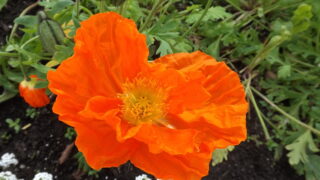
What are the differences between poppies, common poppies, and long-headed poppies? How do they differ from Icelandic poppies? We'll explain how to distinguish between similar species! Did humans themselves evolve the "Devil Fruit," which has both significant merits and demerits?

Poppies, including the common poppy, thick-flowered poppy, and long-headed poppy, all belong to the genus Papaver in the family Papaveraceae and are collectively known as poppies. They are very popular as ornamental plants due to their beautiful, large single flowers and are widely cultivated. However, despite being poisonous and prone to naturalization, they are difficult to identify...
plant

What are the differences between morning glories, round-leaved morning glories, wild morning glories, and American morning glories? We'll explain how to distinguish between similar varieties! The origins of Japanese morning glories are shrouded in mystery!?

Morning glories (Ipomoea nil), round-leaved morning glories, wild morning glories, and American morning glories all belong to the Ipomoea genus of the Convolvulaceae family. Among the varieties with "morning glory" in their name, they are particularly popular for their large corolla diameter (over 3 cm) and are widely cultivated as ornamental plants. While they are very popular, there is considerable individual variation between varieties...
plant

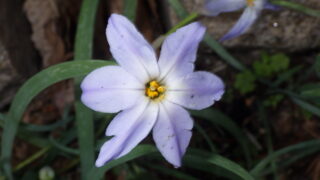
What are the differences between Ipheion uniflorum, Ipheion leek, and Ipheion japonica? We'll explain how to distinguish between similar species! Are they edible?

All three species—Ipheion uniflorum, Allium sibiricum, and Allium sibiricum—belong to the Amaryllidaceae family, Allioideae subfamily, and share the name "nira" (leek). They are common perennial plants found in fields and urban areas. However, their confusing names can make it difficult for those unfamiliar with these three species to distinguish between them...
Sponsored Link