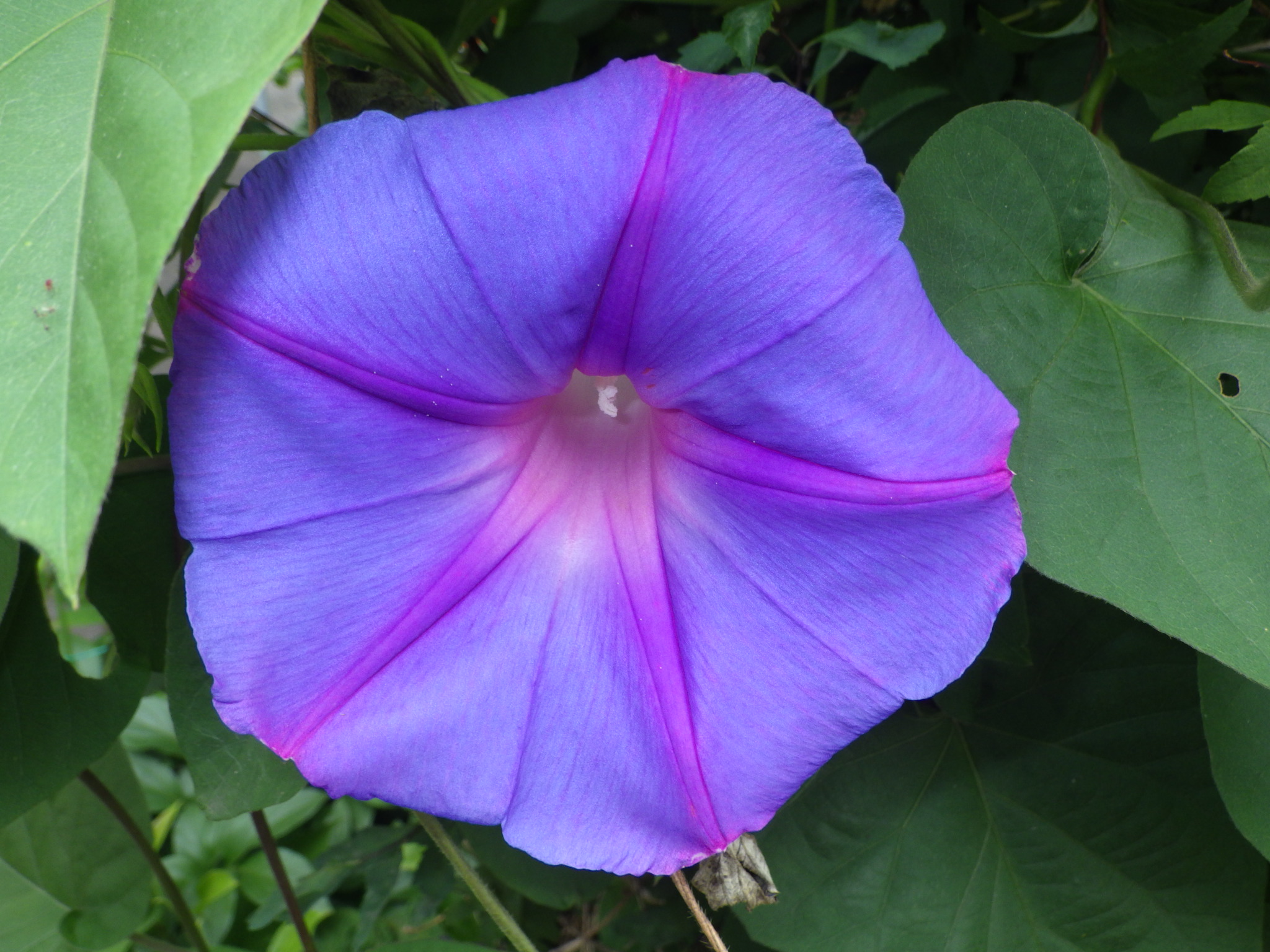
Morning glories (Ipomoea nil), round-leaved morning glories (Ipomoea purpurea), wild morning glories (Ipomoea purpurea), and American morning glories (Ipomoea purpurea var. japonica) all belong to the Ipomoea genus of the Convolvulaceae family. Among the varieties with "morning glory" in their name, they are large, with corollas exceeding 3 cm in diameter, and are widely cultivated for ornamental purposes. Although they are very popular, there is considerable individual variation among the varieties, and it is possible that the four species, which are actually different at the "species" level and cannot interbreed , are often confused. The most accurate way to distinguish the four species is by looking at the shape of the calyx. After that, examine the shape of the flowers and leaves as well to make a comprehensive judgment. The origin of Japanese morning glories is shrouded in mystery, but it is believed that morning glories, originally from the Americas, were introduced to Japan during the Nara period, and have been confirmed to exist in Japan even before the European rediscovery of the Americas. This article will explain the classification and morphology of the Ipomoea genus.
- What are morning glories, round-leaved morning glories, wild morning glories, and American morning glories?
- What are the differences between morning glories, round-leaved morning glories, wild morning glories, and American morning glories?
- Are there any other similar species?
- The origins of morning glories in Japan are shrouded in mystery!?
- References
What are morning glories, round-leaved morning glories, wild morning glories, and American morning glories?
Morning glory (Ipomoea nil) is sometimes considered to be native to the Himalayas in Japan, but globally, it is generally accepted that it is native to Central and South America (RBG Kew, 2024). It is cultivated all over the world, and in Japan, it is believed to have been introduced via Tang China during the Nara period, and was already cultivated for medicinal purposes as a laxative. Since the Edo period, it has become a popular ornamental annual plant. However, its historical background is shrouded in mystery, as will be discussed later. It can also escape cultivation and become naturalized in alluvial plains in various regions.
Ipomoea purpurea, also known as round-leaved morning glory, is an annual plant native to tropical America. It is believed to have been introduced to Japan during the Edo period as an ornamental plant and subsequently naturalized. It is cultivated for ornamental purposes.
Ipomoea indica, also known as wild morning glory, is native to Central and South America. In the Ryukyu Islands, where it has naturalized and grows wild, it is a perennial plant that grows in coastal grasslands and cliffs. Outside the Ryukyu Islands, it has recently become widely cultivated in Japan for greening walls and for ornamental purposes.
American morning glory (Ipomoea hederacea var. hederacea) is native to tropical America and was introduced to Japan as an ornamental plant at the end of the Edo period. It was later recognized as naturalized after World War II (Shimizu et al., 2001). It can now be seen along roadsides in various locations.
All of these belong to the Ipomoea genus of the Convolvulaceae family, and among the varieties with "morning glory" in their name, they are large, with corollas measuring 3 cm or more in diameter, and are widely cultivated for ornamental purposes.
In addition to producing beautiful, round corollas, the color of the corollas changes from red to blue depending on the soil environment, and they are easy to cultivate, making them particularly popular in Japan. The boom in popularity is thought to have started during the Edo period.
Morning glories are an inseparable part of Japanese culture, as even elementary school science classes sometimes include a curriculum on growing them. However, due to the extensive development of horticultural varieties, the four species mentioned above, which are biologically distinct at the "species" level, are sometimes confused.
Please keep in mind that morning glories, round-leaved morning glories, wild morning glories, and American morning glories are biologically completely different species, meaning they are so different that they do not normally interbreed.
What are the differences between morning glories, round-leaved morning glories, wild morning glories, and American morning glories?
Specifically, the four species can be distinguished as follows (Kanagawa Prefecture Flora Survey Association, 2018).
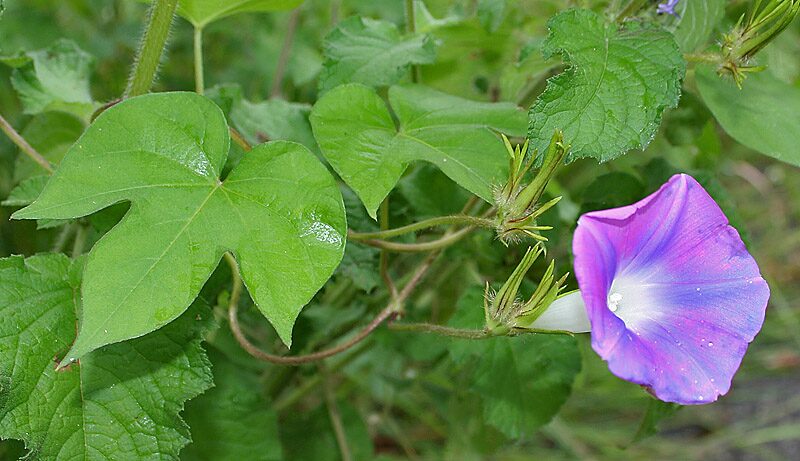
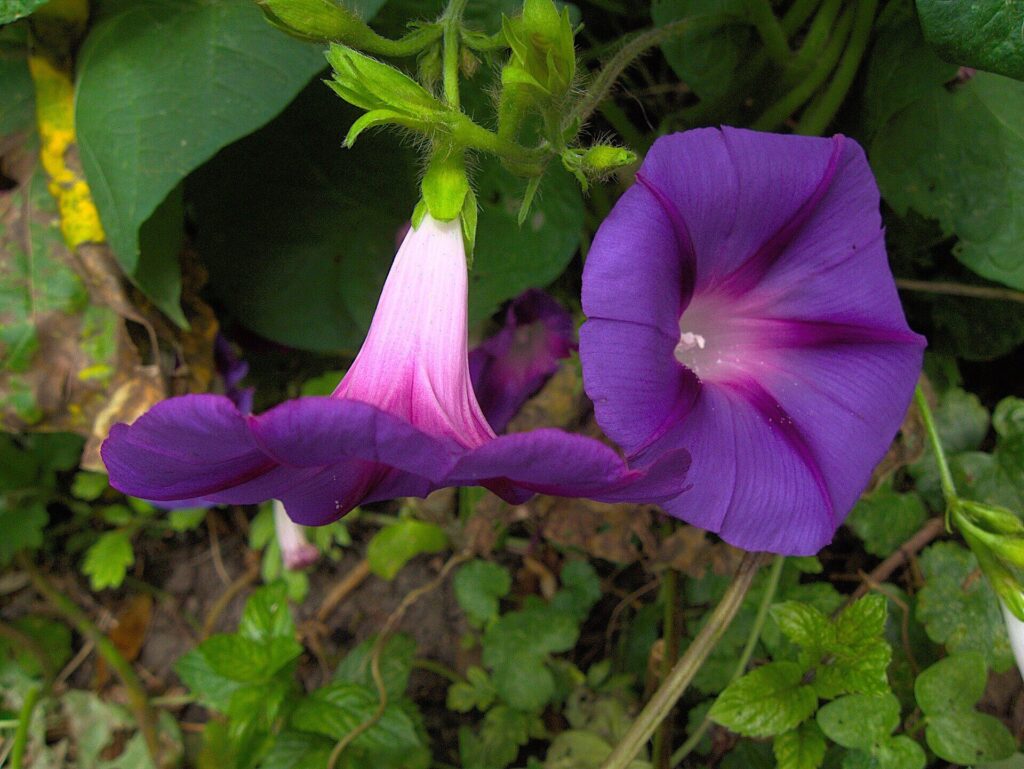
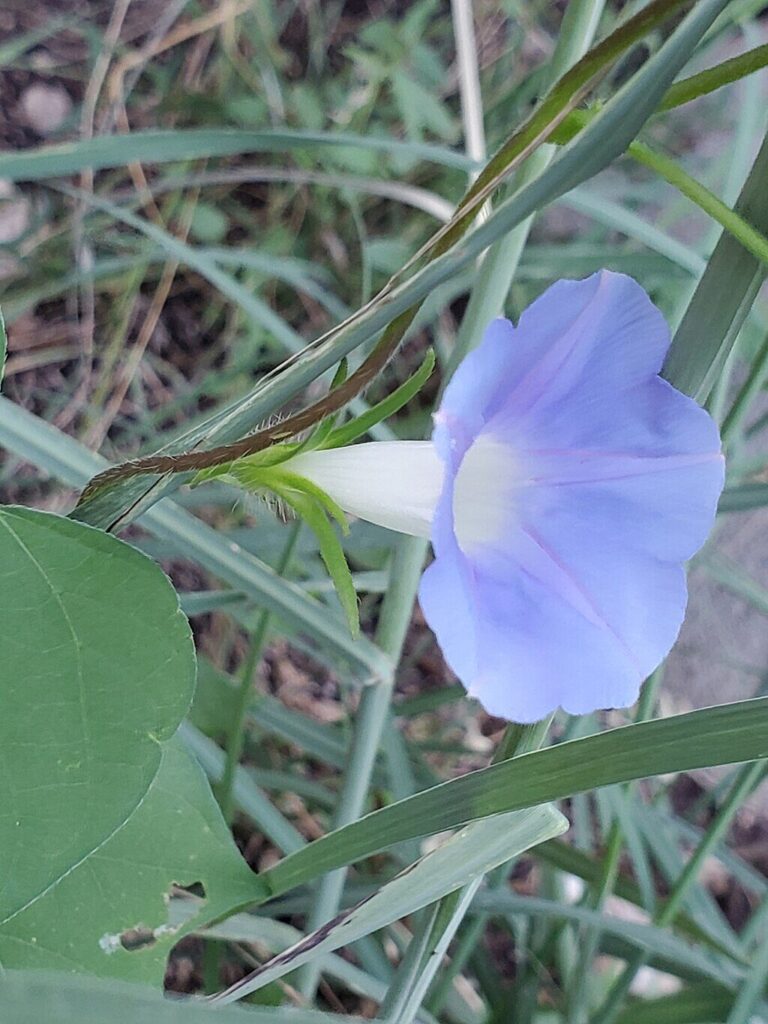
First, morning glories and American morning glories can be broadly distinguished by the fact that their calyx lobes are long and slender at the tip and their leaves are thin, while round-leaved morning glories and wild morning glories have calyx lobes that are somewhat closer to an acute triangle with shorter tips and thicker leaves.
The thickness of the leaves can be a little difficult to judge, but you can easily tell by looking at the calyx, which is the green, leaf-like structure at the back of the corolla.
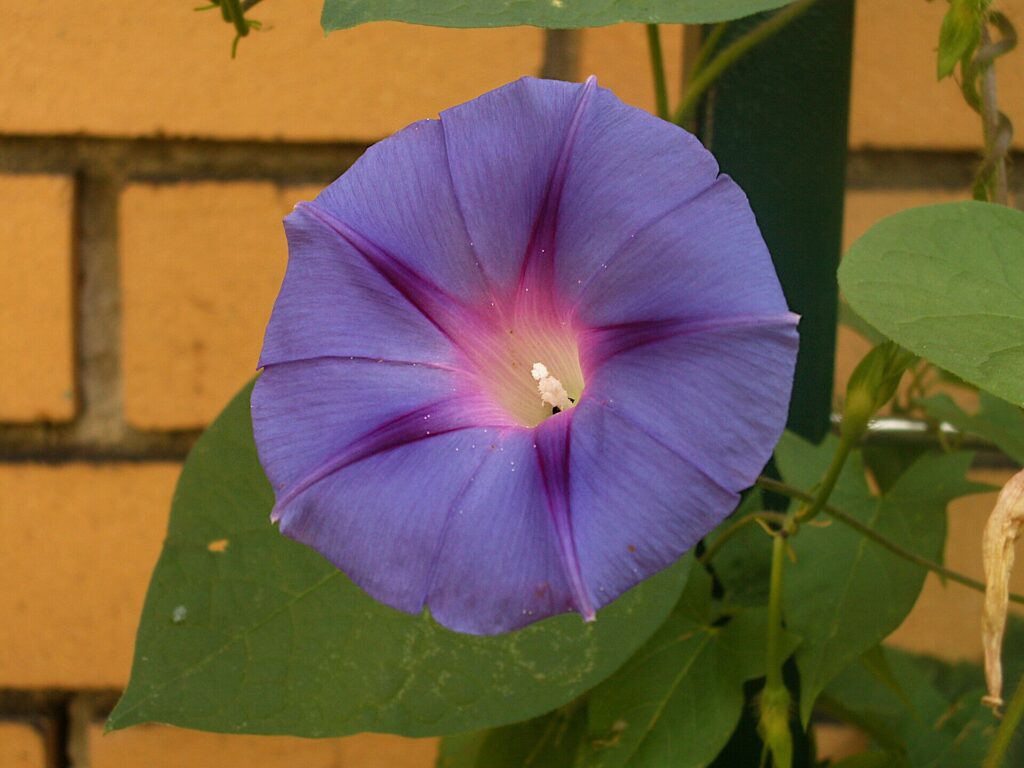
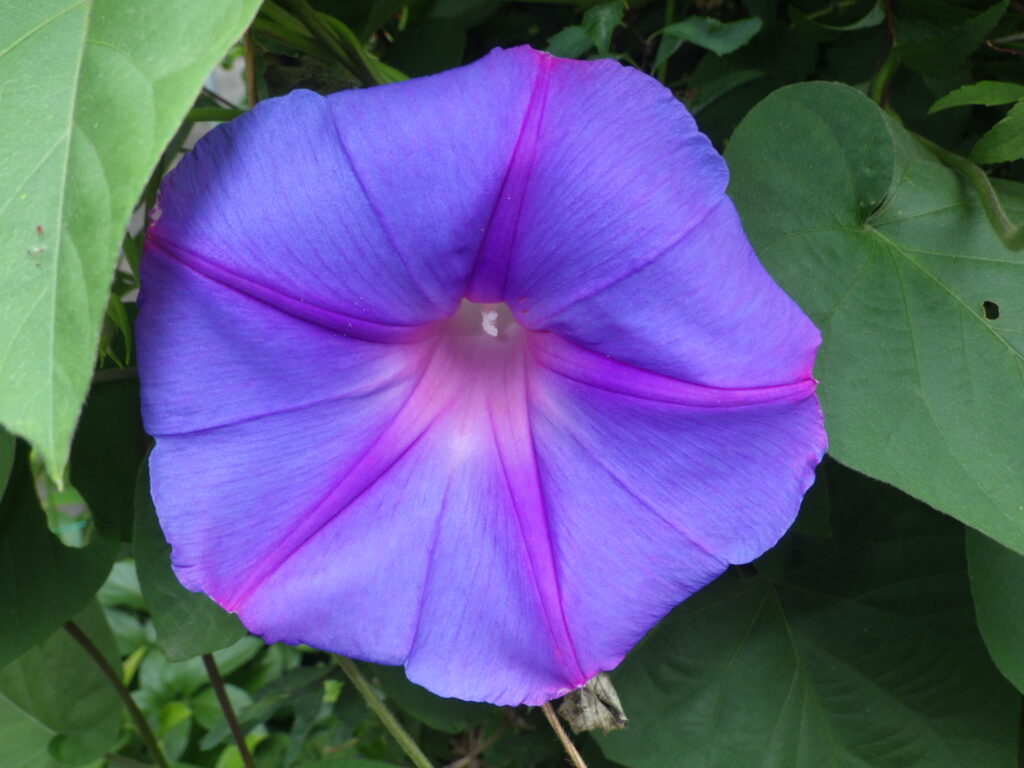
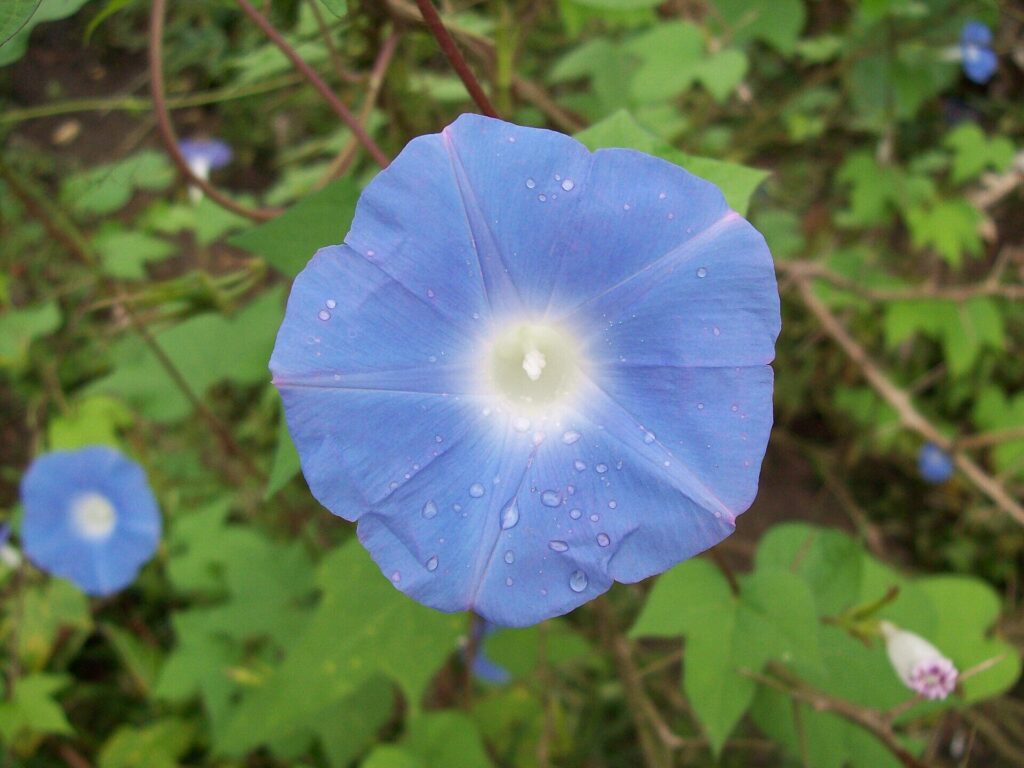
Regarding morning glories and American morning glories, the main difference is that in morning glories, the tips of the calyx lobes are mostly linear and long, with little to no recurve, and the corolla is large, about 5-8 cm in diameter. In contrast, in American morning glories, the tips of the calyx lobes are tubular and recurved, and the corolla is somewhat smaller, about 3-4 cm in diameter.
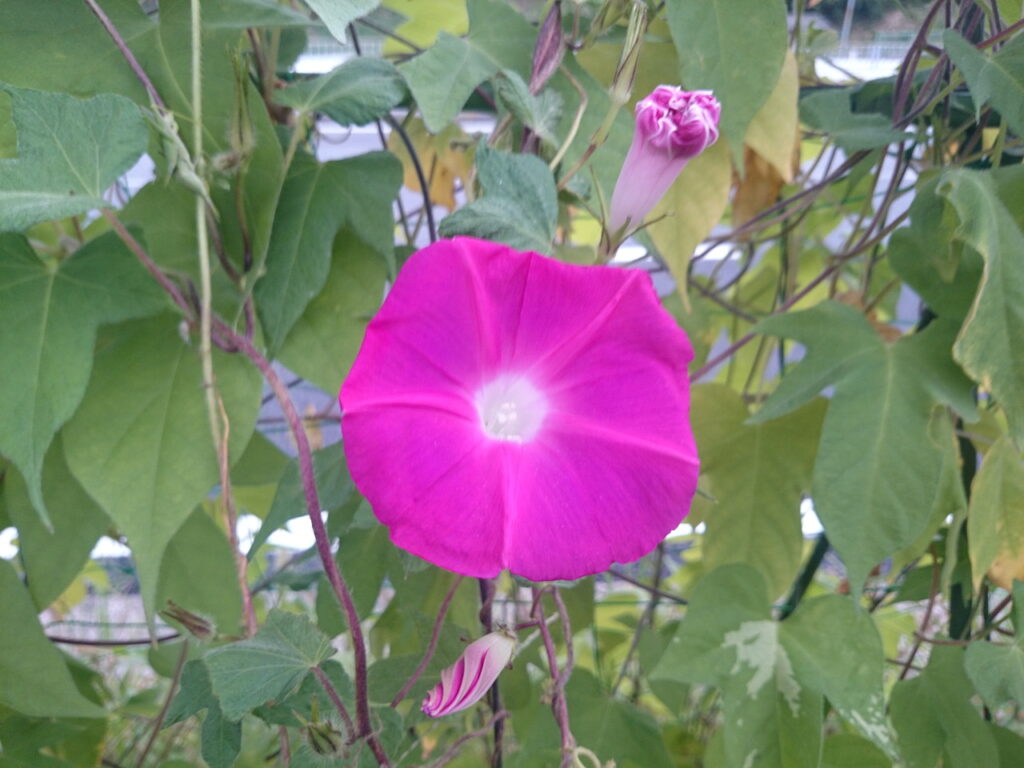
Furthermore, while American morning glories can have corollas ranging from purple to crimson, they are usually a uniformly bright sky blue. In contrast, Japanese morning glories (Ipomoea nil) do not have a fixed color, ranging from dark blue to crimson, and some varieties may have variegated patterns due to selective breeding.
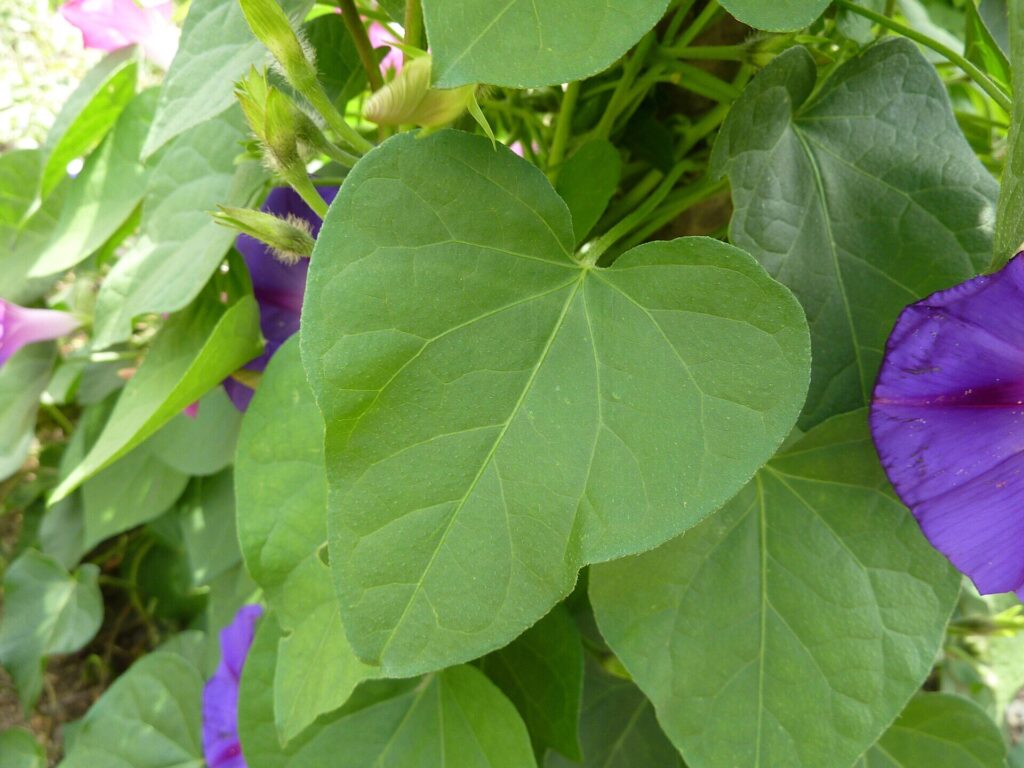
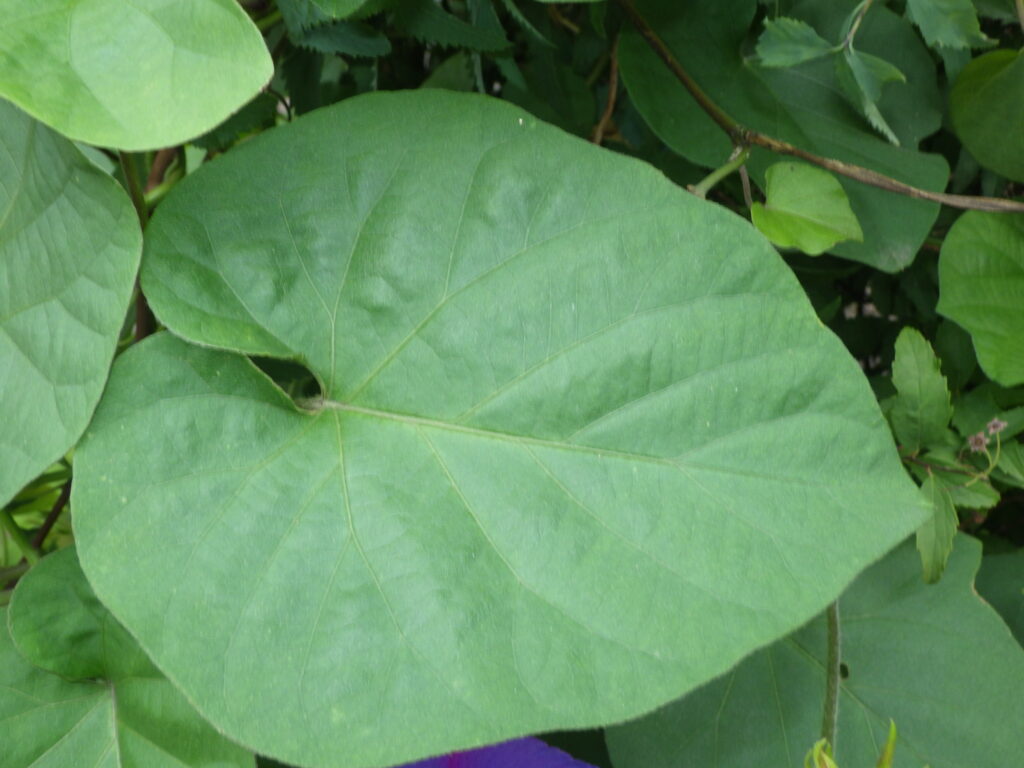
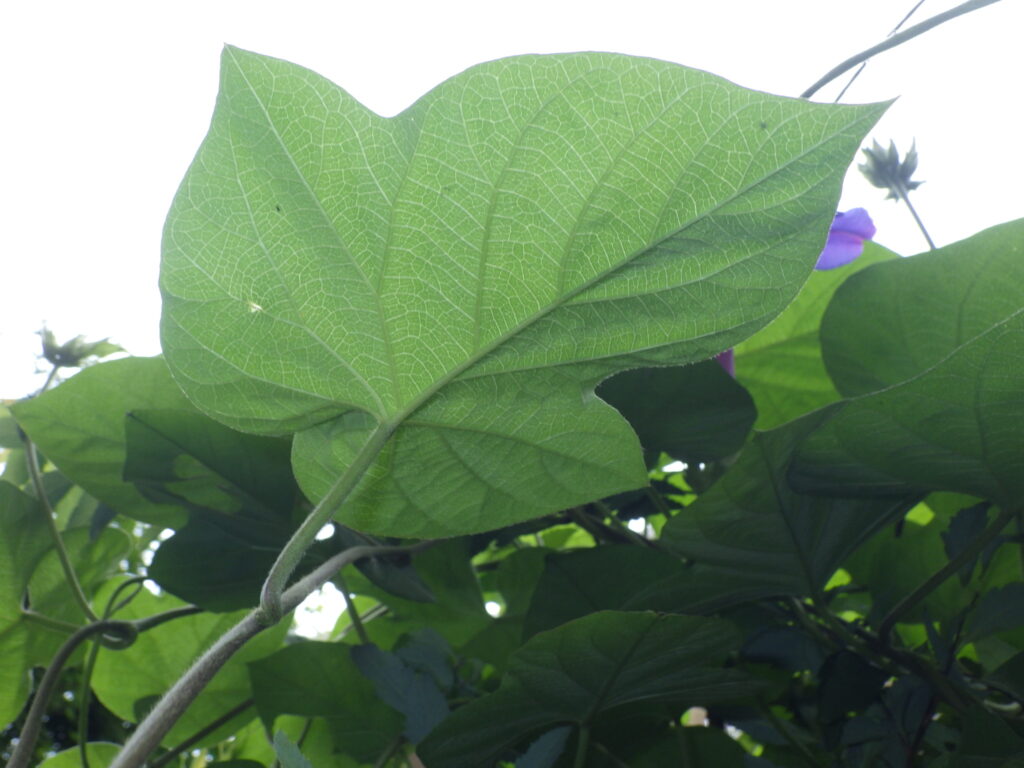
Regarding Ipomoea purpurea and Ipomoea nil, the differences are that in Ipomoea purpurea, the inflorescence stalk is usually longer than the petiole, the flowers are 5-8 cm in diameter, the fruit is pendulous, the leaves are ovate-cordate and undivided, and have scattered short hairs on the upper surface, while in Ipomoea nil, the inflorescence stalk is usually shorter than the petiole, the flowers are 8-12 cm in diameter, the fruit is upturned, the leaves are ovate-cordate and sometimes shallowly 3-lobed, and have sparse hairs.
There are quite a few distinguishing features, but for practical purposes, it's sufficient to understand that if the upper surface of the leaves is covered in many hairs, it's Ipomoea nil (round-leaved morning glory), and if not, it's Ipomoea purpurea (field morning glory). The flowers of Ipomoea purpurea are clearly larger.
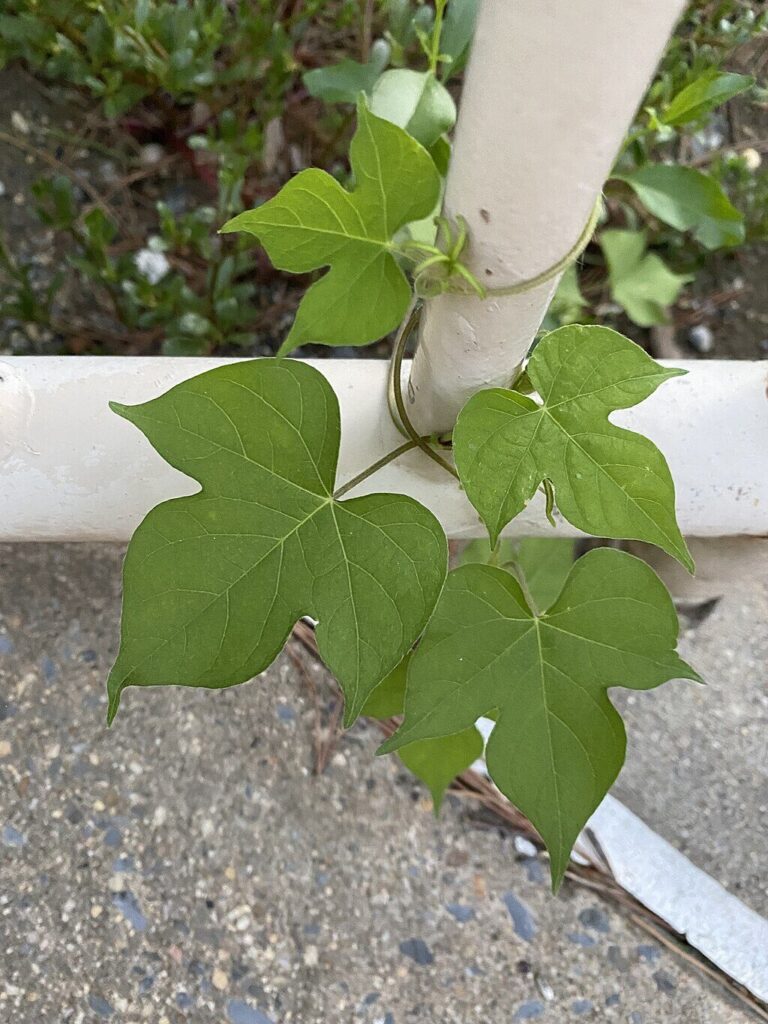
As the name suggests, all the leaves of the round-leaved morning glory are round and do not divide, but it is important to note that even in the wild morning glory, there are round, undivided leaves mixed in with the divided leaves.
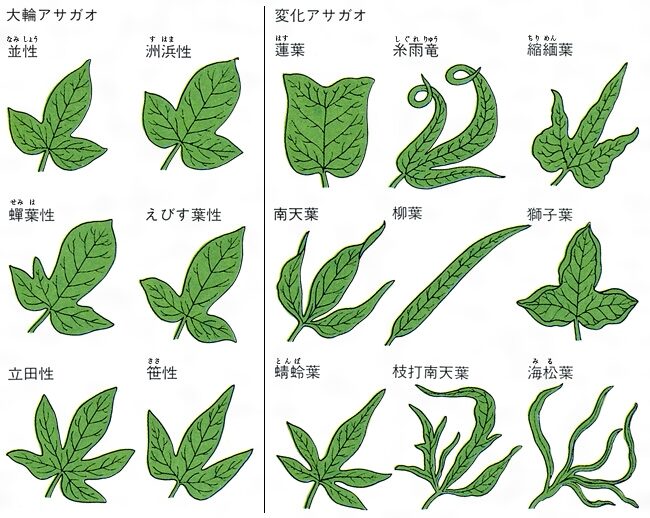
As mentioned above, morning glories, round-leaved morning glories, and wild morning glories can be distinguished by the shape of their calyx lobes, but it may be difficult to tell them apart if this part is not visible. In this case, there is no definitive way to distinguish them, but morning glories have many lobed leaves (leaves with notches), and the "cicada leaf" is the most common, although there are various shapes depending on the variety.

Are there any other similar species?
American morning glory has a variety called Ipomoea hederacea var. integriuscula. This variety is almost identical to the American morning glory, but as the name suggests, its leaves are entire, round, and undivided.

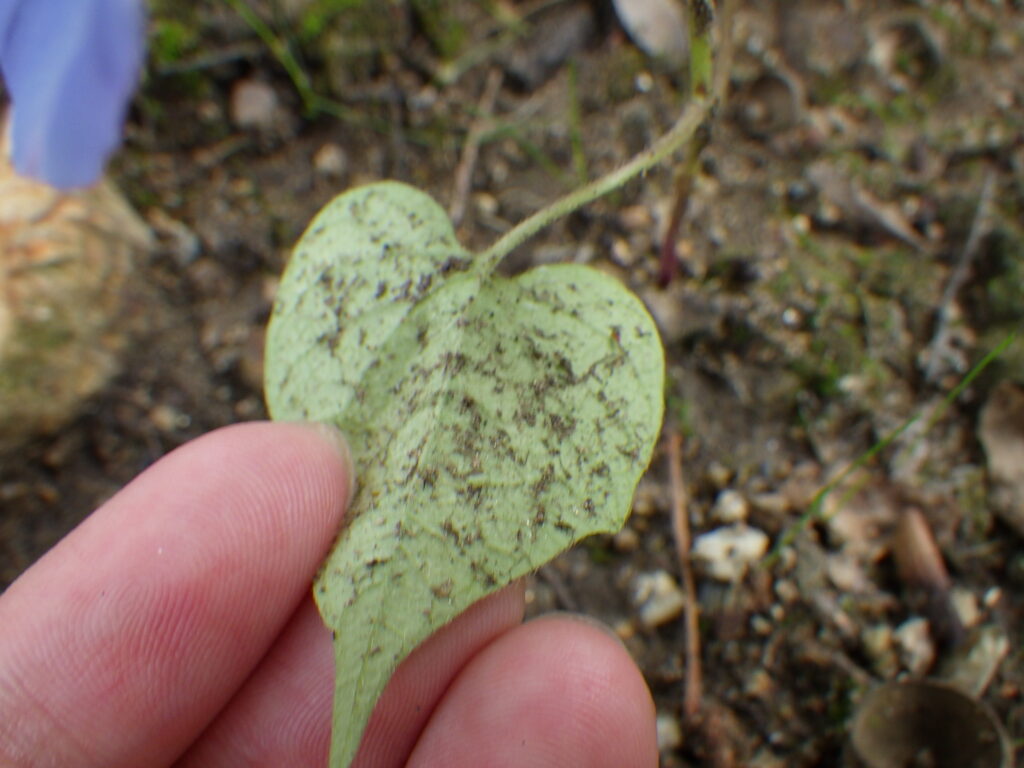
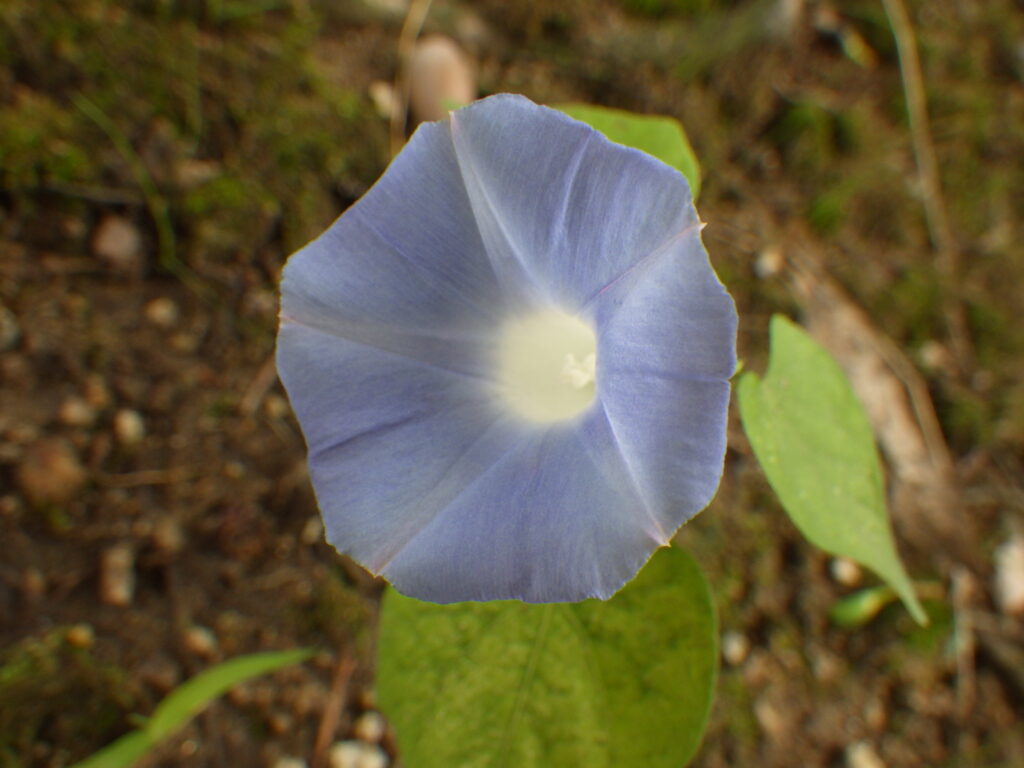
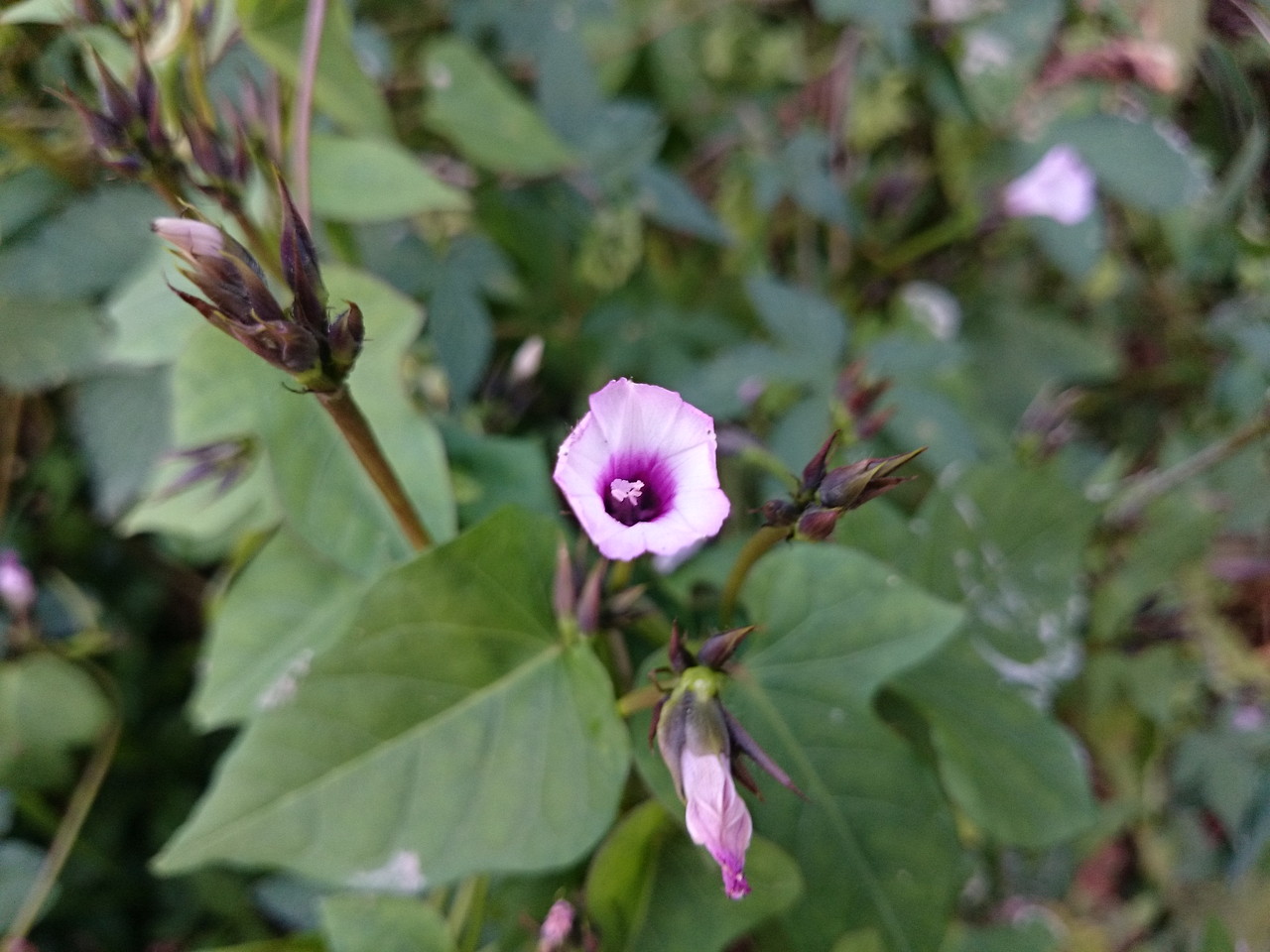
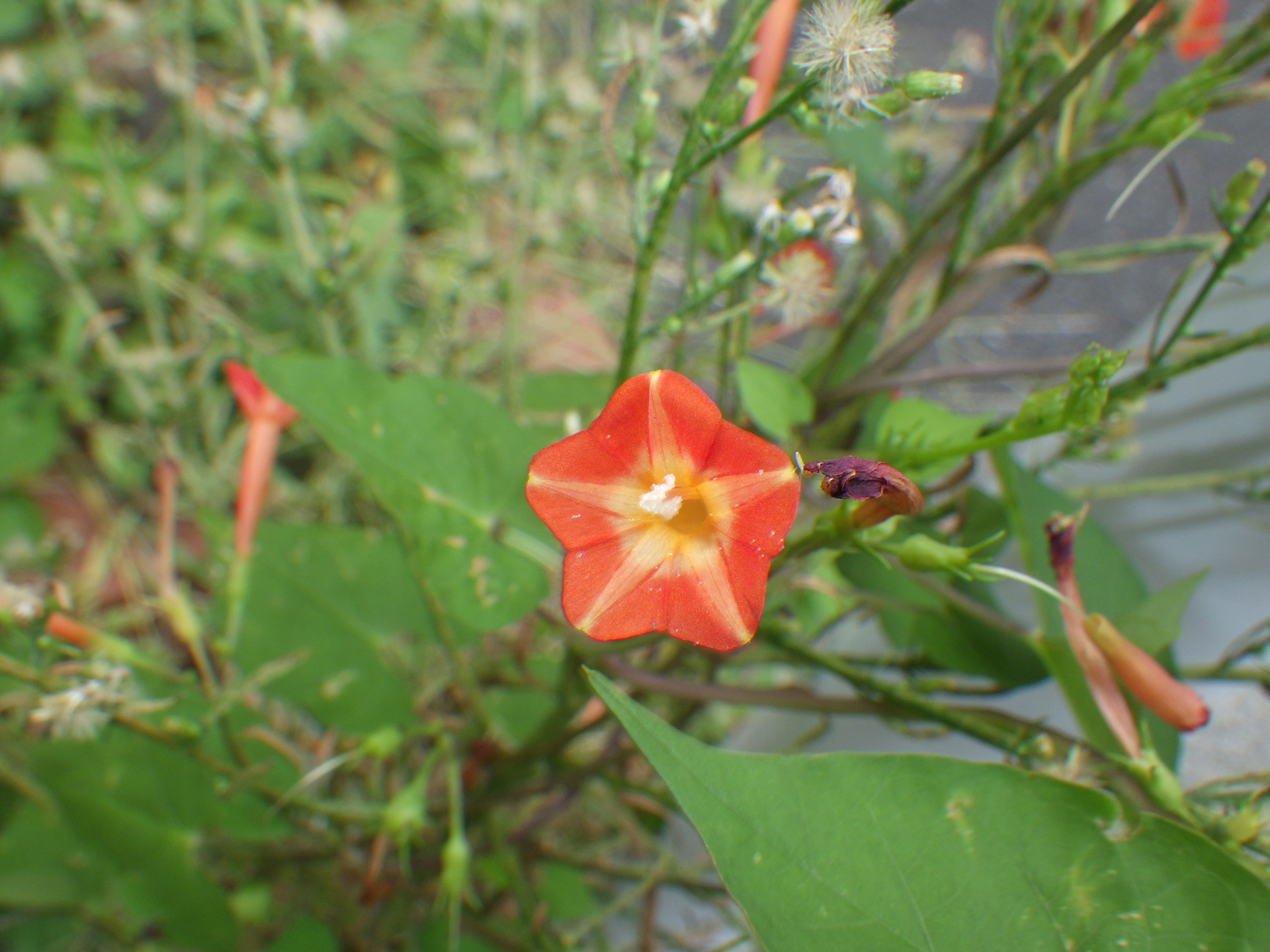
The sweet potato genus includes many other species, but most have small corollas, and we will omit the differences here. Please see the separate article for more details.
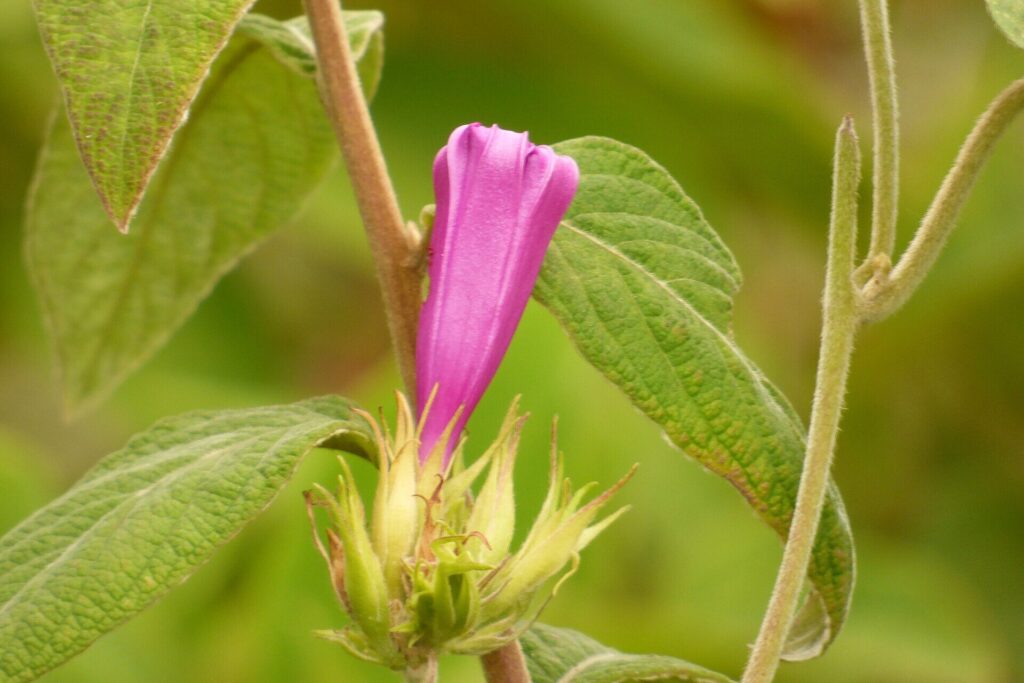
Convolvulus, such as Calystegia pubescens, belongs to the same Convolvulaceae family as morning glories, which may cause some people to confuse them.
However, morning glories typically have pink corollas, and a key difference is that the calyx of the corolla is enclosed in leaf-like structures called bracts or bract leaves.
Please see the separate article for information on the differences between species in the Convolvulus genus.
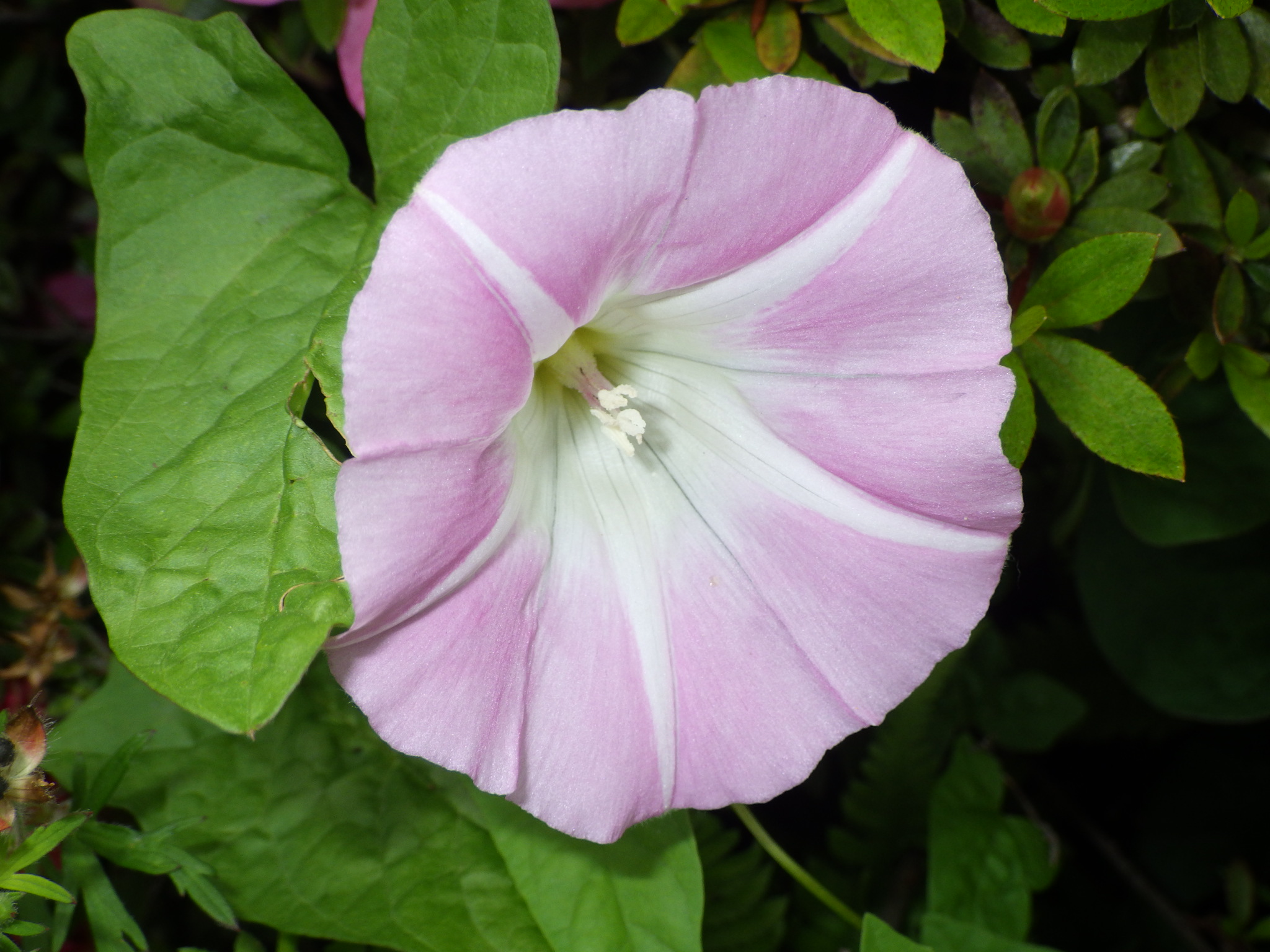
The origins of morning glories in Japan are shrouded in mystery!?
As mentioned above, the generally accepted theory worldwide is that morning glories are native to Central and South America. In Japan, some literature states that they are native to the Himalayas (Kanagawa Prefecture Flora Survey Association , 2018), but Chinese and British literature also state that they are native to the Americas (RBG Kew, 2024).
The reason for this is that, excluding those escaped through cultivation, most species of the Ipomoea genus are found in the Americas, which is the region where the greatest diversity has occurred.
Considering this, it might seem that after Europeans discovered the Americas, morning glories spread across Eurasia and eventually reached Japan. In other words, it was part of the "Columbian Exchange."
However, that's not the case. In fact, illustrations appear in a Buddhist scripture manuscript called "Heike Nokyo," which was compiled in 1164 (Heian period) (Austin et al., 2001).
Why is this?
Unfortunately, the reason is not entirely clear. The following hypotheses have been proposed.
- It became feral through long-distance seed dispersal by animals.
- It was introduced via Asia and China before Columbus's rediscovery of the Americas.
- The plant resembling a morning glory depicted in the "Heike Nokyo " is a different species; the real morning glory was introduced to Japan via Europe after Columbus.
Recent papers increasingly point out that (2) is the case (Nitta & Hoshino, 2019).
However, it might seem strange that plants from the Americas arrived in Japan before the Columbus Exchange. In fact, the details of how this happened are not well understood.
My theory is that the Dené–Yeniseian languages are known to be a language group spanning the Americas and Eurasia. If this is true, it would mean that Native Americans (Indians) who spoke Proto-Dene–Yeniseian returned to Eurasia, which could be evidence of a relationship between the Americas and Eurasia before Columbus (Sicoli & Holton, 2014; Wilson, 2023).
Other linguistic research suggests that the "Jie" people, a small tribe that existed in Shanxi in northern China during the 4th century (the Sixteen Kingdoms period) and was one of the Five Barbarians, may be the "Ket people," who have roots in Native American cultures (Vovin et al., 2016). The Ket language spoken by the Ket people belongs to the Yenisei language family, which also suggests a connection between the Americas and Eurasia.
References
Austin, DF, Kitajima, K., Yoneda, Y., & Qian, L. 2001. A putative tropical American plant, Ipomoea nil (Convolvulaceae), in pre-Columbian Japanese art. Economic Botany 55(4): 515-527. https://www.jstor.org/stable/4256486
Kanagawa Prefecture Flora Survey Association. 2018. Kanagawa Prefecture Flora 2018 (Electronic Edition). Kanagawa Prefecture Flora Survey Association, Odawara. 1803pp. ISBN: 9784991053726
RBG Kew. 2024. The International Plant Names Index and World Checklist of Vascular Plants. Plants of the World Online. http://www.ipni.org and https://powo.science.kew.org/
Nitasaka, Eiji & Hoshino, Atsushi. 2019. Diverse mutant resources and high-precision genomic information of morning glory. Frontiers in Plant Science 10: 169-178. ISSN: 2432-9819, https://doi.org/10.24480/bsj-review.10c8.00168
Shimizu, K., Morita, H., & Hirota, S. 2001. Illustrated Guide to Naturalized Plants of Japan: 600 Species of Plant Invaders (Revised). National Rural Education Association, Tokyo. 553pp. ISBN: 9784881370858
Sicoli, MA, & Holton, G. 2014. Linguistic phylogenies support back-migration from Beringia to Asia. PloS One 9(3): e91722. https://doi.org/10.1371/journal.pone.0091722
Vovin, A., Vajda, E., & De La Vaissiere, E. 2016. Who were the *Kjet and What Language did they Speak?. Journal Asiatique 304(1): 125-144. https://doi.org/10.2143/JA.304.1.3146838
Wilson, JA 2023. Late Holocene Technology Words in Proto-Athabaskan: Implications for Dene-Yeniseian Culture History. Humans 3(3): 177-192. https://doi.org/10.3390/humans3030015