Both holly (Ilex crenata) and holly osmanthus belong to the Oleaceae family and are commonly cultivated in urban areas. Young holly trees are also frequently seen in forests. Morphologically, both have serrated leaves, which often leads to confusion between the two species. Furthermore, there are many other plants with "holly" in their name, such as Ilex crenata, Ilex integra, and Nandina domestica, which are also frequently confused. However, careful observation of the leaves, flowers, and fruits reveals clear differences. Interestingly, both holly and Ilex crenata have been found to have both serrated and entire leaves, which is thought to be related to the feeding habits of herbivorous mammals such as Japanese deer. This article will explain the classification and ecology of species that closely resemble holly.
- What are holly (Ilex crenata) and holly osmanthus?
- What is the difference between holly and holly osmanthus?
- What are the differences between Japanese holly (Ilex crenata), Japanese holly (Ilex rotunda), and European holly (Ilex serrata)?
- What is the difference between holly and mahonia?
- Why do holly plants have leaves with thorns and leaves without?
- What are the seed dispersal methods?
- References
What are holly (Ilex crenata) and holly osmanthus?
Osmanthus heterophyllus, also known as tiger holly, is a small evergreen tree distributed in Honshu (west of the Kanto region), Shikoku, and Kyushu in Japan, growing on the slopes of slightly dry hills. It is also commonly planted in gardens as an ornamental plant, and escaped cultivation is common.
Osmanthus x fortunei, also known as holly osmanthus, is a presumed hybrid of holly and Osmanthus asiaticus. It is cultivated in parks, streets, and gardens, and sometimes escapes cultivation.
Both belong to the genus Osmanthus in the family Oleaceae, and can be seen being cultivated even in urban areas. As for holly, young trees can often be seen in forests.
Morphologically, they share common characteristics such as serrated leaves, a corolla with a tube and four lobes, and a drupe fruit (Kanagawa Prefecture Flora Survey Association, 2018).
Therefore, these two species are often confused. Moreover, there are many other plants with "holly" in their name, such as Ilex crenata, Ilex integra, and Nandina domestica, and these are also frequently confused.
What is the difference between holly and holly osmanthus?
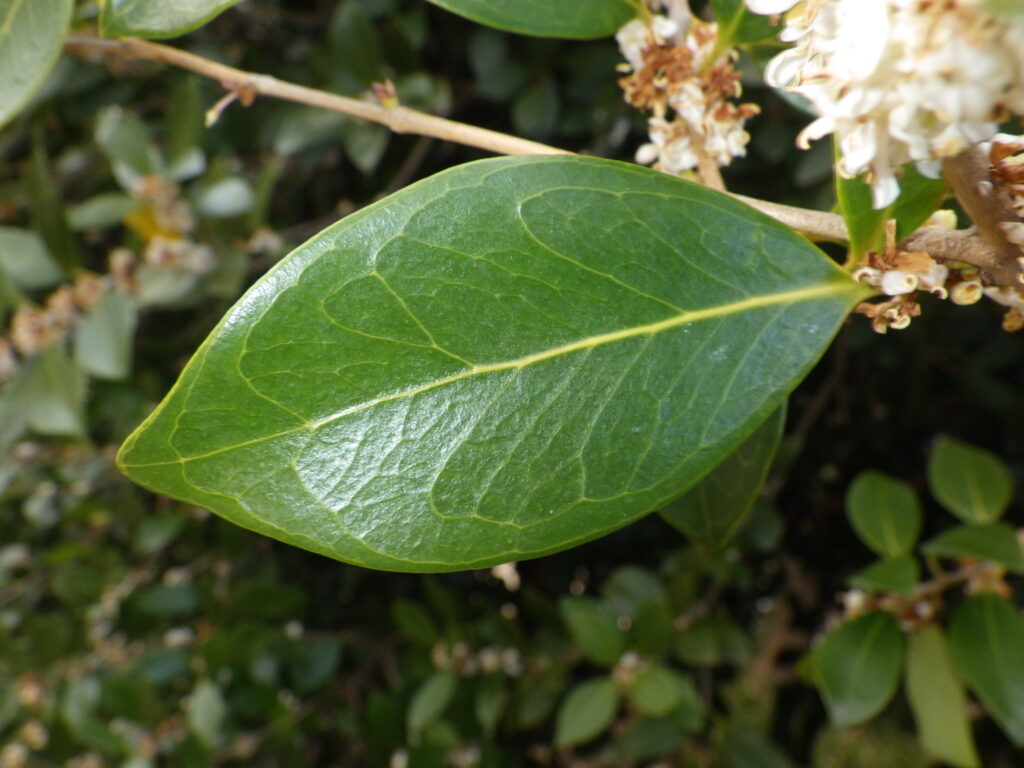
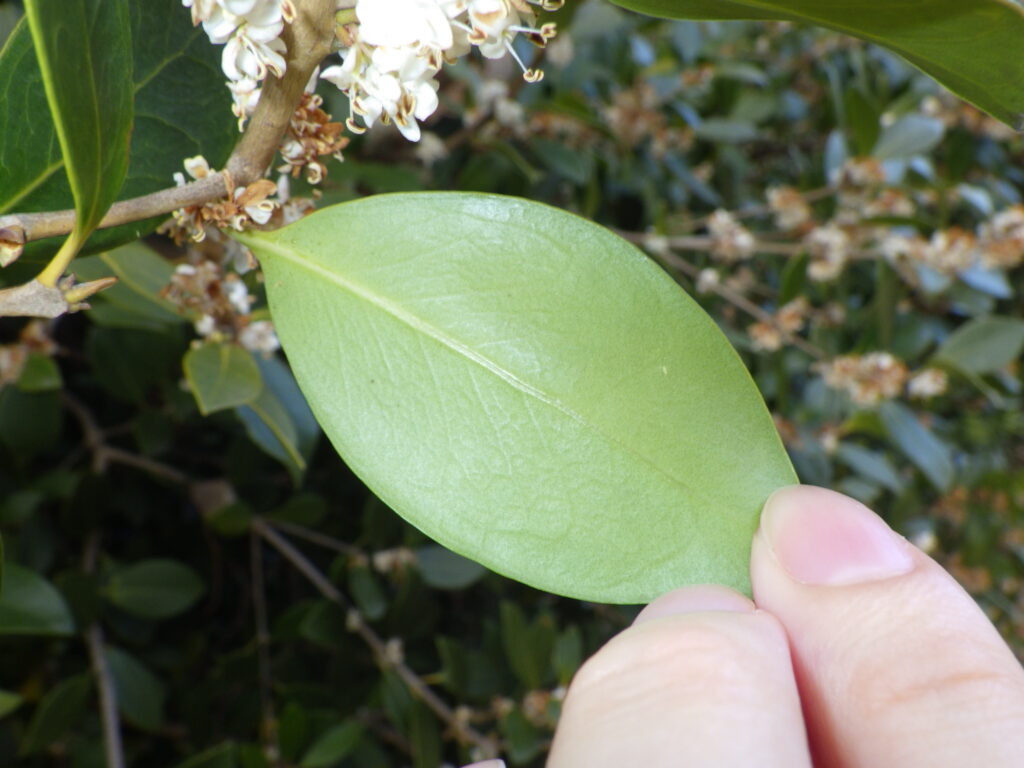
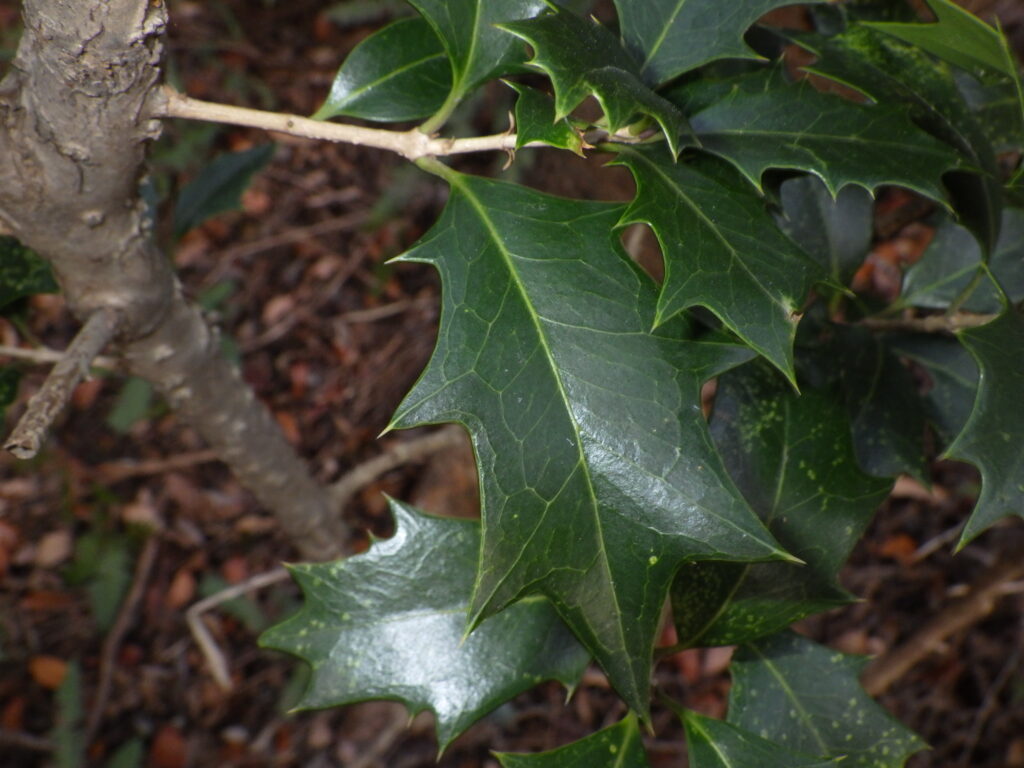
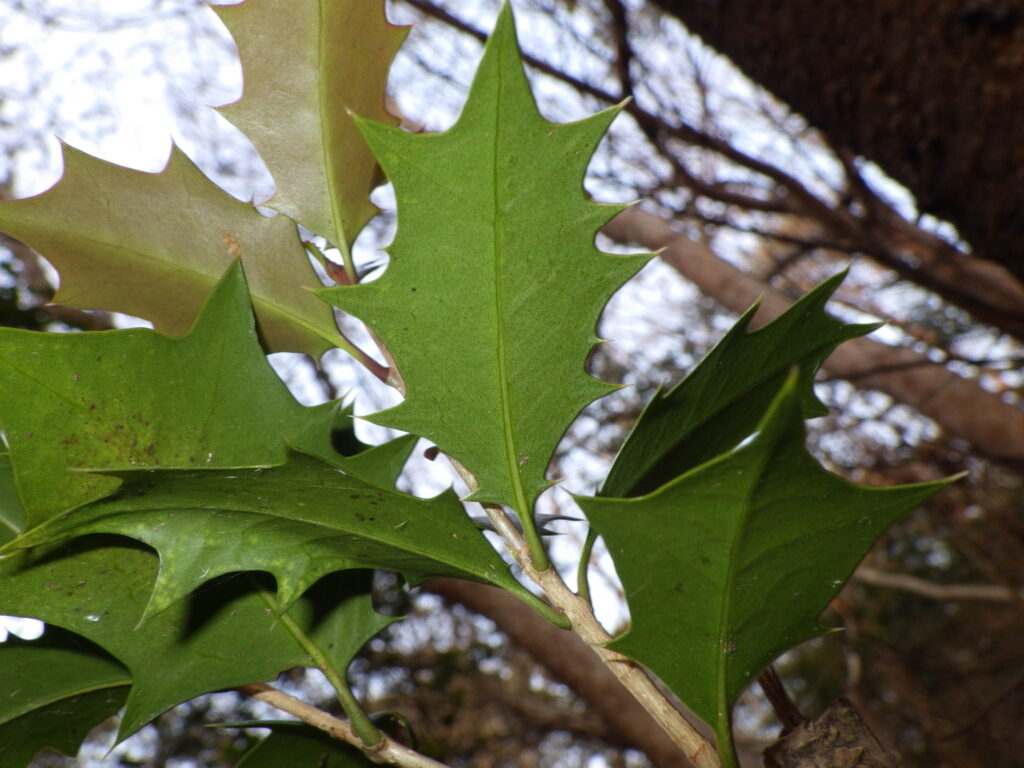
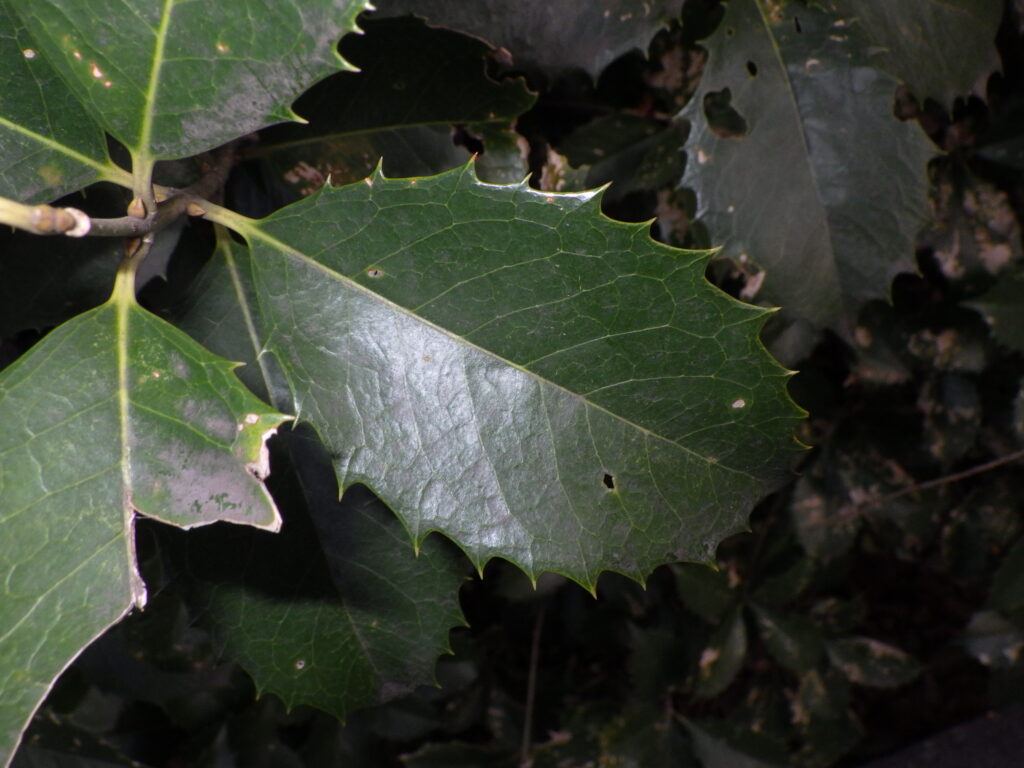
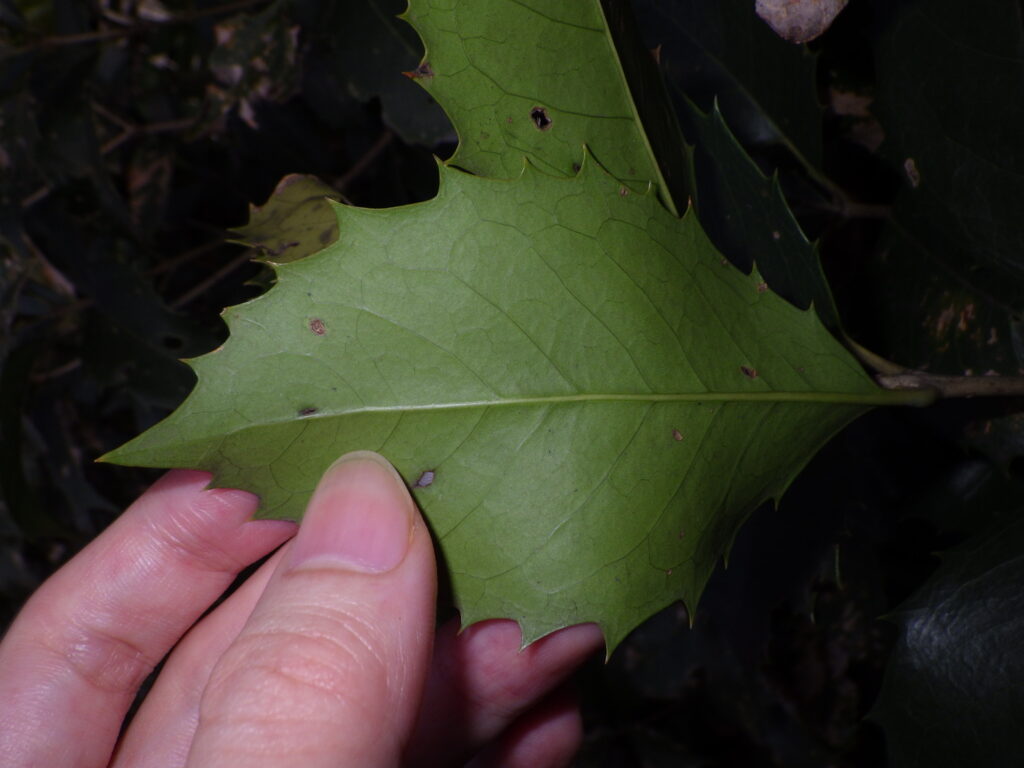
Holly and holly olive can be distinguished by the shape of their leaves (Hayashi, 2019).
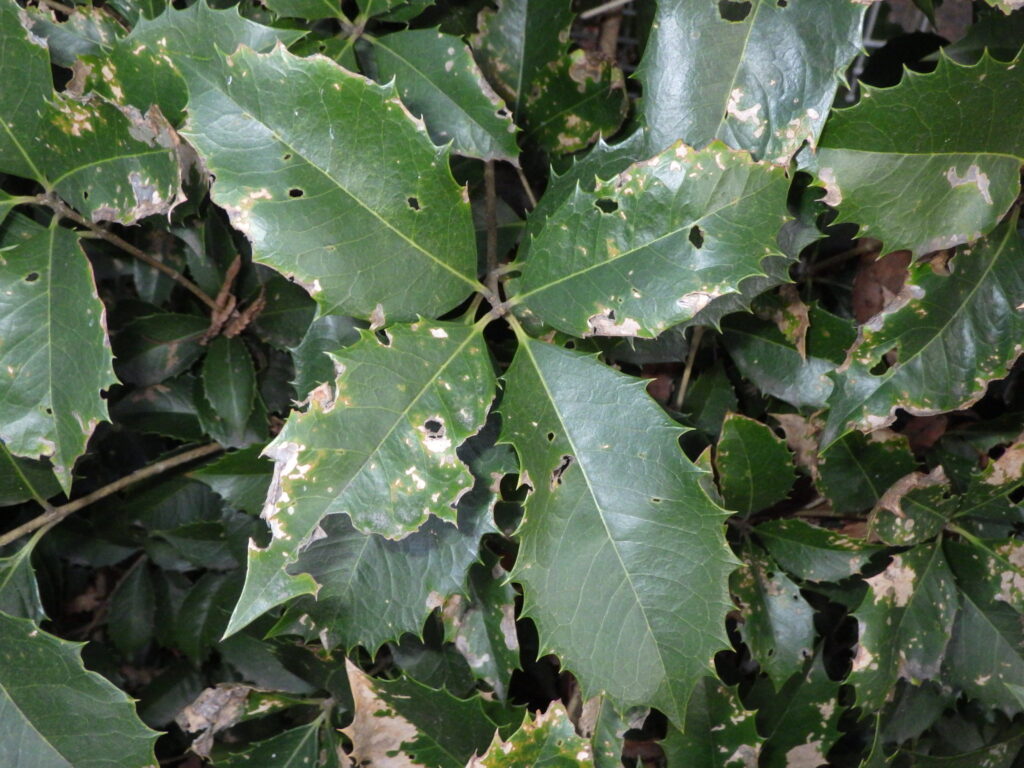
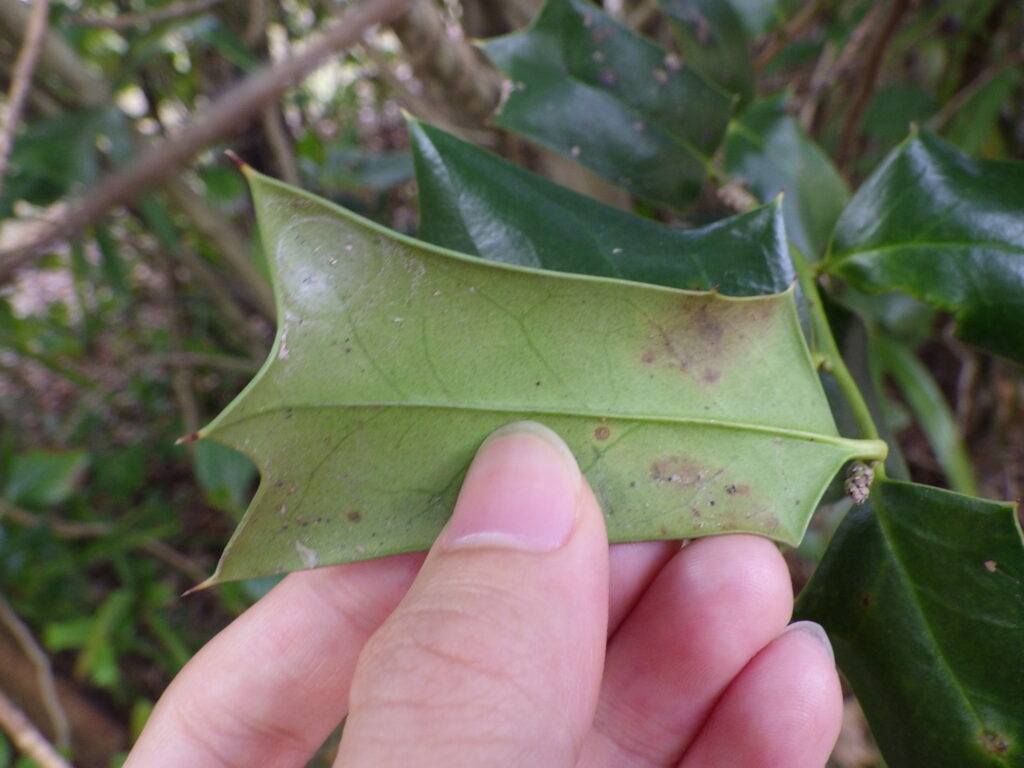
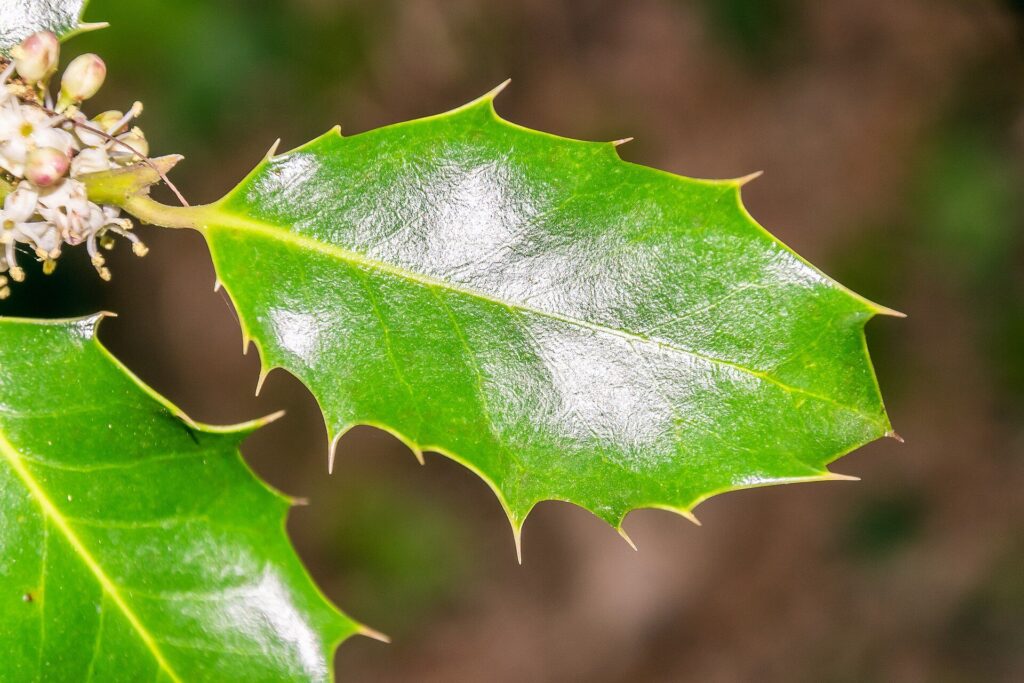
Specifically, in the leaves with serrations, holly has 3 to 5 pairs of larger serrations, while holly osmanthus has 6 to 10 pairs of finer serrations.
This can be understood by considering that Osmanthus heterophyllus is a hybrid of Osmanthus fragrans, which has coarsely serrated leaves, and Osmanthus fragrans, which has finely serrated leaves.
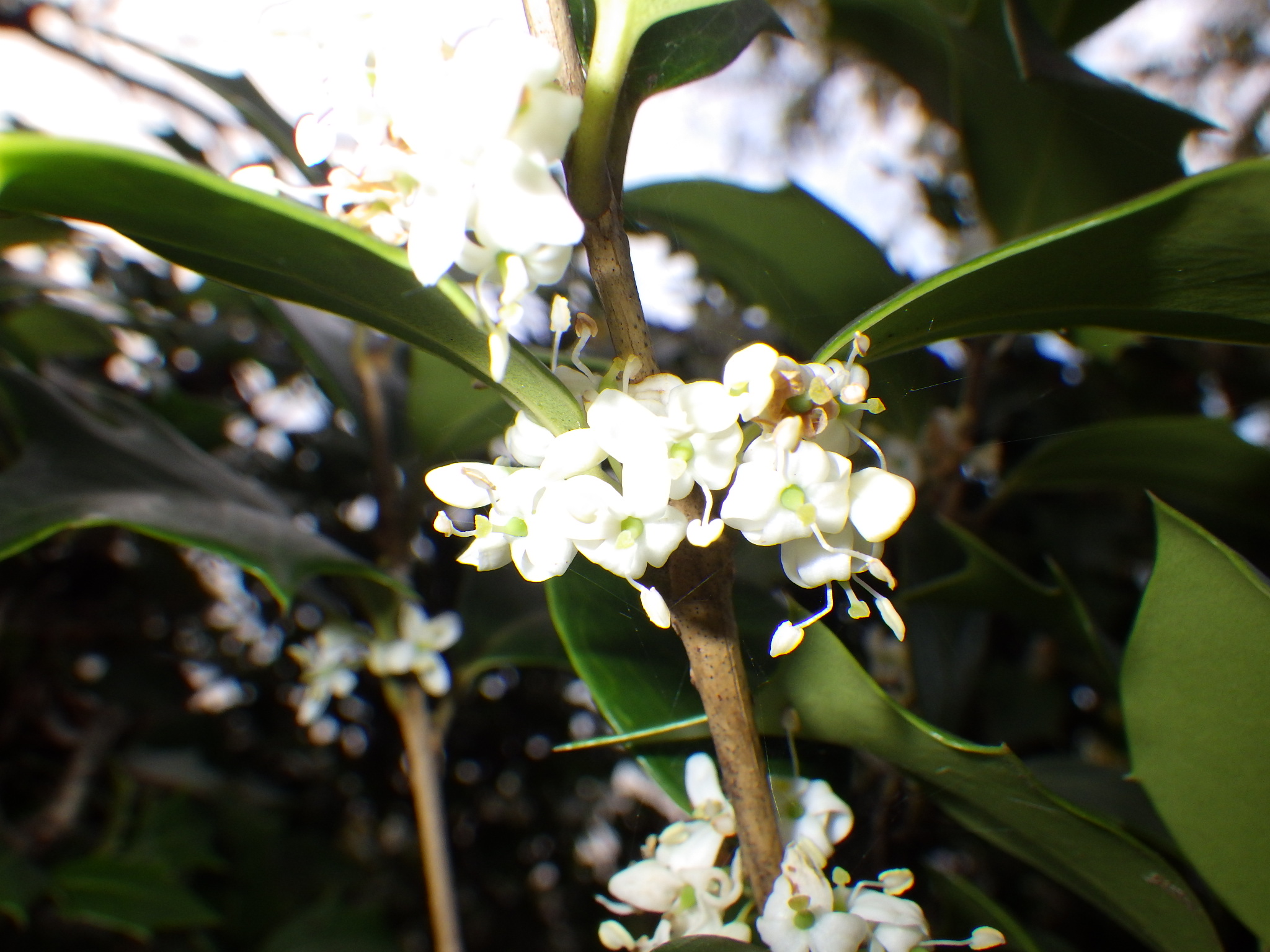
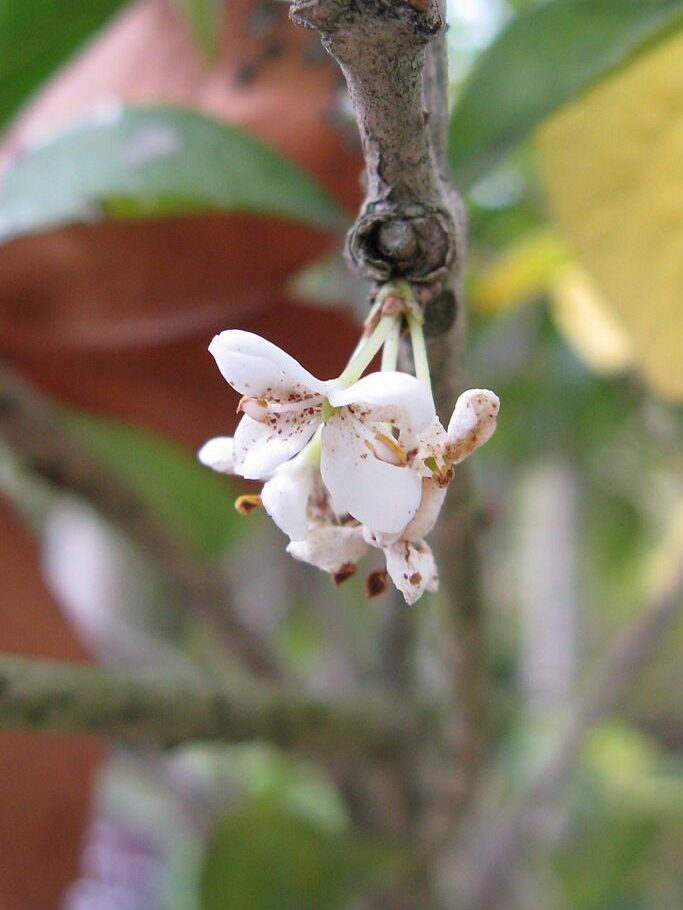
Also, although it's not often pointed out, there seem to be differences in the shape of the flowers as well.
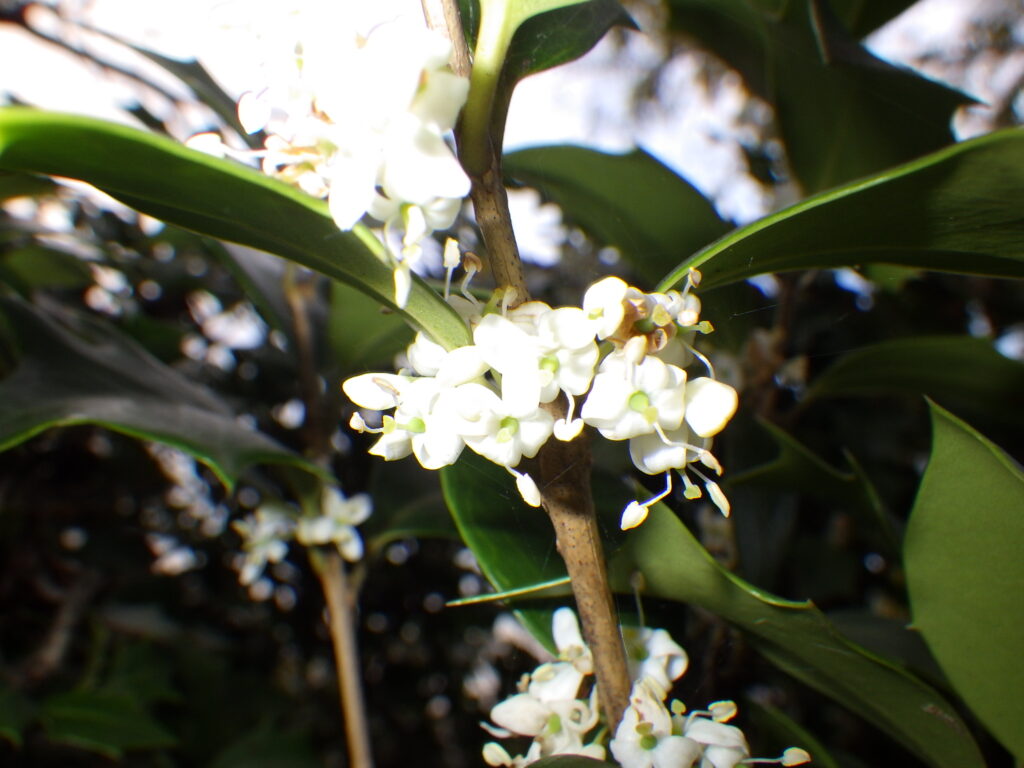
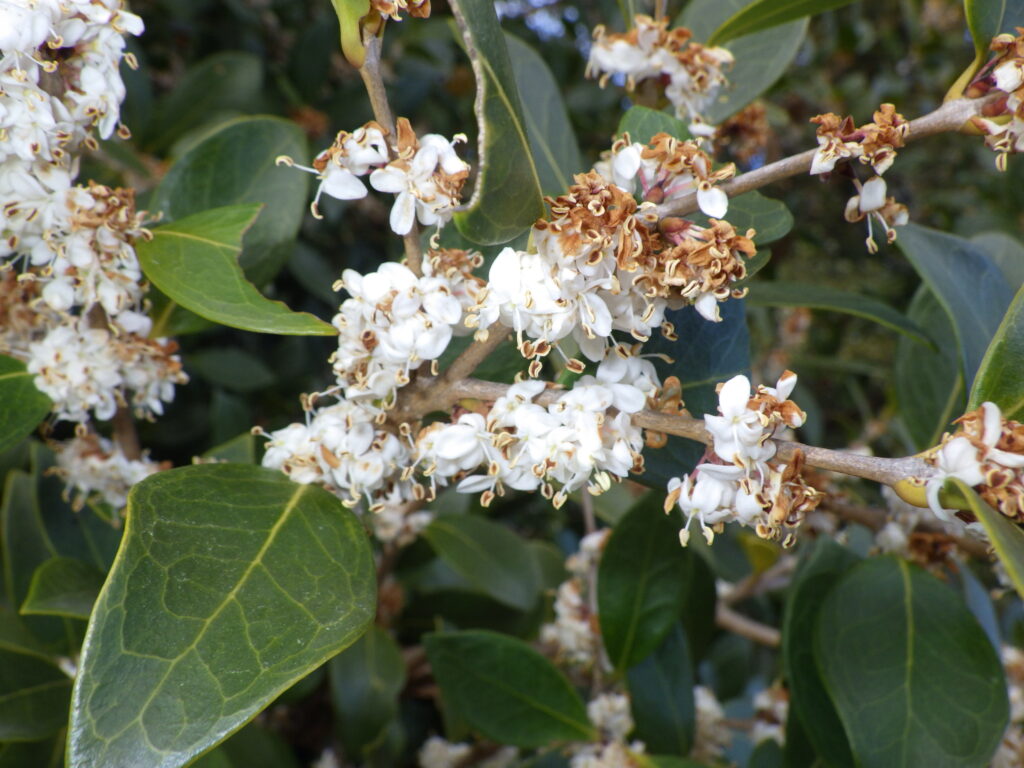
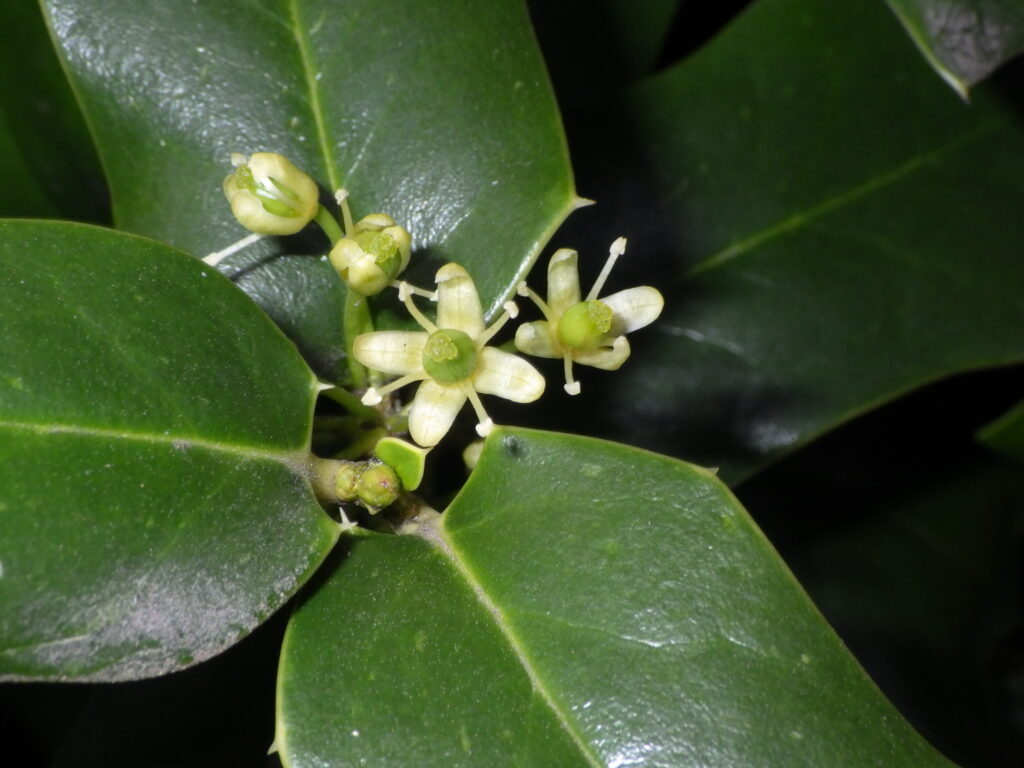
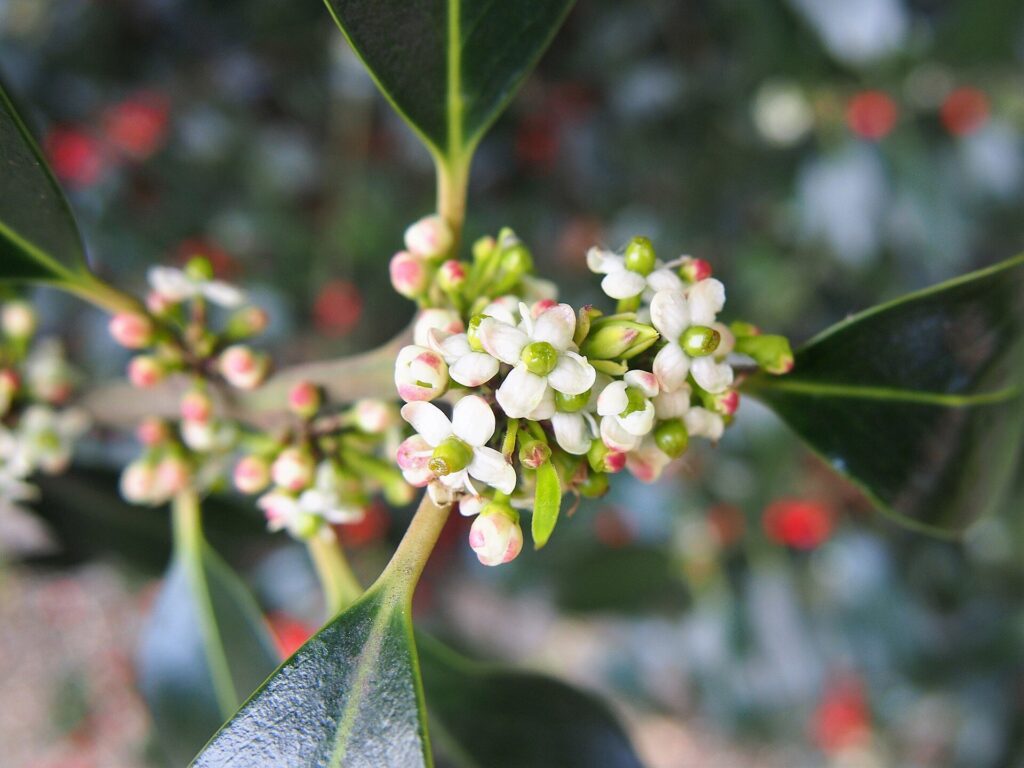
In holly, the corolla lobes are curved backward and the stamens clearly protrude from the corolla, whereas in holly osmanthus, the corolla lobes are flat and the stamens are usually contained within the corolla.
This, too, can be considered a result of the holly osmanthus inheriting elements of the silver osmanthus flower.
What are the differences between Japanese holly (Ilex crenata), Japanese holly (Ilex rotunda), and European holly (Ilex serrata)?
Other species with names similar to holly include Japanese holly (Ilex crenata) and European holly (Ilex rotunda).
Ilex cornuta, also known as Japanese holly (Ilex cornuta), has the standard Japanese name Yabane-hiiragimochi (arrow feather holly), and is also called Hiiragimodoki (false holly) or Shina-hiiragi (Chinese holly). Native to China and the Korean Peninsula, it is an evergreen shrub sometimes cultivated as an ornamental plant in gardens, hedges, or pots.
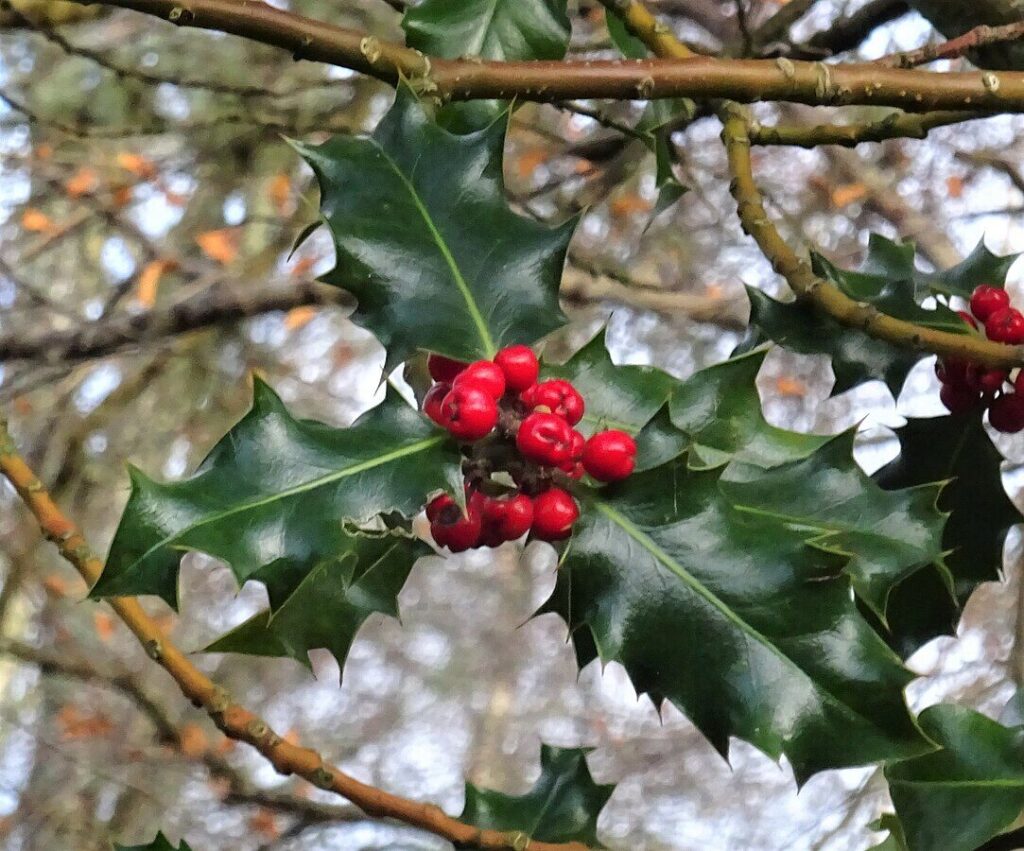
European holly (Ilex aquifolium), also known as Christmas holly, is an evergreen shrub native to Europe and West Asia, cultivated for ornamental purposes. It is used in Christmas decorations.
These species are named after the fact that their leaves have sharp serrations, similar to holly, and they are also evergreen trees, which likely contributes to the confusion.
However, their classifications are quite different to begin with. As mentioned above, Japanese holly belongs to the Oleaceae family, while Japanese holly and European holly belong to the Aquifoliaceae family.
It's common for flowers and fruits to differ significantly between different plant families.
Regarding the flowers, Japanese holly (Ilex crenata) is dioecious, meaning that each flower has either stamens or pistils, whereas Japanese holly (Ilex crenata) and European holly (Ilex rotunda) are monoecious, meaning that each flower has both stamens and pistils. Additionally, Japanese holly blooms from November to December, while Japanese holly and European holly bloom from April to May.
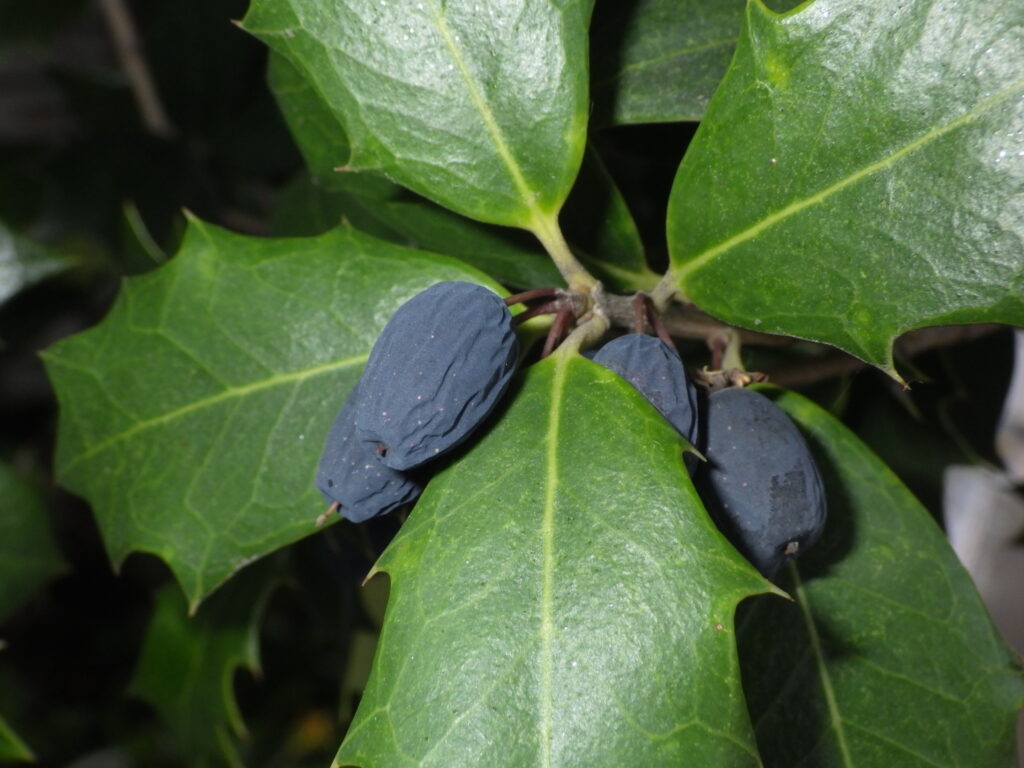
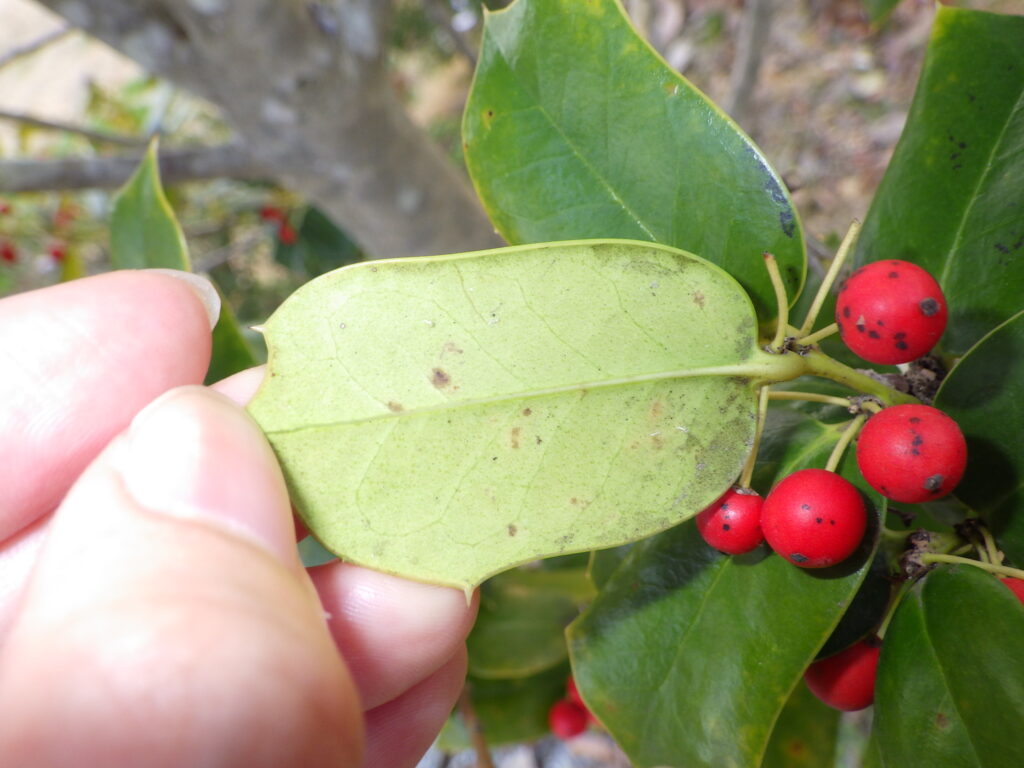
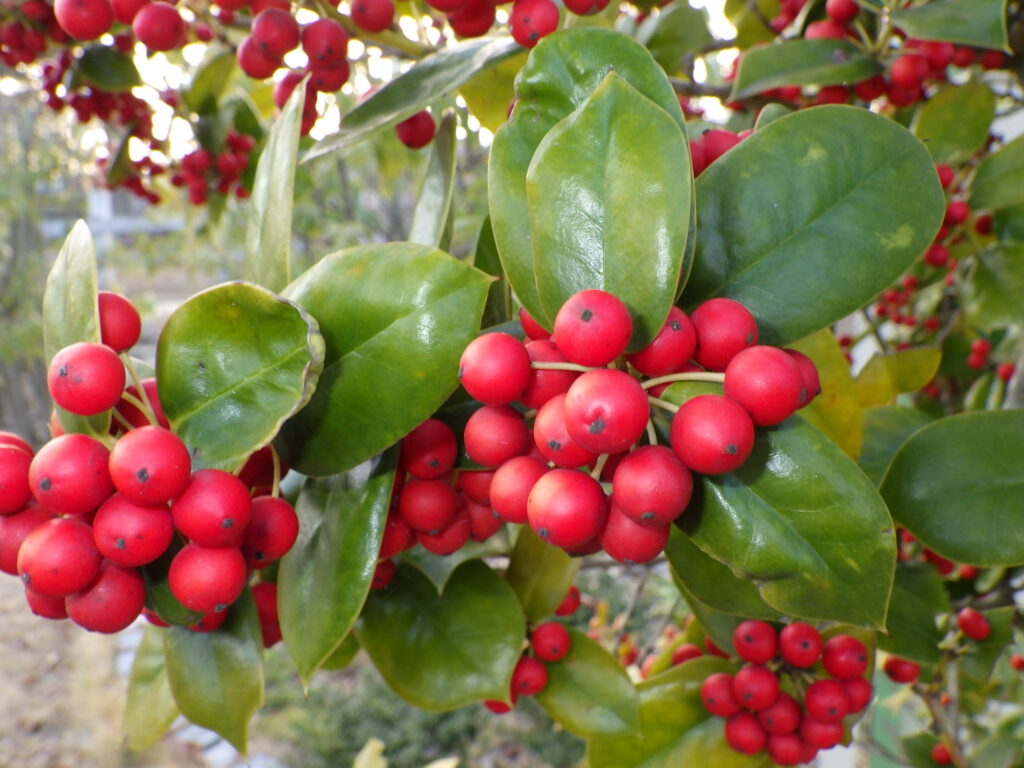
Regarding the fruit, there is a difference: Japanese holly ripens to a purplish-black color from May to July, while Japanese holly and European holly ripen to red in November to December.
If you see bright red, ripe berries in winter, it's definitely not a holly tree.
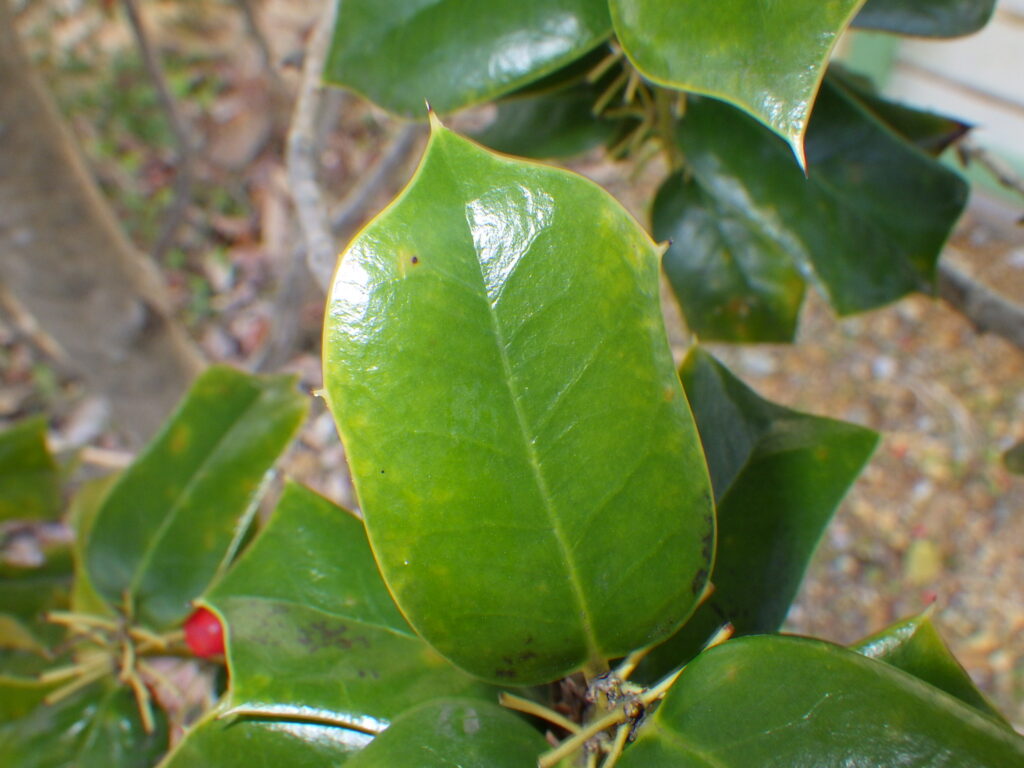
There are also differences in the leaves. Holly and holly osmanthus have petioles that are 4 to 15 mm long, while Japanese holly and European holly have petioles that are only 2 to 5 mm long.
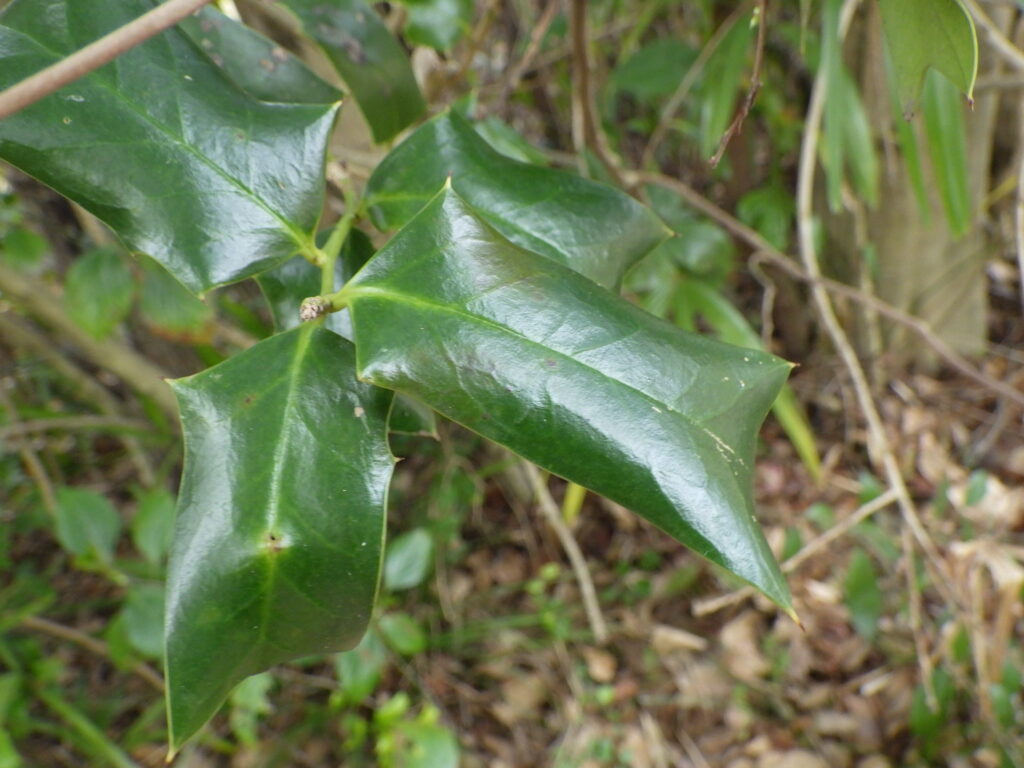
The rectangular shape of the leaves of Ilex crenata, with thorns at all four corners, is unique to both Ilex crenata and Ilex integra, and this is an important distinguishing feature.
What is the difference between holly and mahonia?
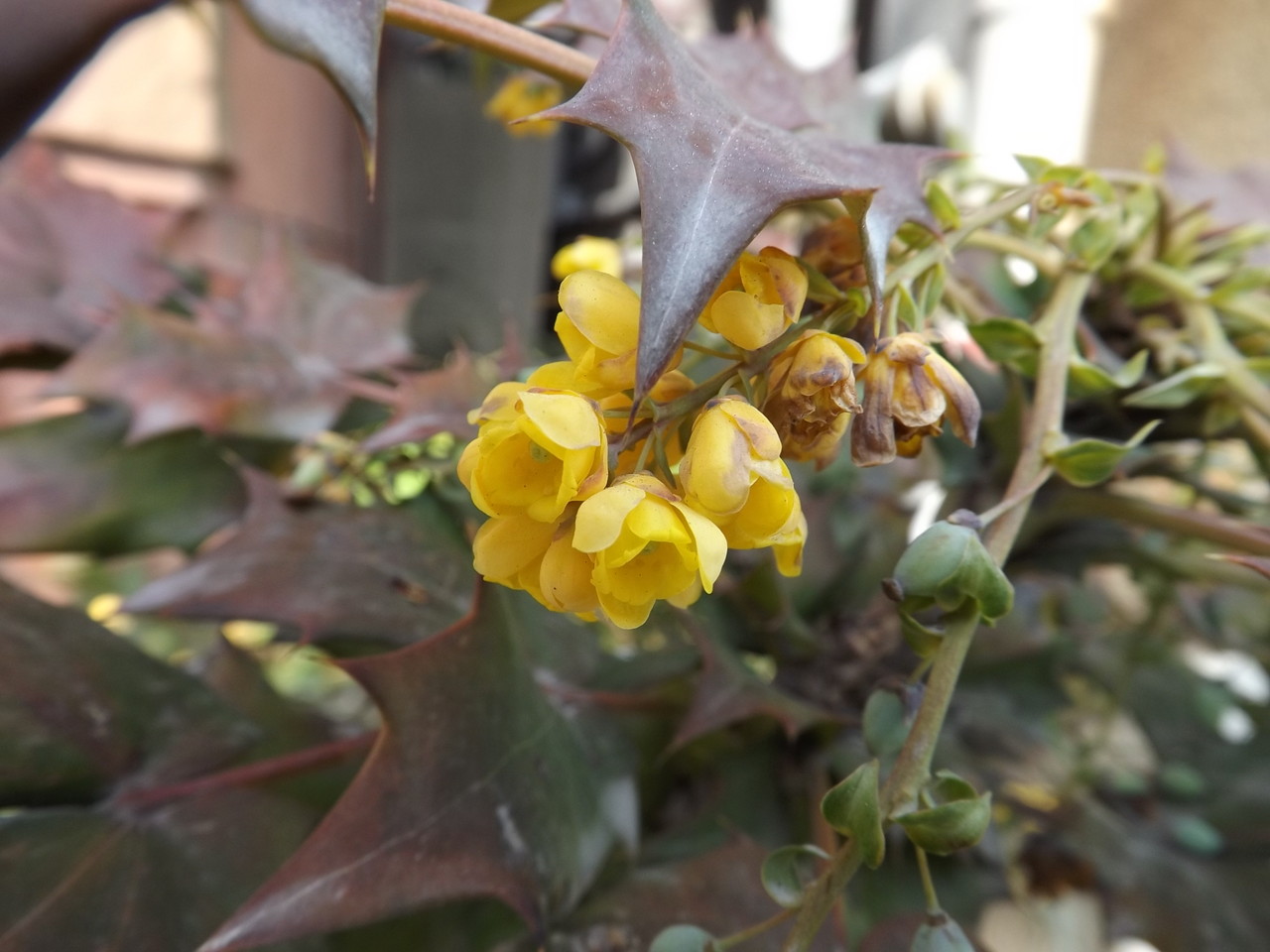
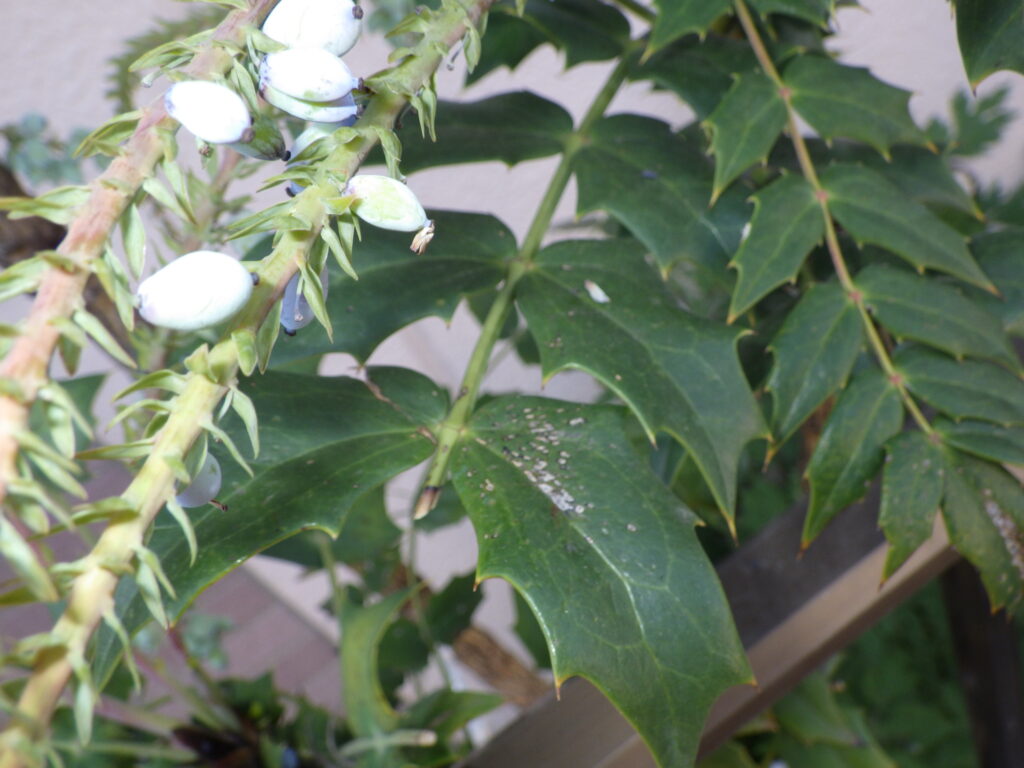
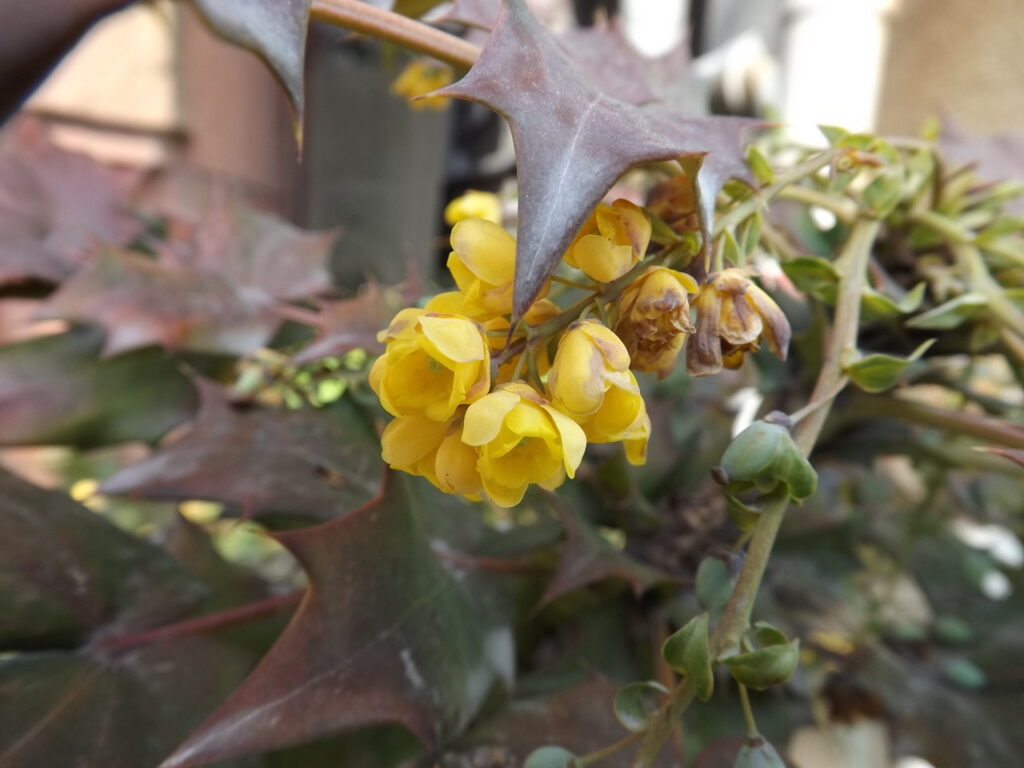
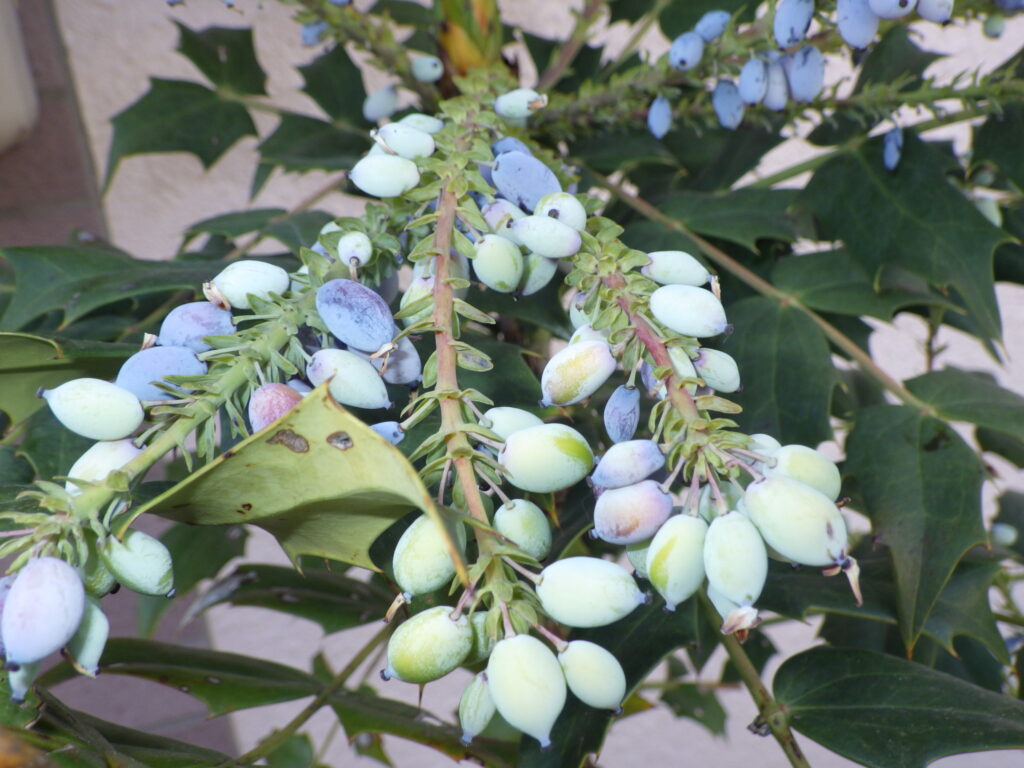
Berberis japonica, also known as holly maize, is another species that is often confused with holly.
However, Mahonia japonica belongs to the Berberidaceae family, which is a completely different group from holly, which belongs to the Oleaceae family.
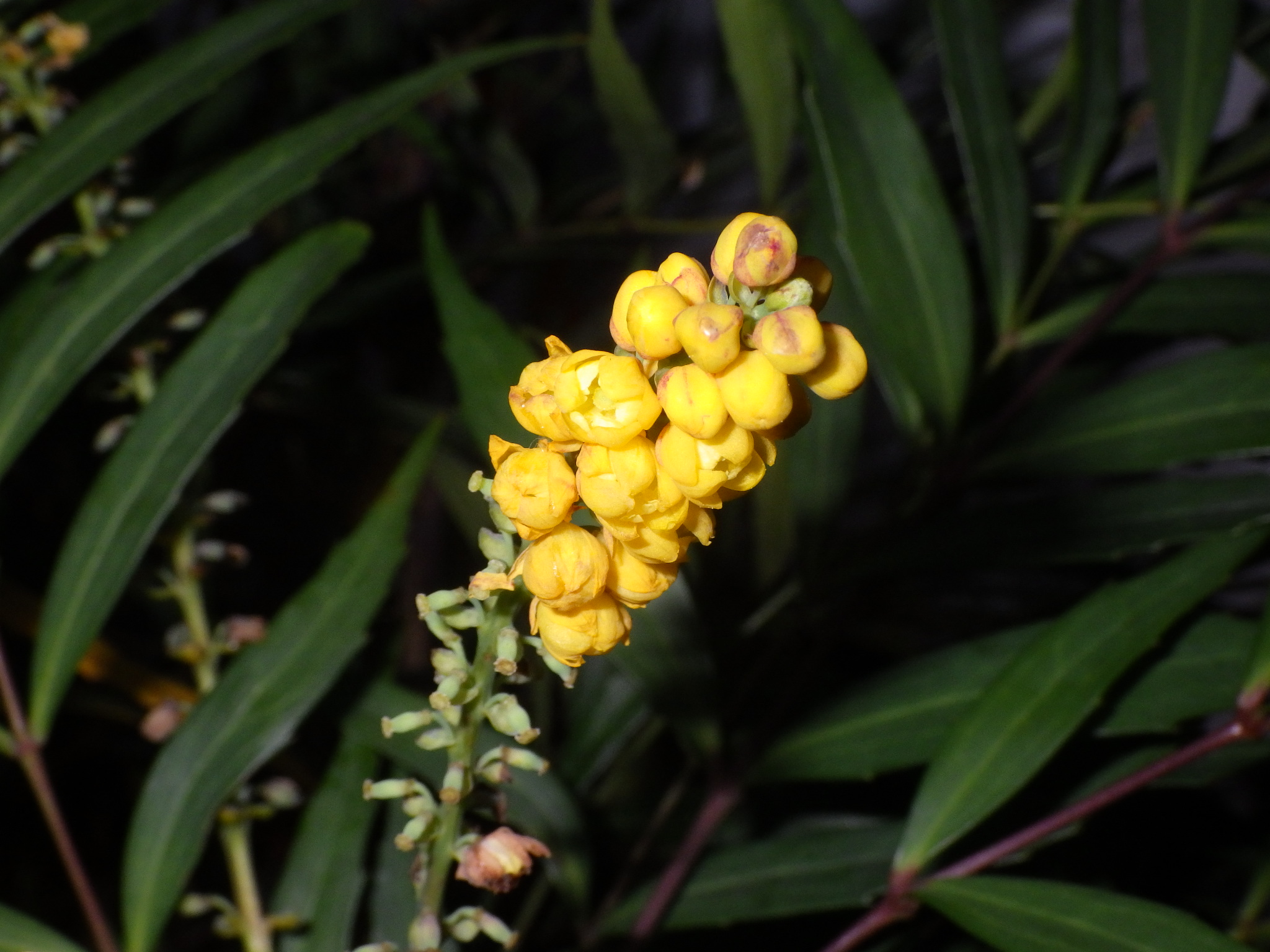
Mahonia japonica has odd-pinnately compound leaves, meaning each leaf is divided into 5 to 9 pairs of "leaflets," which is different from the simple-leaved holly.
The flowers of Mahonia are yellow, but those of Holly are white.
If you observe carefully, you should be able to easily distinguish them.
It should be noted that the genus Mahonia also includes other species such as Narrow-leaved Mahonia and Flat-leaved Mahonia, so distinguishing between them is a separate matter.

Why do holly plants have leaves with thorns and leaves without?
It is known that holly has both thorny leaves (serrated leaves) and leaves without thorns (entire leaves).
Young holly trees have many serrated leaves, while as they age, they tend to have more entire leaves.
Why does the holly tree have two types of leaves, and why do entire leaves become more common as it ages?
Although there are no actual experiments to support this, it is assumed that young trees are short and at high risk of being eaten by herbivorous mammals such as Japanese deer, but as they get older and grow taller, the risk of being eaten decreases (Sonike, 2016).
In such cases, it is important for young plants to develop serrated leaves to prevent them from being eaten. However, it is likely that producing sharp, hard thorns is costly and energy-consuming, so as the plant ages, it probably develops more entire leaves to reduce waste.
What are the seed dispersal methods?
The exact method of holly seed dispersal is not fully understood, but it is known to be bird-dispersed, and at least bulbuls are known to eat them (Ueda, 1999).
You can often see young holly trees scattered throughout the forest, and it's clear that these have sprouted from bird droppings.
References
Hayashi, Masayuki. 2019. Tree Leaves: Expanded and Revised Edition - Identifying 1300 Species Through Real-Life Scans. Yama-kei Publishers, Tokyo. 824pp. ISBN: 9784635070447
Kanagawa Prefecture Flora Survey Association. 2018. Kanagawa Prefecture Flora 2018 (Electronic Edition). Kanagawa Prefecture Flora Survey Association, Odawara. 1803pp. ISBN: 9784991053726
Sonoike, Kimiyoshi. 2016. Plant shapes have meaning. Bere Publishing, Tokyo. 293pp. ISBN: 9784860644703
Ueda, Keisuke. 1999. Seed Dispersal: The Evolution of Mutual Aid, Vol. 1: Seeds Carried by Birds. Tsukiji Shokan, Tokyo. ISBN: 9784806711926