Winter cosmos (Bidens pilosa) is a popular ornamental plant cultivated in gardens, and its winter flowering period from September to December makes it a valuable addition to any gardener's collection. At first glance, its name is similar to that of cosmos, which might lead some to confuse them . However, examining the bracts, flowers, and fruits reveals that they are taxonomically completely different species. While many websites list Bidens pilosa as another name for winter cosmos, this is incorrect; winter cosmos and Bidens pilosa are different species. This is evident from the shape of their leaves and fruits. This article will explain the classification of similar species to winter cosmos.
What are winter cosmos, chrysanthemum-flowered beggar-ticks, and cosmos?
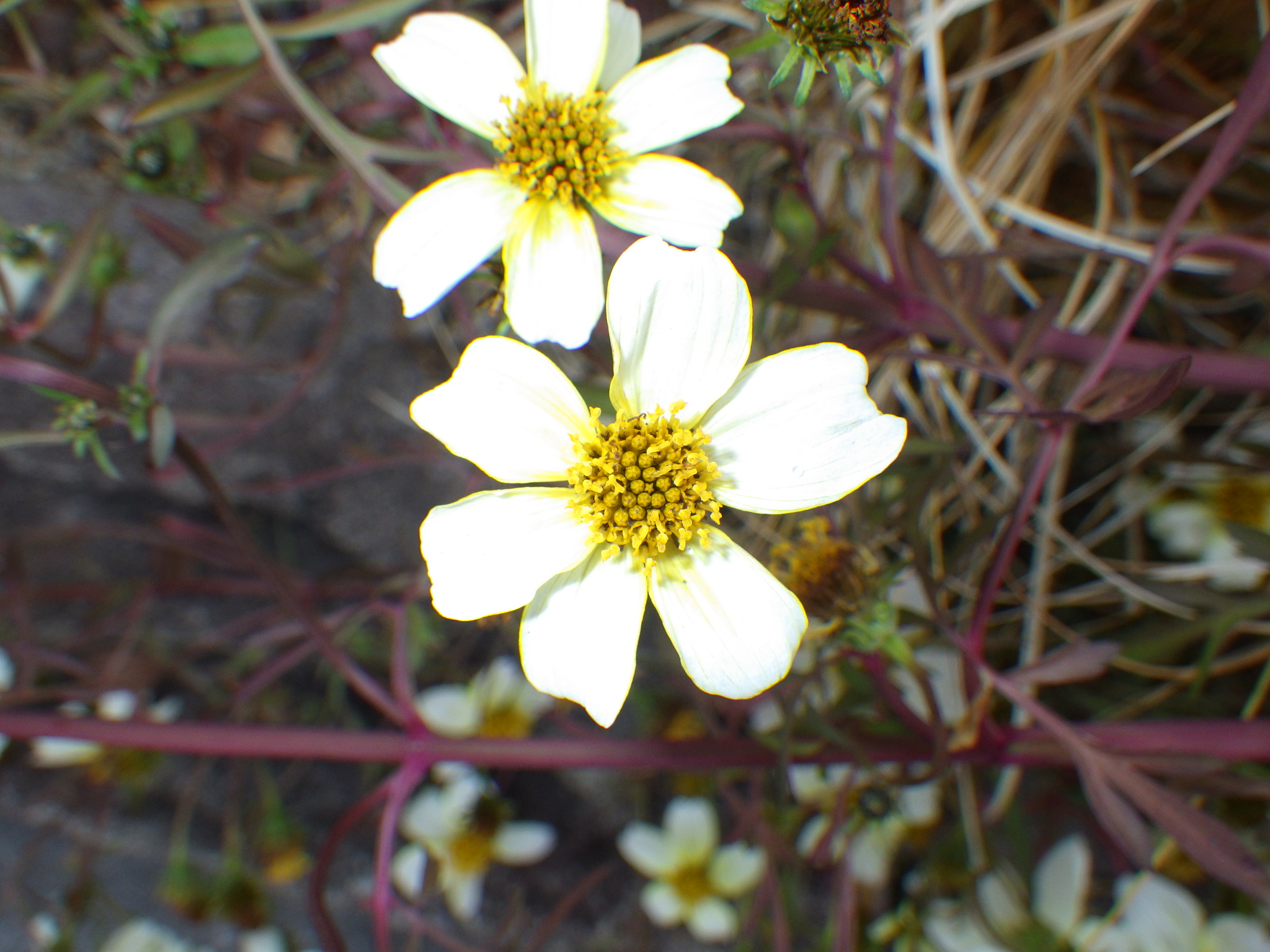
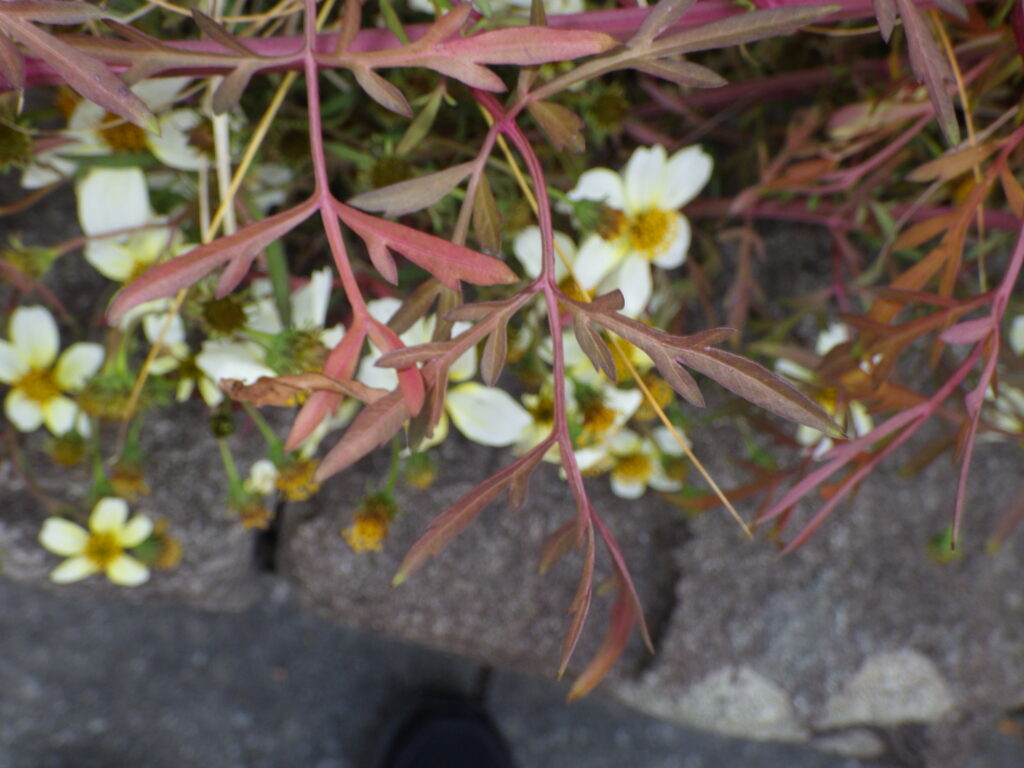
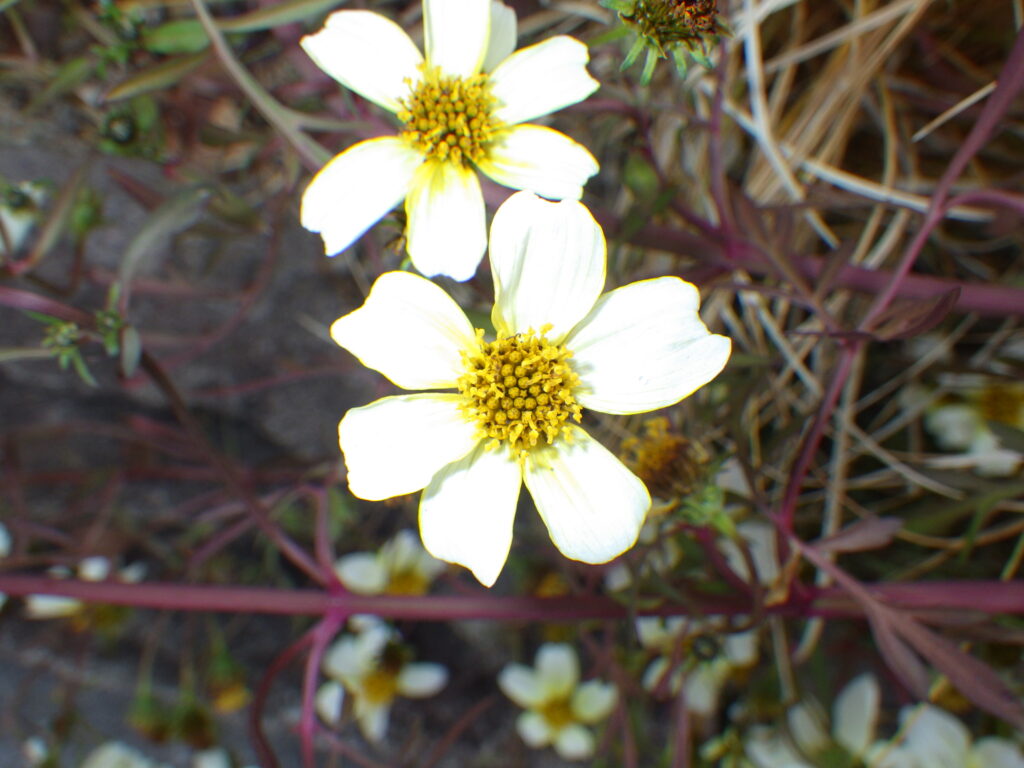
Winter cosmos is a species of the genus Bidens , Bidens sp. Scientific name unknown (Kanagawa Prefecture Flora Survey Association, 2018). Details unknown. Also known as winter cosmos. It is cultivated in Japan as an ornamental plant. The cultivar called 'Yellow Cupid' is representative. It is highly valued in gardening because it blooms in winter, from September to December.
Bidens laevis, also known as chrysanthemum-flowered beggar-ticks, is an annual or perennial herb distributed in the United States, Central America, and South America, growing in pastures, wetlands, ponds, streams, and estuary edges (Flora of North America Committee, 2006; RBG Kew, 2024). It has also been naturalized in western Japan (Kanagawa Prefecture Flora Survey Association, 2018).
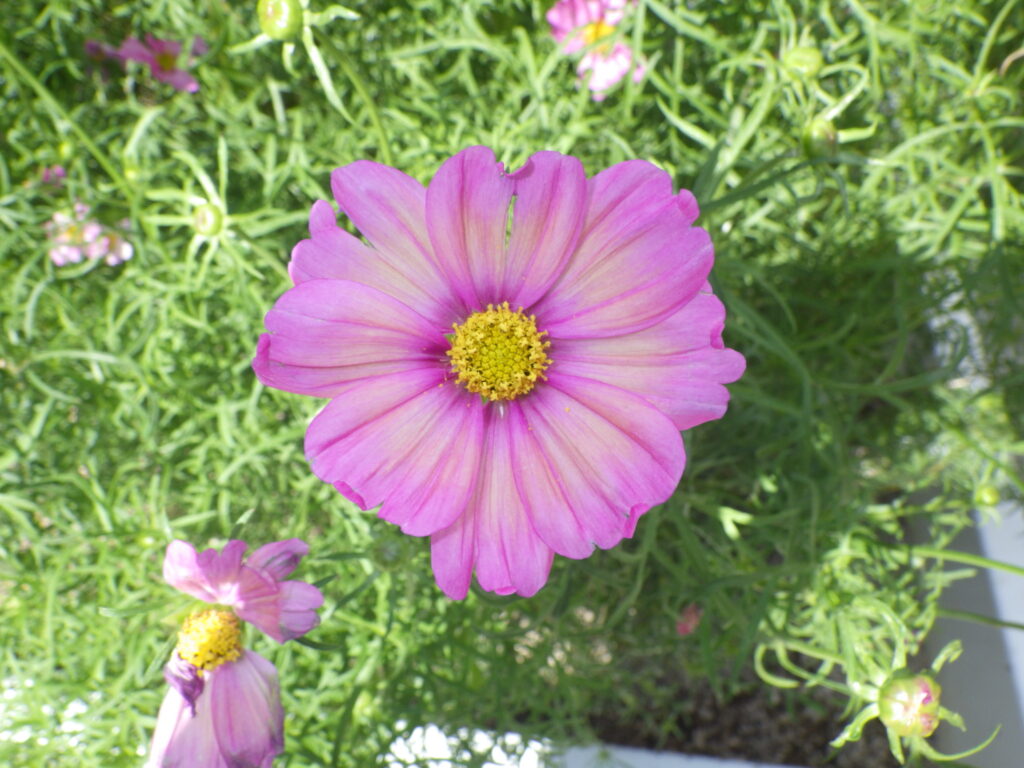
Cosmos bipinnatus, also known as large spring chrysanthemum, large Persian chrysanthemum, or autumn cherry blossom, is native to Mexico and is cultivated as an ornamental plant. It is an annual plant that escapes cultivation and becomes naturalized in dry areas such as riverbanks (Kanagawa Prefecture Flora Survey Association, 2018; RBG Kew, 2024).
Both belong to the Asteraceae family, and winter cosmos and cosmos have similar Japanese names. They are native to the Americas and are commonly seen being cultivated as ornamental plants in Japan.
As is typical of the Asteraceae family, what appears to be a "flower" at first glance is actually a "flower head," which is a cluster of flowers (inflorescence). It consists of "tubular florets" in the center and "ray florets" surrounding them, and the corolla of the ray florets is what creates its beauty.
They also share the common characteristics of having only one or two rows of bracts, and a receptacle (the base on which the central tubular florets are attached) that is disc-shaped to convex and not very raised.
Therefore, some people may confuse winter cosmos with regular cosmos.
Furthermore, while almost all websites in Japan describe winter cosmos and Bidens pilosa as the same species, this is incorrect; they are completely different species. Even the Google search suggestions are wrong.
What are the differences between winter cosmos (Bidens pilosa) and cosmos?
First, let's consider the differences between winter cosmos (Bidens pilosa) and cosmos, which are easier to understand.
Although both are named "cosmos," taxonomically, while both belong to the Asteraceae family, winter cosmos and Bidens pilosa belong to the Bidens genus, while cosmos belongs to the Cosmos genus, suggesting a significant difference (Kanagawa Prefecture Flora Survey Association, 2018).
Specifically, the difference lies in the fact that the involucral bracts of the genus Bidens are herbaceous and consist of only one row, while those of the genus Cosmos are membranous and consist of two to three rows of bracts.
Involucral bracts are leaf-like structures that enclose the flower head.
Therefore, there are differences in the number of bracts between winter cosmos, Bidens pilosa, and cosmos.
Of course, that's not the only difference; if we limit ourselves to just three species—winter cosmos, chrysanthemum-flowered beggar-ticks, and cosmos—we can discover even more differences.
Regarding the corolla of the ray florets, winter cosmos and Bidens pilosa have white to yellow corollas, while cosmos have white, pink, or reddish-purple corollas (rarely yellow).
While both plants produce achenes, winter cosmos and Bidens pilosa have flat achenes with long, spine-like awns (pointed parts) that allow them to stick to surfaces, making them "burrs." In contrast, cosmos has elongated achenes without awns and does not become a burr.
However, the closely related species, Cosmos sulphureus, has awns and is a burr-like plant. But its achenes are still elongated.
What is the difference between winter cosmos and Bidens pilosa?
The problem lies in the difference between winter cosmos and Bidens pilosa. Since they are treated as the same species in almost every plant information and gardening website, few people might suspect that they are actually different species.
However, there is a crucial difference.
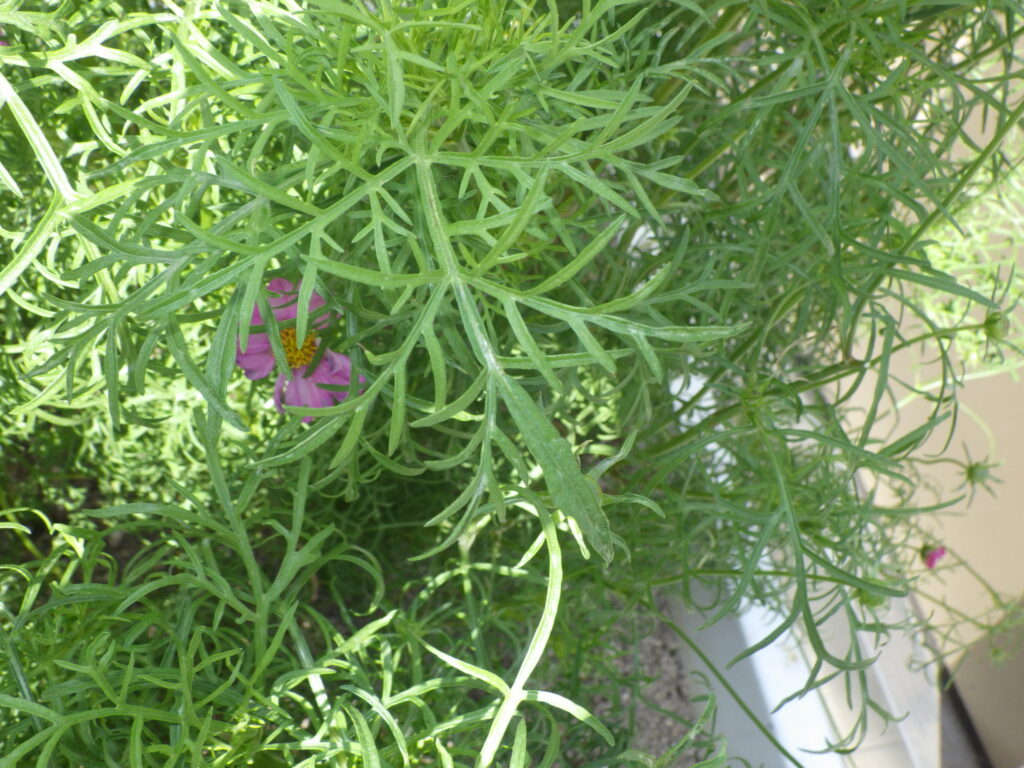
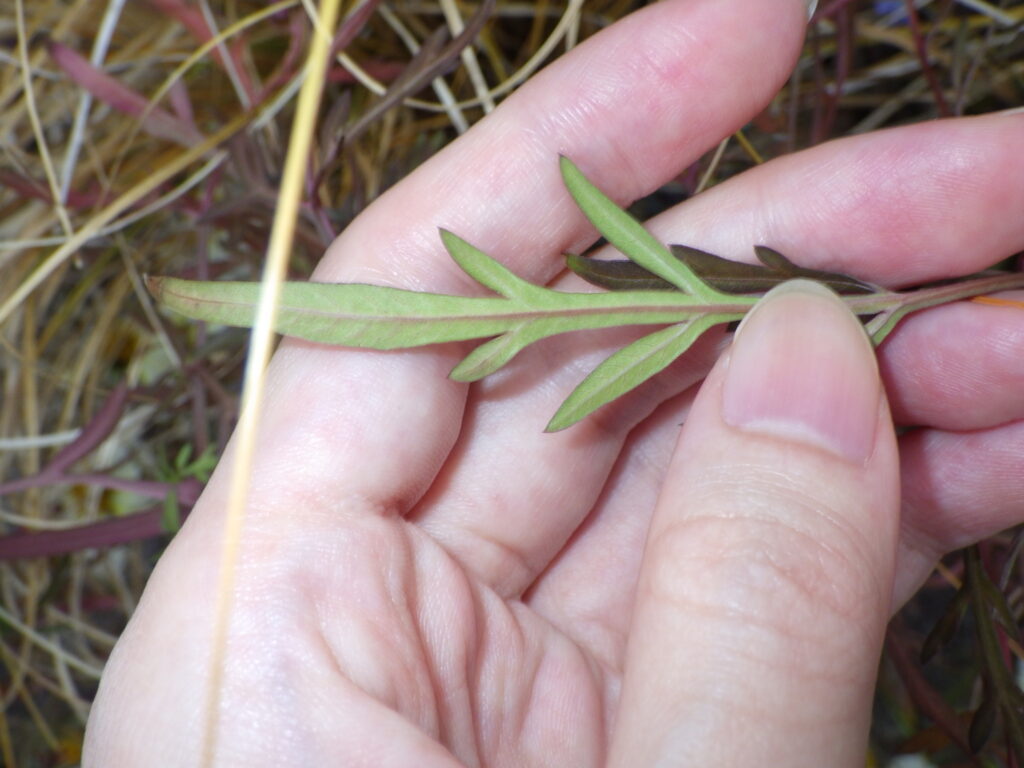
In winter cosmos, the leaves are divided and bipinnately compound, whereas in Bidens pilosa, the leaves are not divided and are broadly linear.
Furthermore, there is a difference in the fruit: winter cosmos has only two awns, while Bidens pilosa has four.
These characteristics are more strongly conserved than variations in corolla color and do not change simply because it is a horticultural variety.
Therefore, they can be considered to be completely different species.
Regarding the color of the ray florets, winter cosmos often has pale yellowish-white corollas, while Bidens pilosa has dark yellow ones.
So, which specific scientific name does "winter cosmos" correspond to that of a globally known species? Incidentally, "winter cosmos" is a Japanese-made English term.
According to Japanese research, the species corresponding to winter cosmos is "unknown" (Kanagawa Prefecture Flora Survey Association, 2018).
Research in the United States reveals that Bidens aurea (synonym: Bidens ferulifolia) has bipinnately compound leaves with two awns, which closely matches the characteristics of winter cosmos, making it tempting to consider "winter cosmos = Bidens aurea" (Flora of North America Committee, 2006).
However, Japanese research describes *Trollius japonicus* as having "undivided, broadly linear leaves" and two awns, creating a contradiction.
Logically, research conducted in the United States, its country of origin, would be the correct approach. However, the possibility of closely related species cannot be ruled out, so for now, we will consider it "unknown."


Are there any other similar species?
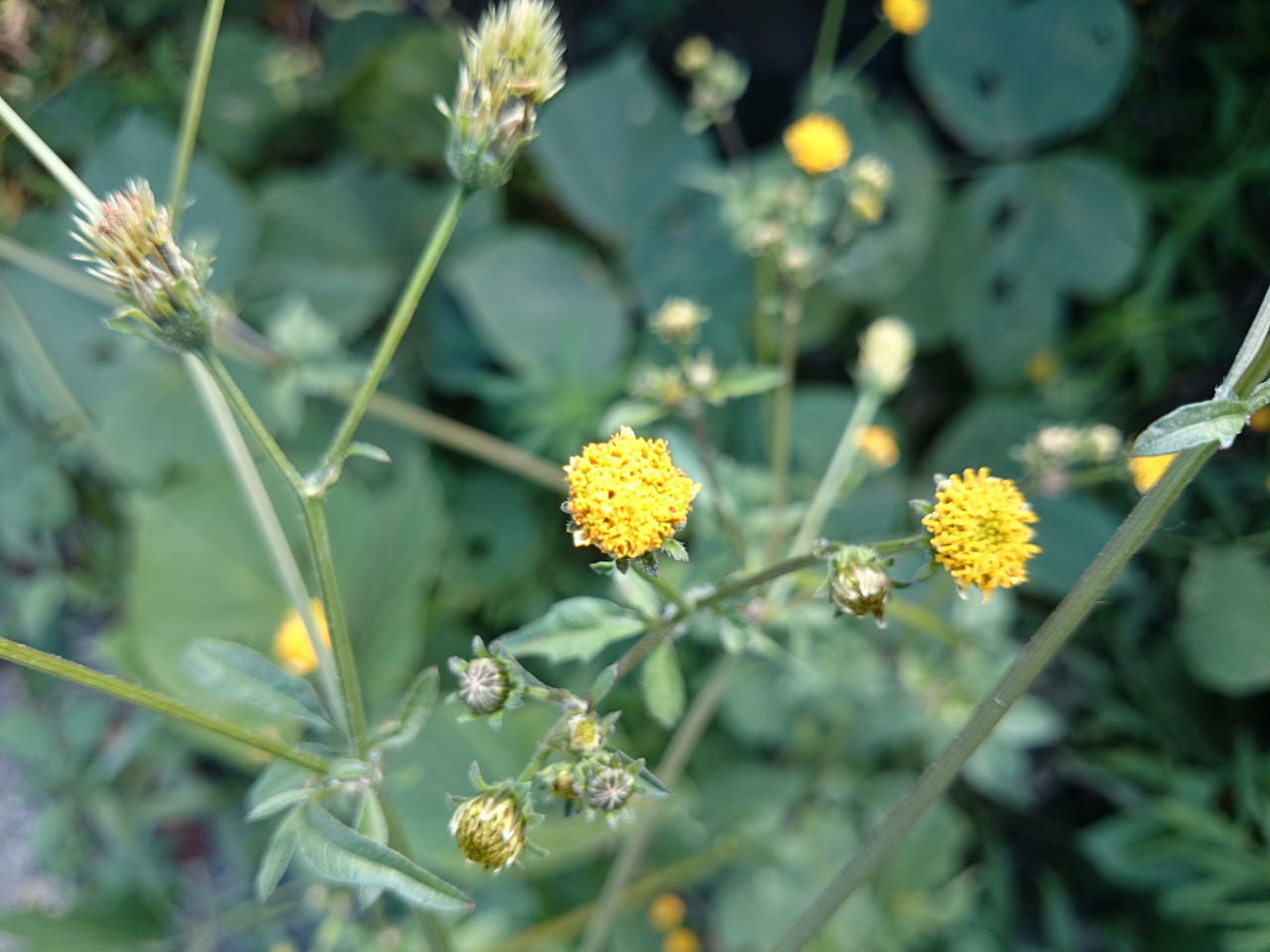
For information on other species in the Bidens genus, please see the separate article.
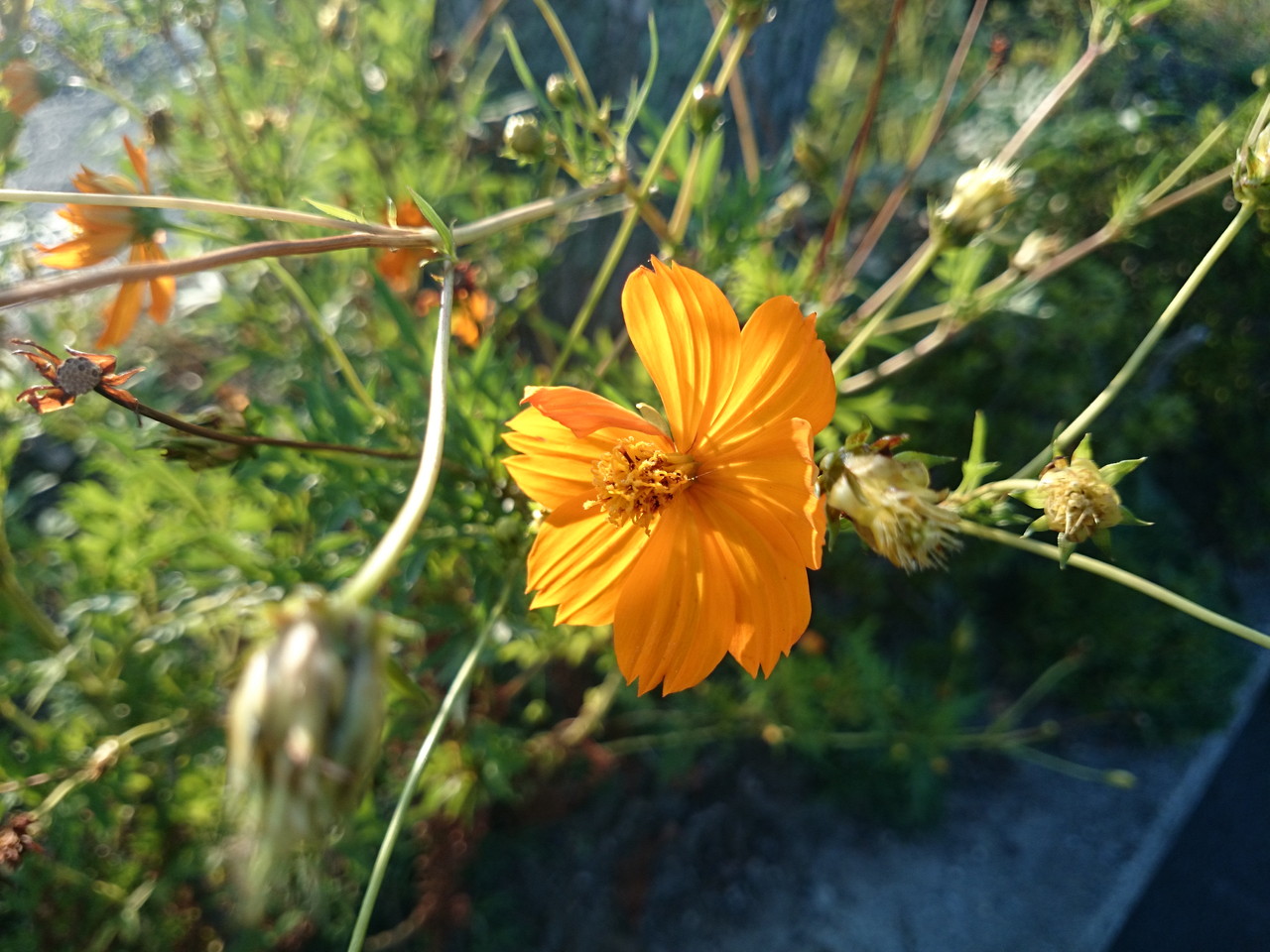
Also, if you'd like to learn more about the differences between species in the Cosmos genus, please see this article.
References
Kanagawa Prefecture Flora Survey Association. 2018. Kanagawa Prefecture Flora 2018 (Electronic Edition). Kanagawa Prefecture Flora Survey Association, Odawara. 1803pp. ISBN: 9784991053726
Flora of North America Committee. 2006. Flora of North America (Vol. 21 Magnoliophyta: Asteridae, Part 8 Asteraceae, Part 3). Oxford University Press, Oxford. 616pp. ISBN: 9780195305654
RBG Kew. 2024. The International Plant Names Index and World Checklist of Vascular Plants. Plants of the World Online. http://www.ipni.org and https://powo.science.kew.org/