Lamium amplexicaule, Lamium purpureum, and Lamium purpureum are all herbaceous plants belonging to the genus Lamium in the Lamiaceae family. Lamium amplexicaule and Lamium purpureum are particularly well-known as spring weeds, but some people may have trouble distinguishing between the three species. These three species are relatively easy to distinguish, and can be identified by their leaves or flowers alone. However, a species called Lamium purpureum has recently been confirmed, so be sure to look carefully when searching for it. The fruits have elaiosomes and are dispersed by ants, and recent research has shown that ants employ various strategies to spread their distribution. This article will explain the classification, morphology, and ecology of the genus Lamium.
- What are Lamium amplexicaule, Lamium purpureum, and Lamium album?
- What are the differences between Lamium amplexicaule, Lamium purpureum, and Lamium album?
- What is the difference between Lamium amplexicaule and Lamium purpureum?
- Are there any other similar species?
- What is the structure of the fruit?
- What are the seed dispersal methods?
- References
What are Lamium amplexicaule, Lamium purpureum, and Lamium album?
Lamium amplexicaule, also known as Hotokenoza (Buddha's Seat), is a biennial herb commonly found growing along roadsides, in vacant lots, and in fields in warm regions of the world, including Hokkaido, Honshu, Shikoku, Kyushu, and the Ryukyu Islands in Japan. White-flowered Hotokenoza f. albiflorum is a variety with white flowers.
Lamium purpureum, also known as Himeoodorikosou, is native to Europe and Asia Minor, and has naturalized in East Asia and North America. In Japan, it has naturalized in Hokkaido and Honshu, and is a common biennial plant that grows along roadsides, vacant lots, and fields in alluvial plains, hills, plateaus, and mountains.
Lamium album var. barbatum, also known as "Odorikosou" (dancing girl's grass), is a perennial herb widely distributed in Hokkaido, Honshu, Shikoku, and Kyushu in Japan, as well as in East Asia. It grows in slightly shaded grasslands, forest edges, and roadsides in alluvial plains and mountainous areas. Another variety, Lamium album var. tairiku, has white corollas and is also found in Europe.
Both are herbaceous plants belonging to the genus Lamium in the Lamiaceae family. In Japan, Lamium amplexicaule and Lamium purpureum are particularly common on roadsides and often grow together. They are what are commonly called "weeds." Many people may know their names as they are the most frequently featured species in children's plant encyclopedias. They can be seen blooming all at once in spring, from March to April. However, they can also be seen blooming in winter in sunny locations.
Morphologically, they share several common features: the upper lip of the corolla is helmet-shaped with its tip curving forward; the lower lip is three-lobed and curves backward; the entire throat area is swollen; and the corolla tube protrudes from the calyx tube, making it visible from the outside.
However, many people may not know how to distinguish between these plants or the origin of the name "Hime-odorikosou" (small lamium purpureum), which comes from "Odorikosou" (lamium purpureum).
What are the differences between Lamium amplexicaule, Lamium purpureum, and Lamium album?
The three species can be distinguished relatively easily (Kanagawa Prefecture Flora Survey Association, 2018).
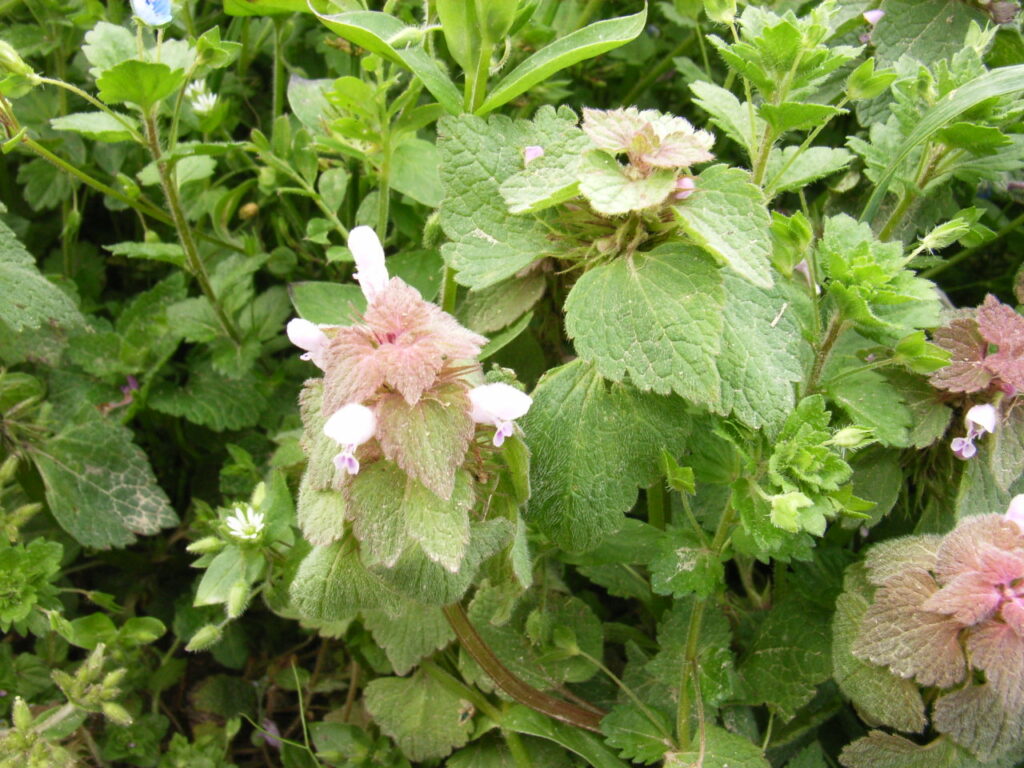
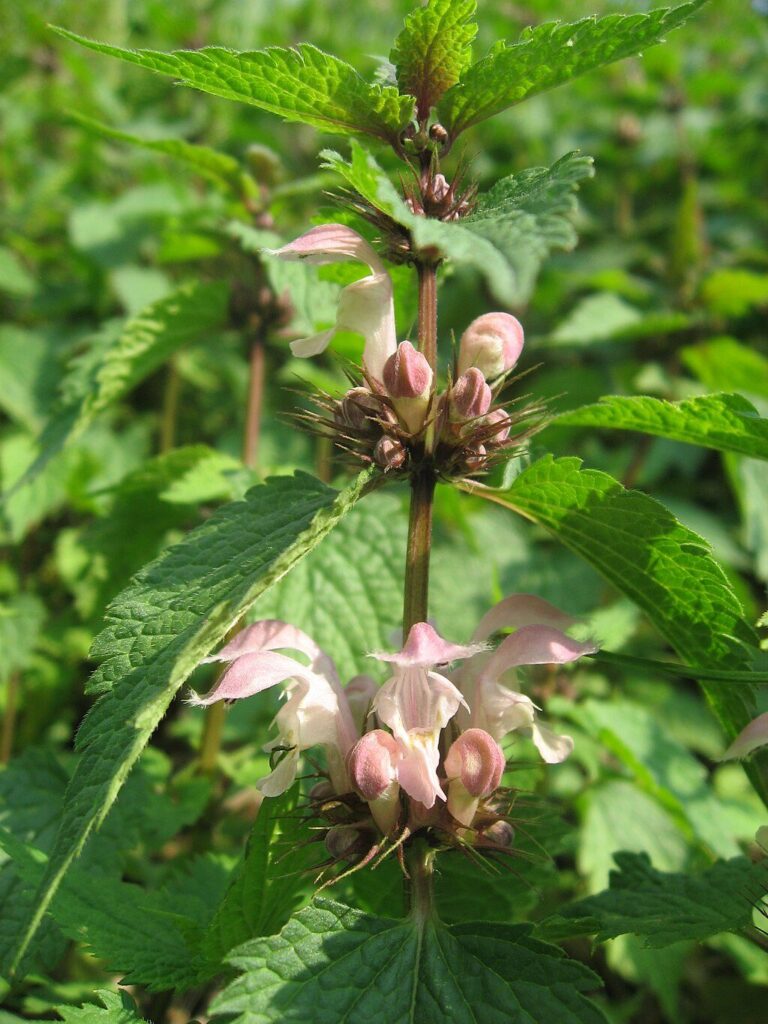
First, there is a difference in that the corollas of Lamium amplexicaule and Lamium purpureum are small, less than 20 mm in length, while those of Lamium purpureum are considerably larger, measuring 2.5 to 3 cm in length.
Another difference is that while the leaf tips of Lamium amplexicaule and Lamium purpureum are rounded, the leaf tips of Lamium purpureum are pointed and tail-like.
These two points make it easy to distinguish between Lamium album and other species. Lamium album is quite rare in urban areas.
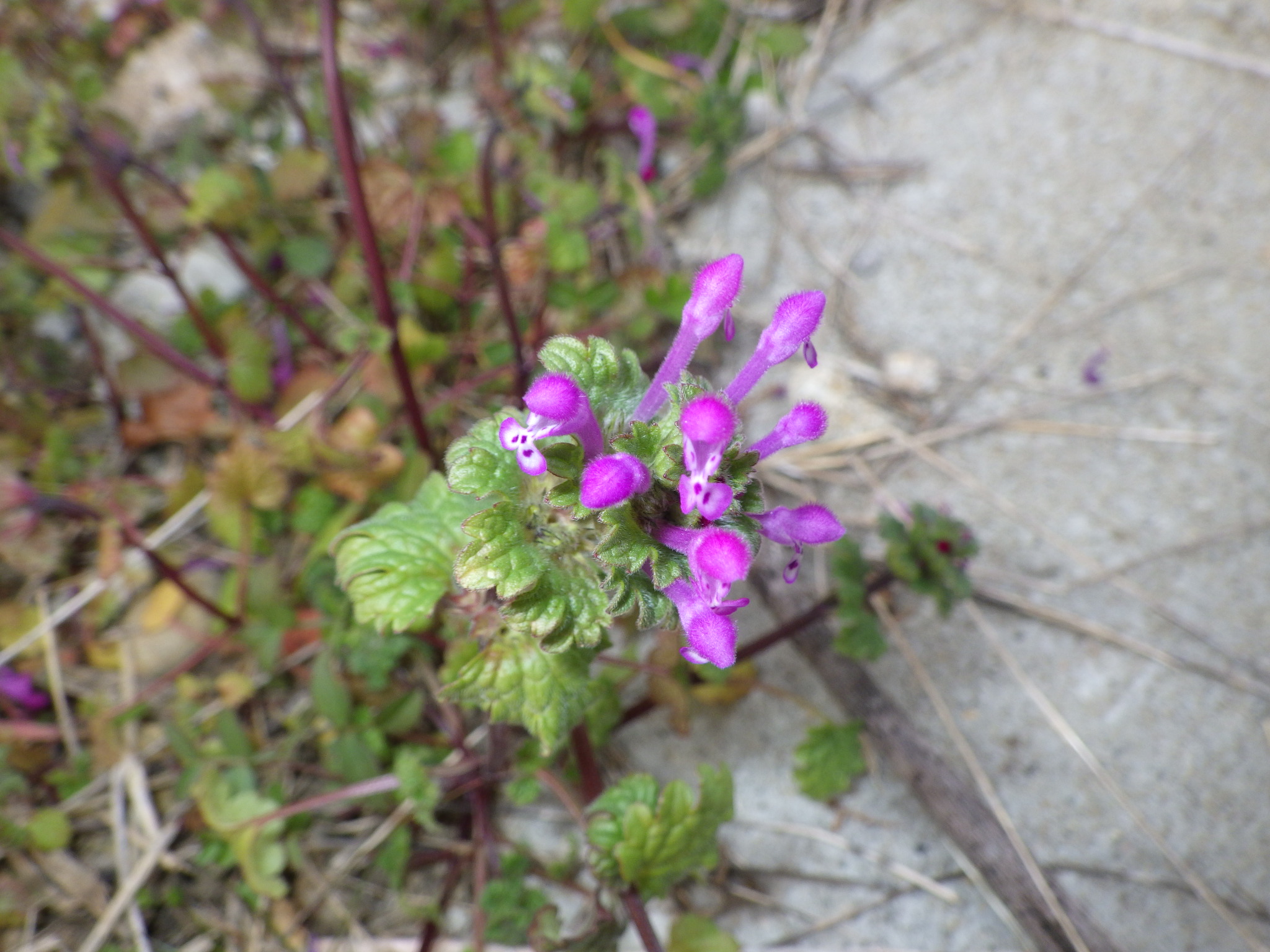
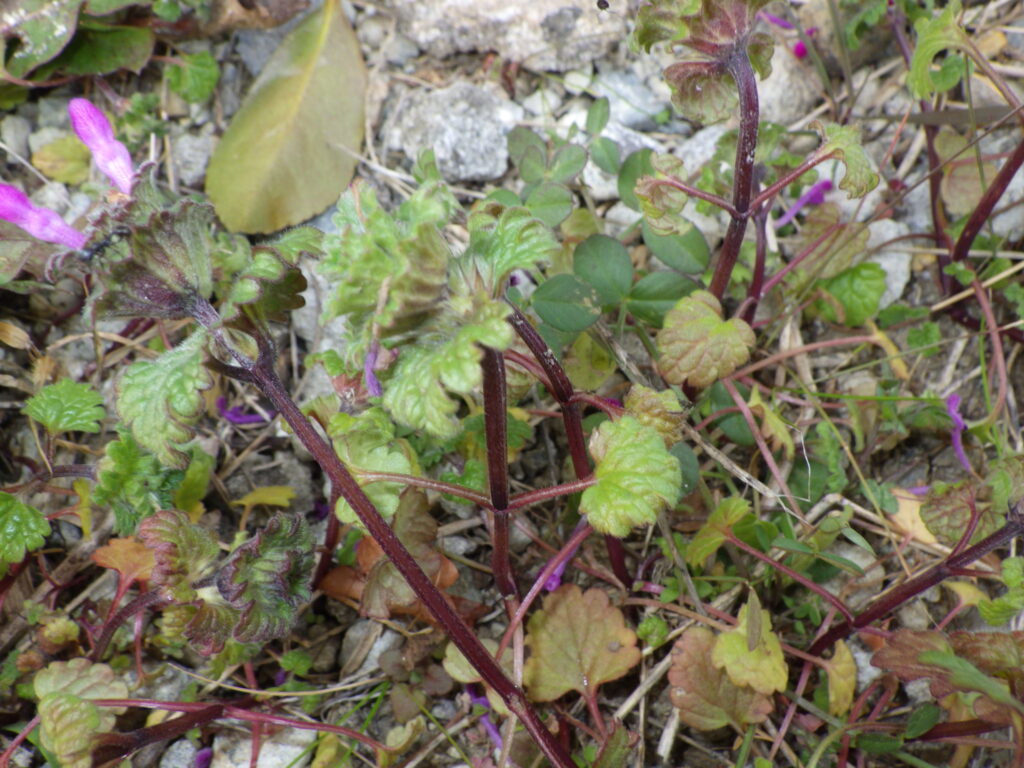
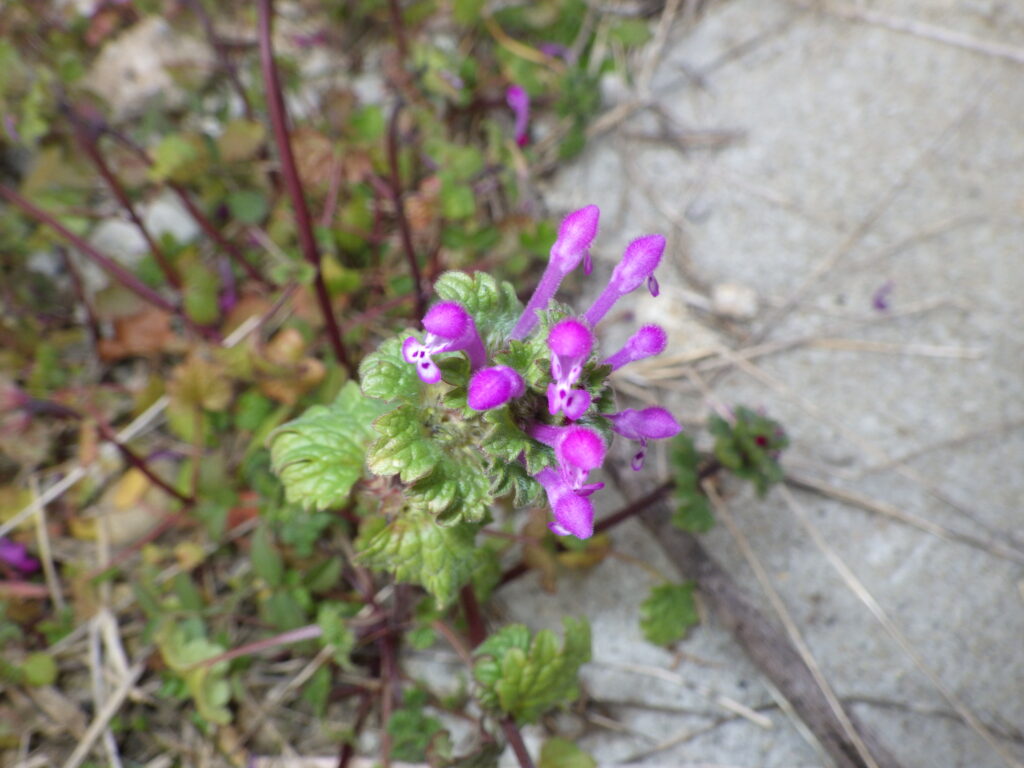
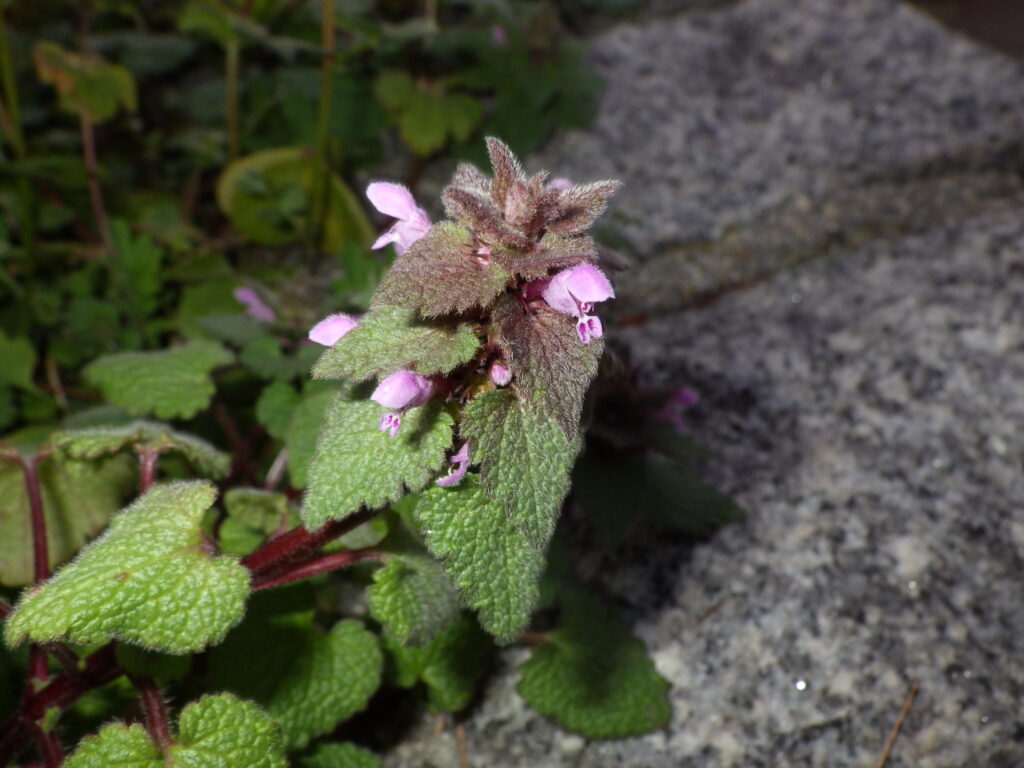
Regarding Lamium amplexicaule and Lamium purpureum, the main difference is that Lamium amplexicaule has kidney-shaped leaves with no petioles above the middle of the stem, and the corolla is 15-20 mm long, while Lamium purpureum has triangular-ovate leaves with petioles, and the corolla is somewhat smaller, about 10 mm long.
The name "Hotokenoza" is derived from the lotus throne (a lotus flower) on which Buddha sits in Buddhism. While it doesn't really resemble a lotus flower, the way its kidney-shaped leaves, which look comfortable to sit on, are arranged opposite each other and overlap in layers like a five-story pagoda has a certain Buddhist feel to it. Lamium amplexicaule also has opposite leaves, but the spaces between the leaves are short and dense, so its appearance is quite different from Hotokenoza.
Additionally, the corolla of Lamium amplexicaule is darker in color, closer to purple, while that of Lamium purpureum is closer to pink.
Furthermore, Lamium amplexicaule has flowers called "cleistogamous flowers" that do not open and self-pollinate using their own stamens and pistils, and many purple buds can be seen, whereas Lamium purpureum has no buds other than the normal kind.
The above should allow you to distinguish them.
Incidentally, "Hotokenoza," one of the seven spring herbs, is another name for Lapsanastrum apogonoides, a completely different-looking plant belonging to the Asteraceae family.
What is the difference between Lamium amplexicaule and Lamium purpureum?
Although not widely known, there is another species closely related to Lamium purpureum called Lamium dissectum. Like Lamium purpureum, Lamium dissectum is also a naturalized species originally from Europe.
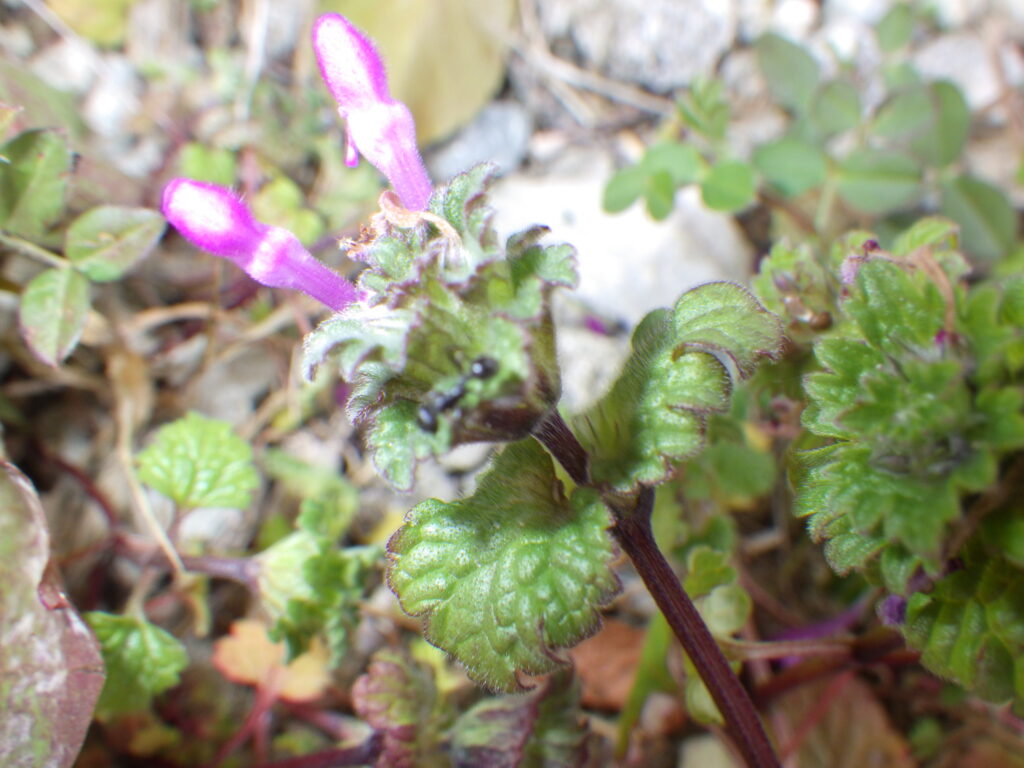
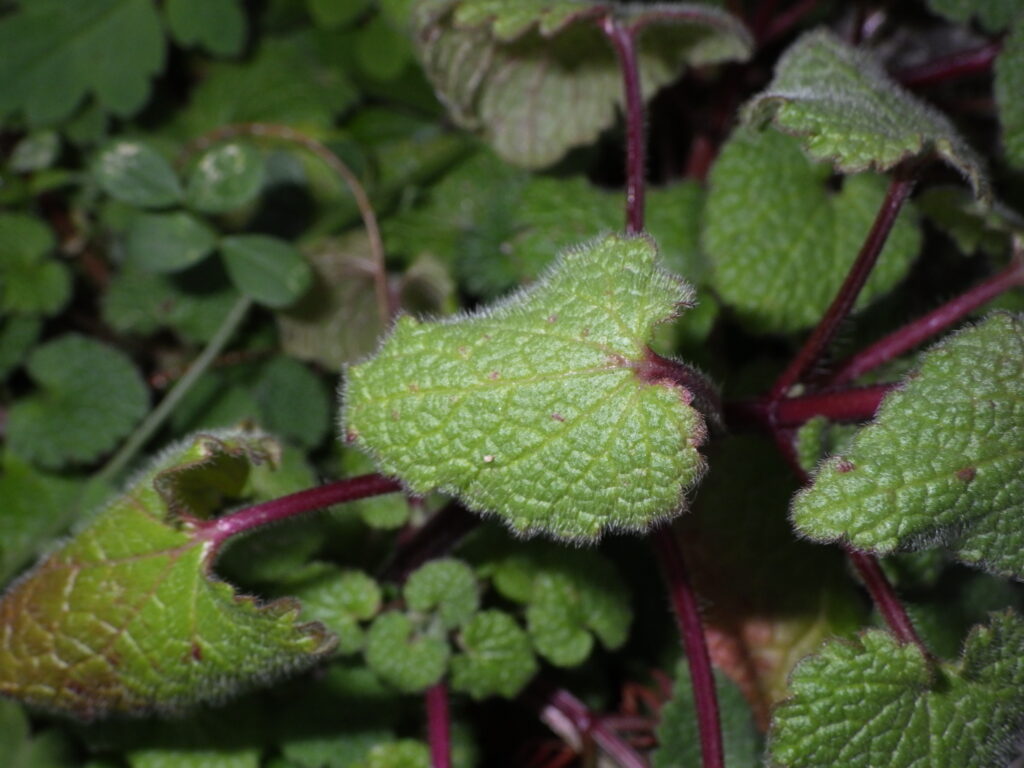
These are even more similar species, but there is a difference: Lamium amplexicaule has rounded serrations on its leaves, while Lamium purpureum has shallowly lobed, deep, and irregular serrations on its leaves.
Furthermore, while the leaves at the top of the stem of Lamium amplexicaule often have a reddish tint, this is not the case with Lamium purpureum.
While not yet very common in Japan, you might discover it if you observe carefully without assuming it's Lamium amplexicaule.
Are there any other similar species?
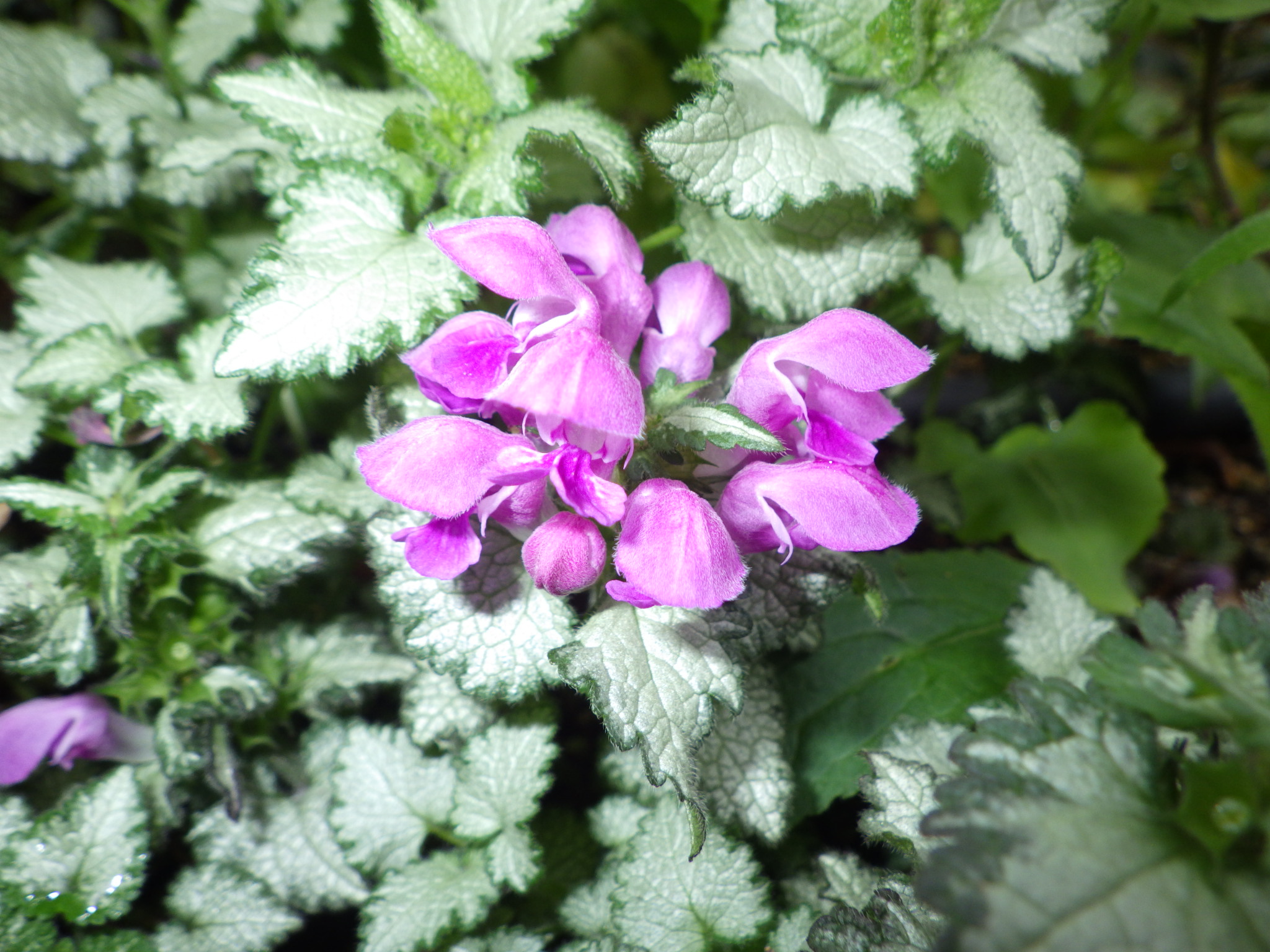
The genus Lamium includes many species, and in horticulture, foreign species such as climbing Lamium and yellow Lamium are cultivated.
However, they can be easily distinguished because they all have large corollas and creeping stems.
What is the structure of the fruit?
The Lamium genus commonly produces nutlets that are divided into four parts. In other words, what was once a single fruit separates into four parts, after which nutlets are formed, and each nutlet contains one seed.
The nutlets of Lamium amplexicaule are 2-2.2 mm long and 0.9-1.1 mm wide, long and obovate, with a slightly convex dorsal surface and two flat, roof-like ventral surfaces with prominent ridges. The surface is covered with irregular whitish projections, is grayish-brown in color, and has an elaiosome at the base.
The nutlets of Lamium amplexicaule are approximately 2.3 mm long and 1.3 mm wide, with three ridges. The head is nearly flat and smooth, olive-green to brownish-gray, often with white spots, and has a large elaiosome at the base.
What are the seed dispersal methods?
Elaiosomes are packed with nutrients, and plants that contain them primarily rely on ant dispersal. In other words, plants expand their distribution area by having ants carry the nutrient-rich elaiosomes back to their nests (Fujii et al., 2012). After carrying the nutrient-rich elaiosomes, the ants cut off only the elaiosomes and discard the fruit and seeds, allowing the seeds to germinate successfully.
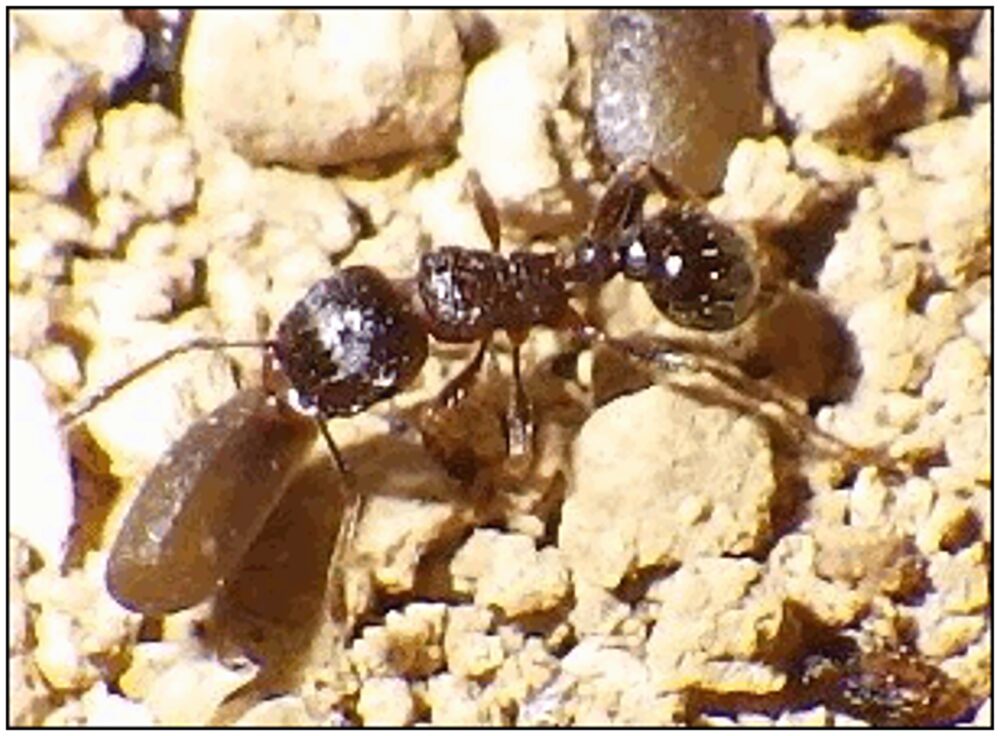
It is known that at least one species of ant, Tetramorium tsushimae, carries the seeds of Lamium amplexicaule. Since Tetramorium tsushimae is an extremely common and dominant ant species in urban areas, it is easy to understand why Lamium amplexicaule is also found in urban areas, following its lead.
One advantage of ant dispersal over gravity dispersal and wind dispersal is that it protects seeds from insects that suck the sap and eat the seeds, such as stink bugs. This advantage was long considered a hypothesis, but recent research has demonstrated that this effect is at least present in Lamium amplexicaule (Tanaka et al., 2015).
Another interesting finding is that while Lamium amplexicaule produces both open flowers that are cross-pollinated by insects and cleistogamous flowers that are self-pollinating, it has been found that the elaiosomes attached to the seeds produced from the open flowers are heavier, meaning they are more heavily nourished (Teranishi et al., 2004).
Self-pollinating seeds have low genetic diversity and can only survive in environments similar to their parents'. Therefore, it is thought that having fewer elaiosomes is actually advantageous. On the other hand, cross-pollinating seeds have high genetic diversity, allowing them to survive in environments far from their parents and spread their offspring over a wider area. This is thought to be the reason why the amount of elaiosomes differs between open flowers and cleistogamous flowers.
References
Fujii, M., Kosaka, A., & Masui, K. 2012. Plants that rely on ants to disperse their seeds. Kyosei no Hiroba 7: 63-68. ISSN: 1881-2147, https://www.hitohaku.jp/publication/book/kyousei7_063.pdf
Kanagawa Prefecture Flora Survey Association. 2018. Kanagawa Prefecture Flora 2018 (Electronic Edition). Kanagawa Prefecture Flora Survey Association, Odawara. 1803pp. ISBN: 9784991053726
Tanaka, K., Ogata, K., Mukai, H., Yamawo, A., & Tokuda, M. 2015. Adaptive advantage of myrmecochory in the ant-dispersed herb Lamium amplexicaule (Lamiaceae): Predation avoidance through the deterrence of post-dispersal seed predators. PloS One 10(7): e0133677. https://doi.org/10.1371/journal.pone.0133677
Teranishi, M., Fujiwara, N., Shirakami, M., Hojo, K., Yamaoka, R., Suzuki, N., & Yumoto, T. 2004. Surface components of Lamium amplexicaule seeds that simultaneously produce open and closed flowers and seed dispersal behavior by ants. Abstracts of the Annual Meeting of the Ecological Society of Japan 51: 482. https://doi.org/10.14848/esj.ESJ51.0.482.0