Agave, agave, yucca, and agave plants all belong to the Asparagaceae family (formerly known as the Asparagaceae family). They are large plants that can grow to the height of a child or adult, and are characterized by their monocotyledonous leaves with parallel veins. Due to their impressive size and drought tolerance, they are frequently cultivated as ornamental plants in Japan. However, their many names can be confusing. Agave is a general term that includes several species such as agave and agave, while yucca is a general term that includes several species such as yucca. Agave and yucca are distinguished by the shape of their flowers. The only difference between agave and agave is the color. Agave is sometimes called the "plant of the century" and is said to be the raw material for tequila, but these are not entirely factual. This article will explain the classification, ecology, and culture of agave.
- What are Agave, Agave serrata, Yucca, and Yucca?
- What is the difference between agave and yucca?
- What is the difference between Agave and Agave americana?
- Are there any other similar species?
- Is it a myth that agave plants live for 100 years? Why don't they flower for such a long time?
- Is it a myth that agave is used to make tequila?
- References
What are Agave, Agave serrata, Yucca, and Yucca?
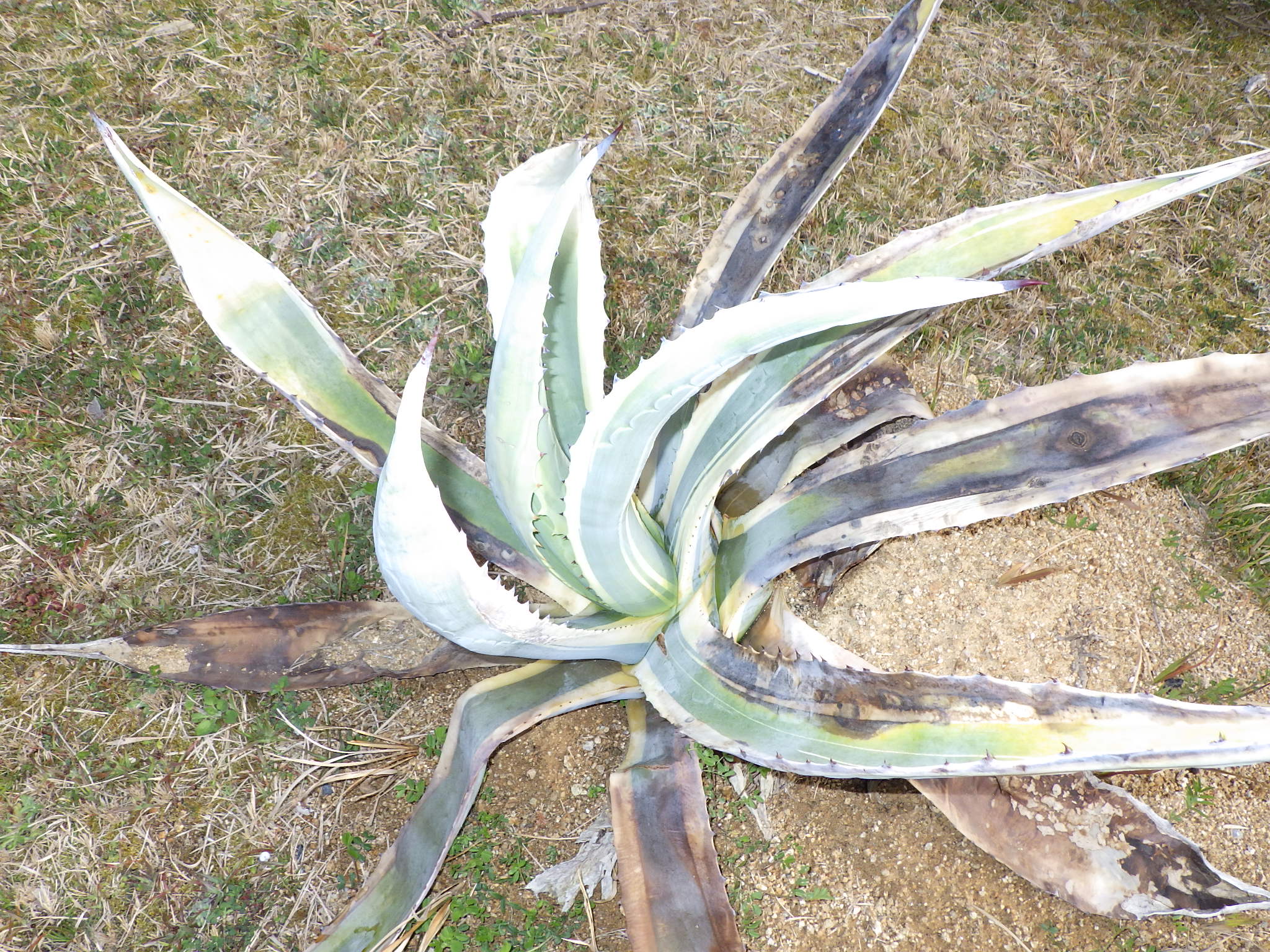
Agave americana subsp. americana, also known as the blue agave, is native to Mexico and Texas in the United States. It is cultivated as an ornamental plant worldwide, including in Japan, and has naturalized in some countries. This evergreen perennial thrives in hot climates and drought-prone areas. It is also used for fiber and as a raw material for fermented alcoholic beverages (pulque octori) and distilled spirits (mezcal).
Agave americana 'Marginata' is a cultivated variety of Agave americana. It is grown for ornamental purposes all over the world, including Japan.
Agave is a general term for plants belonging to the genus Agave (Agave genus), and in addition to the two species mentioned above, it also includes Agave stricta and Agave victoriae-reginae.
Yucca gloriosa var. recurvifolia, also known as Kimigayo Orchid, is a variety of Yucca gloriosa var. gloriosa and is an evergreen shrub native to the southeastern United States. It is cultivated as an ornamental plant worldwide, including in Japan.
Yucca is a general term for plants belonging to the genus Yucca (also known as the genus Yucca), and includes the two species mentioned above, as well as Yucca flaccida and Yucca aloifolia. Another name for it is "Youth Tree."
All of these plants belong to the Asparagaceae family (formerly known as the Asparagaceae family), and are characterized by their large size, sometimes reaching the height of a child or adult, and their monocotyledonous leaves with parallel veins. Due to their impressive appearance and drought tolerance, they are frequently cultivated as ornamental plants in Japan.
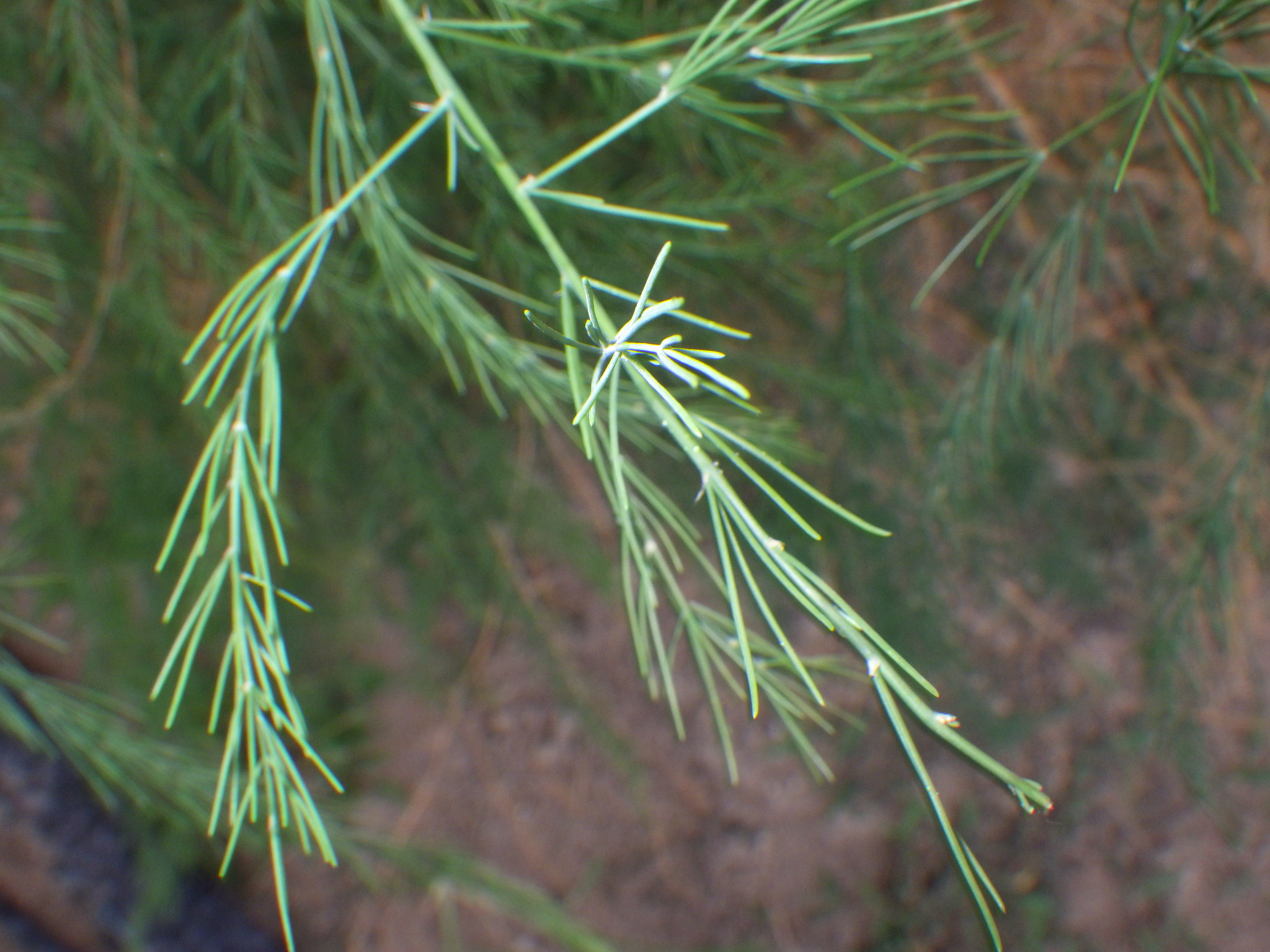
However, these terms seem to be sometimes confused on the internet. Some websites mistakenly refer to Yucca glauca as Agave.
Although both agave and Yucca have "ran" in their names, they do not belong to the orchid family. Orchids have showy "orchid-shaped corollas" in which petals and sepals are cleverly combined, but these flowers do not have that shape.
What is the difference between agave and yucca?
As mentioned above, "agave" refers to several types of plants, including the Japanese agave (agave americana), while "yucca" refers to several types of plants, including the Japanese yucca (Yucca glauca).
So, what are the differences between agave and yucca?
The difference between the species listed here is between Agave americana and Yucca glauca.
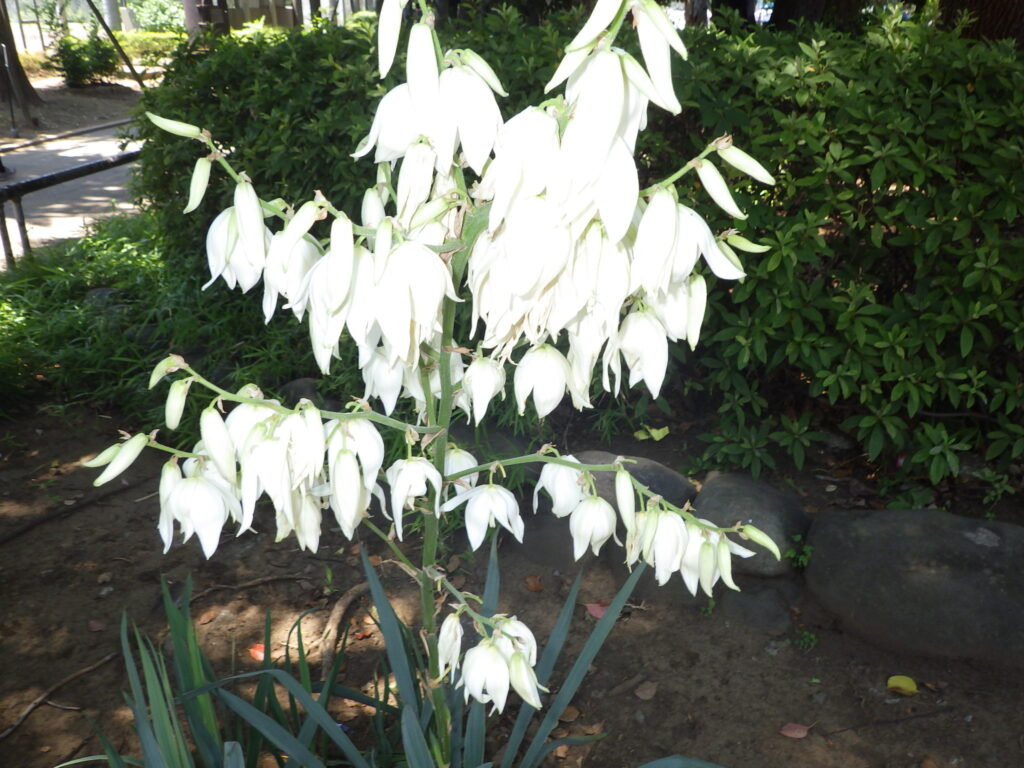
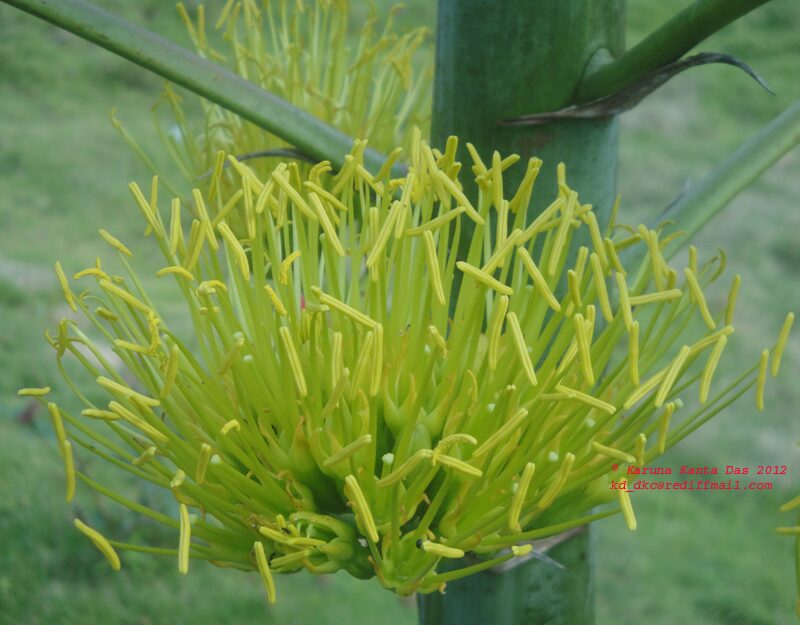
A key difference in classification is that agaves produce upward-facing flowers only once every few decades per plant, and these flowers consist only of short, green perianth segments (where the distinction between petals and sepals is unclear), whereas yucca plants produce downward-facing flowers irregularly every year from May to October, and these flowers have large, white perianth segments (Flora of North America Editorial Committee, 2002).
This difference is largely due to the pollination ecology in their original habitats, specifically the types of animals that carry pollen for pollination.
Agave plants are generally pollinated by nocturnal bats, which provide nectar and pollen to bats at night, allowing the bats to carry the pollen to other plants (Trejo-Salazar et al., 2016; Eguiarte et al., 2021). Therefore, they lack prominent perianth segments, an adaptation for bats which do not rely on their vision at night. However, there are rare species, such as Agave americana, that are also visited by diurnal hummingbirds (Knudsen & Tollsten, 1995).
On the other hand, yucca is pollinated by insects, and only specific moths called yucca moths visit each species (Kawakita, 2012; Ishii, 2020). The female moth lays her eggs on the pistil of the yucca, which serve as food for her larvae, and in return, she uses her antennae to scrape pollen out of the yucca and carry it away. For this reason, the perianth segments of the yucca are white and downward-facing to make them conspicuous to the moths and allow them to burrow in. This relationship is known to have an almost one-to-one correspondence between each yucca species and the moths that visit, and is called "obligate pollination symbiosis."
Considering these significant ecological differences, it becomes clear that they are similar but entirely different species.
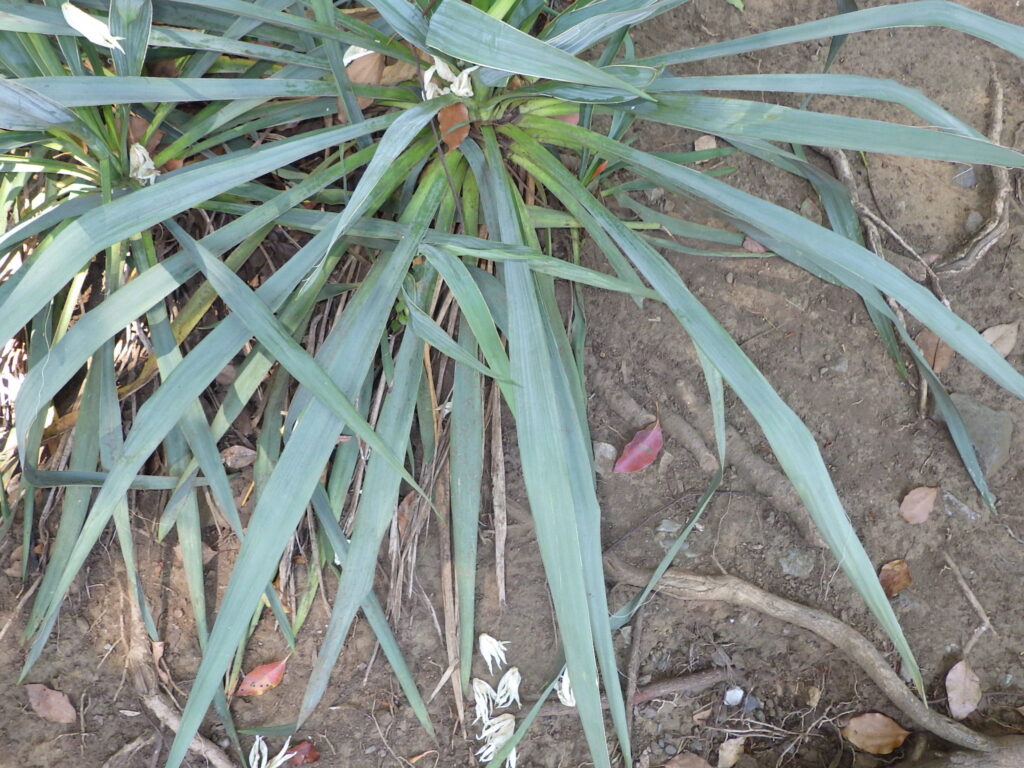
Furthermore, while agave stems are very short or indistinct, giving the impression of being almost entirely made up of leaves, yucca forms a trunk covered in leaves.
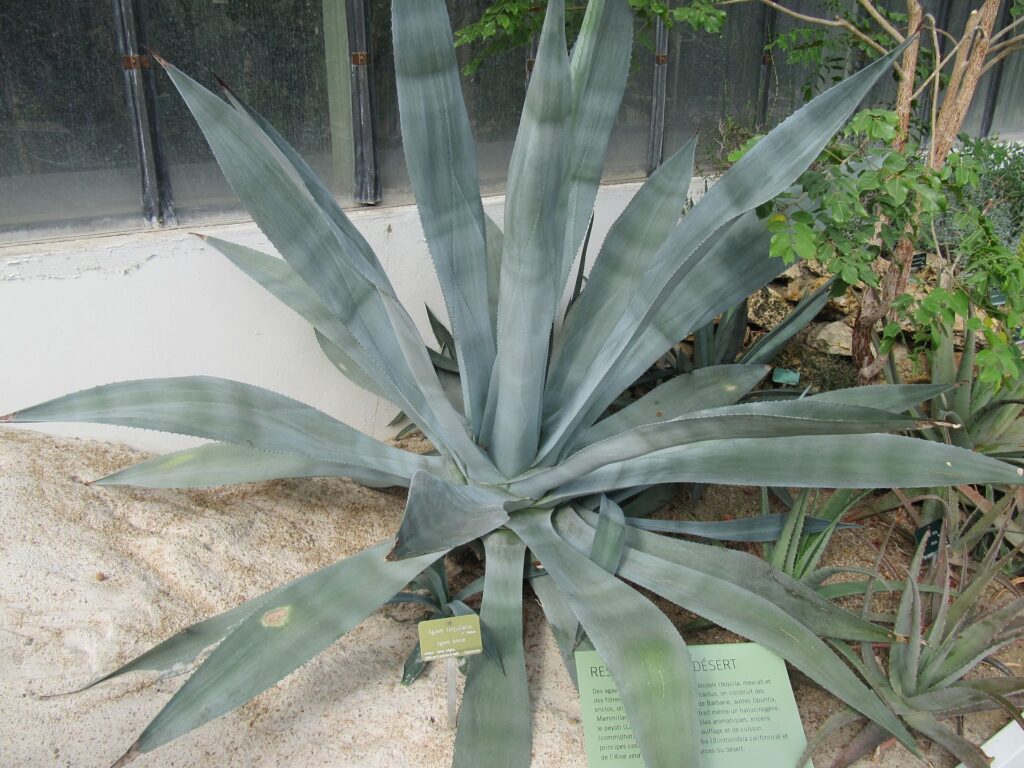
In the case of Agave, Agave americana, and Yucca glauca, the leaves are completely different. Agave leaves are wide, fleshy, and spiny, while Yucca leaves are narrow, thin, and spineless.
What is the difference between Agave and Agave americana?
What are the differences between Agave and Agave americana?
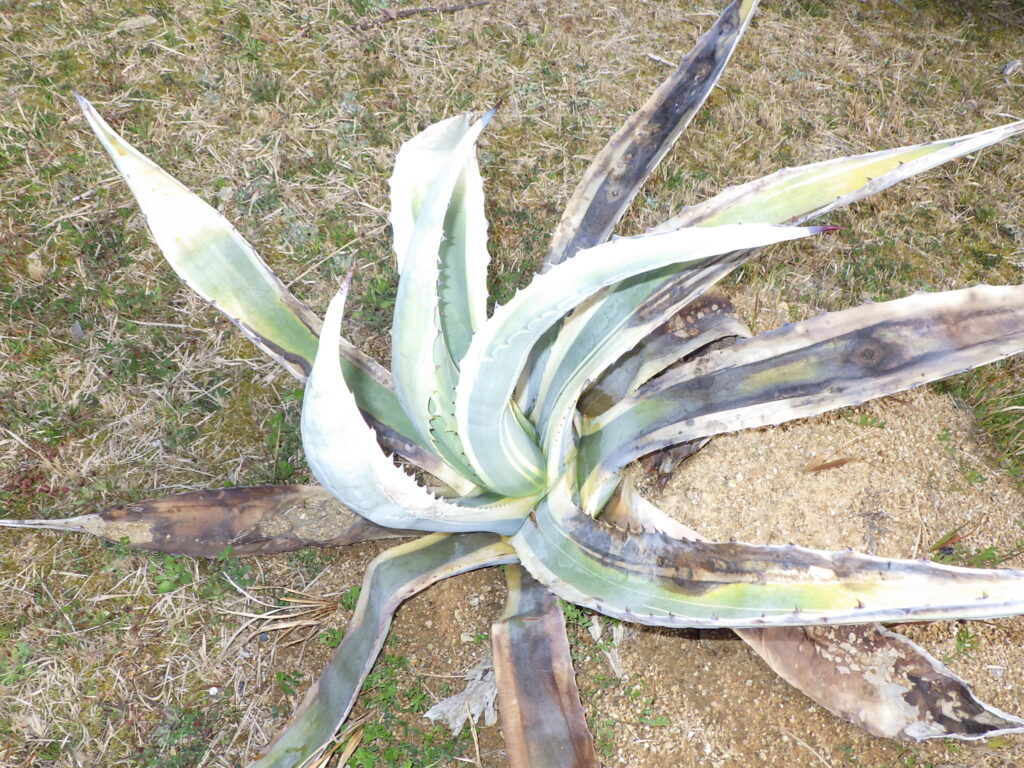
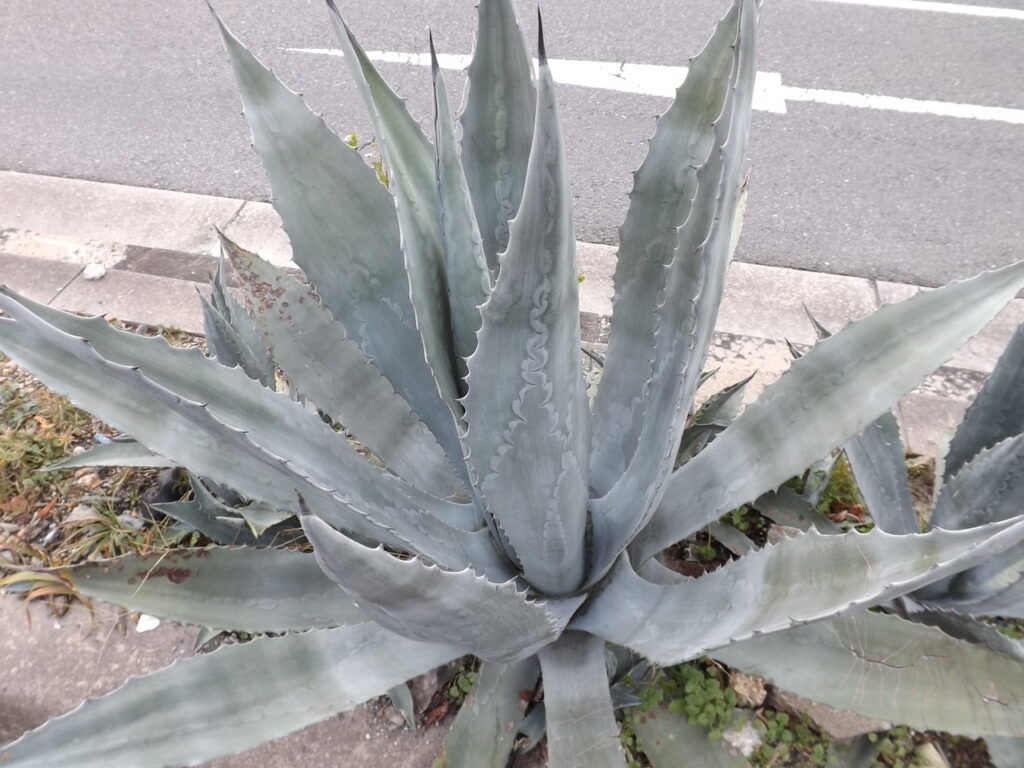
Actually, as you can see from the scientific name, "agave" is a cultivated variety of "Agave americana." Therefore, you can assume that their basic form and ecology are exactly the same.
While the scientific name is derived from "Ao-no-ryūzetsuran" (blue ryūze), the Japanese name is derived from "ryūzetsuran" (blue ryūzetsuran), so note that the order of naming is reversed. This means that Ao-no-ryūzetsuran is actually the original, wild type. A misunderstanding likely arose during the process of its introduction to Japan.
The main difference is that the leaves of Agave japonica have white variegation along the edges, while those of Agave americana are uniformly bluish-green without this characteristic.
Everything else is exactly the same.
Are there any other similar species?
Agave is also frequently mistaken for aloe. Please see our other article for details on the differences.

Is it a myth that agave plants live for 100 years? Why don't they flower for such a long time?
Agave is sometimes called the "plant of the century" due to its long lifespan, and in Japan, it is sometimes said to live for 50 to 100 years or more. Is this really true?
Although I couldn't find any actual scientific papers, this is probably an exaggeration, and according to English-language sources such as the English Wikipedia, they typically live for 10 to 30 years.
It's possible that the environment in Japan differs from that of its country of origin, slowing down its growth and potentially allowing it to live for 50 to 100 years, but this has likely not been scientifically verified.
Also, if "ryūzetsuran" means "agave (genus Agave)" and includes other types of agave, then this rule might not apply.
However, it is true that they live for a very long time. Moreover, at the very end of their life, they bloom profusely just once, secreting pollen and nectar. Once flowering is over, they die and wither away. This is a characteristic of plants called "monovolent plants." Why do they do this? It seems that this would reduce the opportunities for pollination and make it difficult to leave offspring.
This is thought to be related to adaptation to bat pollination, as mentioned above (Eguiarte et al., 2021).
Agave plants are known to store agua miel (agave syrup) in their stems to provide bats with an abundance of pollen and nectar as food. This syrup is very sweet and can be consumed by humans as is, or used to make alcoholic beverages such as pulque and mezcal (tequila is one type), as described later.
The reason they have a long lifespan and rarely bloom is because their production takes a very long time.
But if that's the case, why did bat pollination evolve in the first place?
One major reason for this is likely the scarcity of pollinating insects and birds in the hot, drought-prone regions where agave originates. In the case of Agave americana, diurnal hummingbirds also contribute to pollination (Knudsen & Tollsten, 1995).
Although I said that they wither and reach the end of their lifespan, they do produce fruit, and adventitious buds emerge from the base, continuing to grow as the next generation. Therefore, they will never become extinct.
Is it a myth that agave is used to make tequila?
A common misconception is that agave is used to make tequila.
In volume 5 of the manga "Moyashimon," which I loved reading when I was a student, there is a scene where Takuma Kawashima, a student who has returned from Mexico, cuts down an agave plant on campus (!) and uses the agua miel (agave syrup) as an ingredient for pulque (fermented agave liquor). In that scene, he says something to the effect that "agave is used as an ingredient for tequila."
However, this statement is somewhat misleading. If "ryūzetsuran" means "agave (genus Agave)," then there is no problem, but if it means " Agave americana," then it is incorrect.
This is because the Tequila Regulatory Board has clearly defined, for brand protection purposes, that "tequila refers to a beverage produced in the town of Tequila and using tequila agave (Agave tequilana) as its main ingredient" (Kuramitsu, 2021). This is the same as with wine.
Tequila agave looks quite similar to agave green (and agave), but it is a completely different species with red spines on its leaves. It is also distributed only in Mexico and does not grow in the United States like agave green, and it is probably difficult and rare to cultivate it in the wild in Japan.
However, tequila is a type of Mexican distilled spirit made primarily from mezcal, which is made from agave, and mezcal itself can sometimes be made from the blue agave plant. I'd like to ask someone who has actually tasted it how it differs from tequila.
References
Eguiarte, LE, Jiménez Barrón, OA, Aguirre-Planter, E., Scheinvar, E., Gamez, N., Gasca-Pineda, J., … & Souza, V. 2021. Evolutionary ecology of Agave: distribution patterns, phylogeny, and coevolution (an homage to Howard S. Gentry). American Journal of Botany 108(2): 216-235. https://doi.org/10.1002/ajb2.1609
Flora of North America Editorial Committee. 2002. Flora of North America (Vol. 26 Liliidae). Oxford University Press, Oxford. 752pp. ISBN: 9780195152081
Ishii, Hiroshi. 2020. The Resilient and Wonderful Relationship Between Flowers and Insects: Ecology Related to Pollination. Bere Publishing, Tokyo. 290pp. ISBN: 9784860646103
Knudsen, JT, & Tollsten, L. 1995. Floral scent in bat-pollinated plants: a case of convergent evolution. Botanical Journal of the Linnean Society 119(1): 45-57. https://doi.org/10.1111/j.1095-8339.1995.tb00728.x
Kawakita, Atsushi. 2012. How did obligate pollination symbiosis cross the ocean? – Island biogeography of symbiotic systems of the Phyllanthaceae family and the genus Phyllanthus. Journal of the Ecological Society of Japan 62(3): 321-327. https://doi.org/10.18960/seitai.62.3_321
Kuramitsu, Jun. 2021. Authentic Shochu as seen from the export strategies of tequila and mezcal. Journal of the Brewing Society of Japan 116(2): 77-88. ISSN: 0914-7314, https://agriknowledge.affrc.go.jp/RN/2030937155
Trejo-Salazar, RE, Eguiarte, LE, Suro-Piñera, D., & Medellin, RA 2016. Save our bats, save our tequila: industry and science forces join to help bats and agaves. Natural Areas Journal 36(4): 523-530. https://doi.org/10.3375/043.036.0417