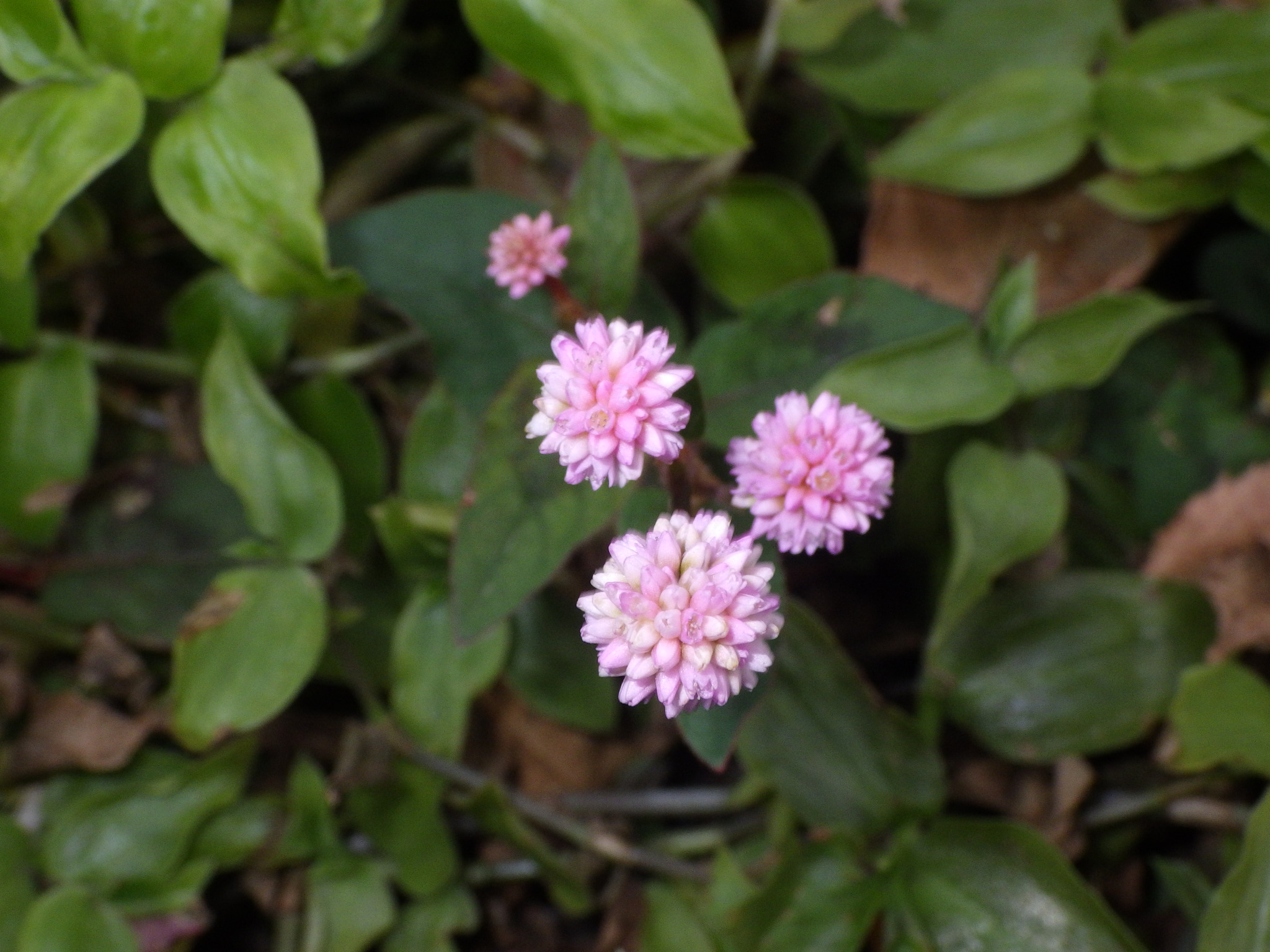
Both Polygonum capitatum and Polygonum persica belong to the genus Polygonum in the family Polygonaceae. They are among the most common perennial herbs in the genus Polygonum, and Polygonum persica in particular can be commonly observed on the stone walls of houses in urban areas. The genus Polygonum is a vast group of species, but these two species share many morphological similarities, such as their vine-like stems, capitate inflorescences, and ovate leaves, which can make them difficult to distinguish . However, they can be easily distinguished by checking the color of the flowers and the hairiness of the leaves. This article will explain the classification of Polygonum capitatum and Polygonum persica.
What are Polygonum capitatum and Polygonum capitatum?
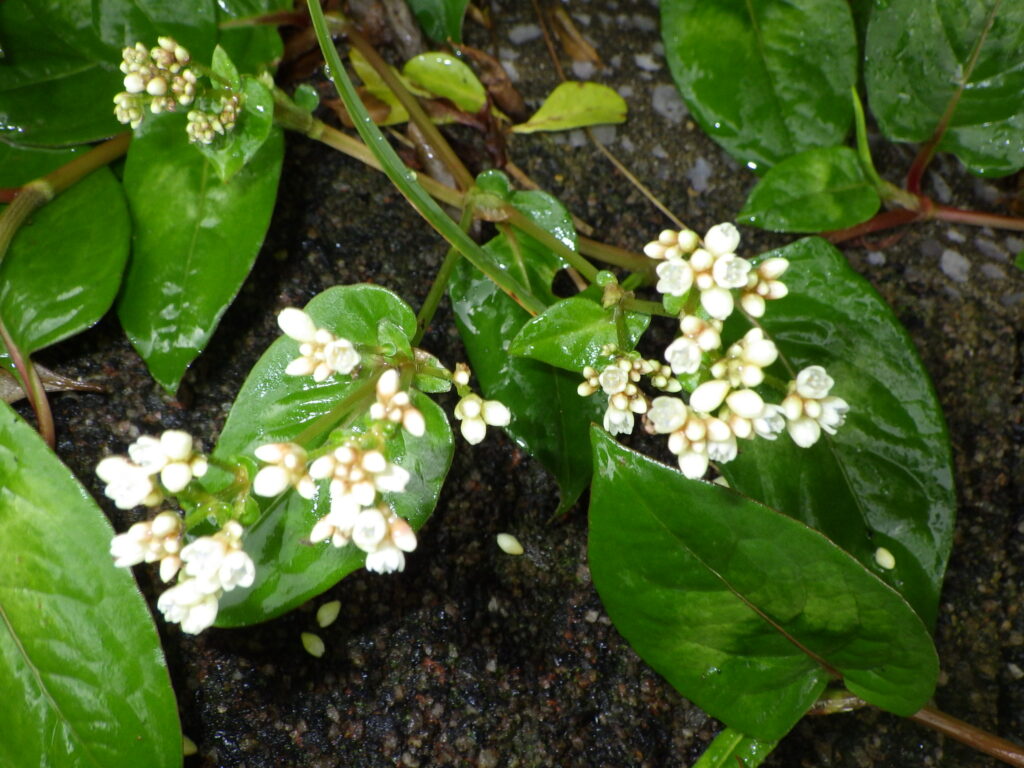
Persicaria chinensis, also known as climbing buckwheat, is a perennial herb that grows on warm coastal areas and is distributed in Honshu (south of the Kanto region), Shikoku, and Kyushu in Japan; as well as in China, Korea, Southeast Asia, and South Asia (Kanagawa Prefecture Flora Survey Association, 2018; RBG Kew, 2023).
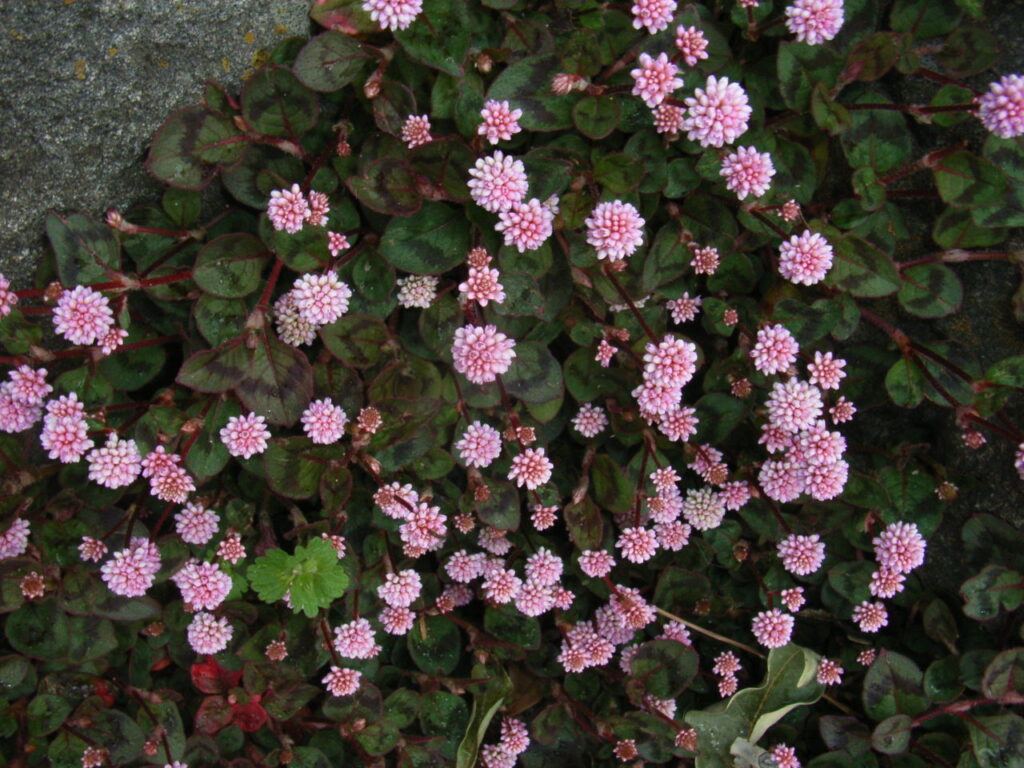
Persicaria capitata, also known as Polygonum, is a perennial plant native to Southeast and South Asia. Cultivated as an ornamental plant, it has naturalized and is found growing on stone walls and other structures along coastlines throughout the world, including Japan.
Both belong to the genus Persicaria in the family Polygonaceae, and are among the most common perennial herbs in the genus Persicaria. In particular, Polygonum capitatum can be found very commonly on the stone walls of houses in urban areas. Their distinctive features include creeping stems and capitate (round cluster) inflorescences, which give them a charming appearance and are likely the reason for their popularity.
Like other plants in the Polygonaceae family, it has flowers composed of perianth segments that are indistinguishable from petals and sepals.
Furthermore, while the genus Polygonum longisetum includes a vast number of species, these two species share many morphological similarities. They are identical in that the pistil's style falls off after flowering, the inflorescence is capitate, the leaves are ovate, the stem lacks backward-pointing thorns, the petiole lacks wings, and the underside of the leaves lacks glandular dots.
Therefore, some people might confuse them, especially since their names are similar.
What is the difference between Polygonum capitatum and Polygonum capitatum?
However, distinguishing between these two types is not difficult. The easiest way to tell them apart is by the color of the flower.
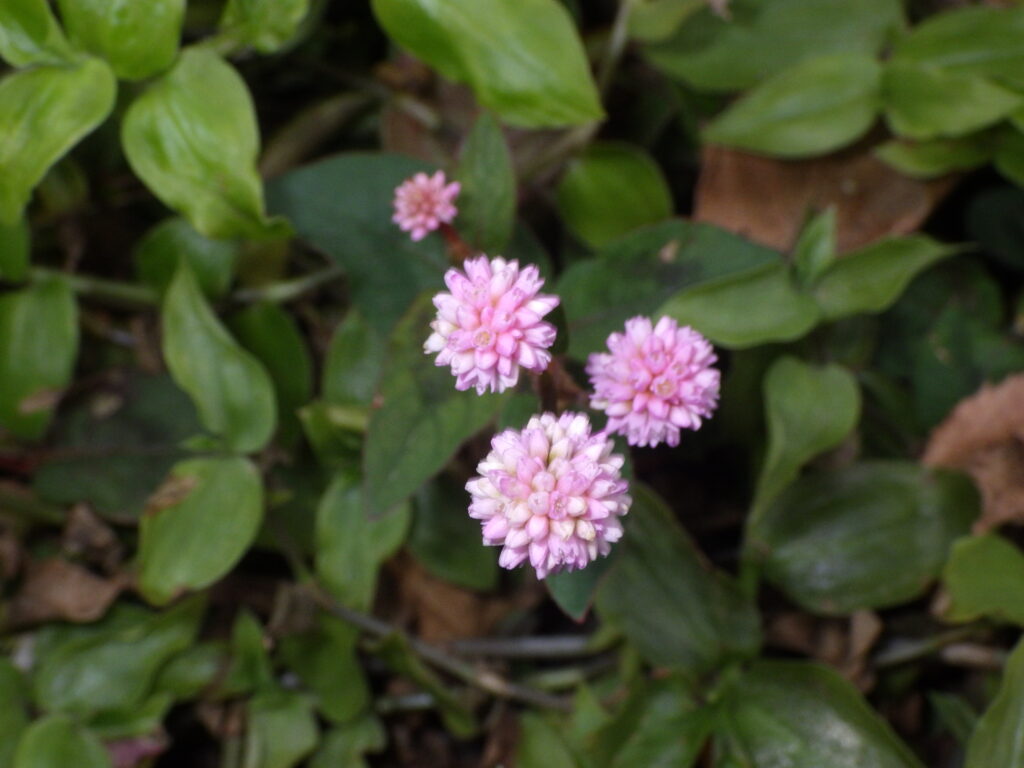
Specifically, while Polygonum capitatum usually has white flowers, Polygonum capitatum has pale pink to white flowers.
While this method alone is sufficient for distinguishing them, these two species have other clear differences besides just being different in color.
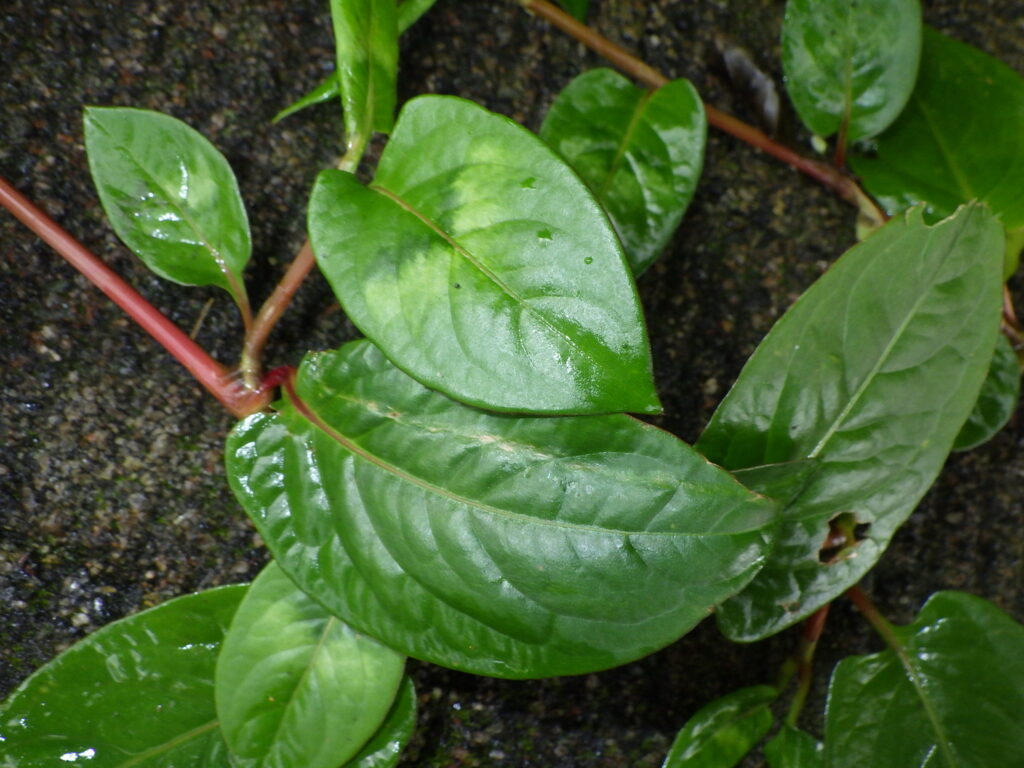
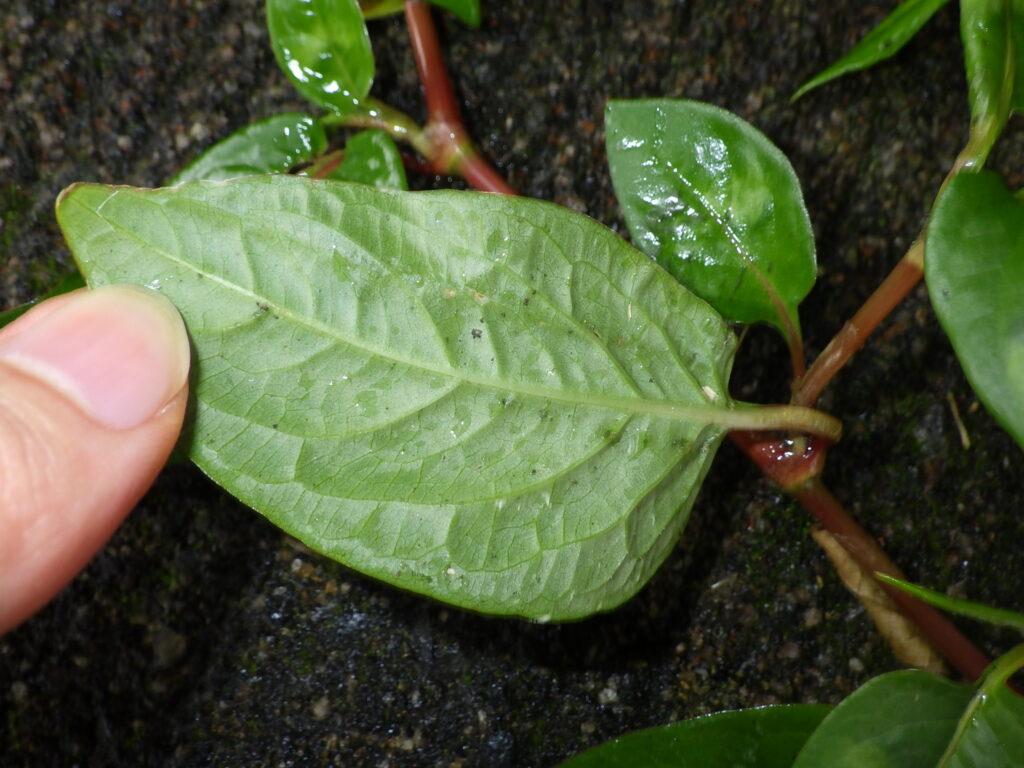
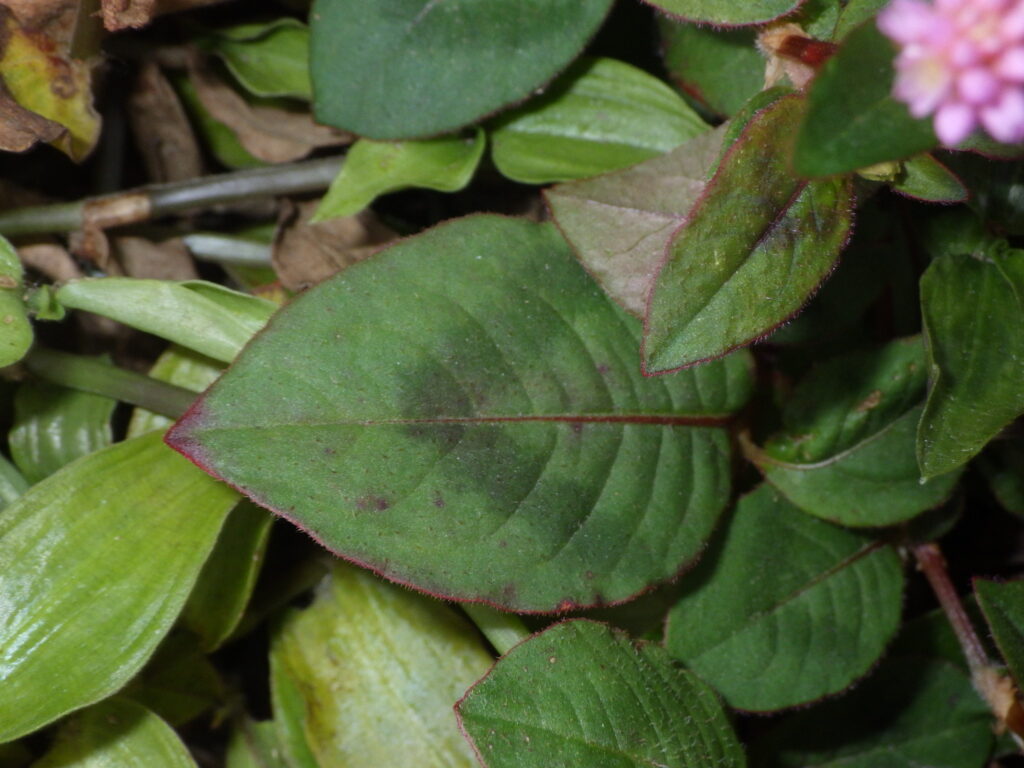
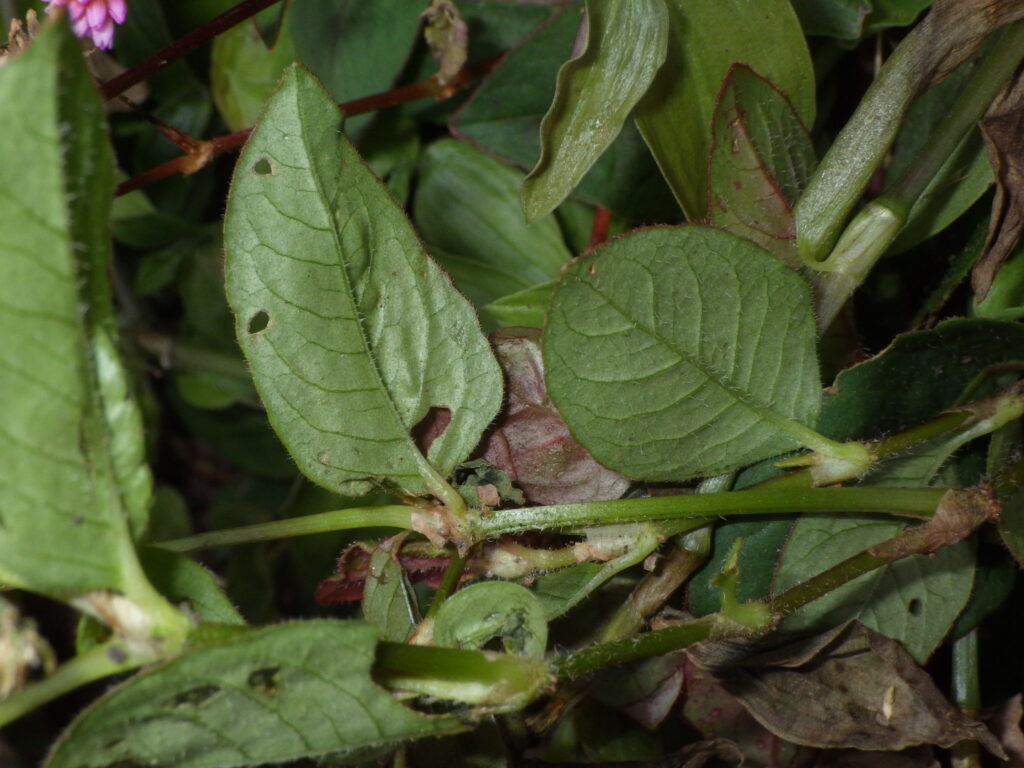
Regarding the leaves, there is a difference in that Polygonum capitatum has hairless leaves on both sides, while Polygonum capitatum has short hairs on both sides.
Regarding the stems, Polygonum capitatum creeps along the ground and grows to over 2 meters in length, while Polygonum capitatum grows to a maximum length of about 50 cm.
Comparing these should prevent any mistakes.
In terms of habitat, Polygonum capitatum is frequently found even in urban areas on Honshu, while Polygonum cuspidatum is only occasionally seen on coastlines.
However, when I visited Yakushima, I was able to frequently observe Polygonum cuspidatum even in urban areas, suggesting that it may indeed be better suited to breeding in southern regions.
In Malaysia, the flowers of Polygonum cuspidatum are known to be visited by various insect species, including honeybees (Apis), hoverflies (Eristalis), blowflies (Lucilia), and potter wasps (Eumedes) (Wong et al., 2015).
References
Kanagawa Prefecture Flora Survey Association. 2018. Kanagawa Prefecture Flora 2018 (Electronic Edition). Kanagawa Prefecture Flora Survey Association, Odawara. 1803pp. ISBN: 9784991053726
RBG Kew. 2023. The International Plant Names Index and World Checklist of Vascular Plants. Plants of the World Online. http://www.ipni.org and https://powo.science.kew.org/
Wong, MM, Lim, CL, & Wilson, JJ 2015. DNA barcoding implicates 23 species and four orders as potential pollinators of Chinese knotweed (Persicaria chinensis) in Peninsular Malaysia. Bulletin of Entomological Research 105(4): 515-520. https://doi.org/10.1017/S0007485315000358

