Gnaphalium uliginosum, Gnaphalium affine, Gnaphalium erythrorhizon, and Gnaphalium affine are perennial herbs that can be seen in many urban areas in recent years, but they were only confirmed in Japan during the Showa era. All of them have inflorescences that are spike-like and leaf-like bracts that are attached to various parts of the spike, making them quite difficult to distinguish without careful observation. Here, I have focused on the easiest characteristic to distinguish them and described the method of distinguishing them in a concise manner. The species that was traditionally called Gnaphalium uliginosum has been found in recent research to be divided into two species: Gnaphalium uliginosum and Gnaphalium affine. This fact does not seem to be widely known among researchers or wild plant enthusiasts. I have taken photographs of what I believe to be these two species, so I will introduce them here for future research. This article will explain the classification and ecology of the genus Gnaphalium.
- What are *Gnaphalium uliginosum*, *Gnaphalium affine*, *Gnaphalium erythrorhizon*, and *Gnaphalium affine*?
- What are the differences between *Gnaphalium uliginosum*, *Gnaphalium affine*, *Gnaphalium erythrorhizon*, and *Gnaphalium affine*?
- Recent research has shown that the Gnaphalium genus (a type of cudweed) has been divided into two species. How can they be distinguished?
- What is the method of powder delivery?
- What are the seed dispersal methods?
- References
- Source
What are *Gnaphalium uliginosum*, *Gnaphalium affine*, *Gnaphalium erythrorhizon*, and *Gnaphalium affine*?
As will be explained later, it was discovered in 2020 that *Gnaphalium affine* (also known as *Gnaphalium uliginosum*) is divided into two species, so here we will refer to them as "*Gnaphalium uliginosum* species."
Gnaphalium species are native to South America, and in Japan, they have rapidly spread from the Kanto region to the Kyushu region since the late 1960s, and are invading the entire Tohoku region (Shimizu et al., 2001). They have been considered a naturalized species, a perennial herb that grows in wastelands and urban areas.
Gamochaeta pensylvanica, also known as false father-and-son grass, is native to North America. It was introduced to Japan from the mid-Taisho period to the early Showa period and rapidly expanded its distribution after the war (Hayashi et al., 2013). As a naturalized species, it is an annual or biennial herb that grows very commonly in dry roadsides and vacant lots in the oak and chestnut zone.
Gamochaeta purpurea, also known as pale pink cudweed, is native to North America. In Japan, it was collected in Ibaraki and Hyogo prefectures in the 1930s and classified in 1987. As an introduced species, it has become widely naturalized from the Kanto region to Kyushu, and is a much more common 1- to 2-year-old herb found in lawns and roadsides than Gnaphalium affine.
Gamochaeta calviceps, also known as narrow-leaved false gnaphalium, is native to North America and is a naturalized species in Japan, growing as a biennial plant along roadsides and in vacant lots.
All of these species belong to the genus Gnaphalium in the Asteraceae family. They share common features such as a spike-like inflorescence with leaf-like bracts at various points on the spike, and pappus hairs that are fused in a ring at the base. These features distinguish them from genera such as Gnaphalium and Gnaphalium.
The genus Gnaphalium is very similar, and their habitats are exactly the same, so it would be difficult to distinguish them without very careful observation.
What are the differences between *Gnaphalium uliginosum*, *Gnaphalium affine*, *Gnaphalium erythrorhizon*, and *Gnaphalium affine*?
There are many ways to distinguish these features from different parts of a plant, and many field guides require detailed observation of these parts. However, for practical purposes, I will focus here on elements that can be identified by external appearance.
First, in *Gnaphalium affine*, the leaves on the inflorescence are linear or narrowly lanceolate and significantly narrower than the leaves on the lower part of the stem, whereas in *Gnaphalium erythrorhizon*, *Gnaphalium affine*, and *Gnaphalium erythrorhizon*, the leaves on the inflorescence are spatulate and almost the same shape as the leaves on the lower part of the stem.
This can be seen from its alternative name, *Hosobano-chichikogusa-modoki*, which is another name for *Tachichikogusa*.
Regarding the remaining three species, the difference lies in the fact that the flower heads of *Gnaphalium uliginosum* and *Gnaphalium affine* are light brown to dark brown, while those of *Gnaphalium erythrorhizon* are red.
A flower head is a cluster of flowers (inflorescence) unique to the Asteraceae family, and it refers to the part that appears to be a flower.
Regarding *Gnaphalium affine* and *Gnaphalium maculatum*, *Gnaphalium affine* has hairless to slightly white hairs on the upper surface of the leaves, and the underside of the leaves and stems are densely covered with downy hairs, making them completely white with no gaps. In contrast, *Gnaphalium maculatum* has downy hairs on the upper surface of the leaves that extend beyond the leaves, and although there is downy hair on the underside of the leaves, the density is such that green is visible through the gaps in the hairs, and the stems also have white hairs, but the overall appearance is green.
If you want to know more, you can refer to other illustrated guides.
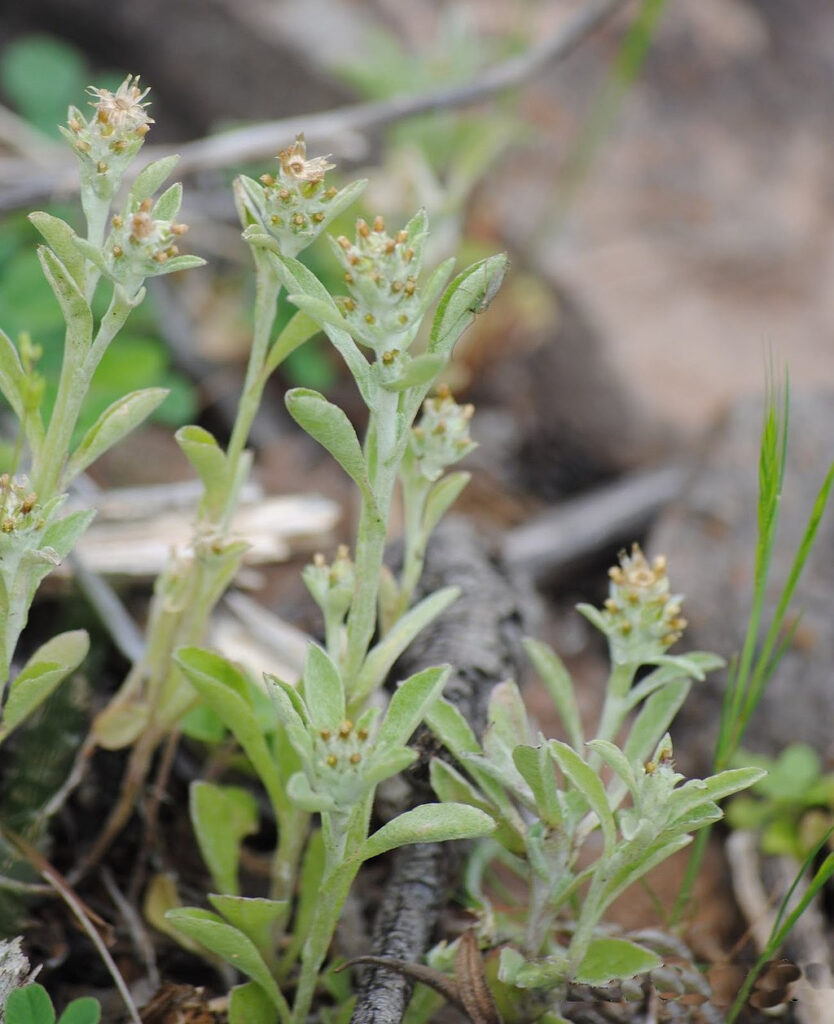
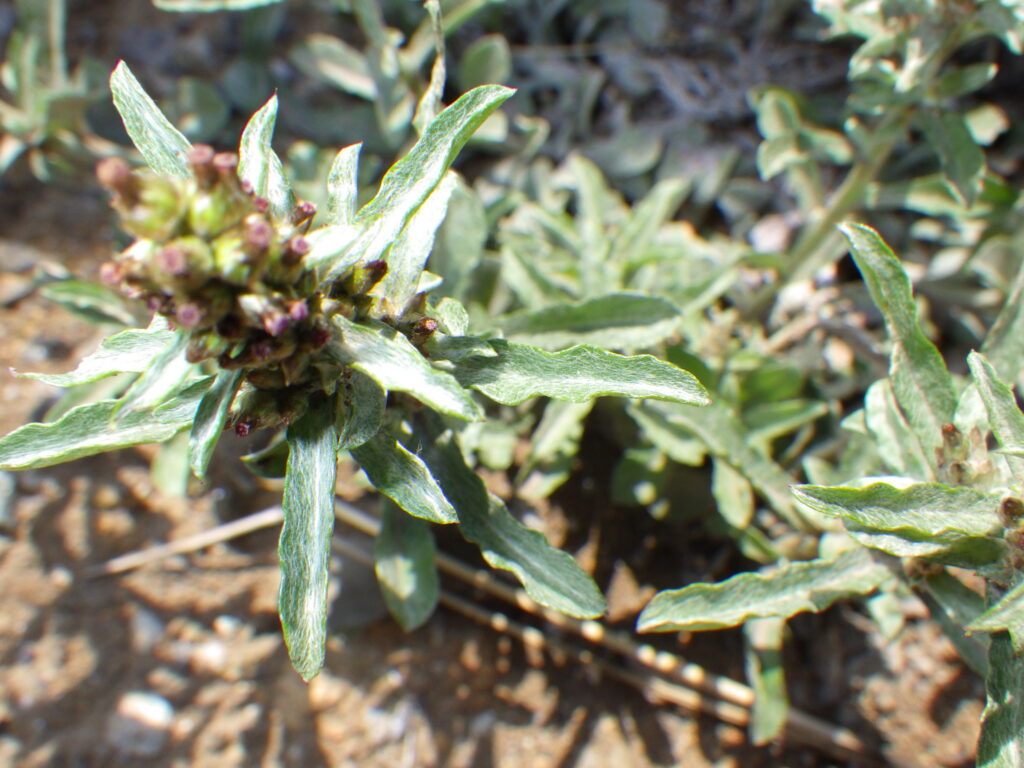
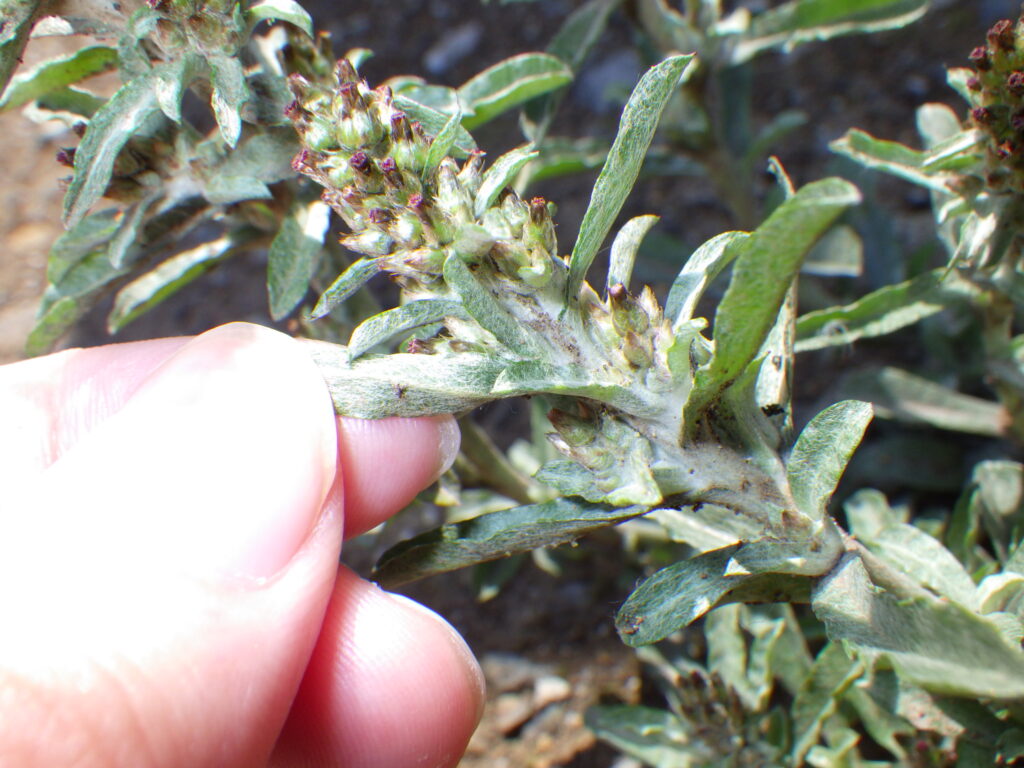
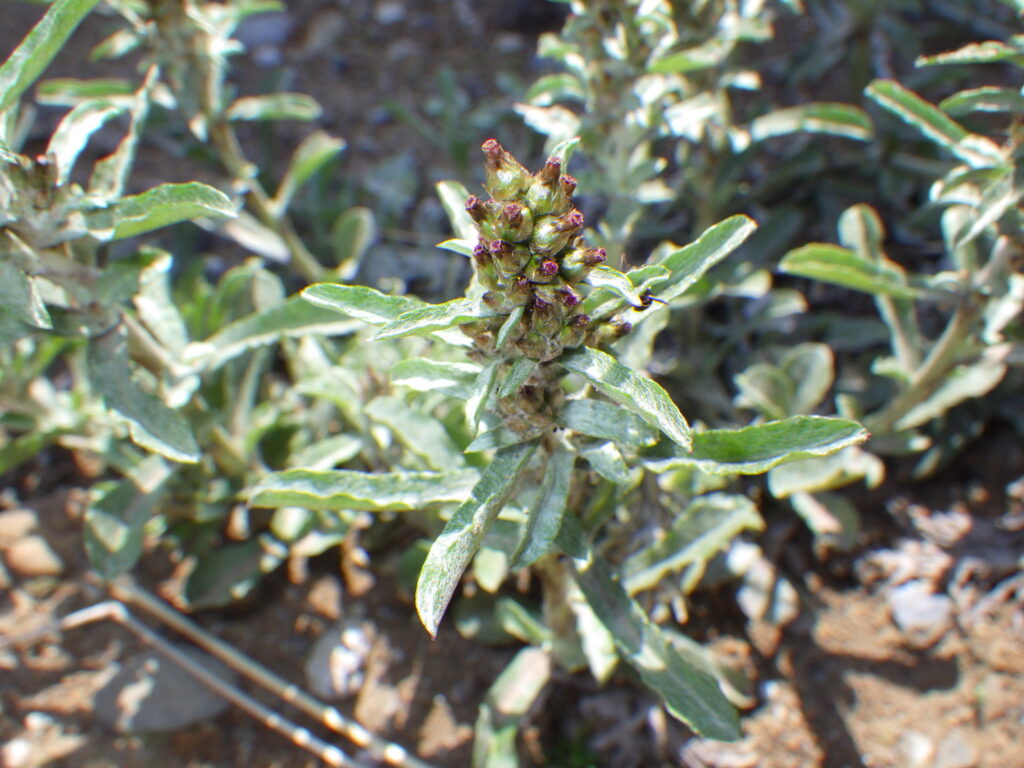
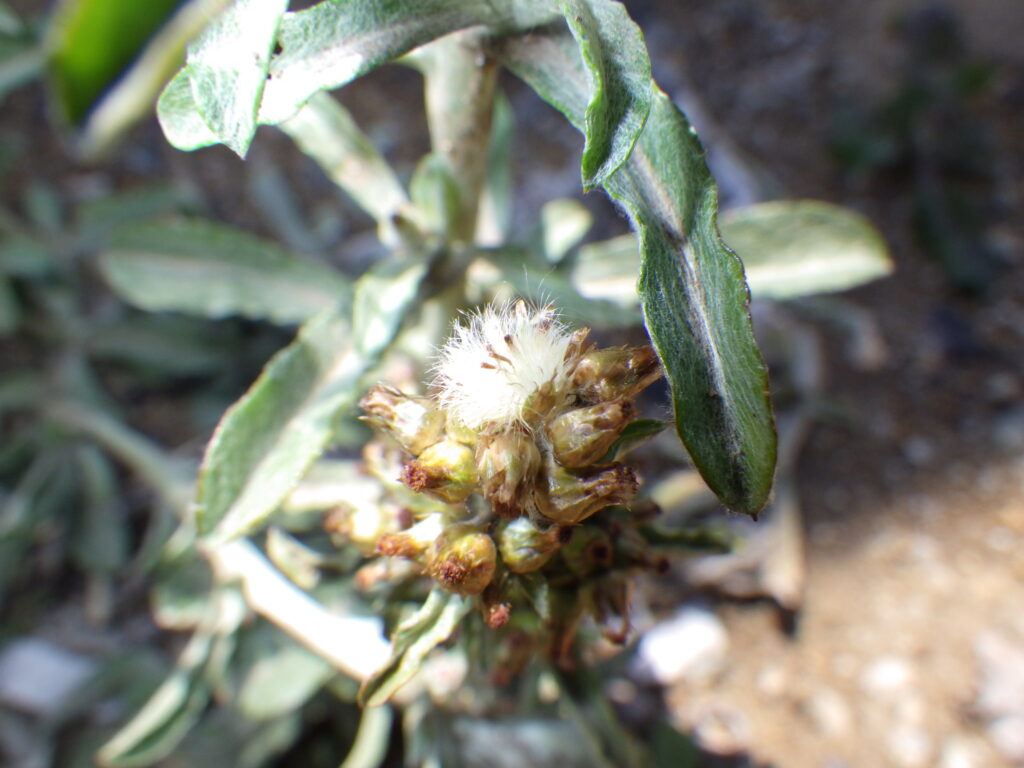
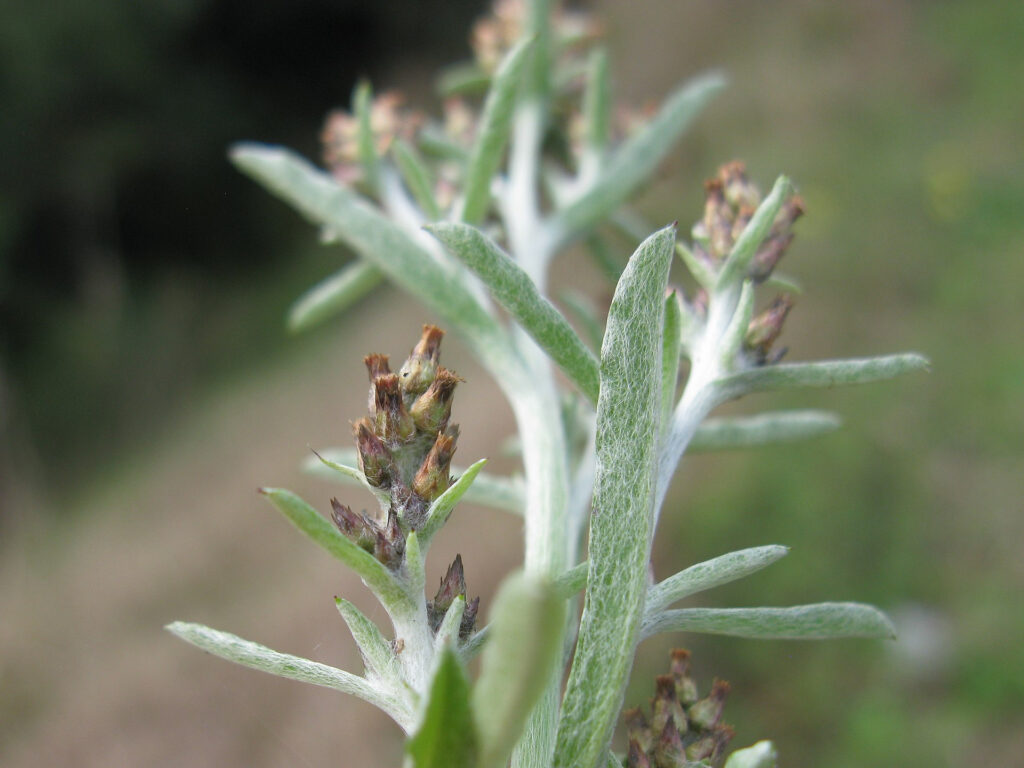
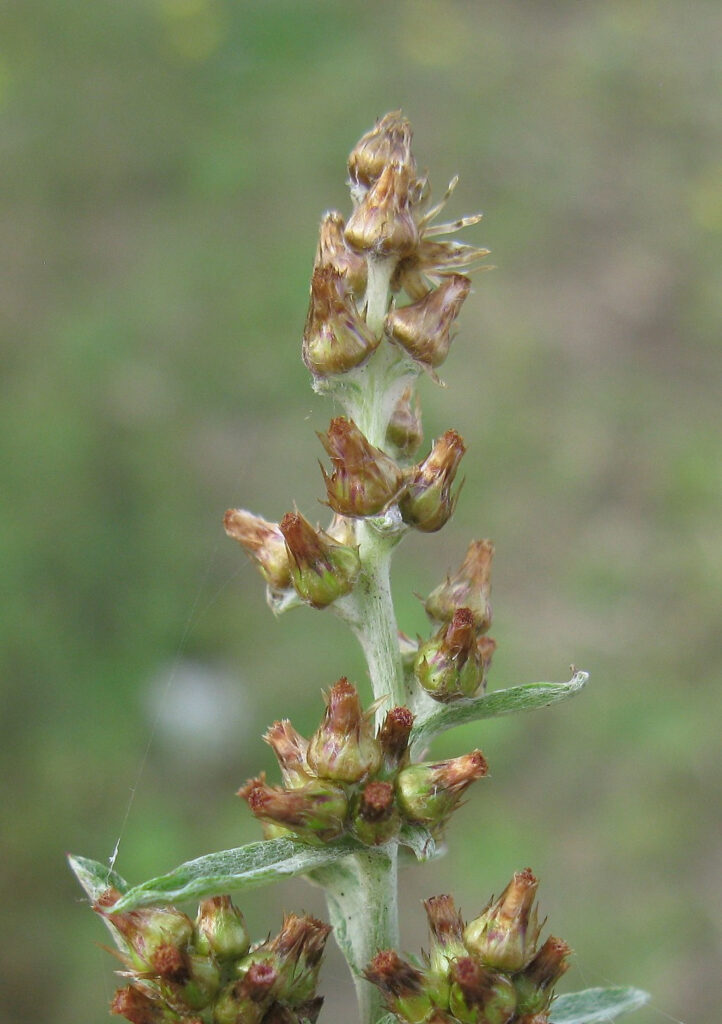
Recent research has shown that the Gnaphalium genus (a type of cudweed) has been divided into two species. How can they be distinguished?
Until now, "Urajirochichikogusa" has been described as follows:
The stems branch laterally from the base, forming clumps that reach a height of about 80 cm. Short stolons also produce new plants. The upper surface of the leaves has few hairs, but the underside and stems are covered in white hairs, giving them a white appearance. The edges of the leaves attached to the stem are wavy. The capitulum flowers are clustered at the top of the stem, about 4 mm in diameter, with glossy yellowish-green bracts. There are about 13 pappus hairs, which easily detach from the achene. Among the naturalized plants of this genus, it flowers the latest. Flowering season is summer.
"Illustrated Guide to Naturalized Plants in Japan: 600 Species (Revised Edition)"
However, in recent years, it has been confirmed that what was previously called "Urajiro-chichikogusa" actually consists of two species: Gamochaeta chinoesthes and Gamochaeta coarctata (Takahashi, 2020). It is still unclear which species the above description refers to.
Takahashi (2020) provides a detailed explanation of how to distinguish between the two types, so I will quote from his work.
Gamochaeta chinoesthes... The surface of the leaves is usually covered with a thin layer of cobweb-like hairs. The outer bracts of the involucre are ovate, usually acute at the apex, while the middle and inner bracts are oblong, acute to acute at the apex. The achenes are purple.
Gamochaeta coarctata: The upper surface of the leaves is glabrous or sometimes has fine cobwebby hairs along the midrib. The outer bracts of the involucre are ovate to broadly ovate with a blunt or sometimes acute apex, the middle bract is oblong with a blunt apex, and the inner bract is linear-oblong with a slightly rounded apex that then tapers to a minutely convex shape. The achenes are pale yellowish-brown.
"Gnaphalium affine and Gnaphalium affine (Asteraceae family, Gnaphalium genus) used in the Flora of Gifu Prefecture"
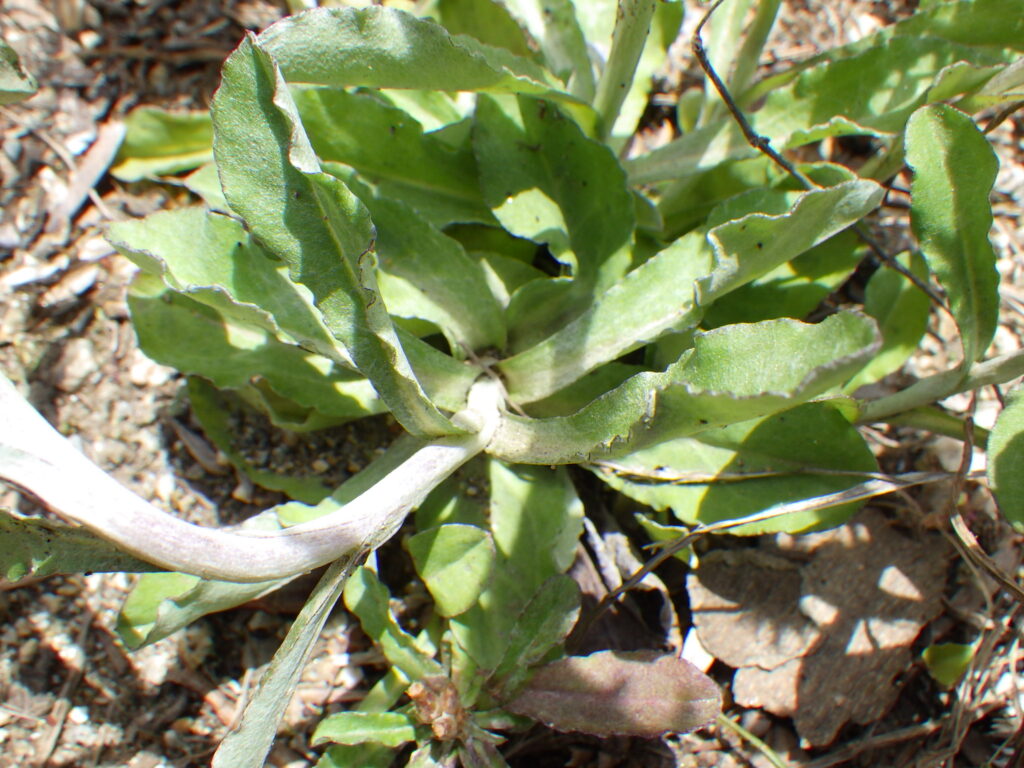
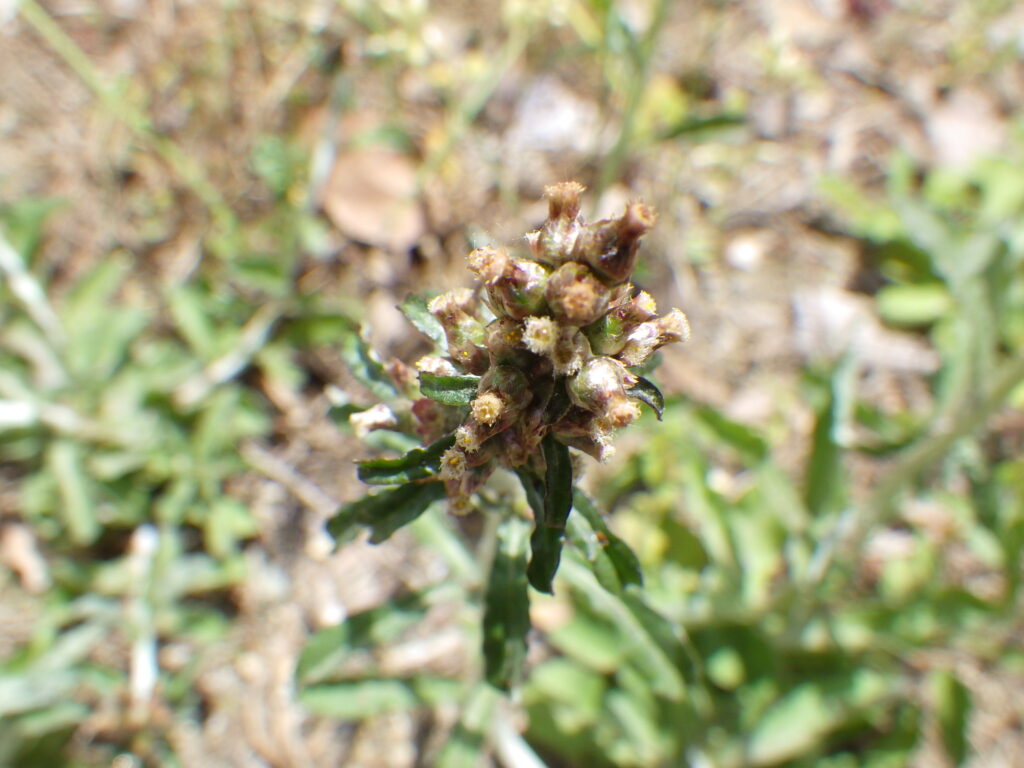
A simple way to identify them is to check for hairs on the upper surface of the leaves.
I have confirmed specimens of what I believe to be *Gnaphalium affine* in Tokyo and *Gnaphalium affine* in Osaka, and I have included photographs of these specimens. I identified each species based on Takahashi (2020), but these species are still under-researched, so please verify the identifications carefully before using them as a reference. I hope to report on this again if the opportunity arises.
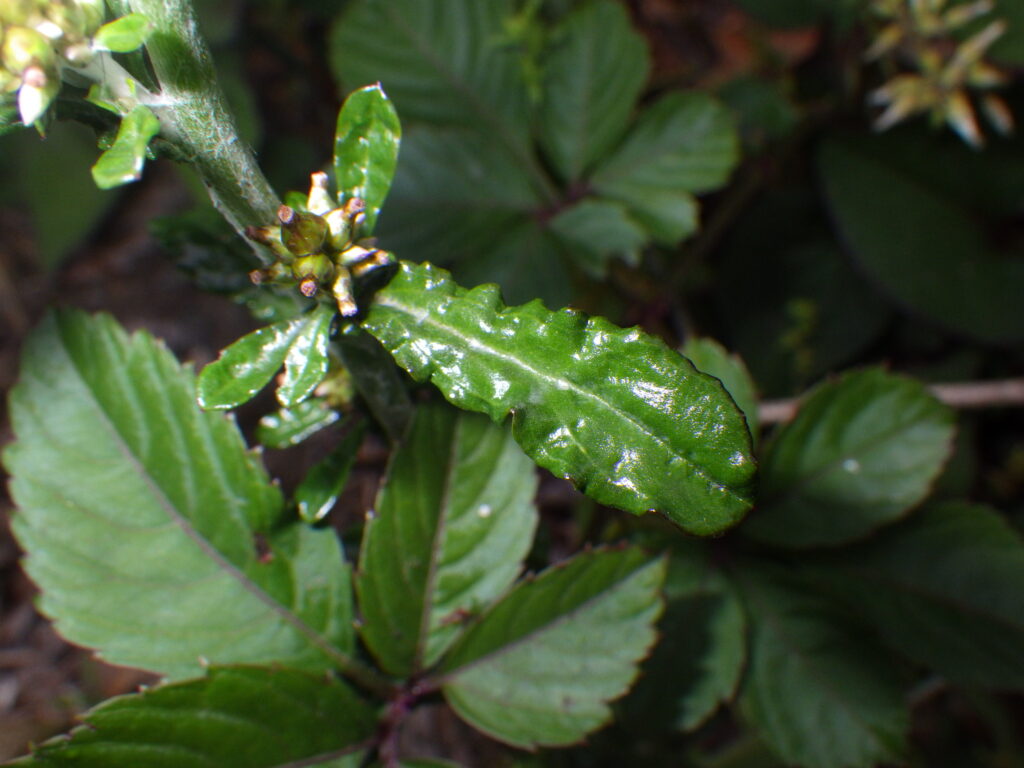
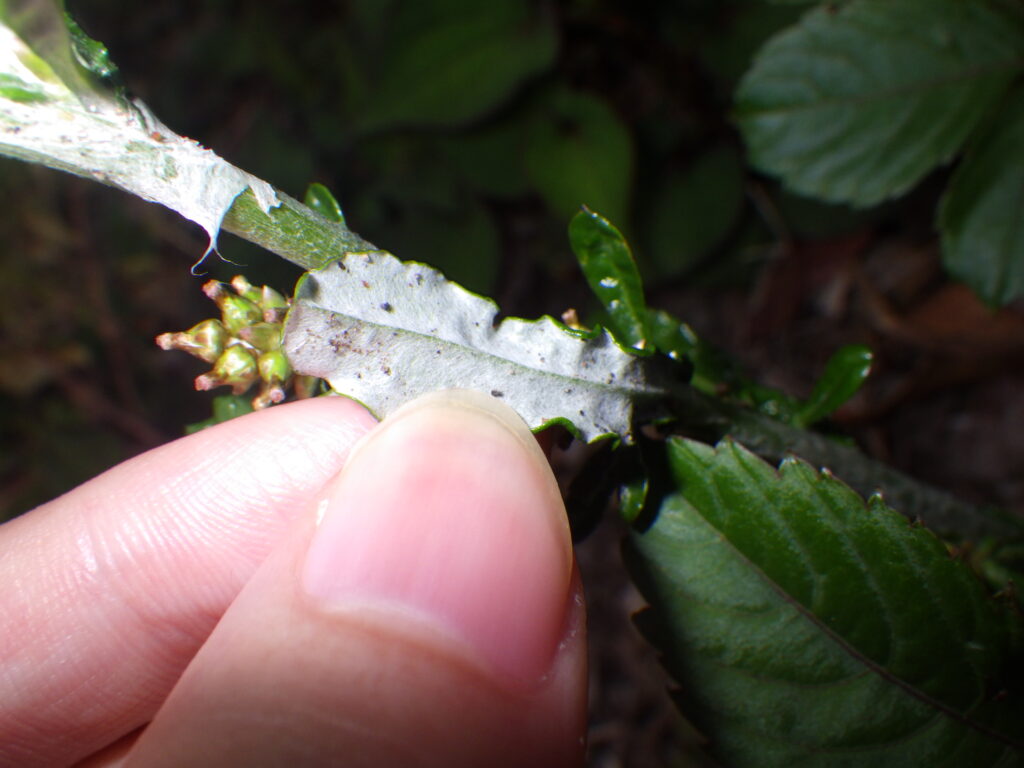
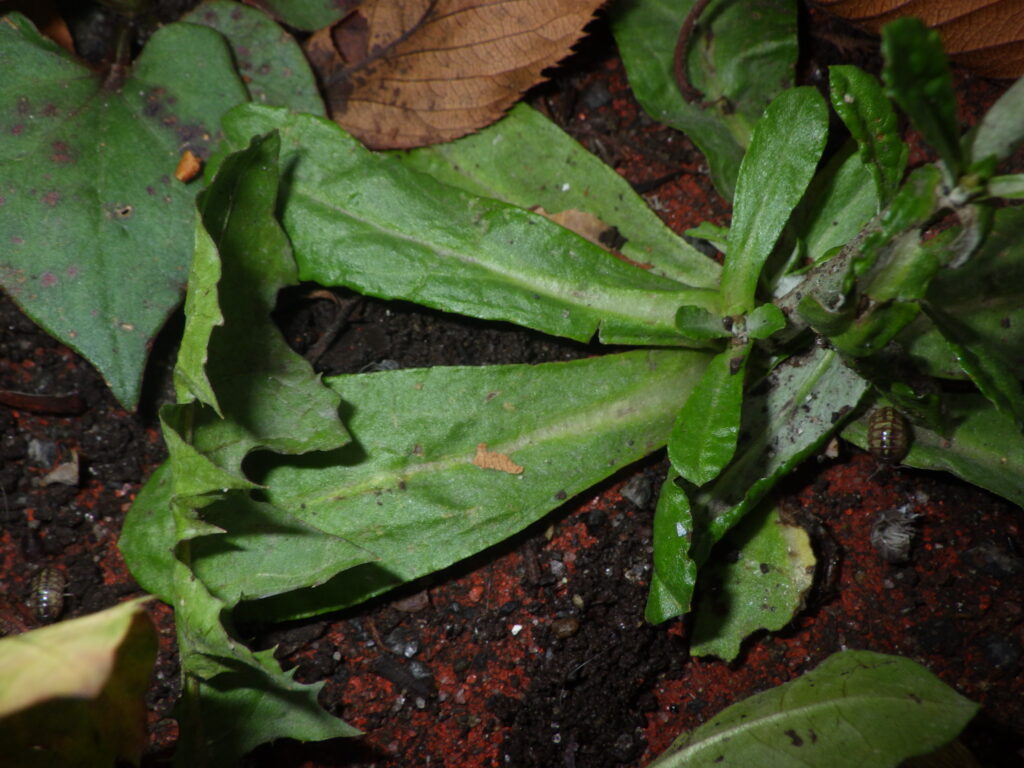
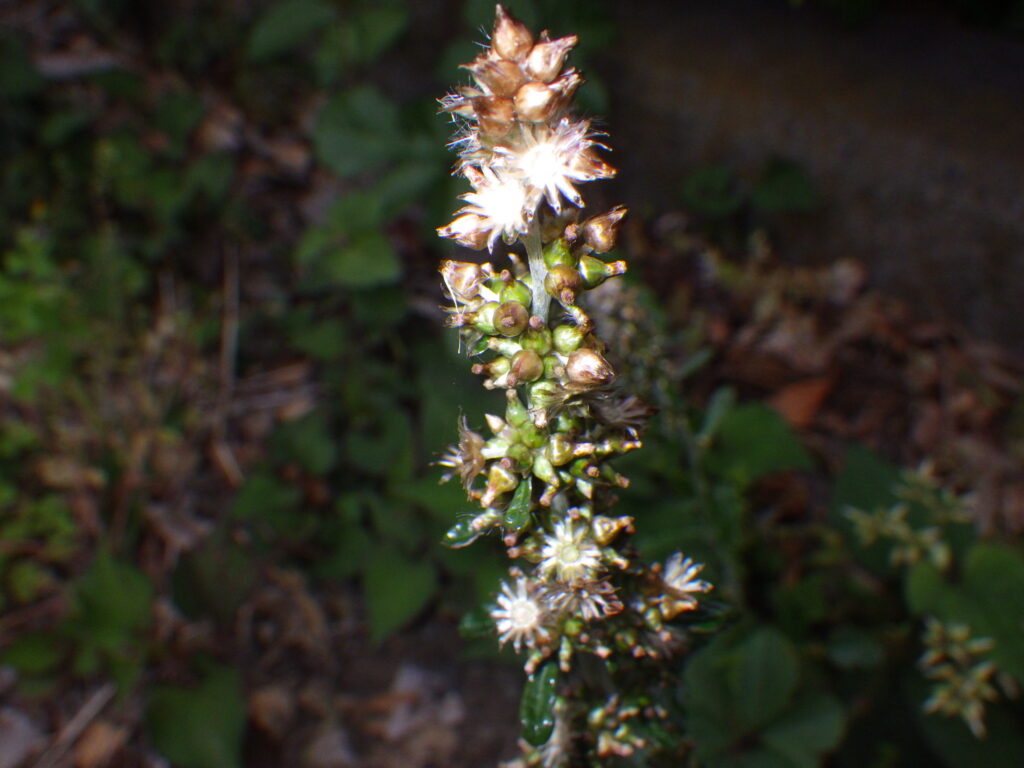
What is the method of powder delivery?
The flowers are the common heads found in the Asteraceae family, but in the genus Gnaphalium, they are tubular flowers without petals. The heads have an involucre that is ovate in shape.
It seems that very little is known about their ecology.
I've done a lot of research on records of insects that visit this flower and other members of the same genus, but I couldn't find any confirmation. Since it's a plant that grows in common areas, you might find something if you observe it closely. Self-pollination is also a possibility.
What are the seed dispersal methods?
The fruits are all achenes, and have a pappus that is fused in a ring at the base.
The presence of these pappus feathers suggests that dispersal is carried by the wind.
References
Hayashi, Yasaka, Kadota, Yuichi, and Hirano, Takahisa. 2013. Yamakei Handy Illustrated Guide 1: Wildflowers (Revised and Expanded New Edition). Yama-kei Publishers, Tokyo. 664pp. ISBN: 9784635070195
Kanagawa Prefecture Flora Survey Association. 2018. Kanagawa Prefecture Flora 2018 (Electronic Edition). Kanagawa Prefecture Flora Survey Association, Odawara. 1803pp. ISBN: 9784991053726
Shimizu, K., Morita, H., & Hirota, S. 2001. Illustrated Guide to Naturalized Plants of Japan: 600 Species of Plant Invaders (Revised). National Rural Education Association, Tokyo. 553pp. ISBN: 9784881370858
Takahashi, Hiroshi. 2020. *Gnaphalium affine* and *Gnaphalium erythrorhizon* (Asteraceae, *Gnaphalium* genus) used in the Flora of Gifu Prefecture. *Journal of Plant Geography and Taxonomy* 68(2): 99-102. ISSN: 0388-6212, https://doi.org/10.18942/chiribunrui.0682-04
Source
This article is an expanded version of a piece originally published in the following book.