Wisteria floribunda, mountain wisteria, and summer wisteria remain popular legumes, so much so that trellises are still set up for them. However, distinguishing between the three species can be difficult until you get used to it. Examining the flowering period and the direction in which the vines twine is very important for identification. Wisteria has a long history, already appearing in the Kojiki and Manyoshu, the oldest Japanese texts compiled during the Nara period. Records show that during the Heian period, wisteria was cherished by emperors and nobles as a dignified and special flower. This suggests that purple is associated with nobility in Japan. But are you familiar with the ecology of these wisteria species? In fact, recent research has revealed that the yellow-breasted bumblebee is a specialized pollinator. Also, the fruit bursts open with a loud popping sound and the seeds are scattered with great force. This article will explain the classification, distinguishing features, pollination ecology, seed dispersal, and history of wisteria.
- Three popular climbing leguminous species in Japan, so much so that trellises are even installed around them.
- What are the differences between wisteria, mountain wisteria, and summer wisteria?
- What is Fuji TV's history? What is its relationship with the Fujiwara clan? Does it have a dark side like "Demon Slayer"?
- What is the structure of the flowers of wisteria, mountain wisteria, and summer wisteria?
- Wisteria flowers were practically exclusively for bumblebees!?
- Wisteria flowers are forcibly twisted 180 degrees to make their inflorescences droop!?
- Wisteria beans pop and fly away!?
- What are galls that form on wisteria plants?
- References
Three popular climbing leguminous species in Japan, so much so that trellises are even installed around them.
Wisteria floribunda, also known as Noda wisteria, is a species endemic to Japan, distributed across Honshu, Shikoku, and Kyushu. It is a climbing deciduous woody plant that grows in forest edges and bright woodlands (Mogi et al., 2000). It is extremely popular as an ornamental plant, so much so that dedicated trellises are built for it.
Wisteria brachybotrys, also known as mountain wisteria, is distributed in Honshu (west of the Kinki region), Shikoku, and Kyushu, and is a climbing deciduous woody plant that grows in forest edges and bright woodlands in low mountains.
Summer wisteria (Wisteria japonica) is distributed in Honshu (west of the Tokai region), Shikoku, and Kyushu, and is a climbing deciduous woody plant that grows in forest edges and bright woodlands from hills to low mountains.
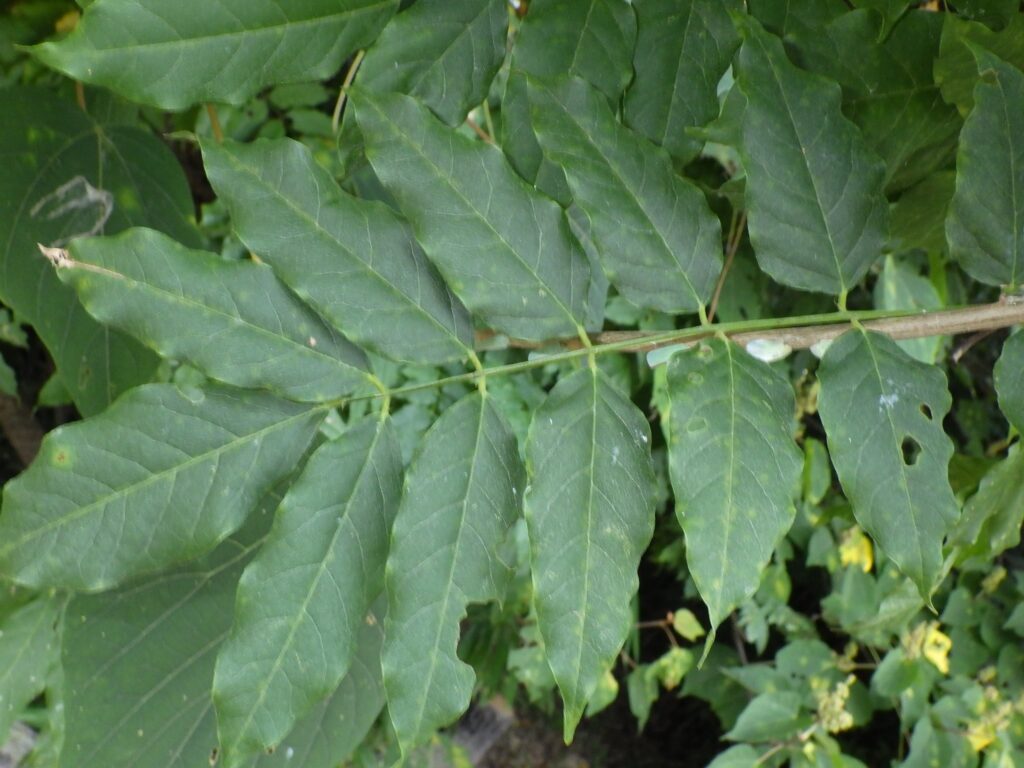
All are deciduous woody vines with odd-pinnately compound leaves belonging to the genus Wisteria in the legume family. They are commonly found in Japan, and because they are cultivated by humans, there are many varieties, making them difficult to distinguish. Biologically, they are divided into three species.
What are the differences between wisteria, mountain wisteria, and summer wisteria?
These three species can be quite difficult to distinguish at first, but identification is possible if you follow the instructions below (Kanagawa Prefecture Flora Survey Association, 2018).
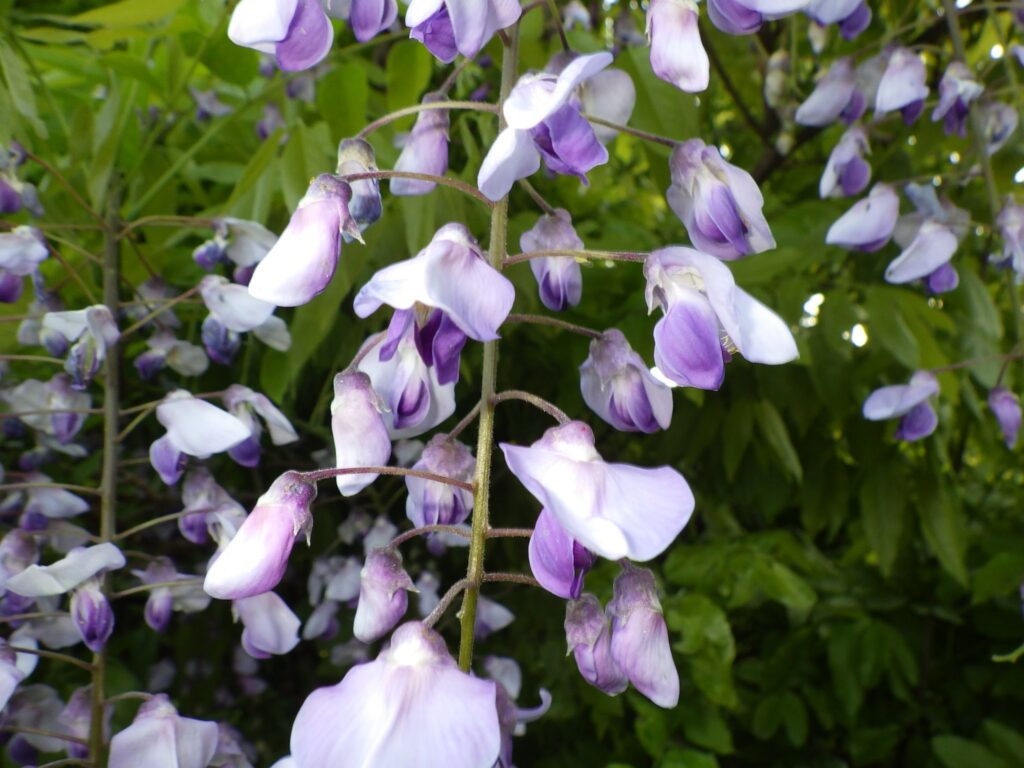
First, the differences between Wisteria floribunda (Japanese wisteria) and Wisteria japonica (summer wisteria) are that in Wisteria floribunda and Wisteria japonica, the flowers are wisteria-colored to purple, and the winter buds appear to be covered with one or two bud scales, while in Summer wisteria, the flowers are greenish-white, and the winter buds are covered with awn-like stipules and grayish-brown hairs.
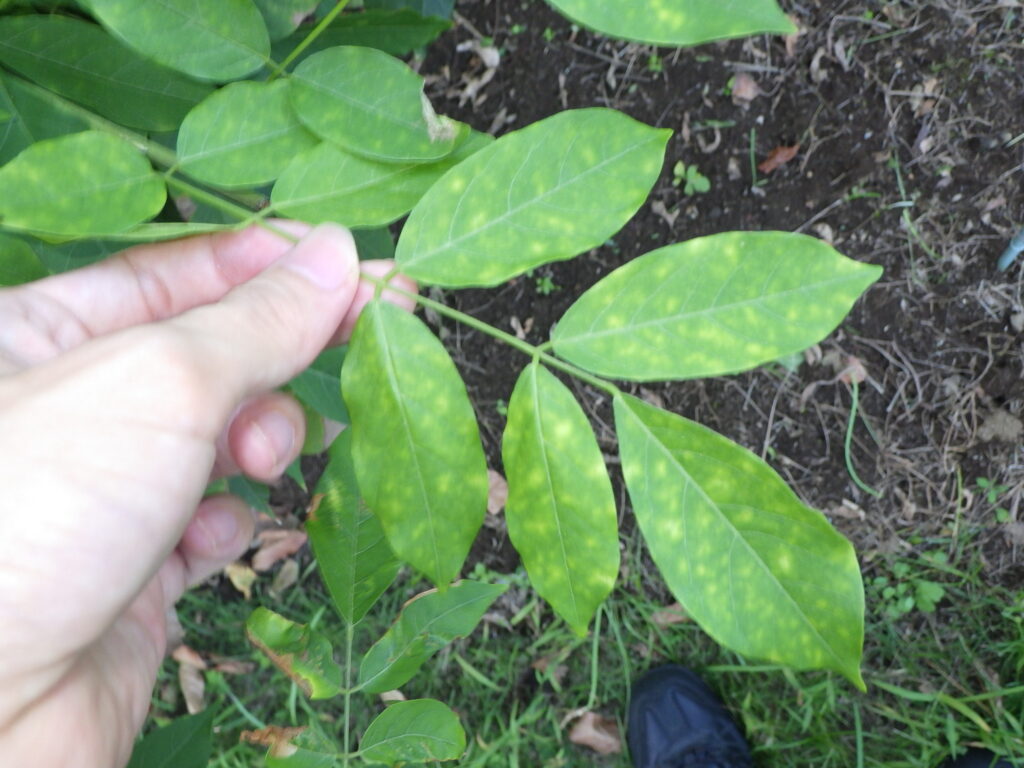
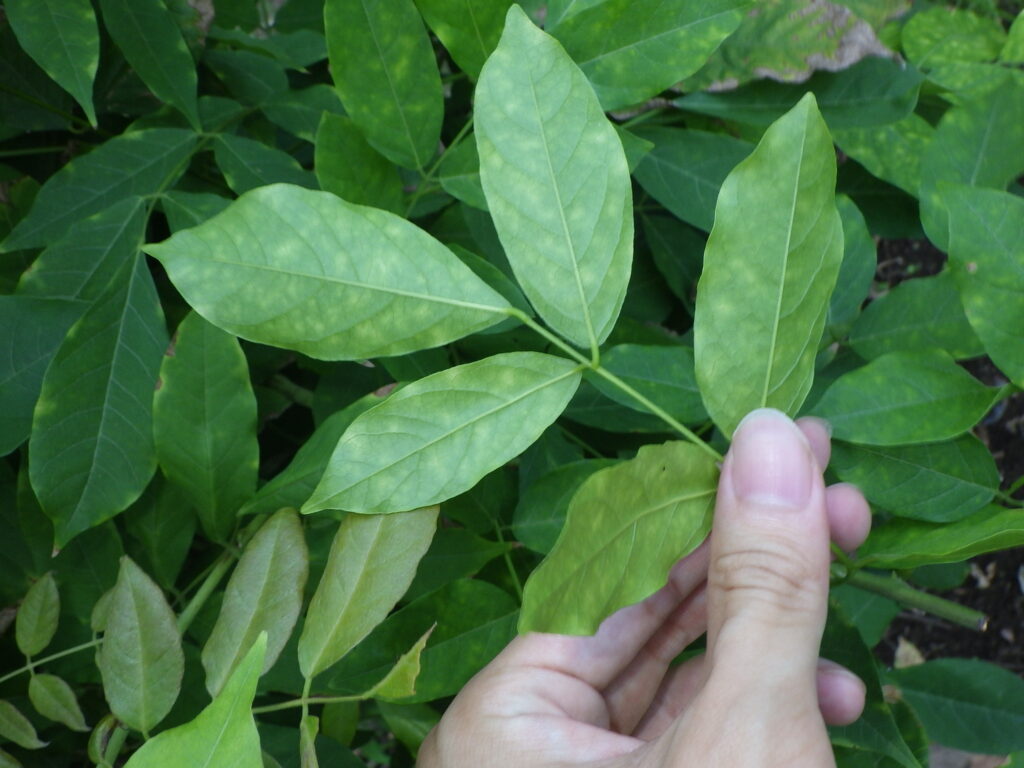
The differences between wisteria and mountain wisteria include the fact that wisteria vines twine counterclockwise (climbing from right to left when viewed from the front) and mature leaves are almost hairless, while mountain wisteria vines twine clockwise (climbing from left to right when viewed from the front) and retain hairs on the underside of mature leaves.
While wisteria and mountain wisteria are basically distinguished by the way their vines twine, it can be a bit tricky. As mentioned earlier, wisteria is distributed in Honshu, Shikoku, and Kyushu, mountain wisteria is distributed in Honshu (west of the Kinki region), Shikoku, and Kyushu, and summer wisteria is distributed in Honshu (west of the Tokai region), Shikoku, and Kyushu, so this can also be taken into consideration when distinguishing them. However, since there are also horticultural and escaped individuals, the above identification key is still important.
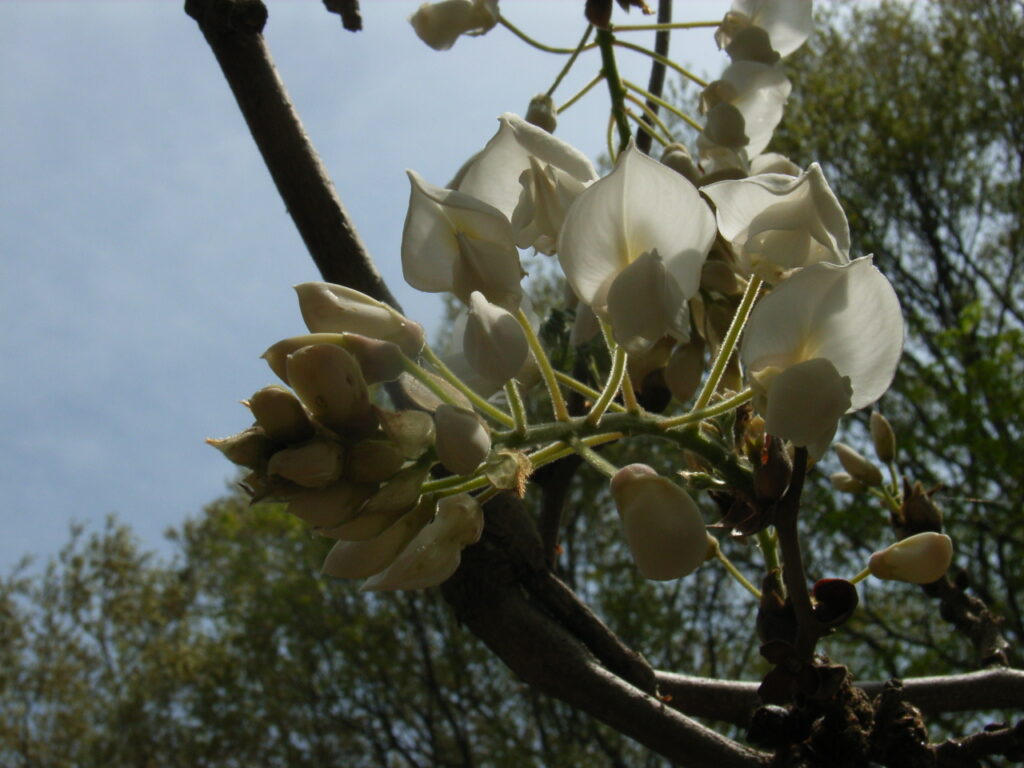
The identification key above should generally suffice, but unfortunately, regarding flower color, the wisteria (Wisteria floribunda) has varieties such as the white-flowered W. floribunda f. alba and the light pink-to-white-flowered W. floribunda f. alborosea. Also, the summer wisteria (Wisteriopsis japonica) has a variety with light pink flowers, W. japonica var. alborosea. Although not included in the identification key, it's also quite important to note that wisteria blooms in May, while summer wisteria blooms in the summer.

What is Fuji TV's history? What is its relationship with the Fujiwara clan? Does it have a dark side like "Demon Slayer"?
Wisteria has been cherished and utilized by the Japanese people not only for the beauty of its flowers, but also for its highly useful bark (Arioka, 2021). Its name already appears in the Kojiki and Manyoshu, the oldest known documents compiled in Japan during the Nara period.
In the Kojiki, there is a story that the goddess Izushiotome had been rejecting everyone's courtship until Haruyamano Kasumiotoko appeared, clad in a wisteria robe and carrying a bow and arrow. Wisteria flowers bloomed all at once on both his clothing and his bow and arrow, and he was able to marry the goddess.
Fuji-goromo were garments made by weaving wisteria fibers, and were sometimes worn as work clothes by commoners or as mourning attire. However, there are records in the Manyoshu anthology of poetry complaining that they were rough and uncomfortable against the skin. That 's interesting, isn't it?
Furthermore, the Manyoshu anthology contains 28 poems about wisteria, including this complaining poem. These poems mention that wisteria was cultivated for its beauty and was used as one of the plants for making hair ornaments (kanzashi) that were believed to bring blessings from the mountain gods. Even today, shrine maidens at Kasuga Taisha Shrine and geisha in Kyoto during May wear wisteria hair ornaments.
Records show that during the Heian period, wisteria was cherished by emperors and nobles as a dignified and special flower. In Japan, purple has an image of nobility, and this may be related to that.
However, there is another reason why purple became a noble color in Japan, and it may be a fusion of the Chinese Five Elements theory and the ideas of ancient Greece and Rome. In Japan, the plant Lithospermum erythrorhizon was used to dye things purple, while overseas, snails such as Bolinus brandaris from the Muricidae family were used. A major reason for this may be that both were difficult to produce and very valuable. The fact that purple became the highest rank in the Twelve Levels of Court Rank established during the Asuka period likely solidified this value.
In Japanese history, when you mention wisteria, the first thing that might come to mind is the "Fujiwara clan." Nakatomi no Kamatari, who carried out the Taika Reforms, was the founder of the Fujiwara clan, during the Asuka period. It is said that Emperor Tenji bestowed the name upon the clan from Fujiwara-kyo, the capital city where the Taika Reforms took place. Therefore, it doesn't seem to be related to the wisteria plant itself. The "Fujiwara" in Fujiwara-kyo is thought to have originated from the fact that "many wisteria could be seen there," but unfortunately, we have no way of knowing if that was really the case unless archaeological excavations are conducted. Surnames such as Kato and Sato also originate from the Fujiwara clan.
In modern times, the image of Fuji from "Demon Slayer" is probably the most memorable, isn't it? The final selection for joining the Demon Slayer Corps at Mount Fujikasane was terrifying... However, it seems that there is no actual legend of "sealing demons" there, and no poison has been confirmed so far. In the real world, it seems unlikely that a child would have to survive for seven days.
What is the structure of the flowers of wisteria, mountain wisteria, and summer wisteria?
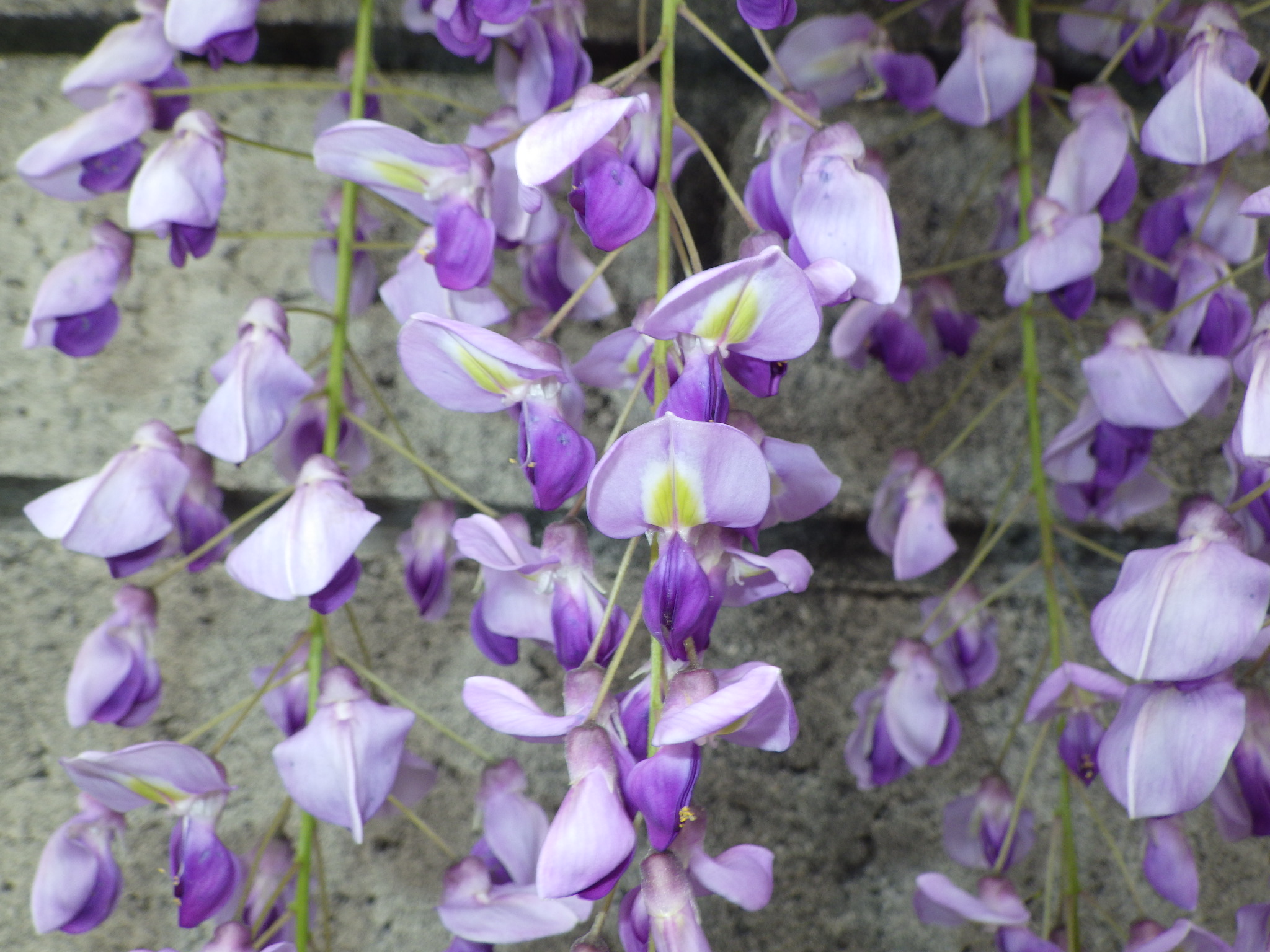
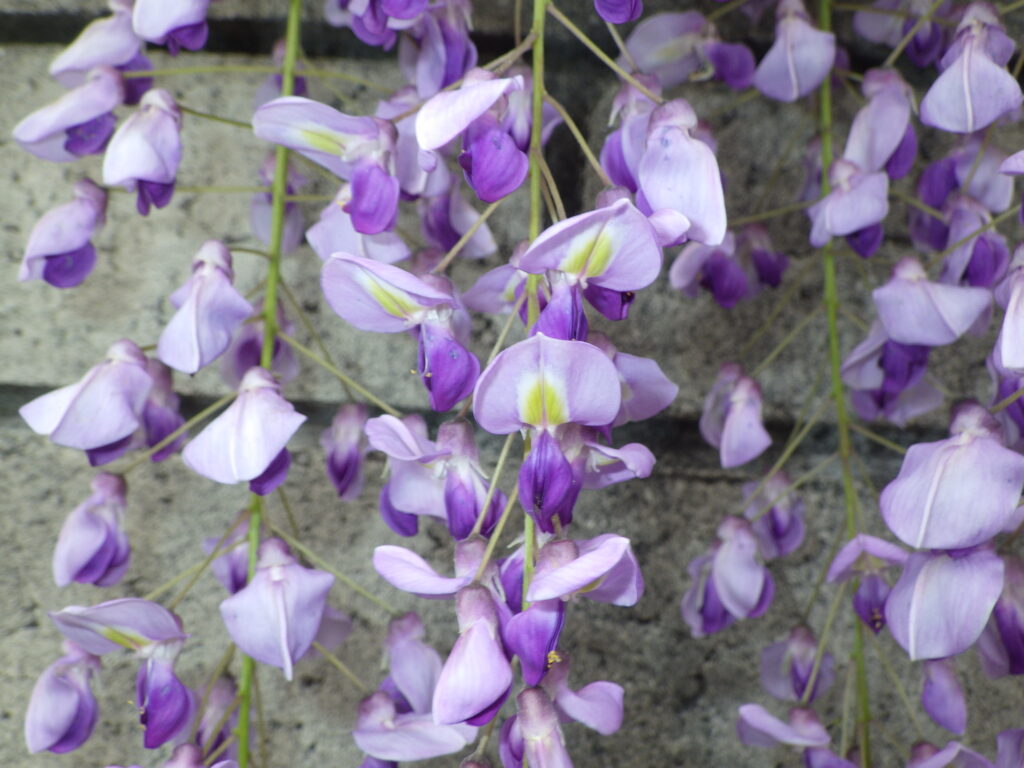
Wisteria, Japanese wisteria, and summer wisteria belong to the legume family, and therefore have a distinctive shape called a "butterfly flower" (Mogi et al., 2000). The butterfly flower has the largest and most conspicuous "standard petal," and many legume species have a mark called a "nectar guide" at the base of the standard petal that tells insects where the nectar is located; in the case of wisteria, this mark is yellow. Protruding below the standard petal are the "wing petals" and the "keel petal" or "spur petal," with the two wing petals covering the two keel petals. The nectaries are hidden by these overlapping petals in the center.
Wisteria flowers bloom in May, in spring. Racemes 20-100 cm long hang down from the tips of the branches, bearing numerous purple, butterfly-shaped flowers 1.5-2 cm long. The calyx is broadly bell-shaped and hairy, with five sepals. The bracts are narrowly ovate, hairy, about 1 cm long, and are deciduous.
Japanese wisteria (Wisteria floribunda) blooms in spring, in May, with drooping racemes 10-20 cm long at the tips of its branches, bearing numerous purple, butterfly-shaped flowers 2-3 cm long. The calyx is broadly bell-shaped and hairy, with five sepals. The bracts are ovate, about 1.5 cm long, densely covered with brown hairs, and are deciduous.
Summer wisteria blooms in July and August, with numerous pale yellowish-white butterfly-shaped flowers hanging down in racemes 10-20 cm long from the axils of new branches. Both the standard petal and wing petals are 1.2-1.3 cm long. The calyx is broadly bell-shaped, with five sepals.
Wisteria flowers were practically exclusively for bumblebees!?
What kinds of insects visit wisteria flowers?
In the butterfly-shaped flowers of legumes, even in typical legumes, bees need to forcefully push down the wing petals and keel petals to access the nectar.
However, with wisteria, perhaps because of its particularly large size, it has been believed that only bees with greater strength can penetrate it. When the flower is pushed down, the stamens and pistil emerge from within; the stamens attach pollen to the bee's abdomen, and the pistil receives pollen from other bees.
What kind of bee is it specifically?
Recent studies conducted in Japan that combined the visitor ratios of Japanese wisteria and mountain wisteria have revealed that, surprisingly, a variety of insect species, including bees, beetles, flies, and butterflies, are visiting the flowers.
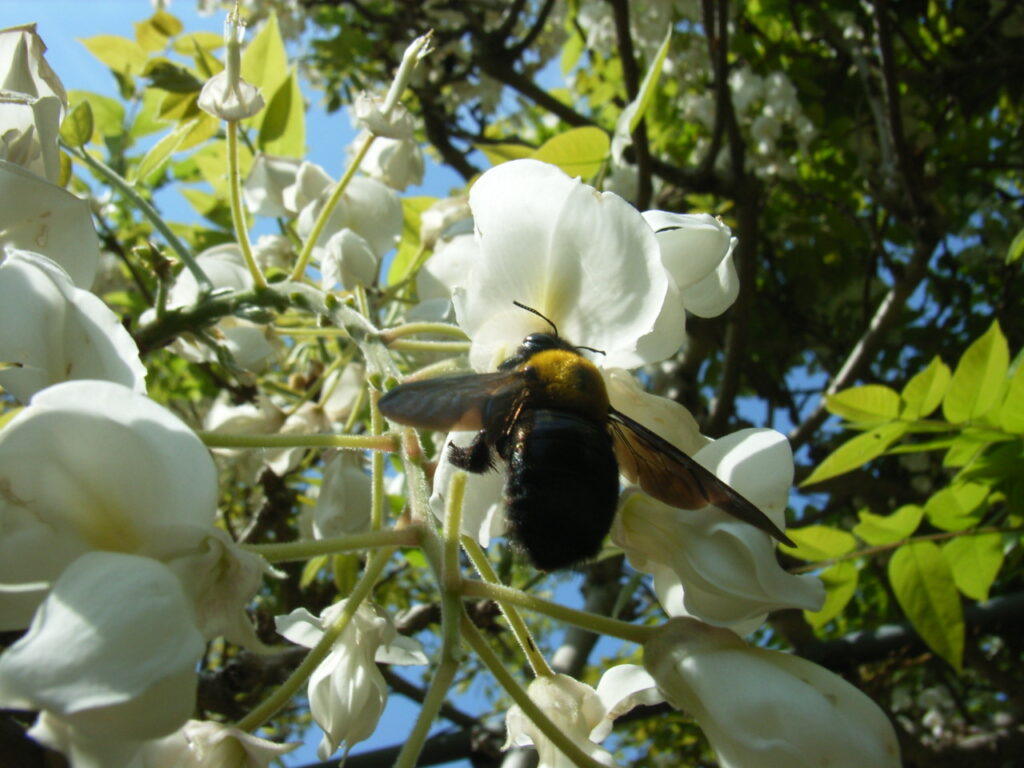
However, in terms of proportion, the result showed that the yellow-necked bumblebee Xylocopa appendiculata accounted for almost all of them (Kishi, 2015)!
It wouldn't be wrong to say this flower is exclusively for bumblebees. It relies on large, strong insects like bumblebees to carry its pollen. And from the bumblebees' perspective, it's like being provided with a special food source.
I often hear stories of people being frightened by the large number of bumblebees when they visit wisteria trellises. I can understand why that might happen.
While other insects may contribute to pollination to some extent, it has not been confirmed whether they do so effectively.
It seems reasonable to assume that butterflies and moths do not directly enter the flowers, but rather steal the nectar, thus not contributing to pollination (Ikenoue and Kanai, 2010).
Regarding the summer wisteria, which blooms with greenish-white flowers, the situation is unclear, but there are photos on the internet of the large leafcutter bee *Megachile sculpturalis * and the Smith's leafcutter bee * Megachile humilis* visiting its flowers, so there may be a different trend. In particular, the fact that its flowering period has shifted to summer suggests that a significant adaptive change has occurred.
Wisteria flowers are forcibly twisted 180 degrees to make their inflorescences droop!?
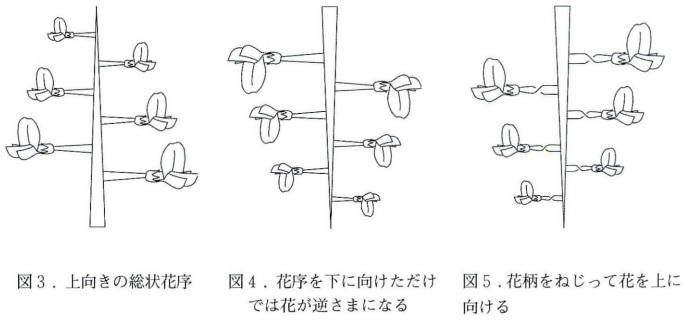
Because wisteria is a climbing plant, its inflorescences are arranged to hang down towards the ground. Originally, wisteria belongs to the legume family, so it has a "raceme" inflorescence, where flowers bloom from the base to the tip, or from the periphery to the center. The whole thing looks like a tuft. However, simply letting this raceme inflorescence hang down would cause a major problem.
The problem is that the drooping inflorescence causes individual flowers to be rotated 180 degrees (Koba, 2003). Because the flowers are asymmetrical, bumblebees cannot effectively pollinate them. How can this be solved? Of course, getting bumblebees to fly upside down seems impractical…
Therefore, wisteria forces its flowers to face the correct direction by rotating them 180 degrees. Specifically, it twists the "flower stalk," which is the part of the stem that holds the flower.
As proof of this, the flower stalk is not twisted when it is still a bud. As it blooms, it gradually rotates 180 degrees. You can see the tilted flowers in my photos as well. The wisteria rotates twice to get into the correct position.
Wisteria beans pop and fly away!?
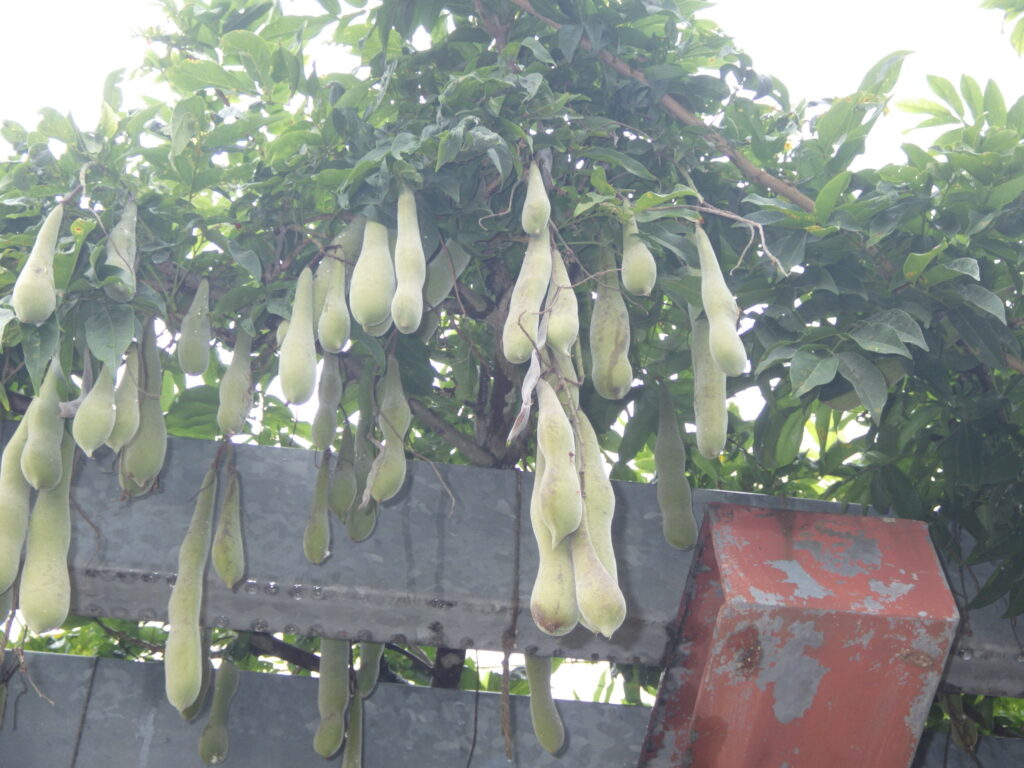
As the fruit belongs to the legume family, it is a legume, meaning it consists of a bean and a pod (Arioka, 2021). Wisteria and mountain wisteria produce many flowers, but only 2-3 fruits per inflorescence. The fruit is flattened and elongated, 15-20 cm long, and hangs from the branches from late summer. The pericarp (pod) is woody and hard, and inside are small, blackish-purple seeds (beans) about 1.3 cm in diameter, resembling Go stones. These fruits are not eaten by other animals; in fact, their hardness protects them from predators.
So how do they disperse their seeds? Numerous observations have revealed that the pericarp cracks open when it dries, releasing the seeds.
Observations indicate that when the fruit peel dries out in winter, it makes a popping sound, followed by a rattling sound as the seeds fall. The fact that the popping sound alone is enough to hear it suggests that the force is considerable. It has also been reported that when wisteria fruit stored indoors accidentally popped due to dryness, the fruit hit the ceiling and walls. As mentioned earlier, the seeds are quite large, resembling Go stones, which further illustrates just how strong the force is.
While the splitting of the pericarp due to drying and the scattering of seeds is a common phenomenon in legumes, the scale of this phenomenon is remarkably different. It's easy to see how this allows them to spread their distribution simply by bursting open.
What are galls that form on wisteria plants?
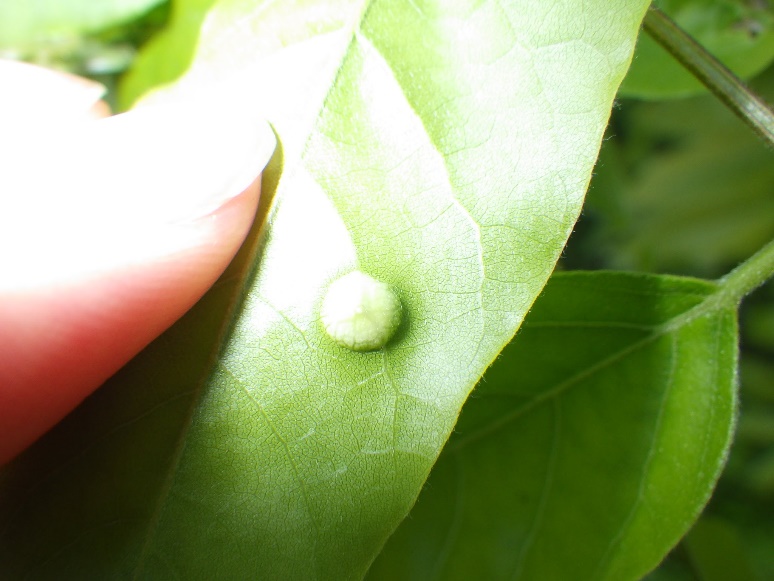
Galls (insect galls) are known to be found on the leaves of wisteria species, and swellings created by gall midges, such as *Wisteria japonica* and *Wisteria leucocephala* (tentative name), can sometimes be observed. These are good distinguishing features for differentiating wisteria species.
References
Arioka, Toshiyuki. 2021. Wisteria and the Japanese. Yasaka Shobo, Tokyo. 234pp. ISBN: 9784896942835
Ikenoue, Toshiyuki & Kanai, Hiroo. 2010. Nocturnal moth flower-visiting activity. Journal of the Botanical Society of Japan 85(4): 246-260. ISSN: 0022-2062, https://doi.org/10.51033/jjapbot.85_4_10230
Koba, Hidehisa. 2003. Half-rotation of wisteria flowers. Natural Science Gateway 9(1): 5. ISSN: 1341-545X, https://nh.kanagawa-museum.jp/assets/icp/contents/1599807910984/simple/tobira32_4koba.pdf
Kanagawa Prefecture Flora Survey Association. 2018. Kanagawa Prefecture Flora 2018 (Electronic Edition). Kanagawa Prefecture Flora Survey Association, Odawara. 1803pp. ISBN: 9784991053726
Kishi, Shigeki. 2015. Flower-visiting behavior of *Carex japonica* and *Carex taiwanensis* on wisteria. *Konchu* New Series 18(2): 31-38. ISSN: 1343-8794, https://doi.org/10.20848/kontyu.18.2_31
Mogi, Toru; Ota, Kazuo; Katsuyama, Teruo; Takahashi, Hideo; Shirokawa, Shiro; Yoshiyama, Hiroshi; Ishii, Hidemi; Sakio, Hitoshi; and Nakagawa, Shigetoshi. 2000. Flowers Blooming on Trees: Polypetalous Flowers (Vol. 2, 2nd edition). Yama-kei Publishers, Tokyo. 719pp. ISBN: 9784635070041