Hydrangeas, lacecap hydrangeas, mountain hydrangeas, oakleaf hydrangeas, and American hydrangea (Annabelle) all belong to the genus Hydrangea in the family Hydrangeaceae, and are commonly cultivated and found in urban areas. Hydrangeas, in particular, are arguably representative plants of Japan. They all share the common characteristic of producing "decorative flowers" formed by the large development of sepals around the rainy season, which can make it difficult to distinguish between species. However, by focusing on the leaves rather than the flowers, you can reliably differentiate them. The inflorescence is composed of "bisexual flowers" that are inconspicuous and later produce seeds, and "decorative flowers" that are located on the periphery of the inflorescence, consisting only of sepals without petals, and do not produce seeds, thus efficiently attracting bees. The fruit, which is usually pruned and rarely seen, is a capsule, and the seeds are powdery, winged, and dispersed by the wind in nature. This article will explain the classification, morphology, pollination ecology, and seed dispersal of Hydrangea species commonly found in urban areas.
- What are hydrangeas, lacecap hydrangeas, mountain hydrangeas, oakleaf hydrangeas, and American hydrangeas?
- What are the differences between hydrangea, lacecap hydrangea, mountain hydrangea, oakleaf hydrangea, and American hydrangea?
- What is the structure of a flower?
- How is pollination done?
- What is the structure of the fruit?
- What are the seed dispersal methods?
- References
What are hydrangeas, lacecap hydrangeas, mountain hydrangeas, oakleaf hydrangeas, and American hydrangeas?
Hydrangea macrophylla f. macrophylla is a deciduous to semi-evergreen shrub that was developed through selective breeding of the lacecap hydrangea (see Mogi et al., 2000). It is cultivated for ornamental purposes and is a unique plant in that Japanese populations are cultivated all over the world.
Hydrangea macrophylla f. normalis, also known as lacecap hydrangea, is a deciduous to semi-evergreen shrub that grows in forests and is distributed in Japan's Boso Peninsula, Miura Peninsula, Izu Peninsula, Kamijima Island in Wakayama Prefecture, and Ashizuri Cape. It is cultivated for ornamental purposes.
Hydrangea serrata var. serrata, also known as mountain hydrangea, is a deciduous shrub that grows in mountainous valleys and damp slopes from the Kanto region westward to Kyushu in Japan. It is cultivated for ornamental purposes.
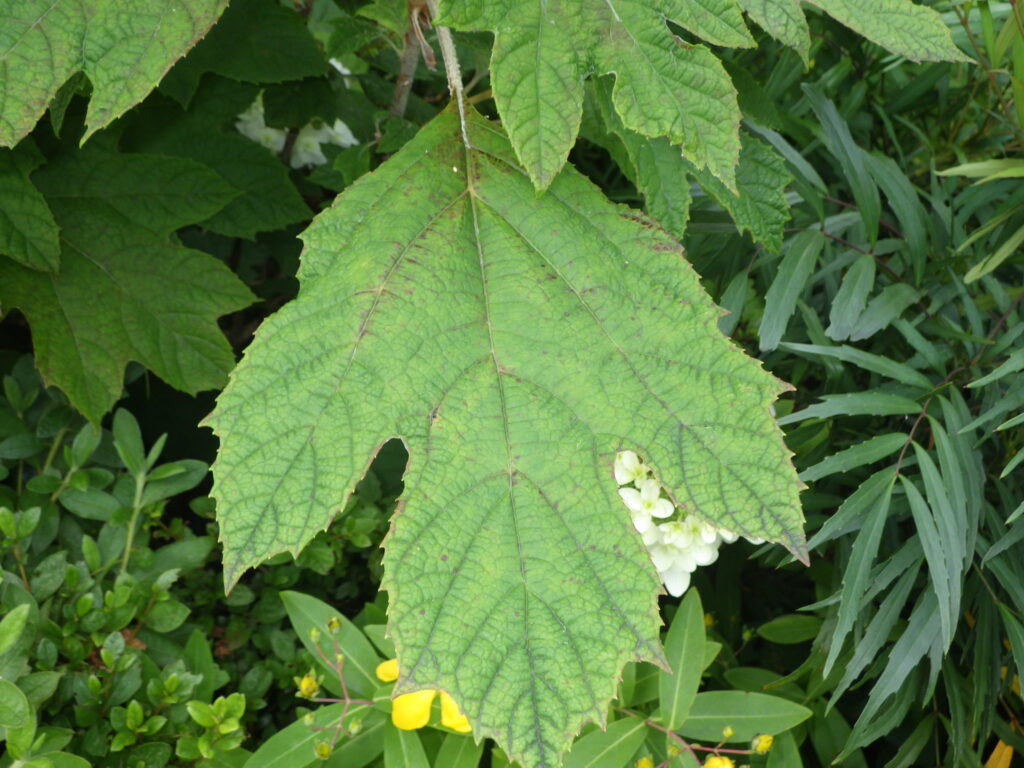
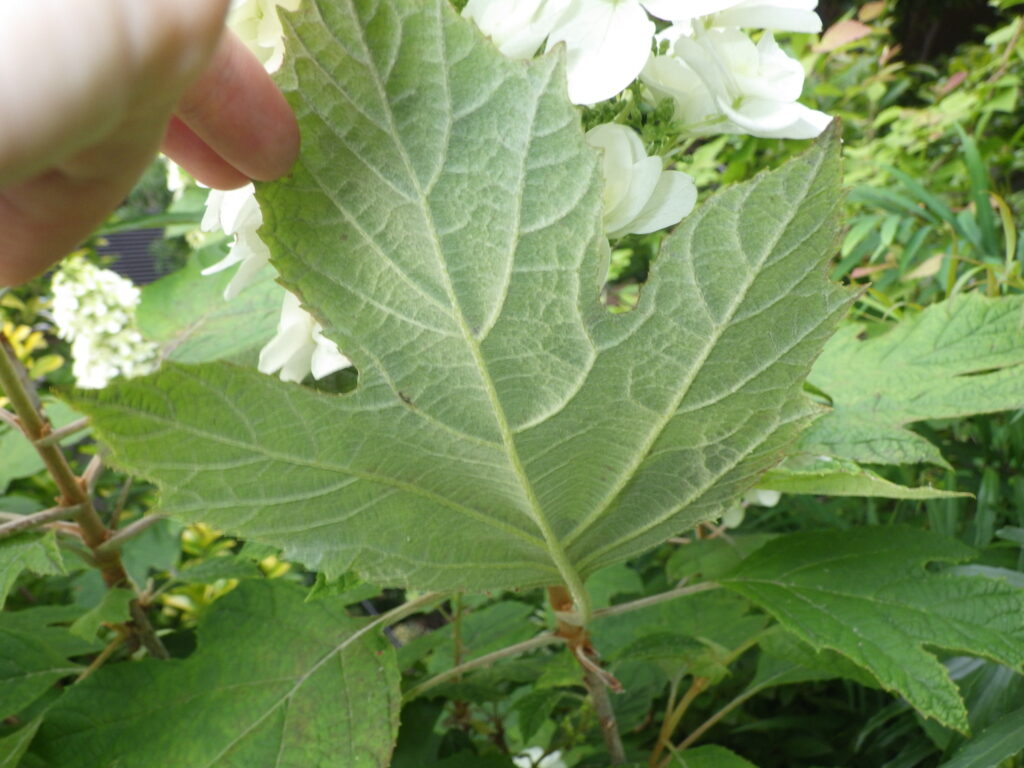
Oakleaf hydrangea (Hydrangea quercifolia) is a deciduous shrub distributed in southeastern North America, growing in deciduous forests, pine and oak forests, valleys, and rocky areas (Flora of North America Committee, 2009). In Japan, it is cultivated for ornamental purposes.
American holly (Hydrangea arborescens) is a deciduous shrub distributed in eastern North America, growing in humid to dry deciduous forests and woodlands, damp slopes, shady cliffs, rocky ledges, and riverbanks. In Japan, it is rarely cultivated as an ornamental plant, but its numbers have been increasing recently. 'Annabelle' is a horticultural variety of American holly.
These five species all belong to the genus Hydrangea in the family Hydrangeaceae, and are commonly cultivated and found in urban areas. Morphologically, they all share the characteristic of producing "decorative flowers" formed by the large development of sepals around the rainy season, but this alone makes identification difficult. While gardening websites often focus on the flowers, few include photos of the leaves, making it difficult to distinguish between the species.
What are the differences between hydrangea, lacecap hydrangea, mountain hydrangea, oakleaf hydrangea, and American hydrangea?
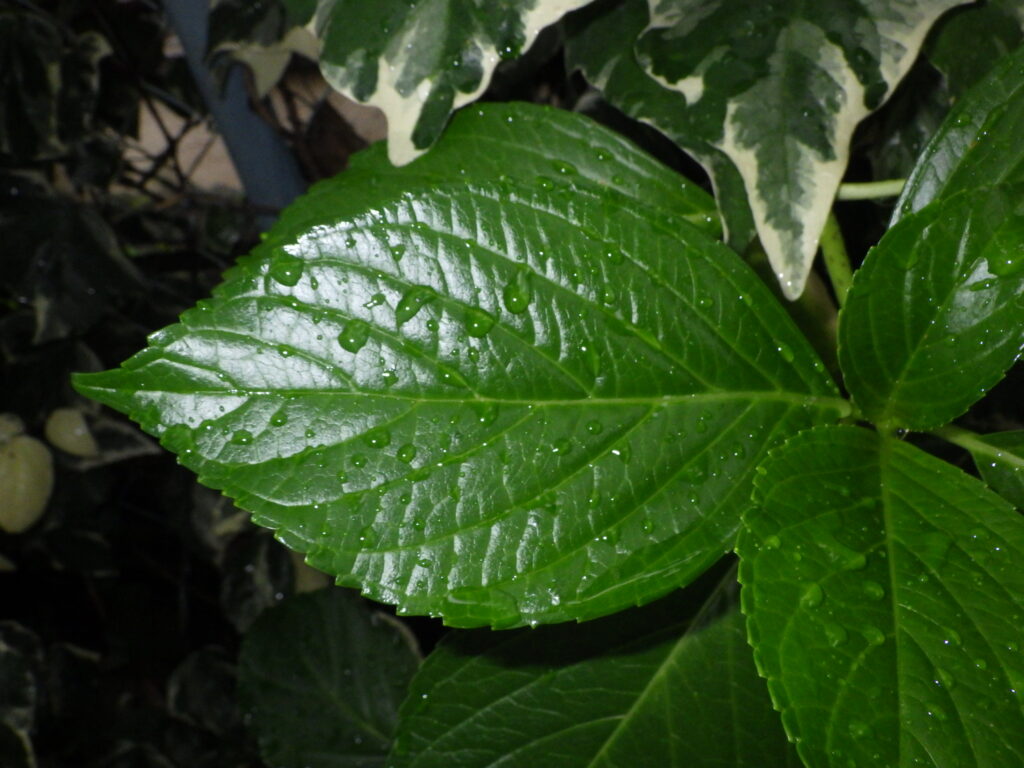
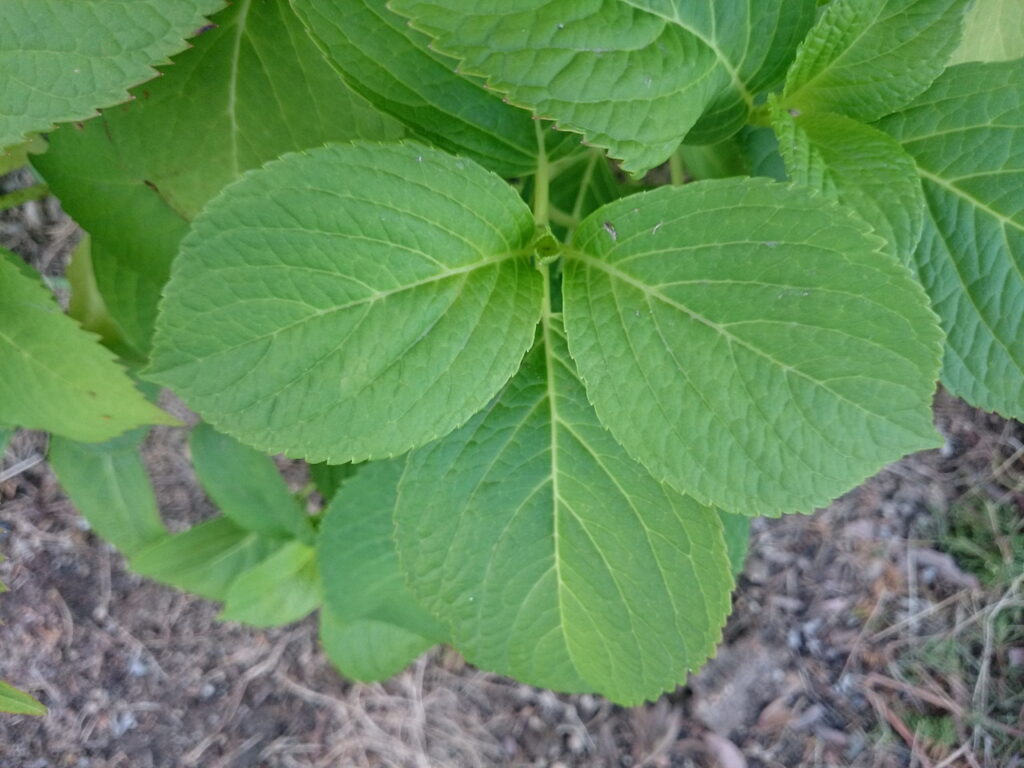
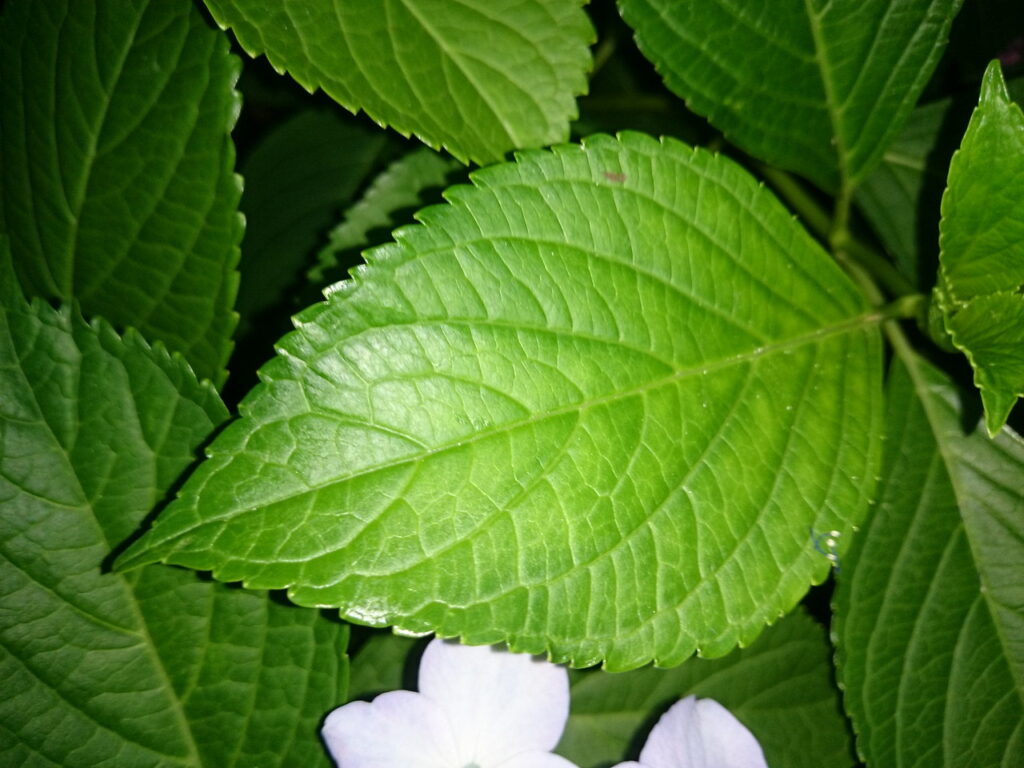
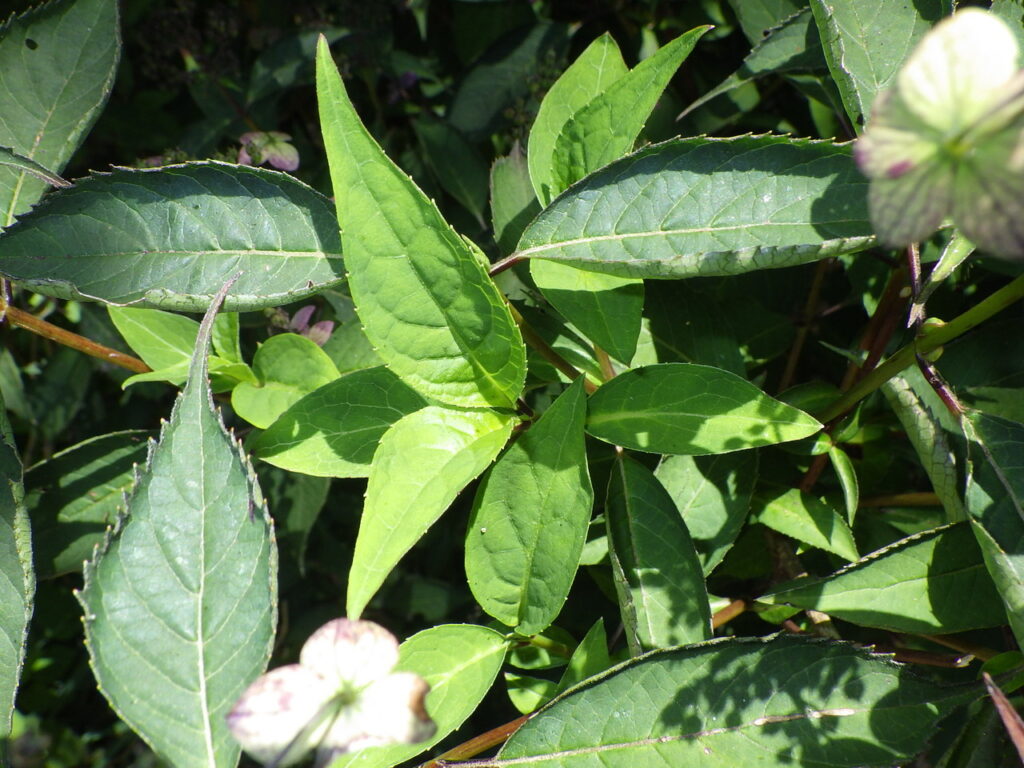
However, there are clear differences between these varieties. Hydrangeas are plants with beautiful flowers, but to understand the differences, one must look at the leaves (Hayashi, 2019).
In Japan, there are about 16 species of hydrangea that grow wild, and cultivated varieties are also known, with even more subtle variations. Therefore, it is impossible to distinguish all of them here, but this time I will focus on five species that are likely to be seen in towns as cultivated varieties.
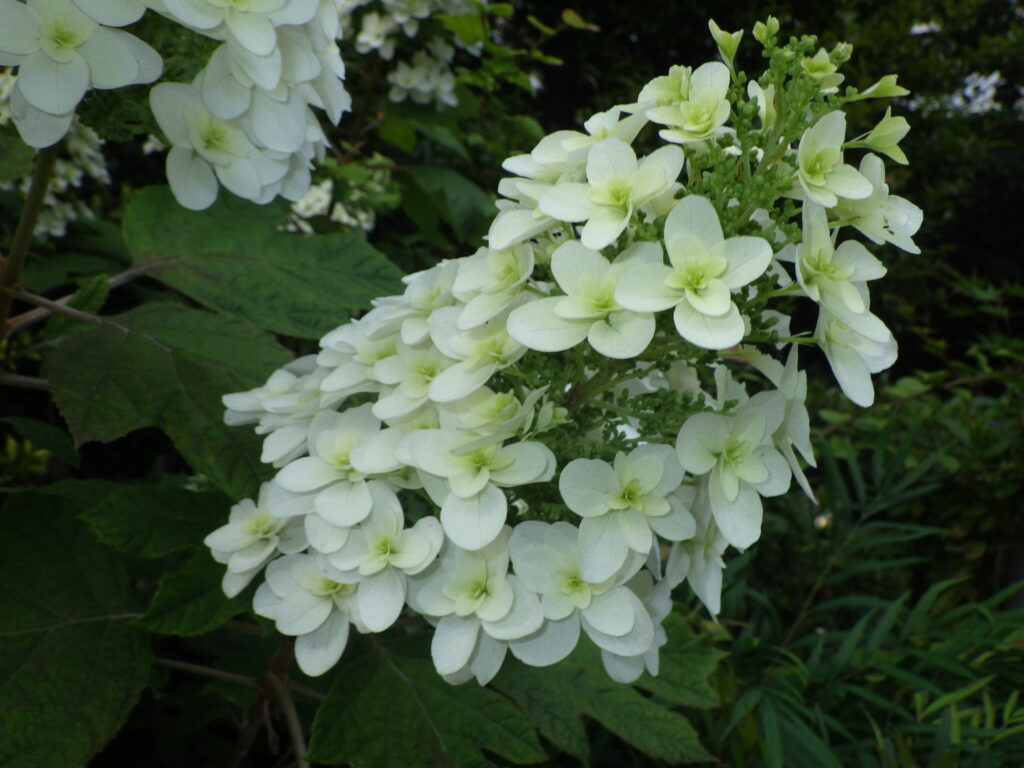
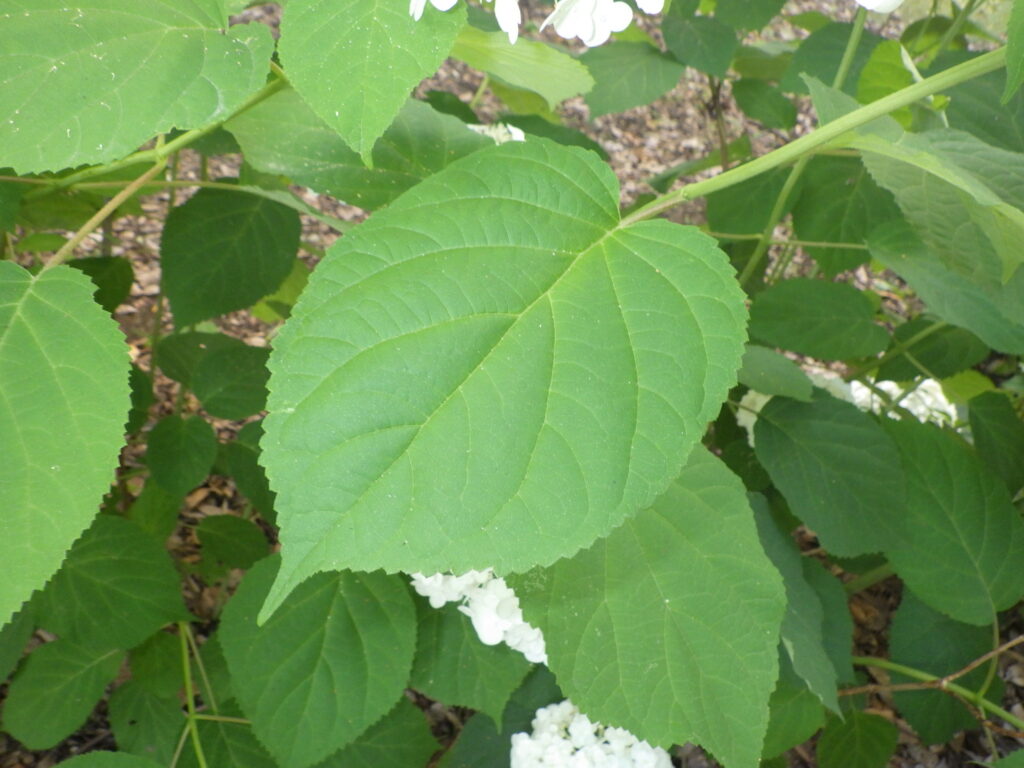
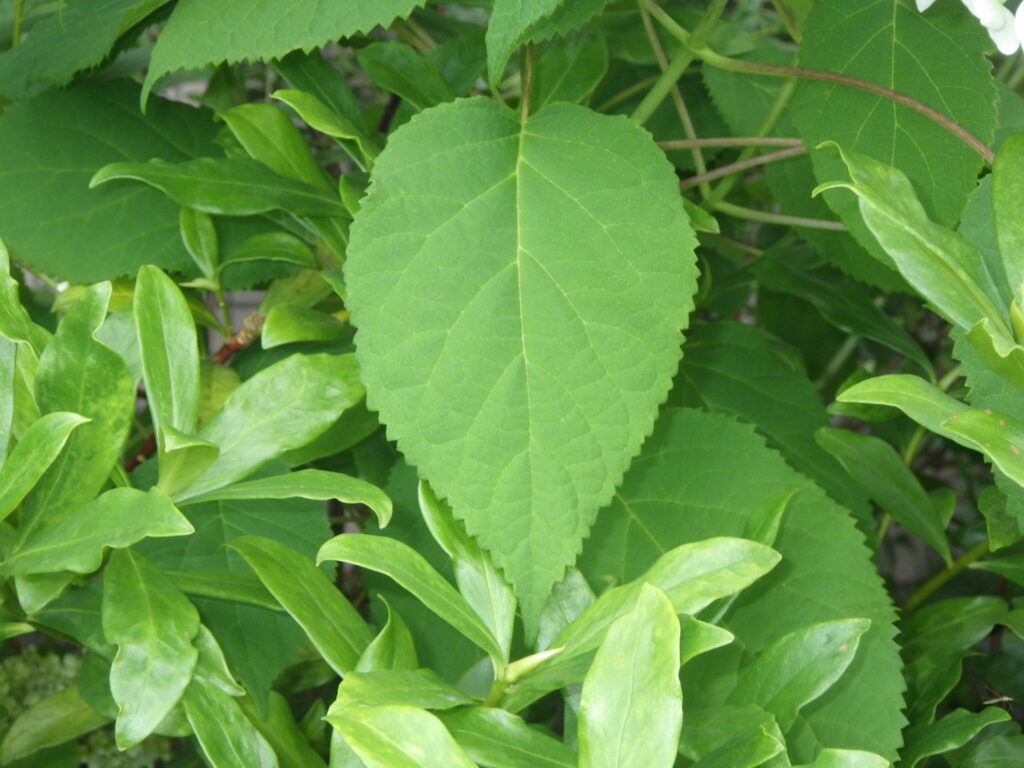
First, there is a clear difference between hydrangeas, lacecap hydrangeas, mountain hydrangeas, and American hydrangeas: their leaves are undivided (without incisions), while those of oakleaf hydrangeas are divided (with incisions). This is immediately obvious.
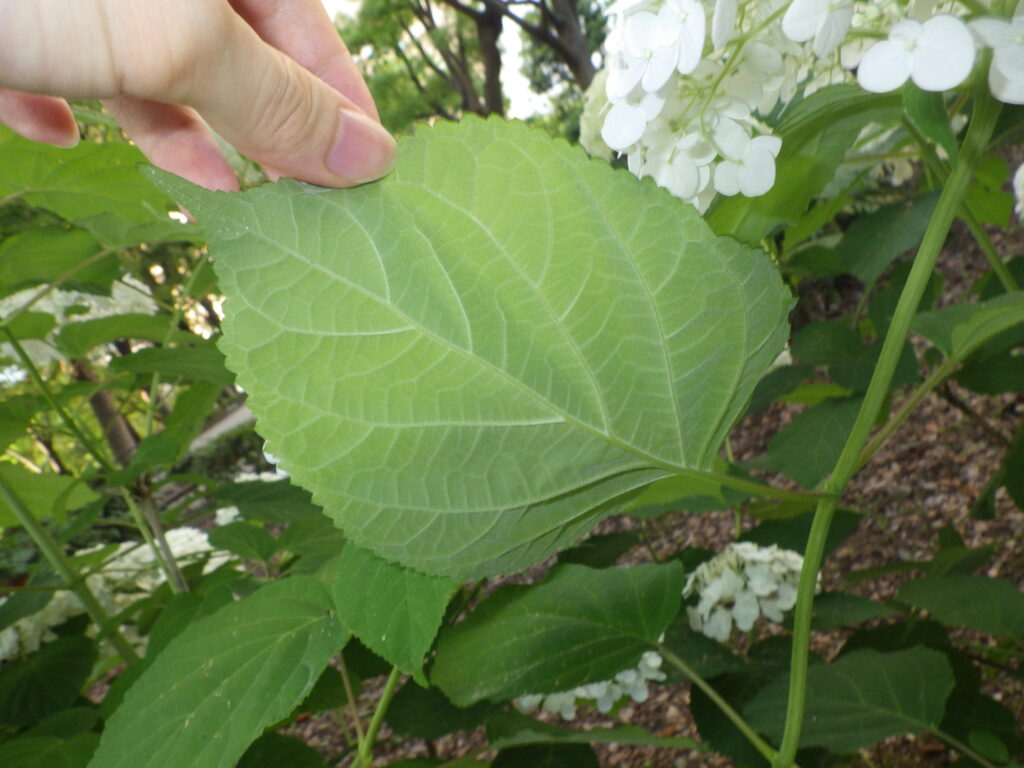
Regarding the remaining four species, the differences are obvious: hydrangea, lacecap hydrangea, and mountain hydrangea have short petioles of 1-5 cm and a wedge-shaped leaf base, while American hydrangea has noticeably longer petioles of 4-15 cm and a curved or rounded leaf base. This should also be immediately apparent.
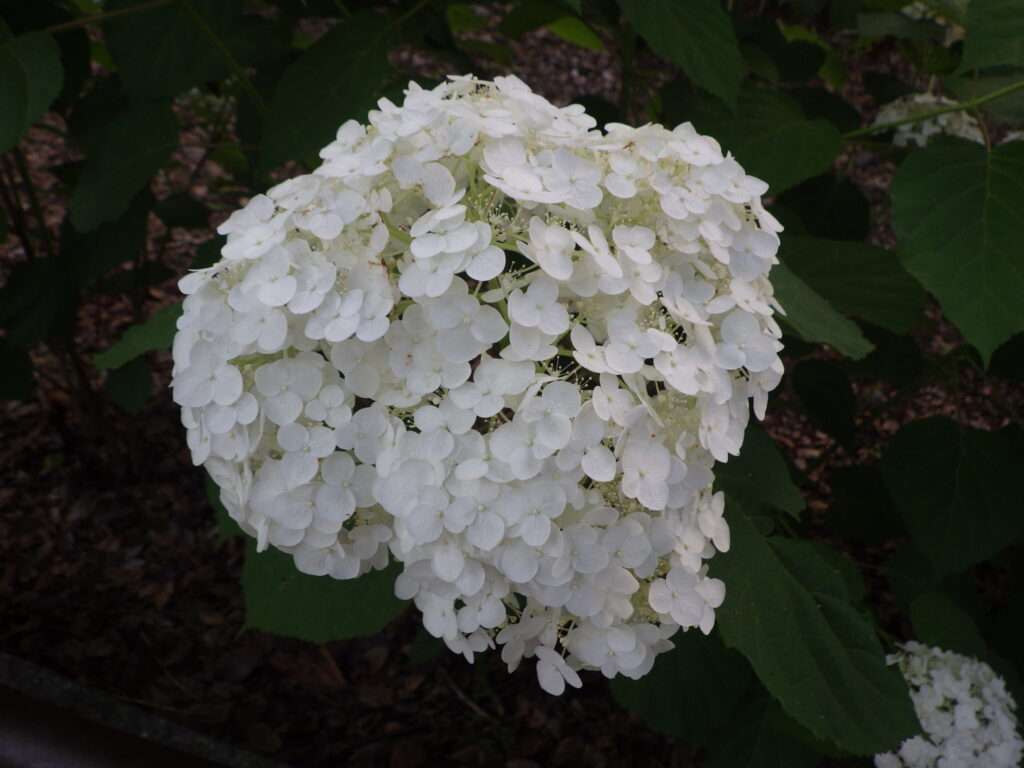
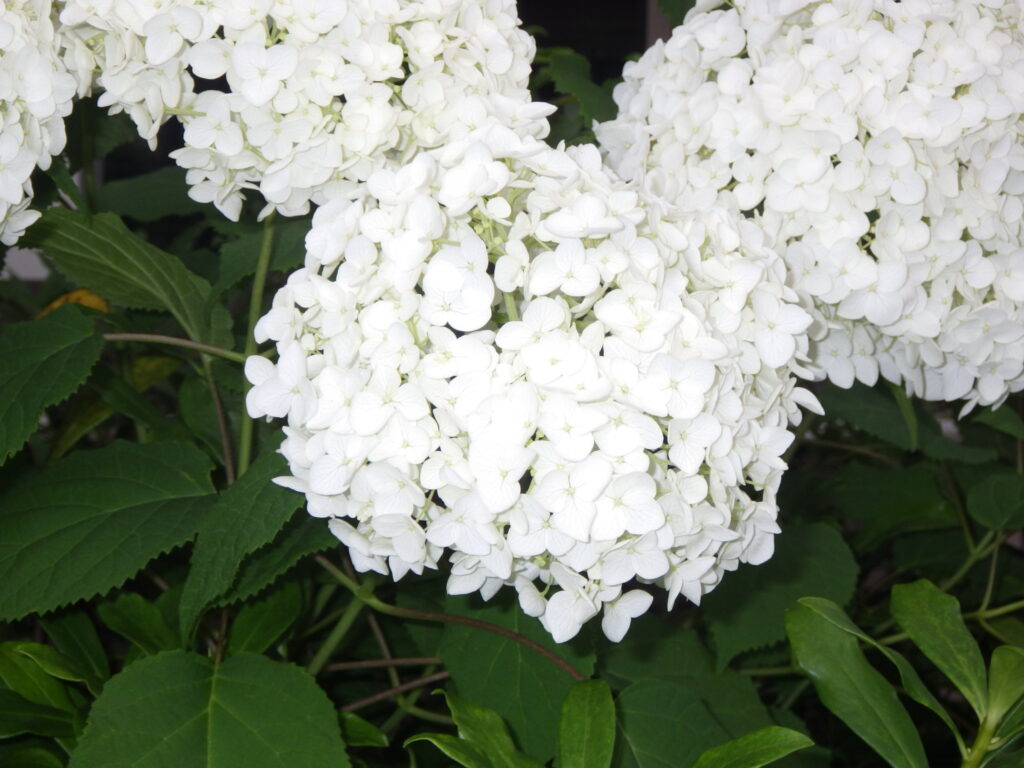
Annabelle is considered a variety of American hydrangea that only has decorative flowers.
Finally, regarding hydrangeas and lacecap hydrangeas, the difference is that hydrangeas have both hermaphroditic and sterile flowers, while lacecap hydrangeas only have sterile flowers. Taxonomically, they are considered the same species, and their leaves are identical in shape. European hydrangea f. hortensia refers to hydrangeas that have been cultivated in Europe and America, but there is no known morphological method for distinguishing them.
Regarding the remaining hydrangeas, lacecap hydrangeas, and mountain hydrangeas, the main difference is that hydrangeas and lacecap hydrangeas have thick, glossy leaves with hairless undersides, while mountain hydrangeas have thin, non-glossy leaves with hairs on the underside. Also, mountain hydrangeas generally have sharper serrations and their leaf tips are more tail-like.
Regarding flower color, oakleaf hydrangea and American hydrangea only come in white, but other varieties have been bred to come in a variety of colors, so this may not be a useful reference.
This should eliminate any confusion regarding the types of hydrangeas found in town. However, numerous varieties and cultivars of hydrangeas and mountain hydrangeas are known. I will explain these in more detail in a separate article.
What is the structure of a flower?
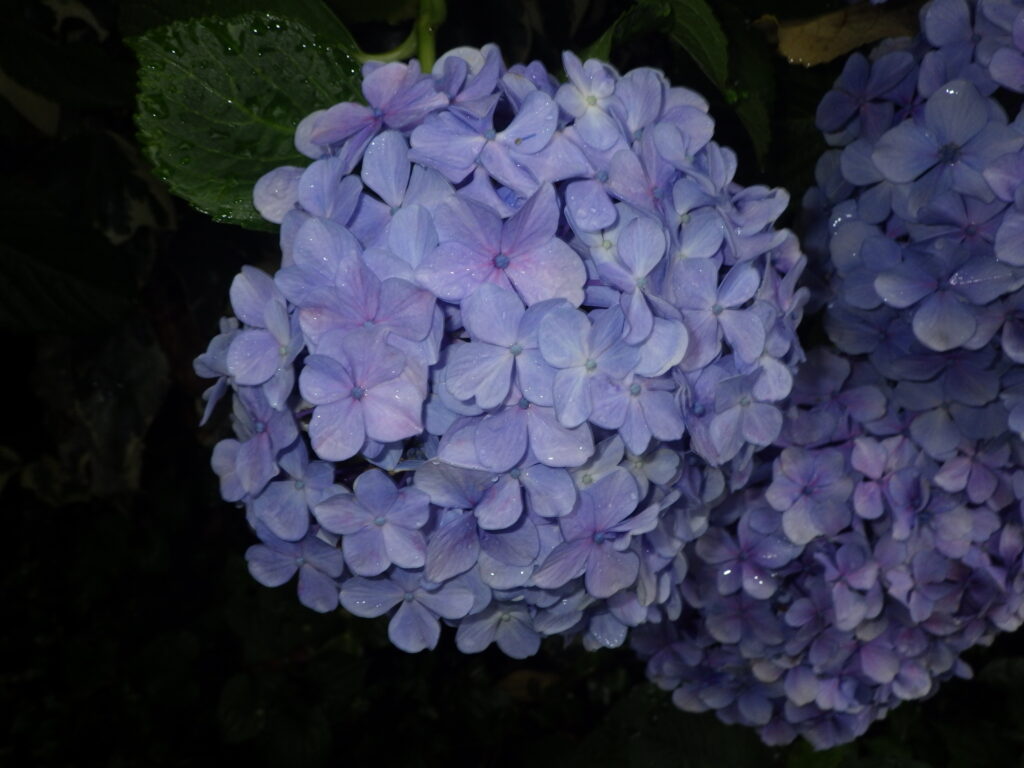
Most species in the genus Hydrangea have inflorescences composed of "hermaphrodite flowers," which are inconspicuous and later produce seeds, and "decorative flowers," which are located around the edge of the inflorescence, lacking petals and consisting only of sepals, and only serve to increase their appeal to insects without producing seeds.
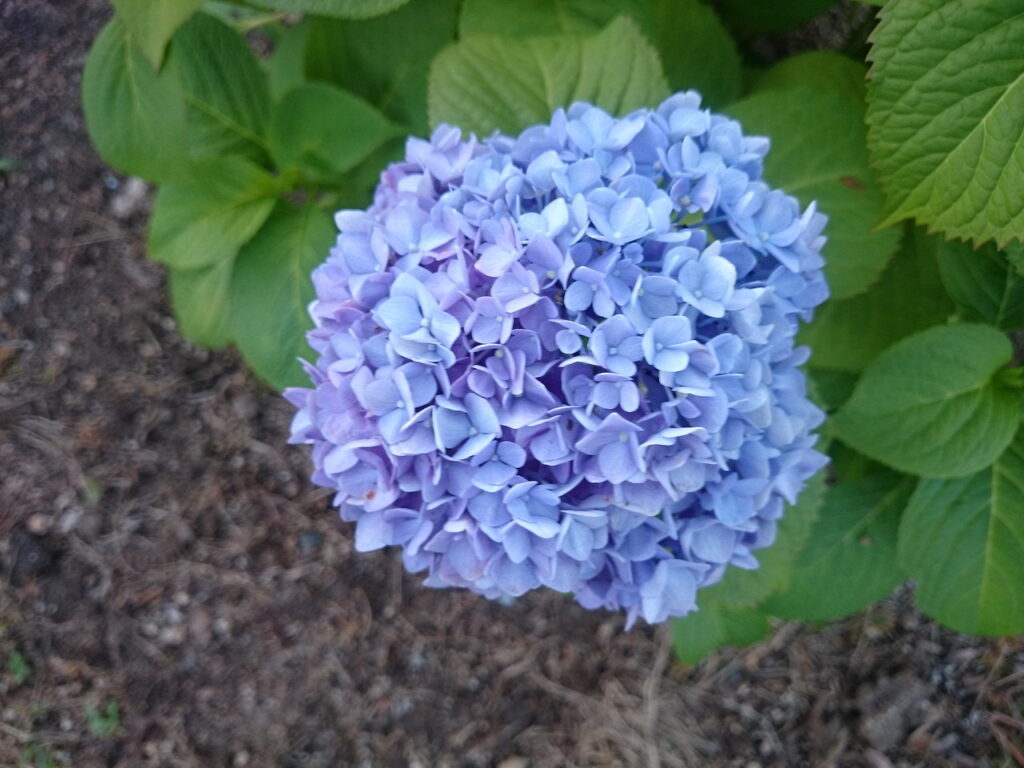
Hydrangeas bloom from June to July. They produce cymose inflorescences 10-20 cm in diameter at the tips of their branches, with only sterile flowers densely clustered around the periphery. The sterile flowers are almost tetramerous, with 3-5 sepals, white to bluish-purple, and broadly ovate to rounded, measuring 1.5-2.5 cm in length.
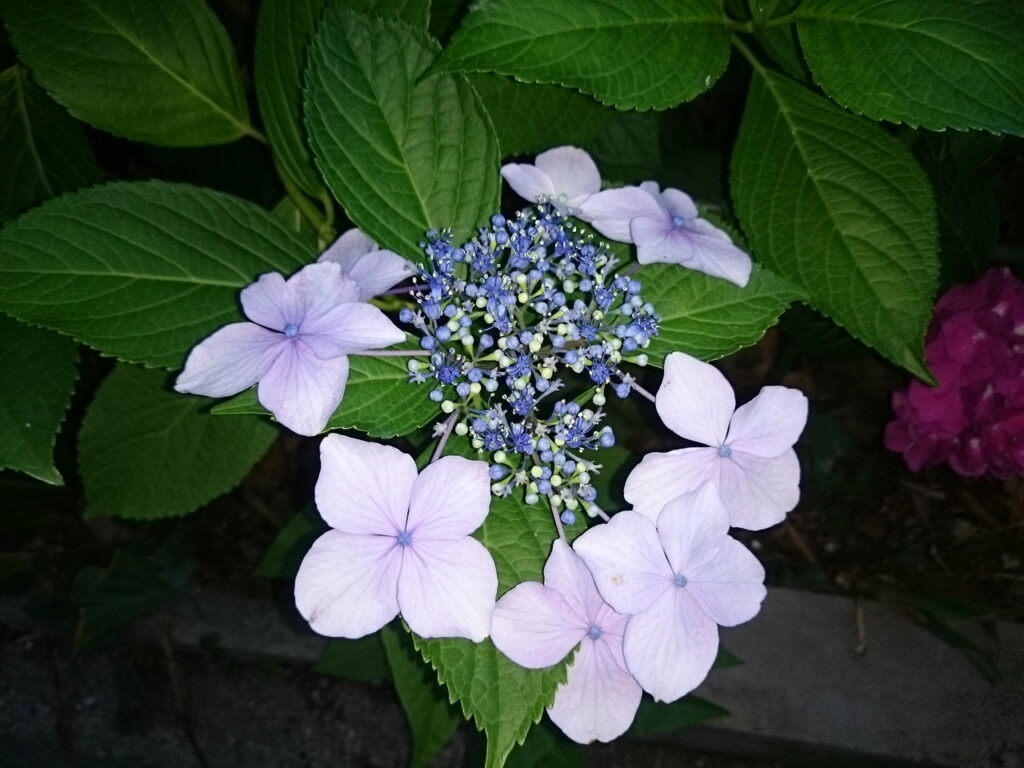
Gakuajisai (lacecap hydrangea) is almost identical to regular hydrangea, but it has sterile flowers around the periphery of the inflorescence and numerous bisexual flowers densely clustered in the center. The bisexual flowers are almost pentamerous, inverted conical in shape about 1.5 mm long, with 4-5 sepals and 5 petals that are ovate-oblong and about 3 mm long. There are 10 stamens, which are longer than the petals. There are 3-4 styles.
Mountain hydrangeas bloom from June to July. They produce cymose inflorescences 5-10 cm in diameter at the tips of their branches, with sterile flowers surrounding bisexual flowers. The sterile flowers are 1.5-3 cm in diameter. There are 3-4 sepals, which are oval to rounded and taper at the base. They are initially white to pale blue, and often change to pale pink later. The flower tube of the bisexual flowers is about 1.5 mm long. There are 5 petals and 10 stamens.
Oakleaf hydrangeas bloom from May to July. They produce upward-facing conical inflorescences 15-30 cm long and 8-13 cm wide at the tips of their branches, bearing numerous flowers. The flowers are initially greenish, then turn milky white to white, later becoming purplish, and fading to pale brown to reddish-brown, remaining until winter. The wild species has many large sterile flowers on the outside and small hermaphroditic flowers on the inside. Many cultivated varieties have only sterile flowers, although there are also double-flowered varieties.
American hydrangea flowers from May to July. It produces inflorescences at the tips of the current year's branches. The corymb inflorescence is hemispherical to spherical, 5-15 cm wide, and usually has no bisexual flowers, or only a few. The sterile flowers are less than 1 cm in diameter. Annabelle hydrangeas have only sterile flowers.
How is pollination done?
It is well known that the color of hydrangea flowers is mainly determined by the total amount of aluminum ions (Al³⁺) in the soil and the soil pH affected by these aluminum ions, and that the color of the flowers changes as the anthocyanins change (Moll, 2022). I remember it vividly from the trick in episode 695 of the anime "Detective Conan," "Roses in the Vineyard."
When the soil pH is low (acidic, pH = 4.5-5.5), the amount of aluminum ions accumulates more, resulting in blue flowers. When the soil pH is high (alkaline, basic), pink flowers bloom. However, there are exceptions depending on the variety.
However, the ecological impact of this is unknown. It is possible that the flowers are trying to stand out through a contrast effect called the "two-color effect," but this is largely dependent on chance, and it may simply be a chemical constraint in creating the flower's color.
Hydrangeas, at least Hydrangea macrophylla and Hydrangea serrata, are self-incompatible, making cross-pollination by insects essential (Suyama, 2018).
It is believed that the main insects that visit flowers are bees (Hosoda, 1993; Tanaka, 1997; Wong Sato & Kato, 2019). However, it is not well understood whether there are differences in the types of bees that visit each species of the Hydrangea genus.
The primary reward for insects is pollen, but only Hydrangea paniculata and Hydrangea petiolaris also produce nectar.
As mentioned above, only the "hermaphrodite flowers" produce seeds, while the "decorative flowers" consist only of sepals that increase their appeal to insects such as bees at the edge of the inflorescence. This effect was long only a hypothesis since Darwin, but recently, experiments with nine species have confirmed its actual effect by creating inflorescences with the decorative flowers removed and comparing them to the originals (Wong Sato & Kato, 2019).
Furthermore, it was discovered that in three species—Hydrangea scandens, Hydrangea luteovenosa, and Hydrangea macrophylla—the calyx of the sterile flowers covers the inflorescence, functioning as a planar structure that encourages insects to land.
While there is evidence of the usefulness of ornamental flowers, Hydrangea hirta lacks them. This is thought to be influenced by scent and color. Perhaps there are also differences in the insects that visit the flowers. It's an interesting fact.
As for hydrangeas and Annabelle hydrangeas, they have been selectively bred to lack hermaphroditic flowers, so they do not produce seeds and can be said to function solely for human consumption.
What is the structure of the fruit?
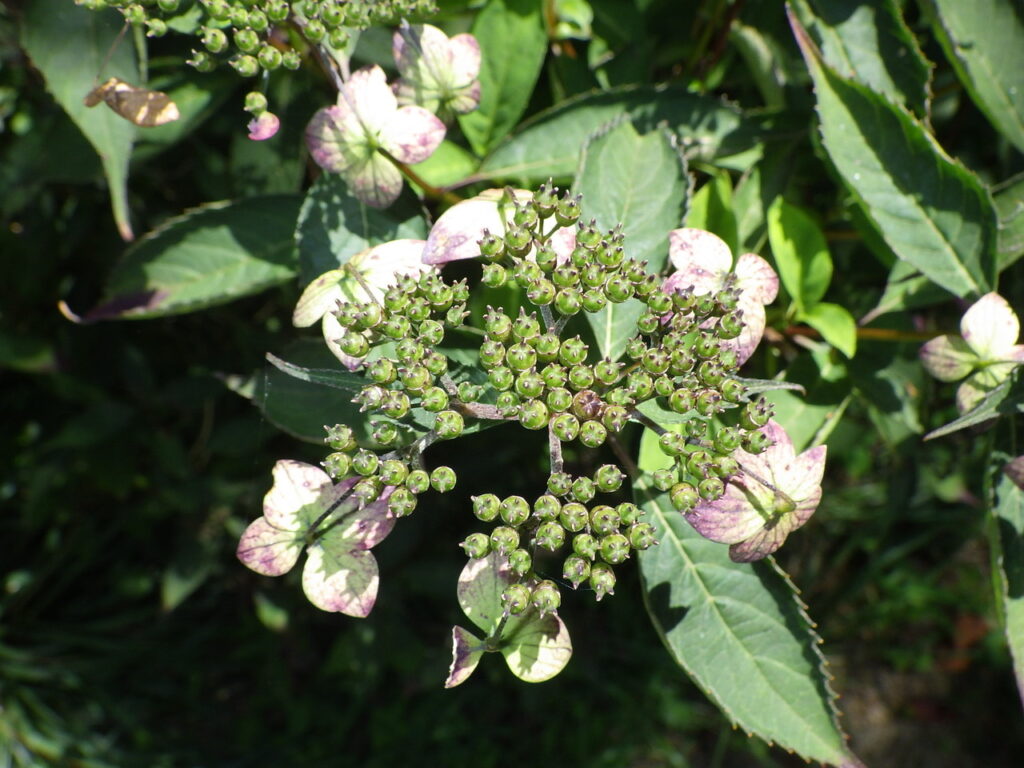
The fruit, common to all species in the genus Hydrangea, is a capsule. A capsule is a type of dry fruit, and a single fruit consists of multiple fused, sac-like pericarps.
In horticulture, hydrangeas are usually pruned after flowering to maintain flowering for the following year, so fruit is not typically seen. Instead, they are propagated by methods such as cuttings. However, hydrangeas continue to play an important role in nature and in selective breeding.
The capsules of Hydrangea macrophylla are ovate to elliptical, 6-9 mm long, and mature in November-December, with the sepals and style remaining. The seeds are elliptical, less than 1 mm long, with short, projection-like wings at both ends. Hydrangeas do not produce capsules.
The capsules of the mountain hydrangea are ovate to elliptical, 3-4 mm long, and mature in October and November. The seeds are small and elliptical, with wing-like projections at both ends.
The capsules of oakleaf hydrangea are dark brown, hemispherical to granular, measuring 1.5–2.5 mm wide and 2–2.5 mm high. The seeds are 0.6–0.8 mm in size.
The capsules of the American holly are hemispherical, measuring 1.2–2.1 mm wide and 1.7–2.5 mm high. The seeds are 0.3–0.6 (up to 0.8) mm in size.
What are the seed dispersal methods?
The capsules of hydrangea species dry out when ripe, split open, and release their seeds. This is how gravity dispersal occurs.
Furthermore, the seeds are incredibly small and numerous, and some species even have wings. It is thought that these species are dispersed by wind (Kaneko & Homma, 2006).
References
Flora of North America Committee. 2009. Flora of North America (Vol. 12 Magnoliophyta: Paeoniaceae to Ericaceae). Oxford University Press, Oxford. 585pp. ISBN: 9780195340266
Hayashi, Masayuki. 2019. Tree Leaves: Expanded and Revised Edition - Identifying 1300 Species Through Real-Life Scans. Yama-kei Publishers, Tokyo. 824pp. ISBN: 9784635070447
Hosoda, Yukiko. 1993. On pollinating insects of Hydrangea serrata (honeybees, flower visits, and pollination). Abstracts of the Annual Meeting of the Japanese Society of Applied Entomology and Zoology 37: 17.
Kaneko, Y., & Homma, K. 2006. Differences in the allocation patterns between liana and shrub Hydrangea species. Plant Species Biology 21(3): 147-153. https://doi.org/10.1111/j.1442-1984.2006.00160.x
Mogi, T., Ota, K., Katsuyama, T., Takahashi, H., Shirokawa, S., Yoshiyama, K., Ishii, E., Sakio, H., and Nakagawa, S. 2000. Flowers Blooming on Trees: Polypetalous Flowers (Vol. 2, 2nd edition). Yama-kei Publishers, Tokyo. 719pp. ISBN: 9784635070041
Moll, MD 2022. Cultivation and utilization of Hydrangea macrophylla subsp. serrata as feedstock for dihydroisocoumarins and its quality-assessment through non-invasive phenotyping [Doctoral dissertation, Rhenish Friedrich Wilhelm University of Bonn]. https://hdl.handle.net/20.500.11811/9792
Suyama, Takuro. 2018. A study on breeding techniques in interspecific hybridization of Hydrangea species. Special Report of Fukuoka Prefectural Agricultural and Forestry Research Station (8): 1-60. ISSN: 2423-9143, https://www.farc.pref.fukuoka.jp/farc/kenpo/nourintokukenp/tokuhou8.pdf
Tanaka, Hajime. 1997. Ecology Guide: Nature Created by Flowers and Insects. Hoikusha, Tokyo. 197pp. ISBN: 9784586312054
Wong Sato, AA, & Kato, M. 2019. Pollination-related functions of decorative sterile flowers of nine Japanese Hydrangea species (Hydrangeaceae). Botany 97(10): 521-528. https://doi.org/10.1139/cjb-2018-0208