Passionflower and passion fruit (Passionflower edulis) are both climbing evergreen perennial herbs belonging to the Passifloraceae family and Passifloraceae genus, and are native to South America. In Japan, they can be found in towns and cities as ornamental plants. However, the differences between them may not be well known. Passionflower and passion fruit are completely different species. Specifically, the differences are evident in the leaves, flowers, and fruits. The structure of the flower is quite complex, resembling a clock as its name suggests, but the radially arranged stamens and pistils and the presence of "thread-like corollas" are characteristic features of the Passifloraceae genus. Bumblebees are mainly attracted to the thread-like corollas, and pollination occurs when the stamens and pistils come into contact with the back of the bumblebee as it drinks nectar. The fruit is a sweet and sour, round berry, and the seeds are covered with an aril. Humans eat it, but originally, it is eaten by small birds in South America, and the seeds are dispersed. This article will explain the classification, morphology, pollination ecology, and seed dispersal of passionflower and passion fruit.
What is passionflower/passion fruit (Passionflower edulis)?
Passiflora caerulea, also known as the passionflower, is a climbing evergreen perennial herb distributed in South America (northern Argentina and southern Brazil), growing in disturbed areas and open forests (Wu et al., 2007; Flora of North America Committee, 2015). It is cultivated as an ornamental plant worldwide, including in Japan. Among Native Americans, both the unripe and ripe fruits are eaten.
Passiflora edulis, also known as passion fruit, is a climbing evergreen perennial plant native to South America (probably southern Brazil) that grows in mountain valleys and forests. It is cultivated worldwide, including in Japan, for ornamental and edible purposes. It is mainly cultivated in Central and South America and Southeast Asia, and in Japan, it is cultivated in the southwestern islands, the islands of Tokyo, Kagoshima Prefecture, and Okinawa Prefecture. The standard Japanese name for the plant is Kudamonotokeisou, but here we will call it passion fruit for clarity. The English name is "passion," meaning "(Christ's) suffering," not "passion." This comes from the belief of Jesuit missionaries sent to Central and South America that the shape of the flower was a combination of sacred figures such as the Christian cross.
Both are climbing evergreen perennial plants belonging to the Passiflora genus of the Passifloraceae family, and are native to South America. In Japan, they can be found in towns and cities as ornamental plants. However, while gardening websites often state that "passion fruit is a relative of the passionflower," there is little description of the specific differences, and people who have never seen one may mistakenly think that "passionflower = passion fruit."
What is the difference between passionflower and passion fruit (passionflower)?
However, passionflower and passion fruit are completely different species; they simply belong to the same group, the genus Passiflora.
While the genus Passiflora is not naturally distributed in Japan, species such as Passiflora triphylla and Passiflora japonica have naturalized in the southwestern islands. Many species are cultivated as ornamental plants, and 15 species are registered in the 'Ylist', a list of Japanese names corresponding to scientific names. This time, we will focus on the two most commonly cultivated species and describe their distinguishing features.
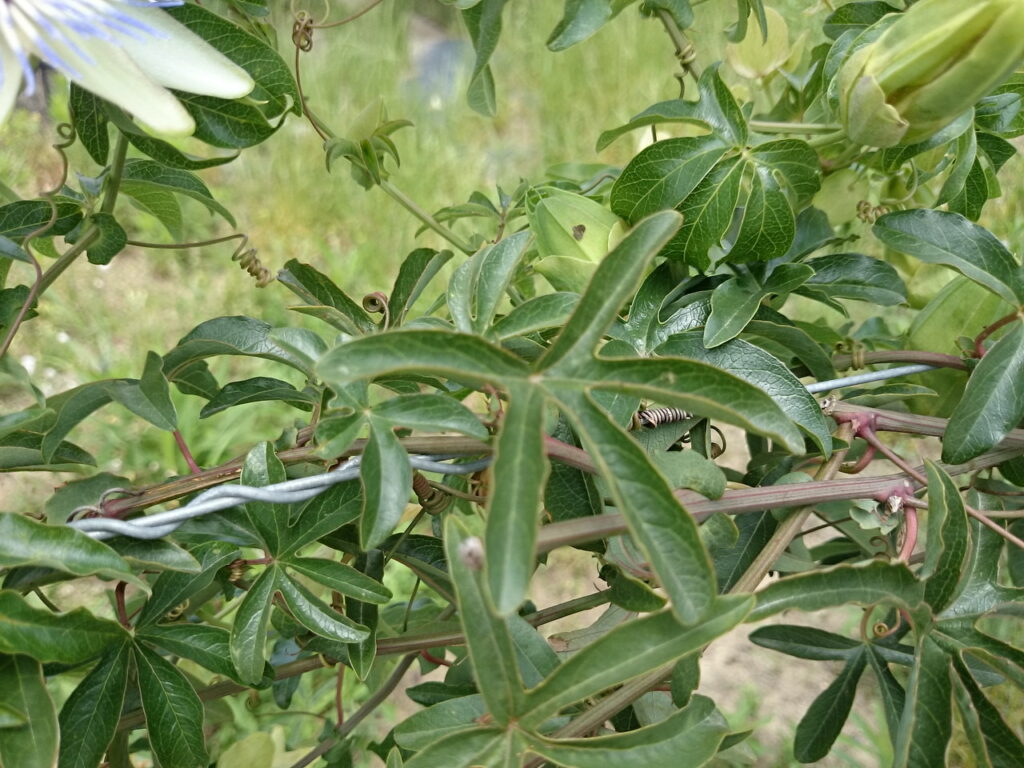
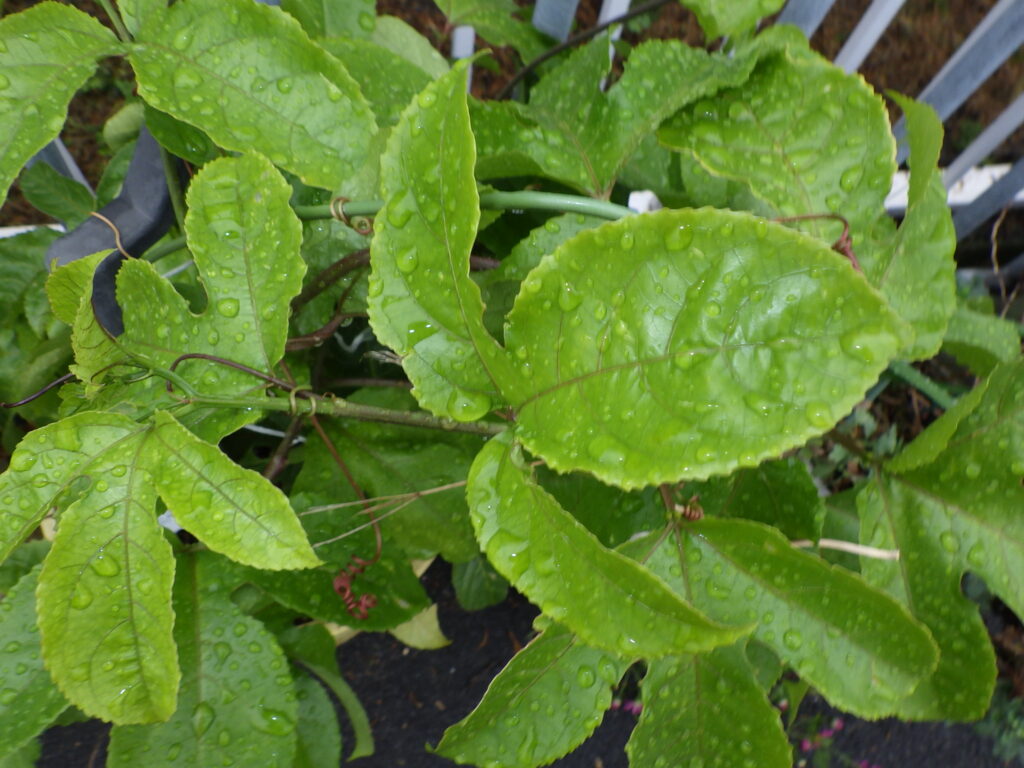
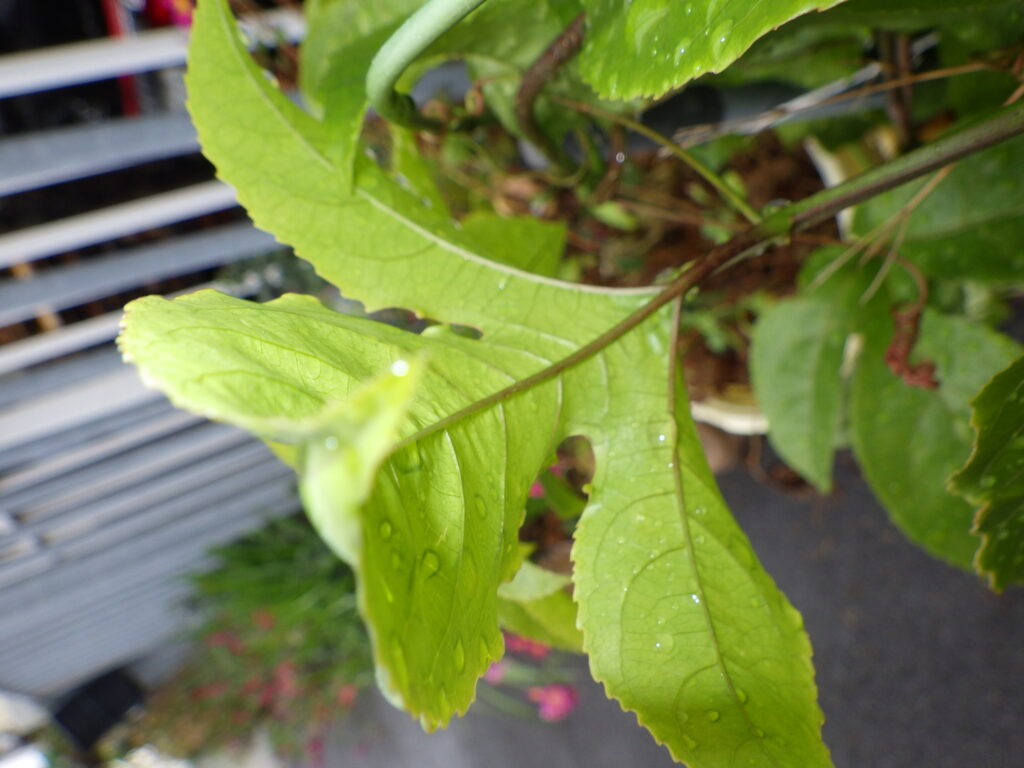
In passionflower, the leaves are palmate with (3-)5 (-9) lobes, and each lobe has an entire margin, whereas in passion fruit, the leaves are deeply 3-lobed, and each lobe has a serrated edge.
This is probably the easiest way to distinguish them.
Other differences include the fact that passionflower has 2 to 4 (up to 6) extrafloral nectaries on its petiole, and its stipules are large, kidney-shaped, and joined together like prayer hands, whereas passion fruit has only two extrafloral nectaries at the tip of its petiole, and its stipules are small, linear to hemispherical.
Regarding the flowers, passionflowers have thread-like corollas (thin structures that extend radially) with straight tips, while passion fruit has thread-like corollas with distorted, tapering tips.
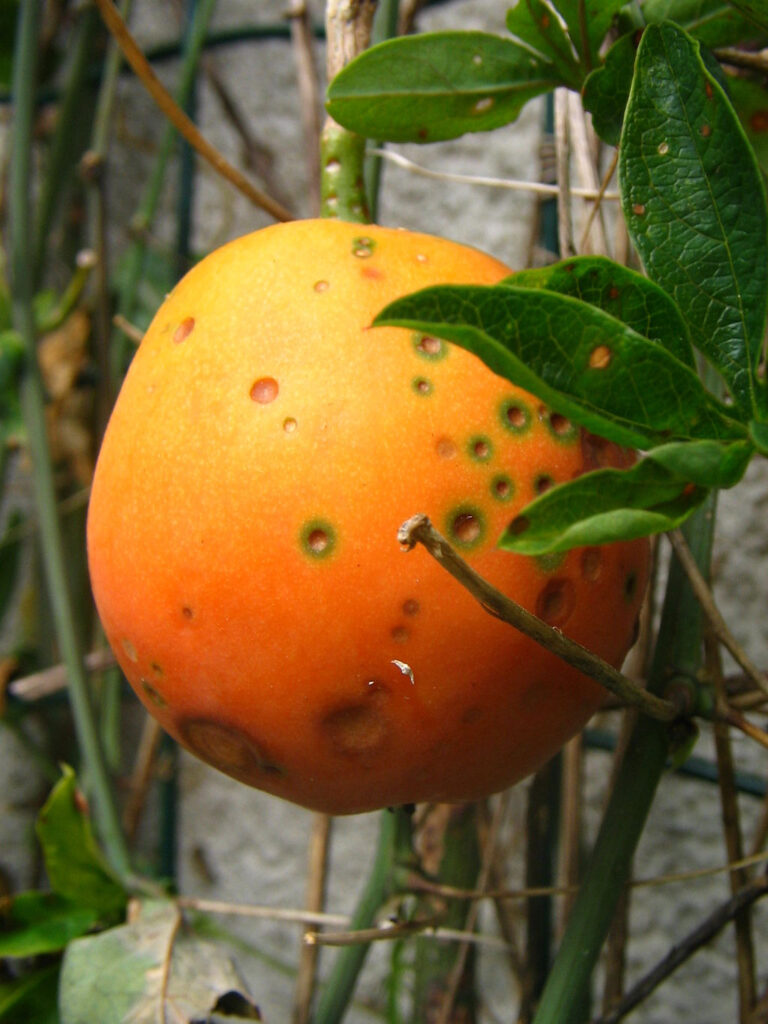
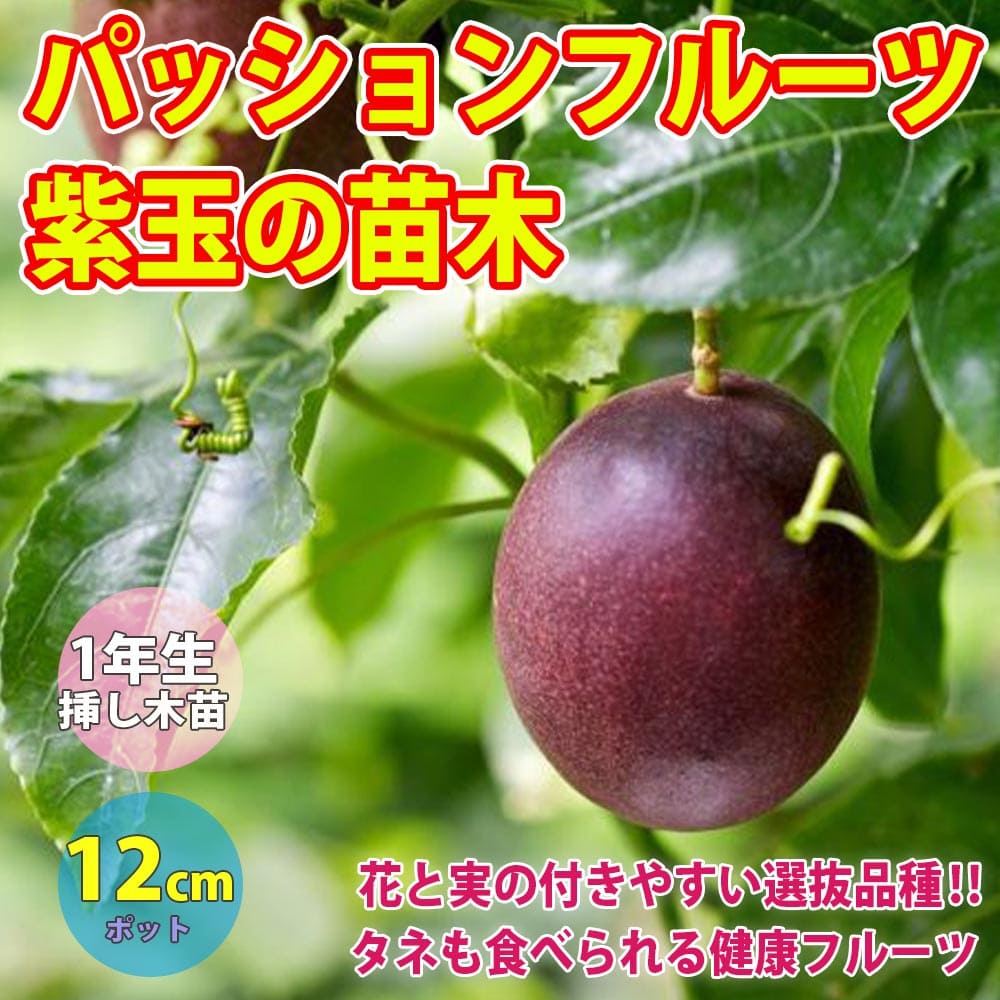
There are also differences in the fruit. Passionflower fruit turns yellow to orange-yellow when ripe and is said to be bland to sweet when eaten by humans, while passion fruit turns purple when ripe and has a rich aroma and a sharp sourness when eaten by humans.
Therefore, it can be said that passion fruit, combined with human-induced selective breeding, is completely different from other species in the Passiflora genus.

What is the structure of a flower?
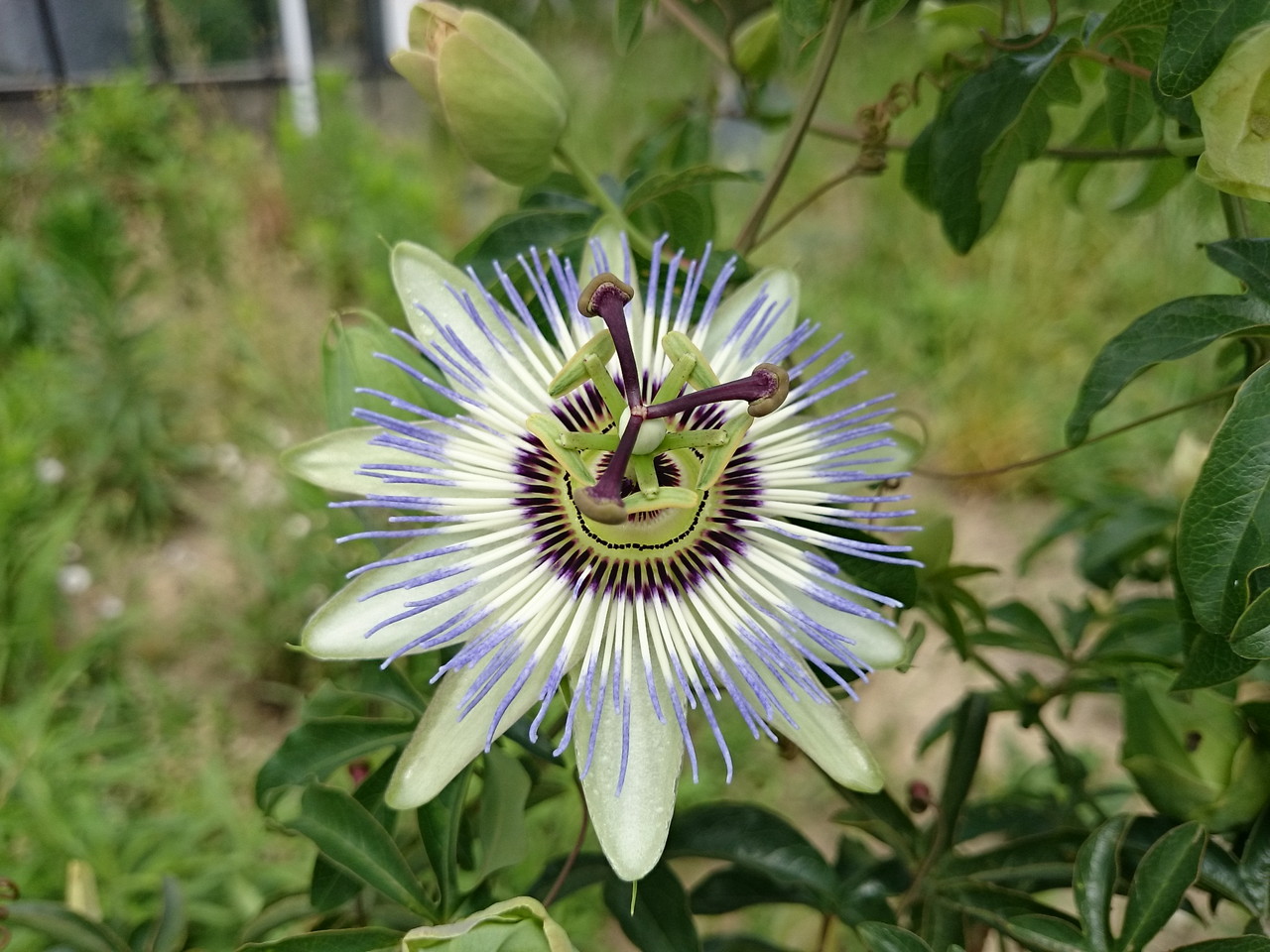
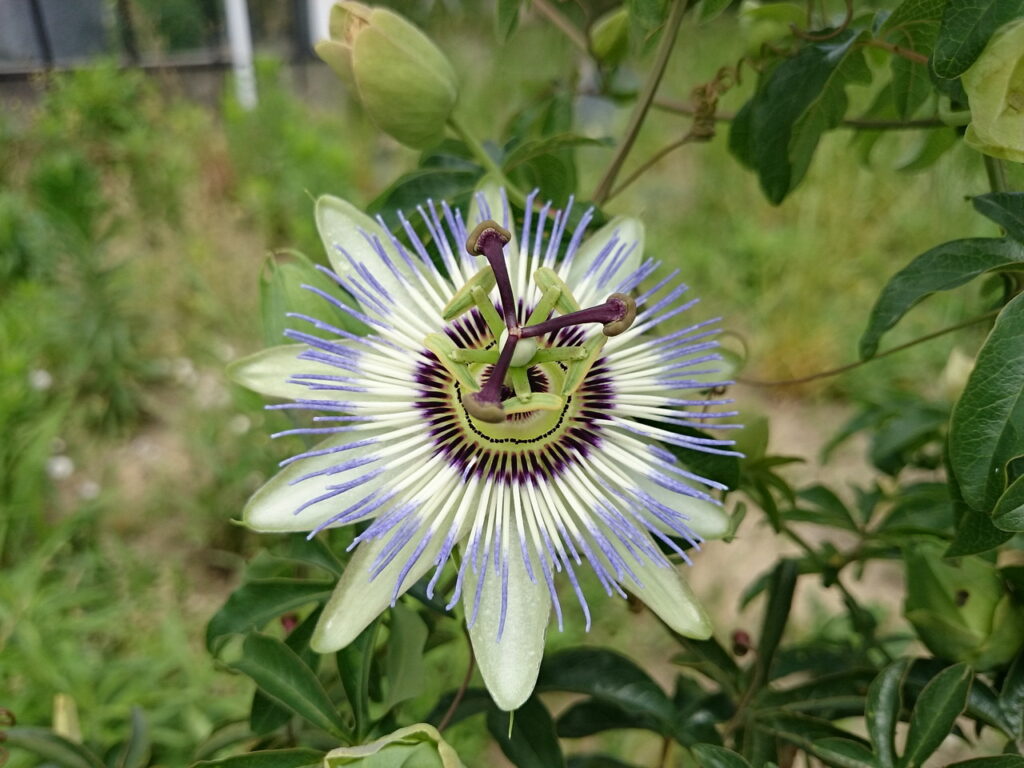
The structure of passionflower flowers may appear complex, but like other flowers, they are composed of sepals, petals, stamens, and pistils. However, what sets them apart is that five nearly identical sepals and five petals are arranged alternately in a radial pattern, with thread-like filaments (corona) on top. These are arranged in several layers, creating a three-dimensional structure.
Furthermore, the bases of the stamens and pistils are fused together to form the "androgynophore." At the top of the androgynophore is a small corolla called the "operculum," surrounded by a "limen," which is a nectary disc from which nectar is secreted. This is further surrounded by a ring-shaped structure called the "trochlea."
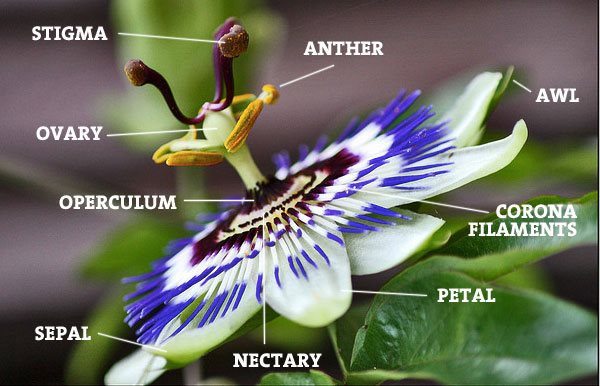
Many of its structures are quite unique and difficult to grasp. The name "passionflower" comes from the fact that the flower resembles a clock, and it seems that the calyx and petals represent the "gears," the thread-like corolla the "dial," and the tips of the stamens and pistil the "hour hand."
Passionflowers bloom from May to September. The flowers are opposite on tendrils. The bracts are 2-3 cm long and entire. The pedicels are 3-4 cm long. The flowers are 6-8 (up to 10) cm in diameter. The sepals are 3-4.5 cm long, pale green on the outside and white on the inside, with awns 2-3 mm long. The petals are 2.5-4 cm long, white to pale green. The filiform corolla is arranged in 3-4 rows. The outer two rows are (0.6-)1-1.5 cm long, with a dark purple base, white in the middle, and a blue tip. The inner 1-2 rows are 1-2 mm long, with a pale green base, a capitate tip, and white. The stalks bearing the pistil and stamens are 8-10 mm tall. The filaments are flattened, about 1 cm long, and the anthers are oval, 1.3 cm long. The ovary is ovate. The style is 6-8 mm long and purple. The stigma is kidney-shaped.
Passion fruit flowers from April to June or August to November. The inflorescence is a small cymose inflorescence, with an underdeveloped central flower, a single lateral branch that transforms into a tendril, and flowers arranged oppositely on the tendril. The bracts are green, broadly ovate or rhomboid, 1–1.2 cm long, with irregularly finely serrated edges. The pedicels are 4–4.5 cm long, with two glands at the tip. The flowers are 4–7 cm in diameter. The hypanthium is 0.8–1 cm long and 1–1.2 cm wide. The sepals are green on the outside and pale green or white on the inside, 2.5–4 cm long and about 1.5 cm wide, with awns 2–4 mm long. The petals are 2.5–3 cm long and about 8 mm wide. The filiform corolla is arranged in 4 or 5 rows. The two outer rows are tongue-shaped with the upper half filiform, 2–2.5 cm long, pale green at the base, purple in the middle, and white at the tip. The inner two or three rows are filiform, 1–3 mm long, green and purple. The lid is recurved, 1–1.2 mm long, with an entire or irregularly lobed margin. The disc is about 4 mm high, membranous. The peduncle is 1–1.2 cm high. The pulley is just above the disc. The filaments are 5–6 mm long, closely spaced at a flat base. The anthers are yellowish-green, oblong, 5–6 mm long. The ovary is obovate, about 8 mm long, glabrous to hairy. The style is flat. The stigma is kidney-shaped.
How is pollination done?
Members of the Passiflora genus are generally known to be self-incompatible, meaning that cross-pollination by animals is essential for fruit production.
The pollinators of the Passiflora genus are diverse, including groups pollinated by large Apoidea superfamilys, groups pollinated by medium-sized Apoidea superfamilys, and even groups with very long flowers that are pollinated by hummingbirds with long mouths (Amela García & Hoc, 2000). Passionflowers and passion fruit utilize large Apoidea superfamilys, and the size of their flowers is just right to fit these bees.
A study in Argentina has shown that passionflowers are visited by bumblebees of the genus Xylocopa, including X. augusti, X. frontalis, and X. nigrocincta, as well as by bees of the genus Centris, which collect flower oil (Aquino & Amela García, 2019).
Similarly, in passion fruit, the bumblebee genus is the most important, and there are records from Brazil of other bee genera such as Centris, Epicharis, Eulaema, and Bombus (Yamamoto et al., 2012).
The color at the tips of the thread-like corollas is likely used to attract bumblebees.
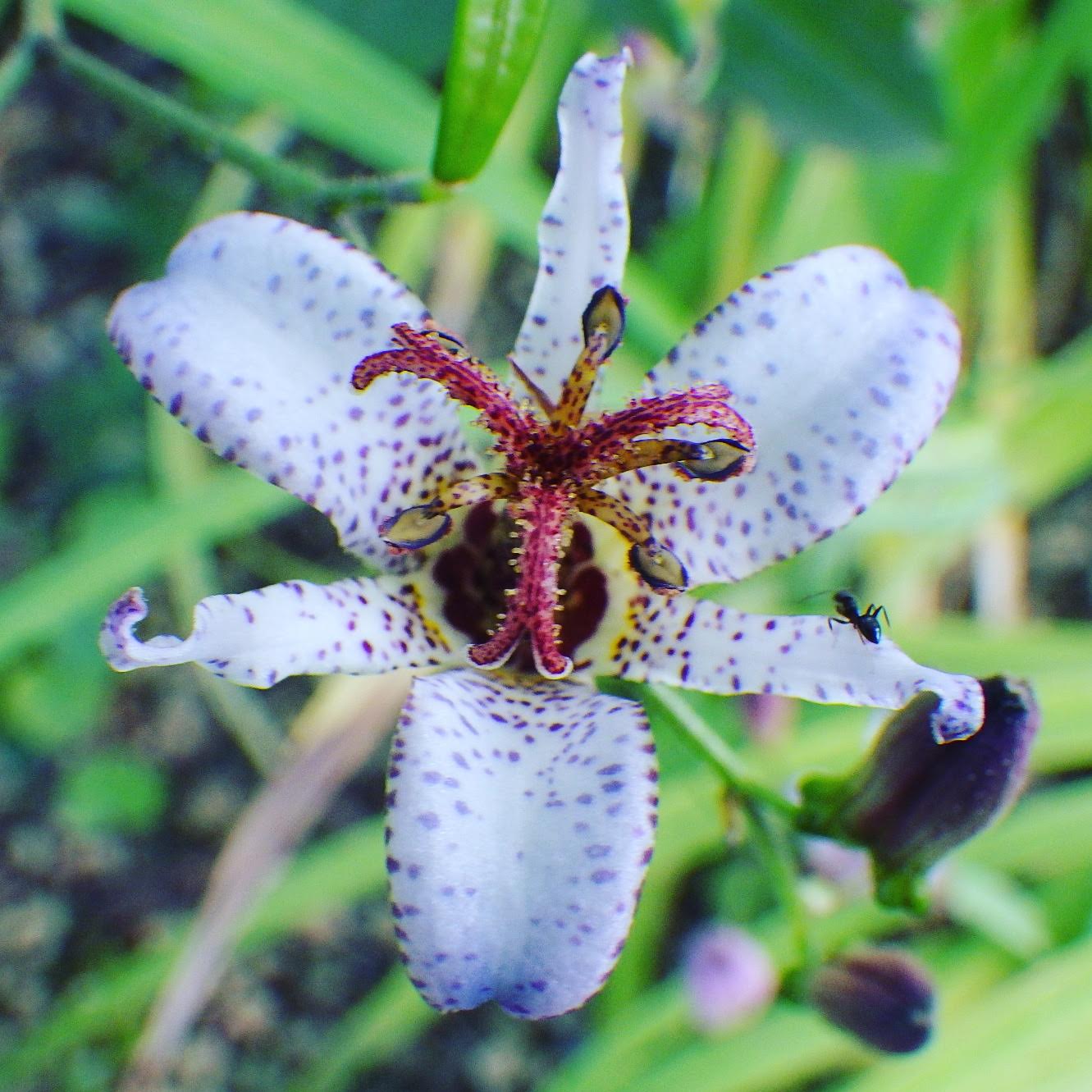
The stamens, which radiate outwards like the hands of a clock, allow bumblebees to collect pollen on the dorsal surface of their thorax when they come to the center of the flower in search of nectar (Aquino & Amela García, 2019). The bumblebees themselves actively transfer pollen to the bristles on their hind legs, called "pollen baskets." Pollination occurs when these bumblebees come into contact with the pistil of another flower. This is not as complex as the flowers of the Passiflora genus, but it is a pollination method very similar to that of the Tricyrtis genus.
The passionflower flower changes over time. In the first stage, the stigma, the tip of the pistil, stands upright, moving away from contact with bumblebees, and only the anthers containing pollen at the tips of the stamens come into contact with the bees, thus fulfilling only the role of pollinator. In the second stage, the stigma bends down to the height of the anthers, allowing bumblebees to both attach and remove pollen. In the third stage, the stigma rises again to a position where bumblebees cannot make contact, and it again fulfills only the role of pollinator.
This is thought to be a case of "protandry," and it is generally believed that this serves to prevent self-pollination by changing sex over time. The name "passionflower" likely comes from the structure of the flower, but the fact that there is indeed a movement of the "needle" over time is an interesting point. However, this is in the Z-axis direction.
Insects are particularly important in passion fruit cultivation, but in its native habitat, deforestation and pesticide use are believed to be contributing to a decline in pollinating insects (Yamamoto et al., 2012).
While not a pollination method, many species of the Passiflora genus have spotted patterns on their stamens and pistils. One theory suggests this is "ant mimicry," where the flowers appear to be swarming with ants, protecting them from herbivorous (or carnivorous) insects like butterflies (Lev-Yadun, 2009). Passion fruit flowers may also be exhibiting ant mimicry.
What is the structure of the fruit?
The fruits of the Passiflora genus are usually berries.
The passionflower berry is about 6 cm long, yellow to orange-yellow when ripe, oval-shaped, and hairless. The seeds are about 5 mm long and obcardiate in shape.
Passion fruit berries are 5-6 cm long, and when ripe, they are purple, oval-shaped, and 3-4 cm in diameter. They contain numerous oval-shaped seeds.
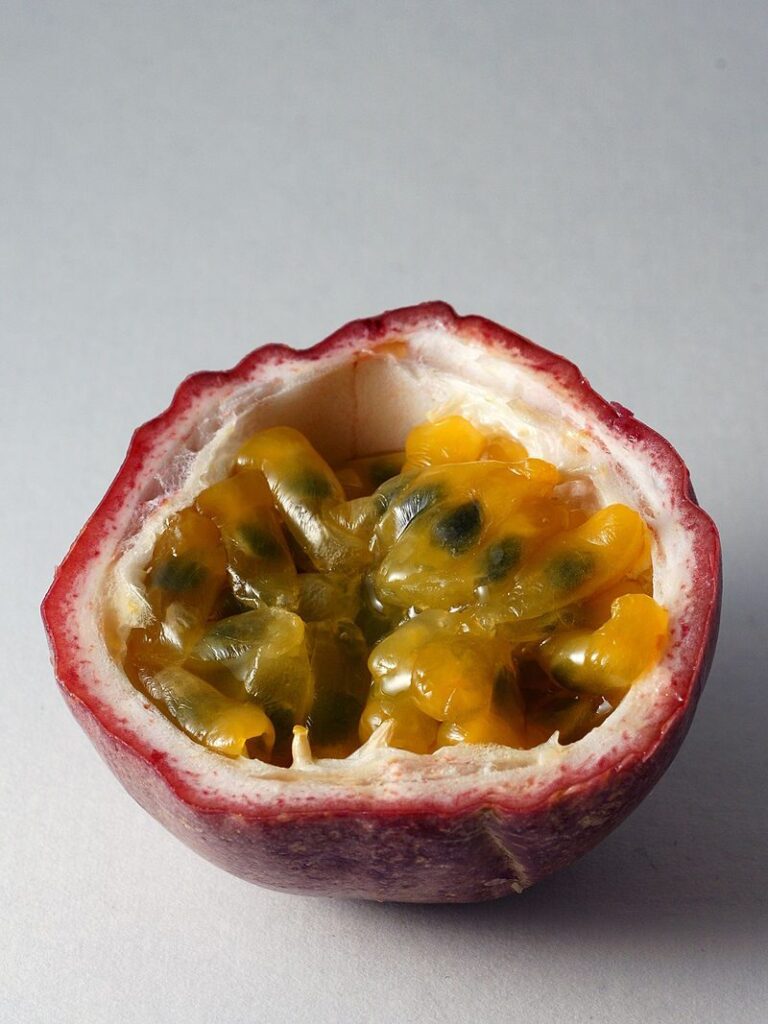
The hard rind of passion fruit is smooth and usually dark purple, but there are also yellow passion fruit varieties with yellow rinds. Inside, there are many small, hard seeds, surrounded by a yellow, jelly-like "pulp" called an aril (seed coat) and juice. The juice and aril often have a strong aroma.
The aril refers to the tissue that partially or completely encloses the base of the edible seed, which originates from the ovary or incense.
What are the seed dispersal methods?
The fruit is a berry and changes color when ripe, so the seeds are clearly dispersed by animal food.
While there are various theories about whether passionflower fruit is edible for humans, it is generally described as being bland to sweet, whereas passion fruit boasts a rich aroma and a sharp, tangy flavor.
Passionflower berries are eaten by Native Americans; unripe fruits are cooked, while ripe fruits are eaten raw (Mendiondo & García, 2006).
Passion fruit berries are much more common and eaten all over the world. While they are sometimes eaten fresh, about 90% of the world's production is used for processed products, mainly as an ingredient in sweets and juices. They are used as ingredients for cakes and pastries, jellies, and liqueurs and syrups for cocktails.
These facts might lead one to believe that the seeds are dispersed by mammals in nature, but when humans eat them, they are quite sour and generally require processing to be palatable. Therefore, it's more reasonable to assume that the seeds are dispersed by birds, who enjoy eating them unprocessed.
In fact, according to research from Argentina, there are records of the yellow-bellied tyrant butterfly (Pitangus sulphuratus), the white-browed mockingbird (Mimus saturninus), and the South American dwarf thrush (Turdus rufiventris) eating the seeds covered in the aril (Mendiondo & García, 2006). Also, although the frequency is unknown, leafcutter ants seem to sometimes carry the seeds covered in the aril.
However, the fact that passion fruit has become more palatable to humans may indicate that it is somewhere between bird-dispersal and mammal-dispersal, or it may be the result of human selective breeding, and its role in nature is not well understood. I could not find any research on passion fruit seed dispersal.
In passionflowers and passion fruit, the removal of the aril promotes seed germination. Therefore, being eaten by animals is very important in nature.
References
Amela García, MT, & Hoc, PS 2000. Pollination of Passiflora: do different pollinators serve species belonging to different subgenera? (VIII International Symposium on Pollination-Pollination: Integrator of Crops and Native Plant Systems). Acta Horticulturae 561: 71-74. ISSN: 0567-7572, ISBN: 9789066057654, https://doi.org/10.17660/ActaHortic.2001.561.10
Aquino, DS, & Amela García, MT 2019. Pollen dispersal in a population of Passiflora caerulea: spatial components and ecological implications. Plant Ecology 220: 845-860. https://doi.org/10.1007/s11258-019-00958-5
Flora of North America Committee. 2015. Flora of North America (Vol. 6 Magnoliophyta: Cucurbitaceae to Droseraceae). Oxford University Press, Oxford. 496pp. ISBN: 9780195340273
Lev-Yadun, S. 2009. Ant mimicry by Passiflora flowers?. Israel Journal of Entomology 39: 159-163. https://www.esalq.usp.br/lepse/imgs/conteudo_thumb/Ant-mimicry-by-Passiflora-flowers.pdf
Mendiondo, GM, & García, MTA 2006. Emergence of Passiflora caerulea seeds simulating possible natural destinies. Fruits 61(4): 251-258. https://doi.org/10.1051/fruits:2006022
Wu, ZY, Raven, PH & Hong, DY (Eds.). 2007. Flora of China (Vol. 13 Clusiaceae through Araliaceae). Science Press, Beijing, and Missouri Botanical Garden Press, St. Louis. ISBN: 9781930723597
Yamamoto, M., da Silva, CI, Augusto, SC, Barbosa, AAA, & Oliveira, PE 2012. The role of bee diversity in pollination and fruit set of yellow passion fruit (Passiflora edulis forma flavicarpa, Passifloraceae) crop in Central Brazil. Apidologie 43: 515-526. https://doi.org/10.1007/s13592-012-0120-6