Morning glory, small morning glory, beach morning glory, and European morning glory are all climbing perennial herbs belonging to the Convolvulaceae family. They are relatively small compared to other members of the Convolvulaceae family and are easy to find. Morning glory and small morning glory, in particular, are very common plants in urban areas, often seen twining around street trees and fences, blooming in countless numbers. However, these flowers are similar and some people may have trouble distinguishing them. They can be distinguished by observing the bracts and leaves. However, it is important to note that hybrids exist between morning glory and small morning glory. This article will explain the classification and morphology of the genera Convolvulus and European morning glory.
What are morning glory, small morning glory, beach morning glory, and European morning glory?
The morning glory (Calystegia pubescens) is a climbing perennial herb distributed in Hokkaido, Honshu, Shikoku, and Kyushu in Japan; as well as in Korea and China, growing in sunny grasslands and roadsides (Kanagawa Prefecture Flora Survey Association, 2018).
Calystegia hederacea, also known as the small morning glory, is a climbing perennial plant distributed in Honshu, Shikoku, and Kyushu in Japan, as well as in Southeast Asia, growing in sunny grasslands and roadsides.
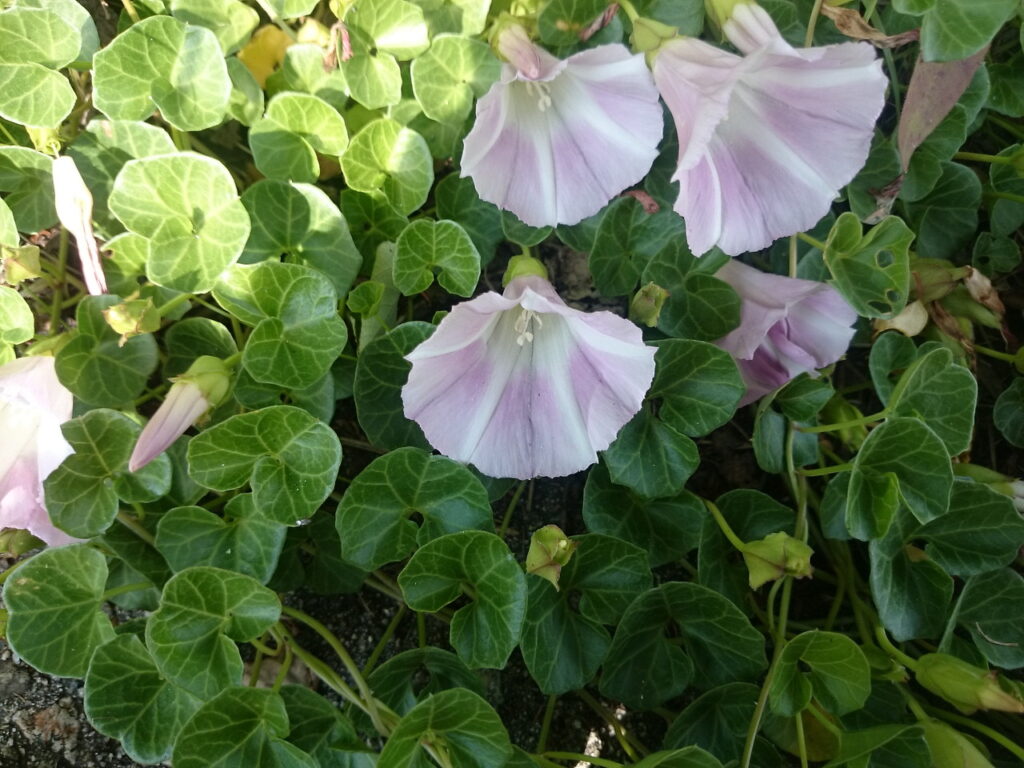
Beach morning glory (Calystegia soldanella) is a climbing perennial plant that grows in sandy areas along the coast and is widely distributed in Hokkaido, Honshu, Shikoku, and Kyushu in Japan; as well as in Asia, Europe, the west coast of the Americas, Australia, and the Pacific Islands.
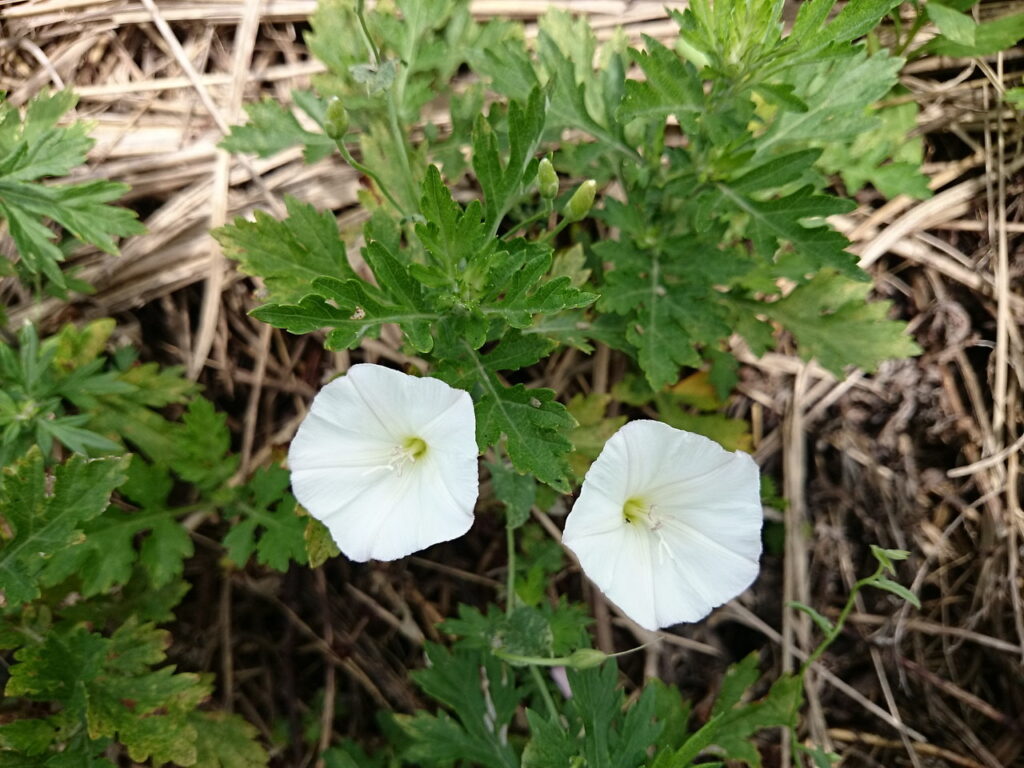
Convolvulus arvensis, also known as the European morning glory, is widely distributed across Eurasia (Europe and Asia) and North Africa (RBG Kew, 2024). In Japan, it became naturalized in various locations after World War II and is a climbing perennial plant that grows along roadsides.
Both are climbing perennial herbs belonging to the Convolvulaceae family, and are relatively small compared to other members of the Convolvulaceae family, making them easy to find. In particular, bindweed and small bindweed are very common plants, often seen twining around street trees and fences in urban areas, with countless flowers in bloom. These two species reproduce vegetatively through rhizomes, resulting in high propagation capacity (Fushimi, 2011).
As the name "Hirugao" (daytime glory) suggests, a major similarity to the "Asagao" (morning glory) is that they bloom during the day.
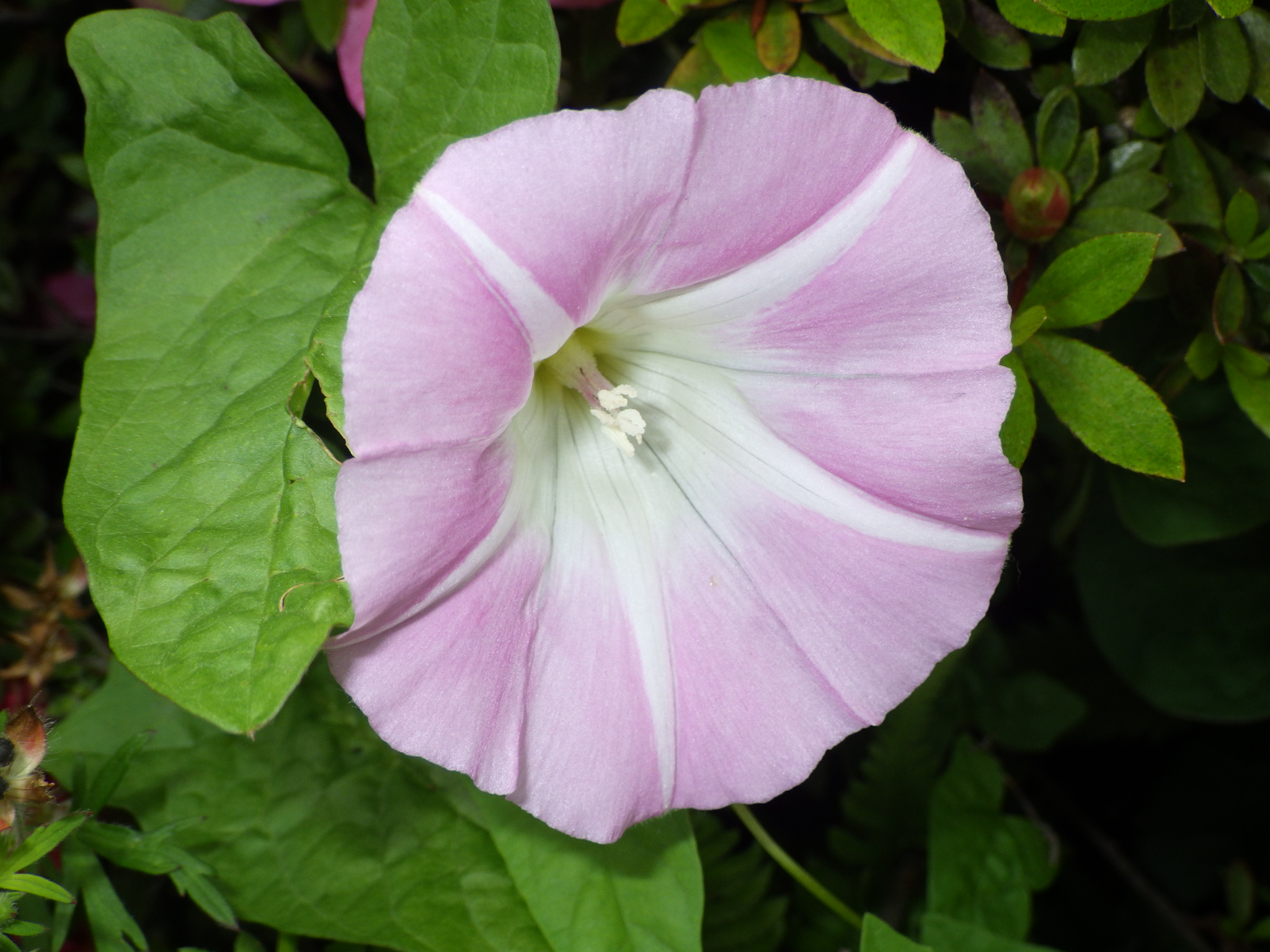
Morphologically, like many plants in the Convolvulaceae family, it has funnel-shaped fused petal flowers, and also shares the characteristic of having a single style with a bifurcated stigma. Importantly, it also has bracts or bract leaves at the base of the flower.
However, some people may not know how to distinguish between these four types.
What are the differences between morning glory, small morning glory, beach morning glory, and European morning glory?
These four species can be broadly divided into two groups (Kanagawa Prefecture Flora Survey Association, 2018).
While morning glory, small morning glory, and beach morning glory belong to the genus Convolvulus, European morning glory belongs to the genus Convolvulus.
Therefore, there are significant differences in form.
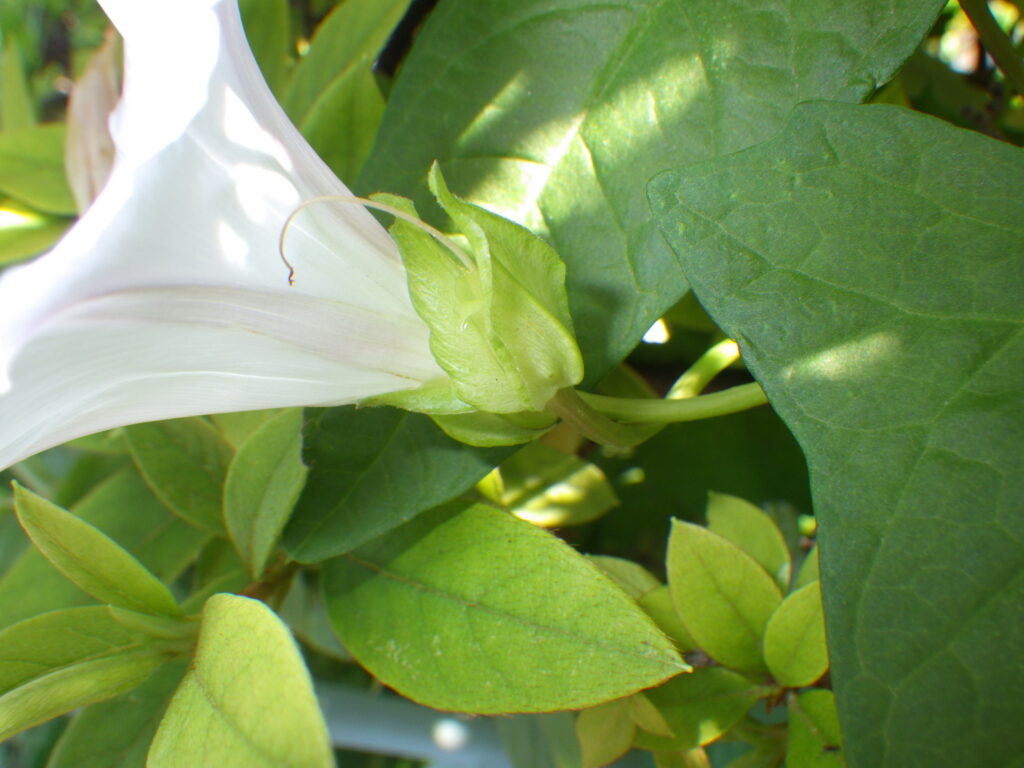
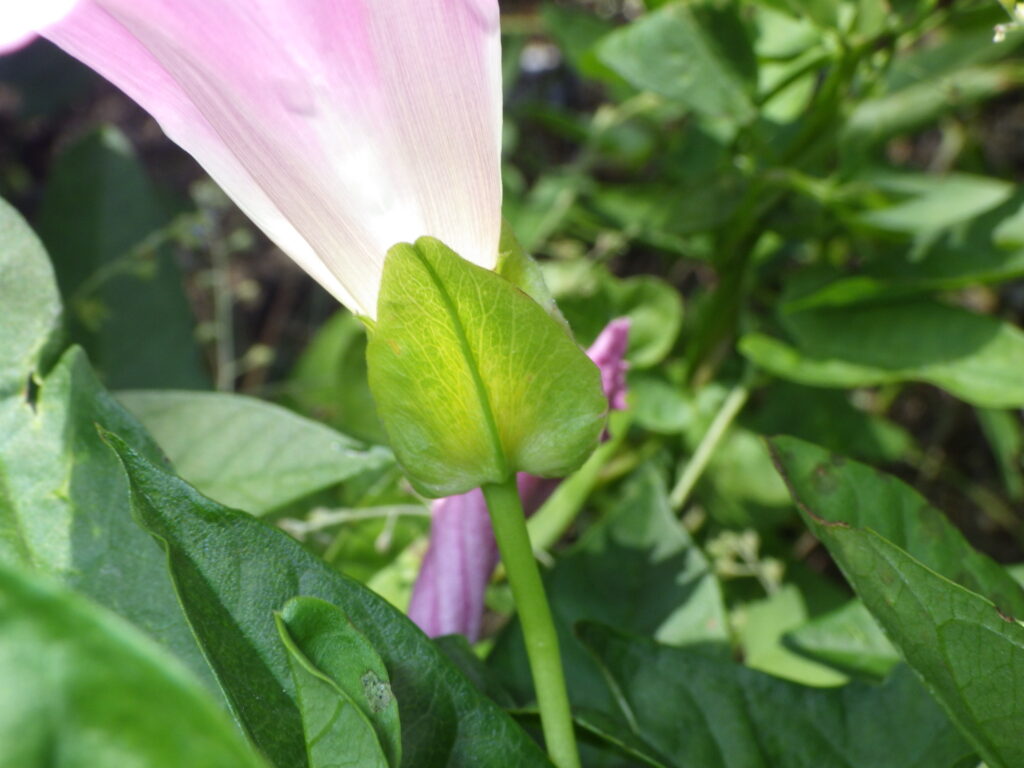
Specifically, in morning glory, small morning glory, and beach morning glory, the bracts are large and there are two of them at the base of a single flower, enclosing the calyx, whereas in European morning glory, the bracts are small and there are two of them much lower down on a single flower.
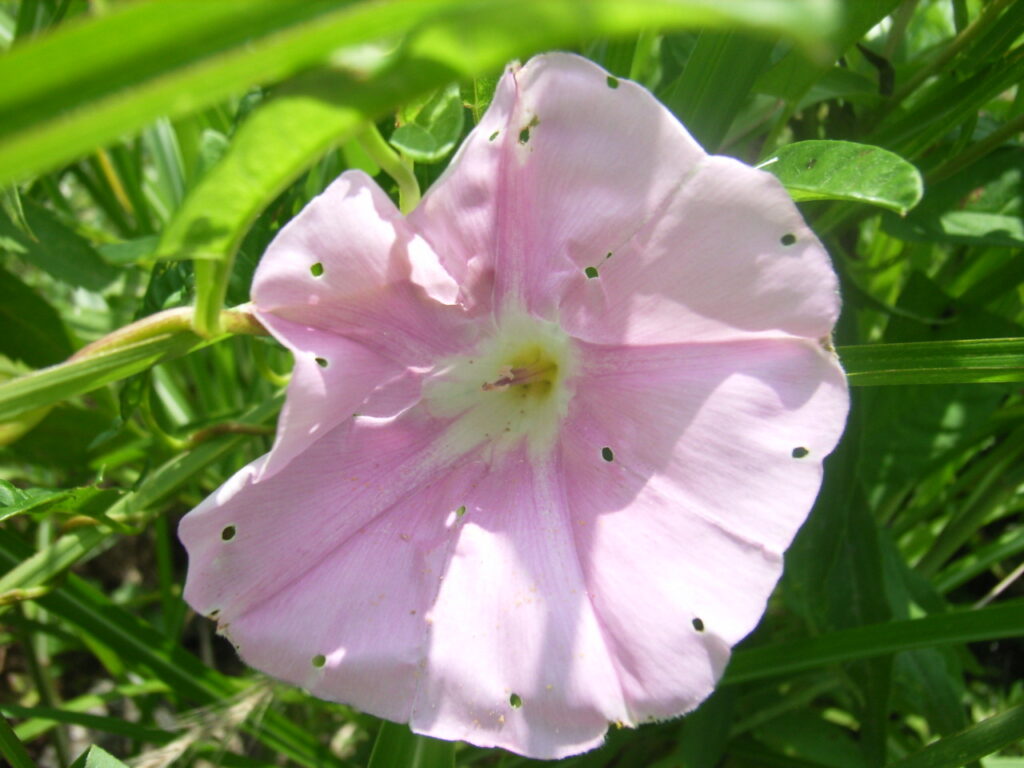
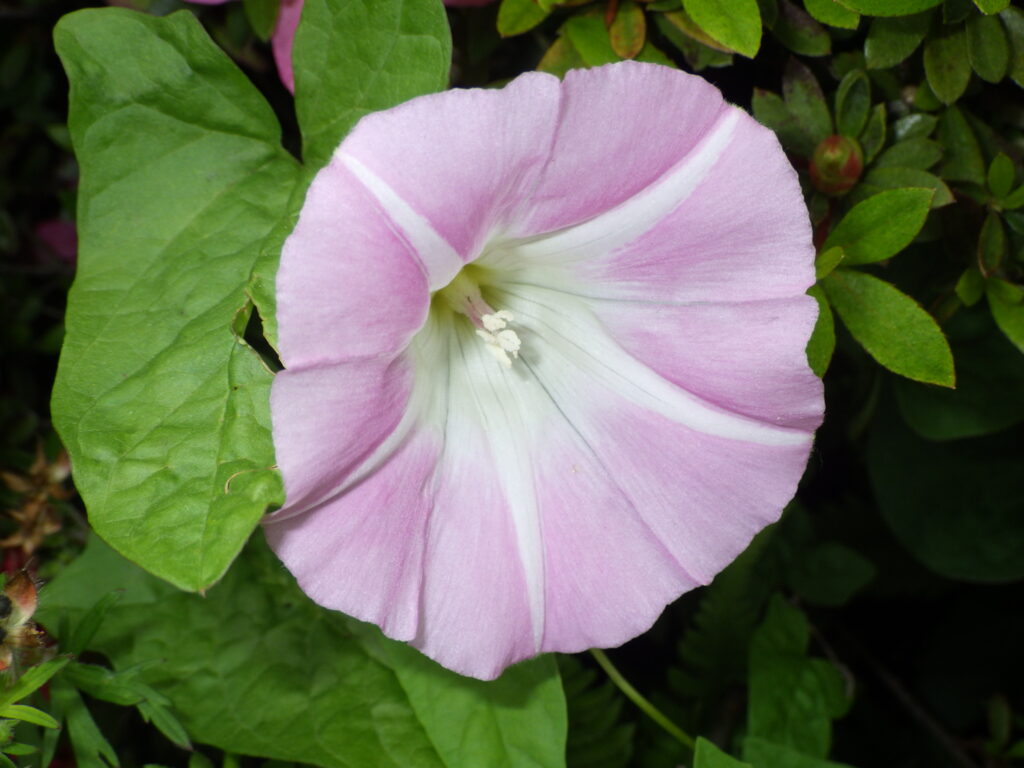
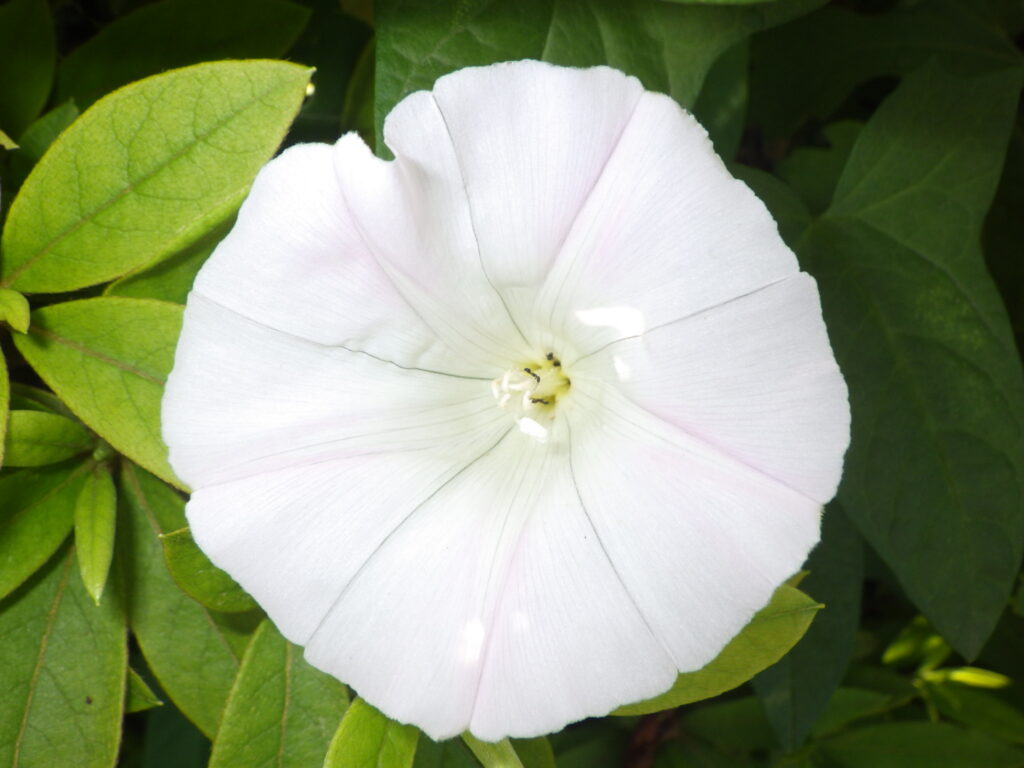
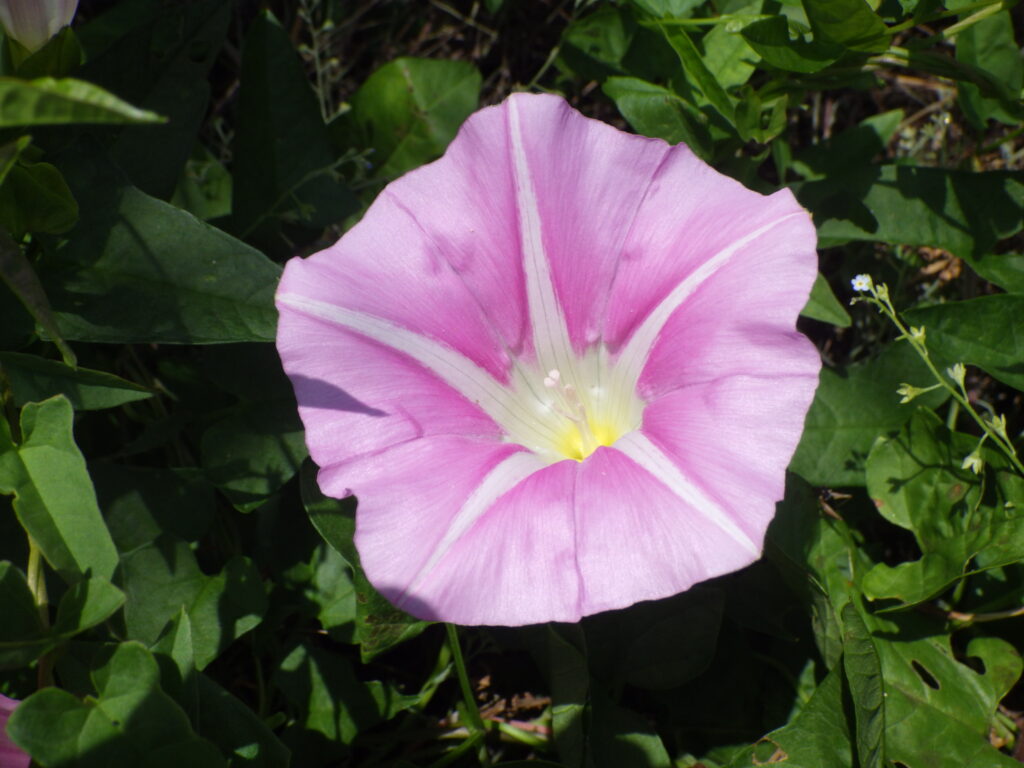
Another difference is that while morning glory, small morning glory, and beach morning glory usually have corollas that are at least partially pink, European morning glory usually has white corollas.
However, it's important to note that there are rare varieties of each species with white flowers, such as *Convolvulus erythrosora* f. albiflora, *Convolvulus sakuraii* f. sakuraii, and *Convolvulus humilis* f. albiflora. There are also varieties of *Convolvulus humilis* that have a pinkish tint.
These characteristics should help distinguish it from morning glory.
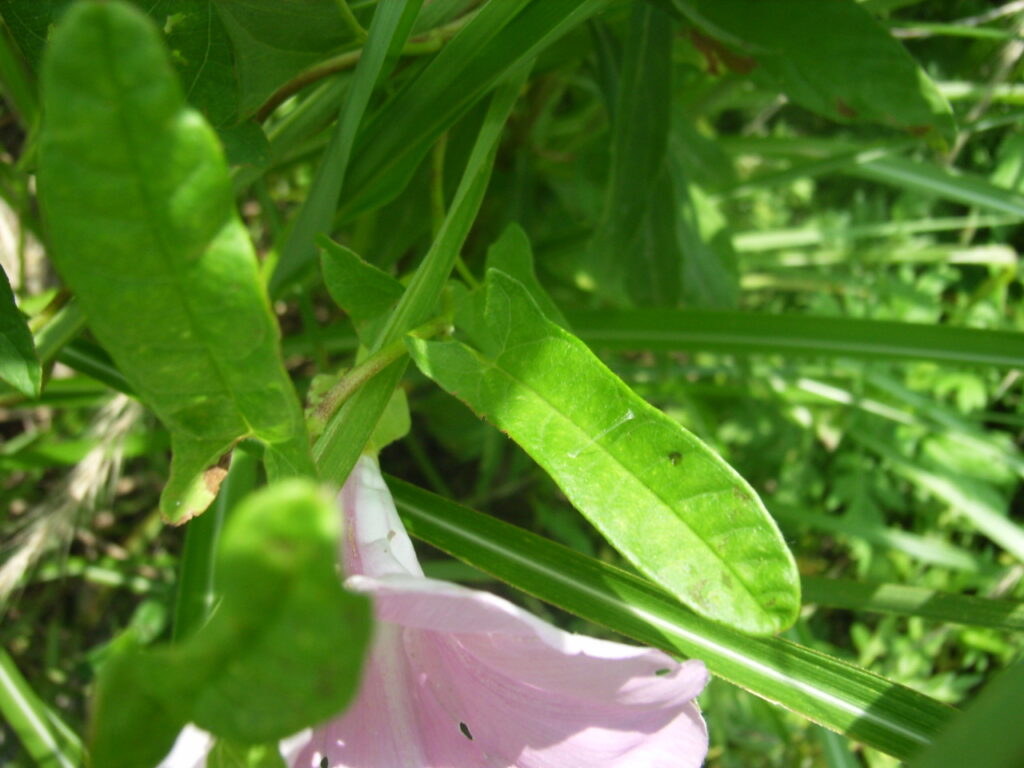
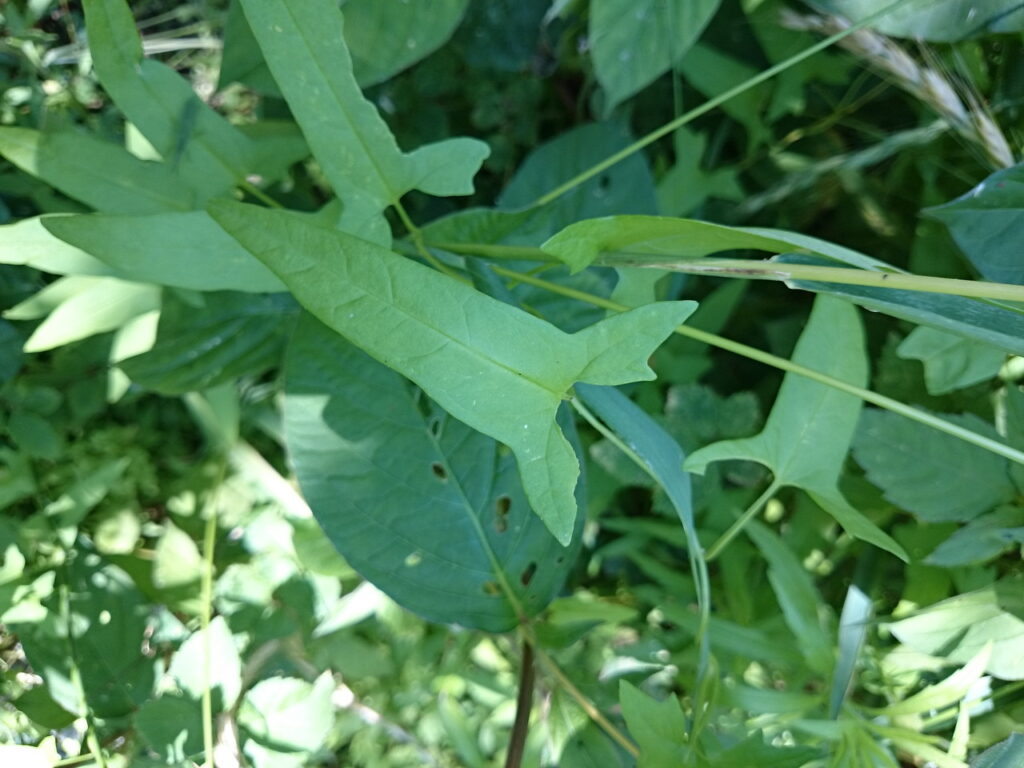
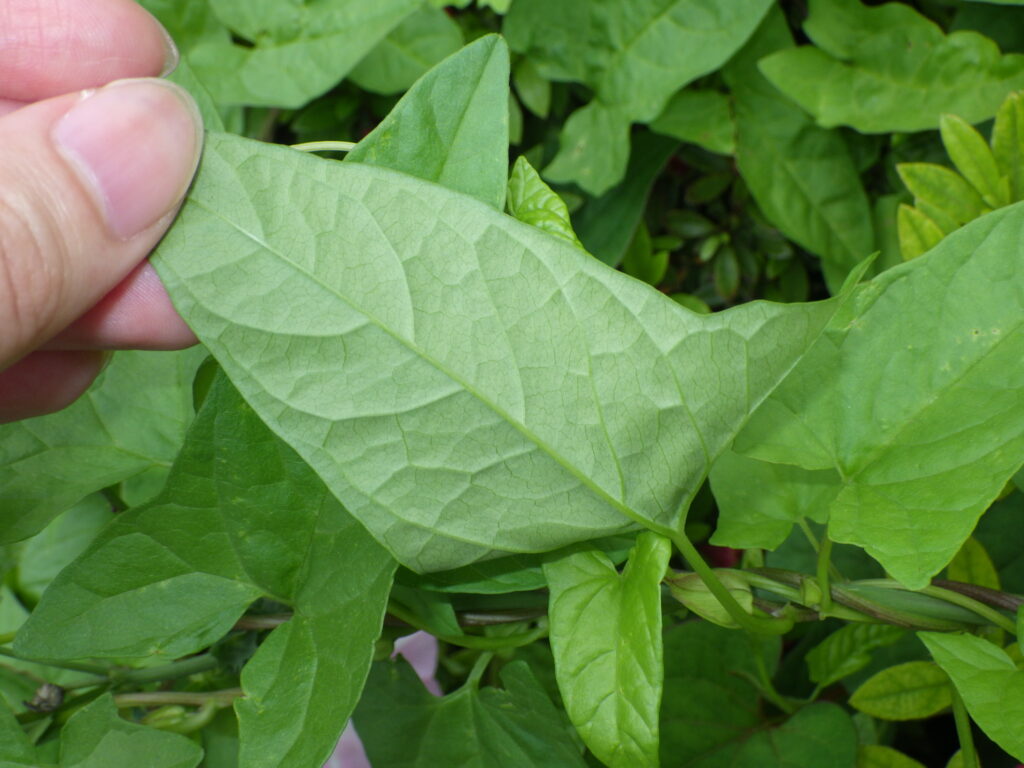
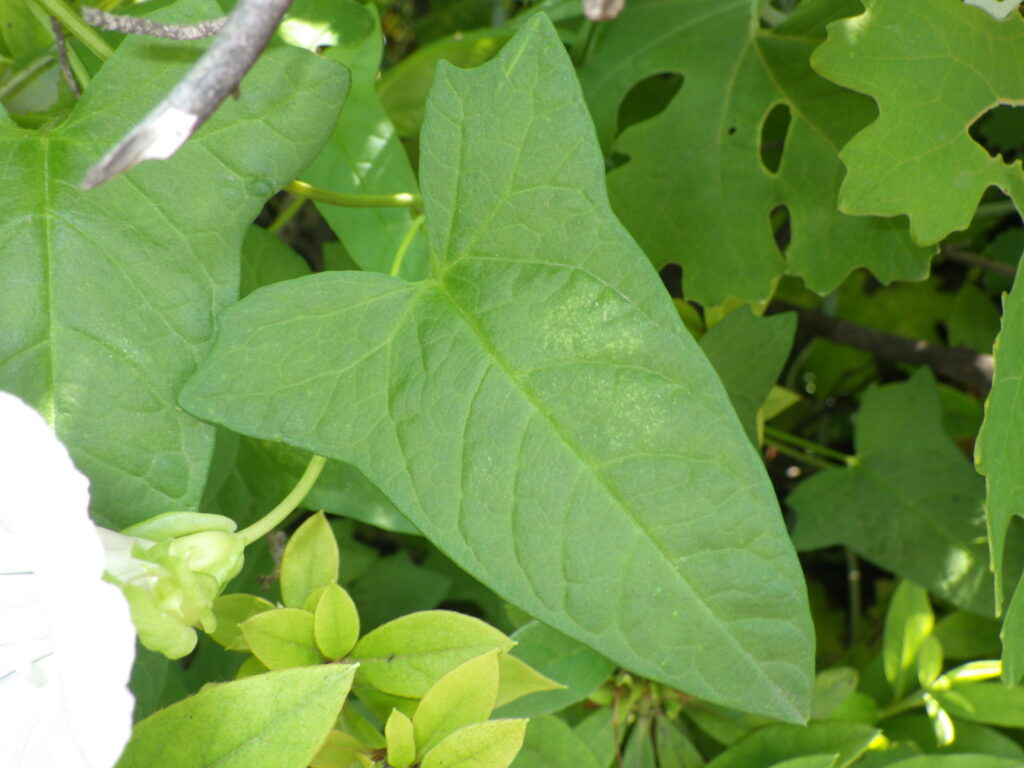
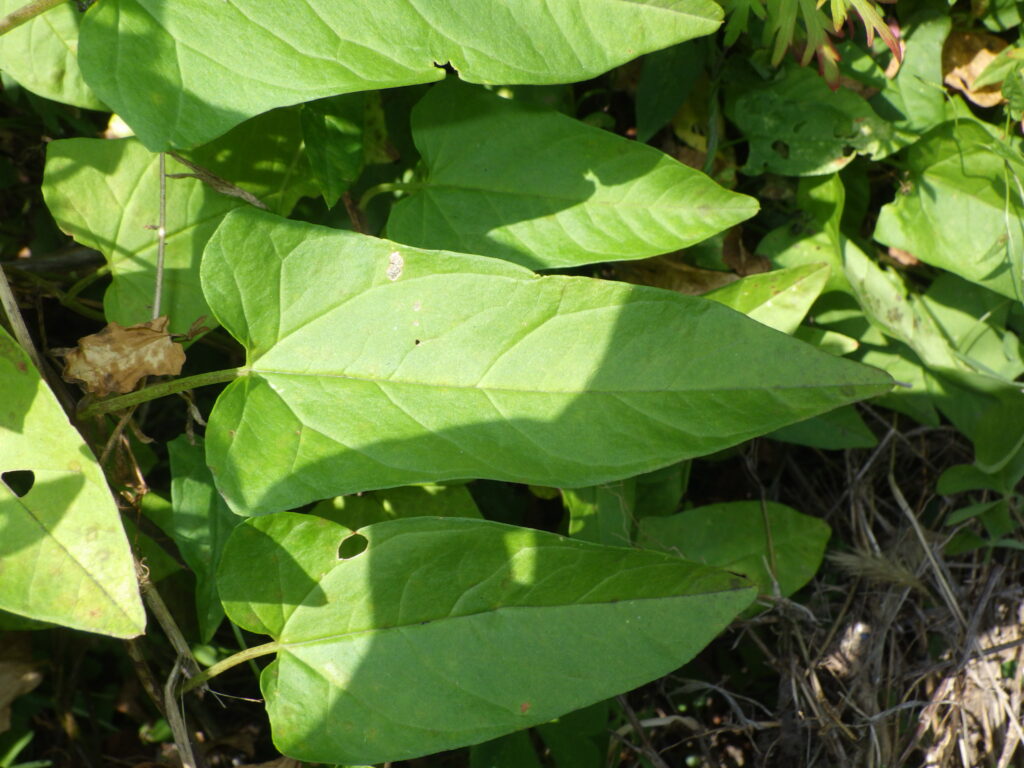
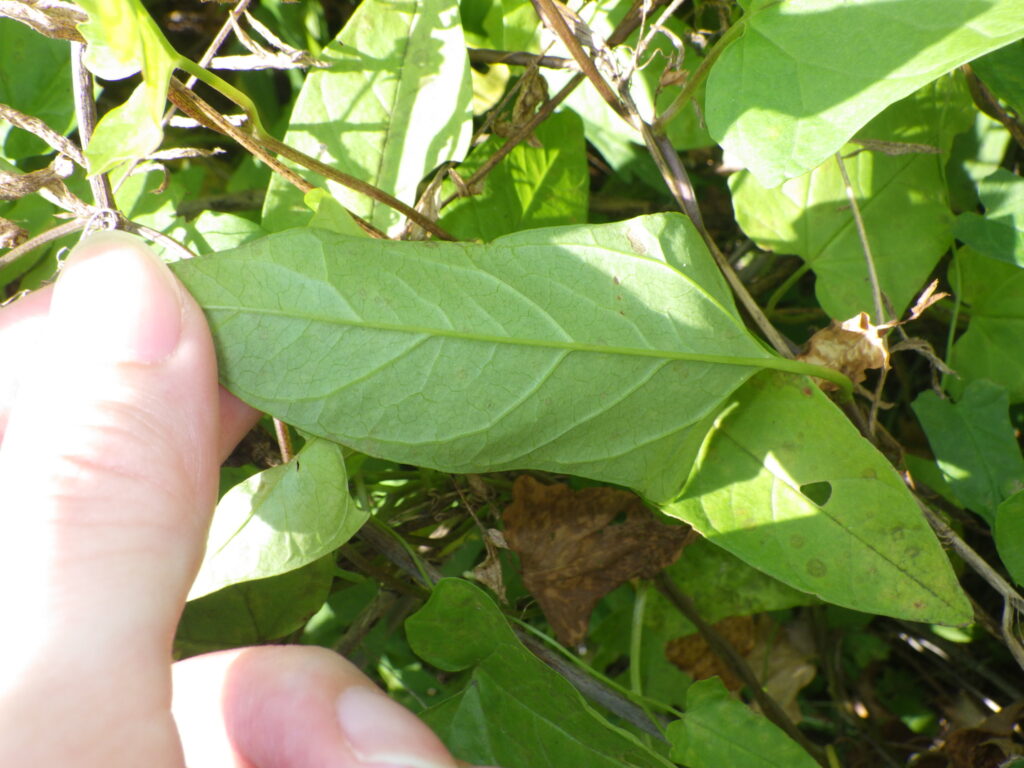
Regarding the remaining three species, the main difference is that while morning glory and small morning glory have thin, lanceolate or triangular leaves, beach morning glory has thick, kidney-shaped leaves.
This is because beach morning glory has thickened leaves to withstand drought and high salinity on the coast (Hesp, 1991; Hagino et al., 2008; Fushimi, 2011).
While morning glory and small morning glory are quite similar, morning glory has less developed lateral leaf lobes, flowers 5-8 cm in diameter, and no wings at the top of the pedicel, whereas small morning glory has triangular leaves that are usually acute, with lateral lobes that spread laterally and sometimes split into two, flowers 3-5 cm in diameter, and small, curved wings at the top of the pedicel.
The term "lateral leaf lobes" might be difficult to understand, but essentially it means that while morning glory (Ipomoea nil) has only three pointed parts, bindweed (Calystegia virginiana) has five. However, there is variation among bindweed leaves, and some may only have three pointed parts, so it's best to check several leaves.
The bracts of Corydalis are more pointed in Corydalis than in Corydalis, so this point is also helpful to consider.


Are there any other similar species?
Another species in the genus Calystegia , Calystegia sepium, is also known. It has almost the same characteristics as the common morning glory, but its leaves are triangular-lanceolate with acute tips, and the corolla tube is slightly swollen above the bracts (in the common morning glory, the leaves are triangular or narrowly triangular-lanceolate with obtuse tips, and the corolla tube is not swollen above the bracts). This species is extremely similar to the common morning glory, so it is highly likely that they are being confused.
Also, note that there is a hybrid of morning glory and common morning glory called Calystegia hederacea x C. pubescens. This hybrid exhibits intermediate characteristics between the two species and is difficult to distinguish, but if the flowers are small and lack lateral lobes, you should suspect this hybrid.
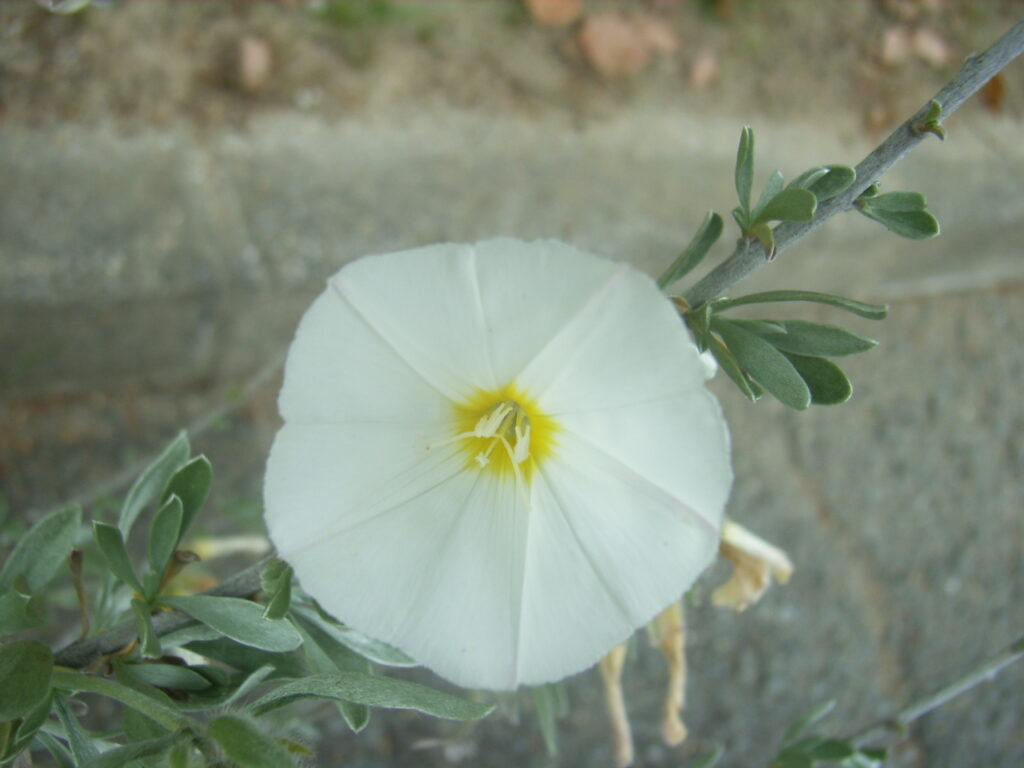
The genus Convolvulus includes a species called Convolvulus cneorum, which is sometimes cultivated in gardens. Its leaves are narrow and have an unusual shape for the Convolvulaceae family, so it's unlikely to be confused with Convolvulus.
There are many other species in the Convolvulaceae family that also have "hirugao" (morning glory) in their name, but there are so many of them, and they are quite far apart in terms of classification, so we will omit them here.
References
Hagino, Kaori; Yamada, Satoshi; Yamanaka, Norikazu; Uozumi, Yasuyuki; Fujiyama, Hideyasu. 2008. Effects of salt on the growth of *Calystegia soldanella*, a plant native to sand dunes. Abstracts of the Japanese Society of Soil Science and Plant Nutrition 54: 105. ISSN: 0288-5840, https://doi.org/10.20710/dohikouen.54.0_105_1
Hesp, PA 1991. Ecological processes and plant adaptations on coastal dunes. Journal of Arid Environments 21(2): 165-191. ISSN: 0140-1963, https://doi.org/10.1016/S0140-1963(18)30681-5
Fushimi, Akihide. 2011. Morning Glory (Calystegia). Grass and Greenery 3: 38-44. ISSN: 2185-8977, https://doi.org/10.24463/iuws.3.0_38
Kanagawa Prefecture Flora Survey Association. 2018. Kanagawa Prefecture Flora 2018 (Electronic Edition). Kanagawa Prefecture Flora Survey Association, Odawara. 1803pp. ISBN: 9784991053726
RBG Kew. 2024. The International Plant Names Index and World Checklist of Vascular Plants. Plants of the World Online. http://www.ipni.org and https://powo.science.kew.org/