Shepherd's purse, lacecap shepherd's purse, dog shepherd's purse, and Arabidopsis thaliana all belong to the Brassicaceae family, and among them, those with the name "shepherd's purse" are representative Japanese weeds. They are characterized by flowering in early spring and quickly producing flat fruits. However, despite their fame, some people may not be able to distinguish between these four species. The easiest way to distinguish between these four species is to check their fruits. Their shapes are quite different, so it is relatively easy to see the difference. However, each species has closely related species, so that point should also be noted. This article will explain the classification and morphology of plants with "shepherd's purse" in their name.
What are Shepherd's Purse, Bean-Eating Shepherd's Purse, Dog Shepherd's Purse, and White Shepherd's Purse?
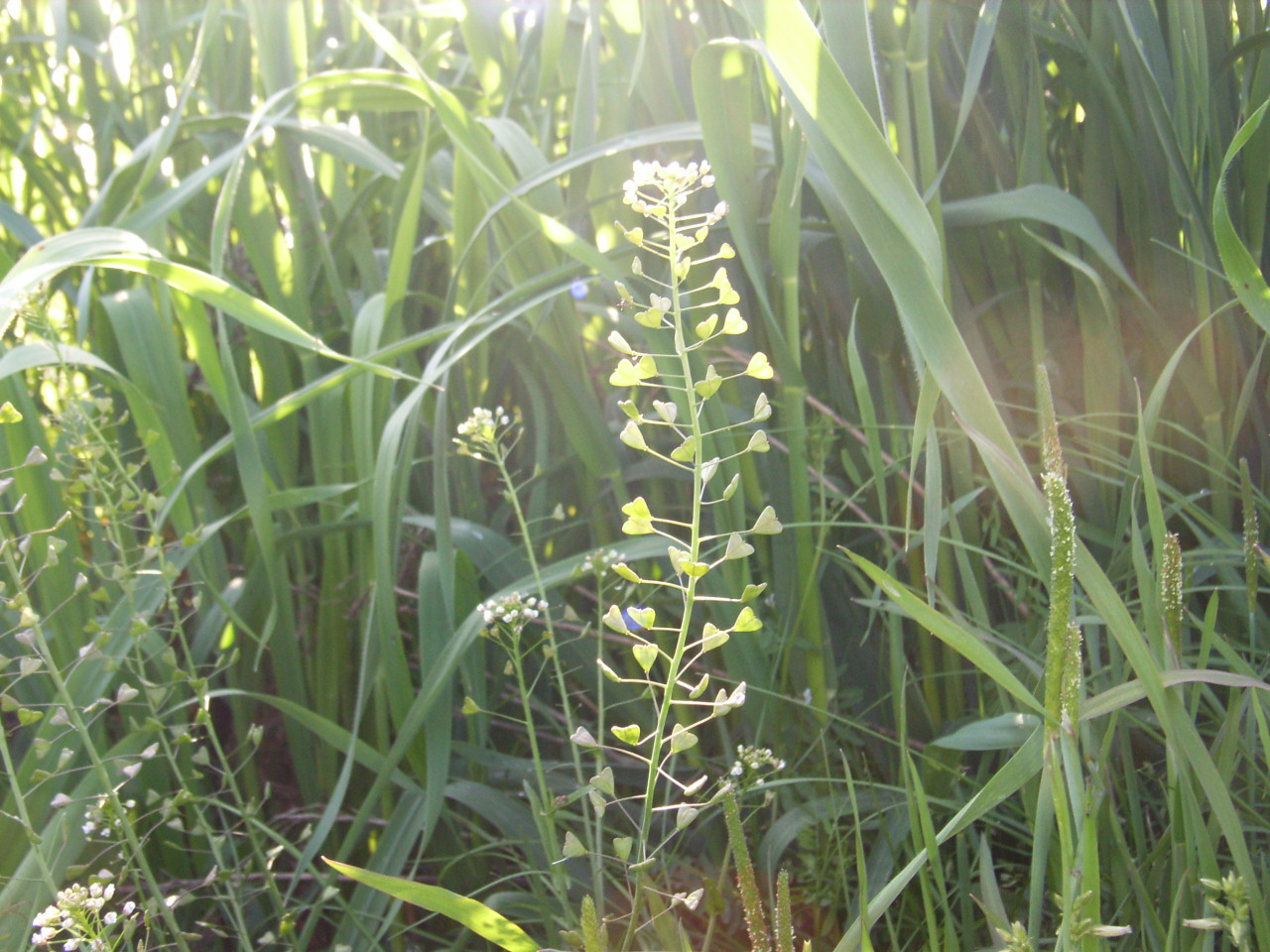
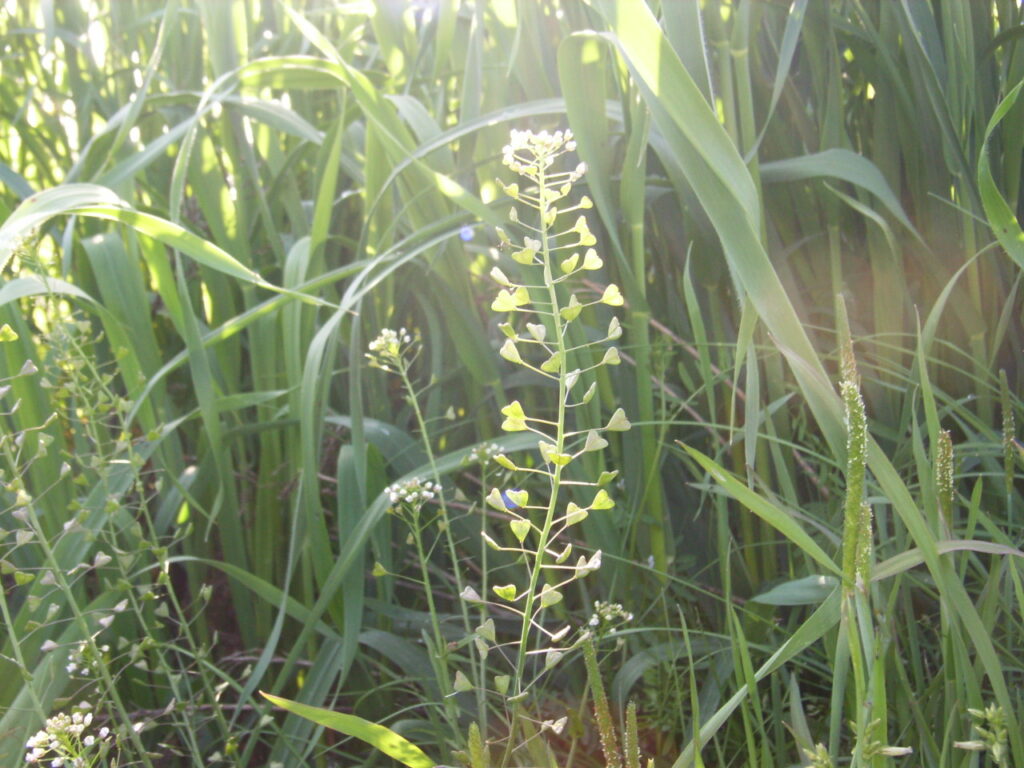
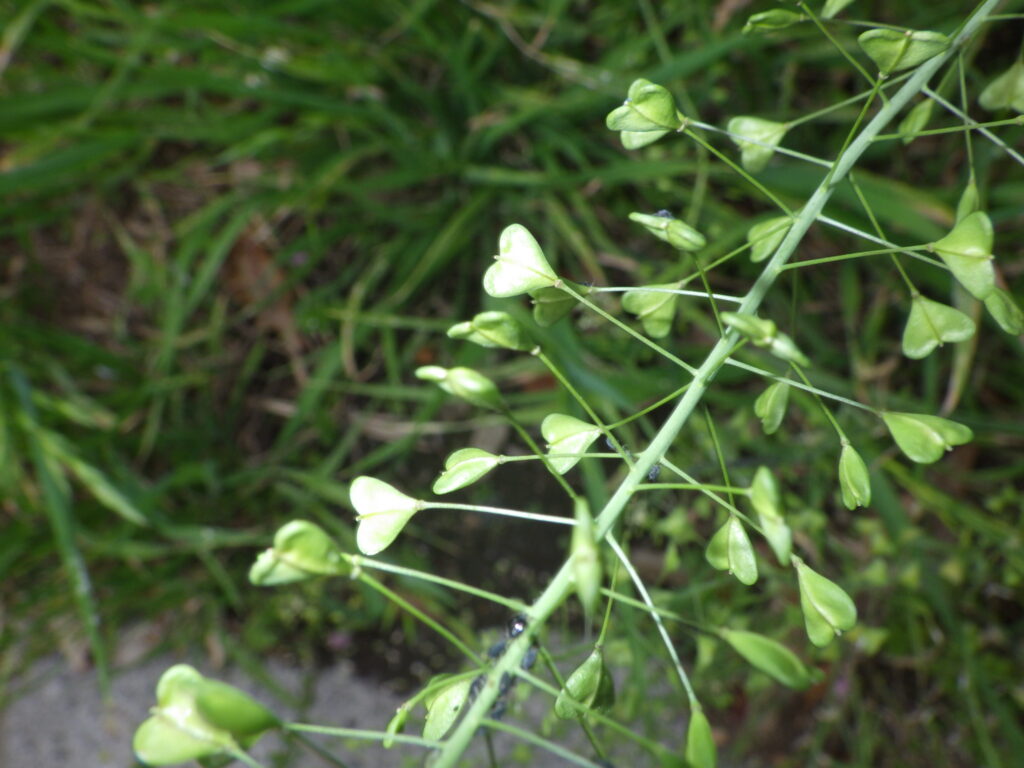
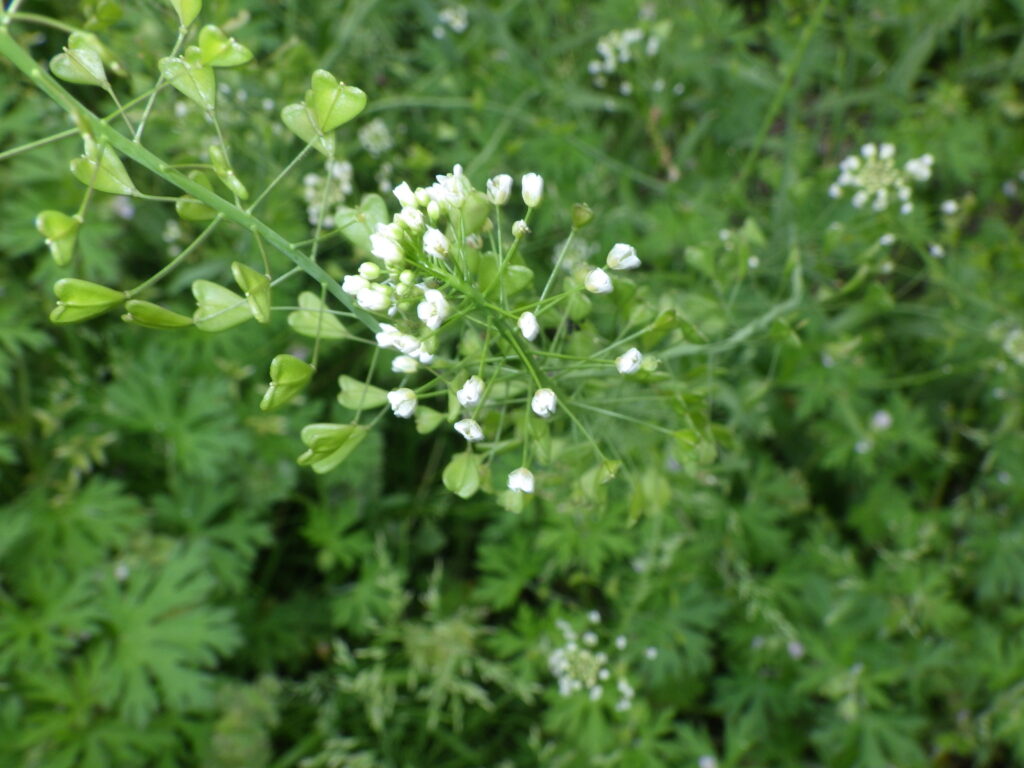
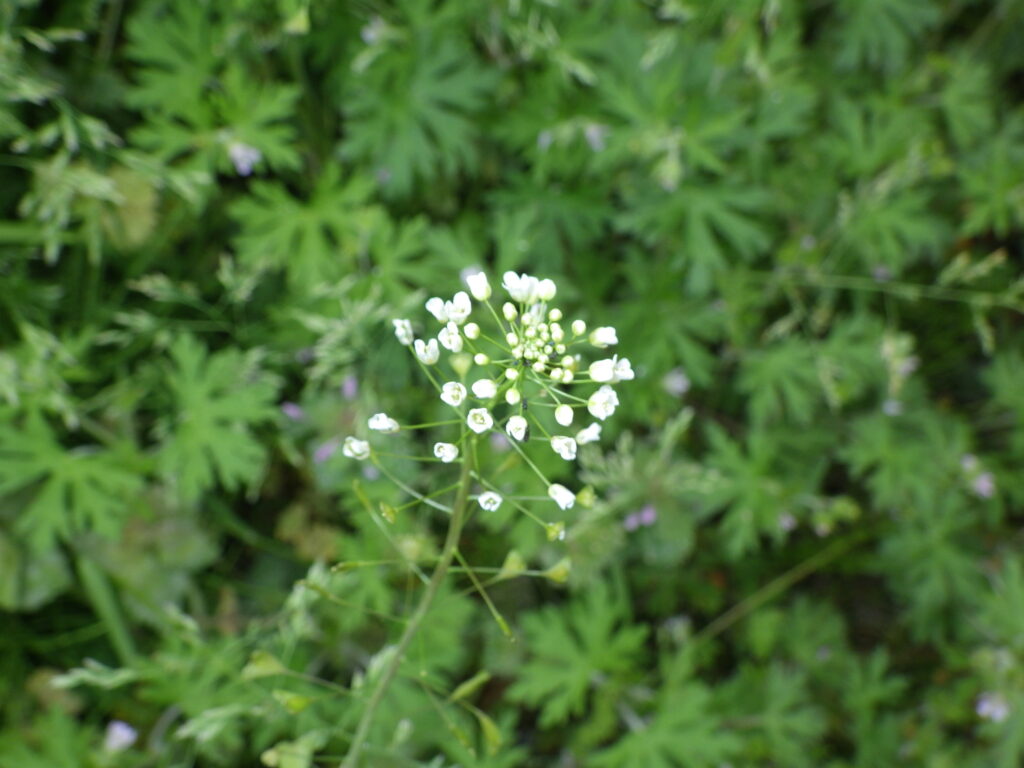
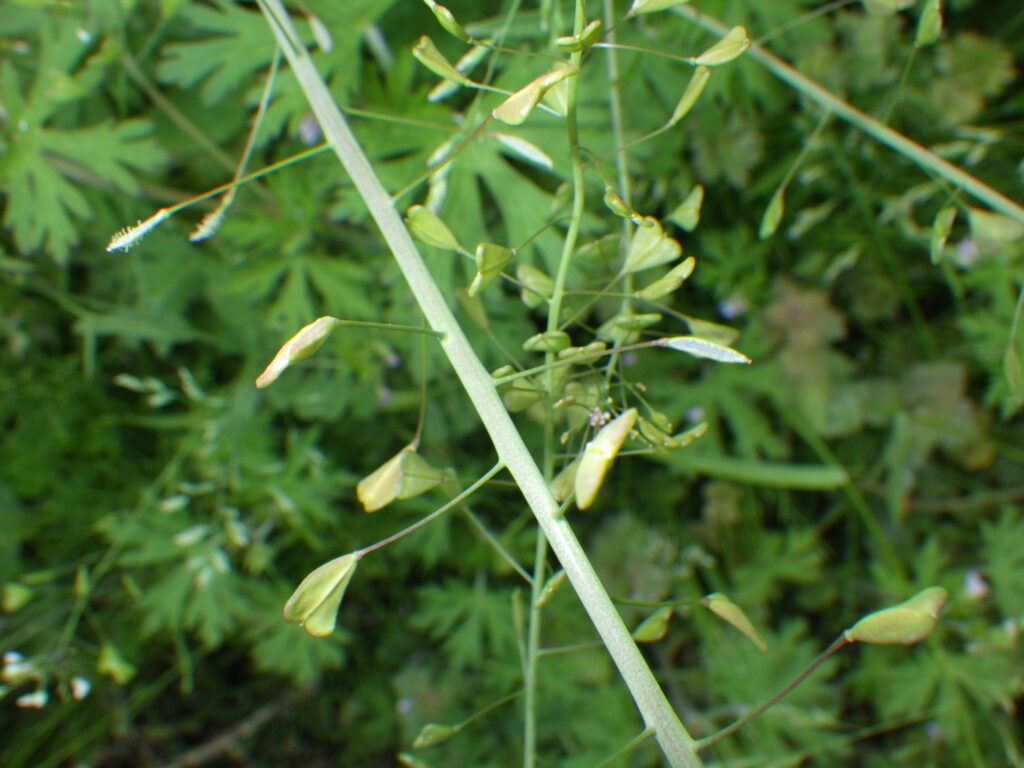
Shepherd's purse (Capsella bursa-pastoris var. triangularis), also known as penpengusa or shamisengusa, is a biennial plant widely distributed throughout Japan (Hokkaido, Honshu, Shikoku, Kyushu, and Ryukyu Islands) and the Northern Hemisphere, growing along roadsides and in fields.
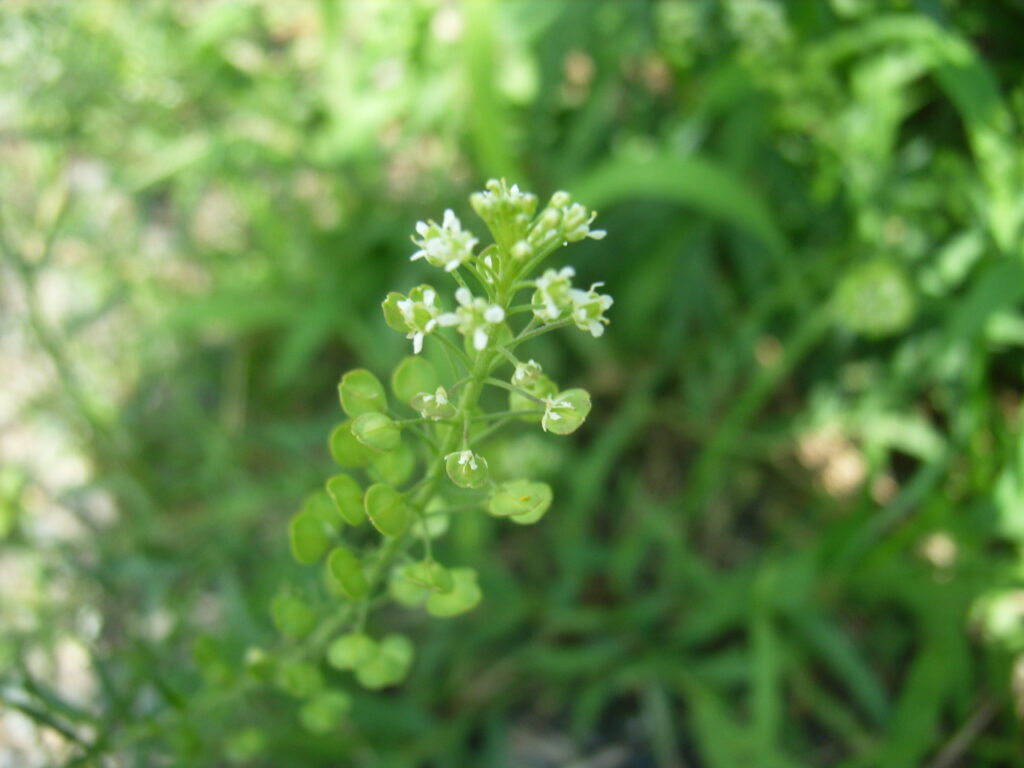
Lepidium virginicum, also known as bean-legged shepherd's purse, is a biennial plant native to North America that grows in wastelands and roadsides. It was introduced to Japan during the Meiji era and is now found throughout the country.
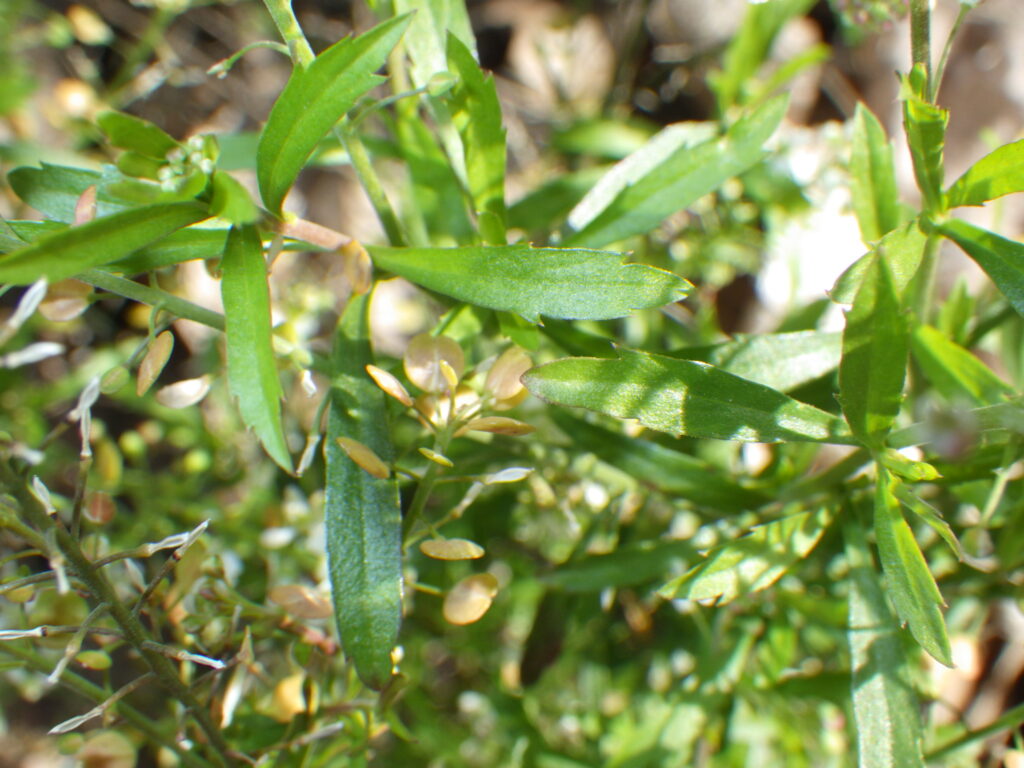
Draba nemorosa, also known as dog's toad lily, is a biennial herb found in roadsides and fields, distributed throughout Hokkaido, Honshu, Shikoku, and Kyushu in Japan, as well as the Northern Hemisphere (Eurasia excluding North America, Southeast Asia, South Asia, and the Arabian Peninsula). It does not grow in urban areas.
Arabidopsis thaliana, also known as white dog thaliana, is a biennial herb distributed across a wide area of Japan (Hokkaido, Honshu, Shikoku, and Kyushu), Eurasia, and Africa, growing in coastal and lowland grasslands and roadsides.
Both belong to the Brassicaceae family, and among them, the plant known as "nazuna" is a representative weed of Japan. It is characterized by its early flowering in early spring and its early production of flat fruits.
With shepherd's purse, you pull the fruit stalk (the thin part attached to the fruit) downwards, letting the fruit hang down, and then rotate the central axis (the base of all the fruit stalks) with your fingers to make a "pen-pen" sound—a game that almost every Japanese person has probably played at least once. It is one of the seven spring herbs, and has been used in seven-herb rice porridge since ancient times, with the young, rosette-shaped seedlings, which do not have upright stems, being eaten.
Arabidopsis thaliana possesses many characteristics that make it an excellent model organism, such as its small genome size, short generation time of about two months, ease of cultivation indoors, ability to produce a large number of seeds, lack of self-incompatibility, and ease of transformation. It is widely used in genetics research, including population genetics, and in plant science research related to plant evolution and development, and is always featured in textbooks at the high school level and above.
However, despite their fame, some people may not be able to distinguish between these four species. In particular, shepherd's purse, lacecap shepherd's purse, and Arabidopsis thaliana can grow even in urban areas, making identification difficult.
What are the differences between Shepherd's Purse, Bean-Leaf Shepherd's Purse, Dog Shepherd's Purse, and White Shepherd's Purse?
The easiest way to distinguish between these four species is to examine their fruits (Kanagawa Prefecture Flora Survey Association, 2018).
All four species belong to the Brassicaceae family, and therefore produce a special type of fruit called a "silique," which has two carpels and consists of two chambers. When ripe, it splits open lengthwise, releasing the seeds inside.
The shape of the siliques is clearly different in all four species.
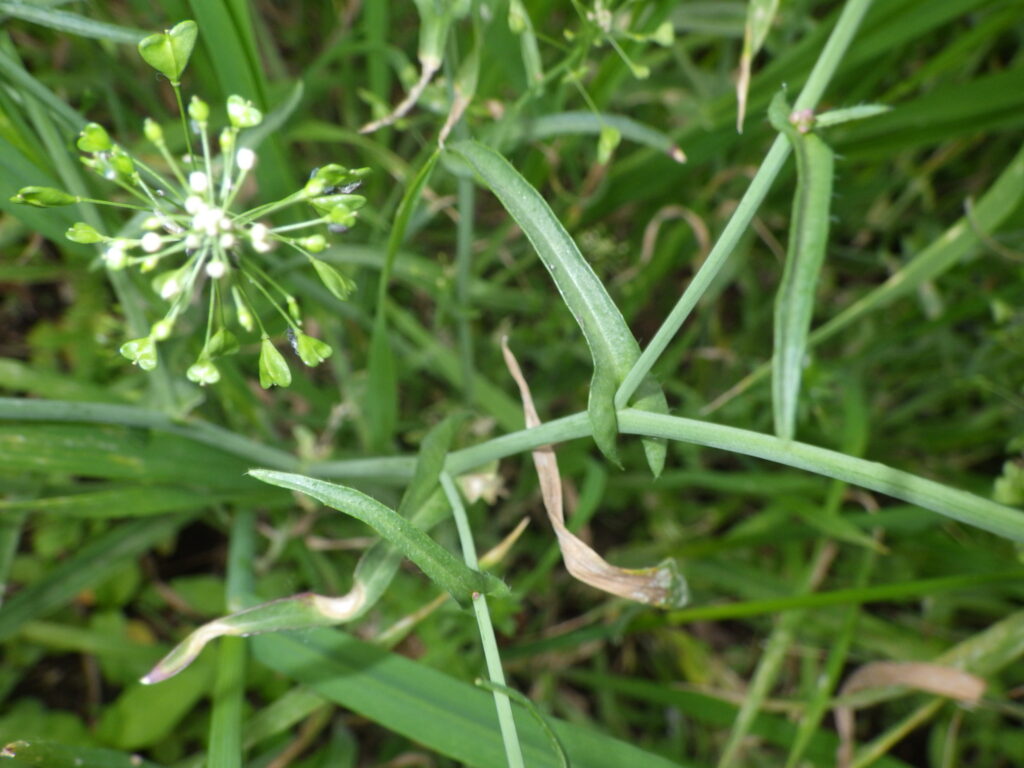
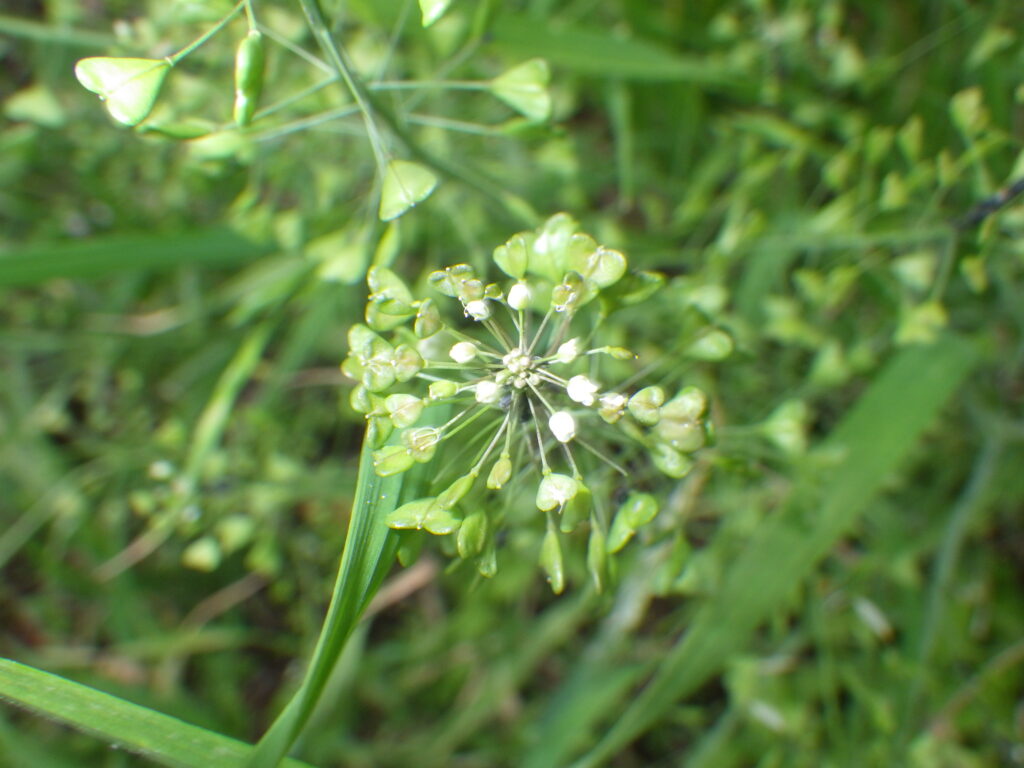
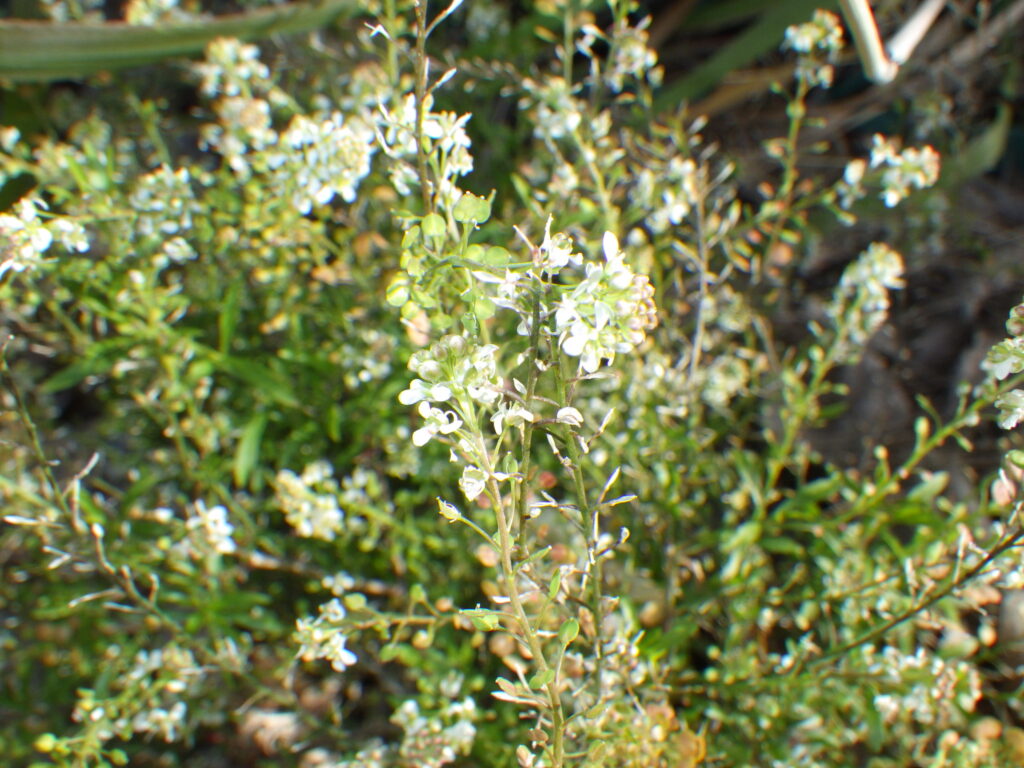
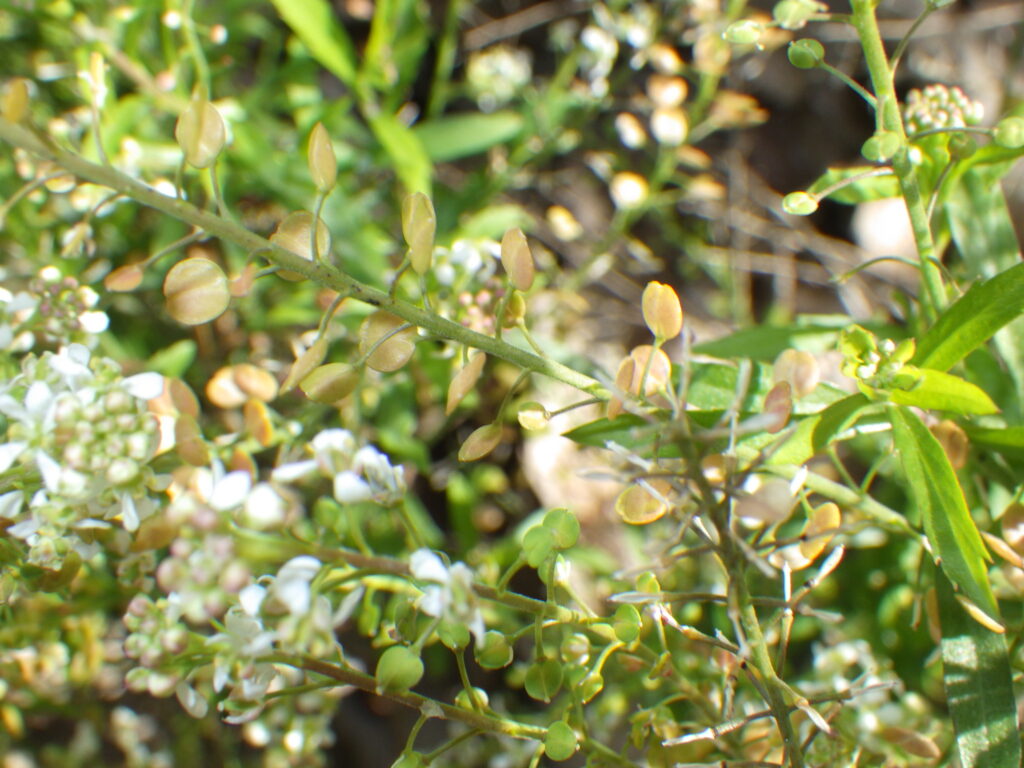
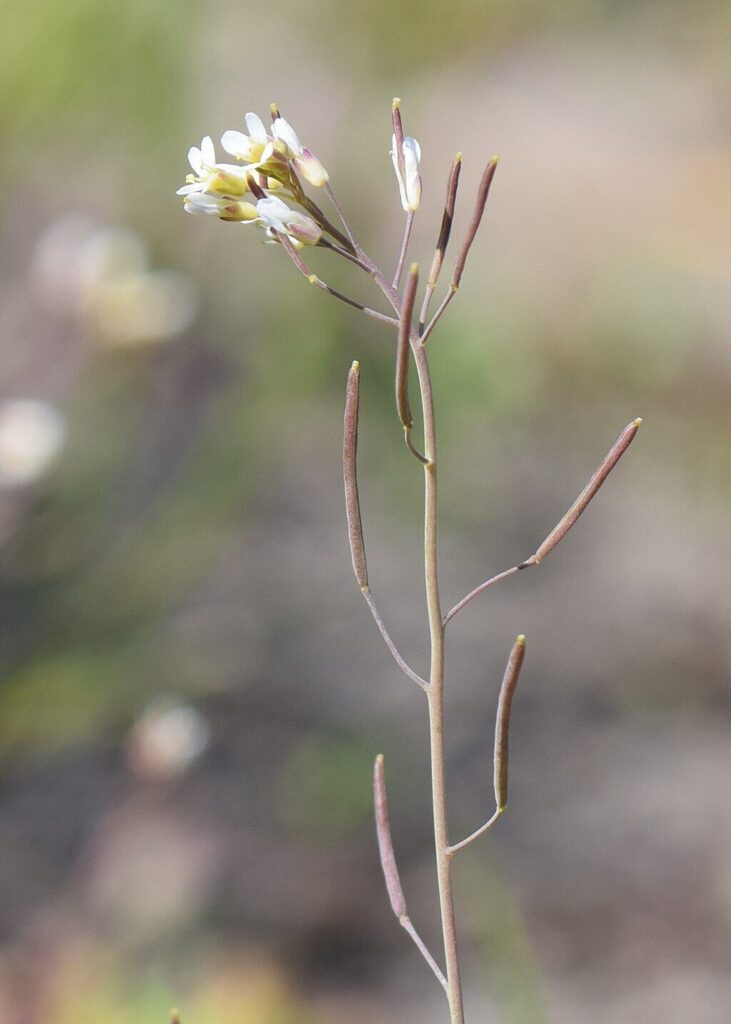
Specifically, the differences are that shepherd's purse is heart-shaped, lacecap shepherd's purse is round, dog shepherd's purse is a slender, elongated oval, and Arabidopsis thaliana is a slender, rod-shaped.
You won't mistake these two for each other, so you shouldn't get confused.
Another point of reference is that while the flowers of shepherd's purse, lacecap shepherd's purse, and Arabidopsis thaliana are white, the flowers of dog shepherd's purse are yellow.
Also, among these, the shepherd's purse is clearly the largest. The dog shepherd's purse is not usually found in urban areas.
Although their names are similar, they belong to the genera *Capsella*, *Capsella*, *Capsella bursa-pastoris*, and *Arabidopsis thaliana* respectively, so you can see that there are significant differences between them.


Are there any other similar species?
The four species listed above are representative of the genera *Capsella*, *Capsella*, *Capsella bursa-pastoris*, and *Arabidopsis thaliana*, respectively. However, there are similar species within each genera, so caution is sometimes necessary.
Other known species in the genus Capsella include Capsella bursa-pastoris var. bursa-pastoris, in which the length of the fruit along its long axis is clearly longer than its width; Capsella grandiflora, in which the petals exceed 5 mm in length and are more than twice as long as the sepals; and Capsella rubella, in which the petals are slightly longer than or almost the same length as the sepals, and the outer edge of the fruit is slightly curved inward.
Nine species of the genus *Philadelphia* have naturalized in Japan, and while it's impossible to list them all here, their numbers are significantly smaller than *Philadelphia japonica*. Generally, if the fruit is nearly perfectly round and the leaves are not pinnately divided, you can assume it is *Philadelphia japonica* itself.
The genus Draba includes a species called Draba verna, whose petals are not two-lobed. Draba nambuensis, a high-altitude plant, is sometimes cultivated as a wild mountain plant.
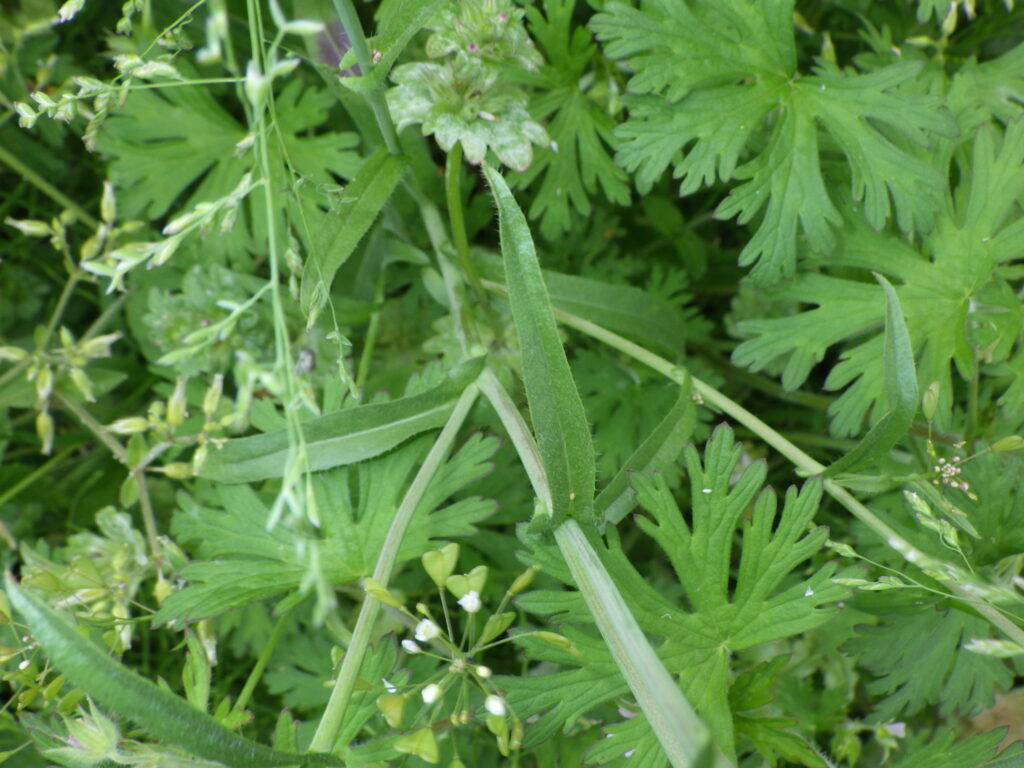
There are only three species of the Arabidopsis genus in Japan, and the other two are alpine plants, so you are unlikely to mistake them in the wild.
References
Kanagawa Prefecture Flora Survey Association. 2018. Kanagawa Prefecture Flora 2018 (Electronic Edition). Kanagawa Prefecture Flora Survey Association, Odawara. 1803pp. ISBN: 9784991053726