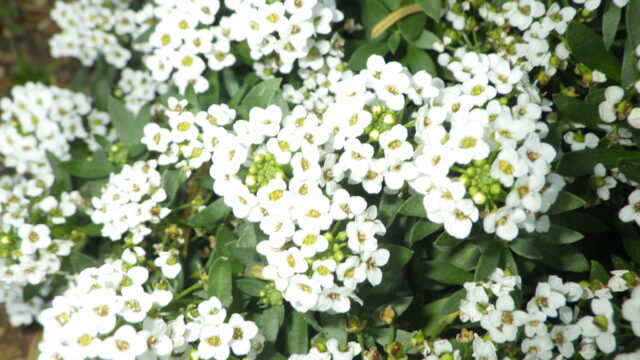
Brassicaceae

Sponsored Link
plant

What are the differences between *Calanthe discolor* and *Calanthe japonica*? An explanation of how to distinguish between similar species.

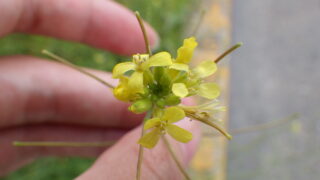
Both *Arabis japonica* and *Arabis humilis* belong to the genus *Arabis* in the family Brassicaceae, and are invasive weeds that can grow in urban areas with low levels of natural habitat, such as cracks in concrete. Their distinctive features that distinguish them from other species are their characteristic yellow flowers and divided leaves, typical of the Brassicaceae family. However...
plant

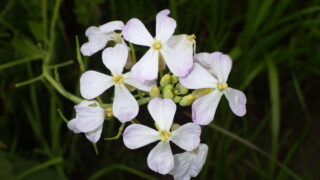
What are the differences between sea radish, flower radish, and large-flowered wallflower? An explanation of how to distinguish between similar species.

Sea radish, flower radish (Raphanus sativus), and large-flowered radish (Raphanus erythrosora) all belong to the Brassicaceae family, and their names sometimes include "radish." They are herbaceous plants that are cultivated for either ornamental or edible purposes and have also become naturalized. They are characterized by their purple, cross-shaped flowers...
plant

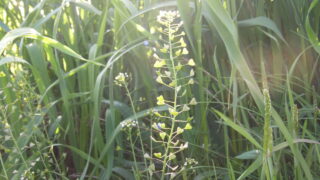
What are the differences between Shepherd's Purse, Lepidium virginicum, Lepidium thunbergii, and Arabidopsis thunbergii? An explanation of how to distinguish between similar species.

Shepherd's purse, lacecap shepherd's purse, dog shepherd's purse, and Arabidopsis thaliana all belong to the Brassicaceae family, and among them, the one with the name "shepherd's purse" is a representative weed of Japan. It is characterized by flowering in early spring and quickly producing flat fruits. However, despite its fame, these four species...
plant

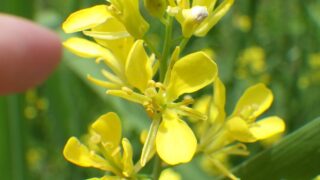
What are the differences between mustard greens, rapeseed, European rapeseed, and black mustard? How do their uses differ? Why did they evolve to be spicy? Brassica plants, essential for Japanese mustard and salad oil, have increased fruit production thanks to insect visits!

Brassica napus, rapeseed, European rapeseed, and black mustard are four species of yellow flowers that bloom in spring and belong to the Brassicaceae family. Their flower shapes are almost identical, and their habitats are also nearly the same. Furthermore, there are many closely related species, making identification extremely confusing. This complexity is such that even researchers sometimes misidentify them. Recent research has revealed...
Sponsored Link