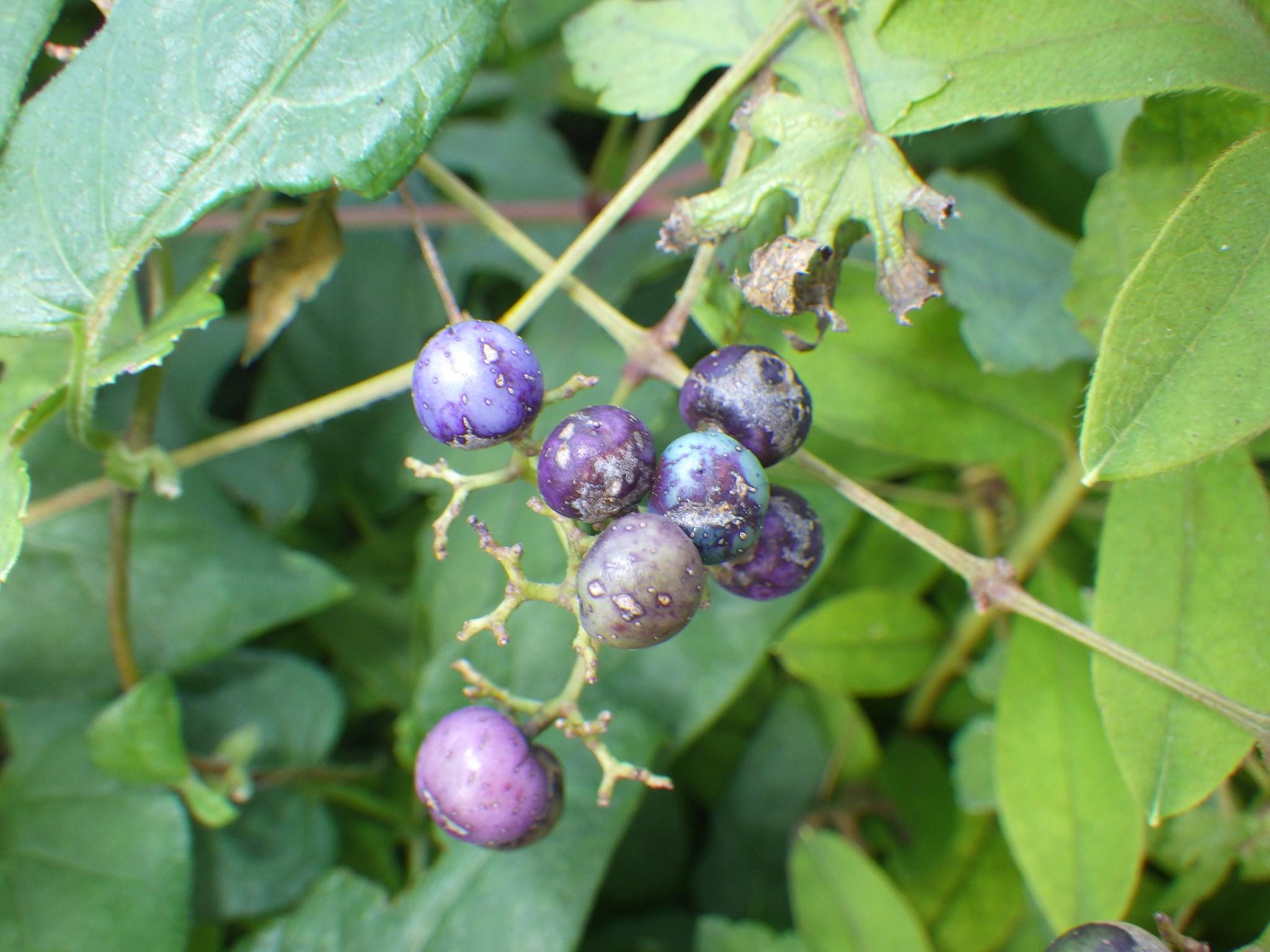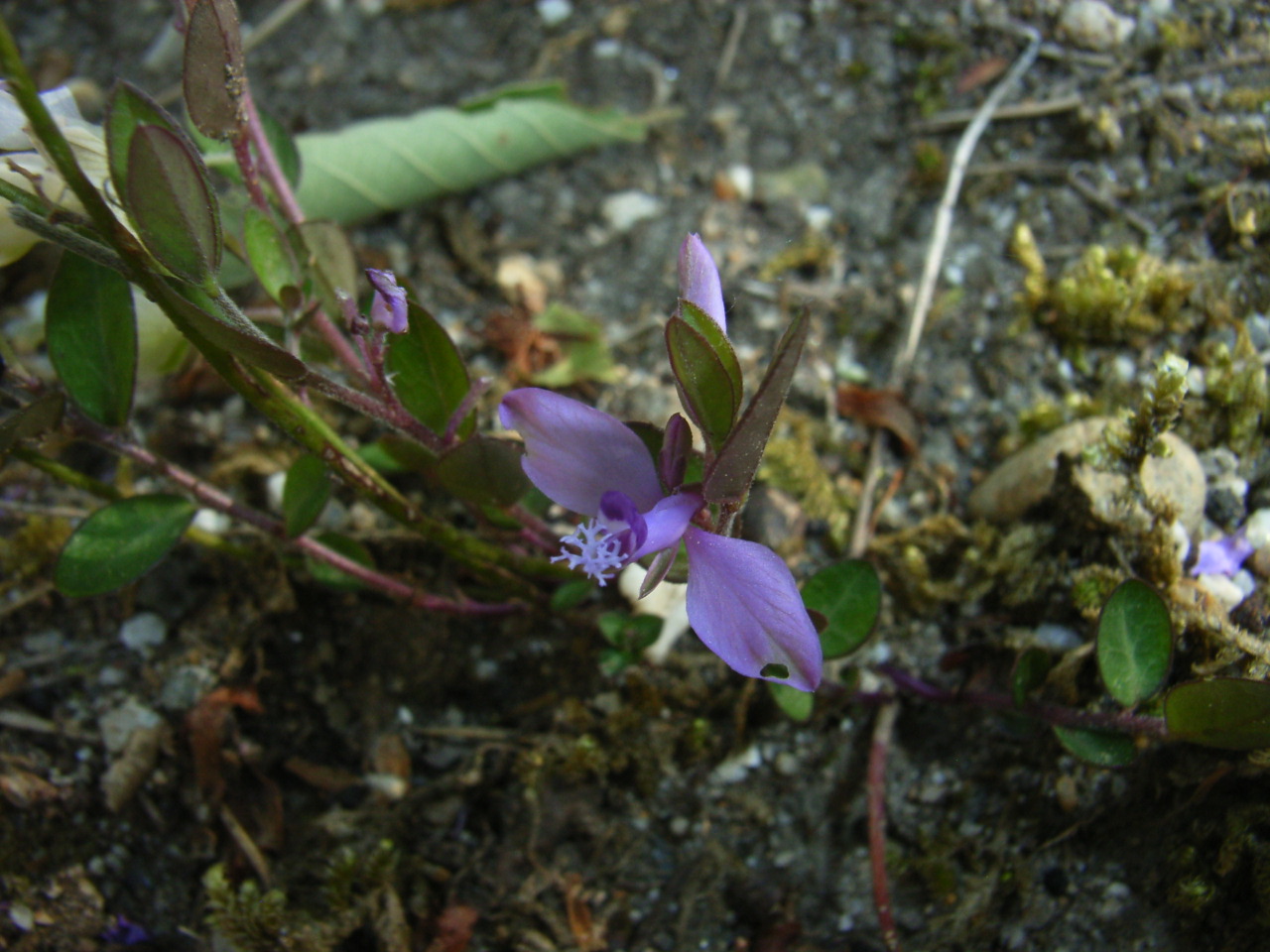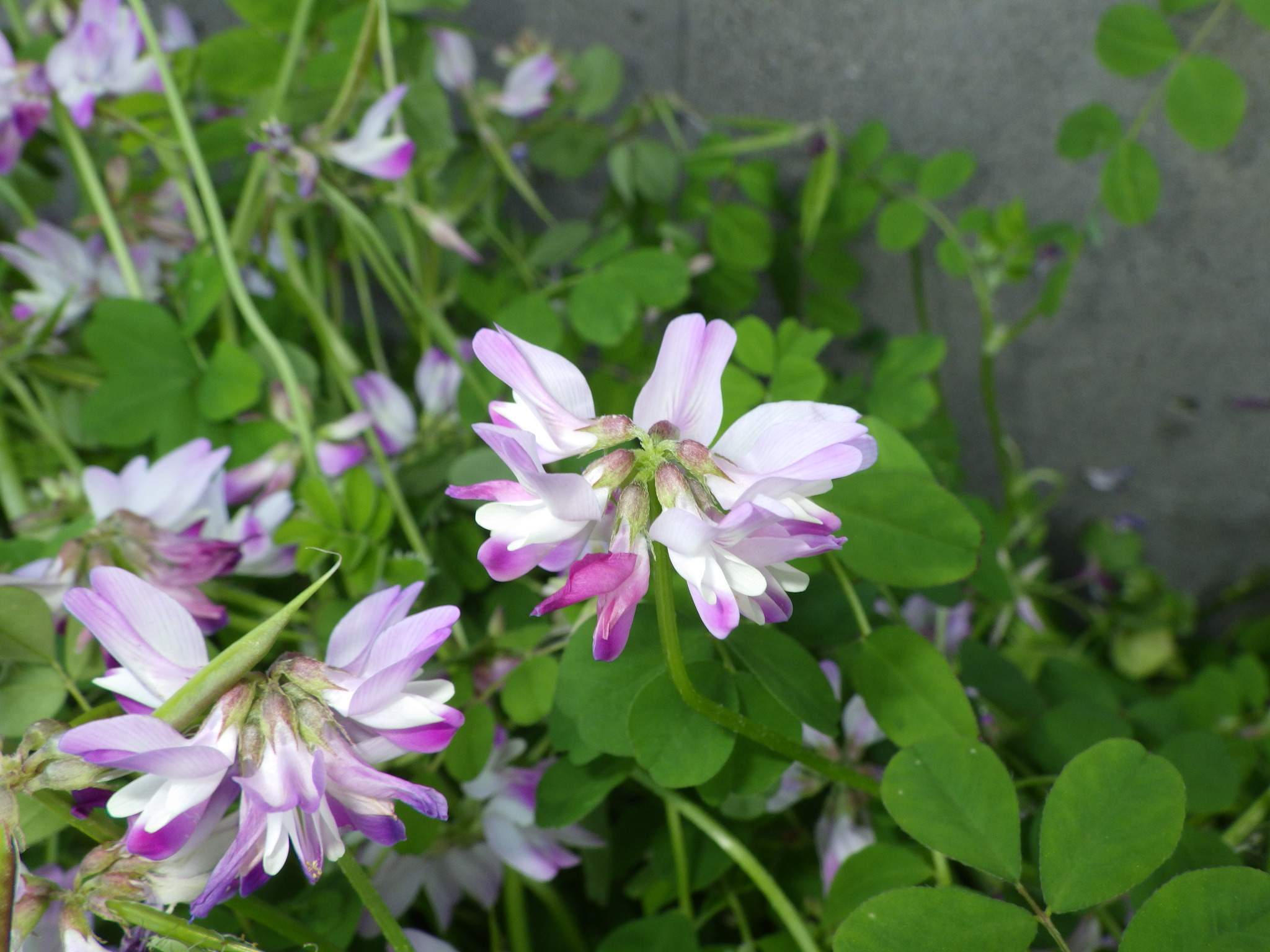
The Fabaceae family is a large family of vascular plants, second only to the Asteraceae and Orchidaceae families in terms of the number of species it contains. It includes many useful plants used for food and other purposes, and is deeply connected to human life. It includes herbs and woody plants that are annual to perennial, and climbing plants and those with tendrils are commonly seen. The leaves are alternate, and most species have pinnate, palmate, or trifoliate compound leaves. The base of the petiole and leaflet is slightly thickened and called the pulvinus, and it is the function of this part that causes the leaves of many species to perform nyctinastic movement, and some species close their leaves in response to touch. The Papilionoideae subfamily, which includes most species, has typical butterfly-shaped flowers, and the five petals are differentiated into two keel petals that enclose the stamens and pistil, two wing petals that support them from the sides, and a superior, usually large, standard petal. The stamens are usually 10 in number, and while some species have completely free stamens, many have diphyseal stamens (9 fused) or solitary stamens (all fused). The calyx is fused to form a calyx tube, and the tip is shallowly or deeply notched to form calyx teeth, sometimes dividing into two large upper and lower lips. The more primitive subfamilies Caesalpinioideae and Mimosoideae do not have butterfly-shaped flowers; the former have bilaterally symmetrical flowers with slightly differently shaped petals, free stamens, and a five-lobed calyx. In the latter, the flowers are radially symmetrical, and unlike other subfamilies, the petals do not overlap within the bud but are arranged with their edges touching. The fruit of all subfamilies consists of a pericarp derived from a single carpel, with sutures running top and bottom, and a seed enclosed within it, and is called a legume. Legumes usually split open when ripe, but some genera do not. Among legumes, those in which joints form in the pericarp between the seeds are called segmented fruits and do not split open. Seeds store nutrients in two cotyledons and most lack endosperm. Rhizobia bacteria live symbiotically in the roots, allowing them to utilize nitrogen from the air, and thus they can grow even in nutrient-poor barren land. In addition to seeds and fruits being edible, many useful plants are used as livestock feed, medicine, horticulture, and for erosion control. Approximately 750 genera and 19,500 species are known worldwide, mainly in tropical to temperate regions, with 59 genera and 153 species native to Japan, and many other naturalized species.
This article provides a comprehensive, illustrated guide to legumes.
The photos are replaced as soon as better ones are taken. Also, while the identification is done by the author, please note that if there are any misidentifications, they may be changed without notice.
- No. 1456 Leucaena leucocephala
- No. 1458 Silver Wattle (Acacia baileyana)
- No.1459.a Acacia dealbata
- No.1459.b Acacia mearnsii
- No. 1460 Albizia julibrissin
- No. 1462 Cercis chinensis (Japanese Redbud)
- No.1462.a Brownea grandiceps
- No. 1463 Chamaecrista nomame
- No. 1464 Senna occidentalis
- No.1465 Senna obtusifolia
- No. 1465.a Senna pendula
- No. 1465.b Senna alata
- No. 1466 Caesalpinia decapetala var. japonica
- No. 1472 Entada phaseoloides
- No.1473.a Psophocarpus tetragonolobus (winged bean)
- No. 1475 Clara (Sophora flavescens)
- No. 1485 Purple-striped catfish (Baptisia australis)
- No. 1488 Crotalaria sessiliflora (Butterfly Bean)
- No.1488.a Crotalaria juncea (Japanese name for a type of bean)
- No.1490.a Lupinus polyphyllus
- No.1490.b Lupinus texensis (Lupinus texensis)
- No. 1492 Cytisus scoparius (Broom)
- No.1492.a Cytisus x spachianus (Dwarf Broom)
- No. 1492.b Amorpha fruticosa
- No. 1495 White Clover (Trifolium repens)
- No. 1496 Trifolium pratense (Purple Clover)
- No.1498.a Trifolium dubium
- No.1498.b Trifolium campestre
- No. 1502 Medicago sativa
- No.1503 Lotus corniculatus subsp. japonicus
- No. 1504 Lotus corniculatus subsp. corniculatus
- No. 1505 Indigofera pseudotinctoria
- No. 1510 Fuji (Wisteria floribunda)
- No. 1510.1 White Wisteria (Wisteria floribunda f. alba)
- No. 1512 Summer Wisteria (Wisteria japonica)
- No.1520 Astragalus sinicus
- No. 1523 Rebunsou (Oxytropis megalantha)
- No. 1526 Black Locust (Robinia pseudoacacia)
- No.1526.1 Thornless Black Locust (Robinia pseudoacacia f. inermis)
- No. 1530 Hylodesmum podocarpum subsp. podocarpum
- No. 1531 Hylodesmum podocarpum subsp. oxyphyllum var. japonicum
- No.1532 Hylodesmum podocarpum subsp. oxyphyllum var. mandshuricum
- No. 1537 Hylodesmum oldhamii
- No.1539.a Desmodium paniculatum
- No.1543 Lespedeza thunbergii subsp. thunbergii f. thunbergii
- No.1544.1 Lespedeza thunbergii subsp. thunbergii 'Nipponica'‘
- No.1547 Yamahagi Lespedeza bicolor
- No. 1548 Lespedeza cyrtobotrya
- No.1549 Yellowtail Lespedeza buergeri
- No.1551 Lespedeza pilosa
- No.1553 Lespedeza cuneata var. cuneata
- No.1553.1 Lespedeza cuneata var. serpens
- No. 1554 Kummerowia striata
- No. 1559 Vicia hirsuta (Japanese vetch)
- No. 1560 Vicia tetrasperma
- No. 1561 Vicia sativa subsp. nigra (Japanese pea)
- No.1569.a Nayokusafuji Vicia villosa subsp. varia
- No.1569.b Vicia villosa subsp. eriocarpa
- No. 1571 Vicia unijuga
- No. 1576 Broad Bean (Vicia faba)
- No. 1581 Mud pea (Lathyrus odoratus)
- No. 1582 Beach Pea (Lathyrus japonicus)
- No. 1584 White Pea (Pisum sativum var. macrocarpon)
- No. 1585 Red Pea (Pisum sativum var. arvense)
- No.1585.a Lens culinaris (flat bean)
- No. 1586 Glycine max subsp. soja (Soybean)
- No. 1587 Soybean (Edamame) Glycine max subsp. max
- No. 1594 Green bean (Phaseolus vulgaris var. vulgaris)
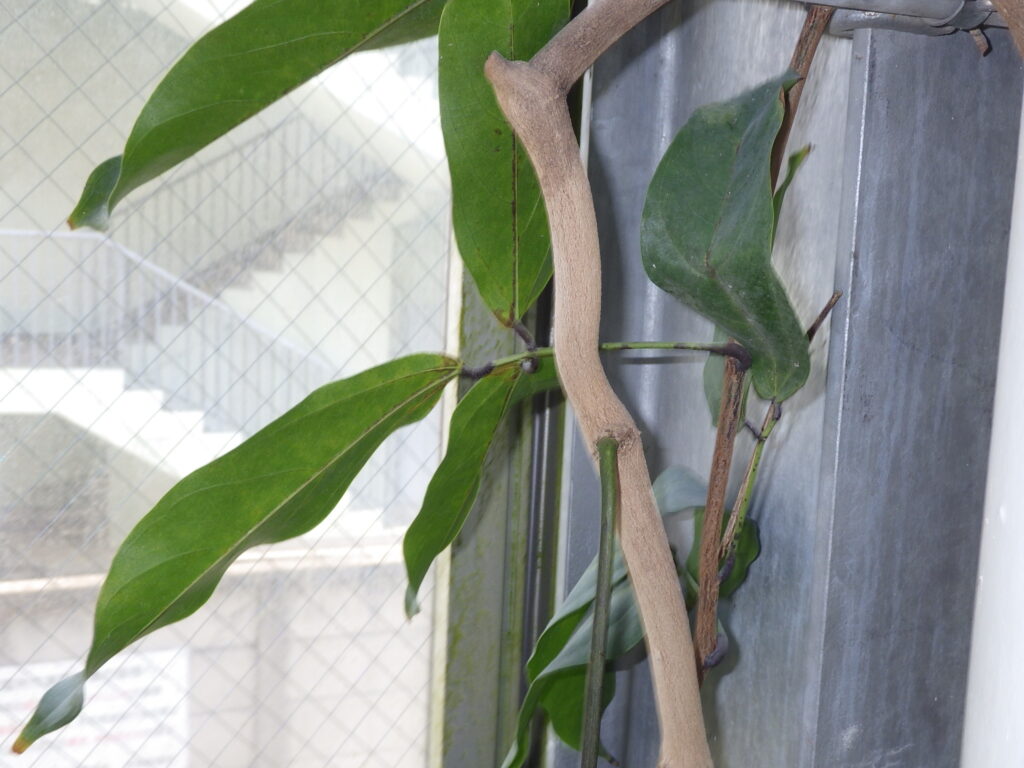
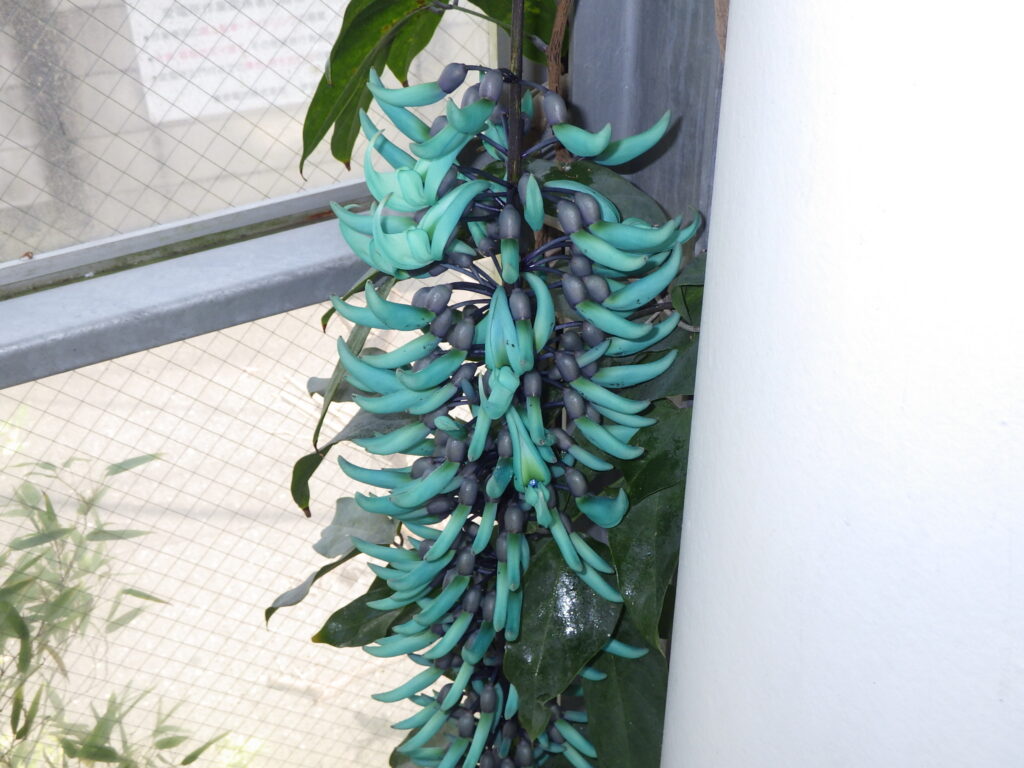
- No.1596.a Jade Vine (Strongylodon macrobotrys)
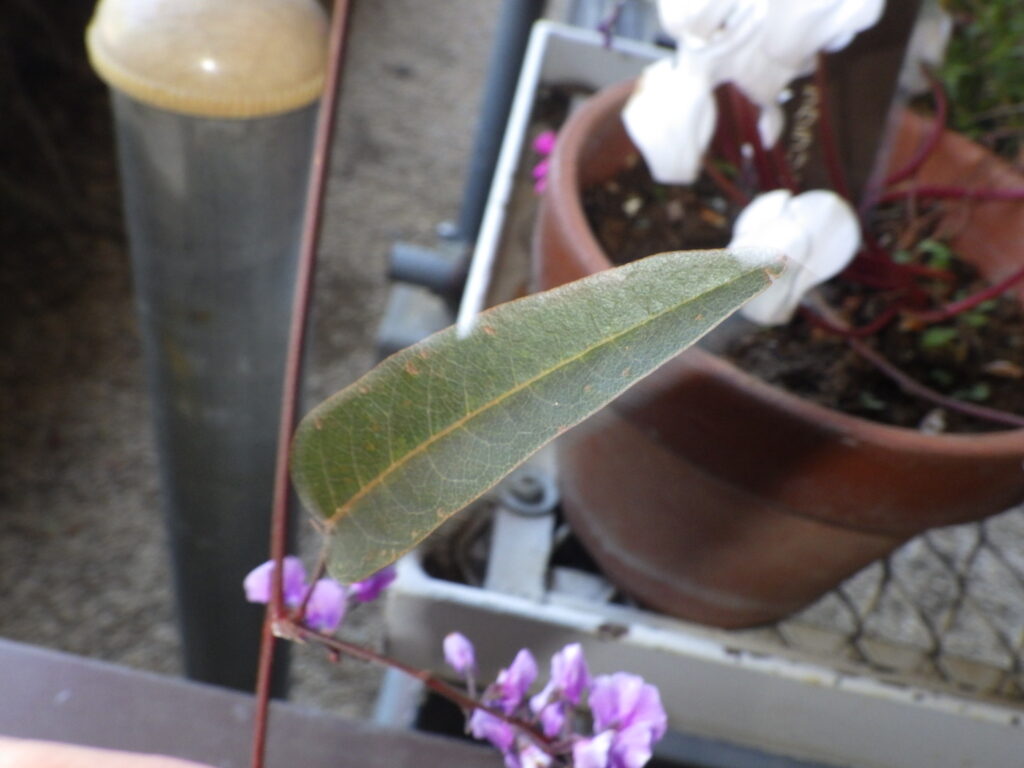
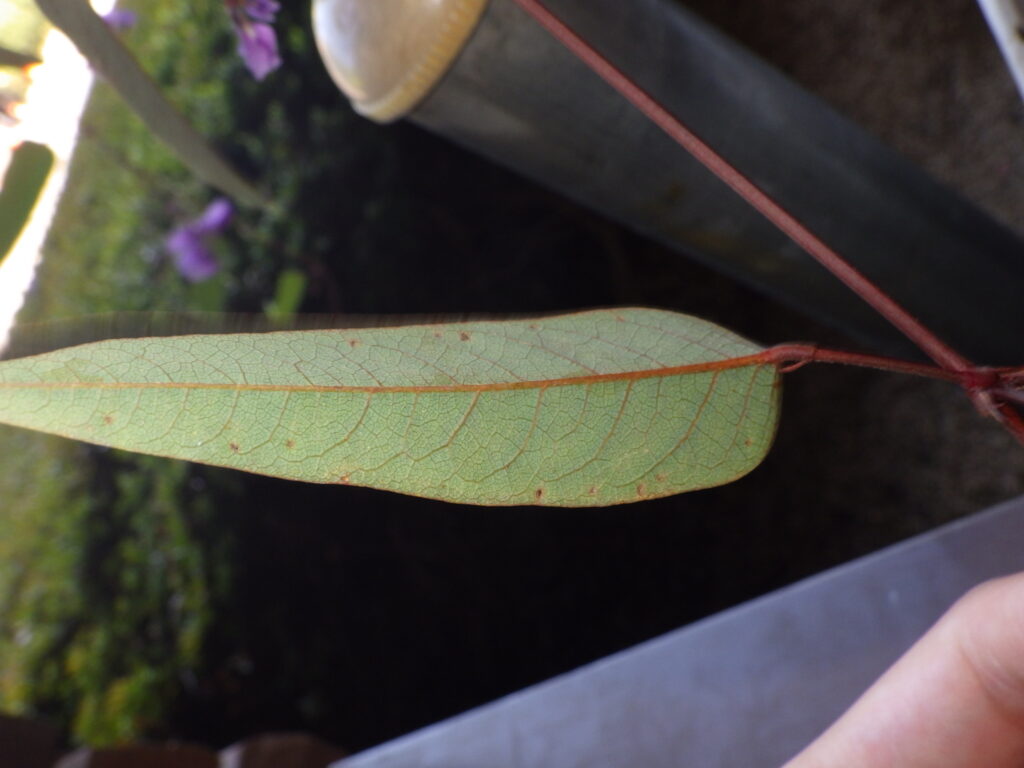
- No.1596.b *Hardenbergia violacea*
- No.1606 Rhynchosia acuminatifolia
- No.1609 Nosasage Dumasia truncata
- No.1610 Amphicarpaea edgeworthii var. japonica
- No.1610.1 Ampnicarpaea edgeworthii var. trisperma
- No. 1611 Scum Pueraria lobata subsp. lobata
- No.1612 Mucuna sempervirens
- No.1615 Deigo Erythrina variegata
- No. 1616 Erythrina crista-galli
- No.1616.a Coral Sugar (Erythrina x bidwillii)
- No. 1616.b Butea monosperma
- References
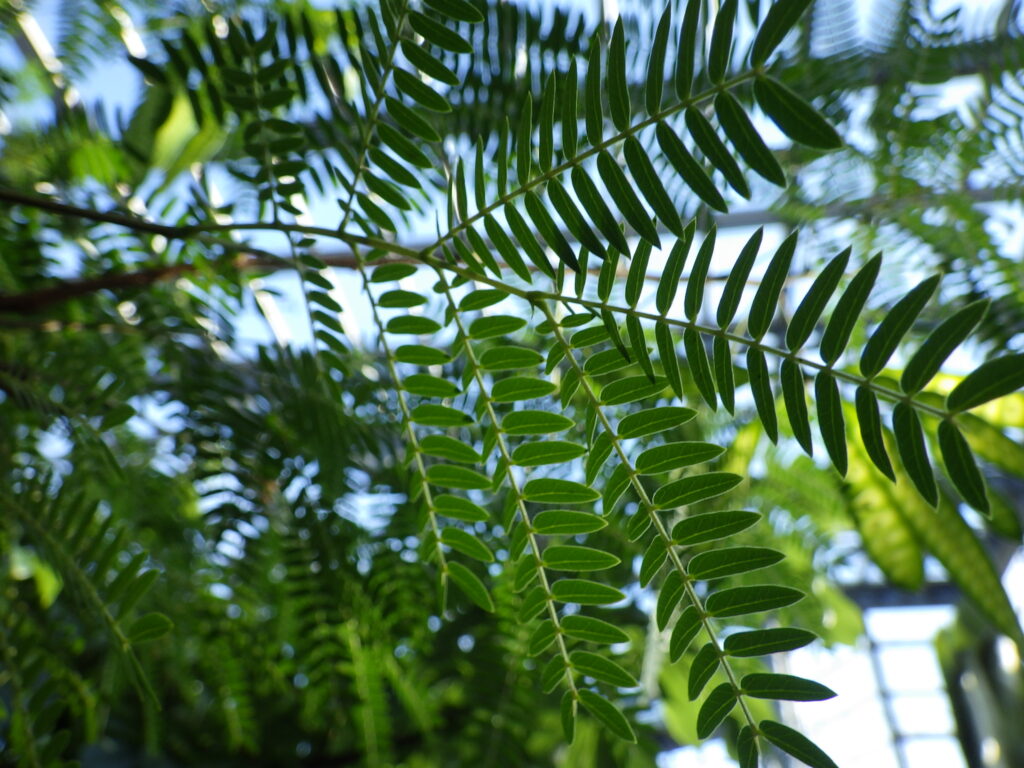
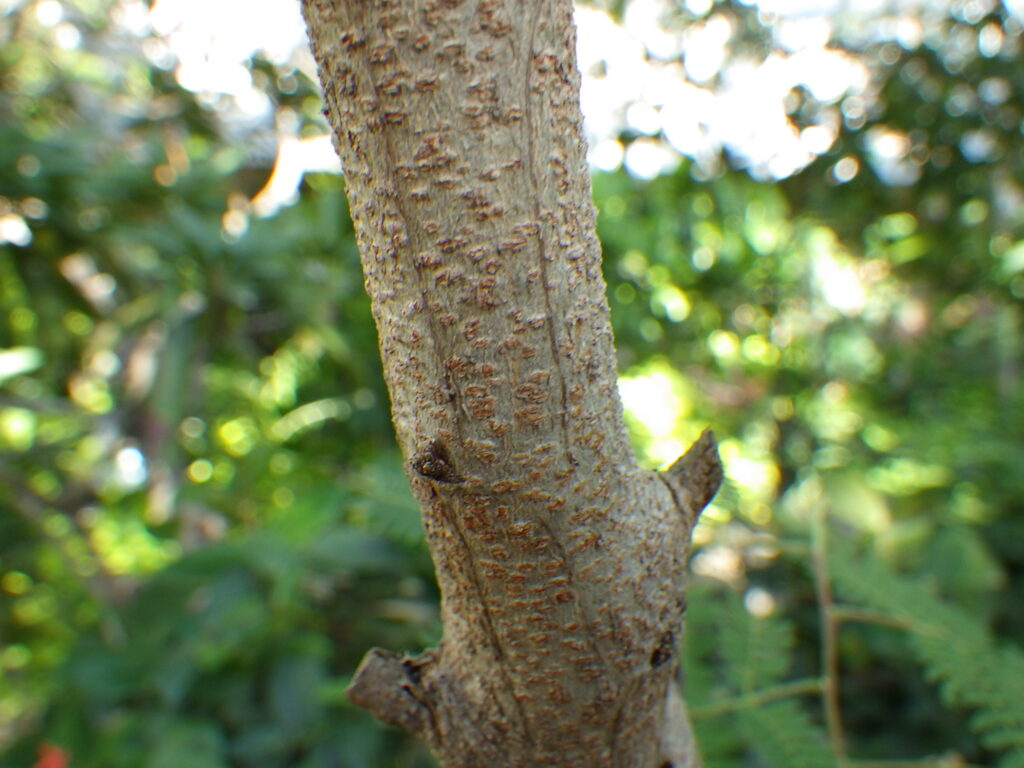
No. 1456 Leucaena leucocephala
Also known as Leucaena leucocephala. Evergreen shrub to small tree (tree-borne flowers, polypetalous). Reaches a height of 4-6m. Leaves are alternate, bipinnately compound with 6-8 pairs of leaflets, 6-10cm long. Leaflets are 14-16 pairs, 8-13mm long and 2-3mm wide, glabrous on both sides. Small white flowers bloom in spherical clusters at the tips of branches throughout the year. Fruit is a flattened legume 10-17cm long and 1.5-2cm wide, containing 10-25 oval seeds. Native to Mexico and Central America, it has naturalized throughout tropical regions, growing in dry roadsides, parking lots, and abandoned land. In Japan, it was introduced to the Ogasawara Islands in 1862 and to the Sakishima Islands after 1910 for purposes such as greening, green manure, and erosion control, and has since become naturalized. It is used as fodder, green manure and biomass production, for its young pods to eat, and as pulp for papermaking, but it is also included in the world's top 100 invasive alien species and is a priority alien species on Japan's list of alien species that cause ecosystem damage. It exhibits allelopathy, and its leaves contain plant-toxic allelochemicals such as mimosine, p-hydroxycinnamic acid, protocatechuic acid, and gallic acid, which repel other plants (Chou & Kuo, 1986). Extrafloral nectaries, such as those shown on the petioles, play a role in keeping ants constantly foraging on the plant's leaves (Damascena et al., 2017). This ant visitation is thought to promote flower and fruit production and reduce pest damage. A Brazilian study identified *Tetragonisca angustula*, a species of stingless wasp, as the sole pollinator, while *Trigona spinipes*, another stingless wasp, is too small to touch the stamens and pistils and damages buds to obtain fibers for nest building, thus not contributing to pollination and negatively impacting reproduction (Damascena et al., 2017). However, given its wide global distribution, it is likely that there are many more species of pollinating insects.
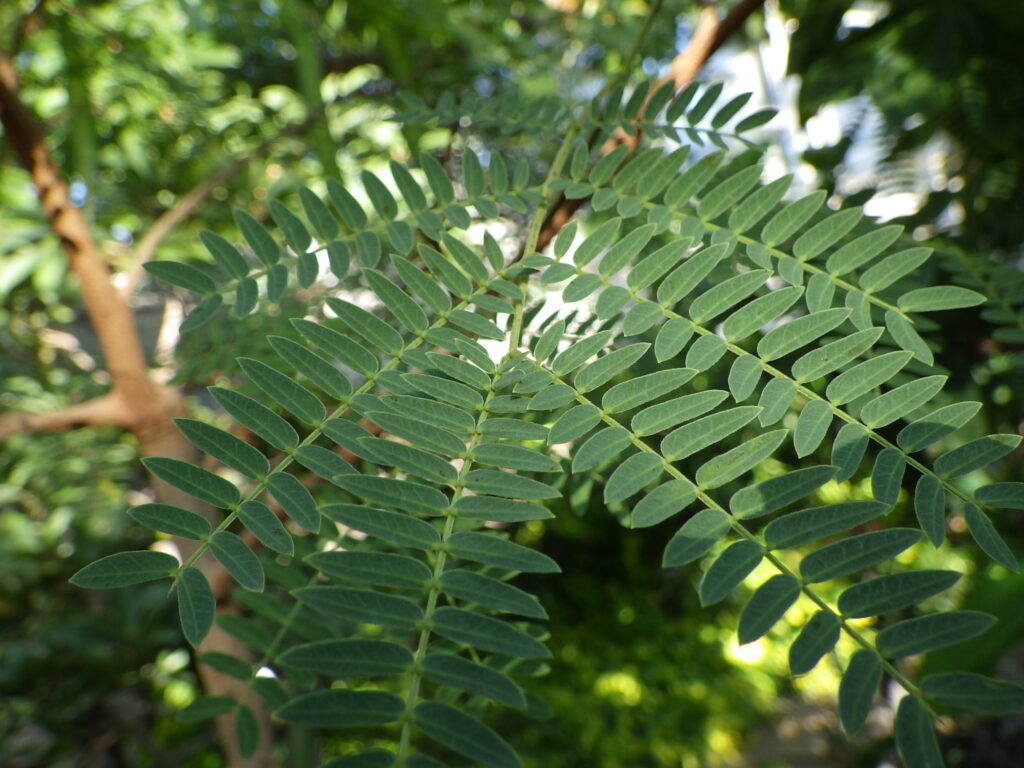
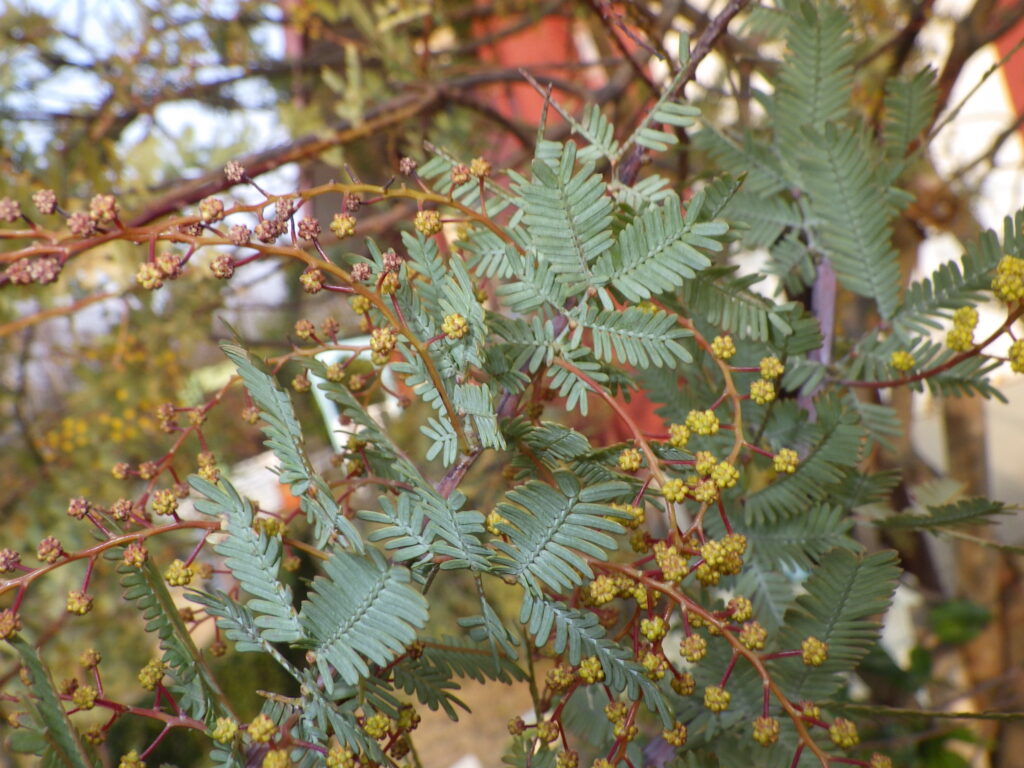
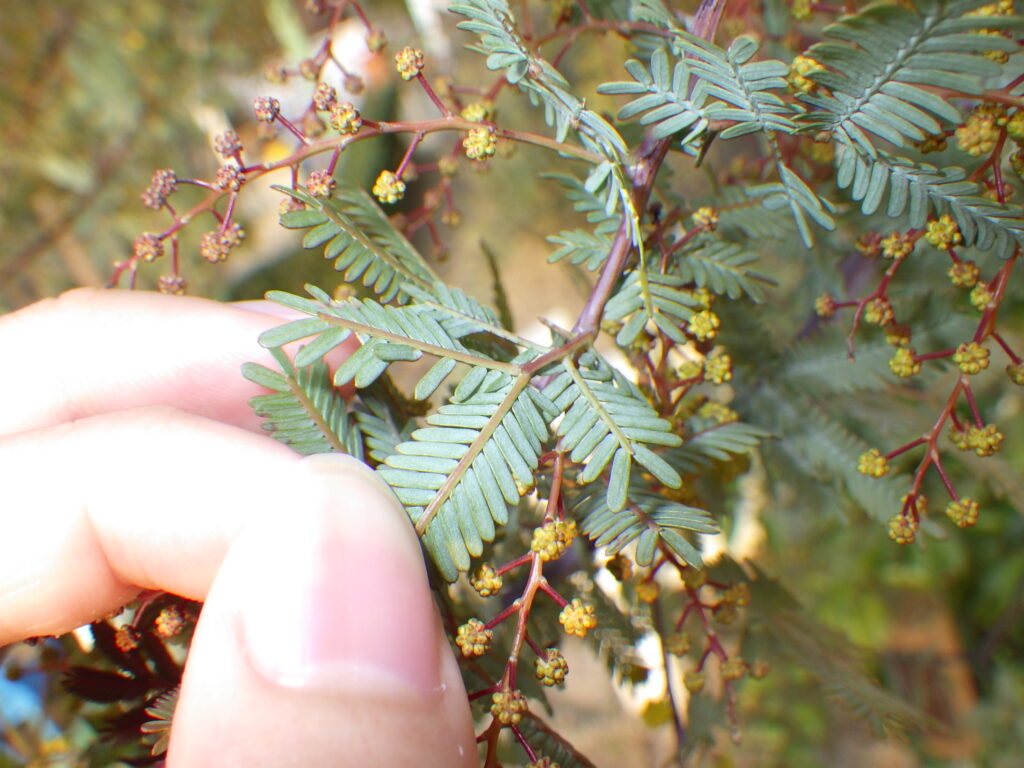
No. 1458 Silver Wattle (Acacia baileyana)
Also known as mimosa (Hayashi, 2014). A small tree, 4-8m tall. It has bipinnately compound leaves 4-8cm long, with 2-5 pairs of leaflets. The leaflets are 8-25 pairs, 4-6mm long. The small bipinnately compound leaves grow spirally on the branches, making the whole tree appear bluish-white and easy to identify. It flowers from June to September in Australia (Entwisle et al., 1996). The inflorescence is a raceme, with a spherical head, 20-25 whorls, bright yellow, and pedicels 4-7mm long. The pods are straight or slightly curved and flattened, 4-11cm long and 8-14mm wide, irregularly indented, brown to black, sometimes waxy or whitish. There is a cultivated variety 'Purpurea' with purplish young leaves. Native to Australia. It is sometimes used as a garden or park tree in warm climates.
No.1459.a Acacia dealbata
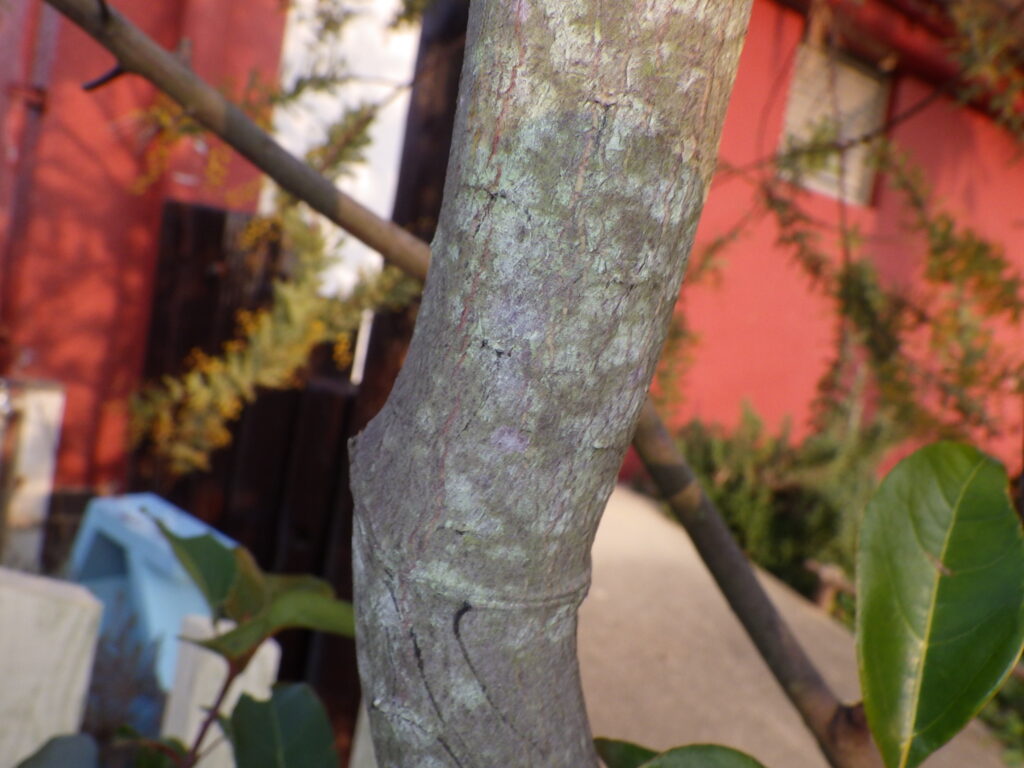
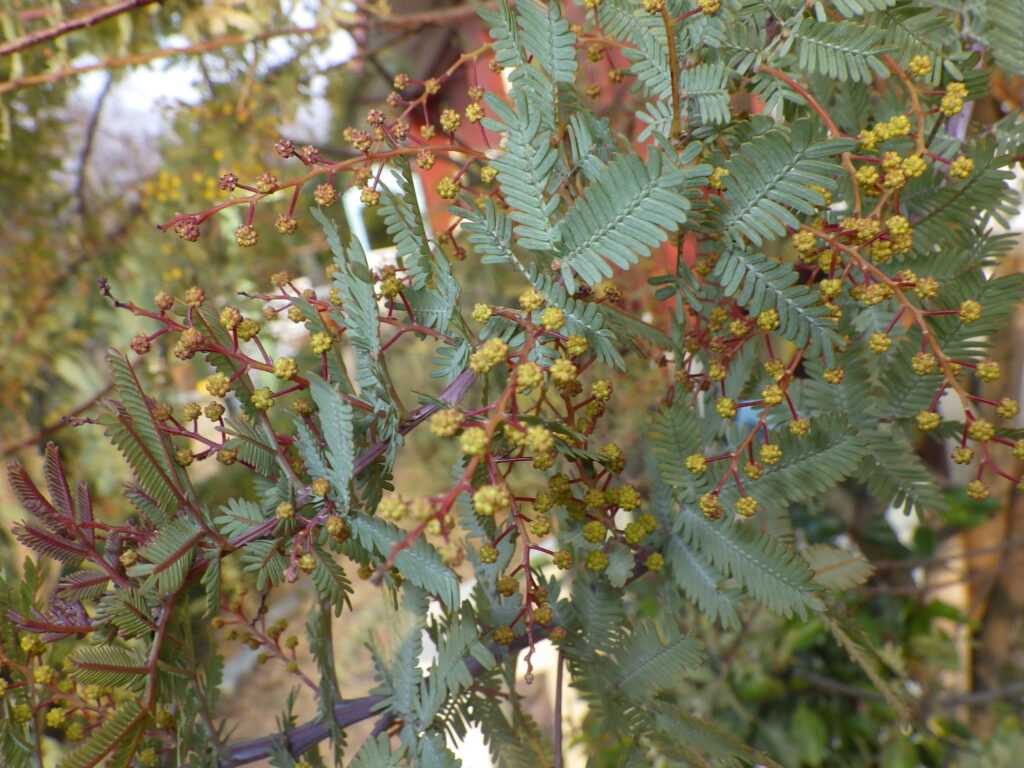
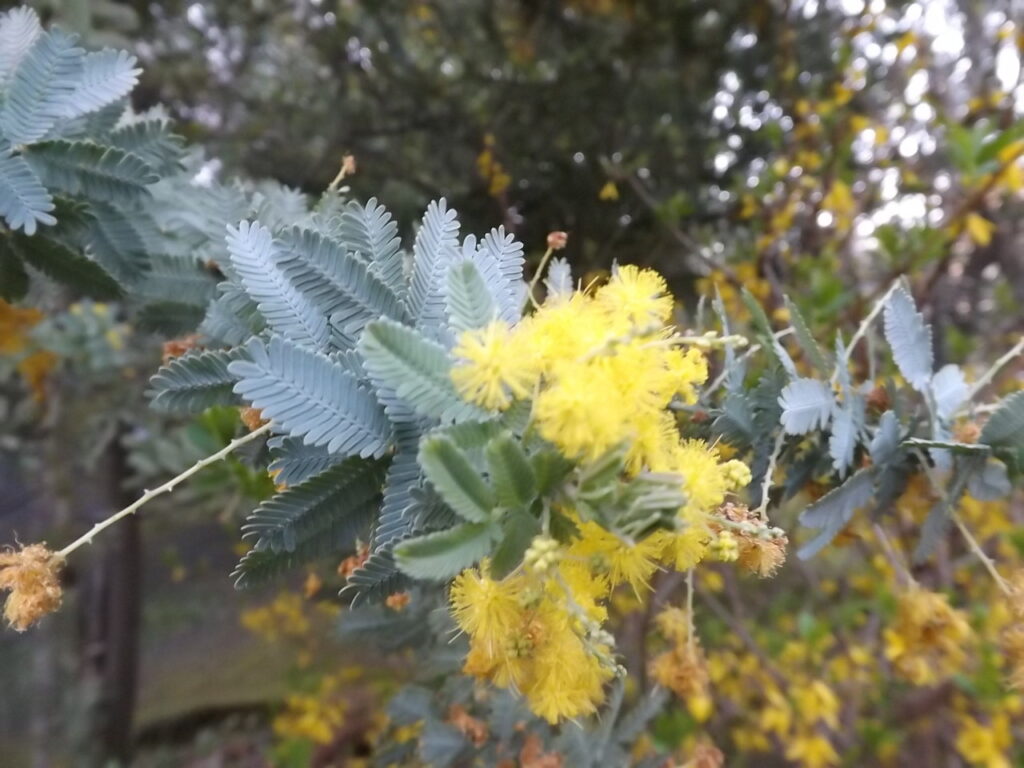
Also known as Mimosa or Wattoruju (Hayashi, 2014). A tall tree, 7–15m tall. Bipinnately compound leaves 7–16cm long. The leaflets consist of 8–22 pairs of pinnae and 30–45 pairs of leaflets, 4–6m long. The leaf shape is similar to that of Albizia julibrissin, but the leaves are much smaller. The leaves have fine soft hairs on both sides, and the young leaves and branches are whiter, making the whole tree appear pale. The inflorescence is spherical with 25–35 flowers, bright yellow, and the pedicels are about 5mm long (Entwisle et al., 1996). The pods are erect or slightly curved and flattened, 5–9cm long and 8–12mm wide, slightly indented, pale brownish-purple, often whitish. Native to Australia. In Japan, it is somewhat rare in warm regions, used as a garden tree, park tree, street tree, and erosion control tree.
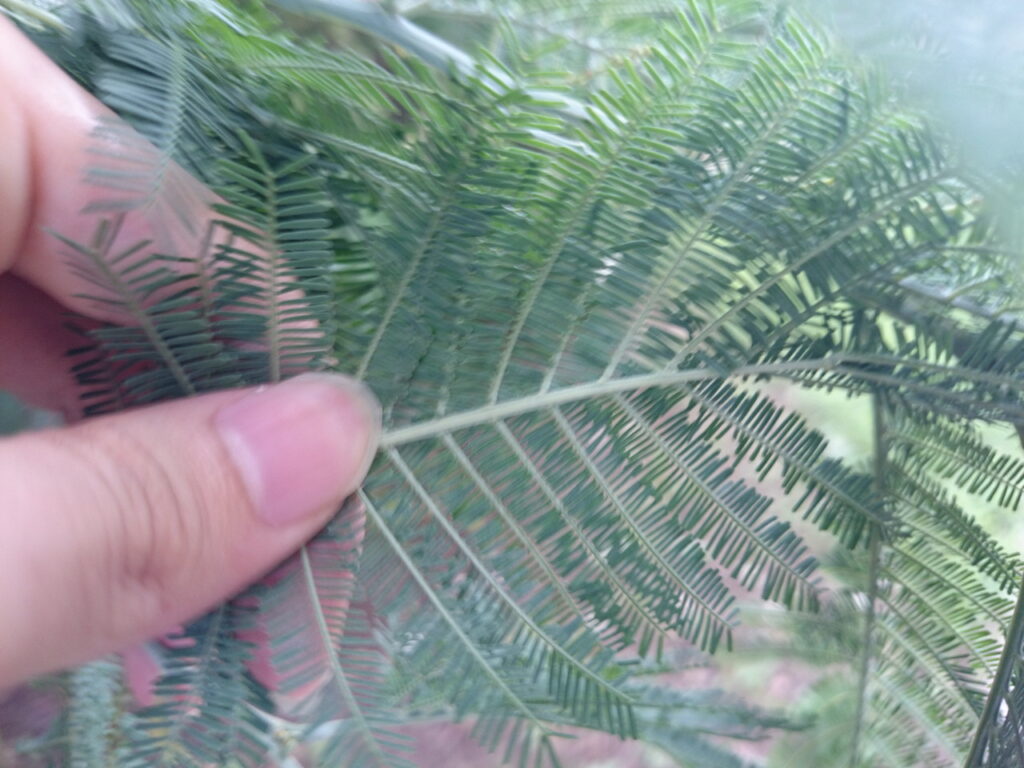
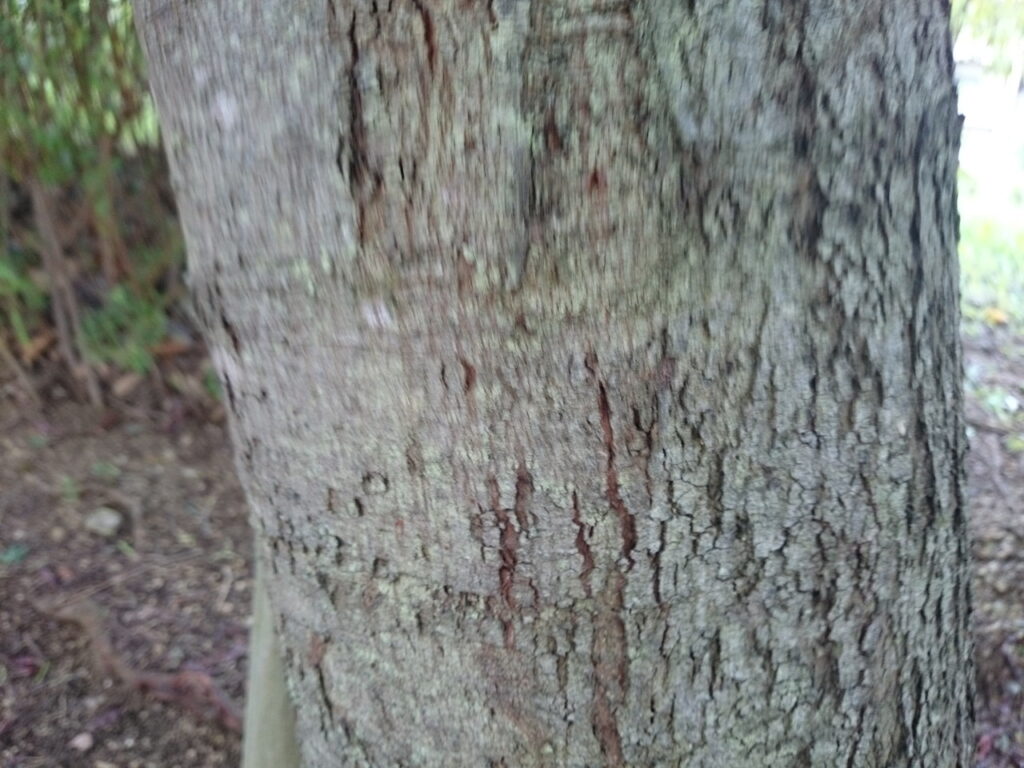
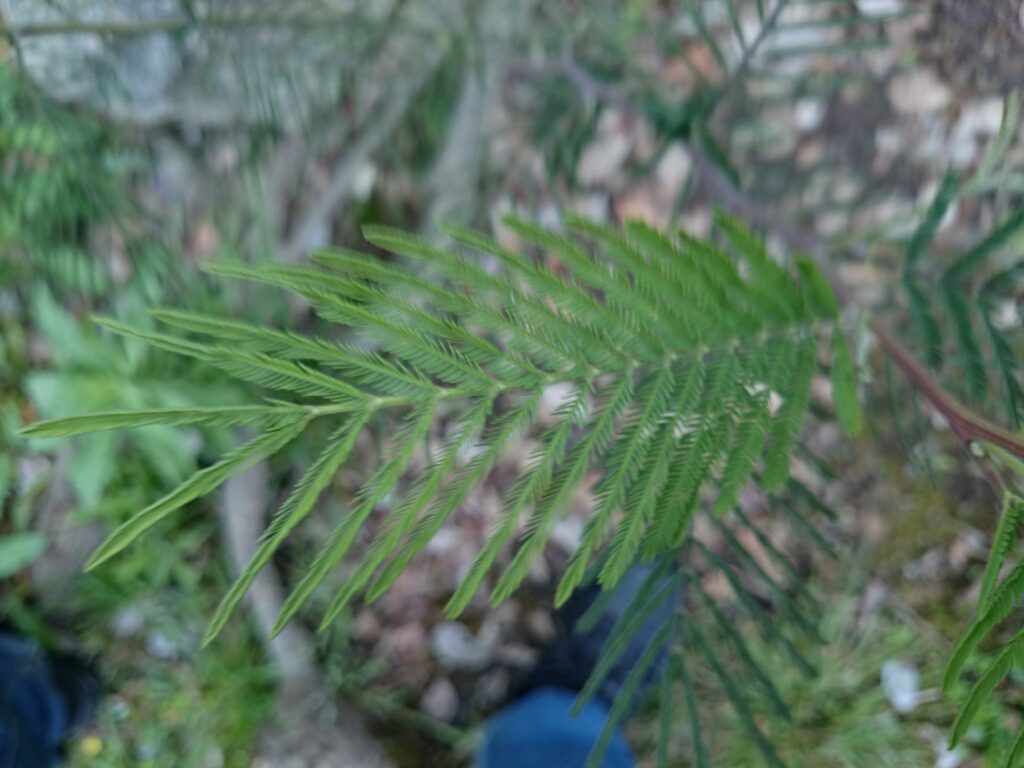
No.1459.b Acacia mearnsii
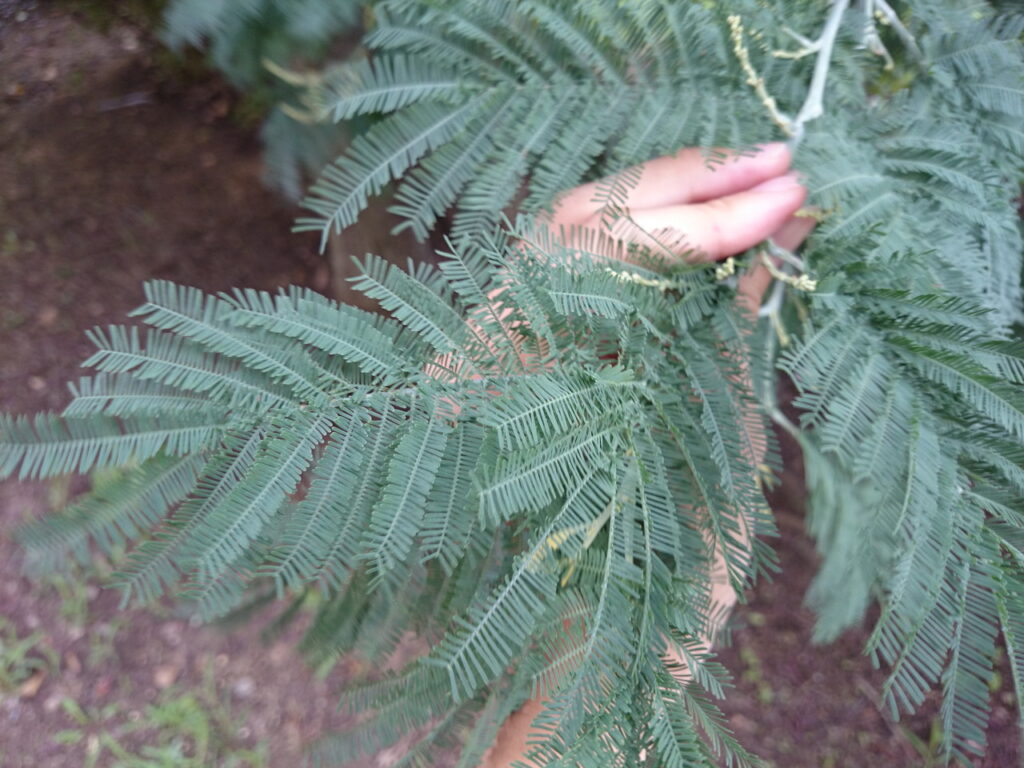
Takagi (Hayashi, 2014). Bipinnately compound leaves 7–16 cm long. 10–20 pairs of leaflets. 30–60 pairs of leaflets per leaflet, 2–3 mm long. Compared to Acacia dealbata, the leaves are darker green with no bluish tint, and the leaflets are smaller and more numerous. The bark of both species is smooth with longitudinal stripes. Flowering period in Australia is September–November (Entwisle et al., 1996). Inflorescence is a raceme or panicle. The head is spherical, bearing 20–30 flowers, pale yellow, with pedicels up to 8 mm long. The pod is almost straight, 5–10 cm long and 5–8 mm wide, with seeds strongly constricted between the seeds, dark brown to black. Native to Australia. Grows in open forests, heathlands, and cleared land, especially in dry, shallow soil. In Japan, it is rare to find it as a garden tree, park tree, or erosion control tree in warmer regions.
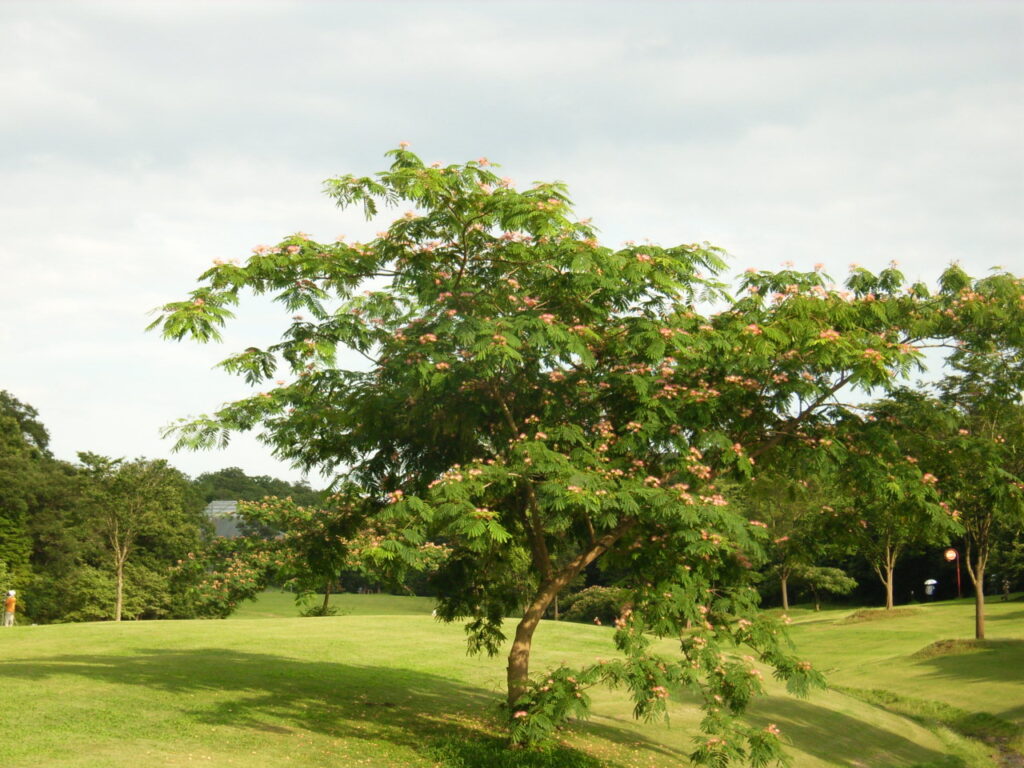
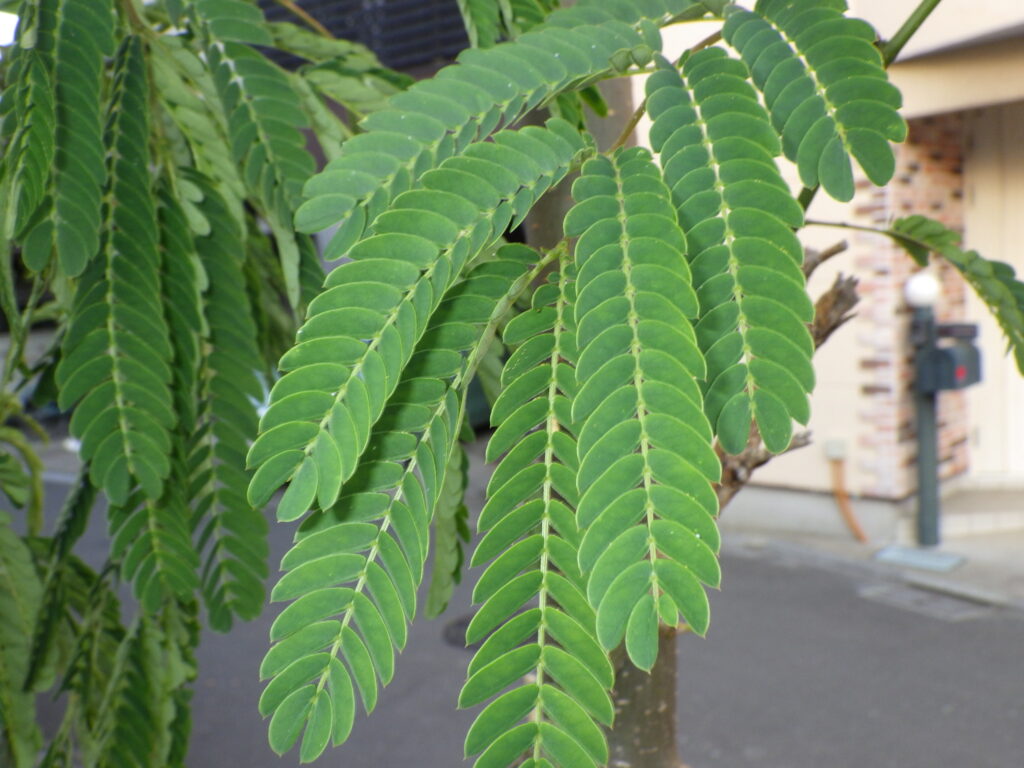
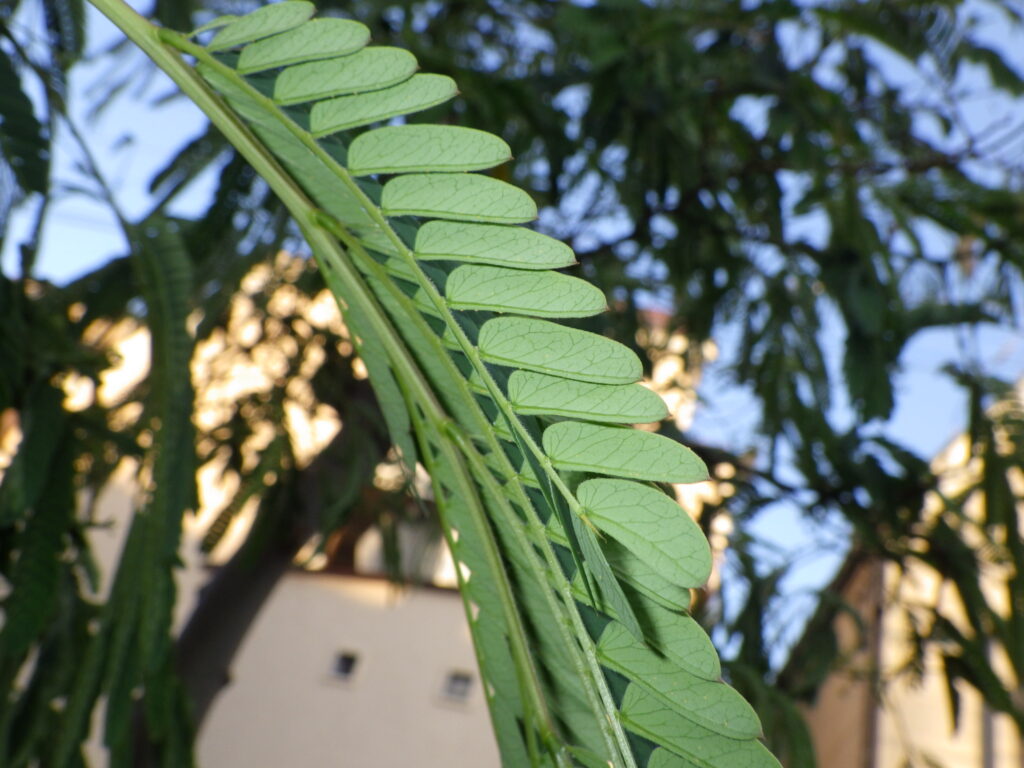
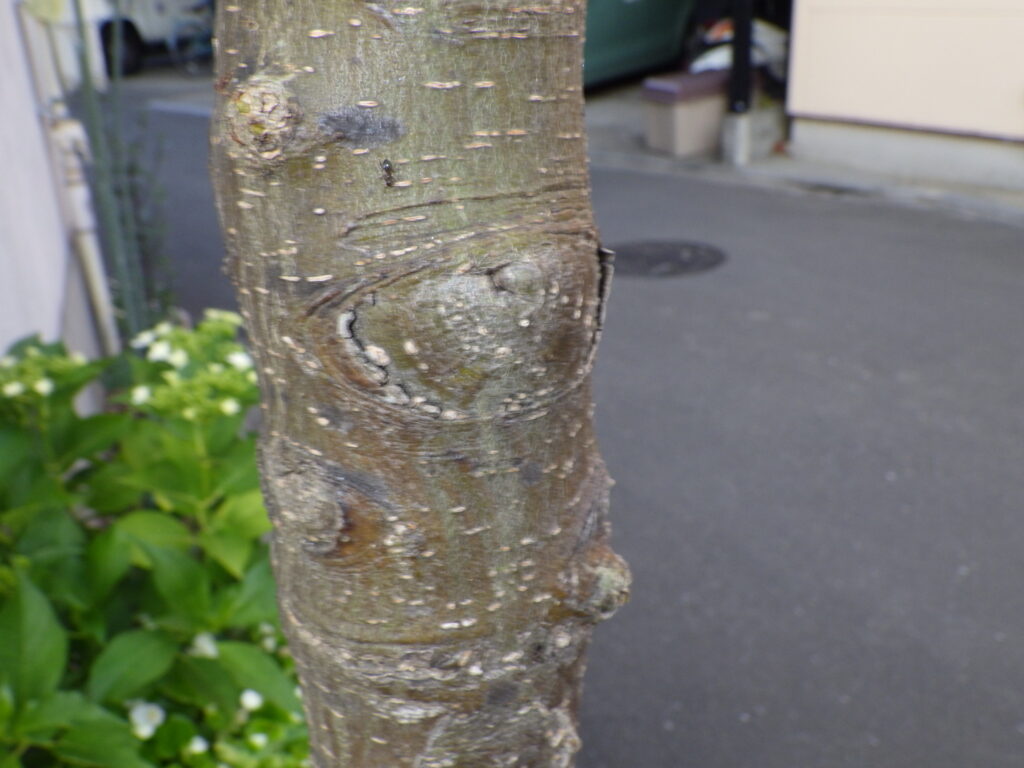
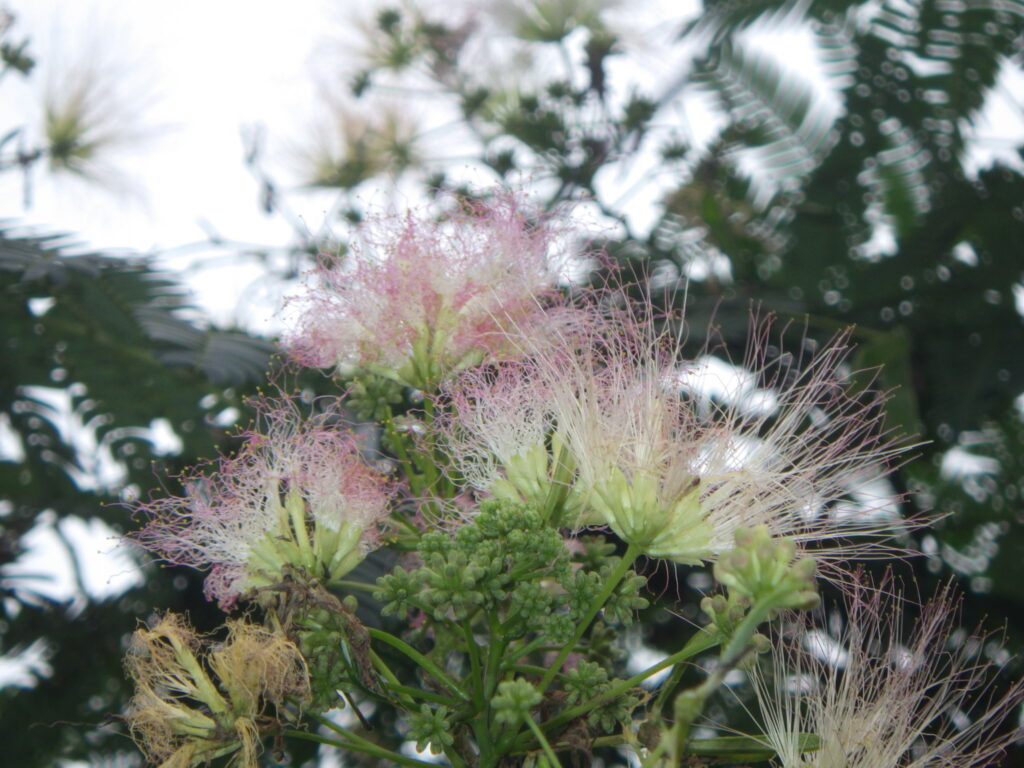
No. 1460 Albizia julibrissin
This is a deciduous tree. Its leaves are large, even-numbered, bipinnately compound, with knife-shaped leaflets that exhibit prominent nyctinastic movements. It produces numerous capitulum inflorescences at the tips of its branches in June and July. The flowers are dimorphic. The flowers at the top of each inflorescence, numbering 1-2, are sessile or short-stalked, with a tubular corolla that is long, 10-12 mm, and stamens fused to the middle. The flowers other than those at the top are sessile, with a short corolla of 5-7 mm. The filaments that protrude long from the corolla are 3-4 cm long, stained red, and beautiful. The legumes are flattened and hairless, reaching about 10 cm in length. It is widely distributed throughout Honshu, Shikoku, Kyushu, and South Asia. It grows in bright forests, forest edges, and embankments in hilly and mountainous areas.
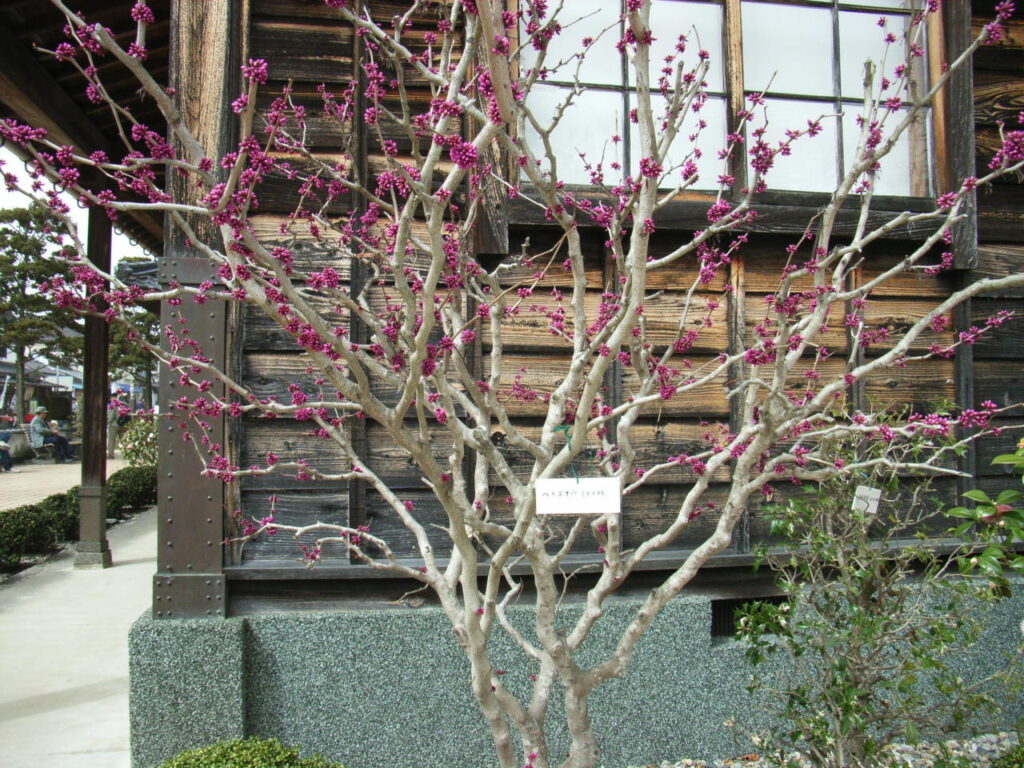
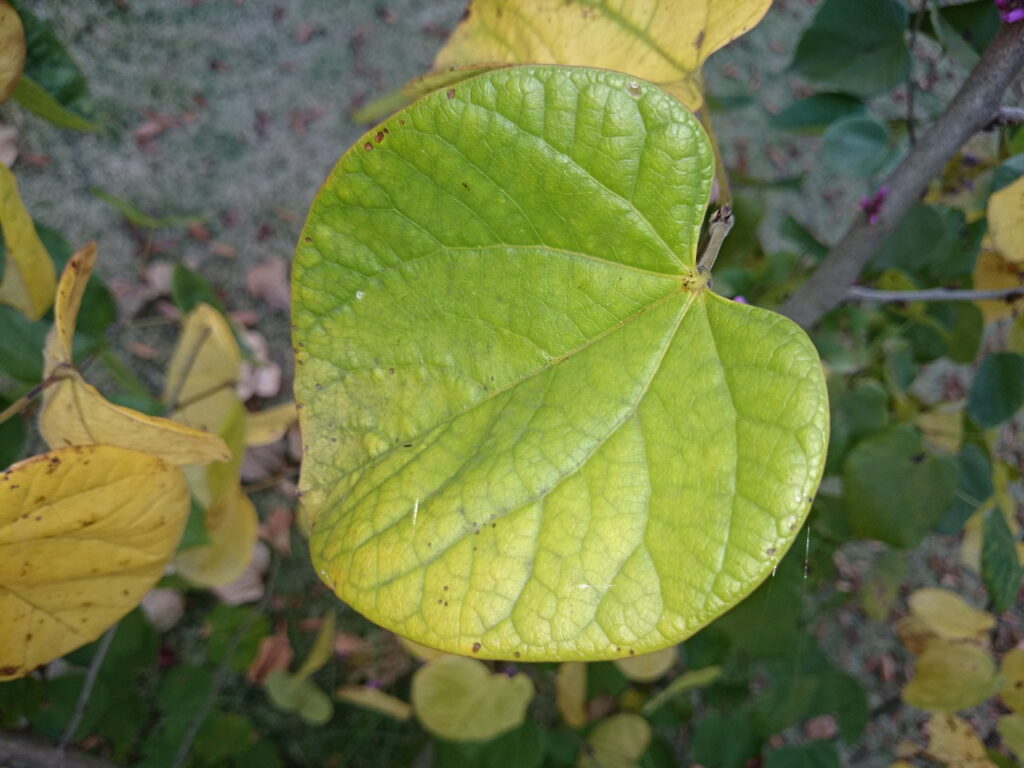
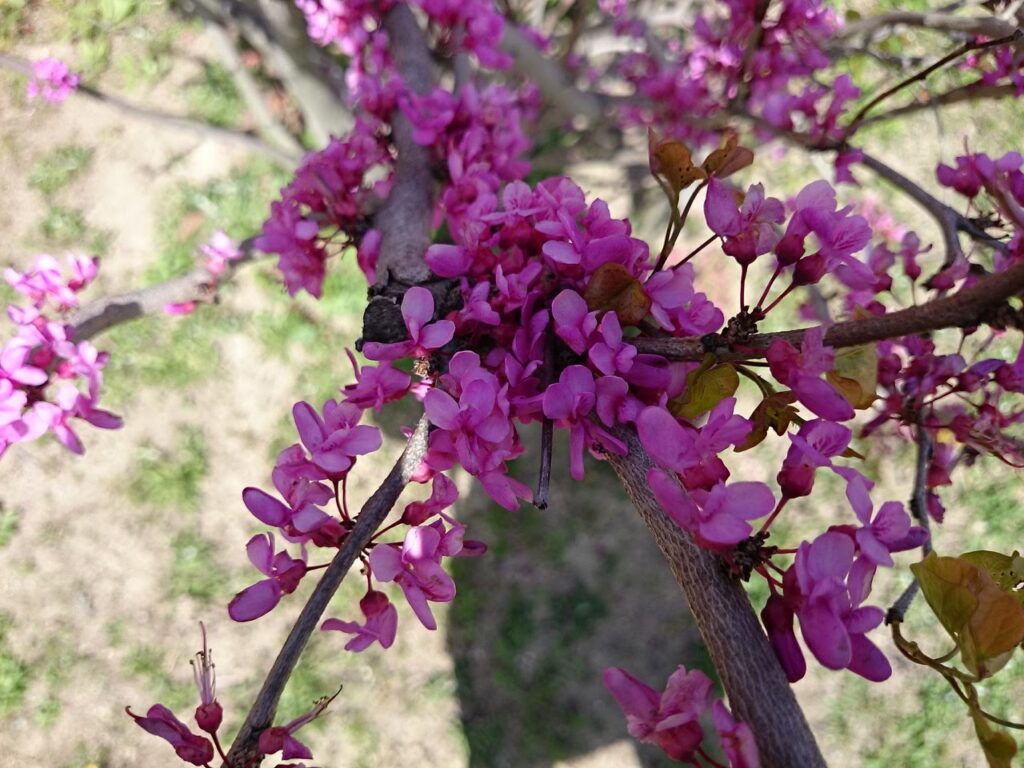
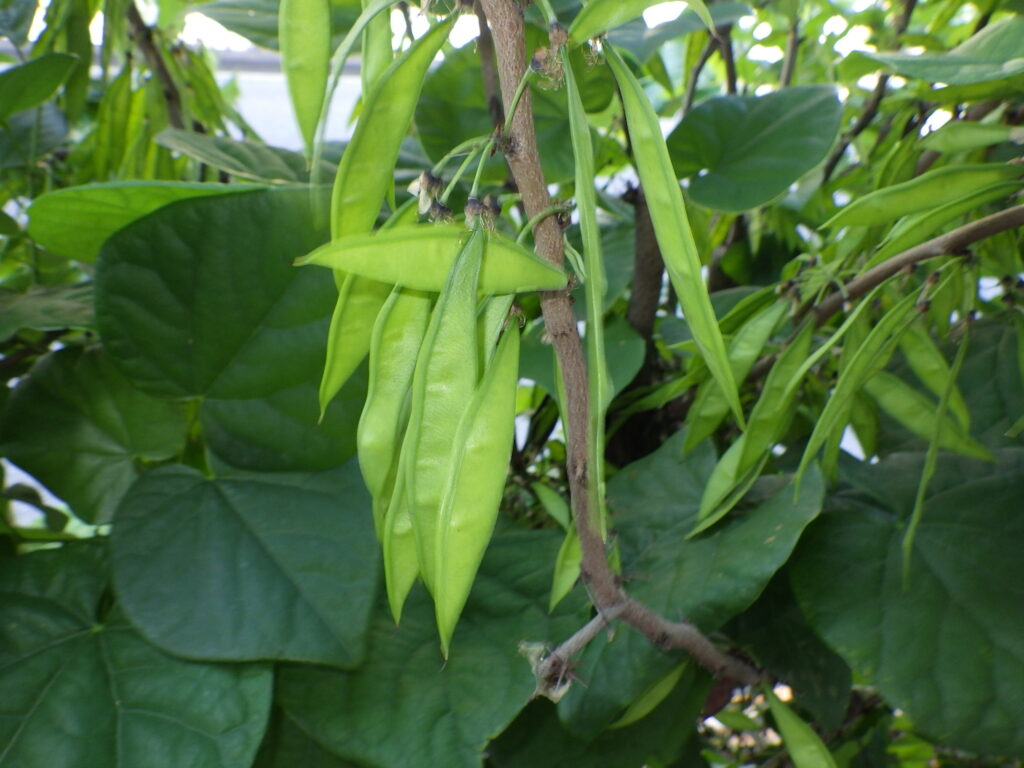
No. 1462 Cercis chinensis (Japanese Redbud)
Deciduous shrub (flowers that bloom on trees). Grows to a height of 2-4m. Leaves are alternate. Simple leaves with long petioles. Leaf blades are broadly oval or rounded, 5-10cm long and 4-10cm wide. Pointed at the tip and heart-shaped at the base. Palmate venation. The upper surface is glossy, and the underside has hairs at the base of the veins. Before the leaves unfold, clusters of reddish-purple flowers bloom on the previous year's branches and older branches. Flowering period is April. Flowers are about 1cm long. Similar to butterfly flowers, but differs in that the standard petal is the smallest and located inside the wing petals. The calyx is bell-shaped and shallowly 5-lobed at the tip. There are 10 stamens, all with free filaments. Fruit is a legume. 5-7cm long and 1-1.5cm wide, with a narrow wing on the upper suture. The upper surface is glabrous. Contains 5-8 seeds. Seeds are circular, about 4mm in diameter. Native to China. It has been planted in gardens and other areas since ancient times.
No.1462.a Brownea grandiceps
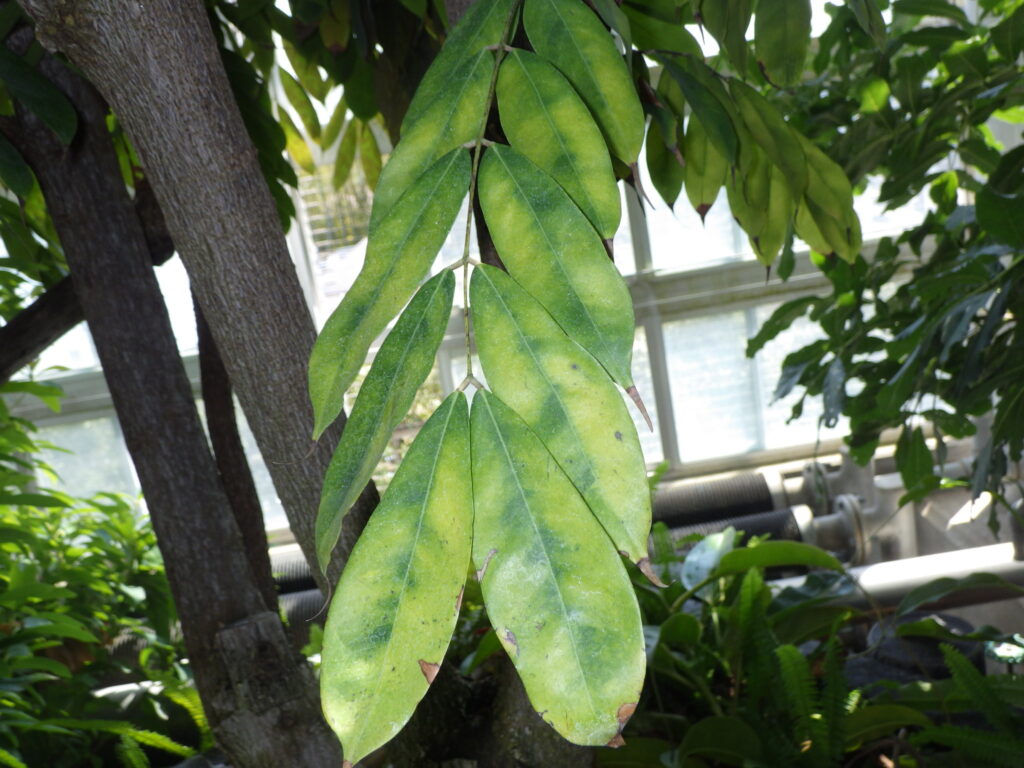
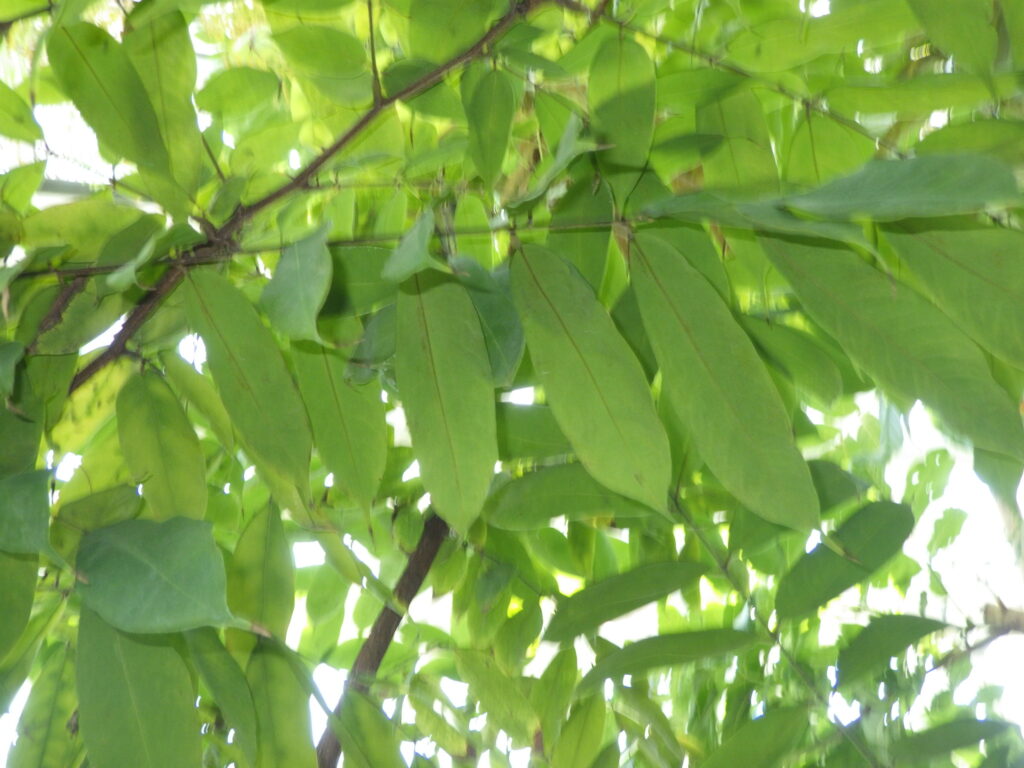
An evergreen shrub. Its Japanese name, Daihōkanboku, literally means "Great Treasure Crown Tree," and is said to derive from the fact that the shape of its flowers resembles a treasure crown. It grows to a height of less than 16m, with a short, straight trunk 20-30cm in diameter, grayish-brown, and with shallow grooves. Young twigs are densely covered with brown hairs. It grows slowly, and its branches are sturdy, reaching up to about 6m in length. Shoots and petioles are covered with downy hairs. The leaves are alternate, long, even-pinnately compound, with petioles and rachis 25-45cm long. The stipules are distinct, very long, 7-16cm long. There are 2-14 pairs of leaflets, and the pinnae are oblong to lanceolate, with bristly tips. When the leaves unfold, they droop, are pale green, and have minute pink and cream-colored spots (mottled), but as they mature, they turn brownish-pink, and eventually become a solid green. The capitulum is beautiful, spherical, conical, or capitate, 14–18 cm in diameter, usually hanging below the leaves, bearing numerous flowers, each with stamens and a style protruding from it. The peduncle + axis is 3–4.5 cm long. The bracteoles are 2.25–3 cm long. The pedicels are 9–13 mm long. The flowers begin to bloom from the outer whorl. The flowers are bright red, tubular, 5–8 cm long, with five obovate petals, each 4.5–5.25 cm long. The stamens are about 6 cm long, with the lower part of the filaments fused together 12–15 mm long. The ovary is about 10 mm long. The style is 3–4.5 cm long. The legume pod is about 25 cm long, brown, covered with flattened, long, brownish soft hairs, and contains 1–4 seeds. The seeds are about 4 cm wide, 1.2 cm thick, and gray. It is native to Venezuela, Colombia, Ecuador, and Peru, and is cultivated in Brazil and Indonesia.
No. 1463 Chamaecrista nomame
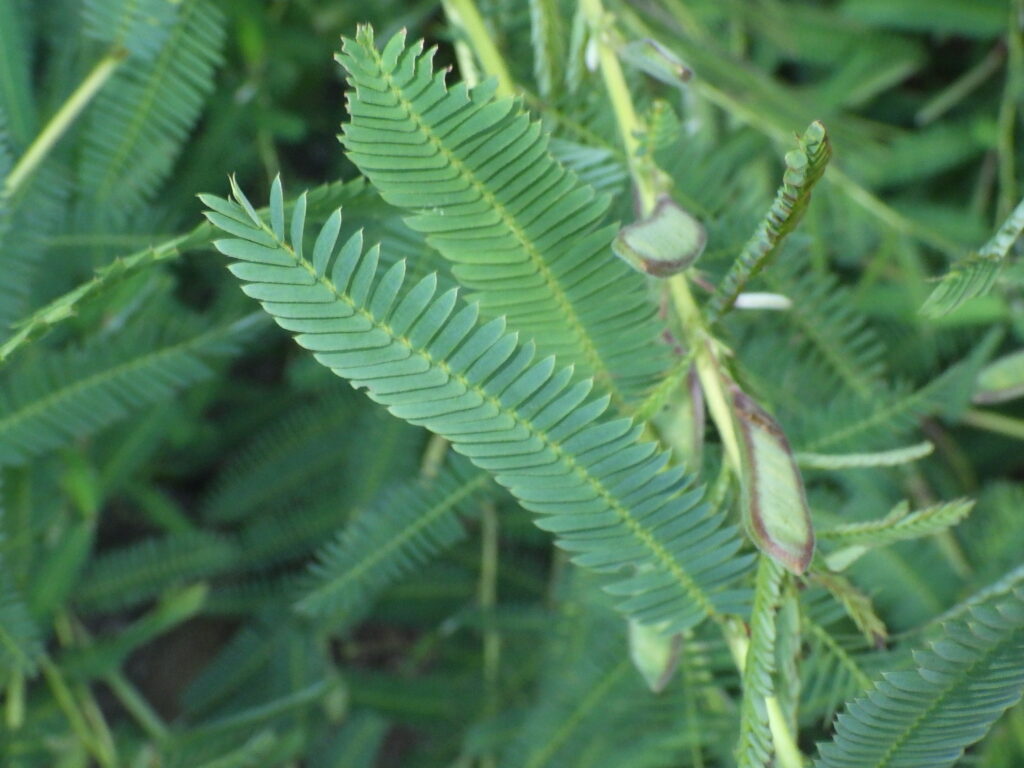
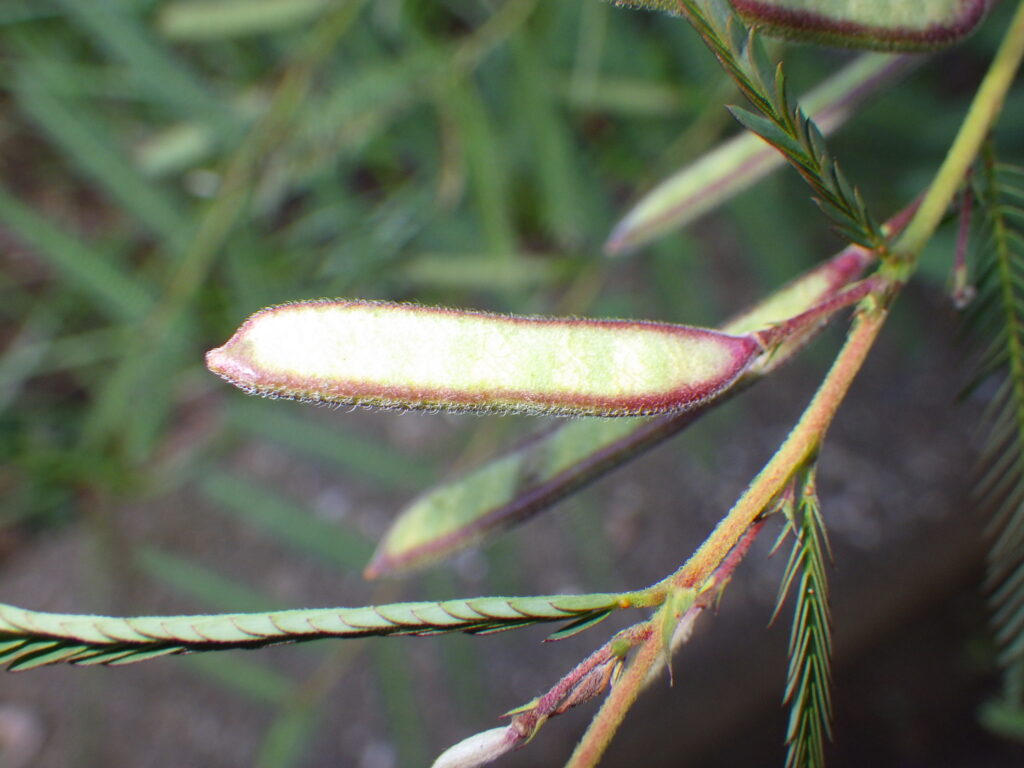
This is an annual plant (Kanagawa Prefecture Flora Survey Association, 2018). The stem is erect, reaching a height of 40-50 cm, covered in many short hairs, and branching frequently. There is one nectary on the upper surface of the base of the leaf axis. The leaflets are narrowly oblong with pointed tips, and there are more than 15 pairs. Short pedicels emerge from the leaf axils, bearing 1-2 yellow flowers in August and September. The legume is somewhat flattened, 3-4 cm long, and densely covered in short hairs. When mature, it splits open, ejecting flattened, glossy, parallelogram-shaped seeds. It is distributed in Honshu, Shikoku, Kyushu; Korea; and China. It grows in sunny grasslands.
No. 1464 Senna occidentalis
Also known as Kusasenna (Kanagawa Prefecture Flora Survey Association, 2018). A perennial herb that grows to about 1.5m in height. It has 3 to 6 pairs of leaflets and is almost hairless. There is one nectary at the base of the petiole. The inflorescence is a short raceme, and the legume is 10-12cm long. It is cultivated for its seeds used medicinally or for drinking, and escaped individuals are occasionally collected. Native to tropical America.
No.1465 Senna obtusifolia
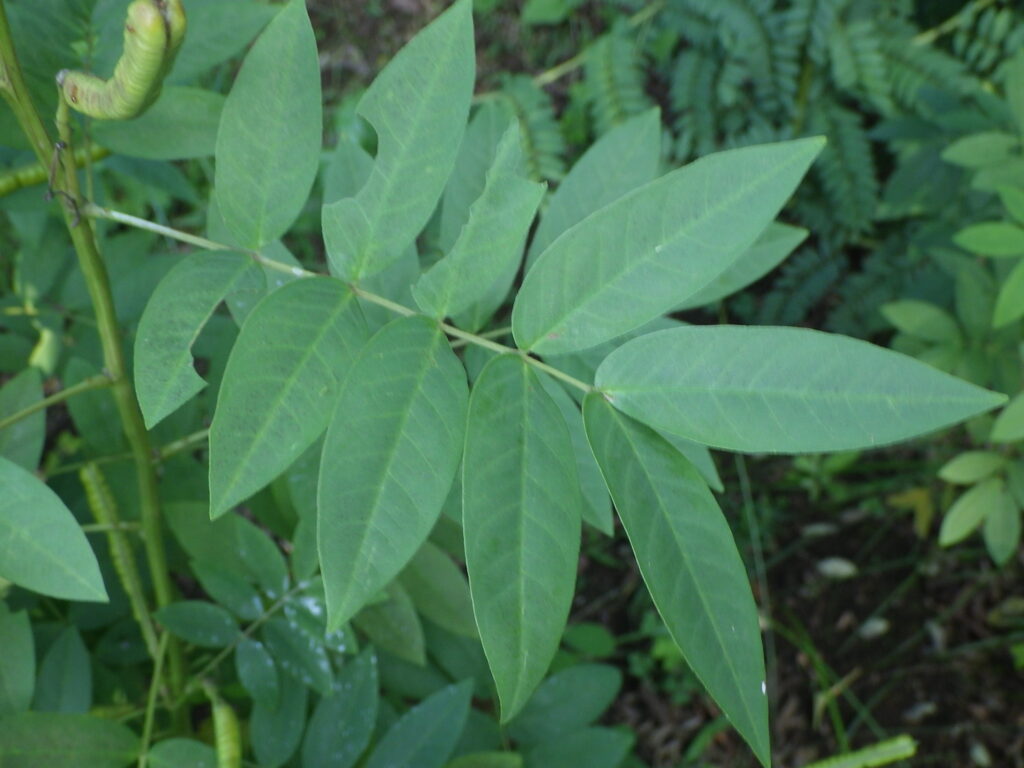
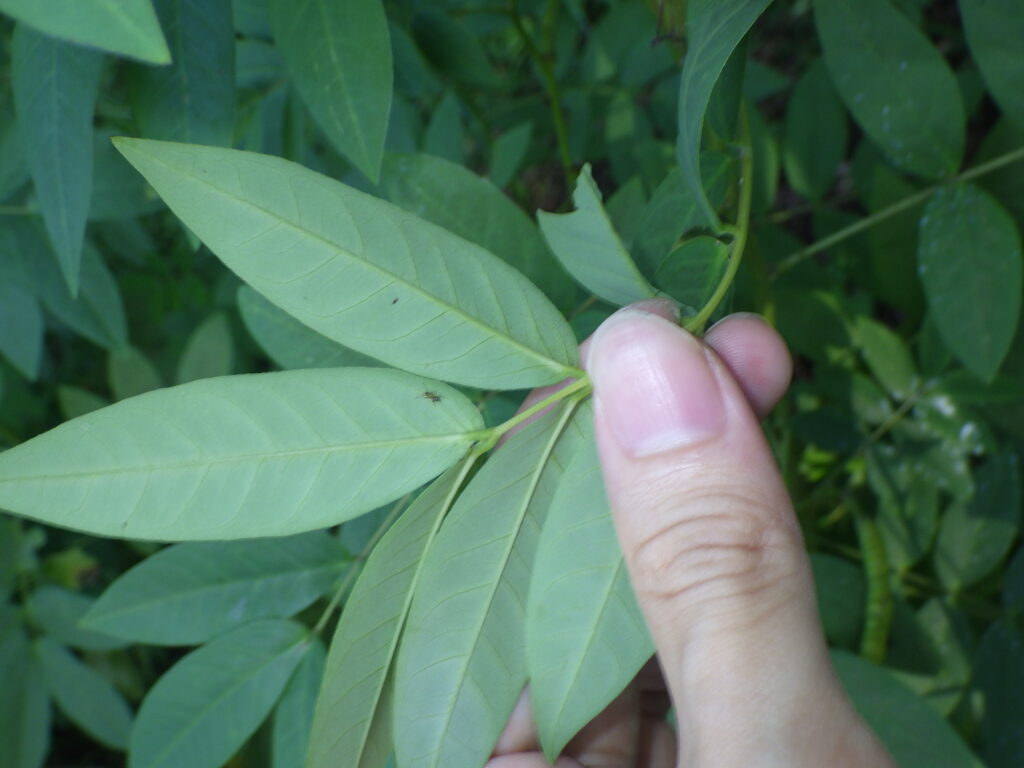
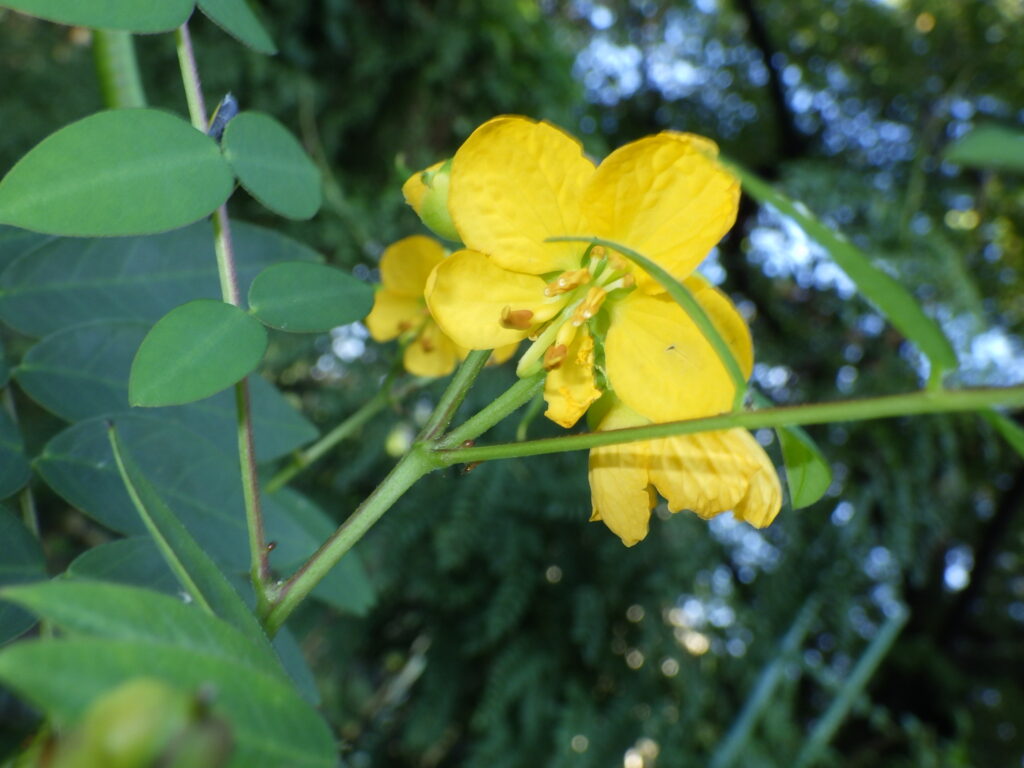
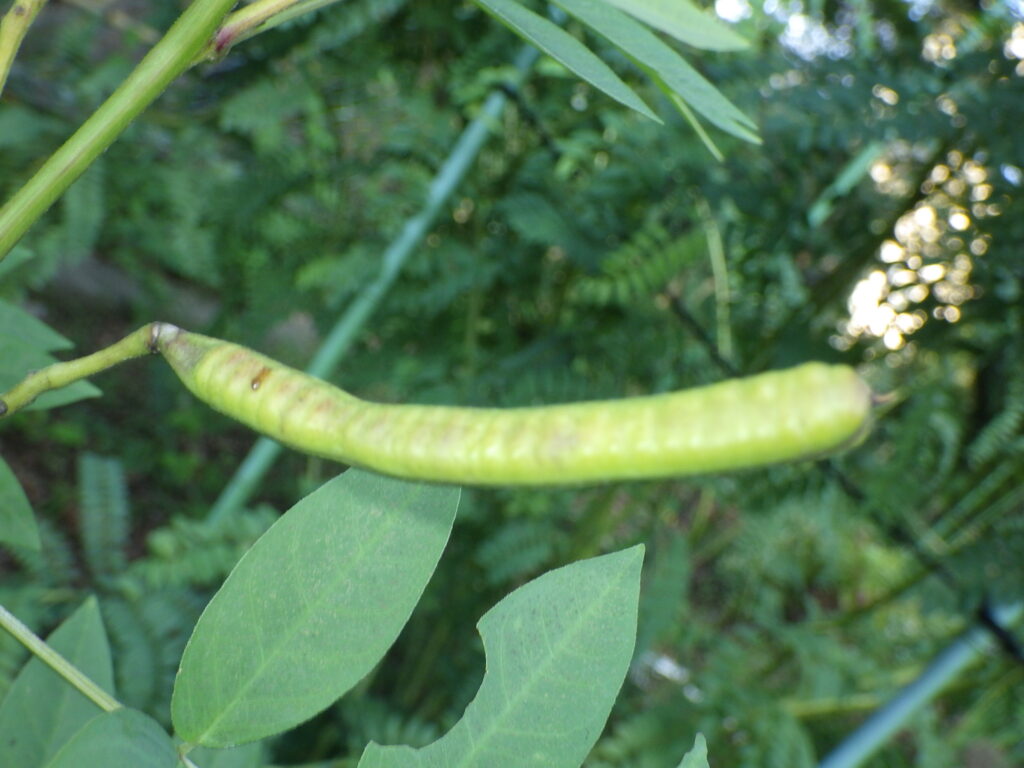
This is an annual plant (Illustrated Guide to Naturalized Plants in Japan). Native to tropical America, it was introduced from China during the Edo period for medicinal purposes and grows in fields, orchards, pastures, and roadsides from Honshu to the Southwest Islands. The stem is erect and branched, reaching a height of 50-200 cm. The leaves are alternate, forming even-pinnately compound leaves with 2-4 pairs of leaflets (mostly 3 pairs), obovate to elliptical, 3-4 cm long, and have one nectary on the petiole. It flowers in summer. Flowers are borne 1-2 times on pedicels 10-20 mm long that extend from the leaf axils. The calyx is oblong-ovate. The petals are obovate, yellow, and bilaterally symmetrical. The fruit is a legume, cylindrical, about 15 cm long, containing 25-30 seeds. The seeds are rhomboid, 5 mm long, and brownish-red. It reproduces by seed.
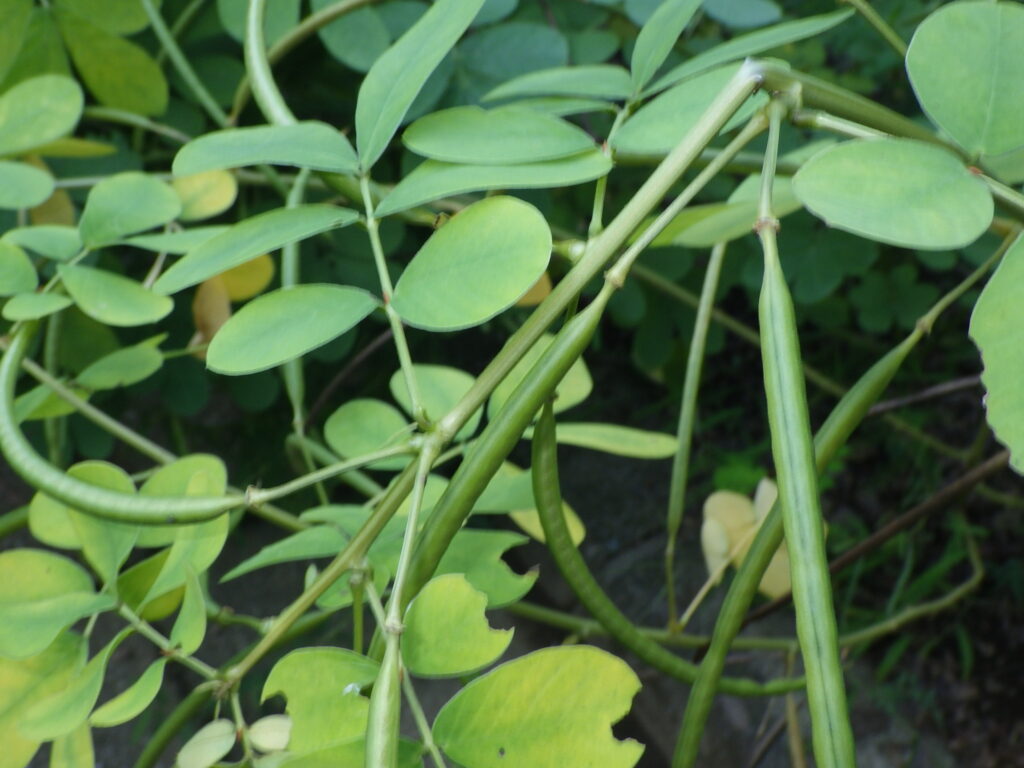
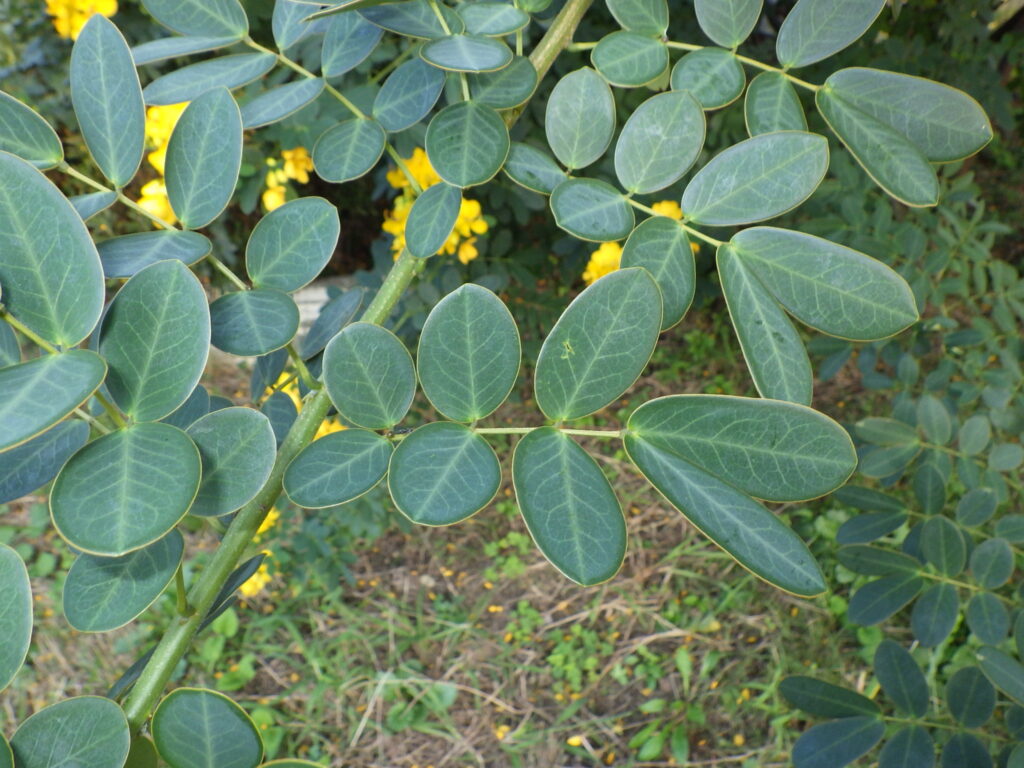
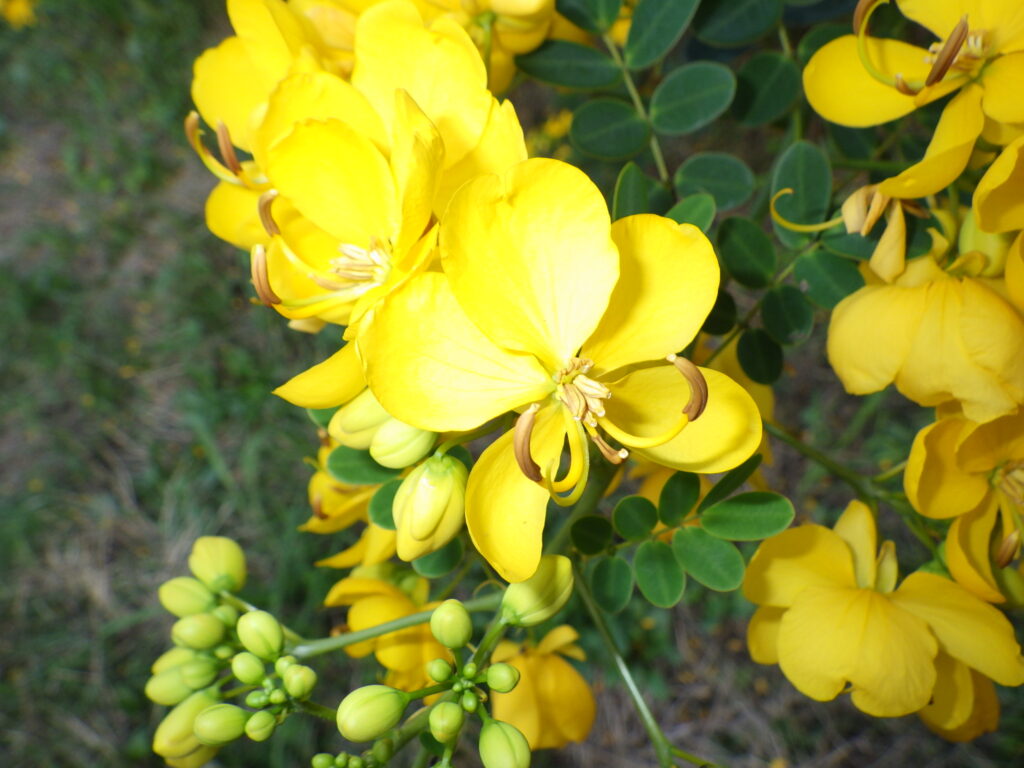
No. 1465.a Senna pendula
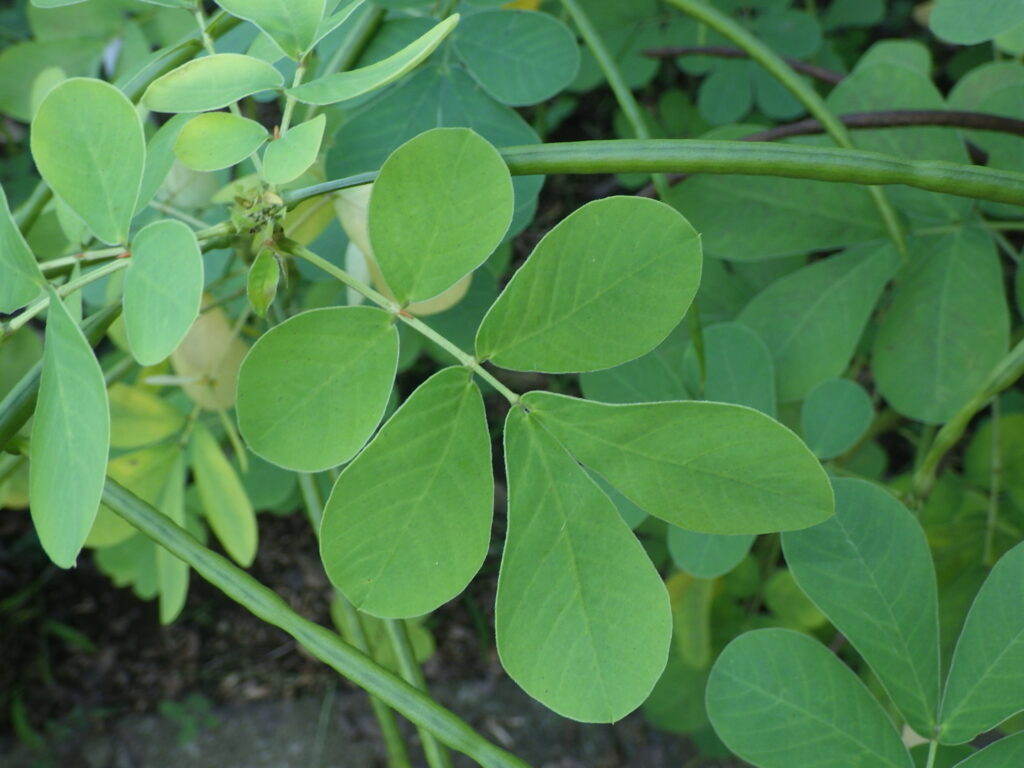
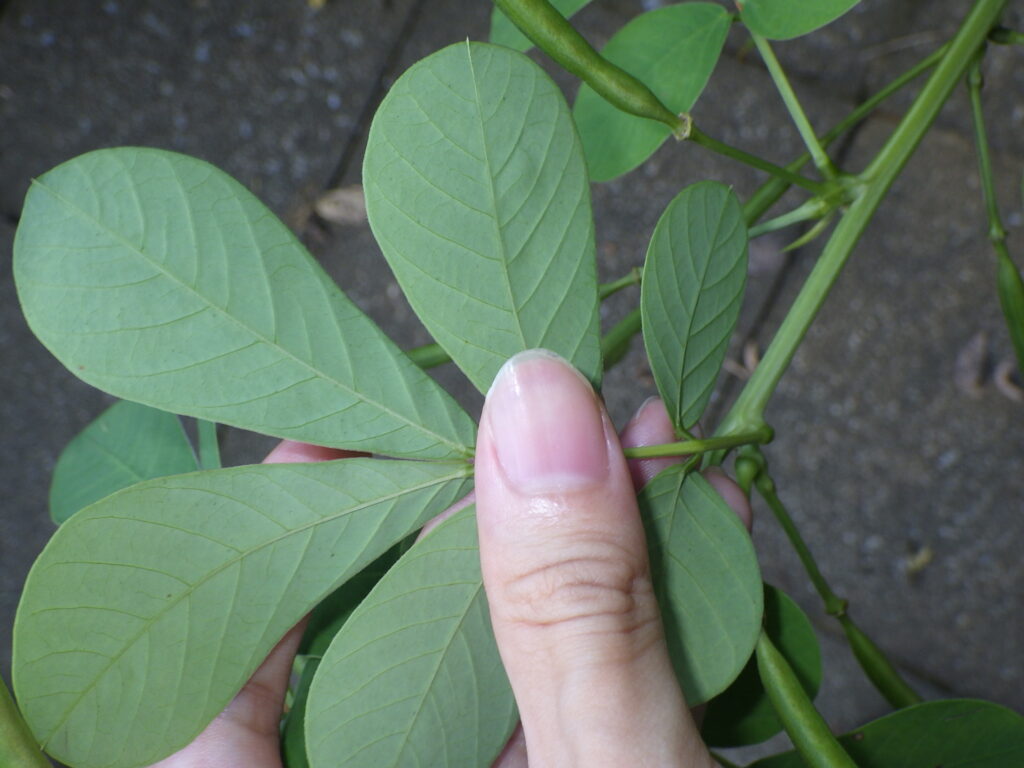
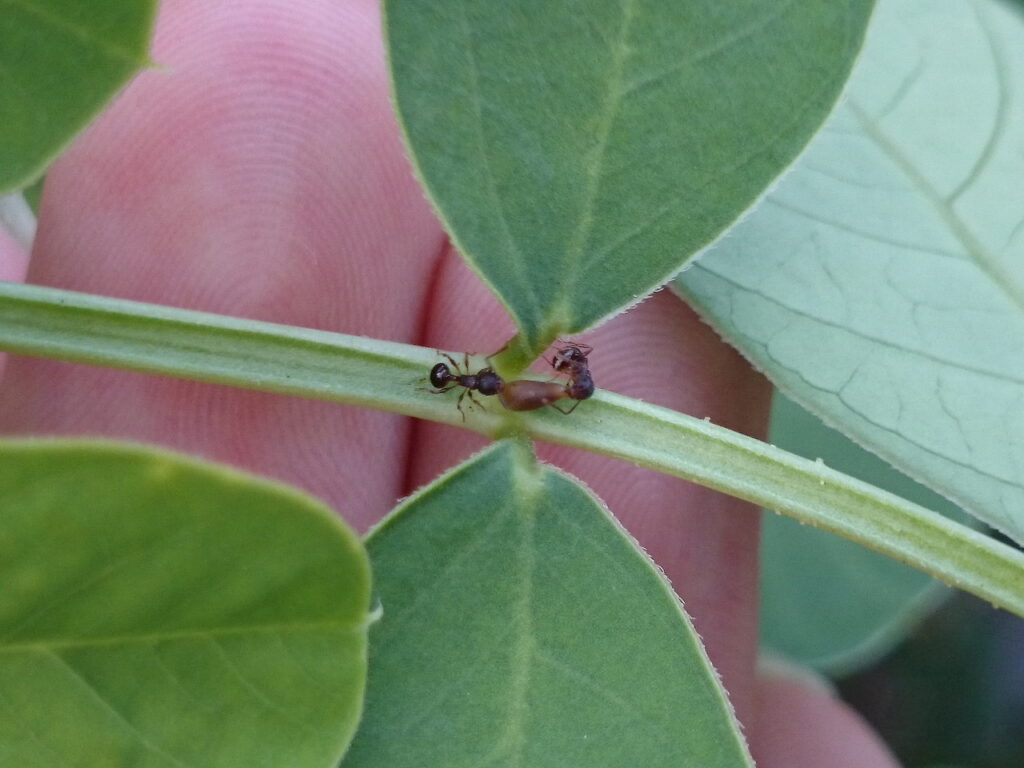
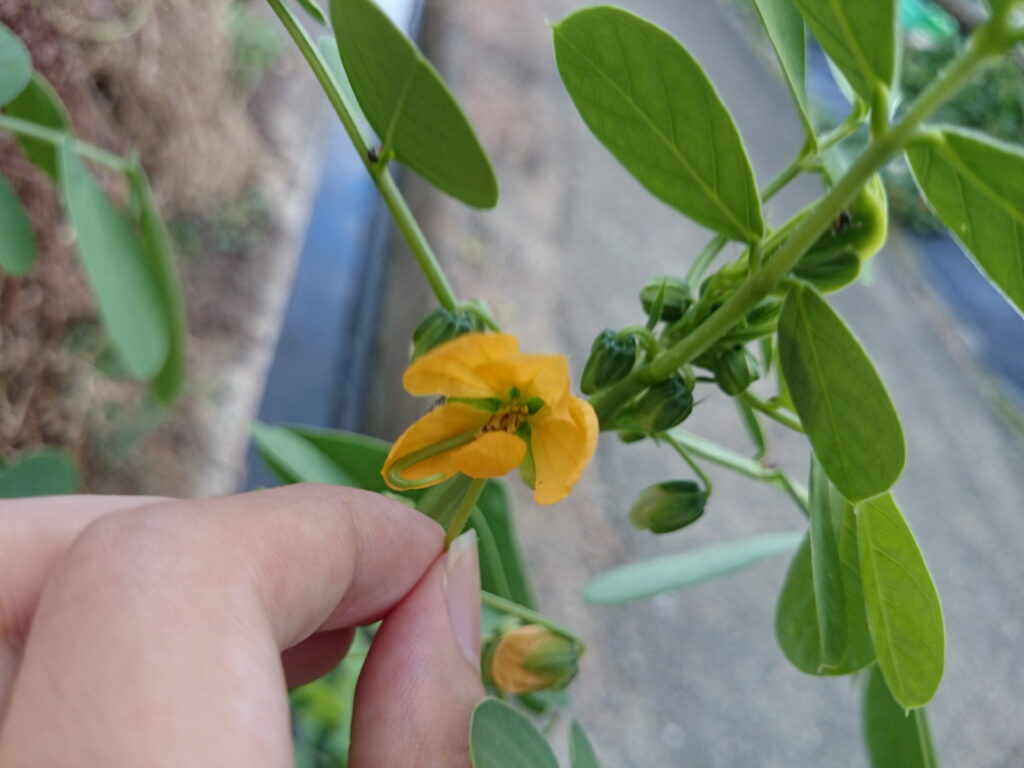
This evergreen shrub grows to a height of 1-2m. In cold climates, it is deciduous or dies in winter. If left unattended, the stems grow in a vine-like manner. The leaves are alternate, 4-8cm long, even-pinnately compound, and consist of 3-6 pairs of leaflets. The leaflets are obovate to broadly ovate, with orange-tinged margins. Racemes of 5-15 flowers emerge from the leaf axils. The flowers are bright yellow with five petals, 1.5-2cm long and round, and have 10 stamens. The stamens consist of two long, symmetrical stamens (pollinating stamens), one medium-sized central stamen, four short central stamens (feeding stamens), and three non-pollen-producing staminodes. It does not secrete nectar. The fruit is a cylindrical legume 13-18cm long, but fruiting is rare. The fruit contains 35-55 seeds. Native to South America, it is distributed from southern Mexico to Colombia (Flora de Nicaragua), and in eastern Australia, it has naturalized in waterways, gardens, disordered areas, wastelands, and roadsides in southeastern Queensland and coastal and coastal areas of New South Wales. Studies in Brazil have confirmed that large bumblebees (Xylocopa), bumblebees (Bombus), and oil-collecting bees (Centris) are effective pollinators, performing "vibration pollination," where they simultaneously vibrate all their anthers at a fixed location to release pollen (Pinheiro-Costa et al., 2018). During vibration, the bees receive pollen released from two long stamens on their backs. The four short central stamens contain pollen that serves as food for the bees. Pollen from one medium-sized central stamen is of low fertility and is interpreted as having no role and being related to the evolutionary process of stamen reduction. The staminodes, when combined with the short central stamen, have a bright white reflectivity to the human eye, suggesting they may also possess a signaling function.
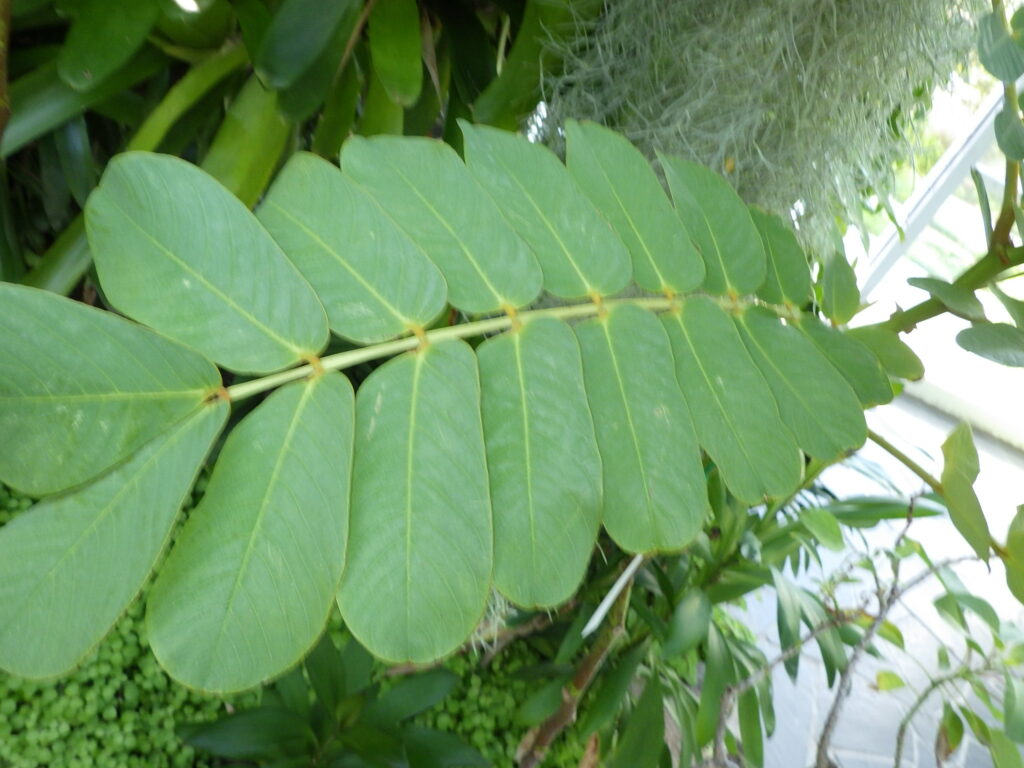
No. 1465.b Senna alata
This evergreen shrub grows to a height of 1-4m. In cold climates, it is deciduous or dies in winter. The leaves are alternate, 20-75cm long, even-pinnately compound, consisting of 7-14 pairs of leaflets, with the largest pair being at the tip. The leaflets are 5-20cm long, oblong to oblong-obovate, with prominent veins and rounded tips. The leaves close at night. Racemes, 15-70cm long, emerge from the leaf axils and stem tips, bearing many flowers densely. The flowers are bright yellow with five petals, 1.5-2cm long and round, with 10 stamens. The inflorescence resembles a yellow candle. The fruit is a legume 10-20cm long with four well-developed wings, containing 50-70 seeds. Native to tropical America, it is distributed from Mexico and the West Indies to Paraguay, and is cultivated for ornamental and medicinal purposes in Southeast Asia, northern Australia, and Africa. It receives pollen released from two long stamens on its back (Luo et al., 2009). The four short central stamens contain pollen that serves as food for bees. The leaves are said to have highly effective fungicidal properties for treating ringworm and other fungal skin infections.
No. 1466 Caesalpinia decapetala var. japonica
This is a climbing deciduous shrub (Kanagawa Prefecture Flora Survey Association, 2018). Sharp, backward-pointing thorns line the stems and leaf axes, allowing it to twine around trees and other objects to climb. The leaves are bipinnately compound with an even number of leaflets, and the leaflets are oblong. In May and June, it bears yellow flowers on long stalks in terminal racemes. The flowers are about 2.5 cm in diameter, with spreading petals, and the uppermost petal is slightly smaller. The legumes are slightly swollen and about 10 cm long. It is distributed in Honshu (west of the Kanto region), Shikoku, Kyushu, the Ryukyu Islands, China, and the Himalayas. It grows in sunny locations such as landslide areas, forest edges, and riverbeds.
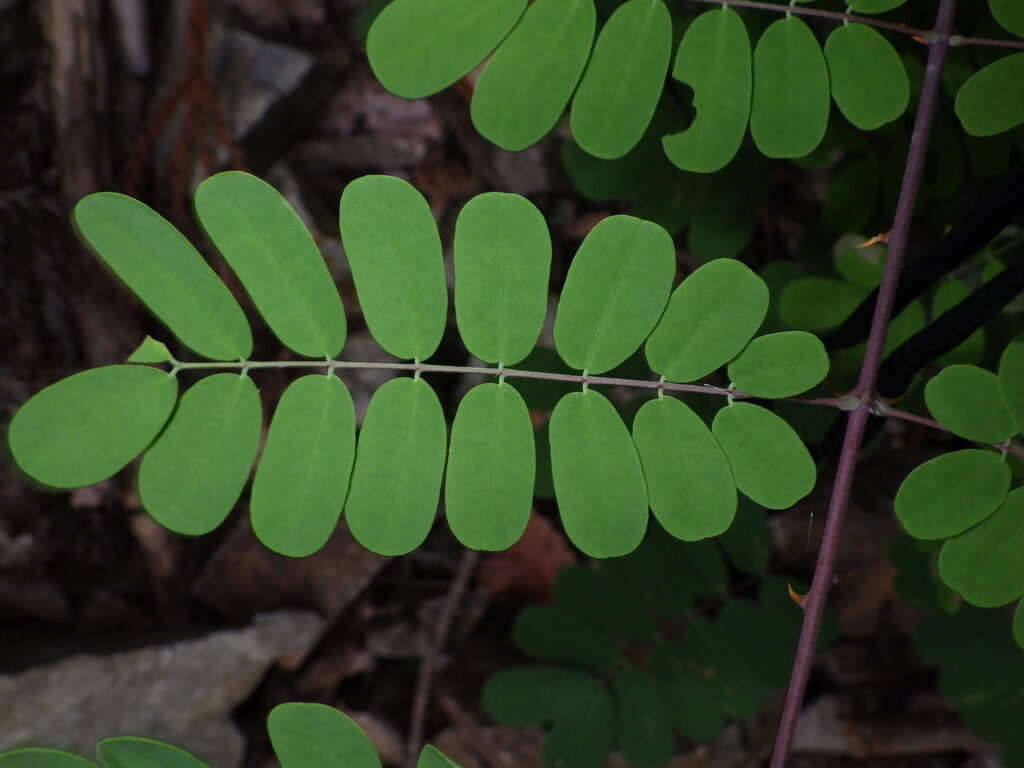
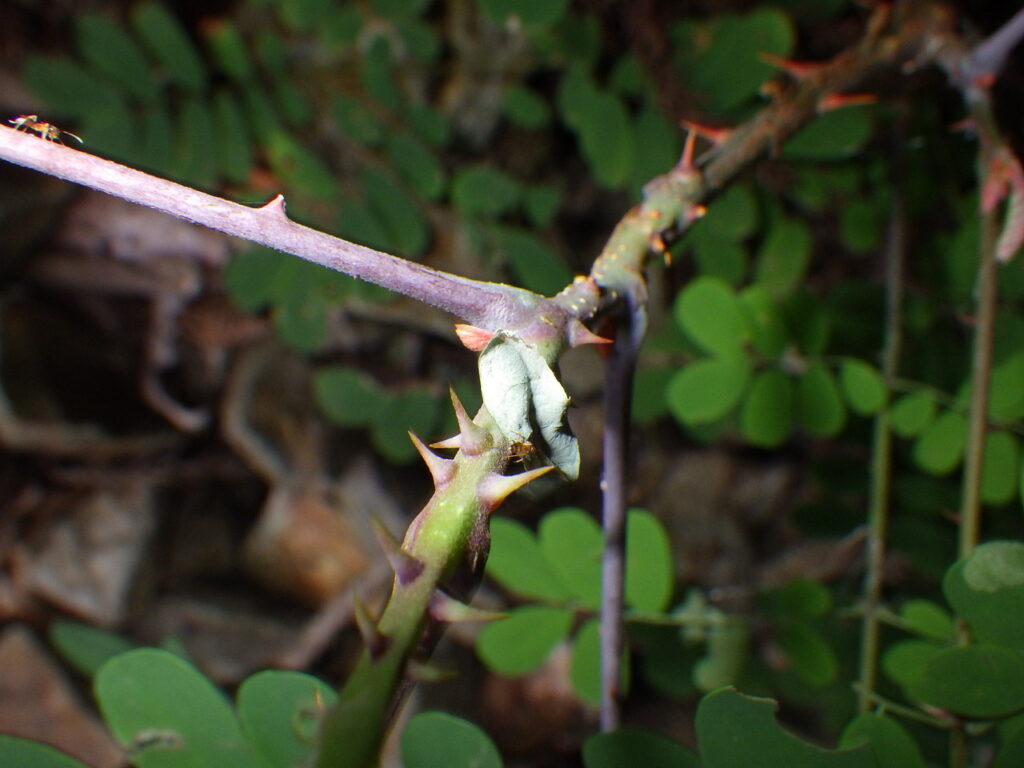
No. 1472 Entada phaseoloides
This is a climbing woody plant (wildflower). The stems are thick and hairless. The leaves are bipinnately compound, about 20 cm long. There are two pairs of leaflets, with 3-4 pairs of opposite leaflets. The leaflets are somewhat distorted oblong to ovate, 5-7 cm long, leathery, and glossy. The tip of the leaf axis branches into a tendril-like structure. The flowering period is from May to August. The flowers are borne in spike-like inflorescences 10-25 cm long in the leaf axils, bearing numerous yellowish-green, radially symmetrical flowers. The fruit (legume) is linear and woody, 35-50 cm long and 7 cm wide. The seeds are flattened, 3-5 cm long and 3-4.5 cm wide, with a mountain-shaped bulge in the center. In Entada serrata, each leaflet has 1-2 pairs of leaflets, and the seeds are larger, 5-6.5 cm long and 4-6 cm wide, without the mountain-shaped bulge in the center. It is distributed in tropical and subtropical Asia, including Okinawa Prefecture in Japan, the Pacific Islands, and northeastern Australia, growing on slopes along mountain streams and forest edges. It disperses its seeds by ocean currents, and there are records of seeds germinating after being left in seawater for more than a year (Ibaraki, 2013).
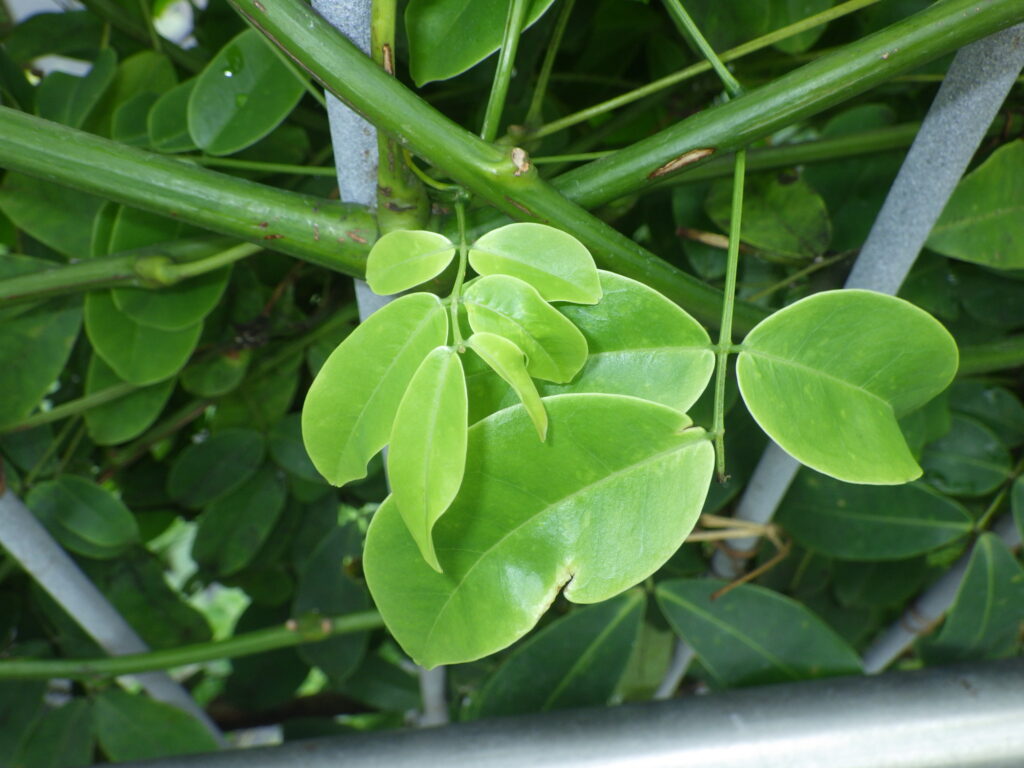
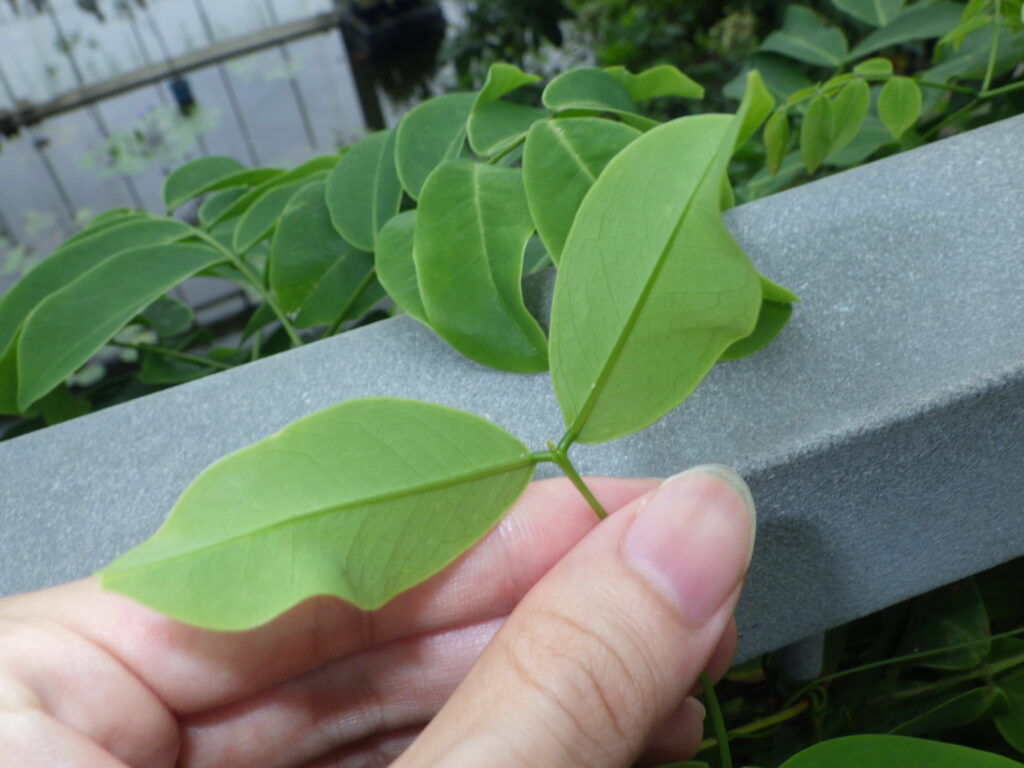
No.1473.a Psophocarpus tetragonolobus (winged bean)
This is a climbing perennial herb, but it is treated as an annual in Japan because it is sensitive to cold. It develops tubers underground. The stems can grow up to 3-4m tall. The leaves are alternate, trifoliate compound leaves with long petioles. The flowers are butterfly-shaped, borne in the leaf axils, and are white, pale purple, or blue. The fruit is a legume 15-30cm long, with a square cross-section and wing-like folds on the ridges. The pods are green or reddish-purple. They contain 5-20 seeds. Its origin is thought to be Asia or Africa, but this is unknown because no wild species exist. Since many species of the same genus are found in Africa, it seems reasonable to consider it to be of African origin, but it can also be interpreted that the population distributed in Asia became extinct and all existing species are cultivated, and even after molecular phylogenetic analysis, this has not been definitively determined. It is cultivated along the boundaries of rice paddies, hedges, or fences. Because its leaves, flowers, roots, and bean pods can be eaten raw, and the beans themselves can be cooked, and it is rich in nutrients, it is attracting attention as a multi-purpose food crop.
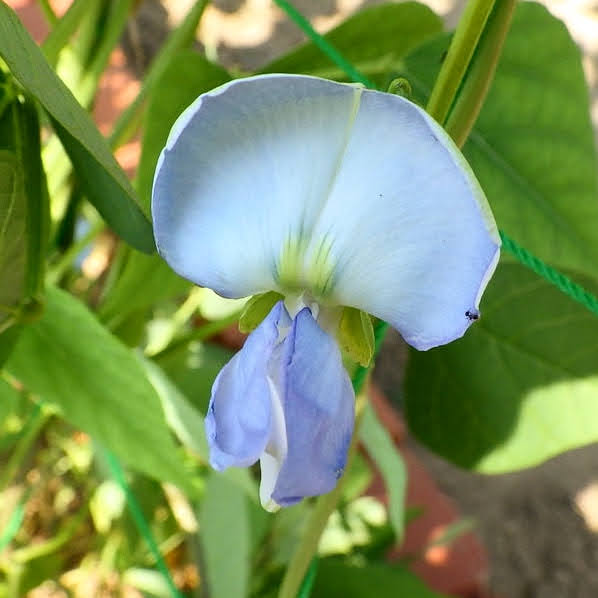
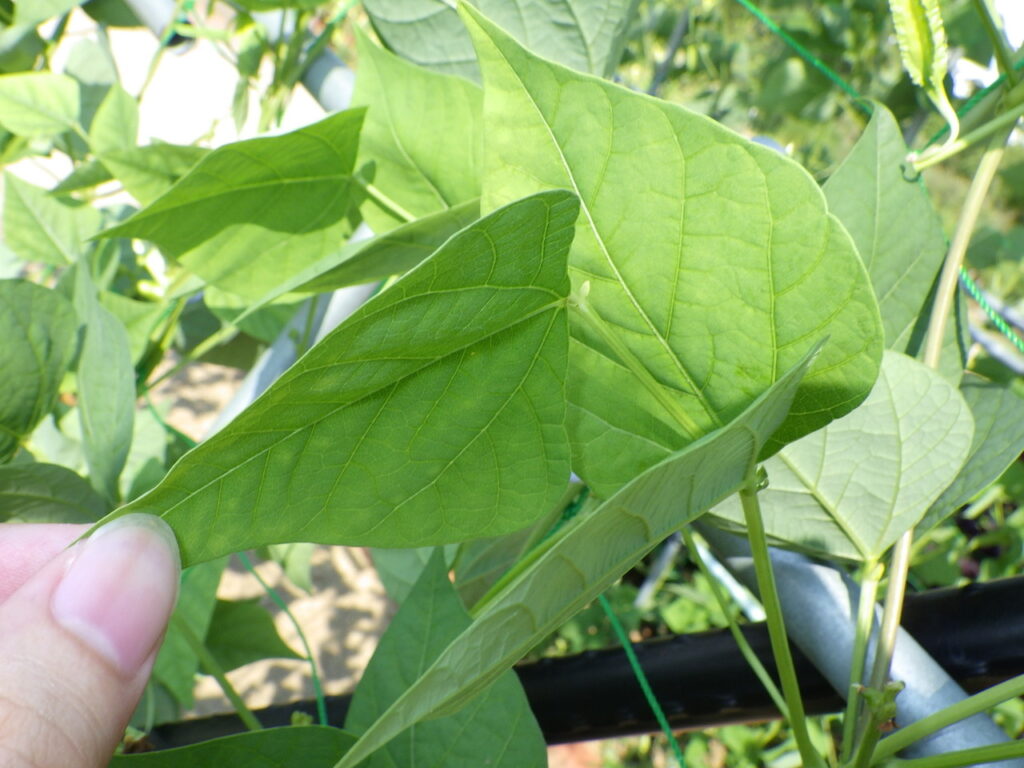
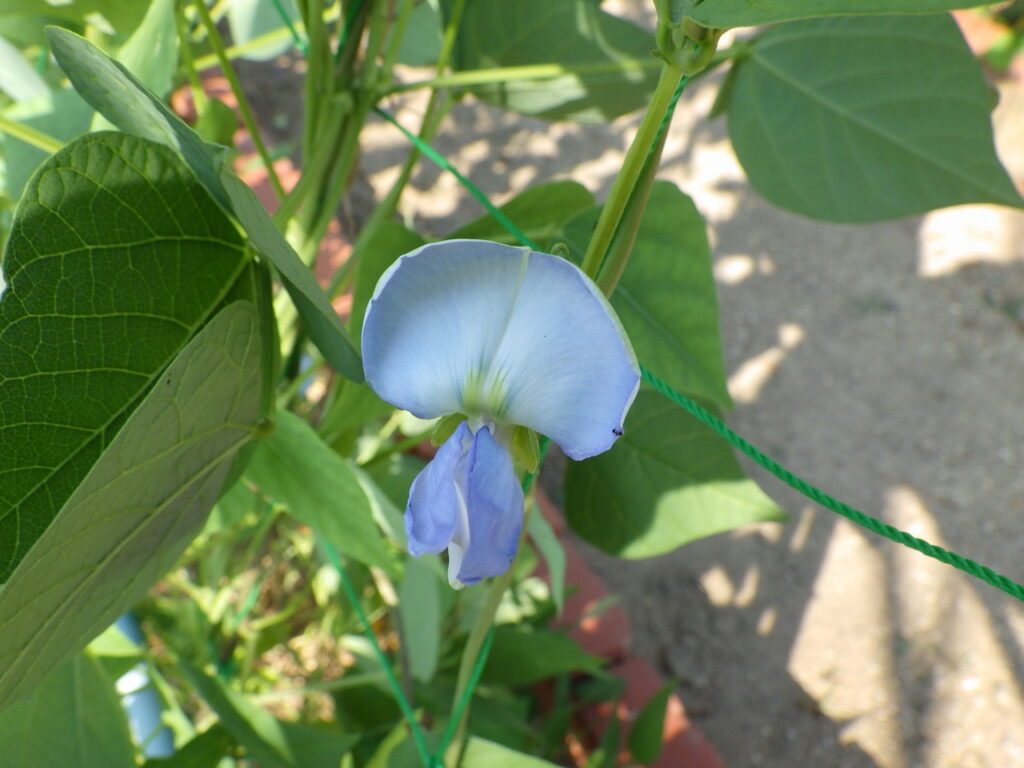
No. 1475 Clara (Sophora flavescens)
This is a poisonous perennial herb (Kanagawa Prefecture Flora Survey Association, 2018). The stem is erect and reaches over 1m in height, and the stem, pedicels, petioles, and legumes are covered with many short, soft hairs. It branches in the upper part, and bears racemes at the tips of the branches. The flowers bloom in June and July, and are pale yellow, sometimes tinged with purple. The tip of the calyx tube is obliquely notched, and the calyx lobes are low. The legumes are 7-8cm long and constricted in places. It is distributed in Honshu, Shikoku, Kyushu, Korea, China, and Siberia. It grows in forest edges and on embankments. A variety with pale purple flowers is called *Sophora flavescens* f. galegoides and is rarely recorded.
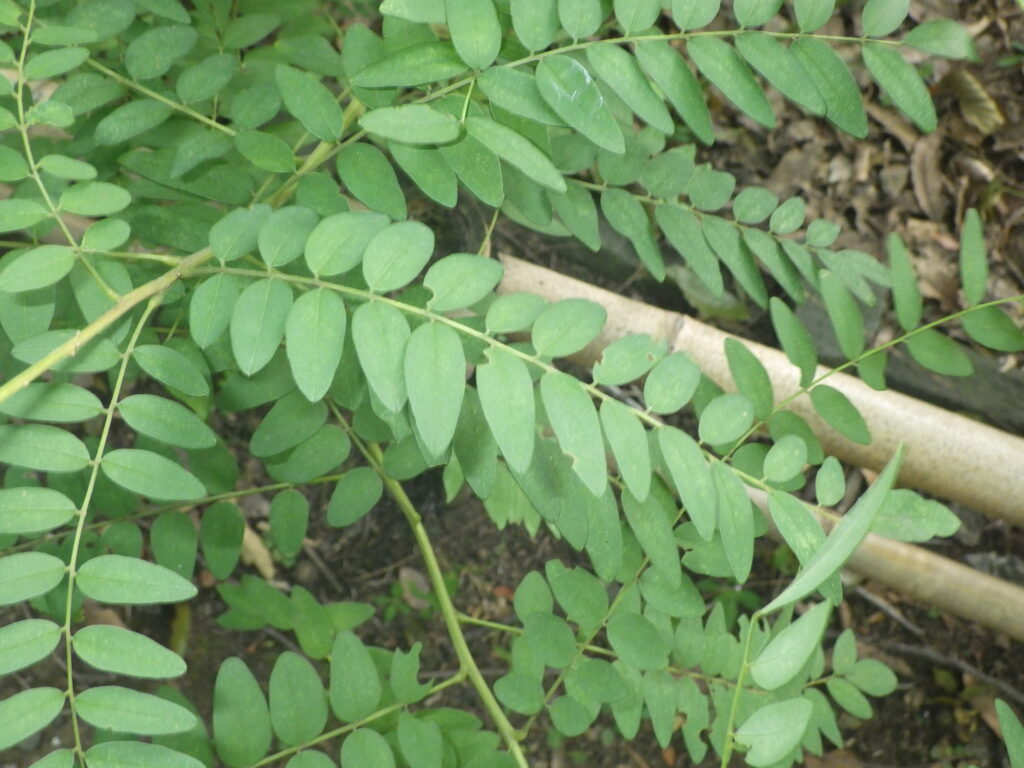
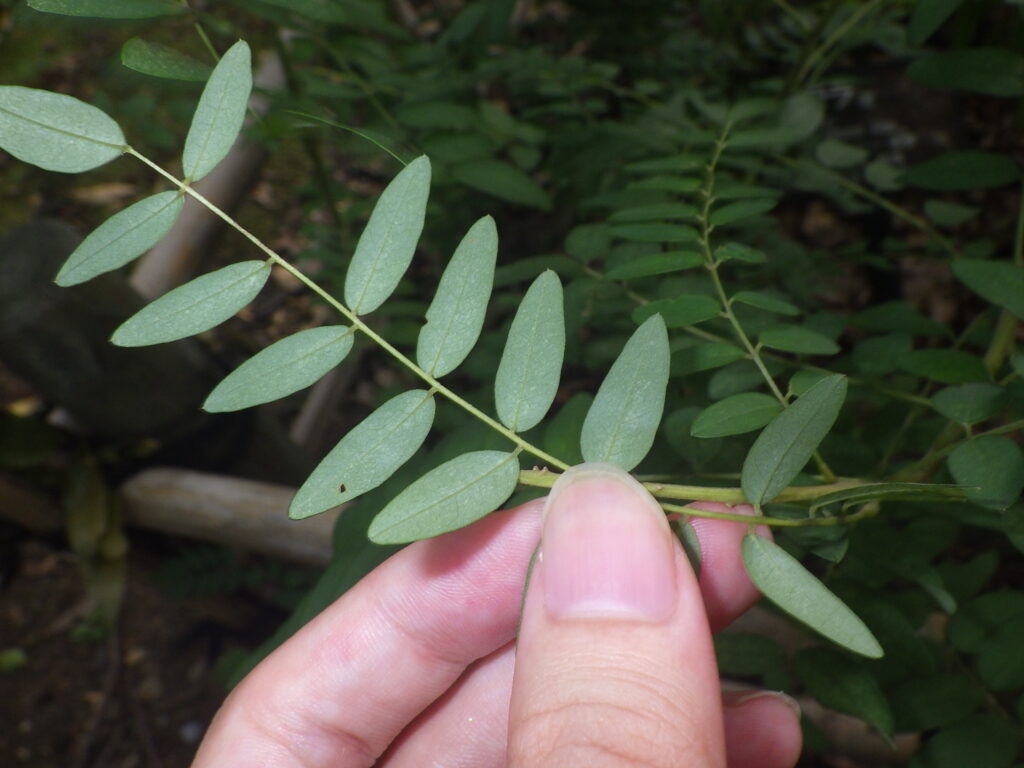
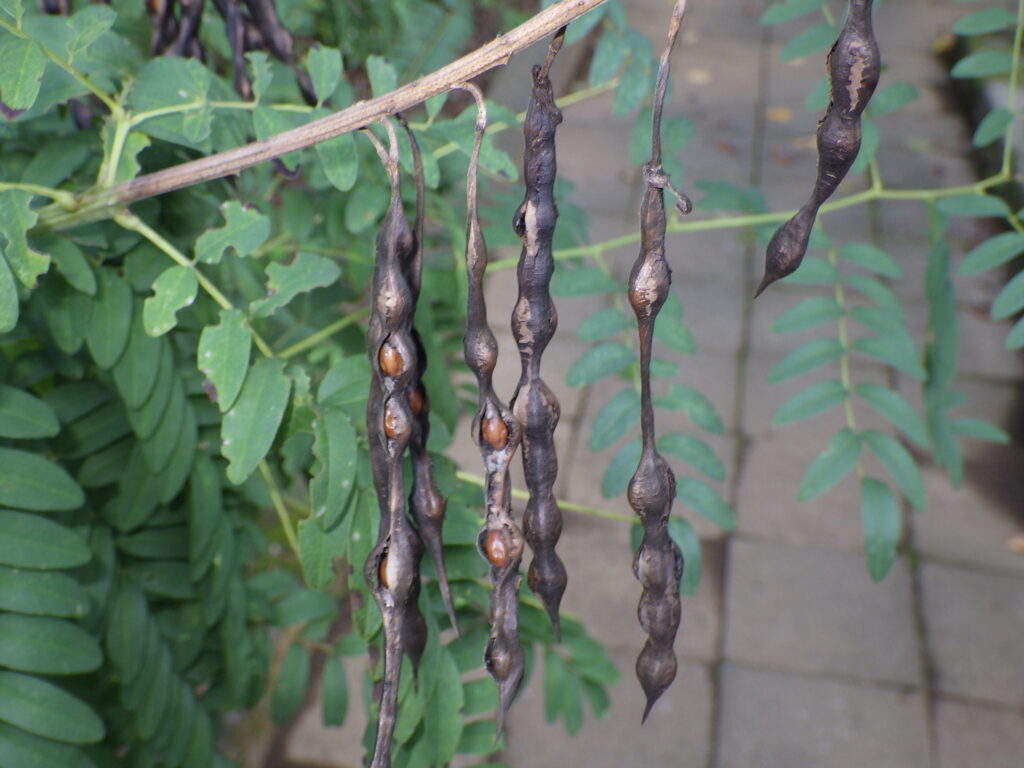
No. 1485 Purple-striped catfish (Baptisia australis)
This perennial herb grows to a height of 1-1.5m. The stems are erect and branched, hairless, and, along with the leaves, have a slightly powdery white appearance. The leaves are alternate, trifoliate compound leaves, with leaflets 1.8-3.8cm long and oblanceolate to obovate. The stipules are linear-lanceolate and attached to the base of the petiole. It flowers from May to July. Racemes about 30cm long emerge from the stem tips and leaf axils, bearing blue to purple butterfly-shaped flowers. The bracts are linear-lanceolate. The fruit is an oblong legume 2.5-7.5cm long, containing numerous seeds, and turns black when ripe. It is distributed in eastern North America (from northern New York to North Carolina, northern and western Georgia, and into Nebraska, Texas, and Virginia) (Gleason & Cronquist, 1991).
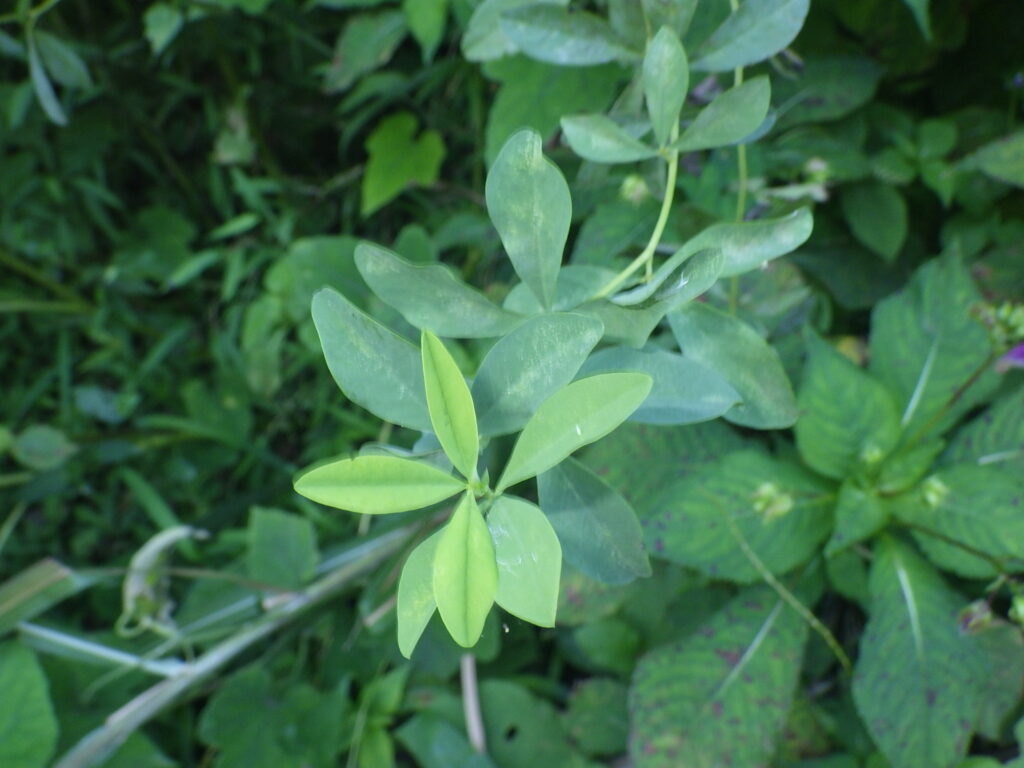
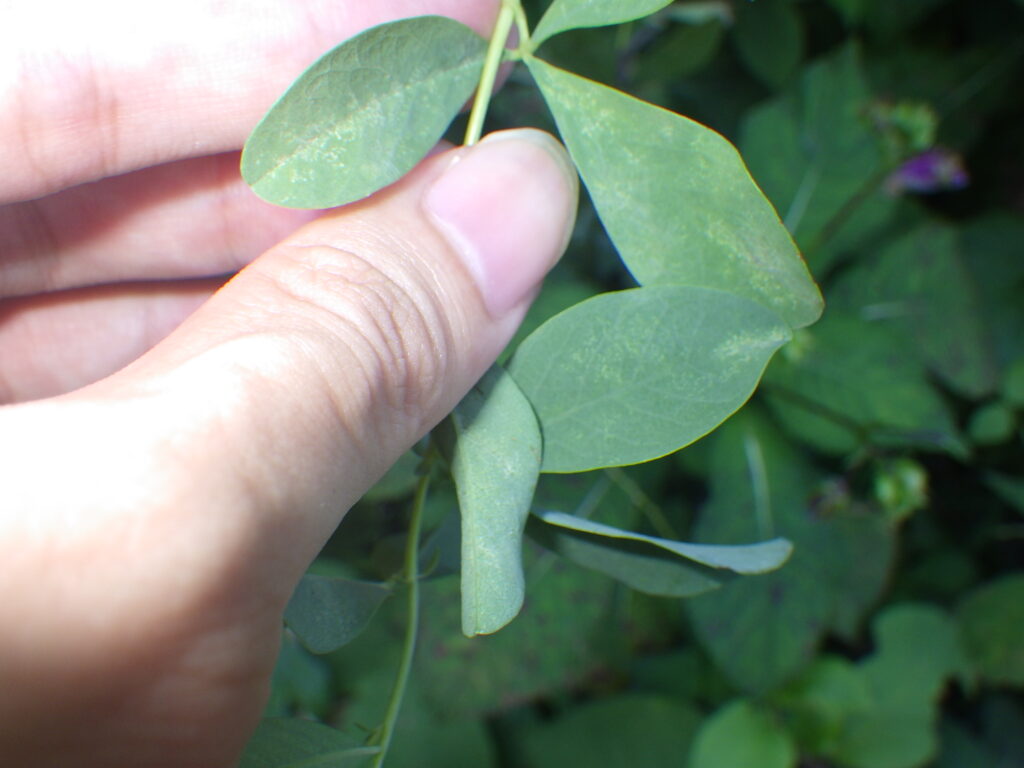
No. 1488 Crotalaria sessiliflora (Butterfly Bean)
This is an annual plant (Kanagawa Prefecture Flora Survey Association, 2018). The stem is erect, reaching 60-70 cm in height, and the leaves are linear with one leaflet. It flowers from July to September, bearing racemes of bluish-purple flowers at the tip of the stem. The calyx elongates after flowering, covering the pod. The pod is about 12 mm long and splits open when mature. It is distributed in Honshu, Shikoku, Kyushu, the Ryukyu Islands, Korea, China, and Southeast Asia. It grows in grasslands and roadsides.
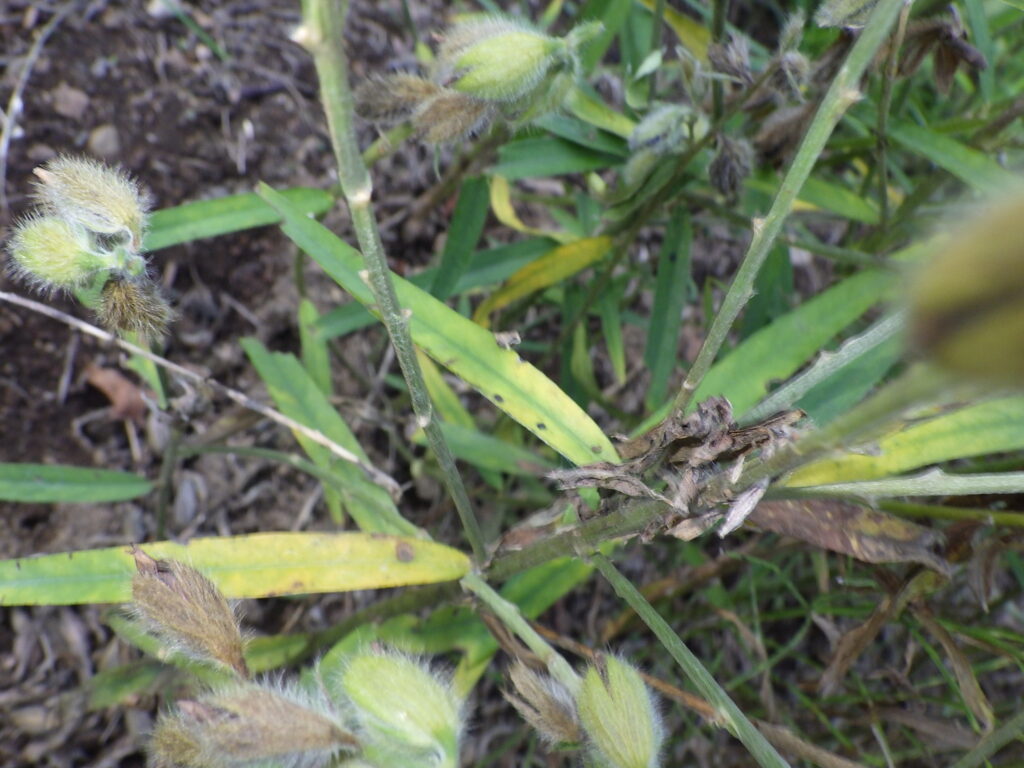
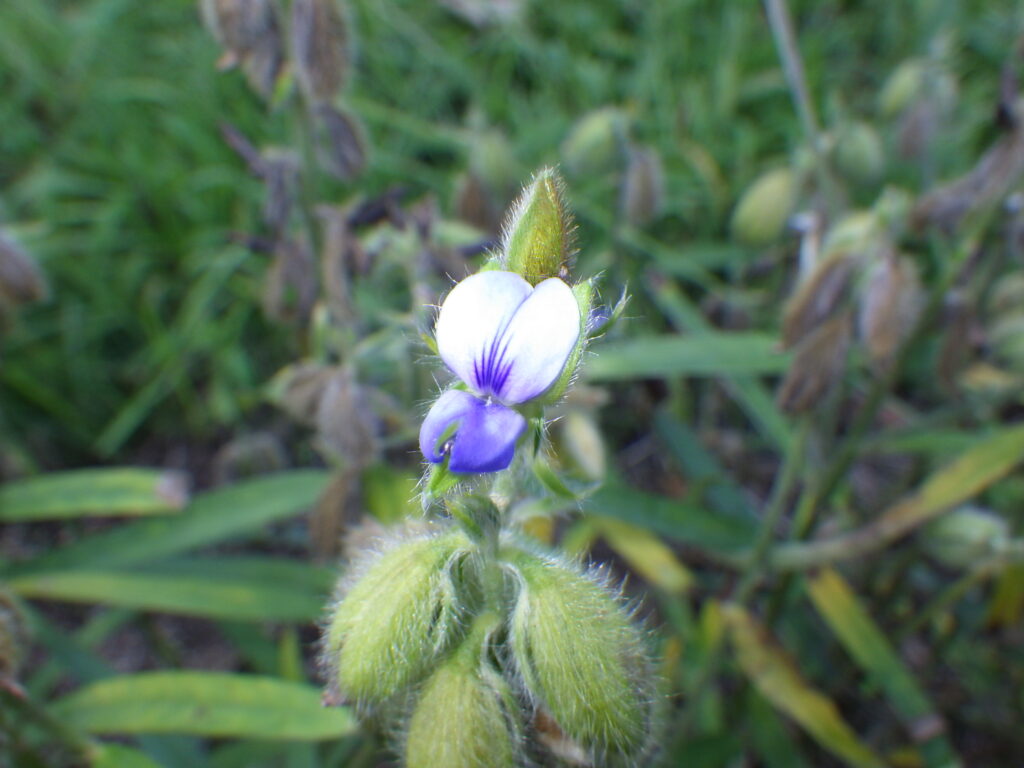
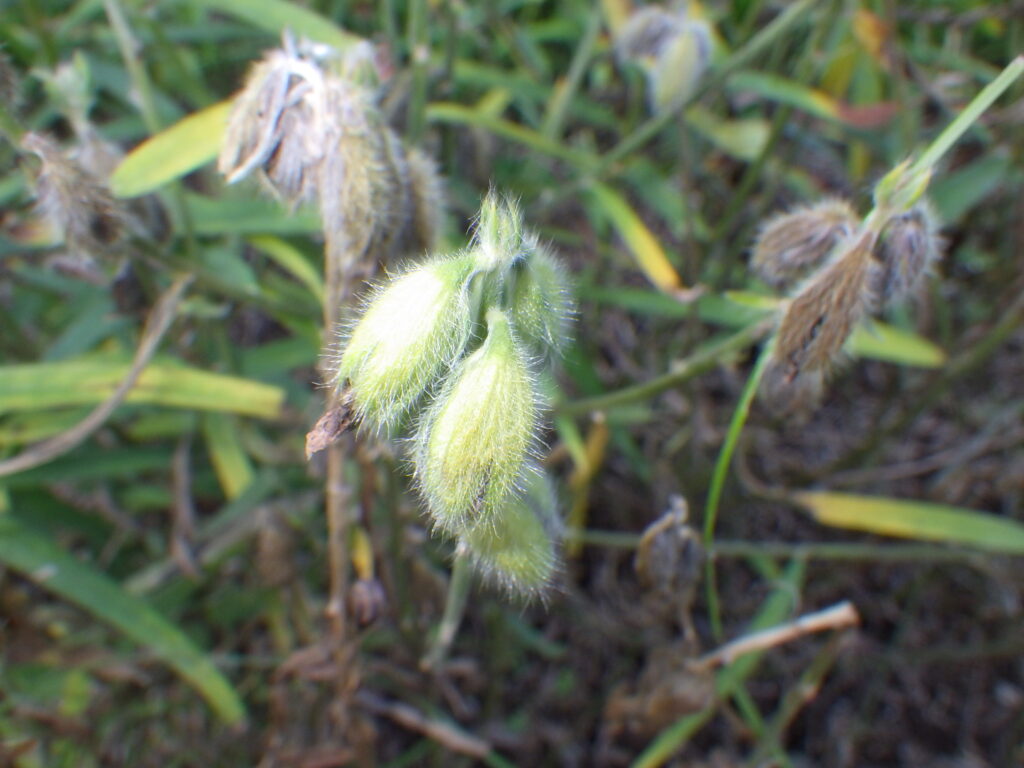
No.1488.a Crotalaria juncea (Japanese name for a type of bean)
Also known as Crotalaria, Sanma, or Sanhemp (Kanagawa Prefecture Flora Survey Association, 2018). An annual plant. The stems, branches, leaves, and fruits are densely covered with short, brownish hairs. The stems are 60-80 cm tall and branch frequently. The leaves are single leaflets, 5-6.5 cm long, narrowly ovate to narrowly oblong, with a protruding midrib and a pointed tip. The flowers are yellow, borne in racemes at the top of the stem, 2-2.2 cm long, with a large standard petal and a keel petal slightly larger than the wing petals. The calyx is 1.5-2 cm long, with 5 leaflets that are deeply lobed near the base and densely covered with soft hairs. The legumes are cylindrical, 2-3.5 cm long and 0.8-12 mm wide. Originally from India, it is a naturalized plant sometimes cultivated as green manure or fiber crop, and occasionally escapes cultivation.
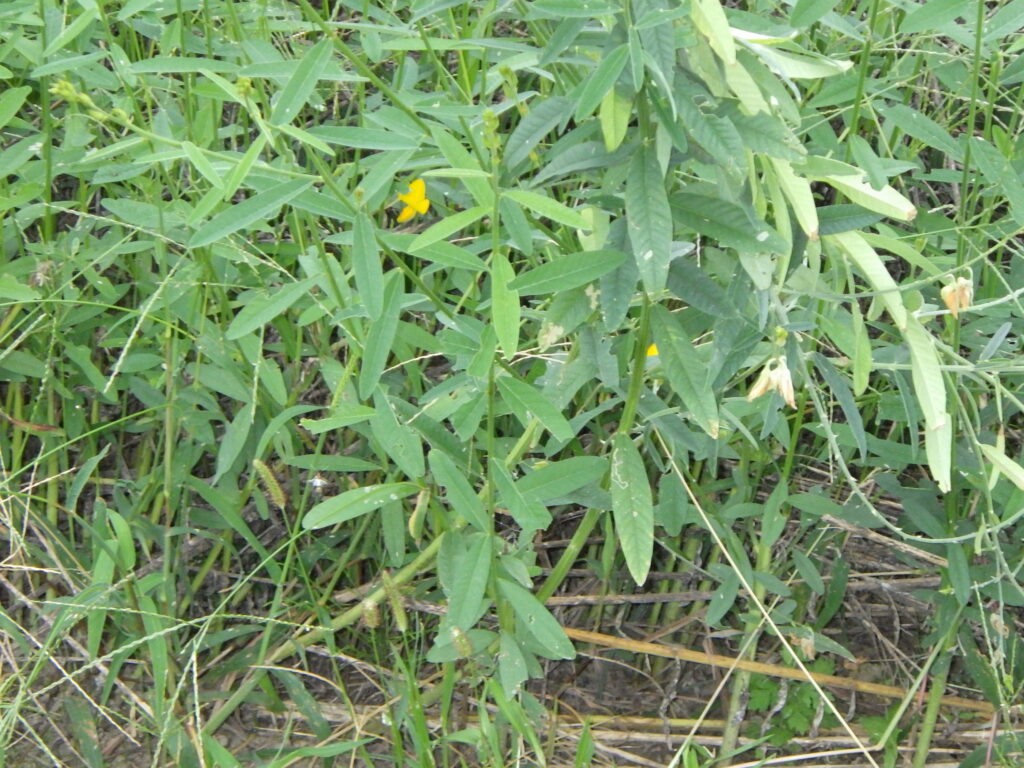
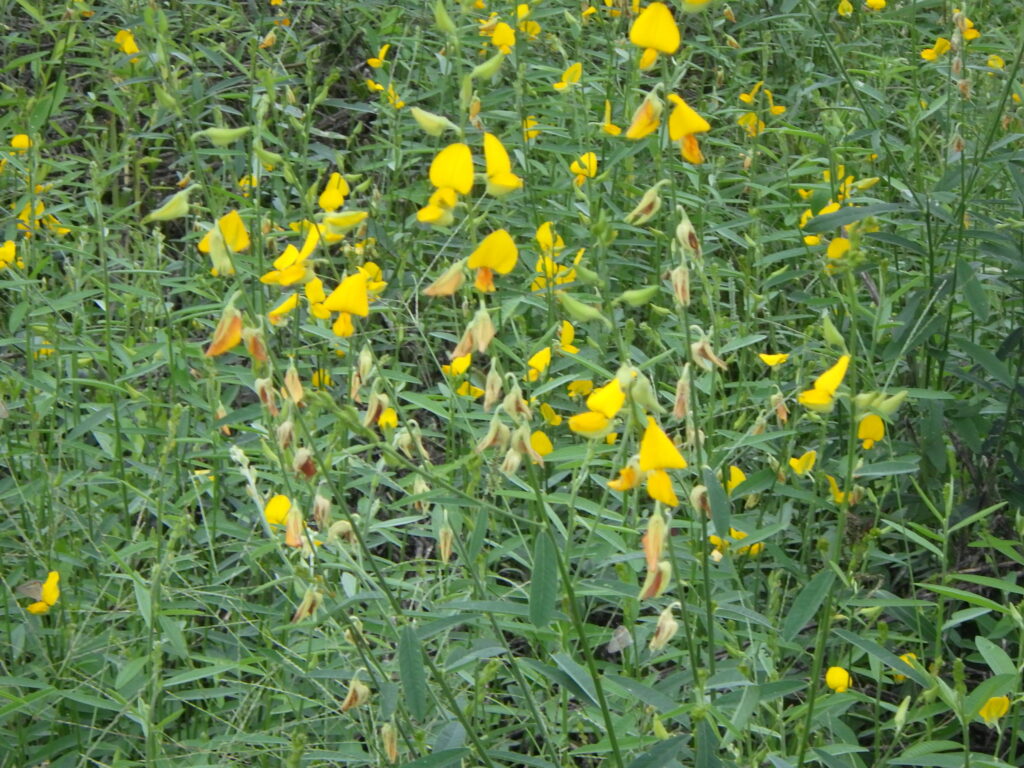
No.1490.a Lupinus polyphyllus
A perennial herb (Flora of Pakistan). The stems are glossy. The leaves are palmately compound, 9 to 17 in number, lanceolate, pointed, glossy on both the upper and lower surfaces. The inflorescence is very long and profusely flowering. The calyx lobes are whole or have minute teeth. The corolla is about three times the length of the calyx and is blue, purple, red, or white. The fruit is flat, black when mature, and covered with dense soft hairs. Native to North America, it is cultivated as an ornamental plant in various countries, including Japan.
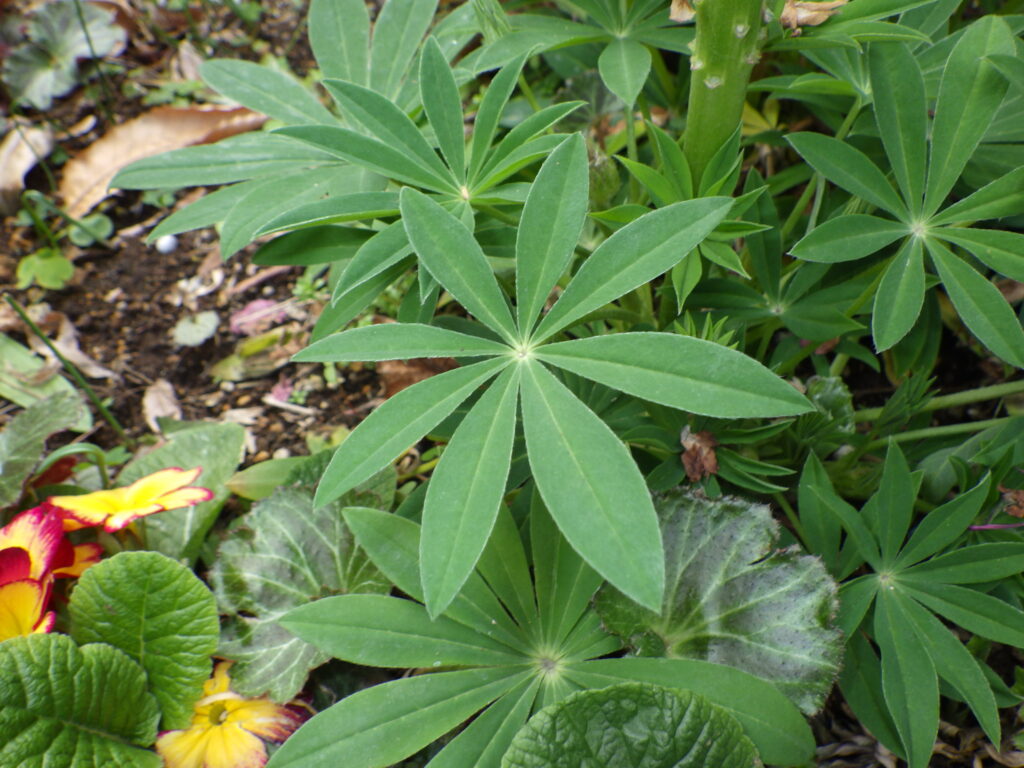
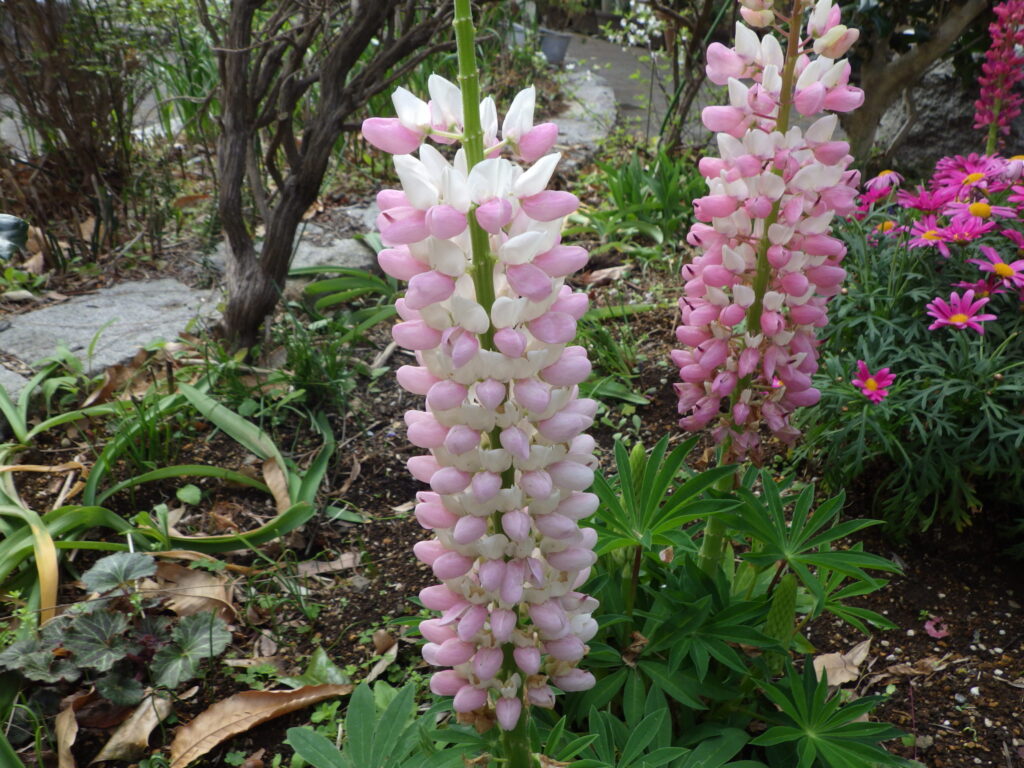
No.1490.b Lupinus texensis (Lupinus texensis)
Also known as bluebonnet, this is an annual plant that grows to about 50 cm tall and is covered in white hairs. The stem is erect. The leaves are alternate, palmately compound, with 5 to 7 leaflets. The leaflets are 3 to 10 cm long and oval-shaped, with long petioles. A raceme inflorescence, 20 to 50 cm long, grows upright at the tip of the stem, densely covered with flowers. The flowers are blue, butterfly-shaped, with white to yellow spots on the standard petal. The fruit is a legume with a hairy surface. Native to North America (Texas), it is cultivated as an ornamental plant in various countries, including Japan.
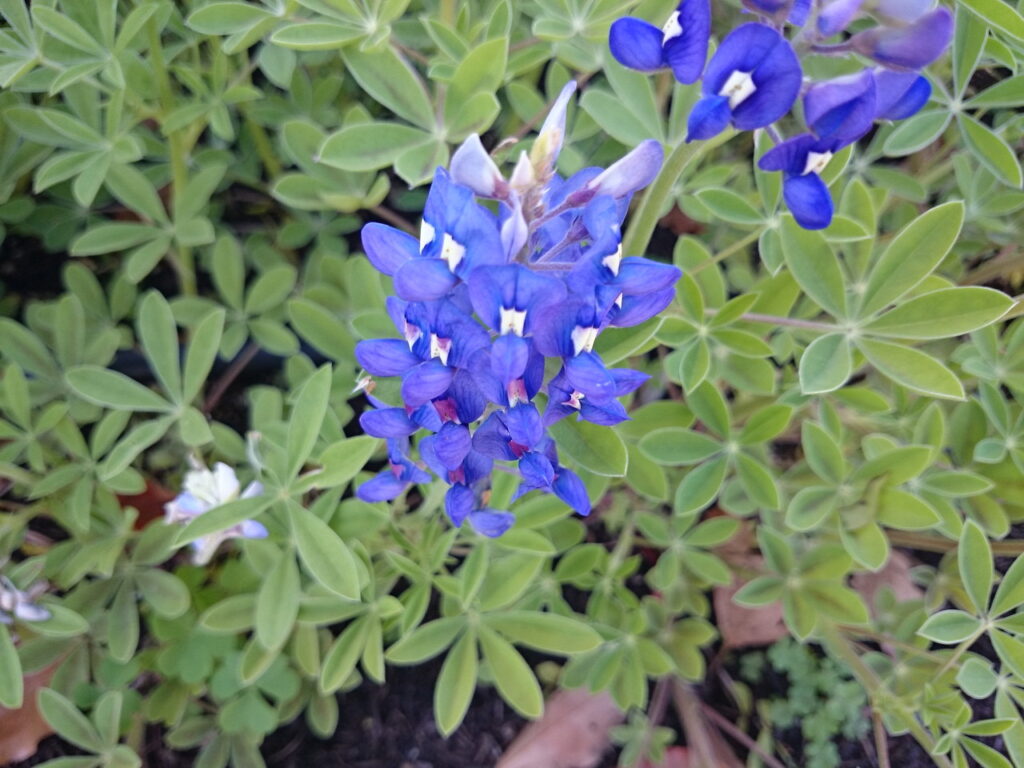
No. 1492 Cytisus scoparius (Broom)
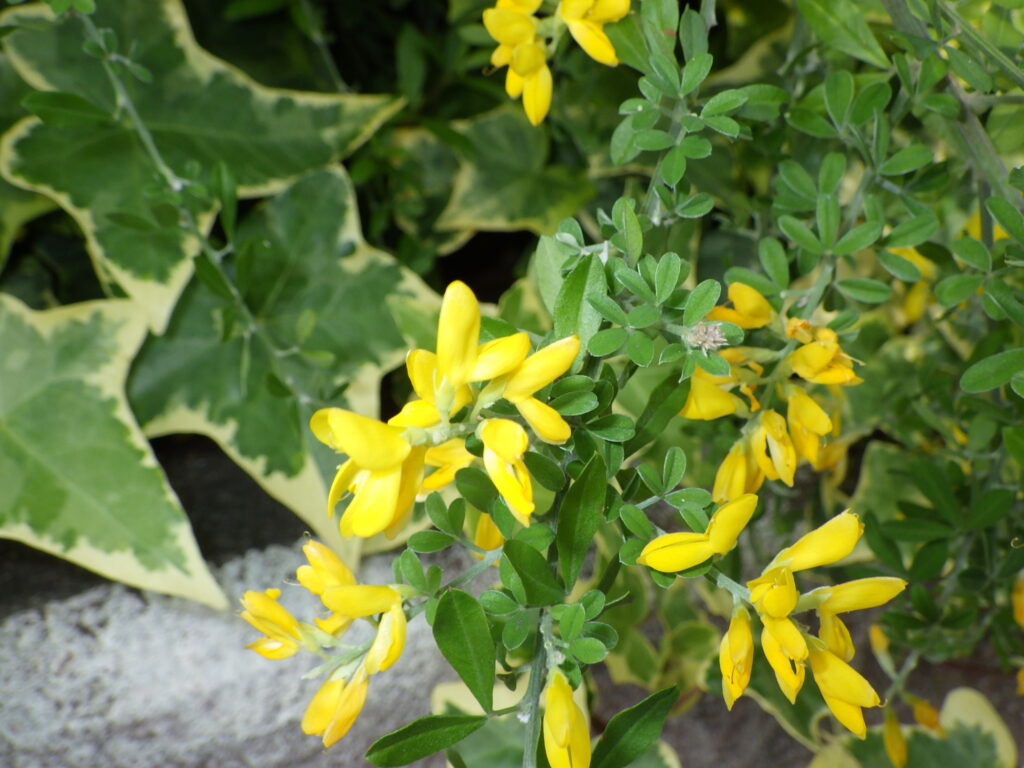
This deciduous shrub branches in a broom-like fashion, and its dark green branches make it appear evergreen (Kanagawa Prefecture Flora Survey Association, 2018). The branch tips often droop. The branches and stems are hairy, angular, and have 4-5 ridges. The leaves usually have three leaflets, but often degenerate to one. The leaflets are 7-13 mm long and 4-6 mm wide. It flowers in May, usually bearing one flower in the leaf axil. The flowers are yellow and about 15 mm long. It is often cultivated in gardens as an ornamental plant and can escape cultivation and become naturalized.
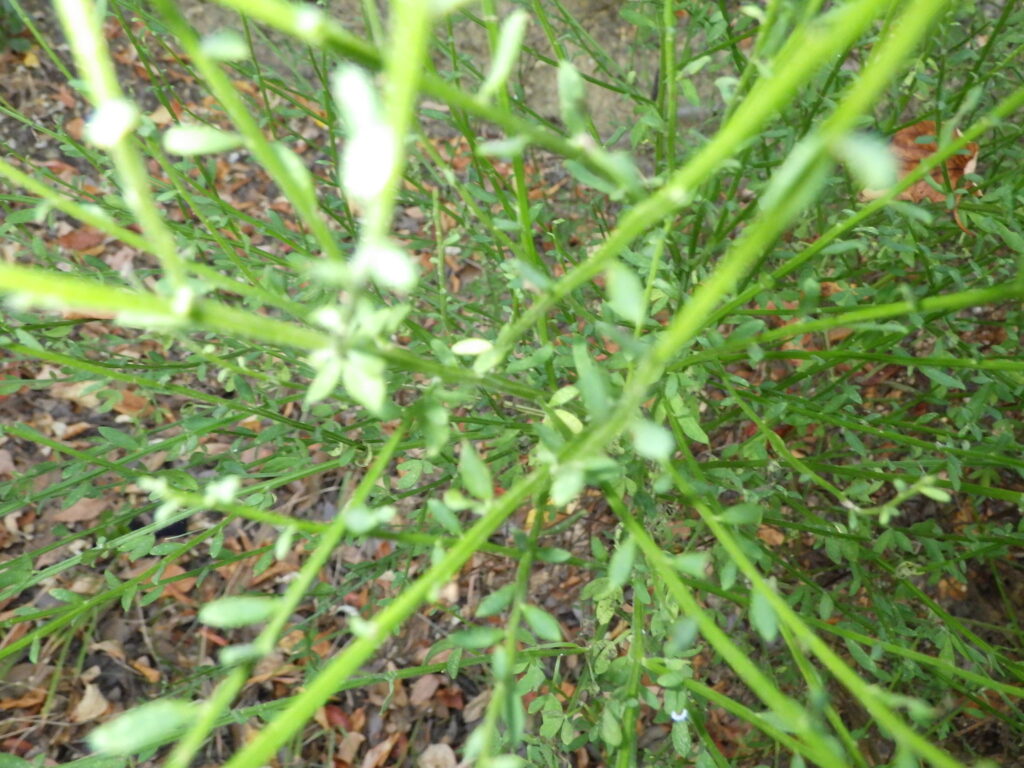
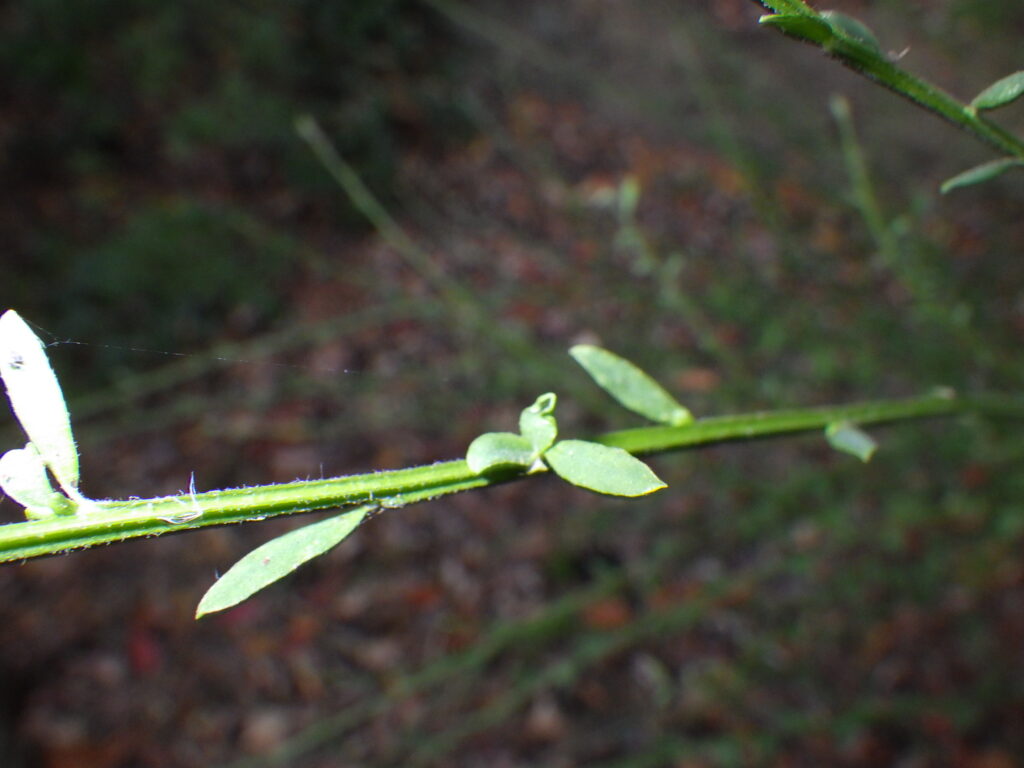
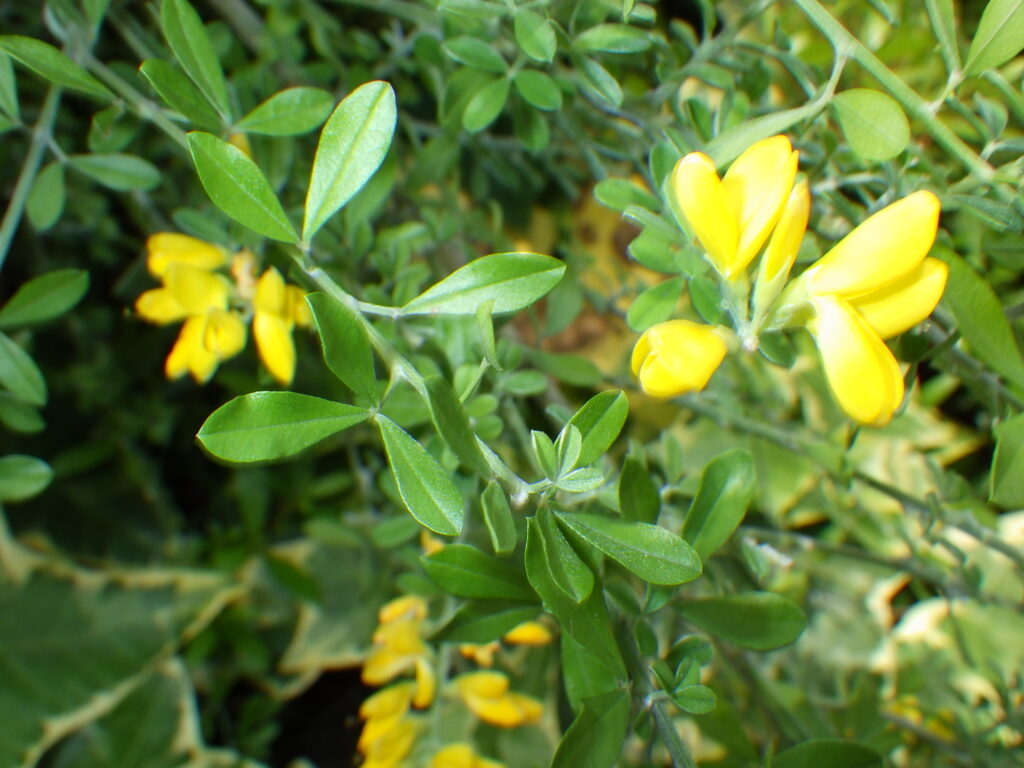
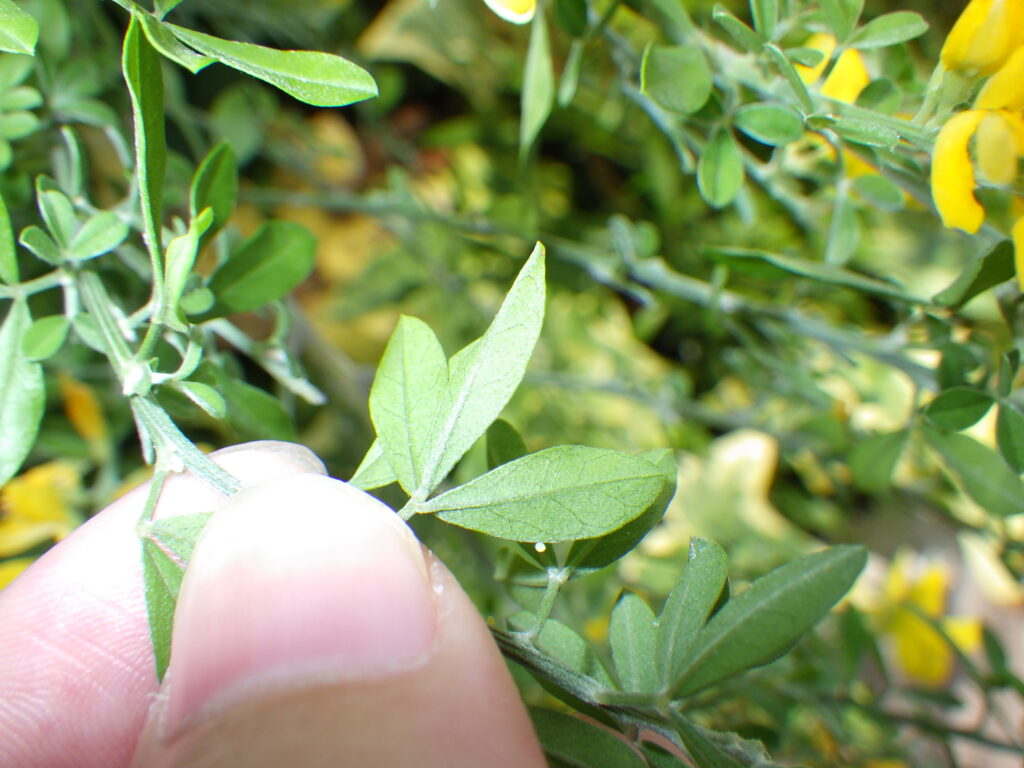
No.1492.a Cytisus x spachianus (Dwarf Broom)
This evergreen hybrid is commonly grown in warm climates as a potted plant or garden tree (Hayashi, 2014). Compared to broom (Cytisus scoparius), it has longer petioles, its flowers grow in clusters at the tips of its branches, and it grows to a height of about 1 meter.
No. 1492.b Amorpha fruticosa
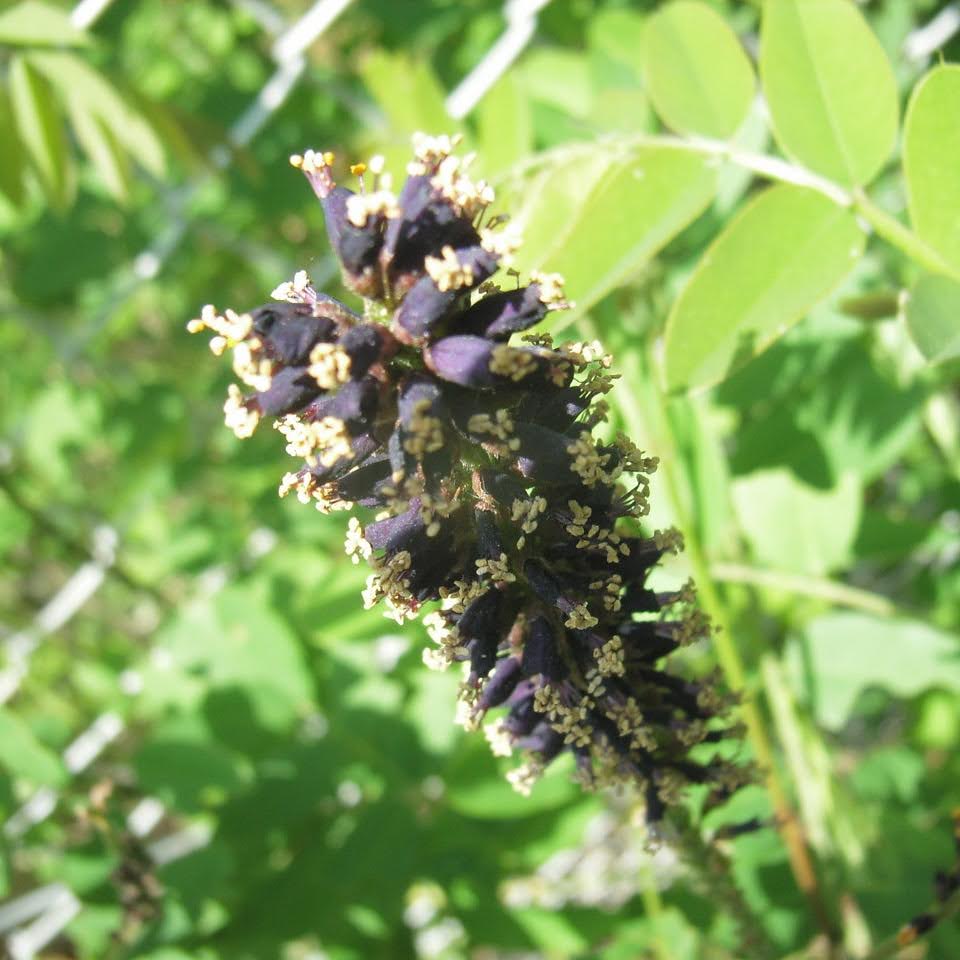
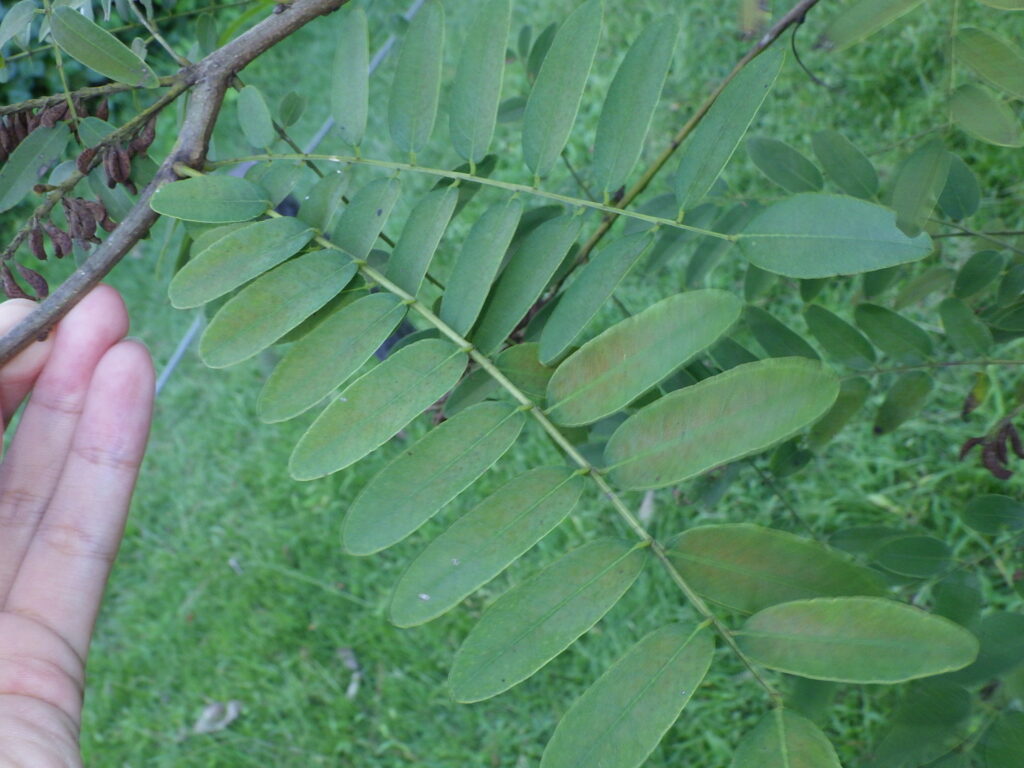
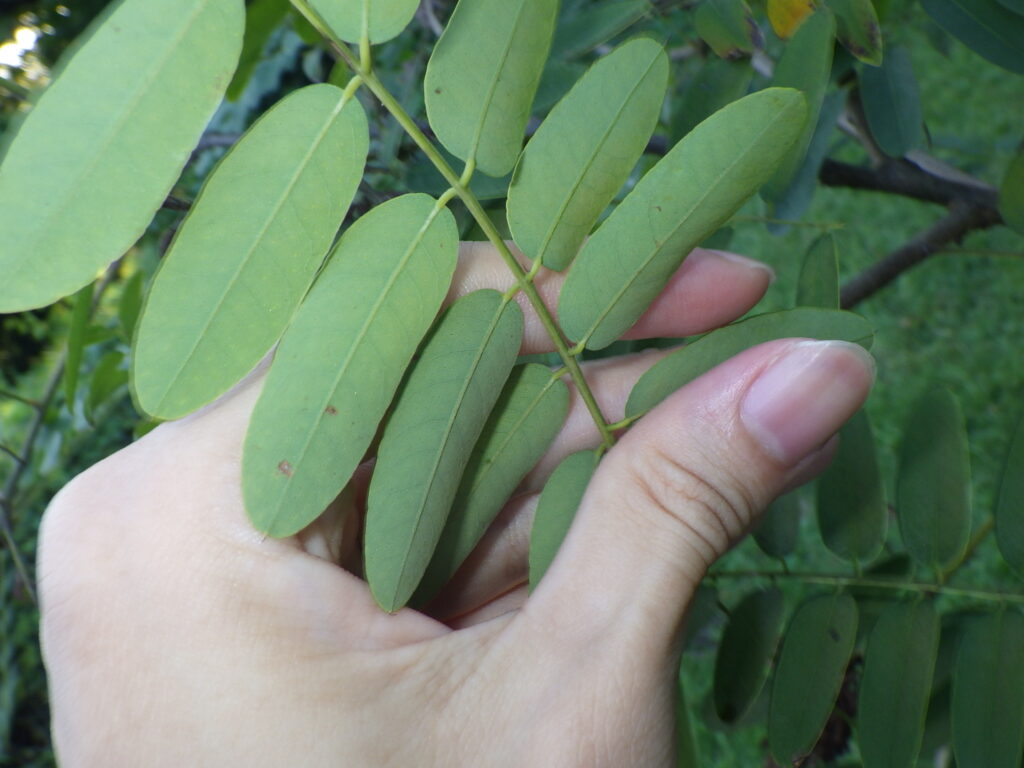
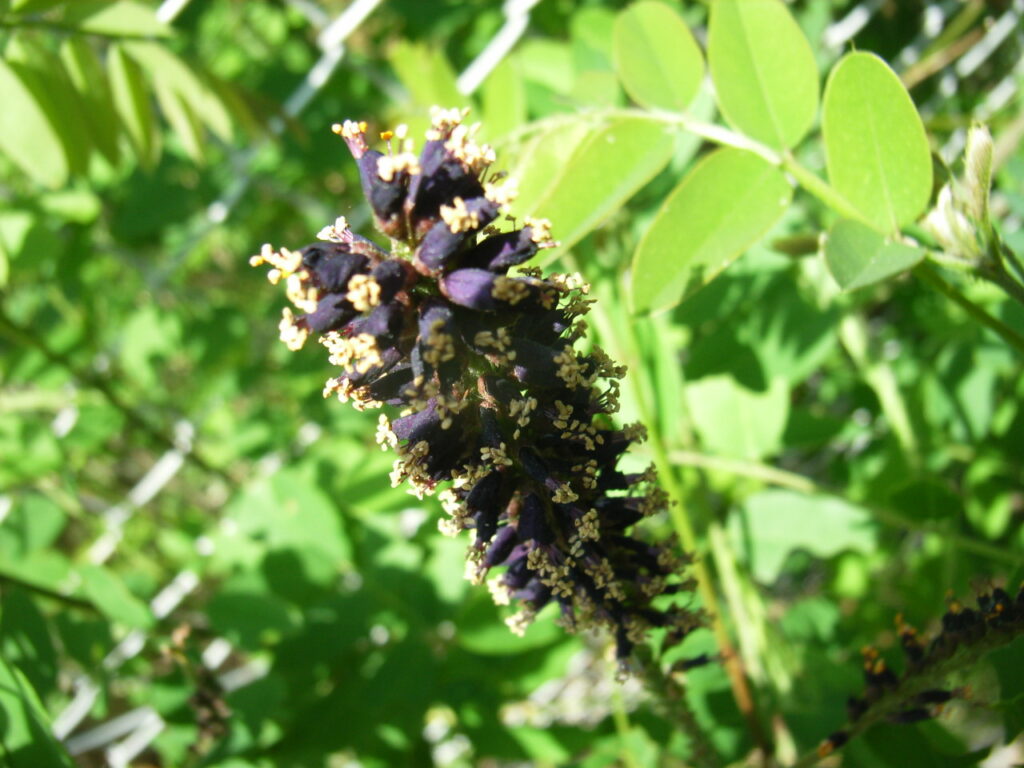
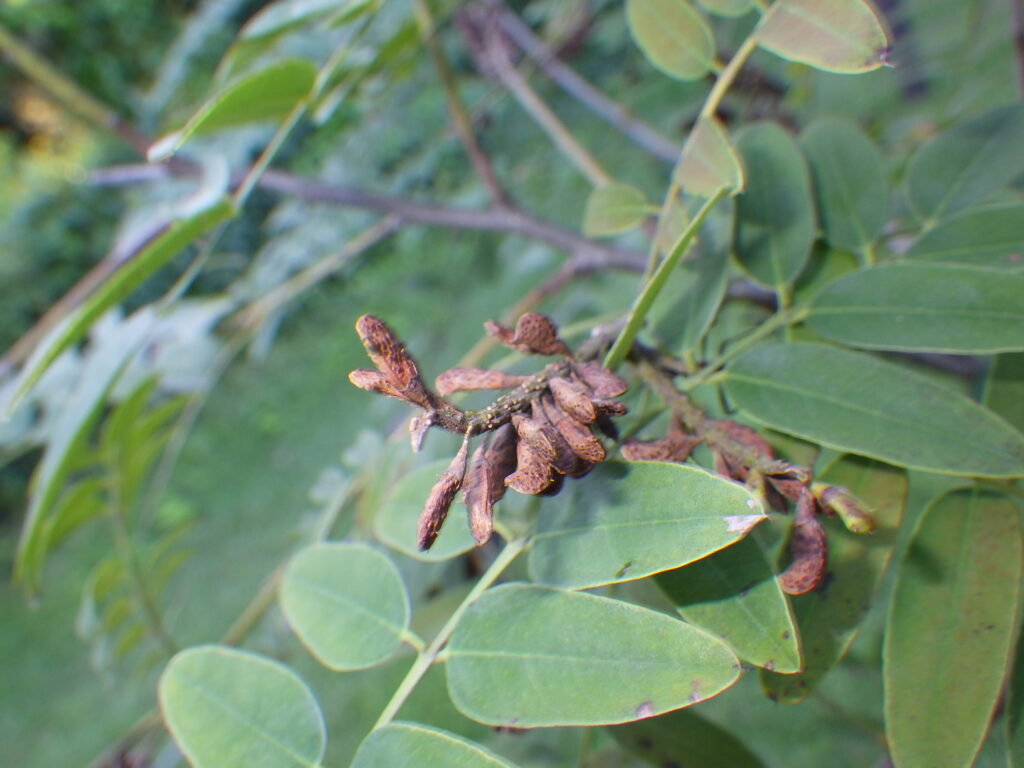
Also known as black-flowered pagoda tree (Kanagawa Prefecture Flora Survey Association, 2018). Deciduous shrub. Pinnately compound leaves with a terminal leaflet, the leaflets are slightly offset, and have glandular dots on the underside. The leaves alone can be mistaken for those of black locust or Sophora flavescens, but these glandular dots are a distinguishing feature. In May and June, it produces several spike-like inflorescences at the tips of the branches, bearing numerous nearly sessile, dark purple flowers. The stamens extend from the petals, and the orange anthers are conspicuous. The legume is about 1 cm long, and the surface, along with the calyx, has blister-like glandular dots. It is a naturalized plant native to North America, which was planted for erosion control and has since naturalized and spread. It grows in riverbeds and roadsides, and many have also been planted in mountainous areas as part of forest road construction, where they have naturalized.
No. 1495 White Clover (Trifolium repens)
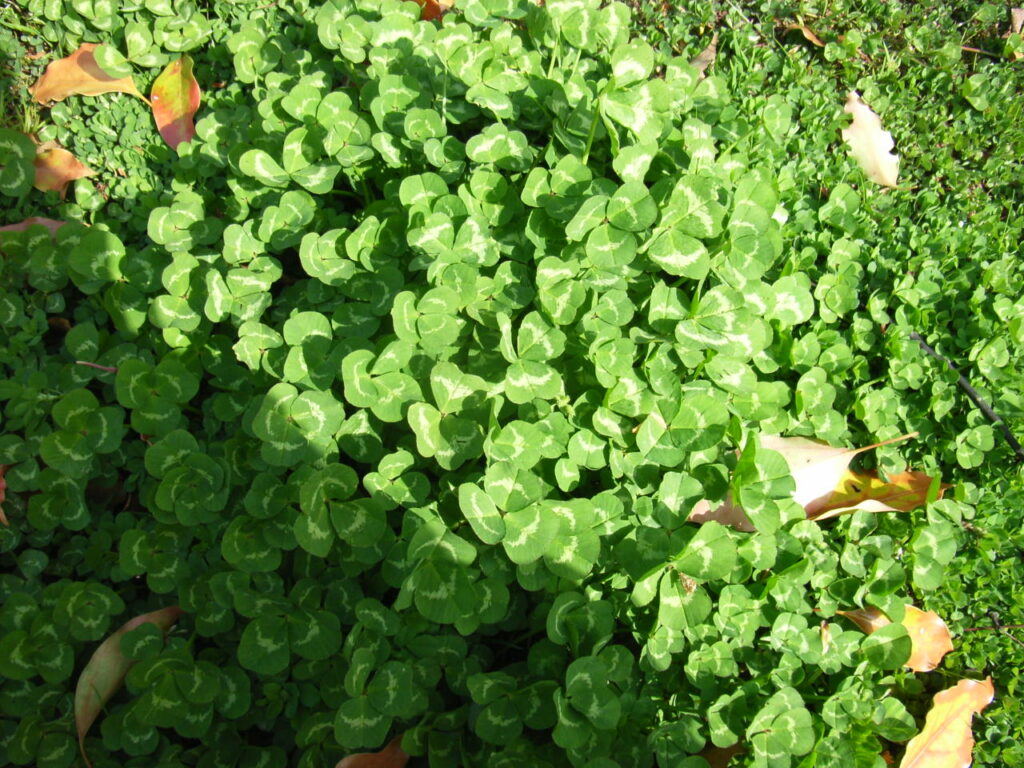
This is a perennial herb (Kanagawa Prefecture Flora Survey Association, 2018). The stems creep along the ground, producing roots from the nodes at various points. The leaves and inflorescences each have long petioles and grow upright. The leaves have three leaflets and are hairless on both sides. The flowers are white and form a nearly spherical inflorescence. The calyx and corolla are persistent and enclose the legume in their withered state. It is a naturalized plant native to Europe, introduced to Japan at the end of the Edo period, and subsequently spread throughout the country after being imported as pasture grass. It grows along roadsides, vacant lots, and around farmland. It is also encroaching on mountainous areas due to erosion control and forest road construction. A variety with pale pink flowers is called Trifolium pratense f. roseum and is rarely seen mixed in with the parent species.
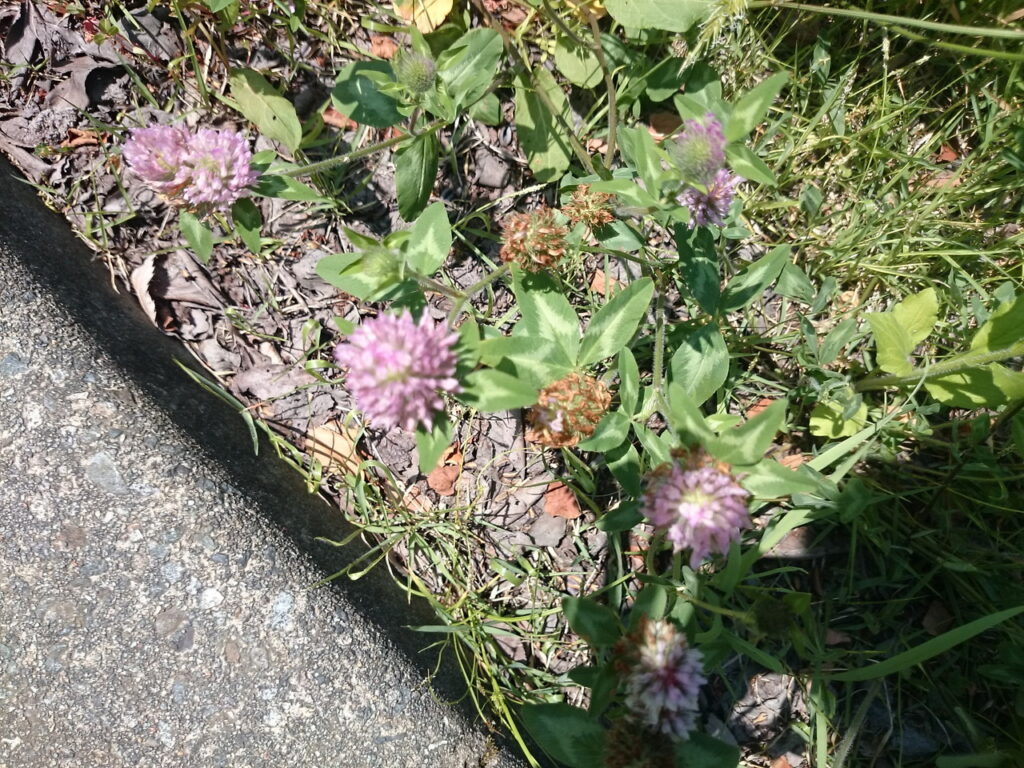
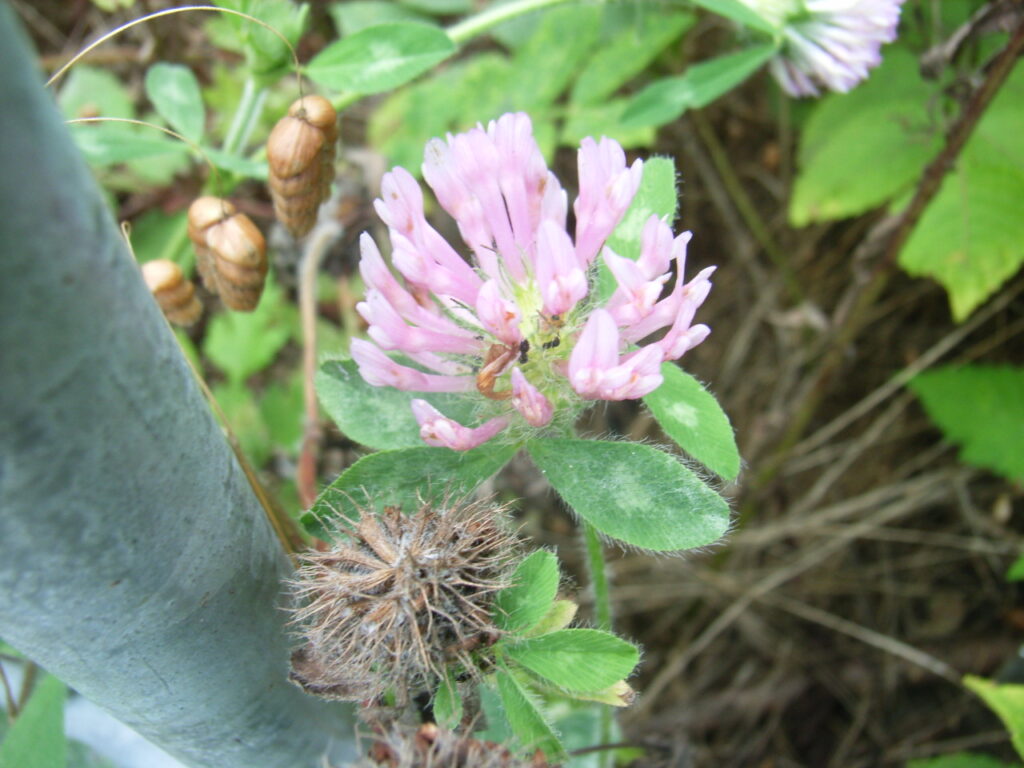
No. 1496 Trifolium pratense (Purple Clover)
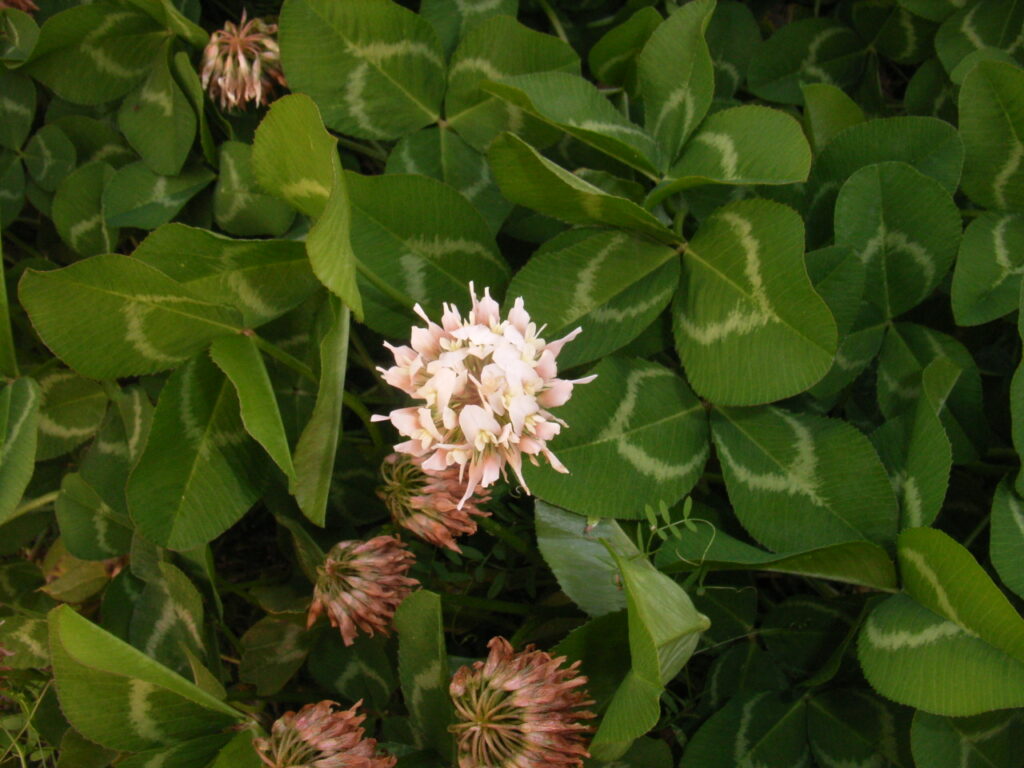
Also known as red clover (Kanagawa Prefecture Flora Survey Association, 2018). A perennial herb. The leaves are alternate except for one pair that are opposite and adjacent to the inflorescence. The inflorescence is terminal and, because the pedicels are short, is half-embedded between the opposite leaves, making it almost spherical. The flowers are pale pink and almost sessile. The calyx is tubular with five lobes at the tip, and the lowest lobe is almost twice as long as the other four calyx teeth. It is a naturalized plant native to Europe, introduced to Japan as pasture grass around the time of the Meiji Restoration, and has since naturalized throughout the country. It is widely distributed except in high mountainous areas and grows on embankments and roadsides around farmland. A variety with white flowers is called white red clover (also known as 'Sekka-tsumekusa') f. albiflorum, and is rarely collected mixed in with the parent species.
No.1498.a Trifolium dubium
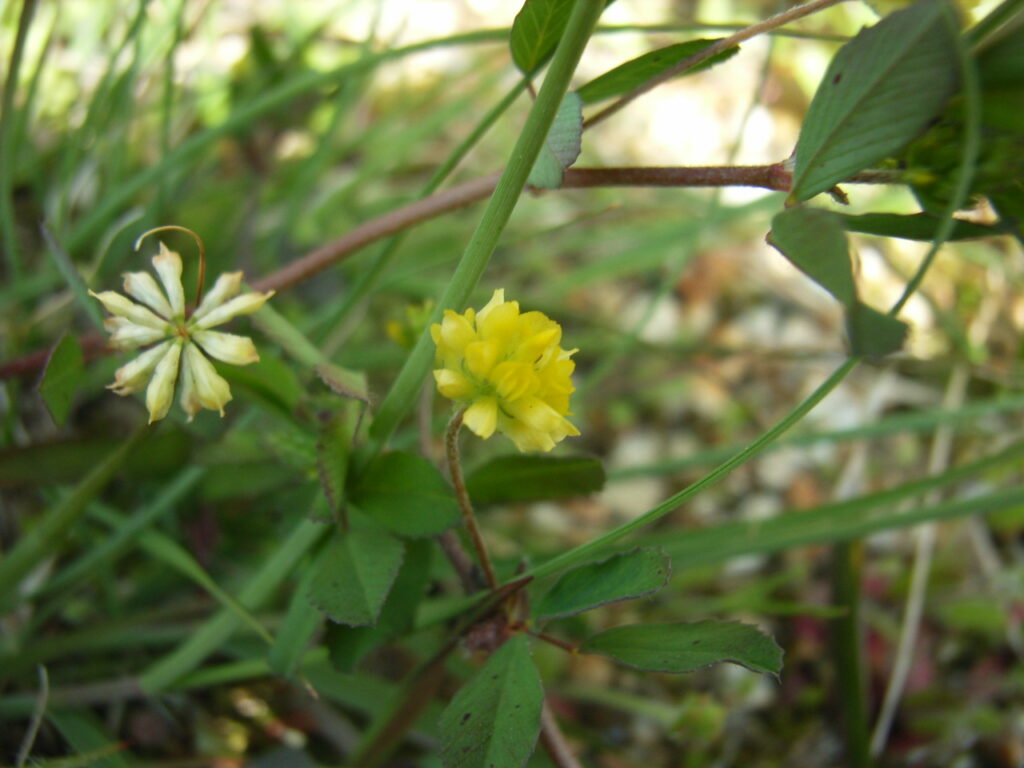
This is an annual plant (Kanagawa Prefecture Flora Survey Association, 2018). The stem is erect or spreads along the ground, reaching a height of 20-40 cm. The leaves have three leaflets, which are elliptical to obovate. The tip of the terminal leaflet is obtuse to slightly notched. Branches longer than the leaves, 1-2 cm long, emerge from the leaf axils, bearing 5-15 pale yellow flowers with short pedicels at the top. The calyx is 5-lobed, with the middle to lower lobes longer than the calyx tube. The flowers later turn pale brown and enclose the legume. This is a naturalized plant originally from Europe. It grows along roadsides and in vacant lots. From Makino's specimen, it is known to have been introduced to Japan during the Meiji era, and the Japanese name was given to specimens collected near Akabane, Tokyo. Since then, it has naturalized throughout Japan and is somewhat common in Honshu (south of central Japan).
No.1498.b Trifolium campestre
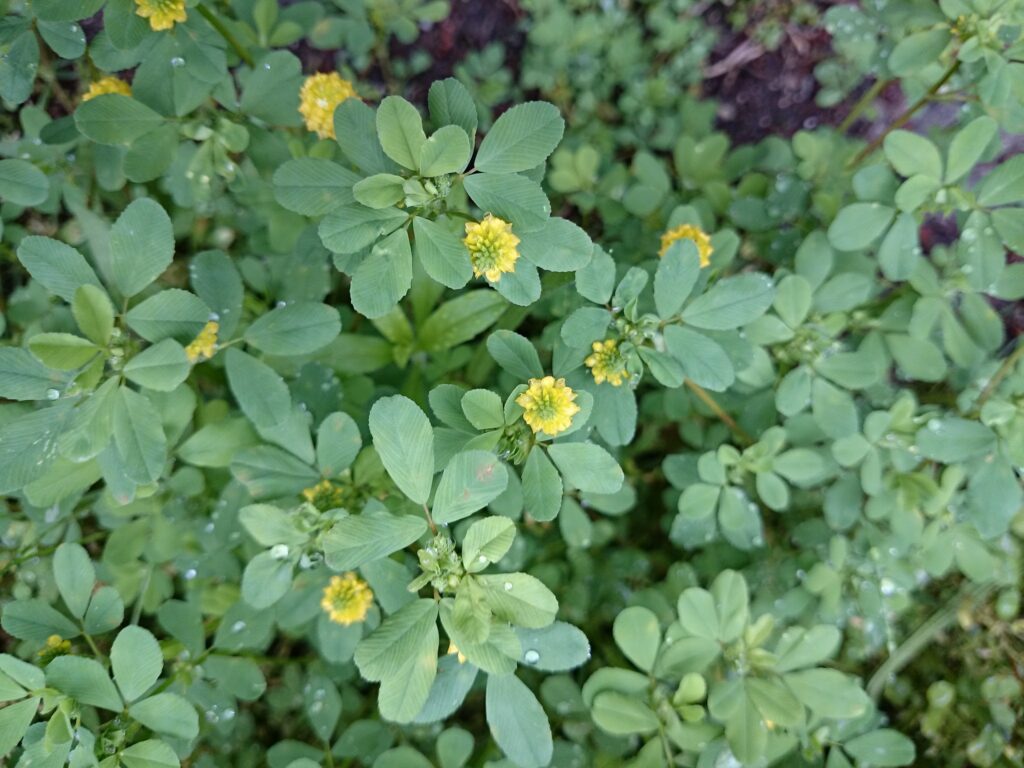
This is an annual plant (Kanagawa Prefecture Flora Survey Association, 2018). It resembles Trifolium dubium, but both its leaves and flowers are slightly larger. It can be distinguished by the 20-30 flowers per inflorescence and the remarkably large corolla when it becomes fruit. It is a naturalized plant originally from Europe. It was given the Japanese name above because it naturalized in Yokohama. Since then, it has been sporadically collected in various parts of Honshu, but less so than Trifolium dubium.
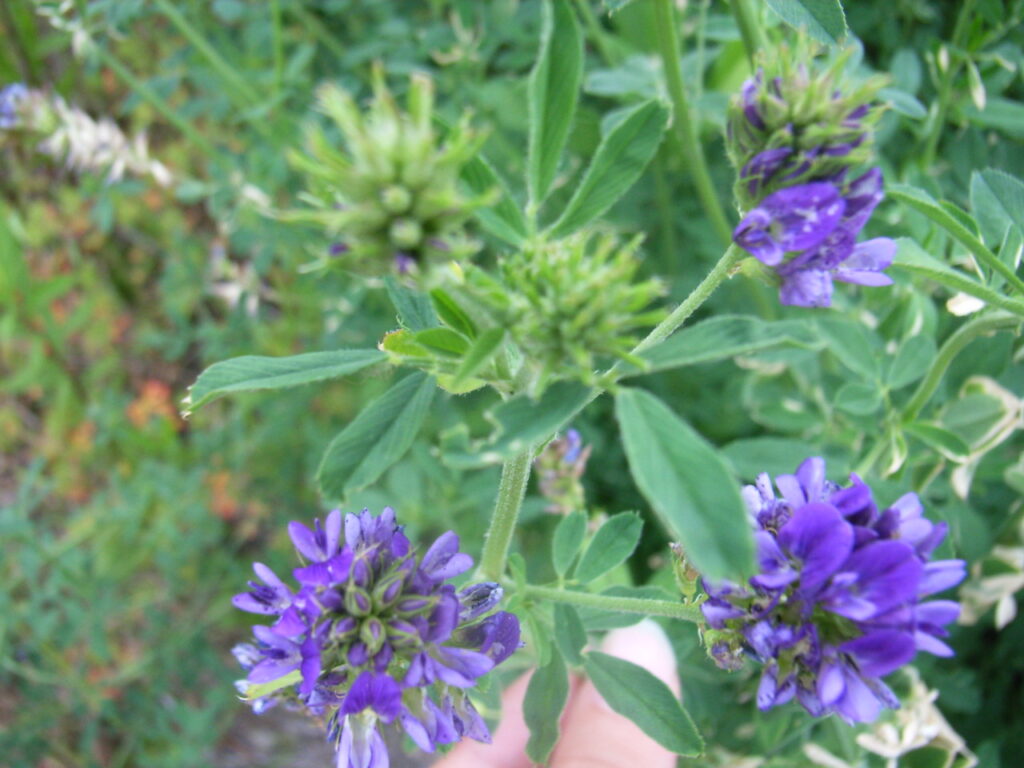
No. 1502 Medicago sativa
Perennial herb (Kanagawa Prefecture Flora Survey Association, 2018). The stem is erect, reaching a height of 80 cm, and branches in the upper part. The leaflets are narrowly elliptical, 3 to 6 times longer than they are wide, which alone distinguishes it from other species in the genus Medicago. The stipules are narrowly lanceolate and entire. The flowers are purple to bluish-purple, and 10 to 30 flowers are clustered in a raceme. The calyx lobes are linear. The legume is flattened, spirally wound 1 to 3 times, without spines, with a reticulate vein pattern on the surface, and contains several seeds. It is a naturalized plant native to the Mediterranean coast, imported as pasture grass in the early Meiji era, and has become naturalized throughout Japan.
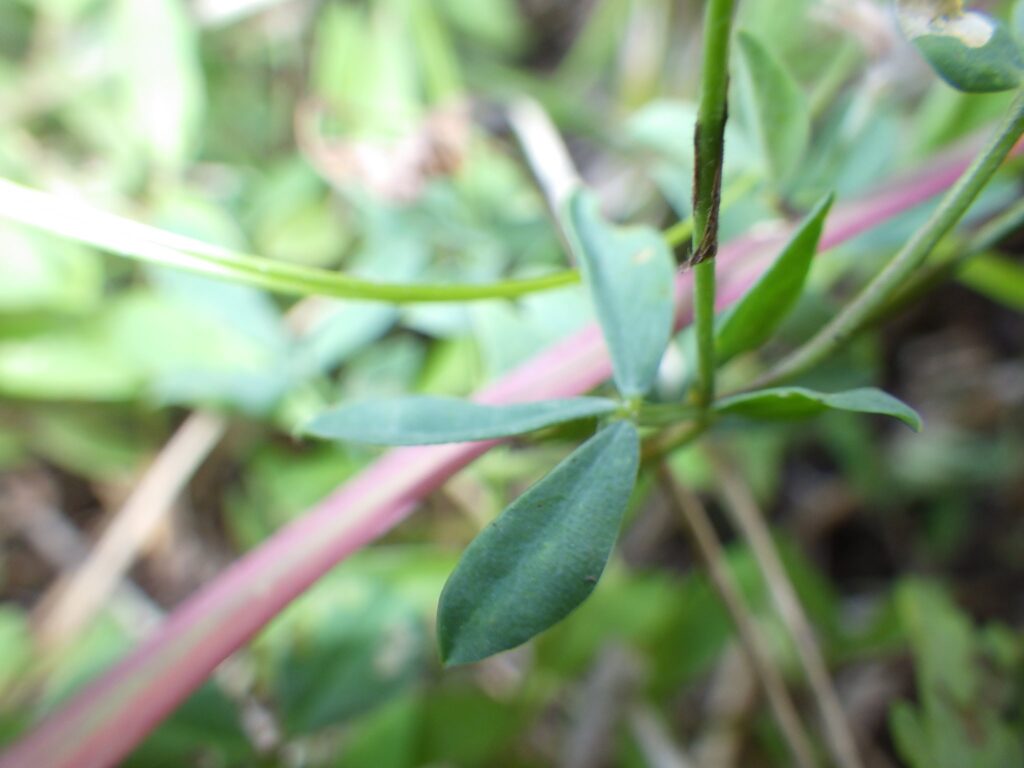
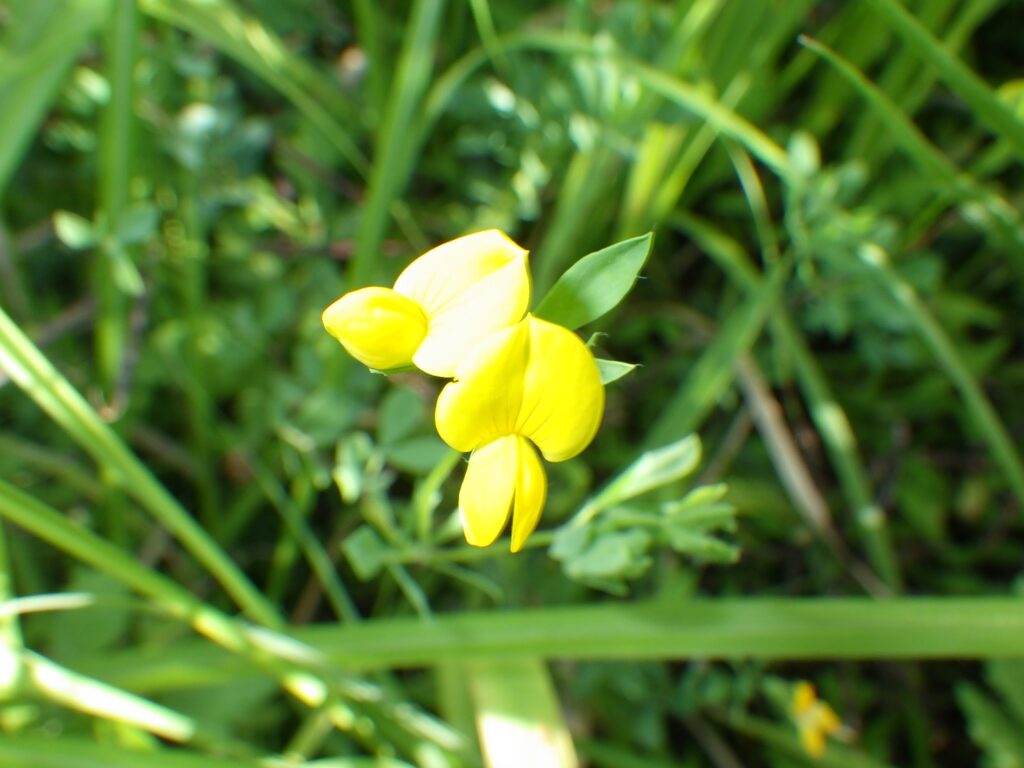
No.1503 Lotus corniculatus subsp. japonicus
This is a perennial herb (Kanagawa Prefecture Flora Survey Association, 2018). The stem is hairless, creeping along the ground at the base and rising obliquely at the tip. It mainly flowers in May and June, bearing 1 to 3 flowers, mostly 2, in umbels. The flowers are bright yellow and about 15 mm long. The legume is linear, 2 to 3 cm long, and splits open when ripe, scattering the seeds. It is distributed in Hokkaido, Honshu, Shikoku, Kyushu, the Ryukyu Islands, Korea, China, and the Himalayas. It grows on embankments, roadsides, and in grasslands. This species has both hairless calyxes and those with scattered long hairs; the latter is similar to *Lotus corniculatus* in this respect, but if the leaves and stems are hairless and there are approximately 2 flowers each, it is considered *Lotus corniculatus*. After flowering, the petals turn reddish; this is called *Lotus corniculatus f. versicolor* and is rarely seen.
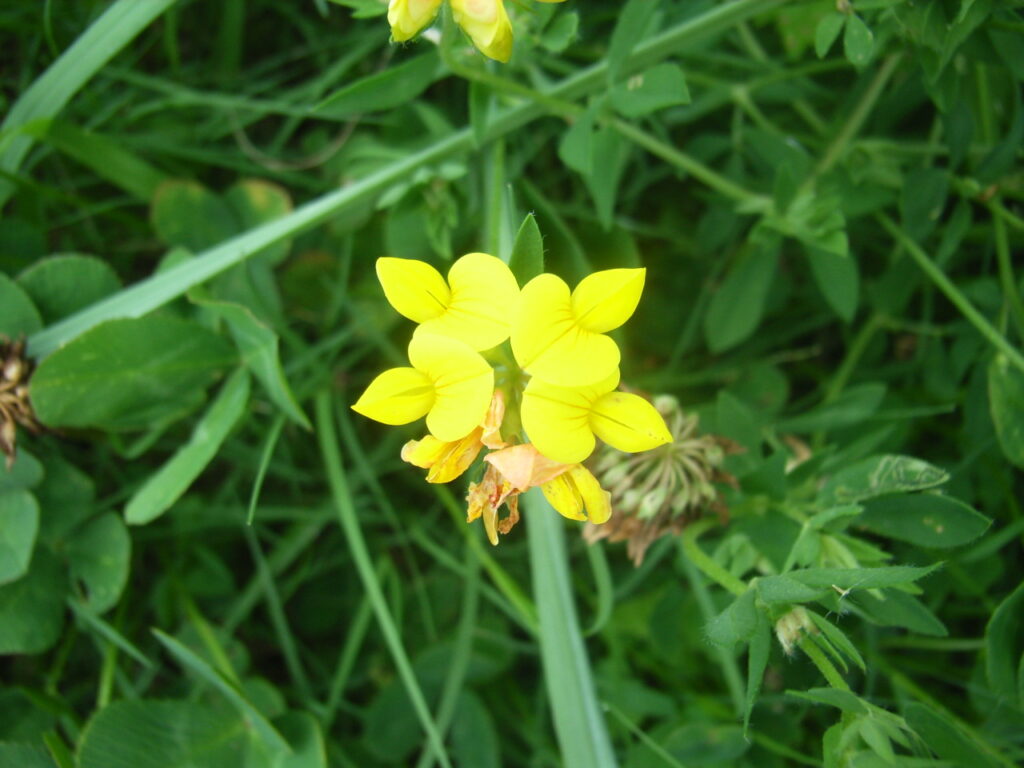
No. 1504 Lotus corniculatus subsp. corniculatus
This naturalized plant, originally from Europe, is the basic subspecies of the native Lotus corniculatus (Kanagawa Prefecture Flora Survey Association, 2018). It is recorded in roadsides and vacant lots in urban areas. The differences from Lotus corniculatus are subtle, but it can be distinguished by the fact that the calyx lobes are shorter than or equal in length to the calyx tube, it bears 3 to 8 flowers, and the stems and leaves are usually covered with soft white hairs.
No. 1505 Indigofera pseudotinctoria
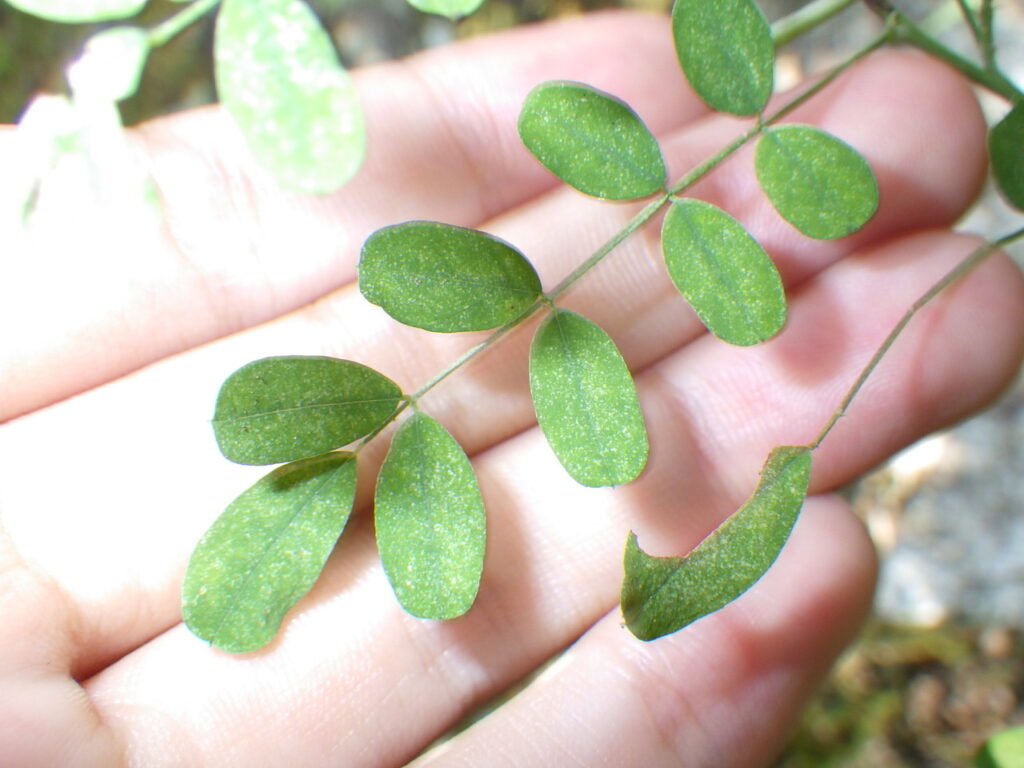
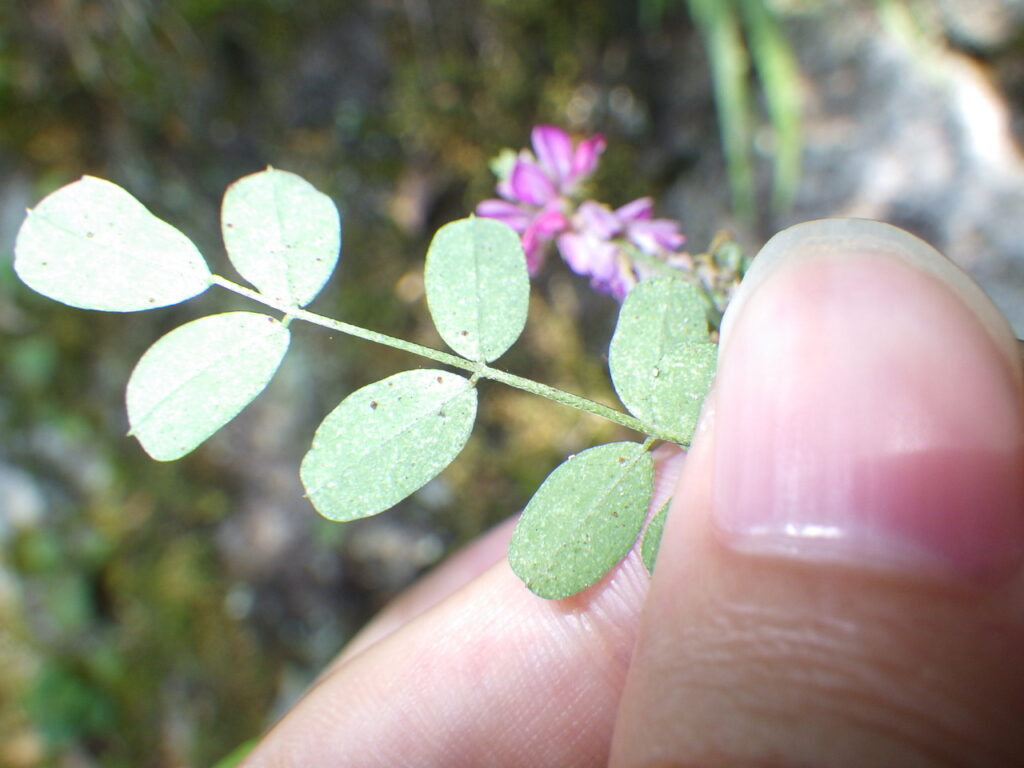
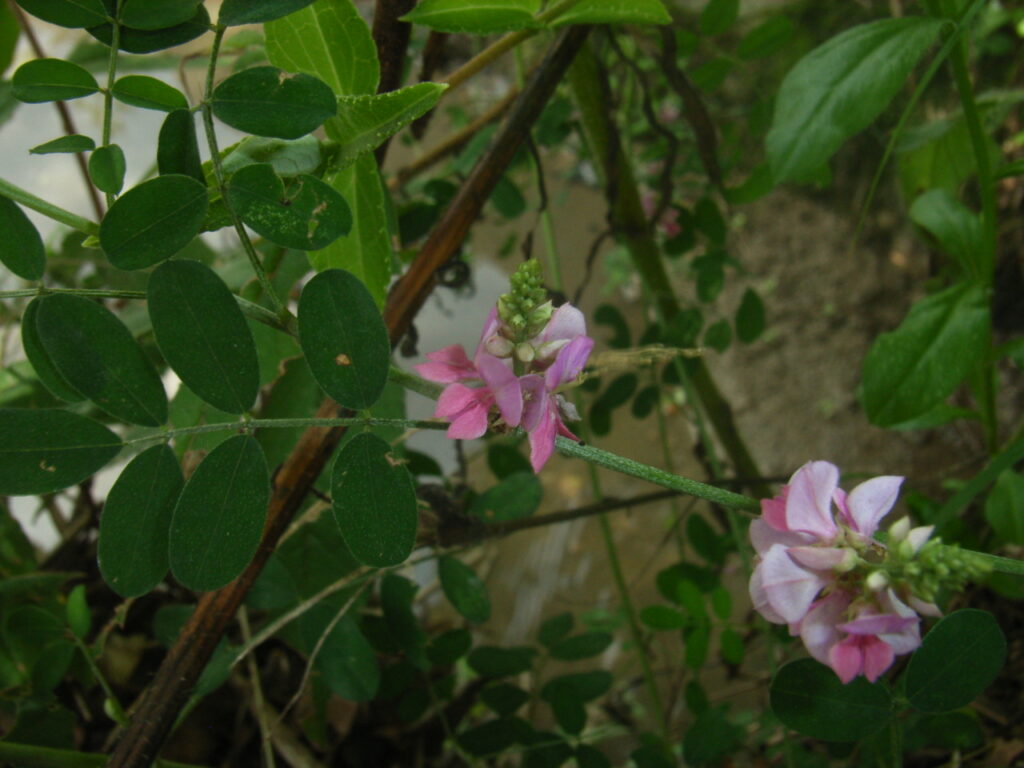
Deciduous shrub (Kanagawa Prefecture Flora Survey Association, 2018). Stems usually grow obliquely and reach a length of about 1m. Leaves are odd-pinnately compound, consisting of about 10 leaflets. The leaflets are oblong, about 2cm long, and covered with clove-shaped hairs on both the upper and lower surfaces. Flowers bloom from July to September, with reddish-purple flowers densely arranged in short racemes emerging from the leaf axils. When touched by insects, the stamens and pistil spring up from the keel petal. The legume is cylindrical, 3cm long, and splits open when ripe, scattering the seeds. Distributed in Honshu, Shikoku, Kyushu; Korea, and China. Grows on earthen embankments, forest edges, etc. Individuals with white flowers are called *Indigofera pseudotinctoria* f. albiflora and are rarely seen.
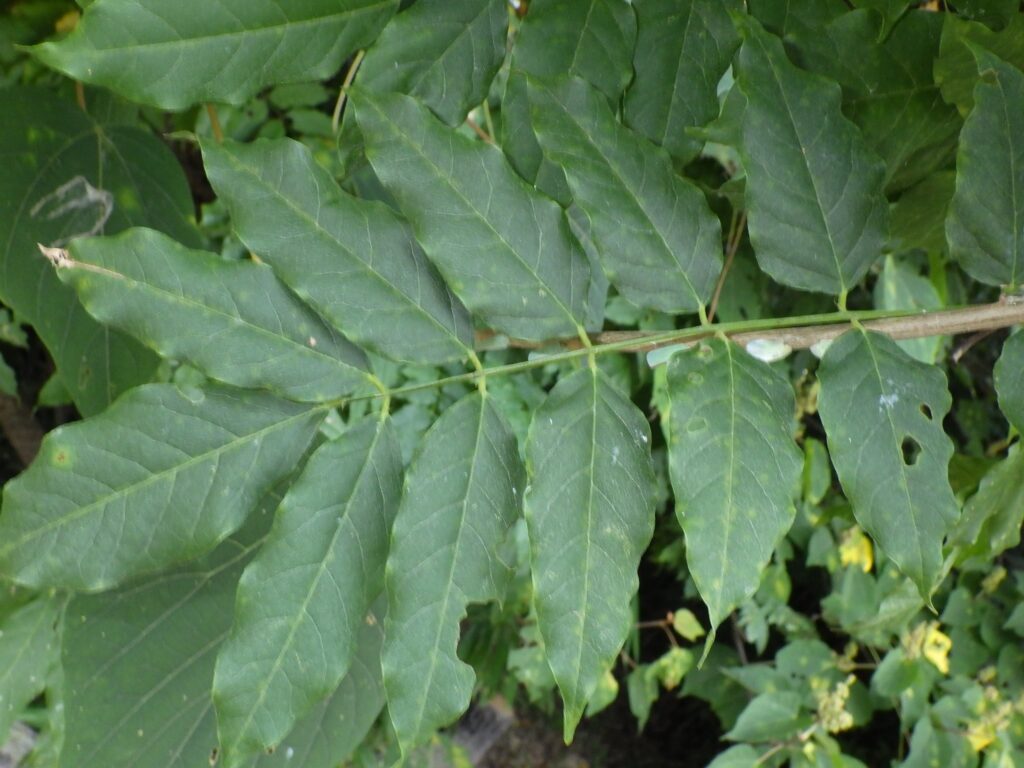
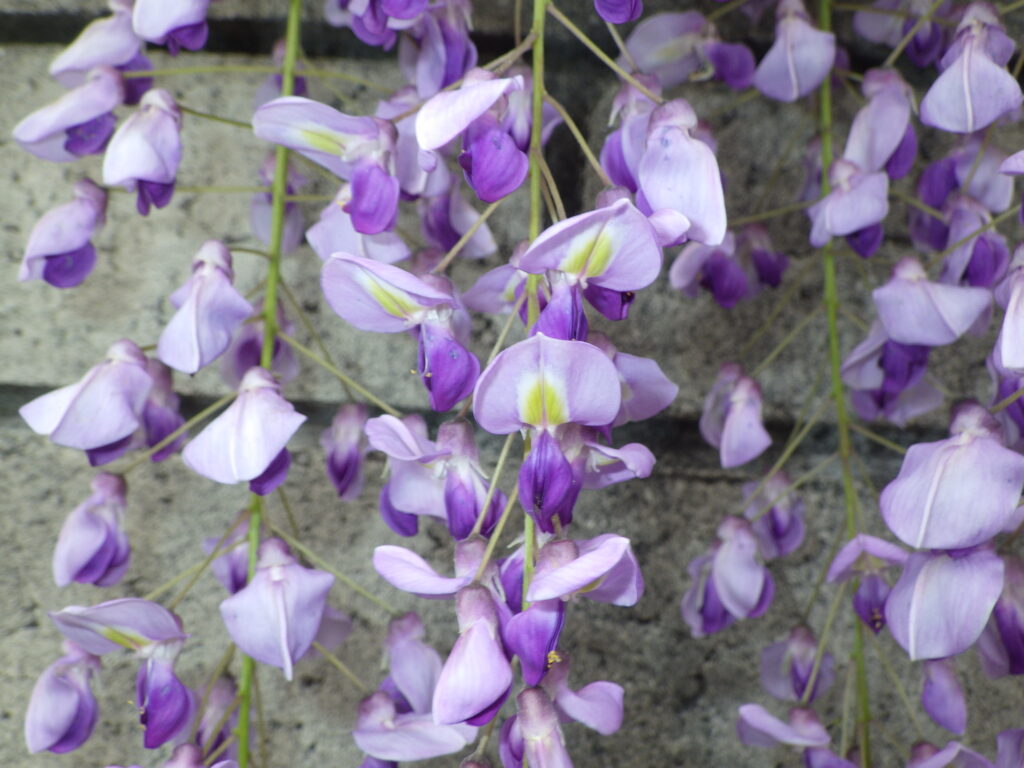
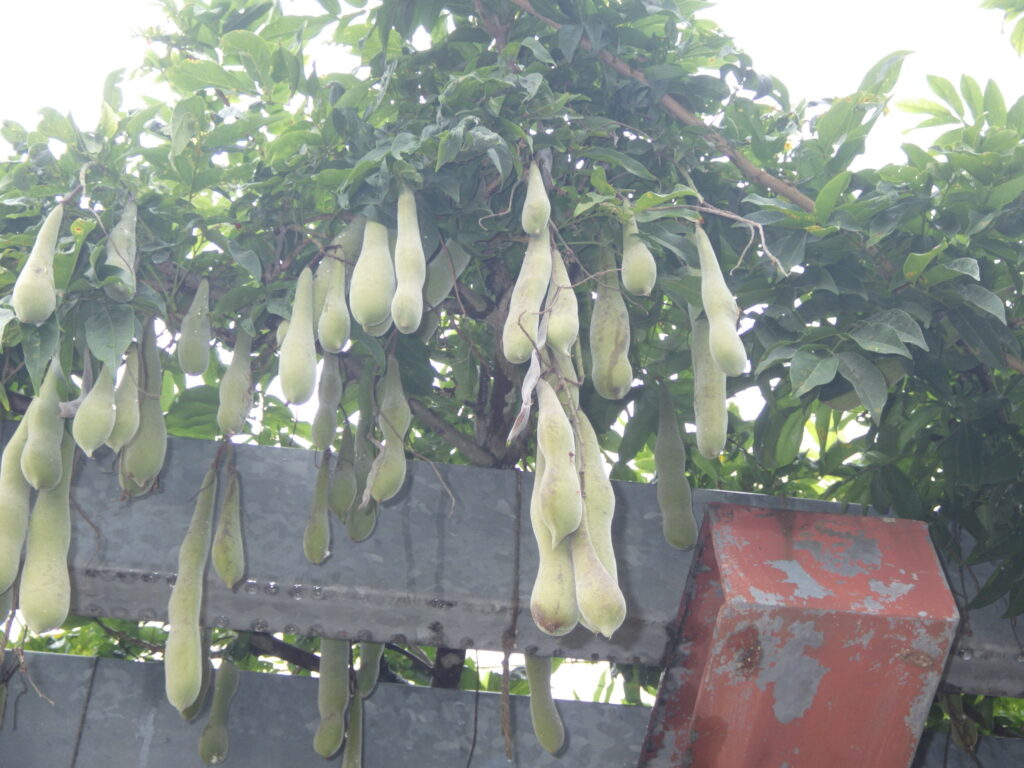
No. 1510 Fuji (Wisteria floribunda)
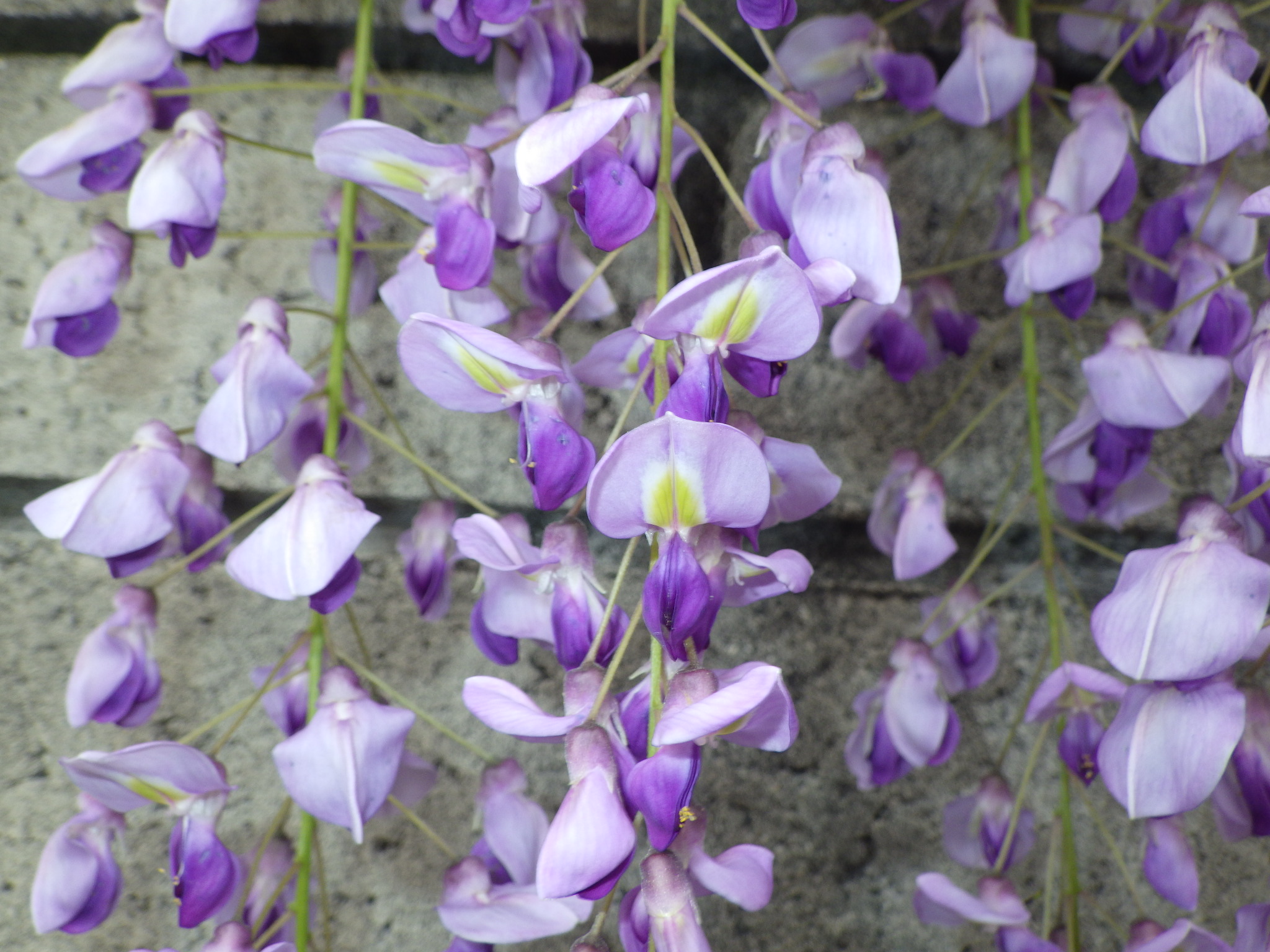
Also known as Noda Fuji (Kanagawa Prefecture Flora Survey Association, 2018). A deciduous climbing woody plant. The vines twine counterclockwise, climbing high up trees. They are hairy when young but later become hairless. The leaflets are oval-shaped with pointed tips, and there are 11 to 19 of them. In May, large racemes hang downwards at the tips of the current year's branches. The inflorescence is about 30 cm long, but sometimes grows even longer. The flowers are purple, about 2 cm long, and are frequently visited by bumblebees. The legumes are somewhat flattened, densely covered with short, velvety hairs, and reach 20 cm in length. When ripe, they burst open, splitting into two sections and scattering disc-shaped seeds about 12 mm in diameter. The seeds are brown with irregular dark brown patterns on the surface. It is distributed in Honshu, Shikoku, and Kyushu. It grows in forest edges and bright woodlands.
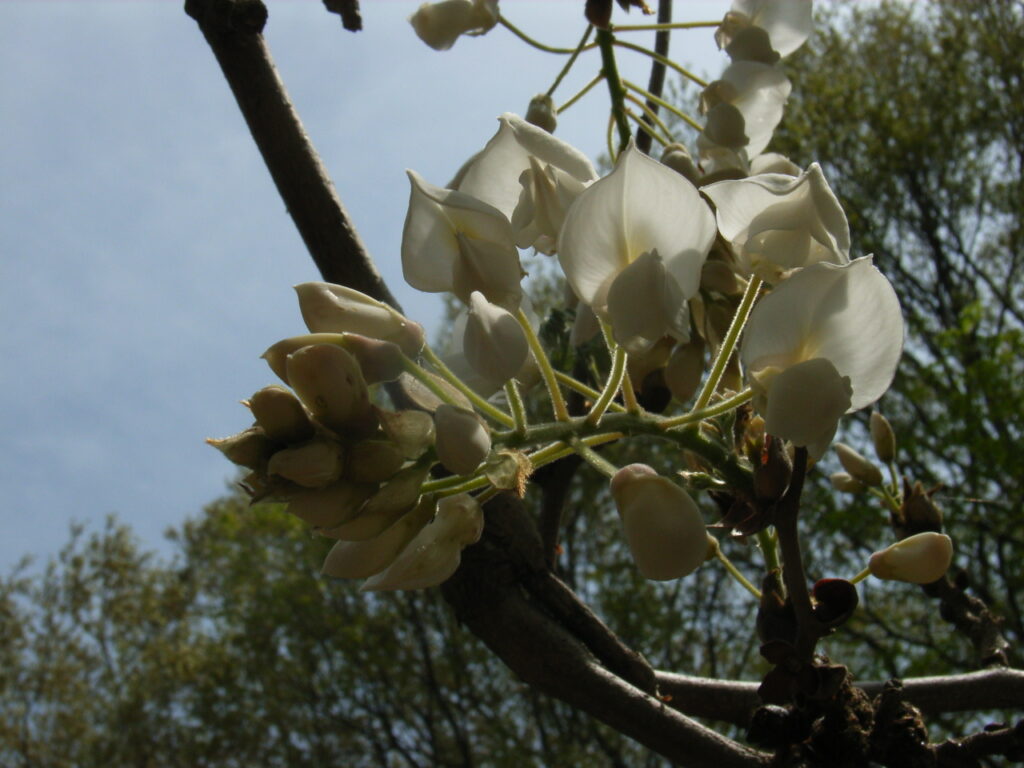
No. 1510.1 White Wisteria (Wisteria floribunda f. alba)
A cultivated variety of wisteria that produces white flowers.
No. 1512 Summer Wisteria (Wisteria japonica)
This is a deciduous climbing woody plant (Kanagawa Prefecture Flora Survey Association, 2018). The stems twine counterclockwise (climbing from right to left when viewed from the front), and the overall appearance resembles wisteria, but the inflorescence is slender and long. The flowers are greenish-white and bloom in summer. It is distributed in Honshu (west of the Tokai region), Shikoku, and Kyushu. It grows in forests and forest edges in hilly areas. In eastern Japan, secondary spread from introduced individuals can sometimes be seen near parks and temples.
No.1520 Astragalus sinicus
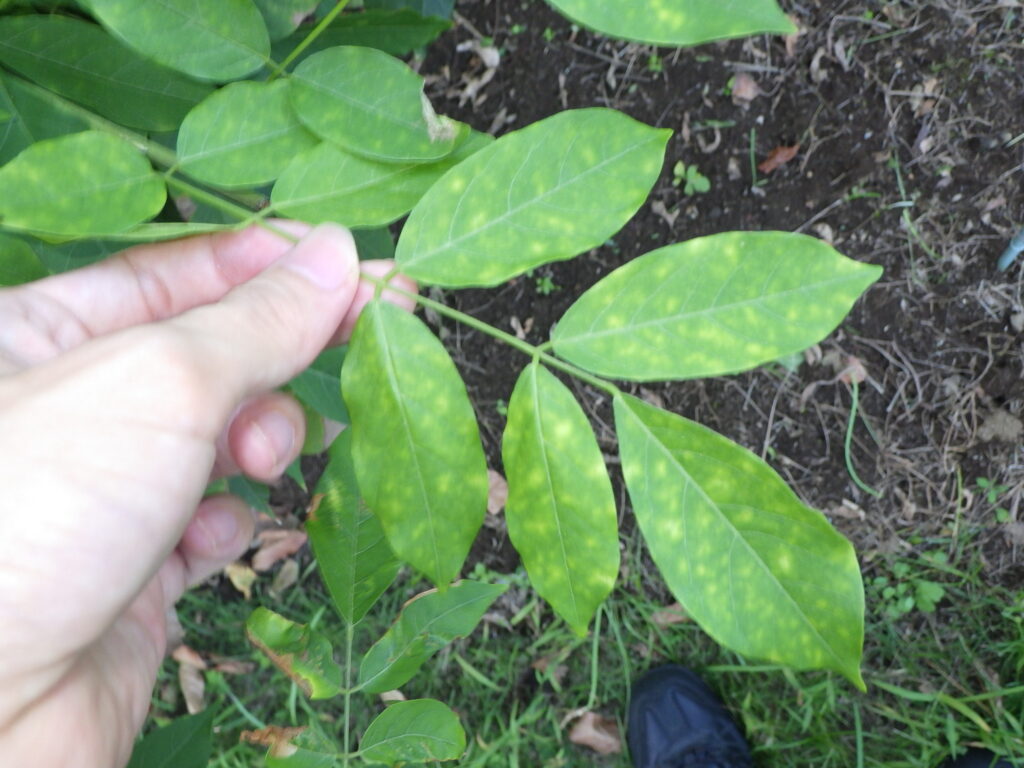
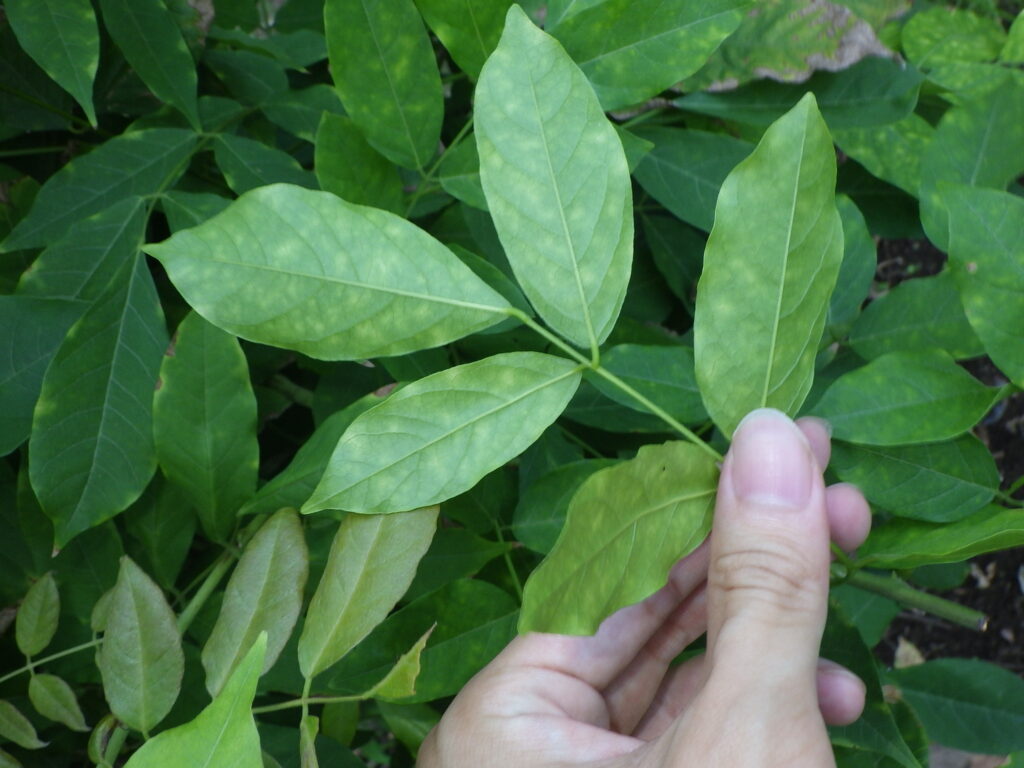
Also known as Renge (Kanagawa Prefecture Flora Survey Association, 2018). A biennial herb. The base of the stem creeps along the ground and branches profusely. The leaves are odd-pinnately compound with about 10 leaflets, and the leaflets are oval-shaped. It flowers in April and May, with about 10 flowers in a somewhat umbel-like arrangement at the end of long stalks that rise from the leaf axils. The flowers are reddish-purple and about 12 mm long. The keel petal is larger than the wing petal and is broad at the tip. The legume is hairless, divided into two chambers, and ripens to black. Native to China, it has been cultivated as green manure in rice paddies since ancient times and has also become naturalized. It grows in wetlands such as rice paddies and riverbanks. The variety with white flowers is called Shirobana-genge f. leucanthus.
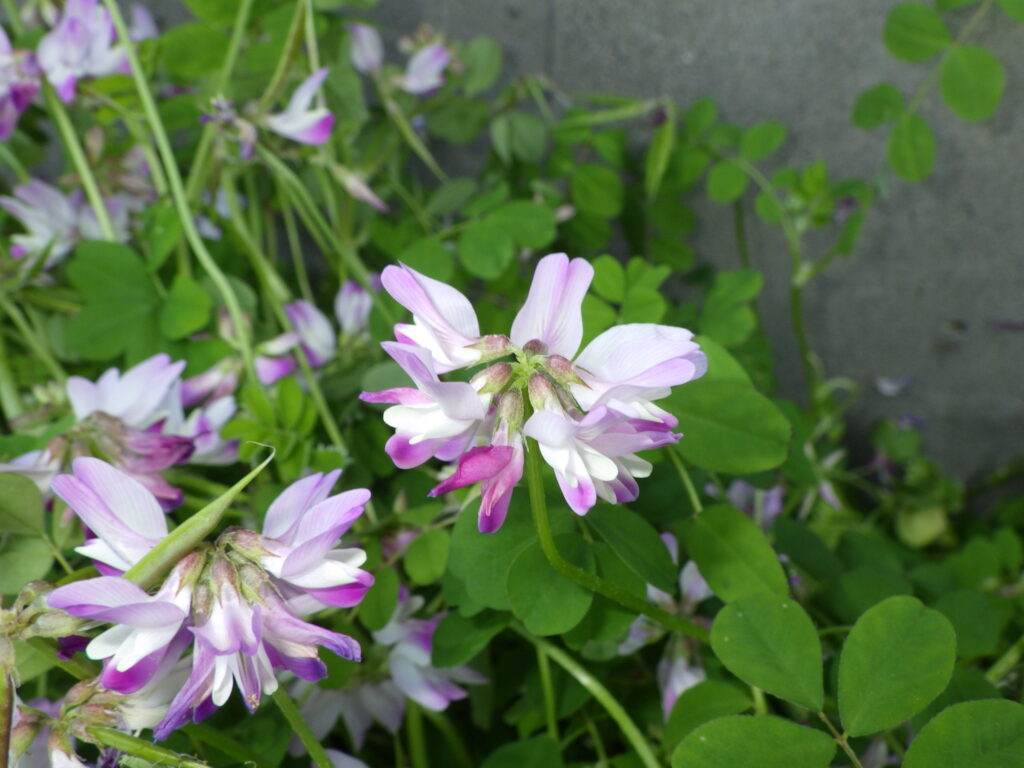
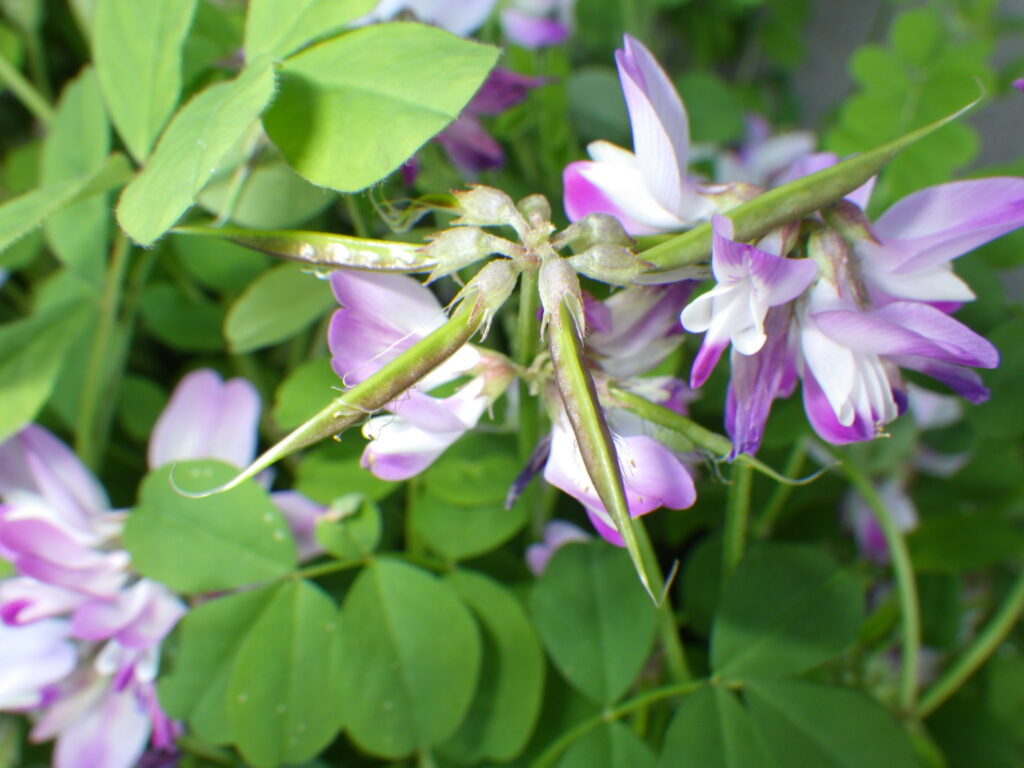
No. 1523 Rebunsou (Oxytropis megalantha)
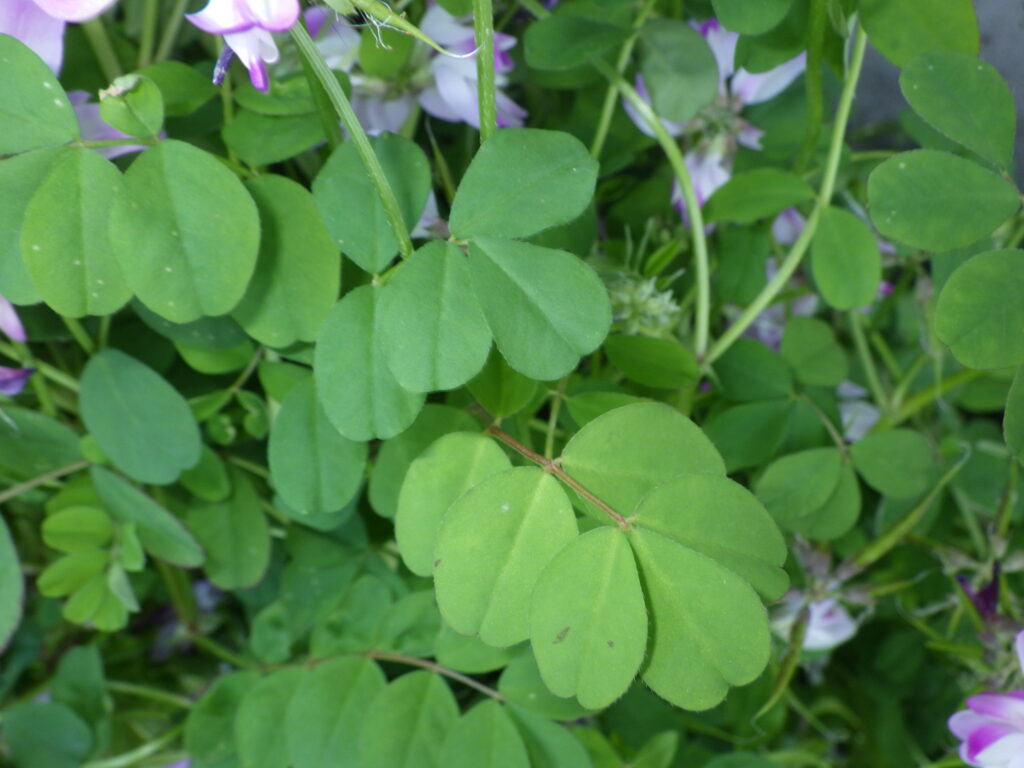
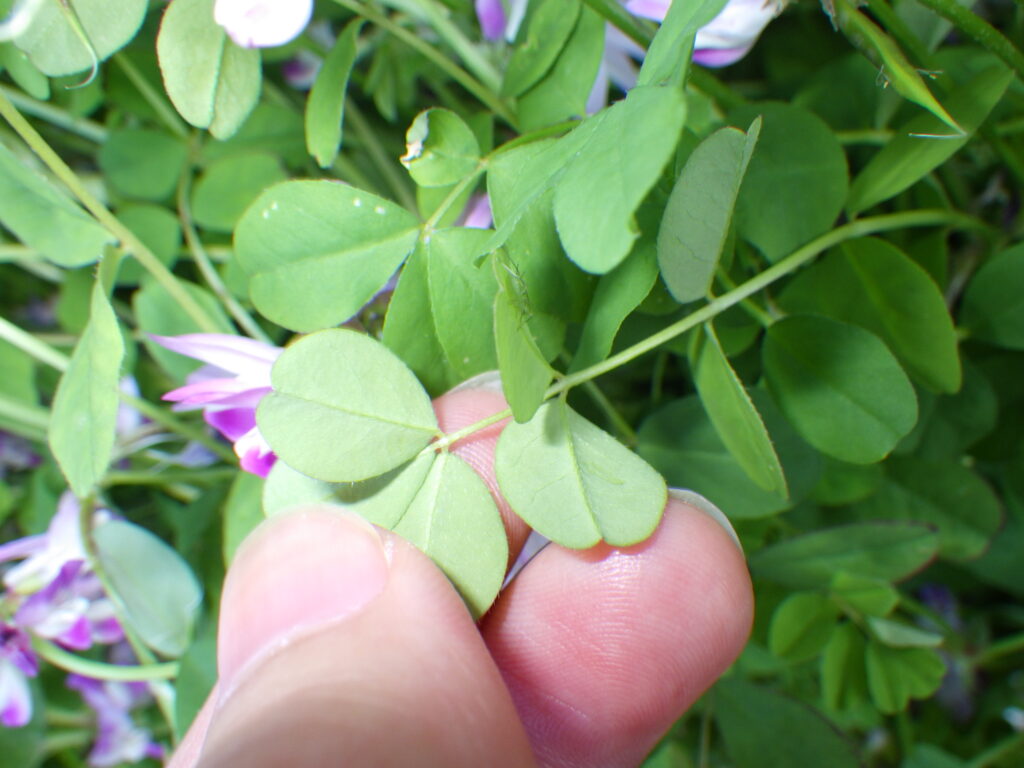
This is a perennial herb, growing to a height of 10-20 cm. The rhizome is thick and woody, branching into clumps, and densely covered with pale yellowish-white to white silky hairs that ascend obliquely. The leaves are clustered at the base, 10-20 cm long, odd-pinnately compound, with 17-23 leaflets. The leaflets are narrowly oblong to narrowly ovate, 10-20 mm long and 5-8 mm wide. They have an acute apex and a wedge-shaped base, are somewhat thick in texture, and are particularly densely hairy on the underside. The stipules are 15-20 mm long. The flowering period is from June to July. The flowers are borne on 10-20 cm long flower stalks, with 5-15 butterfly-shaped flowers in a raceme. The corolla is reddish-purple and about 2 cm long. The calyx is about 1.2 cm long, 5-lobed, with narrowly ovate lobes that are acute and about 3 mm long. It is distributed in Hokkaido (Rebun Island) and is endemic to Japan. It grows in gravelly or grassy areas near the coast.
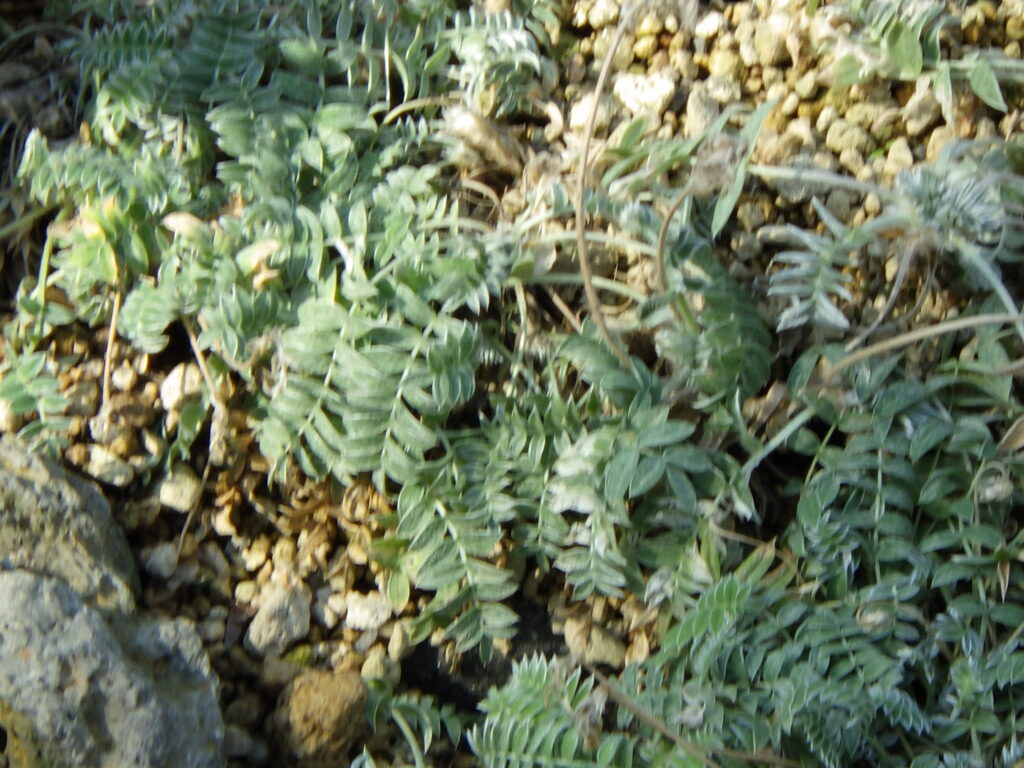
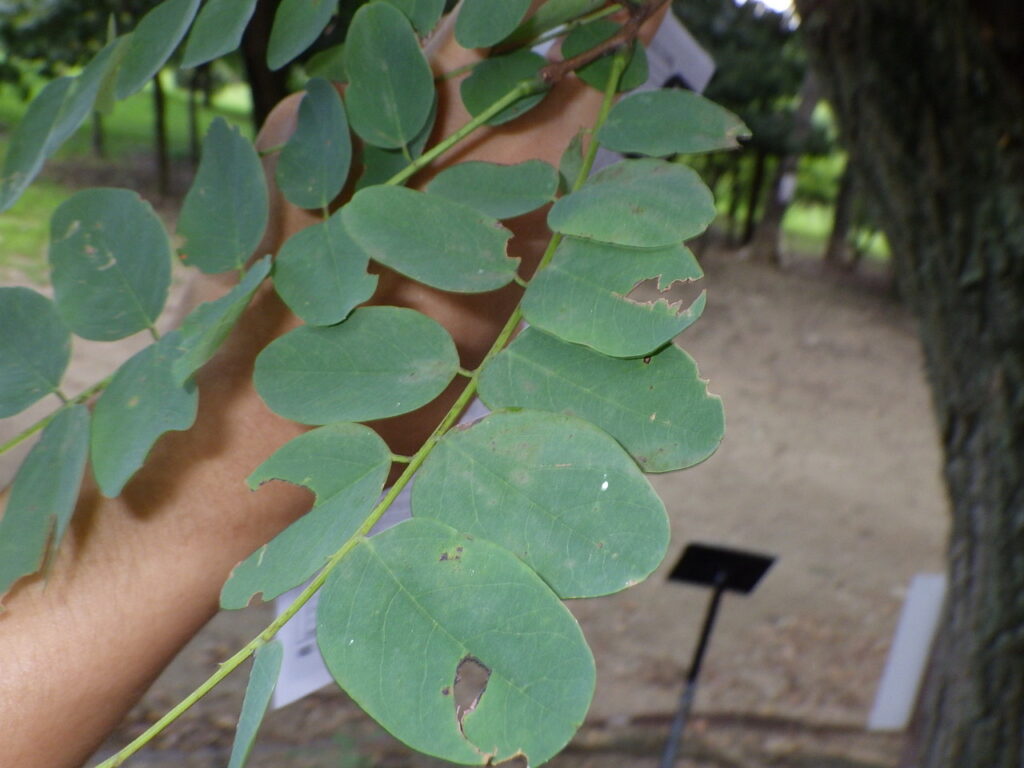
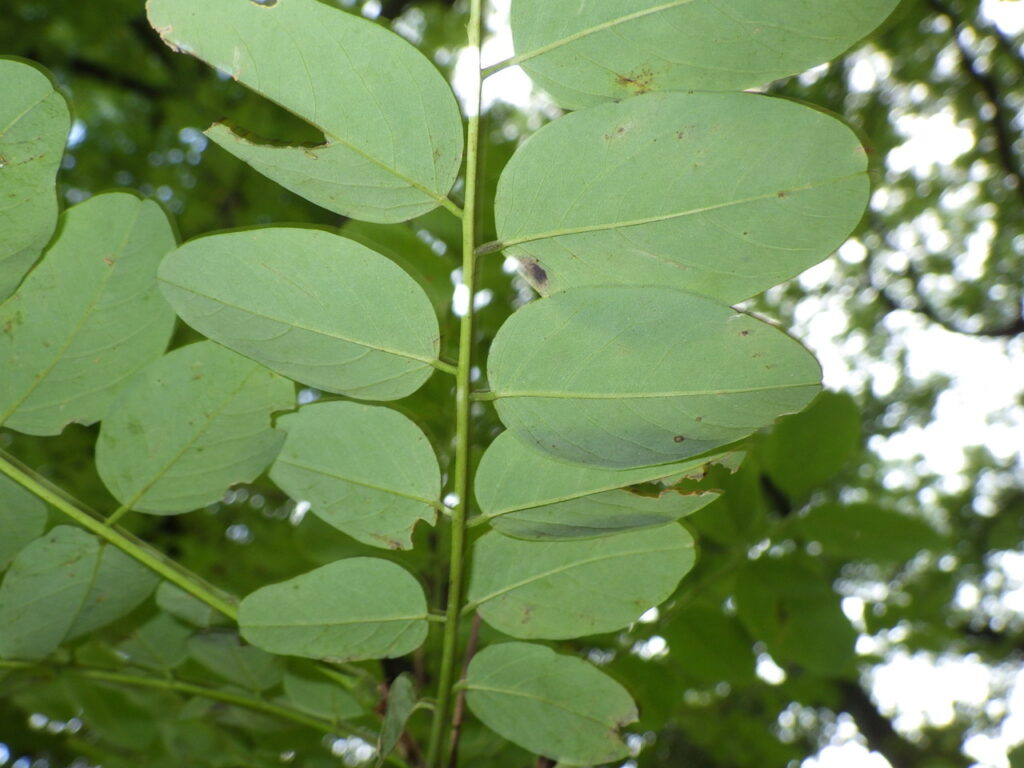
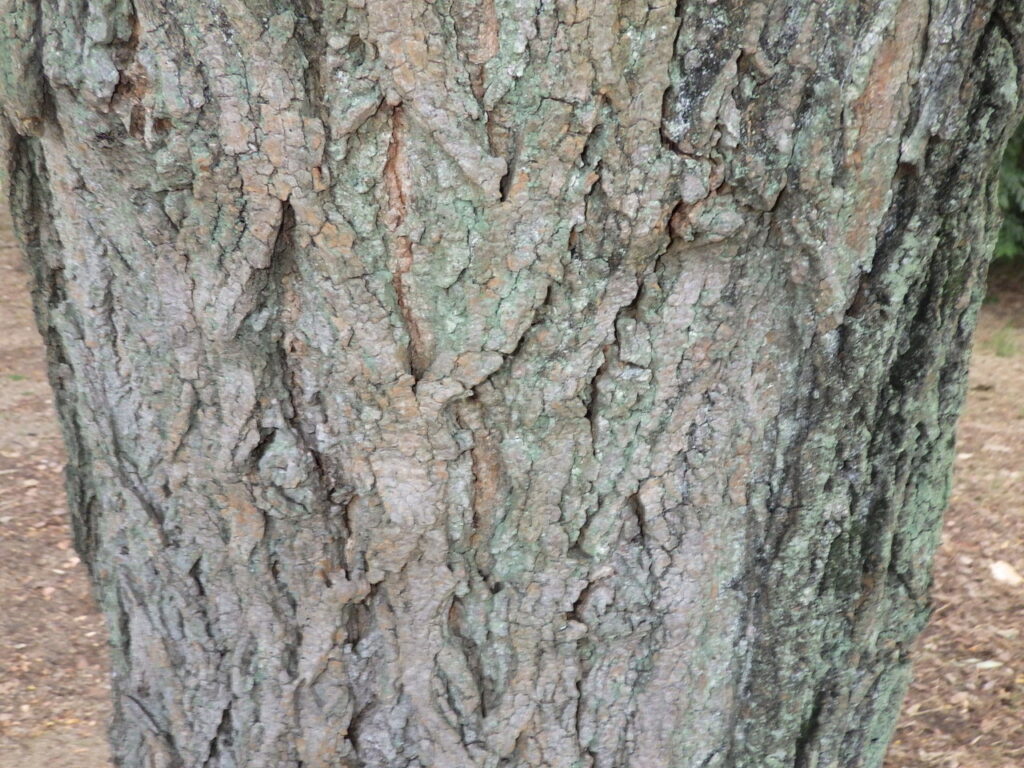
No. 1526 Black Locust (Robinia pseudoacacia)
Also known as false acacia (Kanagawa Prefecture Flora Survey Association, 2018). A deciduous tree. The stems and leaves are initially hairy but later become almost hairless. The stipules become prominent thorns on young trees and vigorous shoots, but are inconspicuous on branches that bear inflorescences. It flowers in May, with large, drooping racemes of flowers hanging from the leaf axils of the current year's branches. The flowers are white, about 2 cm long, and have a pleasant fragrance, making them a popular nectar source for honeybees. The pods are about 8 cm long and are broadly linear with a slightly curved shape. It is a naturalized plant native to North America, introduced to Japan around 1875. It is widely planted for erosion control and ornamental purposes, and is often found in the wild along riverbanks, embankments, and landslide areas.
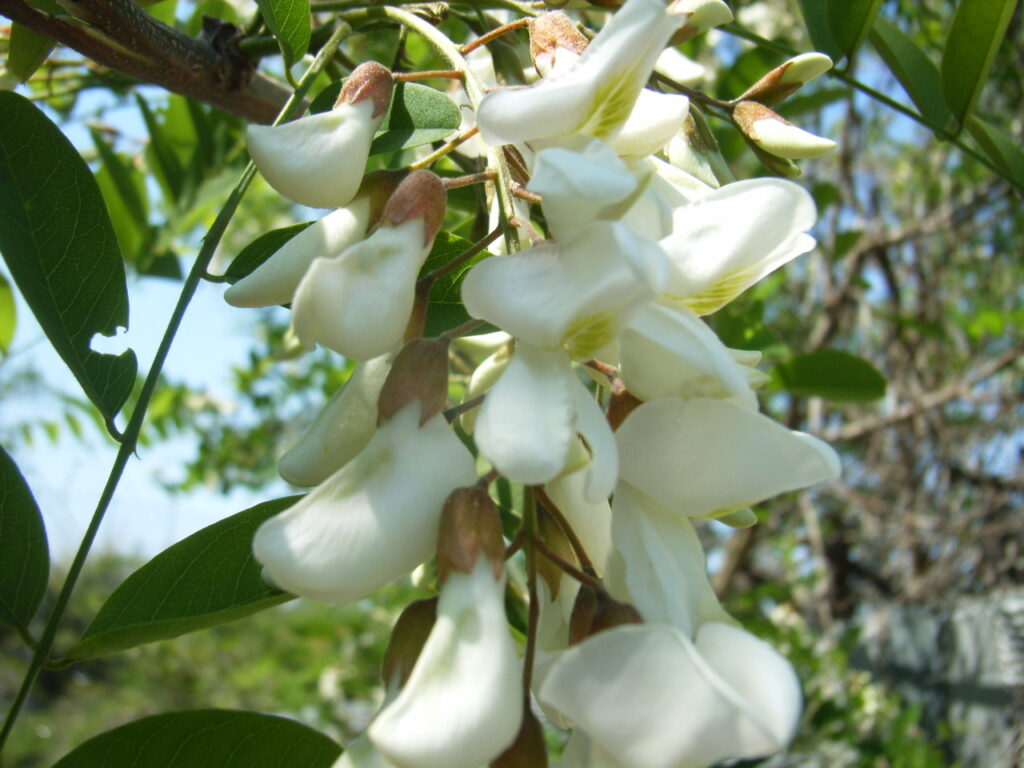
No.1526.1 Thornless Black Locust (Robinia pseudoacacia f. inermis)
Individuals without thorns are considered a variety of black locust (Kanagawa Prefecture Flora Survey Association, 2018). They are rarely seen.
No. 1530 Hylodesmum podocarpum subsp. podocarpum
Perennial herb (Kanagawa Prefecture Flora Survey Association, 2018). The stem is erect, with sparsely arranged leaves, three leaflets, and hairy, with the terminal leaflet being obovate. It flowers in September and October, producing racemes of flowers 3-5 mm long and pale pink at the stem apex and upper leaf axils. The segmented fruit consists of two segments with a short stalk between them and the calyx. Distributed in Honshu, Shikoku, and Kyushu; China to India. It grows on forest edges and embankments.
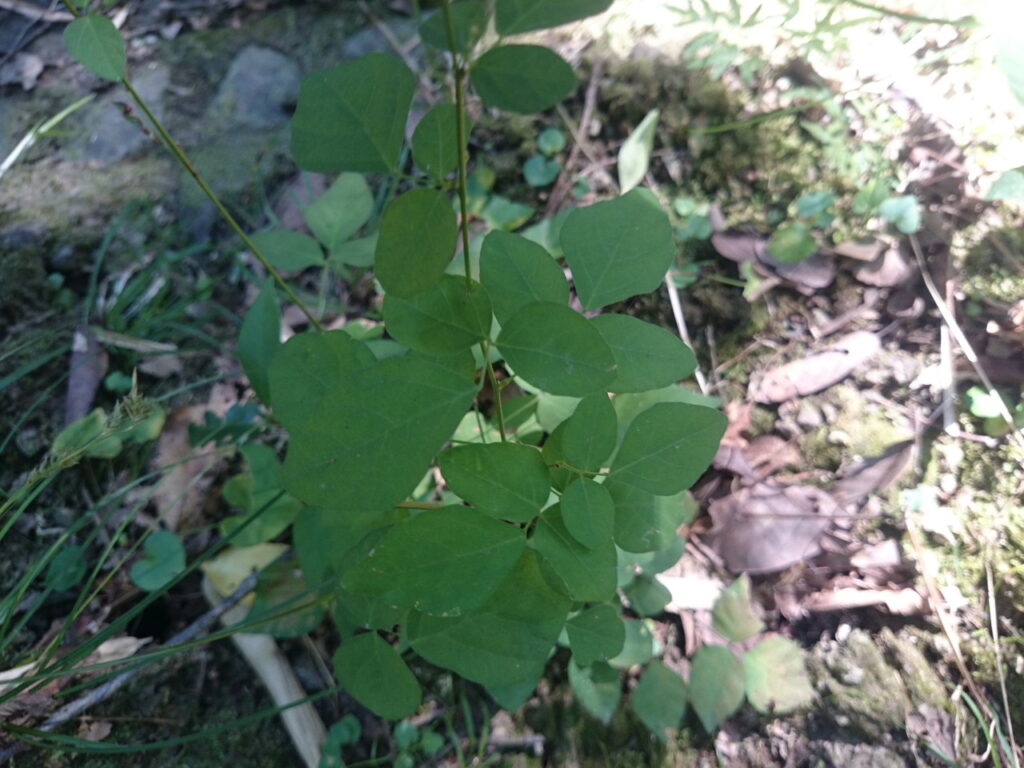
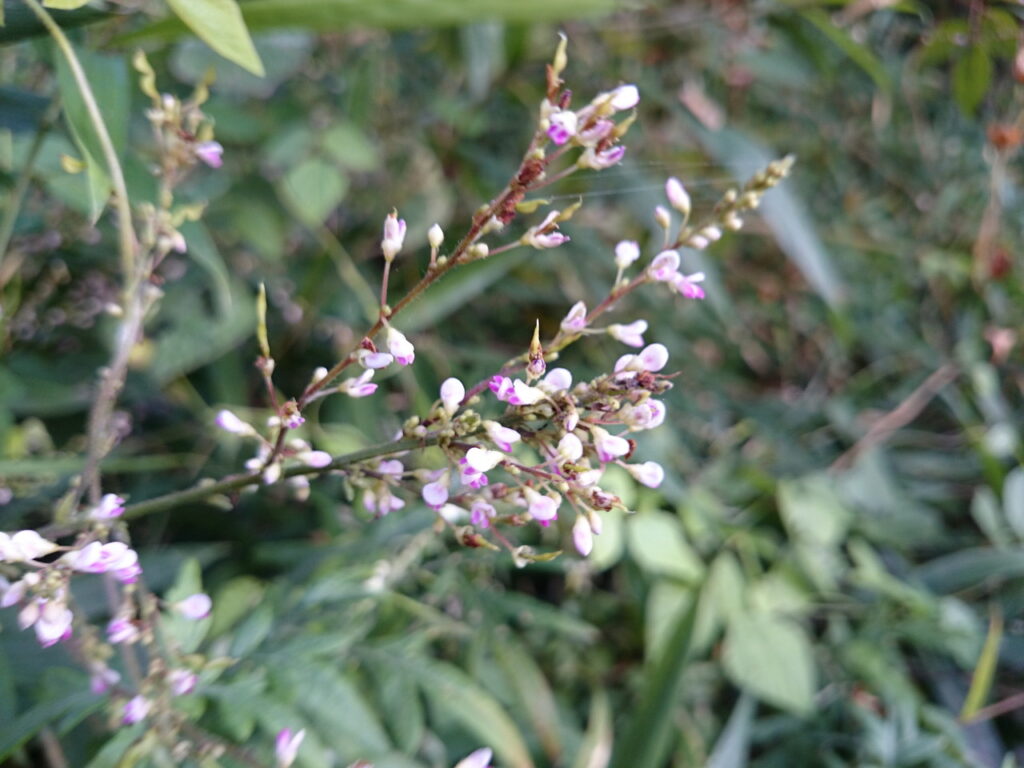
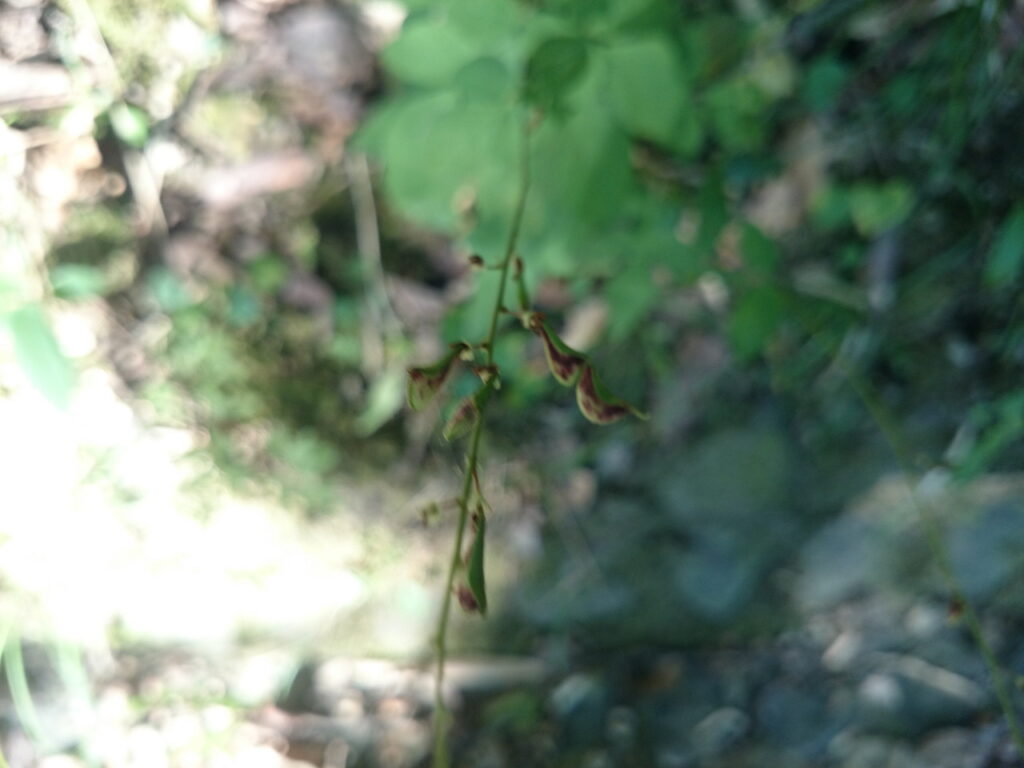
No. 1531 Hylodesmum podocarpum subsp. oxyphyllum var. japonicum
Perennial herb (Kanagawa Prefecture Flora Survey Association, 2018). Similar to the previous species, but the stem is more branched, and the leaves are narrowly ovate and somewhat thinner in texture. The flowers are small, and like the closely related species, the stamens and pistil burst open from the keel when touched by insects. Poorly growing individuals in shady places can closely resemble the next species, making clear distinction difficult. Distributed in Hokkaido, Honshu, Shikoku, Kyushu, and the Ryukyu Islands; as well as Korea, China, and Southeast Asia. Grows in forest edges and grasslands. Individuals with white flowers are called white-flowered desmodium f. albiflorum and are rarely seen.
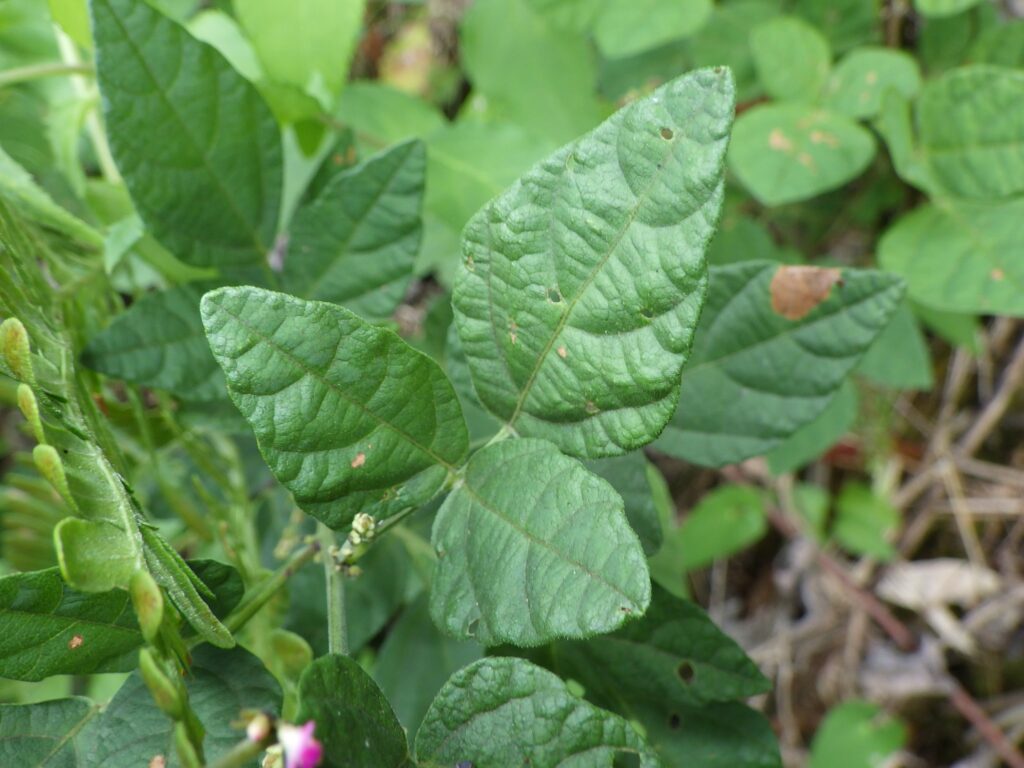
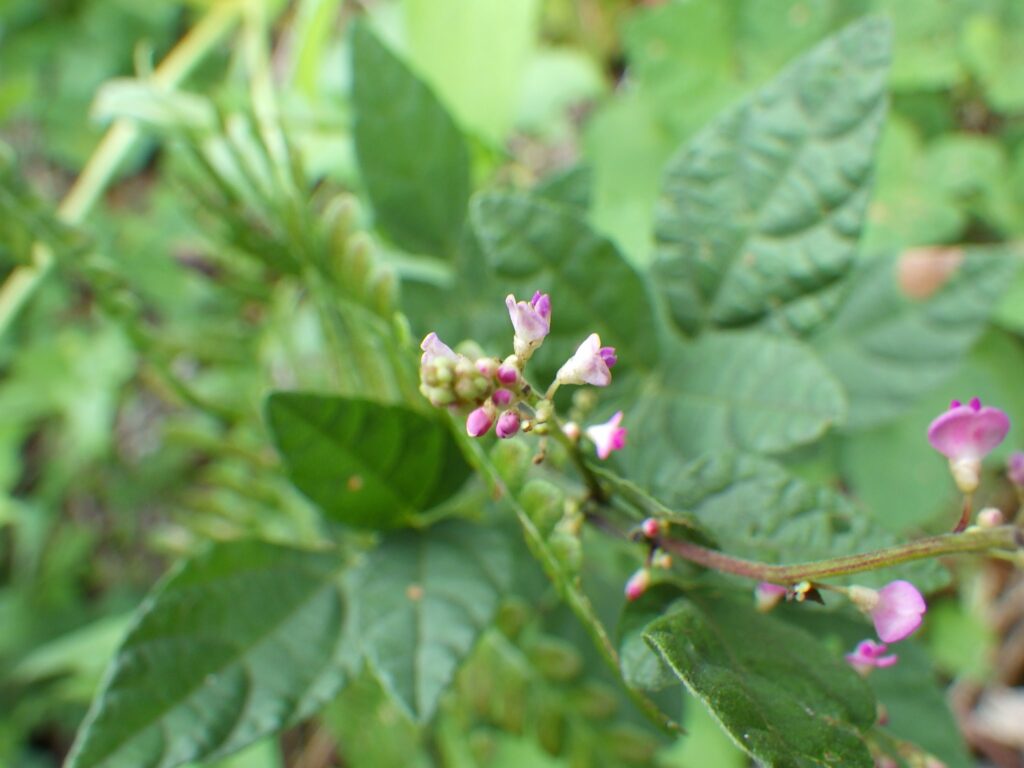
No.1532 Hylodesmum podocarpum subsp. oxyphyllum var. mandshuricum
Perennial herb (Kanagawa Prefecture Flora Survey Association, 2018). The leaf shape, flowers, and segments resemble the previous species, but the stem is erect and does not branch much, with several leaves on long petioles clustered in one place. The leaves are thin in texture and have few hairs. It is distributed in Hokkaido, Honshu, Shikoku, Kyushu; Korea, China, and Ussuri. It grows in woodlands from hilly areas to mountainous areas.
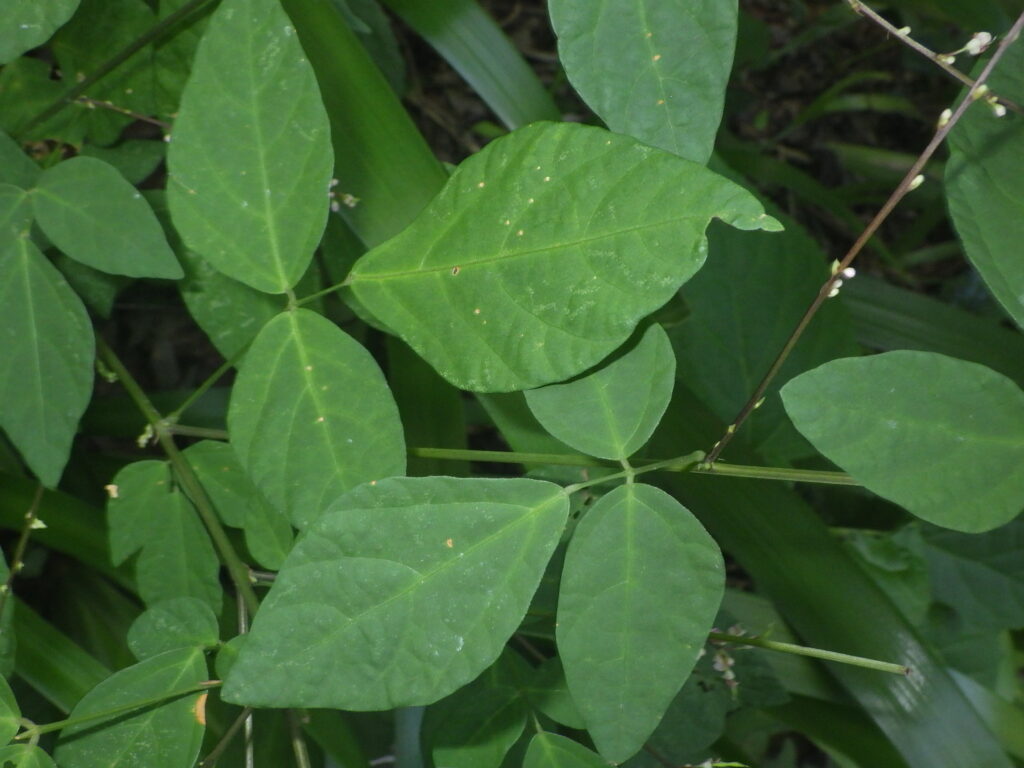
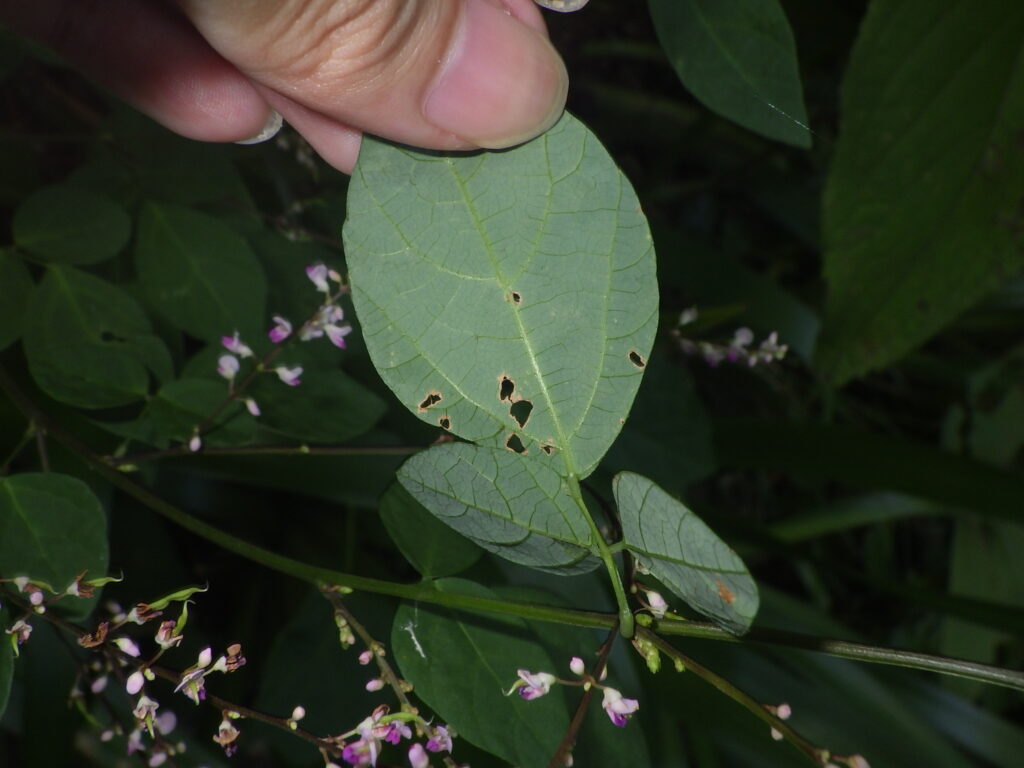
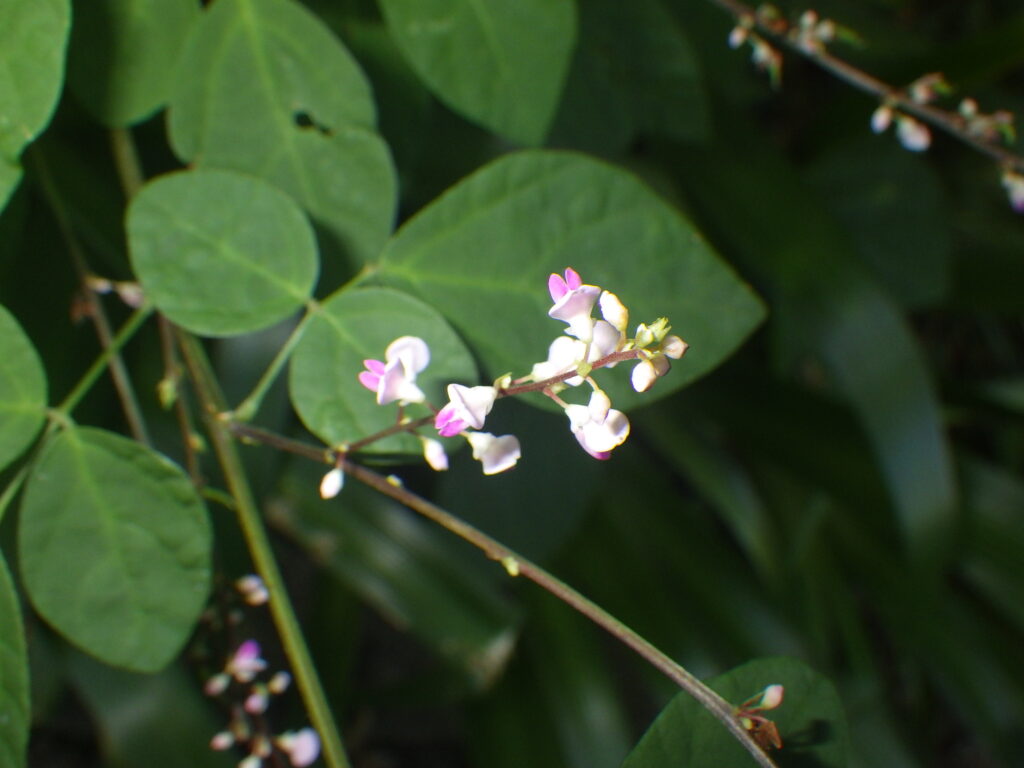
No. 1537 Hylodesmum oldhamii
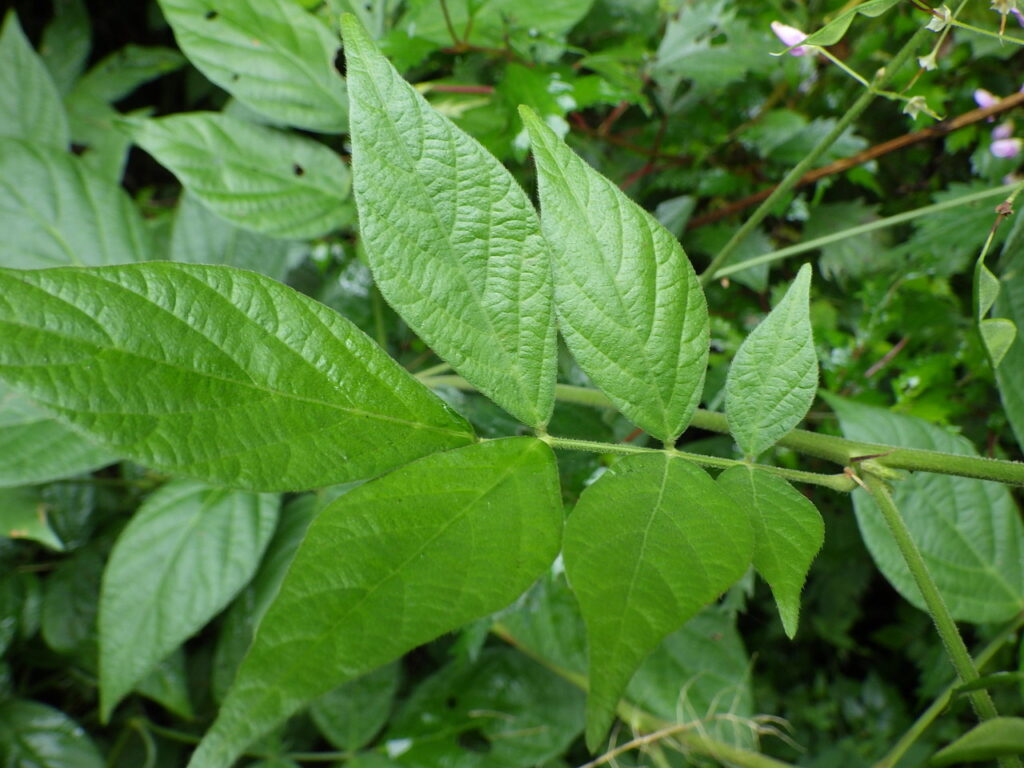
This is a perennial herb (Kanagawa Prefecture Flora Survey Association, 2018). The stem is erect and reaches a height of 1 m, and the leaves consist of 5 to 7 leaflets, which are oblong with pointed tips. In August and September, it bears racemes of pale pink flowers about 1 cm long at the top of the stem and in the upper leaf axils. The legume is large with a stalk about 1 cm long between the calyx and the pod, and the podlets are 12 to 16 mm long, with 1 to 2 pods linked together. It is distributed in Honshu, Shikoku, Kyushu, Korea, and China. It grows in woodlands on hillsides.
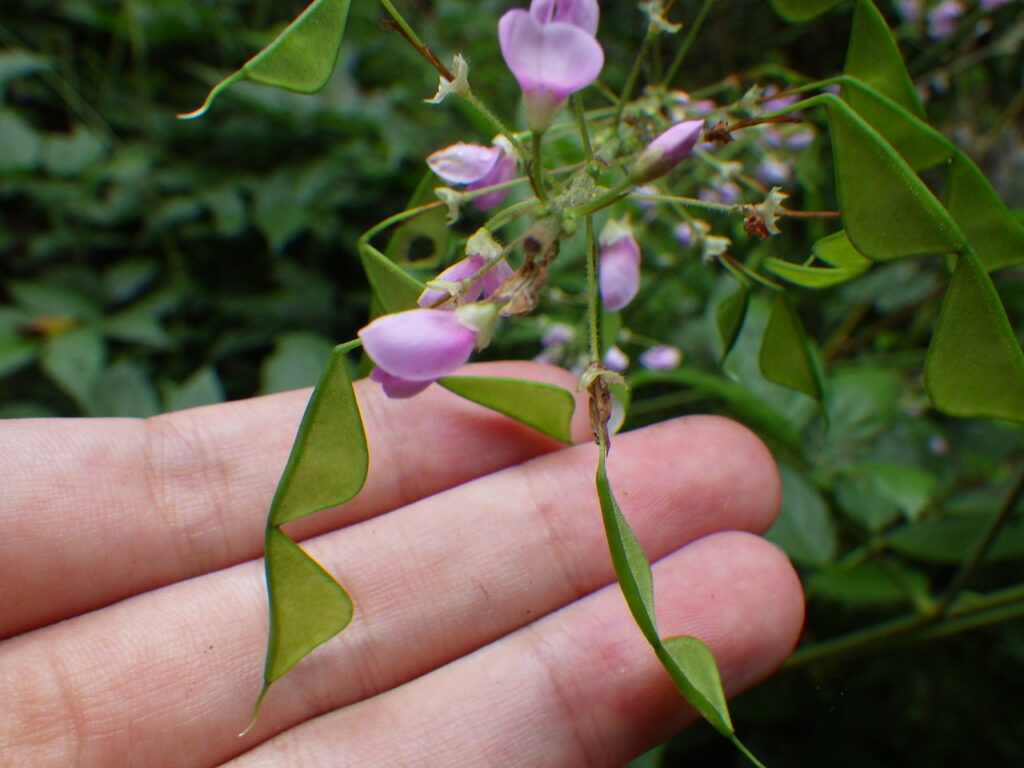
No.1539.a Desmodium paniculatum
This is an annual plant (Kanagawa Prefecture Flora Survey Association, 2018). The stem is erect and grows to a height of 50-60 cm. The leaves consist of three leaflets, which are narrowly ovate. It flowers in September and October, bearing racemes of pale pink flowers 6-9 mm long at the stem apex and in the upper leaf axils. The legume consists of 4-6 segments, shallowly constricted at one end, and without a stalk between the calyx and the segment. It is a naturalized plant native to North America, growing along roadsides and riverbanks in urban areas.
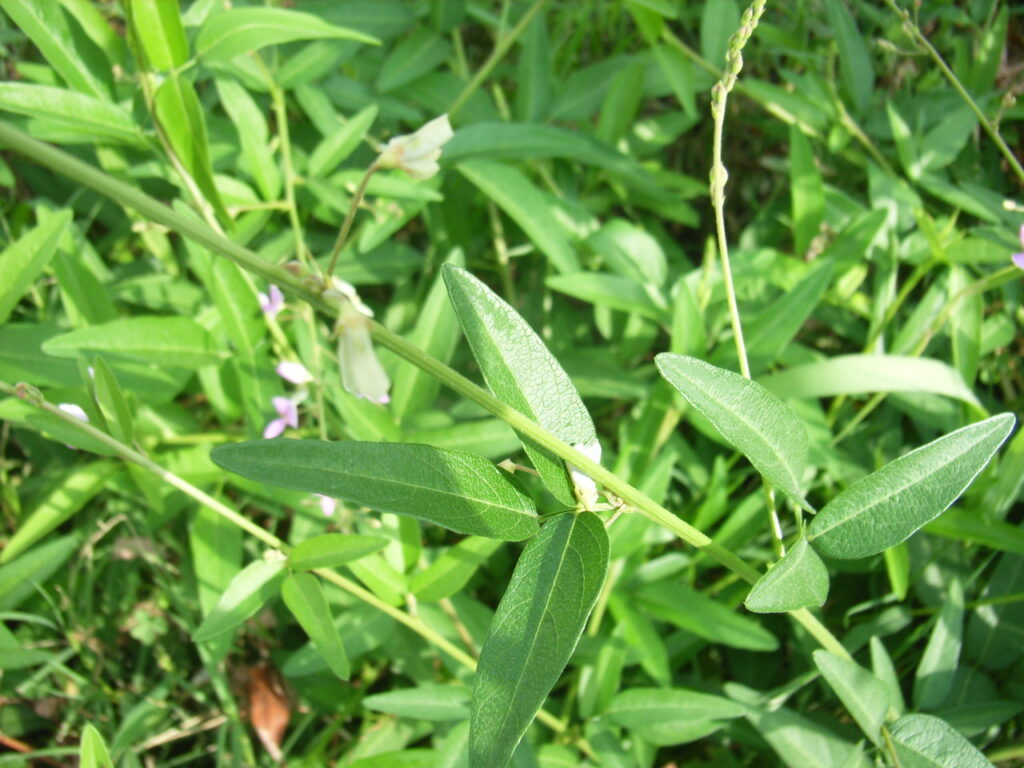
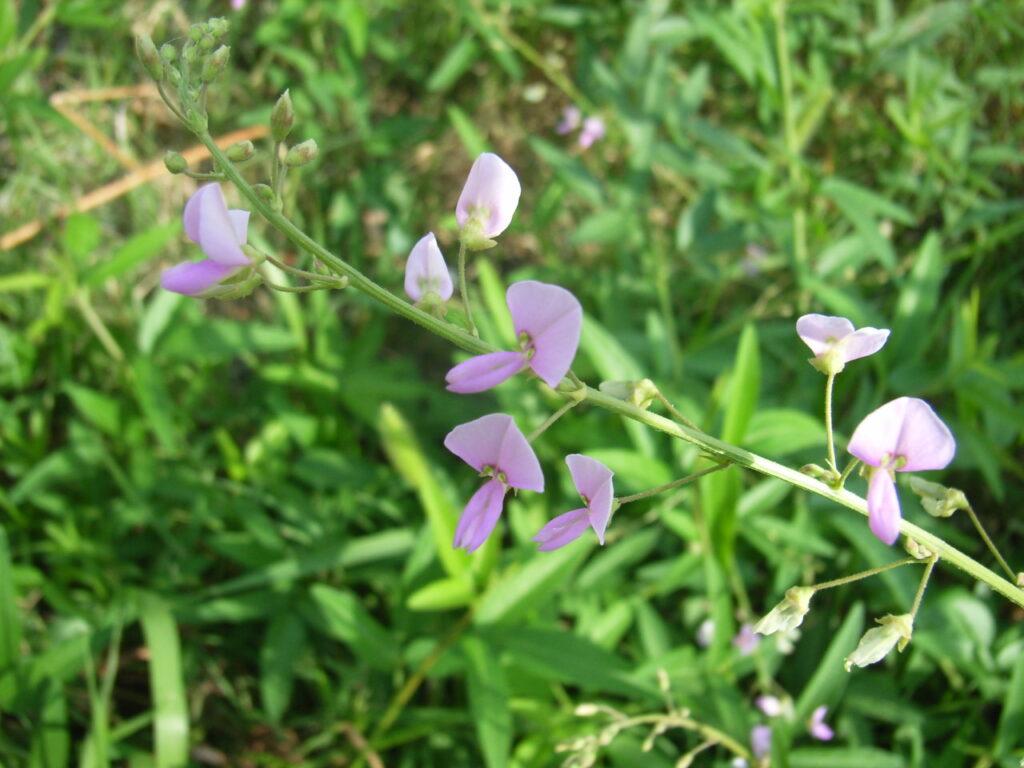
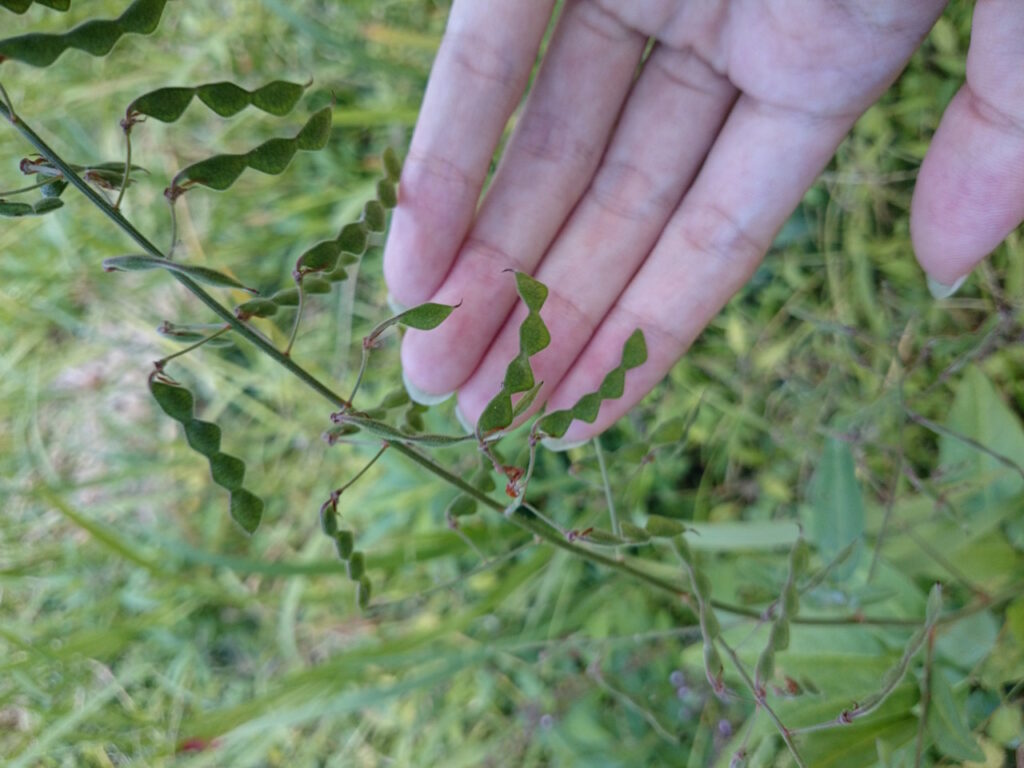
No.1543 Lespedeza thunbergii subsp. thunbergii f. thunbergii
Deciduous shrub (Kanagawa Prefecture Flora Survey Association, 2018). The stems often droop. The leaflets are oblong with pointed tips, the upper surface is covered with soft hairs only when young, and the lower surface is covered with appressed hairs. It flowers in September and October, with flowers somewhat sparsely arranged in long racemes emerging from the leaf axils. The calyx lobes are pointed at the tips, with the lowest one being particularly long, exceeding the calyx tube. The flowers are usually reddish-purple, but white varieties are also commonly cultivated. The legumes are oblong. It is a cultivated species closely related to *Lespedeza subsp. patens*, which is naturally distributed in the Hokuriku region, but there are differing views on its origin: some believe it is a variety selected and bred from a variation of *Lespedeza subsp. patens*, while others believe it is of hybrid origin with another species. The Kanagawa Prefectural Flora Survey Association (2018) states, "Regardless of which viewpoint is adopted, the scientific name of Miyaginohagi itself remains unchanged. The scientific name of Kehagi will change, but we will not delve deeply into that discussion here." It is commonly cultivated in parks and gardens, and sometimes escapes cultivation and can be found in the wild on embankments and other areas.
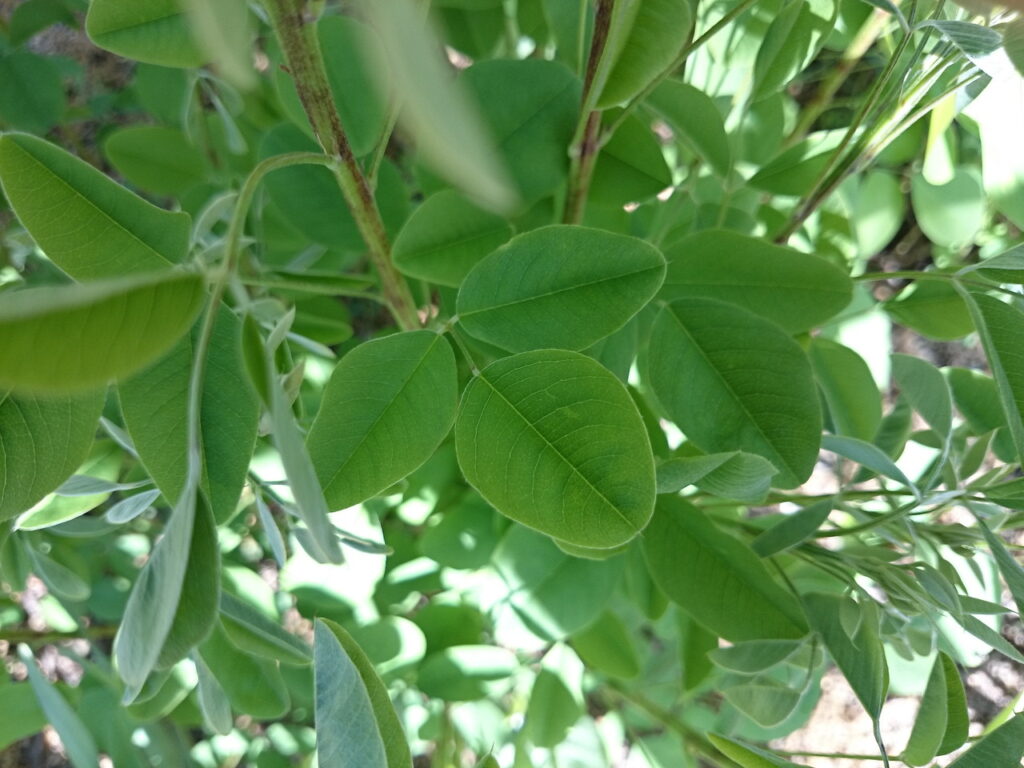
No.1544.1 Lespedeza thunbergii subsp. thunbergii 'Nipponica'‘
Deciduous shrub (Kanagawa Prefecture Flora Survey Association, 2018). Characterized by fine, persistent appressed hairs on the entire upper surface of the leaves, and reddish-purple flowers. The calyx lobes are acute, with three prominent veins, and are longer than the calyx tube. Similar to the previous species, the calyx is somewhat dimorphic, and the legume is thought to mature from the small calyx flowers. The legume is broadly oval. It is most closely related to *Lespedeza bicolor*, which is naturally distributed in Honshu (west of central Japan), Shikoku, Kyushu, Korea, and northeastern China, but it is treated as a cultivated species because it is not possible to determine whether cultivated *Lespedeza bicolor* is *Lespedeza bicolor* itself or of some hybrid origin. It is commonly cultivated in parks and gardens, and sometimes escapes and can be found in the wild on embankments and roadsides. The white-flowered variety, *Lespedeza thunbergii* f. alba, is also commonly cultivated. There is also a variety with a mixture of reddish-purple and white flowers called *Lespedeza versicolor* f. versicolor.
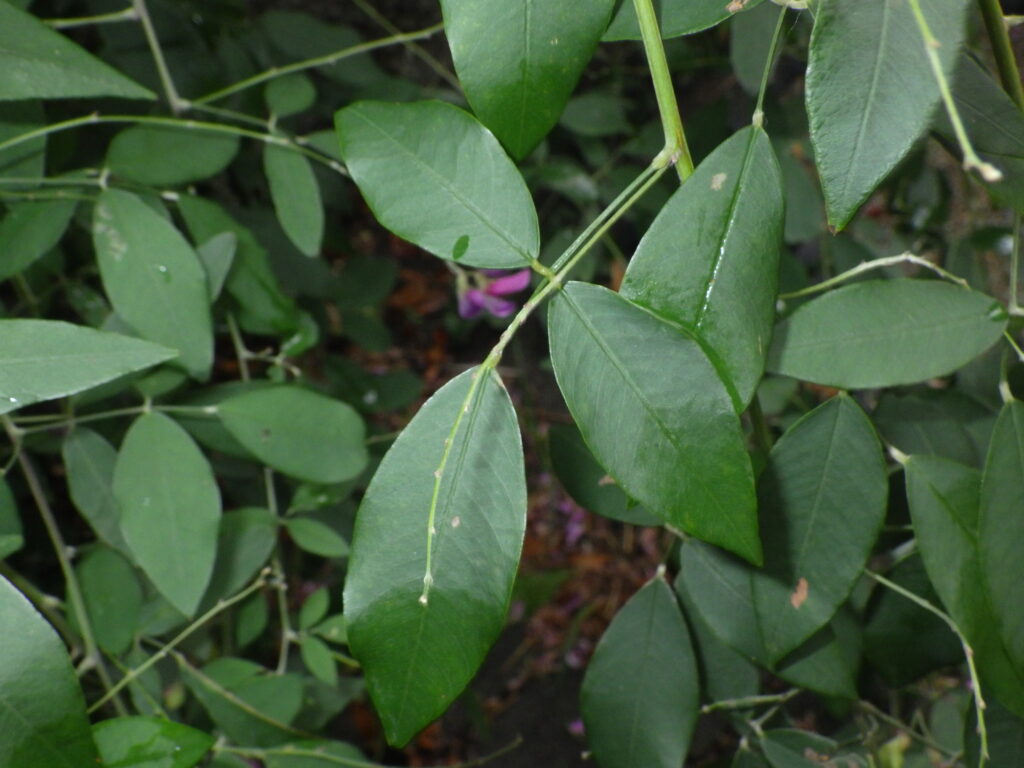
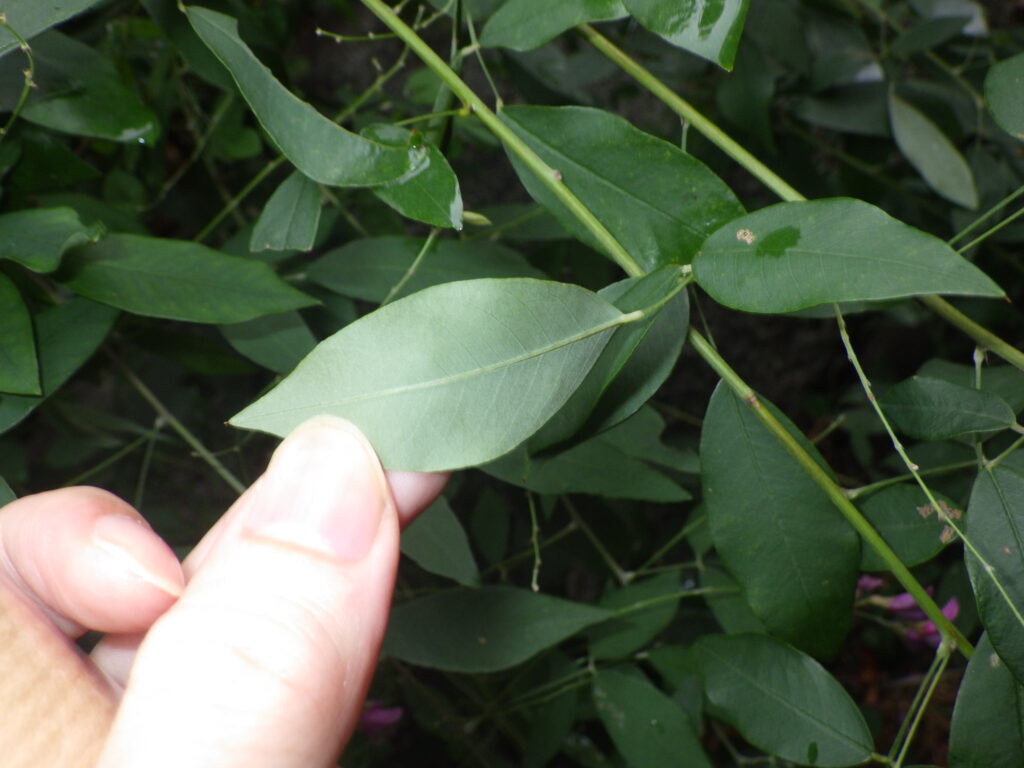
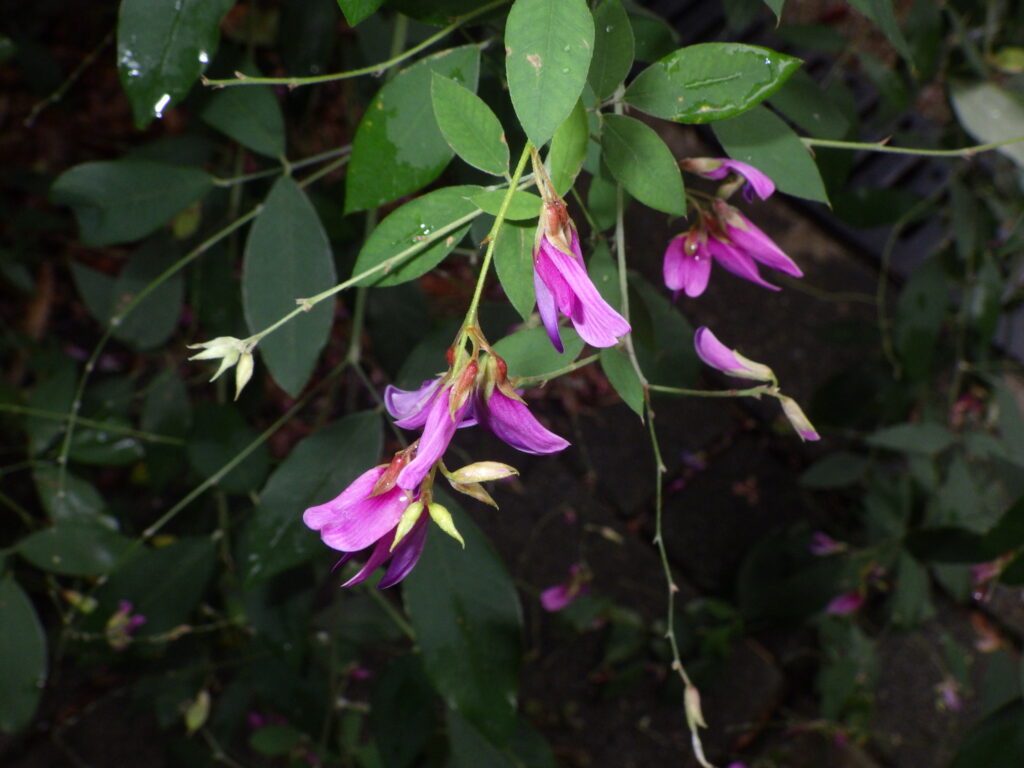
No.1547 Yamahagi Lespedeza bicolor
Deciduous shrub (Kanagawa Prefecture Flora Survey Association, 2018). The leaflets are oval with a slightly rounded tip, and the leaves on the inflorescence tend to be smaller. Even in mature leaves, sparse hairs usually remain in the center of the upper surface, and the lower surface has appressed hairs. The flowers are reddish-purple, 10-13 mm long. The calyx is 4-lobed, with the uppermost tooth slightly notched at the tip. The calyx lobes are shorter than the calyx tube, have 3 veins, and are somewhat acute at the tip. The legume is nearly circular. Distributed in Hokkaido, Honshu, Shikoku, Kyushu; Korea, China, and Ussuri. Grows in sunny grasslands and forest edges.
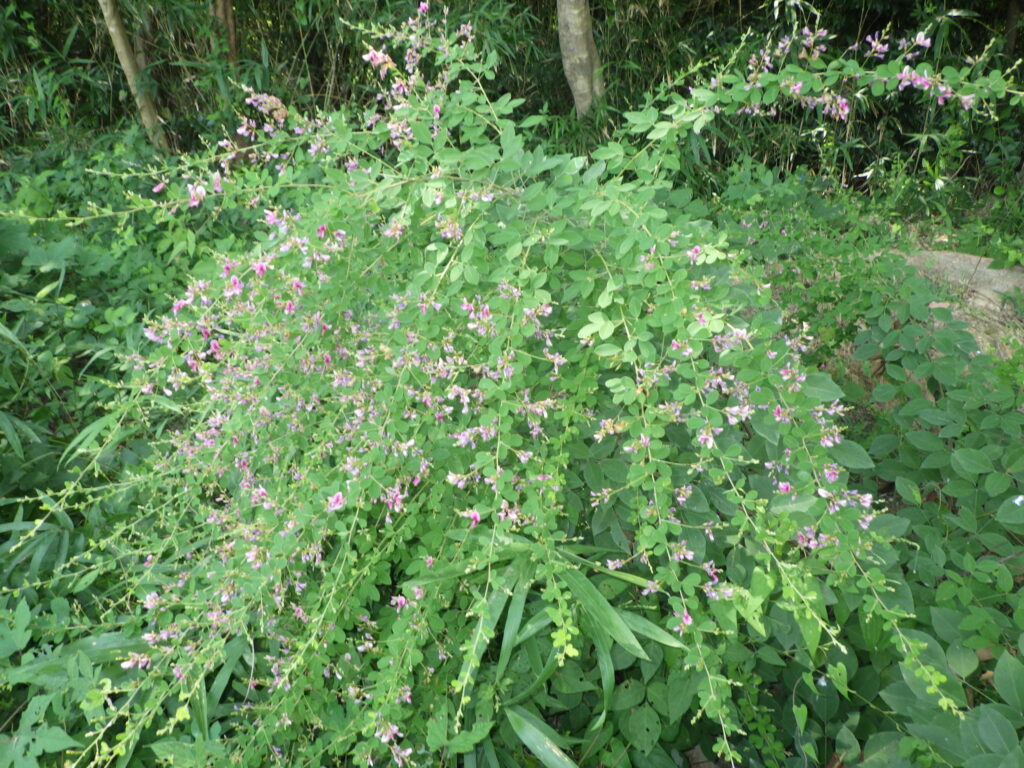
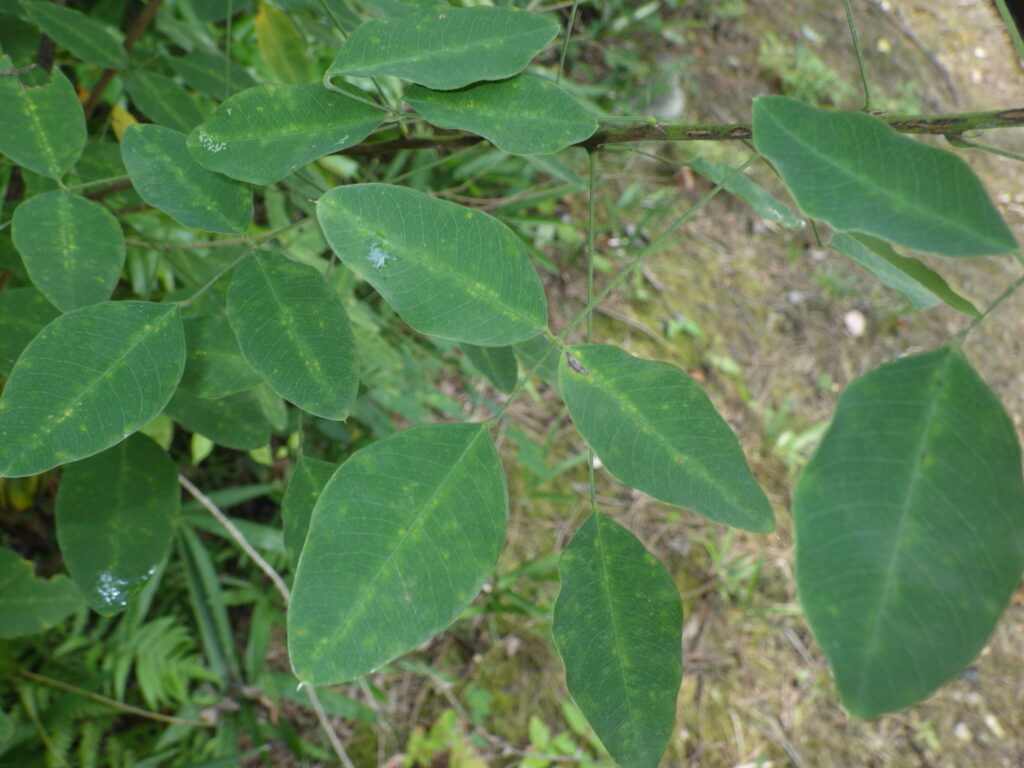
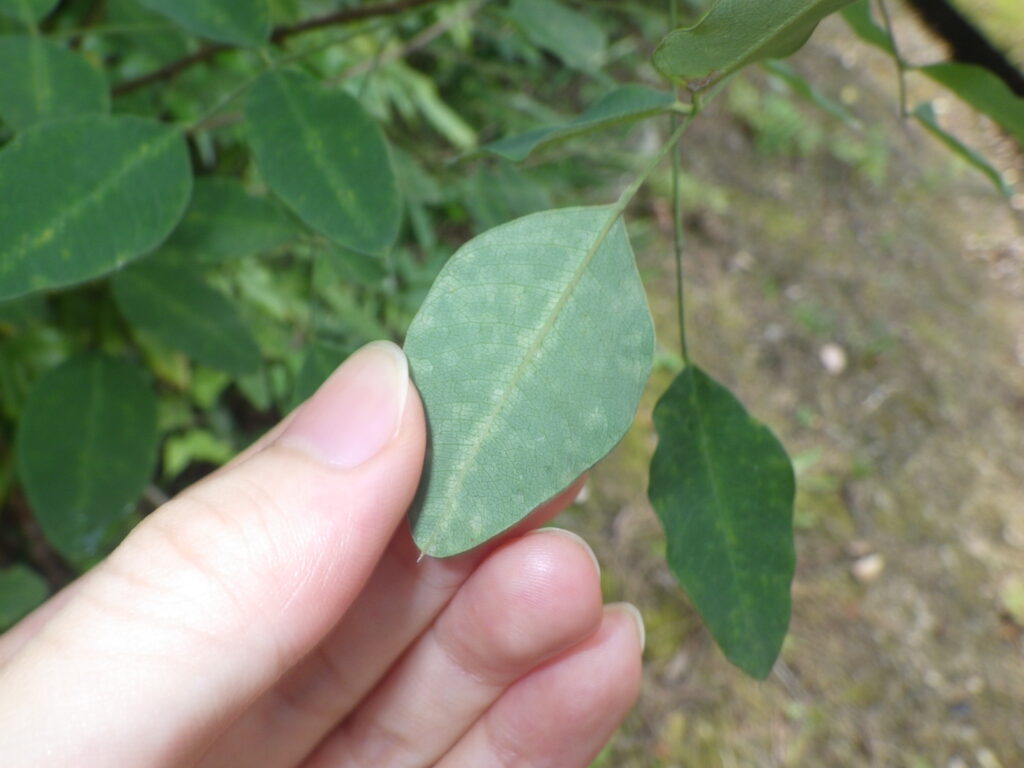
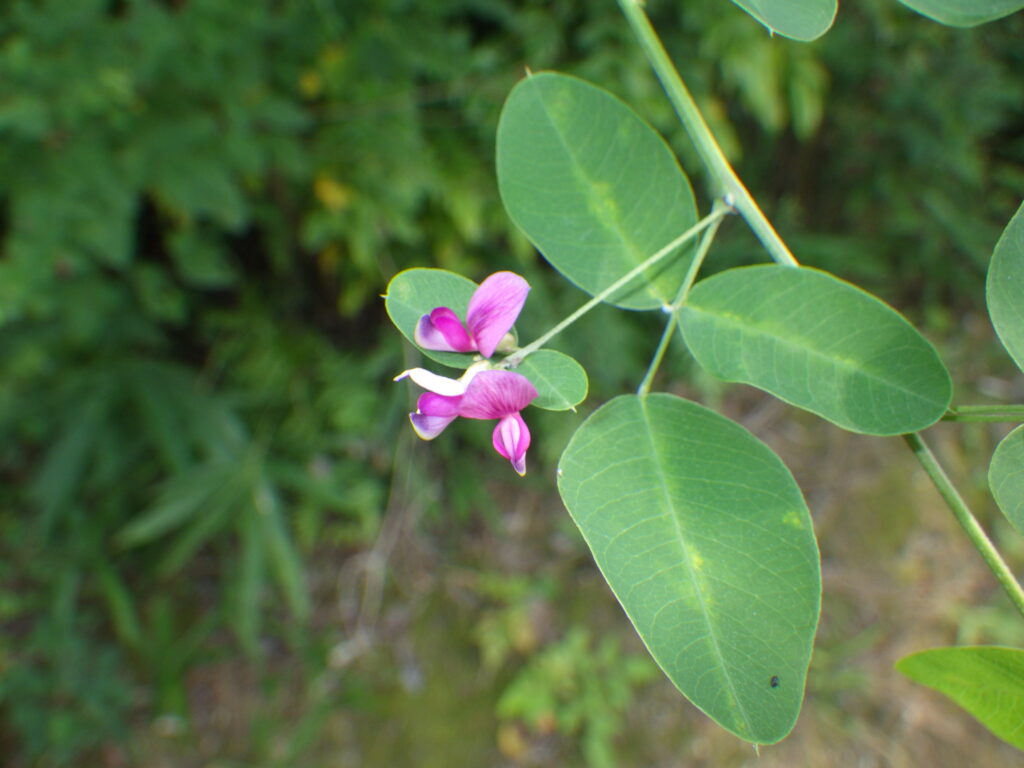
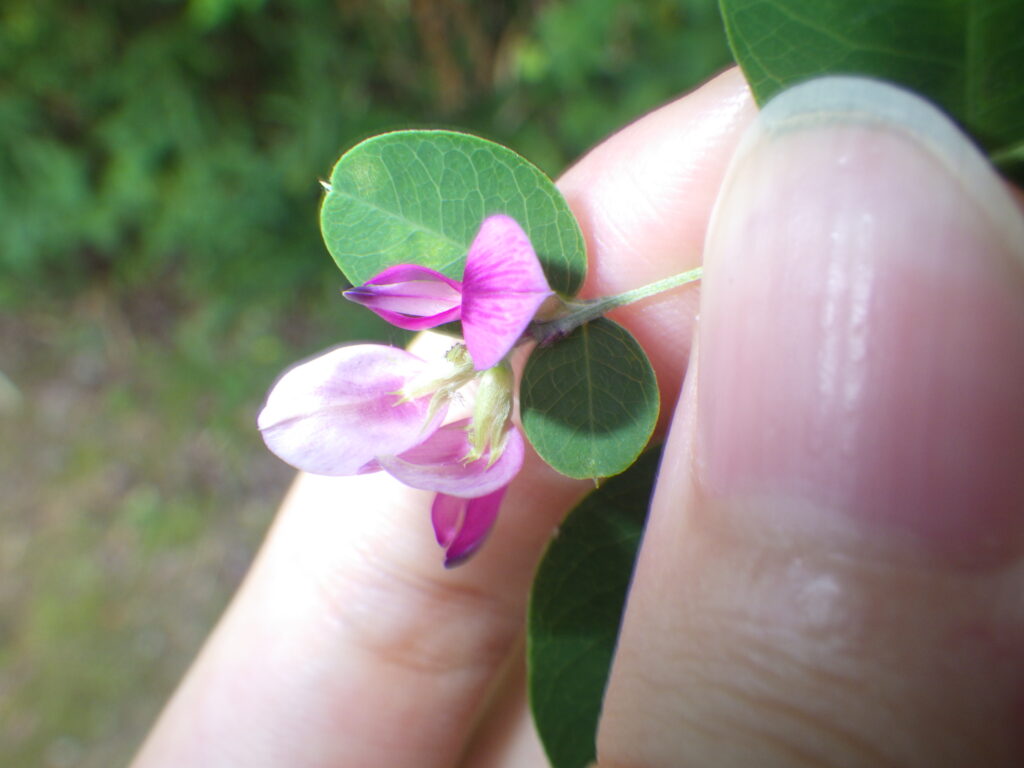
No. 1548 Lespedeza cyrtobotrya
Deciduous shrub (Kanagawa Prefecture Flora Survey Association, 2018). Leaves are arranged spirally, with elliptic to obovate leaflets that are slightly notched at the tip, glabrous on the upper surface and covered with appressed hairs on the lower surface. Flowers bloom from August to October, with reddish-purple flowers 10-13 mm long, borne in short racemes emerging from the leaf axils. The calyx is 5-lobed, with calyx lobes that are needle-shaped at the tip and longer than the calyx tube. The legume is somewhat circular. Distributed in Honshu, Shikoku, Kyushu; Korea, and China. Grows in forest edges and Miscanthus grasslands.
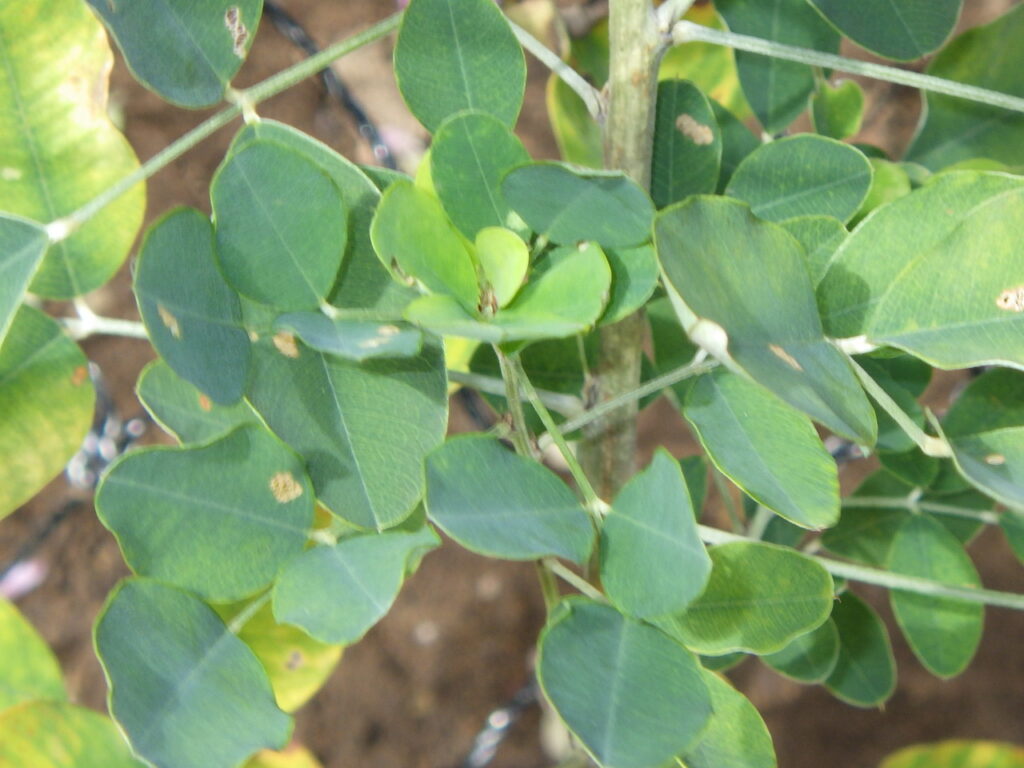
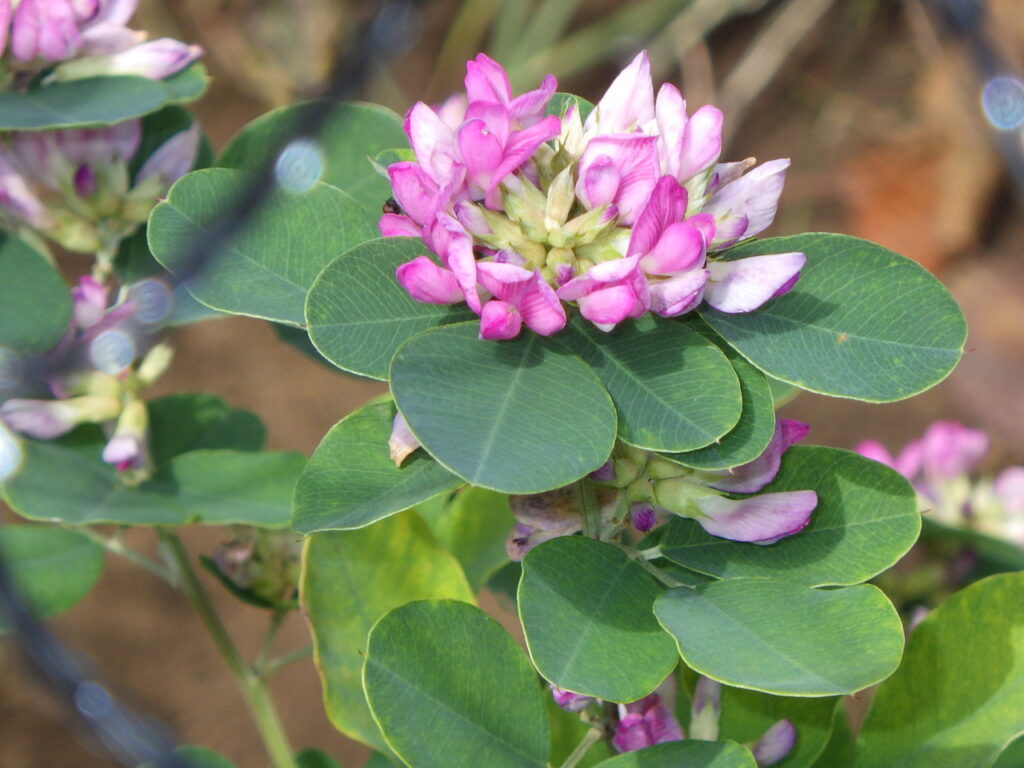
No.1549 Yellowtail Lespedeza buergeri
Deciduous shrub (Kanagawa Prefecture Flora Survey Association, 2018). Reaches a height of about 2m. Easily distinguishable from other bush clover species by its halved leaf arrangement. The leaflets are pointed at the tip, hairless on the upper surface, and covered with appressed hairs on the lower surface. It flowers from June to September, with pale yellow flowers, purple wing petals, and purple spots on the standard petal. The calyx is 4-lobed, with blunt-tipped calyx lobes shorter than the calyx tube. The legume is oblong. Distributed in Honshu, Shikoku, Kyushu; Korea, and China. Grows in forest edges and cliffs. A variety with spreading stem hairs is called *Lespedeza thunbergii* f. angustifolia.
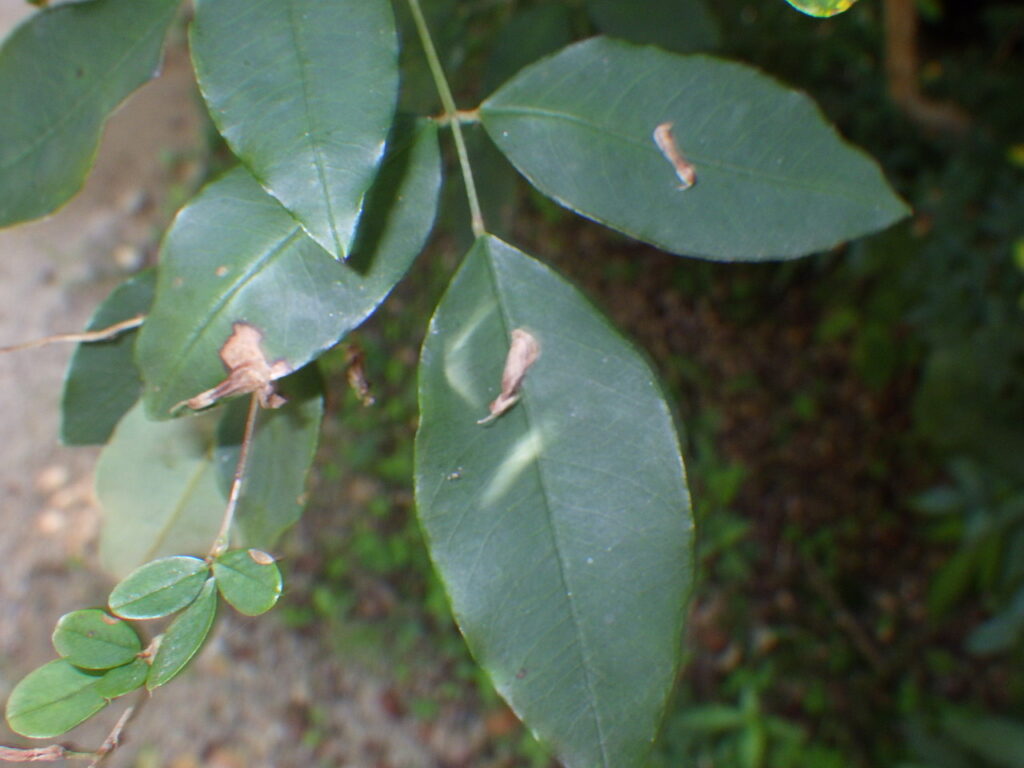
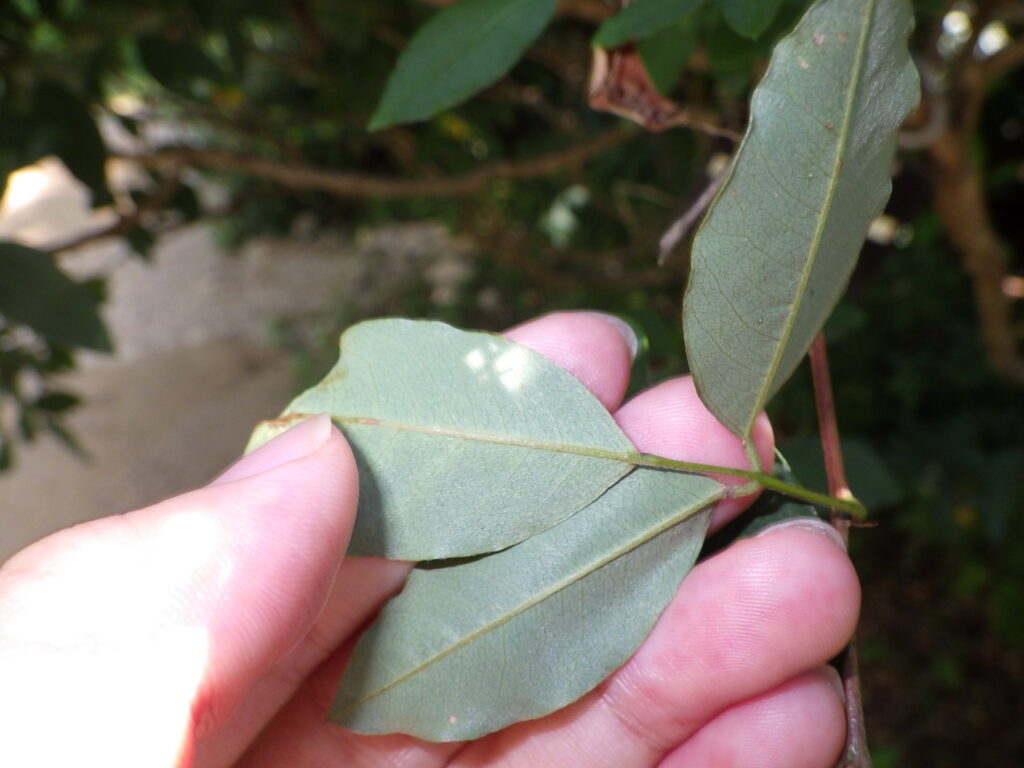
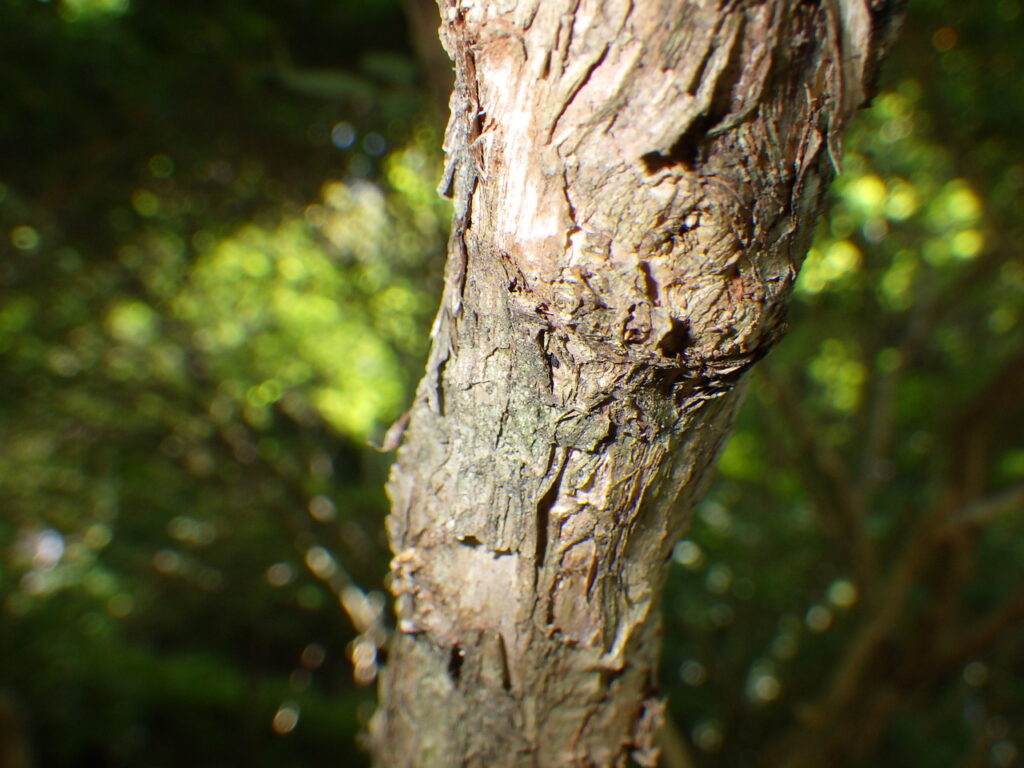
No.1551 Lespedeza pilosa
A creeping perennial herb (Kanagawa Prefecture Flora Survey Association, 2018). The entire plant is covered in soft, spreading hairs, and the stems are long and creep along the ground. The leaflets are oval to circular. It flowers from July to September, bearing several white flowers in short racemes emerging from the leaf axils, and also producing cleistogamous flowers on short stalks in the leaf axils at the tips of the stems. The legumes are 3-4 mm long, hairy, and mainly mature from cleistogamous flowers. It is distributed in Honshu, Shikoku, Kyushu, Korea, and China. It grows on embankments and in grasslands.
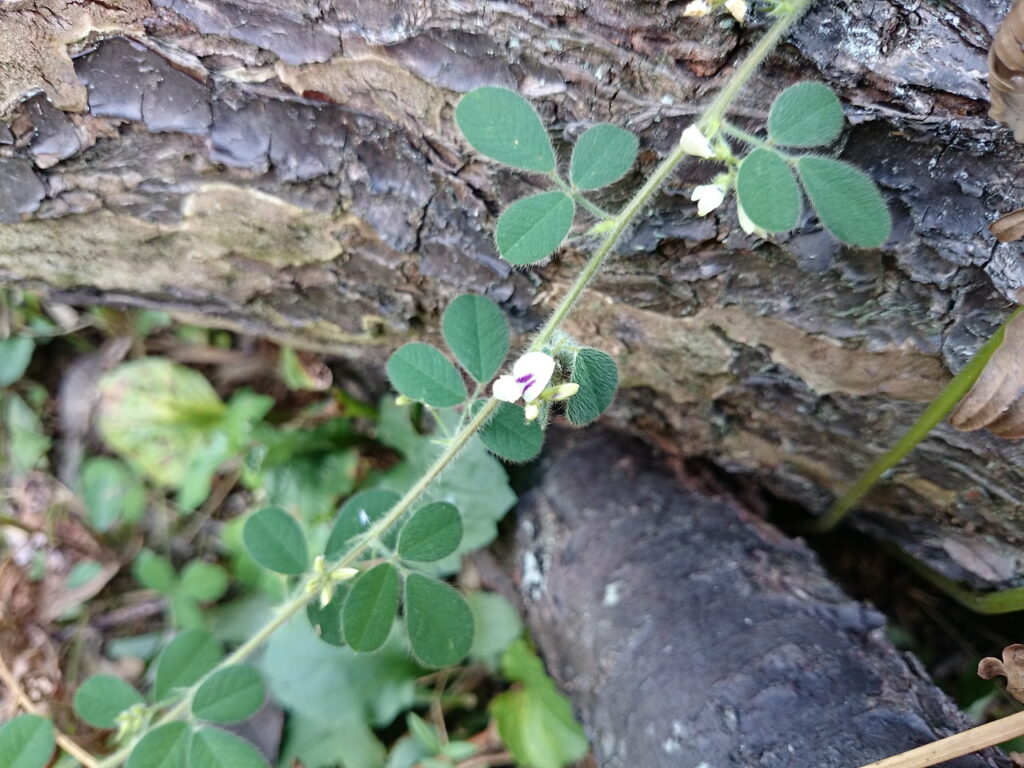
No.1553 Lespedeza cuneata var. cuneata
Perennial herb (Kanagawa Prefecture Flora Survey Association, 2018). The stem is erect, reaching a height of 1m, with densely packed leaves along the stem. The flowers are clustered in the leaf axils, and include both pale yellow flowers with petals and cleistogamous flowers without petals. The standard petal usually has purple spots, but these are rarely absent. The legumes mature mainly from cleistogamous flowers, and their calyx lobes have a single vein, with tips that are clearly shorter than the legume. The surface of the legume is very sparsely covered with short hairs. Distributed in Hokkaido, Honshu, Shikoku, Kyushu, and the Ryukyu Islands; also in East Asia. Grows in riverbeds and grasslands.
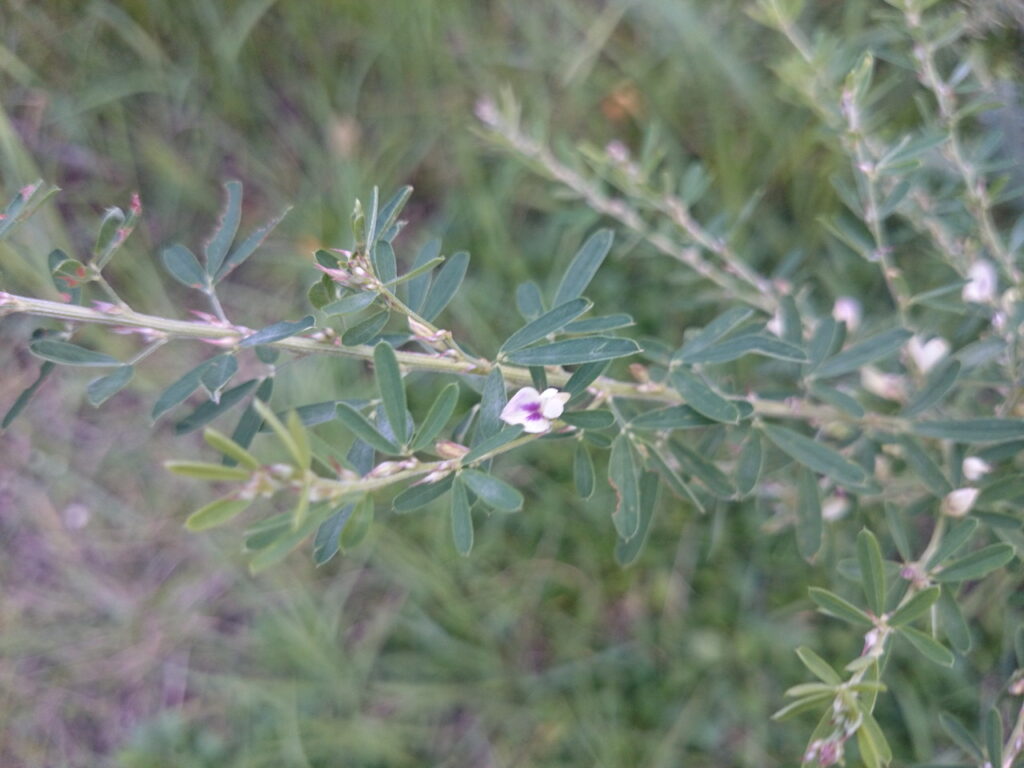
No.1553.1 Lespedeza cuneata var. serpens
The leaves and flowers are the same as those of Lespedeza cuneata, but the stems fall from the base and spread across the ground (Kanagawa Prefecture Flora Survey Association, 2018). The flowers tend to have more purple parts than the basic species. The hairs on the stems are either appressed, like those of Lespedeza cuneata, or spreading (Lespedeza cuneata f. hirta), with the latter being more common. It grows on coastal sandy beaches and in grasslands and meadows near the coast.
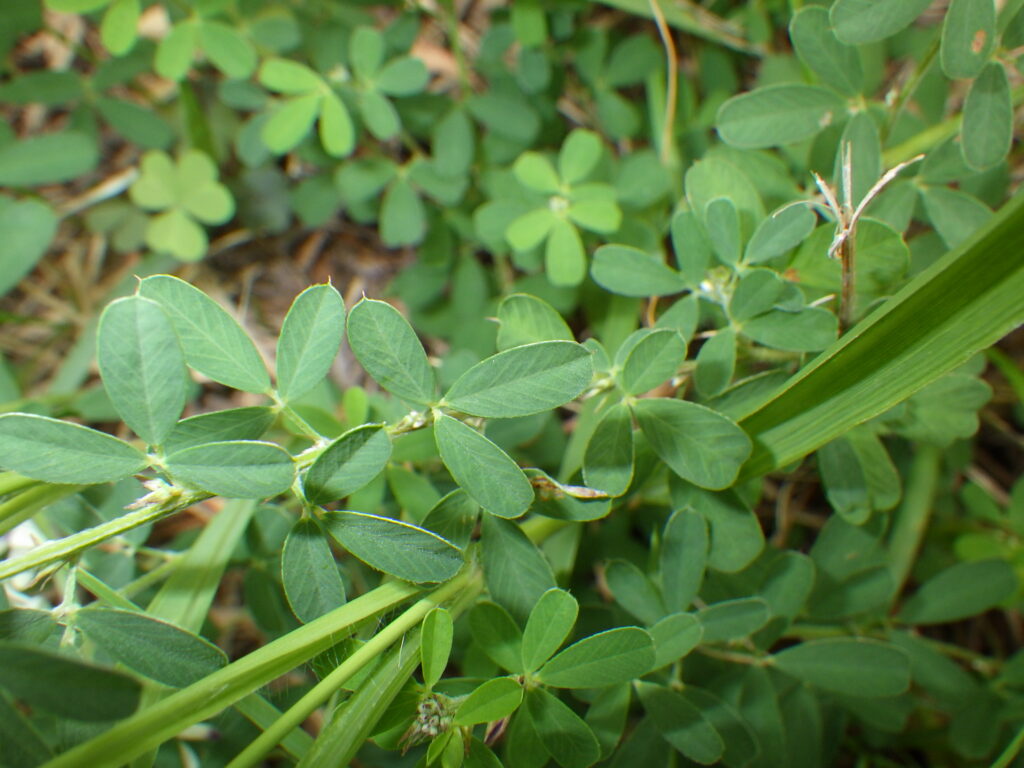
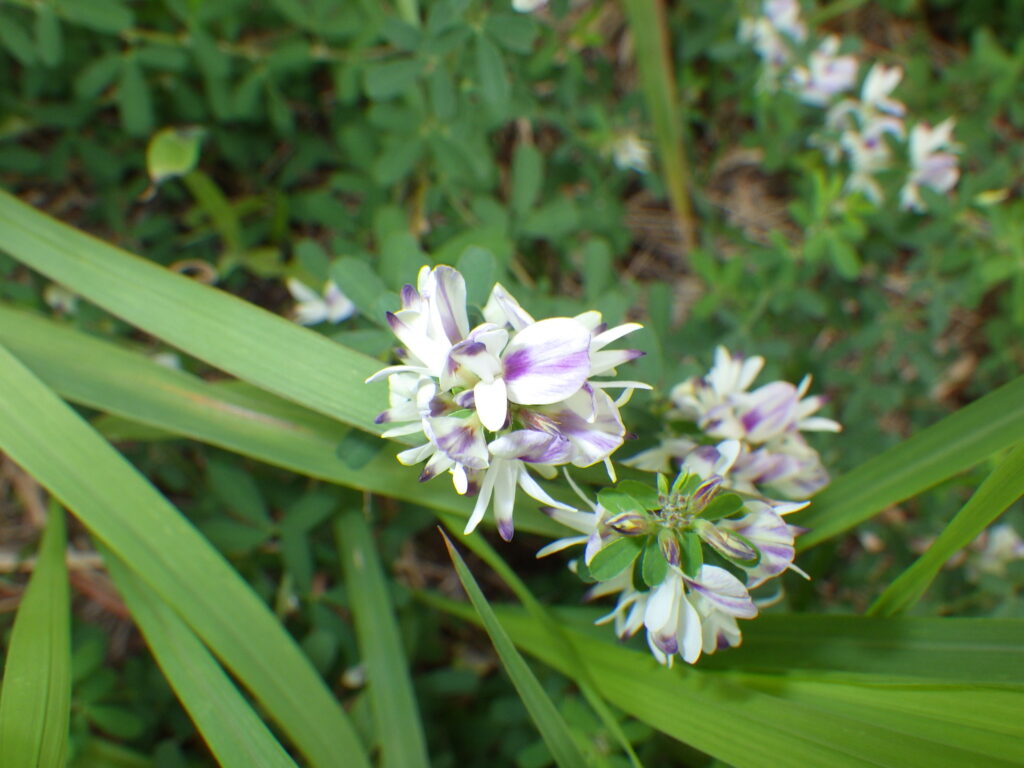
No. 1554 Kummerowia striata
This is an annual plant (Kanagawa Prefecture Flora Survey Association, 2018). The flowers are borne in the leaf axils on short stalks, are reddish-purple, and 5 mm long. The calyx is 3-3.5 mm long and covers more than half of the legume. It is distributed in Hokkaido, Honshu, Shikoku, Kyushu, and the Ryukyu Islands; as well as in Korea and China. It grows in sunny grasslands such as riverbanks, lawns, and roadsides.
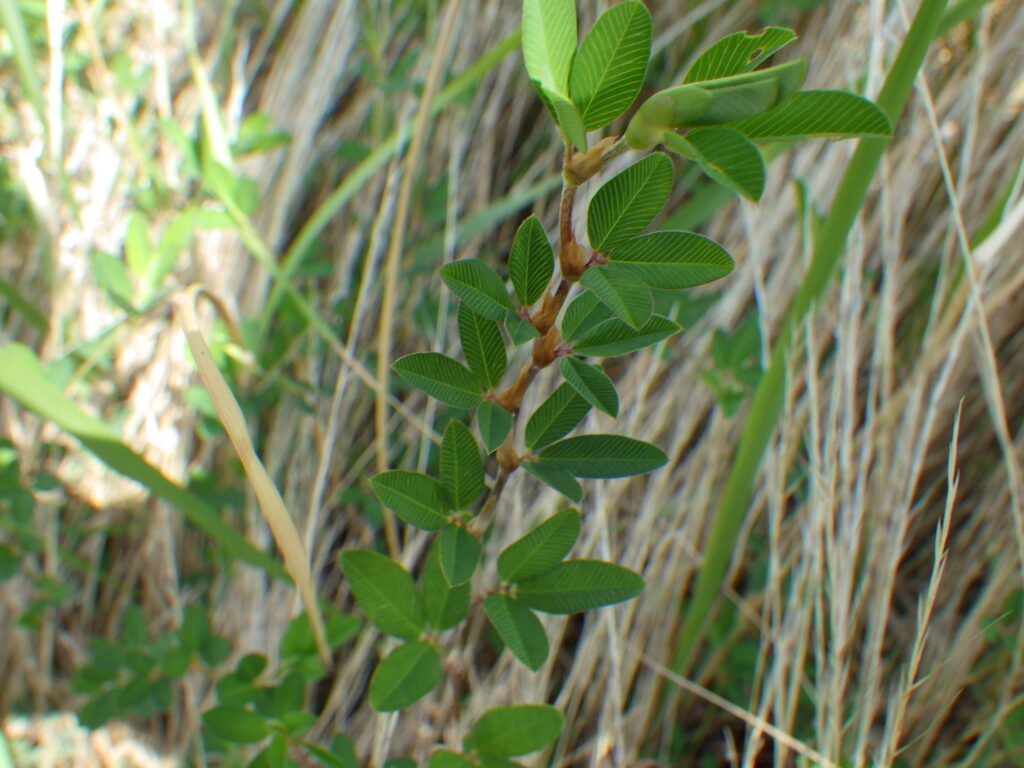
No. 1559 Vicia hirsuta (Japanese vetch)
This plant is an annual or biennial herb (Kanagawa Prefecture Flora Survey Association, 2018). Its leaves have 12-18 leaflets, with branched tendrils at the tips. The leaflets are linear-oblong, with obtuse or slightly notched tips. The flowers are small, white-purple, and borne in axillary racemes of 3-7. The pods are oblong and covered with short hairs, containing 1-2 seeds, which turn black when mature. The seeds are somewhat flattened. It is distributed in Honshu, Shikoku, Kyushu, and the Ryukyu Islands; and in the temperate regions of Eurasia and North Africa. It grows along roadsides and embankments around cultivated fields.
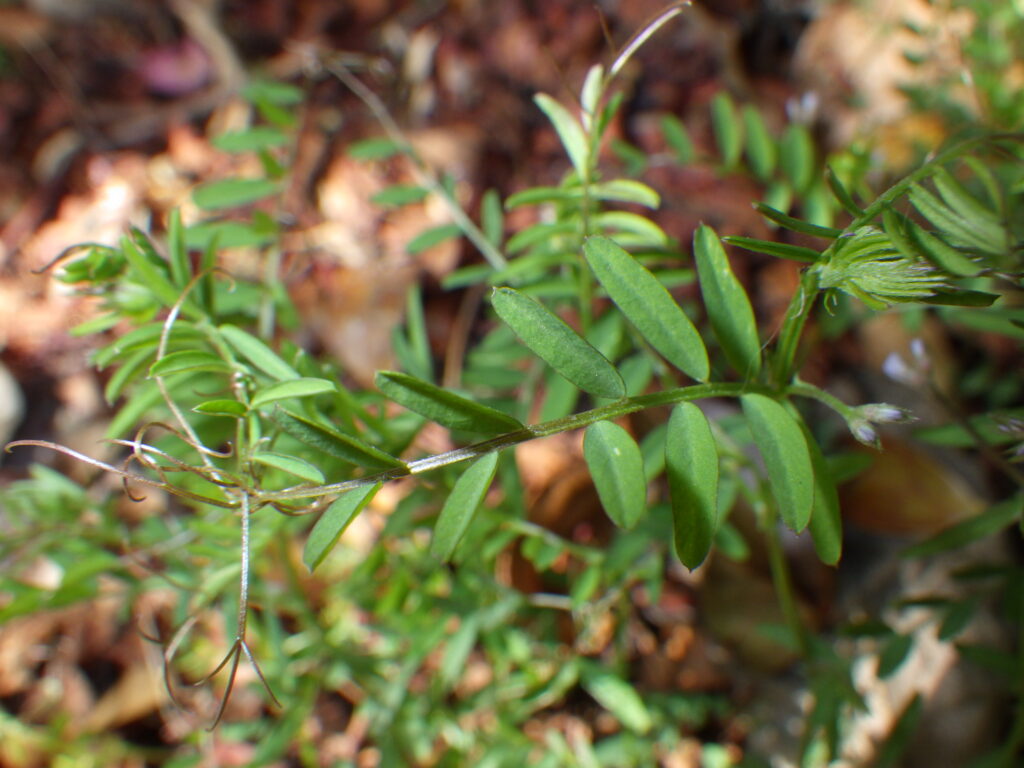
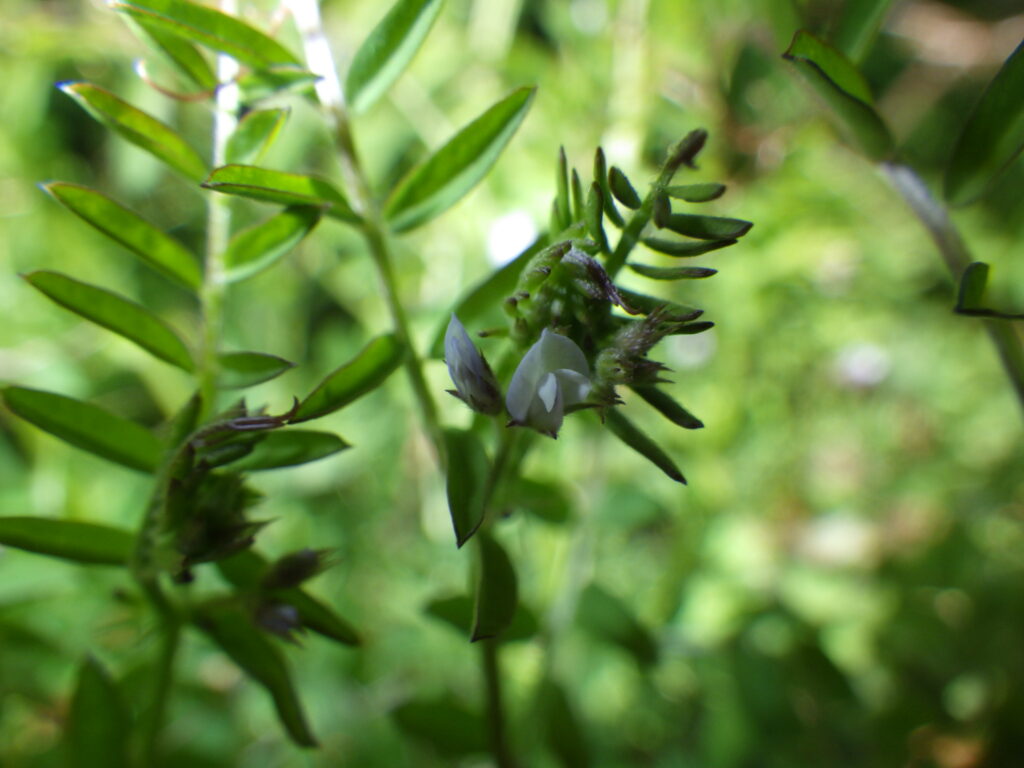
No. 1560 Vicia tetrasperma
It is an annual or biennial herb (Kanagawa Prefecture Flora Survey Association, 2018). The leaves consist of 8 to 12 leaflets, which are oblong with slightly pointed tips. It resembles Vicia cracca, but can be distinguished by its pale reddish-purple flowers (only 1 to 2 in number) and its hairless pods. The pods are oval, hairless, and the seeds are nearly spherical. It is distributed in Honshu, Shikoku, Kyushu, and the Ryukyu Islands; and in the temperate regions of Eurasia. It grows on embankments and roadsides around cultivated fields.
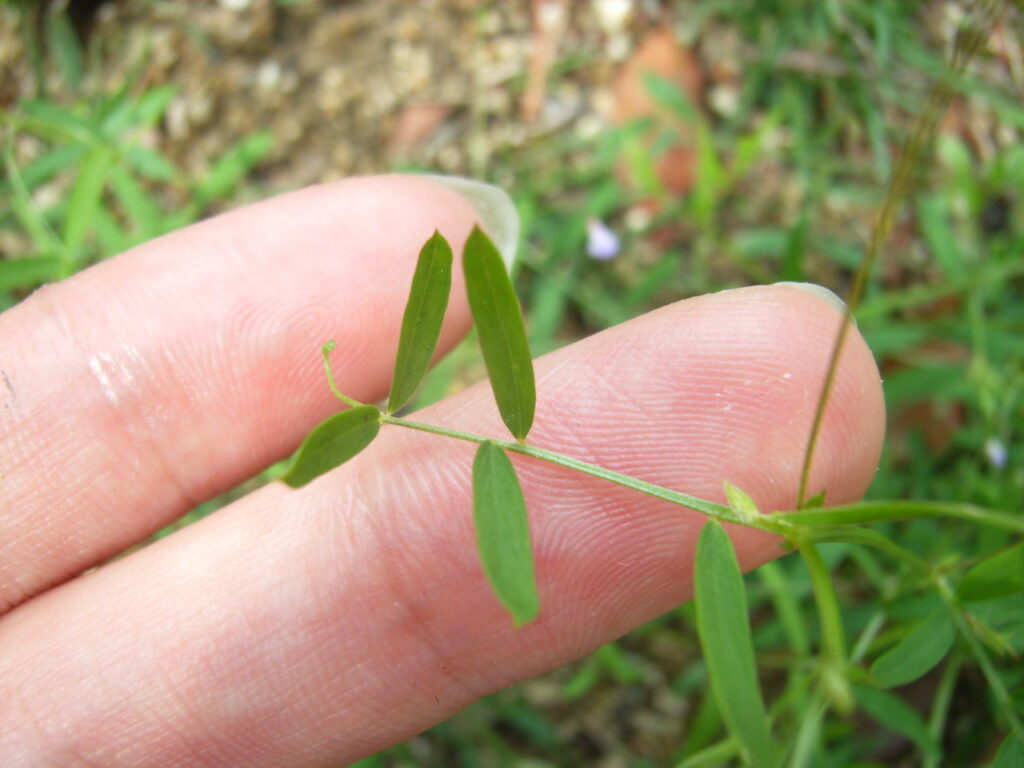
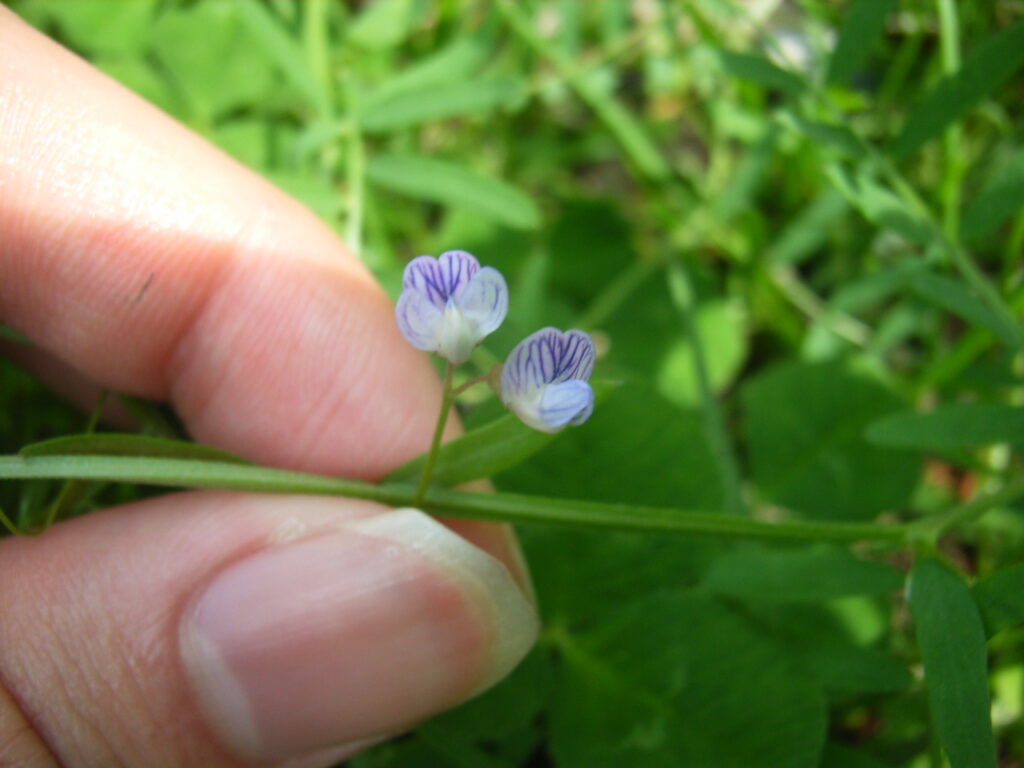
No. 1561 Vicia sativa subsp. nigra (Japanese pea)
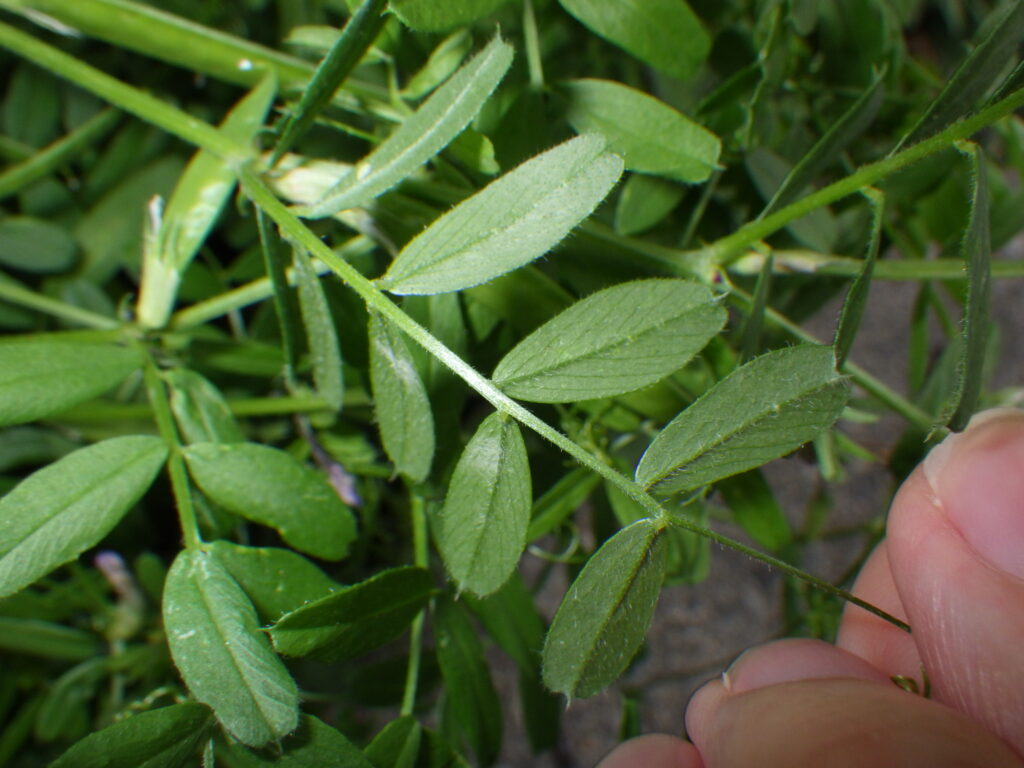
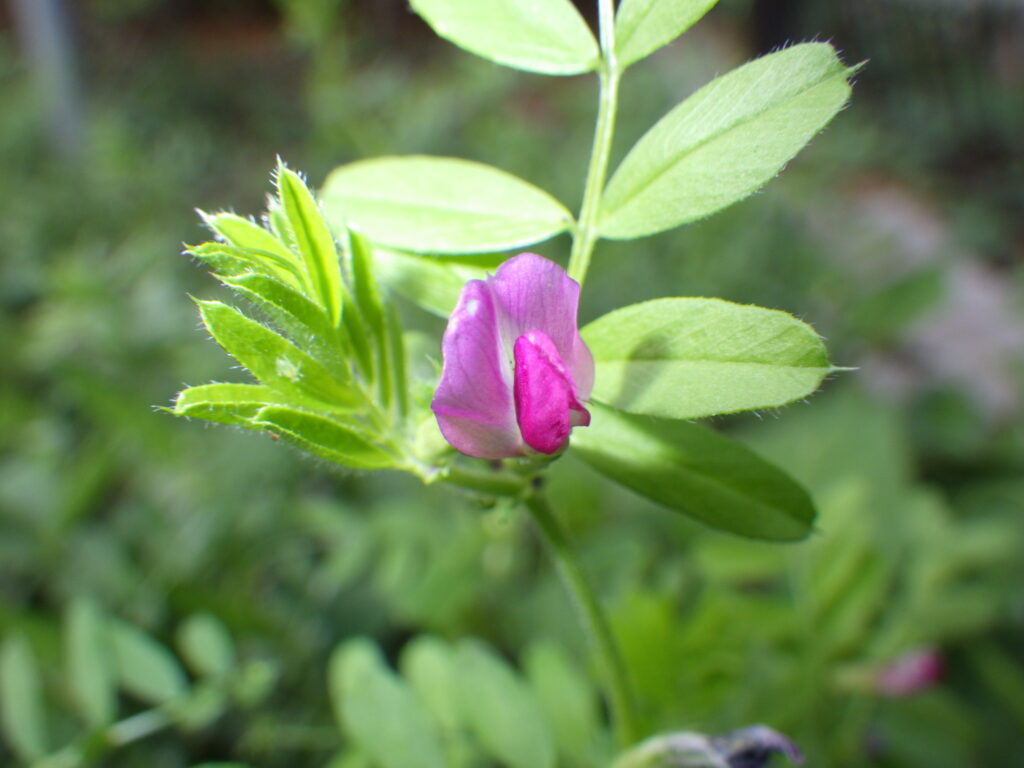
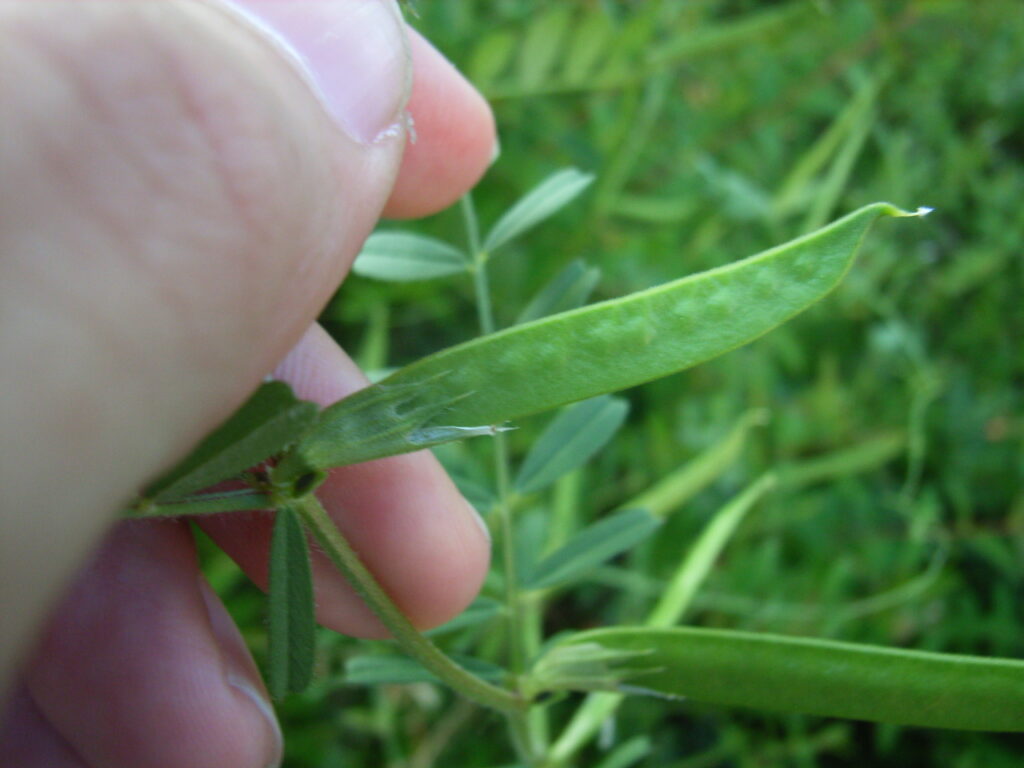
Also known as crow's vetch (Kanagawa Prefecture Flora Survey Association, 2018). An annual or biennial herb. The tips of the leaves develop tendrils that twine around other objects. The leaflets number 8 to 16, are narrowly obovate, 2 to 3 cm long and 4 to 5 mm wide, with a slightly notched tip. The stipules are deeply lobed and have brown glandular dots on the underside. The flowers are purple, borne 1 to 2 times in the leaf axils, with very short pedicels. The legumes are broadly linear, containing 5 to 10 seeds, and ripen to black. Distributed in Honshu, Shikoku, Kyushu, and the Ryukyu Islands; as well as Europe and northern Asia. It grows in grasslands, embankments, and roadsides around fields and farms. Those without tendrils are called bush vetch f. normalis, and white-flowered varieties are called white vetch f. albiflora, both of which are rarely recorded mixed with the parent species.
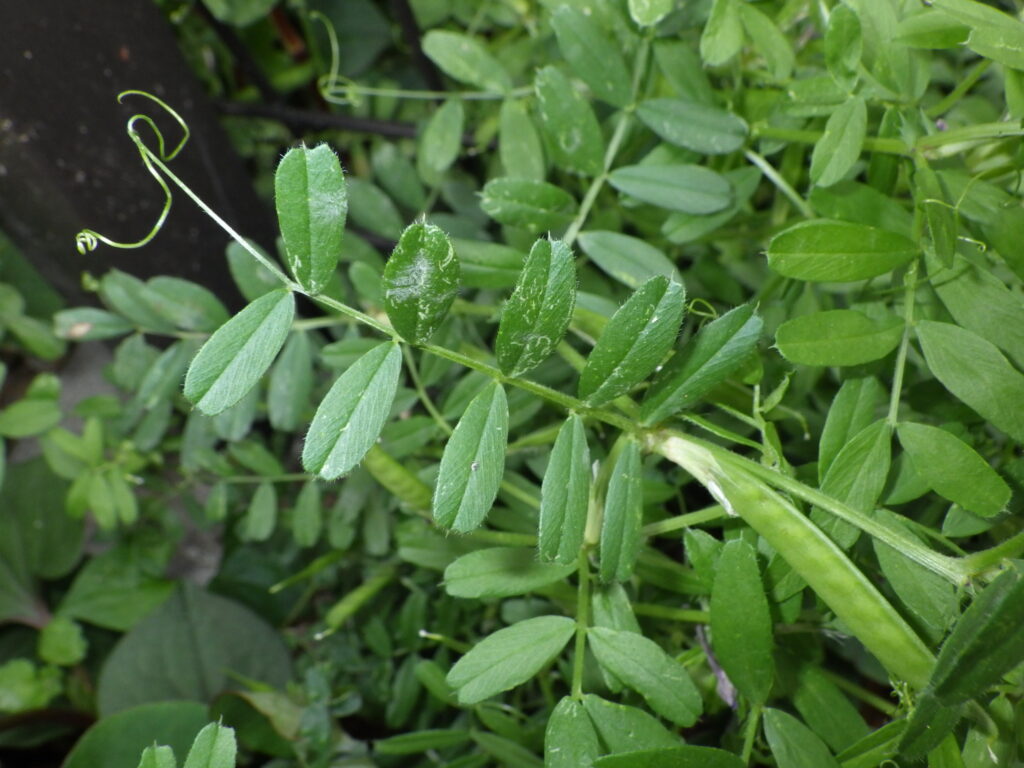
No.1569.a Nayokusafuji Vicia villosa subsp. varia
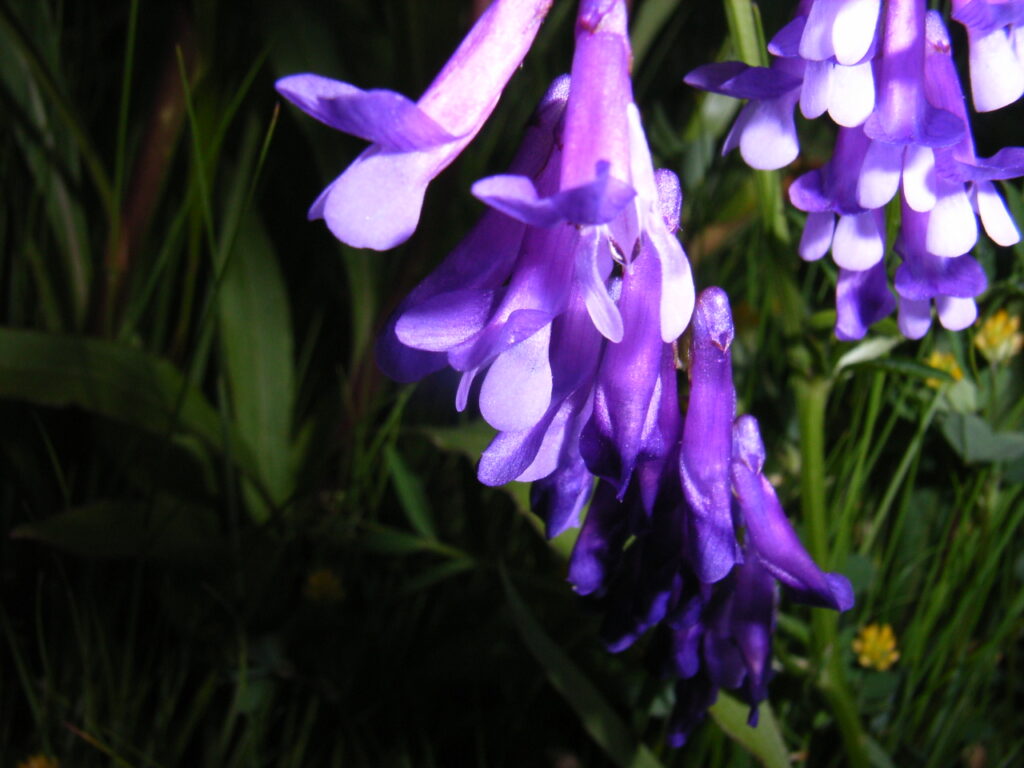
It is an annual or biennial plant (Kanagawa Prefecture Flora Survey Association, 2018). The entire plant is sparsely covered with hairs. The leaves consist of about 10 pairs of leaflets and are almost hairless. It flowers from April to July. The flowers are purple, with 10 to 30 flowers in a raceme, mostly on one side. The pedicel is attached to the calyx tube in a T-shape, and the posterior end of the calyx tube protrudes backward in a sac-like manner. The legume is flattened and oval-shaped. It is a naturalized plant originally from Europe. It is thought to have naturalized in Japan in the 1940s, and has since naturalized in Honshu, Shikoku, and Kyushu. It grows along roadsides and in vacant lots in urban areas.
No.1569.b Vicia villosa subsp. eriocarpa
It resembles Vicia villosa, but the surface of the legume is densely covered with appressed hairs (Kanagawa Prefectural Flora Survey Association, 2018). The calyx lobes are shorter than the calyx tube. European studies have identified Vicia villosa subsp. varia, which has hairless legumes, and subsp. eriocarpa, which has hairy legumes, as subspecies of Vicia villosa. The Kanagawa Prefectural Flora Survey Association (2018) has given the above Japanese name to the subspecies with densely appressed hairs on the legumes, recognizing it as a newly introduced naturalized plant in Japan. It also differs in that it has fewer hairs on its leaves and stems. It is thought to have been introduced as green manure and is believed to grow mixed with the two aforementioned subspecies.
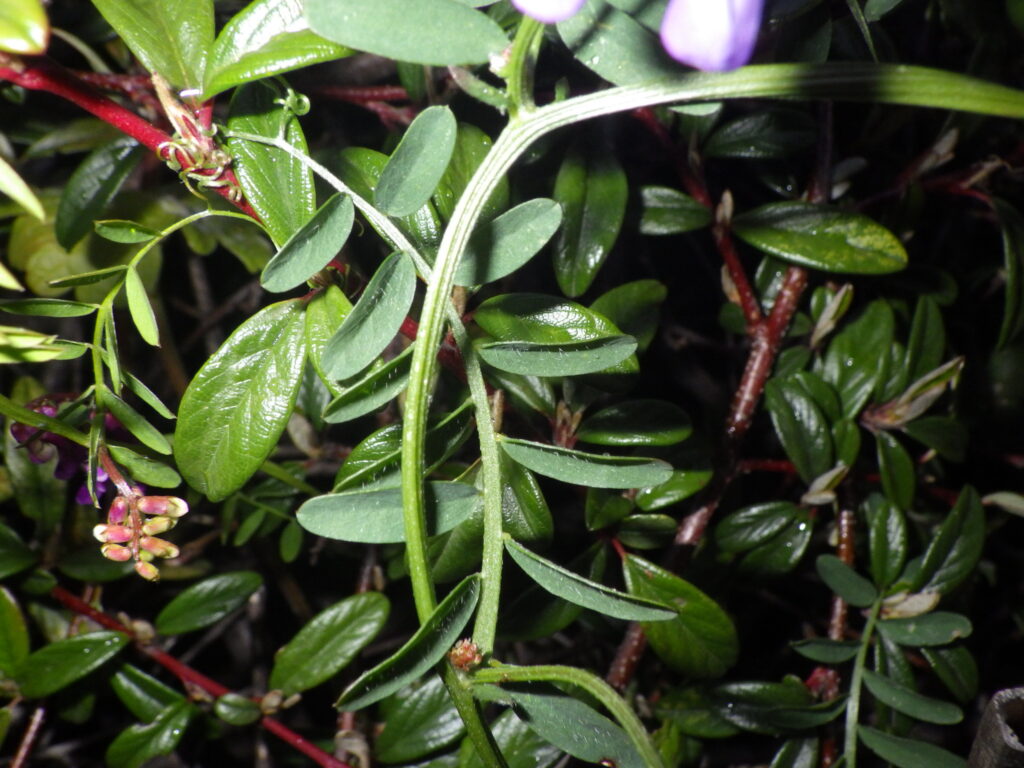
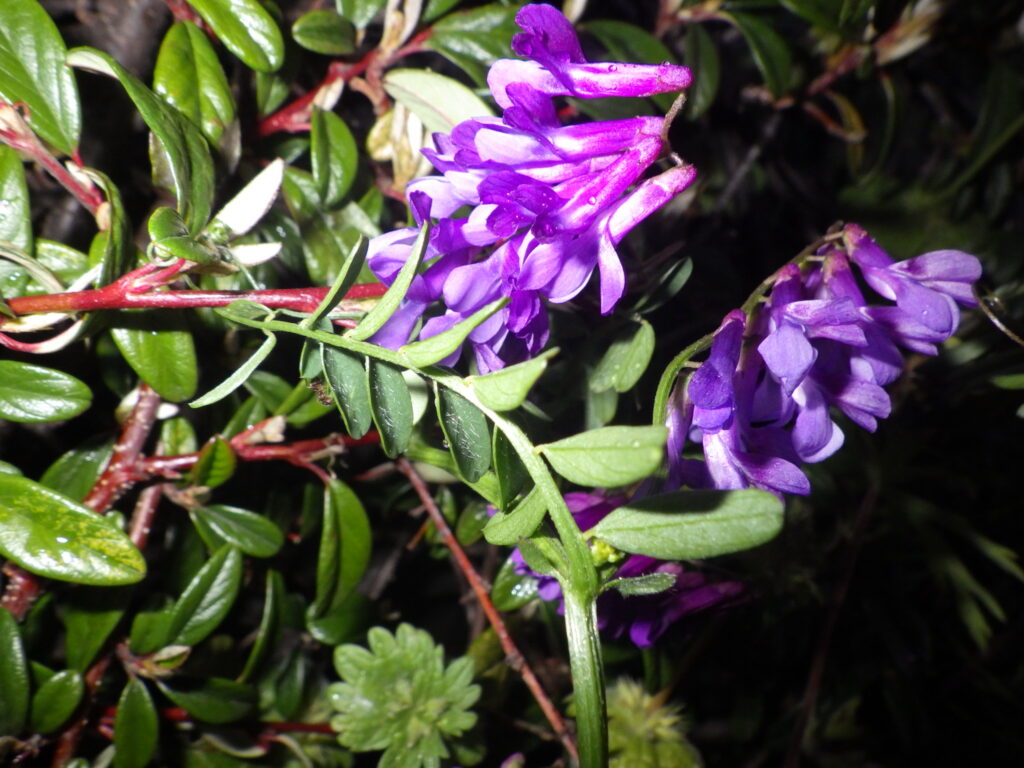
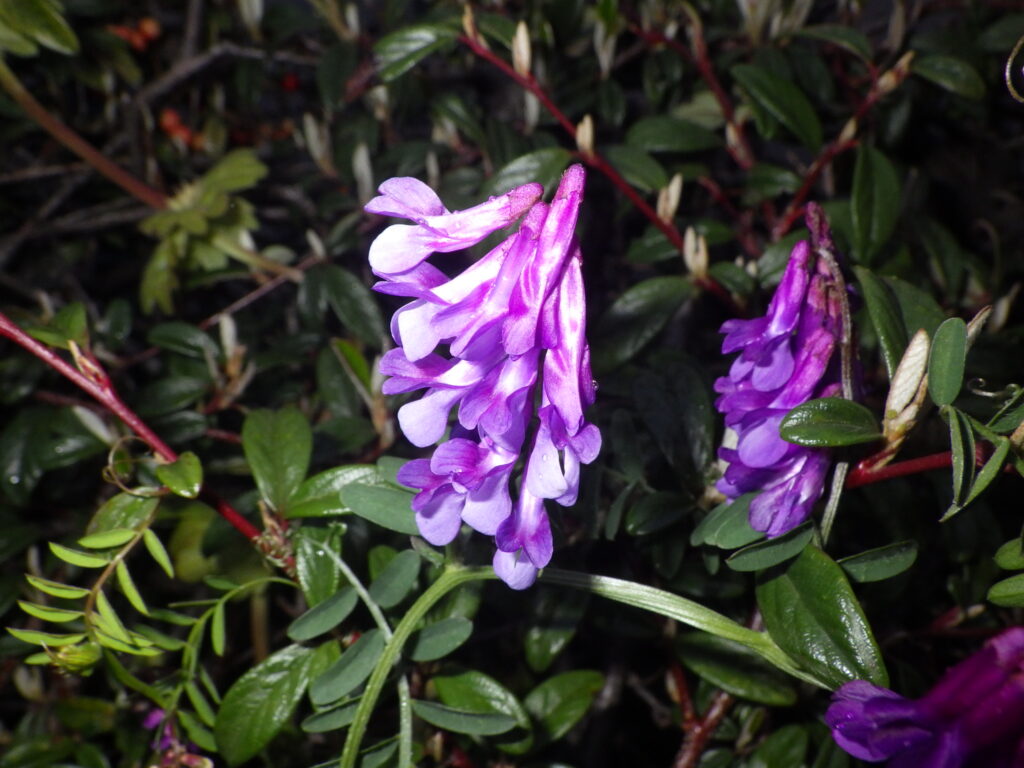
No. 1571 Vicia unijuga
A perennial herb with sturdy roots (Kanagawa Prefecture Flora Survey Association, 2018). The stem is erect. The leaves are alternate with short petioles. The leaflets are oblong to ovate with pointed tips. The leaf axis has a vestigial projection at the tip. The stipules are toothed or two-lobed. Blue-violet flowers are borne in racemes emerging from the leaf axils. The bracts are lanceolate, about 1 mm long, and fall off before flowering. The legumes are narrowly elliptical, glabrous, and stalked. Distributed in Hokkaido, Honshu, Shikoku, Kyushu; and East Asia. It grows in forest edges and grasslands.
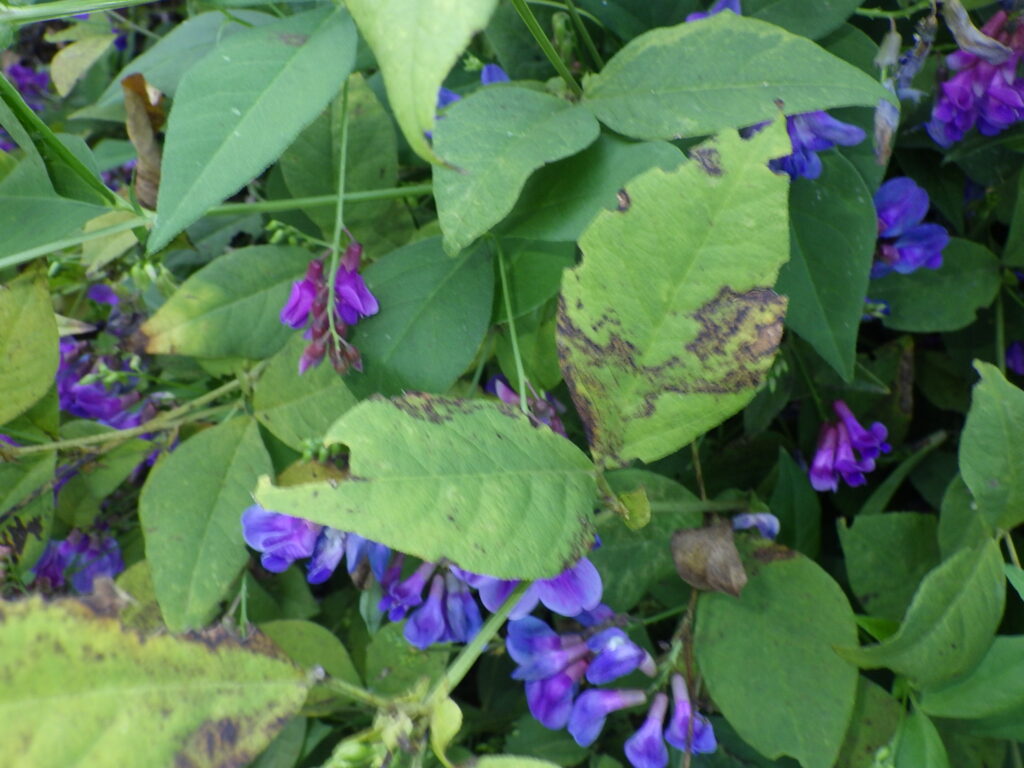
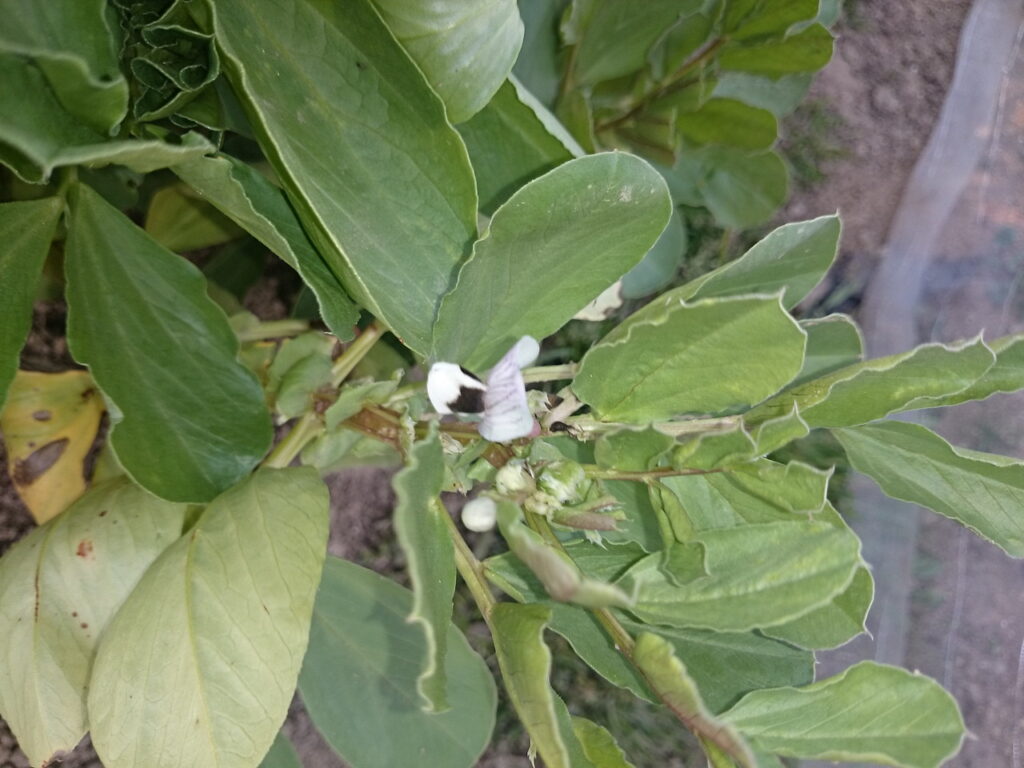
No. 1576 Broad Bean (Vicia faba)
This is an annual plant (Tsukamoto, 1994). It is said to be written as "silkworm bean" because the pods resemble silkworms when small, and because it ripens in spring, around the time silkworms spin their cocoons. It is also called "sky bean" because the pods face upwards. The plant grows to a height of about 1 meter. The stem is erect, square in cross-section, and hollow. Many branches grow from the base of the plant. In spring, it bears 1 to 5 flowers with short pedicels in the leaf axils. The flowers are white or pale purple, and are characterized by black markings on the standard petal. The pods are dark green, 5 to 10 cm long, and erect. They usually contain 2 to 4 seeds. The seeds are flattened and kidney-shaped, 10 to 28 mm long, depending on the cultivated variety. The seed coat is initially pale green and turns brown as it matures and dries. The hilum is large, pale green when immature, and turns black when mature. Native to Central Asia and the Mediterranean coast, the broad bean is grown for its edible seeds. It is believed to have been incorporated into agriculture during the late Neolithic period. Cultivation began in the Near East, and then spread in four directions: to Europe, through North Africa to Spain, along the Nile River to Ethiopia, and from Mesopotamia to India. By the Iron Age, broad bean cultivation appears to have been established in Europe, including Britain. Broad beans have been discovered in Egyptian ruins dating back to the 18th century BC. In China, cultivation began after the 12th century. In Japan, it is a relatively new crop, with its first mention believed to be in a book from 1630.
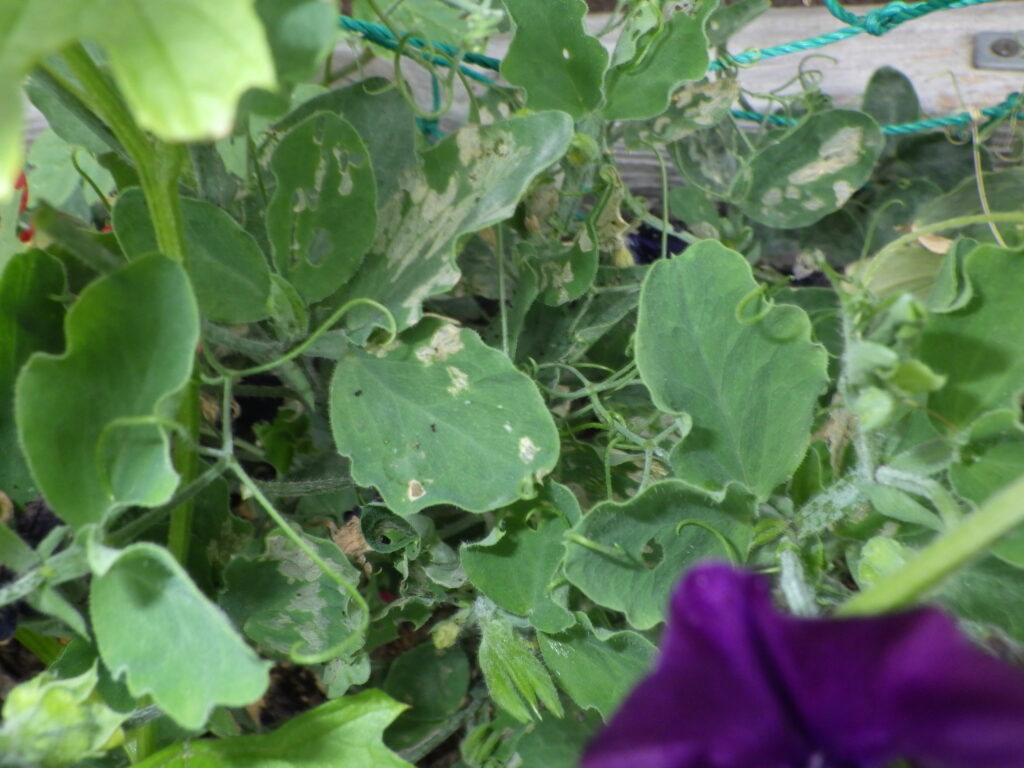
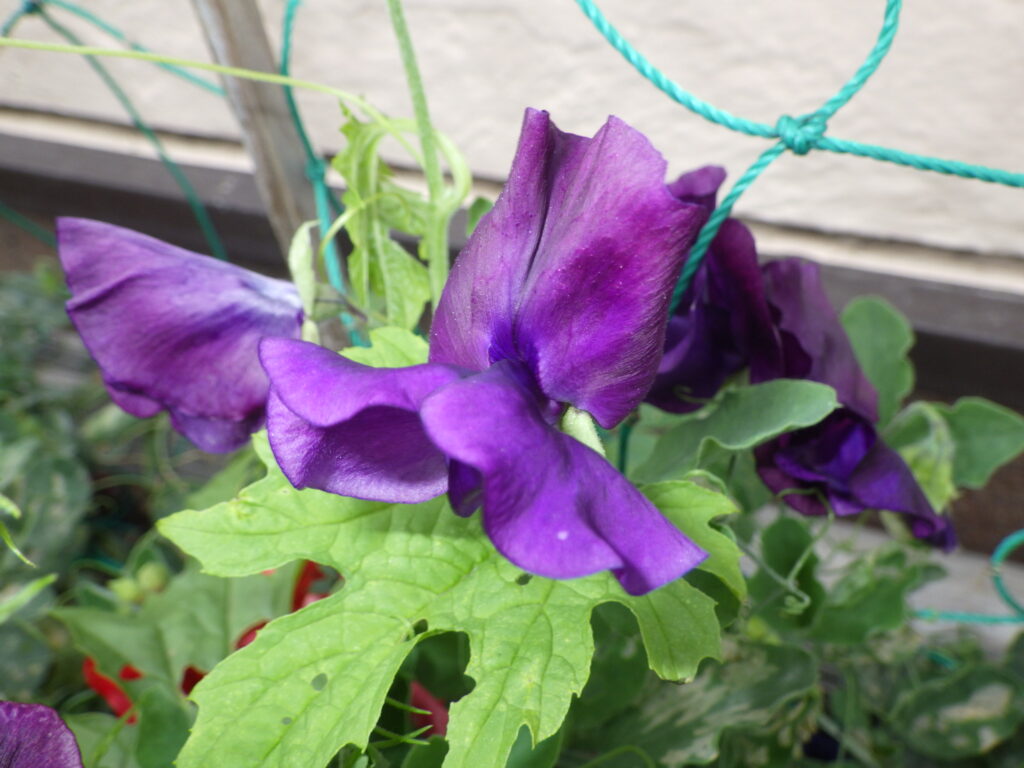
No. 1581 Mud pea (Lathyrus odoratus)
Also known as sweet pea, it is a climbing annual plant that can grow up to nearly 4 meters tall. It climbs by twining its branching tendrils around other objects. The stem has wings. The leaves are alternate and consist of a pair of leaflets, which are ovate to ovate-oblong, 6 cm long. There are tendrils at the tips of the leaflets, which are modified leaves. Racemes of 1 to 4 flowers emerge from the leaf axils. The flowers are butterfly-shaped and fragrant. In wild species, the standard petal is dark reddish-purple, and the wing petals are pale blue, sometimes with purple veins. The fruit is a flattened legume 5 cm long and covered with hairs. Cultivated varieties have flowers in white, pink, purple, and red. It is native to Sicily, southern Italy, and the Aegean Islands.
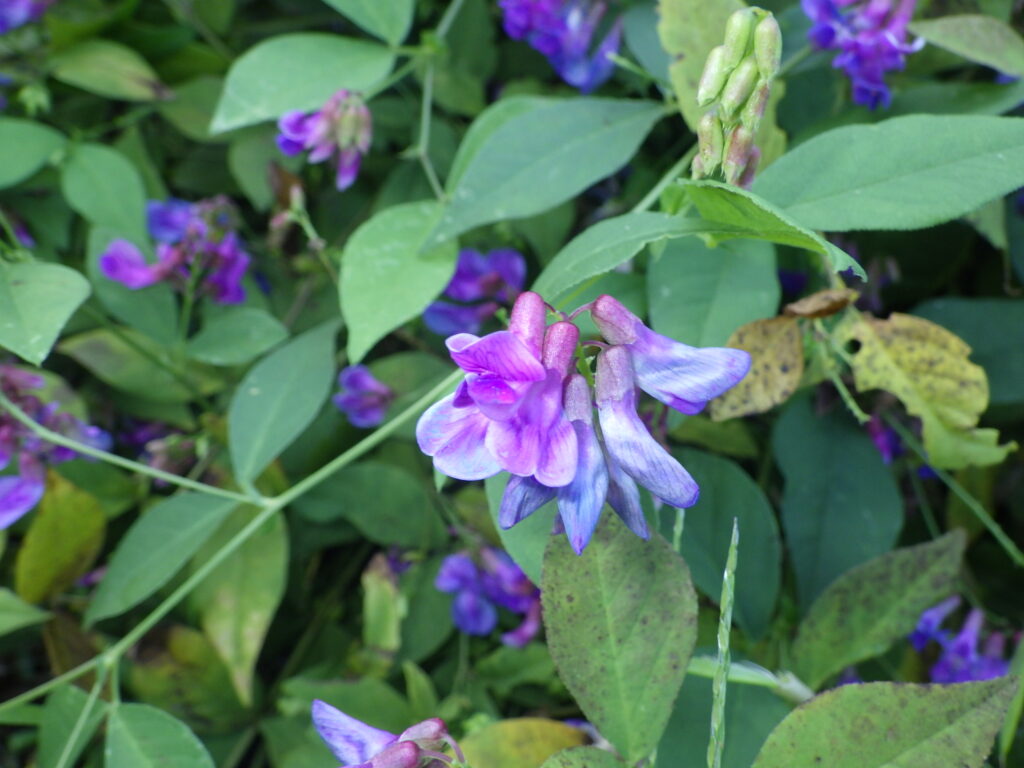
No. 1582 Beach Pea (Lathyrus japonicus)
Perennial herb (Kanagawa Prefecture Flora Survey Association, 2018). The stems creep long across the sand, and the tips rise obliquely. There are 3 to 6 pairs of leaflets, and the tendrils are branched. The stipules are large, the same size as the leaflets. It flowers in April and May, bearing several purple flowers in racemes emerging from the leaf axils. Widely distributed in the temperate to subarctic regions of the Northern Hemisphere: Hokkaido, Honshu, Shikoku, Kyushu, and the Ryukyu Islands. It grows on sandy beaches along the coast.
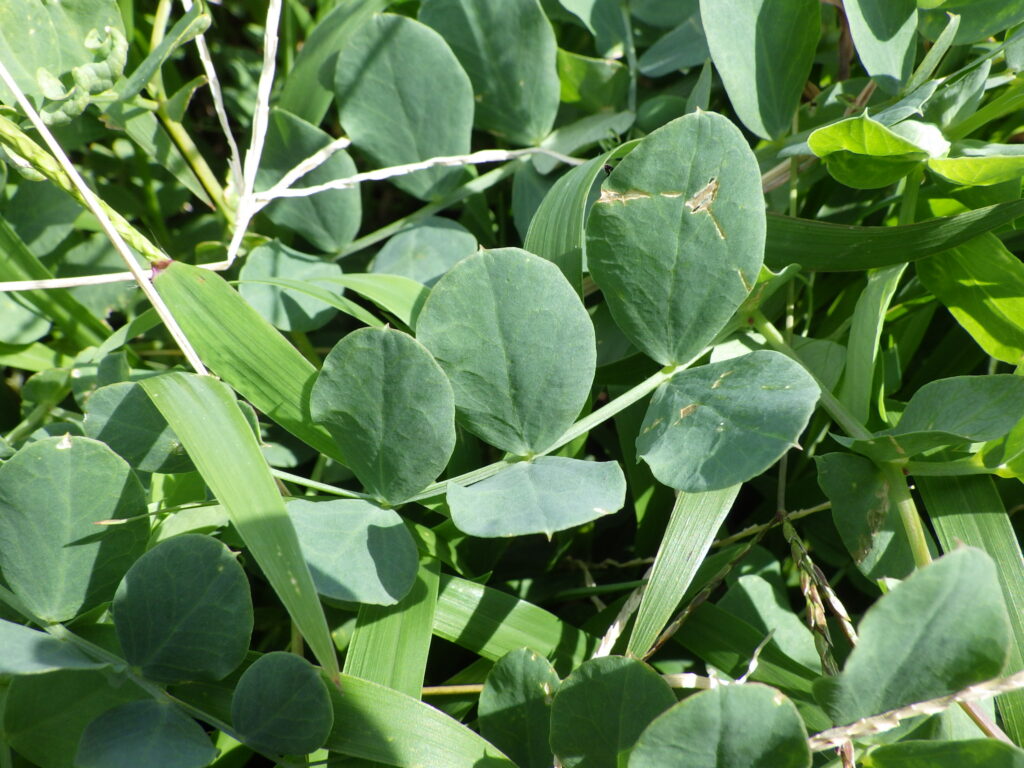
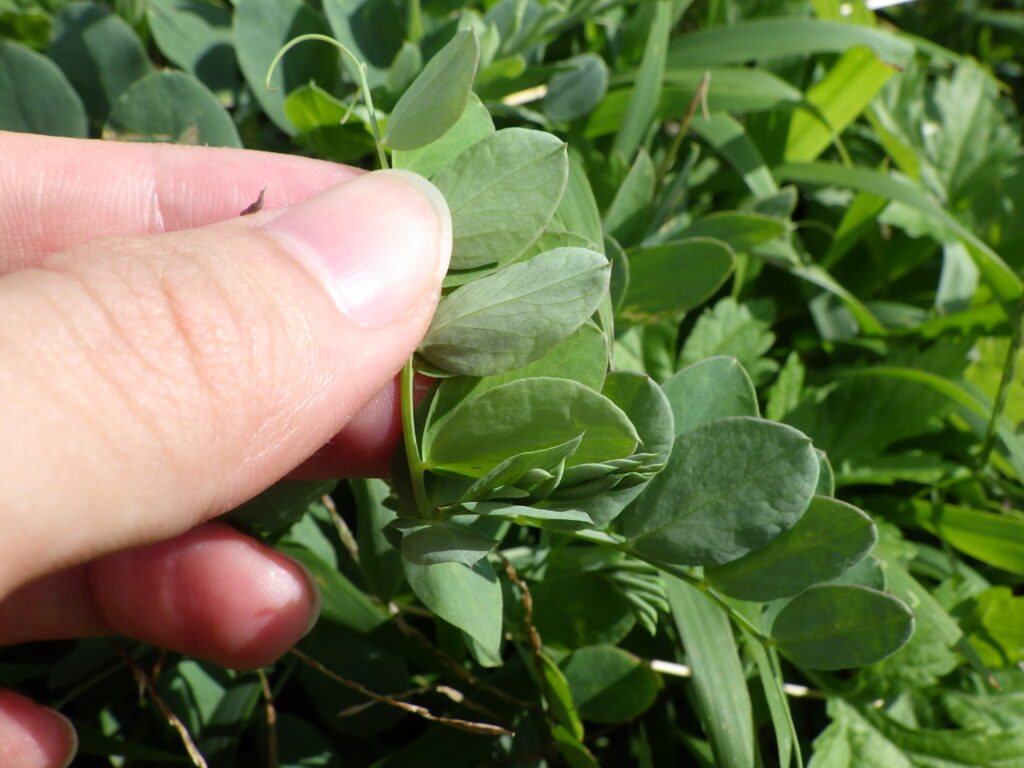
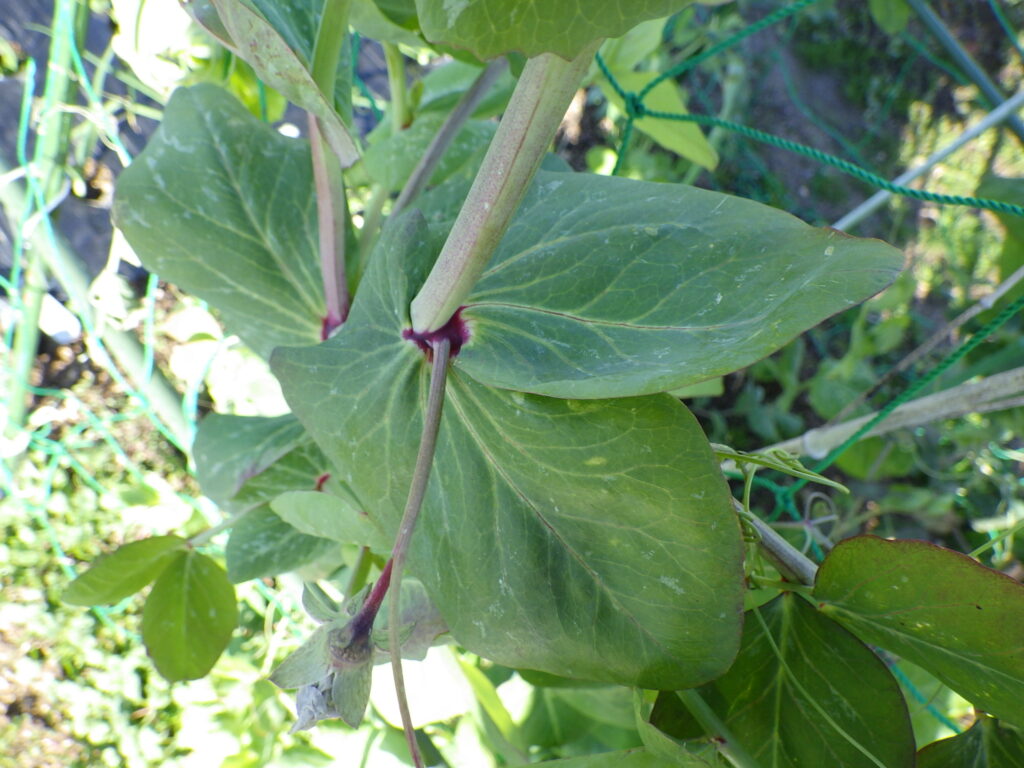
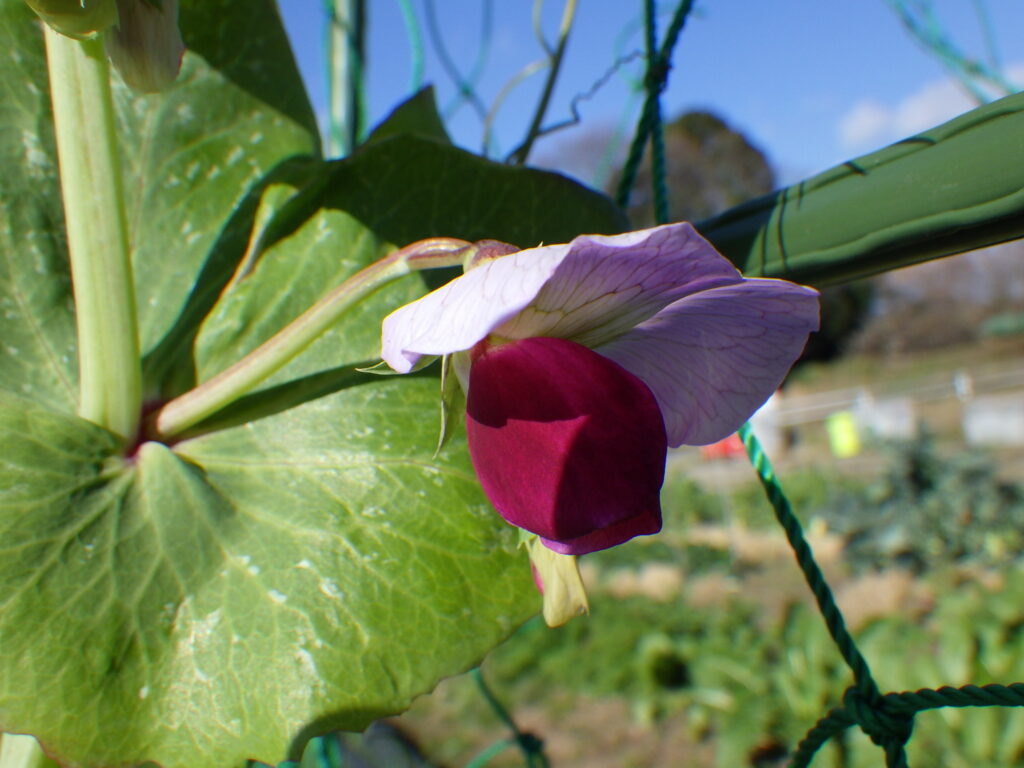
No. 1584 White Pea (Pisum sativum var. macrocarpon)
This is a climbing annual or biennial herb that grows to about 1 meter in height. The entire plant is hairless, and the stems and leaves are covered in a waxy substance, giving it a whitish appearance. The stems are hollow. The leaves are alternate, pinnately compound, and the apical leaflets have evolved into tendrils. There are two well-developed stipules at the base of each leaf. From the upper leaf axils, there are bifurcated flower stalks 2-5 cm long, usually bearing two flowers. The flowers are butterfly-shaped and white. The fruit is a flattened legume and is white. In wild species, the seeds are dispersed by bursting open pods and scattering them on the ground (Diamond, 1997). Numerous edible varieties of fruit and seeds exist and are cultivated in fields. Although there are various theories, it is believed that around 8000 BC in the Fertile Crescent, it was cultivated as a source of protein, along with chickpeas and lentils, in contrast to emmer wheat (Triticum dicoccon), einkorn wheat (Triticum monococcum), and barley (Diamond, 1997). When this species was introduced as a crop from the Fertile Crescent to people in Western Eurasia, the spread of cultivation techniques led them to quickly abandon the collection of wild relatives that they had previously practiced. It shares a single recessive gene, which prevents the pods from automatically bursting open and spilling the beans, unlike wild species. Furthermore, the seed coat has been artificially selected to be thin and smooth, and the seeds weigh ten times more than those of wild species. White pea (snow pea, soft-podded variety) var. macrocarpon has white flowers (although there are various theories on this point), and its pods are soft. Immature pods are used as snow peas, and fresh beans before drying are used as green peas. In Japan, they are processed into roasted beans, boiled beans, and uguisu bean paste. Pea sprouts are the young shoots of the pea plant and were eaten in China, but hydroponic cultivation was developed in Japan, increasing production, and they are used in stir-fries and other dishes due to their good texture.
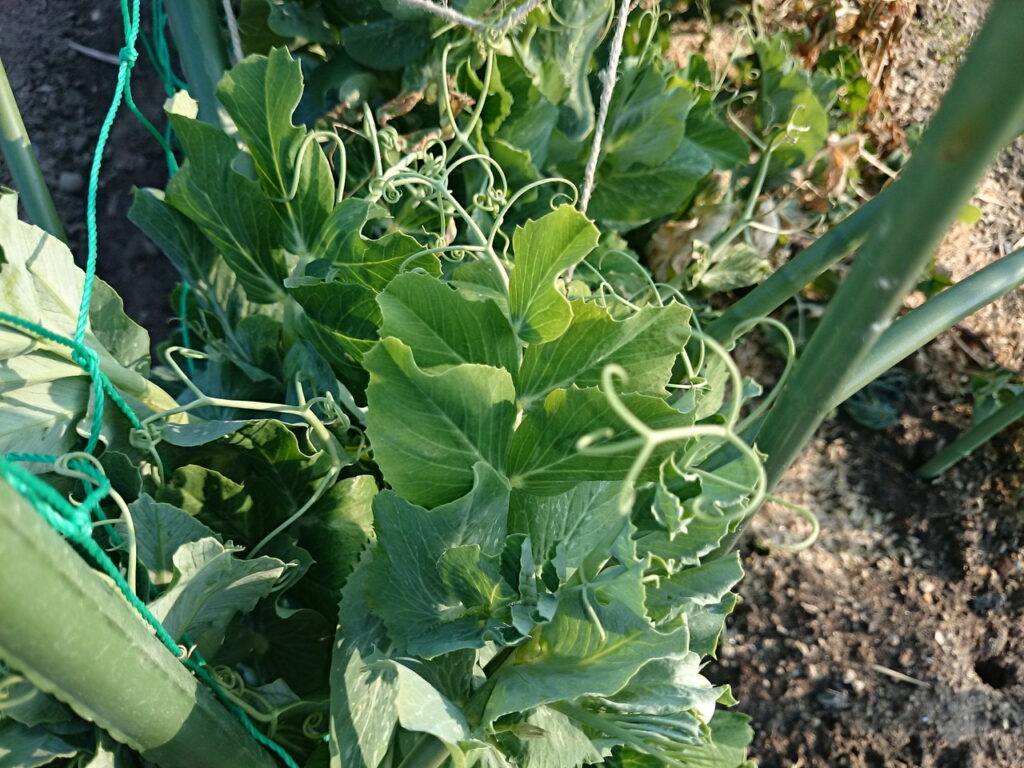
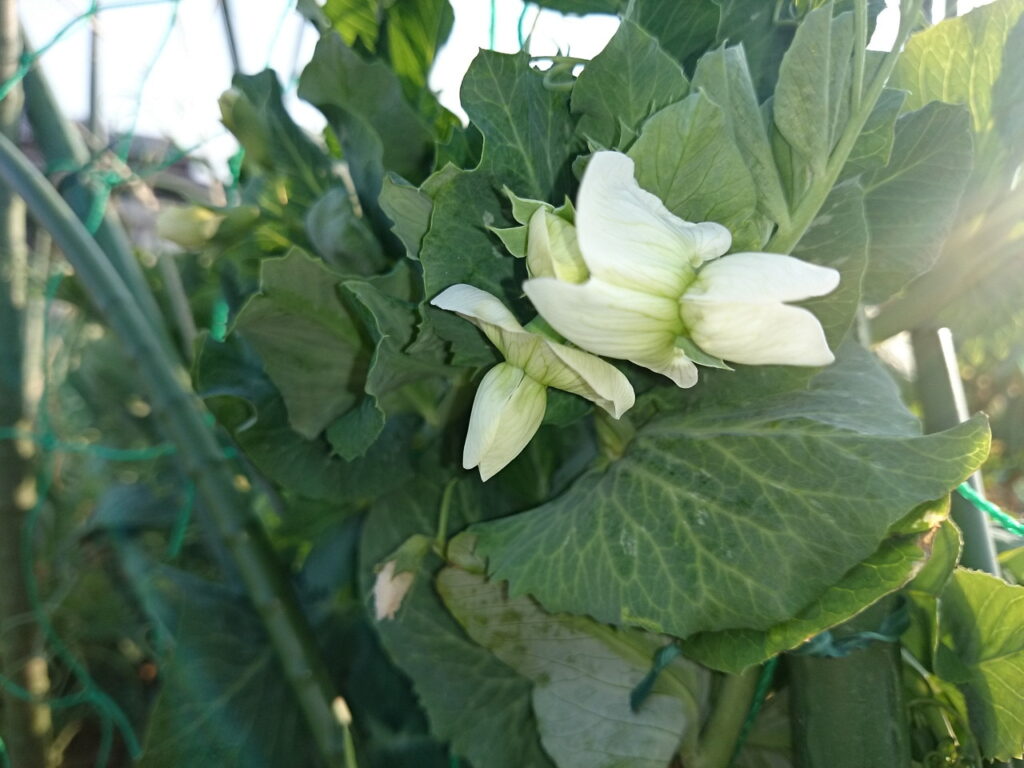
No. 1585 Red Pea (Pisum sativum var. arvense)
A variety of pea that produces red flowers. The pods are hard, and the beans are brown. It is a hard-podded variety, and the beans are mainly harvested and used when fully ripe and dried. In Europe, it is boiled and used to make pea soup, while in Japan it is eaten as mitsumame (a Japanese dessert) or boiled beans.
No.1585.a Lens culinaris (flat bean)
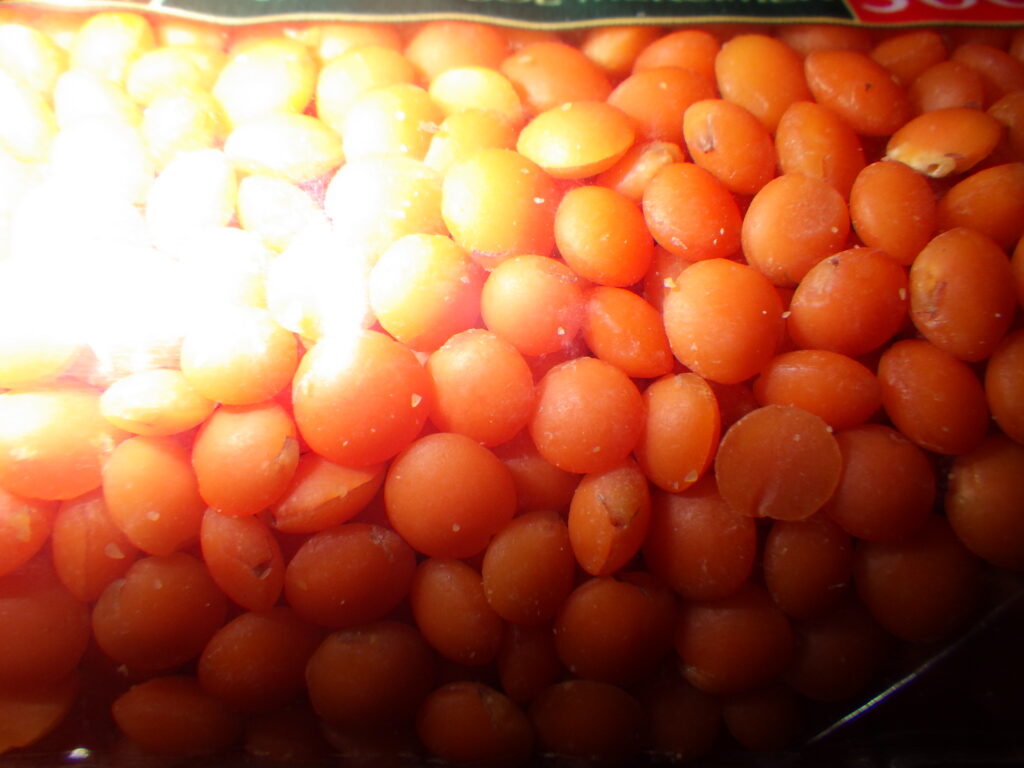
Also known as lentil, it is an annual plant, growing to a height of 15-75 cm. Its growth habit varies depending on the variety. The leaves are alternate and pinnately compound, with 4-7 pairs of leaflets, each about 1 cm long, narrow and oval-shaped, and with entire margins. The leaves have tendrils and stipules. Racemes of 1-4 white, pink, or reddish-purple butterfly-shaped flowers emerge from the leaf axils. The fruit is a legume 1-2 cm long, usually containing two seeds. The seeds are flattened and round, 4-9 mm in diameter. It is believed to have been cultivated around 7000 BC in the Fertile Crescent as a protein source alongside chickpeas and peas, alongside emmer wheat, einkorn wheat, and barley (Diamond, 1997), and subsequently spread to Europe and South Asia. It has been cultivated in India since around 2000-1500 BC. Through artificial selection, mutations that prevent the pods and pericarp from bursting have been fixed. The seeds are used in curries, soups, and stews, and are consumed in lentil curry, dal paratha, puri (fried bread), and papad (a very thin cracker-like food) in the Indian subcontinent, Fiji, Mauritius, Singapore, and the Caribbean; khichri (a porridge made with rice, lentils, and spices) in India and Pakistan; mujaddala (a dish made by cooking hulled grains, generally rice, and adding sautéed onions) in the Middle East; adas polo (a dish of rice and lentils with fried raisins) in Iran; and koshary (a dish of rice, macaroni or spaghetti pasta, chickpeas, and lentils mixed together and topped with fried onions and tomato sauce) in Egypt. The word "lens," used in cameras and other devices, originates from the fact that the shape of the first convex lenses created resembled that of a lentil seed.
No. 1586 Glycine max subsp. soja (Soybean)
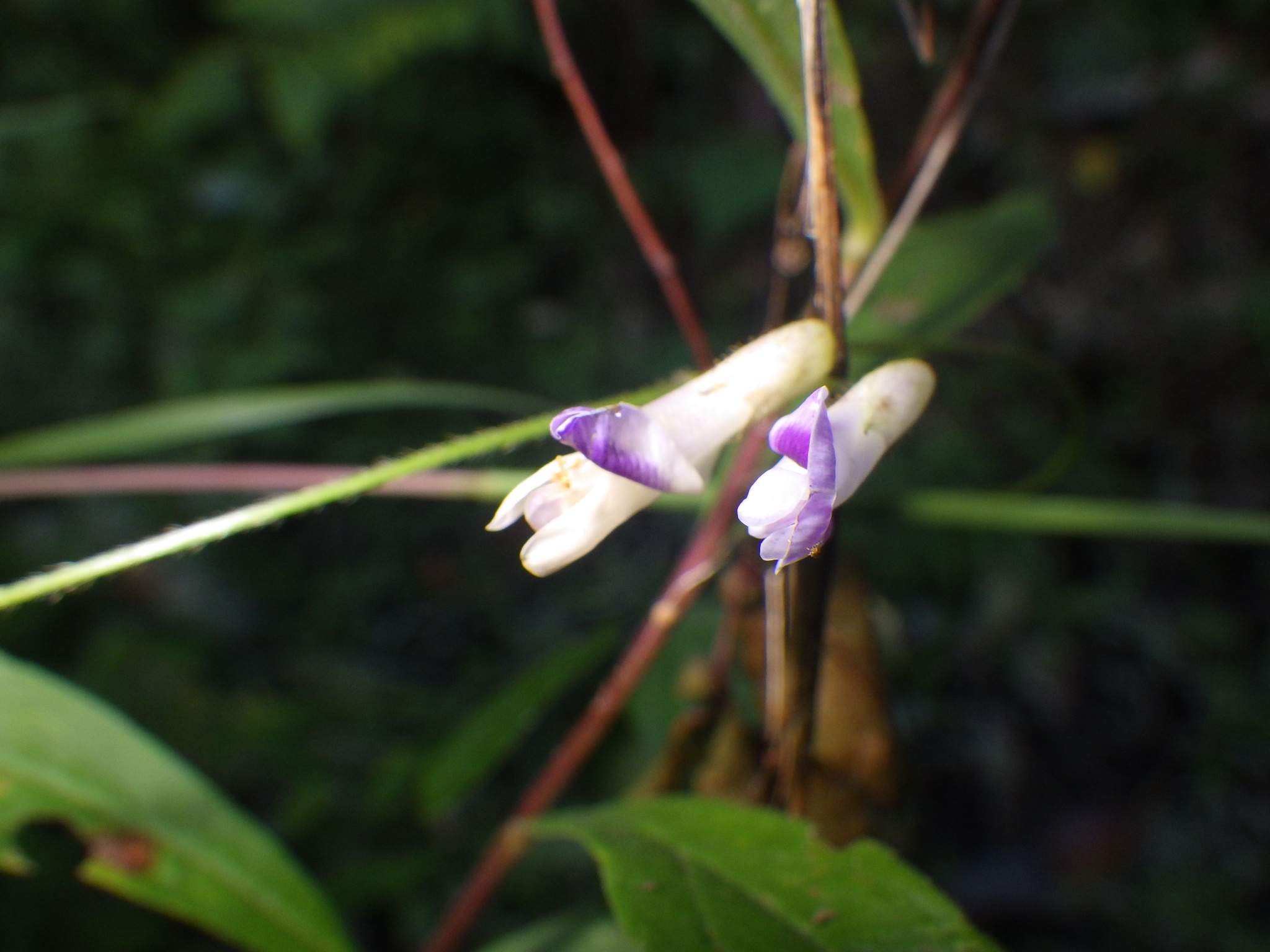
This is a climbing annual plant (Kanagawa Prefecture Flora Survey Association, 2018). The leaflets are 3 in number, narrowly ovate to linear, and their shape varies greatly. The stems are covered with brown, backward-pointing hairs, but the amount varies greatly. In August and September, it produces several pale purple flowers in short inflorescences in the leaf axils. The legumes are 2-2.5 cm long and densely covered with brown hairs. It is distributed in Hokkaido, Honshu, Shikoku, Kyushu; Korea; China; and eastern Siberia. It grows in grasslands, embankments, and forest edges. It is said to be the wild ancestor of soybeans. A variety with white flowers is called white-flowered soybean f. albiflora and is rarely seen.
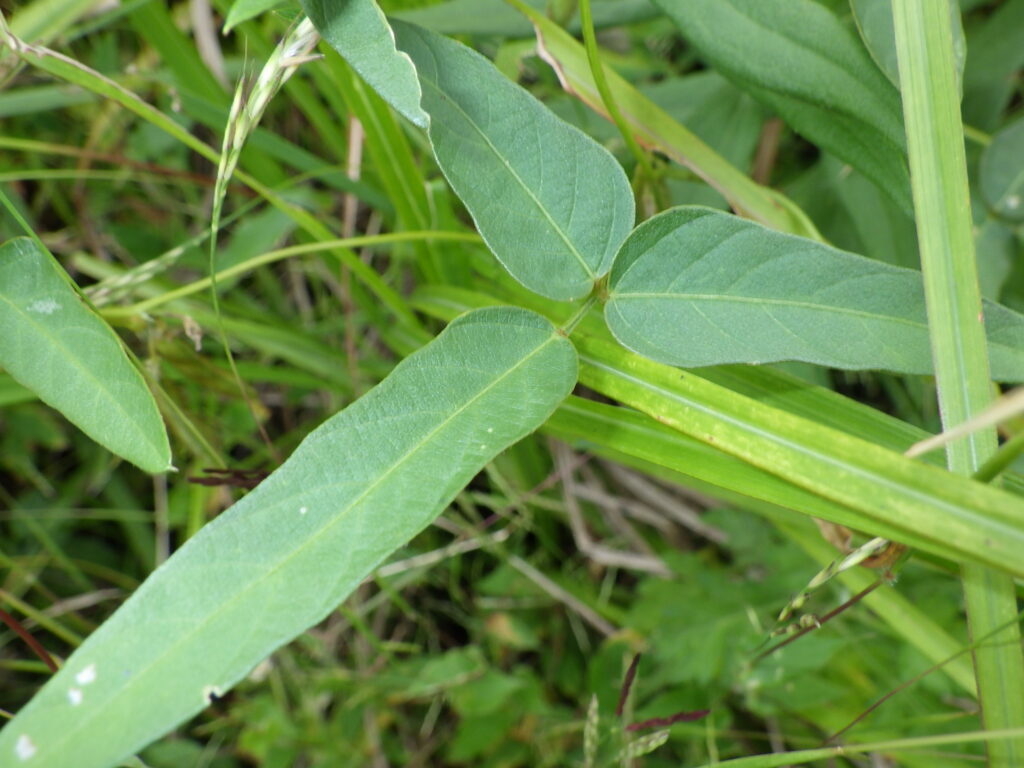
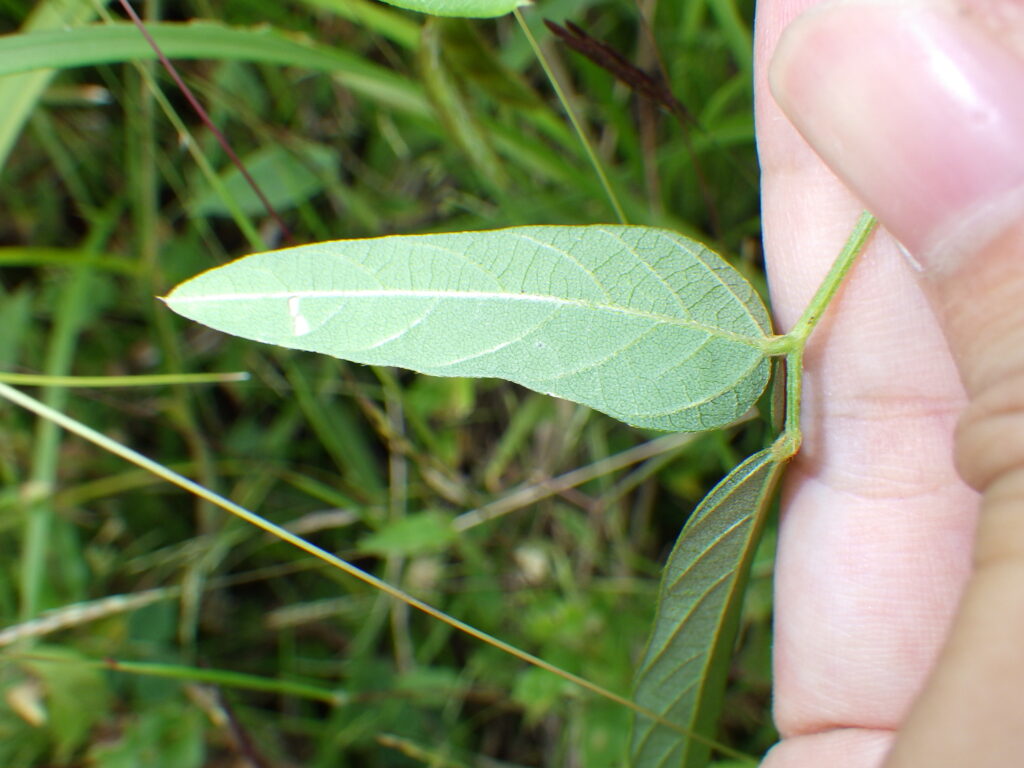
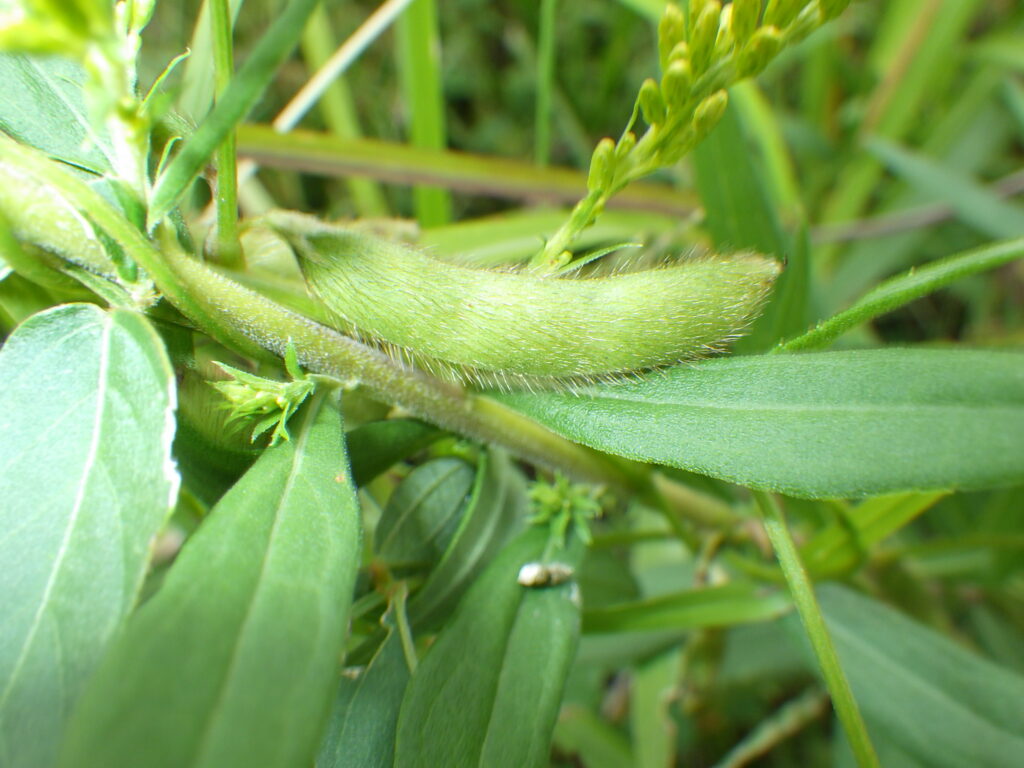
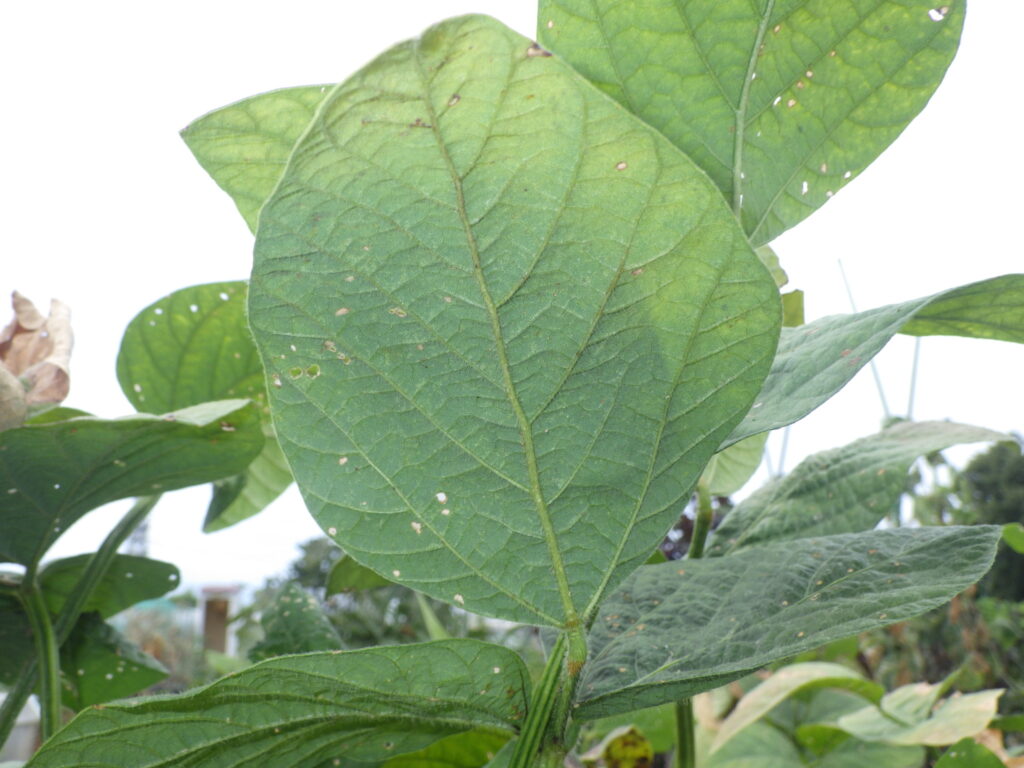
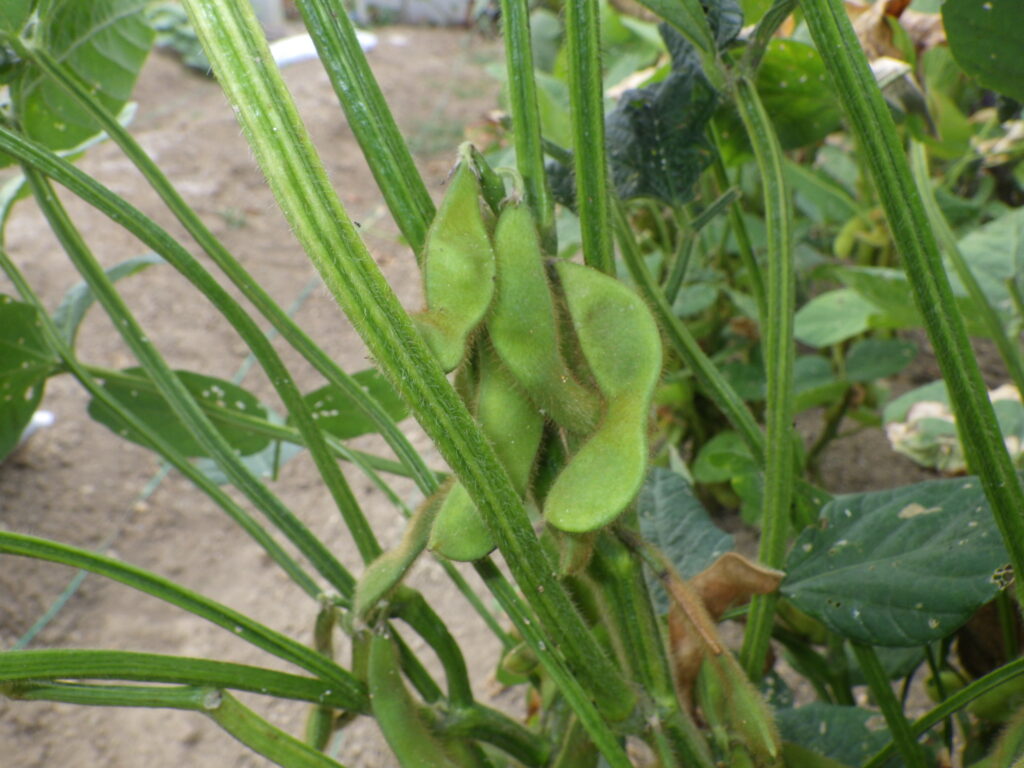
No. 1587 Soybean (Edamame) Glycine max subsp. max
This plant is an annual (Tsukamoto, 1994). The stems are erect, typically reaching 30-90 cm in height, although some varieties are vining. Branching occurs from the leaf axils. The stems, leaves, and pods are hairy. The arrangement of the inflorescence and stem growth vary depending on the cultivated variety. The flowers are small, about 5 mm long, and white, purple, or pale pink. The pods are often around 5 cm long and usually contain 2-3 seeds. Mature pods are pale yellow, brown, or black. The seeds are mostly spherical or oval, but some are flattened. Their size ranges from 5-10 mm, with significant variations depending on the cultivated variety. Seed colors include yellow, light and dark green, brown, reddish-brown, and black, and some have mottled or various patterns. Varieties have been differentiated to suit different uses, such as yellow-green soybeans for kinako (roasted soybean flour), whole soybeans for miso and tofu, black soybeans, and those for boiled beans and soaked beans. Yellow soybeans are used as raw materials for processing. The pods are edible. It is distributed in East Asia. Soybeans likely originated from the domestication of wild soybeans (Glycine soja), which are widely native to East Asia. These wild soybeans have been used as food since ancient times. The place of origin where they were domesticated and cultivated soybeans were established is estimated to be northeastern China, Siberia, and the Amur River basin. This cultivated variety spread from the eastern regions of northern China to southern China, the Korean Peninsula, Japan, and various parts of Southeast Asia between the 3rd century BC and the 7th century AD. Another theory suggests that the current cultivated soybean originated from a hybrid of wild soybeans and G. tomentosa, which is native to southern China.
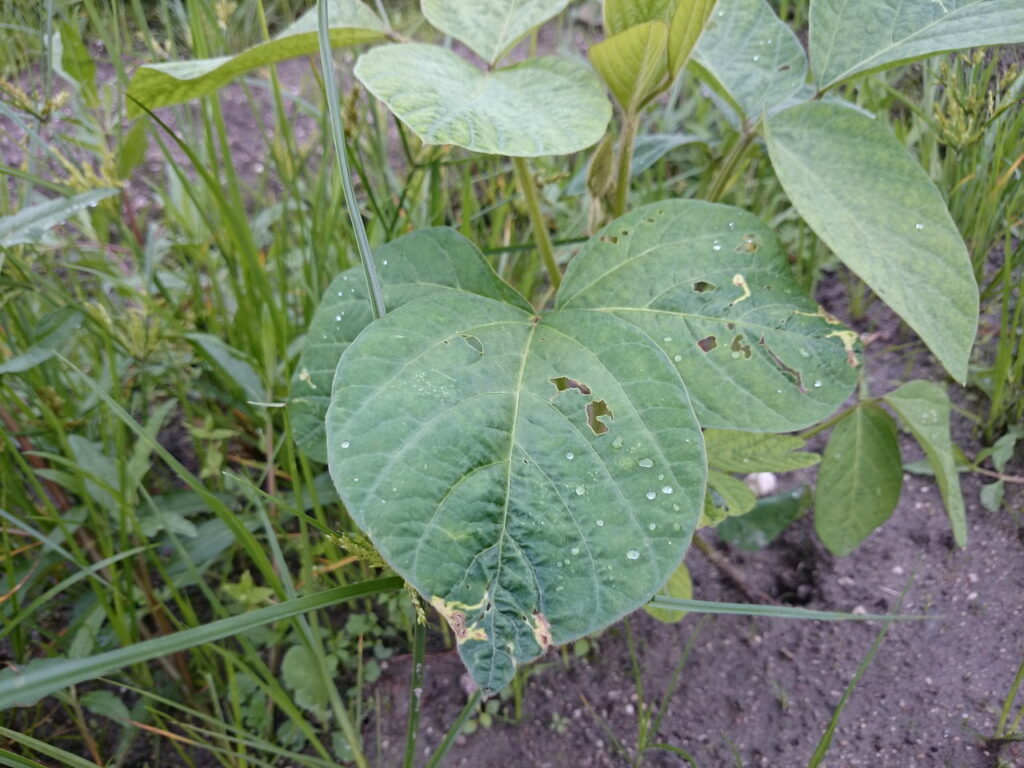
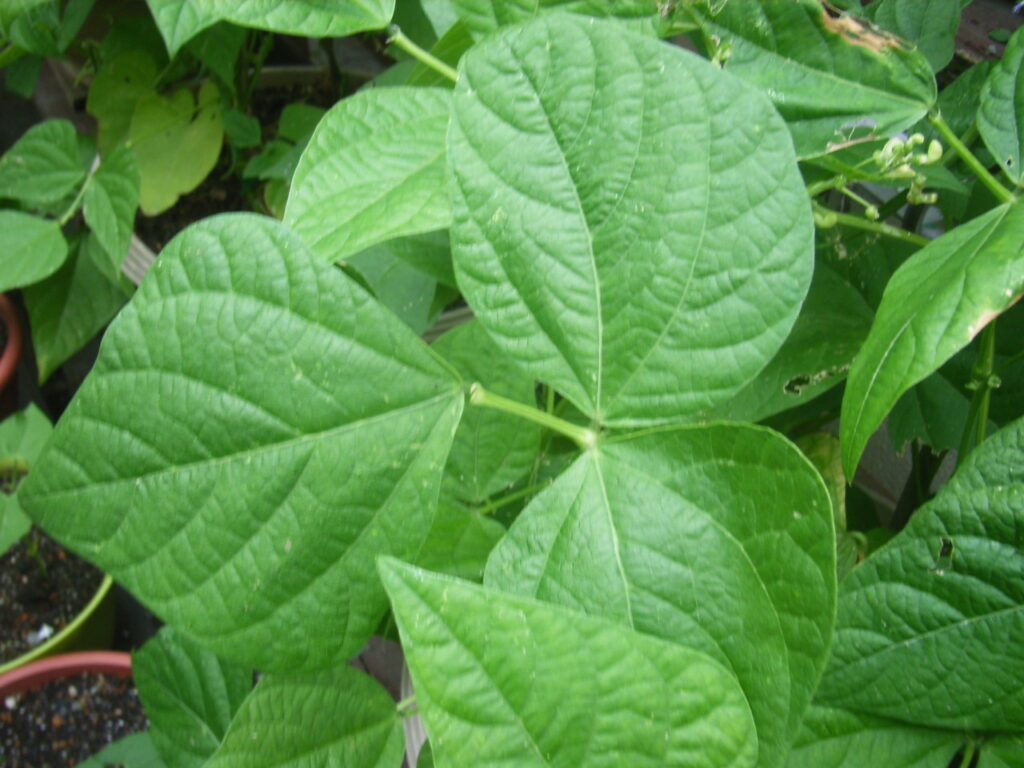
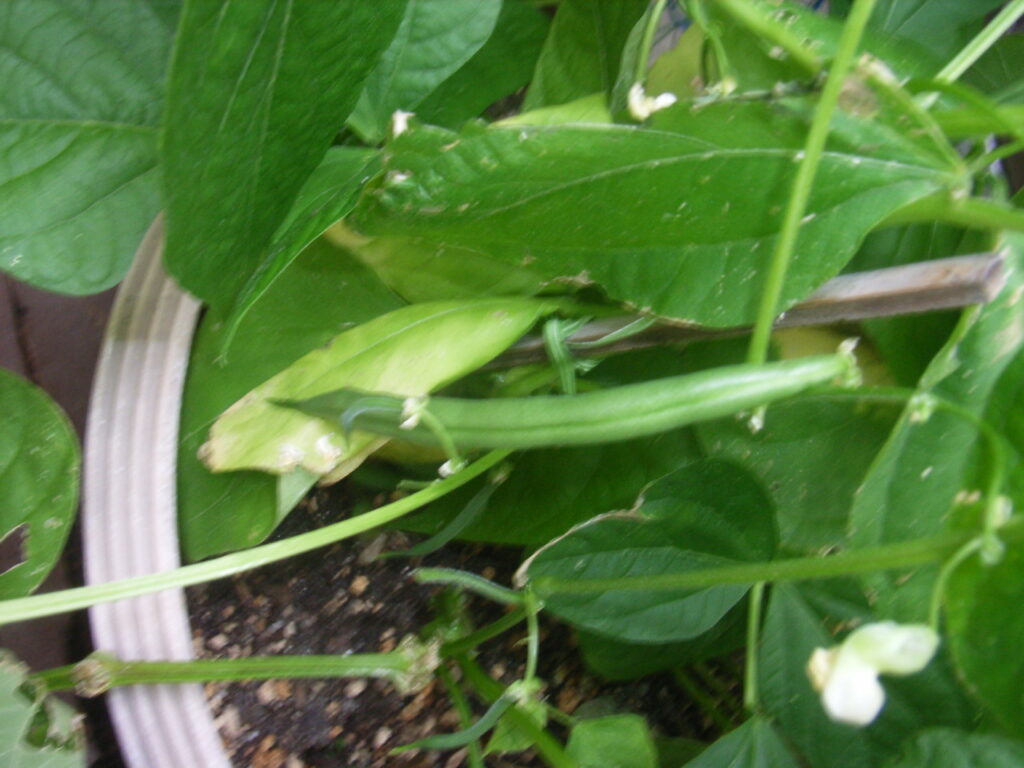
No. 1594 Green bean (Phaseolus vulgaris var. vulgaris)
It is an annual plant (Tsukamoto, 1994). Its growth habit includes climbing, dwarf, and intermediate forms. The climbing variety grows to a height of 2-3 m, with long internodes that twine counterclockwise around supports. The dwarf variety grows to about 50 cm in height, with short internodes, and does not require support. The leaves are alternate, trifoliate compound leaves with entire margins. The bean inflorescence is shorter than the petiole, bearing 2-3 white to yellowish-white or pale purple flowers at the tip. The pods are narrow, flattened or cylindrical, and 10-25 cm long. It is native to southern Mexico and Central America. In Central America, it was cultivated as a source of protein along with maize, a source of carbohydrates, and was collected as a tax in kind in the Aztec Empire. It also spread to southwestern North America, but due to the climatic barrier of the Americas, it has only spread northward over thousands of years over a distance of about 200 km (Diamond, 1997). Around 900 AD, broad beans were introduced to the indigenous people of eastern North America along with corn and pumpkins, leading to the practice of intensive agriculture. In South America, the large-grained wild species Phaseolus vulgaris var. aborigineus, which grows in the eastern Andes Mountains, was cultivated as a large-grained variety in the Andean civilization, but it is thought that it was not cultivated as much as in Central America because animal products such as guinea pigs were also abundant (Yoshida & Tsuji, 2019). When broad beans were introduced to Europe through the Columbus Exchange, they rapidly spread as a replacement for broad beans, which caused broad bean poisoning. Much of its spread to Asia is unclear, but it is thought to have been introduced to the Ming Dynasty via the Philippines, which was a Spanish colony, or via Macau, where the Portuguese had a residence. It is said that green beans were introduced to Japan in 1654 when Zen Master Ingen came to Japan from the Ming Dynasty, but there is a strong theory that Zen Master Ingen brought hyacinth beans (Lablab purpureus), and that both were introduced to the Ming Dynasty around the same time, causing confusion. Varieties cultivated for their pods were introduced towards the end of the Edo period, and today, green beans are mostly consumed as "sana-in-gen" (green beans). In the West, they are used in dishes such as cassoulet, chili con carne, minestrone, and baked beans, while in Japan, they are eaten as ohitashi (blanched greens), aemono (dressed vegetables), in white bean paste, and as kintoki beans.
No.1596.a Jade Vine (Strongylodon macrobotrys)
A climbing shrub. The stems are strong and twisted, reaching 9–15 (–18) m in length and less than 2.5 cm in diameter. The leaves are alternate, with short petioles, 3 leaflets, less than 25 cm long, initially pinkish-bronze, becoming pale green, and eventually dark green as they mature. The leaflets are entire, the terminal leaflet is elliptic to ovate-elliptic, 12–15.5 cm long × 5.5–7.3 cm wide, and entire. The lateral leaflets are ovate, 9–15 cm long × 3.5–8 cm wide. Flowering occurs from spring to early summer. The inflorescence is terminal or axillary, 0.5–1.5 (–3) m long, with an inflorescence axis more than 50 cm long, a drooping, grape-like raceme, with 5–8 flowers clustered together, bearing numerous flowers (75 or more) in multiple tiers. Short branches are warty. The pedicels are 1.8–4 cm long. The calyx is bell-shaped and purplish (gray). The flowers are claw-shaped, butterfly-shaped, resembling a butterfly with its wings closed, and are a brilliant blue-green (jade green), less than 7.5 cm long and less than 6 cm wide. The standard petal is ovate, recurved, 3.7–4.8 cm long and 1.7–2.5 cm wide. The wing petals are oblong-elliptic, 20–24 mm long and 8–10 mm wide. The keel petal is 45–48 mm long and 11–13 mm wide. The fruit pod is 8.5–13 cm long and about 6 cm wide, elliptical, swollen, and wrinkled. It is distributed on the islands of Luzon, Mindoro, and Catanduanes in the Philippines. Because its flowers are conspicuously blue-green, it is cultivated for ornamental purposes. Pollination is carried out by fruit bats. The plant is adapted to be pollinated by bats that hang upside down from the inflorescence to drink the nectar. The petals are jade green, which is due to the copigment effect, containing malvin saponarin as a pigment in a 1:9 ratio, and the alkaline pH of the epidermal cells at 7.9 (Takeda et al., 2010).
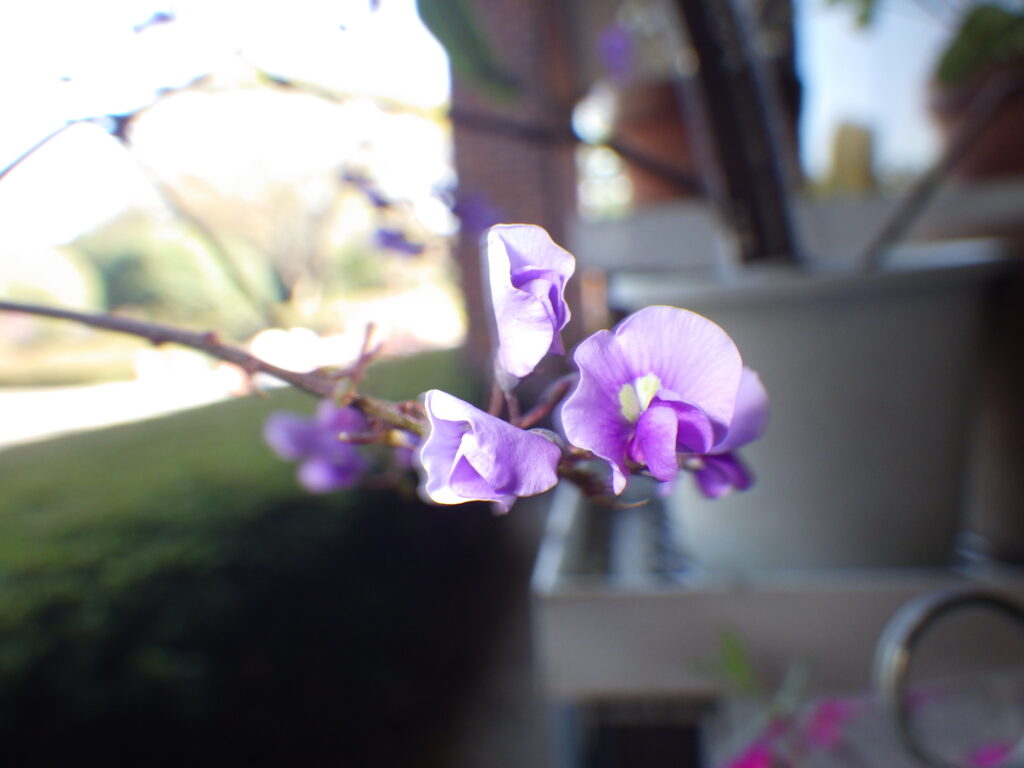
No.1596.b *Hardenbergia violacea*
A climbing perennial herb (Jeanes, 1996). Climbing or prostrate, glabrous, subshrub. Stems often grow up to 2m. Leaves are simple, with ovate to narrowly lanceolate blades, 3–10cm long × 1–5cm wide, ± leathery, with distinct reticulate venation, glabrous. Petioles are about 10mm long, articulated 1mm from the blade. Stipules are filiform. Inflorescences are racemes, the upper racemes often forming a panicle at the apex with 20–30 flowers. Calyxes are 3–4mm long. Corollas are about 8mm long, nearly purple. Standard petal has yellow spots. Wing petals have long yellow claws. Pods are oblong, 20–45mm long. Seeds are 6–8, 4–5mm long. Native to Australia. Ornamental horticultural varieties.
No.1606 Rhynchosia acuminatifolia
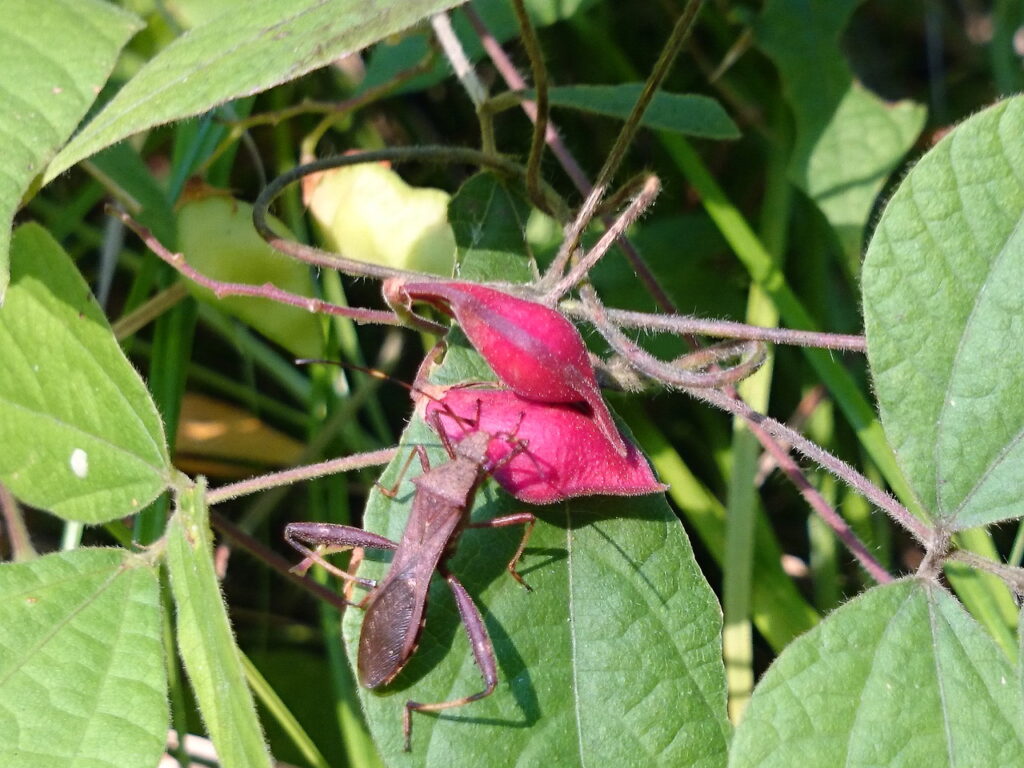
Also known as Oobatankirimame (Kanagawa Prefecture Flora Survey Association, 2018). A climbing perennial herb. The leaves consist of three leaflets, are sparsely hairy, and have glandular dots on the underside, along with the surface of the calyx and legume. From June to September, it produces yellow flowers in racemes shorter than the leaves, emerging from the leaf axils. When the legume ripens, it turns red, with only a few fine hairs remaining on the pericarp, and even after splitting open, the black, glossy seeds remain attached to the pod. Distributed in Honshu, Kyushu, and Korea. It grows on forest edges and embankments.
No.1609 Nosasage Dumasia truncata
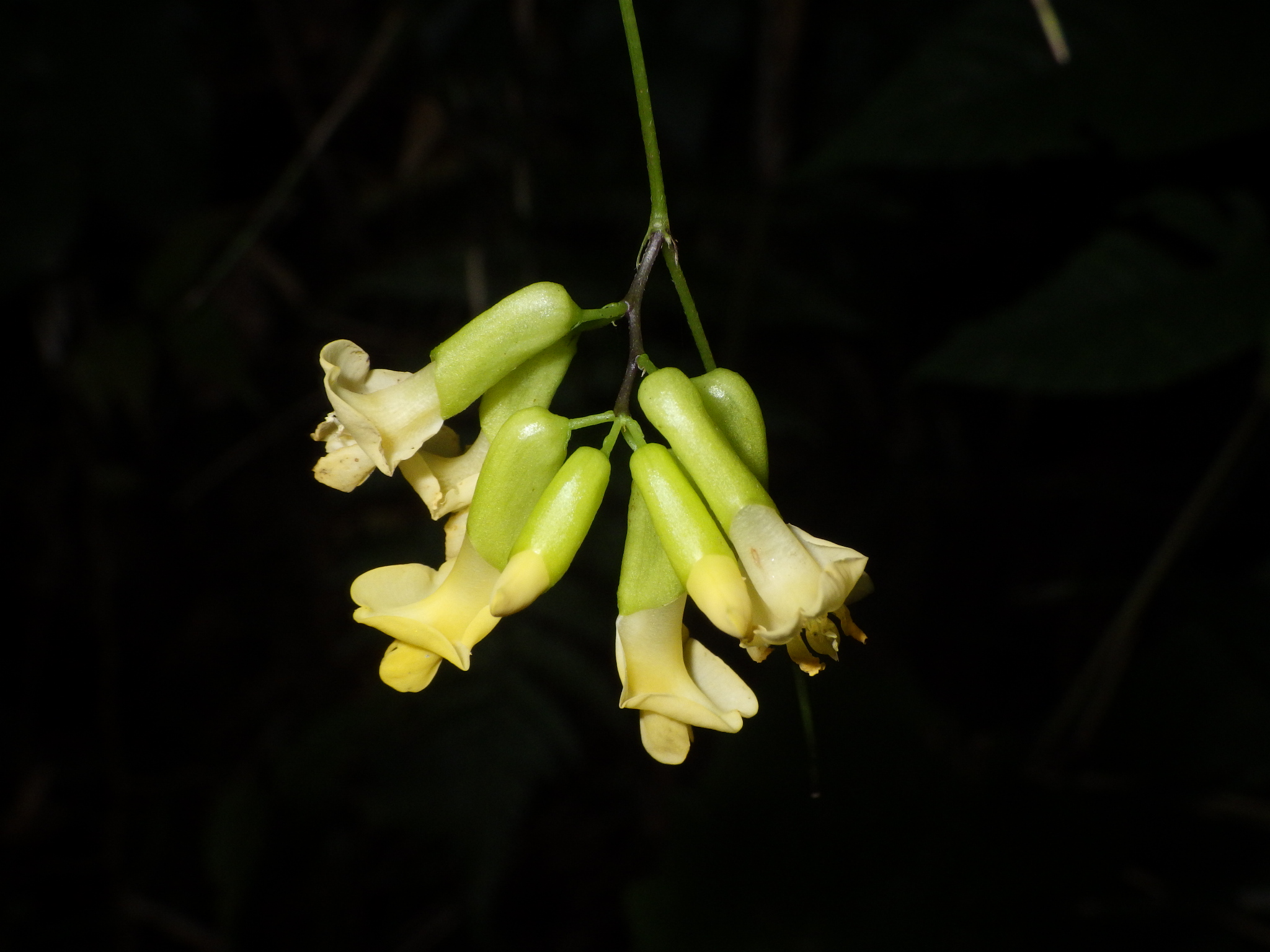
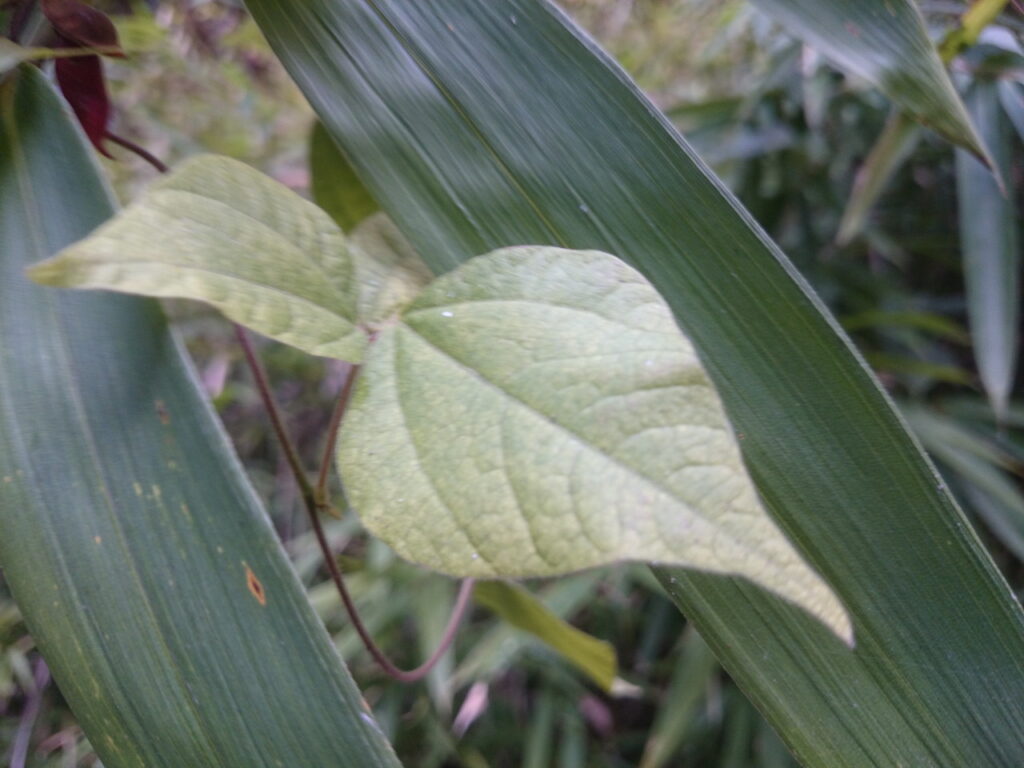
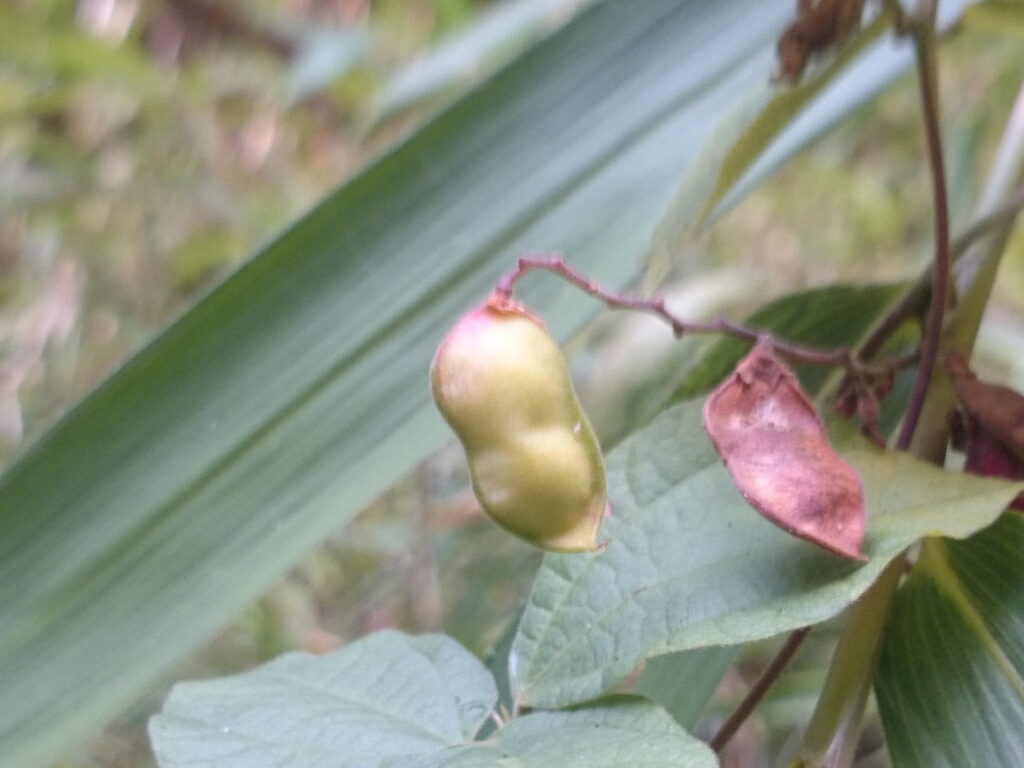
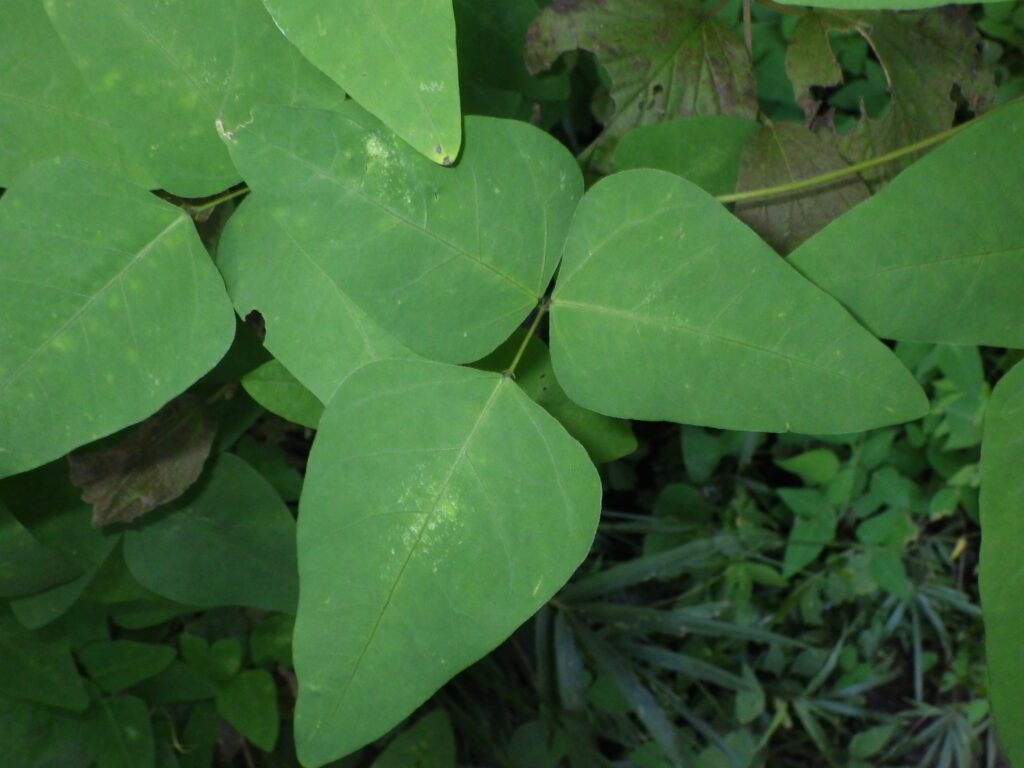
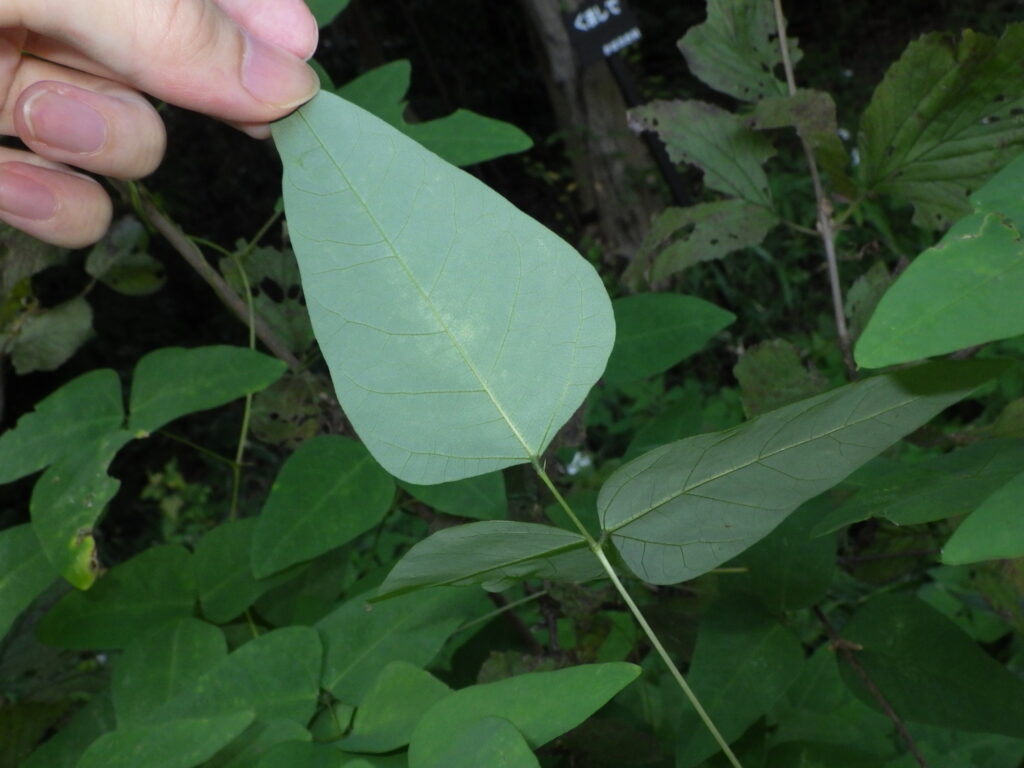
This delicate, climbing perennial herb (Kanagawa Prefecture Flora Survey Association, 2018). The leaflets are thin, hairless on the upper surface, and whitish with slightly appressed hairs on the lower surface. In August and September, it produces several to more than ten yellow flowers in racemes emerging from the leaf axils. When the legume pods mature, they turn pale purple, and the blackish-purple seeds covered in white powder remain attached to the edges even after the pods dehisce. It is distributed in Honshu, Shikoku, and Kyushu. It grows in bright woodlands and forest edges.
No.1610 Amphicarpaea edgeworthii var. japonica
This is a climbing annual plant (Kanagawa Prefecture Flora Survey Association, 2018). The stems and petioles have many hairs that spread slightly diagonally in the opposite direction, and the leaflets are also hairy on both sides. In September and October, pale purple flowers bloom in short racemes emerging from the leaf axils, and one or two cleistogamous flowers with short stalks also grow in the leaf axils. The calyx of the petaled flowers is larger than that of the cleistogamous flowers. The legumes mostly mature from the cleistogamous flowers, are about 3 cm long, hairless, and have appressed hairs only on the edges. The seeds have a marbled pattern, which is said to serve as camouflage to avoid being seen by birds when they burst open and fall to the ground. Cleistogamous flowers are produced at the end of thin underground vines, and these develop into legumes containing a single, somewhat large seed. It is distributed in Honshu (west of the Kanto region), Shikoku, Kyushu, Korea, and China. It grows on embankments, grasslands, and forest edges.
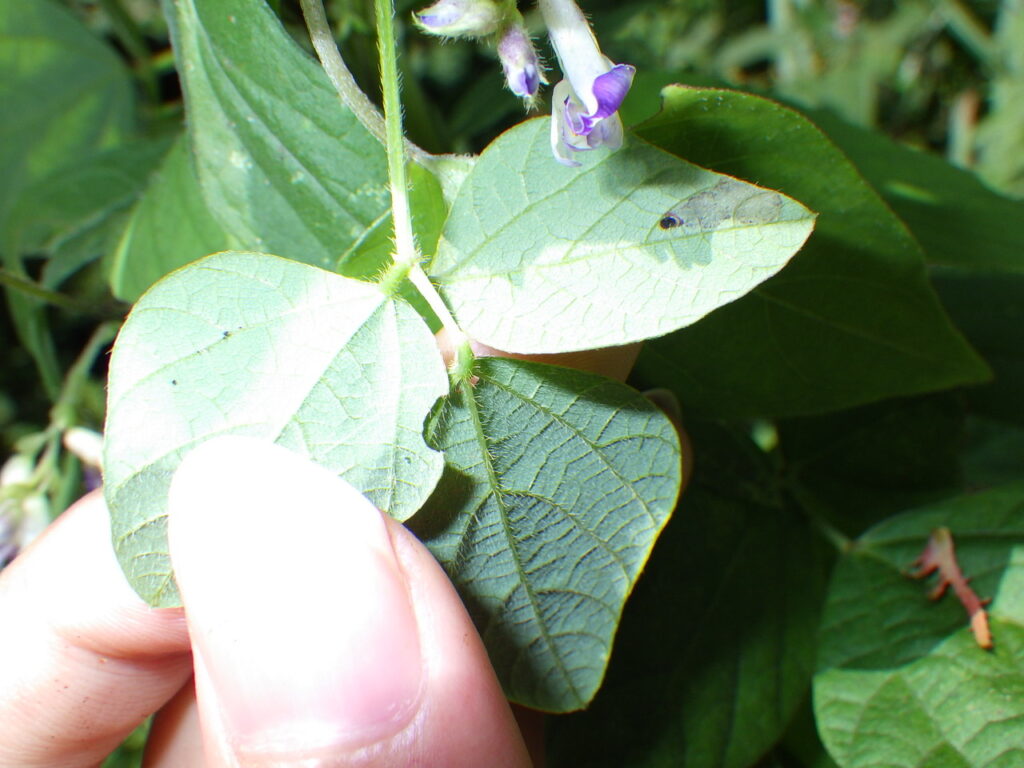
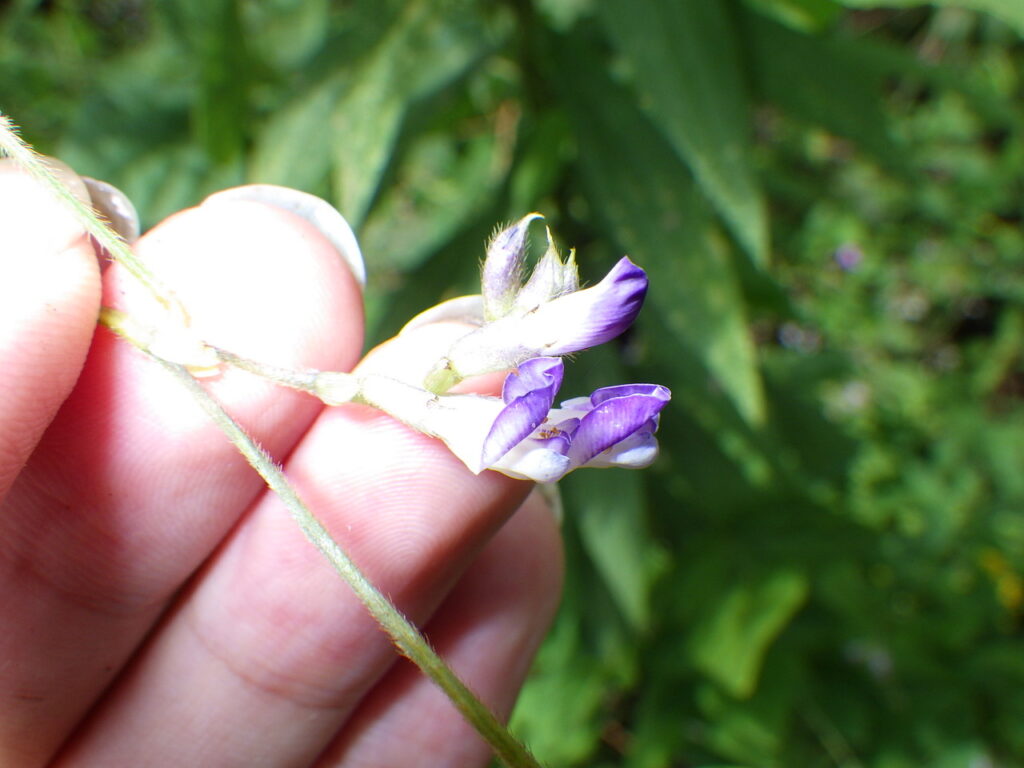
No.1610.1 Ampnicarpaea edgeworthii var. trisperma
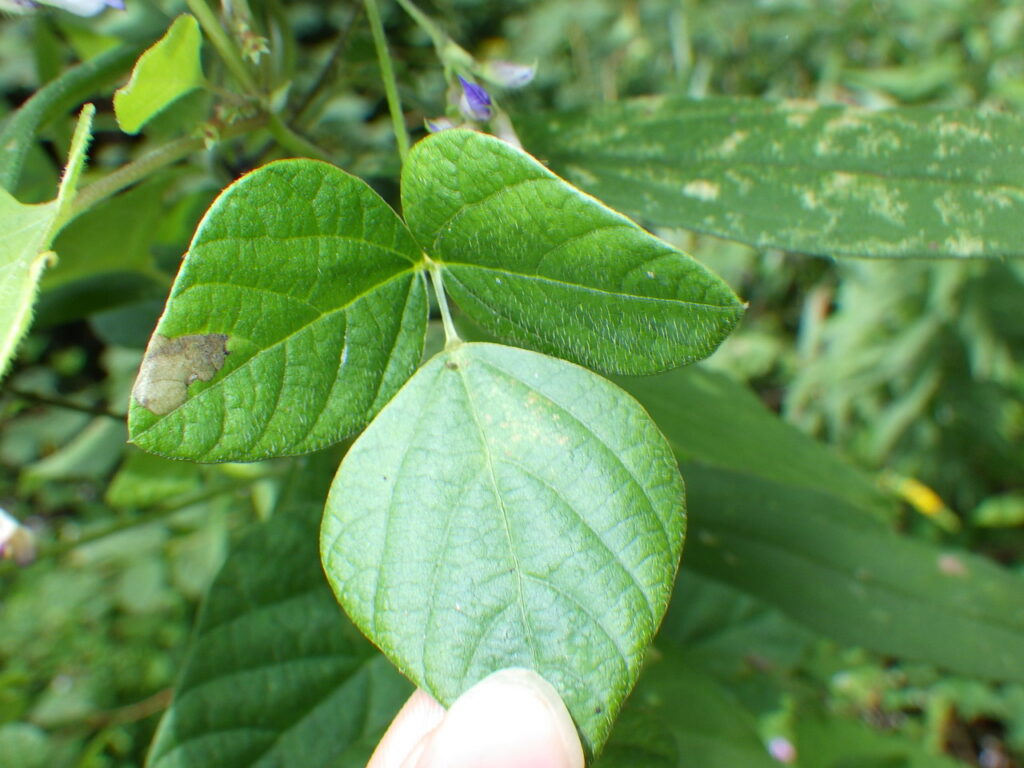
This is a variety of Amphicarpa japonica with somewhat smaller, thinner leaves and an oval terminal leaflet (Kanagawa Prefectural Flora Survey Association, 2018). The Kanagawa Prefectural Flora Survey Association (2018) states that "in Kanagawa Prefecture, many of those distributed in high-altitude mountainous areas belong to this type, but they are also found in hilly areas, and there are many intermediate forms. Recent field guides state that they cannot be distinguished from Amphicarpa japonica." For reference, we have included a picture of what appears to be a specimen of this type.
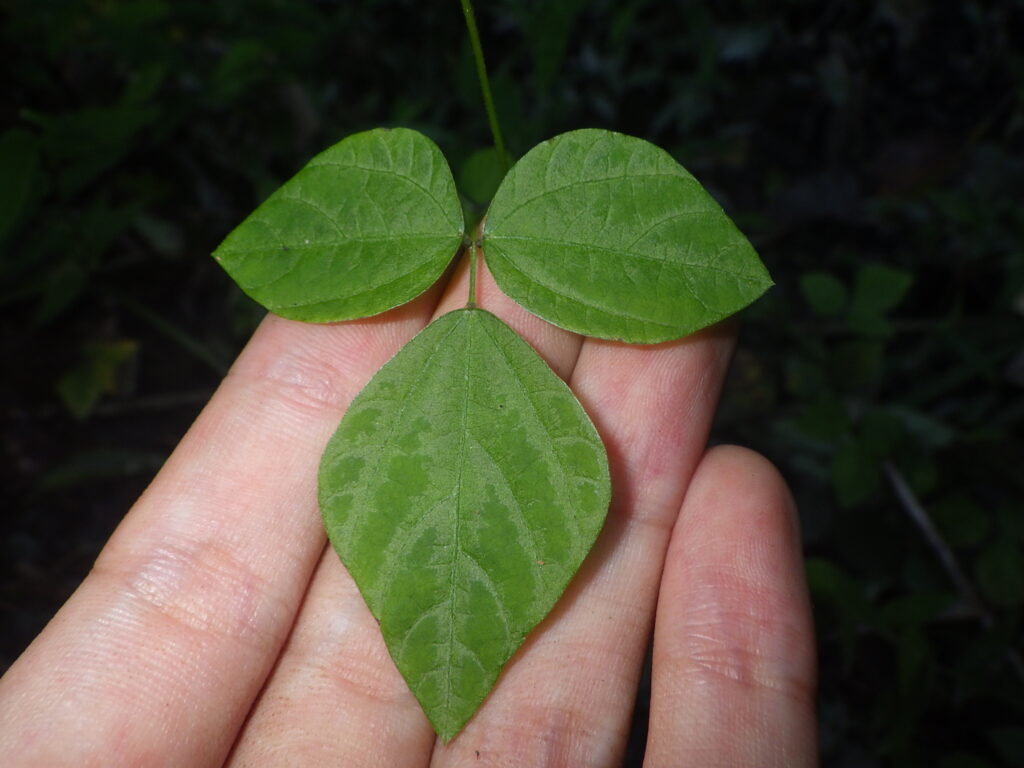
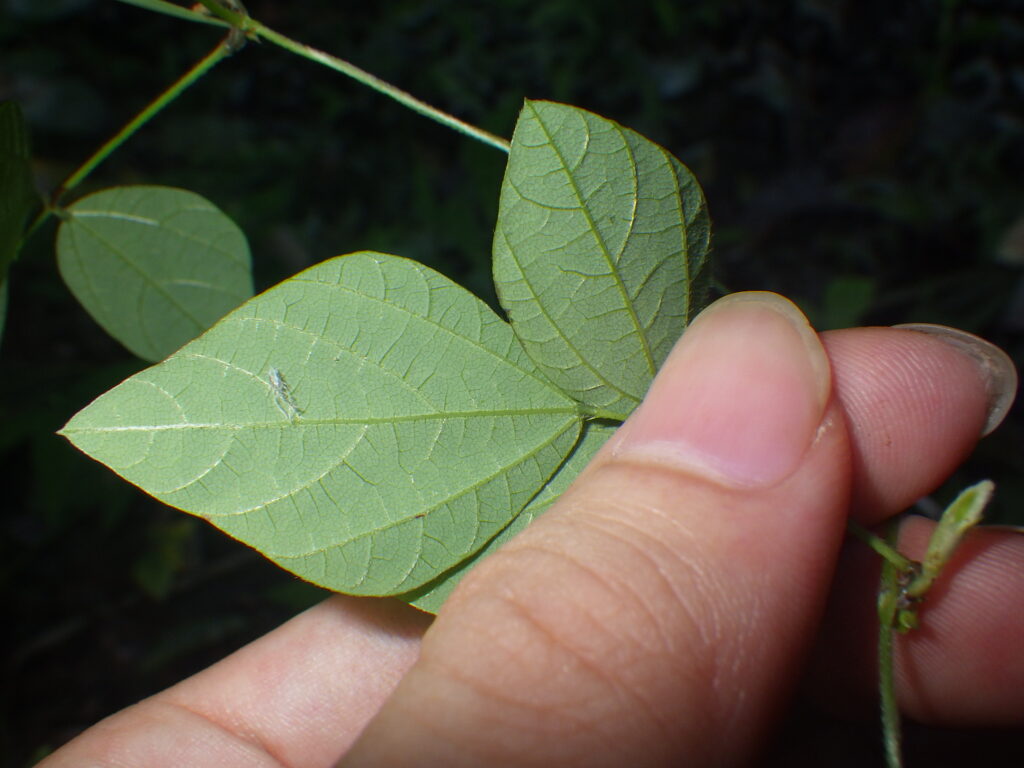
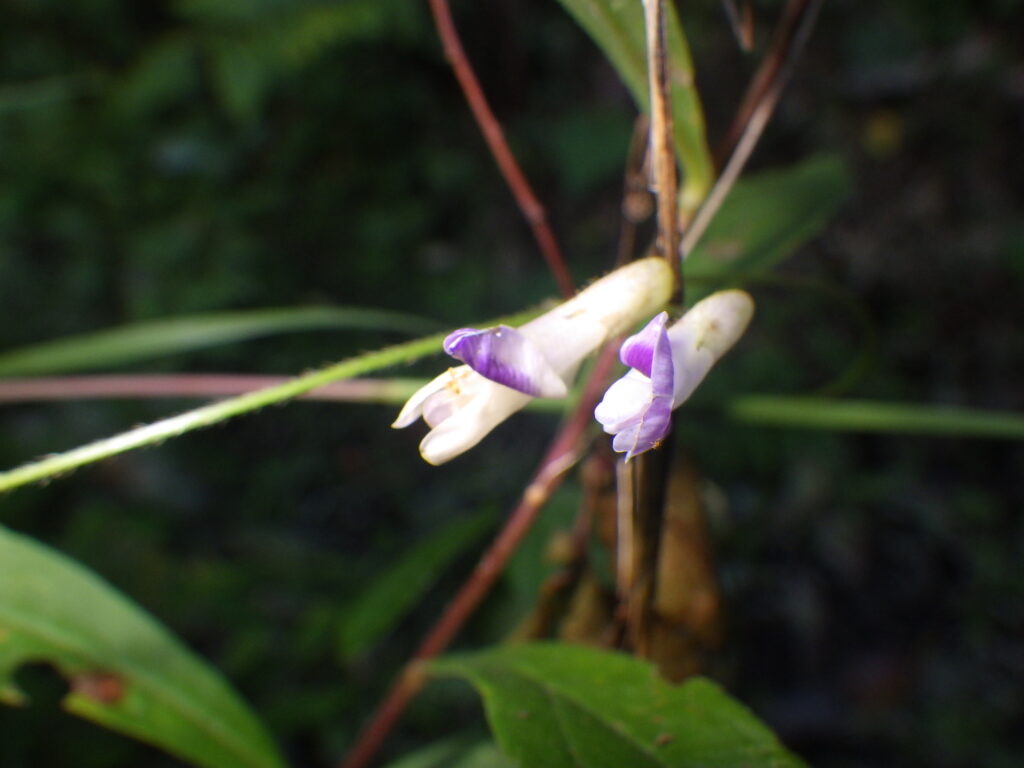
No. 1611 Scum Pueraria lobata subsp. lobata
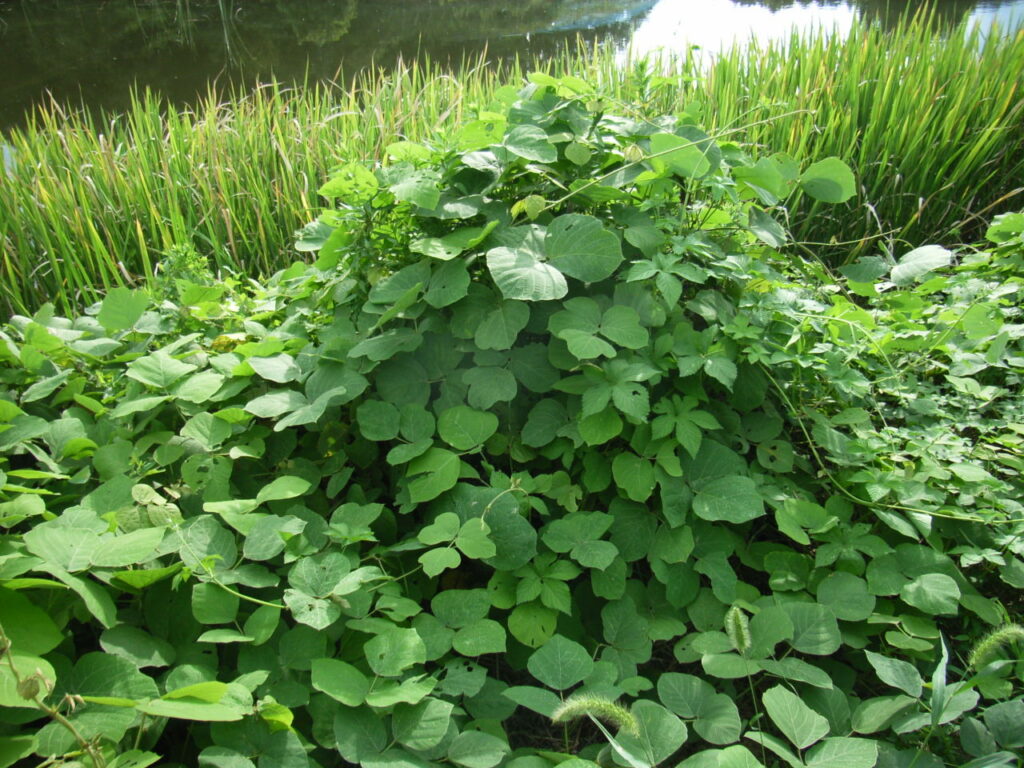
This is a climbing perennial herb (Kanagawa Prefecture Flora Survey Association, 2018). The vines grow remarkably long, widely covering the ground and other plants, and the creeping base becomes woody, reaching a diameter of 5-6 cm. It stores a large amount of starch in its large tubers, which were used as kudzu starch. The stems are densely covered with brown, spreading hairs. The leaves are large, with leaflets reaching 15 cm in length and often having 2-3 lobes. The stipules are large, narrowly ovate, reaching 2 cm in length, and attached to the stem in the middle. Racemes emerge from the leaf axils in August and September. The legumes are flattened and densely covered with brown bristles, and when ripe they split open into two sections, but the seeds are not ejected; they are usually dispersed by the wind along with the pods. It is distributed in Hokkaido, Honshu, Shikoku, Kyushu; Korea, China, and Southeast Asia. It grows in forest edges, embankments, and grasslands. The white-flowered variety is called kudzu f. leucostachya. Reproduction is basically vegetative, and seed reproduction is low (Ito, 2010). The rate of flower pod formation is low, and even when seeds are formed, many are husks. The seeds are hard and the seed coat is impermeable to water and air, so germination is not possible unless the seed coat is damaged. It is possible that seeds are carried by water currents, and may reach the riverbed downstream via streams in valleys. In Japan, it appears in the Manyoshu, and it is thought to have been quite widespread by the 7th or 8th century. Since ancient times, kudzu starch extracted from the tubers has been used as a stored food, and as an ingredient in kudzu mochi, kudzu somen, and kudzu noodles. Extracting kudzu starch is an extremely laborious process, and even today it is considered a top-quality starch, and is now only practiced in very limited areas. Commercially available kudzu starch is often mixed with starches from sweet potatoes, potatoes, corn, etc. Medicinally, it is still used as an ingredient in kakkonto (kudzu root decoction). The stems and leaves are used as livestock feed and fertilizer, and the kudzu cloth woven from the vine fibers is used for clothing. However, plants that were moderately harvested for their stems, leaves, and tubers can invade and establish themselves in nearby open areas due to their vigorous shoot growth (vegetative growth) if left unchecked. This can cause damage to trees through shading by large-leaved shoots and constriction of branches and trunks by the vines. In the United States, it was introduced as an ornamental plant and later became recognized for use as a climbing plant for fences and porches, livestock feed, soil protection, and soil improvement before becoming naturalized. It is a highly invasive weed and is among the world's 100 worst alien species.
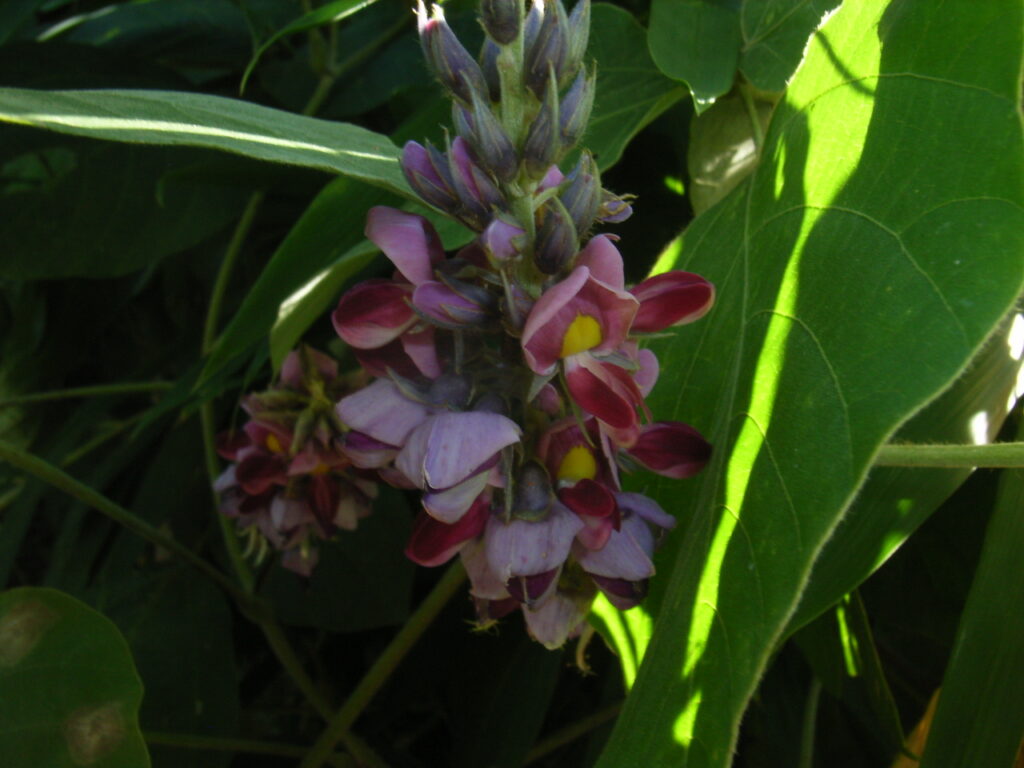
No.1612 Mucuna sempervirens
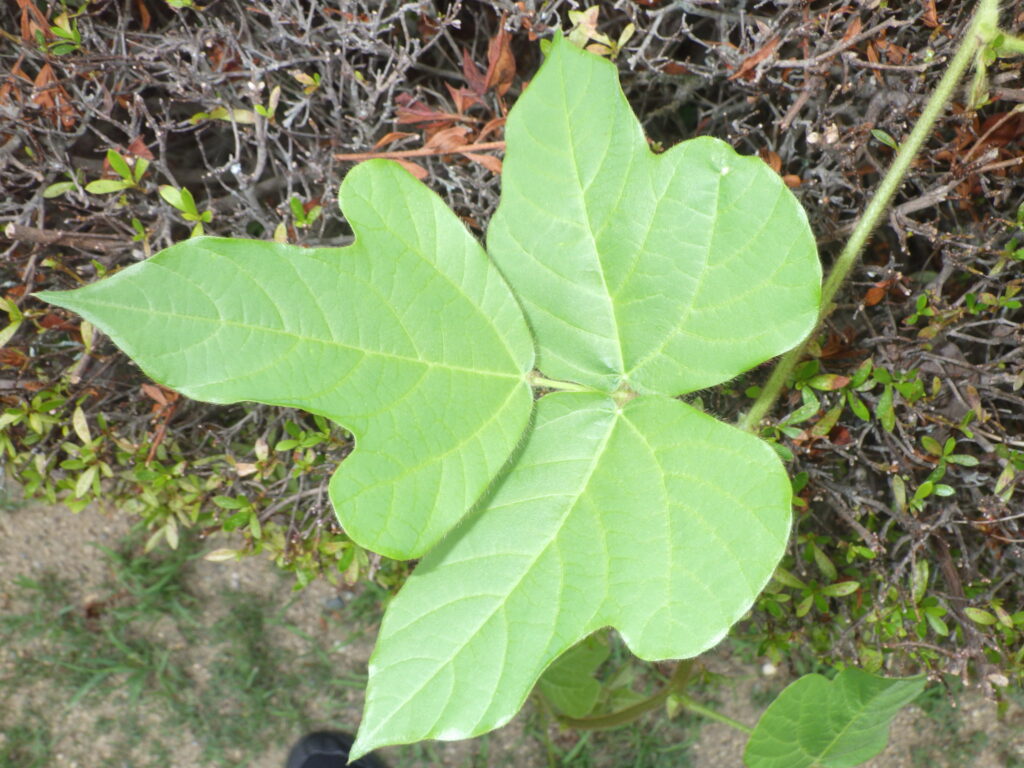
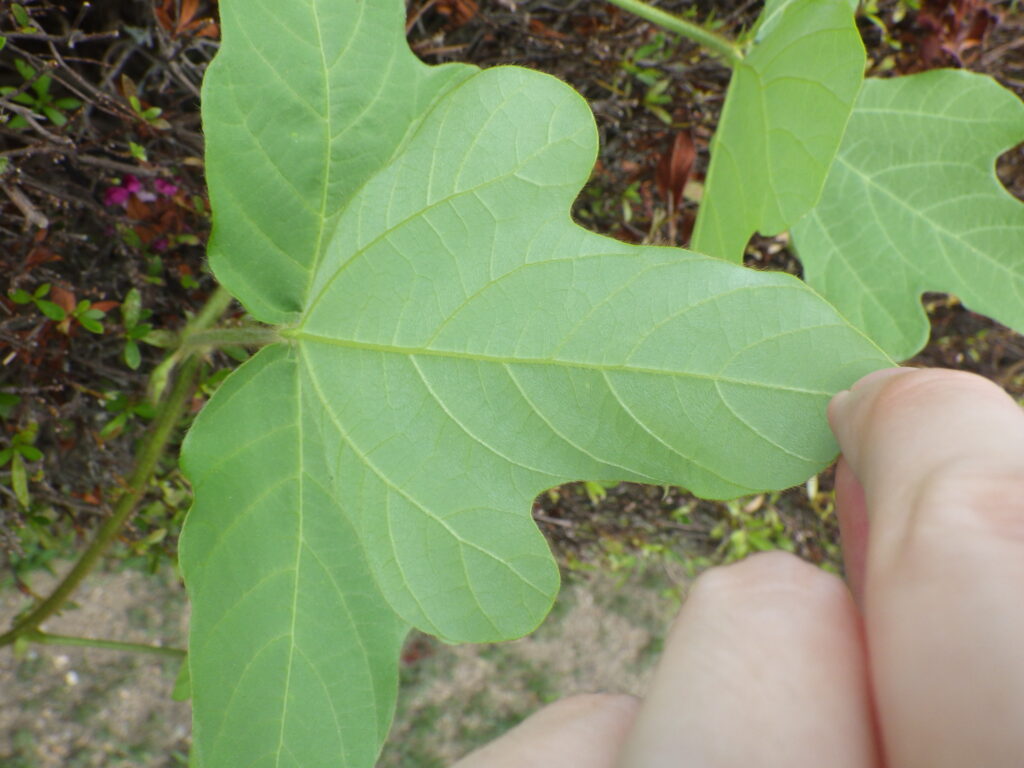
Also known as Mucuna (Tsukamoto, 1994). A climbing evergreen woody plant. The leaflets are ovate with short petioles, pointed tips, rounded bases, entire margins, and glabrous veins. Numerous flowers are borne in racemes and hang downwards. Flower colors include orange-red, red, and scarlet, with scarlet being the most commonly cultivated variety. The keel petals are curved and pointed upwards at the tip. The fruit is a large pod over 50 cm long, constricted and narrow where there are no seeds. The seeds are brownish and oval, 2-3 cm in diameter. Distributed in Bhutan, northeastern India (West Bengal, Manipur, Sikkim), Myanmar, China, and Japan (Flora of China). It is said to have been widely distributed in Japan in the past, but is now found only locally in three locations: Kumamoto Prefecture and Amakusa Kamishima, an uninhabited island off the coast of Sasebo City, Nagasaki Prefecture (Ide et al., 2012). It grows in forests, thickets, and along riverbanks. In Chinese studies, seven species of mammals and birds visit the flowers, and in areas without squirrels, pollination is carried out by the Edwards' short-eared mouse (Leopoldamys edwardsi) and the masked palm civet (Paguma larvata). In areas with squirrels, pollination is carried out by the squirrel (Callosciurus erythraeus) and the long-faced squirrel (Dremomys pernyi). Furthermore, seed dispersal relies on the dispersal and storage behavior of squirrels, resulting in a unique reproductive ecology characterized by a dual mutualism (Kobayashi, 2020; Xiao, 2022). Consideration of the relationship between this ecology and the distribution in Japan is also expected.
No.1615 Deigo Erythrina variegata
This deciduous tree (Flora of China) grows up to 20 meters tall, with thick, sharp thorns on its trunk and branches. Its leaves are trifoliate and unfold after the peak of flowering. The leaflets are broadly ovate or rhombic-ovate. In Japan, it flowers from March to May, producing long racemes of bright red flowers at the tips of its branches. There are also varieties with yellow variegation. It is widely distributed from Amami Oshima to Okinawa; India, Sri Lanka, Southeast Asia (Bangladesh, Cambodia, Indonesia, Laos, Malaysia, Myanmar, Philippines, Thailand, Vietnam), Australia, and the Pacific Islands, and has been introduced to Africa and Central and South America. While its original habitat is thought to be from India to Malaysia, it has been cultivated in tropical regions for a very long time, making it difficult to define its original distribution (Duenas-Lopez, 2022). Its distribution in Japan is also considered to date back at least to before the Meiji era (Nakamoto & Izawa, 2013). The coral tree (Erythrina variegata), the prefectural flower of Okinawa Prefecture, is said to bring a year of frequent typhoons and natural disasters (drought) when it blooms beautifully, and is therefore planted as a street tree and park tree. It is basically an ornithophilous flower, pollinated by diurnal birds, and research in its native India found that nine species of birds feed on its nectar (Nakamoto & Izawa, 2013). However, research in Okinawa Prefecture showed that the flowers bloom in the morning and secrete nectar only during the day, and that about 60% of the bloomed flowers had their nectar depleted by daytime visitors, mainly the Japanese white-eye (Zosterops japonicas), while of the remaining 40%, 30% of the flowers had their nectar depleted by nocturnal visitors, the ring-necked flying fox (Pteropus dasymallus). European honeybees and white-headed bees have also been confirmed to visit the flowers. If the coral tree is planted, it can be said that it is establishing a new pollination relationship.
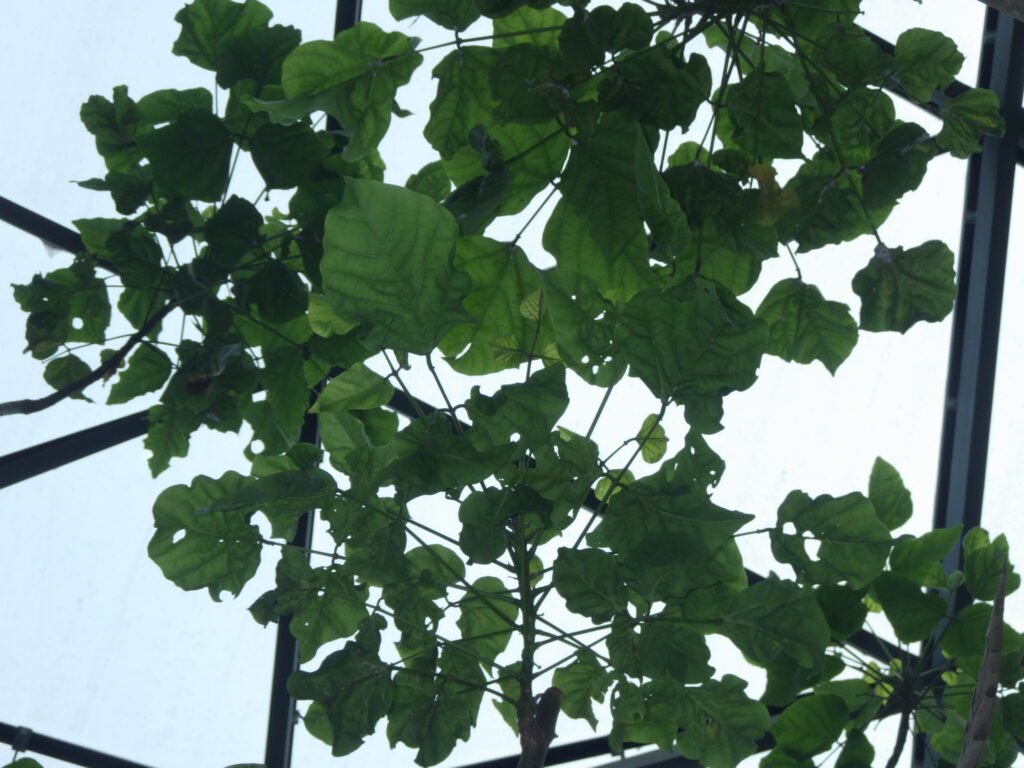
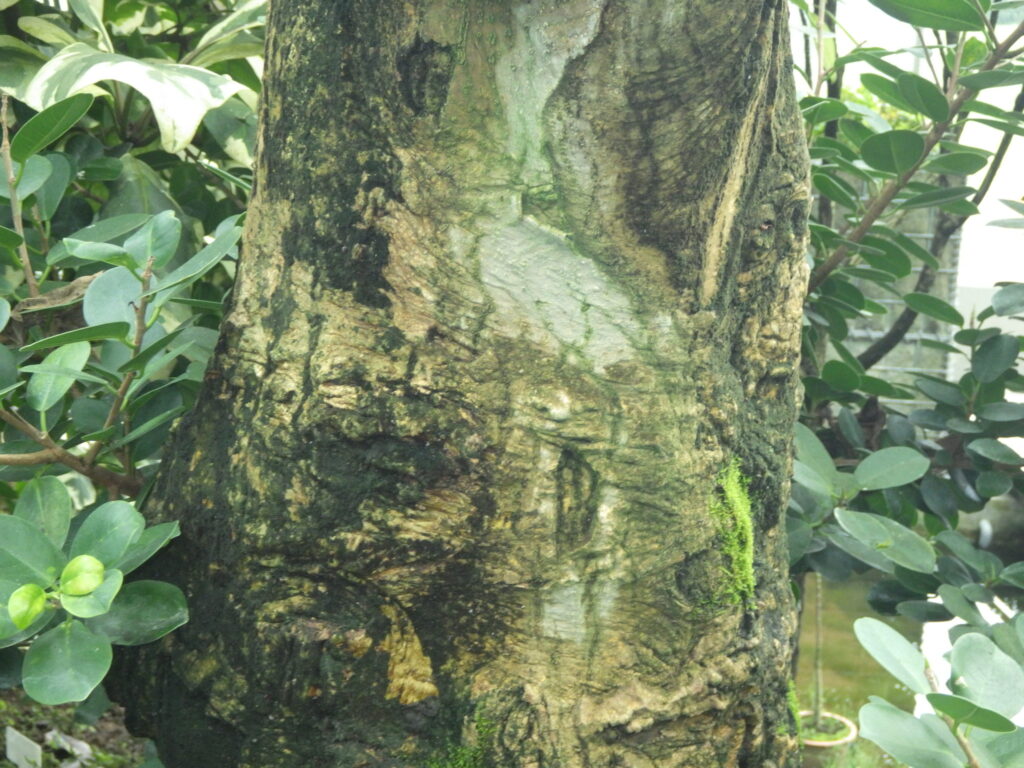
No. 1616 Erythrina crista-galli
Also known as American Coral Tree (Tsukamoto, 1994). It is a deciduous tree. It grows to a height of about 6m, and its branches have sharp thorns. The terminal leaflet is lanceolate to broadly lanceolate, but there is considerable individual variation. It bears beautiful yellowish-red flowers in racemes 50-70cm long. The petals consist of a standard petal and a keel petal; the standard petal is ovate, 5cm long, and inverts at a right angle to the keel petal. The legume is 10-20cm long and constricted. The seeds are adzuki bean-shaped, brownish-red with black spots. It is native to southeastern Brazil to northern Argentina. Bumblebees, honeybees, and four species of hummingbirds visit the flowers for pollination (Galetto et al., 2000).
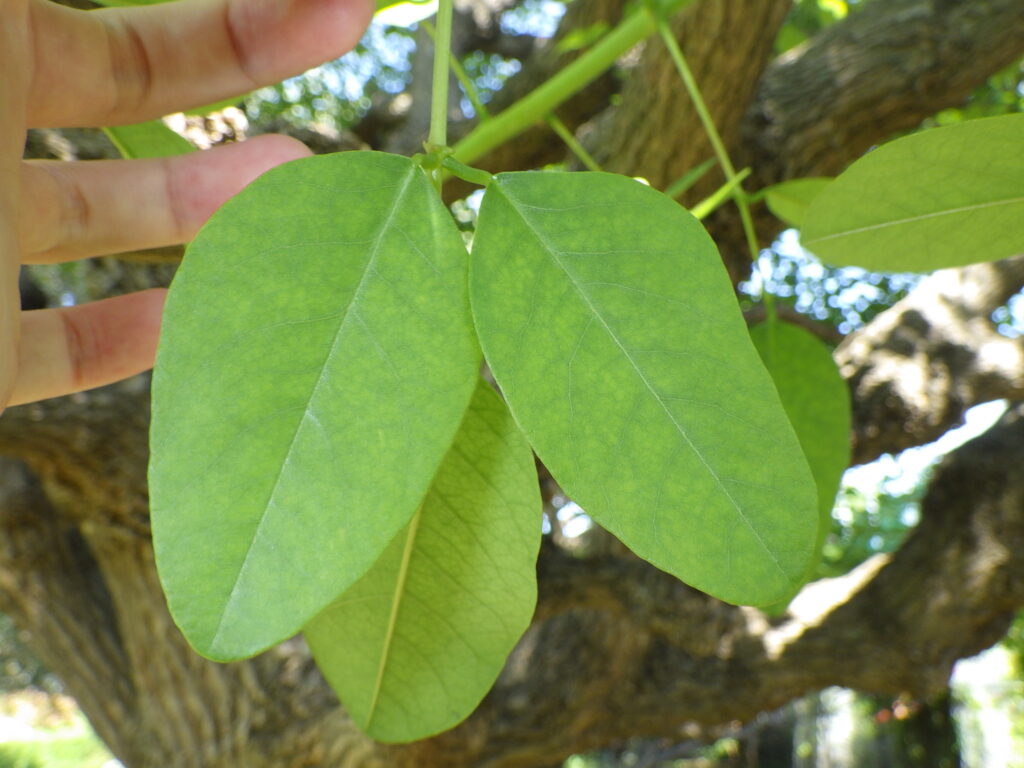
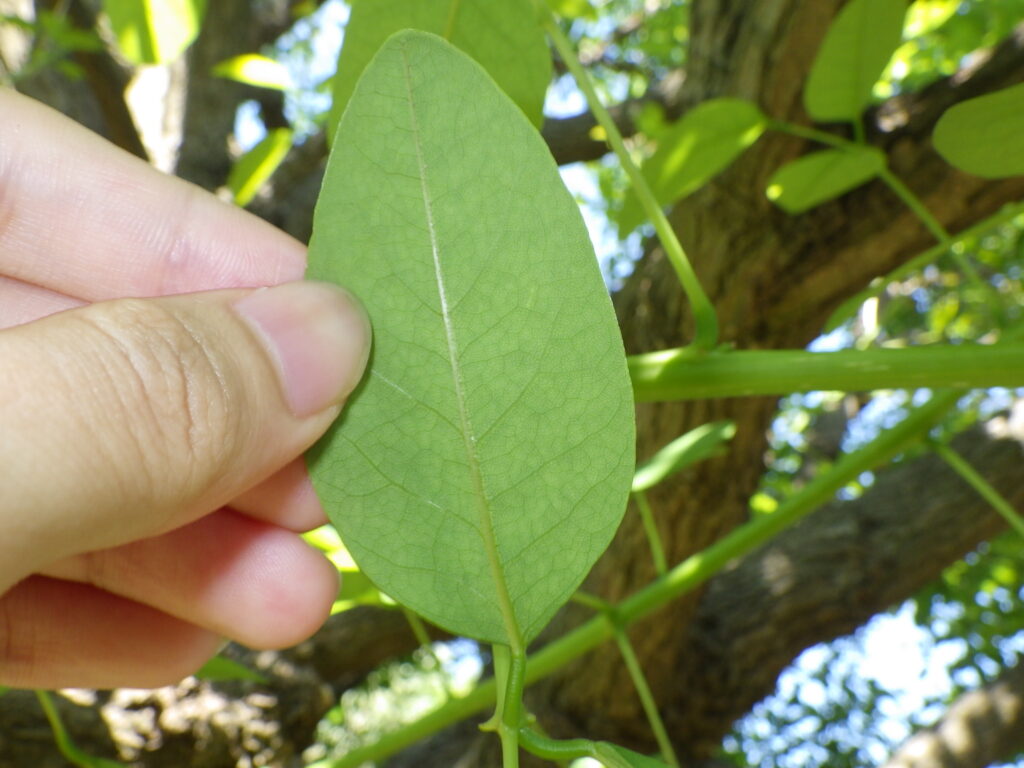
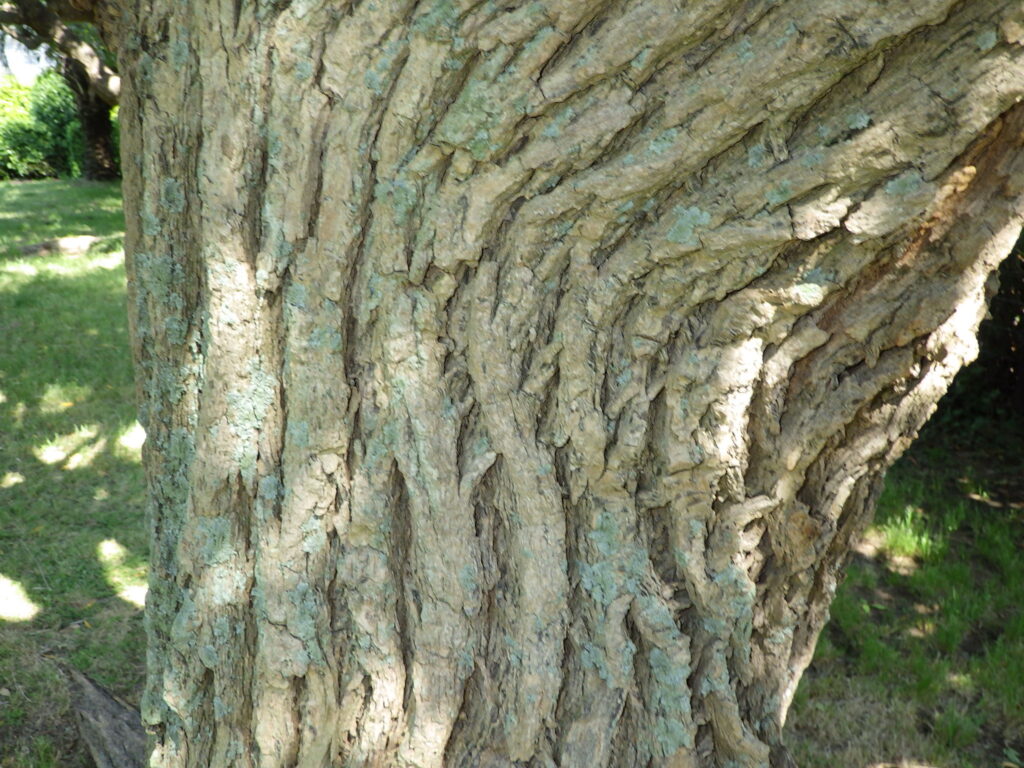
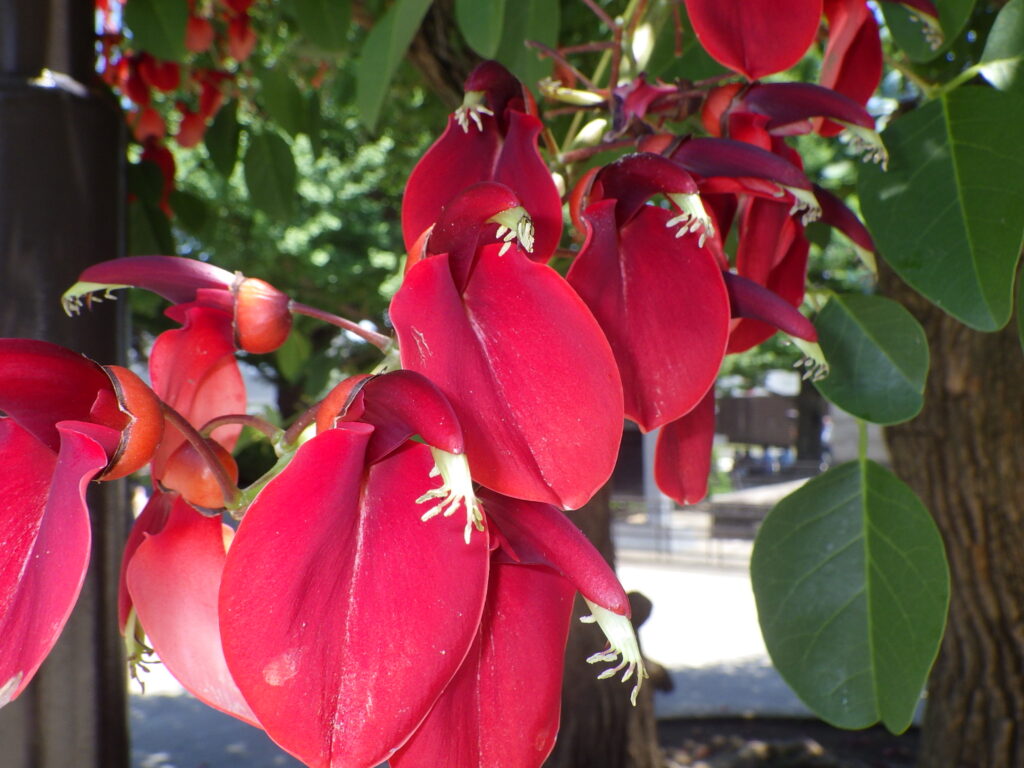
No.1616.a Coral Sugar (Erythrina x bidwillii)
This species was created in Australia by the British botanist Mr. Bidwill by crossing E. herbacea and E. crista-galli (Tsukamoto, 1994). It grows to a height of about 4m, with a smooth, thornless trunk. The flowers are borne in terminal racemes. The inflorescence axis is dark reddish-purple and 50-100cm long. The flowers are pencil-shaped, a beautiful bright red, and the standard petal is 5cm long, oblong, and slightly spreading. Fruiting is rare, but the pods and seeds resemble those of Erythronium japonicum.
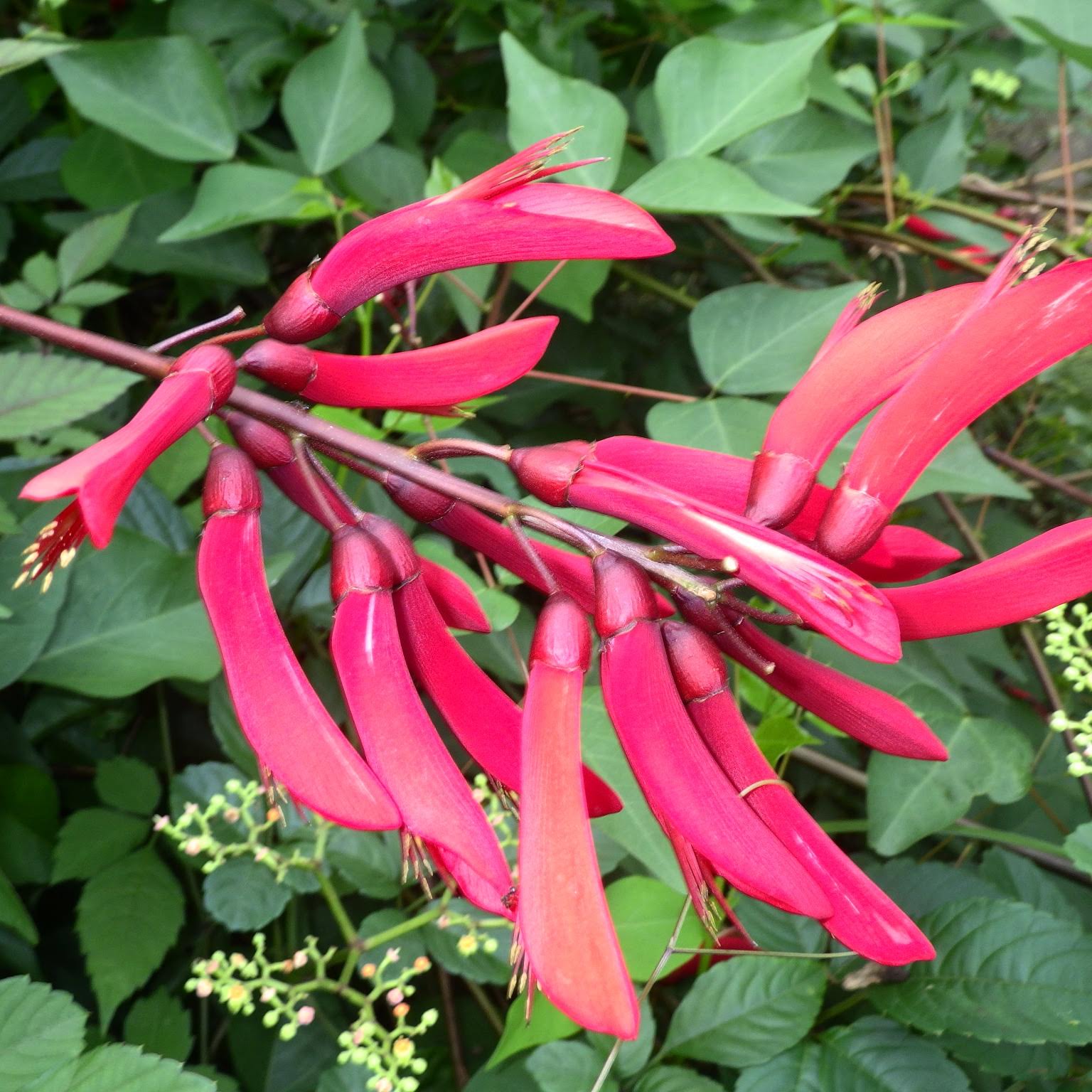
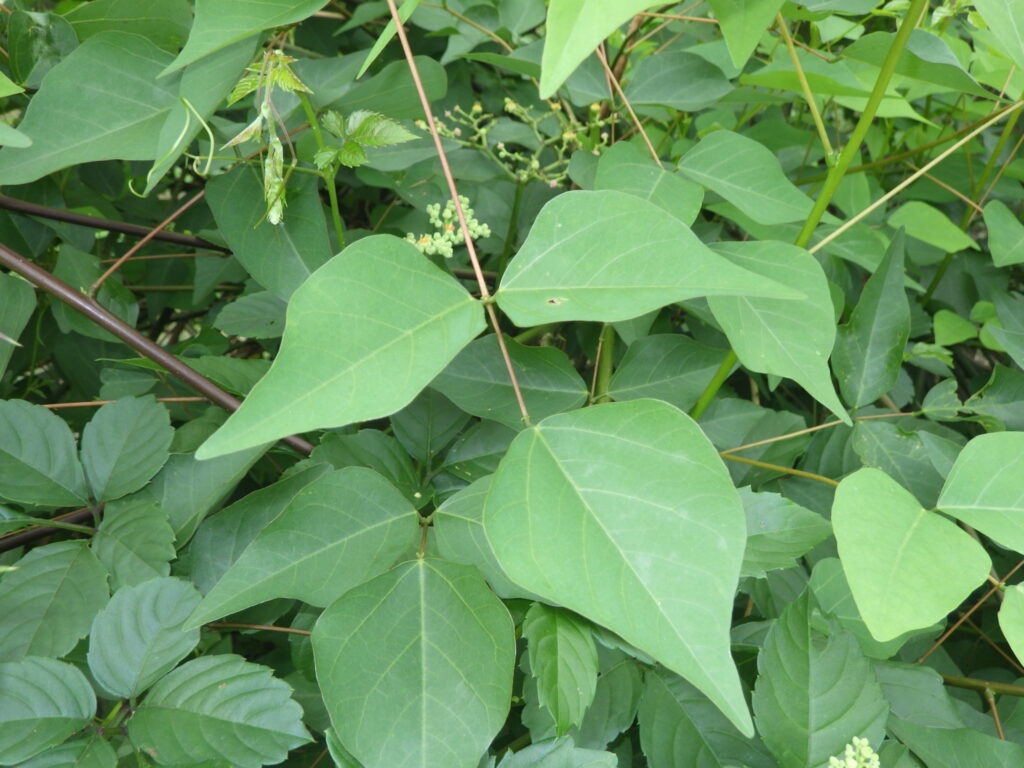
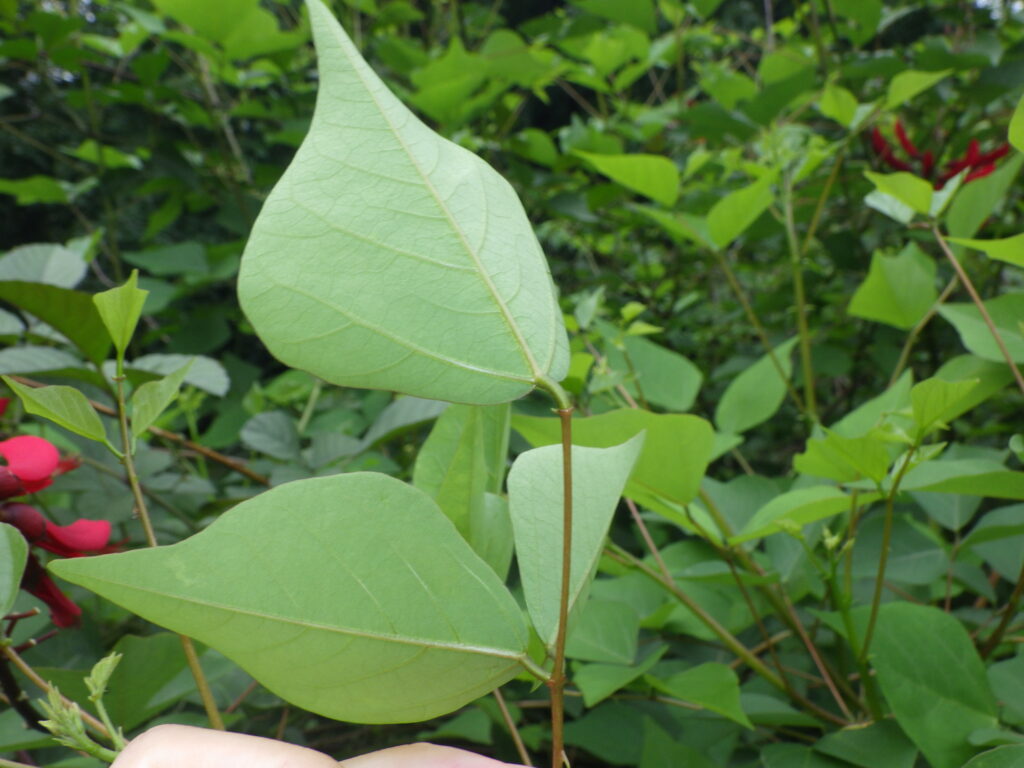
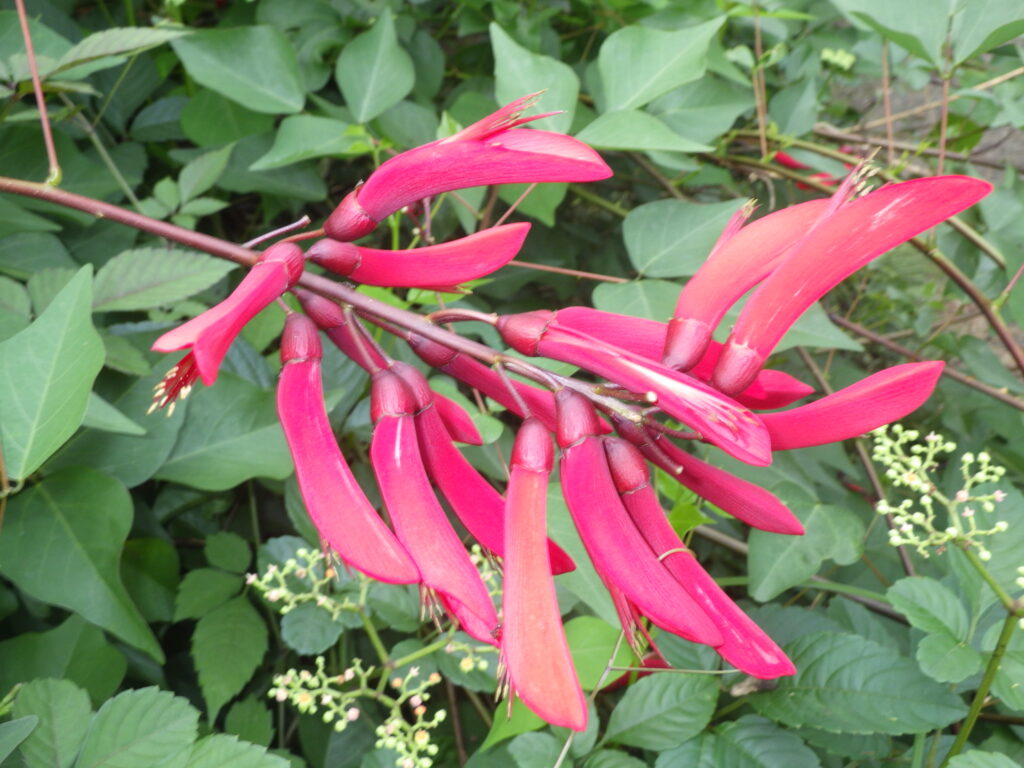
No. 1616.b Butea monosperma
This is a deciduous tree, reaching a height of 10-15 meters. The leaves are trifoliate, with thick, flexible leaflets that are rhomboid-ovate, 10-20 cm wide, with entire margins and acute apices. The upper surface of the leaves is glossy, while the underside is grayish-white. The leaves are densely covered with fine hairs. The flowering period is around February to March. The flowers bloom in short racemes emerging from the leaf axils at the tips of the branches. The flowers are about 3-5 cm in diameter, characteristic of the legume family, with the lowest keel petal curving backward, resembling a parrot's beak. The flowers are orange to red, and bloom all at once before the leaves unfold. After flowering, it produces pods about 12-20 cm long, each containing a single seed. It is distributed in South Asia (Pakistan, India, Bangladesh, Nepal, Sri Lanka) and Southeast Asia (Myanmar, Thailand, Laos, Cambodia, Vietnam, Malaysia), and is cultivated in forests, damp places, and near roads (Flora of China). The flowers have abundant nectar, bloom during the day, and are frequently visited by seven species of birds belonging to six families, but only the purple sunbird (Nectarinia asiatica) is an effective pollinator, and it has a unique pollination system for a legume, as it is also pollinated by the mammal Funambulus tristiatus (Tandon et al., 2003). The sap is used in leather production, the flowers are used for tea and dyes, and the leaves are used for plates. In addition, it is considered a sacred tree in Hinduism and is used for offerings to gods and in religious ceremonies. The lac insect Kerria lacca (Laccifer lacca is a synonym) has over 400 known hosts, but commercially, it is used as the raw material for the herbal medicine Hanamotsuyaku (flower myrrh) along with Ceylon oak Schleichera oleosa and Indian jujube Ziziphus mauritiana (Watanabe, 2003; Takekawa, 2010). Hanamotsuyaku contains a red pigment and is used as a type of maroon paint. It is also used as a lac dye to dye cloth purple. It is also added to food and in modern Japan is used to color sweets, bean paste, bacon, sausages, noodles, processed seafood, and jams. Furthermore, shellac, obtained by refining the insect's body covering, is used in a wide range of applications, including paints, adhesives, electrical insulation, varnishes for stringed instruments and wooden furniture, granular chocolates and gums, pharmaceutical tablets, a coating and glossing agent for roasted chestnuts, and SP records, making it extremely important in Japan.
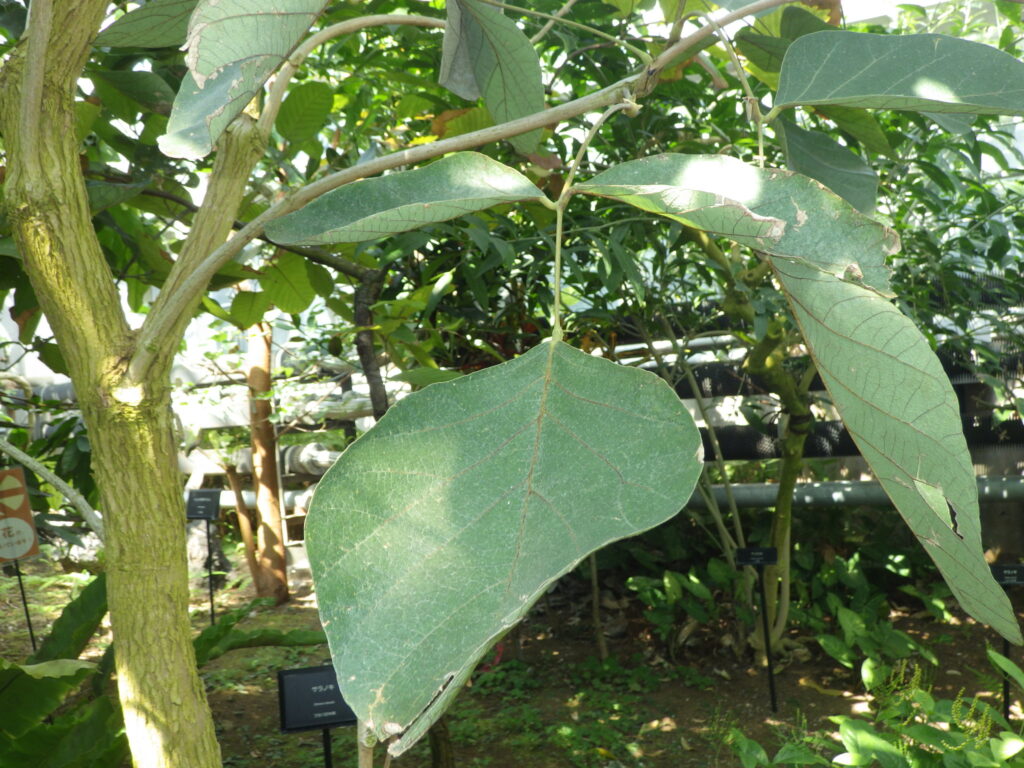
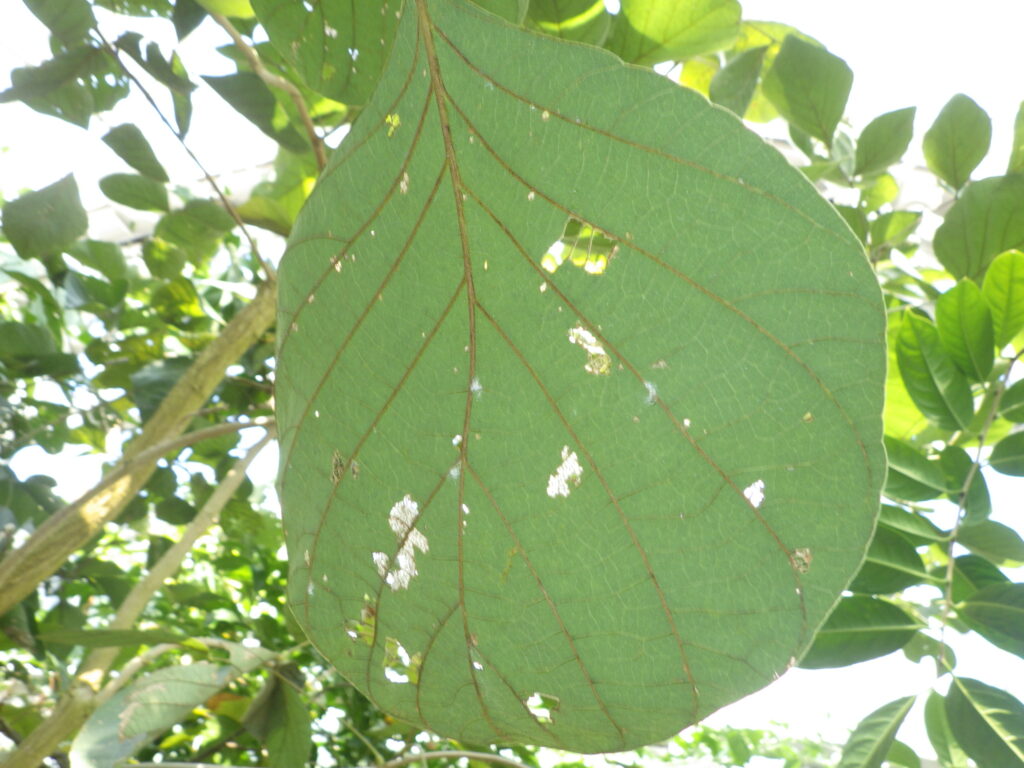
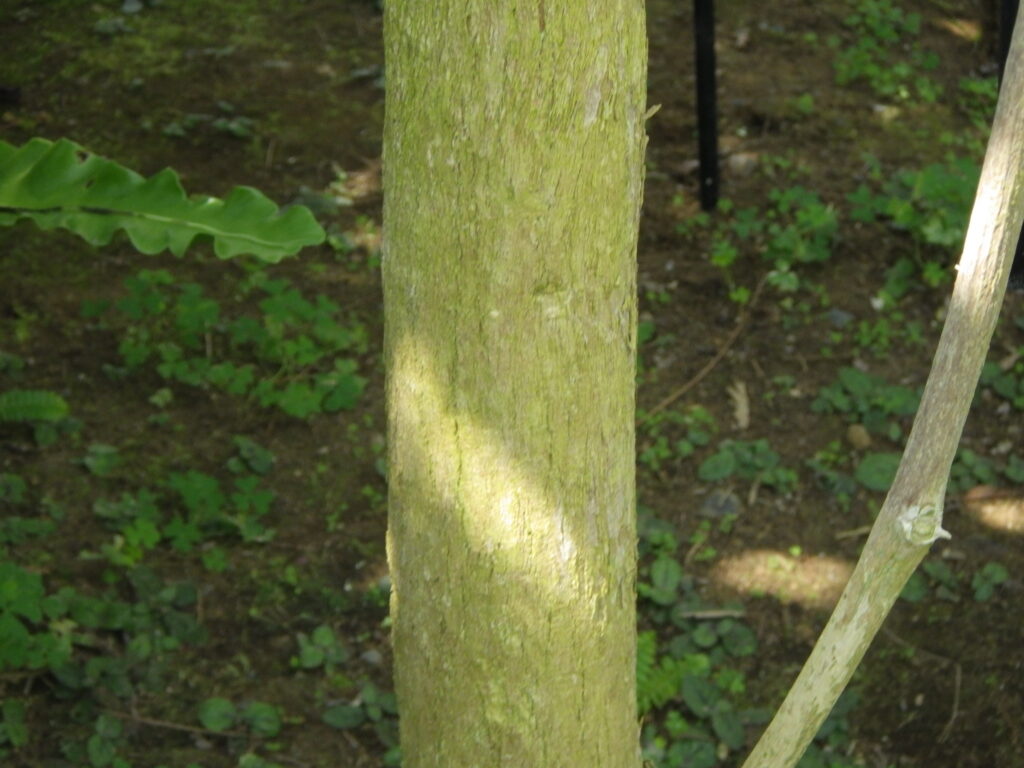
References
Chou, CH, & Kuo, YL 1986. Allelopathic research of subtropical vegetation in Taiwan. Journal of Chemical Ecology 12(6): 1431-1448. https://doi.org/10.1007/BF01012362
Damascena, JG, Leite, GLD, Silva, FWS, Soares, MA, Guanabens, REM, Sampaio, RA, & Zanuncio, JC 2017. Spatial distribution of phytophagous insects, natural enemies, and pollinators on Leucaena leucocephala (Fabaceae) trees in the Cerrado. Florida Entomologist 100(3): 558-565. https://doi.org/10.1653/024.100.0311
Diamond, JM 1997. Guns, germs, and steel: the fates of human societies. W.W. Norton, New York. 480pp. ISBN: 9780393038910 [=2012. Guns, germs, and steel, Volume 1. Sōshisha, Tokyo. ISBN: 9784794218780]
Duenas-Lopez, M. 2022. Erythrina variegata (Indian coral tree). CABI Compendium. https://doi.org/10.1079/cabicompendium.22055
Entwisle, TJ, Maslin, BR, Cowan, RS, & Court, AB 1996. Mimosaceae. In: NG Walsh & TJ Entwisle (Eds.), Flora of Victoria (Vol. 3 Dicotyledons Winteraceae to Myrtaceae, pp. 585-658). Inkata Press. https://vicflora.rbg.vic.gov.au/flora/taxon/a72a846c-7a92-4a4a-8dca-e2582a0f393e
Galetto, L., Bernardello, G., Isele, IC, Vesprini, J., Speroni, G., & Berduc, A. 2000. Reproductive biology of Erythrina crista-galli (Fabaceae). Annals of the Missouri Botanical Garden 87(2): 127-145. https://doi.org/10.2307/2666157
Gleason, HA & Cronquist, AJ 1991. Manual of vascular plants of northeastern United States and adjacent Canada. Botanical Garden Pr Dept, New York. 910pp. ISBN: 9780893273651 http://www.worldfloraonline.org/taxon/wfo-0000182246
Hayashi, Masayuki. 2014. 1100 Tree Leaves Identified Through Real-Life Scans. Yama-kei Publishers, Tokyo. 759pp. ISBN: 9784635070324
茨木靖. 2013. 徳島県に漂着したヒメモダマ Entada phaseoloides(L.)Merr.(ネムノキ科)の発芽試験. 徳島県立博物館研究報告 23: 131-132. https://museum.bunmori.tokushima.jp/kiyo/2013/%E5%BE%B3%E5%B3%B6%E7%9C%8C%E3%81%AB%E6%BC%82%E7%9D%80%E3%81%97%E3%81%9F%E3%83%92%E3%83%A1%E3%83%A2%E3%83%80%E3%83%9E.pdf
Ide, Maho; Imaeda, Masatomo; and Ikeda, Hiroshi. 2012. New distribution of *Ailanthus erythrosora* (Fabaceae) in Japan. Journal of Japanese Plant Research 87(2): 140-142. https://doi.org/10.51033/jjapbot.87_2_10351
Ito, Misako. 2010. Weed Introduction Series: Kudzu (Pueraria lobata Ohwi). Grass and Greenery 2: 36-41. ISSN: 2185-8977, https://doi.org/10.24463/iuws.2.0_36
Jeanes, JA 1996. Fabaceae. In: NG Walsh, & TJ Entwisle, Flora of Victoria Vol. 3: Dicotyledons Winteraceae to Myrtaceae (pp. 663-829). Inkata Press. https://vicflora.rbg.vic.gov.au/flora/taxon/b0aae4f9-9366-431a-b65d-7bd7de457797
Kanagawa Prefecture Flora Survey Association. 2018. Kanagawa Prefecture Flora 2018 (Electronic Edition). Kanagawa Prefecture Flora Survey Association, Odawara. 1803pp. ISBN: 9784991053726
Kobayashi, S. 2020. Mammals are also pollinators—Non-flying mammal-pollinated plants in Asia—. Mammalian Science 60(2): 385-389. https://doi.org/10.11238/mammalianscience.60.385
Luo, ZL, Gu, L., & Zhang, DX 2009. Intrafloral differentiation of stamens in heterantherous flowers. Journal of Systematics and Evolution 47(1): 43-56. https://doi.org/10.1111/j.1759-6831.2009.00002.x
Nakamoto, Atsushi & Izawa, Masako. 2013. Visitor communities of Erythrina variegata planted on Okinawa Island and their diurnal variations. Conservation Ecology Research 18(2): 111-119. https://doi.org/10.18960/hozen.18.2_111
Pinheiro-Costa, BK, Mesquita-Neto, JN, Rego, JO, & Schlindwein, C. 2018. Trade off between quantity and size of pollen grains in the heterandrous flowers of Senna pendula (Fabaceae). Acta Botanica Brasilica 32: 446-453. https://doi.org/10.1590/0102-33062018abb0132
Takeda, K., Fujii, A., Senda, Y., & Iwashina, T. 2010. Greenish blue flower color of Strongylodon macrobotrys. Biochemical Systematics and Ecology 38(4): 630-633. https://doi.org/10.1016/j.bse.2010.07.014
Takekawa, Yukiko. 2010. The Use of Shellac, a Natural Resinous Substance: Focusing on Shōsōin Treasures and Medicinal Properties. Osaka Science Museum Research Report 20: 65-70. https://www.sci-museum.jp/wp-content/themes/scimuseum2021/pdf/study/research/2010/pb20_065-070.pdf
Tandon, R., Shivanna, KR, & Mohan Ram, HY 2003. Reproductive biology of Butea monosperma (Fabaceae). Annals of Botany 92(5): 715-723. https://doi.org/10.1093/aob/mcg193
Xiao, Z. 2022. Dual ecological functions of scatter-hoarding rodents: pollinators and seed dispersers of Mucuna sempervirens (Fabaceae). Integrative Zoology 17(5): 918-929. https://doi.org/10.1111/1749-4877.12603
Yoshida, Munehiro & Tsuji, Nana. 2019. Green beans that conquered the world. Food and Nutrition Research 40(1): 2-15. https://ku-food-lab.com/wp/wp-content/uploads/2020/01/8646a8420a2be9cda5c4dee9d8a77434.pdf
Watanabe, Hiroyuki. 2003. Scale insects save tropical forests. Tokai University Press, Hadano. 136pp. ISBN: 9784486016182