The Paeoniaceae family consists of perennial herbs or small shrubs. The leaves are alternate or basal, large, trifoliate, or somewhat pinnately compound, and lack stipules. The flowers are large, with 3-5 bluish-green sepals and petal-like petals without nectaries. There are numerous stamens. It is a monotypic family, containing only one genus, Paeonia, found in the Northern Hemisphere. Although sometimes included in the Ranunculaceae family due to its similar appearance, this has been controversial, and in the APG system, it is now placed in the Saxifragales order.
This article provides a comprehensive, illustrated guide to plants belonging to the Paeoniaceae family.
The basic information is based on Tsukamoto (1994). Photos are replaced as better ones become available. Also, while the identification is done by the author, please note that it may be changed without notice if there are any misidentifications.
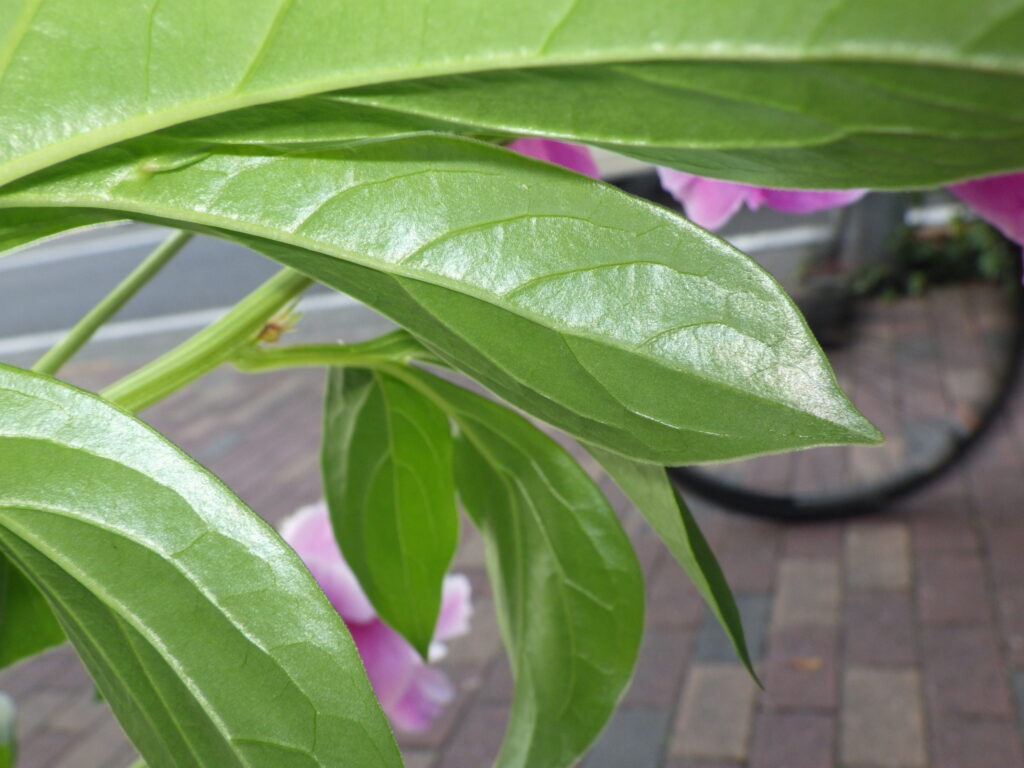
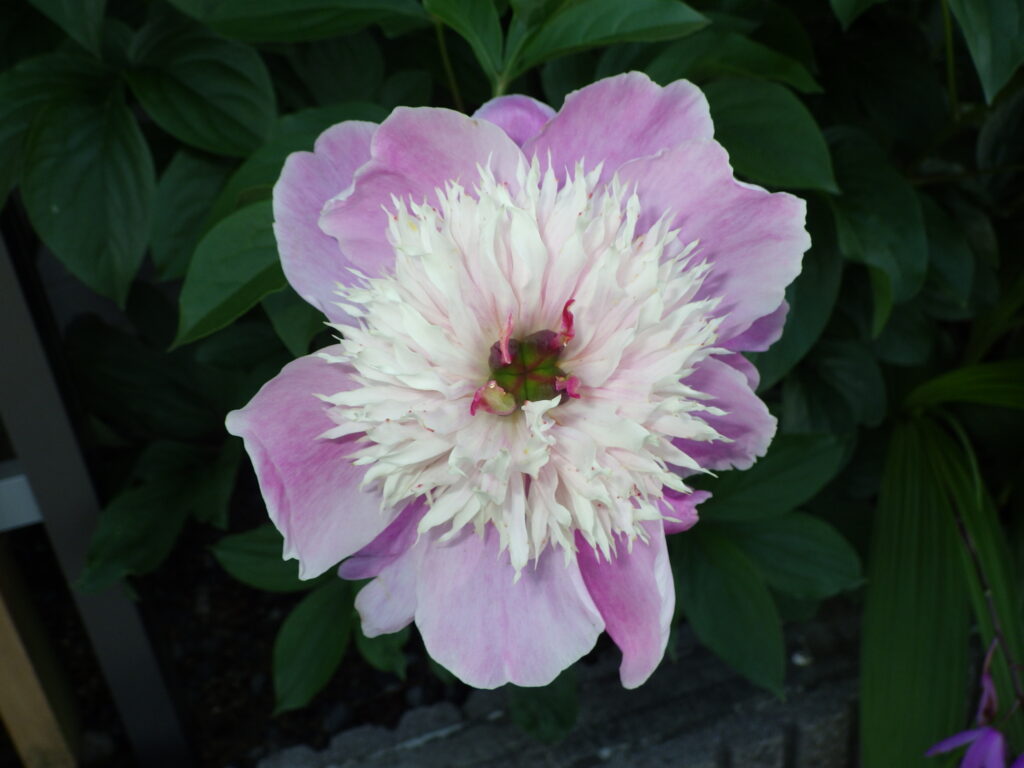
No. 1331 Peony (Paeonia lactiflora)
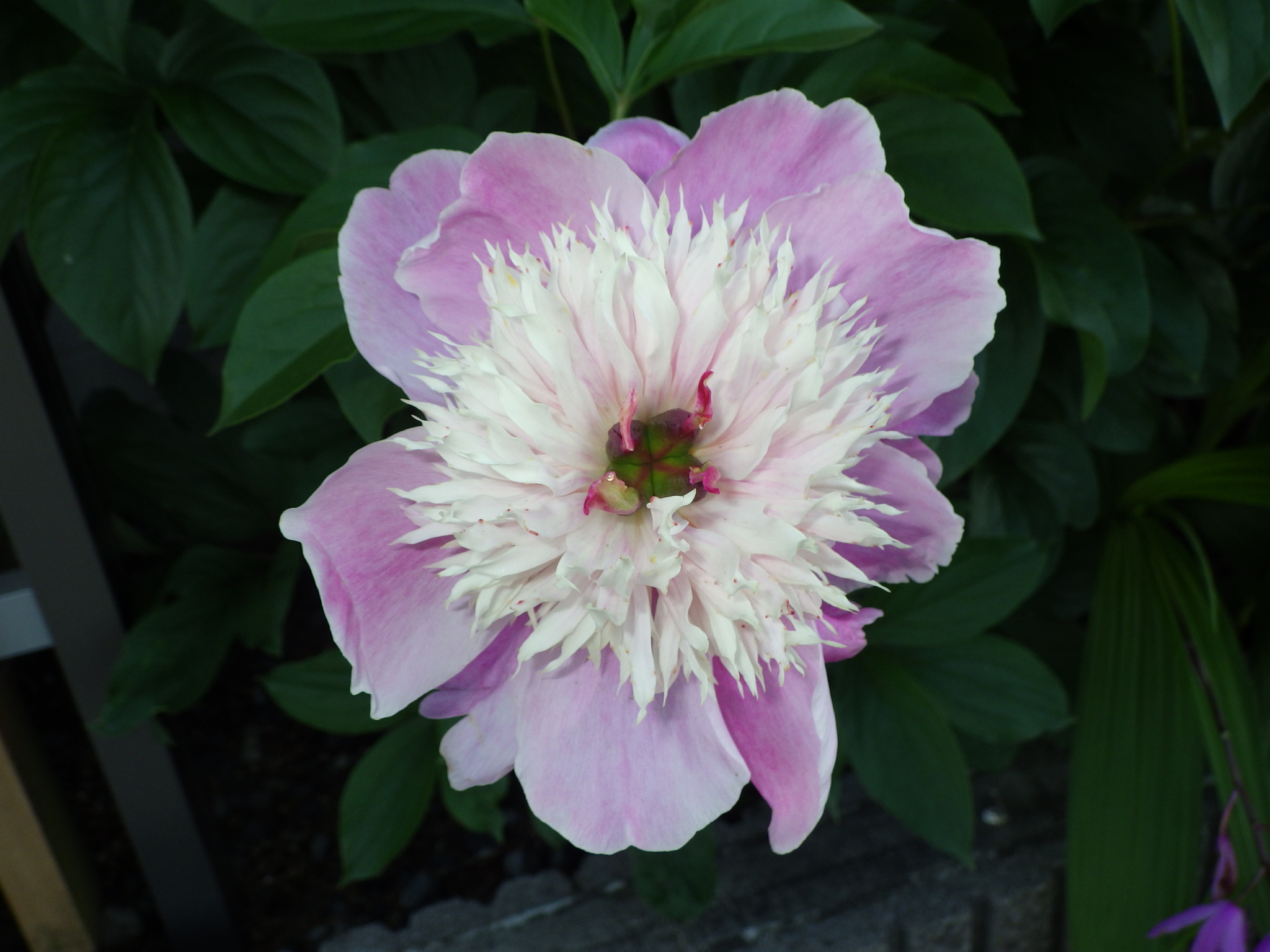
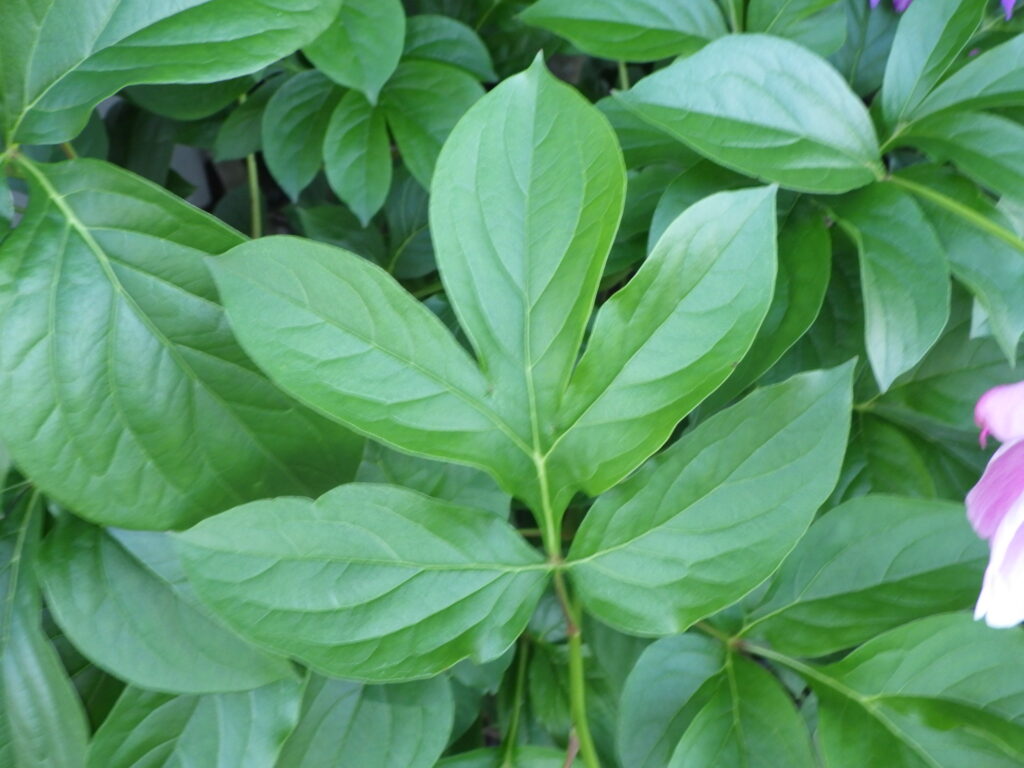
This is a perennial herb. It grows to a height of 50-90 cm, with spindle-shaped roots and several upright stems each spring, bearing several alternate leaves (Baba, 1996). The lower leaves are twice-ternate compound leaves, often 2-3 lobed, with reddish veins and petioles. The upper leaves are simpler. It flowers from May to June. The flowers are large, white to red, often double-flowered, and have a rounded shape. In China, it was cultivated as a medicinal herb as early as before the Common Era, and thereafter mainly for ornamental purposes. The first record in Japan dates back to the time of Ono no Komachi (850s), but there are many theories that question whether these records were of true peonies, and there is a strong opinion that the first reliable description is in the famous flower arrangement book, "Sendensho" (1596-1624). Later, during the Edo period, horticultural varieties were improved in various places, but relatively simple flower shapes were preferred. Since the Meiji era, systematic breeding of peony varieties has been carried out at the Kanagawa Prefectural Agricultural Experiment Station, primarily by Mr. Bungo Miyazawa from the late Meiji period onward. In 1932 (Showa 7), 700 new varieties were announced. It is said that there are approximately 3,000 horticultural varieties in total, and recently, many interspecific hybrids have been created, mainly in the United States, further increasing the number of varieties. The dried or steam-dried roots are called peony and are used as a medicinal herb. It is distributed in northern China, Mongolia, southeastern Siberia, and the northern Korean Peninsula, growing in forests and grasslands at altitudes of 400 to 2,300 meters (Flora of China).
No. 1334 Button Paeonia suffruticosa
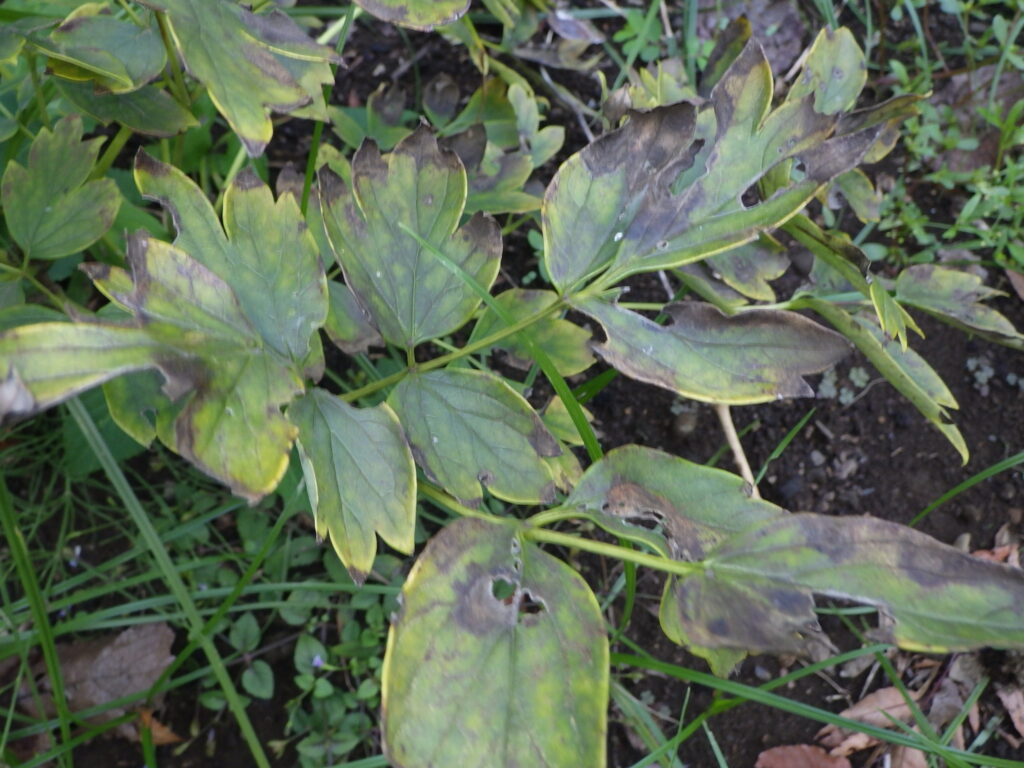
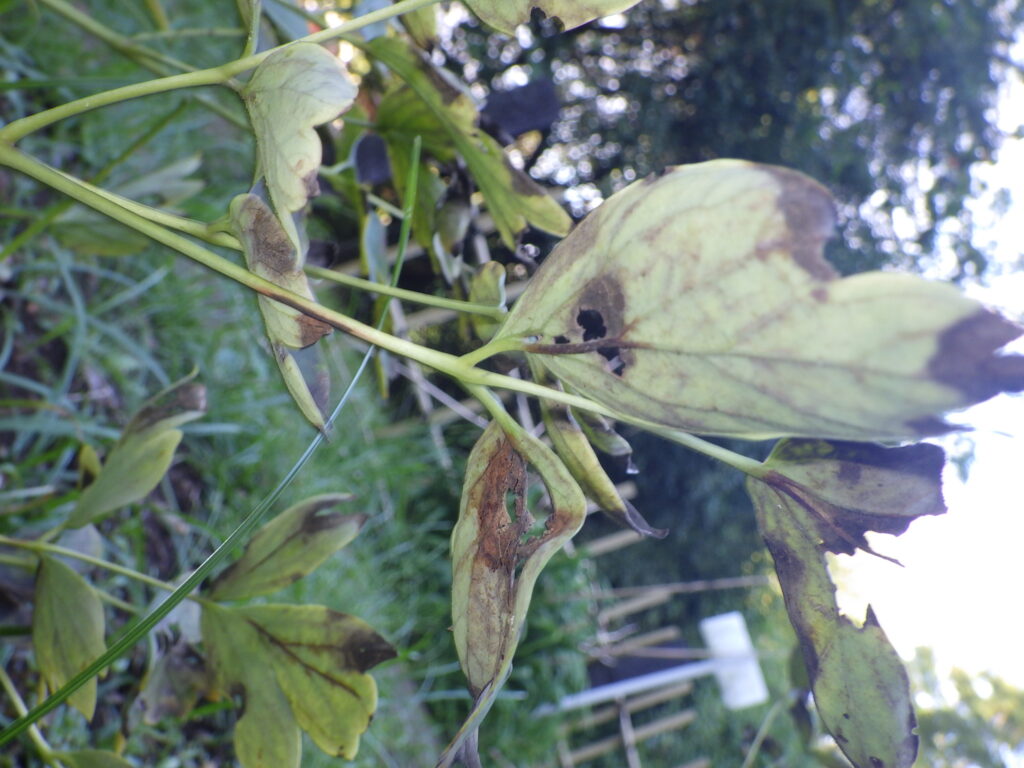
This is a deciduous shrub. The stems reach a height of 2m. The leaves are bipinnately compound, with the terminal leaflet being about 10cm long. The upper surface of the leaves is green and hairless, while the underside is pale green and covered with a white powdery substance. The petioles are 5-11cm long and almost hairless. It flowers in May. The flowers are solitary at the tips of the branches, large (11-17cm in diameter), and white, pink, red, or purple. There are five green sepals. There are five petals, although double varieties exist. There are numerous stamens. The floral disc is purplish-red and encloses the cup-shaped stamens. There are five pistils, densely covered with soft hairs, which dehisce when mature. It bears fruit in June. The root bark is used medicinally for pain relief, anti-inflammatory purposes, blood purification, and for treating stroke and abdominal pain. It is distributed in the Yan'an area of Shaanxi Province, China, and grows on cliffs at an altitude of 300m (Flora of China). Originally used for medicinal purposes, the peony flower became more beloved than any other flower, revered as the "king of flowers," from the prosperous Tang dynasty onward. According to the "Shōsō Zatsuroku," peonies first began to be admired during the reign of Emperor Xuanzong, but at that time they were called "wooden peonies" (Kubo, 2009).
References
Baba, Atsushi. 1996. 500 Medicinal Herbs: From Cultivation to Uses. Seibundo Shinkosha. Tokyo. 167pp. ISBN: 9784416496183
Kubo, T. 2009. The problem of identifying Mudan and the tree peony in early China. Asian Medicine 5(1): 108-145. ISSN: 1573-420X, https://doi.org/10.1163/157342109X568964
Tsukamoto, Yotaro. 1994. Encyclopedia of Horticultural Plants, Compact Edition. Shogakukan, Tokyo. 3710pp. ISBN: 9784093051118