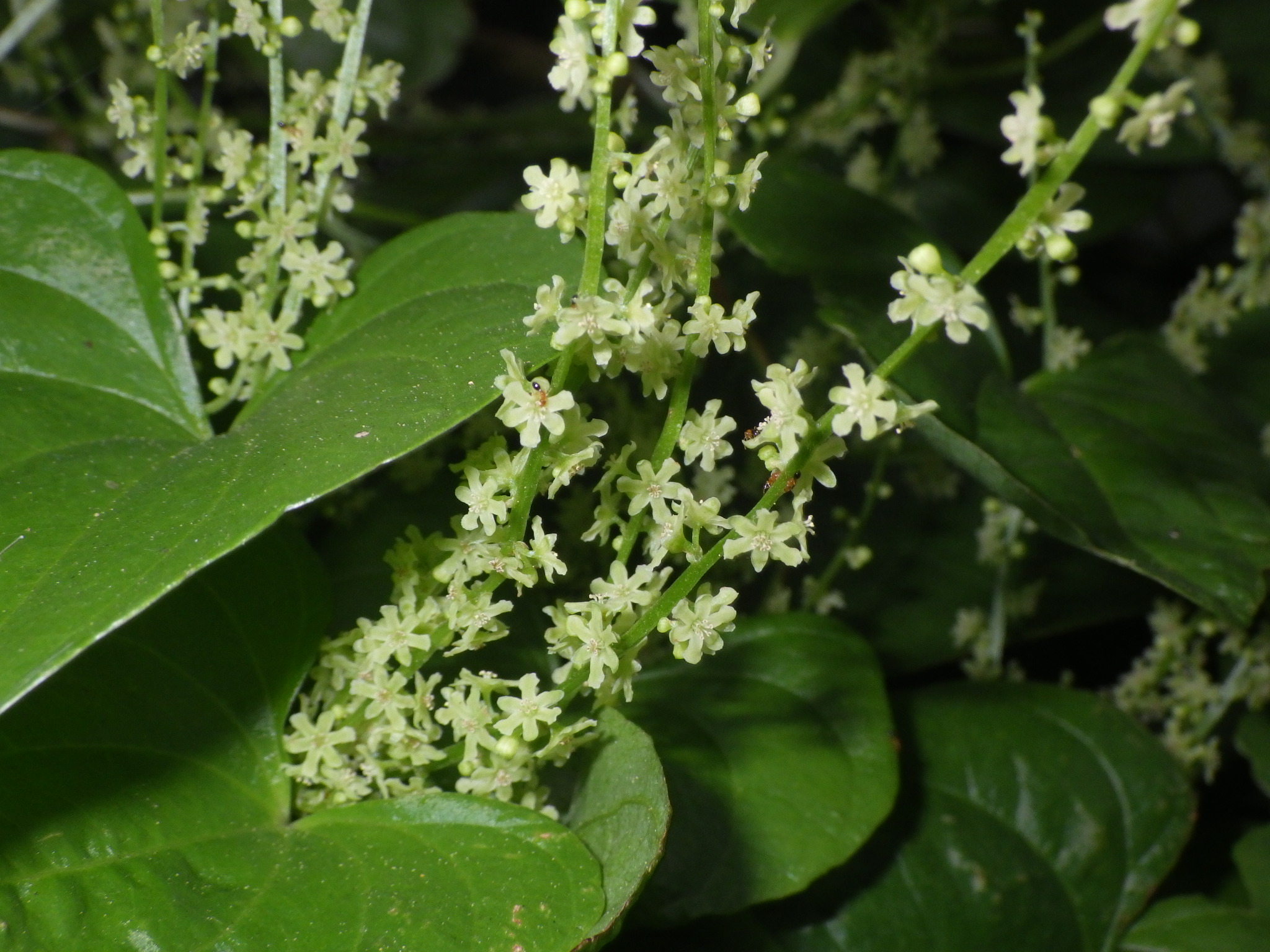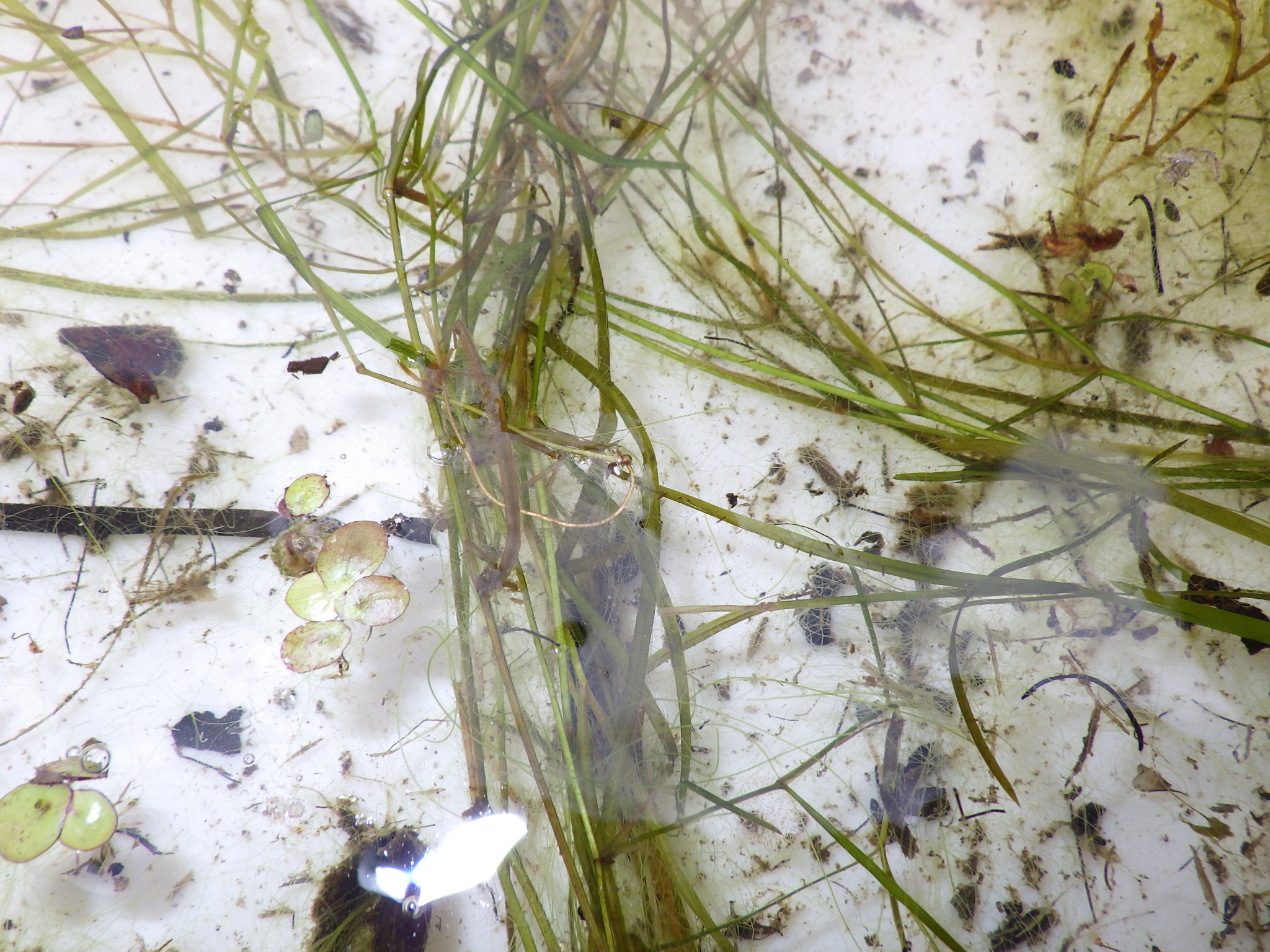
The family Potamogetonaceae originally consisted of two genera, Potamogeton and Groenlandia, but the genus Ophiopogon was separated from Potamogeton. Additionally, the family Zanichelliaceae was included within Potamogetonaceae. As a result, the morphological characteristics of Potamogetonaceae are extremely diverse. These are perennial (rarely annual) floating-leaved or submerged aquatic plants that grow in freshwater or brackish water. The stems are slender, often becoming rhizome-like at the base. They may form tubers or rhizomes. Submerged leaves are linear to orbicular, while floating leaves are lanceolate to elliptic or ovate. Approximately 100 species in 7 genera are widely distributed worldwide. About 20 species in 3 genera are found in Japan.
This article provides a comprehensive, field guide-style introduction to plants belonging to the Potamogetonaceae family.
The basic information is based on the Kanagawa Prefecture Flora Survey Association (2018). Photos are replaced as better ones become available. While the identification is done by the author, please note that misidentifications may be corrected without notice.
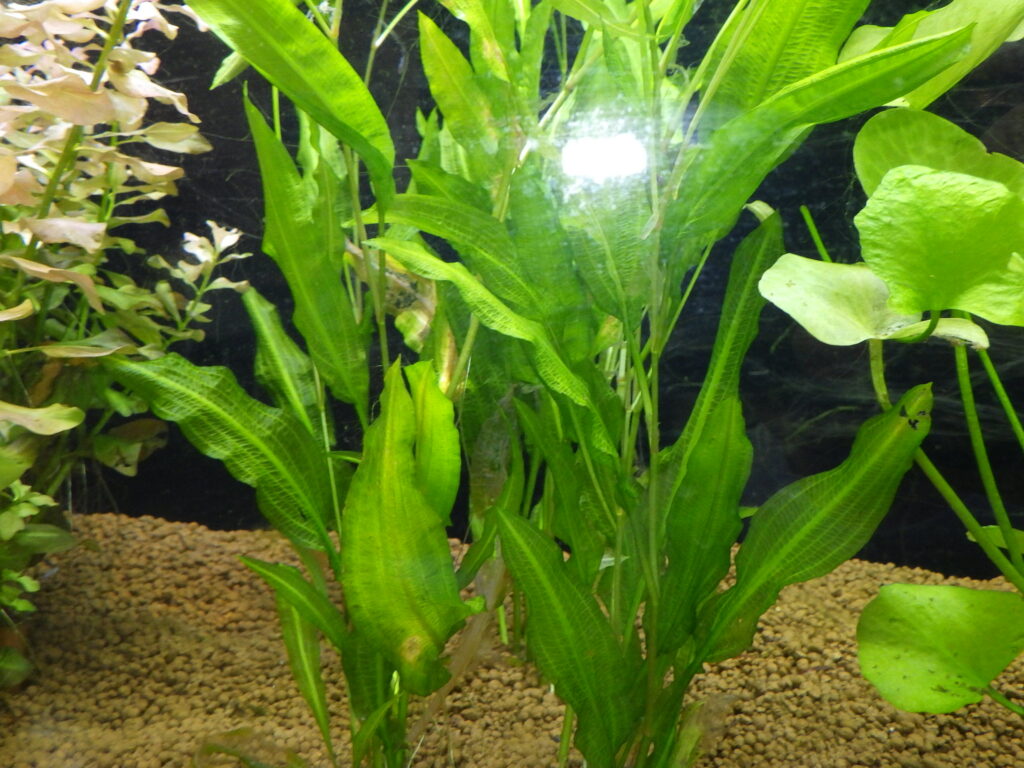
No. 0261 Potamogeton wrightii
This is a submerged aquatic plant, but sometimes its upper leaves become floating. The leaves have petioles 2-15 cm long, and the leaf blades are oblong-linear to narrowly lanceolate, 5-30 cm long and 1-2.5 cm wide. The leaf tips are acute and usually protrude in an awn-like manner. The flowers have four carpels. It forms replenishment buds at the tip of the rhizome. It is distributed in Hokkaido, Honshu, Shikoku, Kyushu, and the Ryukyu Islands; as well as in East Asia, India, and New Guinea.
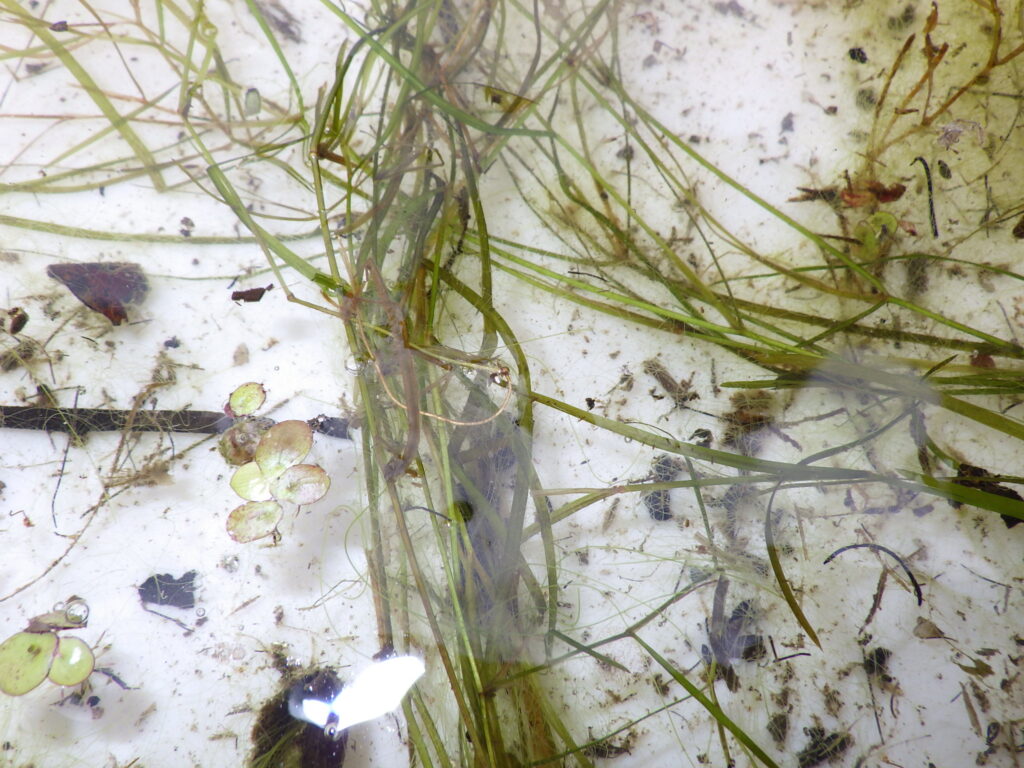
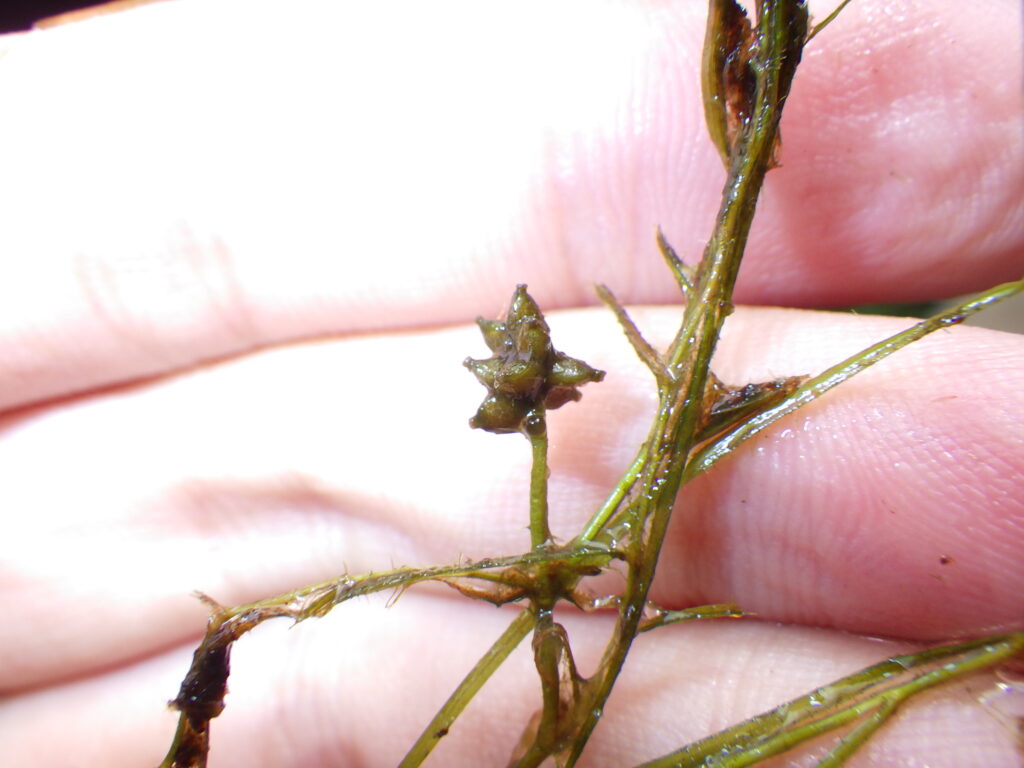
No.0265 Potamogeton berchtoldii
This submerged aquatic plant has linear, acute leaves, 0.8–1.2 mm wide, and 1–3 veins. The inflorescence is 3–5 mm long, with 4 carpels per flower. Its profuse flowering and fruiting from summer to autumn distinguishes it from similar species. The fruit is 2–2.5 mm long and about 1.5 mm wide. It forms replenishment buds 2–3 cm long with a slightly swollen center at the tips of branches and in the leaf axils. It is distributed throughout Japan, including Hokkaido, Honshu, Shikoku, Kyushu, and the Ryukyu Islands, and worldwide. It is listed as Near Threatened in the National Red Data Book 15.
References
Kanagawa Prefecture Flora Survey Association. 2018. Kanagawa Prefecture Flora 2018 (Electronic Edition). Kanagawa Prefecture Flora Survey Association, Odawara. 1803pp. ISBN: 9784991053726