The family Dioscoreaceae consists of herbaceous or climbing plants, comprising over 630 species across three genera distributed worldwide, primarily in tropical and subtropical regions. In Japan, only the genus Dioscorea is found.
This article provides a comprehensive, field guide-style introduction to plants belonging to the Dioscoreaceae family.
The basic information is based on the Kanagawa Prefecture Flora Survey Association (2018). Photos are replaced as better ones become available. While the identification is done by the author, please note that misidentifications may be corrected without notice.
No.0281 Japanese yam (Dioscorea japonica)
This is a perennial herb. The underground tuber is fleshy and club-shaped, sometimes growing to over 1 meter in length. All parts of the tuber are annuals except for the corm, the stem bud-forming part at the top. The stem is hairless and has a brownish or purplish-brown color. The leaves are usually opposite, but often alternate in the early stages of growth or in young seedlings. The tip of the leaf blade is gradually acuminate. The base of the leaf blade (vein portion) and the petiole are mostly green, but the upper part of the petiole is often purplish-brown. Bulbils (bulbils) are produced in the leaf axils. The flowering period is from July to September. One to three inflorescences emerge from the leaf axils, and both male and female flowers are borne in spike-like inflorescences, but the male inflorescences are obliquely ascending or erect, while the female inflorescences are pendulous. The axis of the inflorescence is almost straight. The perianth segments are both white, fleshy, tile-like, and semi-open. The capsule is about 12-15 mm long and 19-30 mm wide. The seeds have wings all around and are 10-15 mm wide. It is distributed in the temperate to subtropical regions of Honshu, Shikoku, Kyushu, Ryukyu Islands, the Korean Peninsula, China, and Taiwan. It commonly grows in alluvial plains and mountainous areas from the Castanopsis and Quercus zones to the Beech zone, along forest edges, roadsides, field edges, vacant lots, and planted areas in parks.
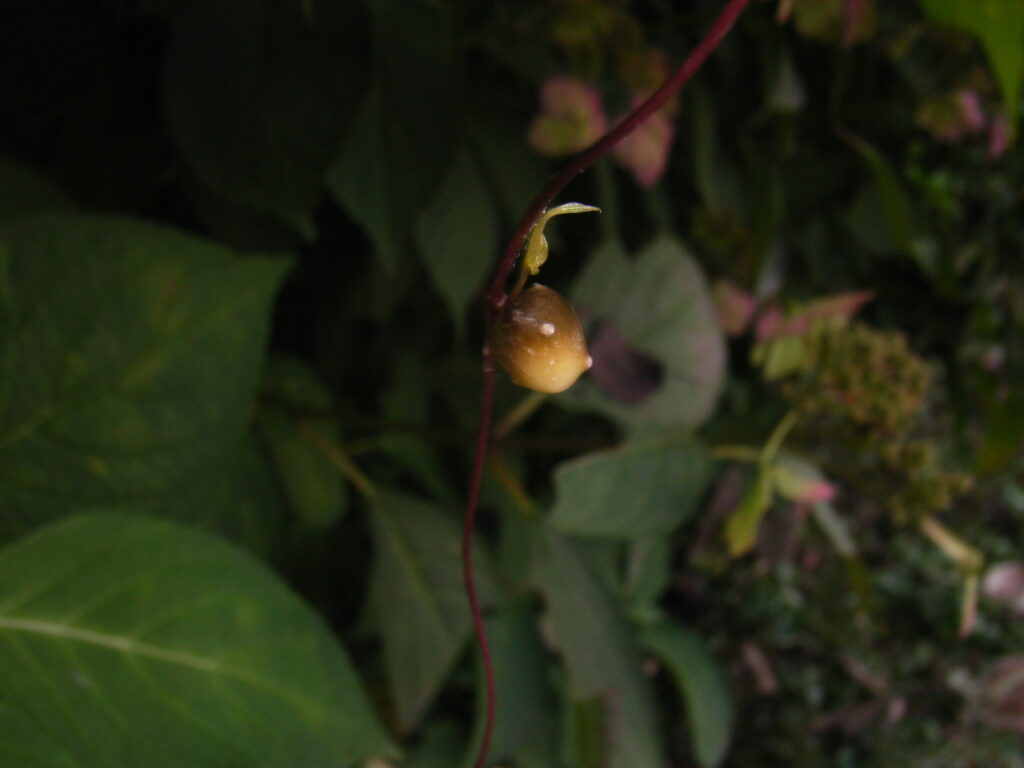
No. 0284 Dioscorea tenuipes
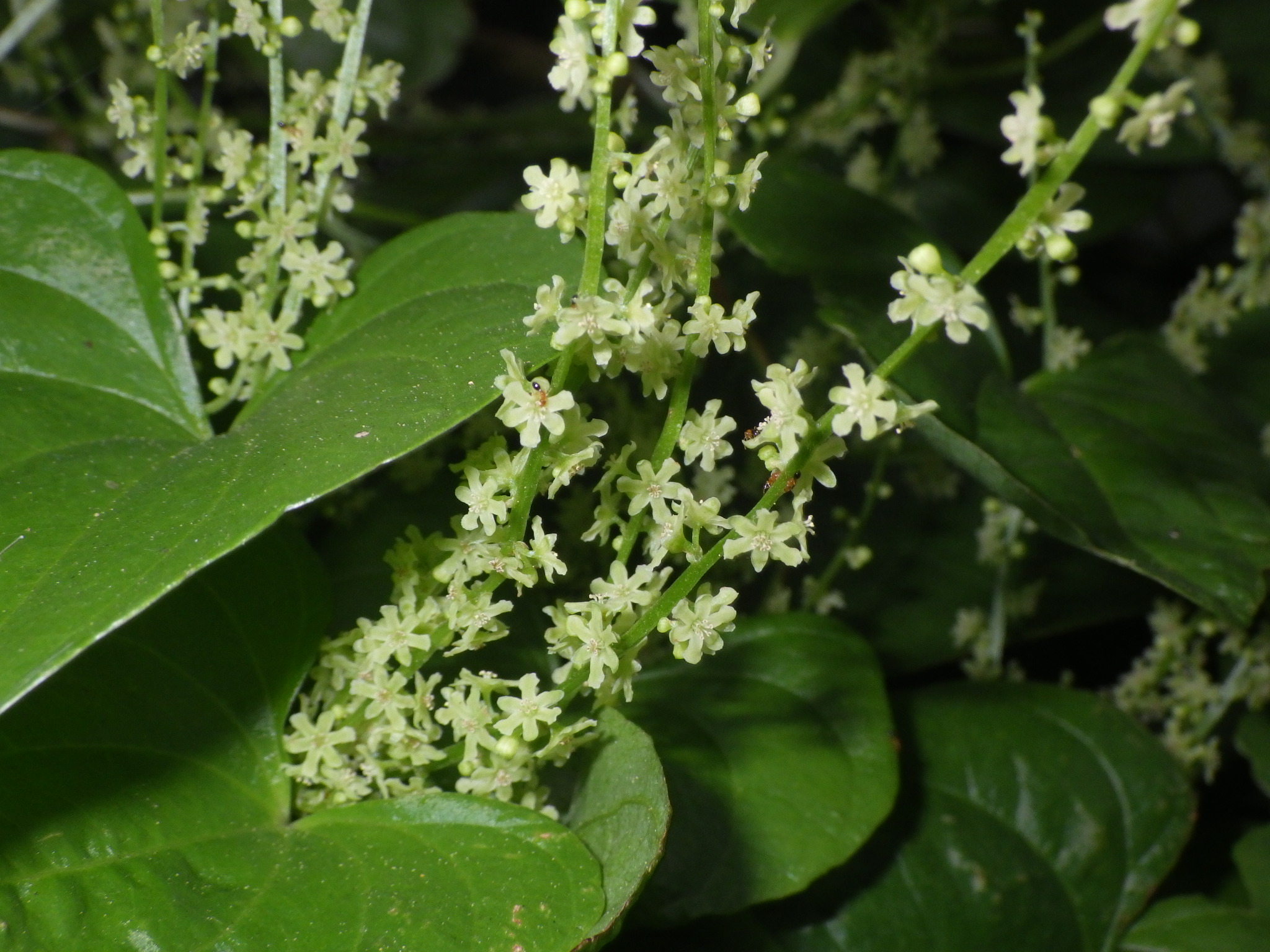
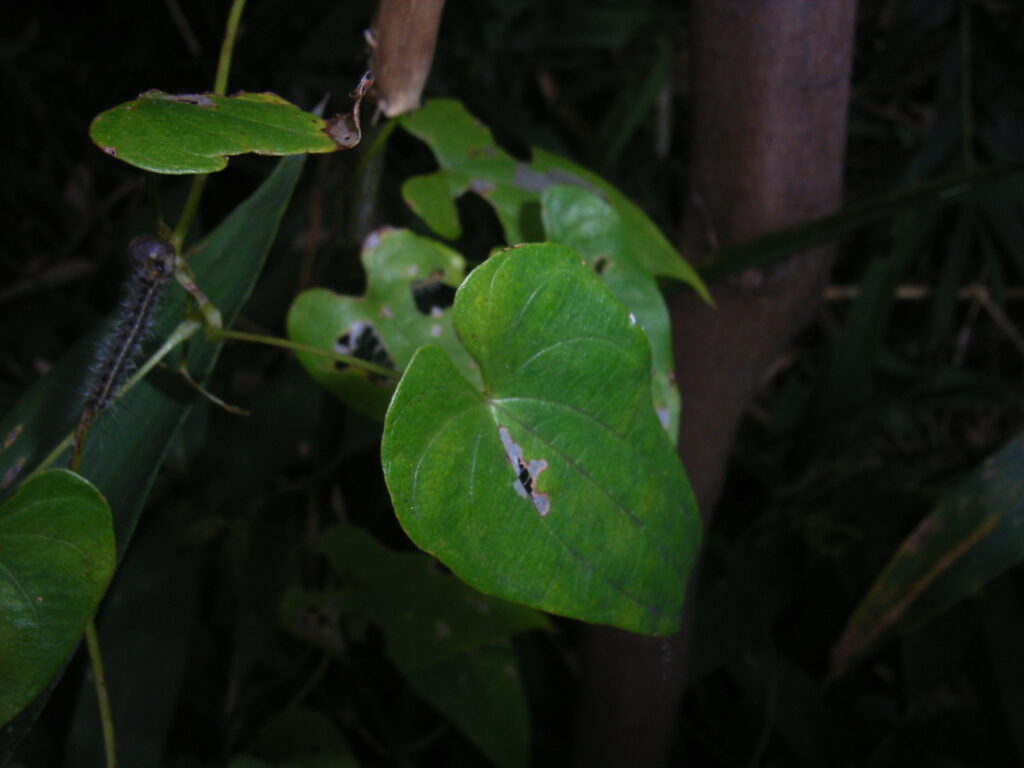
This is a perennial herb. The rhizome is long and branches in places. The stem is hairless, green, and often tinged with purplish-brown. The leaves are arranged alternately. The petioles are green or tinged with purplish-brown. The leaf blade is triangular-ovate to broadly triangular-ovate, with an entire margin. The base is cordate. In the early stages of growth, around May to June, the leaf blade often has ear-shaped projections at the base or shallowly lobed margins. The base of the leaf blade is often tinged with reddish-purple. The flowering period is from July to September. Male flowers are borne in erect or ascending racemes or panicles, with pedicels equal to or shorter than the flower diameter. There are six stamens. Female flowers are borne in drooping spikes or compound spikes. The perianth segments are both yellowish-green. The capsule is 10-23 mm long and 8-16 mm wide. The seeds have wings on only one side and are about 15 mm long. It grows in urban areas, including shrubbery, grasslands, and forest edges in hilly and mountainous regions. It is distributed in the temperate to warm zones of Hokkaido, Honshu, Shikoku, Kyushu, the Korean Peninsula, and China. It is very common in alluvial plains and mountainous areas from the Castanopsis and Quercus zones to the Beech zone, including forest edges, grasslands, vacant lots, and planted areas in parks. Pollination is mainly carried out by flies (Kudo et al., 2021). It has been found that there are differences in the arrangement of inflorescences between males and females, with male inflorescences tending to be obliquely upward and female inflorescences tending to be downward.
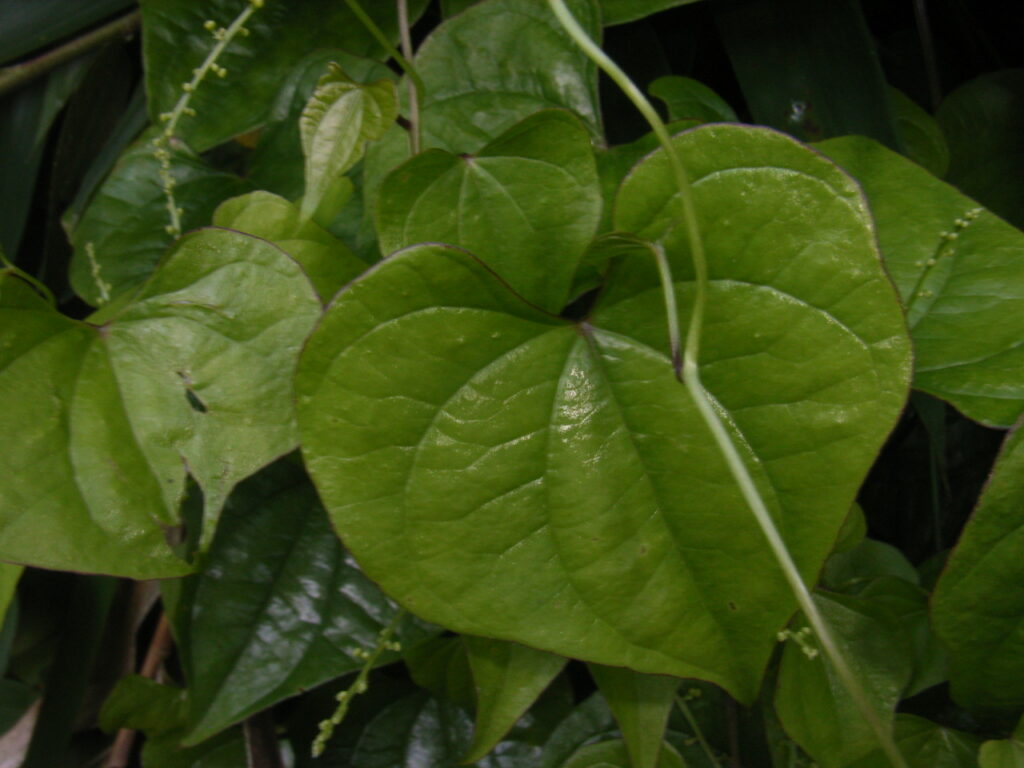
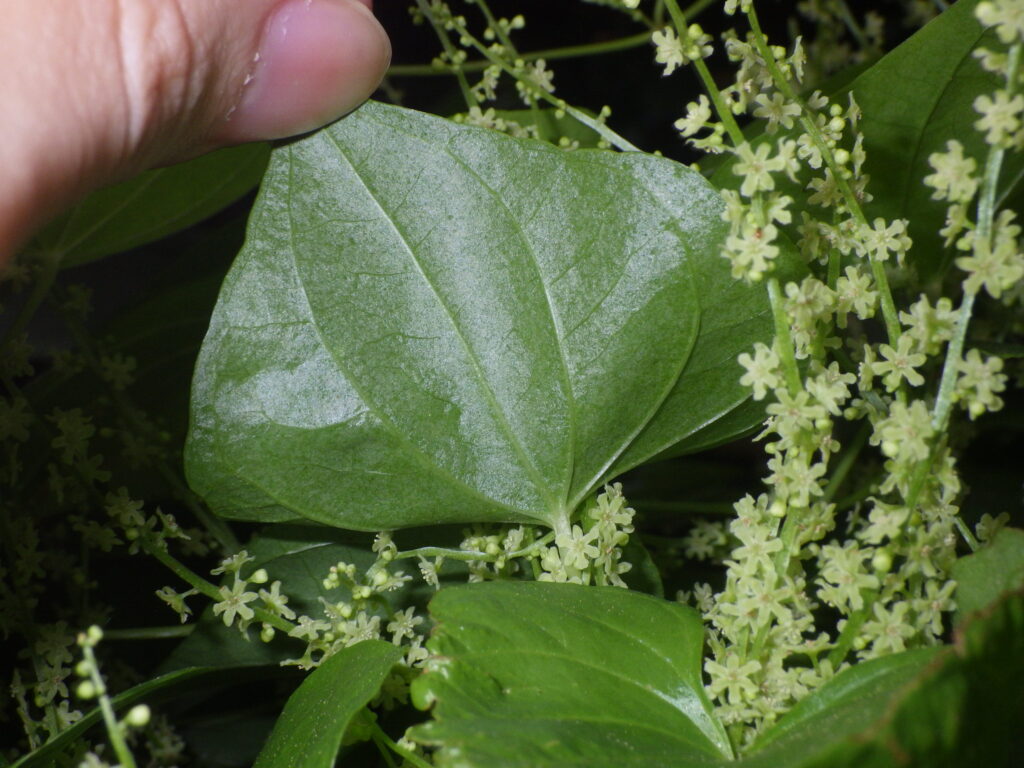
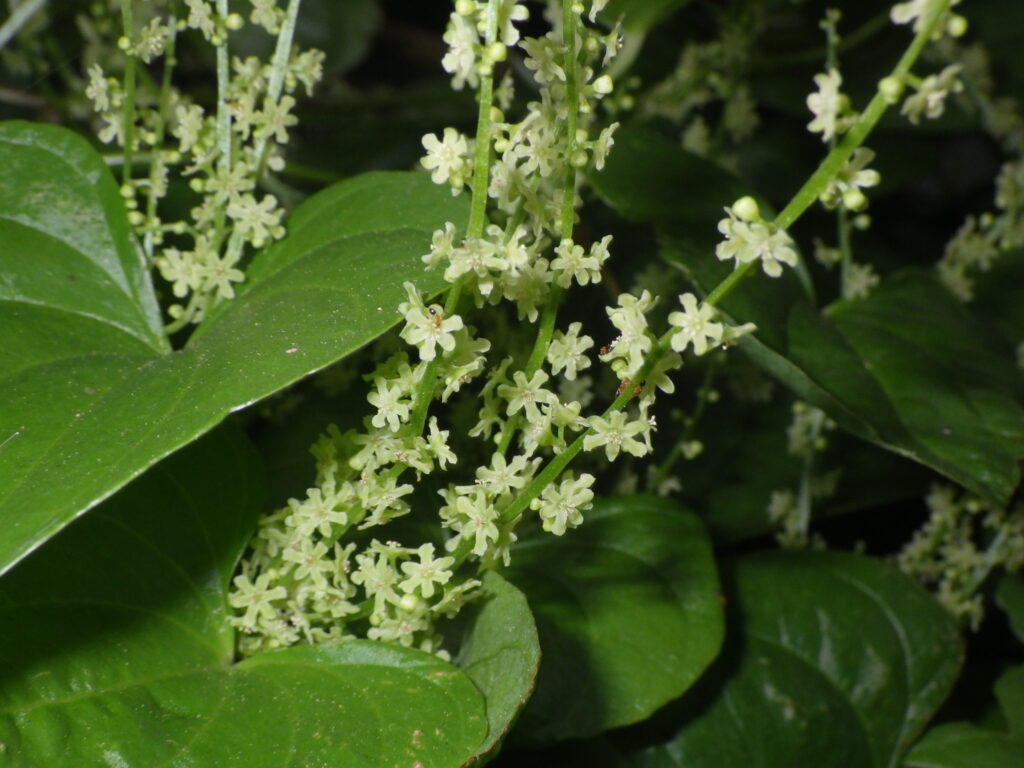
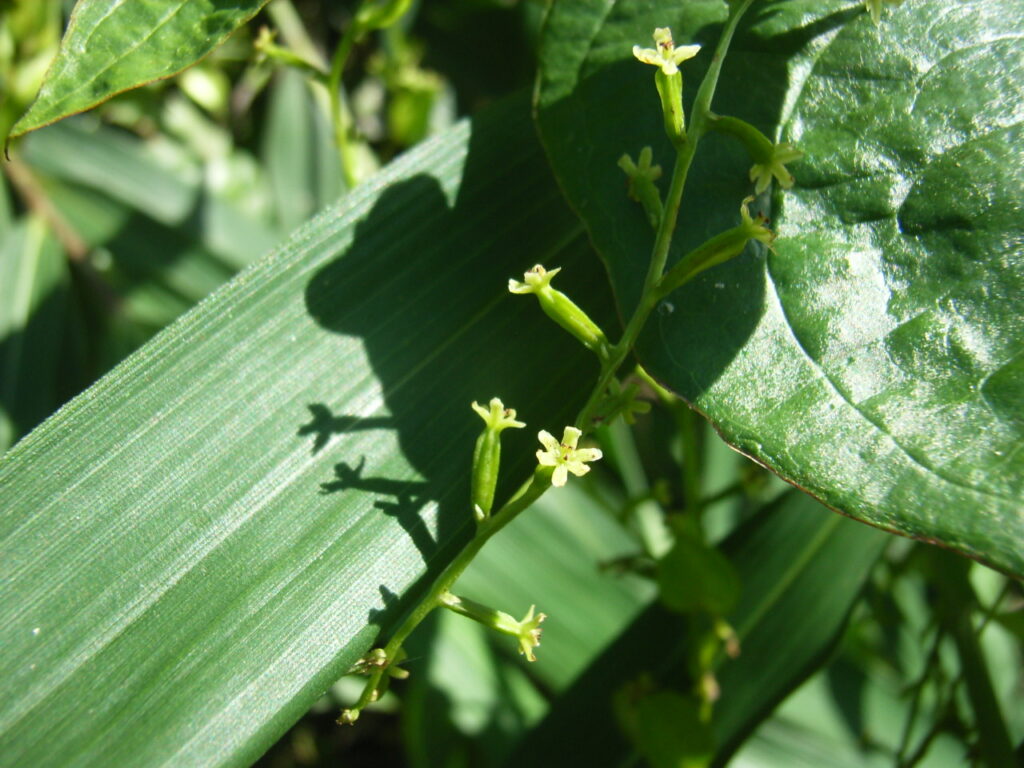
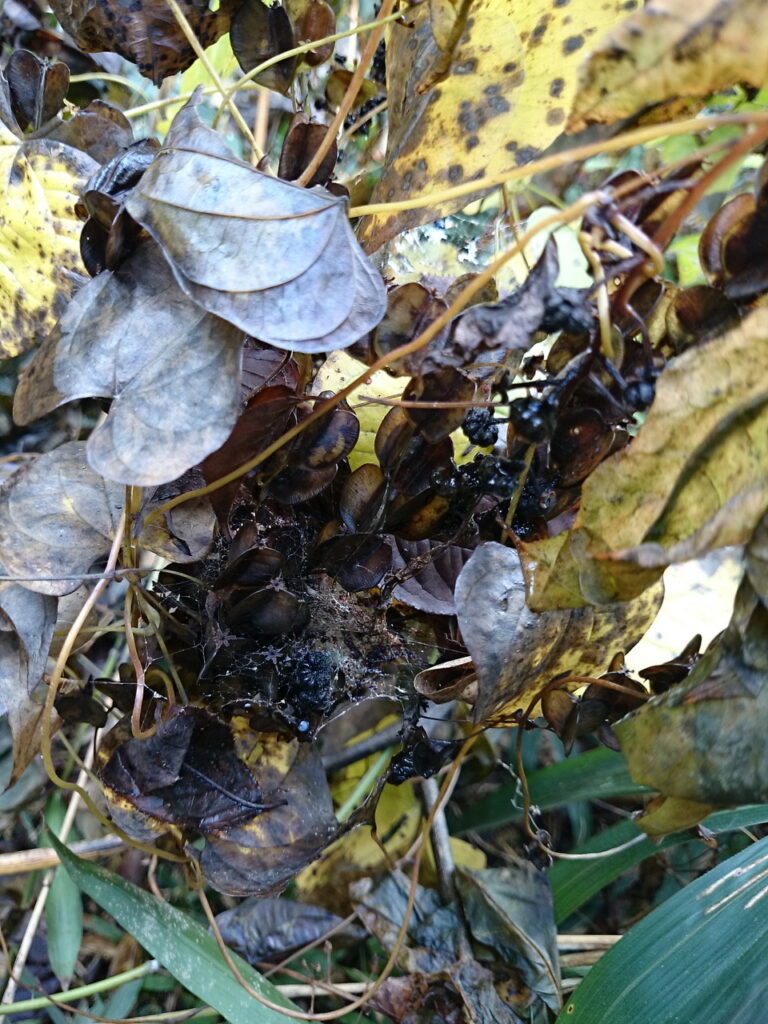
No.0290 Dioscorea quinquelobata
This is a perennial herb. The rhizome branches in places. The stem is hairless. The terminal lobe of the leaf blade is acute, and the lateral lobes are obtuse. The upper surface of the leaf is hairless or has scattered short hairs. The underside of the leaf has white hairs on the veins. It flowers from August to September. Male flowers are borne in obliquely ascending racemes or panicles, with six stamens. Female flowers are borne in drooping racemes. The perianth segments of both are yellow-orange. The capsule is 10-16 mm long and 14-18 mm wide. The seeds have wings all around and are about 10 mm wide. It grows in grasslands and forest edges in hilly and mountainous areas. It is distributed in the temperate to warm-temperate regions of Honshu (west of central Japan), Shikoku, Kyushu, and the Ryukyu Islands; the Korean Peninsula, and China. Even in areas outside its original distribution range, it grows mainly in urban areas, having been introduced along with ornamental plants.
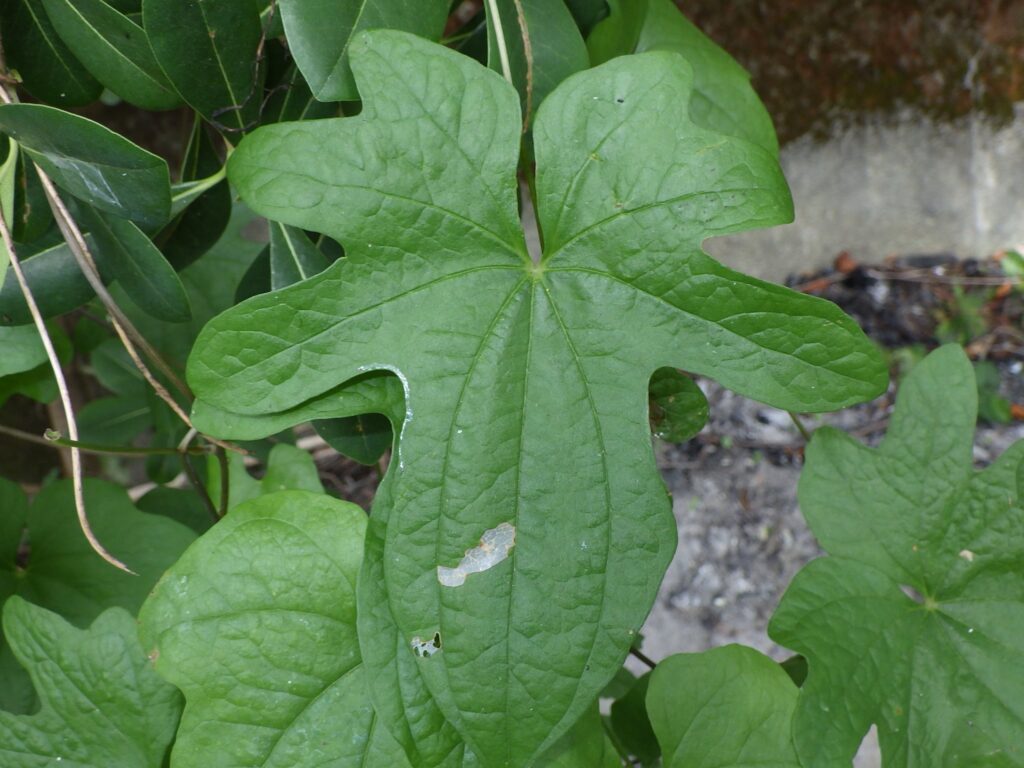
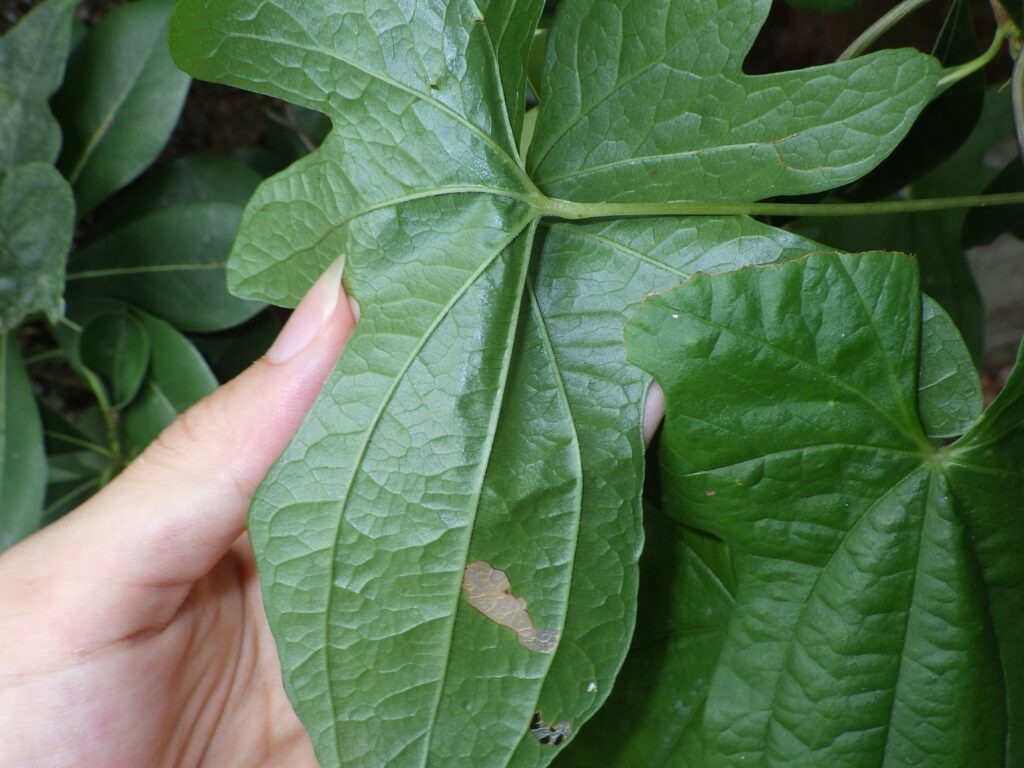
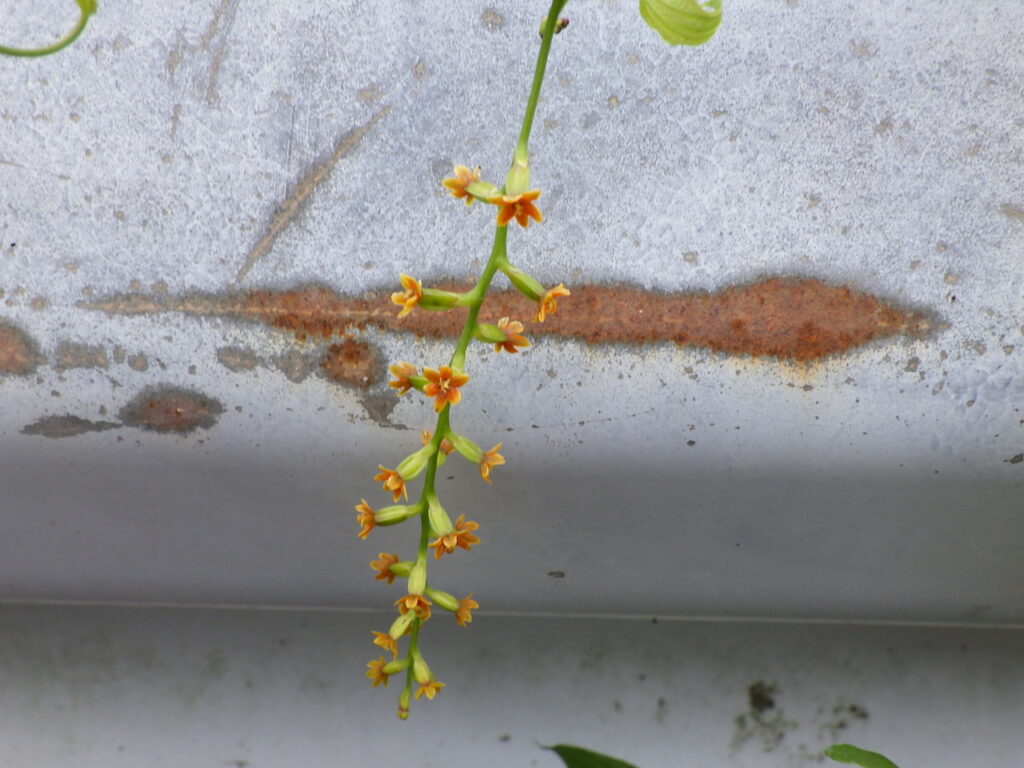
No.0291.a Dioscorea elephantipes
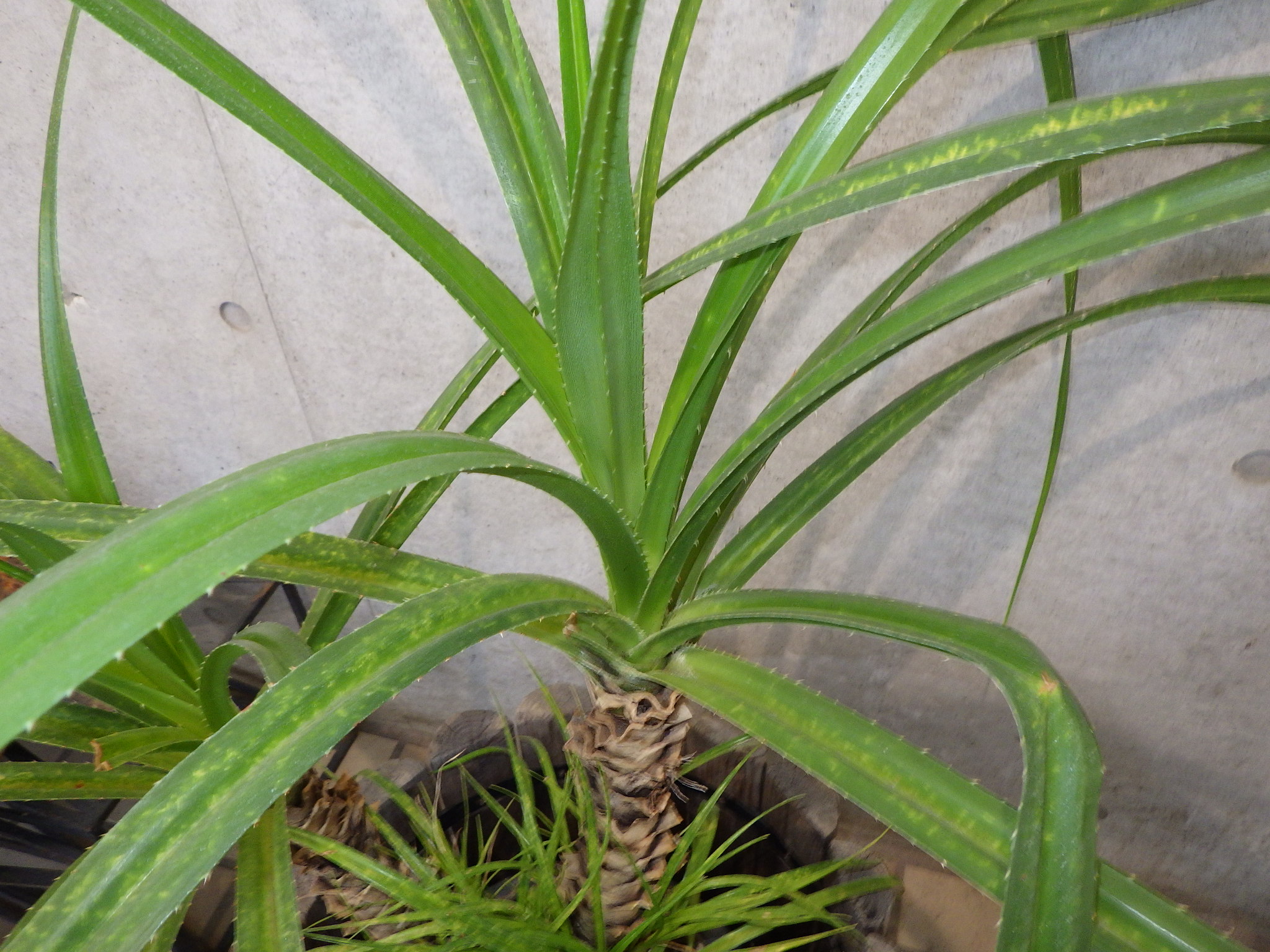
Also known as Tsurukamesou or Zou-no-ashisou, this deciduous perennial herb grows to a height of approximately 50 cm and a width of approximately 1 m, with extremely slow growth. It is a succulent plant with a woody, dome-shaped tuber. The tuber (tuberous rhizome) is 30-100 cm in diameter, and its surface has woody, angular, knob-like protrusions, giving it a tortoise-shell-like appearance. It sends up annual vine-like stems. The flowers are yellow and bloom in autumn. It is native to Namibia and South Africa (Northern Cape, Western Cape, and Eastern Cape). The tuber is rich in starch and is eaten by some African ethnic groups, as it is commonly known as Hottentot bread. It contains a very high amount of saponins, and processing to remove these toxic compounds is necessary for consumption. Obtaining this species requires considerable effort, so it is now only consumed in times of famine.
References
Kanagawa Prefecture Flora Survey Association. 2018. Kanagawa Prefecture Flora 2018 (Electronic Edition). Kanagawa Prefecture Flora Survey Association, Odawara. 1803pp. ISBN: 9784991053726
Kudo, A., Sugihara, Y., Ota, A., & Terauchi, R. 2021. Upright males and drooping females—Sexual differences in flower traits and visitor numbers in the dioecious plant *Dioscorea tokoro*. Abstracts of the Annual Meeting of the Ecological Society of Japan 68: P1-061. https://esj.ne.jp/meeting/abst/68/P1-061.html