The Ranunculaceae family consists mostly of perennial herbs, but also includes annuals and biennials, and occasionally shrubs. Leaves can be alternate or opposite, and leaf shape varies considerably. Flowers are radially or bilaterally symmetrical, and many have sepals that resemble petals. Some flowers lack petals, or if present, they are small, nectar-like structures. Stamens are numerous and free, and pistils range from numerous to single, with a superior ovary. The spiral arrangement of flower parts, numerous and irregular stamens, all free parts, and a superior ovary are all considered primitive characteristics of angiosperms. Many species produce beautiful flowers and are cultivated as ornamental plants. Many species are poisonous due to the presence of alkaloids, but a significant number are also used medicinally. There are 58 genera and approximately 3,000 species known worldwide. Many genera and species are found in the temperate regions of East Asia. Japan has 22 genera and approximately 145 species.
This article provides a comprehensive, illustrated guide to plants belonging to the Ranunculaceae family.
The basic information is based on Tsukamoto (1994) and the Kanagawa Prefectural Flora Survey Association (2018). Photographs are replaced as better ones become available. While the identifications are made by the author, please note that they may be changed without notice if misidentifications are found.
- No. 1188 Coptis quinquefolia
- No. 1189 Coptis japonica var. anemonifolia
- No. 1192 Caltha palustris var. enkoso
- No. 1193 Caltha palustris var. nipponica
- No.1193.a Lesser Celandine (Ficaria verna)
- No. 1200 Nigella damascena
- No. 1207 Anemonopsis macrophylla
- No.1208 Semiaquilegia adoxoides
- No.1209 Aquilegia flabellata var. flabellata
- No.1210 Aquilegia flabellata var. pumila
- No. 1212 European Columbine (Aquilegia vulgaris)
- No. 1212.1 Double-flowered columbine (Aquilegia vulgaris var. flore-pleno)
- No.1213.a Delphinium anthriscifolium
- No.1213.b Delphinium elatum
- No. 1215 Aconitum loczyanum
- No. 1225 Aconitum japonicum subsp. japonicum
- No.1227.a Aconitum japonicum subsp. maritimum var. maritimum
- No. 1238 Cimicifuga biternata
- No. 1240 Cimicifuga simplex
- No.1242 Larch Thalictrum alpinum var. stipitatum
- No.1244 Japanese larch Thalictrum minus var. hypoleucum
- No. 1246 Thalictrum rochebrunianum
- No. 1248.1 Thalictrum tuberiferum var. yakusimense
- No. 1257 Anemone nikoensis
- No. 1258 Anemone pseudoaltaica
- No. 1263 Anemone flaccida
- No. 1265 Anemone narcissiflora subsp. nipponica
- No. 1267 Anemone coronaria
- No. 1268 Japanese Anemone (Anemone hupehensis var. japonica)
- No.1268.a Anemone x hybrida
- No. 1269 Hepatica nobilis var. japonica f. variegata
- No. 1271 Winter Peony Helleborus niger
- No.1271.a Helleborus orientalis
- No. 1273 Ranunculus reptans
- No.1279 Ranunculus sceleratus
- No. 1282 Ranunculus japonicus (Japanese buttercup)
- No.1282.a Ranunculus yakushimensis (Japanese name: Himeuma noashigata)
- No.1287 Ranunculus silerifolius var. glaber
- No. 1288 Ranunculus cantoniensis
- No. 1295 Clematis terniflora
- No.1295.1 Clematis terniflora var. mandshurica
- No.1298 Little Crane Clematis apiifolia var. biternata
- No. 1302 Clematis japonica
- No. 1308 Clematis stans
- No. 1309 Clematis florida
- No.1310 Kazagurma Clematis patens
- No.1310.a Clematis texensis
- References
No. 1188 Coptis quinquefolia
A perennial herb. Also known as Gokayououren. The rhizome is slender and creeps horizontally, producing stolons. The basal leaves are somewhat thick, glossy, and palmately compound. The leaflets are shallowly 3-lobed with sharp serrations. The flower stalk is 4-15 cm tall and has small bracts at the top. The flowers bloom facing upwards, and the sepals are white. It is distributed in Honshu (south of Fukushima Prefecture) and Shikoku. It can be found in the beech to fir zones, growing on the forest floor and forest edges of coniferous forests.
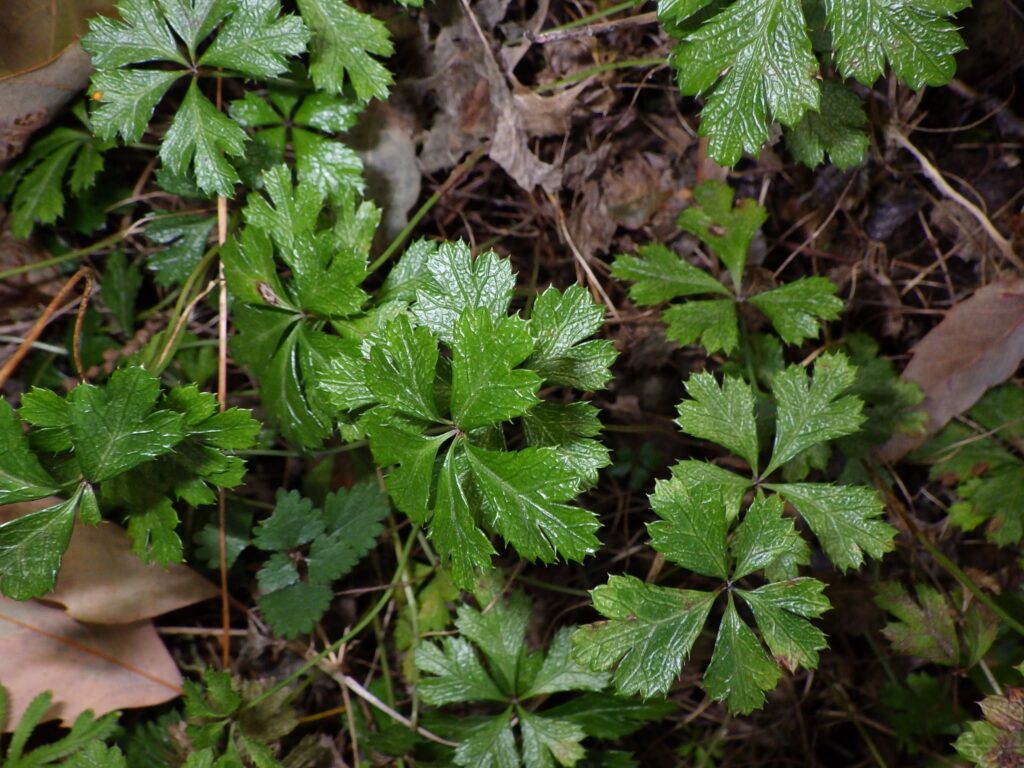
No. 1189 Coptis japonica var. anemonifolia
This is an evergreen perennial herb. The rhizome is somewhat thick, yellow inside, and produces many fibrous roots. The basal leaves are clustered, thick in texture, and once-ternately compound. The leaflets are pinnately lobed with notched serrations on the lobes. The flower stalks are 15-40 cm long, branching and usually bearing three flowers. It is distributed in Hokkaido (southern part, where escaped species are suspected) and Honshu (the Sea of Japan side from Yamagata Prefecture to Hyogo Prefecture). It can be found in the beech to fir zones, growing on the forest floor of coniferous forests, and is often cultivated for medicinal purposes.
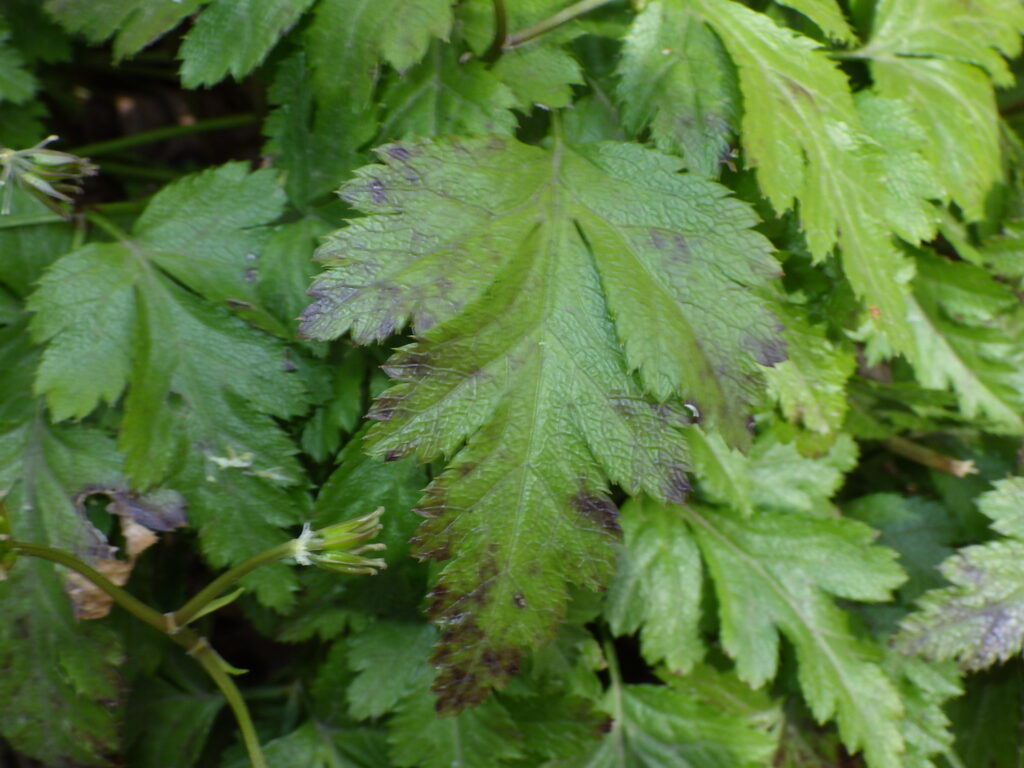
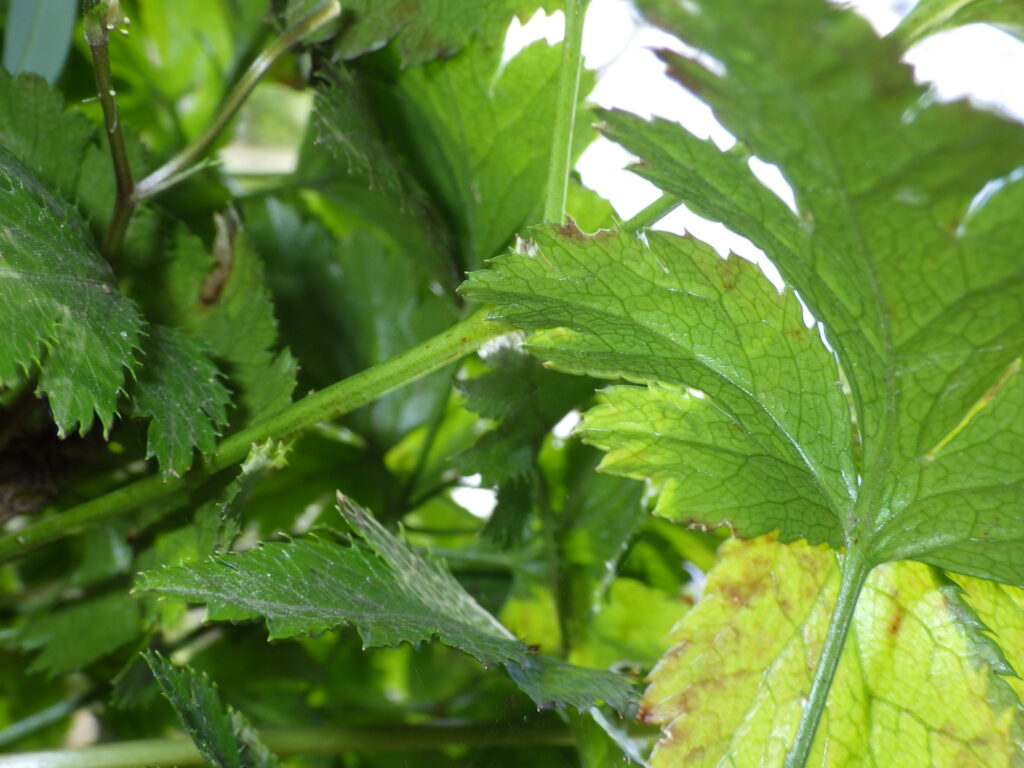
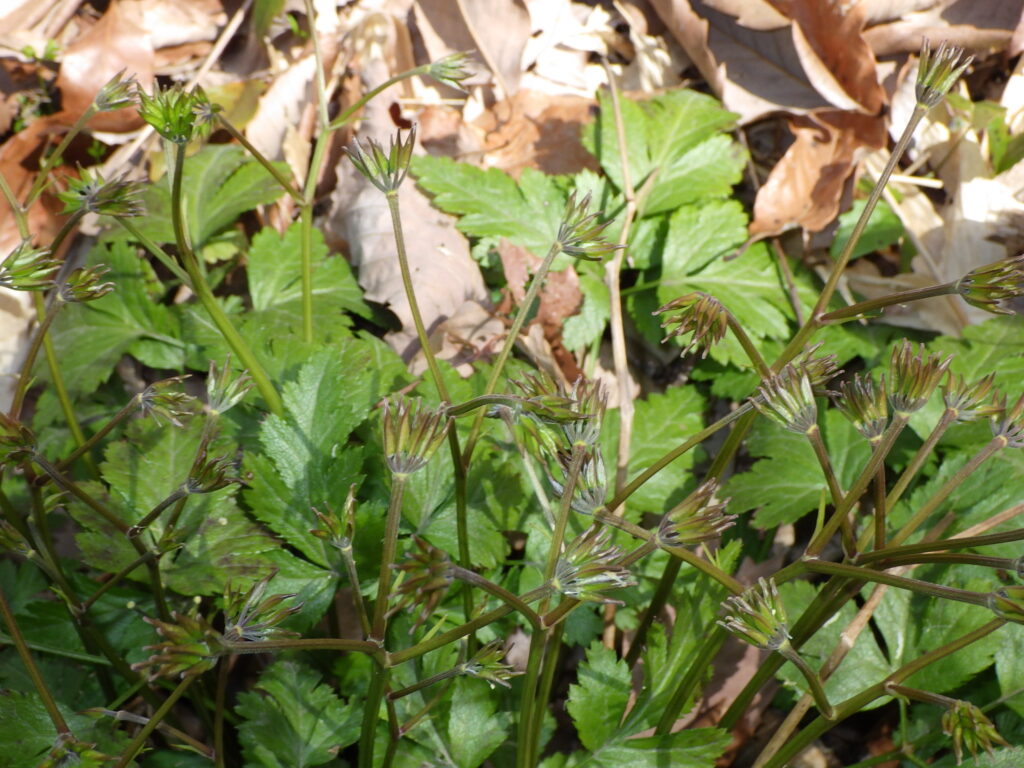
No. 1192 Caltha palustris var. enkoso
A variety of marsh marigold whose stems spread out and touch the ground, with the upper part growing diagonally upwards to bear flowers.
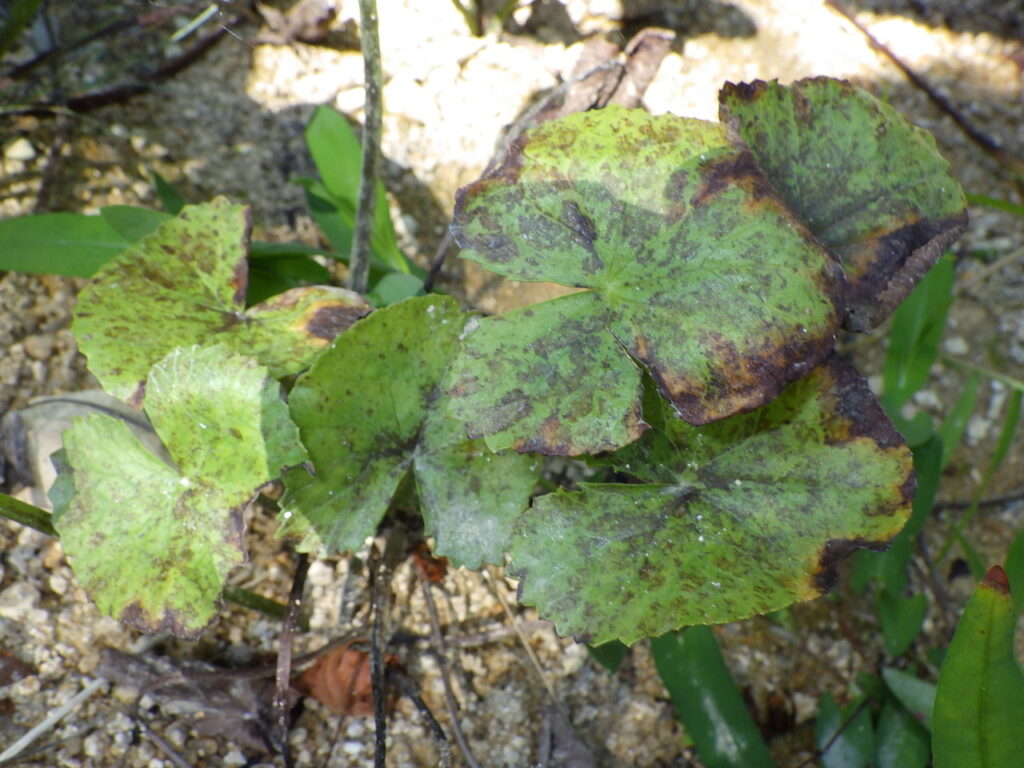
No. 1193 Caltha palustris var. nipponica
A perennial herb. The stems grow to a height of 15-50 cm. The basal leaves are 3-10 cm long and wide. The stem leaves are similar in shape but smaller. It produces yellow flowers in early summer. It is distributed in Honshu, Kyushu, and Korea. It grows in water and wetlands such as swamps and ponds. It is often confused with Lesser Celandine on the internet, but it can be distinguished by the fact that it usually has five perianth segments and does not have a spindle-shaped tuber.
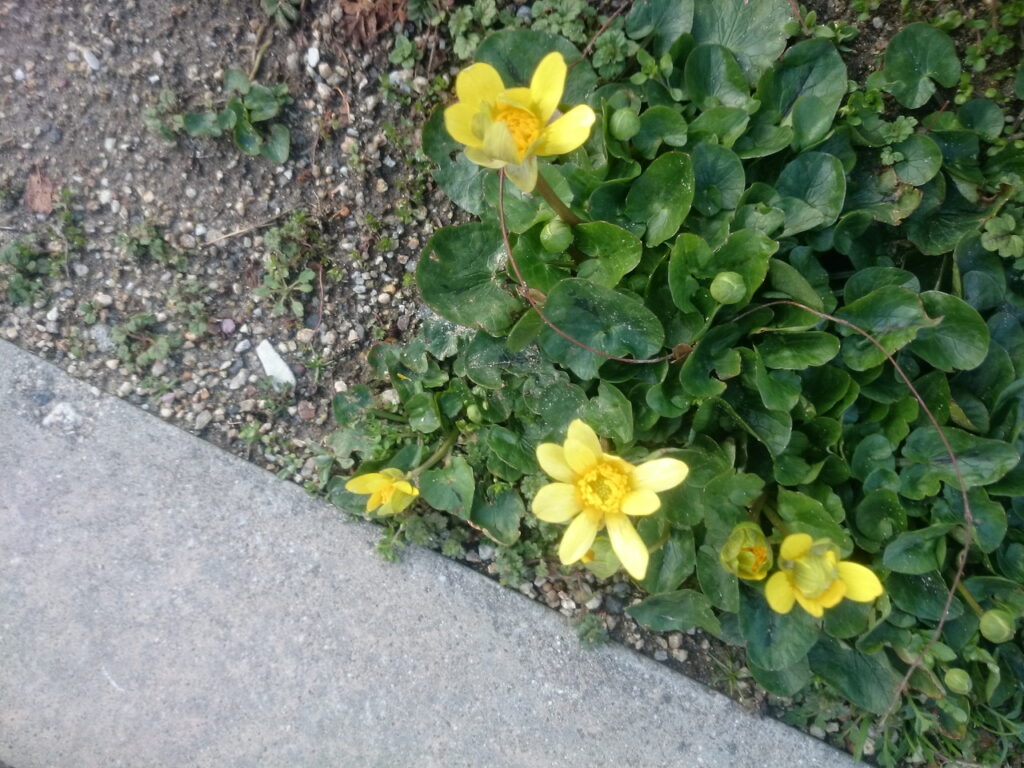
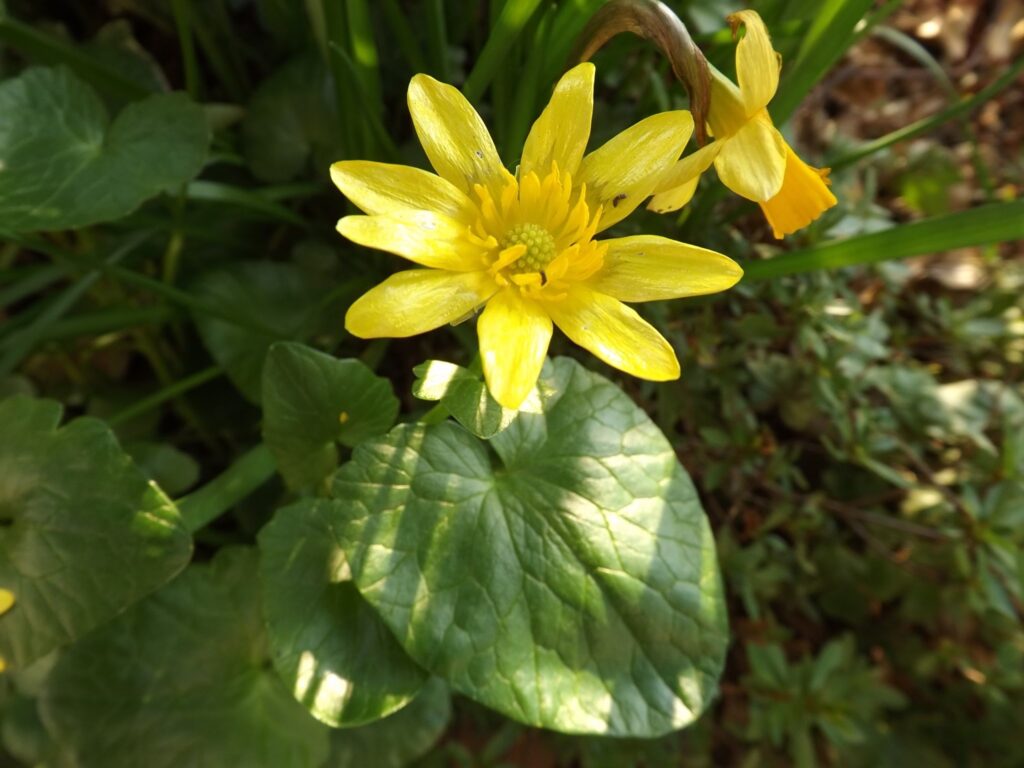
No.1193.a Lesser Celandine (Ficaria verna)
This perennial herb prefers moist locations and grows to a height of 10-20 cm. The leaves grow in a rosette at the base or branch from a low position on the stem, with petioles about 4-12 cm long, and are 3-6 cm long, oblong, with a soft, leathery texture and a cordate to spear-shaped base. The flowers are yellow, 2-5 cm in diameter, and have about 8-10 perianth segments. It has a spindle-shaped tuber underground. Native to Europe, cultivated varieties have escaped cultivation in various places such as around houses and parks. According to a recent taxonomic reassessment based on morphology (Veldkamp, 2015), it is classified into 7 subspecies based on the presence or absence of bulbils in the leaf axils, flower size, presence or absence of hairs on the surface of the achene, and shape at the time of flowering. Those without bulbils in the leaf axils are considered to be subsp. fertilis. The form that produces bulbils in the leaf axils was given the new name Caltha hiranoi by Tamura (1958) and is thought to correspond to subsp. verna or subsp. ficariiformis by Veldkamp (2015). Caltha hiranoi is a larger form, and Uemura et al. (2015) and Uemura (1993) have proposed a Japanese name for it, suggesting it corresponds to F. ficarioides or Ranunculus ficarioides. However, it is said that its flower size and other characteristics do not match those of subsp. ficarioides by Veldkamp (2015), and research on it is insufficient. The gloss of the flowers reflects ultraviolet light, and even at low temperatures, the center of the flower is several degrees warmer than the surrounding air, which promotes seed and pollen maturation and is favored by pollinators (van der Kooi et al., 2017).
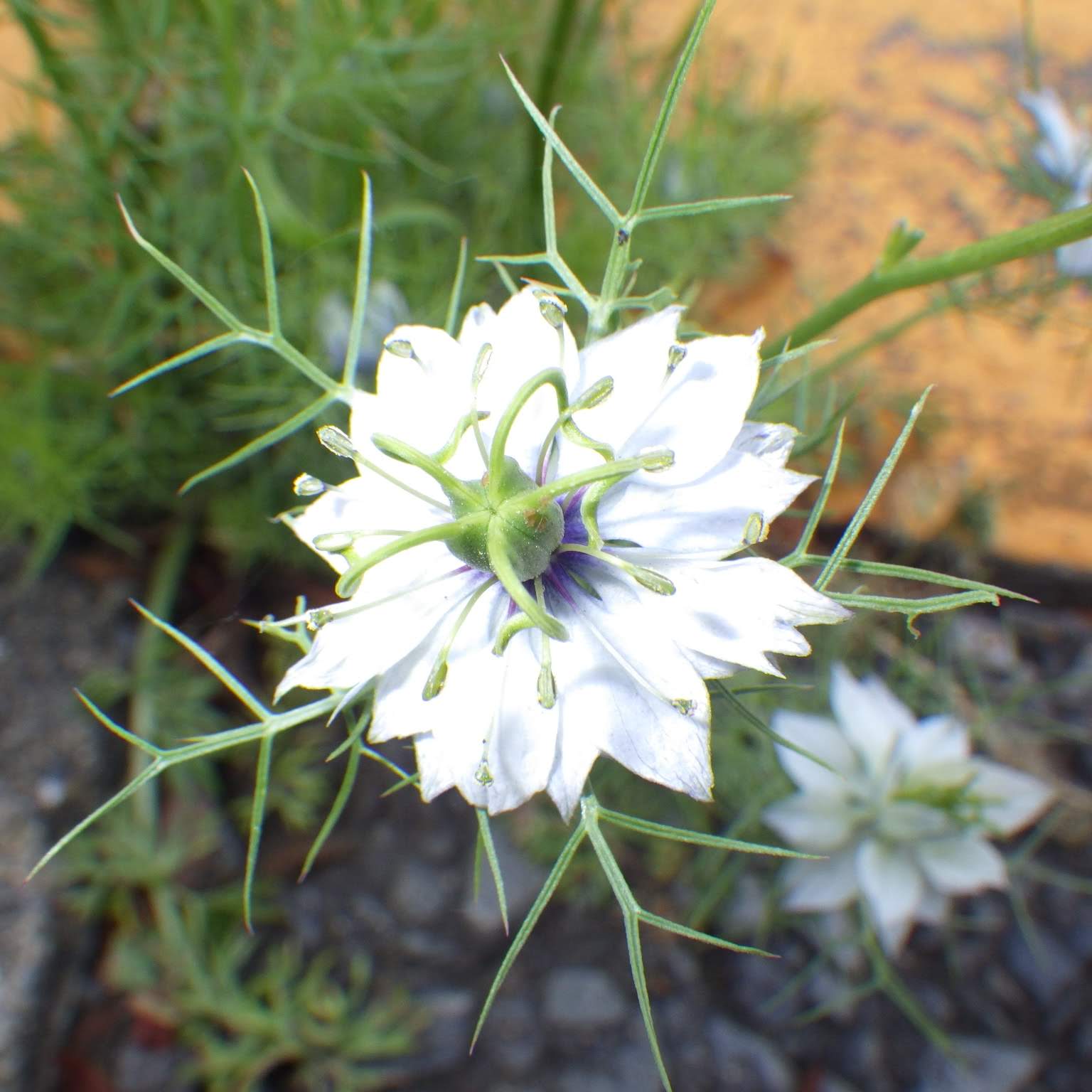
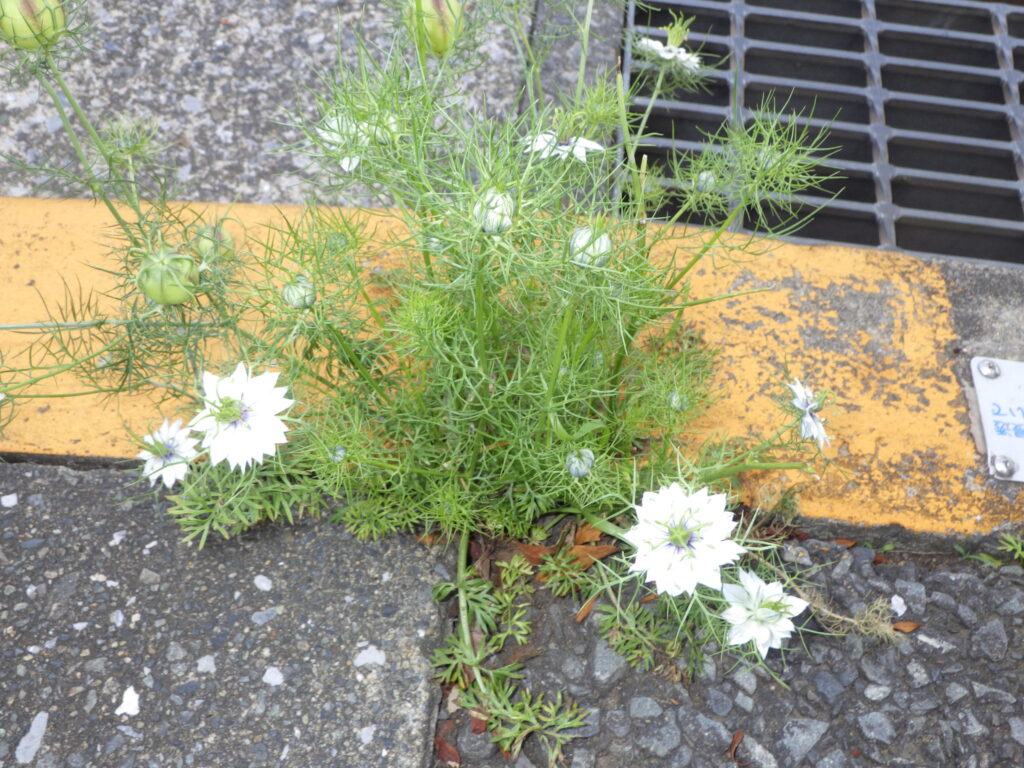
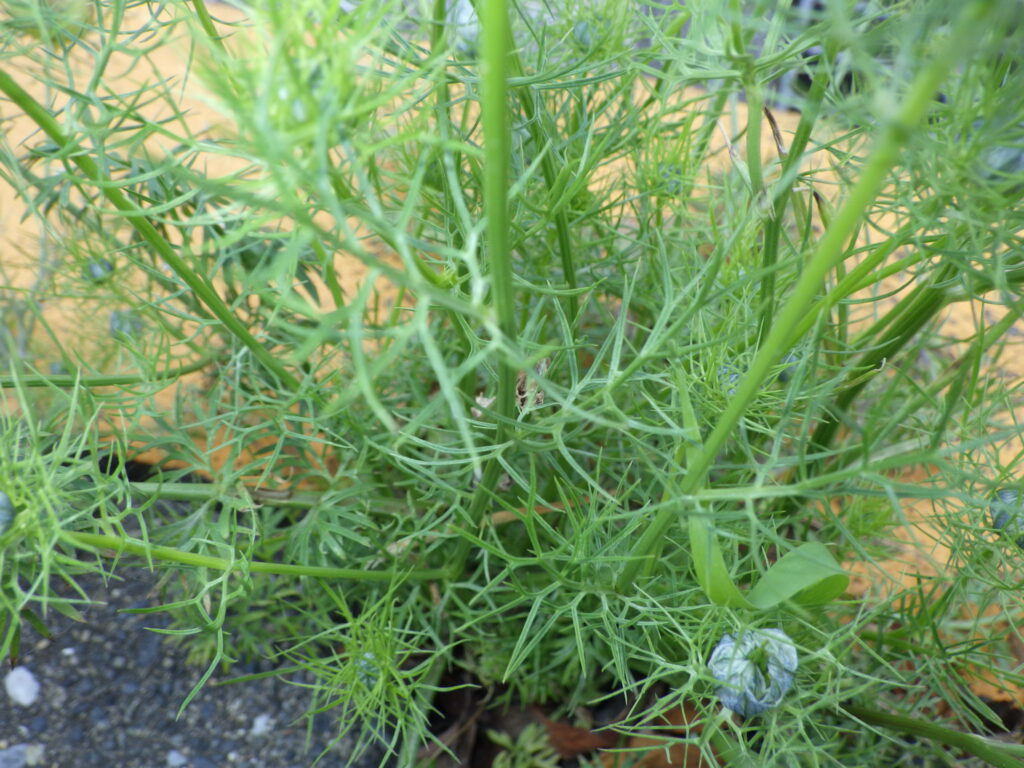
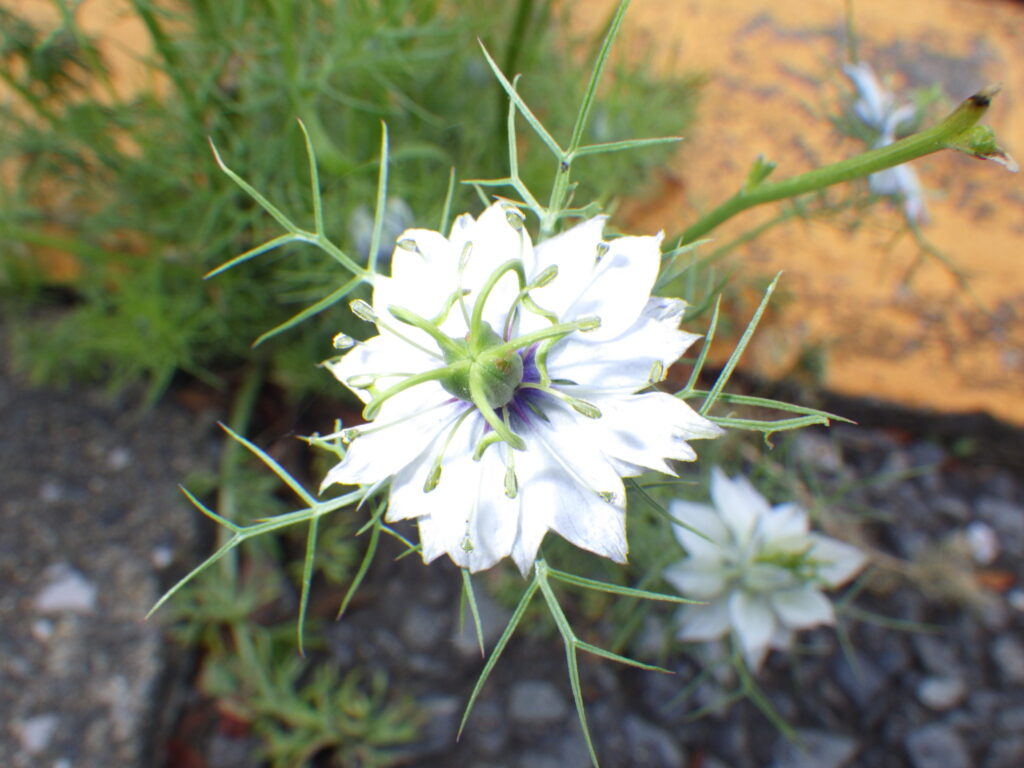
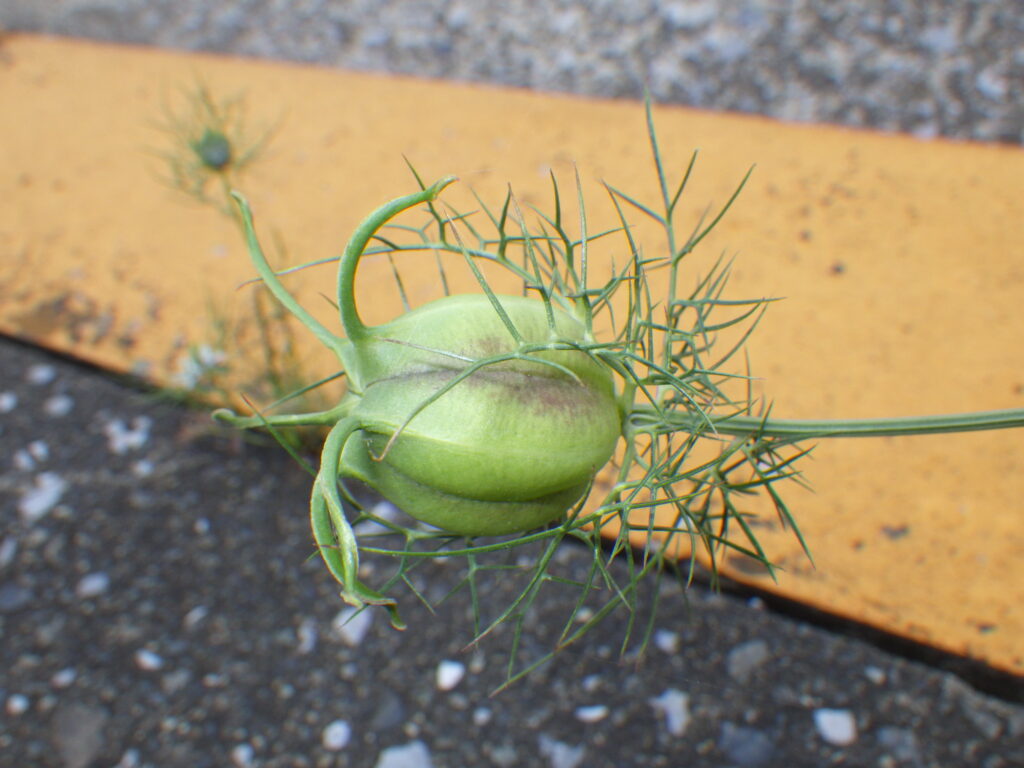
No. 1200 Nigella damascena
An annual plant (Flora of North America). Also known as Nigella. The stems are erect, slender, 10–75 cm long, and glossy. The leaves are 2–16 cm long, with petioles on the stem leaves that are wider than ± sessile leaves. Inflorescence: The involucral bracts are spiral-shaped, resembling the stem leaves, and curve to surround the flowers. The flowers are 10–50 (–60) mm in diameter. The sepals are blue, sometimes pink or white. Short, claw-shaped. 8–25 × 3–15 mm. The apex is entirely or irregularly deeply lobed, sometimes shallowly lobed. The petals are claw-shaped. The outer lip is distally 2-lobed, with 2–3 nectaries or a widened apex, and the outer lip is scaly. The capsule is smooth, 8–35 mm long. It has 5–10 locules. The beak is elongated. Flowering occurs from late spring to early autumn. Native to the Eurasian continent, it is commonly cultivated for ornamental purposes and for dried flower arrangements. Occasionally, it escapes cultivation and establishes itself.
No. 1207 Anemonopsis macrophylla
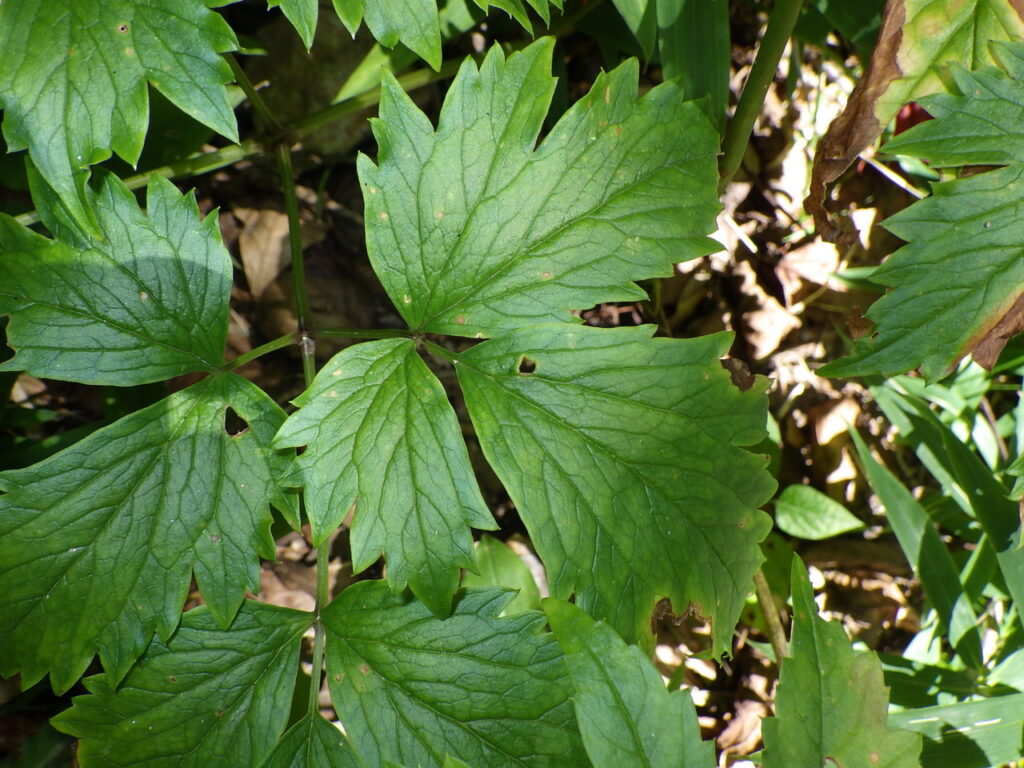
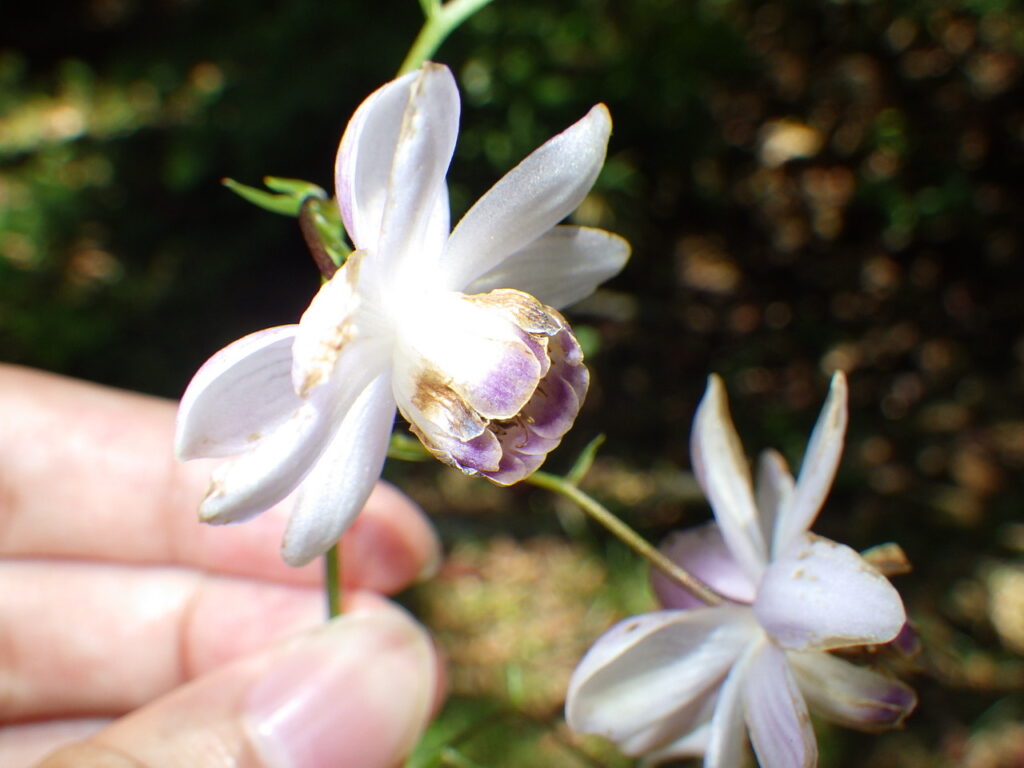
This is a perennial herb. The stems grow to a height of 40-80 cm. The basal leaves and lower stem leaves are large and compound leaves with three leaflets 2-4 times. The leaves resemble those of Cimicifuga simplex and Cimicifuga japonica, but both the upper and lower surfaces of the leaves are hairless and the serrations are coarser. The flowers are 3-3.5 cm in diameter. The sepals are oblong with rounded tips and 1.5-2 cm long. The petals are erect and do not spread, and the tips are darker in color. The flowers are pale purple and elegant. It is mainly distributed on the Pacific side of Honshu (from Fukushima Prefecture to Nara Prefecture). It grows on the forest floor of beech forests.
No.1208 Semiaquilegia adoxoides
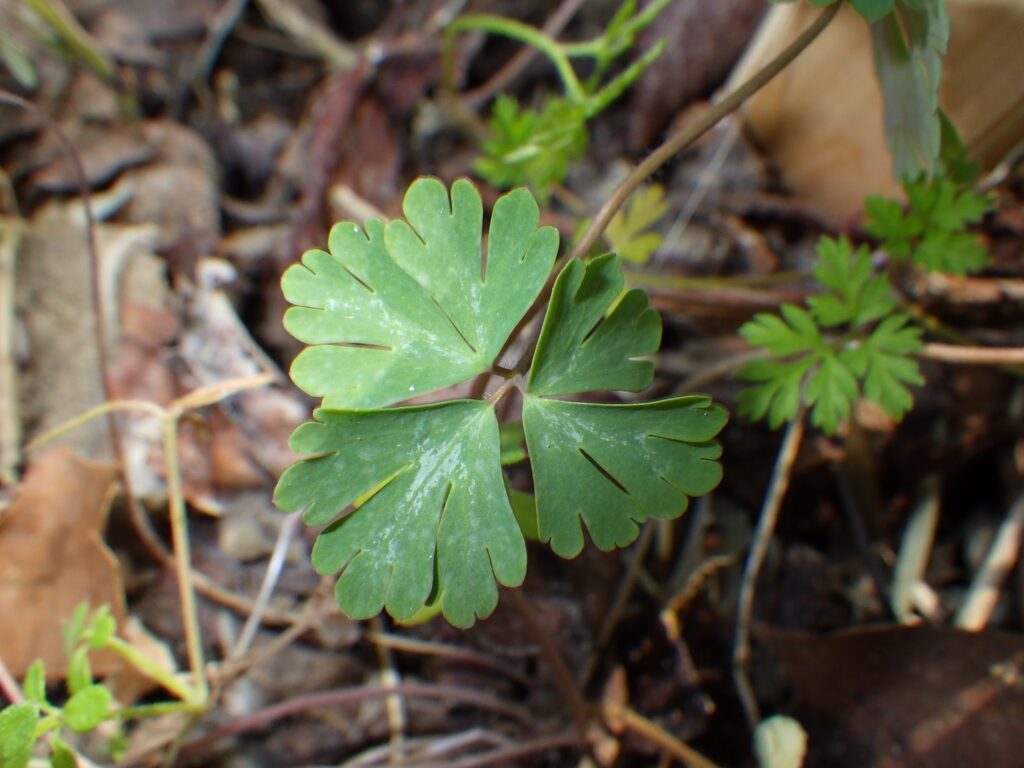
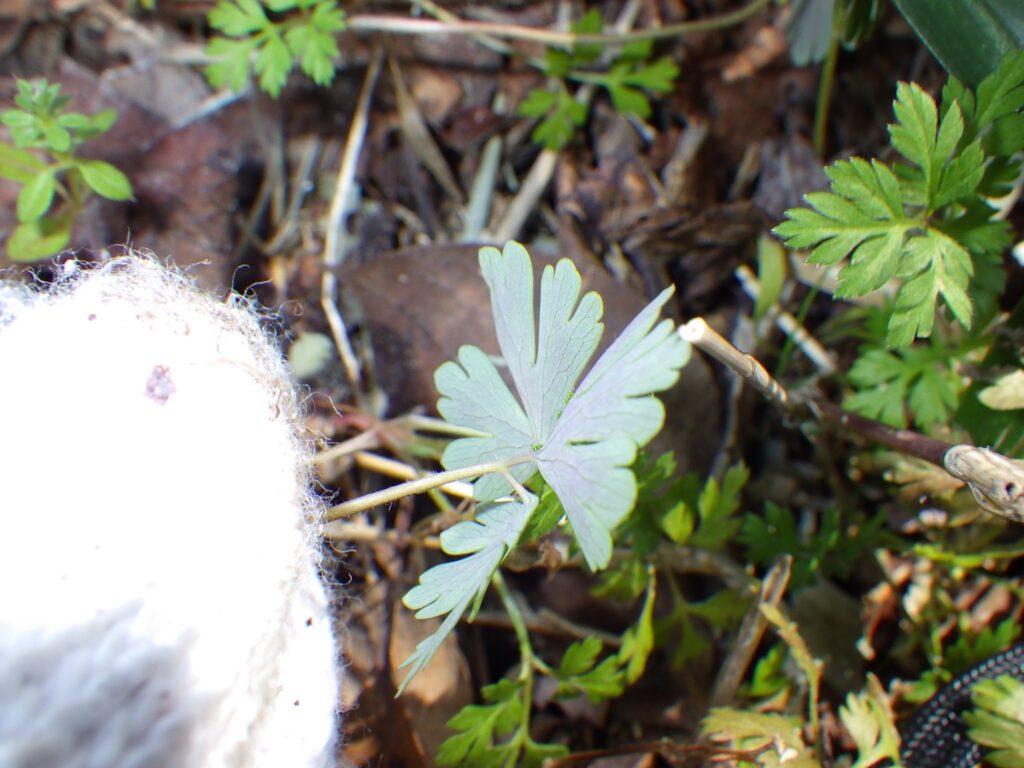
A perennial herb. It is a delicate herbaceous plant with a tuberous rhizome. The stem grows to a height of 20-40 cm. The flower stalk is slightly branched. The leaves are trifoliate compound leaves. The flowers are white to pale pink, about 5 mm in diameter, and drooping. The sepals are 5-6 mm long. The petals are 2.5-3 mm long with a short spur at the base. It is distributed in Honshu (west of the Kanto region), Shikoku, Kyushu, Korea, and China. It grows in shallow hills and on the banks of fields.
No.1209 Aquilegia flabellata var. flabellata
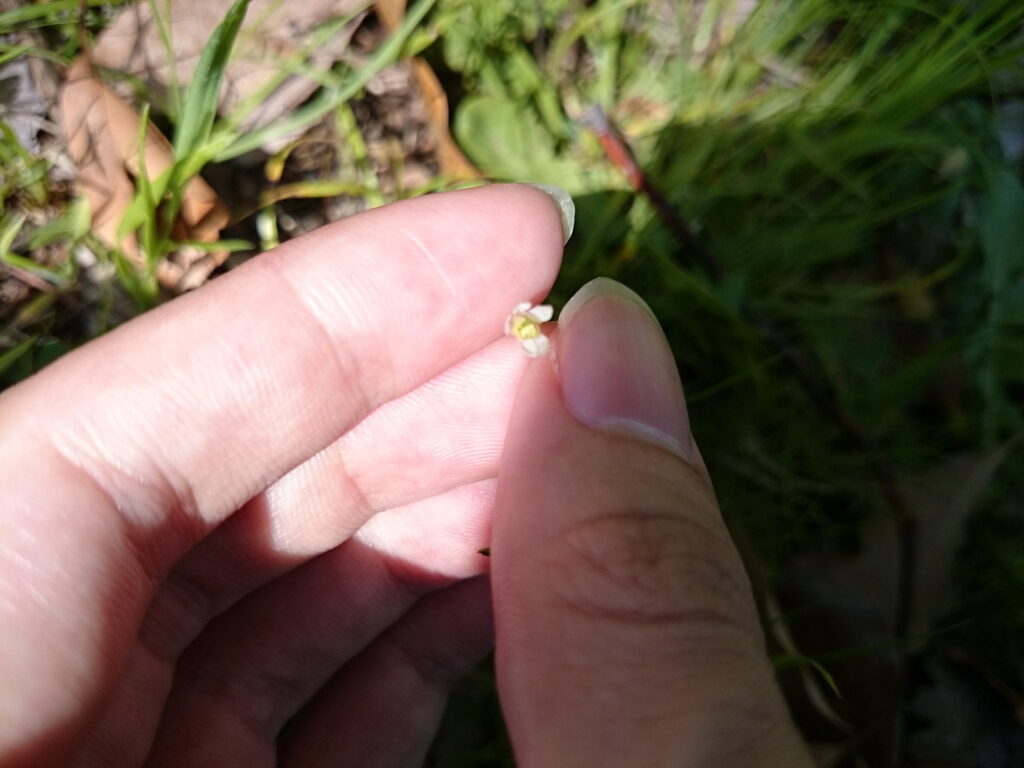
This is a perennial plant. The Japanese name "Odama-ki" comes from the fact that the shape of the flower resembles an odamaki (a ball of hemp yarn wound so that it is hollow inside). It is almost hairless. It is generally larger than the Miyama Odama-ki, reaching a height of 30-50 cm, with a sturdier flower stalk, larger flowers, and more flowers. The leaves are also thicker and have a more powdery white appearance. The basal leaves are twice-ternate compound leaves. It blooms around May, and in addition to purple flowers, there are also white varieties. The ovary and follicle are hairless. Propagation is easy by seed; if sown in spring and transplanted in autumn, it will flower the following year. If sown in autumn, it will flower the year after next. It has been cultivated in Japan since ancient times. It is thought to be a cultivated variety of the Miyama Odama-ki that grows wild in Japan.
No.1210 Aquilegia flabellata var. pumila
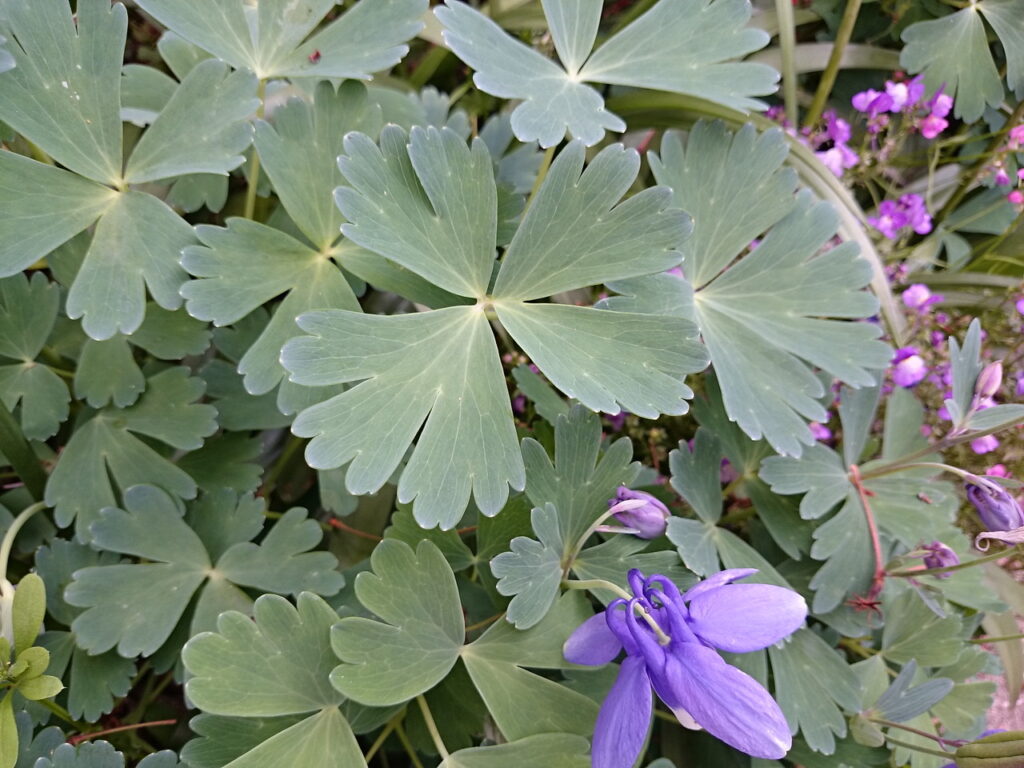
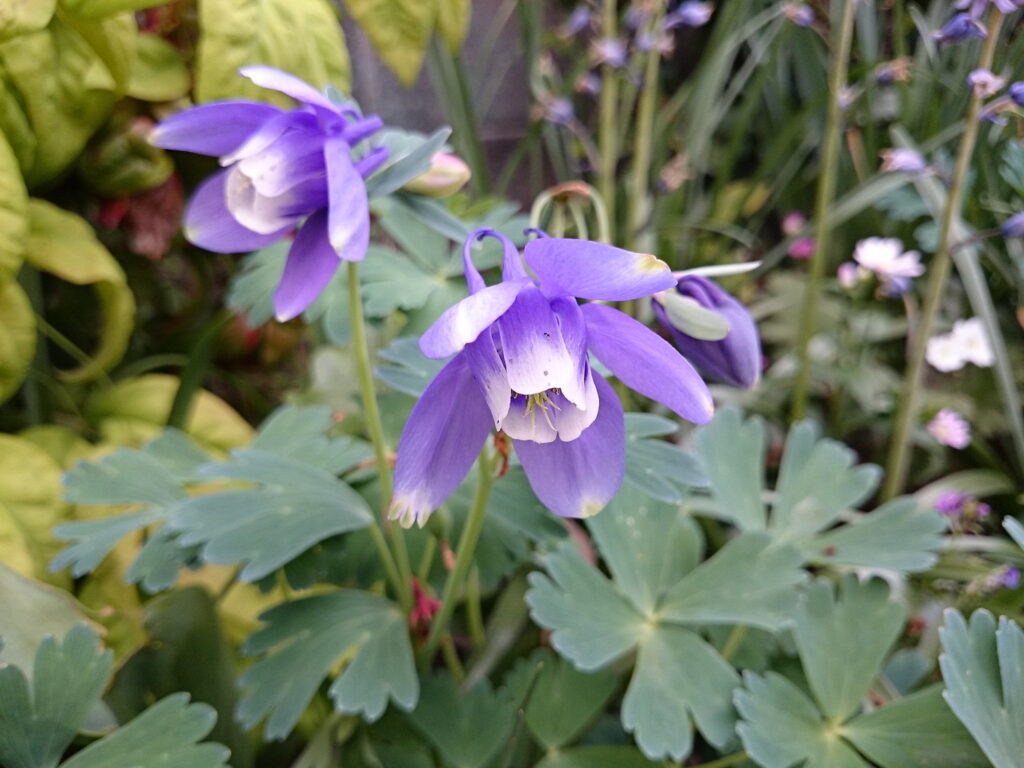
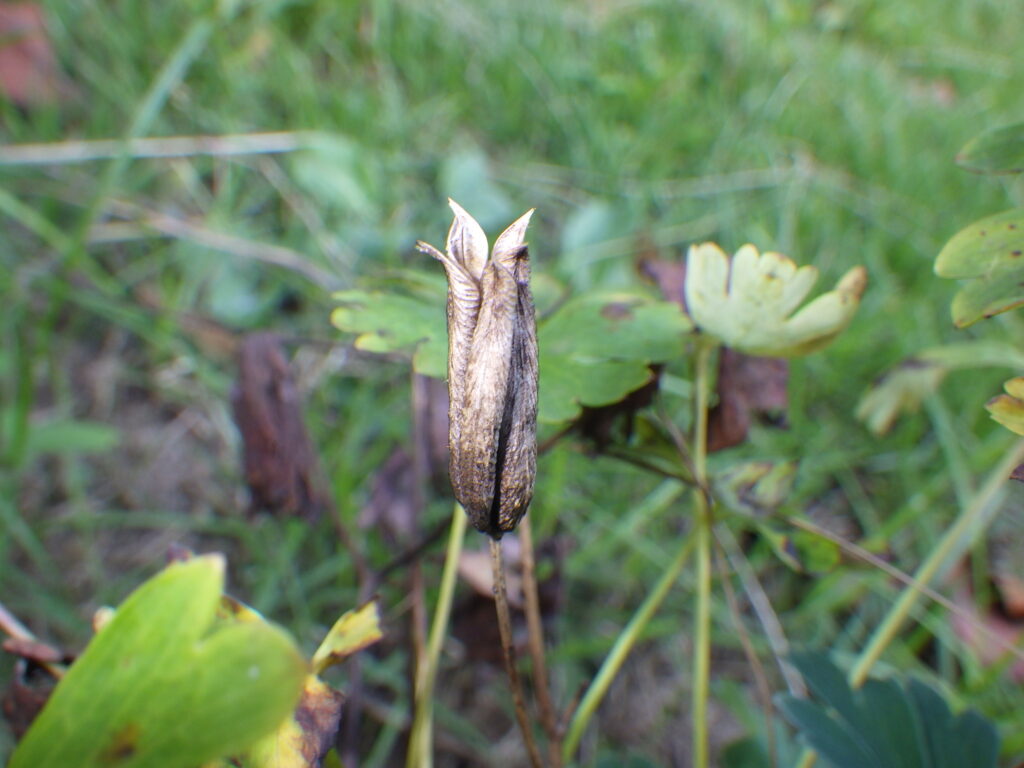
This is a perennial herb (a Japanese alpine plant). Its roots are thick and grow straight downwards. Several leaves emerge from the base of the stem. Each leaf is twice-ternately compound, with the first petiole being clearly visible, but the second being very short, and the leaflets clustered together. The leaflets are fan-shaped, thin, pale green, and have a powdery surface. The stem grows to a height of 10-25 cm, and flowers bloom from June to August, with several flowers drooping at the tip. The flowers are bluish-purple, with broadly ovate sepals that open in an umbrella shape, and petals that are clustered in a cylindrical shape, with slightly whitish tips. A spur extends from the base through the gaps between the sepals. The fruit is a follicle, resembling a bundle of five pointed tubes that point upwards. This alpine plant is distributed from Hokkaido to the Chubu region and further north, from the Southern Kuril Islands to northern Korea and Sakhalin. It is listed as an endangered species (Critically Endangered I) on the Red List in Akita, Miyagi, Gunma, and Ishikawa prefectures, and as Endangered II in Iwate prefecture.
No. 1212 European Columbine (Aquilegia vulgaris)
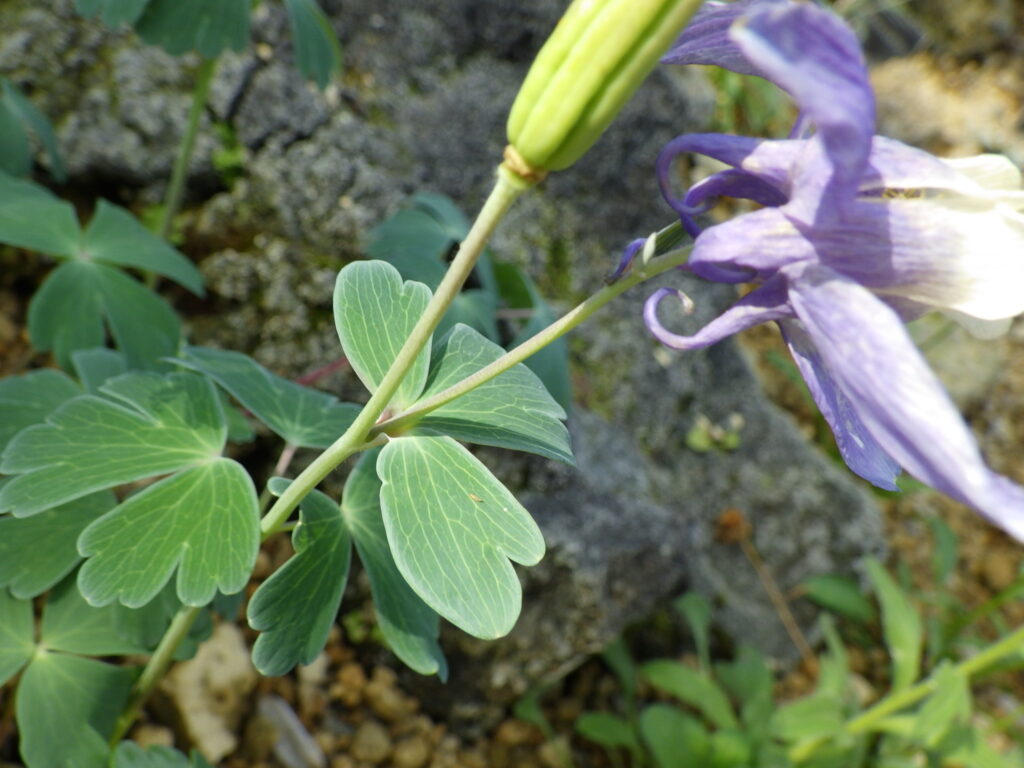
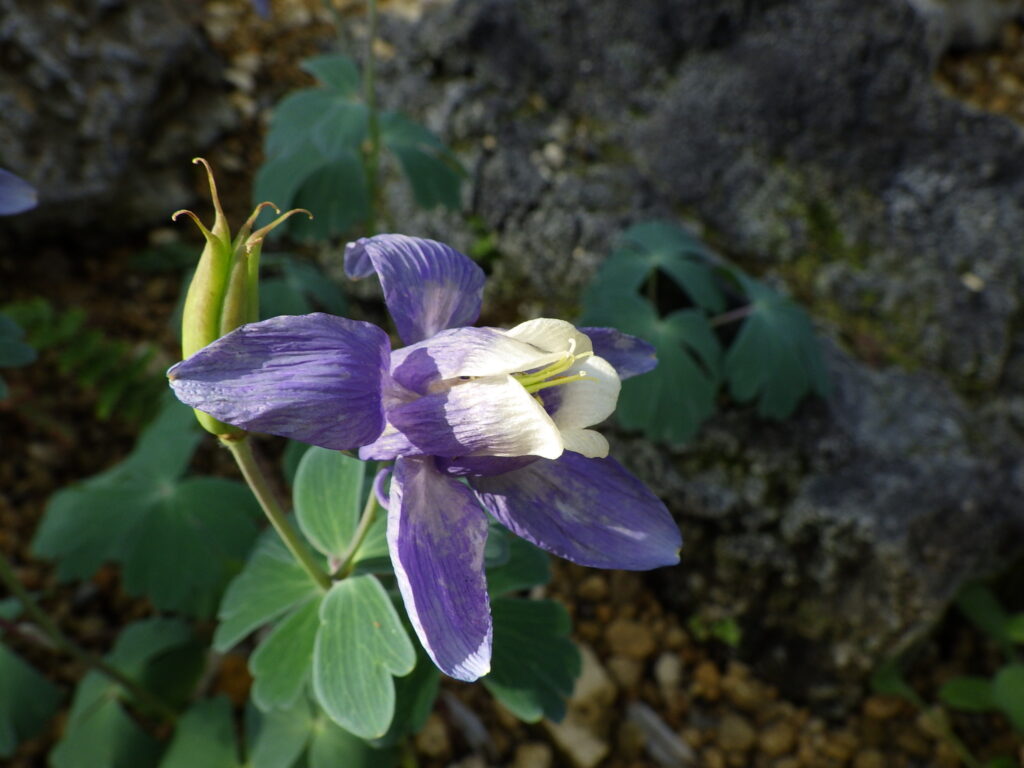
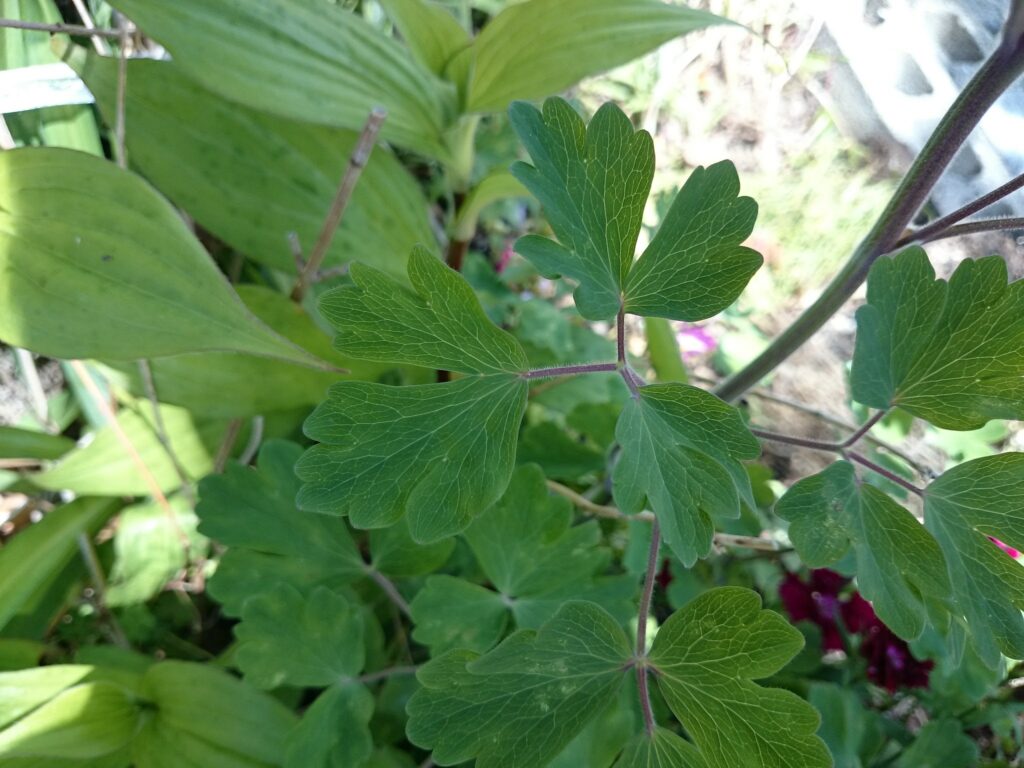
Perennial herb (Flora of North America). Stems reach a height of 30–72 cm. Basal leaves are bipinnately compound, 10–30 cm long, considerably shorter than the stem. Leaflets are green on the upper surface, 15–47 mm long or less, non-sticky, with primary petioles 22–60 mm long (leaflets are not densely clustered), glabrous or rarely pubescent. Flowering occurs from spring to summer (May–July). Flowers are downward-facing, sepals are scattered from the rachis or erect perpendicular to the rachis, mostly blue or purple, lanceolate-ovate, (10–)15–25 mm long × 8–12 mm wide, with a broadly acute to obtuse apex. Petals have a spur that is mostly blue or purple, hook-shaped, 14–22 mm long, sturdy, evenly tapering from the base, and the expanded part is mostly blue or purple, oblong, 10–13 mm long × 6–10 mm wide. The stamens are 9-13 mm long. The follicles are 15-25 mm long, and the beaks are 7-15 mm long. Native to Europe and North Africa, it grows in disturbed areas. It is cultivated as an ornamental plant in various countries, including Japan.
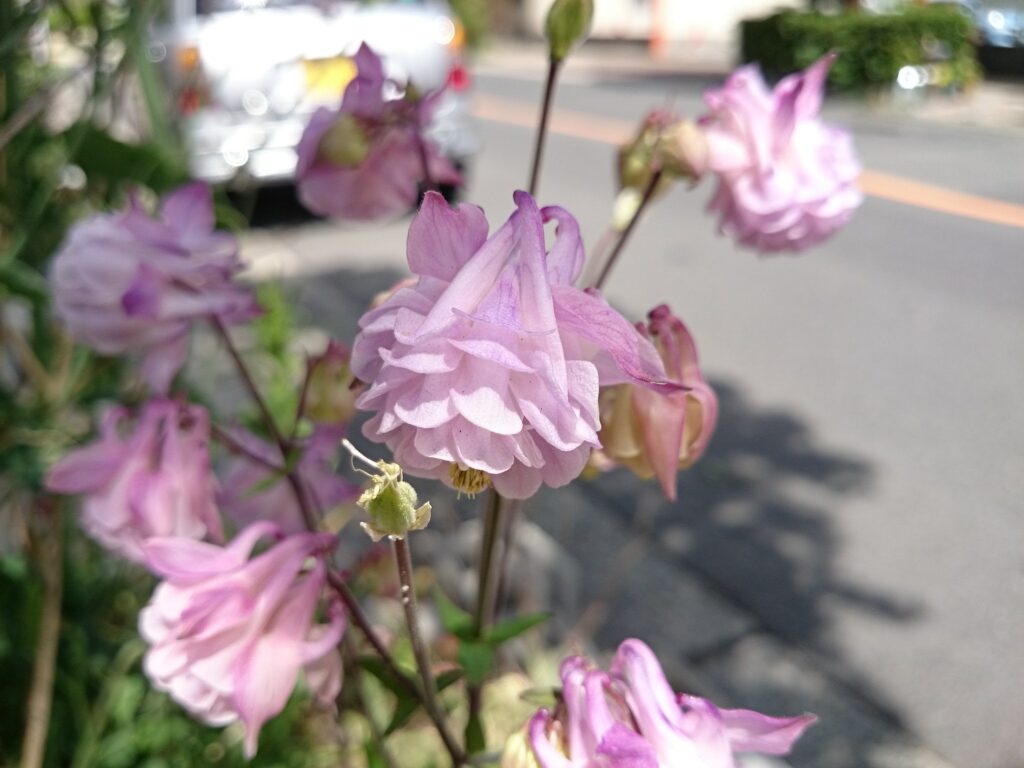
No. 1212.1 Double-flowered columbine (Aquilegia vulgaris var. flore-pleno)
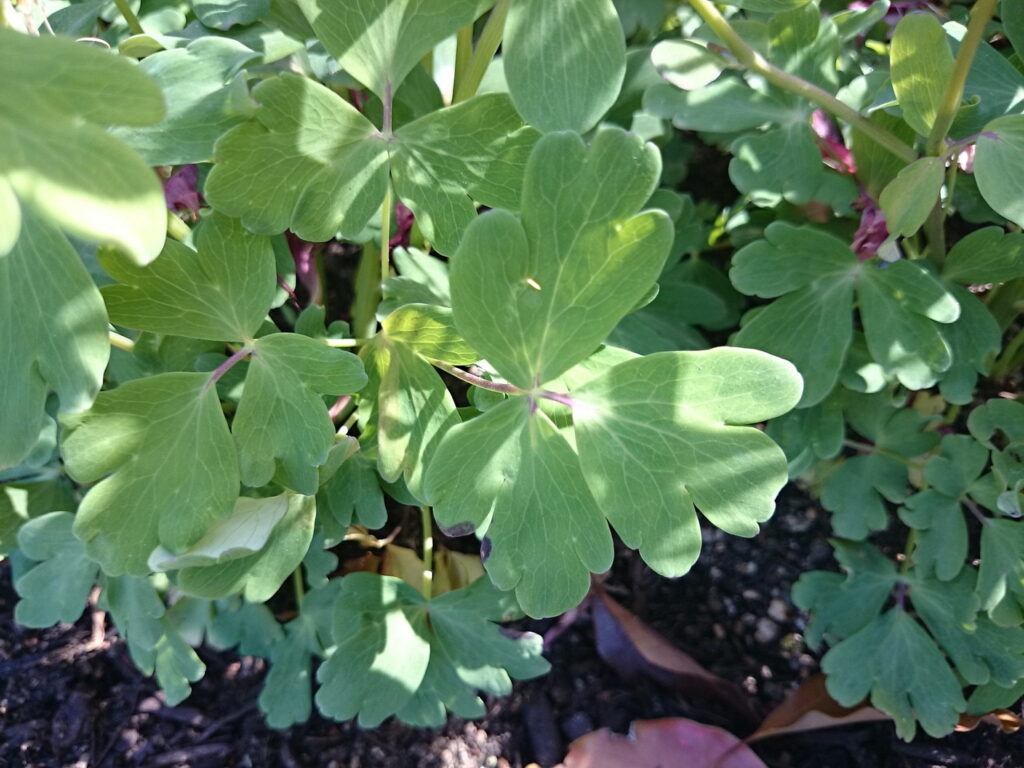
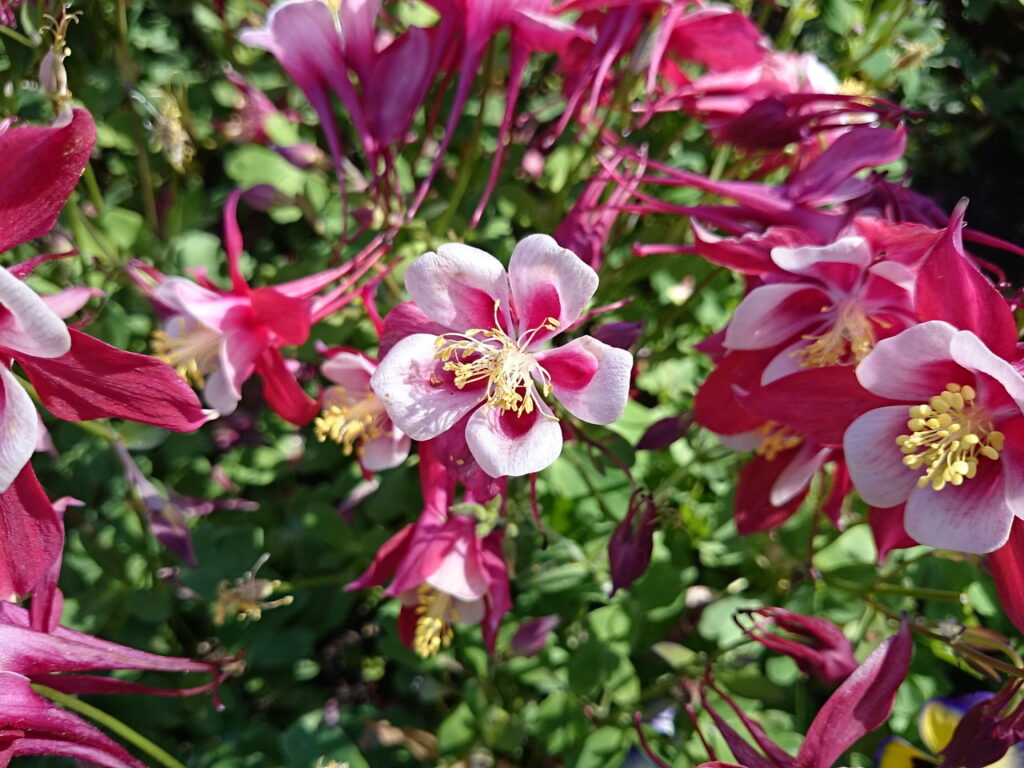
A double-flowered variety of European columbine.
No.1213.a Delphinium anthriscifolium
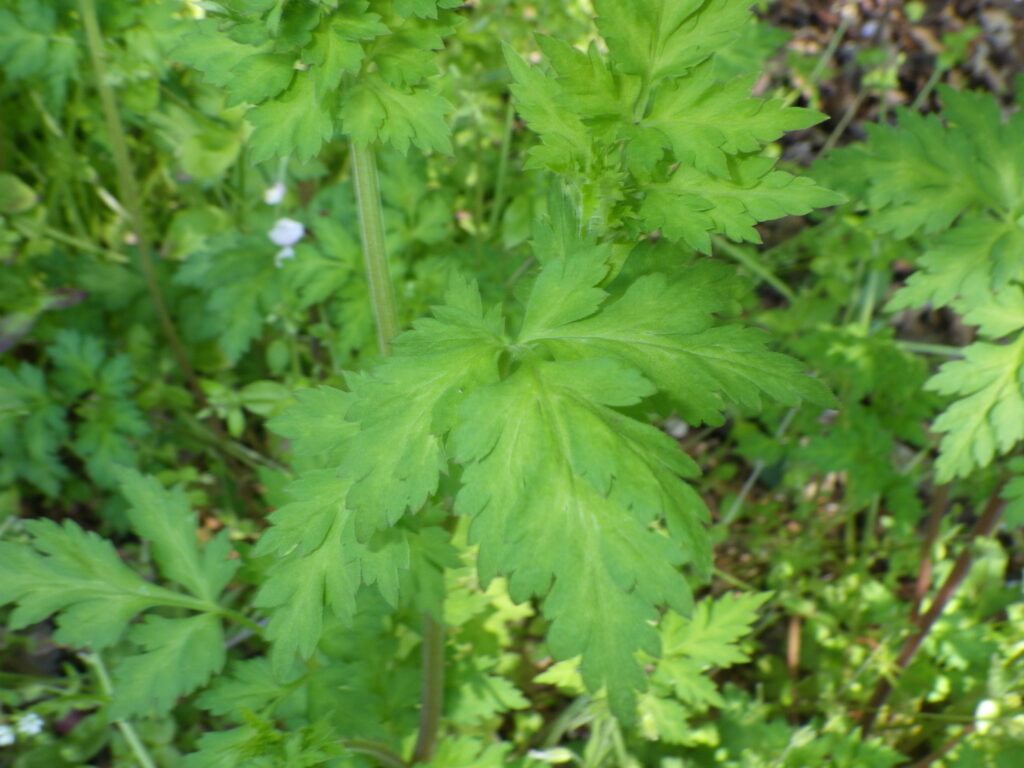
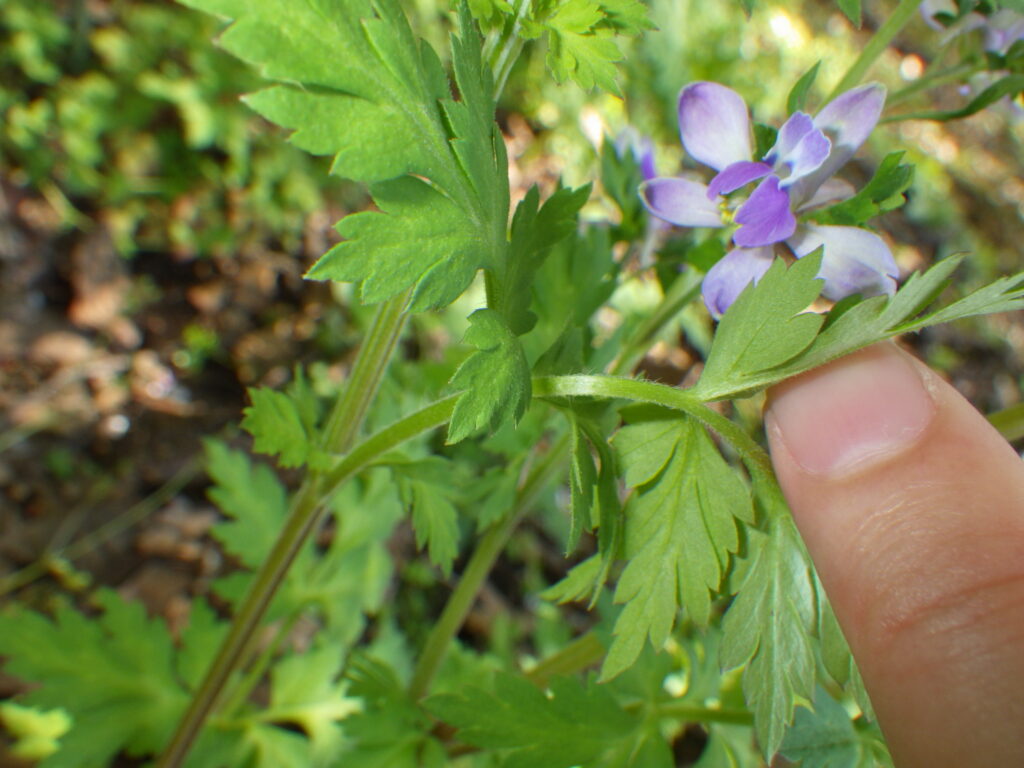
An annual plant. The stems grow to a height of 15-40 cm. The leaves are alternate and have long petioles. The leaf blades are triangular-ovate, deeply divided into three lobes, each further pinnately lobed. The flowers have long petioles and five sepals. The petals are pale purple. The three dorsal petals are fused together to form a tubular spur. Native to China, it was introduced to Japan during the Meiji era and is commonly found around Tokyo.
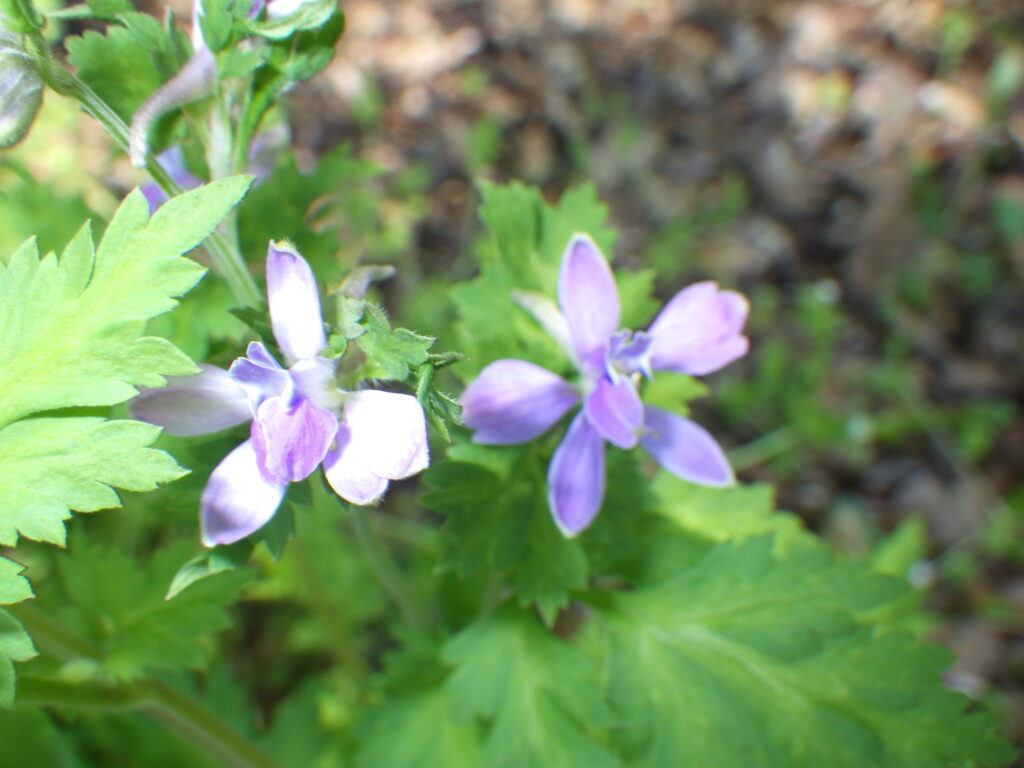
No.1213.b Delphinium elatum
"Elatum larkspur" is a pseudonym used by the author. It is a perennial plant, but in warmer climates it is cultivated as an annual. It grows to a height of 40-200 cm. The stems are covered with soft hairs or are hairless and green. They are unbranched and grow upright. The stem leaves are opposite, with 7-26 leaves when in flower. The petioles are 1-18 cm long, and the leaf blades are 3-15 cm long and 6-22 cm wide, covered with short soft hairs, pentagonal in shape, and 3-9 lobed at the tip, with lobes 8-30 mm wide. A spike-like inflorescence 25-100 cm long emerges from the top of the stem. The flowers are 3-6 cm in diameter, with conspicuous colored petal-like sepals. Cultivated varieties have flowers in blue, sky blue, light blue, purple, purplish-red, red, pink, and white, as well as yellow varieties. Flower shapes range from single to semi-double and double. The flowering period is from May to August. The fruit is a three-lobed follicle, 13-20 mm long. It is native to mountainous regions at altitudes of 1300-2300 m in Europe (from the Pyrenees to the Alps), Siberia, Central Asia, and southwestern China. It is cultivated for ornamental purposes, and many horticultural varieties have been created through crossbreeding with other species.
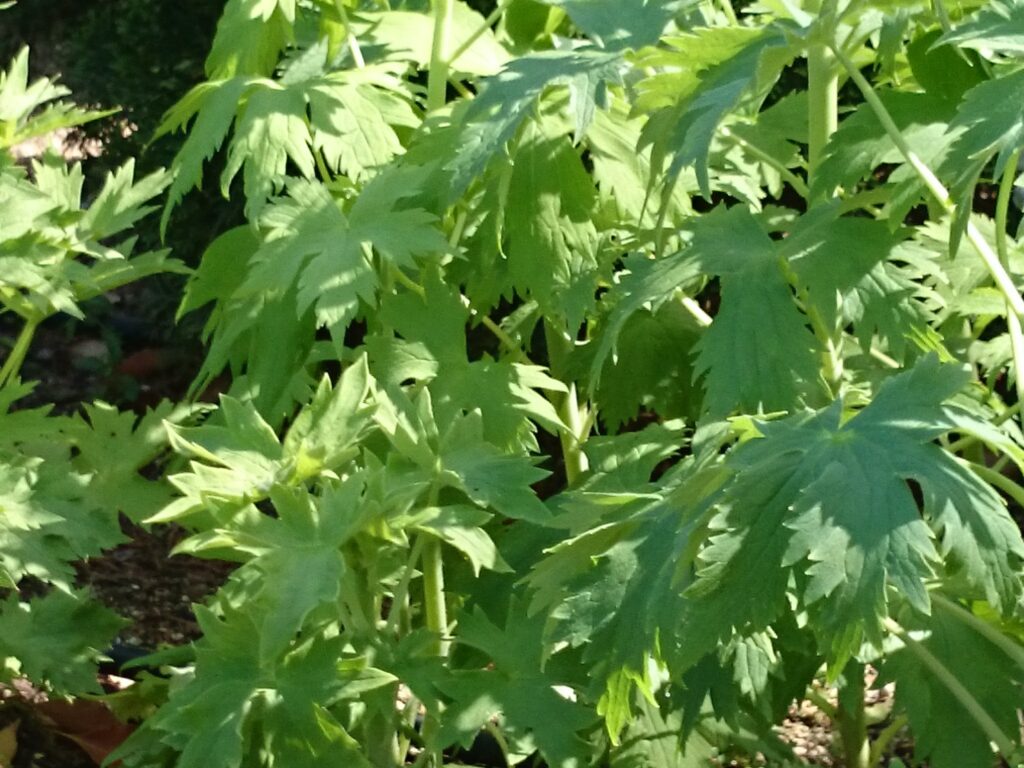
No. 1215 Aconitum loczyanum
This is a perennial herb (a wild plant of Japan). Its Japanese name, Reijin-sou, comes from the fact that the shape of its flowers resembles the crown worn by Reijin (musicians of Gagaku). It grows to a height of 40-80 cm, and the upper part is densely covered with short hairs. The basal leaves have long petioles and are palmately divided into 5-7 lobes. The stem leaves are small. The flowers bloom from August to October at the tips of the stems and in the leaf axils, and are pale reddish-purple, about 2.5 cm long, with spreading hairs on the outside. The pedicels are 1-1.5 cm long and densely covered with spreading hairs. It is distributed in Honshu west of the Kinki region, as well as in Shikoku and Kyushu. It grows in bright forests and mountain grasslands.
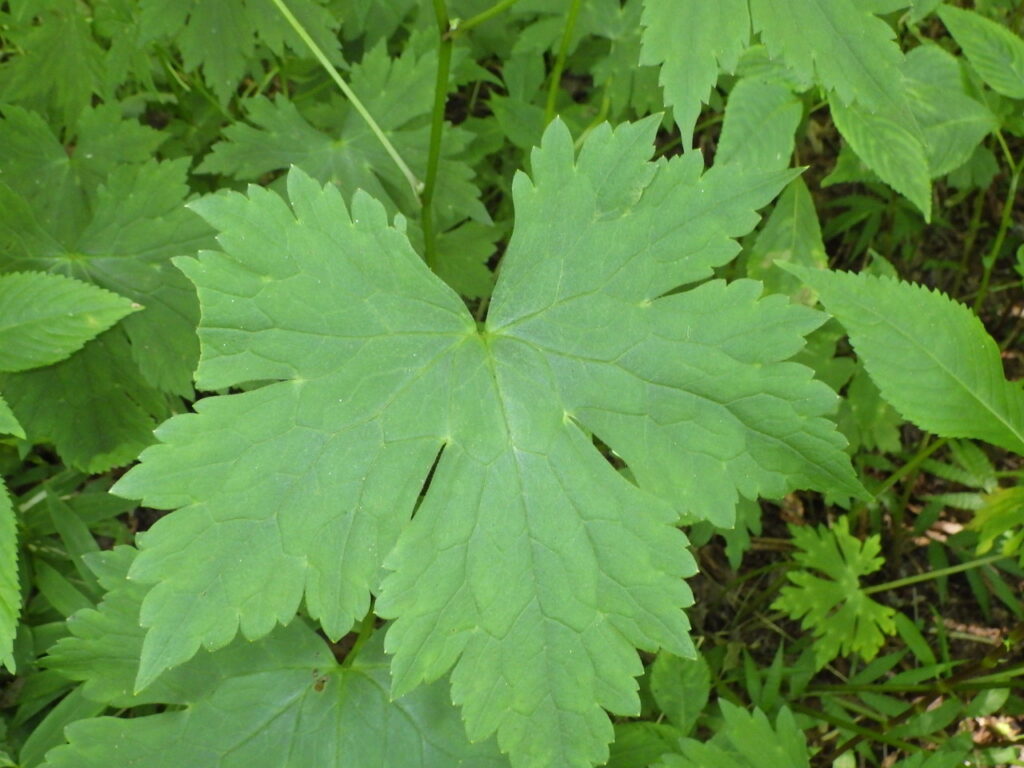
No. 1225 Aconitum japonicum subsp. japonicum
A pseudo-annual herb. The stem is erect or ascending. The leaf blade has a rounded to pentagonal outline, is 3-lobed to 3-deeply lobed, and exhibits a wide variation in the depth of the lobes, from shallow to deep. The range of variation in leaf shape is wide. The entire surface of the pedicel is covered with rough, bent hairs. The corolla is cap-shaped to conical, often with the apex bent forward and a long beak. The pistil is glabrous. Rarely, rough, bent or rough, ascending hairs are sparsely present on the abaxial side. The stamens are usually densely covered with rough, spreading hairs but are sometimes glabrous. Distributed in Honshu (Kanto to Tokai regions). Aconitum hakonense var. hakonense grows in the grasslands of Hakone, is small overall, has an erect stem, deeply lobed leaves, a corymbose inflorescence, and densely packed flowers, and is considered an erect form of Aconitum japonicum that grows in grasslands.
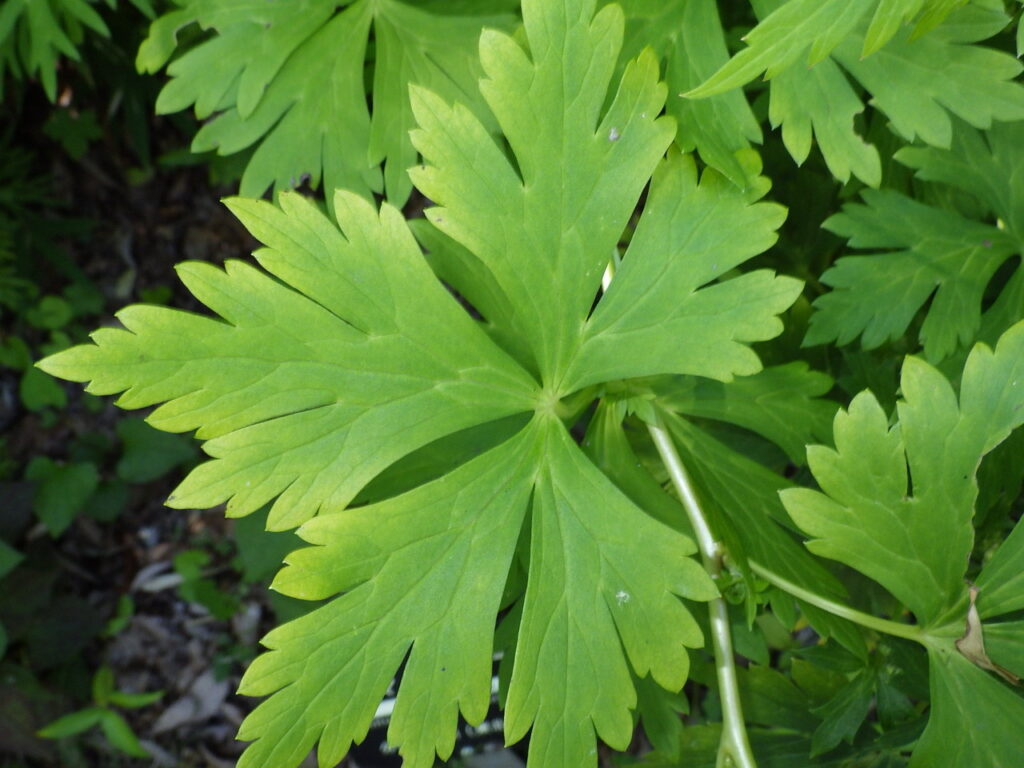
No.1227.a Aconitum japonicum subsp. maritimum var. maritimum
A pseudo-annual herb. The stem is erect or ascending. The leaves have a pentagonal outline. They are 3-lobed to 3-deeply lobed, and the deep notches of the lateral lobes sometimes make the leaf blade appear as if it is 5-lobed. There is a wide range of variation in leaf shape, but compared to Aconitum japonicum, the serrations tend to be coarser and the protrusion of the serration tips is more pronounced. The entire surface of the pedicel is covered with rough, bent hairs. The corolla is cap-shaped with a long beak. The pistil is glabrous. Occasionally, rough, bent hairs are sparsely present on the abaxial side. The stamens are usually densely covered with rough, spreading hairs, but are sometimes glabrous. Distributed in Honshu (Kanto to Chubu regions). It is found in hilly areas near the sea.
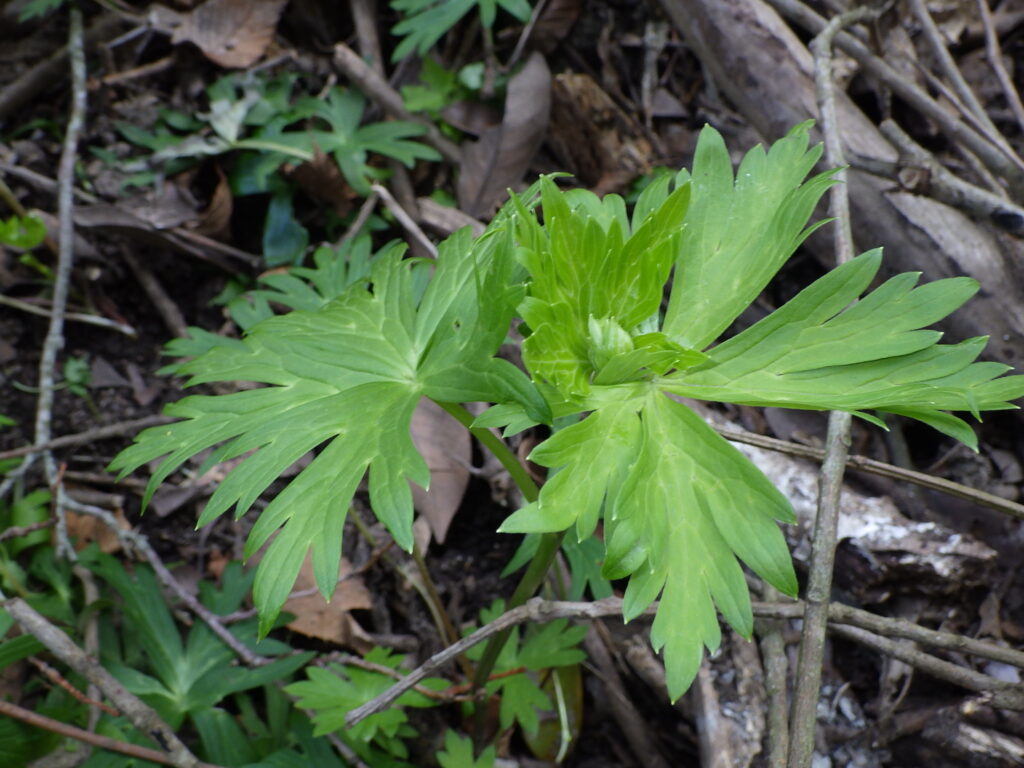
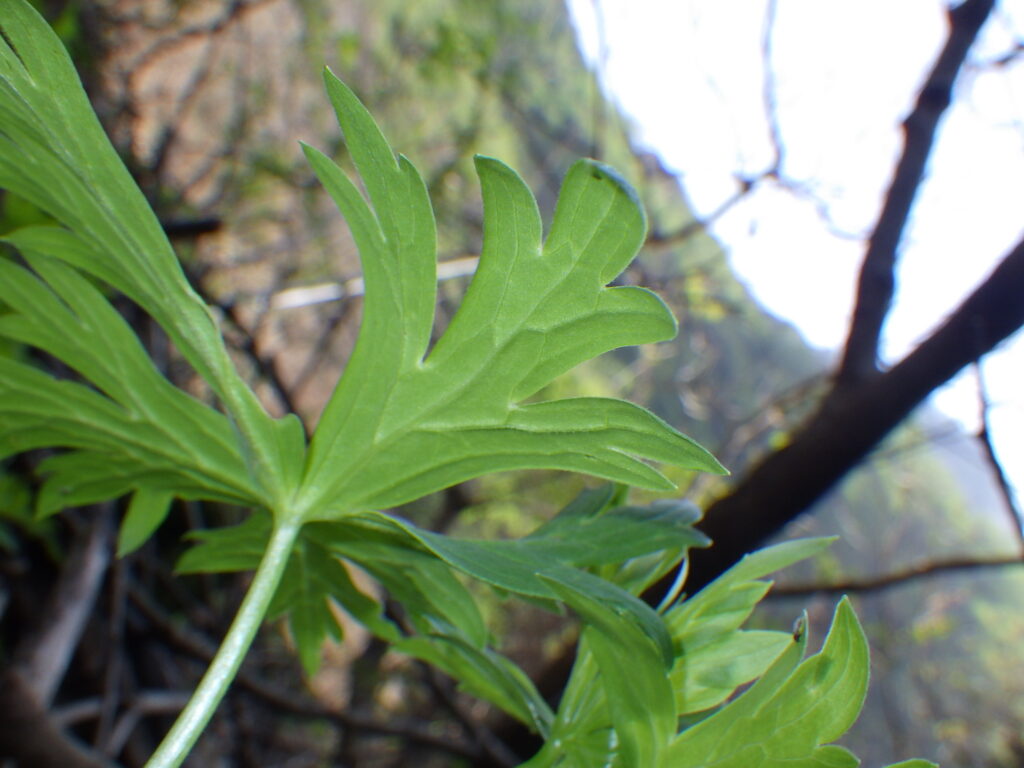
No. 1238 Cimicifuga biternata
A perennial herb. The stems reach a height of 40-90 cm. The basal leaves are twice-ternate, sometimes once-ternate compound leaves. The leaflets are 6-10 cm long and 5-10 cm wide. The inflorescence is densely covered with short hairs and bears numerous small white flowers. It is endemic to Honshu (Kanto to Kinki regions) and grows at the edges of forests.
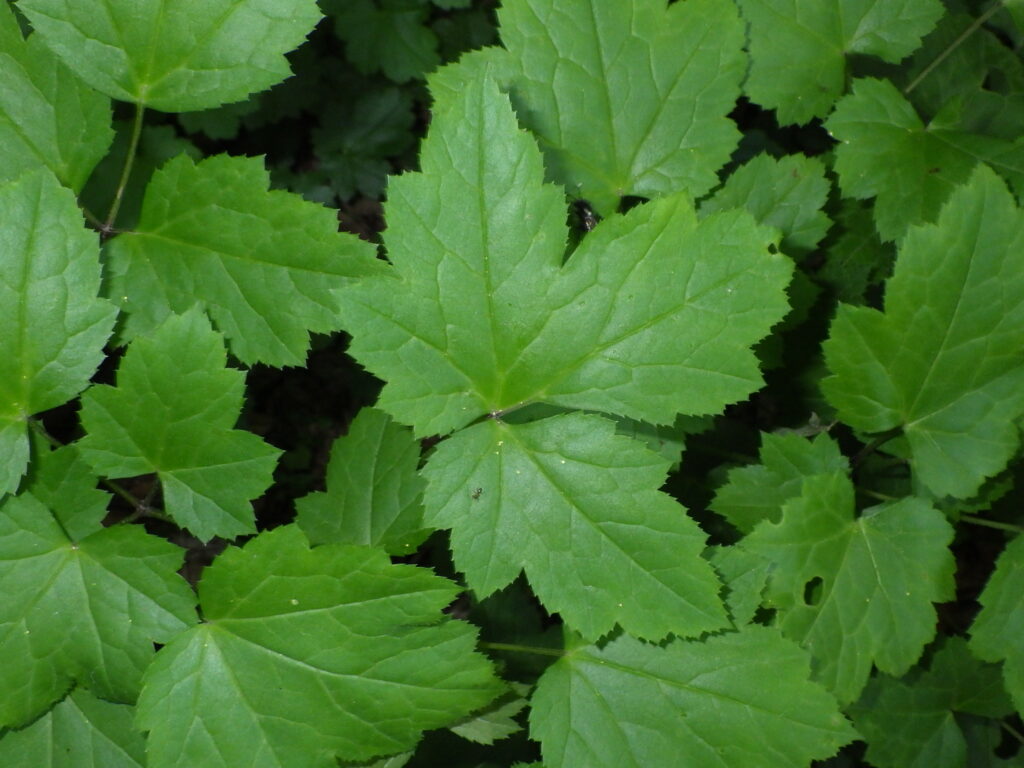
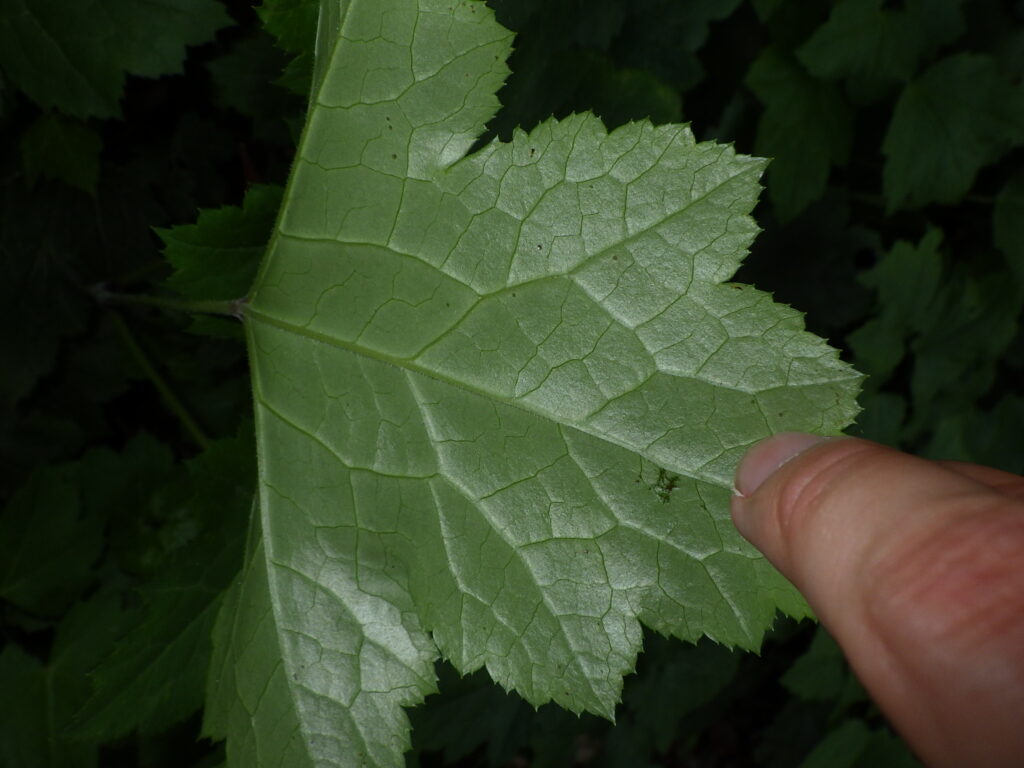
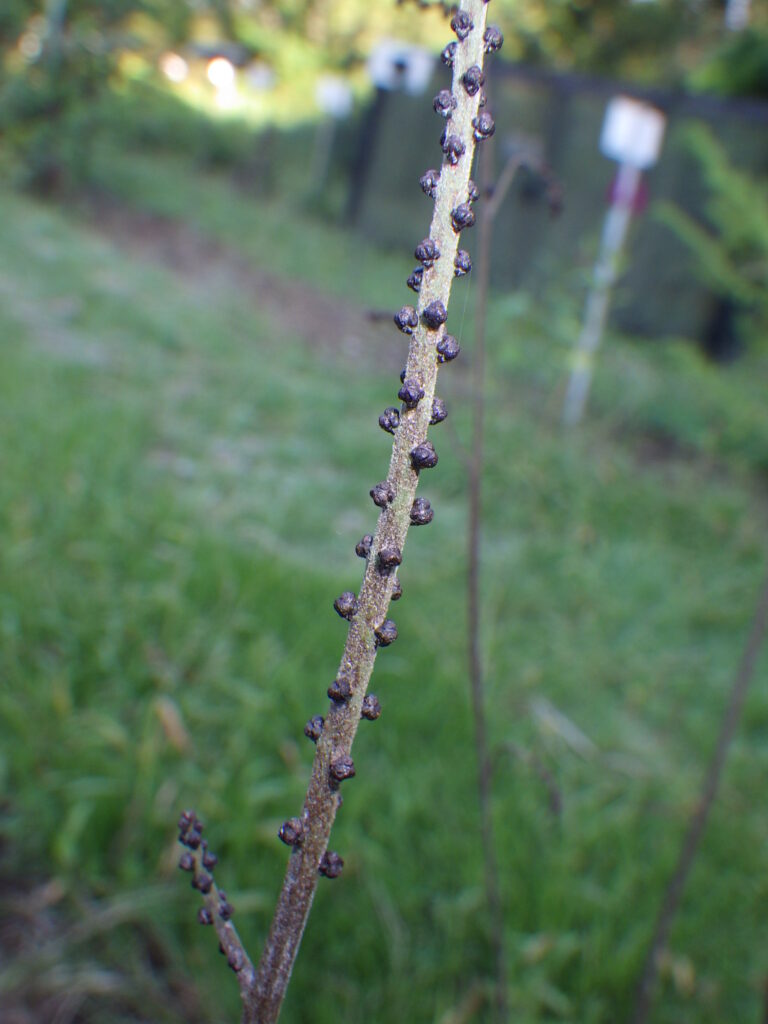
No. 1240 Cimicifuga simplex
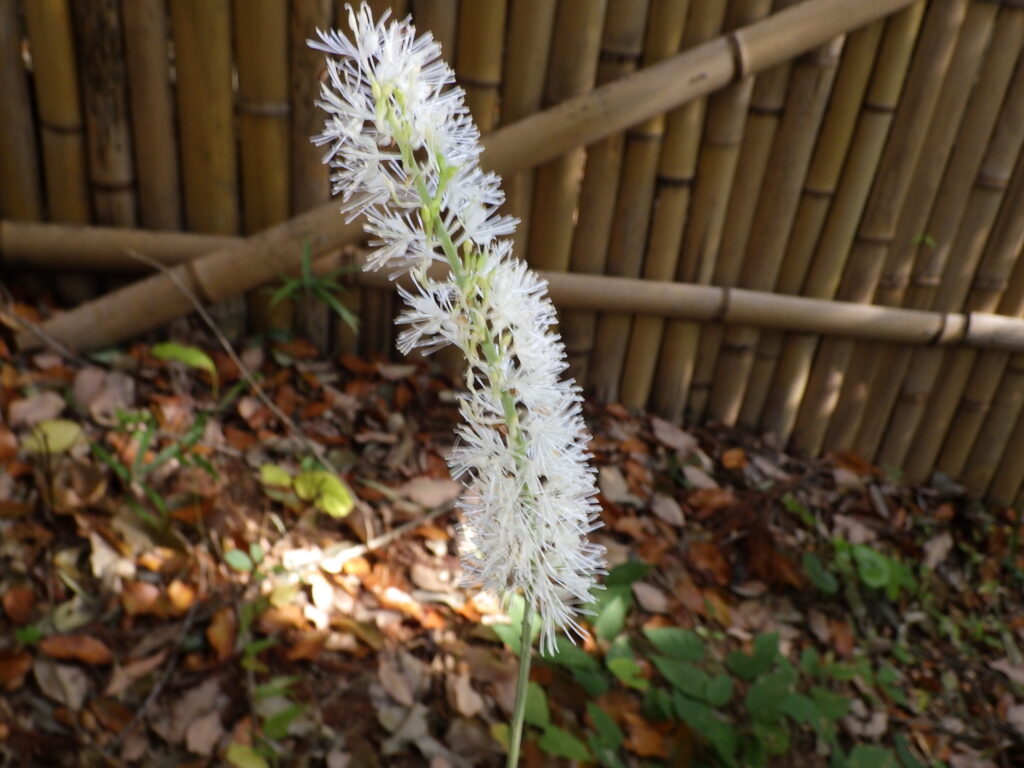
A perennial herb. The stem reaches a height of 40-150 cm. The upper part of the stem, along with the inflorescence, is densely covered with fine white hairs. The leaves are 2-3 times ternate compound leaves. The leaflets are 3-8 cm long and 1.5-5 cm wide. The inflorescence elongates to 20-30 cm long and bears dense clusters of small white flowers. There are both male and hermaphroditic flowers. The sepals are oval-boat shaped. The petals are shallowly lobed at the tip and all fall off early. The number of stamens varies greatly. Distributed in Hokkaido, Honshu, Shikoku, Kyushu; Korea, China, and Siberia. It grows in forest edges from hills in the Castanopsis and Quercus zone to the upper part of the Abies mariesii zone.
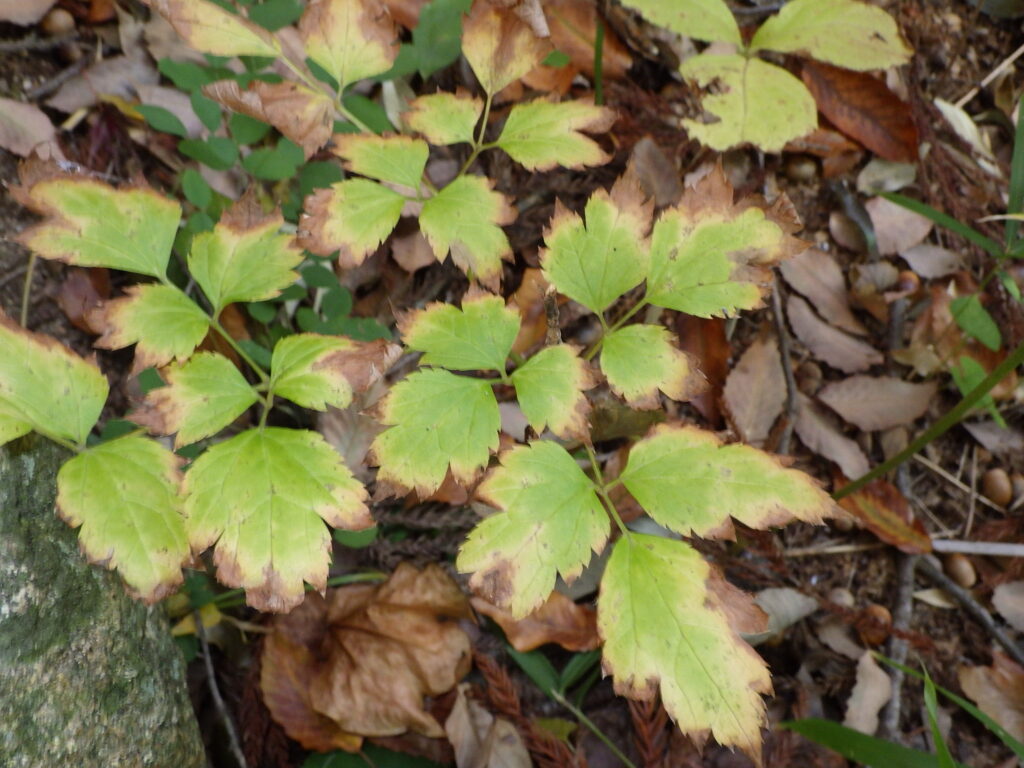
No.1242 Larch Thalictrum alpinum var. stipitatum
This is a perennial herb (2018 Yamanashi Prefecture Red Data Book). The plant grows to a height of 8-20 cm, including the flower stalk. The basal leaves are numerous and clustered, petiolate, 1-8 cm long, and 2-3 times ternate compound leaves. There are 1-2 stem leaves. The flowering period is from July to August. The flowers are yellowish-green and borne in racemes, without petals, and the sepals are deciduous. The stamen filaments are thread-like. The fruit is somewhat flattened and spindle-shaped, with 4-6 fruits per cluster. It is distributed in grasslands in the alpine zone of central Honshu.
No.1244 Japanese larch Thalictrum minus var. hypoleucum
This is a perennial herb. The stems grow to a height of 40-150 cm, with the upper part branching frequently. The leaves are 2-4 times ternately compound, with leaflets 1-3 cm long. The inflorescence is large and spreads in a conical pattern, bearing numerous flowers. The flowers are 1 cm in diameter. The achenes are clustered in groups of 2-4 and are sessile. It is distributed in Hokkaido, Honshu, Shikoku, Kyushu, the Ryukyu Islands, Korea, China, and Mongolia. It grows in forest edges and grasslands.
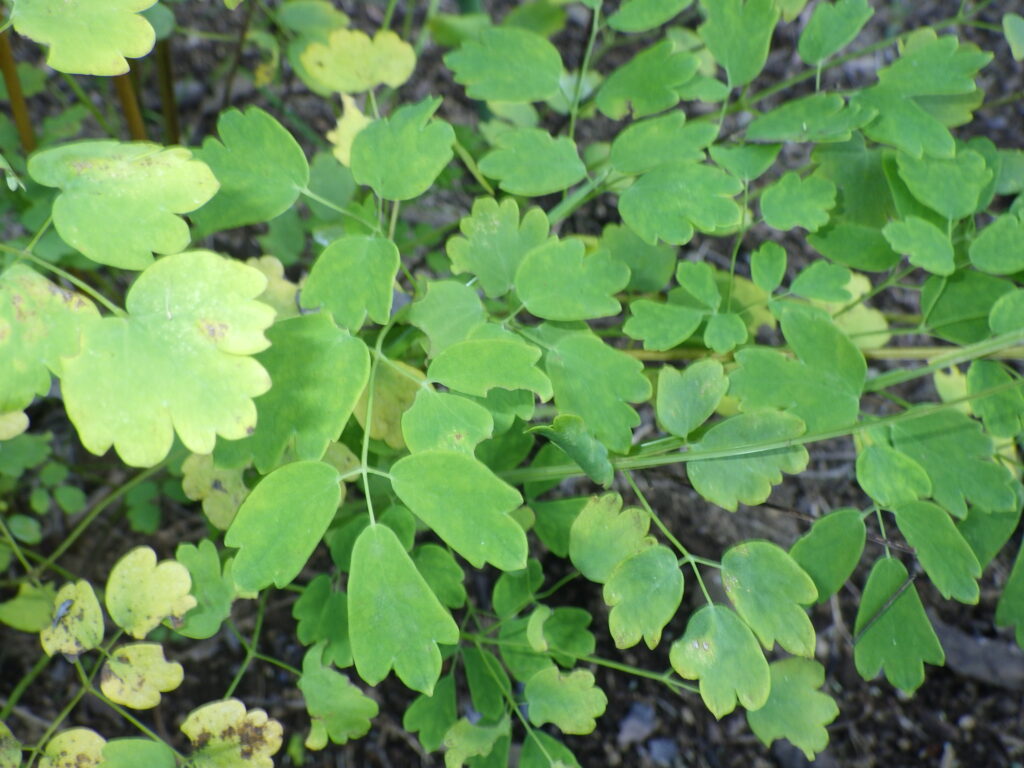
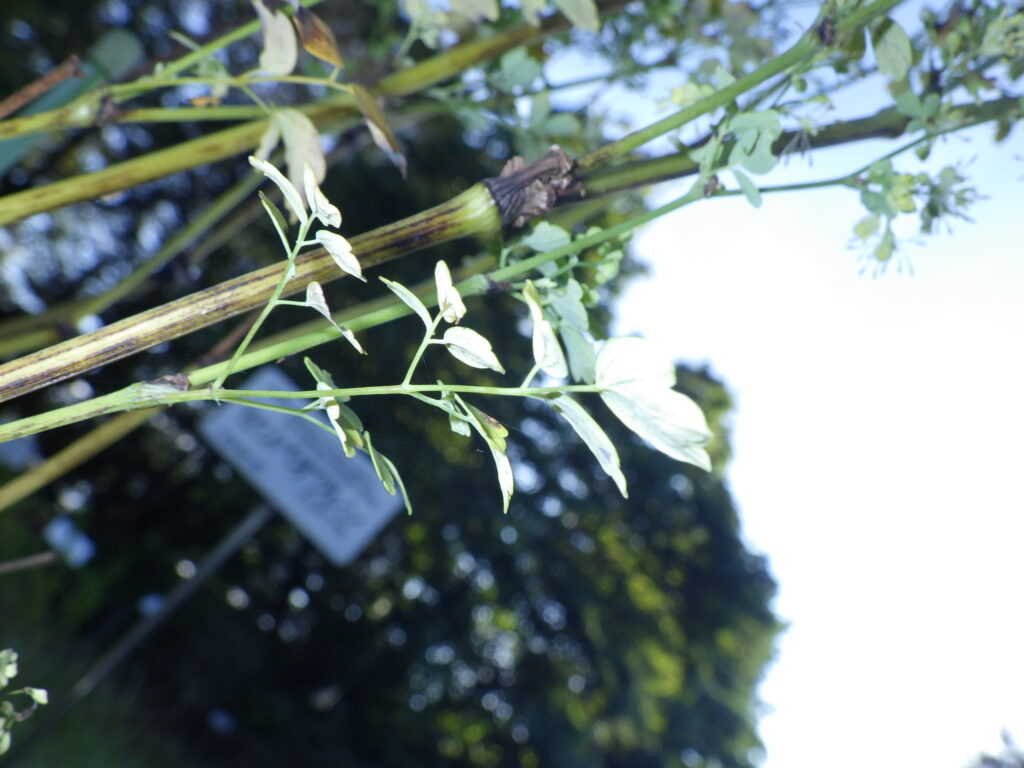
No. 1246 Thalictrum rochebrunianum
This is a perennial herb. The stems are 0.7 to 1.5 m long, tinged with purple, and hairless. The leaves are alternate, 3 to 4 times ternate compound leaves, with leaflets 1 to 3 cm long and shallowly 3-lobed at the tip. The flowers lack petals; the reddish-purple parts that look like petals are actually sepals. The sepals are pale reddish-purple, 4 to 5 in number, and oval-shaped. The sepals remain on the flower even after blooming. The stamens and pistils are yellow and numerous. The anthers are oblong, and the pedicels are hairless. It is distributed in Honshu, Japan (only in Nagano, Gunma, and Fukushima prefectures), and grows in damp places on the edges of deciduous broadleaf forests and within forests in mountainous areas.
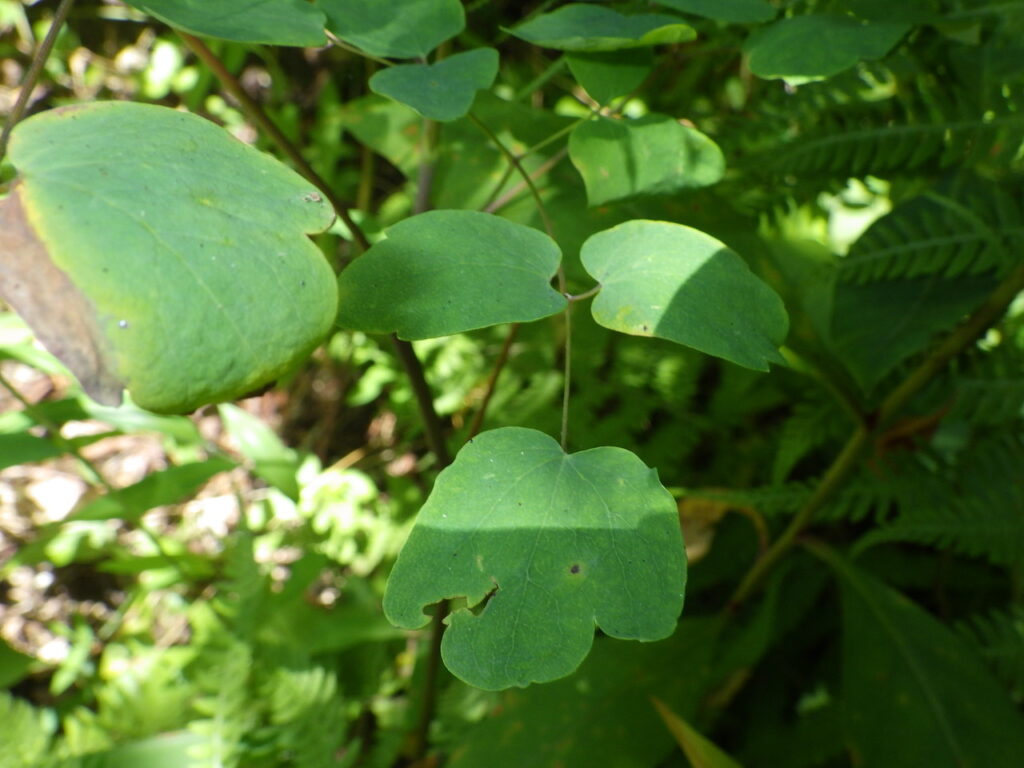
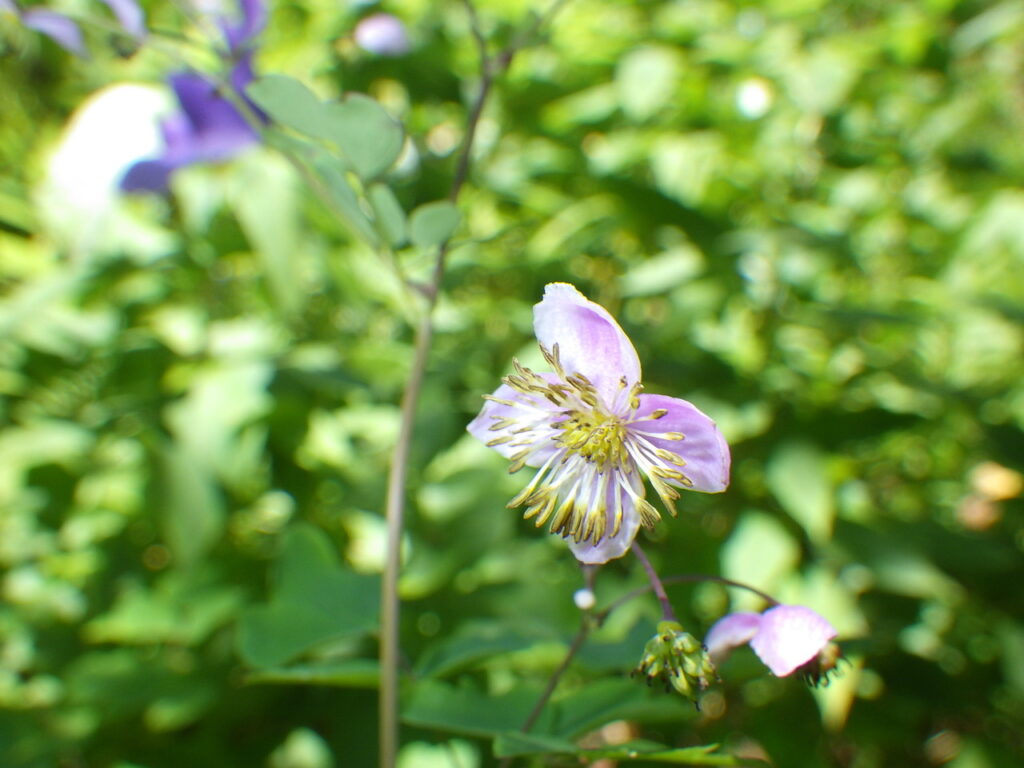
No. 1248.1 Thalictrum tuberiferum var. yakusimense
A perennial herb, growing to a height of 10-15 cm. It is a variety of *Larcha japonica*, smaller overall, with leaves consisting of three leaflets and a rounded base. It flowers from July to September. The flowers are few in number, pale pink, and 5-8 mm in diameter. It is an endemic species distributed on Yakushima Island. It grows at the edge of forests.
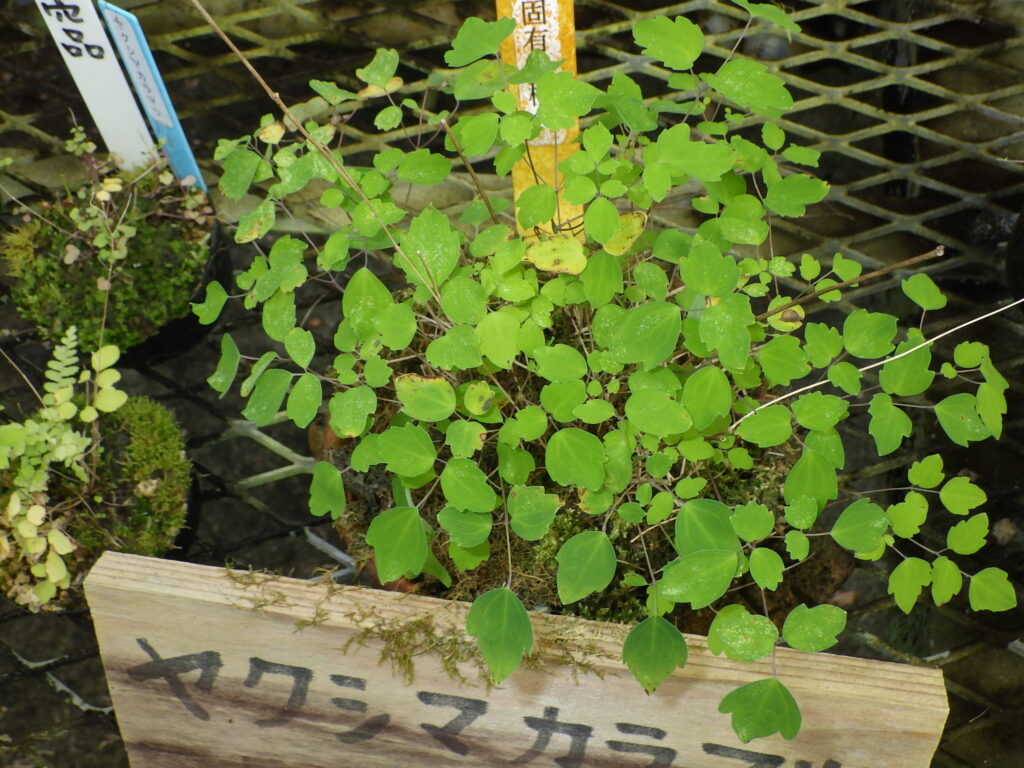
No. 1257 Anemone nikoensis
A perennial herb. The rhizome creeps horizontally and thickens slightly in places. The basal leaves have long petioles and are compound leaves with three leaflets 1-2 times. The leaflets are 2-5 cm long. A flower stalk rises from the end of the rhizome that does not produce basal leaves. The involucral bracts are petiolate and once-ternate. The flower stalk is 20-30 cm long. There is one flower and five sepals. It is an early spring plant that appears in early spring and withers in early summer. It is distributed in Honshu, Shikoku, and Kyushu. It grows in forest edges and forest floors.
No. 1258 Anemone pseudoaltaica
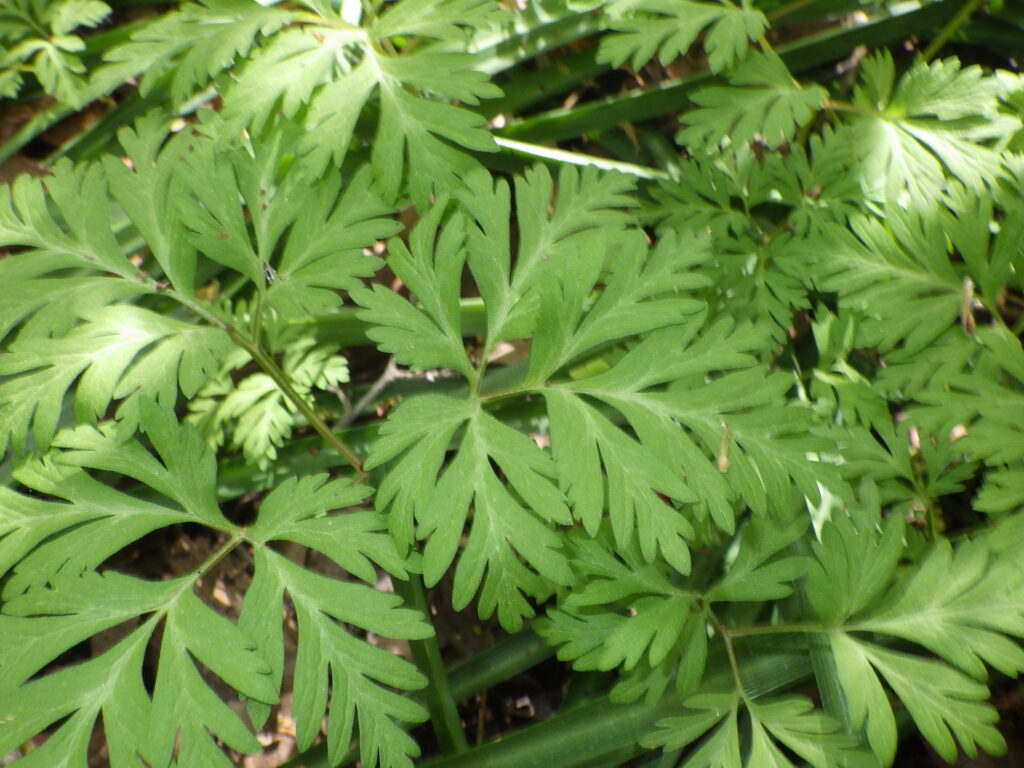
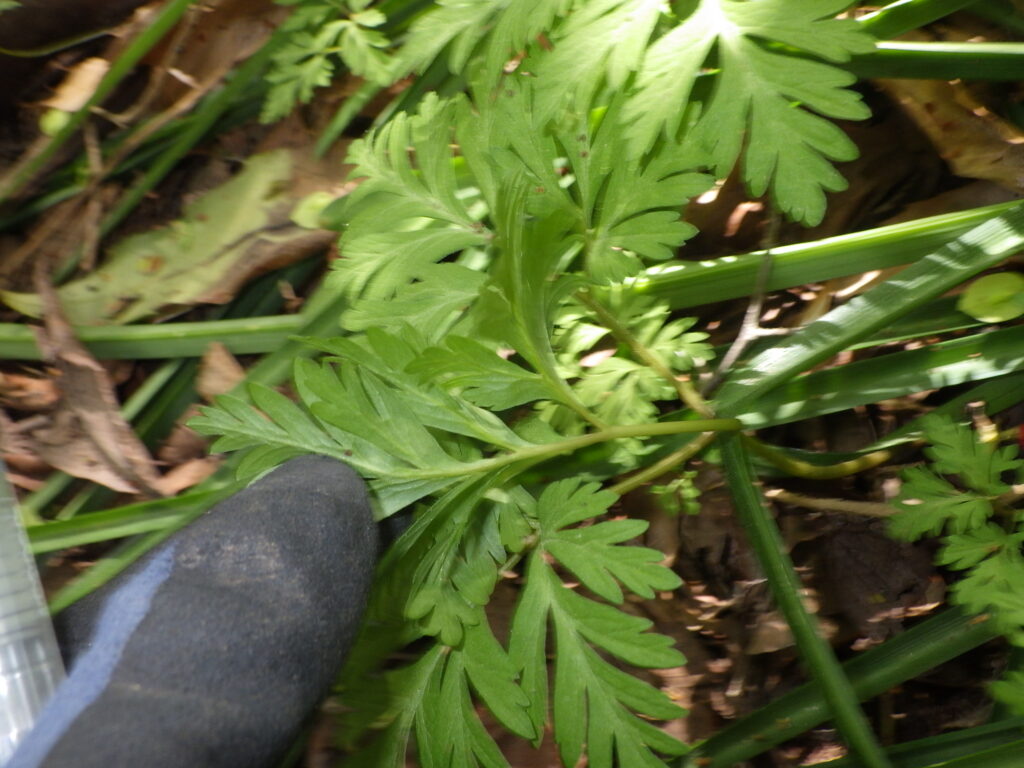
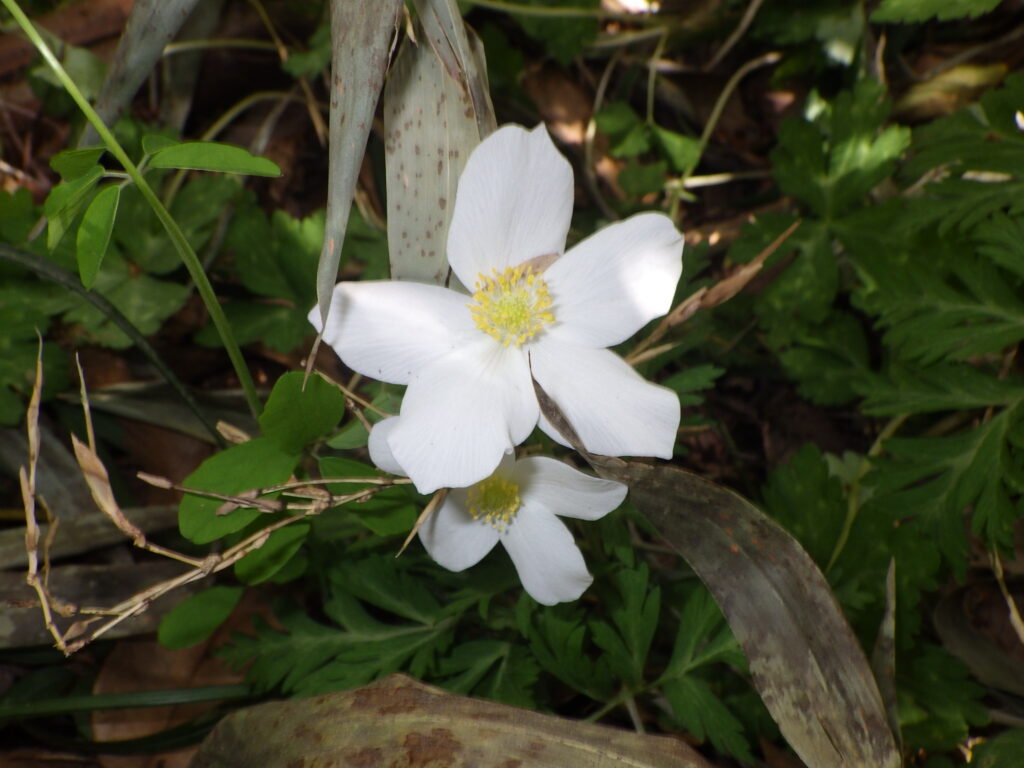
A perennial herb. Also known as Anemone pseudoaltaica. The rhizome is slender and creeps horizontally for 2-10 cm. The basal leaves have long petioles and are compound leaves with three leaflets 2-3 times. The leaflets are deeply pinnately lobed. The flower stalk grows upright, separate from the basal leaves. The flower stalk is 10-30 cm tall. The involucral bracts are arranged in whorls of three and are compound leaves with three leaflets. There is a single terminal flower, and the flowers are either white or bluish-purple. There are 8-13 sepals. It is an early spring plant that appears in early spring and withers in early summer. It is distributed in Hokkaido and Honshu (north of the Kinki region). It mainly grows in the forest edges and forest floor of beech forests.
No. 1263 Anemone flaccida
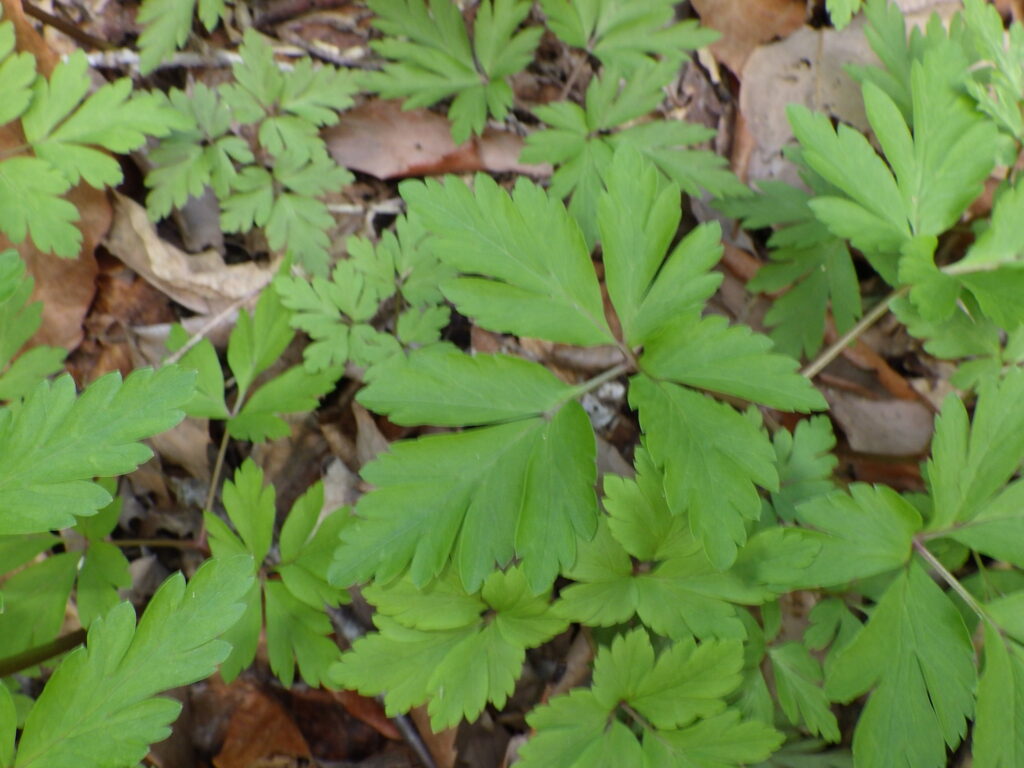
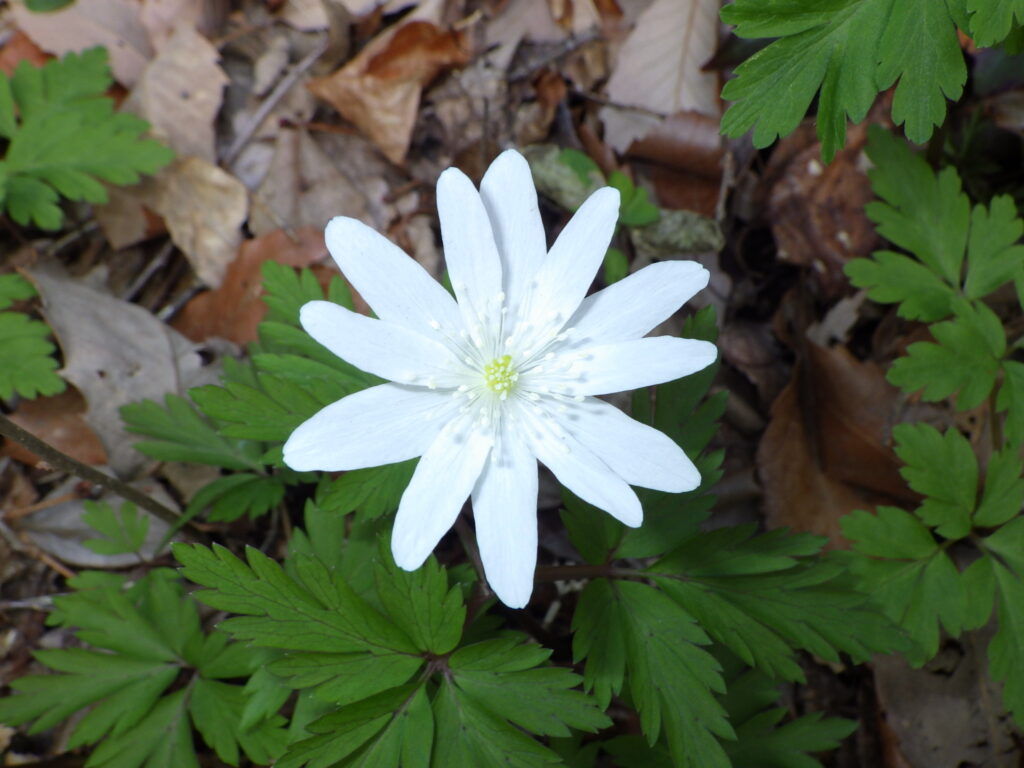
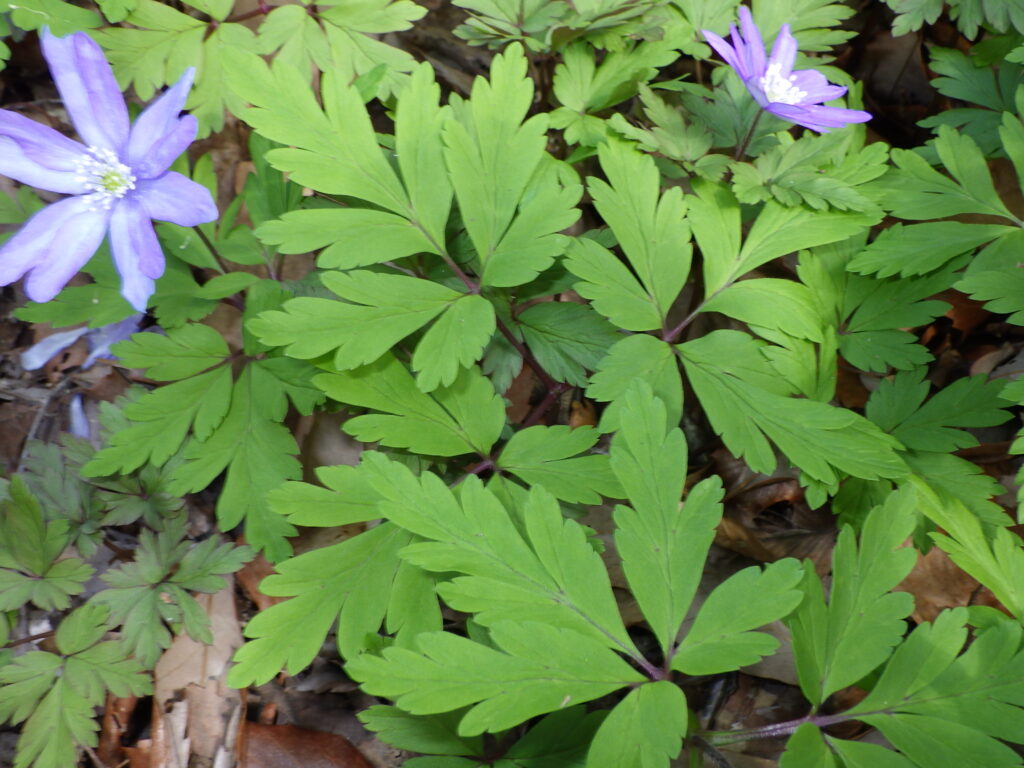
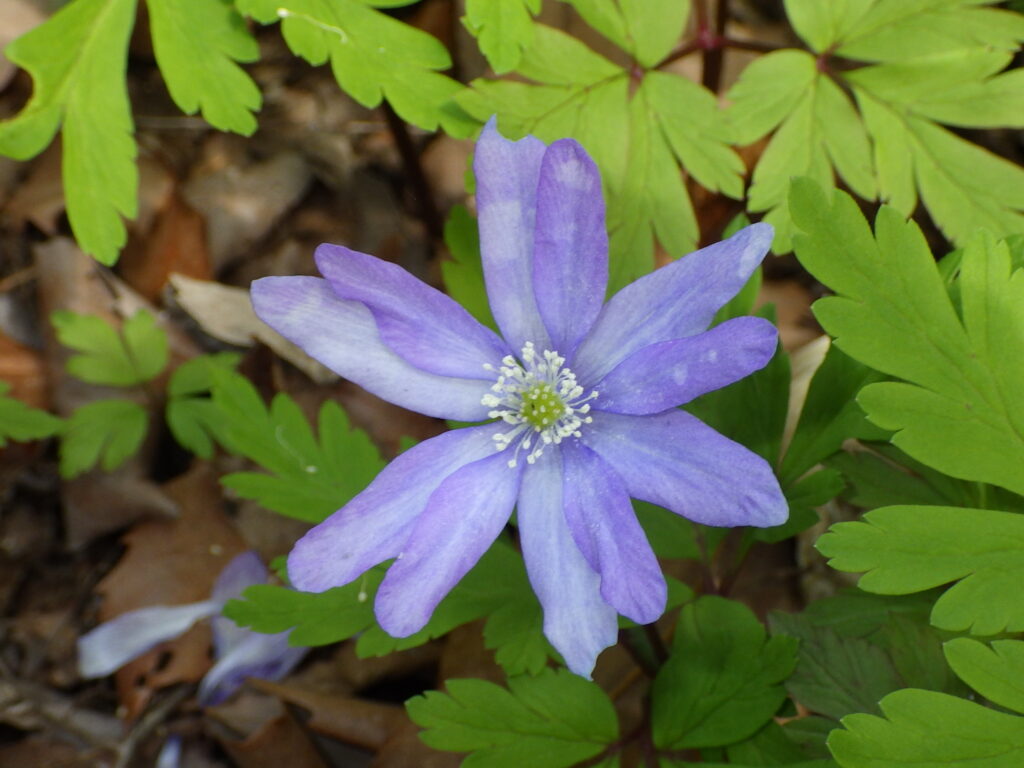
A perennial herb. The basal leaves have long petioles and are 3-lobed. The terminal leaflet is 2-4 cm long. The involucral bracts are sessile and deeply notched. There are 1-3 flowers and 5 sepals. It is an early spring plant that appears in early spring and withers in early summer. It is distributed in Hokkaido, Honshu, Shikoku, Kyushu, Korea, China, and Ussuri. It grows on forest edges and on the banks of fields near mountains.
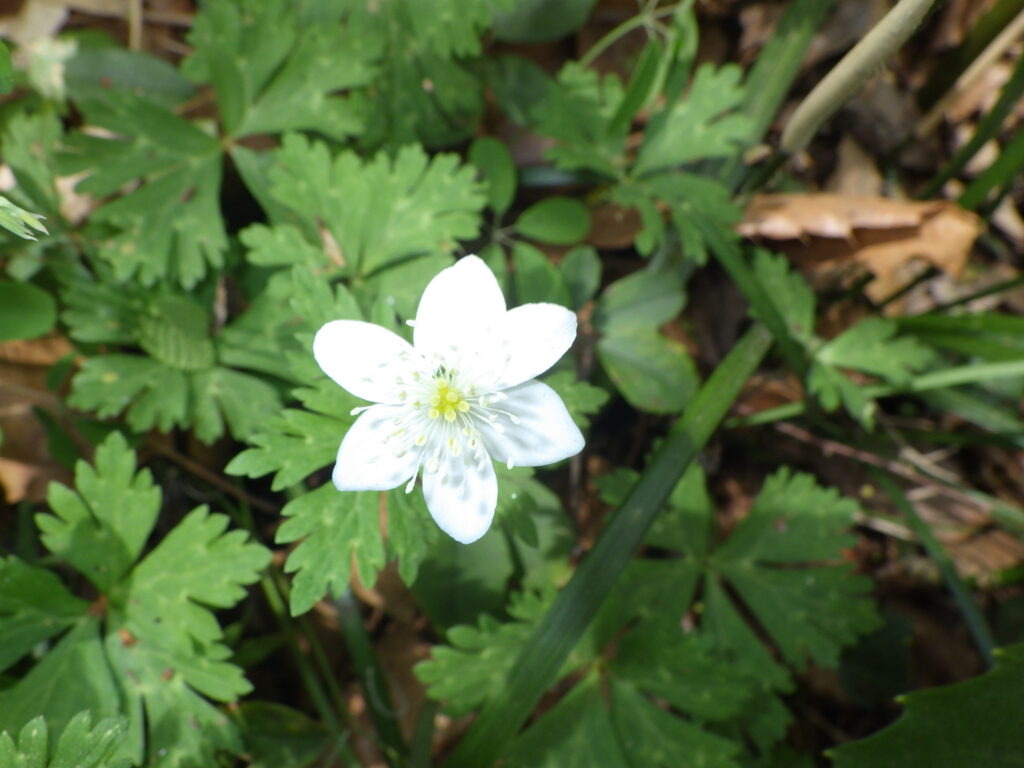
No. 1265 Anemone narcissiflora subsp. nipponica
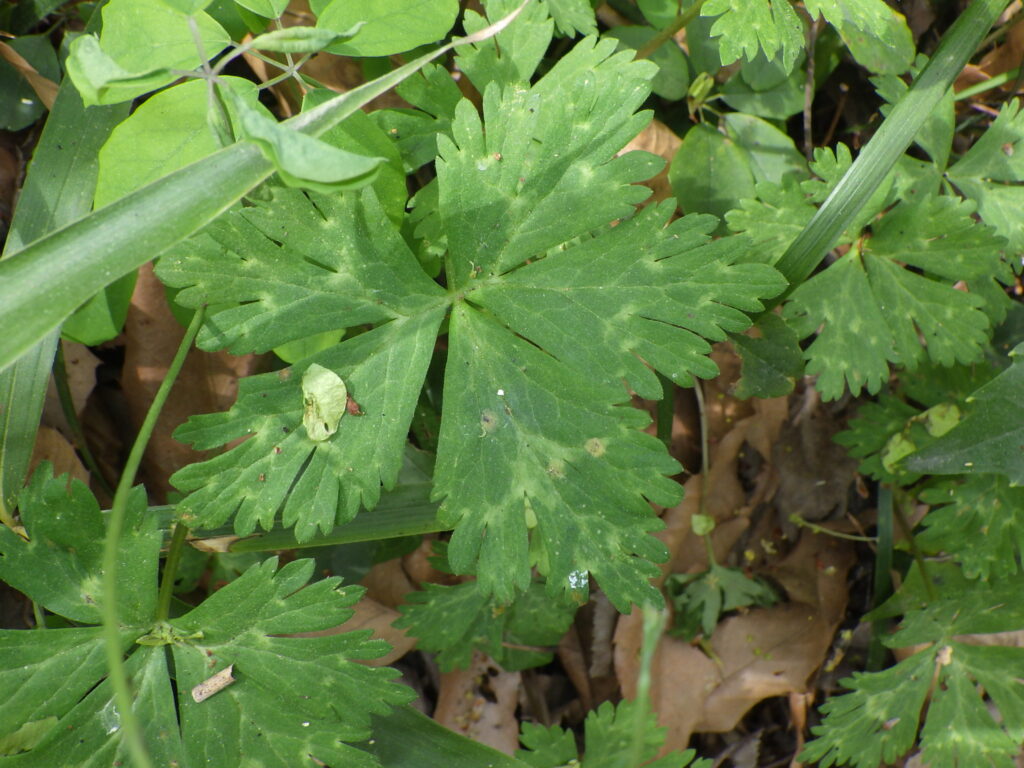
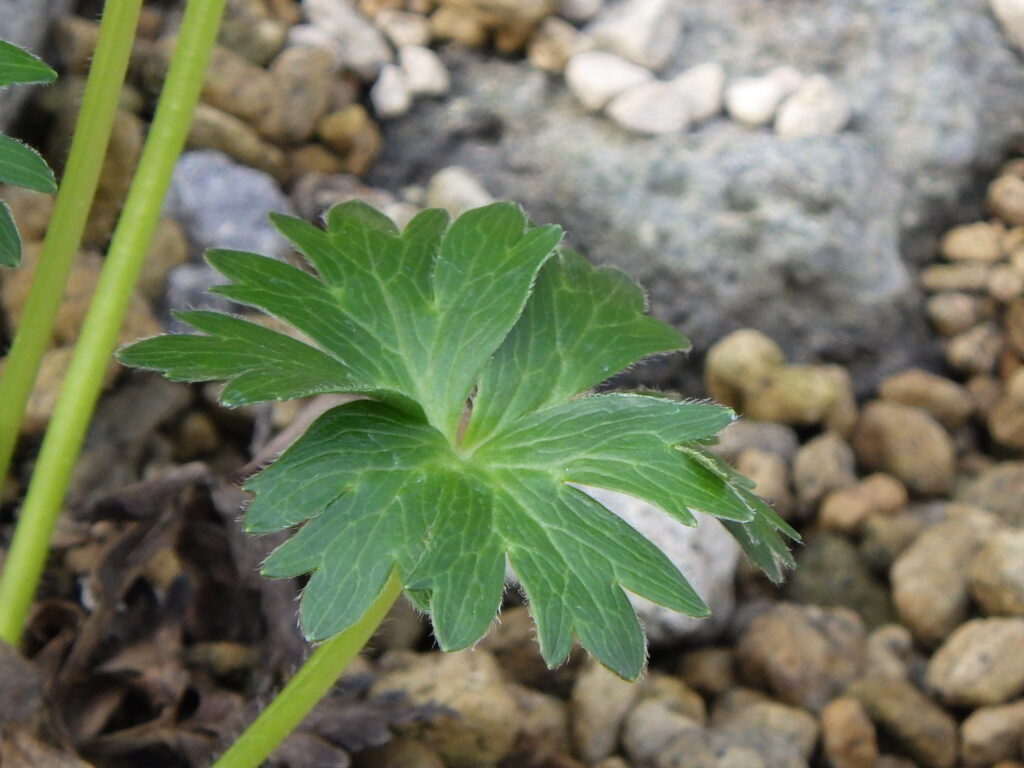
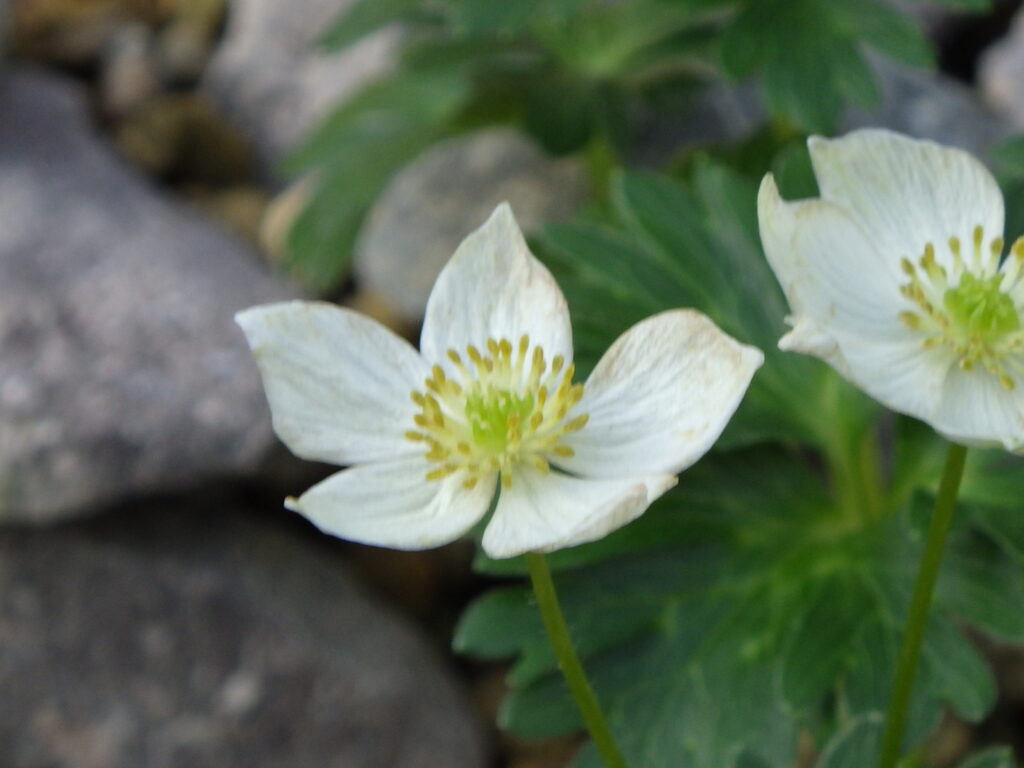
This is a perennial herb. The basal leaves are once-ternate compound leaves, finely and deeply lobed to appear circular, and have long petioles. The stem leaves are sessile. It flowers from June to August. Two to six flowers bloom at the end of a long pedicel at the top of the stem. The flowers are 2 to 3.5 cm in diameter and have 5 to 7 sepals that look like white petals. The pedicels are 2 to 12 cm long, elongating to 8 to 15 cm when in fruit. The achenes are flattened, broadly oval, 6 to 8 mm long, with wings on the edges, and turn black when ripe. It is a representative alpine plant, growing in moist grasslands from the subalpine to alpine zones from central Japan northward to the Tohoku region. It is often found growing in clusters in the areas where snowfields have melted. What appear to be white petals are actually sepals, of which there are 5 to 7. Individuals with green sepals are called *Anemone narcissiflora* f. viridis.
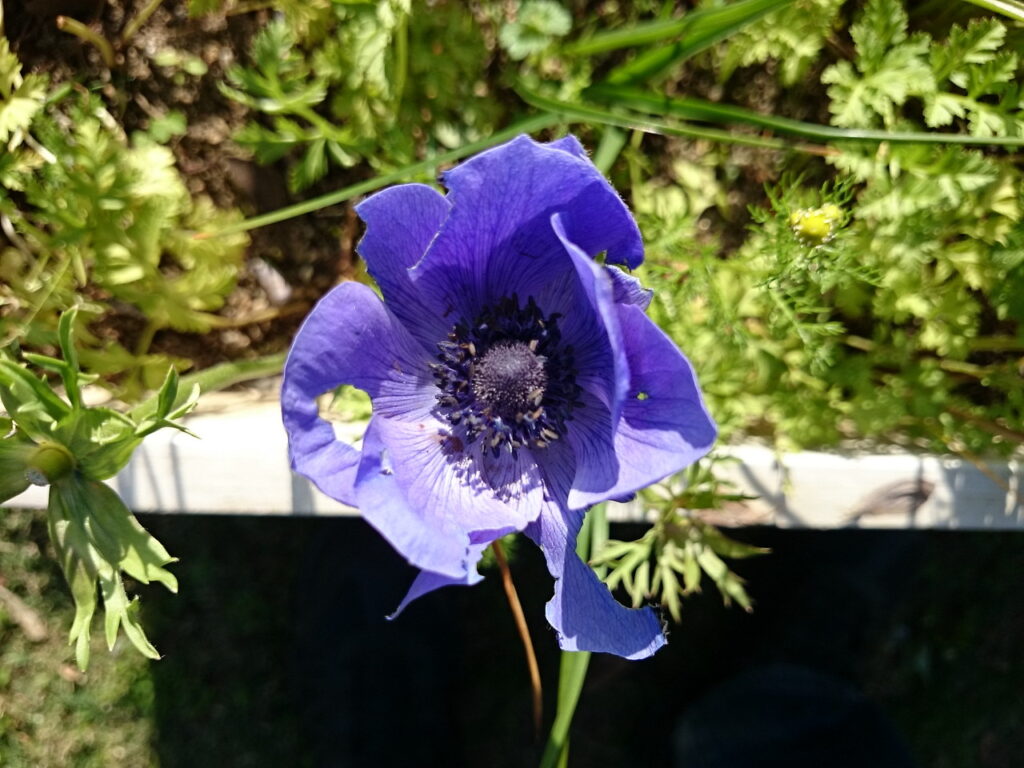
No. 1267 Anemone coronaria
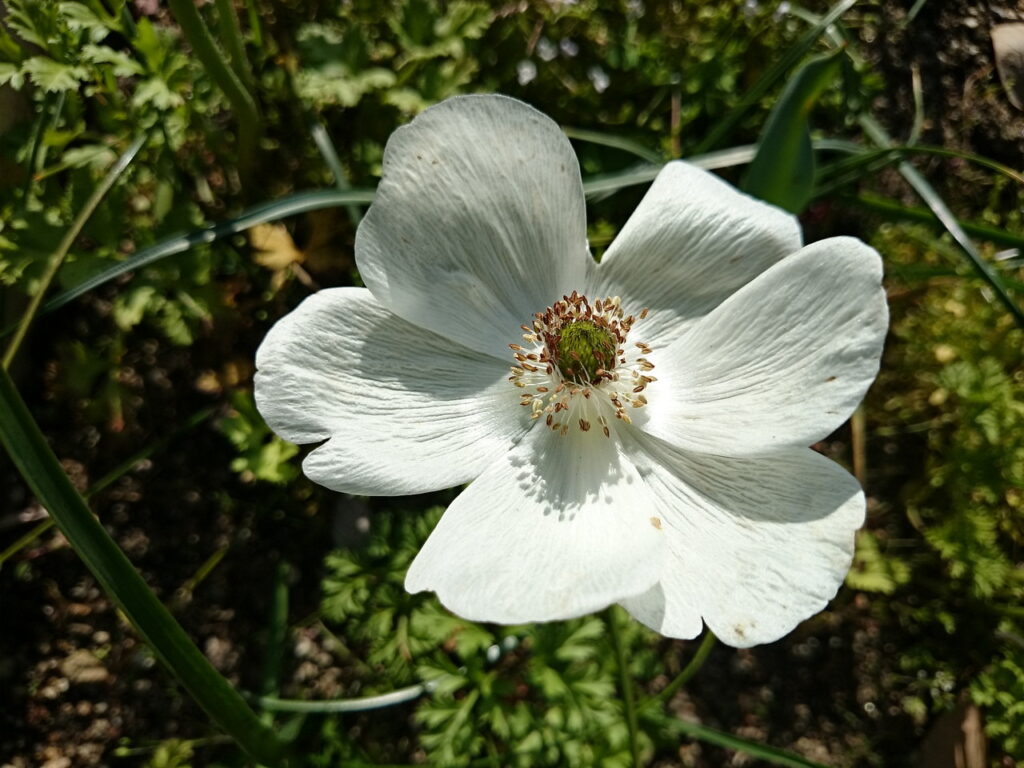
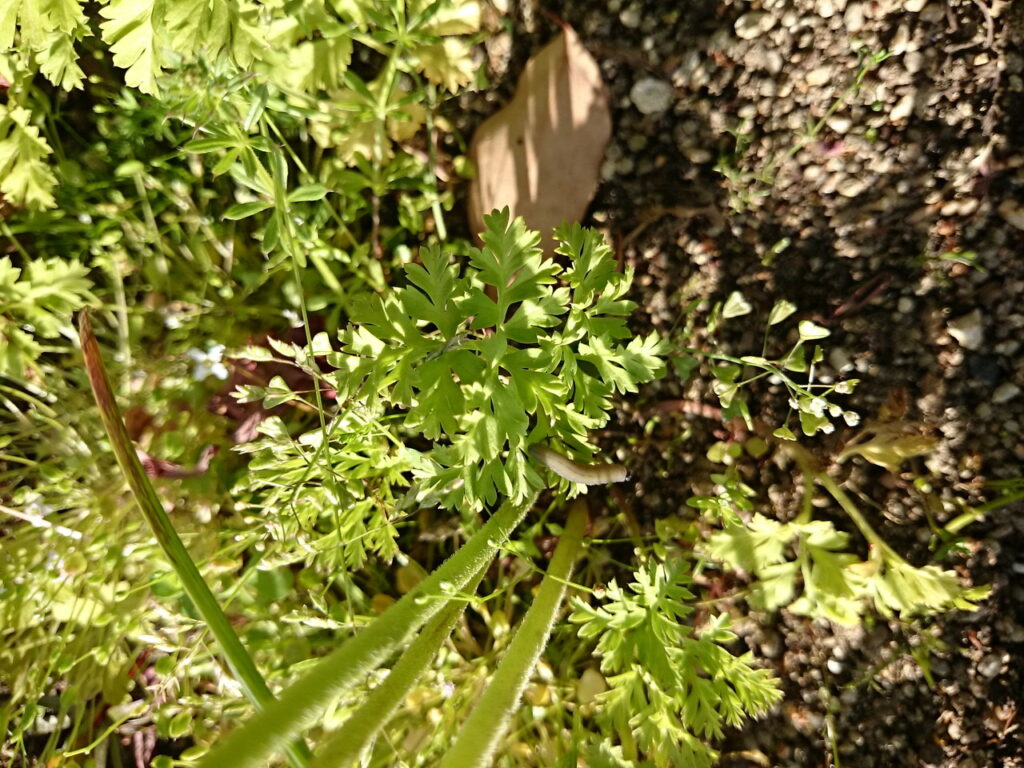
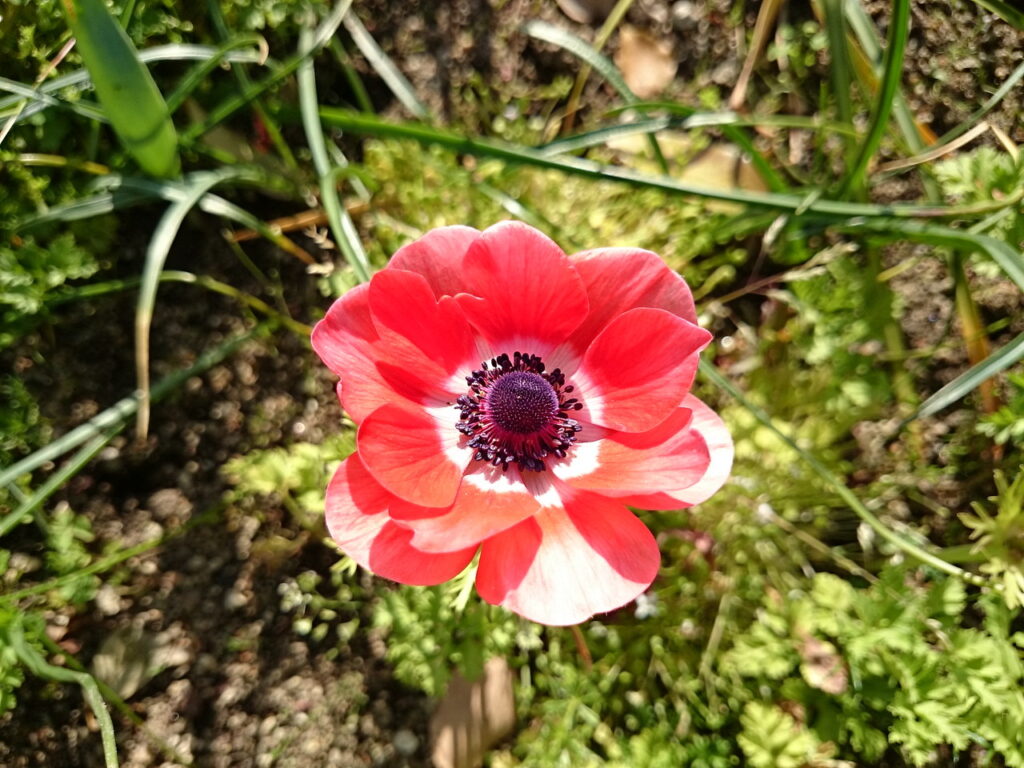
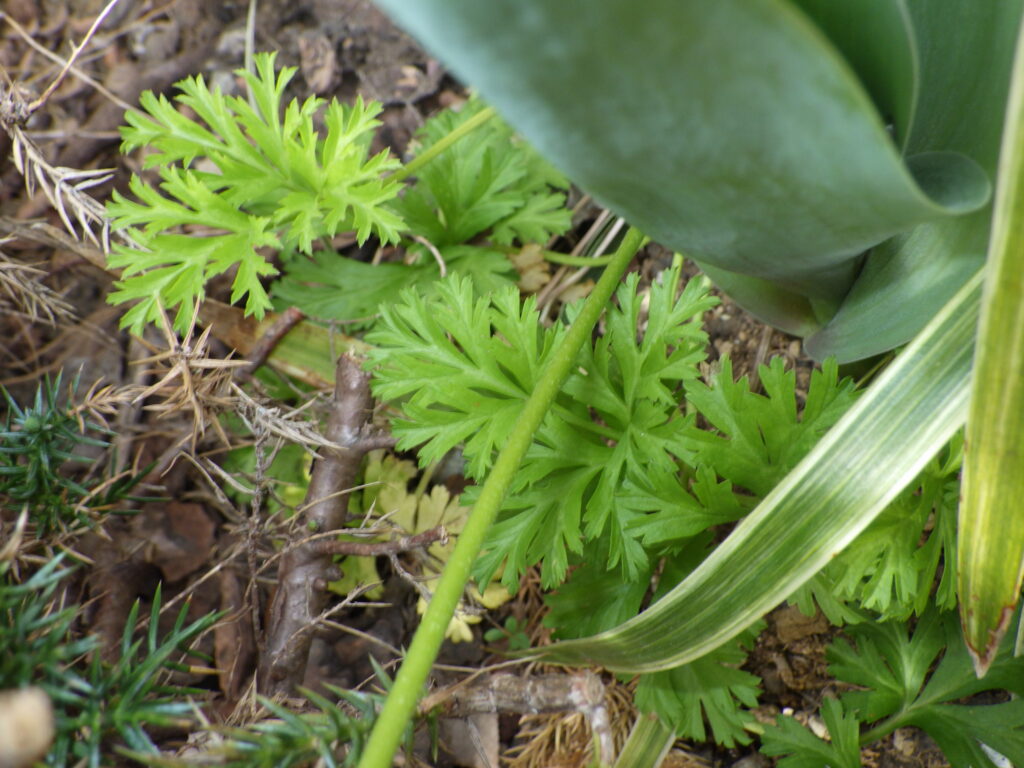
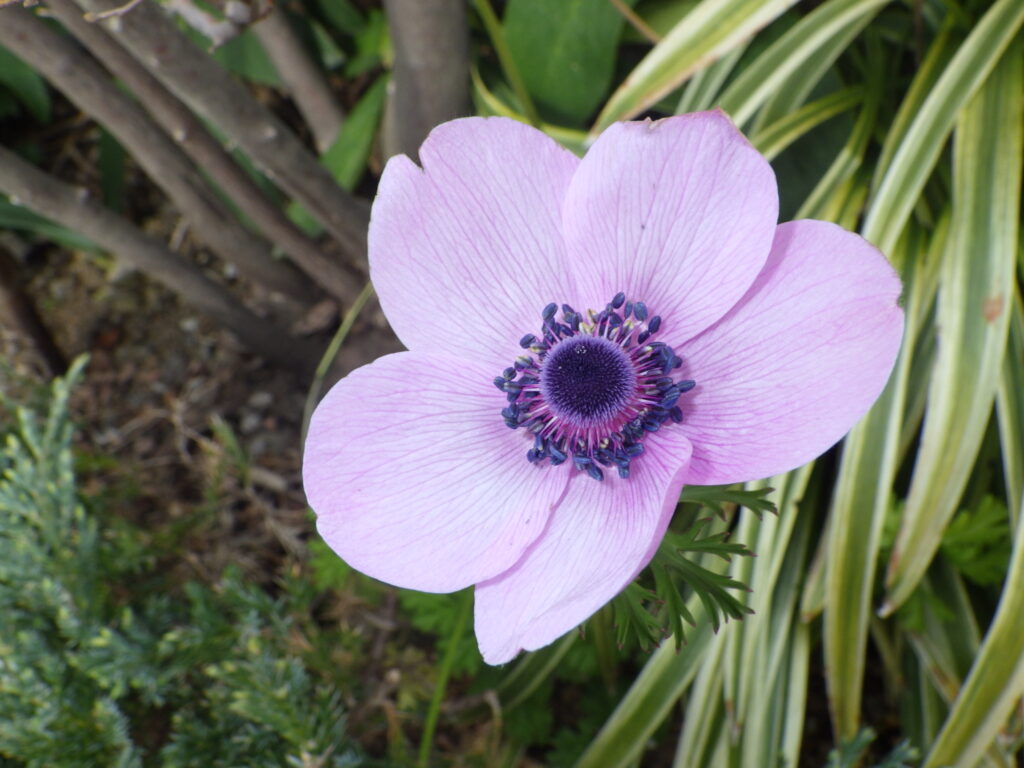
The Japanese name follows that of 'Ylist'. It is also known as Botan Ichige and is commonly called "Anemone". It is a perennial herb. It has a branched, brownish tuber underground, reaching a height of 25-40 cm. The basal leaves are 3-lobed, palmately deeply lobed, or moderately lobed, with each lobe finely divided, the final lobe becoming linear and tapering to a minute apex. It flowers from April to May. The flower stalk grows from the tuber, bearing a single flower at the end. The involucral bracts are arranged in a whorl, separate from the flower. There are 6-8 sepals, in various colors such as red, pink, purple, indigo, and white. There are many stamens, and the stigma is blackish-purple. The achenes are clustered together to form a sphere, each containing one seed. Native to the Mediterranean coast, it is widely cultivated as an autumn-planted bulb for cut flowers, flower beds, and potted plants. It was introduced to England in 1596 and arrived in Japan in 1930 (Showa 5).
No. 1268 Japanese Anemone (Anemone hupehensis var. japonica)
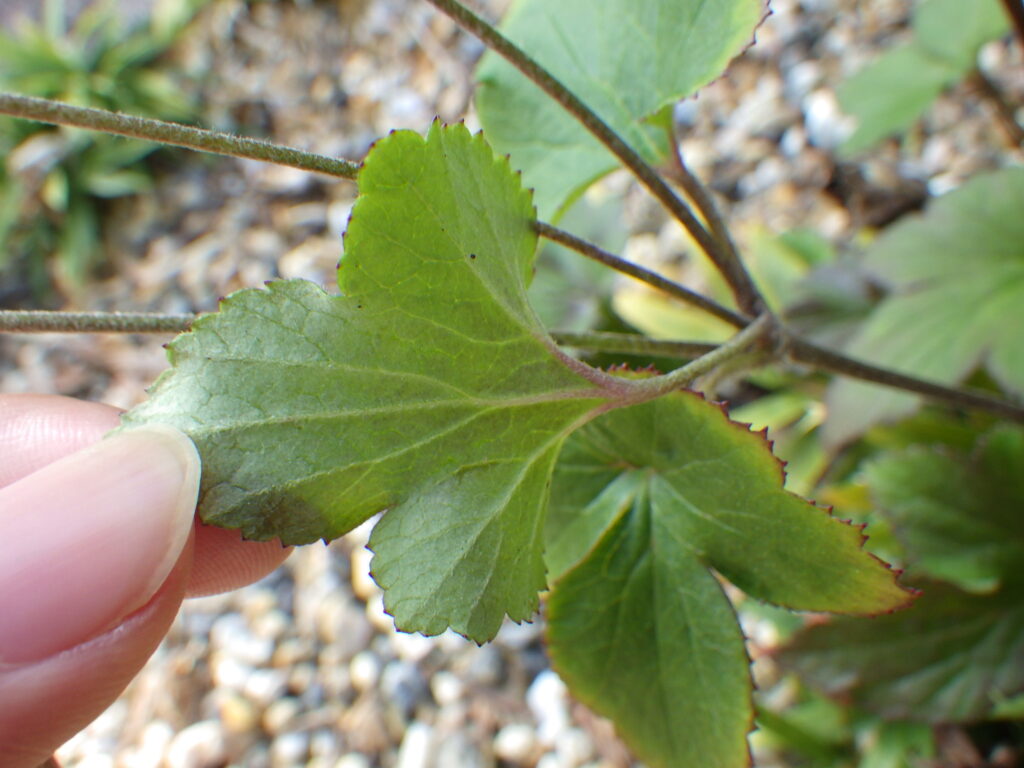
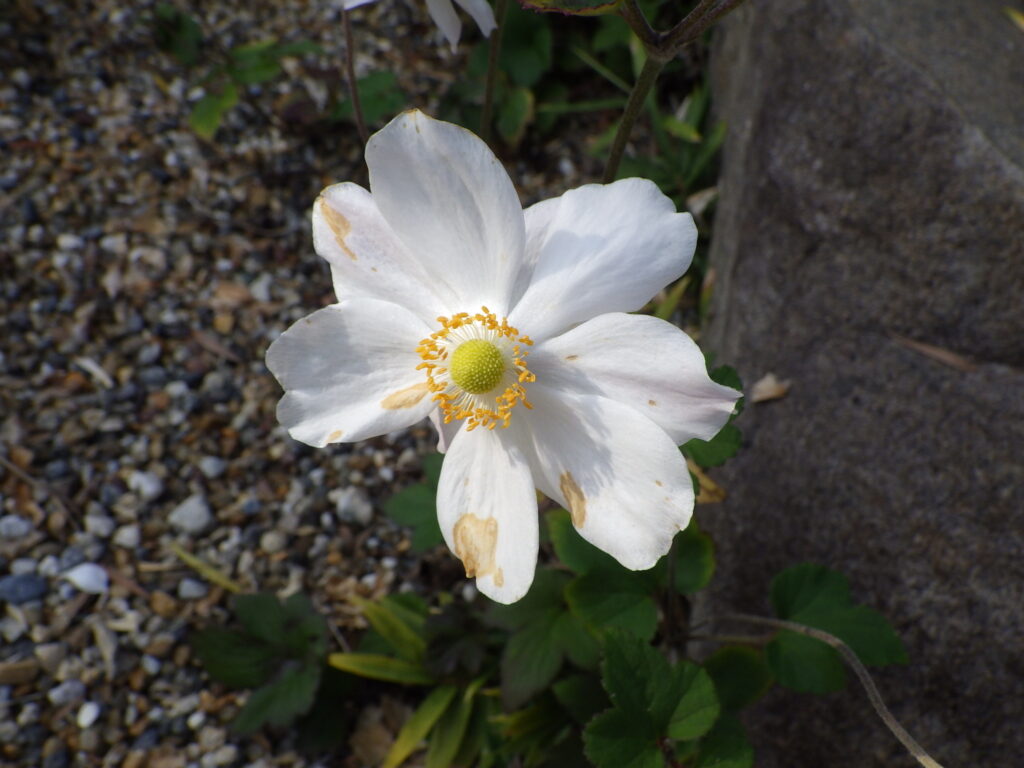
Also known as Kibunegiku. The stems grow to a height of 50-80 cm. The basal leaves are trifoliate compound leaves. The leaflets are shallowly 3-5 lobed and 5-7 cm long. There are about 30 sepals. The outer ones are green and thick, while the inner ones are reddish-purple and petal-like. Native to China. It is planted in gardens, but it escapes cultivation and grows at the edges of forests.
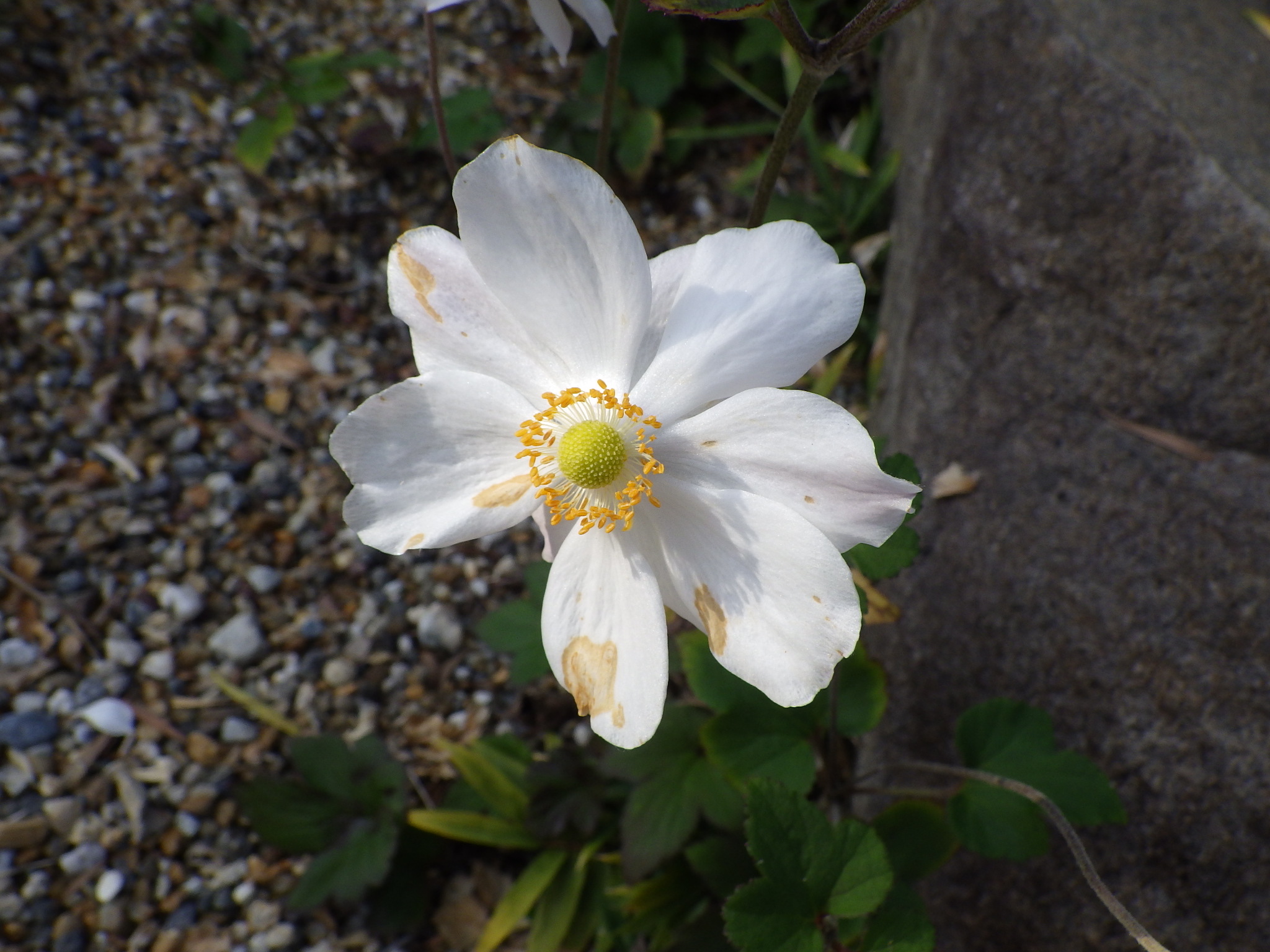
No.1268.a Anemone x hybrida
No. 1269 Hepatica nobilis var. japonica f. variegata
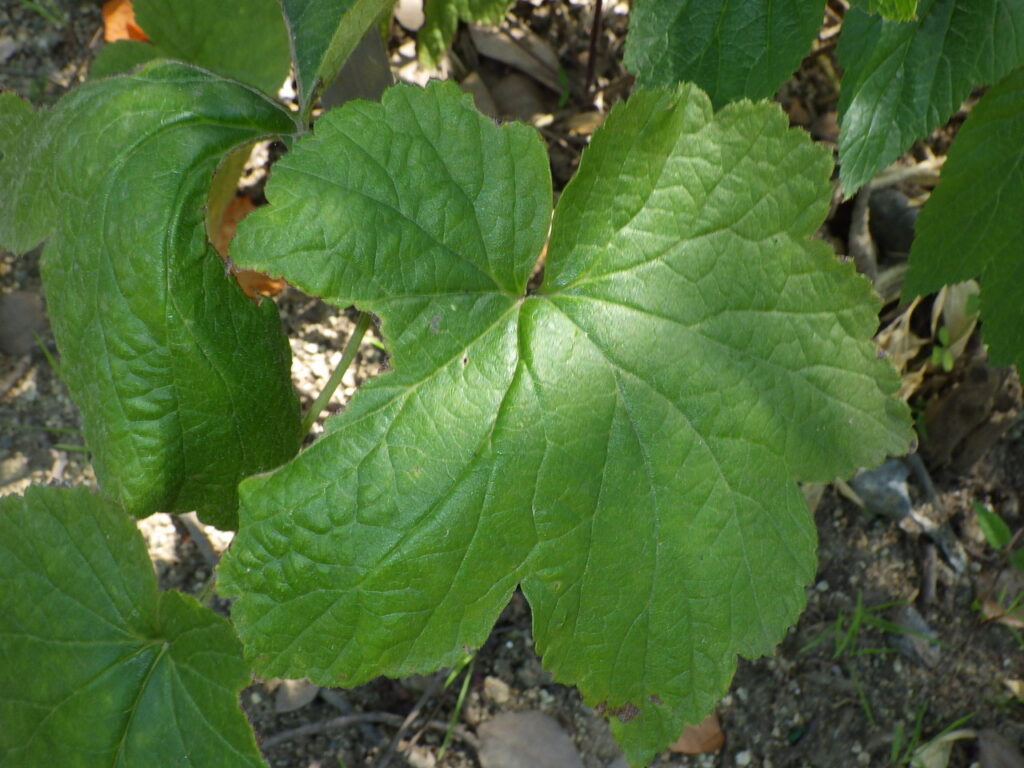
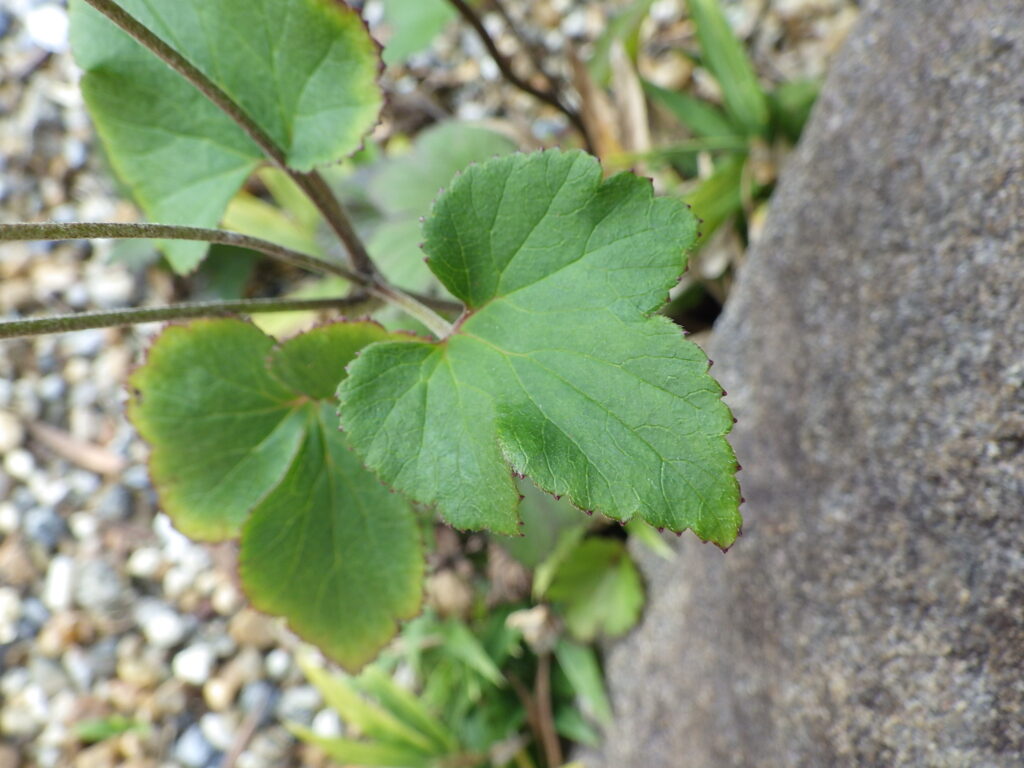
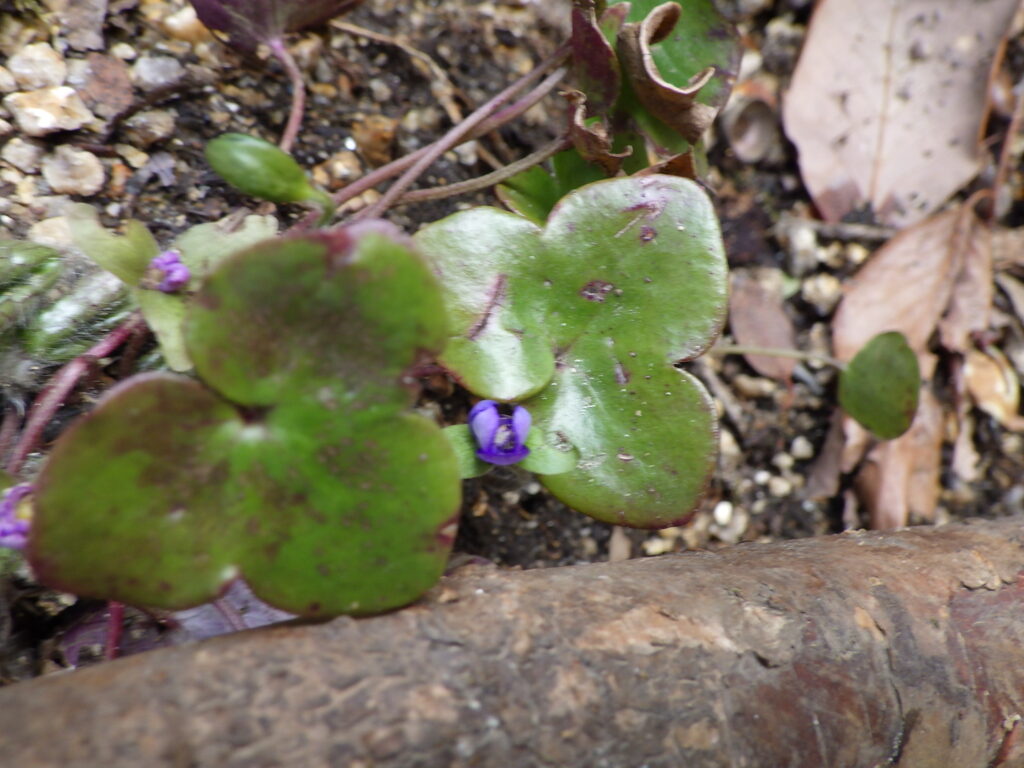
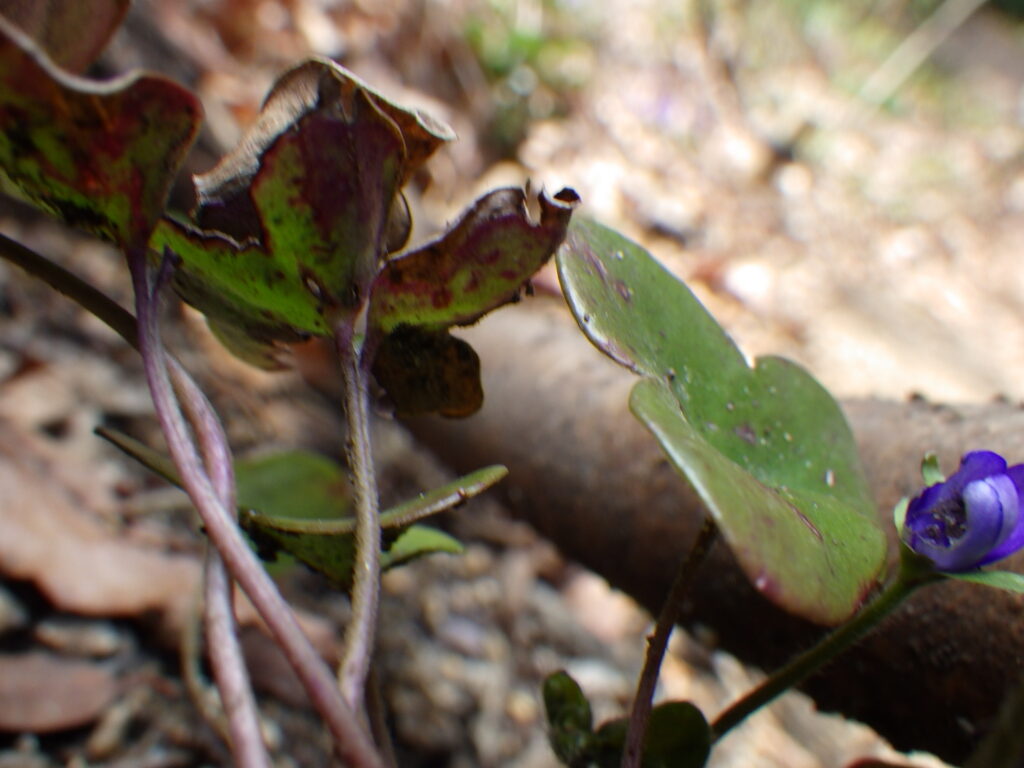
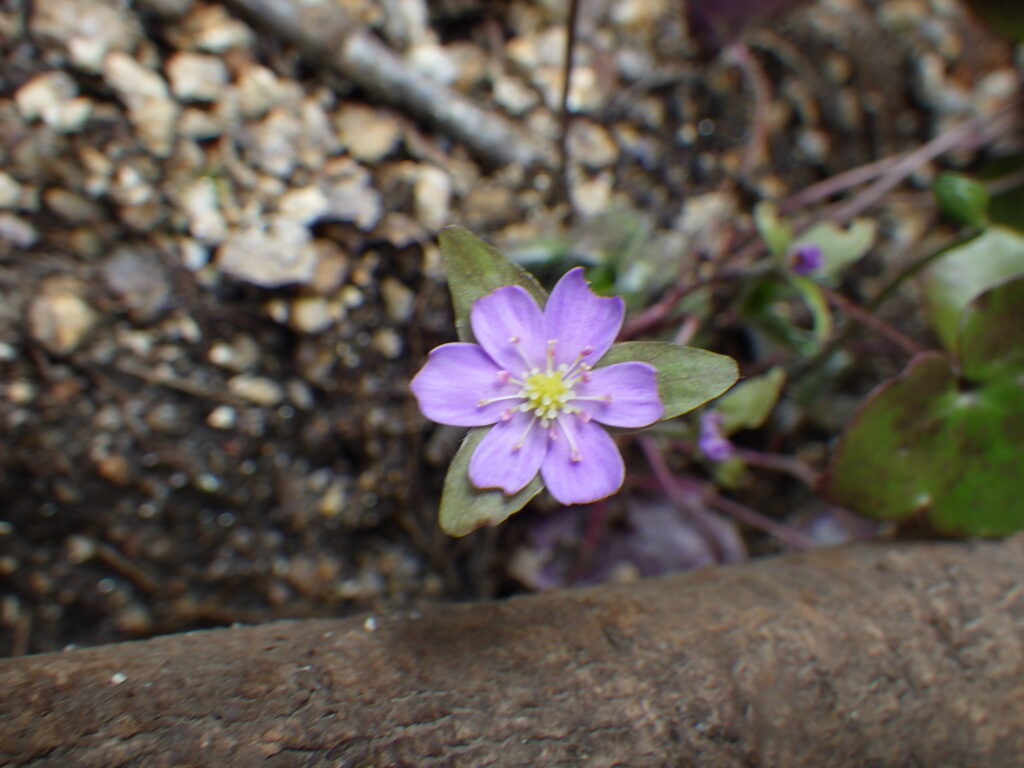
A perennial herb. Compared to Hepatica nobilis, the tips of the basal leaf lobes are blunt, and the sepals are ovate to narrowly ovate, rounded, and white. There are usually 6 to 8 sepals, which is relatively few. It is distributed in Honshu (from the Pacific side of the Tohoku region to the southern Kanto region). It grows in woodlands.
No. 1271 Winter Peony Helleborus niger
Also known as Christmas rose. An evergreen perennial herb with a woody, dark rhizome. Reaches a height of 23-30 cm. Leaves are palmately compound, with 7-9 leaflets, leathery, somewhat waxy, dark green, and almost toothless. Flower stalks are 7.5-23 cm tall, fleshy, pale green or purple spotted, bearing usually one, rarely two or three, upward-facing flowers. Flowers are 4-7.5 cm in diameter. Sepals are 5 in number, 2-4 cm long and 1.2-4 cm wide, cup-shaped to spreading, forming a star shape. Flowers are white with green eyes, but the underside of buds and sepals is pink, turning pink as they age, and quickly becoming dark pink or almost red. Stamens are numerous and yellow. Pollen is smooth. There are 5-8 carpels. Seeds have conspicuous elaiosomes. Flowering period is January to March (June in alpine regions). It is a long-cultivated species with numerous horticultural varieties. It is native to the alpine regions of southern and central Europe (Austria, Germany, Switzerland, Italy, Bosnia and Herzegovina, Croatia, and Slovenia). Helleborus niger subsp. niger: The leaves are dark green, sometimes with several teeth on the margins of the leaf tips, and the flowers are about 7 cm in diameter. Helleborus niger subsp. macranthus: It is distributed only in a narrow area of northern Italy and Yugoslavia. The leaves have a slightly bluish to grayish tint on the margins and small teeth on the edges. The flowers are relatively large, 7-9 cm in diameter. In the original description from 1957, the flowers were pure white, 8.5 cm in diameter. The flower stalks are 30 cm tall and have deep red spots.
No.1271.a Helleborus orientalis
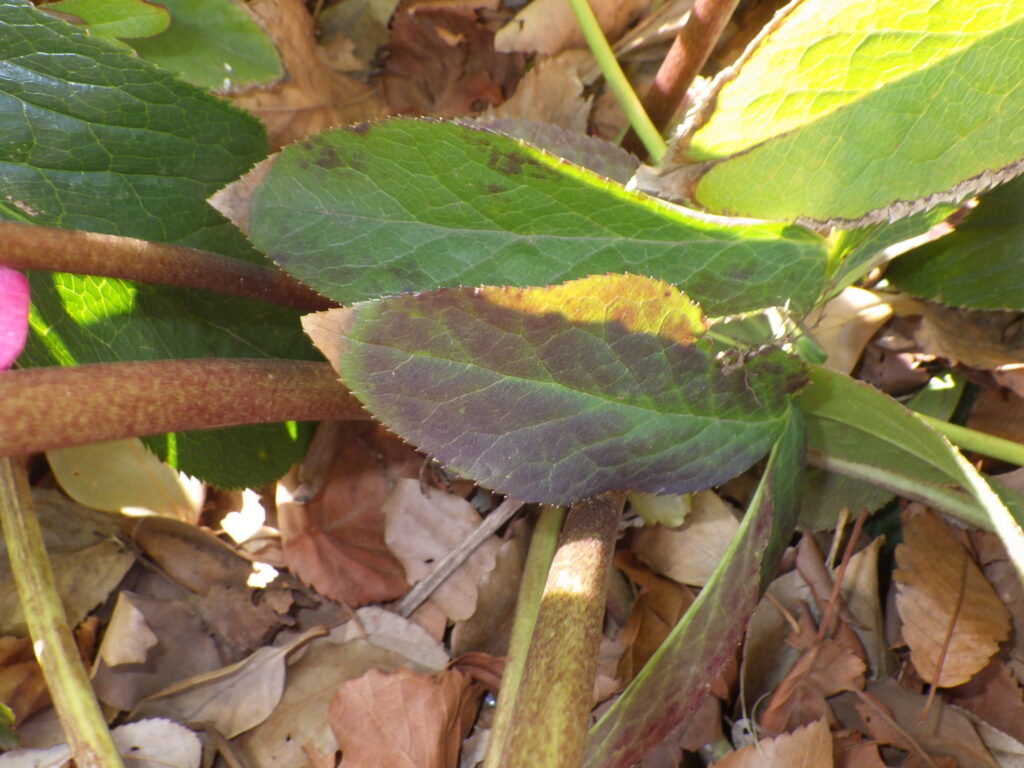
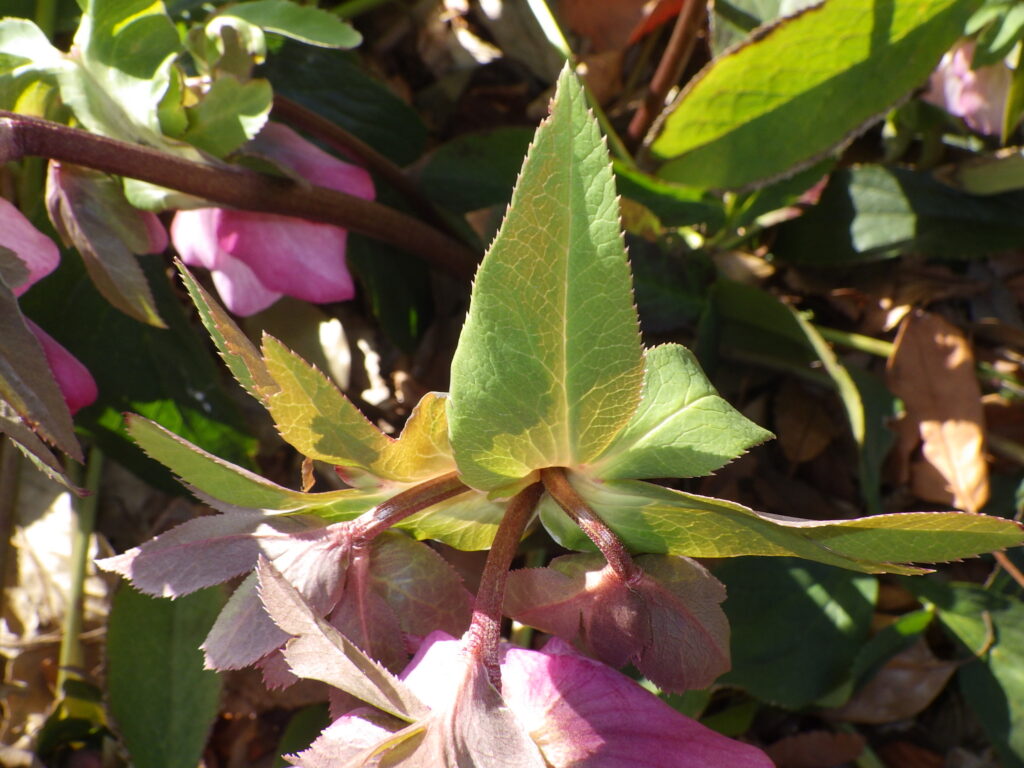
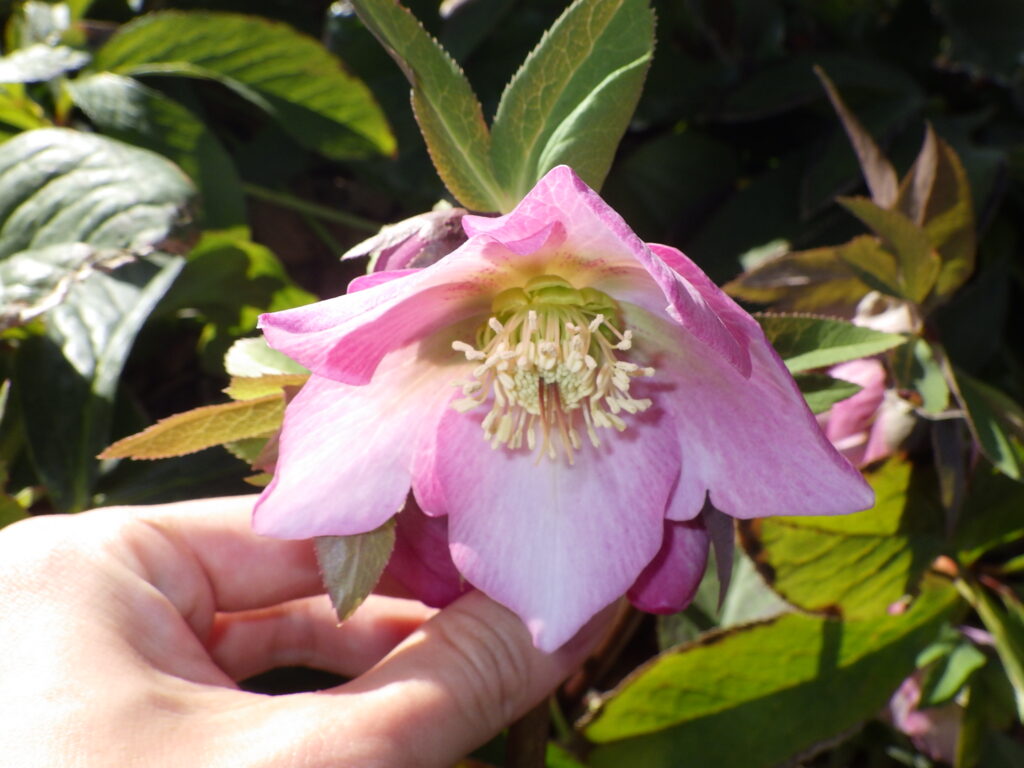
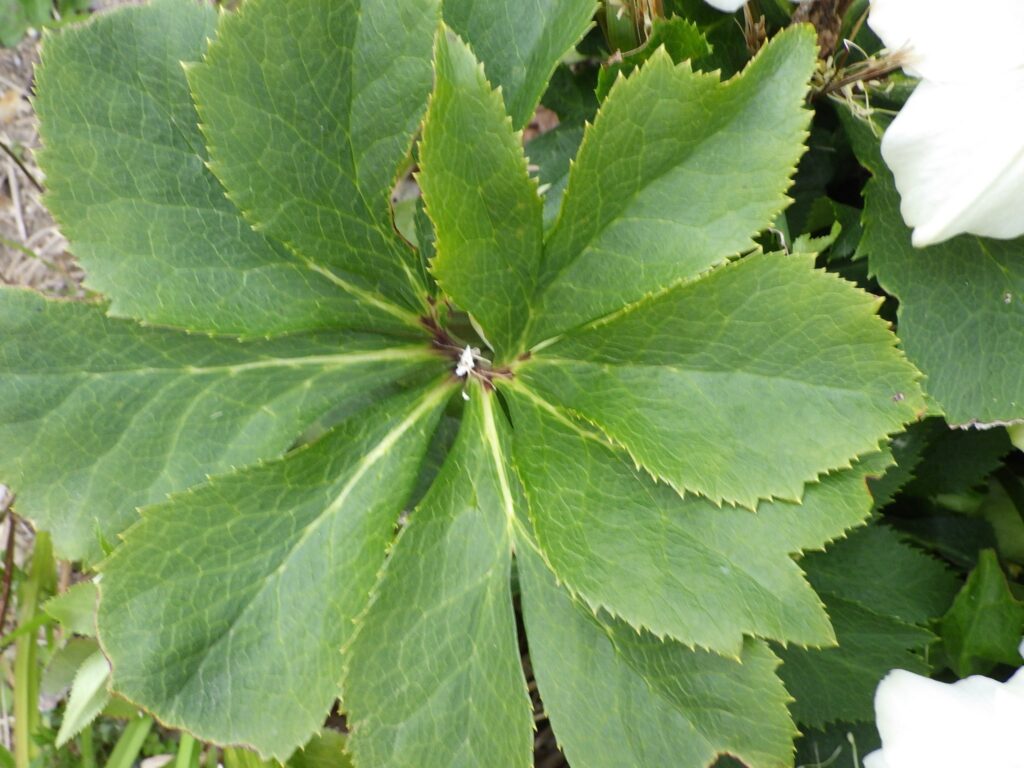
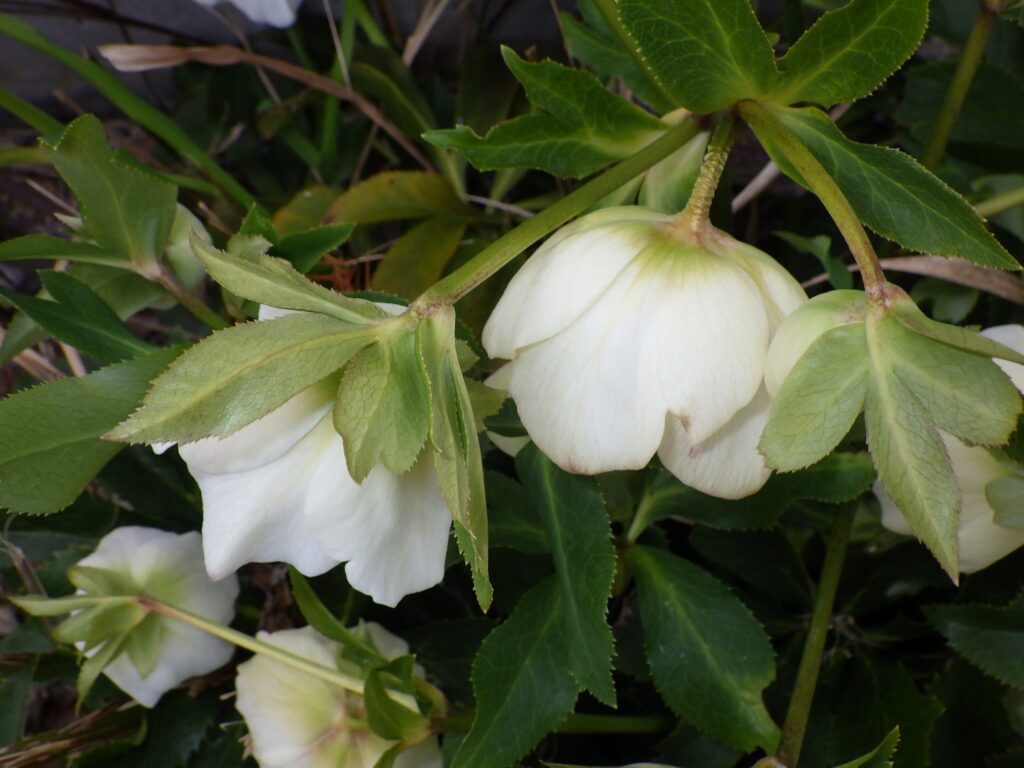
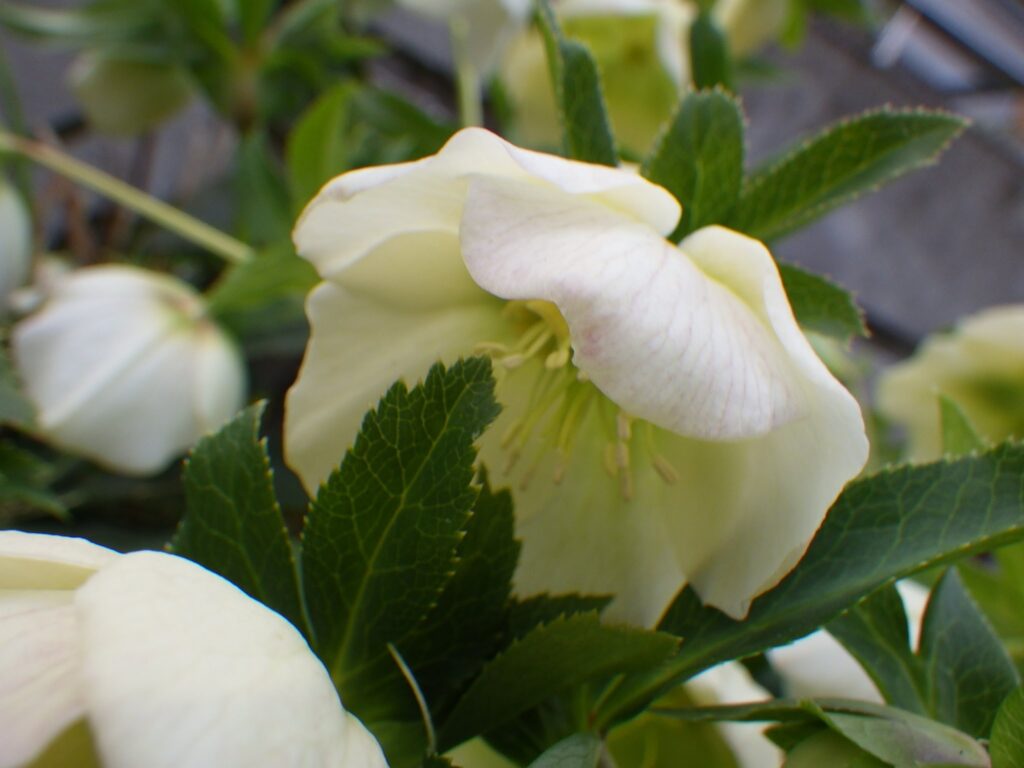
Also known as spring-blooming Christmas rose or Lenten rose. An evergreen perennial herb. It grows to a height of 45 cm or less. The leaves are 45 cm or less in width, with 7 to 11 leaflets, the central leaflet being undivided, nearly oval in shape, about 17.5 cm long and 7.5 cm wide at its widest point, and with coarse serrations. The leaves are strong, leathery, and usually glabrous. The flower stalks are green or spotted, with many spots, especially at the base, and bear 7 or fewer flowers. The flowers are fragranceless, and the leaves and other parts have a bitter and nauseating taste. Wild species have flowers 4.5 to 7 cm in diameter, while cultivated varieties can grow up to 10 cm, and the flowers usually hang downwards. Flower colors include white, greenish, cream, reddish shading, red spots, and red stripes. The nectaries are green or reddish. The carpels are not joined at the base. It flowers in March. Native to northwestern Greece, northwestern Turkey, and the Caucasus region of Russia. Hybrids with the spring-blooming Christmas rose as a parent are called Orientalis Hybrids, and they have the most varieties among Helleborus species.
No. 1273 Ranunculus reptans
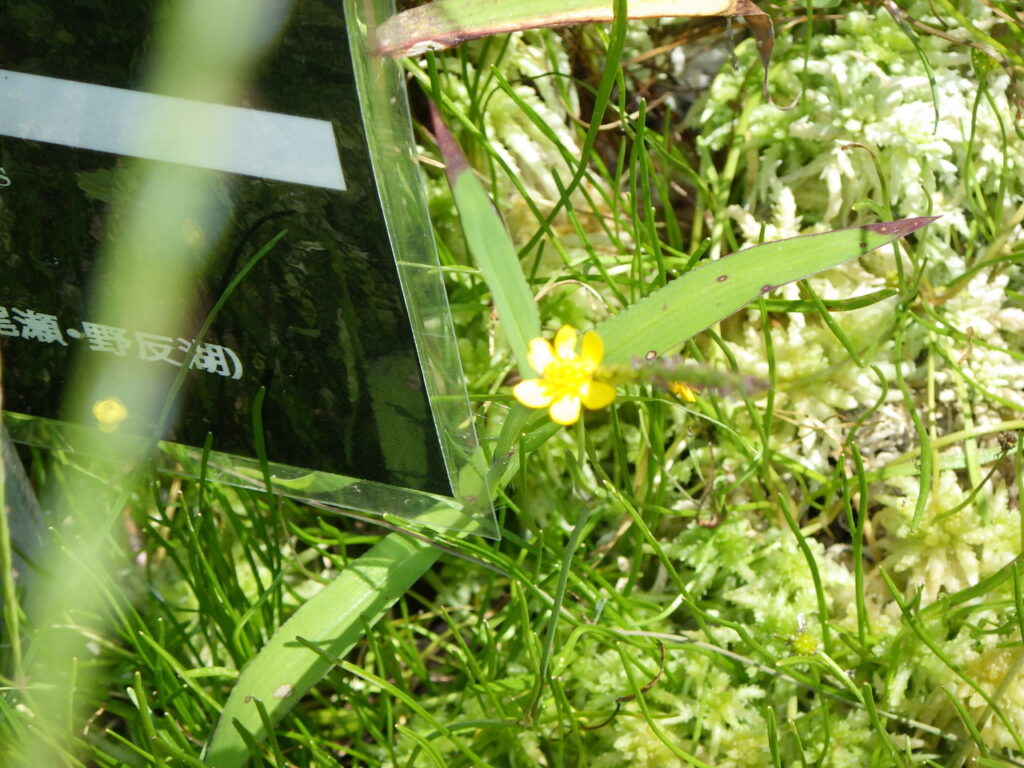
Perennial herb (Flora of China). Roots are fibrous, nearly uniform in thickness. Stems are thread-like. It extends creeping stems up to 25 cm long. They are glabrous or sparsely appressed, and roots emerge from the nodes. There are about 6 basal leaves, nearly sessile. The leaf blade is narrowly linear to linear-oblanceolate to narrowly spatulate, 3.5–5.5 cm long × 0.1–0.2 cm wide. It is glabrous or sparsely minutely pubescent, with a slightly broadened base, entire margin, and obtuse apex. Stem leaves are borne in clusters of several at each node, similar to basal leaves but smaller. Flowering occurs from July to September. Flowers are solitary, terminal or axillary, 0.6–0.9 cm in diameter. Pedicels are 3–8 cm long and minutely pubescent. The receptacle is glabrous. There are 5 sepals, ovate-orbicular, 2–3 mm long, minutely pubescent on the outside. The petals are 5-7 in number, obovate to narrowly obovate, 3-4.5 mm long and 2-2.5 mm wide. The nectary pores are scaleless and have rounded or truncate tips. There are numerous stamens. The anthers are ovate-circular. The aggregate fruit is spherical, 2.5-5 mm in diameter, with numerous carpels. The achenes are obliquely obovate, 1-1.5 mm long and 0.8-1 mm wide, and glabrous. The style is persistent and about 0.2 mm long. Native to Japan (Hokkaido to Honshu), China, Mongolia, Russia, Kazakhstan, Europe, and North America. It grows on the edges of ponds and swamps.
No.1279 Ranunculus sceleratus
This is a biennial herb. It has a short rhizome. The stem grows to a height of 25-60 cm, and the upper part is often branched. The basal leaves are 3-5 lobed. It flowers from April to May. The flowers are about 1 cm in diameter. The outside of the sepals has soft white hairs. It is found in Hokkaido, Honshu, Shikoku, Kyushu, and the Ryukyu Islands; it is widely distributed in the subtropical to temperate regions of the Northern Hemisphere. It grows in fallow fields and along the edges of ditches.
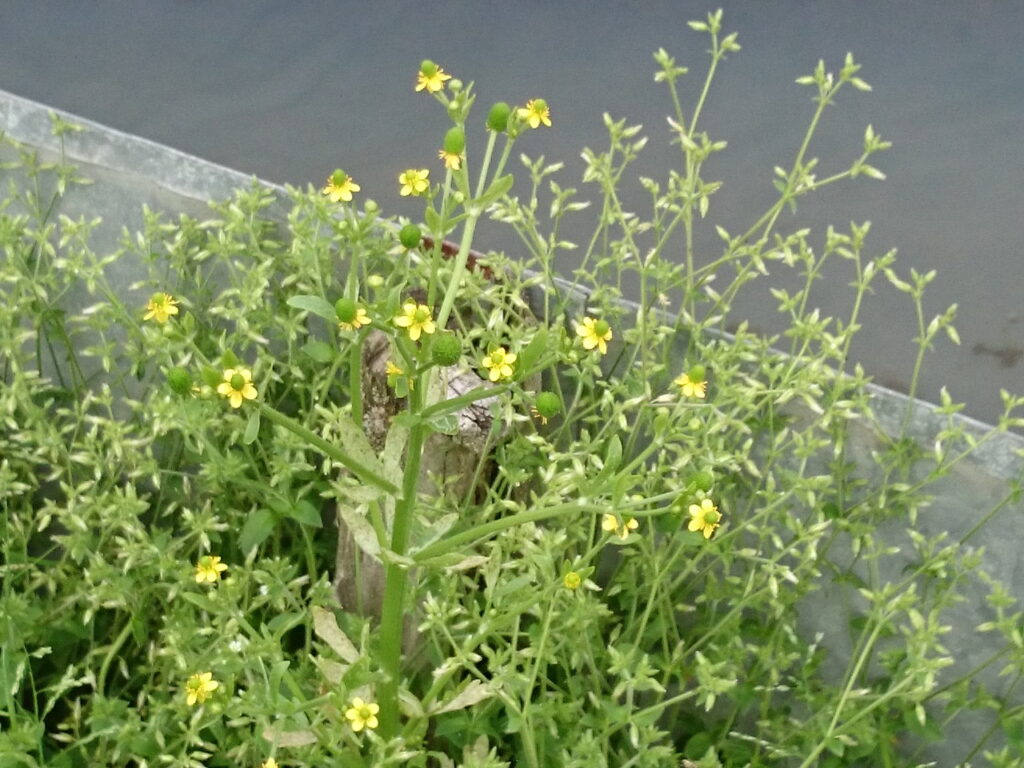
No. 1282 Ranunculus japonicus (Japanese buttercup)
Also known as buttercup. A perennial herb. The rhizome is short. The stem reaches a height of 30-60 cm. The basal leaves are 10-20 cm long, 3-5 lobed, with each lobe further divided into 2-3 sections. The leaves on the upper part of the stem are lanceolate and bract-like. The flowers are yellow, about 2 cm in diameter. The surface of the petals is glossy. Distributed in Hokkaido (southwest), Honshu, Shikoku, Kyushu, Ryukyu Islands; Korea and China. It grows in mountainous and wild areas. Double-petaled buttercup f. pleniflorus refers to a variety with double petals and is rarely seen. Originally, this was called buttercup, but now it is considered an alternative name for the parent species. The surface of the petals is composed of an outermost thin membrane and a starch granule layer following a carotenoid layer. The strong gloss is due to the starch granule layer containing starch in the outermost membrane of the petal reflecting ultraviolet light (Haruyama et al., 2013). This trait is widely observed in the Ranunculus genus, and although its adaptive significance is not mentioned in Japanese studies, it is known that reflection keeps the center of the flower several degrees warmer than the surrounding air even at low temperatures, promoting seed and pollen maturation and making it more attractive to pollinators (van der Kooi et al., 2017).
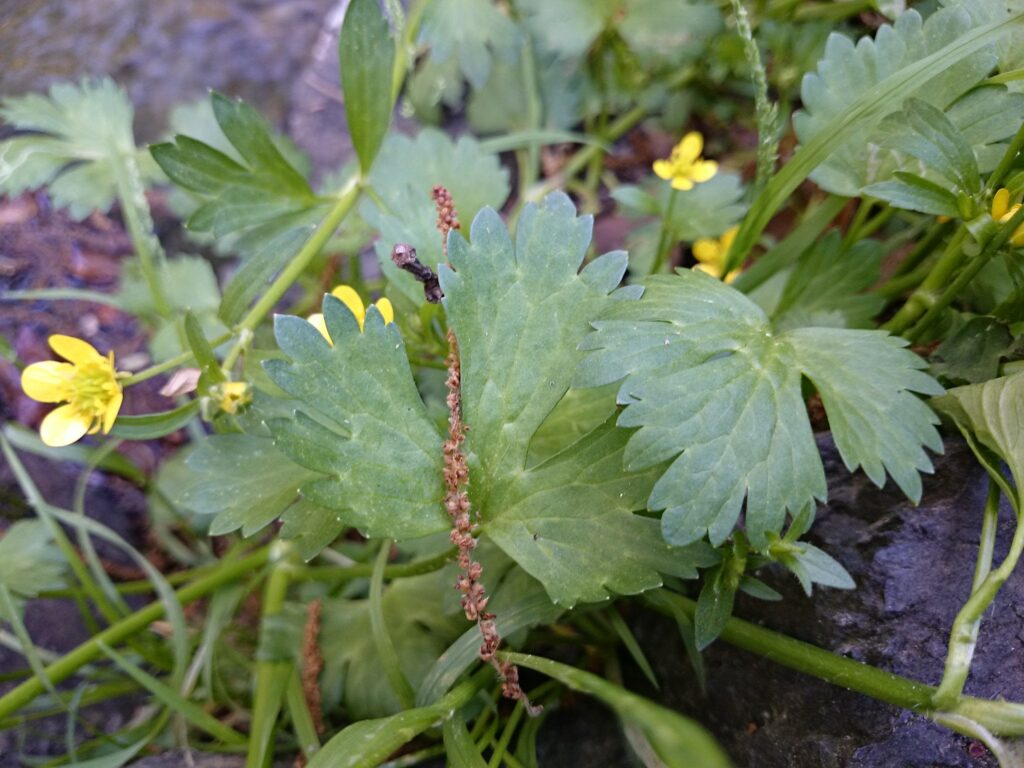
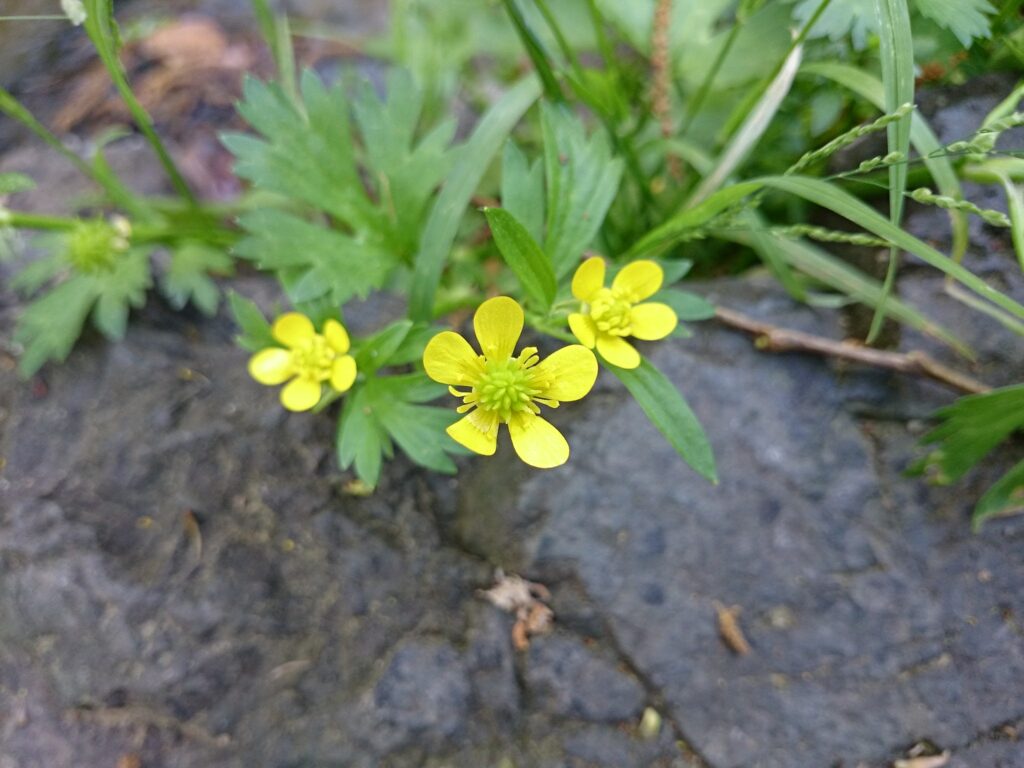
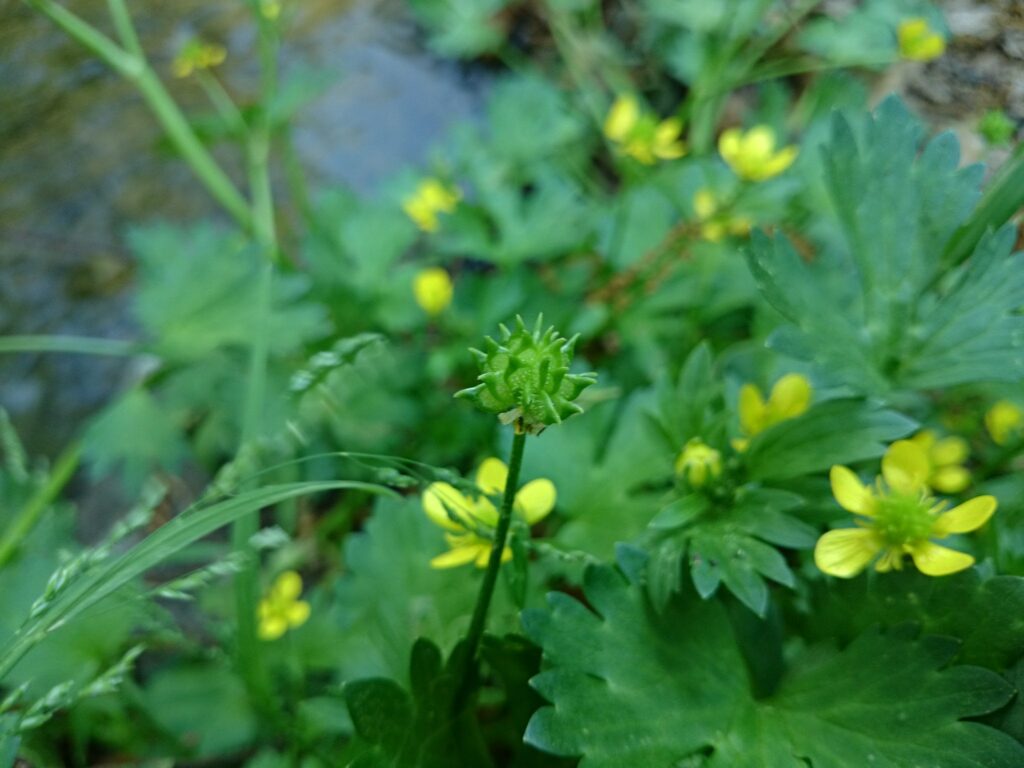
No.1282.a Ranunculus yakushimensis (Japanese name: Himeuma noashigata)
This is a perennial herb, growing to a height of 6-10 cm. The stem is solid, and the lower part falls over, propagating by rooting from the nodes after flowering. The basal leaves are deeply 3-lobed, with each lobe further shallowly 3-lobed, 0.5-1.5 cm long. Both sides are covered with pale brown appressed hairs. The lower stem leaves are 3-lobed, while the upper leaves are linear. It flowers from July to August. The flowers are solitary, with yellow petals 1.2-1.5 cm long. It is endemic to Yakushima Island in Japan and grows in wetlands in the alpine zone.
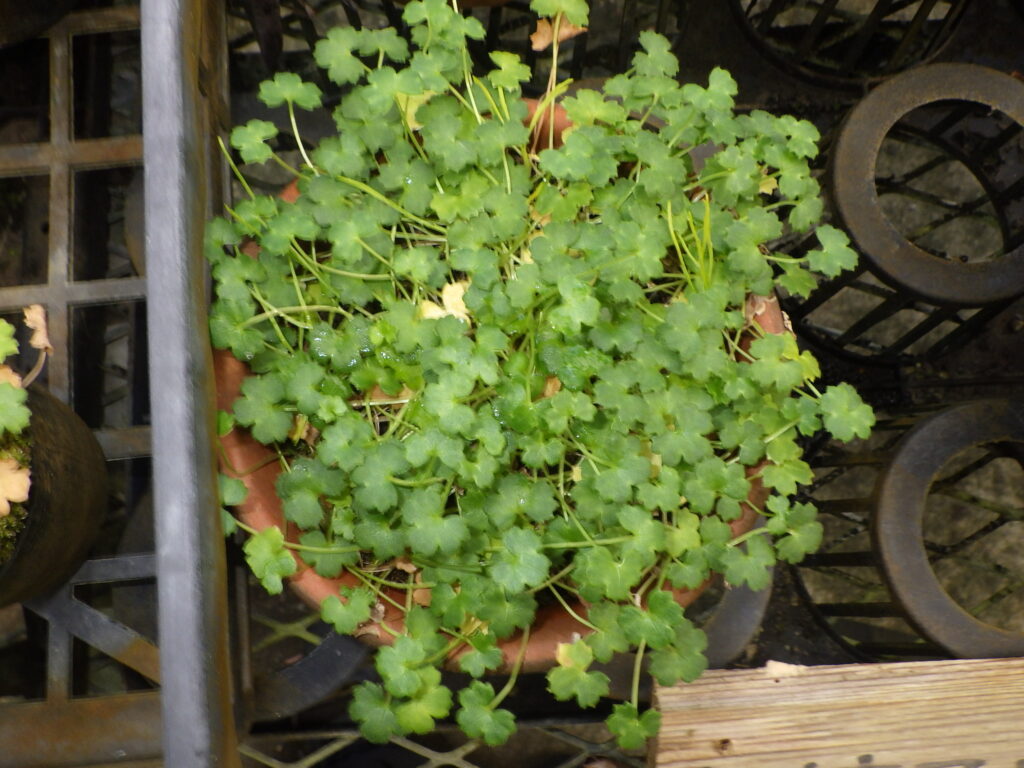
No.1287 Ranunculus silerifolius var. glaber
Perennial herb. Stems are 30-80 cm tall, erect, and branching well in the upper part. The stems have few hairs and grow obliquely upwards. Basal leaves are 5-10 cm wide, trifoliate, with the terminal leaflet being 3-lobed. Lateral leaflets are 2-lobed, and the lobes are further shallowly 2-lobed. Flowers are about 1 cm in diameter. The aggregate fruit is spherical. The absence of ridges on the edges of the achenes is important for distinguishing it from Ranunculus japonicus. Distributed in Hokkaido, Honshu, Shikoku, Kyushu, and the Ryukyu Islands. Grows in shady, damp environments. Ranunculus guerpaertensis f. pleniflorus is a rare double-flowered variety.
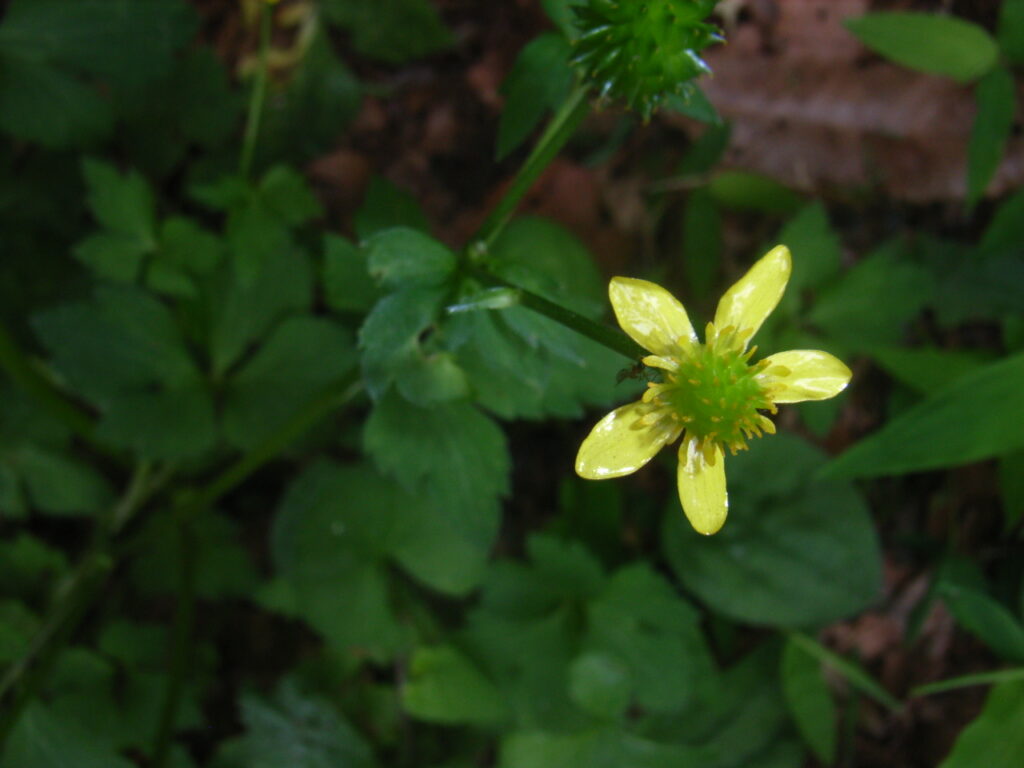
No. 1288 Ranunculus cantoniensis
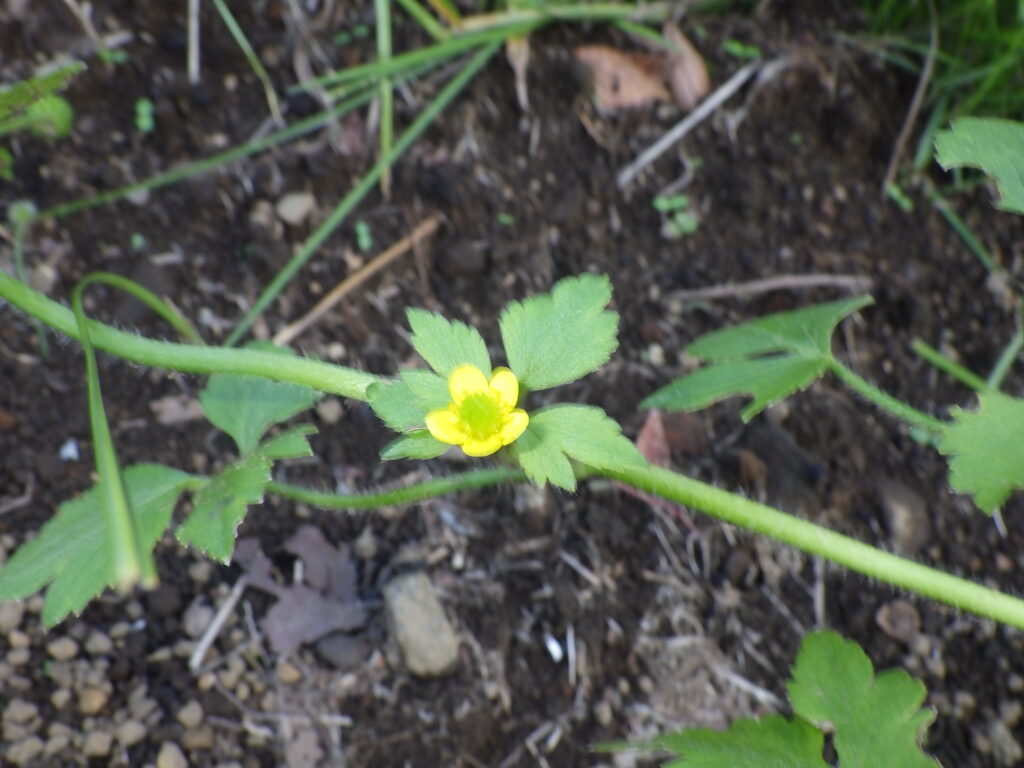
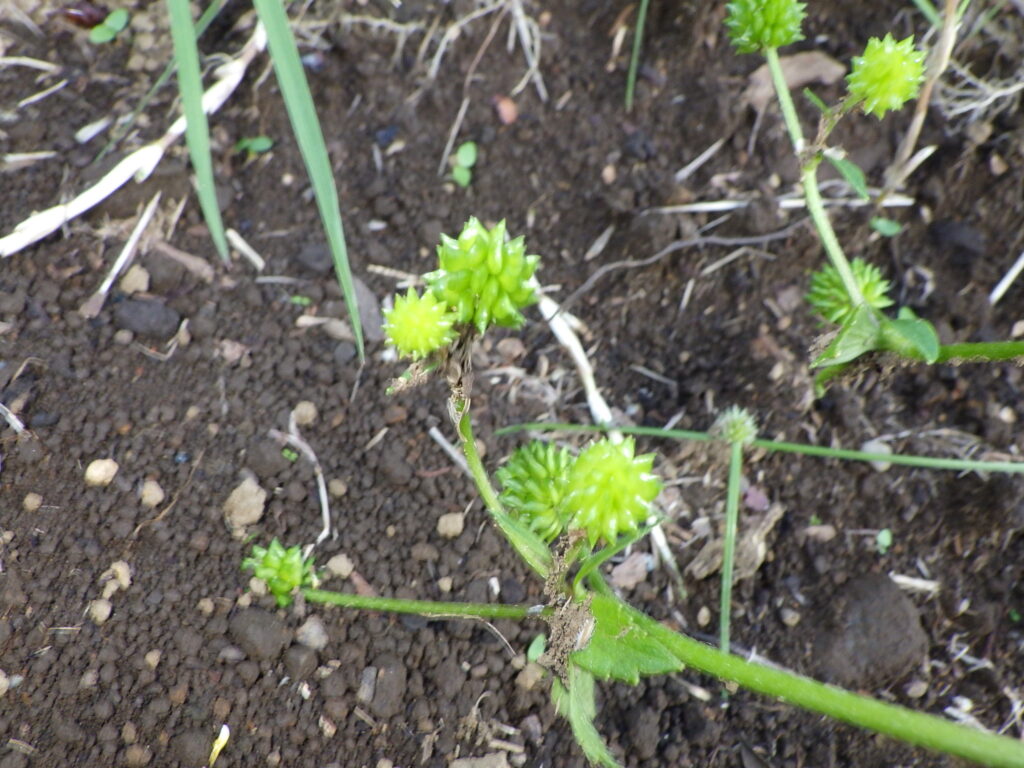
This perennial herb resembles Ranunculus japonicus, but is distinctly different in leaf shape, the shape of the remaining style, and the spreading hairs on the stems and branches, as well as the presence of ridges on the edges of the fruit. It is distributed in Honshu, Shikoku, Kyushu, and the Ryukyu Islands; as well as in Korea and China. While Ranunculus japonicus prefers shade, this species prefers sunny environments and is more common in southern regions than Ranunculus japonicus.
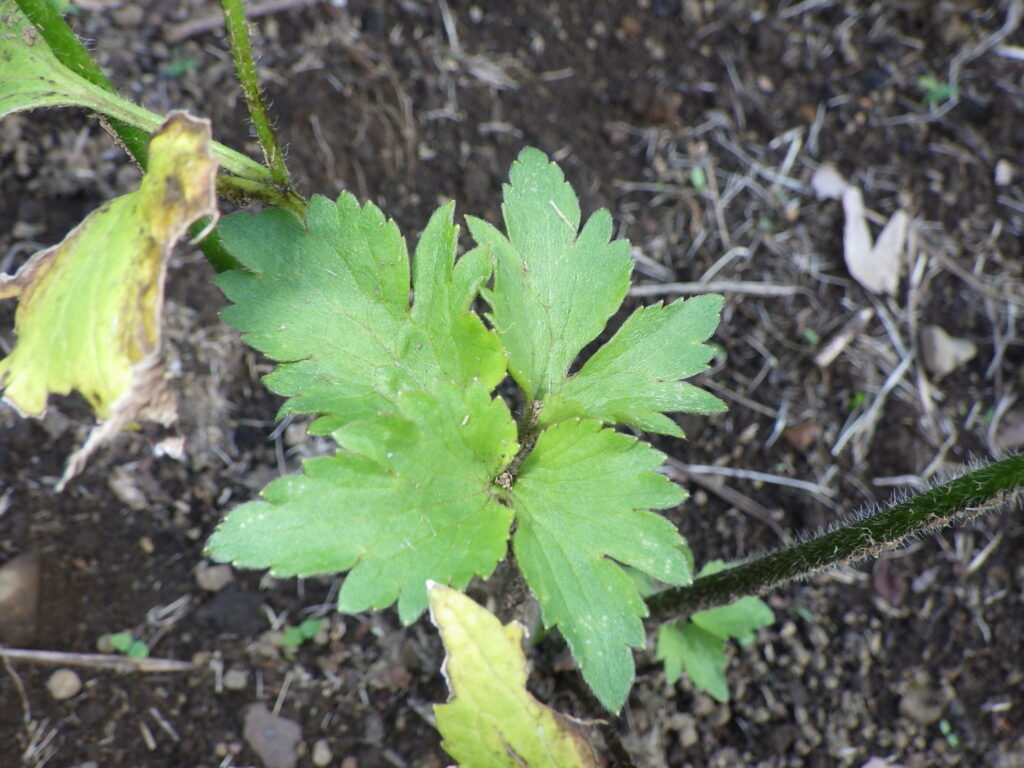
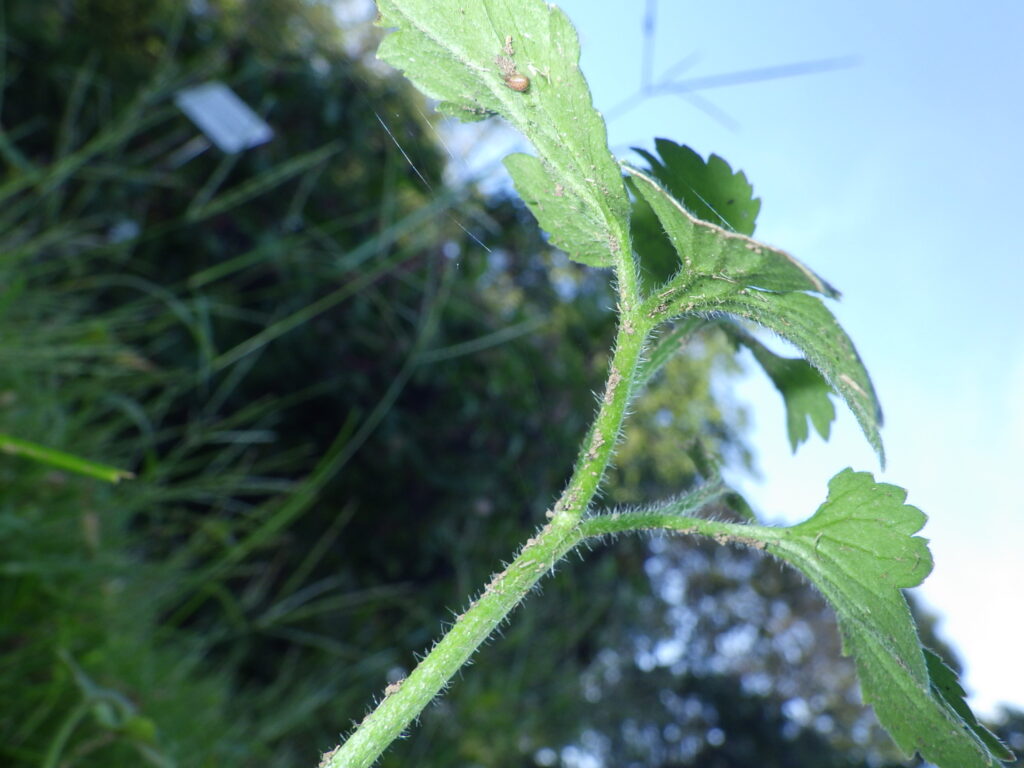
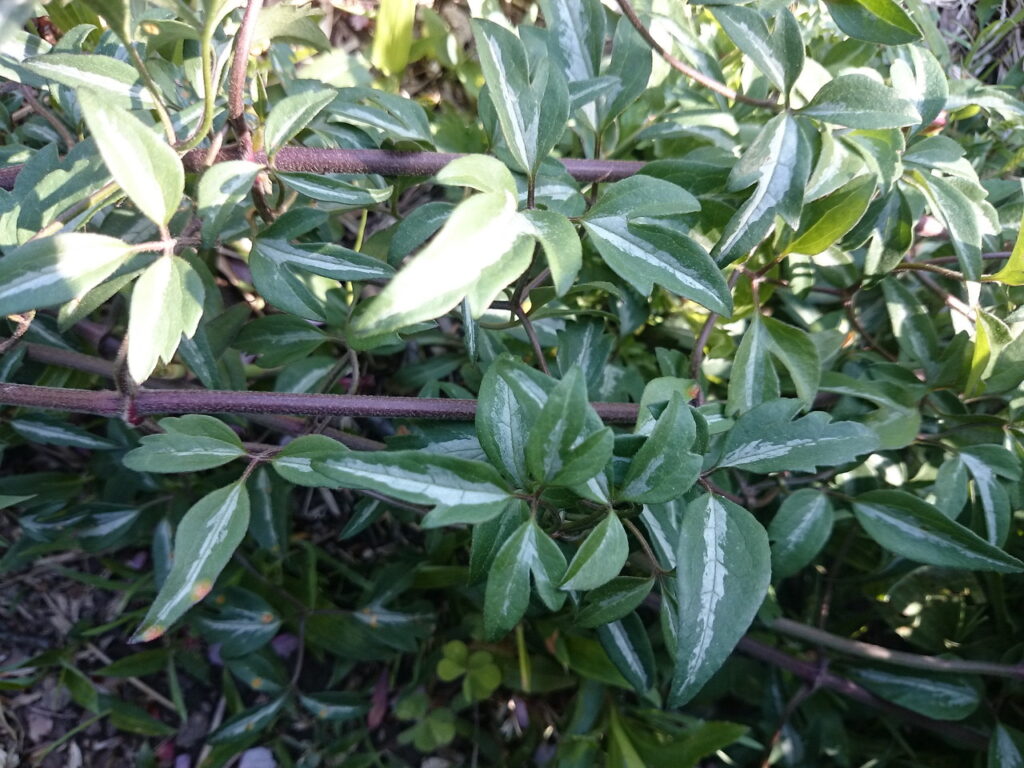
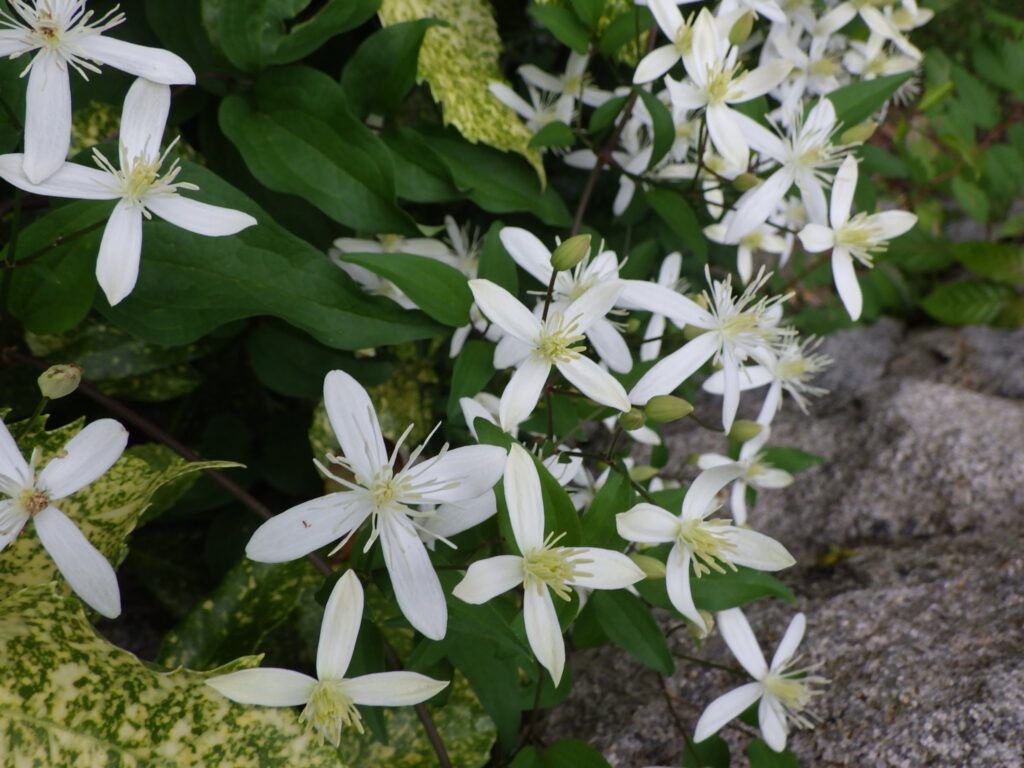
No. 1295 Clematis terniflora
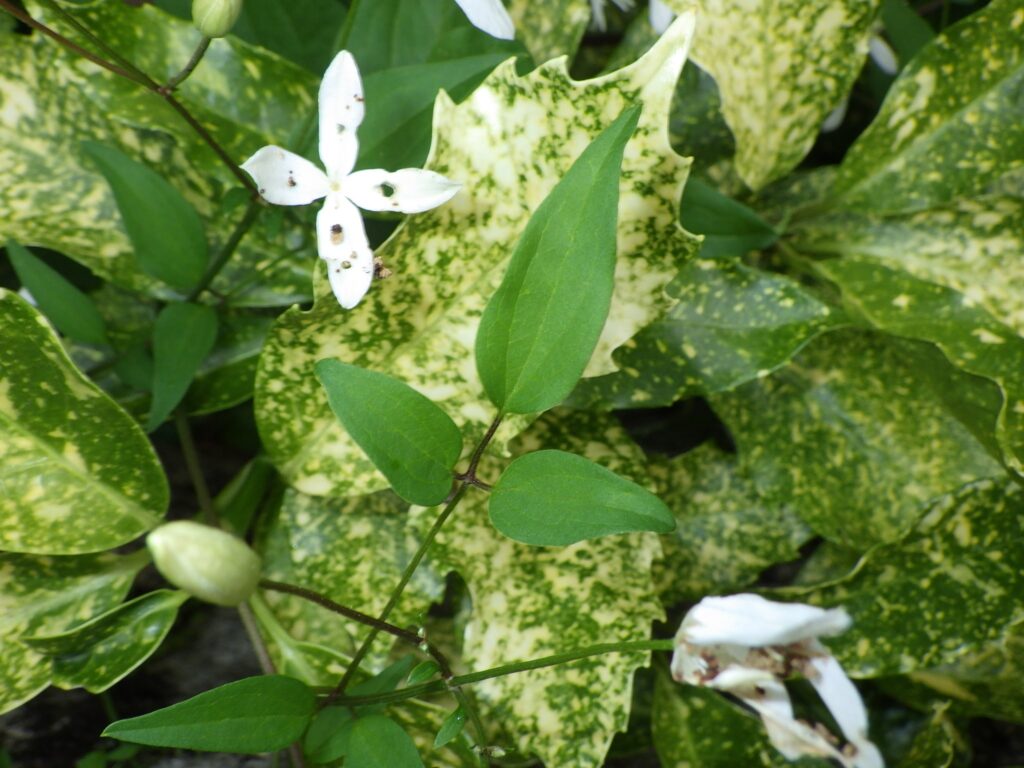
A herbaceous woody vine. The leaves are pinnately compound, with 3 to 7 leaflets. The leaflet shape varies considerably, from ovate to narrowly lanceolate. It produces conical cymes from the tips of the branches and leaf axils. Four white sepals spread flat in a cross shape. It is commonly found in bright forest edges and grassland edges. Distributed in Hokkaido, Honshu, Shikoku, Kyushu, the Ryukyu Islands, the Ogasawara Islands, Korea, and China.
No.1295.1 Clematis terniflora var. mandshurica
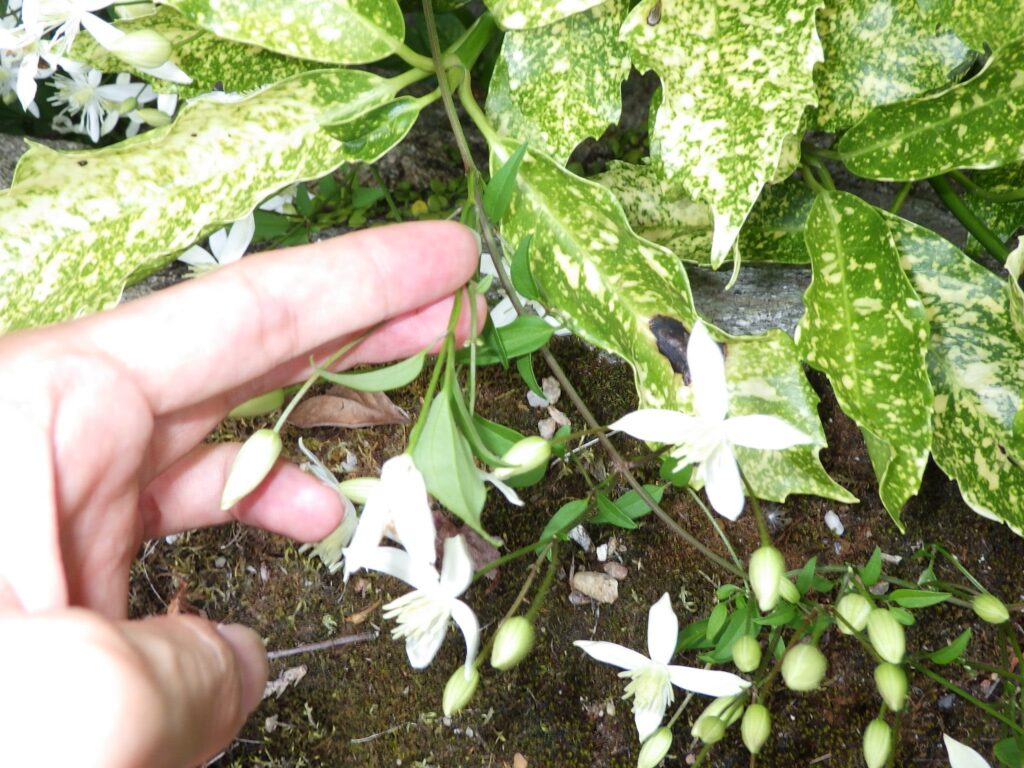
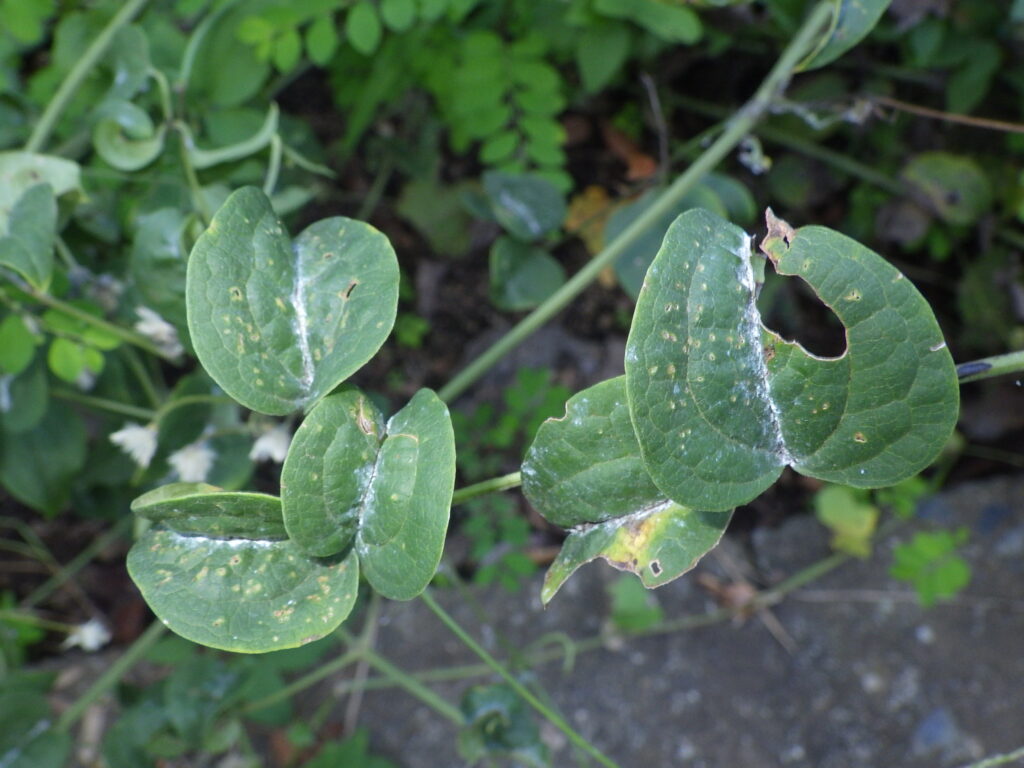
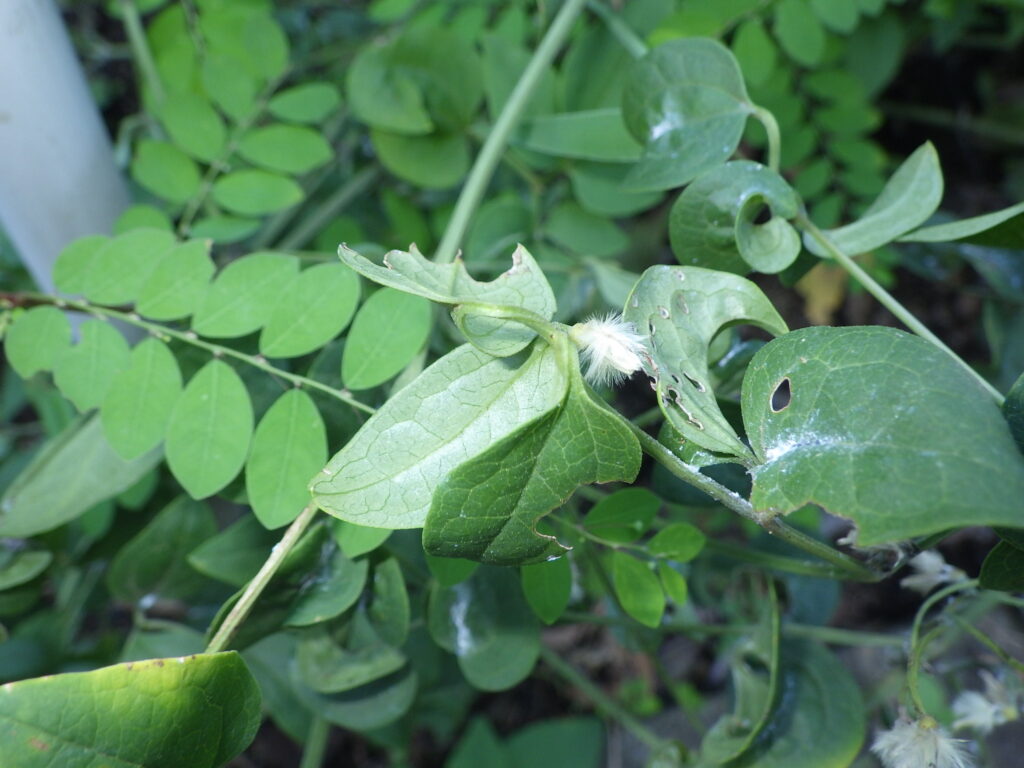
This is a variety of Clematis terniflora (Flora of China) with finely pointed anthers. It is distributed in China, North Korea, Mongolia, and Russia (Siberia), and inhabits deciduous forests on slopes. It is rarely cultivated in Japan.
No.1298 Little Crane Clematis apiifolia var. biternata
This is a variety of Clematis terniflora, differing in that its leaves are twice-ternate compound leaves. Some literature states that the achenes are usually hairless, but they typically have hairs at the top. It is distributed in Honshu (from the Kanto region to the Chubu region).
No. 1302 Clematis japonica
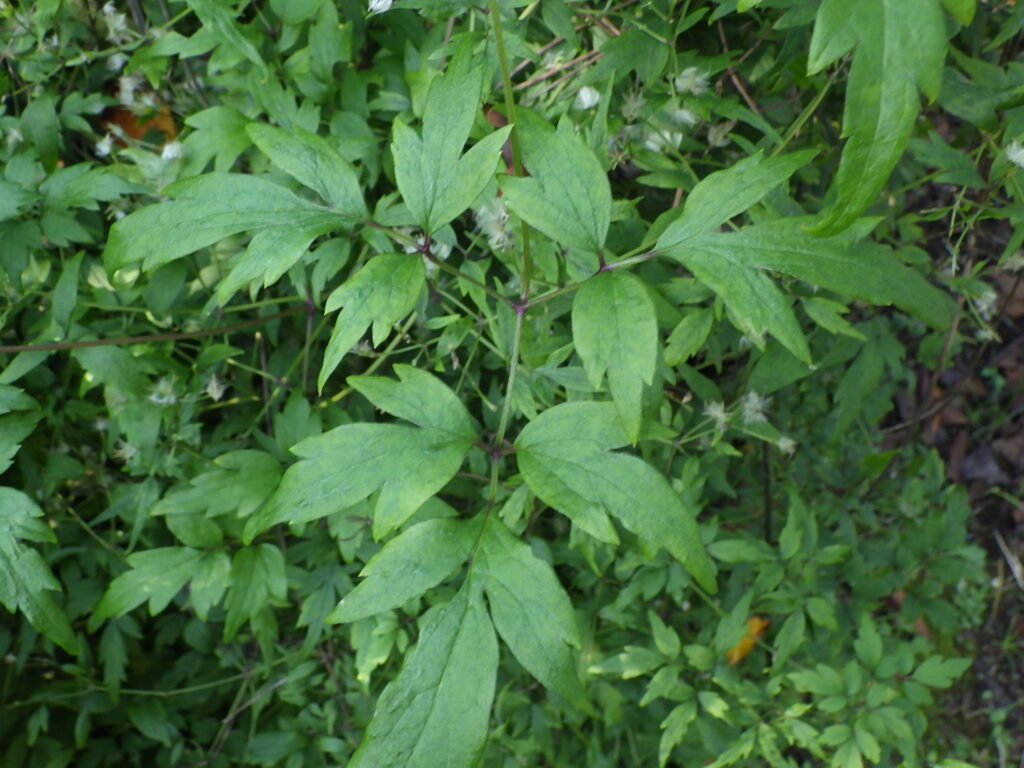
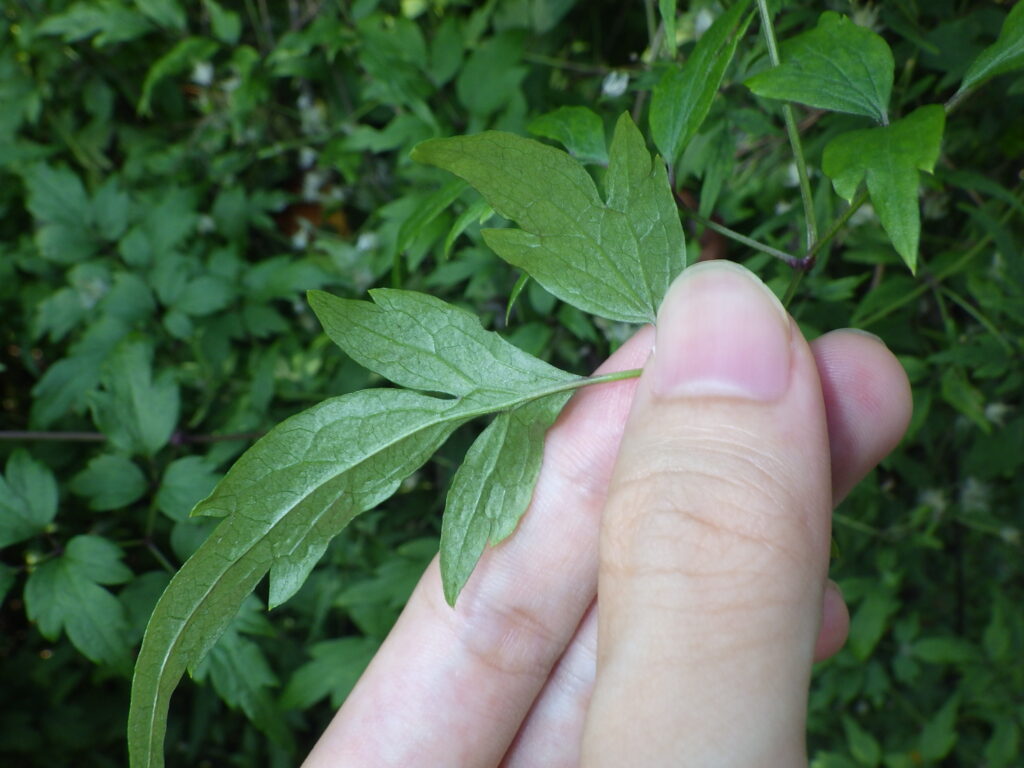
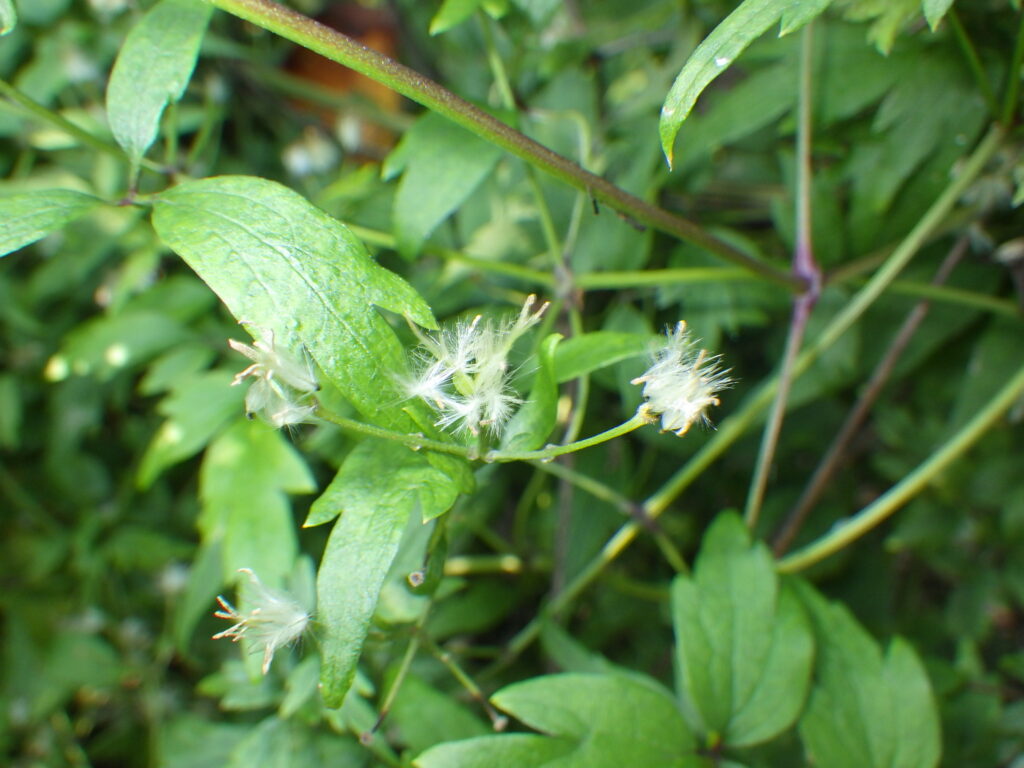
This is a herbaceous woody vine. The leaves are once-ternate compound leaves. The pedicels grow from the leaf axils and are longer than the petioles. A pair of lanceolate bracteoles are attached to the pedicels. The flowers are bell-shaped. The four sepals are purplish-brown and slightly hairy at the base and recurved parts. It grows at the edges of forests. It is distributed in Honshu and Kyushu. A variety with yellowish-white sepals is called Clematis f. cremea and is found very rarely in its distribution area.
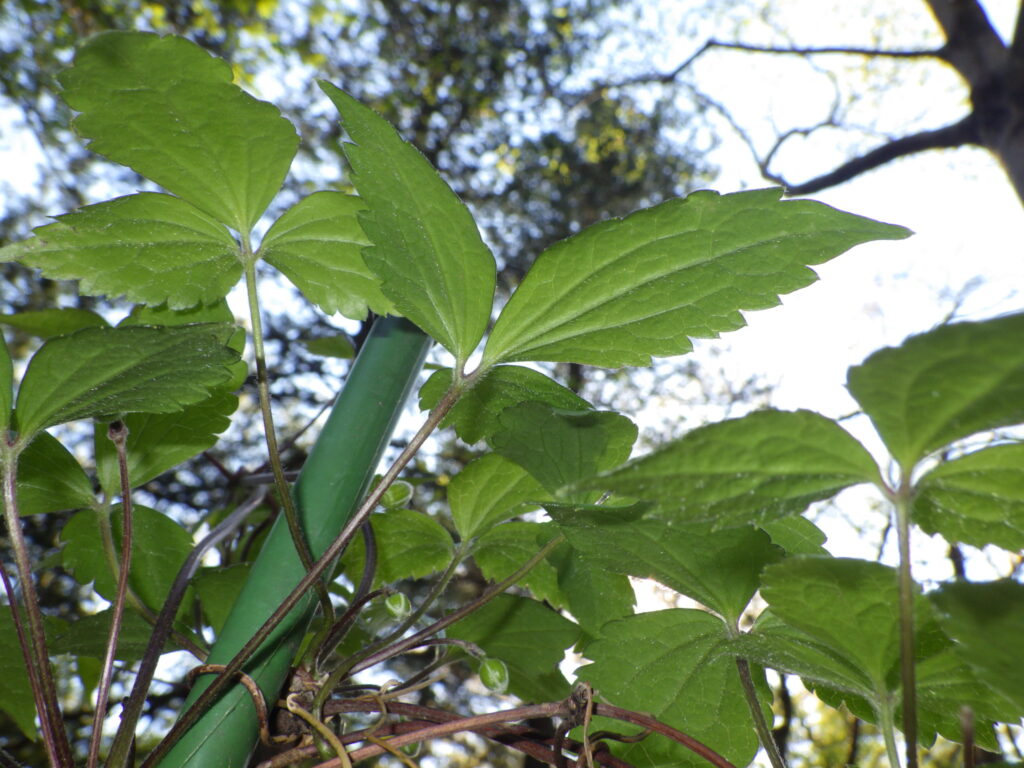
No. 1308 Clematis stans
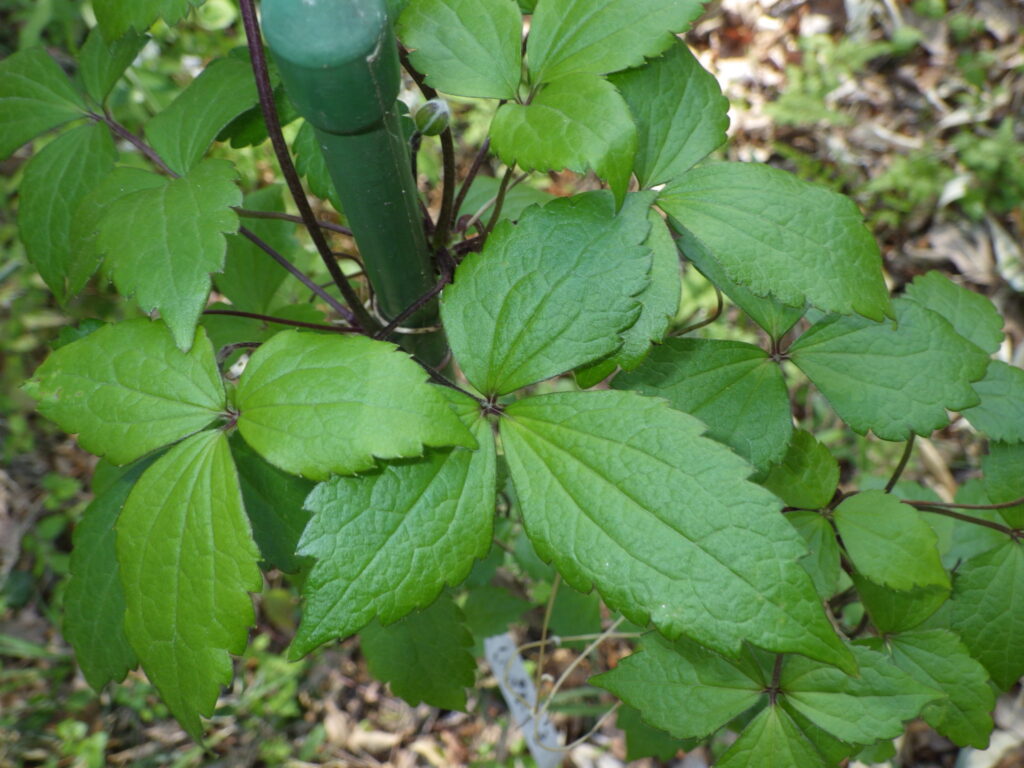
This perennial herb has a slightly woody base to its stem. The stem is erect. The leaves are once-ternate compound leaves, with leaflets 4-13 cm long. Inflorescences are borne in cymose inflorescences at the tips of the stems and in the leaf axils. The flowers are downward-facing, narrowly bell-shaped with a tubular base, and are white to pale purple. The tips of each sepal are recurved. It is distributed in Honshu and grows in forest edges and grasslands.
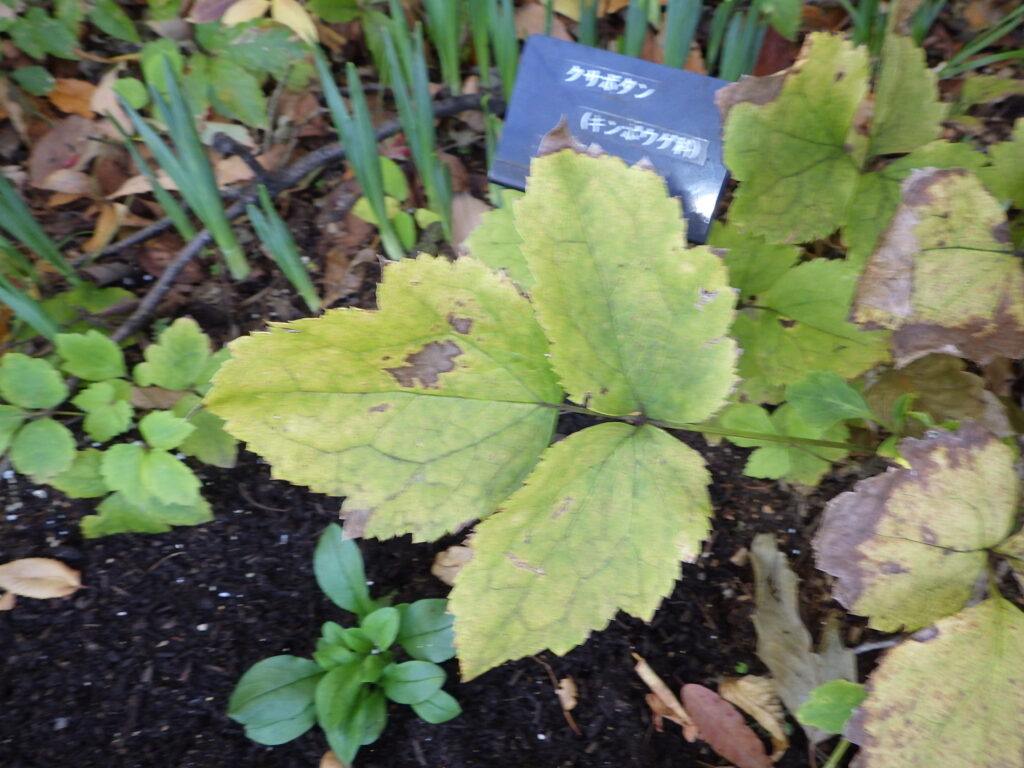
No. 1309 Clematis florida
This is a climbing perennial herbaceous plant (Flora of China). The stems are about 1m long, with 4-6 shallow grooves, covered in downy hairs, and the nodes are swollen. The leaves are in 1-2 pairs, with petioles 2-4cm long, and leaf blades that are narrowly ovate to lanceolate, 1-6 x 0.4-2cm, papery, with very sparse scale-like to flaxen areas on both sides, a rounded or broadly wedge-shaped base, a rounded margin, a sharp apex, and nearly flat venation at the base. It flowers from April to June. The flowers are 3.6-5cm in diameter. The pedicels are 3.7-8.5cm long and densely covered in downy hairs. The sepals are 6 in number, white, elliptical to rhomboid, 2-3 x 1-1.5cm, with dense scales along the midrib on the outside, glossy on the outside, smooth margins, and sharply pointed tips. The anthers are oblong to linear, 2.5–3.5 mm long, with an obtuse apex. The stamens are 1–1.2 cm long, glossy, and pointed at the tip. The ovary is covered with downy hairs. The style is 3.5 mm long, densely glossy from the base to the middle, and glossy from the middle to the tip. The stamens are expanded, broadly elliptic to rhomboid, about 3.5 × 3 mm, glabrous. The stem is 8 mm long, with a base spreading with downy hairs and a tip covered with downy hairs. The capsule is sessile, broadly ovate to ovate-triangular, 1.4–3 cm long. This plant is very similar to Clematis terniflora, and many articles on the internet confuse the two, but it can be distinguished from Clematis terniflora by the presence of bracts on the pedicels. "Flora of China" also mentions that the flowers are axillary, with 1 (to 4) whorls, 2-bract inflorescences, and 1–2 flowers growing from the leaf axils or the tips of the current year's branches. It is native to China (Guangdong, Guangxi Zhuang Autonomous Region, Hubei, Hunan, Jiangxi, Yunnan, and Zhejiang provinces) and grows as a shrub, in woodlands, and along rivers at an altitude of approximately 1700m.
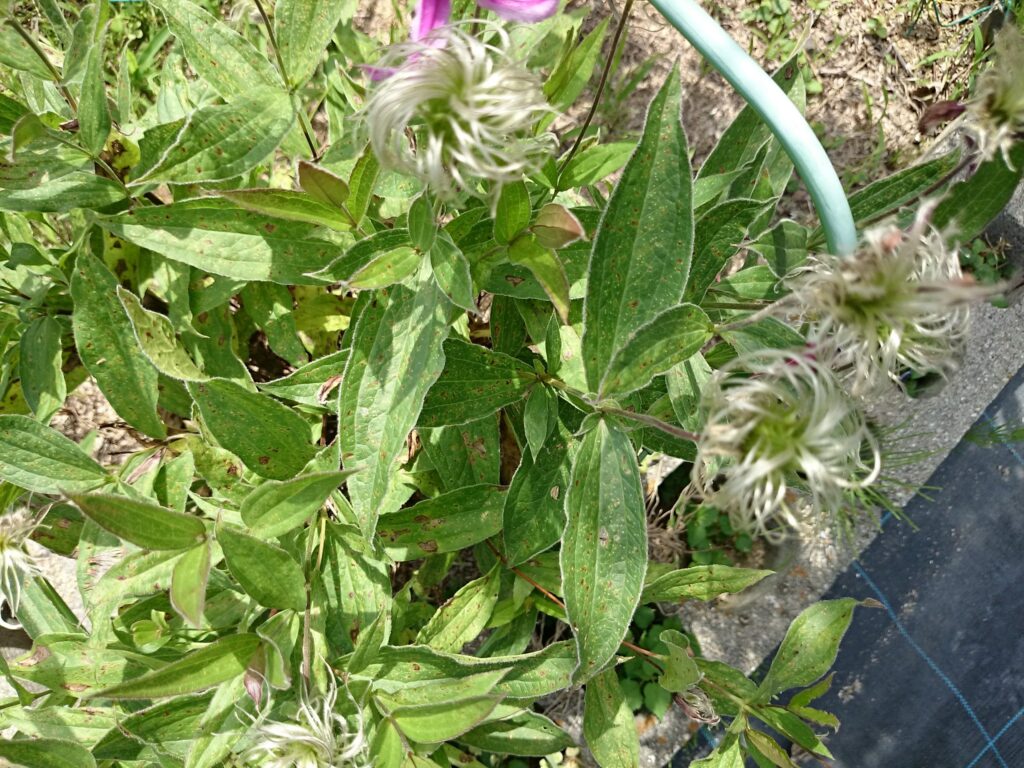
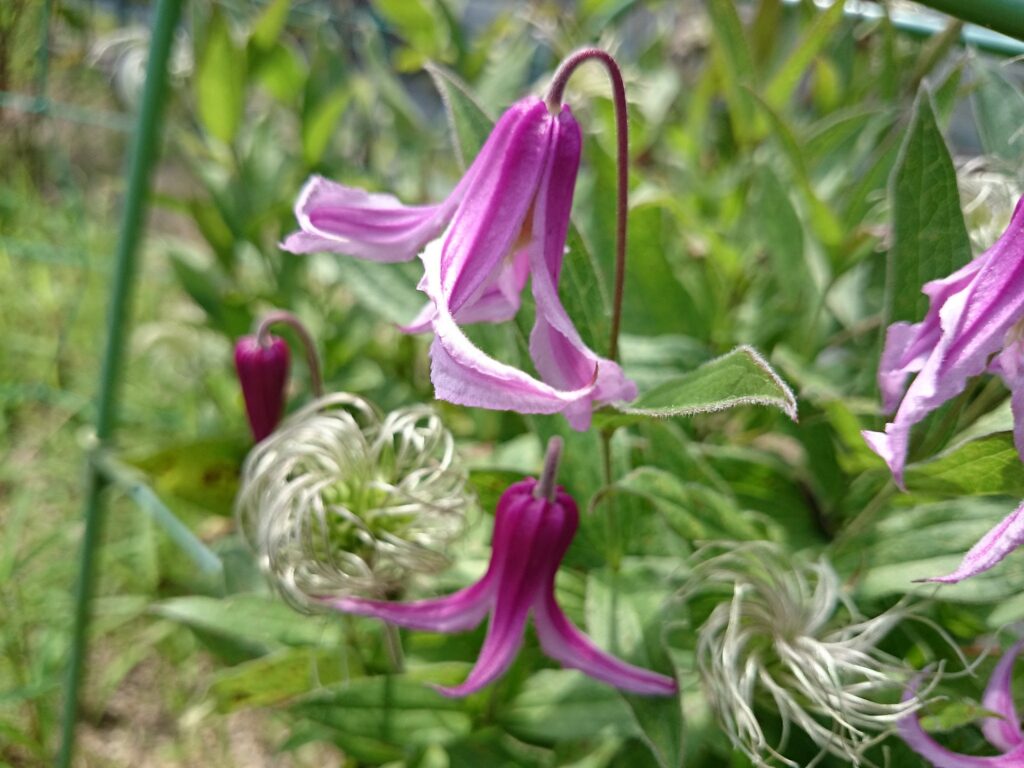
No.1310 Kazagurma Clematis patens
This is a perennial herbaceous woody vine (Flora of China). The stems are about 1m long, with 5-6 shallow grooves running lengthwise, and are sparsely covered with downy hairs. The leaves are usually trifoliate, sometimes pinnately compound or simple, with 3-5 leaflets. The petioles are 4-8cm long, and the leaf blades are ovate, narrowly ovate, or broadly lanceolate, 3-7 x 1.5-5cm, papery, with sparsely glossy veins on both surfaces or smooth along the axis, a rounded, truncate, broadly cuneate, or nearly cordate base, with a pointed or acute apex and slightly protruding basal veins. Flowering occurs from May to June, with solitary flowers at the tips of new shoots. The flowers are 7-12cm in diameter. The pedicels are sturdy, 3.5-10cm long, and glossy. The sepals are 5, 6, or 8 in number, white (the Kanagawa Prefectural Flora Survey Association (2018) states that the sepals are 6-8 in number and pale purple or white), elliptical, 3.5-6 × 1.5-3.5 cm, convex to concave outward along the central vein at the base, mucilaginous along the lateral veins at the base, glossy on the outside, and smooth on the margin. The anthers are linear, 6-8 mm, with an obtuse or pointed apex. The ovary is glossy. The stamens are about 9 mm long, densely covered with villous hairs from the base to the middle. The stamens are broadly ovate, 3.5-5 × 3-4.5 mm, with compressed cottony hairs, and the style is viscous, 3-3.8 cm long, with yellow cottony hairs. Fruiting occurs from June to July. It resembles Clematis terniflora, but can be distinguished by the absence of bracts on the pedicel. It is distributed in China (Liaoning, Shandong, and Zhejiang provinces), Japan (Honshu, Shikoku, and Kyushu), and South Korea, growing in forests, slopes, and the edges of shrublands at altitudes of 200 to 1000 meters. Because its flowers are beautiful, it easily catches people's attention, and wild specimens are gradually disappearing.
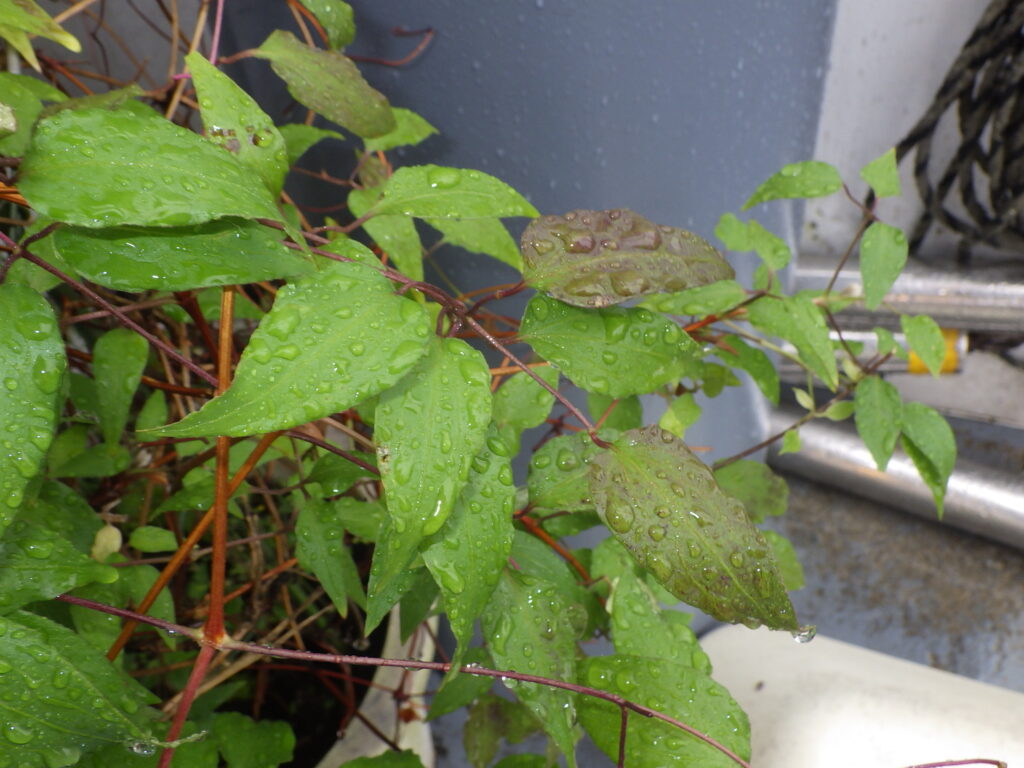
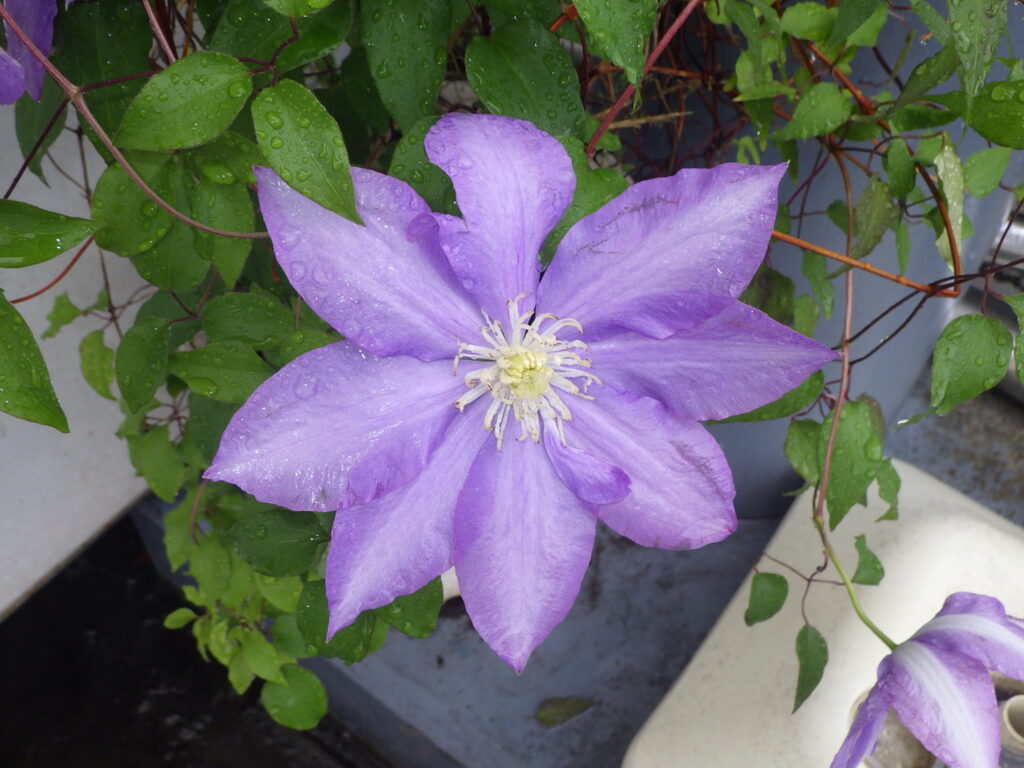
No.1310.a Clematis texensis
A herbaceous woody vine (Flora of North America). The stems are glossy, growing up to 3m, with glossy or sometimes ±coarse hairs near the nodes. The leaf blades are pinnate, with 6-10 leaflets plus a tail-like segment, ovate to nearly circular, non-lobed, 2-3 lobed, or closest to 3 lobed, 1-9 × 1-6cm, leathery, with a prominent reticulate pattern in the axial direction, the axial surface is usually glossy, sometimes coarsely glossy. Flowering occurs from spring to summer (March to June). Inflorescences are axillary, with 1-7 whorls. The flowers are ovate to urn-shaped, the sepals are red to scarlet on the outside and tip, ovate-lanceolate, 1.5-3cm, with blunt margins, thick, wrinkle-free, glossy, and the tip is recurved from the acupoint, glossy on the outside. The beak is 4-7cm and pinnate. Native to North America (only the southeastern part of the Edwards Plateau in Texas), it grows in forested areas, limestone cliffs, and riverbanks at elevations of 80-700 meters. It is widely cultivated as an ornamental plant, being the only clematis species that produces red flowers. In Japan, it is sold under the name "Texensis," but there is a high possibility that these are hybrids.
References
Takahiko Hariyama, Masatsugu Shimomura, Yumi Yamahama, Yasuharu Takaku, and Tateo Shimosawa. 2013. Origin of high-intensity and ultraviolet reflection in Ranunculus japonicus. Journal of Polymer Science, Japan 70(5): 221-226. https://doi.org/10.1295/koron.70.221
Kanagawa Prefecture Flora Survey Association. 2018. Kanagawa Prefecture Flora 2018 (Electronic Edition). Kanagawa Prefecture Flora Survey Association, Odawara. 1803pp. ISBN: 9784991053726
Tsukamoto, Yotaro. 1994. Encyclopedia of Horticultural Plants, Compact Edition. Shogakukan, Tokyo. 3710pp. ISBN: 9784093051118
van der Kooi, CJ, Elzenga, JTM, Dijksterhuis, J., & Stavenga, DG 2017. Functional optics of glossy buttercup flowers. Journal of the Royal Society Interface 14(127): 20160933. https://doi.org/10.1098/rsif.2016.0933